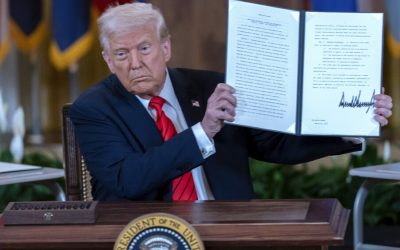
In his first few days in office, Donald Trump announced a $500 billion joint venture with OpenAI, Oracle, and Softbank to invest in growing the US’s AI infrastructure and rescinded former President Joe Biden’s executive order requiring safety submissions from AI developers. His big, beautiful bill showers much more money in the industry, and aims to eliminate state oversight or regulation of AI companies as well.
Search Results
Will Artificial Intelligence Save California… or Ruin It?
Brief #111 – Technology Policy Brief
by : Mindy Spatt
Artificial intelligence holds the potential to both revive California’s tech industry and jeopardize the integrity of its elections, as Supervisor Dean Preston cautions. With groundbreaking AI legislation on the line and facing intense opposition from industry players, California stands at a critical juncture in shaping its future.
Artificial Intelligence —Will It Really Take Away Our Jobs?
Brief #37—Technology
By Linda F Hersey
Artificial intelligence is poised to take over many job functions beyond bolting doors on vehicles at auto plants or filling orders at Amazon warehouses. Jobs that many people assume require a human touch are at risk. They include roles in telemarketing, bookkeeping, employee compensation, office administrative duties, delivery services, proofreading and market research analysis. Within five to 10 years, driverless cars and trucks are expected to transform road transport services, including long-haul trucking and popular door-to-door food delivery. Should humans performing more complex business functions be looking over their shoulder? Perhaps. Emerging roles of artificial intelligence across industries are diverse and sweeping in scope, including entertainment/media, financial services, health care and energy.
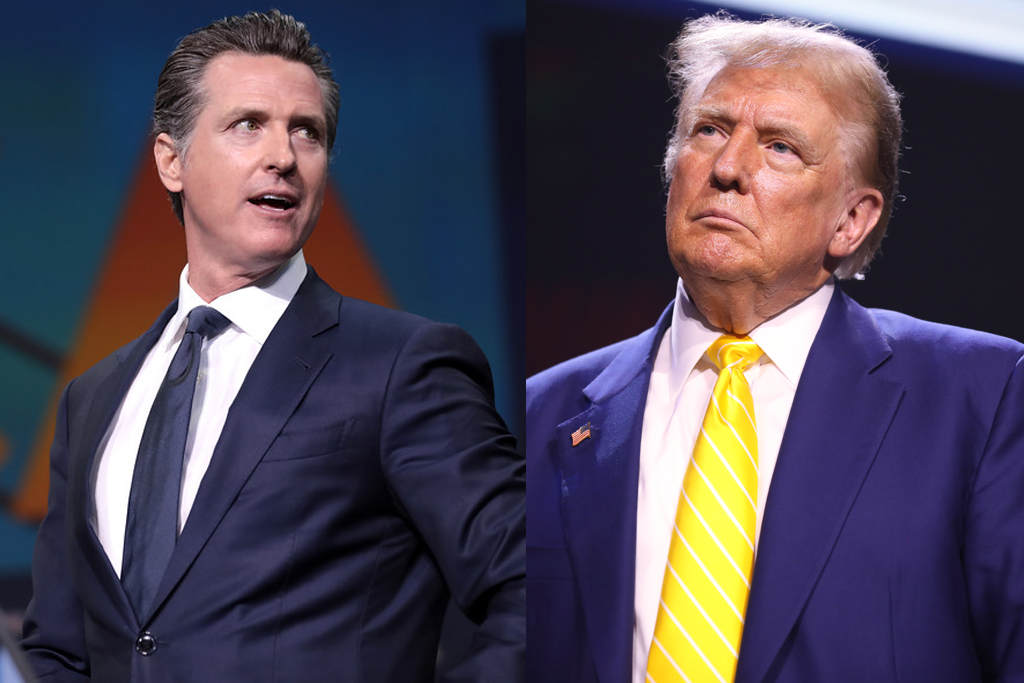
Tepid Responses To AI Concerns from Political Rivals Trump and Newsom (Technology Policy Brief #171)
California Governor Gavin Newsom, ending his 8 years in office and eyeing a presidential run, faces pressure at home to respond to public concerns about artificial intelligence and data centers. But he can’t afford to upset his billionaire backers whose dollars will be crucial to his presidential campaign. He signed a series of bills designed to provide a few protections that already seem outdated and ineffectual. The alarm over AI’s immensely dangerous capabilities is growing in California and elsewhere to a fever pitch and encompasses concerns far beyond the reach of measures approved by Newsom or agreed to by the CEOs Trump recently called to the white house.
Capital, Compute, and Control: Governance Across AI, Digital Privacy, and Cryptocurrency (Economic Policy Brief #196)
The unchecked expansion of multinational technology conglomerates across artificial intelligence, digital privacy, and cryptocurrency represents a critical threat to public sovereignty, labor rights, and ecological stability. These interconnected domains function as a new frontier of extractive capitalism, demanding urgent international democratic governance to rein in tech monopolies that treat personal data as raw material and planetary resources as expendable. This systemic crisis stems from a deliberate business model designed to outpace legislative oversight, concentrating unprecedented wealth and structural power into the hands of a few unaccountable corporate executives and speculative investors.
Understanding China Part III: How China’s Economy and Defense System Work (Foreign Policy Brief #228)
China’s economic and defense systems are increasingly integrated under a unified strategy of “high-quality development” and “military-civil fusion.” In March 2026, the National People’s Congress formally adopted the 15th Five-Year Plan (2026–2030), which serves as the master blueprint for the nation’s trajectory through the end of the decade. The central pillar of this plan is the cultivation of “New Quality Productive Forces,” a term championed by the leadership to describe a shift away from traditional, labor-intensive manufacturing toward a technology-led economy driven by artificial intelligence, quantum computing, and green energy.
36 States Move to Block Federal Preemption of AI Laws, Setting Up Major Court Fight (Technology Brief #164)
On November 25, 2025, the National Association of Attorneys General, led by Connecticut Attorney General William Tong, sent a letter on behalf of a bipartisan coalition of 36 state attorneys general to Congress. The letter urged Congress leaders to reject the proposed ban on state-level artificial intelligence (AI) laws. The attorneys general argue that a broad federal law would prevent individual states from addressing and responding to AI risks quickly.
Misogyny and Abuse Are Thriving Online (Technology Policy Brief #162)
Two new reports document the alarming rise of online violence against women and girls. Sex trafficking, sexualized images, and stalking and exploitation online are nothing new. But Artificial Intelligence has exacerbated the problem. Deepfakes almost exclusively target women; in fact, some of the technology used to create them, developed by mostly male teams, only works on female forms.
Trump’s AI Executive Order and the Federal–State Power Struggle (Technology Policy Brief #161)
The Federal-State battle over AI regulation has heated up after President Trump signed an executive order on Dec. 11 that blocks states from enforcing their own regulations on artificial intelligence. The order seeks to create a “single national framework” for AI. However state lawmakers, tech experts, and civil rights organizations are worried about what this means for the country. Many believe that federal regulations could slow down America’s competitiveness in the global AI race and will have serious implications for national security.
The Potential Harm Posed to Society Due to the Inaccuracies of AI (Technology Policy Brief #159)
The future of Artificial Intelligence (AI) is not fully determined, but it will continue to have a significant impact on our society and the way we live. The ways it currently impacts society are through improvements in efficiency, productivity, and accessibility. Self-driving cars relying on AI, AI-powered robots are used to provide aid and assistance in the healthcare system, and AI security systems are used to automate threat detection, among other examples. Although AI creates positive advantages and impacts, it also creates negative effects. The negative effects cover the environment, employment and other fields. These examples are often caused by products that use and incorporate AI, but what (potential) harm is created due to inaccuracies within the actual systems of AI?