

JOBS POLICIES, ANALYSIS, AND RESOURCES
Latest Jobs Posts
Biden Signs Three Executive Orders to Reverse Xenophobic Policies
Brief #114—Immigration
By Kathryn Baron
Earlier this week, President Biden signed three Executive Orders to begin the lengthy process of undoing Trump-era immigration policies that have stained American foreign policy and international perception. The Senate had just confirmed Alejandro N. Mayorka as Secretary of Homeland Security – in which all but seven Republican voted no, which accurately depicts the divisions in the US government about American attitudes towards foreigners. Mayorka will be the first Latino-American of his position.
First Lady Jill Biden Highlights Role As First Professor in the White House
Brief #54—Education
By Linda F Hersey
Twenty-four hours before Joe Biden was inaugurated as president, First Lady Jill Biden was teaching her English composition class as usual at Northern Virginia Community College. The First Lady’s decision to keep her day job as she settles into the White House is symbolic. She said that she likes her job as a college professor, worked hard for her PhD and is committed to teaching. Having a first professor in the White House energizes calls or free college education, which is available in many European countries, including Norway, Sweden and Germany, which have apprenticeships as well. Her commitment and advocacy raise the status of higher education in the Biden presidency. The First Lady is a long-time member of the National Education Association (NEA), which is the nation’s largest labor union and whose members advocated for the Biden presidency.
The Prosecution of Alexei Navalny
Brief #105—Foreign Policy
By Tim Irwin
Alexei Navalny was recently sentenced to three and a half years in prison for violating his probation from a 2014 case in which he was convicted of embezzlement. He violated probation because he was unable to contact his parole officer was because he had been poisoned . The poisoning occurred in Siberia and Navalny was flown to Germany where he was able to recover. Investigative reporters eventually were able to conclude the poisoning, caused by a military nerve agent, was carried out by Russia’s Federal Security Service (FSB). Navalny himself says that Vladimir Putin spearheaded the effort.
Status Update on the Prosecution of Capitol Rioters
Brief #8—Social Justice
By Erika Shannon
On January 6th, as Congress was counting electoral votes, a crowd of far-right extremists rioted outside and eventually made their way into the Capitol building. Their actions prompted members of Congress, as well as former vice-president Mike Pence, to go into hiding and leave their session behind. Criminals sat in the offices of congressmen and congresswomen, and in the end lives were lost. Many people view the actions of these extremists as terrorist acts, for they were attempting to interfere with the results of an election that was already deemed fair by the DOJ and FBI. Whether they will be charged as terrorists or not, the Justice Department will be pursuing criminal charges against as many of the protest attendees as possible. It is no secret that the path to a trial is not always speedy here in the U.S., so many of those involved with the January 6th riots have only been charged and have not yet been tried for their crimes.
Nigerian-Born Grandmother Anticipates Taking Oath to Become U.S. Citizen
Brief #4—Americans on America
By Linda F Hersey
Nigerian-born, mother of six grown children, Celine Suala emigrated to the United States in 2012, landed a job as a private security guard, and learned to speak English fluently, in addition to her native Swahili. At 65, she is not about to slow down either. In February 2021, Suala will formally embrace a new identity and complete a personal journey when she takes the official oath to become an American citizen, pledging to “bear true faith and allegiance” to the United States of America. In reciting the 140-word pledge, she will join millions of people who have become naturalized U.S. citizens. In the last decade, more than eight million people became U.S. citizens, with California having the largest foreign-born population, at 27 percent.
Upcoming Run-Off Elections
Brief #15—Election Campaign News
By William Bourque
As we enter this post-Trump world, we now switch focus to runoff elections being held in the wake of cabinet appointments and other events that have taken place. Several runoff elections are being held in several districts, such as LA-02, LA-05, NM-01, and OH-11.
In LA-02, we will be seeing a special election due to the appointment of Cedric Richmond as Director of the White House Office of Public Engagement. The district, which includes parts of Baton Rouge and New Orleans is a strong democratic seat. Several candidates have already announced their intention to run, with the frontrunners being state senators Karen Carter Peterson and Troy Carter, who will first have to face a primary on March 20, 2021. Senator Carter Peterson has served 20 years in Louisiana’s Congress, splitting evenly 10 years in the House and 10 in the Senate. Senator Carter has spent 30 years in public service, ranging from State House of Rep. to New Orleans City council to State Senate. Needless to say, the primary on March 20 is likely to decide who will ultimately win the seat.
Biden Signs Executive Orders Regarding Abortion and Obamacare
Brief #94—Health and Gender
By Erin McNemar
On Thursday, January 28, President Joe Biden signed two executive orders regarding the future of health care in America. According to a press release from the White House, the Executive orders are being signed to strengthen Americans’ access to quality and affordable health care. The first of the executive orders was to roll back anti-abortion measures that were put in place during the Trump administration.
The second of the two orders was to direct federal agencies to reverse Trump administration policies that weaken HealthCare.gov, and made it harder for individuals to get Medicaid. As Biden continues to roll back Trump administration policies, the American people are going to see the return of plans that reflect the Obama era.
President Biden Moves Forward With Creation of Court Reform Commission
Brief #149—Civil Rights
By Rod Maggay
During the 2020 presidential election campaign then Democratic Presidential Candidate Joe Biden said on the TV program 60 Minutes, “The last thing we need to do is turn the Supreme Court into just a political football, whoever has the most votes gets whatever they want.” Biden was responding to talk over a replacement for Brief Justice Ruth Bader Ginsburg who had passed away in September 2020. Republicans were then in control of the Senate and were pushing to speedily confirm nominee Amy Coney Barrett. Barrett was eventually confirmed to the Supreme Court with less than a week until the November 3, 2020 election.
Which Companies are Profiting from the Pandemic?
Brief #108—Economics
By Rosalind Gottfried
With the roll out of COVID 19 vaccinations, and the Biden administration’s pledges to speed their dissemination, it might be imagined that the drug companies are reaping enormous profits. This would be, in large part, an incorrect presumption. Because many of the pharmaceutical companies took money to develop the vaccine, there are limits on how much they can charge for the product. Pfizer, one of the first to bring a successful vaccine to market, did not take government funds for research and development of the vaccine; they did join Operation Warp Speed, at a cost of $1.95 billion to the government to provide the first batch of 100million free to the public. They will charge the government $39.99 per two dose protocol. While the vaccine costs $15 per person to produce, there are also shipping, administration, and distribution costs. They are expected to sell $14bn orth of vaccine in the first year.

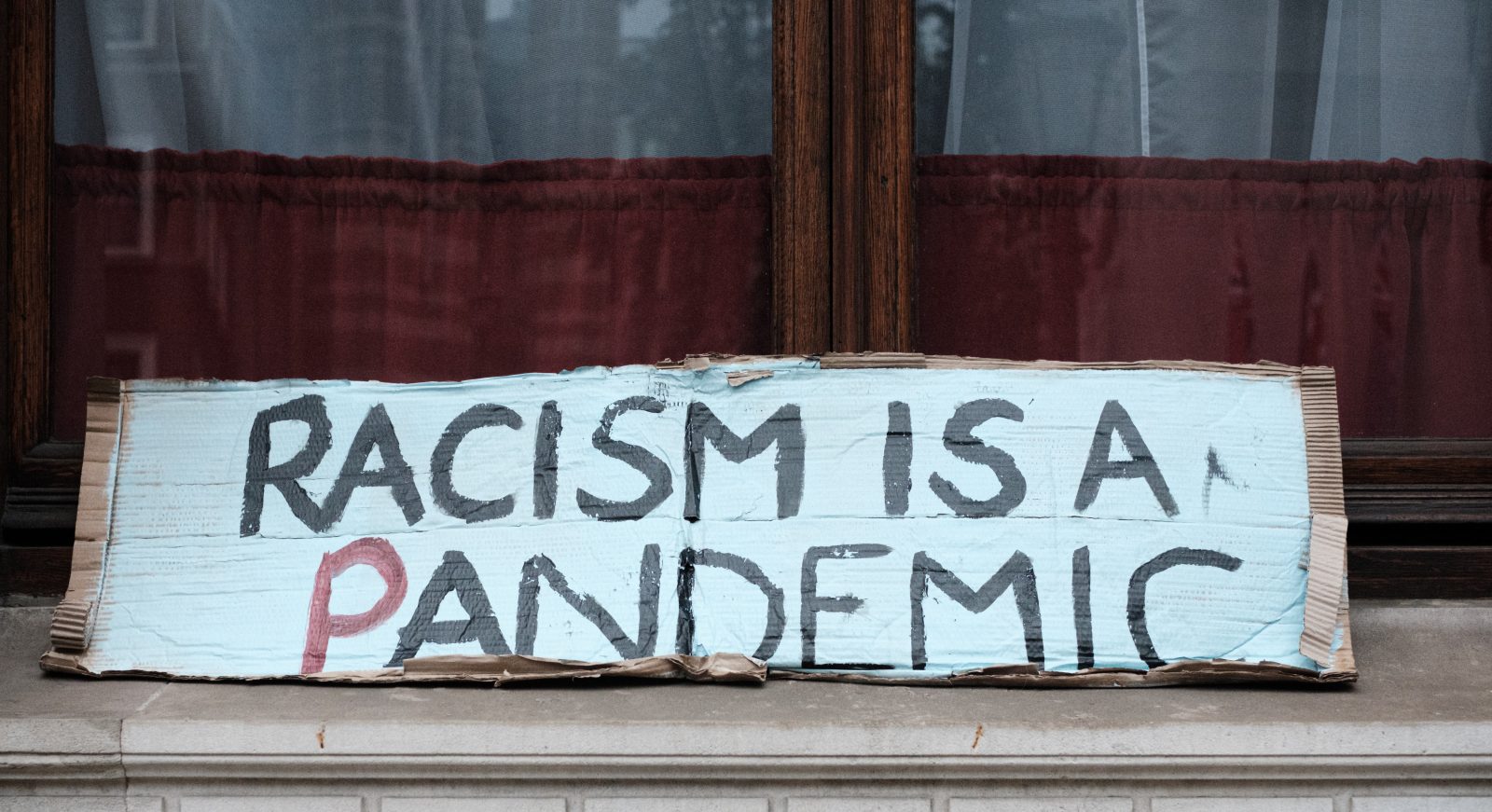
The Rise of White Nationalist Militias
With a general election looming, there is a lot of debate on whether or not the results of the election will incite violence. Since Donald Trump took office as President just four years ago, a lot has changed. One of the most concerning changes is the phenomenon of white nationalist militias coming out of the woodwork. Throughout 2020, private militias were antagonizing Black Lives Matters protesters with sometimes deadly consequences. More recently, there was a plot by right-wing extremist group Wolverine Watchmen to kidnap Michigan Governor Gretchen Whitmer and Virginia Governor Ralph Northam due to their responses to the COVID-19 pandemic. However, the plan was exposed and while thirteen men total were arrested, six were specifically charged with planning to kidnap Whitmer and Northam. Besides the troubling situation with plotting to kidnap sitting governors, it has also been hypothesized that these right-wing militias will likely show up to the polls in certain states on Election Day. They will probably be armed and ready to intimidate others if they deem it necessary. While some groups claim they do not wish to harm anyone and only want to curb civil unrest, it can be seen that many of these groups have already engaged in violence.
These bold moves by white nationalist militia groups are not only a potential threat to the integrity of the upcoming election, but also to our democracy as a whole. Often, these right-wing militias disobey laws to achieve their goals and create more civil unrest in the process. There is the question of whether or not these civilian-formed militias are even legal. The answer to that is a bit complicated; people with extreme views are allowed to create a group off of those shared political views and call themselves a “militia.” However, all fifty states prohibit “private, unauthorized militias and military units from engaging in activities reserved for the state militia, including law enforcement activities,” according to Georgetown University Law Center. This is exactly what we have seen pop up lately: armed civilians who are untrained in formal law enforcement attempting to do the job of legitimate law enforcement. When this happens, tragedy often strikes, as was the case with 17-year-old Kyle Rittenhouse of Antioch, IL. His involvement with right-wing militia Boogaloo Bois during the Kenosha protests ended up being deadly and he is now being charged for the murder of two out of the three protesters that he shot. Citizens have a right to defend themselves under the Second Amendment, but self-defense is not what we see these militias engaging in. Instead, we see them engaging in outright vigilantism, acting as a paramilitary unit.
The brazen actions of these right-wing nationalist militias should concern American citizens, as there is the potential for more violence as the election approaches. The FBI has arrested about 120 people on domestic terrorism suspicions this year, many of which were members of white supremacist or anti-government groups. It is clear that these groups now feel comfortable enough to come out of the woodwork and showcase themselves. Members of these groups know that laws against private militias are rarely enforced, and our own President refuses to condemn their existence. During a presidential debate, President Trump even told white supremacist group Proud Boys to “stand back and stand by” to deal with ANTIFA, which is a reflection of his attitude in general over the past four years. It is no wonder these groups continue to assemble and emerge, as they feel they have the support of our country’s “leader.” While these white nationalist militias grow in membership, what we need is a leader who will condemn their existence to protect our democracy and preserve law and order.
Resistance Resources:
- Click here to read about a bill introduced this year to help curb domestic terrorism in the U.S.
- To learn more about the rise of these militia groups, visit the Anti-Defamation League webpage.

The Corruption of Ivanka Trump
The Corruption Blog digs into the details of the all-encompassing corruption of the Trump administration.
The image Ivanka Trump presents of herself is that of a hard working entrepreneur whose lifestyle brand aligns with the values of her generation. In reality, she is far closer to a younger, female version of her old man. Her business and political career are nearly a mirror of Donald Trump’s. Be it a Trump property, or a presidency, the presentation is rife bombast and glitz, promising to deliver a superior product. Reality seldom bears this out.
Prior to her appointment to Senior Adviser to the President, Ivanka had almost no work history outside the family business. Her overseas experience amounted to an effort to develop a failed Trump-branded property in the Azerbaijan. Trump Tower Baku was backed by corrupt oligarchs in the country’s government. Ivanka personally oversaw the development, even posting a picture of herself in a hard hat on her website. The project remains unfinished and is suspected of being a venue exclusively for the purpose of money laundering. No evidence exists that the Trump Organization was actively involved in wrongdoing, but the company may have run afoul of the law through taking a deliberate blind eye towards illicit practices. This experience hardly qualifies her to be an individual tasked with representing the US internationally.
Keeping with family tradition, Ivanka was actively engaged with fraud at the Trump SoHo project. Units at the property were in high-demand, or so said Ivanka at an event to promote the residences; she claimed publicly that over 60% of units in the yet to be opened property were sold when questioned in 2010. Per emails between her and Donald Trump Jr, obtained by Manhattan’s DA office, this was a blatant fabrication. Roughly 16% of units had sold and the building was hemorrhaging money. It was a case of demonstrable fraud, which was inexplicably not prosecuted. Conduct of this sort could and should preclude an individual from working so close to the seat of power. In the Trump administration it seems to be a a prerequisite.
Her years of duplicitous behavior and coasting on the family name prepared her nicely for her current role in the Executive Branch. From the start of her appointment Ivanka courted controversy and accusations of nepotism. She was given a West Wing office without an official position, which potentially exposed her to classified material without the property security clearances. The situation was ‘’remedied’’ when she was officially hired and put through the formal vetting process.
US consumers and businesses were adversely affected by higher prices as a result of President Trump’s bungled trade war with China. His daughter came out ahead. Clothing to and from China were excluded from addition tariffs, which meant none of Ivanka’s lifestyle brand would be more expensive to consumers. There may well have been other considerations that factored into the decision, but it is yet another instance of a family member insulated from the harm caused by Trump’s slap-dash policies. Additionally, while the two super-powers exchanged internecine rhetoric and economic measure, Ivanka, through her ease of access was able to secure multiple patents from the Chinese government for her various consumer products.
These and other business holdings raised conflicts of interest loud enough to force Ivanka to shutter her company’s operation. At the time (June 2018) she told reporters her namesake brand would be ceasing operations entirely in order for her to focus on her responsibilities in Washington. Ever a chip off the old block, her deeds have failed to match her words. Despite insinuating that she did not now know if or when she would be returning to the business world, she continued to acquire patents for the allegedly defunct outfit. 16 more patents from China have been issued to her company as well as ones from Japan and Argentina since she was said to have shut it all down. Citizens for Responsibility and Ethics and Washington obtained her most recent financial disclosure, which revealed that last year she received between 100K and 1M in income from her company. Her merchandise is still available on Amazon, which could be remaining inventory, or products made and sold by others with Ivanka’s blessing. Either way, all signs point to Ivanka Trump continuing to profit off a business pre-dating her time in the White House after telling the world it was closed. It’s hard to fathom a more Trumpian disassociation between words and actions.
The recent New York Times story on the president’s taxes present the picture of a desperate real estate mogul engaged in long-term tax fraud. Ivanka was not spared. Among the many revelations in the piece were that Ivanka had been paid $747,000 as an outside consultant on Trump properties in Vancouver and Hawaii. That is problematic as she was already a high-ranking executive of the company and therefore would need not be paid as such. The criminal implication comes into focus with the development that the amount she was paid corresponds exactly to a deduction Trump wrote off on the projects. As Ivanka was already employed by the company doing the business, there would be no legitimate reason for doing so other than illicit avoiding of federal taxes. If substantiated, the detail could land in Ivanka in serious legal trouble should Trump lose November’s election.
Donald Trump has said he loves nepotism. He should, he’s been a beneficiary of the practice since he was his father’s landlord at five years old. It has benefited his daughter, who lived off the family name in the private sector before continuing to do so from the friendly confines of her father’s White House

The Corona Virus Crisis Women in the Labor Force
Policy
Women are leaving the workforce at a rate four times than that of men. There are two alarming trends affecting women in the labor force as a consequence of the corona virus. The first impacts lower wage workers and concerns the dramatic rate of unemployment among women and especially Latinas. The second trend pertains to women with higher education and the increasing rate at which they are dropping out of the workforce largely due to childcare needs.
In recent economic downturns, until the covid era, recessions were more pronounced in their effects on male employment earning them the title of mancessions. With the covid era that has changed. Sixty percent of jobs lost, at the onset of the virus, were to women. In December 2019, women were 50.04% of the labor force, making them more than half of the labor force for the first time in a decade. In April, the labor force participation for women was the lowest it has been since 1986. Between February and April women’s unemployment increased by 12.8% compared to 9.9% for males. Between August and September 1.1 million people left the labor market. Women comprised the highest portion of this group at 800,000 including 324,000 Latinas and 58,000 African Americans. Job losses were more pronounced in industries which hire a disproportionate number of women. These include service work, production work, restaurant work, and some health care occupations. These affect all women and especially women of color. These women are least likely to be able to work at home and most likely to lose jobs. Their unemployment is likely to outlive the recession. In Sun Belt states this has hit really hard among Latinas. These include Florida, California, Texas, and Arizona which have the highest concentration of Latinx populations. It is hard to say how long it will take for these jobs to be reinstated or if they actually will be. For some, unemployment payments, augmented by the federal CARES program, were literally lifesaving but that aid ended July 31st and there is no new program on the horizon. The consequences for the community are dire, especially for single women headed households with minor children.
For professional women the situation is more voluntary in that women are opting out of the labor force due to caregiving requirements related to childcare and homeschooling. Women are more likely than their male partners to quit working because more often they make the lower salary. Cultural expectations still also play a role in the burden placed on women. When women are still working they perform 15 hours more childcare duties than their partners. It is too stressful and they are bending under the weight. The problem is not only that they are the ones likely to sacrifice working for now but that their departure from the labor force will have long ranging consequences both for women and for the economy. Women in mid professional careers are on a trajectory where they are more likely to be promoted. If this window is missed they are in jeopardy of losing those opportunities permanently. Women who leave professional jobs are at high risk for never replacing them at the same level and/or for sacrificing their future gains. This will create a situation in which the income gains of women, hard won in recent decades, will regress and likely not recoup for some time. These millennial women also suffered setbacks during the great recession.
Analysis
To address the problem of the lower wage workers, the solution is pretty straight forward. The federal government must create a CARES program to help those in dire need. This is not a time for partisan shenanigans. The need is clear and the response should be swift and compassionate. In addressing the concerns of women opting out of professional jobs, the employers need to institute very specific programs which will allow for recruiting women back into positions comparable to those vacated. Flexible scheduling, remote opportunities, and programs to facilitate promotion can be elaborated by human resources departments. This is not a matter of giving women (or men in the same position) special treatment but of compensating for very real biases in employment world and in the gendered nature which persists in society. This is not just a way to help specific women but of supporting the economy. It is estimated that the unemployment of women has cost the economy 341 billion dollars so far.
Learn More
https://www.nytimes.com/2020/10/03/us/jobs-women-dropping-out-workforce-wage-gap-gender.html
https://www.cnn.com/2020/08/19/economy/women-quitting-work-child-care/index.html
https://www.cnbc.com/2020/07/14/how-coronavirus-could-do-long-term-damage-to-womens-careers.html
https://www.epi.org/publication/latinx-workers-covid/
Resources
https://www.crisistextline.org/ National crisis hotline. It will connect you with local counties which can provide local information on rent assistance, food aid, mental health, suicide, housing, healthcare.

How Foreign Countries Are Hacking the US Election
Policy Summary:
Although some of us may have missed it with all of the covid-19 news, in early August, U.S. intelligence reported to Congress that Russia, China, and Iran are attempting to interfere in the 2020 presidential election. Russia appears to be launching the largest offensive, with China and Iran making smaller, more limited incursions. Both sides of the aisle have now turned the report into an excuse for partisan grandstanding and factional ammunition. Democrats have used the report as further evidence that Trump is Putin’s desired candidate. Republicans have fired back with the fact that Biden is Iran and China’s desired candidate.
However, in the cases of China and Iran, it is wholly over-simplifying to say that they are running the same manner of interference as Russia. Facebook’s head of security has said that on their platform, the accounts linked to the Chinese Communist Party (CCP) were more focused on generating an audience and then dividing said audience rather than supporting Biden in particular. Beijing certainly favors Biden, but their backing seems less concerted than Russia’s support for Trump. This may be due to Biden’s hardline statements against CCP human rights violations in Xinjiang or the fact that he is viewed more favorably by other democratic nations, threatening coalition-building potential. China’s efforts are also largely focused on political issues specifically related to Chinese business interests. For instance, the TikTok ban, the closure of Chinese consulates over accusations of industrial espionage, and resistance against Huawei’s 5G network. And for Iran, although the efforts certainly favor Biden, they appear to be more focused on encouraging mistrust in public institutions and circulating anti-American content than expressly denigrating Trump.
Compare this to Russian efforts, which have been the long-term continuation of the weaponization of social media through deep fakes, bot farms, disinformation, and trolling to support the Trump campaign since the 2016 election. Although Trump’s administration and the Republican party’s record on Russia has been largely harsh, Trump has personally expressed positive rhetoric and admiration for Putin. In addition, Biden was involved in anti-Russian policies based upon the invasion of Ukraine and pro-Putin opposition under the Obama administration.
Analysis:
It would appear that China and Russia are the key players in this election interference, with Iran played a subordinate role. Chinese efforts have been defined as being different from Russian. Although China is currently following Russia’s lead in weaponizing social media platforms, some worry that it may choose to follow a soft-power strategy that has shown promise in Australia and is far harder to combat under a democratic framework. In Australia, Chinese immigrants with connections to the CCP were found donating large sums of money to pro-Beijing political campaigns and attempting to influence Chinese-language media, civic groups, and on university campuses. These efforts are largely conducted through proxies and brushed aside by Beijing with rebuttals of plausible deniability. China has been promoting a positive public image in the U.S. for years through personal exchanges, relationships with American business leaders, retaliatory threats, lobbying, disinformation campaigns, and more.
All of this partisan mud-slinging obscures the real issue, however. To put it simply, Iran, China, and Russia are attempting to realize political outcomes in the U.S. that are advantageous to their respective regimes while concurrently damaging and ultimately shattering ordinary American’s faith in their public institutions. They appear to be succeeding, although the degree to which this is due to foreign interference is debatable. Doubt has been cast on the electoral process and this threatens all of us. Democracy is built upon confidence in the voting system and the integrity of public institutions, and to be frank, we were already on shaky ground due to controversy over the electoral college and big money’s influence on political outcomes.
In addition, we as liberals should not be downplaying China and Iran’s efforts to support the Biden campaign in favor of spotlighting Russia and Trump. These practices, no matter the source, should not be normalized or seen as less dangerous than Russian exertions. It also distracts from real infrastructure problems facing the coming 2020 election, such as the lack of poll workers and the weakening of the U.S. postal service’s capacity.
Despite the threat to our elections, however, U.S. intelligence sources have reiterated that it is unlikely that America’s enemies abroad can currently manipulate voting to the point of altering true results. The U.S. has greatly improved its cyber election defenses since 2016 and much of the public is aware of the threat from foreign interference. The bulk of disinformation is actually coming from domestic sources rather than abroad, with mostly right-wing sources copying and employing tactics made popular by Russia in 2016. This is probably a far greater threat than foreign interference, as social media companies cannot easily clamp down on private citizens within the U.S. who claim that they are simply disseminating their political opinions.
Resistance Resources:
- Rand Corporation – more information on voter consensus and the importance of public trust
- Center for American Progress – discussion of Russian foreign interference in the 2016 elections and how we should approach interference in 2020

Nuclear Proliferation in the Year 2020
Policy Summary:
Perhaps the gravest danger of nuclear proliferation today is the invisibility of the problem. As it stands, the United States officially has about 5800 nuclear weapons. Russia has about 6400. China has about 300. Six other states possess nuclear weapons; several others may be attempting to acquire them.
And yet the days of the Cold War are long gone. No more shelter-in-place drills, no more hiding under desks, no more fallout shelters. Culturally, the threat and fear of mass nuclear violence have largely dissipated—aside from occasional flare-ups surrounding “rogue states” like North Korea, or broad fears of nuclear terrorism. But all said, the risk of nuclear conflict is as serious as ever—perhaps the most serious it has ever been, given the lack of public awareness of the problem, modernization and proliferation of weapons, the caliber of the leaders currently in power, and the crumbling international framework for managing arms control.
To begin with the last point: a long series of nuclear arms control agreements began in the early days of the Cold War. This notably included the Limited Test Ban Treaty, the Nuclear Non-Proliferation Treaty, the Intermediate-Range Nuclear Forces Treaty, and numerous others—some between the United States and USSR, and some with an international framework.
The limitations of the treaties have been clear. The Nuclear Non-Proliferation Treaty was never ratified by India, Pakistan, and Israel, all of which ultimately acquired nuclear weapons. The central premise of the treaty—that non-nuclear states would not pursue development of nuclear weapons, as nuclear states pursue eventual disarmament—has not been met with any serious progress towards disarmament by the major nuclear weapons states, the United States included.
Perhaps more urgently, landmark agreements between the US/USSR (and later Russian Federation) have been allowed to expire, or have been abandoned. The 1972 Anti-Ballistic Missile Treaty, which limited anti-ballistic missile capabilities between the two states, lapsed in 2002, when the Bush Administration exited the agreement. The Intermediate-Range Nuclear Forces Treaty was abandoned by the US, then Russia, in 2019. The last remaining US-Russia nuclear weapons treaty, New START—signed in 2009—may expire in 2021, largely due to the unwillingness of the Trump Administration to renew it.
A related issue has been modernization of the nuclear arsenals. In the United States, this began as a $1 trillion plan under the Obama Administration, and includes submarine, bomber, and missile upgrades, as well as new deployments of so-called “low-yield”—and thus, theoretically more “usable”—nuclear weapons. Russia has also pursued modernizations, including hypersonic weapons.
Finally, it ought to be noted that smaller but potentially apocalyptic nuclear flash points remain, such as between India and Pakistan. Both are nuclear states with regular border clashes and aggressive—and particularly in India’s case, extremely nationalistic—governments. Other states, like Iran, do not currently have nuclear weapons, but may be on the path to acquiring them.
Analysis:
The United States is not the only international actor when it comes to nuclear proliferation, but it is by far the most significant. The US remains the only nation ever to have used a nuclear weapon in war. Despite ongoing American decline, its status as a superpower, and the enormity of its arsenal, necessitate American involvement in serious international efforts to reduce proliferation. Ideally, this would involve bilateral arms control agreements with Russia, a halt to American nuclear modernization plans, some sort of multilateral mediation at specific conflict sites (including a real defusing of tensions with states like North Korea), and a true move towards nuclear disarmament.
Of course, the Trump Administration has repeatedly demonstrated that it regards international diplomacy as, at best, a nuisance. Trump has personally demonstrated an erratic fascination with nuclear weapons and his administration has shown an utter lack of interest in any efforts to reduce nuclear proliferation. Indeed, its policies in Iran have significantly heightened the probability of that country developing nuclear weapons. Relatedly, there is evidence that Saudi Arabia is potentially pursuing nuclear weapons, possibly with US assent.
To address this, it must be kept in mind that American unilateralism as regards nuclear weapons has been a largely bipartisan policy with a long history. It was the Bush Administration that exited the ABM, and the Obama Administration that agreed to an enormous modernization of the nuclear arsenal. That said, much of the effectiveness of arms control in the past was also broadly bipartisan, and more importantly, instigated by mass public pressure. If the current path is to be altered, the urgency surrounding eliminating nuclear weapons must be renewed.
Resources:
- https://kingsbayplowshares7.org — Members of the Kings Bay Plowshares 7 are due to be sentenced for a non-violent, anti-nuclear action—dating to 4/4/2018—during which they entered the Kings Bay Naval Submarine Base to stage an anti-nuclear protest. Read about the case and donate at the links above.
- https://www.armscontrol.org — “The Arms Control Association, founded in 1971, is a national nonpartisan membership organization dedicated to promoting public understanding of and support for effective arms control policies.”
- https://thebulletin.org — “The Bulletin equips the public, policymakers, and scientists with the information needed to reduce man-made threats to our existence.”

Welfare Demand Peaks During the Pandemic
Out of work for a year, Gail Doffifild of California said that the pandemic has put her job search on life support. Doffifild, a former substance abuse counselor, relies on public assistance to meet basic needs for housing and food, a first in her lifetime.
Along with business closings and job programs on hold that delay employment, a nationwide surge in new welfare applicants is creating bureaucratic delays for all recipients at local welfare offices.
On a recent weekday at noon, Doffifild queued up outside her local welfare office to talk with a caseworker for a few minutes using a phone bank inside. “I’m having to wait like everyone else for the help I need, said Doffifild, who is in her 50s.
Across the U.S., welfare offices report that the record demand for public assistance by new and returning recipients has yet to subside since the pandemic started in early spring.
- More than 12.5 million American adults were unemployed in September, according to the U.S. Bureau of Labor Statistics. Many are turning to local welfare offices for help
- Likewise, a record number of Americans have applied for food stamps in 2020. From February-May, the number of Americans receiving food stamps increased by 17 percent to 43 million.
HEALTH SAFETY CONCERNS AT WELFARE OFFICES
The Families First Coronavirus Response Act — which expired Sept. 30, 2020 — allowed states to relax welfare and food stamp rules to meet the special need for assistance. Food stamps are based on a USDA estimate on the costs to maintain an adequate and healthy diet. In 2019, the most recent statistics available, a family of three was eligible for up to $505 per month in food stamps. The Families First Coronavirus Response Act authorized states to provide emergency supplements to food stamps that raised limits on how much assistance could be provided. The Act:
- Eased eligibility rules for food stamps;
- Raised the amount of food stamp benefits by 15 percent individuals can receive;
- Increased emergency benefits from three to seven months;
- Increased school meal benefits for income-eligible students.
STAYING FLEXIBLE TO THE NEEDS OF UNEMPLOYED AMERICANS
A newly released study by The Center on Budget and Policy Priorities, a nonpartisan research institute, describes as “unprecedented” the demand for food stamps, also known as SNAP, since special emergency legislation, in the form of disaster relief, was enacted by Congress in March 2020.
“The far-reaching health and economic effects of COVID-19 and widespread business closures to limit its spread have made it even more difficult for many low-income households to afford food, and data have shown a sharp increase in the number of families reporting difficulty in affording adequate food and other basic needs. SNAP is essential to helping these families put food on the table, according to the Center on Budget and Policy Priorities.
The center is urging the federal government to extend emergency welfare relief and remain flexible to the needs of Americans experiencing record unemployment. Lawmakers are poised to do just that.
EMERGENCY WELFARE ASSISTANCE AWAITS FINAL PASSAGE
Lawmakers have included an extension to emergency food stamp benefits in new legislation known as the Heroes Act, which addresses a range of unemployment and job loss issues resulting from the pandemic.
The Heroes Act, which passed in the House in May, continues an emergency increase of 15 percent in food stamp amounts through September 2021, averaging about $25 per person more per month. The legislation has yet to advance to a final vote in the Senate. The bill puts a special focus on ensuring that income-eligible children continue to qualify for benefits, even during school closings and remote learning from home.
The influential Washington, D.C., political newspaper, The Hill, published an editorial this month urging the Senate to adopt the new legislation.
“In the few days left before senators head back to their states, they should immediately pass the updated HEROES Act, not only because families need it to survive, but also because it could spare children engaged in the juvenile justice system damage to their health, education and mental wellbeing,” The Hill stated in the Oct. 7, 2020, editorial.
Resistance Resources
- Understanding Food Stamps and How to Apply
Primer is a first step to learning about food stamps, including whether you and your family may be eligible.
https://www.usa.gov/food-help
- The Center on Budget and Policy Priorities
The Center on Budget and Policy Priorities has made recommendations on extending food stamp and special assistance during coronavirus pandemic. https://www.cbpp.org/research/food-assistance/states-are-using-much-needed-temporary-flexibility-in-snap-to-respond-to
- Families First Coronavirus Act
The Families First Coronavirus Response Act provided temporary new authority and broad flexibility for the Agriculture Department (USDA) and states to adapt the Supplemental Nutrition Assistance Program (SNAP, formerly food stamps) to address the current public health emergency. The act expired Sept. 30, 20220.
https://www.congress.gov/bill/116th-congress/house-bill/6201/text
- The Heroes Act
The $1 trillion Heroes Act addresses job loss and provides economic assistance including additional welfare funding. The act is close to final passage and in committee in Congress.
https://www.congress.gov/bill/116th-congress/house-bill/6800
- The Hill.com
The Hill is an influential digital political newspaper published in Washington, D.C. It is owned by News Communications, Inc. Here is an editorial published in October urging passage of the Heroes Act, which in part extends emergency welfare assistance due to the pandemic.
https://thehill.com/opinion/civil-rights/520044-the-senate-must-pass-the-updated-heroes-act-to-protect-justice-involved

Corporate Elites Strike New Oil with the Federal Reserve Bank
POLICY
The Federal Reserve has made an unprecedented policy change: the Fed is now directly intervening to support corporate credit markets. To do so, it has established two facilities: the Primary Market Corporate Credit Facility (PMCCF) and the Secondary Market Corporate Credit Facility (SMCCF). The SMCCF has been actively purchasing corporate issued bonds, loans, and exchange-traded funds (ETFs).
Why?
Overall, the corporate bond market has seen rapid growth since 2008, going from $5 trillion to about $9.6 trillion in 2019. The balance sheets of many larger corporations are debt heavy and the revenues to service that debt have shrunk since the onset of the COVID. In turn, bond ratings have plummeted, many to junk status, and that forces rates higher. The Fed is stepping in to provide much needed liquidity which they propose will keep operations and employment at pre-COVID levels. Over a six-week period, the SMCCF purchased bonds from 500 large companies.
A disproportionate quantity of those bond purchases have been directed at oil and gas conglomerates: about 10% of the Fed’s corporate bond portfolio. In fact, this industry has issued a record amount of new bonds, $129 billion this year alone, according to Bloomberg, most of it issued since the Fed’s purchase program was initiated. 19 of the largest oil and gas companies have been recipients. Outside this industry, a total of $455 billion in corporate debt has been issued.
This includes household giants such as Procter & Gamble who issued $5 billion worth; Coca-Cola added $6.5 billion in bond debt; Apple raised another $8.5 billion while Oracle had a $20 billion debt offering. While the Fed has stated its intervention is intended to stabilize employment, there are no such requirements to prevent layoffs. One analysis showed that a third of companies with the largest bond debt participation have announced sizable worker layoffs.
In June, Fed Chair Jerome Powell testified to Congress that “the intended beneficiaries of all of our programs are workers.”
The petroleum industry has been dramatically impacted by the drop in consumer gasoline demand. The resulting “price collapse” at the pump has left many oil firms unable to service existing debt – much of it used pre-COVID to purchase smaller firms. Bankruptcy looms over many in the industry: 30 percent of the shale sector is “technically insolvent.” Smaller firms financed with private equity are teetering.
As finances for the industry began to unravel, lobbying efforts went into high gear. U.S. Sen. Ted Cruz, R-Texas alongside 10 Republican colleagues issued an influential plea to Mnuchin and Powell in the form of an April 22 letter. Citing the recent downgrading of debt to junk bond status, the letter said, “We face a real and present danger of seeing hundreds, if not thousands of oil producers shuttering, an event that will profoundly and negatively impact the industry, its financial partners and consumers for years to come.”
Then there are the “inside lobbyists” like Interior Secretary David Bernhardt who had represented Big Oil for years. We have Energy Secretary Dan Brouillette whose career included senior posts with Ford Motor Co. and who had served on the Board of a Louisiana agency that oversees leasing of state lands to energy companies.
In spite of the new policy and rescue efforts by the Fed, industry layoffs followed suit. “We have to be simpler, more streamlined,” remarked Shell’s chief executive, Ben van Beurden, in response to another round of layoffs. “We need to be a more competitive organization, more nimble and able to respond to customers.” In a similar vein, Marathon Petroleum issued pink slips to 1000 employees which were intended to “strengthen Marathon Petroleum for short-term and long-term success.” Royal Dutch Shell, another bond purchase recipient, plans to trim its headcount by 9,000.
ANALYSIS
A number of factors have contributed to the financial stress amongst oil corporations. Prior to plummeting demand, Russia and Saudi Arabia were engaged in a price war and this was followed by a brief glut due to the U.S. fracking boom. Many firms, including those non-oil beneficiaries like Boeing corporation, turned down federal CARES Act funding and chose to increase liquidity through bond issuance. Of note, CARES Act funding came with strings attached: executive compensation was restricted.
Furthermore, a recent report revealed that 383 large firms whose bonds were purchased by the Fed paid dividends to their shareholders. Sysco Corporation is a typical example: they laid off a third of its workforce while paying out shareholder dividends. Other bond purchase beneficiaries, like Tyson Foods, were found guilty of labor and environmental violations. The fact that 15% of the Fed’s corporate bond holdings are issued from large banks raises questions similar to the bailout terms during the 2008 financial meltdown.
The administration’s leanings are summed up in this Trump tweet: “We will never let the great U.S. Oil & Gas Industry down.”
Vocal critics include Alan Zibel, research director of Public Citizen’s Corporate Presidency Project who points out that “when consumers take on too much credit card debt, they can be forced into bankruptcy and face financial ruin. But when the oil and gas industry accumulate too much debt, it gets a bailout on the backs of taxpayers.” The administration is accused of issuing bailouts for industry friends and loyalists, and to those who are harming rather than helping our environment.
While this bond buying program is favorable to the Fortune 500 – municipalities, small businesses, and individuals are offered more restrictive loans at higher rates. Sarah Bloom Raskin, a former top Fed and Treasury official, wrote that this program effectively protects wealthy bond holders from losses, offering them “all the upside that comes with a junk bond, but none of the risk that, before now, made it, well, junk.”
Resistance Resources:
- https://prospect.org/ devoted to promoting informed discussion on public policy from a progressive perspective.
- https://www.politico.com/ strives to be the dominant source for news on politics and policy in power centers across every continent.
- https://www.bondbuyer.com/ the only independent information resource serving the entire municipal finance community.
- https://som.yale.edu/ to educate leaders for business and society.

How To Identify And Respond If Illegal Armed Militia Groups Show Up At Polling Booths To Act As “Election Observers
Policy Summary: During the weekend of September 19, 2020, Fairfax County, Virginia was conducting an in – person early voting event when a large group of President Trump supporters arrived on the scene. A number of reports have said that the pro – Trump group was there to try and intimidate voters and create a climate of fear to persuade other voters to not come to the polling booth location.
On September 29, 2020 during the first presidential debate between President Trump and Democratic nominee Joe Biden, President Trump told supporters “to go into the polls and watch carefully.”
And in a number of other incidents, President Trump has praised armed caravans that clashed with protesters in Portland, Oregon, defended 17 year old Kyle Rittenhouse for the murder of two people and praised a number of armed vigilante groups, most recently a group that appeared in Idaho.
The U.S. election for President, congressional members and a number of state officials will be held on November 3, 2020.
Policy Analysis: Due to the frequency of incidents where the President has praised armed vigilante groups and statements that the 2020 election is ripe for fraud and calls for his supporters to “observe” the election, Georgetown University School of Law has compiled a fact sheet on the legality of armed militias in all fifty states and what can be done if a voter is confronted with an “armed observer” at an election site on Election Day.
First, the fact sheets from Georgetown definitively state according to the law in each state that armed militias are illegal in all fifty states. There is no exception despite the fact that certain segments of society believe that groups can collectively arm themselves and offer law enforcement services.
Militias were originally conceived as organized groups called forth by a state or federal authority to defend the state or the country. However, groups that have formed without the authority of a state or federal authority are considered an “unorganized militia” and are expressly prohibited by every state in the Union by their state laws. With the number of armed groups that have come forth and been in the news lately it is safe to say that they did not form with the authority of a state or federal government and are therefore illegal.
But that hasn’t stopped President Trump from publicly admiring these illegal groups from afar and giving them encouragement. Just the presence of the groups alone makes them in violation of the law but it is the encouragement from President Trump and his attempt to link their “protective activities” to the integrity of the upcoming election that is cause for high concern. The appearance of these “armed groups” will not make the conduct of any election or a polling booth any safer. On the contrary, roving bands of armed groups will only serve to suppress votes and intimidate voters into not coming to a polling booth because of fears of violence. Rep. Maxine Waters (D-CA) even stated that these groups are specifically targeting minority communities of color and low – income communities in order to suppress the votes from those voting blocs. The political tactics of encouraging these armed groups to “safeguard society” mirrors the techniques that were so often used in the racist Jim Crow South to prevent blacks from voting.
With the information compiled by the Georgetown University Law School on illegal armed militias and possible voter intimidation tactics in the coming election, voters now have at their fingertips info into how to spot these groups and what steps can be taken if these groups appear at a polling site. Some situations listed in the fact sheet to watch for are non – law enforcement people acting like law enforcement, questioning voters and even turning some people away. Armed people who are not law enforcement officers cannot do this and are simply trying to instill fear into voters, as was the case with the group of Trump supporters in Fairfax County, Virginia last month. This does not have to happen and with the state – by – state information provided by Georgetown Law School the tactics used by these illegal groups and encouraged by President Trump can be prevented from having a role in the upcoming election. LEARN MORE, LEARN MORE
Engagement Resources:
- Georgetown University School of Law – infopage on danger of private paramilitary group with link to state – by – state factsheet on how to identify and report on illegal armed groups on election day.
- Election Law Blog – blog on voting rights and voter intimidation issues.
This brief was compiled by Rod Maggay. If you have comments or want to add the name of your organization to this brief, please contact Rod@USResistnews.org.

The Corruption of Operation Warp Speed
Operation Warp Speed is the Center for Disease Control’s project to develop a coronavirus vaccine in record time. It is the most ambitious undertaking by the US government since the Manhattan Project. A vaccine against Covd-19 is paramount towards putting an end to the pandemic and returning the country to a sense of normalcy. Also, like almost every other endeavor in the Trump administration, Warp Speed has been plagued by politicization and potential conflicts of interest.
The CDC’s vaccine initiative was announced in April. It got off to a predictably rocky start. Rick Bright, vaccine expert and former head of Biomedical Advanced Research and Development Authority, was originally the head of the project. Shortly after it began, he was reassigned to a parallel position in the National Institute of Health. Bright filed a damning whistleblower complaint which alleges he was pulled from his job, in part, due to resistance of ‘’promoting potentially dangerous drugs marketed by those with political connections.’’ He also warned against the anti-malarial drug, hydroxychloroquine, for treatment against the coronavirus. Upon submission of his complaint to the Inspector General’s office, it was found to warrant investigation. The IG recommended reinstating Bright to his previous role pending their findings. He was not.
Bright’s replacement, Moncef Slaoui, is imminently qualified, having spent the last three decades developing vaccines and overseeing such large scale projects. He also has serious financial conflicts of interest. Beginning in the late 1980’s, Slouvai worked at GlaxoSmithKline, one of the contractors working to develop a vaccine. He also served on the board of Moderna, another pharmaceutical giant involved in Warp Speed. When installed in his post, he resigned from Moderna’s board and sold off $10 million in the company’s shares. In a flagrant flouting of ethics rules, he refused to do the same for the nearly $12 million in stock of GSX, saying ‘’that’s my retirement.’’ The Trump administration has classified him as a contractor, which subjects him to less stringent ethics rules than are typical of government employees. His compromise was a pledge to donate any gains made on the stock to cancer research. It is a toothless clause in his contract. Slouvai may retain any gains made on the stock, which he has an interest in promoting, until his death or the death of his wife.
Similar ethics issue exists for three top advisers on Operation Warp Speed. Tevia Pharmacueticals and Pfizer are both contenders in the race to develop a coronavirus vaccine. Tevia’s former CEO and two former executive’s of Pfizer finds themselves in leading roles in the government’s effort. Each has filed the necessary disclosures to serve on the project, but retain a financial stake in successful efforts of their former employers. Like Slouvai, each has made vague, and seemingly unenforceable pledges to donate any gains made on the stock in the aforementioned companies.
The result of potential profit motives and the administration’s continued politicization of the pandemic has been to help undermine public trust in the safety of a forthcoming vaccine. According to a Pew Research Poll conducted in September, only 21% of adult respondents would ‘’definitely’’ get a Covid-19 vaccine, compared to 42% in May. The same survey found that 77% of Americans believe a vaccine would be released before its safety and effectiveness are fully understood. Declines in public trust can be seen across the board regardless of race, gender, education and political leanings. It seems to be one of few issues in public polling where Americans are trending near-unanimously in the same direction.
One could hardly blame them. Trump has intentionally misled the public on the coronavirus from day one. His interview with Bob Woodward confirmed as much. His myriad deceit has been amplified and echoed by the cacophony of his sycophants. The former assistant secretary of Health and Human Services, Michael Caputo (he of no medical training) posted a bizarre rant on Facebook, where among other allegations, he accused CDC scientists of sedition. From the outset of the pandemic, the government’s messaging has been a tug of war between hard science and political considerations.
Anthony Fauci has stated repeatedly that a relatively effective vaccine, in conjunction with continued mask-wearing and social distancing are imperative in the country’s battle with the coronavirus. Wearing masks is still inexplicably contentious issue. Large, unprotected gatherings (like the Rose Garden announcement of Trump’s Supreme Court nominee), continue to take place with troubling regularity. After that event President Trump himself, several of his close advisors and colleagues and 2 US Senators have come down the with the coronavirus (Trump has been hospitalized.) The corruption of Operation Warp Speed is emblematic of these factors which serve to prolong and compound the nation’s Covid-19 woes.

Education in the time Covid — Part 4: Higher Education
The spread of Covid through our universities has several implications in addition to the life-threatening effects of the virus itself. College campuses are experimenting with various methods of teaching, housing, and addressing Covid in their student and staff populations. Because there is no one-size fits all plan, colleges are following the guidelines of their state — or not — to determine the best course of action while trying to stay afloat financially without increasing the virus’ spread. Universities are facing financial strain due to diminished enrollment and inability to sustain typical channels of revenue. On top of that, students’ financial needs are increasing due to the impact of the pandemic on families in general, which is particularly devastating for students who already have greater financial needs.
A recent study from the National Student Clearinghouse Research Center estimates that undergraduate enrollment for the Fall semester has dropped nearly 3.9 percent, with community colleges and rural universities having the steepest drop. This is concerning with regard to equity and access in higher education, as community colleges serve more low-income and racially diverse student bodies, so a decrease in college enrollment could have long-term effects on Black, Latinx, Indigenous, and low-income communities. Those who already have financial barriers to college and who aren’t able to access higher education in the coming years could potentially be left out of the changing economy of the future — increasing the wealth gap even further.
Since March 13, there has been a decrease in FAFSA (the federal financial aid program) applications, nearly 100,000 fewer students applied for financial aid, indicating that many low-income students who would have normally applied for aid are opting-out of college this year. Rural and small towns have had the greatest decline in FAFSA applications. Additionally, the US Census Bureau found that students with families making under $75,000 a year were twice as likely to cancel plans to attend college.
With increasing student loan debt over the last decade and dreary projections for universities’ revenue, it is possible that tuition will in fact increase. This possibility is troublesome for rising student debt, leading some universities to take steps to mitigate this effect by freezing tuition so that students can stay enrolled and complete their degrees.
While this is concerning for the future of all students, the financial security of colleges is also at stake. With a decrease in enrollment certainly comes a decrease in tuition — however, as NPR reports, other revenue sources such as campus dorms and sports programs will be absent for many colleges this year, driving further deficits. For example, Syracuse University has already posted losses of $35 million, University of Michigan projects $400 million to $1 billion, and Pennsylvania State University System expects losses of $100 million. Additionally, many small private colleges with small endowments, who traditionally attract first-generation and lower-income students, will be facing deep revenue declines in the coming years, and some have already closed. This will help to fuel the disparity between elite private colleges, and smaller private colleges — leaving students to opt for public university systems or no college at all.
Some colleges are struggling to stay afloat, yet Harvard and its counterparts have recently posted endowment returns in the billions. The cushion that old, private, and capital-rich universities sit on only deepens the divides in the university system, which disproportionately impact less wealthy students.
Over the course of the pandemic, colleges have been making headlines with virus numbers increasing and a rapid spread to the greater local communities. Despite UNC at Chapel Hill shutting down after a week of in-person classes, and universities in Georgia deciding to remain open with thousands of cases throughout the state, other universities such as Cornell and Northeastern are taking precautions so they can remain open or open sooner. Namely, mass testing, diluted dorm rooms, and hybrid classes are keeping the numbers lower, but the struggle to keep infection rate down is ongoing and could change at any moment.
A group of researchers recently estimated that there were 3,200 new Covid college cases per day during the first two weeks of the fall semester. This is alarming because with each new case comes community spread and a chain of virus transmission. Moreover, the impact that small, rural colleges have on the economy of local communities could also be factored into a college’s decision to reopen — many people who rely on students to drive commerce and rent properties will be facing financial strain as long as they stay closed. But allowing students to return has in some cases increased community spread, so there is a delicate balancing act to perform in order to keep everyone safe and financially secure.
With all this in mind, students and families are now considering how much money the traditional college experience is worth. Remote courses might be better for some students and families, but does that mean tuition should decrease to account for the lack of the college experience? Concerns around financial aid will be different this year as well — as the FAFSA will use 2019 tax returns, aid packages won’t consider changes in a family’s situation due to Covid, so there is an extra burden on students and families to navigate more bureaucracy in order to pay for college.
With tuition costs looming over an uncertain financial situation for many students, some student activists are taking action by protesting, filing lawsuits, and threatening a tuition strike. While many colleges aren’t budging, it is notable that Georgetown, Princeton and Northwestern University have responded by reducing fall tuition by 10%.
In a recent letter to the House of Representatives, the American Council on Education on behalf of 45 higher education organizations urged legislators to pass at least $120 billion in aid to higher education in order to “partially mitigate the challenges that students and institutions are facing.” In response to universities’ increase in costs, the $46.6 billion initially requested has proven to be not nearly enough.
A new House Proposal allocates $39 billion for higher education, a far cry from the $120 billion in estimated need. Nevertheless, the bill would disburse $27 billion for public colleges, with states focusing on schools with more Pell Grant recipients to ensure money goes where it is most needed.
With safety at the forefront, colleges have an uncertain path going forward. What is clear is that funding is needed to address the gap in wealth that disproportionately affects individuals from low-income families and colleges that serve low-income communities. Unless there is a concerted effort to save these institutions and encourage students with barriers to entry to still pursue college, we could potentially see the past decades of work to address equity in higher education begin to fall apart.
Resistance Resources:
- National College Attainment Network — NCAN works to empower communities to close equity gaps in attaining postsecondary education. Visit their advocacy center to write letters to your Congress Members and get informed about relevant state and federal legislature.
- Partners for College Affordability and Public Trust — This nonprofit works to make affordable college a reality for all students. Check out their action center, their research on college tuition and flow of money, and their database of officials who determine tuition and fees in higher education institutions across America.
- American Council on Education — A member organization that convenes university leaders across the country, ACE is very involved in federal policy discussions around higher education. They provide a platform for higher education leaders to connect, discuss issues, and take action, in addition to providing detailed resources on higher education policy and activism toolkits.
- National Association of Student Financial Aid Administrators — NASFAA performs research and policy advocacy to remove financial barriers and create equitable access to postsecondary education. Check out their action center to send letters to your senator, share your story as a student or educator, or find out how and where to volunteer to support better access to and more robust funding for college student tuition.
Sources:
- Politico – Florida Governor Criticizes Universities
- Inside Higher Ed – Covid in Counties with Colleges
- Inside Higher Ed – Covid and Colleges — update
- Washington Post – Enrollment Down
- NPR – Colleges Under Financial Strain
- New York Times: Covid College Case Tracker
- US Census – College Students
- Marketplace – Low-income College Students
- National College Attainment Network – FAFSA decrease
- Politico – Covid Campus Success
- New York Times – Fafsa
- Boston Globe – Harvard Endowment
- Inside Higher Ed – Financial Toll of Colleges
- Education Dive – House Proposal for Higher Ed
- Times Higher Education – Covid Cases linked to College Reopening
- Reuters – Student Activists Address Tuition
- ABC – New House Bill
- Forbes – Covid and college Tuition
- Chronicle – Covid Testing Success