

JOBS POLICIES, ANALYSIS, AND RESOURCES
Latest Jobs Posts
Will Artificial Intelligence Save California… or Ruin It?
Brief #111 – Technology Policy Brief
by : Mindy Spatt
Artificial intelligence holds the potential to both revive California’s tech industry and jeopardize the integrity of its elections, as Supervisor Dean Preston cautions. With groundbreaking AI legislation on the line and facing intense opposition from industry players, California stands at a critical juncture in shaping its future.
The Week That Was: Global News In Review
Brief #144 – Foreign Policy Brief
by: Abran C
This week’s global news highlights significant events, including the Biden administration’s new asylum ban at the US-Mexico border and Human Rights Watch’s alarming report on mass killings of Ethiopian migrants by Saudi border guards. Additionally, unrest in New Caledonia over French electoral reforms and Haiti’s ongoing crisis under interim Prime Minister Garry Conille draw international attention.
The Effect of Unpaid Student Loans on the Economy
Brief #92 – Education Policy Brief
by: Arvind Salem
Explore the economic ramifications of unpaid student loans amid the backdrop of the CARES Act and subsequent policy measures enacted by Presidents Trump and Biden. Delve into the complexities of student loan forgiveness proposals, legal challenges, and the efficacy of existing relief programs like the Public Service Loan Forgiveness (PSLF) initiative.
Navigating Inflation: A Comprehensive Analysis
Brief #61 – Economic Policy Brief
by: Arvind Salem
As inflation rates surge, consumers face mounting pressure on their wallets, with prices soaring in key sectors like housing and groceries. Amidst political debates and policy clashes, understanding the root causes and potential solutions becomes critical for navigating the economic landscape.
History of the Upside Down Flag and the Justice Alito Controversy
Brief #224 – Civil Rights Policy Brief
by: Rod Maggay
The controversy surrounding Justice Samuel Alito stems from reports of an upside-down American flag and a Pine Tree Flag flown at his properties, symbols recently adopted by far-right groups protesting the 2020 election results. This incident raises significant concerns about his impartiality and adherence to the Supreme Court’s Code of Conduct, prompting calls for his recusal from related cases and potential congressional censure.
Autocracy Now! Examining the Global Surge in Authoritarianism
JUNE OP ED
by: U.S. Resist News (Abran C)
Free and fair democratic governance is facing unprecedented challenges worldwide, with a disturbing rise in authoritarianism across various continents. This brief delves into the reasons behind this trend, examining economic inequality, globalization, and technological advancements as key drivers.
Ocean Coral’s White Skeletons Send a Stark Message
Brief #168 – Environment Policy Brief
by : Todd J. Broadman
Ocean coral reefs are facing an unprecedented crisis, with mass bleaching events threatening the survival of these vital ecosystems. As ocean temperatures rise, the vibrant reefs are turning into graveyards of white skeletons, sending a stark message about the urgent need for climate action and coral conservation.
Story of Pulitzer winner Vladimir Kara-Murza, an oppositionist imprisoned in Russia: Part 1
Brief #143 – Foreign Policy Brief
by: Yelena Korshunov
Vladimir Kara-Murza, a prominent Russian oppositionist and historian, has been awarded the 2024 Pulitzer Prize for his courageous columns written from prison, where he has been held since 2022 on charges of treason. Despite severe health issues and isolation, Kara-Murza continues to advocate for democracy and expose human rights violations in Vladimir Putin’s Russia.
Checking in on 14 Years of Obamacare: Part 3
Policy Brief #174 – Health and Gender
by: Geoffrey Small
Fourteen years after the enactment of the Affordable Care Act (ACA), its impact on innovative medical care and cost-saving measures remains mixed. While Obamacare has expanded access and encouraged preventative care, the anticipated financial savings have not fully materialized, highlighting the ongoing complexity of achieving affordable healthcare in the U.S.


Teen Pornographers and Trump’s Black Friends: Can Deepfakes Be Controlled?
Teen Pornographers and Trump’s Black Friends: Can Deepfakes Be Controlled?
Technology Policy Brief #109 | By: Mindy Spatt | March 20, 2024
Featured Photo: www.pymnts.com
__________________________________
Regulators and regulators are scrambling to find ways of containing the harms of AI, including the proliferation of deepfakes, which can distort elections and are responsible for a new form of pornography appearing in middle schools around the country. Guidelines passed by the EU, while more than the US has managed, don’t fully address the problem. Some federal legislation has been proposed in the US, but so far hasn’t gone anywhere. A handful of states have taken action.
ANALYSIS
Images of Donald Trump surrounded by adoring black supporters looked to me like obvious fakes. But fake images such as these are not always identifiable and are often being used to influence elections. With concerns over deepfakes growing in the last few years, Google had said it would require political ads using AI to include a prominent disclosure; it is unclear whether the Trump pics were so marked.
According to the Center for Countering Digital Hate, which studied the most popular AI image tools including ChatGPT Plus and Microsoft’s Image Creator, the tools created election disinformation in 41% of cases surveyed, including images that could support completely false claims about candidates or elections.
Voluntary self-regulation is unlikely to solve the problem, but legislators and regulators have been slow to respond to this growing threat. The EU recently approved, with much fanfare, landmark regulations addressing AI, but they don’t ban deepfakes entirely. The rules do require transparency by creators of artificial images in the form of a disclosure of both the origin of the image and the techniques used to create it. Skeptics question whether the EU rules, which haven’t gone into effect yet, will be enforceable and whether they go far enough.
Here in the US Congressman Joe Morelle (D- Rochester, NY) takes aim at a form of AI pornography that often targets young girls with the Preventing Deepfakes of Intimate Images Act. Testifying in support of Morelle’s bill was Francesca Mani, a 15 year old from New Jersey who had fake nude images of her shared online, along with her mother. Her situation is unfortunately not unique. In another high-profile case, five students were expelled from a middle school in Beverly Hills for creating and distributing images of their 8th grade classmates that superimposed actual head shots with AI generated nude bodies.
In introducing the bill, Representative Morelle said “The spread of A.I.-generated and altered images can cause irrevocable emotional, financial, and reputational harm—and unfortunately, women are disproportionately impacted… it’s critical that we take proactive steps to combat the spread of disinformation and protect individuals from compromising situations online.” The Act would make it illegal to share altered or “deepfake” intimate images without consent and makes it clear that consent to create the image does not establish consent for sharing or disclosure. It would also create a right of private action for victims.
An unnamed New Jersey Jane Doe is suing over the same incident Mani testified about, asking a federal district court to stop further distribution of the images and order them destroyed. She is also seeking compensatory damages. This Jane Doe, her lawyers allege, “suffered and will continue to suffer substantial “substantial emotional distress, mental anguish, anxiety, embarrassment, shame, humiliation” and reputational harm caused by the images.
In another case in Florida, two boys, aged 13 and 14, were arrested and face felony charges for using AI to create explicit images of 12 and 13 year old girls. They were charged under a Florida law that makes it a crime to disseminate sexually explicit images without consent. About 10 states have similar laws on the books, but with the criminal charges, possibly the first in the nation, the issue is being taken to a whole new level, and Congress may be spurred to action.
Engagement Resources:
- The New EU AI Act- The Ten Key Things You Need to Know Now, Dentons, December 14, 2023
- Online Safety and Privacy Basics: How to Protect Yourself Against Deepfakes, December 22, 2023
- REPORT: FAKE IMAGE FACTORIES: How AI image generators threaten election integrity and democracy, Center for Digital Privacy March 06, 2024
Check out usrenewnews.org/AI for more news on AI technologies and trends. Stay informed with the latest insights from our dedicated reporters by subscribing to the U.S. Resist Democracy Weekly Newsletter. Your support is crucial in safeguarding fearless, independent journalism. If you appreciate our content, please consider donating today to continue in helping to protect democracy and empower citizenship.

El Salvador’s President Addresses His Country’s Gang Problem
El Salvador’s President Addresses His Country’s Gang Problem
Foreign Policy Brief #129 | By: Abigail Hunt| March 25, 2024
Featured Photo: www.vox.com
__________________________________
Two years ago, El Salvador’s President Nayib Bukele requested a month-long anti-gang emergency decree from the nation’s lawmakers. Gang violence plagued the country. Each month since its initial passage, lawmakers have voted to extend the decree. The most recent vote marked the 24th extension of the anti-gang effort, and it appears to have made a difference. The original decree was passed March 27th, 2022, after 62 people were murdered in a single day. In 2023, there averaged a murder every other day. As of March 9th, 2024, the AP reports, there have been just 18 murders this year, a significant improvement.
El Salvador is the heart of Central America. With an approximate 6.6 million people (in 2023 per CIA.gov), the population has grown at a steady pace in recent years. At 8,124 square miles, it is the smallest country in continental America, and the only country in Central America that has no Caribbean coastline. The history of El Salvador is ancient, and the descendants of those ancient ancestors live in the nation today. The modern-day indigenous are mostly Nahua-Pipil, and they comprise 10 percent of the population, according to a Minority Rights Group profile. Ten percent equates to about 600,000 people, per data from the National Council for Art and Culture at the Ministry of Education (CONCULTURA) and the National Salvadoran Indigenous Coordination Council (CCNIS).
Of the indigenous population, only five percent own their own land. By contrast, a whopping 95 percent of non-indigenous citizens own their own property. Indigenous families have more than twice the average number of children compared to their non-indigenous counterparts, and those children are almost twice as likely to be illiterate. The average indigenous home is a weak, shanty-like structure on communal or rented land. They have no voice in the government, and no political candidate bothers to consider them when shaping policy.
Sometime between 1700-2000 B.C.E., the earliest of the Olmecs settled in El Salvador. They were followed by the Toltecs, Pipil, Nahua, Lenca, and other tribes, weaving a deep and ancient history which continues to this day. In the 16th century C.E., more than three thousand years after tribes first settled the area, Spanish conquerors arrived to seize power. The power was not easily won but won nonetheless. By the mid-1500s, the area was under Spanish control. The conquerors stole the land and exploited the people, who were forced to labor long hours on plantations to build wealth for the Spanish overlords. The people have attempted uprisings, which have been quashed. In 1932, in response to armed rebellion which killed 32, the government slaughtered between 35,000 and 50,000 people in what is known as La Matanza. They targeted indigenous people.
During the country’s civil war in the 1980s, citizens from El Salvador fled to L.A., where the now-infamous MS-13 gang was founded. That gang and others spread among El Salvador migrants and other migrant groups, then returned to their home countries with them when many of those migrants were deported in the 1990s. Those gangs have continued to spread their reach and dig in their heels ever since.
In present-day El Salvador, President Bukele employs restrictive and racist policy which justifies force, targeting people based on appearance. Under the national emergency decree, still in effect, police arrested more than 78,000 suspected gang members, about 7,000 of whom have been released due to lack of evidence. Innocent indigenous people who live in the same rural areas the gangs set up camp are assumed guilty due to geographic proximity. This author found no readily available research on the racial and ethnic demographic makeup of the gangs themselves.
Recently, Bukele won re-election, a first in the history of the nation (aided by a government stacked in his favor). He is in his early 40s and was re-elected with 80 percent of the vote. A popular figure due in part to his success in quelling gang violence, he is riding a high wave after reelection. Bukele recently posted on social media about Haiti with the caption, “We can fix it.” Other Latin American leaders have enacted similar measures to Bukele’s in their countries, with debatable success rates.
El Salvador’s emergency gang order suspended fundamental civil rights such as a person’s right to know the reason why they are being arrested and their right to a lawyer. Bukele wrongfully imprisoned one percent of the national population and is widely criticized as enforcing a police state. It seems Bukele believes he deserves to be handed control of another nation, a devastated and fractured country with a much larger population than El Salvador and a completely different culture, with a long history of fighting back against oppressive occupying forces. The 18th c. philosopher Edmund Burke wrote, “The greater the power, the more dangerous the abuse.” It is unlikely Haiti’s fate would be placed in Bukele’s eager grip. The solution to the issues in Haiti today are not solved by the implementation of a police state; a society’s infrastructure cannot be rebuilt with arrest records.
Engagement Resources:
- Associated Press. El Salvador extends anti-gang emergency decree for 24th time. It’s now been in effect for two years.
- Minority Rights Group. Indigenous peoples in El Salvador.
- University of Windsor. N. Roumie. Gangs and the Culture of Violence in El Salvador (What role did the US play?) the US play?). Vol. 5, Issue 1, Art. 3. October 9th, 2017.
- Central Intelligence Agency. El Salvador: Central America and the Caribbean. February 20, 2024.
Stay informed with the latest insights from our dedicated reporters by subscribing to the U.S. Resist Democracy Weekly Newsletter. Your support is crucial in safeguarding fearless, independent journalism. If you appreciate our content, please consider donating today to continue in helping to protect democracy and empower citizenship.

The Controversial Reactions to Deploying the National Guard to New York Subways
The Controversial Reactions to Deploying the National Guard to New York Subways
Social Justice Policy Brief #159 | By: Devyne Byrd | March 19, 2024
Featured Photo: www.independent.co.uk
__________________________________
New York Governor Kathy Hochul introduced her plan to deploy the National Guard and State Police to conduct bag searches on the New York subway. Hochul stated it was a temporary measure to combat the rising crimes on the subway following a string of high-profile incidents that brought attention to the matter. She admitted the crimes were not statistically significant but were making residents uncomfortable. The governor stated, “If you feel better walking past someone in a uniform to make sure that someone doesn’t bring a knife or a gun on the subway, then that’s exactly why I did it.” Governor Hochul did not give a time frame for the temporary measure, explaining she did not want to tip criminals off with the information.
Though the increased police presence is the main and most controversial action, the Democratic Governor’s measures go further in a five-part plan. In addition to the National Guard, Hochul has allocated $20 million for mental health workers to assist those having crises, requested more money to add cameras, called for improved coordination between law enforcement and transit personnel, and proposed litigation that allows judges to bar those with criminal records from taking the subway, although it is not clear how this measure would be enforced.
The backlash to the plan was swift. Republicans critiqued the hypocrisy of the Democratic party proposing increased police presence, pointing out previous attempts by Republicans to take similar measures that were blocked. Democrats also objected to the plan on privacy grounds, questioning the effectiveness of the plan and the unintended consequences. A major critique of the policy is that it is likely to lead to racial discrimination and profiling. Though the policy is on its face racially neutral, opponents noted that it is reminiscent of New York’s previous stop and frisk program that allowed police officers to stop and search people they suspected were carrying weapons. That program was ruled unconstitutional as it disproportionately affected Black and Hispanic men. Critics of Hochul’s program suspect that the subway police presence will also lead to increased scrutiny of people of color in the same way. Shekar Krishnan, a representative of Queens voiced these fears, stating “We need to be investing in strategies that really keep us safe such as mental health services. Instead, what we are doing is fearmongering; that will only lead to Black and Brown New Yorkers being further over-policed.”
In response to Hochul’s controversial plan, on March 14th the Legal Defense Fund, advocacy organizations, and several New York City elected officials sent a joint letter to the Governor critiquing the plan and refuting the safety and psychological benefits that Hochul claims it would bring. The letter emphasizes the disproportionate harm increased policing will have on Black and Brown people, the criminalization of mental health issues, and the consequences banning people from the subway will have on their ability to meet basic needs. The letter also identifies the alternative solution of investing in public services claiming that “researched-backed studies make clear that public safety is achieved not by aggressive policing strategies, but rather through policies that promote economic stability.”
Engagement Resources
- A Subway Plan Aimed to Ease Fears. The Blowback Was Immediate – An article by the New York Times on the criticism Governor Hochul’s subway plan has faced.
- Letter to Governor Hochul – A letter to Governor Hochul written and signed by the Legal Defense Fund, advocacy organizations, and several elected officials in opposition to the five-point plan to deploy the National Guard.
Wanna stay in-the-know? Always get the latest updates from our reporters by subscribing to the U.S. Resist Democracy Weekly Newsletter, and please consider contributing to ‘Keeping Democracy Alive’ by donating today! We depend on support from readers like you to aide in protecting fearless independent journalism.

The Tragedy in Haiti
The Tragedy in Haiti
Foreign Policy Brief #128 | By: Abigail Hunt| March 15, 2024
Featured Photo taken from: www.usatoday.com, edited by Indy Silva for U.S. Resist News, 2024
__________________________________
On March 3rd, 2024, Haitian gangs stormed the nation’s largest prison, freeing more than 3,500 inmates. Gangs now control 80 percent of the capital city, Port-au-Prince (PAP), which has a population of 3 million. Haiti has a population of more than 11 million, with a national police force of about 9,000 officers. CNN reports that, in the past week, gangs have engaged in a series of planned and systematic attacks, targeting police stations, taking over courthouses, and freeing the incarcerated.
The recent announcement of the U.S. plan to send “military aid” to Haiti in the form of Marine Corps troops may further disturb the natives. President Biden said he plans to deploy troops as a stabilizing force. Throughout its history, Haiti has been often occupied by western countries, to its detriment. There is nothing a nation of freed slaves likes more than a military occupation, so surely the gang leaders will give U.S. troops a warm reception.
The Haitian government has not held parliamentary or general elections in the past several years. The current prime minister was sworn in, in a moment of crisis, when the previous president was assassinated in 2021. It comes as no surprise that Haiti would have an uprising – today’s citizens are descended from former African slaves turned victors, captured by the French in the 18th century, who revolted and liberated themselves in 1804. The fight to lose Haiti so depleted Napoleon’s resources at that time that he chose to sell the Louisiana Purchase to the U.S., effectively doubling the nation in size.
Haiti occupies the west end of an island called Hispaniola. The other two-thirds of the island belongs to the neighboring Dominican Republic (DR). As the only nation founded by slaves who won their freedom, Haiti is known as the first Black Republic. Of course, the U.S. government refused to acknowledge Haiti as a nation until 1862 (they worried that a bunch of freed slaves would encourage their own slaves, and they did). Haiti, unshackled, was a beacon of hope for those still in chains.
Following their revolution, France taxed Haiti for property lost in the uprising, a total that amounts to $21 billion in today’s dollars. During World War I, the U.S. installed a presence in Haiti, keeping troops there for almost 20 years.
The 2010 earthquake killed 300,000 people and displaced 1.5 million more; according to a report from The Center for Global Development, since that time, $6 billion has been paid out to non-governmental organizations (NGOs, like non-profits, they are intended to focus on a greater good, often on an international level) and private contractors. There is little to no accounting of how that money was spent.
Right on the heels of – and, as it turns out, in a roundabout way because of – the earthquake, a cholera outbreak killed 10,000 Haitians and sickened 800,000 more. The outbreak was determined – by a 2011 U.N. review committee panel – to have been caused by sewage from a U.N. peacekeeper camp contaminating the area water nearby. The U.N. has not yet taken legal responsibility for the contamination, likely due to the potential cost of restitution.
In 2013, as part of a documentary project detailing the state of the nation, I traveled for a week through the country. Three years after the earthquake, there was still a sea of tents, a bright patchwork stretching up and over the hillside, many of them constructed in part with the left-behind banners of western aid organizations.
Abject poverty is stressful, and Haiti is the poorest nation in the western hemisphere. Gang members stopped us on our way out to an orphanage. After some negotiations, we were allowed through. There were regular power outages. People sped through the streets on motorbikes, holding babies, children hanging onto their backs, no helmets, no road signs. We stayed in a commune with a compost toilet where my crew partner and I slept in bunk beds inside a shipping container. There was an unease that was palpable. The gangs at that time were somewhat contained in certain areas on the outskirts of PAP, but hostility toward western interlopers could be encountered anywhere.
While greeted with kindness, we were watched with suspicion. Many westerners used the tragedy of the nation to come there, perform some limited good deeds, then pat themselves on the back on the plane ride home, so the jadedness is warranted. In the year after we left, one of the men we interviewed during our visit, a childhood friend of the president, was kidnapped and murdered. In 2021, mid-pandemic, an August earthquake claimed another 2,000 lives.
In a nation so poor, people are desperate for survival. The heartbreaking reality of restaveks, child slaves, is an accepted part of life in Haiti. These children are emotionally, mentally, physically, and often sexually abused. There are between 150,000 and 500,000 restaveks in Haiti according to a study from the Centers for Disease Control and Prevention; that study used data from the 2012 Violence Against Children Study, information that is now 12 years old, the average age of a Haitian child slave. Restaveks are as young as five and as old as 24.
U.S. Southern Command’s March 13th Press Release stated: “At the request of the Department of State, the U.S. Southern Command deployed a U.S. Marine Fleet-Anti-terrorism Security Team (FAST) to maintain strong security capabilities at the U.S. Embassy in Port-au-Prince, Haiti and conduct relief in place for our current Marines, a common and routine practice worldwide.” U.S. Marines have conducted operations already to get Americans out of Haiti, but some remain stranded. The release continued: “This week, the Department of Defense doubled our funding for the Multinational Security Support (MSS) mission, and we are working with Haitian, Kenyan, and other partners to expedite its deployment to support the Haitian National Police and to restore security in Haiti.” Any planning on Kenya’s part to lead a U.N.-backed international police force to Haiti by sending 1,000 officers there is on hold due to the state of chaos in the nation.
The Independent reports the most prominent gang leader is a former police officer named Jimmy “Barbecue” Cherizier, leader of the gang coalition, G9 Family and Allies, comprised of more than a dozen gangs. Cherizier claimed responsibility for the attacks on the prisons and on the airport, the Toussaint Louverture International Airport, named for the revolutionary leader who trained Haitian forces and led them to independence. The airport was closed at the time of the attack. Another notorious gang leader is Johnson “Izo” Andrï of the 5 Seconds gang. In all, there are an estimated 200 gangs. Approximately 23 of those gangs control the areas in and around PAP. Gang leaders interviewed by media outlets have stated that they want to overturn the national government, force the resignation of Prime Minister Ariel Henry, and restructure the entire governmental system. Some want civil war. Prime Minister Ariel has said he will resign. If and when he does, then the gangs have the power. What will happen next remains to be seen. The track record for “absolute power” is not great, but, who knows, maybe we will be surprised.
Engagement Resources:
- U.S. Southern Command. Statement: U.S. Marine Fleet-Anti-terrorism Security Team (FAST) deployed to maintain strong security capabilities at the U.S. Embassy in Port-au-Prince, Haiti. Press Release. March 13th, 2024. https://www.southcom.mil/News/PressReleases/Article/3705148/statement-us-marine-fleet-anti-terrorism-security-team-fast-deployed-to-maintai/
- Center for Global Development. V. Ramachandran and J. Walz. Haiti: Where Has All the Money Gone? https://www.cgdev.org/media/haiti-where-has-all-money-gone-%E2%80%93-vijaya-ramachandran-and-julie-walz
- Reuters. A. Moloney. A decade after U.N.-linked cholera outbreak, Haitians demand justice. October 22, 2020. https://www.reuters.com/article/idUSKBN2772RL/
- Why the Restavek system exists: a history of Haiti: CDC Study. https://www.haiti-now.org/why-the-restavek-system-exists-a-history-of-haiti/
- The Independent. E. Sanon, P-R Luxama, and S. Sharma. Jimmy ‘Barbecue’ Cherizier: The former cop-turned-gang leader bringing Haiti to its knees. https://www.independent.co.uk/news/world/jimmy-barbecue-cherizier-haiti-gang-violence-b2511850.html
Stay informed with the latest insights from our dedicated reporters by subscribing to the U.S. Resist Democracy Weekly Newsletter. Your support is crucial in safeguarding fearless, independent journalism. If you appreciate our content, please consider donating today to continue in helping to protect democracy and empower citizenship.
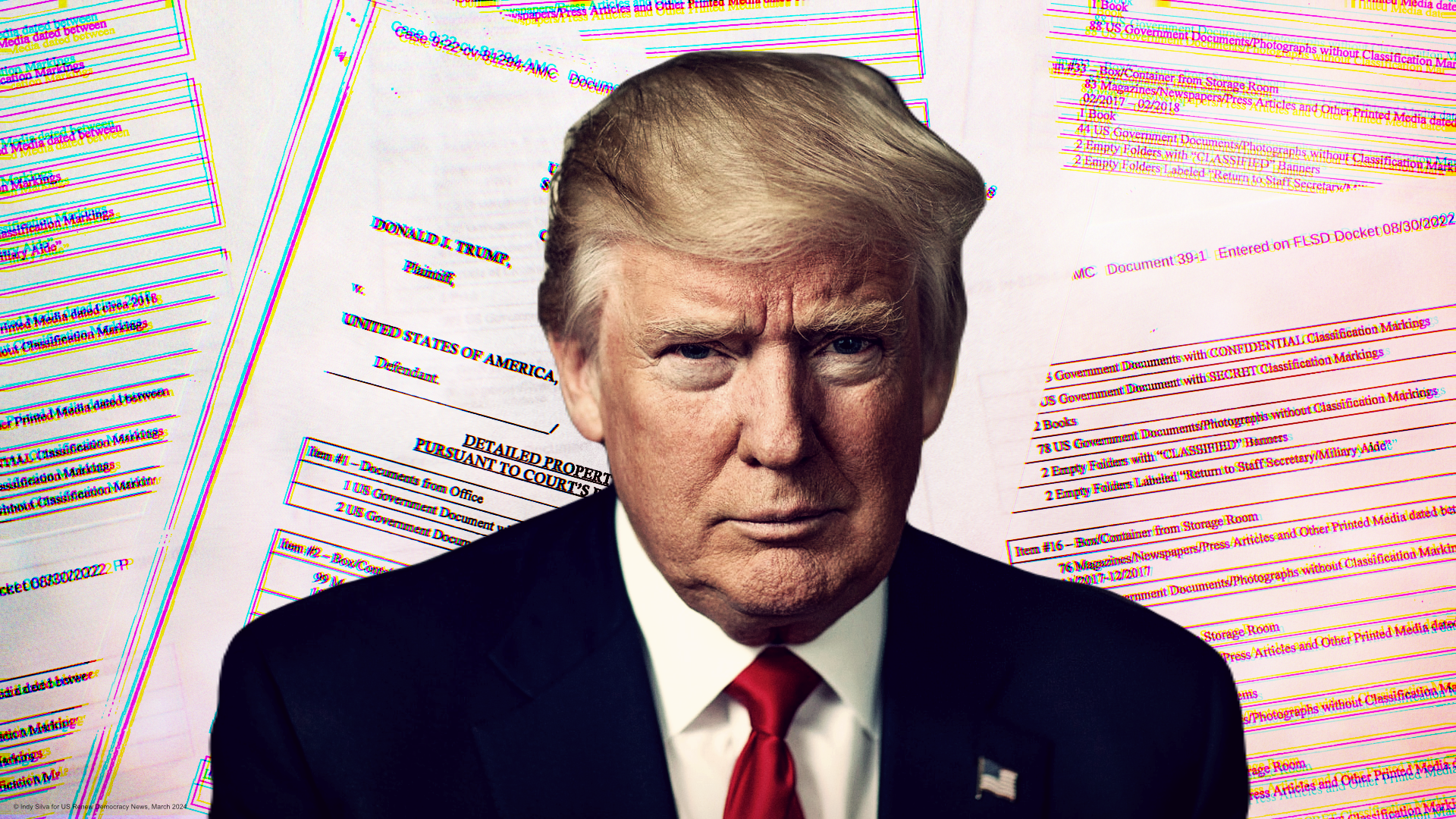
Should Trump Be Given Classified Foreign Intelligence Briefings As A Candidate?
Should Trump Be Given Classified Foreign Intelligence Briefings As A Candidate?
Civil Rights Policy Brief #221 | By: Rodney A. Maggay | March 14, 2024
Featured Photo by Indy Silva for U.S. Resist News, 2024
__________________________________
Policy Summary: In 1952 President Harry Truman began the custom of providing classified foreign intelligence briefings to presidential candidates. His purpose was to inform presidential candidates of sensitive foreign policy issues and developments so that if they became President the candidate would be prepared to handle and manage any foreign policy developments. The classified foreign intelligence briefings were also meant to allow the candidates to take care in speeches and meetings to not say anything that could be construed as a change in policy or an undermining of an agreement with another nation. Since Truman’s decision to provide classified foreign intelligence briefings to candidates, most have accepted them. The classified briefings are provided to candidates after they are officially nominated by their political party (usually August). To date, no third – party presidential candidate has received a classified intelligence briefing during a campaign cycle.
On June 8, 2023, a Miami grand jury indicted former President Donald Trump and the next day the indictment was made public. The indictment listed thirty – seven (37) felony counts against the former president. The charges included conspiracy to obstruct justice, corruptly concealing a document or record and willful retention of national defense information. A subsequent revised indictment contained thirty – two (32) felony counts with similar charges. A trial date was scheduled for May 20, 2024 although a postponement (due to Mr. Trump’s other criminal trials) appear likely. Special Prosecutor Jack Smith argued for a July 2024 trial date while Mr. Trump’s lawyers argued a trial should not occur until after the election. Judge Aileen Cannon, who is overseeing the case, has not ruled on whether the trial will commence on May 20, 2024 or be postponed. LEARN MORE
Policy Analysis: President Truman’s rationale for providing presidential candidates with classified foreign intelligence briefings was an act that had good intentions – to ensure that if the candidate became President that he or she would be fully informed to act on important foreign policy matters from their first day in office. However, the situation with President Trump and his 2024 campaign for President has raised a very serious question.
If a candidate is facing multiple felony counts of mishandling classified, top secret and secret documents related to national defense matters, should that candidate receive classified foreign intelligence briefings during the campaign?
This is a situation that no one could have imagined. While other high ranking officials have mishandled classified documents, such as former Vice – President Mike Pence and current President Joe Biden – both officials were not charged. That was likely due to their prompt cooperation with investigators and a conclusion in Biden’s case that his actions did not meet the legal standard to determine that he is liable. But in former President Trump’s case his actions did not appear to be inadvertent or honest mistakes. His retention of boxes of classified, top secret and secret documents at his Mar – a – Lago home had been the subject of contentious negotiations for their return to the government that began in June 2021. However, Trump appeared unwilling to comply with the National Archives request for their return. That necessitated the involvement of the Department of Justice and the FBI, which then resorted to a search warrant to try and retrieve the boxes and documents. Nothing has been confirmed but there are strong indicators that the documents contain war and battle plans for certain regions and, most disturbingly, defense and nuclear capabilities of the U.S. and a number of allies.
Mr. Trump’s legal situation thus raises the question as to whether he can be entrusted with a classified foreign intelligence briefing as candidate Trump. Other officials have commented on this emerging campaign issue and there appears to be bipartisan support to limit what the American intelligence agencies should reveal to Trump during the campaign. John Bolton, a former National Security Advisor to Trump during his first term, has suggested that the former President not be given any foreign intelligence briefings as a candidate because of his indictment in the classified documents case. In the alternative, he has suggested to have the briefings given only to Trump in person and no one else. He suggests this in order to ensure that if there were a leak, it would be for certain that Trump was the one who leaked it. And on the other side of the political spectrum, Rep. Adam Schiff (R-CA), a former Chairman of the House Permanent Select Committee on Intelligence, has called for potential briefings to Donald Trump be “dumbed down” and that Trump should only be given what is absolutely necessary because of his possible “criminally negligent” handling of classified documents before.
Fortunately, former CIA officials John Brennan and Larry Pfeiffer have weighed in and said that briefings will likely not be as highly classified as what President Biden receives daily and that their colleagues will likely limit information in the briefings in order to prevent their potential misuse by Mr. Trump. A possible solution would have President Biden deny the classified foreign intelligence briefings to candidate Trump. But the White House has stated that they will not do this as they do not want to politicize the issue. So while it seems likely that Mr. Trump will receive the classified foreign intelligence briefings as a candidate, his actions as well as the outcome of his classified documents case in Florida, will inform whether providing classified info to Mr. Trump should have been more closely scrutinized and whether it should have been done at all. LEARN MORE
Engagement Resources
- Associated Press – a timeline of Mr. Trump’s classified documents case and the significant incidents that led the former President to be criminally charged.
- Politico – report on the concerns current and former intelligence officers have about providing Mr. Trump with classified foreign intelligence briefings as a candidate.
This brief was compiled by Rod Maggay. If you have comments or want to add the name of your organization to this brief, please contact rodwood@email.com.
Stay in-the-know with the latest updates from our reporters by subscribing to the U.S. Resist Democracy Weekly Newsletter. We depend on support from readers like you to aide in protecting fearless independent journalism, so please consider donating to keep democracy alive today!

The Week That Was: Global News in Review
The Week That Was: Global News in Review
Foreign Policy Brief #127 | By: Abran C| March 11, 2024
Featured Photos: www.voanews.com, www.reuters.com, www.opendemocracy.net
__________________________________
State of Emergency in Haiti
Almost three years after the assassination of Haitian President Jovenel Moïse, Haiti has descended into chaos. Elections haven’t been held since 2017, so the term for every elected official has expired, security services and police are overwhelmed and millions are subjected to violence and are going hungry. The Haitian government declared a state of emergency amid a surge of violence. Last weekend gangs responsible for the situation in Haiti attacked the capital city’s most important prisons, releasing thousands of inmates. Aid groups say about 15,000 people, among them many young children, have been displaced from their homes in recent weeks, and since the beginning of the year, 1,193 people have been killed. Haiti’s de facto Prime Minister Ariel Henry traveled to Kenya last week in order to plead for the East African nations assistance in leading an international mission to restore order to the country. However, the gangs in the absence of the prime minister, forged an alliance and one of the main leaders of this gang alliance, Jimmy Chérizier, who is nicknamed Barbecue, has said explicitly that the point of the fighting is now to overthrow the government.
Elections in Iran
The elections being held in Iran this month are the first since nationwide protests broke out in 2022 over the death of Mahsa Amini in police custody. However the country has reported the lowest electoral turnout since the Islamic Republic’s founding in 1979. The voter turnout for this election hovered around 40%. The low turnout comes as Iranians grapple with a tumbling currency, a crippled economy from sanctions and a widened crackdown on dissent. Candidates running for office are preapproved by a state election council, candidates that do not receive approval from the council are barred from running. Barriers to entry for moderate candidates, voter apathy due to the highly restricted nature of the elections, and economic pressures have led to this election seeing a wave of conservative and hardline candidates securing positions in office. The results follow a global trend of hardline candidates winning leadership and raises the likelihood of continued strained relations among its domestic population and its relations in the wider region.
Ghana Passes Controversial Anti-LGBTQ Bill
Ghana’s parliament has passed an internationally controversial new bill that imposes a prison sentence of up to three years for anyone convicted of identifying as LGBTQ. The bill, which has the backing of the West African nations’ two major political parties, will come into effect if President Nana Akufo-Addo signs it into law, which he previously stated he would if the bill was passed. Gay sex is already against the law in Ghana, it carries a three year prison sentence for those caught. Last month Amnesty International warned that the bill posed significant threats to the fundamental rights and freedoms of LGBTQ people. Ghana also stands to lose $3.8 billion in financing from international banks that do not support the bill should president Nana Akufo-Addo sign it into law in the days to come.
For more updates, articles, in-depth analysis and weekly reviews on Global News, click here.
Stay informed with the latest insights from our dedicated reporters by subscribing to the U.S. Resist Democracy Weekly Newsletter. Your support is crucial in safeguarding fearless, independent journalism. If you appreciate our content, please consider donating today to continue in helping to protect democracy and empower citizenship.

Supreme Court Issues Unanimous Ruling in Trump Ballot Case
Supreme Court Issues Unanimous Ruling in Trump Ballot Case
Civil Rights Policy Brief #220 | By: Rodney A. Maggay | March 11, 2024
Featured Photo by Indy Silva for U.S. Resist News, 2024
__________________________________
Policy Summary: On January 6th, 2021, President Donald Trump incited an insurrection by encouraging his supporters to march to the United States Capitol in order to try to force then Vice President Mike Pence and the U.S. Congress from certifying Joe Biden’s Electoral College victory over Mr. Trump. After his defeat, which Mr. Trump has never fully accepted, Mr. Trump again announced that he would run for the 2024 Republican presidential nomination. Because of his actions on January 6th, voters in Colorado filed a petition in Colorado state court against Donald Trump and Colorado Secretary of State Jena Griswold. The petition requested that Donald Trump be removed from the Colorado 2024 ballot for President due to the fact that he incited the January 6th insurrection. The petitioners pointed to Section 3 of the Fourteenth Amendment to the U.S. Constitution. Section 3 provides:
“No person shall be a Senator or Representative in Congress, or elector of President and Vice President, or hold any office, civil or military, under the United States, or under any State, who, having previously taken an oath, as a member of Congress, or as an officer of the United States, or as a member of any State legislature, or as an executive or judicial officer of any State, to support the Constitution of the United States, shall have engaged in insurrection or rebellion against the same, or given aid or comfort to the enemies thereof. But Congress may by a vote of two-thirds of each House, remove such disability.”
Additionally, Section 5 of the Fourteenth Amendment provides, “The Congress shall have power to enforce, by appropriate legislation, the provisions of this article.”
After a trial in the Colorado trial court, the case was appealed to the Colorado Supreme Court. In a 4 – 3 decision, the Colorado Supreme Court affirmed that January 6th was an insurrection and that President Trump engaged in it. They then ruled that Trump was ineligible to be on the 2024 Colorado ballot for President under Section 3. The case was then appealed to the United States Supreme Court. In a unanimous 9 – 0 ruling, the Court ruled that Colorado could not remove Donald Trump from the 2024 ballot. LEARN MORE
Policy Analysis: The ruling issued by the Supreme Court was disappointing in the judgment but even more so in that the ruling was unanimous. All nine justices agreed that a state could not remove Donald Trump from the ballot for President of the United States although small cracks showed that there were divisions on the Court.
This case is pretty straightforward. The Court’s rationale for its ruling is because of how Section 3 and Section 5 of the Fourteenth Amendment are intertwined together. Rather than permit individual states to make a determination as to whether a candidate has violated Section 3 and whether the person has engaged in an insurrection, the Court said that Section 3 can only be invoked if Congress, under Section 5, had passed “appropriate legislation.” The failure to have an enabling statute passed by Congress would lead to a “patchwork” of individual and likely inconsistent decisions around the country. Also, the Court ruled that the disqualification clause of Section 3 only applied to state office holders and not federal office holders. Congress would need to step in and pass legislation to implement Section 3 in order to put forth rules that would apply for all federal office holders around the country. Until then, states like Colorado could not keep Donald Trump off the ballot.
While all nine justices signed on to the judgment, three Justices (Sotomayor, Kagan and Jackson) issued a concurring opinion that included details that should be noted. The concurring opinion points out that all of the other Reconstruction Amendments (due process, equal protection guarantees and the prohibition of slavery) are “self – executing” amendments, meaning that they go into effect without the need for Congress to pass legislation to implement them. If those are “self – executing” then why was Section 3 of the Fourteenth Amendment singled out as requiring Congressional legislation? And the concurring opinion also points out that the Twenty – Second Amendment, dealing with presidential qualifications by limiting a person to only two terms, also is self – executing and not in need of Congressional legislation to implement. Why is Section 3 the only clause requiring implementing legislation while all those other amendments do not? The concurrence points out these details and states that the majority opinion today may have gone out of its way to create a special rule for the insurrection disability clause in Section 3 when it really didn’t have to. Were they trying to insulate candidate Trump from a rule that could disqualify him? These are notable details worthy of further discussion. But in the end, these three Justices signed on to the per curiam opinion which will allow Donald Trump to remain on the Colorado (and Maine and Illinois) presidential ballots for 2024. LEARN MORE
Engagement Resources
- Politico – an analysis of the Court’s Trump v. Anderson ruling.
- History.com – history of the Fourteenth Amendment’s disqualification clause.
This brief was compiled by Rod Maggay. If you have comments or want to add the name of your organization to this brief, please contact rodwood@email.com.
Stay in-the-know with the latest updates from our reporters by subscribing to the U.S. Resist Democracy Weekly Newsletter. We depend on support from readers like you to aide in protecting fearless independent journalism, so please consider donating to keep democracy alive today!

Youth Movements and Their Impact on The Political Landscape
Youth Movements and Their Impact on The Political Landscape
Social Justice Policy Brief #158 | By: Inijah Quadri | March 08, 2024
Featured Photo: www.thenation.com
__________________________________
In recent years, youth movements across the globe have emerged as formidable forces, shaping political landscapes and influencing policy outcomes. From climate change initiatives to demands for democratic reforms, young activists are at the forefront of social and political change, leveraging social media and innovative strategies to mobilize and voice their demands. This article examines the impact of youth movements on global political landscapes, highlighting their role in advocating for environmental sustainability, social justice, and political reforms.
Analysis
Youth movements have been pivotal in catalyzing political and social changes. Their dynamic approach to activism, characterized by digital savviness and a deep commitment to various causes, has redefined traditional forms of protest and advocacy.
One of the most visible examples of youth-led activism is the global climate movement. Inspired by figures like Greta Thunberg, millions of young people worldwide have participated in climate strikes, demanding urgent action to combat climate change. These movements have not only raised awareness but also pressured governments and international bodies to prioritize environmental policies. The 2019 Climate Action Summit in New York saw Thunberg and other youth activists play significant roles, illustrating the growing influence of young voices in global environmental policy discussions.
Youth movements have also been instrumental in advocating for social justice and political reforms. The Arab Spring, which began in Tunisia in 2010, saw young activists using social media to organize protests that eventually led to significant political changes across the Arab world. In the United States, movements like Black Lives Matter (BLM) and March For Our Lives have mobilized young people to campaign against systemic racism and gun violence, influencing public opinion and legislative agendas.
The success of these movements can be attributed to their ability to harness the power of social media to organize, communicate, and amplify their messages. Digital platforms have provided young activists with the tools to reach a global audience, mobilize support, and challenge traditional power structures.
Despite their successes, youth movements face challenges and criticism. Skeptics question the sustainability of their efforts and their ability to translate mobilization into lasting policy change. Additionally, the very digital platforms that empower them are also arenas for misinformation, surveillance, and repression by state and non-state actors.
However, youth movements have shown resilience and adaptability, often working to ensure inclusivity within their ranks and striving for concrete policy outcomes. For instance, the Sunrise Movement in the United States has been actively involved in pushing for the Green New Deal, demonstrating a strategic approach to influencing policy.
Youth movements are reshaping the global political landscape, challenging the status quo, and advocating for change on pressing issues. Their ability to mobilize quickly, leverage digital technologies, and engage in cross-border solidarity highlights a new era of activism. While challenges remain, the impact of youth movements on policy debates and social changes is undeniable. As they continue to grow, their role in shaping the future of global politics and policy-making will likely expand, underscoring the importance of listening to and engaging with the voices of the younger generation.
Youth Movements and Upcoming Elections
As we look toward upcoming elections around the world, the role of youth movements becomes increasingly significant, particularly in shaping political discourse and outcomes. In the United States, for instance, young voters have expressed mixed feelings about the current administration, especially regarding President Biden’s stance on Israel and Palestine. This sentiment could play a crucial role in mobilizing or demobilizing young voters, potentially impacting election results.
Similarly, in India, where a large portion of the electorate will be first-time voters, youth movements focused on climate change, unemployment, and digital rights could significantly influence the political landscape. Their ability to connect with young voters through social media and digital campaigns could sway public opinion and election outcomes.
In Europe, with elections looming in several countries, youth movements are mobilizing around issues such as climate action, social justice, and democratic reforms. The European Green Deal and policies related to migration and inclusion are hot topics that resonate with young voters, potentially guiding their electoral choices.
The influence of youth movements on elections underscores the importance of political parties and candidates engaging with young voters’ concerns and priorities. By addressing the issues that matter to the younger generation, politicians can not only garner support but also empower a demographic that is crucial for the sustainability of democratic institutions.
Engagement Resources
- United Nations Youth Envoy (https://www.un.org/youthenvoy/): The UN Secretary-General’s Envoy on Youth advocates for addressing the needs of the largest generation of youth the world has ever known through sustainable development and peace.
- 350.org (https://350.org/): A global grassroots movement working to address climate change, with a focus on reducing CO2 levels in the atmosphere to 350 parts per million.
- Rock the Vote (https://www.rockthevote.org/): An organization dedicated to building the political power of young people in the United States through voter registration, education, and mobilization.
- Youth Policy Labs (https://www.youthpolicy.org/): An organization focused on improving youth policy worldwide through research, evidence, and analysis.
Wanna stay in-the-know? Always get the latest updates from our reporters by subscribing to the U.S. Resist Democracy Weekly Newsletter, and please consider contributing to ‘Keeping Democracy Alive’ by donating today! We depend on support from readers like you to aide in protecting fearless independent journalism.

The Aftermath of Alabama’s Supreme Court Ruling on IVF
The Aftermath of Alabama’s Supreme Court Ruling on IVF
Health and Gender Policy Brief #171 | By: Devyne Byrd | March 08, 2024
Featured Photo: www.washingtonpost.com
__________________________________
The ramifications of the Supreme Court’s Dobbs decision to overturn abortion continue to be felt with the Alabama Supreme Court ruling that frozen embryos are extrauterine children under state law and that the “Unborn children are “children” … without exception based on developmental stage, physical location, or any other ancillary characteristics.”
The ruling came after a wrongful death lawsuit brought by couples whose frozen embryos were destroyed in a break-in at the Mobile, Alabama fertility clinic. The couples sued under the Wrongful Death of a Minor Act and the court ruled that the embryos were protected under it as extrauterine children.
Although the majority opinion tried to rest on a secular interpretation of the law, Chief Justice Parker’s concurring opinion dives deep into the biblical justifications of the decision, citing the sanctity of life and the biblical implications that come with the phrase, such as life beginning at conception and being made in the image of God. He also refers to the embryos as “little people.”
The decision led to Alabama IVF centers immediately pausing their fertilization practices and Alabama lawmakers rushing to pass legislation to protect IVF amid the intense backlash to the decision. Both Democrats and Republicans came together to push the bill and protect IVF care, however, the bill does not change the designation of embryos or discuss their status as children. The bill instead focuses on protecting patients and medical professionals from civil and criminal liability.
Although the decision is only applicable in Alabama, it has caused nationwide panic as states tend to follow the legislative patterns of their neighboring states, particularly in decisions surrounding abortion. The decision was based on state law, so it is unlikely to be taken to the Supreme Court, but similar interpretations could be. Among this panic, Republicans have quickly tried to distance themselves from the ruling after an initial celebration, with many coming out in support of IVF even if they ultimately agree that embryos are children. Democrats have taken the opportunity to emphasize the effects of overturning Roe v. Wade, with President Biden releasing a statement calling the decision “outrageous and unacceptable.” Following up his statements, the White House Press Secretary stated this was “exactly the type of chaos that we expected when the Supreme Court overturned Roe v. Wade and paved the way for politicians to dictate some of the most personal decisions families can make.”
The Alabama Court’s ruling emphasizes the precarious position reproductive healthcare remains in as the effects of Dobb’s continue to be felt throughout the nation. With reproductive healthcare poised to be a major voter issue in the 2024 election, the parties’ responses to the ruling are under heightened scrutiny.
Engagement Resources
- Statement from the President – President Biden’s official statement on the Alabama court’s ruling.
- Republicans Struggle to Respond as Democrats Emphasize the Alabama I.V.F. Ruling – An article on the parties response to the decision and its effect on national politics.
Stay in-the-know! Always get the latest updates from our reporters by subscribing to the U.S. Resist Democracy Weekly Newsletter, and please consider contributing to ‘Keeping Democracy Alive’ by donating today! We depend on support from readers like you to aide in protecting fearless independent journalism.
Echoes of Suffering: A Cry for Ceasefire from Gaza’s Heart
Echoes of Suffering: A Cry for Ceasefire from Gaza’s Heart
Foreign Policy Brief #126 | By: Aziza Taslaq| March 07, 2024
Featured Photo taken from: www.ctvnews.ca
__________________________________
Life in Gaza during the current war is a nightmare that seems to have no end. My name is Samah, and I have experienced unimaginable hardship and loss amidst the relentless bombardments and airstrikes.
I have been displaced six times since the conflict began, each time leaving behind the shattered remnants of my life. The constant upheaval and uncertainty have taken a heavy toll on my mental and emotional well-being. Each move brings with it a sense of dislocation and despair, as I struggle to come to terms with the destruction and devastation that has become a daily reality.
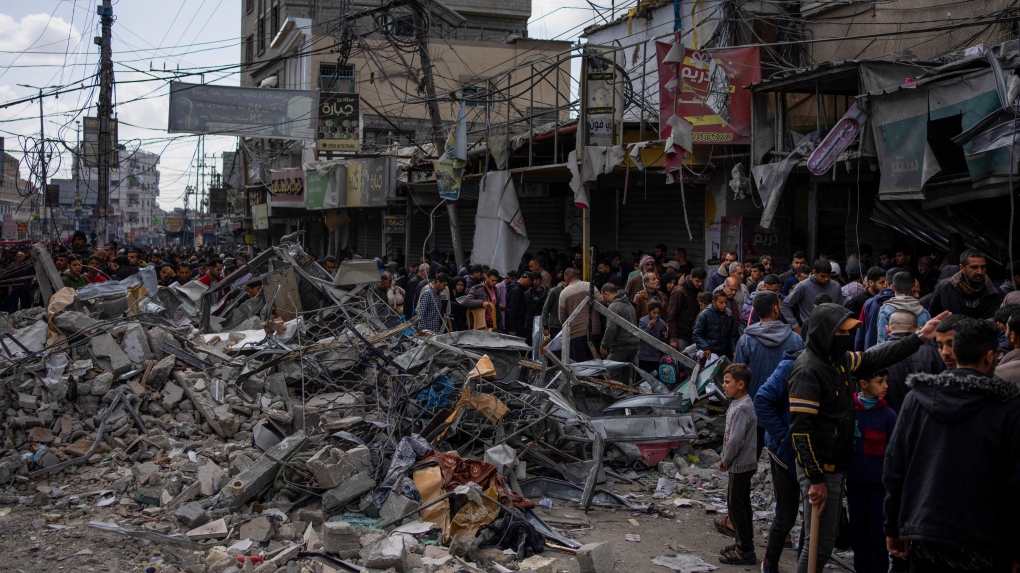
During my displacement, I have witnessed scenes of death and destruction that will haunt me for the rest of my days. The streets are littered with the debris of buildings reduced to rubble, and the air is thick with the stench of decay. Dead bodies lie unattended, their faces frozen in expressions of terror and despair. It is a sight that no one should ever have to witness, yet it has become all too familiar in Gaza.
Amidst the chaos and devastation, I worry incessantly about my uncle and his family, who are still in the north of Gaza. The last time I heard from them was weeks ago, and since then, communication has been sporadic at best. I know that they are in danger, but there is little I can do to help them. The uncertainty gnaws at me, filling me with fear and anguish as I wait helplessly for news.
The loss of my husband in an Israeli bombing has left a gaping hole in my heart that will never heal. His absence is a constant ache, a reminder of the cruel and senseless violence that has torn apart countless families like mine. We were married for only a year before he was taken from me, and now I am left to raise our child alone.
To make matters worse, my father and two brothers have been arrested and accused of being militants by the Israeli authorities. I have no idea where they are or if they are even alive. The anguish of not knowing their fate is unbearable, weighing heavily on my soul as I struggle to hold onto hope in the midst of despair.
Now, I find myself living in a cramped tent in Rafah with my mother, my husband’s mother, and his brother. The conditions are dire, with scarce food, water, and medical supplies. The constant fear of airstrikes and bombardments hangs over us like a dark cloud, threatening to engulf us at any moment.
The need for a ceasefire is urgent and undeniable. Every bomb that falls only deepens the cycle of violence and suffering, inflicting untold pain and devastation on innocent civilians like me. A ceasefire offers a glimmer of hope amidst the darkness, providing a much-needed respite from the relentless onslaught and a chance for families to rebuild their shattered lives.
But a ceasefire is not just about ending the immediate violence, it is about addressing the root causes of the conflict and working towards a future where peace and security are not just distant dreams but tangible realities. It is about ensuring that no one else has to endure the pain and loss that I have suffered and that no more lives are lost in senseless bloodshed.
In conclusion, the need for a ceasefire in Gaza is a matter of life and death for me and countless others who have been displaced, bereaved, and traumatized by the violence. It is a call to the world to stand in solidarity with the people of Gaza and to work tirelessly toward a future where peace and justice prevail.
For more updates, articles, and in-depth analysis on the conflict in Gaza and the proposed ceasefire, click here.
For more articles and in-depth analysis on the Israel-Gaza War, click here. Stay informed with the latest insights from our dedicated reporters by subscribing to the U.S. Resist Democracy Weekly Newsletter. Your support is crucial in safeguarding fearless, independent journalism. If you appreciate our content, please consider donating today to continue in helping to protect democracy and empower citizenship.