

JOBS POLICIES, ANALYSIS, AND RESOURCES
Latest Jobs Posts
Democrats May be Making a Mistake with the Iowa Caucuses
Brief #47 – Elections & Politics
By Ian Milden
The DNC recently voted to approve a plan to shake up the schedule for the 2024 Democratic presidential primaries. While parts of the proposal would require the cooperation of several state governments (some of which are controlled by Republicans), the biggest change that will likely come from this plan is the removal of the Iowa Caucuses from its first-in-the-nation status. This Brief will examine the reasons why the Democratic Party approved this plan and the potential hazards this plan may pose for Democrats down the road.
The Reckless Growth of BlackRock and Other Asset Management Companies
Brief #142 – Social Justice
By Abigail Hunt
As of December 2021, BlackRock, an asset management company – and one of the “Big Three” global money managers along with Vanguard and State Street – had more than $10 trillion in assets under management. The company controls so much capital if it were a country its GDP would rival that of the wealthiest nations in the world. BlackRock describes itself as “a global investment manager and fiduciary” and a leading provider of financial technology.
Are Tech Billionaires the Worst Polluters on Earth?
Brief #75 – Technology Policy
By Mindy Spatt
Tech Billionaires Leave an Outsize Carbon Footprint, Despite Their Carbon Neutral Claims. Advocates claim allowing polluters to purchase carbon offsets is a “scam” and hurting, rather than helping the planet.
January 6th Committee Will Send Criminal Referrals to Department of Justice
Brief #46 – Elections & Politics
By Maureen Darby-Serson
On December 8th, 2022, sources revealed that the January 6th Committee were considering referring 5 individuals, including former President Donald Trump, for criminal charges to the US Department of Justice. Mark Meadows, John Eastman, Jeffrey Clark, and Rudy Giuliani are the other four alleged targets of these referrals. What do these referrals means and what will come of them?
The Need to Reframe Education Reform
Brief #58 – Education Policy
By Steve Piazza
In the United States, no single, comprehensive K-12 academic curriculum exists at the Federal level. The states maintain the authority to design and mandate systemic curricula, but even then there is no real consistency.
FCC Stumbles As It Tries to Increase Access to Broadband
Brief #74 – Technology Policy
By Mindy Spatt
Will $65 billion in Infrastructure funds finally bridge the digital divide and connect the 19 million Americans who still lack access to high-speed internet? The FCC’s First Step Appears to be a Misstep.
Should There Be Term Limits For Members of Congress?
Brief #197 – Civil Rights Policy
By Rodney A. Maggay
The United States Constitution describes the qualifications a person must have in order to be eligible to be a Representative in Article One, Section Two, Clause Two. And for Senators, the qualifications are described in Article One, Section Three, Clause Two. Minimum age limits and minimum years of citizenship, among other qualifications, are listed. But the last few decades have seen an interest in adding an interesting limitation – term limits for Members of Congress.
Abortion Rights Prevent a “Red Wave”
Brief #150 – Health & Gender Policy
By Geoffrey Small
As the dust settles from the 2022 mid-term election, it’s clear that the threat to abortion rights helped galvanized activists into bringing the prospect of a “red wave” down to a small tidal shift in Republican representation. An Emerson College poll conducted in July already predicted a tightening of the races after the Supreme Court overturned Roe V. Wade.
The Ukraine Crisis; Situation Update #16
Brief #157 – Foreign Policy
By Abran C
Deadly missile strikes in Ukraine have made headlines in recent days for the widespread destruction and chaos being generated through their use. Last week a missile strike killed two civilians in Poland’s eastern region near its border with Ukraine.
The missiles were at first thought to have been fired by Russian forces, which would have indicated a Russian attack on a NATO member state. The situation created such panic that an emergency NATO roundtable was held on the sidelines of the G20 summit to address the attack.


The Banning Surveillance Advertising Act of 2022
The Banning Surveillance Advertising Act of 2022
Technology Policy Brief #63 | By: Mindy Spatt | July 29, 2022
Header photo taken from: Advertise Mint
Follow us on our social media platforms above
Browse more technology policy briefs from the top dashboard

– Erica Darragh, campaigner, Fight for the Future
Photo taken from: DedMityay / Shutterstock
Policy Summary
[SSB theme=”Official” align=”center” counter=”true” ]
Internet giants like Google and Facebook are selling our personal data or selling access to the data they collect. The resulting barrage of advertisements are not just annoying, they violate our privacy, perpetuate discrimination and spread misinformation.
But with data sales generating billions for powerful companies that have consistently evaded regulation, this low-key effort is by Sen. Cory Booker and two democratic Congresswomen to stop online tracking is unlikely to be successful.
Policy Analysis
The targeted ads- here being recast as “surveillance ads” -that are ubiquitous on Facebook, Google and other websites are increasingly zeroing in on us, not just on our shopping habits but on our health, finances, job opportunities and more.
The Banning Surveillance Advertising Act of 2022 (H.R. 6416, S. 3520) wouldn’t stop companies from selling ads and some location data but would ban the retention of personal data and the targeting of ads based on personal characteristics. Contextual advertising, ads related to whatever content the user is browsing, would still be allowed.
The push for this bill along with many other attempts to rein in tech companies comes from advocacy organization Accountable Tech. Their webpage lays out the case for the ban thoroughly and persuasively, with the help of a coalition supporting the effort that includes the Consumer Federation, Public Citizen, Media Justice and many others.
Among the harms cited:
- Spreading misinformation- as we have seen regarding election fraud and COVID cures, for example.
- Promoting discrimination by targeting based on race and income, which can be gleaned from our Internet behavior.
- Aiding and abetting violent extremists as occurred on Jan. 6 at the US Capitol.
- Sale and release of very personal information regarding our health, finances and families.

Jeff Chester, executive director, Center for Digital Democracy.
Photo taken from: The Intercept
(click or tap to enlargen)
- Potential release to law enforcement, now including the potential release of data related on abortion to authorities in states with abortion bans.
- Targeting children- here the coalition cites an investigation by the Guardian and the Danish Broadcasting Corporation that found that “740,000 children under the age of 18 are flagged [by Facebook] as being interested in gambling. Some 940,000 minors are flagged as being interested in alcoholic beverages.”
One of the act’s authors, Jan Schakowsky (D-IL), Chair of the Subcommittee on Consumer Protection and Commerce of the House Committee on Energy and Commerce, said “Surveillance advertising is at the heart of every exploitative online business model that exacerbates manipulation, discrimination, misinformation, extremism, and fundamentally violates people’s privacy in ways they would never choose if given a true choice.”
The Banning Surveillance Advertising Act will put a stop to this repulsive practice and therefore protect consumers by removing the financial incentive for companies to exploit consumers’ personal information….”
The tech and advertising industries predictably oppose the bill, but don’t appear to be overly concerned. It was introduced on January 18 of this year and there has been no action on it since then, nor does accountabletech.org show any advocacy or press coverage since that date.
Most commentators agree the legislation doesn’t have a snowball’s chance in hell of passing, and is at best a message to big tech that Congress is watching and concerned.
Engagement Resources
Click or tap on resource URL to visit links where available

DuckDuckGo is a browser that doesn’t use surveillance advertising and a member of Accountable Tech. Learn more here: https://spreadprivacy.com/why-use-duckduckgo-instead-of-google/

According to Influencewatch.org , Accountable Tech is “a left-of-center nonprofit that advocates for expanded government regulation of social media platforms, [and] conducts pressure campaigns calling for online platforms to censor conservative content creators …..created in 2020 as a fiscally sponsored project of the North Fund, a “dark money” 501(c)(4) nonprofit that operates as a wing of the Arabella Advisors network.”

Join the campaign at https://www.bansurveillanceadvertising.com

Surveillance Giants: How the Business Model of Google and Facebook Threatens Human Rights by Amnesty International https://www.amnesty.org/en/documents/pol30/1404/2019/en/

How Facebook Tracks You by Consumer Reports https://www.consumerreports.org/privacy/how-facebook-tracks-you-even-when-youre-not-on-facebook-a7977954071/

How Donald Trump Changed the Government
How Donald Trump Changed the Government
Social Justice
Policy Brief #38 | By: Maureen Darby-Serson | July 29, 2022
Header photo taken by: The White House
Follow us on our social media platforms above
Browse more social justice policy briefs from the top dashboard

Trump supporters subsequently gathered at state capitals across the country to protest the ratification of President-elect Joe Biden’s Electoral College victory over President Trump in the 2020 election on that fateful and historic day
Photo taken from: Matthew Hatcher / Getty Images
Policy Summary
[SSB theme=”Official” align=”center” counter=”true” ]
A President can change the course of the United States in many ways. Donald Trump was no different. But the ways that Trump changed the government are haunting us and will follow us for decades to come.
While there are most likely hundreds of things Trump did that will affect us for years, here are a few that come to mind – naming three Supreme Court Justices, appointing hundreds of federal court judges, changing the way we do the census, making lists of fake electors, and the list goes on.
What does this mean for our country and what can we do about it now?
Policy Analysis
In 2016, President Obama was not given the opportunity to name a Supreme Court Justice, mainly because the Republicans held up his pick of Merrick Garland. With the retirement of another justice and the death of Ruth Bader Ginsberg, Donald Trump was able to put three Justices on the bench.
The first being Neal Gorsuch, then the drama filled confirmation hearing of Brett Kavanaugh and the unprecedently speedy confirmation hearing of Amy Coney Barrett. The first president to be able to put that many justices on the court in one term. These justices will likely serve on the court for decades.
In addition, Trump was able to appoint over 200 federal judges to various courts throughout the country. These appointees switched the balance of the courts from democrat to republican. These judges have lifetime appointments and will serve on benches for decades, similar to Supreme Court judges.
While Donald Trump was in office, the 2020 census took place. Emails showed that the Trump administration stopped the census early and did not want to include those that were included in other census counts, such as undocumented immigrants.

Photo taken from: The Guardian, Doug Mills / AFP / Getty Images
(click or tap to enlargen)
Why do this?
Because we use the census to draw the maps for political districts, which help determine which party gets more seats in Congress. Trump wanted the census to work in the Republicans favor. Redistricting to favor republicans will have a lasting effect on our country.
To help perpetuate his own presidency, Donald Trump and his administration created a list of fake electors to try to get Vice President Mike Pence to not certify the election for Joe Biden. These people would claim that they were from the Electoral College and say that they were voting for Donald Trump and not Joe Biden. This would give Donald Trump the victory. Emails from the administration have shown that these lists of electors were faked.
So, what can you do? Vote. Vote in your local elections. Vote in every election you can. Use your voice to elect candidates committee to maintaining and strengthening our democracy.
Engagement Resources
Click or tap on resource URL to visit links where available

https://www.supremecourt.gov/about/biographies.aspx

How Trump compares with other recent presidents in appointing federal judges

Schools, Universities Now Leading Targets of Ransomware Attacks
Schools, Universities Now Leading Targets of Ransomware Attacks
Education Policy Brief #54 | By: Lynn Waldsmith | July 25, 2022
Header photo taken from: Shutterstock
Follow us on our social media platforms above
Browse more education policy briefs from the top dashboard

Photo taken from: Dale Crosby Close / Politico
Policy Summary
[SSB theme=”Official” align=”center” counter=”true” ]
A new viral threat known as ransomware is attacking schools and universities throughout the country. According to security company Sophos, 64 percent of higher education institutions and 56 percent of K-12 schools were struck by ransomware last year.
According to the company’s State of Ransomware in Education 2022 report, that means an average of 60 percent across the education sector overall, up from 44 percent in 2020.
Schools, whose administrators, teachers and students are already weary from fighting COVID-19, are now the most popular targets of ransomware attacks, according to the FBI. While the average ransom is about $50,000, the biggest demands have topped $1.4 million. And the total cost of cyberattacks targeting the education sector is difficult to estimate because many schools don’t report attacks. Many schools only publicly acknowledge a breach when their systems are disrupted or student data is lost.
Ransomware is a type of malicious software that infects computer servers, desktops, laptops, tablets and smartphones, often spreading across a campus from one device to another. Once it infects a system, the virus quietly encrypts every data file it finds, then displays a ransom note to the user. The extortion message usually demands an online payment in some untraceable cryptocurrency like Bitcoin in return for the decryption keys needed to restore the users’ locked files.
The demand often includes a series of deadlines for payment: each missed deadline leads to a higher ransom demand and perhaps some destroyed files. If the victim doesn’t pay up, the attacker discards the decryption keys, making the data permanently inaccessible.
Policy Analysis
Ransomware attacks can be extremely costly, whether ransomware is paid or not. These cyberattacks can lock down key systems, shut down schools, and prevent teachers from accessing lesson plans and student data. The costs to restore computer systems, recover data, and shore up systems to prevent future attacks can be astronomical.
IT professionals in higher education also report the slowest recovery times from ransomware attacks. Colleges and universities, on average, take twice as long as organizations in other industries to recover — 40 percent took over a month, 31 percent took one to three months and 9 percent recovered from a ransomware attack in a three-to-six-month period, according to Sophos.
Lincoln College is an example of a worst-case scenario. After being attacked with ransomware in December of 2021, the 157-year-old historically black Lincoln College announced in May that it was shutting down permanently. While the college was already coping with declining enrollment, the impact of the attack and paying the hackers a ransom fee struck the final blows.
The education sector itself is also to blame for being such a tempting target for cybercriminals.
First, students often engage in risky online behaviors that expose them to ransomware attacks, such as treating email attachments without appropriate wariness, and visiting unsecure websites.

Who’s next?
Photo taken from: Governoring.com / Mark Gordon / Lincoln College
(click or tap to enlargen)
Second, the highly open and interconnected nature of campuses and “bring your own device” educational cultures open up multiple points of malware infiltration and make it difficult to secure the entire network.
Third, a lack of cyber policies for using a network and making sure they’re adhered to are contributing factors.
Perhaps one of the biggest problems educational institutions are facing is a lack of money and resources. This makes it difficult to fund IT security investments; the education sector generally lags well behind industries like finance, retail, healthcare, energy and government in its ability to protect its tech infrastructure.
Schools and universities are encouraged to educate students, faculty and staff on the techniques that ransomware distributors use, teaching them to be wary of the email links they click on, websites they visit, and attachments they open. IT departments need to segment networks to make it harder for ransomware to spread from system to system, keep anti-malware software up-to-date, and fix known vulnerabilities in operating systems and applications as quickly as possible.
But paying the ransom is never a good idea. According to law enforcement and security experts, over half of ransomware victims who pay do not successfully recover their files. Routine, frequent backup remains the most foolproof defense against ransomware: if your systems are compromised, you can simply identify the onset of the attack and restore your systems from clean backups created before the attack.
Engagement Resources
Click or tap on resource URL to visit links where available

“The State of Ransomware in Education 2022” (key findings):
https://news.sophos.com/en-us/2022/07/12/the-state-of-ransomware-in-education-2022/
“The State of Ransomware in Education 2022” (full report):

Cyber Threats to K-12 Remote Learning Fact Sheet:
StopRansomware.gov:
https://www.cisa.gov/stopransomware

Free ransomware decryption tools:

The New Gun Law Also Helps Address the U.S. Mental Health Crisis
The New Gun Law Also Helps Address the U.S. Mental Health Crisis
Social Justice Policy Brief #37 | By: Geoffrey Small | July 25, 2022
Header photo taken from: AAMC
Follow us on our social media platforms above
Browse more social justice policy briefs from the top dashboard
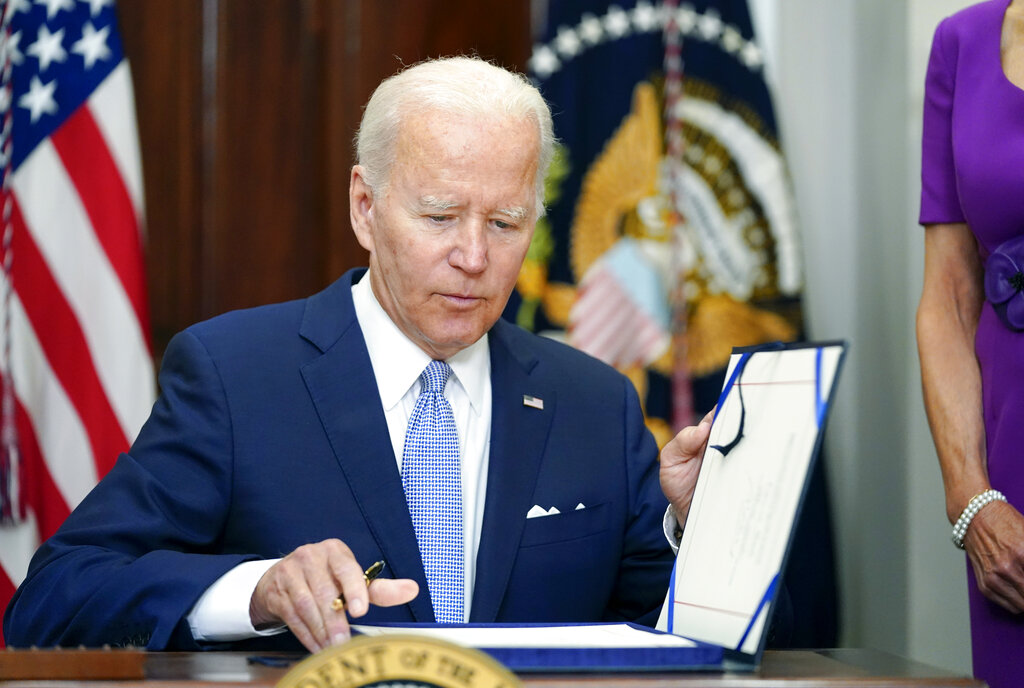
Photo taken from: Time, The Associated Press
Policy Summary
[SSB theme=”Official” align=”center” counter=”true” ]
On June 25th, 2022, President Joe Biden signed The Bipartisan Safer Communities Act. The Congressional Bill is a measure touted to address gun safety. However, this bipartisan legislation is the culmination of almost a decade of mental health advocacy spearheaded by Republican Senator Roy Blunt and Democratic Senator Debbie Stabenow. The most effective measure of this bill may be the record $8 billion in funding allocated to school programs and mental health programs.
The mental health crisis has steadily increased since the national closing of psychiatric care hospitals in the fifties and sixties. It may become exponentially worse as people are grappling with obstacles they’ve experienced during the COVID-19 pandemic. Exploring the data related to this growing crisis can help clarify why targeted funding was developed to bolster federally certified health clinics, which serves as a comprehensive and innovative model for mental health and substance abuse.
Policy Analysis
The National Alliance of Mental Illness provides data collected in 2020 on the state of mental health and substance abuse in the United States. NAMI reported that 1 in 5 adults have experienced mental illness annually.
Also, 32.1% of adults with a mental illness disorder experienced substance abuse issues. Mental Health America reports that suicidal ideation among adults has increased every year since 2011. More than half of U.S. adults who are experiencing mental illnesses do not receive treatment.
This lack of treatment is also true for youths with major depression, as more than 60% have not received the help they need. 15.08% of youths experienced a major episode of depression this past year, which is a 1.24% increase from the previous year. Most organizations have not yet provided comprehensive data on the COVID-19 pandemic’s impact on mental health. However, the World Health Organization reported a recent increase of 25% in the prevalence of anxiety and depression globally.
Based on this sobering data, targeted legislation could not come at a better time. The Substance Abuse and Mental Health Services Administration graph, illustrated below, corroborates Mental Health America’s assessment that all demographics were already experiencing a significant increase in major depressive episodes before the pandemic, and some of the biggest increases involves youth groups.
One solution the new gun law provides is the expansion of Certified Behavioral Community Health Clinics.
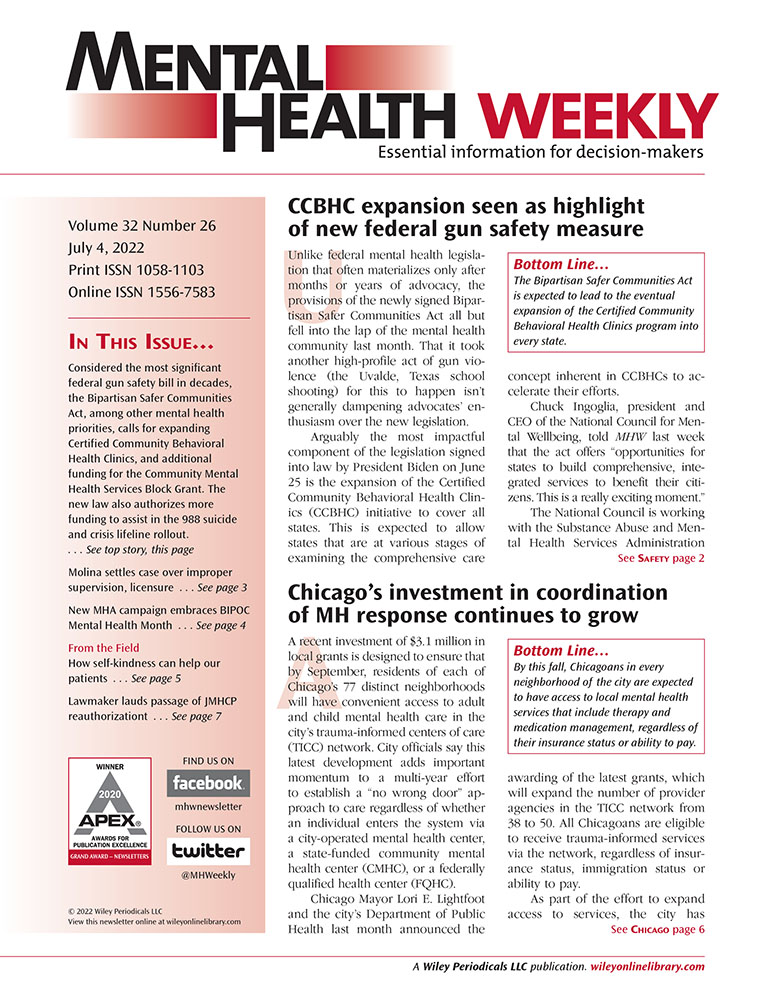
Photo taken from: Wiley Online Library
(click or tap to enlargen)
These federally funded clinics are designed to treat anyone who requests help for mental health and substance abuse issues, regardless of their ability to pay. Senator Stabenow first introduced legislation in 2014, which led to a trial development of over 300 certified clinics in forty states.
A 2021 Government Accountability Office report indicated that these clinics saved the State of New York more than $1 million in decreased hospitalizations and an $100,000 decrease in emergency room visits.
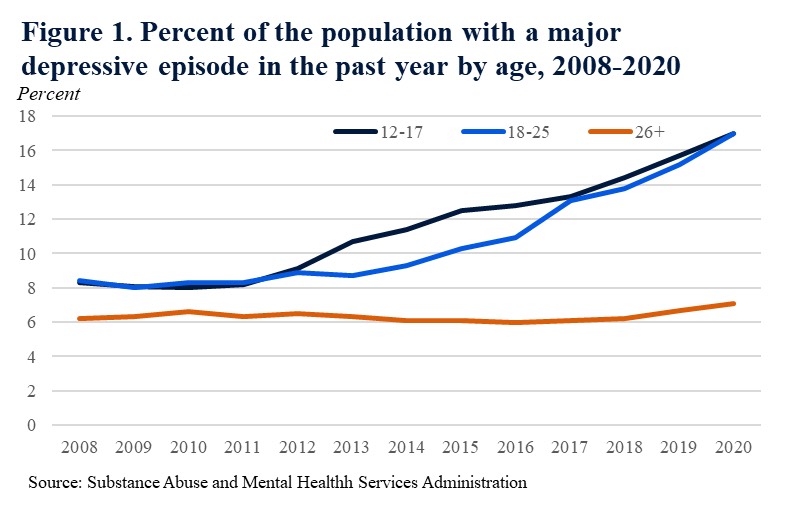
Photo taken from: Whitehouse.gov
Supporters agree these clinics will reduce the overall burden on state budgets. It may also help improve accessibility for youths in a lower socioeconomic status. A 2017 University of Maryland School of Public Health study reported that children of lower income families have higher rates of mental health issues and needs.
The study recommended better integrated care amongst physicians and mental health teams with federal or local policies that support a “system transformation.” Therefore, this law can provide the transformation needed for youths in lower income families. U.S. Congress and the President approved over $2 billion in increased aid to support the development of more certified clinics in all fifty states, as well as funding for better integrated school mental health programs.
The new bipartisan gun law targeting the pervasive mental health and substance abuse issues in the U.S. wouldn’t have been possible without the data and advocacy from organizations like The National Alliance of Mental Illness and Mental Health America. It is important to donate to these organizations, because they can effectively measure the pandemic’s impact on these growing issues. The better understanding Congress has to fight the mental health and substance abuse crisis can lead to a transformative system that the U.S. desperately needs.
Engagement Resources
Click or tap on resource URL to visit links where available



The Latest Developments and Applications in 5G Technologies
The Latest Developments and Applications in 5G Technologies
Technology Policy Brief #62 | By: Christopher Quinn | July 24, 2022
Header photo taken from: gizbot.com
Follow us on our social media platforms above
Browse more technology policy briefs from the top dashboard

Photo taken from: Connectivity Technology Blog
Policy Summary
[SSB theme=”Official” align=”center” counter=”true” ]
Wireless communications systems use radio frequencies (also known as spectrum) to carry information through the air. 5G operates in the same way, but uses higher radio frequencies that are less cluttered. This allows for it to carry more information at a much faster rate. 5G also works closely with the iCloud to store and retrieve data.
5G is up 100 times faster than 4G (which is the fourth generation of broadband cellular network technology. The global 4G population coverage was around 85 percent in 2021.
5G is creating never-before-seen opportunities for businesses and people. Faster connectivity speeds, ultra low latency ( the time lag between a data packet traveling from one data point to another) and greater bandwidth is advancing societies, transforming industries, and dramatically enhancing day to day experiences. Here are some examples:
E-Health Services
5G speeds allow telemedicine services to enhance their doctor-patient relationships by decreasing troublesome lag times in calls. Telemedicine specialists find that they can live anywhere in the world, be licensed in numerous states, and have faster access to cloud data storage and retrieval.
Energy Infrastructure
The speed and reliability of 5G network connectivity can improve the infrastructure of the United State’senergy sector with smart power grids. With smart power grids, the energy sector can more effectively manage power consumption and distribution based on need and integrate off-grid technology energy sources such as windmills and solar panels.
Farming
In rural settings 5G is helping to improve cattle farming efficiency. By placing sensors on cows, farmers capture data that AI and machine learning can predict when cows are ready to give birth. This helps both farmers and veterinarians better predict and prepare for cow pregnancies.
Smart Cities
Increased connectivity is key to the emergence of smart cities. These cities conceive of improving the living standards of residents by increasing the connectivity infrastructure of the city. This affects numerous aspects of city life, from traffic management and safety and security to governance, education and more.
Other Applications
Many other industries and economic sectors will benefit from 5G. Examples include automotive communication, smart retail, and manufacturing.
Policy Analysis
Greater Speed in Transmissions, Lower Latency, and Greater Connectivity
Speed in transmissions will approach 15 or 20 Gbps. By leveraging this higher speed, access to files, programs, and remote applications move more directly without a lag. Higher data processing speeds will improve productivity across the industries.
In 5G the latency will be 10 times less than in 4G. This will greatly result in a more positive UX (User Experience) for everyday users. Latency is the time that elapses between when a command is given on a device and when the action occurs.
With 5G the number of devices that can be connected to the network increases greatly. It is anticipated that a common home will have a hundred connected devices sending and receiving information in real time. In the case of an industrial plant there could be thousands of connected devices.
As a result of the greater number of devices, smart cities will continue to develop.

Photo taken from: Alltech
(click or tap to enlargen)
Two examples of smart cities are smart parking that can help drivers find a parking space and smart traffic management to monitor traffic flows and optimize traffic lights to reduce congestion, while ride-sharing services can also be managed by a smart city infrastructure.

Photo taken from: Energy Atlas
5G and the Access Gap
Great 5G performance like this relies on the mid-band spectrum that drops off rapidly after just a few miles from a cell tower, so in more remote locations many nomads’ travel through performance will often be nowhere near as impressive – even for years to come.
To close the 5G geographical development gap, the Federal Communications Commission ( FCC ) has established a $9 billion fund to support the development of 5G services in rural America.
T-Mobile is in the lead in the 5G race, Verizon has been ramping up a lot in 2022, and AT and T expects to migrate to 5G more fully in 2023.
However, while newer flagship phones support most or all of the currently needed bands for 5G, these can be quite expensive. Even if you opted for the high-end Galaxy S20 plus last year, you wouldn’t get support for C-band. This isn’t a huge deal for most people, but if you want to get the most out of 5G, you still need to buy the most expensive phones. Beyond that, there’s still no telling exactly how long it will take carriers to build out their C-band networks.
Engagement Resources
Click or tap on resource URL to visit links where available

After Dobbs v. Jackson, the End of Roe v. Wade and the Battlefield for Liberty
After Dobbs v. Jackson, the End of Roe v. Wade and the Battlefield for Liberty
Health & Gender Policy Brief #138 | By: Alexandre Ellis | July 22, 2022
Header photo taken from: Getty Images / Yasin Ozturk / Anadolu Agency
Follow us on our social media platforms above
Browse more health and gender policy briefs from the top dashboard
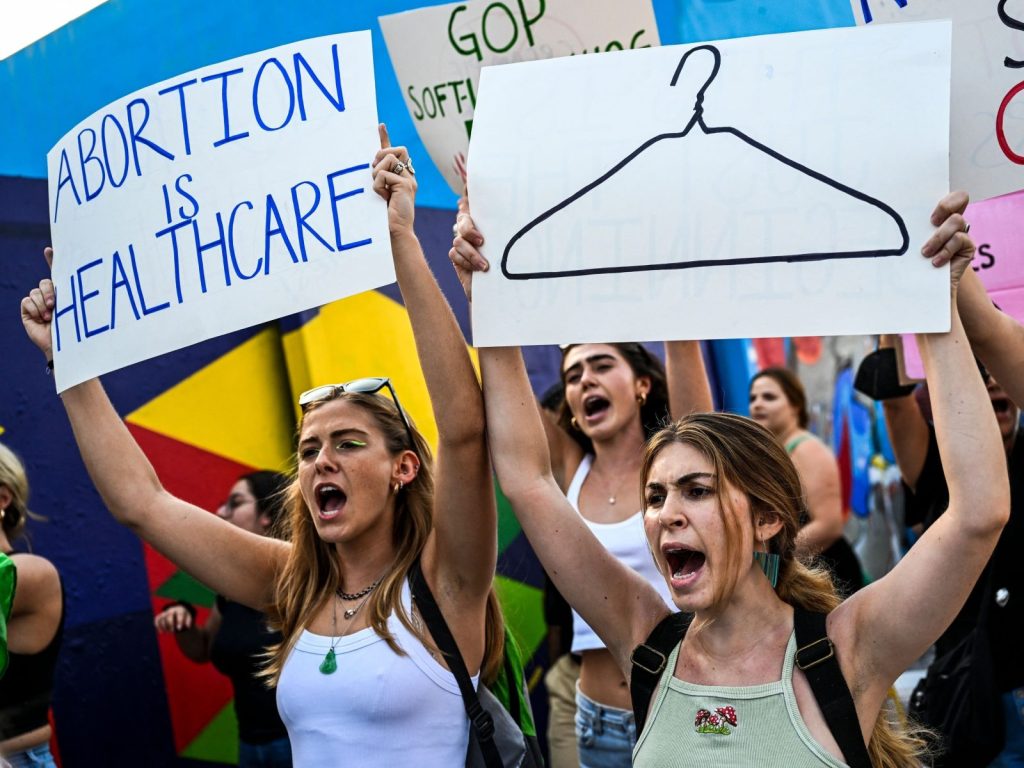
Photo taken from: Chandan Khanna / AFP via Getty Images
Policy Summary
[SSB theme=”Official” align=”center” counter=”true” ]
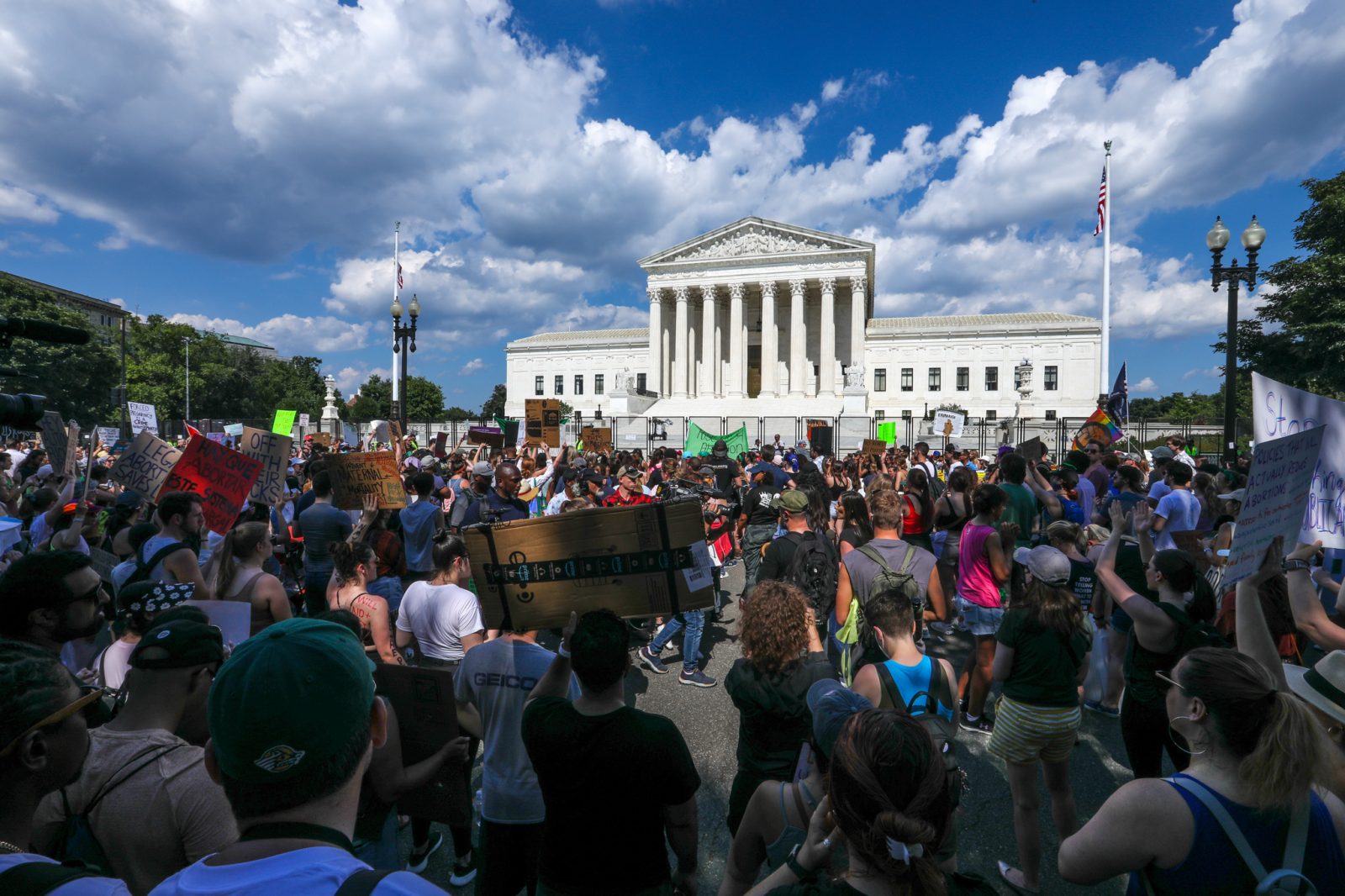
On June 24, 2022, the United States Supreme Court released the published opinion of Dobbs v. Jackson Women’s Health Organization.19-1392, 597 U.S. ___. In a 6-3 majority opinion, a group of unelected officials stripped people with uteruses bare of the right to choose whether they will carry a pregnancy to term. In the opinion, the conservative justices state, “The Constitution makes no reference to abortion, and no such right is implicitly protected by any constitutional provision,” leaving the question of who can obtain an abortion to the will of the states.
Further in the decision test, the Supreme Court’s majority not only questions the constitutionality of abortion, but almost every decision that relies on the right to privacy.
Policy Analysis
The aftermath of the Supreme Court overturning Roe v. Wade and Planned Parenthood v. Casey is vast and deadly. The 9th Amendment of the Constitution was originally used to protect the right to privacy and bodily autonomy. The 9th amendment provides, “The enumeration in the Constitution, of certain rights, shall not be construed to deny or disparage others retained by the people.” This umbrella of rights is not explicitly mentioned but has been used by the Supreme Court in the past to protect personal rights that are common sense.
The 9th amendment, 14th amendment, and the 5th amendment were used to originally protect the right to abortion in 1973 in Roe v. Wade. The 9th Amendment points to the enumeration of rights not explicitly mentioned in the Constitution. Whereas both the 14th and the 5th Amendment address due process and inhibits the infringement of an individual’s right to due process by states and the federal government.
Within due process, the court in Roe v. Wade and later dissenters in Planned Parenthood v. Casey point to how women, non-binary, and trans individuals have been historically marginalized and are uniquely affected by legislation relating to abortion because they may have the ability to get pregnant.
Further, these combinations of rights have been used to protect other rights such as the right to same-sex marriage (Obergefell), inter-racial marriage (Loving v. Virginia), contraception (Griswold), bodily autonomy (Roe v. Wade and Oklahoma v. Skinner), and consensual sexual intercourse (Lawrence v. Texas).
Nothing in the Constitution directly highlights or textualizes the explicit rights to any of these privacy concerns. Yet, they exist for almost every American because the Supreme Court recognized them as so substantially significant that the state or federal government could not interfere with them. We have enjoyed them with the expectation that they would always exist.
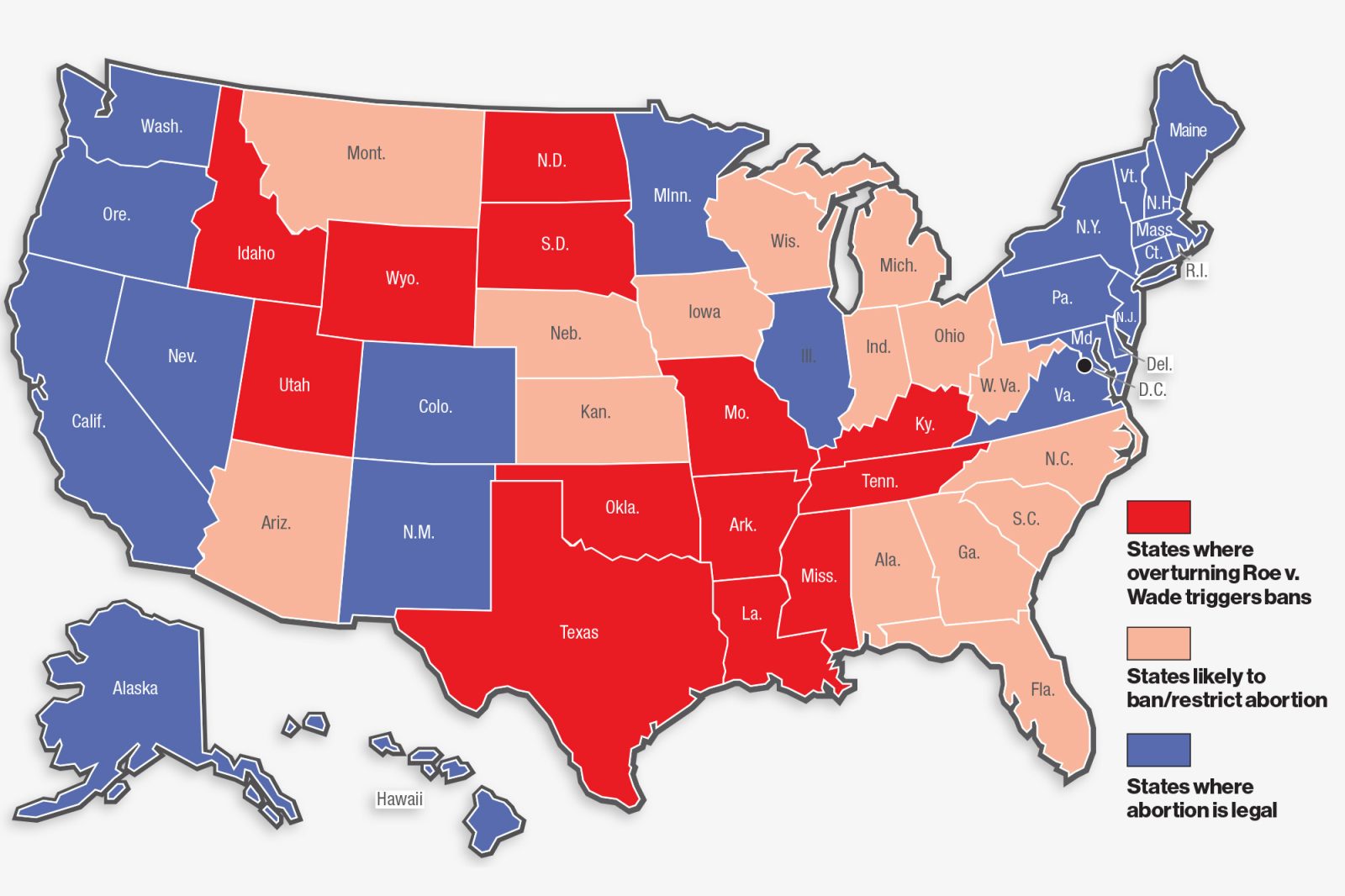
Photo taken from: The New York Post
(click or tap to enlargen)
Now, with the right to abortion overturned, other rights that were recognized by the Supreme Court in the mid-20th century are subject to reinterpretation. Justice Thomas in his concurring opinion writes, “in future cases, we should reconsider all of th[e] Court’s substantive due process precedents, including Griswold, Lawrence, and Obergefell. Because any substantive due process decision is ‘demonstrably erroneous’… we have a duty to ‘correct the error’ established in those precedents.” Dobbs v. Jackson Women’s Health Organization, 19-1392, 597 U.S. ___ (in-text citations not included).
Furthermore, everyone will be affected by the Dobbs decision – not just people who can get pregnant. We are starting to see the impact play out in states with abortion trigger laws. A trigger law is a legislative scheme that is triggered when something happens – like the overturning of Roe v. Wade.
For example, 13 states have had a law designed to be triggered when/if Roe v. Wade was overturned, including: Missouri, Kentucky, Texas, Mississippi, Louisiana, Idaho, Arkansas, Oklahoma, North Dakota, South Dakota, Tennessee, Utah, and Wyoming. These laws either totally outlaw abortion or excessively limit when people can receive abortion care.
Trigger laws have created a confusion of patchwork laws, sometimes overlapping with restrictive bans and pre-existing laws on abortion care. Pre-existing laws include laws that have laid dormant and unrepealed from before Roe v. Wade was decided. For example, in Texas, there is a trigger law, a pre-existing law, and a restrictive ban on abortion. Now, Texas courts are hearing whether the new law, the trigger law, or the pre-existing law is controlling. It is a mess, among it all are people trying to receive potentially lifesaving abortion care.
Engagement Resources
Click or tap on resource URL to visit links where available
To read the full opinion see: https://www.supremecourt.gov/opinions/21pdf/19-1392_6j37.pdf

To read a plain-English explanation of Dobbs and its ramifications see: https://reproductiverights.org/case/scotus-mississippi-abortion-ban/.
To support reproductive rights:
https://reproductiverights.org/get-involved/.

To support Planned Parenthood, go to:
https://www.plannedparenthood.org
In need of an abortion, to support those seeking abortion go to:

Preview of US Senate Races in Ohio and Iowa
Preview of US Senate Races in Ohio and Iowa
Elections & Politics Policy Brief #40 | By: Ian Milden | July 21, 2022
Header photo taken from: Dayton Daily News
Follow us on our social media platforms above
Browse more elections & politics policy briefs from the top dashboard

Photo taken from: PBS News Hour
Policy Summary
[SSB theme=”Official” align=”center” counter=”true” ]
Control of the U.S. Senate will be up for grabs in the 2022 mid-term elections. Competitive races in key states will determine the balance of power. In this brief, I will preview the US Senate races in Ohio and Iowa.
Policy Analysis
In Ohio, there is a vacant seat due to the surprise retirement of Senator Rob Portman (R-OH). Democrats nominated Congressman Tim Ryan (D-OH), who has represented the Youngstown area in Congress since 2003. Congressman Ryan briefly ran for President in 2020 but dropped out before any state had a primary election.
Congressman Ryan hasn’t previously run for statewide office in Ohio though he has publicly signaled interest in the past before running for re-election. He can’t run in his current district because Ohio lost U.S. House seats in the reapportionment of seats, and Republicans in the state legislature chose to dismember Ryan’s district.
Republicans nominated J.D. Vance. Vance is best known for writing a book called Hillbilly Elegy, which is a political manifesto with some offensive stereotypes that he made acceptable to a broader audience by including sections that would fit in a compelling personal memoir. Vance used the book to build a public profile and get interviewed on television news shows.
He criticized Trump early in his administration while trying to sell policy solutions that were similar to those sold by other populist conservatives. He has since changed his style of presentation to resemble Trump’s style, which got him Trump’s endorsement just before the primary election. Vance has not run for public office before though he did briefly work for Republicans in the Ohio State legislature.
Nobody has conducted a poll of the Ohio Senate race for the public since the beginning of June. Those surveys found that the race was within the margin of error. A few weeks ago, Ryan’s campaign released the topline numbers of their internal polling data (which tends to be a campaign’s rosiest assessment of the race), which also showed a margin of error race.
There’s not much that I can pull from the public polling data. The Suffolk University Poll released on June 1st found that J.D. Vance was better known among the Ohio voters surveyed, and his net favorability was negative four. It’s unclear based on the released data whether this is being driven by Democrats or Republicans skeptical of his past criticisms of Trump.
Ohio has become a tougher state for Democrats to win due to changes in voter behavior. While Democrats have increased their margins in the major urban areas, they have increasingly struggled in rural counties and blue-collar towns like the Youngstown area.
The large losses in rural areas and small towns are difficult for Democrats to overcome. If Congressman Ryan is going to win this fall, he will need to turn out traditional members of the Democratic voting coalition, while retaining enough support from his Youngstown area base and other blue-collar towns. The demographics of Ohio’s electorate do not leave him with much margin for error.

Photo taken from: AP / Aaron Doster
In Iowa, Senator Chuck Grassley (R-IA) is running for an 8th term. He is widely respected in the state of Iowa for his visits to every county in Iowa every year and his attendance record for Senate floor votes, which has consistently been among the best in the U.S. Senate. Grassley is the ranking member of the Senate Judiciary Committee, which means that he would be the Chairman if Republicans win a majority in the U.S. Senate.
The Democrats nominated retired navy admiral Mike Franken to challenge Grassley. He previously ran for the Democratic nomination for US Senate in 2020, losing to the DSCC-supported Theresa Greenfield. The DSCC elected to stay out of the primary this year, and Franken defeated former Congresswoman Abby Finkenauer (D-IA).
Despite having a good candidate, the U.S. Senate race in Iowa is going to be a very difficult race for Democrats to win. Nobody has come close to defeating Chuck Grassley when he has run for re-election. Additionally, the same trends in voter behavior that I discussed in Ohio’s Senate race are also occurring in Iowa. Democrats in recent years have struggled with getting support from white rural voters and voters who work in blue-collar jobs. The President’s party tends to struggle in midterm elections and when there are significant economic problems.
A recent poll from Selzer and Company, which has a very good reputation in Iowa, found that Grassley was leading by 8 and within the margin of error of a majority. Franken had a small lead with unaffiliated voters, but Grassley registered some support from self-identified Democrats. Given this data and the dynamics I discussed in the previous paragraph, this doesn’t seem like a race that Democrats are likely to win unless something substantially changes the race between now and late October.

Photo taken from: Chip Somodevilla / Getty Images
Engagement Resources
Click or tap on resource URL to visit links where available

Tim Ryan’s Campaign Website

Mike Franken’s Campaign Website

DSCC – Official Campaign Arm of Senate Democrats

Should Euthanasia and Assisted Suicide be Legal in the United States?
Should Euthanasia and Assisted Suicide be Legal in the United States?
Health & Gender Policy Brief #137 | By: Inijah Quadri | July 18, 2022
Header photo taken from: Medical News Today
Follow us on our social media platforms above
Browse more health and gender policy briefs from the top dashboard

Photo taken from: Modern Healthcare
Policy Summary
[SSB theme=”Official” align=”center” counter=”true” ]
The debate surrounding euthanasia and assisted suicide in the United States is a complicated one. On one side of the argument are those who believe that people have a right to die with dignity, and that euthanasia and assisted suicide should be legal options for individuals who are terminally ill or suffering from a debilitating condition. On the other side of the argument are those who believe that euthanasia and assisted suicide are immoral, and that they should not be legal options for anyone.
This debate over euthanasia and assisted suicide has been going on for many years, and there is no clear consensus on which side is right. Supporters of euthanasia and assisted suicide argue that these procedures provide a way for people to die with dignity, while opponents argue that they are unethical and can be abused. They also argue that legalizing euthanasia and assisted suicide would lead to an increase in suicide rates, as those with mental health issues or who are struggling with unbearable pain may feel pressured to take their own lives.
Policy Analysis
The history of euthanasia and assisted suicide in the United States is a long and complicated one. Euthanasia and assisted suicide used to be illegal in the United States, until the US drafted the Natural Death Act of 1979. First implemented by California, the Act, now adopted by all the US states, allows for a natural death in specific circumstances.
For example, the law allows people with terminal illnesses to forgo life-saving medical treatments, including artificial nutrition and hydration, in order to die peacefully. The law also allows people with chronic illnesses to make decisions about their end-of-life care in advance, in case they become unable to make decisions for themselves.
In 1997, the US Supreme Court ruled in favor of physician-assisted suicide in the case of Washington v. Glucksberg. This landmark decision upheld the right to die as a fundamental liberty interest protected by the Constitution. Since then, assisted suicide has been legal in several US states, including Colorado, the District of Columbia, Hawaii, Maine, New Jersey, New Mexico, Oregon, Vermont, and Washington.
Despite these precedents, euthanasia and assisted suicide remain controversial topics. Many opponents argue that these practices can be abused and that they put vulnerable people at risk. Others maintain that individuals have a right to choose how they die and that assisted suicide should be available to all who want it.

Photo taken from: Pew Research Center
(click or tap to enlargen)
The debate over euthanasia and assisted suicide is likely to continue for some time.
Outside the United States, the legality of euthanasia and assisted suicide vary from country to country. In some places, both practices are legal, while in others, only euthanasia is legal. In the majority of countries, however, euthanasia and assisted suicide are illegal. There are a number of reasons for this variation in legality. One reason is that the definition of euthanasia and assisted suicide can differ from country to country. Another reason is that public opinion on euthanasia and assisted suicide can vary dramatically from country to country.
Conclusion
In conclusion, many people, especially those suffering from terminal conditions, feel that euthanasia and assisted suicide should be legal in the United States. We agree with this sentiment for a few reasons. First, people should be able to make their own decisions about their lives and death. Second, many people who are suffering should be able to choose euthanasia or assisted suicide to avoid a long, painful death. Finally, these procedures are often much less expensive than keeping a person alive in a hospital setting, and as such, should be legalized in all US States.
Engagement Resources
Click or tap on resource URL to visit links where available

Cable News Network, Inc.: (https://edition.cnn.com/2014/11/26/us/physician-assisted-suicide-fast-facts/index.html#:~:text=Physician%2Dassisted%20suicide%20is%20legal,and%20California%20via%20court%20decision.)

Encyclopedia.com: (https://www.encyclopedia.com/social-sciences/encyclopedias-almanacs-transcripts-and-maps/natural-death-acts)

ProCon/Encyclopaedia Britannica, Inc.: (https://euthanasia.procon.org/euthanasia-physician-assisted-suicide-pas-around-the-world/)

The US Supreme Court: (https://supreme.justia.com/cases/federal/us/521/702/)

U.S. Department of Justice Brings Voting Rights Lawsuit in Arizona
U.S. Department of Justice Brings Voting Rights Lawsuit in Arizona
Civil Rights Policy Brief #192 | By: Rodney A. Maggay | July 20, 2022
Header photo taken from: Getty Images
Follow us on our social media platforms above
Browse more civil rights policy briefs from the top dashboard

Photo taken from: CNN
Policy Summary
[SSB theme=”Official” align=”center” counter=”true” ]
In March 2022 Arizona’s Republican Governor Doug Ducey signed into law HB 2492. The law is scheduled to go into effect in January 2023. The law included a number of voting restrictions that the Arizona Legislature wanted to implement. The statute provides new databases that Arizona counties can check to verify the names on their voter rolls, added a box on the Arizona state voter registration form for voters to state where they were born, and a box for the voter to check if they are a U.S. citizen. Instructions were also drawn up directing voting officials to reject the voting application if the citizenship box was not check marked.
Along with those provisions, the most significant effect of the new statute is the requirement that any voter who wants to vote in a presidential election or vote by mail in any Arizona election must now provide documentary proof of citizenship.
However, a conflict between an Arizona state law and a federal statute has arisen. In a 2004 ballot measure that was approved, Arizona currently requires proof of citizenship when voters register to vote after 2005 in order to vote in state elections. However, the National Voter Registration Act of 1993 provides a uniform federal voter application. States must accept the form if a voter chooses to use the federal form instead of the Arizona state form.
The federal form does not require documentary proof of citizenship but only requires voters to attest that they are U.S. citizens under penalty of perjury. Because Arizona’s new voter requirements differ from the information requested on the federal form, the U.S. Department of Justice filed a lawsuit in the United States District Court for the District of Arizona. DOJ is asking the Court to declare HB 2492 in violation of the National Voter Registration Act of 1993 and HB 2492 unenforceable. LEARN MORE, LEARN MORE
Policy Analysis
With former President Donald Trump pushing the “Big Lie” that the 2020 presidential election was stolen from him and Republican officials across a number of states following his lead, there were questions whether anything was going to be done to counter President Trump’s election lies that some in the Republican Party have embraced.
State Republican officials seemed dead set on ignoring the evidence that there was no election fraud and pushed for voting restrictions for a problem that did not exist. What makes this new lawsuit by DOJ significant is that it is going to directly counter the proof of citizenship requirement that Republicans have supported. And, it will counter the false “immigrants voting” problem that Republicans have used as a rationale for more stringent voting restrictions.
Arizona’s HB 2492 is unnecessary as written because it is based on a false premise. The law is written in a way that applies only to voters voting in a presidential election. If the bill truly wanted to strengthen elections across the board then it should have been written to apply its requirements to all federal elections in the state instead of just presidential elections.
The reason why it may have been written to only apply to presidential elections is to probably satisfy President Trump’s lie that illegal immigrants voted overwhelmingly for Hillary Clinton in 2016 thus depriving him of a victory in the popular vote. But President Trump’s claim that 5 million illegal immigrants voted illegally has already been proven false.
Since illegal immigrants did not vote in significant numbers as President Trump has claimed, there is no reason for Arizona to implement a voting restriction that applies only to presidential election years.

Photo taken from: Courtney Pedroza / Getty Images
(click or tap to enlargen)
But more than that, this lawsuit is important to demonstrate that a focus on citizenship to prevent voter fraud is misguided. Arizona’s attempt to impose documentary proof of American citizenship as a requisite to vote in Arizona is contrary to the framework that has been put in place by the federal government.
The creation of the unified federal voter registration form that states must accept if a voter chooses to use that form simply requires that the voter attest that they are a citizen. This simple attestation without more has been sufficient and has not caused any problems for nearly thirty years. Arizona’s likely motivation for the documentary proof of citizenship requirement might be to challenge the citizenship issue at the Supreme Court again.
In 2013, the Supreme Court ruled against Arizona in Arizona v. Inter Tribal Council of Arizona and said that Arizona could not require documentary proof of citizenship if a resident used the federal voter registration form. By directly contradicting the federal government with HB 2492, Arizona is hoping that a newly right leaning Court will reverse course and allow their documentary proof of citizenship requirement to stand. This lawsuit brought by DOJ will help to expose the arguments that Arizona intends to rely on and show that Arizona’s reliance on those arguments and Trump’s false lies are not based in reality.
Additionally, the DOJ lawsuit can also push back on right wing arguments that millions of illegal immigrants are casting ballots. This is simply not true and only became a talking point because President Donald Trump needed to fabricate a lie to explain his loss in the popular vote in 2016. As this case moves forward, Arizona may very well find itself in a similar embarrassing position as those lawyers who claimed that the 2020 election was stolen from Trump – that they made wild claims of electoral fraud but had no evidence to substantiate their claims.
This DOJ lawsuit can help expose those false claims and show that proving citizenship is not the problem that right wingers want it to be. Now that DOJ has initiated their lawsuit, Arizona might find itself in more trouble than it anticipated when it is shown that their focus on citizenship to verify voters is irrelevant and does nothing to help provide voters with more access to the voting booth. LEARN MORE, LEARN MORE, LEARN MORE
Engagement Resources
Click or tap on resource URL to visit links where available

U.S. Department of Justice – fact sheet on efforts Justice is taking to protect access to the ballot box and the right to vote.

American Civil Liberties Union (ACLU) of Arizona – infopage on voter suppression efforts in Arizona.

Brittney Griner’s Trial in Russia
Brittney Griner’s Trial in Russia
Foreign Policy Brief #141 | By: Reilly Fitzgerald | July 18, 2022
Header photo taken from: The New York Times
Follow us on our social media platforms above
Browse more foreign policy briefs from the top dashboard

Photo taken from: Stacy Revere / Getty Images
Policy Summary
[SSB theme=”Official” align=”center” counter=”true” ]
The WNBA is the premier basketball league in the world for professional female basketball players and has been at the center of American media attention due to the trial of Brittney Griner in Russia. Brittney Griner is an American basketball player, who plays for the WNBA’s Phoenix Mercury. Griner was arrested quickly after the Russian invasion into Ukraine; with critics of the Putin regime and war suggesting that she was arrested as a political pawn. Her charges are regarding the use of hashish oil which is illegal in Russia.
This debacle has involved the highest levels of government, including the White House, and much commentary from the sports world, including from the likes of Lebron James. Secretary of State Antony Blinken is personally involved, according to reports over the last few months; and even tweeted July 7th that American “officials again attended Brittney Griner’s trial today and delivered to her a letter from President Biden. We will not relent until Brittney, Paul Whelan, and all other wrongfully detained Americans are reunited with their loved ones.” His commentary and that of many news outlets is calling out the topic of “wrongful detention” as a practice of the Russian government.
Policy Analysis
The charges against Brittney Griner specifically are aimed at her use of vaping hashish oil. She was arrested at Sheremetyevo Airport. According to a Newsweek report, the charges of possessing and transporting hashish oil could lead to up to ten years imprisonment. Her lawyers, in her Russian trial, explained that the drugs she was in possession of were prescribed for her and they presented her doctor’s note to treat some pain she was experiencing.
According to the Associated Press, Griner plead guilty to the charges knowing that she was in possession of the drugs; however, she explained that she was not intending to break the laws of Russia but was just caught up in packing quickly to get to Russia to play for UMMC Ekaterinburg in the Russian basketball league.
Recent criticism of the trial has drawn attention to the pay disparity between the American NBA and WNBA, as the only reason that Griner (and other female players) travel to countries like Russia to play in the US off-season is to continue making money. The disparity in pay between the NBA and WNBA is stark – with the top players in the WNBA making around $500,000 while top NBA players, like Lebron James, make many millions of dollars per season (and do not need to play internationally to make more money).
Griner is one of the top players in the WNBA, with enough accolades to rival many of the male stars of the NBA, it cannot be ignored that pay disparity is a major contributing factor in the circumstances leading to Griner’s incarceration in Russia. It is not an unreasonable to suggest that if WNBA players made more money, then Griner would never have needed to travel to Russia to play in the first place. UMMC Ekaterinburg, according to the Boston Globe, was paying Griner more than $1 million to play for their team, which is owned by a Putin-associated Oligarch. NBC Sports reported in May that Griner was paid just under $230,000 for her last season in the United States; while USA Today reported that the average salary for an NBA player is $7.3 million.

Photo taken from: Apichart Weerawong / AP
(click or tap to enlargen)
The political timing of the arrest and trial of Brittney Griner does lend itself to being looked at with a skeptical lens, and Griner has been referred to as a political pawn of the Russian state government. All of this happened right before the start of the Russian war in Ukraine, Russia would have obviously been looking for any leverage or bargaining chips to use during the war for other political purposes that would help them respond to American policy in Ukraine.
According to the New York Times, there are approximately 50 Americans held by overseas adversaries for political purposes or as hostages. This number includes those held by Russia and other nation-state actors, but also non-state actors such as terrorist or extremist groups.
Many members of the Biden Administration have referred to Griner’s case, and Paul Whelan’s case, another American held by Russia, as being “wrongfully detained”. The New York Times explains that ‘wrongfully detained’ means being “held by a foreign government for the purposes of influencing U.S. policy or extracting political or economic concessions from Washington”.
President Obama set a precedent, in 2015, that does not allow the government to get involved with paying ransoms or exchanging prisoners, as a way to attempt to disincentivize wrongful detentions; however, there are many examples post-2015 of swaps and exchanges occurring to free Americans, including from Russian hands.
Over two weeks ago, The Washington Post, reported that the Russian government was interested in a prisoner exchange involving Griner for Viktour Bout or “The Merchant of Death”; who is serving a 25 year sentence in the United States for selling arms to the Revolutionary Armed Forces of Colombia.
Brittney Griner’s next hearing is set to take place on July 26th and, according to ESPN, her detention has been authorized by the Russian government until December 20th. This leads some to believe that the trial could be a long process for Brittney Griner to secure her freedom from Russia; however, her lawyers believe the trial could be over and resolved as early as August.
Engagement Resources
Click or tap on resource URL to visit links where available

James W. Foley Legacy Foundation (https://jamesfoleyfoundation.org/american-hostage-advocacy )

Travel.State.Gov ( https://travel.state.gov/content/travel/en/international-travel/emergencies/arrest-detention.html )

Readout of President Biden’s Call With Cherelle Griner ( https://www.whitehouse.gov/briefing-room/statements-releases/2022/07/06/readout-of-president-bidens-call-with-cherelle-griner/ )