

JOBS POLICIES, ANALYSIS, AND RESOURCES
Latest Jobs Posts
Shinn v. Martinez Ramirez (2022): Being Innocent of a Crime is Not Enough
Brief #36 – Social Justice
By Alexandra Ellis
n May 25, 2022, the United States Supreme Court released the published opinion of Shinn v. Martinez. The 6-3 opinion has ramifications not only for the defendants in the case, David Martinez Ramirez and Barry Jones, but for post-conviction relief for wrongfully convicted individuals everywhere. The essence of the opinion is that being innocent of a crime is not enough.
THE DEPARTMENT OF JUSTICE SHOULD INDICT FORMER PRESIDENT TRUMP
U.S. RESIST NEWS OP-ED
By Ron Israel
The January 6th Committee, through its publicly televised hearings has revealed that it has enough evidence to indict former President Donald Trump. The indictment would be focused on Trump’s illegal efforts to overturn the results of the 2020 Presidential elections.
Quid Pro Quo Again? And Again? And Again?
Brief #37 – Social Justice
By Maureen Darby-Serson
Over the past couple of weeks, the January 6th committee has been holding public hearings that have revealed several astonishing facts regarding the attack on the US Capital and events after the 2020 Presidential election.
A Prescription to Improve American Healthcare
Brief #153 – Health & Gender Policy
By Inijah Quadri
According to the Commonwealth Fund, the United States spends more on healthcare than any other country in the world. However, when it comes to healthcare outcomes, the U.S. lags behind many other industrialized countries.
Supreme Court Permits The Use Of State Taxpayer Funds For Religious Instruction
Brief #189 – Civil Rights
By Rodney A. Maggay
Petitioners David and Amy Carson and Troy and Angela Nelson are two couples that reside in Maine. Both families wanted to apply for Maine’s tuition assistance program in order to send their children to two separate “sectarian” schools. Both families were denied because Maine had previously determined that using state taxpayer funds to fund tuition for students at sectarian schools was a violation of the Establishment Clause of the First Amendment.
Vive Le Tour de France … Femmes!
Brief #139 – Foreign Policy
By Reilly Fitzgerald
The Tour de France is the pinnacle of professional cycling. It is the highest level of competition on the biggest stage in the world, in one of the toughest endurance sports out there. Until now, it has been strictly for men. This 21-day stage race has taken place almost every summer since 1903 – with some breaks in competition for the two world wars which devastated much of France. Like many other major sporting competitions, the Tour de France is a 21-day period of time for France to show off its many glorious features.
TV viewers and spectators alike are treated to dazzling images of the Alps and Pyrennees mountains, views over the Atlantic and Mediterranean, mass celebrations and French heroics on Bastille Day, and to end it all – a massive sprint finish down the Champs Elysees in the heart of Paris at dusk with views of the Seine, the Eiffel Tower, and the Arc de Triomphe.
Preview of US Senate Races in Pennsylvania and Georgia
Brief #38 – Elections & Politics
By Ian Milden
Control of the U.S. Senate will be up for grabs in the 2022 mid-term elections. Competitive races in key states will determine the balance of power. In this brief, I will preview the competitive races in Pennsylvania and Georgia.
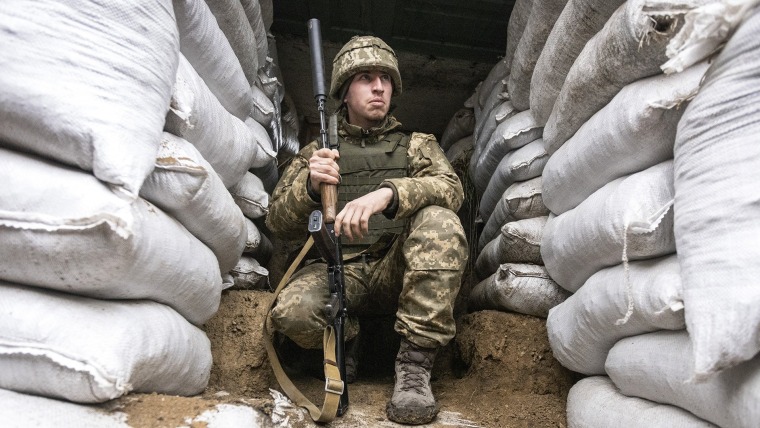
While Men Fight for Their Land in Ukraine, Their Families Try to Survive in a Foreign Country
Brief #138 – Foreign Policy
By Yelena Korshunov
I’m speaking with a man who was on his way to fight for his country, Ukraine, that was invaded by Russia’s troops on February 24, 2022. He packed his bag in his Brooklyn house to cross the Atlantic Ocean, back to the land where he was born. He was almost done with packing when his close relative stepped in.
New Charges Filed Against Proud Boys
Brief #37 – Elections & Politics
By Stephen Thomas
As of this writing, none of the five members of the Proud Boys who received two additional Capitol riot charges June 6 have pleaded guilty. The group faces nine charges in all in connection with the breach of the U.S. Capitol on Jan. 6, 2021. The case is before the U.S. District Court for the District of Columbia.


Outdoor Sports and Exercise Can Help Fight Pandemic Depression
Outdoor Sports and Exercise Can Help Fight Pandemic Depression
Health & Gender Policy Brief #127 | By: Yelena Korshunov | January 25, 2022
Header photo taken from: Medical News Today
Follow us on our social media platforms above
Browse more health and gender policy briefs from the top dashboard

Policy Summary
[SSB theme=”Official” align=”center” counter=”true” ]
“Depression on my left. Loneliness on my right. They don’t need to show me their badges. I know these guys very well,” wrote Elizabeth Gilbert in her New York Times bestseller, Eat Pray Love. Can you imagine that one in three of your neighbors suffers from pandemic depression? Or maybe you are the one who knows what depression feels like?
According to a Boston University School of Public Health study, depression among adults in the US tripled in the early 2020 months of the coronavirus pandemic. It jumped from 8.5 percent before the pandemic to a shocking 27.8 percent. The Boston University study revealed that the rate of depression has worsened in 2021, climbing to 32.8 percent and affecting 1 in every 3 American adults.
When pandemic fogged the world, people’s accustomed lifestyle drastically changed. Many lost their work and stable income, and had to forego lifetime habits. Sport clubs, theaters, and cinemas had to shut their doors for a long period. Others, like the author of this Brief, were passionate travelers, but this habit was cut by the status quo. Some people are lucky to have a chameleon talent to adapt to the current reality, some are lucky to not face staggered changes, but one in three people all over the country started experiencing anxiety and depression. Since then, many world famous scientific medical institutions have been working toward finding a solution on how to support mental health during the pandemic.
We are used to thinking that jogging, walking, and playing outdoor sports helps us have a healthy body , but a number of recent studies found that being active and spending time outdoors during the pandemic is also extremely important for our mental health. Research at the Max Planck Institute for Human Development showed that less time outdoors leads to brain atrophy, over time and with age, thus spending active time outdoors is vitally important for our mental health.
In Spring and Summer 2020 the healthcare company Kaiser Permanente conducted a study, which involved 20,000 people from Hawaii, Colorado, Georgia, the mid-Atlantic states, and Southern and Northern California. Kaiser Permanente studied the longitudinal associations of physical activity, time spent outdoors in nature and symptoms of depression and anxiety during COVID-19 quarantine and social distancing in the United States. Results were consistent across all demographic subgroups, including white, Hispanic, Black, and Asian respondents. The study found that those who had exercised or spent more time outdoors had lower anxiety and depression scores. These participants also reported fewer symptoms of anxiety and depression over time. Those who did not report doing any physical activity during lockdown had the highest depression and anxiety scores.
Policy Analysis
A growing body of research suggests that people of all demographics should be encouraged to participate in outdoor physical activities routinely, and especially during public health emergencies. Outdoor opportunities for physical activity, including parks and other nature venues, should remain open for use and be accessible during the pandemics.
On April 30, 2021, in “A Proclamation on National Physical Fitness and Sports Month, 2021” president Joe Biden shared with the nation that “physical activity is one of the best tools we have to help combat chronic diseases experienced by over half of all Americans. Even a single session of moderate-to-vigorous physical activity can boost your mood, sharpen your focus, reduce your stress, and improve your sleep. More regular physical activity — over months or years — can contribute to a reduced risk of depression, heart disease, several types of cancer, dementia, type 2 diabetes, and obesity.”
“No matter our age or ability,” Biden said, “the more that we can make regular physical activity and participation in sports a part of our lives, the better off both we and our Nation will be.”

Pickleball game.
Photo taken from: The AARP
(click or tap to enlargen)
Paul Reed, Deputy Assistant Secretary for Health and Director in the US Office of Disease Prevention and Health Promotion also emphasized that “physical activity has many well-established mental health benefits. These are published in the government’s Physical Activity Guidelines for Americans and include improved brain health and cognitive function, a reduced risk of anxiety and depression, and improved sleep and overall quality of life.”
The author of this Brief solved the problem by switching from traveling abroad to exploring local outdoor activities, e.g. hiking.
My husband and I were amazed at how many beautiful places and challenging hiking trails we found not far from our home in New York City. The Appalachian trails, Minnewaska, Irvington Woods, and Croton Aqueduct in Hudson Valley became a physical challenge for the body and an admiration for eyes. I discovered pickleball and minigolf appeared to be very close by.
For 6 years residing in my neighborhood and traveling overseas I didn’t know about this outdoor luxury that abundantly sat right under my nose and cost little to nothing. Another priceless benefit was meeting a local pickleball community – new people who shared the same passion and became such a great support to fight the pandemic frustration.

Engagement Resources
Click or tap on resource URL to visit links where available

Best Trails in United States of America https://www.alltrails.com/us

Fun and Free Family Outdoor Activities in Your State

Get Outside! https://www.nps.gov/planyourvisit/recreation.htm
Learn More Resources
Click or tap on resource URL to visit links where available

Outdoor exercise lessened anxiety and depression

A Proclamation on National Physical Fitness And Sports Month, 2021

Physical Activity Is Good for the Mind and the Body
https://health.gov/news/202112/physical-activity-good-mind-and-body

Depression Rates in US Tripled When the Pandemic First Hit—Now, They’re Even Worse
https://www.bu.edu/articles/2021/depression-rates-tripled-when-pandemic-first-hit/

Suggestions for Teaching About January 6th
Suggestions for Teaching About January 6th
Education Policy Brief #TBA | By: Lynn Waldsmith | January 24, 2022
Header photo taken from: TBA
Follow us on our social media platforms above
Browse more education policy briefs from the top dashboard

Photo taken from: Yahoo News
Policy Summary
[SSB theme=”Official” align=”center” counter=”true” ]
As the House committee investigating the January 6th attack on the Capitol gains momentum, teachers throughout the country are struggling more than one year later with how, or even if, to teach students about that pivotal event and its impact on our democracy.
For example, a Pennsylvania school district warned teachers earlier this month not to “wade into” discussions about the one-year anniversary of the Jan. 6 incident with students. A school administrator of the Pennridge School District, located outside Philadelphia, instructed teachers in an email to “simply state that the investigation is ongoing and as historians we must wait until there is some distance from the event for us to accurately interpret it.”
Pennridge Superintendent David Bolton defended the contents of the email, telling local news outlet WHYY that “multiple teachers” had asked for guidance from the district on how they should address the anniversary.
In a similar incident, middle school teacher Liz Wagner teaches in a Des Moines suburb. She and her colleagues got an email from an administrator last year, warning them to be careful in how they framed any discussion about Jan. 6.
“Last year I was on the front line of the COVID war, trying to dodge COVID, and now I’m on the front line of the culture war, and I don’t want to be there,” Wagner told the Associated Press.
Policy Analysis
While some teachers feel strongly about teaching students about the Jan. 6th insurrection and the current congressional fact-finding mission to uncover the truths that led to it, others are wary to wander into what they see as yet another political hot potato, particularly in so-called red states with Republican majorities. And still other teachers prefer to avoid discussing the event altogether, particularly if administrators are cautioning them to do so.
The reluctance is understandable, since it illustrates how divided the country remains as the “big lie” that Donald Trump won the 2020 presidential election continues to reverberate through the Republican party and its supporters.
A little more than a year since pro-Trump protestors stormed the U.S. Capitol, attacked police, threatened lawmakers, and disrupted the certification of the 2020 presidential election, an NPR/PBS NewsHour/Marist National Poll finds that roughly half of U.S. adults say an insurrection took place that threatened democracy, and about as many say Trump is to blame. In addition, more than six in ten Americans (62 percent) think the investigation into Jan. 6 is appropriate and not a witch hunt (compared to 35 percent who believe the opposite).
Yet many Americans have accepted a different narrative, with 80 percent of Republicans saying the events of Jan. 6 were a legitimate act of dissent or should be put aside as something that occurred in the past.
Despite the deep partisan divides, anxious teachers are being encouraged by many educators and parents not to avoid teaching students about the events of Jan. 6 and their aftermath. Teaching that history, civics or current events have real world applications is crucial in helping students to become engaged in democracy. So, the more important question becomes, how to teach young people about that infamous day. Fortunately, there are numerous resources available (see below), but most experts agree on some basic fundamentals.

Photo taken from: America’s New Hub Triangle
(click or tap to enlargen)
First, adults shouldn’t assume that students know what happened on Jan. 6. Many don’t. It’s a good idea for any class discussions to begin by focusing on what students know and what questions they have. Teachers should remain as impartial as possible by simply stating the facts surrounding the day and the current investigation. This also underscores the importance of not only teaching students to check their facts but to help them develop news literacy by helping them learn the difference between a reputable source and propaganda.
Teachers must create a safe space for debate and encourage students to share and criticize opinions, not attack each other. On the other hand, teachers must be careful not to create a false equivalence between “two sides” of a debate. For example, a teacher should never divide the class in half and pose a question as to whether voter fraud helped Joe Biden win the presidency because the evidence is clear and overwhelming that such claims of voter fraud perpetuated by the “big lie” are completely false.
Drawing connections between what happened on Jan. 6 and past examples of sedition and pubic protest is also encouraged, so students can learn how various historical examples are similar to and different from what happened on Jan. 6. The textbook company McGraw Hill recently said in a statement that it will include events from Jan. 6 in new editions of their books.
“As our content and curriculum are updated for new editions of our social studies programs, events such as Jan. 6 (as well as many other recent events of historical importance such as the 2020 election, the Trump presidency, the COVID-19 pandemic and more) would certainly be covered in age- and grade-appropriate ways – and aligned to state standards and local school district needs.”
Experts say focusing on language should also be a key point of any lessons about putting Jan. 6 into historical context. For example, the murder of hundreds of innocent African Americans in Tulsa, Okla. by a white mob was known for decades as the Tulsa Race Riot. Only recently have historians begun to refer to the tragedy as a massacre. Students can explore how news outlets like PBS have changed references to Jan. 6 over time from ‘Protest’ To ‘Riot’ To ‘Insurrection’. Or they can discuss why many Black Lives Matter protestors were referred to as “thugs” or “looters”, when some people continue to refer to Jan. 6 participants as “patriots”.
Engagement Resources
Click or tap on resource URL to visit links where available

NPR/PBS NewsHour/Marist National Poll: One Year Since the Unrest at the U.S. Capitol, January 2022

Univ. of Michigan — Resources for Studying and Teaching the January 6, 2021 U.S. Capitol Insurrection
https://guides.umd.umich.edu/c.php?g=1113081
Univ. of Michigan — Resources for Studying and Teaching the January 6, 2021 U.S. Capitol Insurrection
https://guides.umd.umich.edu/c.php?g=1113081

Education Week — 6 Ways to Help Students Make Sense of the Capitol Siege

New York Times — Teaching Resources to Help Students Make Sense of the Rampage at the Capitol

Learning for Justice –Teaching the Historical Context of January 6
https://www.learningforjustice.org/magazine/teaching-the-historical-context-of-january-6

PBS — Classroom resource: Three ways to teach the insurrection at the U.S. Capitol
https://www.pbs.org/newshour/extra/daily-videos/classroom-resource-insurrection-at-the-u-s-capitol/

Electric Vehicles and a Collision Course with Public Lands Management
Electric Vehicles and a Collision Course with Public Lands Management
Environmental Policy Brief #133 | By: Timothy T. Loftus, Ph.D. | January 23, 2022
Header photo taken from: Visalia Times Delta
Follow us on our social media platforms above
Browse more environmental policy briefs from the top dashboard

Photo taken from: National Park Service
Policy Summary
[SSB theme=”Official” align=”center” counter=”true” ]
The race to electrify the transportation sector, now the largest contributor of greenhouse gas emissions in the US, will entail controversial decisions and tradeoffs involving the use and management of America’s public lands. The reason is simple: electric vehicles (EVs) are powered by sophisticated batteries that are increasing demand for metals such as lithium that are already in great demand for use in smartphones, computers, and myriad other high-tech devices.
Mining companies, both US- and foreign-based, are increasingly eyeing federal land for the metals they contain. Seeking approval for leases is now often justified in terms of how their mining operations will enable the Biden Administration’s quest to combat climate change. While there may be merit for the US to be less reliant on foreign sources of lithium and other critical metals necessary to sustain our 21st Century lifestyle, new mines will be destructive to land and habitat much as they always have been. New mines will also often operate against the wishes of local Indigenous people and lead to more cases of environmental injustice.
Public land under the purview of both the U.S. Dept. of Agriculture’s Forest Service (USFS) and the U.S. Dept. of Interior’s Bureau of Land Management (BLM) is managed under a multiple-use mandate. For example, these federal lands, belonging to all Americans, are managed to conserve vital habitat to protect biodiversity and provide high-quality drinking water along with enabling an ever-growing number of recreationists. Forest Service and BLM land is also managed to yield producer and consumer resources such as timber and grazing land and acreage that can be leased for oil, gas, and metal/mineral extraction much as they have been throughout our nation’s history.
Today, the private sector seeks new leases for the mining of metals that are necessary for EVs, cell phones, computers, and more. High-tech devices that most Americans take for granted and are acquiring at increasing levels, require metals including lithium, cobalt, copper, nickel, gold, platinum, and antimony, among others. Such metals are necessary for the circuit boards, wires, conductors, and other components that either instruct or enable an ever-growing list of products and appliances in everyday use. They are necessary for the new generation of lithium-ion batteries that are the heart of EVs and are also essential for storing energy made available by wind and solar power.
While manufacturers rely heavily on importing these metals or products, demand and national security call for metals to be mined here in the United States if economically viable deposits can be found. One such deposit of antimony is found on USFS land in Idaho. As reported by the New York Times last month, Perpetua Resources, an Idaho-based company, is seeking approval from the Biden Administration to develop a new open-pit gold mine on the Tonto National Forest. The mine will also be one of the more significant sources of antimony in the US. The mine is opposed by the Nez Perce Tribe for its impact on rivers and salmon.
A comparable situation is occurring in northern Nevada where a large open-pit lithium mine is contested by local ranchers, environmentalists, and the Fort McDermitt Paiute and Shoshone Tribes. Lithium Americas’ Thacker Pass mine was approved in the waning days of the Trump Administration and is situated on BLM land. While expected to be the most significant source of lithium in the US, it will use a considerable amount of groundwater in an otherwise dry high-desert area – 5,200 acre-feet or 1.7 billion gallons per year – and generate large volumes of highly-toxic waste. The mine will also have a severe impact on pronghorn antelope and sage grouse habitat. The mine received approval in federal court last July to begin excavation as reported by Reuters.
More examples of new mining proposals on federal land are playing out in other states: the Rosemont open-pit copper mine located within the Santa Rita Mountains and Coronado National Forest south of Tucson, Arizona. This proposed mine is operated by Hudbay Minerals, a Canadian firm, and poses a threat to habitat deemed critical for endangered jaguars.
Another open-pit lithium mine is proposed by Australian company, Hawkstone Mining, on BLM land in west-central Arizona. As reported by High Country News last summer, exploration wells are being drilled along the border of land granted to the Hualapai Tribe. In all the mining projects mentioned here, Indigenous people are impacted, the local environment and habitat are degraded, and federal approval is required given the public lands involved. That said, the mines promise the metals that Americans and others crave and jobs that are in short supply in remote areas.
Policy Analysis
One axiom of economics is that demand creates supply. And the unquenchable thirst for high-tech or smart devices and growing demand for lithium-ion batteries that store energy are major drivers of new proposals to mine precious and other metals on public land. Beyond American reliance on smartphones and other metals-intensive devices, the current push to replace internal-combustion engines with EVs has turbocharged demand and raised the stakes for the acquisition of metals.
To be sure, the US is reliant on imports of most metals used in smart devices and lithium-ion batteries for EVs. For example, Australia leads the world in lithium production with Chile the second largest producer. China and Argentina are the third and fourth largest producers of lithium respectively. According to the U.S. Geological Survey, the two most significant sources of imported lithium for the US are Argentina and Chile. Lithium production in the US is currently limited to one brine operation in Nevada.
Three-quarters of the world’s antimony is mined and produced in China. Similarly, the Democratic Republic of Congo is the world’s largest producer of cobalt, accounting for about 60 percent of global production. Cobalt production is very minor in the US compared to other nations and US cobalt reserves represent less than one percent of the world-total reserves.
The US is the fifth largest producer of copper in the world with Chile and Peru being the top two producers (and China third.) The situation is similar for platinum-group metals such as platinum and palladium. Lastly, the US ranks number four in world production of gold and third in reserves.
A variety of precious and other metals are necessary for life as we have become accustomed to it. They are also essential in our quest to reduce greenhouse gas emissions enabling the transportation sector is to evolve in the era of climate change and remain as prevalent in society as it is currently. As consumers of the end-products, however, we cannot afford to be divorced from the damage done to land, habitat, and water that is irrevocable and unquestionably part of the purchase and more than likely than not, an example of “out-of-sight, out-of-mind.”

India’s aluminum, China’s lithium, and Israel’s new battery tech are amongst the global frontline of e-vehicle production.
Photo taken from: The Print
(click or tap to enlargen)
Electric vehicles are considered a more sustainable mode of transport compared to fossil fuel powered vehicles. The social and environmental costs stemming from the mining of metals, however, would not be included in a life-cycle analysis of carbon dioxide equivalent emissions per mile driven. And that begs the question: at what cost to our natural heritage should EVs and our appetite for smart devices entail? Are they so essential as to come at any cost? Consumer demand suggests “yes” to that last question.
Without doubt, climate change poses an existential threat to humans, societies worldwide, and many other species that we share Earth with. Greenhouse gas emissions must be reduced or eliminated where possible. Can we significantly reduce emissions without sacrificing more of our already diminishing stock of natural capital? Is it still possible to organize ourselves and the way we live to be less dependent on vehicles? Are millions of cars and trucks the problem with millions more to come, rather than how they are powered?
Addressing inadequate public transportation options in many places will be helpful, but such options alone won’t solve the problem. Perhaps the focus of electrification in this sector ought to be on the biggest emitters – buses and heavy-duty trucks – while making common cars more fuel efficient and driving more expensive (e.g., a carbon fee built into the price of a gallon of gasoline.)
To be sure, we are dealing with a vexing social problem with considerable environmental consequences no matter the path forward.
As consumers, there is a need to be clear-eyed about the hidden costs incurred by the production of smart devices and the new push to electrify all vehicles on the road. An overreliance on metals-hungry, technology-based products alone may not be the panacea that marketeers would have us believe. Yet time and ongoing advancements might well lessen some of these concerns.
Engagement Resources
Click or tap on resource URL to visit links where available

Intergovernmental Science-Policy Platform on Biodiversity and Ecosystem Service (IPBES)

U.S. Department of the Interior, Bureau of Land Management. About Mining and Minerals.


Ukraine: Back In The USSR?
Ukraine: Back In The USSR?
Foreign Policy Brief #141 | By: Reilly Fitzgerald | January 23, 2022
Header photo taken from: Russia Beyond
Follow us on our social media platforms above
Browse more foreign policy briefs from the top dashboard

Photo taken from: The Indian Express
Policy Summary
[SSB theme=”Official” align=”center” counter=”true” ]
Ukraine is one of the major foreign policy concerns of the Biden Administration with tensions reaching a high point over the last month with multiple phone conversations between Russian President Vladimir Putin and President Joe Biden and in-person negotiations between US and Russian diplomates in Europe during the past 2 weeks; the major concern of the Biden Administration is another invasion of Ukraine, like the world saw in 2014 with the invasion of the Crimean Peninsula.
Ukraine has long been a focus of Russian politics and culture. Ukraine’s relationship with Russia is a long and complicated one dating back to the origins of the Russian people in Kievan Rus in the 9th Century. Ukraine was part of the centuries old Russian Empire ruled by the Czars, and then became part of the Soviet Union under communist rule.
Fast-forward to the 1900s and the introduction of the Soviet Union to the world stage, and we can start to see some clear examples of Russian (then Soviet) and other sorts of foreign interference in Ukraine; when Ukraine was used mostly for its agricultural advantages. The early stages of the Soviet Union were famous for their strategies of ‘collectivization’ under Joseph Stalin which directly led to widespread famine in Ukraine known as ‘Holodomor’; during this famine over 3 million people died. Once World War II began, Ukraine was occupied by the Nazis until 1944. About 5 million Ukrainians were killed during the conflict and another 1 million Jewish Ukrainians were killed as victims of the Holocaust. After the war Stalin famously deported 200,000 Crimean Tatars for their alleged aid to Nazi Germany; though this reasoning is now a little more suspicious.
In 1954, the Soviet Union under Nikita Kruschev gifted the Crimean Peninsula to the Ukrainian Soviet Socialist Republic as a gift to mark the 300th anniversary of the Russian Empire (which was so large it ranged from modern day Finland through Mongolia and to the Pacific Ocean). The merger of the two countries in 1654 was done under the auspices of the Russian Czar after Ukraine and Russia fought a war against the Polish.
When the Soviet Union fell in the early 1990s, Ukraine gained its full independence from the Soviets; this allowed for many policy changes such as allowing the Tatars to return after their deportation, and creating a new Ukrainian Constitution. However, since the end of the Soviet Union, there have been many instances of pro-Russian candidates running for positions in government and other Russian interference with Ukraine including cyberattacks on Ukrainian elections in 2014.
President Putin has seemingly been trying to interfere,as many of his predecessors have done, in the politics and governments of the former Soviet states – especially Ukraine. The 2014 invasion of Crimea followed the ousting of a pro-Russian Ukrainian president, Yanukovych, during the Ukrainian Revolution. The invasion and conflicts since 2014 have had approximately 7,000 casualties, according to a report from the fall of 2021 from the United Nations Office of the High Commissioner for Human Rights. It should come as no shocker to the international community that President Putin has, in recent months, been building up his military presence along the border with Ukraine, potentially signaling a Russian invasion of sorts.
Policy Analysis
Ukraine has long sought entrance to the European Union and membership in NATO. Russia sees these actions as threatening because it would bring the borders of Russia closer to the military and political alliances of the West .
Ukraine is an ally of the United States, which has been made clear by President Biden throughout recent calls with President Putin. President Bident spoke with President Putin recently, and said the following afterward: “We made it clear to President Putin that if he makes any more moves and goes into Ukraine, we will have severe sanctions. We will increase our presence in Europe with our NATO allies, and it will be a heavy price to pay for it,”, as reported by NBC News. Biden also has said that there will not be a military intervention into Ukraine if Russian forces do invade the country.The strategy at that point would be to fund and arm an insurgency inside of Ukraine to repel the Russian military. This would be done with NATO aid in terms of money, munitions, training, technology, intelligence and information,; but without NATO countries putting their own troops on the line. The United States already gives Ukraine around $2.5 billion in defensive military aid – and that could be expanded to a larger sum and including more offensive weaponry.
US sends military aid to Ukraine amid Russian invasion tensions
Photo taken from: NBC News
(click or tap to enlargen)
Ukraine is very concerned about the reality of a Russian invasion. According to the BBC, the Ukrainian Defense Minister Reznikov believes the invasion could be as imminent as the early months of 2022. CIA Director William Burns agrees and thinks Russia “could act in a sweeping way”. Russia has accused the United States of providing masses of weapons to Ukraine fueling the conflict. President Putin’s major demands are stopping NATO from expanding into Ukraine, the removal of Western military presence in Eastern Europe, and a wish to return to pre-1997 political borders which would remove counties like Latvia, Lithuania, Estonia, Romania, Bulgaria, and Macedonia from NATO.
This would re-create the Cold War Era “Buffer Zone” around Russia to protect their sphere of influence from Western ideas and values.
It is unclear whether or not sanctions against Russia will be a strong enough deterrent to keep Russia from carrying out an invasion. Ukraine will be a big test for the Biden Administration. Many of the values and ideals that President Biden and the United States will be put to the test by the less than democratic Russian President. The talks between the two leaders and their diplomats in recent weeks have not achieved anything as of yet with both sides claiming that no progress has really been made – and tensions rising. However they have agreed to keep negotiating. The next few weeks should shed light on what Russia will do.
Engagement Resources
Click or tap on resource URL to visit links where available

NATO Relations with Ukraine ( https://www.nato.int/cps/en/natolive/topics_37750.htm )

US Department of State – Ukraine ( https://www.state.gov/countries-areas/ukraine/ )

Update on US-Russian Diplomatic Talks on Ukraine Crisis
Update on US-Russian Diplomatic Talks on Ukraine Crisis
Foreign Policy Brief #140 | By: Abran C | January 20, 2022
Header photo taken from: The New York Times
Follow us on our social media platforms above
Browse more foreign policy briefs from the top dashboard

Jen Psaki said Russia could invade Ukraine within the next month or so.
Photo taken from: The Associated Press
Policy Summary
[SSB theme=”Official” align=”center” counter=”true” ]
On January 10, 2022, US, its NATO allies and Russian officials began a week of talks in Vienna and other European cities in an attempt to de-escalate the rising tensions on the Ukrainian border. The meetings ended without any breakthrough and did not succeed in their key objective: removing the immediate threat of tens of thousands of Russian troops stationed at the Ukrainian border.
Russian officials were angered at NATO’s refusal to guarantee their key demands, that Ukraine never is granted membership to NATO, and that the alliance withdraws its forces from Eastern Europe. Russian Deputy Foreign Minister Sergey Ryabkov suggested the talks had reached a dead-end and stated he didn’t see a reason for the two sides to continue talks. US Secretary of State Anthony Blinken stated that the US would do what was necessary to reinforce Ukraine defensively and economically, “we are planning and putting together things that we have not done in the past”. US officials have also warned of the talks being a false-flag operation to give Russia the pretext for an invasion.
Policy Analysis
As a former Soviet republic, Ukraine is used to having decisions made on its behalf in foreign capitals. Russia’s demands seek to have Ukraine remain in its sphere of influence. Moscow has stated it is threatened by NATO’s expansion eastward towards its borders, having taken in 14 new members from Eastern Europe since the Cold War ended. Ukraine has become Russia’s redline. The US and our NATO allies are attempting diplomacy to engage with Russia and stop an escalation of violence.
US officials have warned that these talks may have been a false-flag operation to allow Russia to assert it had no options left to defend itself if diplomacy fell through. Russia’s list of demands was made to signal to the US and NATO that they should comply or else. We refused, and now we have entered the “or else” timeframe, waiting to see what Russia’s response will be.
For the moment there is still time to avoid an invasion into Ukraine if any sort of comprise or effective deterrent can be reached soon. It had been suggested previously that the build-up of troops along the Ukrainian border may have been a show of force for Russia, to let the West know it meant business but might not actually lead to conflict if its bluff worked.

Photo taken from: The Sun
(click or tap to enlargen)
Whether that action was a show of force, a way to distract the Russian public under the guise of nationalism, reaction to the fear of a democratic Ukraine that might inspire the Russian public, or an attempt to recreate the former Soviet Sphere of influence, with the stagnation of talks, the threat remains high.
The next steps now will depend on if Russian President Vladimir Putin wants to take the gamble of an invasion of Ukraine..
Engagement Resources
Click or tap on resource URL to visit links where available
NATO– NATO is committed to the peaceful resolution of disputes. If diplomatic efforts fail, it has the military power to undertake crisis-management operations.

U.S. Department of State– The U.S. Department of State leads America’s foreign policy through diplomacy, advocacy, and assistance by advancing the interests of the American people, their safety and economic prosperity.

The Need for a Federal Statute To Combat Domestic Terrorism
The Need for a Federal Statute To Combat Domestic Terrorism
Civil Rights Policy Brief #180 | By: Rod Maggay | January 20, 2022
Header photo taken from: Los Angeles Times
Follow us on our social media platforms above
Browse more civil rights policy briefs from the top dashboard

Photo taken from: WSAV-TV
Policy Summary
[SSB theme=”Official” align=”center” counter=”true” ]
On January 11, 2022 Assistant Attorney General Matthew G. Olsen testified before the Senate Judiciary Committee that he has decided to create a new specialized domestic terrorism unit “to augment our existing approach” and “to ensure that these cases are properly handled and effectively coordinated” across the country. Previously, the Department of Justice (DOJ) and the National Security Division (NSD) did not have a group or unit dedicated to only domestic terrorism cases.
The National Security Division of the Department of Justice is comprised of seven sections and offices. The Division has the Counterterrorism Section, Counterintelligence and Export Control Section, Foreign Investment Review Section and the Office of Intelligence. Additionally, it has the Office of Justice for Victims of Overseas Terrorism, Law and Policy Office and an Executive Office. Previously, attorneys in the Counterterrorism Section handled both international and domestic terrorism cases with a majority of the cases being international terrorism cases. LEARN MORE, LEARN MORE
Policy Analysis
In June 2021, the Biden Administration released a national strategy paper titled National Strategy For Countering Domestic Terrorism. The paper proposed four pillars that contained strategy goals to combat the rise of domestic terrorism incidents in the United States. The pillars were [1] understanding and sharing domestic terror related information, [2] preventing domestic terrorism recruitment and mobilization, [3] disrupting and deterring domestic terror activity and [4] confronting long term contributors to domestic terrorism. The national strategy was well – received as a broad all – encompassing plan to combat domestic terror in the United States but the plan lacked some details on how domestic terror investigations and prosecutions would work.
Assistant Attorney General Matthew G. Olsen’s testimony before the Senate Judiciary Committee helped to fill in some of the details. In his testimony, he recounted how his division’s domestic terrorism investigative caseload had doubled since 2020, which were followed by violent and deadly attacks in El Paso, Texas, Pittsburgh, Pennsylvania and Charleston, South Carolina in recent years. Because attorneys from the Counterterrorism Section were handling both international and domestic terror prosecutions the Section simply became overwhelmed when domestic terror incidents began to rise. The creation of this new unit to specialize in domestic terror incidents is intended to help lighten the load of current attorneys to focus on international terror incidents and allow the new unit to focus specifically on homegrown threats within the United States.

Photo taken from: Michael Ciaglo / Getty Images
(click or tap to enlargen)
However, there is one missing piece to the puzzle that stands in the way of allowing domestic terror prosecutions to go forward. Federal law does not have a specific statute that addresses domestic terrorism incidents. There are only laws against international terrorism incidents which would not be applicable in cases against domestic defendants.
The FBI Agents Association has even come out in support of a separate domestic terrorism statute to be enacted. Previously, a “terrorism enhancement” charge was one way prosecutors were able to attach increased penalties to underlying crimes if it was connected to a domestic terror incident. This allowed prosecutors to seek more severe penalties instead of simply charging a domestic terror defendant with a simple trespass or assault. As an illustration, many charges levied against many of the defendants in the January 6th riot are not being charged with a “terrorism enhancement” charge. This will likely result in minor punishments based on only trespass and assault despite extreme politically based violent actions by many of the defendants.
Greater punishments could be had against more of the defendants if only there was a federal domestic terrorism statute. While the unit created by Assistant Attorney General Olsen is exactly what is needed to counter the increase in domestic terror incidents, a federal statute is the one thing that would help the new unit effectively and efficiently address these homegrown dangers. LEARN MORE, LEARN MORE, LEARN MORE
This brief was compiled by Rod Maggay. If you have comments or want to add the name of your organization to this brief, please contact Rod@USResistnews.org.
Engagement Resources
Click or tap on resource URL to visit links where available
White House – Fact Sheet – info sheet on President Biden’s National Strategy for Countering Domestic Terrorism.

Department of Homeland Security – Fact Sheet – infopage on DHS actions to combat domestic violent extremism.

Students Abandon Class and Demand Remote Learning During COVID Spike
Students Abandon Class and Demand Remote Learning During COVID Spike
Education Policy Brief #64 | By: Yelena Korshunov | January 17, 2022
Header photo taken from: CNBC
Follow us on our social media platforms above
Browse more education policy briefs from the top dashboard

Students leave Brooklyn Tech High School to protest for safe learning during the pandemic. January 11, 2022.
Photo taken from: Stephen Lovekin / Shutterstock
Policy Summary
[SSB theme=”Official” align=”center” counter=”true” ]
“Is my child safe in school?” This is a question that millions of parents ask themselves today. Remote learning vs. in-person. In-person vs. remote. Multiple pros and cons, dipped in wordy discussions without being resolved, challenge students and their parents to solve this dilemma on their own. On Monday, January 10th, the New York City Department of Education reported 11,825 students and 2,298 staff COVID cases. Next day, thousands of high school students abandoned their classes to walk out demanding remote learning. Protest into chilling weather was the students attempt to convey to officials that they feel unsafe attending in-person classes during the enormous COVID spike. Another issue is that because of multiple positive cases among teachers, schools are extremely understaffed.
The week before nearly quarter of all NYC students didn’t attend the school. “We’ve called for a remote learning program since September, and we believe we need to do this,” stated Teachers Union chief Michael Mulgrew. “I think Mayor Adams is really thinking it through, because it is just the fact there’s over 200,000 children who haven’t been in school for over two weeks.”
A lot of the students posted on Instagram that they seek a return to remote or blended learning. Some admitted that parents send them to school testing positive so that they won’t skip lessons. Although New York City new mayor Eric Adams, following Florida governor Ron DeSantis, insisted on keeping school buildings open during the pandemic, student protests and low attendance drove him and the new NYC schools Chancellor David Banks toward negotiation of a remote learning option for city students. Meantime when a curve of Covid-19 cases leaped up after holiday break, multiple districts in New Jersey, Illinois, Kentucky, Georgia, Colorado, Michigan, and other states, temporarily moved to remote learning for more than 450,000 children.
Policy Analysis
While local politicians either try or avoid making decisions the final resolution should be up to the school districts that rely on current fast-changing local COVID statistics, deciding whether school buildings should remain open or students should temporarily switch to remote learning.
Rapid transferring to remote learning was dramatic in Spring 2020 when multiple pandemic cases flooded the country. Today, switching to remote learning, back to in person and then back to remote learning has become something of a routine in many districts.
We know that in some districts, especially in rural areas, Internet access is often a challenge. Connection is either weak or rapidly interrupted, which makes remote learning a problem. Internet access should be a priority issue for education policy-makers in many states. (Expanded broadband access is a provision in President Biden’s yet to be passed Build Back Better program.)
The U.S. Department of Education District Administrator portal published a list of districts that temporarily switched schools to remote learning. Among them are Cincinnati Public Schools, which shifted to remote learning from January 12 through January 24, and will come back to in-person if staffing levels will be sufficient to safely reopen schools. In the West, the Great Falls Public Schools in Montana have moved to remote learning until January 18.

U.S. Secretary of Education Miguel Cardona
Photo taken from: Education Week
(click or tap to enlargen)
In the South, South Carolina’s Sumter School District has moved seven schools to remote learning until January 18. Classrooms have also closed this week in some districts of Arkansas, Colorado, Georgia, Oregon, Illinois, Kentucky, Maine, Maryland, Michigan, Minnesota, Montana, Nevada, New Hampshire, New Jersey, New Mexico, some of New York school districts, North Carolina, North Dakota, Ohio, Oklahoma, Oregon, Pennsylvania, South Carolina, and Texas.
The U.S. Department of Education recently released the Notice of Proposed Priorities, Definitions, and Requirements for the competitive grant program and is launching a 30-day public comment period.
“These proposed priorities align with the vision set forth by the Biden-Harris Administration and U.S. Secretary of Education Miguel Cardona in support of high-quality educational opportunities for all students and the important role of full-service community schools in providing wraparound and academic support to students and families that are critical in their academic success.”
DOE also mentioned that “during the pandemic, community schools re-engaged students, hosted vaccine clinics, provided meals, and secured technology to ensure students can access remote learning.”
Engagement Resources
Click or tap on resource URL to visit links where available

Capturing the benefits of remote learning:
https://www.apa.org/monitor/2021/09/cover-remote-learning

What have we learned about remote learning?

Virtual school resulted in ‘significant’ academic learning loss, study finds:
https://www.cnbc.com/2021/03/30/learning-loss-from-virtual-school-due-to-covid-is-significant-.html

The Future of Warfare
The Future of Warfare
Foreign Policy Brief #139 | By: Brandon Mooney | January 12, 2022
Header photo taken from: Ludic Geopolitics
Follow us on our social media platforms above
Browse more foreign policy briefs from the top dashboard

Photo taken from: Rand Corporation
Policy Summary
[SSB theme=”Official” align=”center” counter=”true” ]
With the War in Afghanistan having come to an end and the neoliberal experiment of nation-building being tossed on the metaphorical scrap heap, the U.S. confronts a radically changing world in which traditional conceptions of warfare are both antiquated and ultimately disastrous. The American war machine, built in the Cold War for slugging it out with a clearly identified military, is not equipped for such an environment, and must change itself to meet the demands of our time. In this brief, we will explore what the future of warfare may hold for our nation and the foreign relations that will act as lynchpins.
Conventional warfare is typically defined as direct land, naval, air, and related means to defeat an enemy, regulate desired territory, and prevent future attack. Conventional warfare of the type seen in WWII, Iraq, Vietnam, and across the world during the past century causes widespread damage and loss of life, along with being extremely costly. With the development of sophisticated technologies and state governments wishing to reduce costs, there has been a concurrent increase in so-called irregular targeted warfare. This includes mercenary companies, hacking, special operations, intelligence gathering, and misinformation.
With the relative ease of acquisition and the low cost of technology, state and nonstate actors can quickly build capacity and generate threats to U.S. national security. Enemies can be everywhere with the use of drones, satellite technology, genetic engineering, encryption, and more. Lines are not so easily drawn between direct combat and less obvious means of attack. America’s competitors are now utilizing non-military action as methods of war, such as media attacks, propaganda, and misinformation.
Terrorist groups can now use endless, easily created social media accounts to attract new recruits. Governments supply money and assistance to automated online trolls and chatbots to sway voter opinion. Private companies are now privy to and responsible for the safety of citizen’s private information, identities, health care information, spending habits, and much more. Some multinational organizations are even generating their own foreign policies. For example, the Women’s Tennis Association suspended all matches in China, while the National Basketball Association censured players for expressing anti-CCP sentiments over social media. In fact, private sector cyberwarfare innovation is far outpacing the U.S. government, raising questions about the true ability of the state to protect its citizens.
Looking at specific foreign policy issues, the outlook seems clouded at best and at the worst: bleak. The U.S.’s once-expected global hegemony is slipping as adversaries like China Russia and Iran grow. This makes old enemies bolder and allows new challengers to test established boundaries. Customary European allies are becoming increasingly more concerned with issues at home or are unable to exert power abroad as they once did.
China’s rapidly growing power threatens traditionally stable relationships in Asia, as U.S. allies reconsider whether it is in their regional interest to side with us over an expanding power closer to home. China’s soft power base is only growing stronger through international development projects in Africa and Latin America, while state-led Chinese companies gather intelligence on sensitive technologies and violate international copyright laws. Artificial islands are being built in the South China Sea, journalists and Hollywood are being pressured to self-censure by the CCP, and economic actors must “play nice” with their narratives to do business within Chinese markets.
Russia has grown so bold as to meddle in U.S. elections with online disinformation, fanning the flames of domestic division. They have released malware on needed national infrastructure, provided the Assad regime with air support, and given assistance to nationalist and anti-ally European political parties. Iran now offers both military and economic backing for nonstate terrorist groups and conducts offensive cyber-attacks.
Policy Analysis
Everyone hates the person who points out all the issues and then disappears with a shrug of the shoulders. What can be done? Well, there are several critical components of future warfare that the U.S. should invest in. First, debatably, financing further warfare automation and AI strike mechanisms. There is little doubt that adversaries will do so. However, there are serious humanitarian and moral questions about creating robots with warfare capabilities or computers that can operate without human interaction. I leave this quandary to my betters, with the caveat that I personally have reservations.
Second, there should be investment in technologies focused on more precision-strike capabilities. What does this mean? Take the use of drones. Their use has only increased over the years, and they are now an oft-used method for the U.S. military. However, they have been severely criticized, for good reason, due to widespread civilian killings and the inherent separation of humanity from shifting figures on a screen. If the U.S. wishes to continue claiming the moral high ground when it comes to military interactions, it must ensure that utilized technologies are accurate in the field
Third, the U.S. should begin understanding the culture and politics of our adversaries and support campaigns to expose their human rights abuses, oppression, corruption, and violence of growing authoritarian regimes. To address any threat, you must first comprehend it. Our future policymakers and military personnel need to know about Russia, Iran, and China. History, language, etc. matter in this context.

Drone strikes have killed innocent civilians in warfare.
Photo taken from: Public Radio International
(click or tap to enlargen)
Fourth, the U.S. government needs to create connections with and uncover mutual priorities with private industry. At this point, it could be argued that the private sector has more access to citizens than the state. The private sector can also lend legitimacy to authoritarian regimes and adversaries by operating in their markets or censoring themselves to fit authoritarian narratives. The U.S. must appeal to its private sector that solely making a profit is not worth the sacrifice of democratic values and tacitly supporting oppression.
The U.S. has a responsibility to encourage democracy, human rights, and resistance to authoritarian power. Although I do not support everything the U.S. does and has done, and believe in critically evaluating our history, this is what I hope for and believe the U.S. should stand for. That is the U.S. that I can support in times of war.
Yet a new future is coming. Will our adversaries collapse like the USSR, with local populations rising to demand change? As China’s power grows, our traditional tactic of imposing economic sanctions may dwindle in effectiveness.
Will this encourage physical combat or the greater use of cyberwarfare? As the power of our enemies increase, will the U.S. be forced into going to war? Who can tell?
Engagement Resources
Click or tap on resource URL to visit links where available

Rand Corporation – interesting, downloadable eBook by a D.C. think tank on the future of U.S. warfare.

World Economic Forum – a released statement listing probable action points and needs for a successful military moving forward into the future.

Critical Race Theory a Critical Pedagogical and Political Issue
Critical Race Theory a Critical Pedagogical and Political Issue
Education Policy Brief #63 | By: Stephen Thomas | January 14, 2022
Header photo taken from: KCRW
Follow us on our social media platforms above
Browse more education policy briefs from the top dashboard

Photo taken from: Detroit Free Press
Policy Summary
[SSB theme=”Official” align=”center” counter=”true” ]
Years ago, segregationists relied on the states to pass laws to exclude black students from their children’s schools. Today, their objective is to exclude blacks from the social studies curriculum. Either way, it is a movement centered on the debate about a crucial campaign issue that arose in the Virginia governor’s race and will rise again in the congressional mid-term elections and in state-level elections in 2022—the battle against teaching grade-school students about the treatment of African Americans by law and by operation of the broader society.
The debate is about critical race theory, a product of legal scholarship first propagated by a Harvard law professor, the late Derrick Bell. The fundamental pillar of critical race theory is that racism is the norm, not the exception to the natural order. Racism is thus entrenched in the society, not even close to being an aberration. There are overtly racist people who have done unspeakable things to black people, but racism, according to critical race theory, is not confined to a relative handful of avowed white supremacists. Under this theory, racism is cultural and is omnipresent in just about every aspect of the society—the economy, education, policing, you name it.
CRT proponents would say President Barack Obama’s election does not expiate what happened to George Floyd, Ahmaud Arbery, Breonna Taylor and too many others to mention here. In other words, race still matters and always will.
Critical race theorists have asserted that whiteness is like a property right that comes with the rights to possess, use and dispose of many things. By “possess,” proponents of critical race theory mean the right to keep blacks out—in this instance, out of the history curriculum.
Republican Glenn Youngkin won the Virginia governor’s race this year, in part, because he used critical race theory to stoke fear in the hearts of white voters; a good many of them surely do not consider themselves racists. Republicans on the ballot in 2022 will follow Youngkin’s strategy. Democrats better be prepared in the 2022 elections to address critical race theory, starting by pointing out that although educators may be schooled in its tenets, students generally are not.
Policy Analysis
So, what does critical race theory mean to the average student? It means, for example, that students should not be presented a lesson on the Civil War without a mention of slavery. Similarly, lessons on the Constitution in high school should not ignore the Brown v. Board of Education ruling and many other landmark rulings in which race was an issue. There is a federal holiday marking the birth of the Rev. Dr. Martin Luther King Jr., so why not teach students who he was and what he, and generations of others up to present day, have been fighting for?
Critical race theory, per se, the way legal and education scholars discuss its tenets, is not a part of the lesson plan for children, and it should not be, but grade schools should not pretend, in the teaching of social studies, that black people simply do not exist. In the meantime, conservatives continue to do what they always have done. They turn to their states to pass laws to exclude blacks from the grade-school curriculum the way the states used to exclude blacks from the classroom.

reaction of Briggs vs. Elliot verdict – photo taken from: Stories of Struggle
(click or tap to enlargen)
In Briggs v. Elliott, in the segregated year of 1951, the U.S. District Court for the Eastern District of South Carolina held that “if conditions have changed so that segregation is no longer wise, this is a matter for the legislatures and not for the courts.” The court punted to the state. Many states at the time had no interest in equal rights.
The U.S. Supreme Court rebuffed the soft-on-segregation approach three years later in Brown. The exclusion of black students from the classroom was wrong then, and the exclusion of blacks from the social studies curriculum is wrong now. Shame on state legislatures that have done both.
Engagement Resources
Click or tap on resource URL to visit links where available

Common Justice
https://www.commonjustice.org/
A proponent of critical race theory on its blog site and an advocate for social justice and for alternatives to incarceration.

Fair Fight Initiative
https://www.fairfightinitiative.org/
The organization advocates against mistreatment by law enforcement and against mass incarceration. The organization has a page on its website dedicated to explaining what critical race theory is.

Goldwater Institute
https://goldwaterinstitute.org/
Self-proclaimed protector of people’s rights. Opposes critical race theory.
Learn More Resources

Harvard Law on Derrick Bell
Derrick Bell (1930-2011) – Harvard Law Today

Texas Law
Texas social studies bill targeting critical race theory becomes law | The Texas Tribune

Virginia Governor’s Race Deception
Glenn Youngkin vows to ban critical race theory if elected Virginia governor | Fox News

Tenn. Mothers Fight CRT

Briggs v. Elliott
Briggs v. Elliott, 98 F. Supp. 529 – Dist. Court, D. South Carolina 1951 – Google Scholar

LGTBQ Nondiscrimination Policies Used to Mask Indecent Exposure Case
LGTBQ Nondiscrimination Policies Used to Mask Indecent Exposure Case
Health Policy Brief #126 | By: April Straughters | January 10, 2022
Header photo taken from: The Conversation
Follow us on our social media platforms above
Browse more health policy briefs from the top dashboard

Photo taken from: KTLA
Policy Summary
[SSB theme=”Official” align=”center” counter=”true” ]
The conversation about nondiscrimination laws protecting the LGBTQ community in public spaces recently became more complicated after a transgender woman was charged with five felony counts for indecent exposure after reportedly exposing herself at a popular Korean spa in Los Angeles.
In June 2021 a viral Instagram post showed women complaining to staff at Wi Spa that a man exposed himself to women and two young girls ages 9 and 14.
Wi Spa staff explained to the women that the person identified themselves as transgender and could not be discriminated against. Discrimination against transgender and gender-nonconforming people is prohibited in virtually every area of life in California, including housing, employment, education, insurance, and public accommodations, according to the Transgender Law Center.
Onlookers can be seen and heard trying to reason with the women explaining the person could be a transgender woman. But the woman who recorded the video insisted that the person was not a woman citing the person’s exposed genitalia as proof.
After this video posted by @CubanaAngel on Instagram went viral, the incident quickly spread from social media to rightwing forums, far-right news sites and eventually to Fox News.
The incident gained massive media attention and sparked two major, violent protests in July 2021 in which two people were stabbed, one seriously injured, according to The Guardian.
Initially some believed this incident might be a hoax. At the time of the protests the allegations were unsubstantiated but in late July it was reported that five individuals did file reports of indecent exposure to the LA Police Department (LAPD), which were “ultimately corroborated.”
The LAPD announced in late August that it had put out an arrest warrant for Darren Merager, 52, who is facing five felony counts of indecent exposure at Wi Spa in the Koreatown neighborhood of LA.
The Guardian reported that police said Merager has been a registered sex offender since 2006 and has a history of previous indecent exposure charges. Merager was convicted of indecent exposure in LA in 2002 and 2003 and pleaded not guilty to seven counts of indecent exposure in an alleged December 2018 case, according to court records. That case is still open.
An LAPD spokesperson told The Guardian the department could not immediately comment on the suspect’s gender identity.
Information posted on womenarehuman.com shows a Los Angeles County Sheriff’s Department Special Bulletin that pictures Merager and his vehicle and states that Marager was arrested on December 30, 2018 for indecent exposure in a women’s locker room at a West Hollywood park. The bulletin went on to say that Marager, “claims to identify as female so he can access women’s locker rooms and showers.” The bulletin describes Marager as a transient registered sex offender and asks that people report any similar incidents.
The website also reports that Marager identifies as female and says the criminal charges are transphobic harassment.
Cases like this one complicate the conversation on nondiscriminatory laws for the LGBTQ community in public spaces, particularly restrooms and locker rooms.
Given the violent protests, this incident also brings to light that people on opposite sides of this debate are not able to hear one another as this particular case may be outside the realm of the typical dilemma of transgenders using public spaces that have historically been separated between the sexes. This case could actually be one that is about an individual purposely trying to use laws put in place to protect the LGBTQ communities to satisfy fetishes, which doesn’t apply to the typical transgender individual.
Policy Analysis
According to the Movement Advancement Project (MAP), public accommodation nondiscrimination laws protect LGBTQ people from being unfairly refused service, denied entry to, or otherwise discriminated against in public places based on their sexual orientation or gender identity. Public accommodation laws generally cover anywhere someone is when they are not at home, work, or school, including retail stores, restaurants, parks, hotels, doctors’ offices, and banks.
The American Cilvil Liberties Union (ACLU) admits that while federal law prohibiting discrimination on gender identity or expression particularly regarding the use of restrooms and locker rooms in public spaces “is uncertain”, most courts have found in favor transgender people being able to access facilities most consistent with their gender identity.
Also according to the ACLU, state and local laws that prohibit discrimination based on gender identity or expression should protect transgender people’s right to use restrooms and locker rooms that match their gender identity.
“We believe that laws that ban sex discrimination should also be interpreted by the courts to protect transgender people,” the ACLU said.

Photo taken from: PBS
(click or tap to enlargen)
In some places, state and local nondiscrimination laws are much clearer about transgender people’s right to use gender identity-appropriate public restrooms. Many businesses, universities, and other public places are converting their restrooms to all-gender spaces.
A map on the website, lgbtmap.org shows that 21 states and D.C. have adopted state public accommodation nondiscrimination laws that explicitly enumerate sexual orientation and/or gender identity as protected classes; 7 states explicitly interpret existing prohibition on sex discrimination to include sexual orientation and/or gender identity; one state (Wisconsin) explicitly prohibits discrimination based on sexual orientation only and 21 states and 7 territories currently have no explicit prohibitions for discrimination based on sexual orientation or gender identity in state law.
Engagement Resources
Click or tap on resource URL to visit links where available

Women Are Human is a non-partisan group dedicated to exploring the totalitarian impact of the gender identity movement on society as a whole, and particularly on women and girls, in every aspect of life, from identity, legal rights, health care, privacy, safety, sexuality, participation in sports, careers and politics, and more.

Movement Advancement Project (MAP) is an independent, nonprofit think tank that provides rigorous research, insight and communications that help speed equality and opportunity for all. MAP works to ensure that all people have a fair chance to pursue health and happiness, earn a living, take care of the ones they love, be safe in their communities, and participate in civic life.

The American Civil Liberties Union (ACLU) was founded in 1920 and is our nation’s guardian of liberty. The ACLU works in the courts, legislatures, and communities to defend and preserve the individual rights and liberties guaranteed to all people in this country by the Constitution and laws of the United States.