Search Results

Old Growth Forest Policy Made at the 19th Hole (Environment Policy Brief #180)

Old Growth Forest Policy Made at the 19th Hole (Environment Policy Brief #180)

Through an Executive Order issued March 1, 2025, there is to be an expansion of American timber production that meets goals to achieve “sound forest management, reduce time to deliver timber, and decrease timber supply uncertainty.” Approximately 100 million acres, the equivalent of 60% of our national forests, are to be within earshot of a chainsaw. In so doing, the Trump administration declares this a “new era” in national forest management. Legally protected forest land and parts of old growth forest are slated be part of the expanded production.

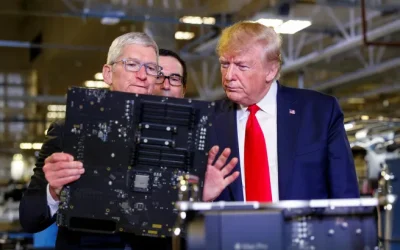
Trump’s Bromance With Big Tech Hits Some Bumps

Trump’s Bromance With Big Tech Hits Some Bumps

Tech billionaire support for Donald Trump is paying off in some of the expected ways, such as  extraordinary access and deregulation.  But Trump has wreaked havoc on the stock market, disappointed his crypto backers, and failed to save Mark Zuckerberg from a grilling at the Federal Trade Commission.

How ICE Works (Immigration Policy Brief #144)

How ICE Works (Immigration Policy Brief #144)

Immigration and Customs Enforcement (ICE) was created in 2003 as a component of the Department of Homeland Security to enforce immigration laws inside the United States and investigate transnational crime. Twenty‑two years later, the agency employs more than 20,000 personnel across more than 400 domestic and foreign offices.

Introducing Gulf of America – from the person who gave us Trump Tower (Environmental Policy Brief #178)

Introducing Gulf of America – from the person who gave us Trump Tower (Environmental Policy Brief #178)

For the last 475 years, the expanse of ocean from western Florida to southern Texas has been called the “Gulf of Mexico.” English geographer Richard Hakluyt referred to the “Gulfe of Mexico” in his work of 1589. With the stroke of a pen on February 9, 2025, the President of the United States signed Executive Order 14172 and renamed the body of water “Gulf of America.” In addition to “restoring American pride,” President Trump justified the name change by referencing territorial rights over much of the area and that those waters have “long been an integral asset to our once burgeoning Nation and has remained an indelible part of America.” Trump considers the Gulf a business asset.

No shortage of Canaries in our Coastlines Signaling Catastrophe (Environmental Policy Brief #178)

No shortage of Canaries in our Coastlines Signaling Catastrophe (Environmental Policy Brief #178)

40% of the U.S. population line our coasts. That equates to approximately 130 million people residing in coastal counties. In addition to those who retire seaside, entire economies are integrated into the coastal industries of fishing, tourism, energy, shipbuilding, and recreation. Even a cursory glance using google maps shows how tightly clustered the built space is, all on only 10% of the total U.S. land mass. Shoreline communities have five times the population density as compared to the U.S. average.

Don’t Expect  Trump 2.0 to be Climate Friendly

Don’t Expect Trump 2.0 to be Climate Friendly

Don’t Expect Trump 2.0 to be Climate Friendly Environment Policy #177 | By: Todd J. Broadman | January 10, 2025 Photo by Documerica on Unsplash __________________________________ POLICY SUMMARY President-elect Trump is set to take office on January 6, 2025 and has...

What Happened to Climate Change as a Political Priority?

What Happened to Climate Change as a Political Priority?

In the midst of escalating environmental crises, climate change has surprisingly taken a backseat in political discourse. Despite initial commitments from the Biden administration to combat climate change through initiatives like the Paris Agreement and the Inflation Reduction Act, significant challenges remain. As fossil fuel production reaches unprecedented levels and partisan divides deepen, the urgency to prioritize climate policy faces increasing obstacles, leaving many to question the future of our environmental commitments.

Impact of Remote Work on Urban Development

Impact of Remote Work on Urban Development

Brief #62 – Economic Policy Brief
by: Inijah Quadri

The rise of remote work, spurred by the COVID-19 pandemic, is reshaping urban landscapes and challenging traditional city planning. As cities adapt to this new reality, the shift presents both opportunities for sustainable development and significant hurdles for local economies reliant on office workers.

x
x
Support fearless journalism! Your contribution, big or small, dismantles corruption and sparks meaningful change. As an independent outlet, we rely on readers like you to champion the cause of transparent and accountable governance. Every donation fuels our mission for insightful policy reporting, a cornerstone for informed citizenship. Help safeguard democracy from tyrants—donate today. Your generosity fosters hope for a just and equitable society.

Pin It on Pinterest