On April 9, 2025 the House of Representatives voted on the No Rogue Rulings Act bill. The bill was sponsored by Rep. Darrell Issa (R-CA). H.R. 1526 would prohibit a federal district court judge from issuing an injunction or prohibition regarding a case unless the injunction or prohibition only applied to the parties of the particular case before the district judge’s court. The bill passed the House by a vote of 219 – 213 in favor of the bill, almost exclusively on party lines. One Republican voted against the bill, Rep. Mike Turner from Ohio.
Civil Rights
A Court’s Options To Enforce Compliance With Court Orders
Under Rule 3.3 of the American Bar Association’s Model Rules of Professional Conduct, titled “Candor Toward the Tribunal,” a lawyer has a number of duties when dealing with a court of law. Rule 3.3(a)(1) states “A lawyer shall not knowingly make a false statement of fact or law to a tribunal or fail to correct a false statement of material fact or law previously made to the tribunal by the lawyer. Additionally, Rule 3.3(a)(3) provides “A lawyer shall not knowingly offer evidence that the lawyer knows to be false. While these are model rules, each state has a version of these rules, including the section on “Candor Toward the Tribunal,” that all lawyers must abide by when dealing with a tribunal or court.
The Pettiness of President Trump Targeting Law Firms For Revenge
On February 25, 2025 President Donald Trump signed an executive order suspending the security clearances of lawyers and staff at the Washington, D.C. law office of the international law firm Covington & Burling. The firm had provided legal services to former Special Prosecutor Jack Smith.
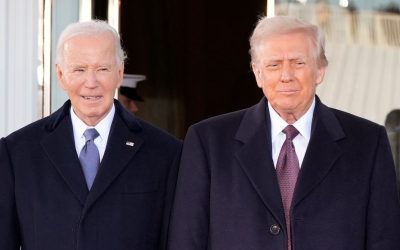
A Comparison of Biden and Trump’s January 20th Pardons
Article II, Section 2, Clause 2 of the United States Constitution provides: The President…shall have power to grant reprieves and pardons for Offenses against the United States, except in cases of impeachment.”
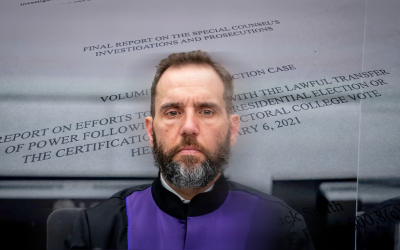
Jack Smith’s Honorable but Frustrating Journey to Prosecute Trump ; January 2025
Jack Smith made sure to state when he resigned that Mr. Trump engaged in an ‘unprecedented criminal effort’ to overturn his 2020 election loss to Joe Biden. Additionally, Jack Smith stated that the evidence was there to convict Donald Trump. The only reason why the trials did not go forth was because of DOJ policy that prohibits prosecuting a sitting President.
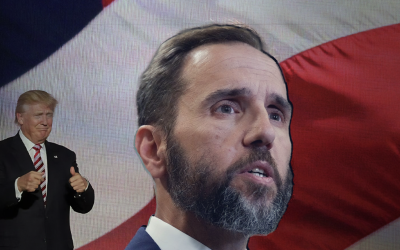
An Explanation As To Why Special Prosecutor Jack Smith Asked To Dismiss Trump’s Two Criminal Cases
An Explanation As To Why Special Prosecutor Jack Smith Asked To Dismiss Trump's Two Criminal Cases Civil Rights Policy Brief #233 | By: Rod Maggay | December 27, 2024 __________________________________ Policy Summary: On November 25, 2024 Special Prosecutor Jack Smith...
The Right To Vote in the U.S. Constitution – Part Three
In this third part of our series on voting rights, we dive into the role of individual voters who have driven change through ballot initiatives and referendums. From early suffrage movements to recent ballot measures aimed at restricting or expanding voter access, this article explores how citizens have taken the power of voting rights into their own hands—and the impact they’ve made.
The Right To Vote in the U.S. Constitution – Part Two
After the Civil War Congress passed a number of constitutional amendments to try and manage and limit the restrictions states used to limit who could vote in elections.
A Win for Democracy: Two Georgia Judges Rule Election Board Must Certify Election Results
On October 14, 2024, Judge Robert McBurney of the Superior Court of Fulton County, Atlanta Judicial Circuit issued a final order in the civil action Adams v. Fulton County.
The Unfinished Story of Our Right to Vote Part One
This is the first in a series examining the Right To Vote in the United States. The first part of this series will examine the Right To Vote as derived from the United States Constitution.
The Challenges of Appealing The Trump Classified Documents Case
Brief #229 – Civil Rights Policy Brief
by: Rod Maggay
The Trump classified documents case presents a pivotal moment in legal history, as the dismissal by Judge Aileen Cannon and subsequent appeal by Special Counsel Jack Smith challenge established legal precedents. As the case navigates through the Eleventh Circuit Court of Appeals, its outcome could have far-reaching implications for the 2024 presidential election and the rule of law.
Judge Aileen Cannon’s Dismissal of Trump’s Case Ignores Legal Precedent and History
Brief #228 – Civil Rights Policy Brief
by: Rod A. Maggay
Judge Aileen Cannon’s recent dismissal of Trump’s case defies established legal precedents, raising significant concerns about judicial impartiality. By relying solely on a contentious interpretation of the Appointments Clause, Cannon’s decision could set a troubling precedent for the future of special prosecutors.