

JOBS POLICIES, ANALYSIS, AND RESOURCES
Latest Jobs Posts
New U.S. Dietary Guidelines Signal Shift on Processed Foods, Meat and Dairy (Health & Gender Policy Brief #184)
On January 7, 2026, the U.S. federal government released the 2025–2030 Dietary Guidelines for Americans. These new guidelines show a shift in how U.S. health officials define healthy eating andaddress processed foods, protein consumption and dairy. The Guidelines were issued by the Department of Health and Human Services (HHS) and the Department of Agriculture (USDA). They are set to shape federal nutrition policy, school meal standards and how public health is messaged for the next five years.
Delaware (2026 Democratic Primary Preview Series Brief #7)
Announced Delaware Democrat Senate Candidates: Chris Coons (incumbent) and Christopher Beardsley. Announced Delaware Democrat House Candidates: Sarah McBride (incumbent). The primary elections will take place on September 15, with the general election happening on November 3rd.
The Week That Was: Global News in Review (Foreign Policy Brief #225)
European troops have begun arriving in Greenland last week in a show of support to Denmark, as leaders attempt to respond to President Donald Trump’s threats to annex Greenland.
Impacts of the Expiration of the Affordable Care Act
The Affordable Care Act (ACA) (also known as Obamacare) was signed into law by President Obama on March 23, 2010. The ACA aimed to make healthcare more affordable to more people, expand Medicaid to individuals with incomes below 138% of the federal poverty level, and for private health insurance, prohibit insurers from denying coverage due to preexisting health conditions and from denying coverage to people.
ICE and excessive use of force
Earlier this month, the state of Minnesota made national and international headlines when Minneapolis resident and U.S. citizen, Renee Nicole Good, was fatally shot by an ICE officer while attempting to leave an area she was overseeing as a legal observer.
Watching their home go up in smoke: the indigenous of the Amazon ( Environment Policy Brief #187)
The Amazon rainforest is rapidly degrading. The ecological functions of the rainforest such as absorbing greenhouse gases and releasing oxygen into the atmosphere are diminishing as the size of the rainforest shrinks. Global precipitation patterns depend upon the Amazon’s unique location on the planet. The diversity of plant life in the Amazon constitutes about a quarter of the globe’s stock of carbon biomass. There are 80,000 species of plants.
Misogyny and Abuse Are Thriving Online (Technology Policy Brief #162)
Two new reports document the alarming rise of online violence against women and girls. Sex trafficking, sexualized images, and stalking and exploitation online are nothing new. But Artificial Intelligence has exacerbated the problem. Deepfakes almost exclusively target women; in fact, some of the technology used to create them, developed by mostly male teams, only works on female forms.
FTC Escalates Enforcement Against Algorithmic Discrimination in Hiring and Credit Systems (Technology Policy Brief #162)
In 2025, the Federal Trade Commission (FTC) signaled that it would use existing federal law to address algorithmic discrimination in automated decision-making services regarding hiring, lending, and tenant screening. Some tech companies argue that the FTC is overreaching in the absence of explicit AI laws. The FTC’s push highlights how federal agencies are reshaping AI governance on a case-by-case basis rather than implementing broad new laws.
Connecticut (2026 Democratic Primary Preview Series Brief #5)
Connecticut, known as the Constitution State, will feature five U.S. House races in 2026, with no U.S. Senate contests on the ballot. Both of the state’s U.S. Senators, Richard Blumenthal and Chris Murphy, are midway through their six-year terms, having last been elected in 2022 and 2024, respectively.


Colorado (2026 Democratic Primary Preview Series Brief #6)
Brief #6 | Ryan Dulaney | 1/2/2026
Senate Candidates Up for Election (Democratic Primary)
- John Hickenlooper
- Julie Gonzales
- Karen Breslin
- Brashad Hasley
- Anthony Zimpfer
House Candidates Up for Election (Democratic Primary)
- Diana DeGette
- Carter Hanson
- Melat Kiros
- Santiago Palomino
- Tiffany Rodgers
- Wanda James
- Joe Neguse
- Cinque Mason
- Kyle Doster
- Alex Kelloff
- Trisha Calvarese
- Eileen Laubacher
- John Padora Jr.
- Jenna Preston
- Zurit Horowitz
- Jessica Killin
- Justice Lord
- Joe Reagan
- Jamey Smith
- Michelle Tweed
- Matt Cavanaugh
- Jason Crow
- Dylan Shelby
- Brittany Pettersen
- Shannon Bird
- Manny Rutinel
- Daniel Hassler
- Larry Johnson
- Evan Munsing
- John Szemler
- Dave Young
There are ten congressional seats up for the 2026 election in Colorado. All of the state’s eight U.S. House of Representatives seats and one U.S. Senate seat. The Democratic Party currently holds four of the eight House seats and both U.S. Senate seats in a state that has trended Democratic of late.
Colorado’s political balance has shifted significantly in recent years. Once a battleground, the state is increasingly blue, especially in urban and suburban centers. Democrats have increased support in recent cycles, mostly driven by demographic changes and increased turnout in population centers. Republicans continue to outperform in rural and low population density regions, but their vote share has eroded in much of the state.
The state’s population of 5.8 million people is concentrated in metropolitan regions; with a substantial number of younger and college-educated voters who have increasingly backed the Democratic party. Issues such as affordability, healthcare, climate policy, and reproductive rights, are expected to shape the 2026 federal contests.
Colorado’s primary election is scheduled for June 30, with the general election on November 3.
Democratic Primary Candidates (House + Senate)
U.S. Senate
Seat Up for Election: John Hickenlooper (D-incumbent)
- Basic Info: Incumbent U.S. Senator John Hickenlooper, a former governor and Denver mayor, is seeking re-election in 2026.
- Challengers:
Which population groups support? Donor support?
- Hickenlooper: Older and moderate Democrats, business community, established fundraising networks.
- Gonzales: Younger progressives, grassroots activists, labor and progressive coalition supporters.
Why he might win?
- Strong statewide name recognition, deep fundraising base, broad appeal across moderate Democratic voters.
Why he might lose?
- Primary challenge from progressive wing, potential voter desire for generational change.
Key election variables
- Primary turnout among progressive vs. moderate Democrats; fundraising gaps.
Chances of winning: High (Hickenlooper is a popular incumbent)
U.S. House — Democratic Primary Fields
CO-1
A safely Democratic district in Denver and surrounding communities.
- Diana DeGette – Incumbent U.S. Representative.
- Carter Hanson, Wanda James, Melat Kiros, Christopher Oldfield, Santiago Palomino, Tiffany Rodgers – Challengers seeking the Democratic nomination.
Which population groups support? Donor support?
- Urban progressive coalition, long-time Democratic base; incumbency strength generally carries institutional support.
Why she might win?
- Long incumbency, fundraising infrastructure, established voter support.
Why she might lose?
- Primary challengers could appeal if Democratic base seeks fresh representation.
Key election variables
- Name recognition vs. appetite for change in a crowded primary.
Chances of winning: High
CO-2
A Democratic stronghold in Boulder and northern Front Range.
- Joe Neguse – Incumbent U.S. Representative.
- Cinque Mason – Primary challenger.
Which population groups support? Donor support?
- Progressives, younger voters, university communities; strong donor support.
Why he might win?
Why he might lose?
- Low likelihood unless major shift or upset.
Key election variables
- Primary turnout; challenger viability.
Chances of winning: High
CO-3
A more competitive district but with Democratic primary candidates:
- Kyle Doster, Alex Kelloff – Democratic primary candidates.
Which population groups support? Donor support?
- Emerging progressive and moderate supporters as field develops.
Why they might win?
- Broad appeal to emerging voters if message resonates.
Why they might lose?
- Republican incumbent advantage in general.
Key election variables
- General election competitiveness in a swing district.
Chances of winning: Moderate to Low
CO-4
A Republican-leaning district with Democratic primary candidates:
- Trisha Calvarese, Eileen Laubacher, John Padora Jr., Jenna Preston – Declared Democratic primary candidates.
Which population groups support? Donor support?
- Democratic minority voters and activists; limited donor networks.
Why they might win?
- Exceptional national environment favoring Democrats.
Why they might lose?
- Strong Republican incumbent environment.
Key election variables
- District partisanship, turnout patterns.
Chances of winning: Low
CO-5
Democratic primary candidates include:
- Zurit Horowitz, Jessica Killin, Justice Lord, Joe Reagan, Jamey Smith, Michelle Tweed — Democratic candidates.
Which population groups support? Donor support?
- Grassroots voters, suburban progressives.
Why they might win?
- If unified around key issues like affordability.
Why they might lose?
- Republican tilt of district.
Key election variables
- Candidate quality, turnout.
Chances of winning: Low
CO-6
- Jason Crow – Incumbent U.S. Representative.
- Dylan Shelby – Challenger.
Which population groups support? Donor support?
- Broad suburban base, moderate donors.
Why he might win?
- Incumbency, fundraising.
Why he might lose?
- Challenger has minimal traction.
Key election variables
- General election environment; GOP strategy.
Chances of winning: High
CO-7
- Brittany Pettersen – Incumbent U.S. Representative.
Which population groups support? Donor support?
- Suburban Democrats, women voters.
Why she might win?
- Incumbency in a Democratic-leaning district.
Why she might lose?
- Unlikely primary challenge upset.
Key election variables
- Turnout patterns in Denver metro.
Chances of winning: High
CO-8
Competitive open seat:
- Shannon Bird, Daniel Hassler, Larry Johnson, Evan Munsing, Manny Rutinel, John Szemler, Dave Young — Democratic primary candidates running to challenge incumbent GOP Rep. Gabe Evans.
Which population groups support? Donor support?
- Diverse coalition of suburban and moderate voters; fundraising profiles vary.
Why they might win?
- Targeted DCCC interest in flipping the seat.
Why they might lose?
- GOP incumbent advantage and district structure.
Key election variables
- Suburban turnout; candidate consolidation.
Chances of winning: Moderate
Summary
Colorado’s 2026 election cycle includes eight Democratic U.S. House primaries and one Democratic U.S. Senate primary. The Senate race features a notable primary challenge to an incumbent, while House contests range from safe Democratic districts to competitive swing seats where Democrats see opportunities to expand representation. The outcomes will depend on candidate quality, turnout dynamics, and broader national political conditions
Montana Youth Return to Court to Block Laws Weakening Climate Protections (Environment Policy Brief #186)
Environment Policy Brief #186 | Jason Collins | December 30, 2025
Summary
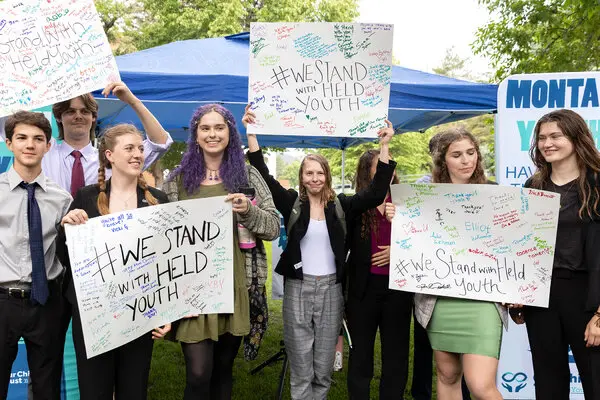
A group of young activists from the landmark Held v. Montana case filed a new challenge against recent state laws. The filed petition challenges several statutes passed by Republicans that threaten the activist group’s victory in the Montana Supreme Court in 2024. According to the group, the new changes are violations of the state’s guarantee of a “clean and healthful environment.” The youth plaintiffs are preparing for a renewed legal fight and highlighting that climate harms are a constitutional issue.
ANALYSIS
The young group, led by Our Children’s Trust, a nonprofit public interest law firm, is asking the Montana Supreme Court to overturn three laws passed in 2025, saying they undermine the group’s 2024 victory.
In Held v. Montana, the court affirmed the state’s protection from climate-change-related harms and recognized that government actions contributing to climate change can violate constitutional rights. Now, the youth group argues that the new laws violate this result.
The first law targeted is Senate Bill 221 (SB 221), which revises the Montana Environmental Policy Act (MEPA) environmental review process. Under the new law, agencies are only required to inventory six specified greenhouse gases. The law also limits the state’s ability to regulate greenhouse gas pollution under the State’s Clean Air Act.
House Bill 285 (HB 285) makes it harder for agencies to deny permits for fossil fuel projects, even if those projects are harmful or worsen the climate crisis. The third law the group wants overturned is House Bill 291 (HB 291), which the group argues prevents state agencies from adopting stricter air quality standards than federal law.
Republican lawmakers cited improved clarity and efficiency in MEPA as reasons for the new laws. Still, Nate Bellinger, attorney for the plaintiffs, said in a press statement that “Montana’s leaders are openly defying the Constitution and the Supreme Court.” He added, “Held made clear that these youth are being harmed now and that Montana has a constitutional duty to protect them. Instead, lawmakers passed laws with the explicit intent to undermine the court’s ruling.”
The group is asking the court to hear the case as an original proceeding and to declare the 2025 CAA and MEPA provisions unconstitutional. In the petition, the youth shared that they were already experiencing ongoing harms as a result of the state’s refusal to comply with Held. The petition lists harms such as respiratory illness from wildfire smoke and fossil fuel pollution, property damage linked to extreme weather, and loss of access to forests and lakes.
Lawmakers argue that environmental regulation and expansive climate review can slow economic development. Reuters reported that earlier in May, when Montana’s Republican governor, Gregory Gianforte, signaled the new amendments, Gianforte said, “Last year, the Montana Supreme Court issued a series of rulings that if left unchecked would have impacted Montana’s energy sector at a time when Americans have seen electricity costs soar nearly 30 percent in the last four years.”
The outcome of this challenge has broad implications. The case challenges whether state legislatures can sidestep a state Supreme Court ruling and pass laws that contradict it.
Engagement Resources

The Week That Was: Global News in Review (Foreign Policy Brief #224)
Foreign Policy Brief #224 | Abran C. | December 30, 2025
Latin America’s shift to the right
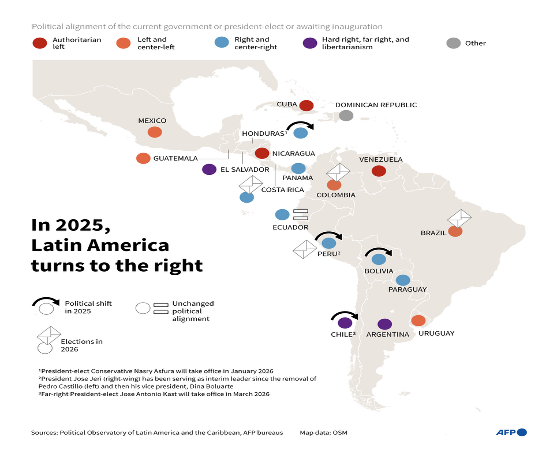
Latin America’s shift towards the political right has continued following the recent elections in both Chile and Honduras. In Chile the election of the far-right Jose Antonio Kast marked the country’s most significant shift rightward since the former Chilean dictator, Agusto Pinochet. The election of Kast now makes three neighboring South American states formerly at odds, Argentina, Bolivia and Chile, firmly in control by the rightwing and all seeking closer relations with the United States. In Honduras the Trump backed candidate, Nasry Asfura has been declared the winner after a more than two week long vote count left those in the small Central American country in suspense. Following the election results, the opposing Liberal Party candidate, Salvador Nasralla refused to concede and alleged interference in the election process by the United States after President Trump conditioned continued aid to the country on whether the right-wing candidate won. Trump also pardoned the former Honduran President found guilty of trafficking drugs to the United States.
The region has firmly moved away from its left-leaning majority after the second “pink tide” (term used to refer to the leftward shift of countries in Latin America) that swept the region in the late 2010s and early 2020s. Economic crisis, migration and violence that has continued to plague the region and anti-status quo sentiment has led to the political reversal. In 2026 the region has elections in Costa Rice, Brazil, Peru, Colombia and Haiti to look forward to.

Cambodia’s Defense Minister Tea Seiha, left, and Thailand’s Defense Minister Nattaphon Narkphanit hold documents during the special General Border Committee meeting at a border checkpoint in Thailand’s Chanthaburi province.Agence Kampuchea Press / AFP Photo
Thailand and Cambodia sign ceasefire deal (Again)
Last week Thailand and Cambodia signed another ceasefire agreement that seeks to end weeks of fighting that began after the former July 2025 ceasefire deal was broken. The two countries blame each other for instigating the fresh round of fighting, which has spread to nearly every province along their border. Cambodia’s Defence Ministry said Thailand’s military struck first, carrying out a heavy bombardment of disputed border areas. Meanwhile Thai media claimed that Cambodian forces had launched heavy attacks overnight along the disputed border, where many homes were damaged by shelling.
Both countries claim to have acted in self-defence and accuse the other of attacking civilians. Yet since breaking the ceasefire deal, the two neighbours’ combined killed more than 40 people, according to official counts. About a million people have also been displaced. The conflict stems from a territorial dispute over the colonial-era demarcation of their 500 mile long frontier and a collection of temple ruins situated there.
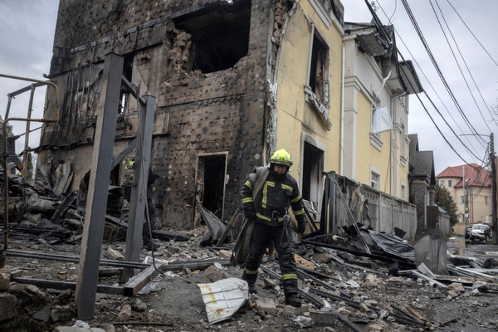
A firefighter walks at the site where a Russian drone struck a residential building during a night of Russian drone and missile attacks, amid Russia’s attack on Ukraine, in Kyiv, Ukraine, Dec. 27, 2025. Photo by Thomas Peter/Reuters
New round of attacks on Ukraine’s capital Kyiv
Russia launched a new wave of strikes on Ukraine’s capital Kyiv in the final days of the year. The strikes killed one person and wounded 27 just one day before a meeting between Ukrainian president Volodymyr Zelenskyy and Donald Trump. The two leaders met in Florida last week for further talks on ending the near four year long war. Zelenskyy described the attacks as evidence of Russian President Vladimir Putin’s false narrative on seeking peace. Zelenskyy stated “This attack is Russia’s answer to our peace efforts. It really shows that Putin doesn’t want peace,”.
The Russian ministry in turn said the strike was in response to Ukraine’s attacks on “civilian objects” in Russia. The past few weeks saw targeted bomb attacks in Moscow that killed Lt. General Fanil Sarvarov. General Sarvarov was the head of the Operational Training Directorate of the Russian Armed Forces’ General Staff. Since the beginning of its invasion of Ukraine, Russian authorities have blamed Kyiv for several high-profile assassinations of military officers and public figures in Russia. Ukraine has claimed responsibility for some of them, but has not yet commented on either of the recent attacks.

A missile is launched from a military vessel at an unidentified location, in this screen grab obtained from a handout video released by the Department of War on December 25, 2025. U.S. Department Of War Via X, Via REUTERS
US airstrikes inside of Nigeria
The US has carried out air strikes in Nigeria targeting two Islamic State-linked camps in the Bauni forest of the country’ s Sokoto State. The strikes are the outcome of a months-long tense diplomatic clash between the West African nation and the US that has morphed now into a new form of cooperation. The strikes were approved by Nigerian President Bola Tinubu and launched from maritime platforms domiciled in the Gulf of Guinea. Following the attacks, US President Donald Trump announced the strikes on Truth Social, saying that U.S. forces had launched strikes against Islamic State militants at the request of Nigeria’s government and laid out the reason for the attacks. Trump said it was based on claims of the group targeting Christians in the region and said there would be more military action to come. Nigeria’s foreign minister called the airstrikes a “new phase of an old conflict” and also said he expected more strikes to follow, stating “For us, it is something that has been ongoing,” referring to attacks that have targeted both Christians and Muslims in Nigeria for years.
U.S. Deports Russian Dissidents who Face Prison or Draft in Russia (Foreign Policy Brief #223)
Foreign Policy Brief #223 | Yelena Korshunov | December 30, 2025
In October 2025, U.S. Department of Homeland Security reported on its official website that more than 2 million undocumented immigrants had already left the United States — including 1.6 million who voluntarily self-deported and more than 527,000 who were forcefully deported. “This is just the beginning,” Assistant Secretary Tricia McLaughlin proudly stated.
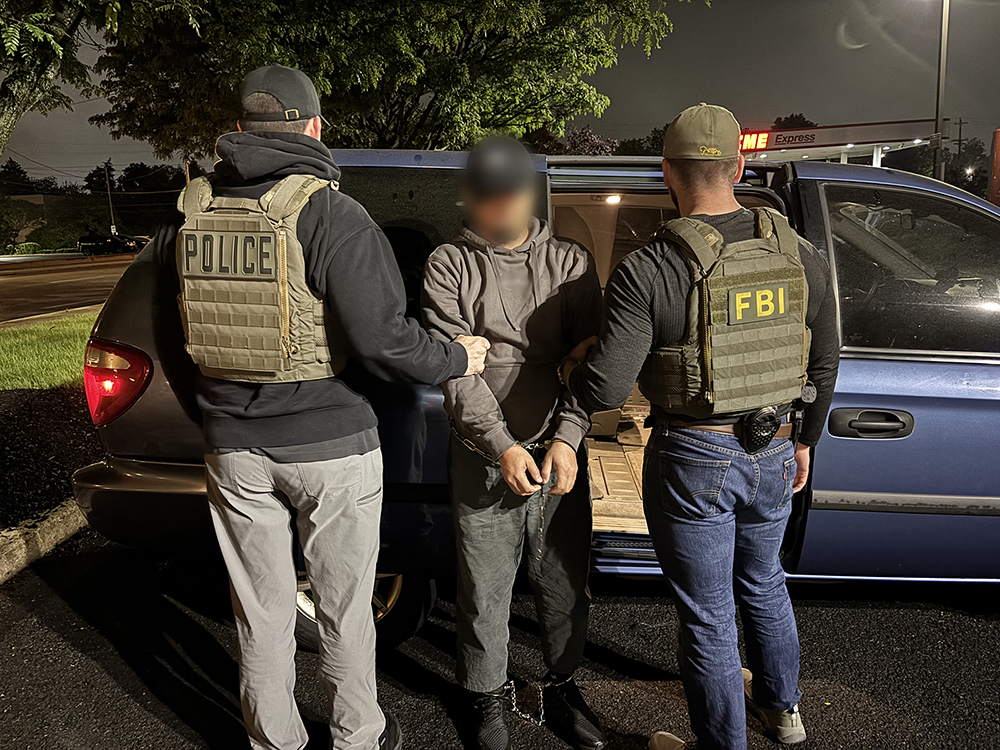
Among those being deported are a growing number of Russians, including dissidents, i.e. those who dared to speak out against the war in Ukraine. They had fled Russia to save their lives — seeking protection in a nation once regarded as a global stronghold of democracy. They have also found themselves caught in the ICE machinery. This summer, Russians were massively deported from the U.S. on at least two occasions.
The human rights organization Human Rights First reported that ICE Flight Monitor tracked two flights in June and August 2025 involving the transfer of detained Russian nationals from U.S. government custody to Egyptian authorities in Cairo. The organization noted that “recent reports indicate that Russian nationals aboard those two flights were subsequently forcibly returned by Egyptian authorities to Russia, including individuals who had been detained in the United States for over a year after seeking asylum.”
According to The Insider, the exact number of Russians deported was not immediately known. The only approximate figure available to date comes from late August 2025, when the United States deported at least 30 Russians—including political asylum seekers—in a single day.
Additionally, in early December 2025, another group of Russian political refugees was deported back to Russia, a country they had once been fortunate to escape. Upon arriving at Moscow’s Domodedovo Airport during the night of December 9, the men were immediately issued draft notices, according to a report by the independent Russian media resource Agenstvo, which cited Dmitry Valuyev, president of the organization Russian America for Democracy in Russia.
Valuyev believes the notices handed to the forcibly returned men most likely concern mandatory military registration or orders to appear at local enlistment offices. However, Agentstvo was unable to establish contact with any of the deported individuals.
News of the flight carrying deportees emerged on December 7. Valuyev noted that the precise number of Russians on the flight remains unknown. The BBC also reported on the deportations, revealing that on December 7 a plane departed from an airport in Mesa, Arizona, transporting Russians and Iranians removed from the U.S. Various media outlets estimate that there have already been three or four such “deportation flights” with Russians in 2025. (ARE THESE THE
Among those deported earlier was Russian activist Leonid Melekhin, who had previously been detained multiple times in Russia for participating in protest actions. In August 2024, he crossed the Mexico–U.S. border and applied for political asylum. He spent several months in U.S. immigration detention, and his asylum request was ultimately denied, resulting in his deportation. In July 2025, upon Melekhin’s deportation to Russia, a court in a Russian city Perm arrested him charged with “justifying terrorism.”
Many other dissidents who have been deported back to Russia face terrifying consequences upon their return. For previously speaking out against the war, they will be thrown into prison and sent to penal colonies from which there is virtually no escape. The same fate awaits many of them as befell Alexei Navalny, the Russian opposition leader who recently died (or was killed) in a Russian penal colony.
Engagement Resources:
- DHS Removes More than Half a Million Illegal Aliens From US
- ,https://www.dhs.gov/news/2025/10/27/dhs-removes-more-half-million-illegal-aliens-us
- Asylum-Seeking Russians Deported From U.S. at Risk of Persecution and Forced Mobilization, Activists Warn, https://www.themoscowtimes.com/2025/12/10/asylum-seeking-russians-deported-from-us-at-risk-of-persecution-and-forced-mobilization-activists-warn-a91389 (Independent News from Russia)
- ICE Flights Monitor: September 2025 Report, https://humanrightsfirst.org/library/ice-flight-monitor-september-2025-monthly-report/
- U.S. deports another group of Russians on ICE flight to Egypt, https://theins.ru/en/news/287546

Arizona (2026 Democratic Primary Preview Series Brief #3)
2026 Democratic Primary Preview Series Brief #3 | Ryan Dulaney | 12/30/2025
-
Announced Arizona Democrat Senate Candidates: Ruben Gallego
-
Announced Arizona Democrat House Candidates: Amish Shah, Marlene Galán-Woods, Brian del Vecchio, Daniel Lucio, Rick McCartney, Jonathan Treble, Eric Descheenie, Jonathan Nez, Yassamin Ansari, Blake Bracht, Brian Hualde, Chris James, Elizabeth Lee, Evan Olson, Justin Poff, JoAnna Mendoza, Jonathan Buma, Samantha Sevenson, Adelita Grijalva, Jillian Barfield, Maria Flores, Bernadette Greene Placentia, Jessie Martines, Keith Lara, Danielle Sterbinsky, Camelia Ward
There are ten federal seats up for election in Arizona in 2026. All nine of Arizona’s U.S. House of Representatives seats and one of two Senate seats. Arizona’s Federal congressional delegation reflects its status as a pivotal battleground state. Multiple House districts and a Senate seat are held by Democrats in a state that has historically leaned Republican.
Arizona’s political landscape has changed over the past two decades. Previously a deep red state in federal races, it has become increasingly competitive, especially in densely populated areas of the state. The Democratic support in presidential elections has steadily increased. Republicans retain strength in more rural districts, while Democrats have made inroads in urban areas such as Maricopa and Pima counties, leading to newly contested House and Senate races.
The state’s population of roughly 7.4 million people, has a median age of 38, and is concentrated primarily in metropolitan areas, particularly around Phoenix and Tucson. This urban-suburban core has been the centerpiece of Democratic gains, while rural communities remain more conservative. These demographics, combined with concerns over affordability, healthcare access, immigration, and reproductive rights, are expected to shape the 2026 federal contests.
Arizona’s primary election is scheduled for August 4, with the general election on November 3.
Democratic Primary Candidates (House + Senate)
U.S. Senate
Sen. Ruben Gallego is the Democratic incumbent, elected to the U.S. Senate in 2024. He previously served a decade in the U.S. House before winning the Senate seat by narrowly defeating a Republican opponent. Gallego represents a statewide Democratic presence in a closely divided state. His tenure in both the House and Senate, combined with his background as a Marine Corps veteran and Latino leader, positions him as a central figure for Arizona Democrats heading into 2026.
Status: Incumbent — expected to seek re-election.
Which population groups support? Donor support?
- Latino voters, veterans, urban and suburban Democrats
- Strong institutional Democratic donor support, labor unions, national party-aligned PACs
Why he might win?
- Incumbency advantage
- Proven statewide electoral coalition
- Strong name recognition
Why he might lose?
- Narrow partisan margins statewide
- Republican turnout surge in a midterm environment
Key election variables
- Maricopa County suburban margins
- Latino turnout levels
- National political climate
Chances of winning: Moderate
U.S. House — Democratic Primary Fields
AZ-01
Open or competitive seat with a crowded primary.
Amish Shah – Former state legislator and 2024 candidate, running again with a focus on issues like healthcare and affordability.
- Which population groups support? Donor support? Suburban Democrats, healthcare-focused voters; some carryover donor support
- Why he might win? Prior district-wide exposure; policy clarity
- Why he might lose? Vote splitting in a crowded field
- Key election variables Primary turnout, consolidation
- Chances of winning: Moderate
Marlene Galán-Woods – Democratic candidate with local civic engagement experience.
- Which population groups support? Donor support? Community activists, local Democratic groups
- Why she might win? Grassroots appeal
- Why she might lose? Lower name recognition
- Key election variables Voter familiarity
- Chances of winning: Low–Moderate
Brian del Vecchio, Daniel Lucio, Rick McCartney, Jonathan Treble – Additional Democratic candidates who have filed or announced intentions to run.
- Which population groups support? Donor support? Limited, mostly small-donor or activist support
- Why they might win? Fragmented field
- Why they might lose? Limited resources and visibility
- Key election variables Field consolidation
- Chances of winning: Low
AZ-02
Eric Descheenie – Former Arizona state representative focusing on rural infrastructure and community investment.
- Which population groups support? Donor support? Rural and tribal voters
- Why he might win? Legislative experience
- Why he might lose? Competition from higher-profile challenger
- Key election variables Tribal turnout
- Chances of winning: Moderate
Jonathan Nez – Former Navajo Nation president emphasizing tribal advocacy and regional economic development.
- Which population groups support? Donor support? Native American voters, tribal leadership networks
- Why he might win? Strong executive leadership record
- Why he might lose? Limited appeal outside core base
- Key election variables Coalition expansion beyond tribal voters
- Chances of winning: Moderate
AZ-03
Yassamin Ansari – Democratic incumbent representing this urban district, seeking re-election with an emphasis on urban policy issues.
- Which population groups support? Donor support? Urban progressives, institutional donors
- Why she might win? Incumbency in a safe Democratic district
- Why she might lose? Low probability primary upset
- Key election variables Progressive turnout
- Chances of winning: High
Sandy Cano-Bravo – Democratic primary challenger.
- Which population groups support? Donor support? Grassroots activists
- Why she might win? Anti-incumbent sentiment
- Why she might lose? Incumbent strength
- Key election variables Primary turnout
- Chances of winning: Low
AZ-05
Suburban district with multiple Democratic contenders:
Blake Bracht, Brian Hualde, Chris James, Elizabeth Lee, Evan Olson, Justin Poff — A field of Democratic candidates signaling interest but without an established frontrunner.
- Which population groups support? Donor support? Limited; mostly early-stage or grassroots
- Why they might win? Low-turnout dynamics, late consolidation
- Why they might lose? Lack of clear frontrunner or funding
- Key election variables Turnout, candidate withdrawal
- Chances of winning: Low–Moderate (collectively)
AZ-06
Competitive swing district:
JoAnna Mendoza – Veteran and former public service professional; emphasizes cost-of-living and economic issues.
- Which population groups support? Donor support? Veterans, working-class voters
- Why she might win? Compelling biography
- Why she might lose? Swing district volatility
- Key election variables Suburban swing voters
- Chances of winning: Moderate
Johnathan Buma – Former FBI agent focusing on accountability and national security experience.
- Which population groups support? Donor support? Law-and-order voters, moderates
- Why he might win? National security credentials
- Why he might lose? Crowded primary
- Key election variables Message resonance
- Chances of winning: Moderate
Samantha Severson – Academic and policy-oriented candidate
- Which population groups support? Donor support? Policy-focused voters
- Why she might win? Issue depth
- Why she might lose? Lower visibility
- Key election variables Voter awareness
- Chances of winning: Low
AZ-07
A strongly Democratic district:
Adelita Grijalva – Democratic incumbent who won a special election and is running in the regular cycle.
- Which population groups support? Donor support? Progressive voters, Latino communities
- Why she might win? Safe Democratic seat, incumbency
- Why she might lose? Unlikely primary challenge
- Key election variables Turnout
- Chances of winning: High
AZ-08
West Valley district with a small Democratic field:
Jillian Barfield, Maria Flores, Bernadette Greene Placentia, Jessie Martines — Democratic candidates running in a Republican-leaning district.
- Which population groups support? Donor support? Limited Democratic base
- Why they might win? Favorable national environment
- Why they might lose? District partisanship
- Key election variables GOP turnout
- Chances of winning: Low
AZ-09
Mixed partisan suburban district:
Keith Lara, Danielle Sterbinsky, Camelia Ward — Democratic candidates focusing on healthcare, education, and housing affordability.
-
- Which population groups support? Donor support? Suburban Democrats, educators, healthcare advocates
- Why they might win? Issue alignment with suburban voters
- Why they might lose? Fragmented primary field
- Key election variables Suburban turnout
- Chances of winning: Moderate

The Final Bill: The Economics, Ethics, and Ecology of American Death Care
Economic Policy Brief #91 | Inijah Quadri | December 26, 2025
Policy Issue Summary
Death in the United States has evolved from a community-centered rite into a sprawling, multi-billion-dollar commercial sector often dubbed the funeral industrial complex. With approximately three million Americans dying annually, a figure projected to rise as the baby boomer generation ages, the logistics of disposition have become a pressing socioeconomic challenge. For decades, the default American way of death involved embalming, heavy metal caskets, and concrete vaults, a practice that is historically an anomaly and environmentally taxing. However, economic pressures and shifting cultural attitudes have catalyzed a massive transition toward cremation. In 2024, the cremation rate surpassed 61 percent, with projections suggesting it will exceed 80 percent by 2045.
This shift is not merely a matter of preference but of necessity for many. The costs associated with traditional burial have skyrocketed, often leaving families with bills exceeding $10,000 for a single service. Consequently, “funeral poverty” has emerged as a silent crisis, with recent surveys indicating that one in three Americans now borrows money to cover end-of-life expenses. Simultaneously, the physical landscape of death is fracturing. The United States contains close to 100,000 active and inactive cemeteries, a number that fluctuates as older, often family or church-run graveyards are abandoned due to lack of funds or changing demographics. Who bears the responsibility for these spaces—particularly those historically segregated and neglected—remains a murky legal and ethical question, often leaving the history of marginalized communities to be erased by nature or development.
Analysis
The modern American approach to death is defined as a tension between the sacredness of grief and the cold logic of the market. The industry has seen significant consolidation, with large corporations and private equity firms acquiring independent funeral homes, often retaining the original family name to maintain a façade of local ownership while raising prices. This commodification exploits the emotional vulnerability of grieving families, who are less likely to price-shop or negotiate. The result is a system where dignity is effectively means-tested. For the wealthy, perpetual care and elaborate monuments are guaranteed; for the poor, the options are increasingly limited to direct cremation or reliance on crowdfunding.
Environmentally, the standard American funeral is an excess of resource consumption. Each year, traditional burials inter millions of feet of hardwood, tons of steel and concrete, and hundreds of thousands of gallons of embalming fluid—a known carcinogen—into the earth. While cremation is often touted as the greener alternative, it too has a significant carbon footprint, requiring high energy usage and releasing mercury and other particulates into the atmosphere. This ecological reality has spurred a small but growing “green burial” movement, which advocates for returning the body to the earth in a biodegradable shroud or container, without chemical preservation or concrete liners. This method aligns closely with many traditional Jewish and Muslim practices, which have long prioritized swift, simple burial in plain wood or cloth, unintentionally offering a model for both ecological sustainability and economic restraint.
The crisis of cemetery maintenance further reveals the systemic inequalities embedded in our death care infrastructure. While “perpetual care” funds are legally required for many modern commercial cemeteries, thousands of older, inactive graveyards fall through regulatory cracks. This neglect is disproportionately visible in African American cemeteries, which have historically been denied the public support and tax dollars afforded to white or Confederate cemeteries. The erasure of these sites is not just a failure of landscaping but a deletion of history—one that recent legislative efforts, such as the African American Burial Grounds Preservation Act, seek to address by supporting documentation and preservation. Grassroots efforts are emerging to reclaim these spaces, viewing them not just as repositories of the dead but as vital archives of community and lineage that the state has failed to protect.
Ultimately, the privatization of death care has created a landscape where the final act of a human life is dictated by profit margins and zip codes. Addressing these issues requires a multifaceted approach: stricter antitrust regulation to curb corporate price-gouging, increased transparency in pricing, and public investment in the restoration of abandoned cemeteries as cultural heritage sites. It also demands a cultural shift towards “death positivity,” encouraging open conversations about end-of-life wishes and the reclaiming of funeral rites by families and communities, rather than outsourcing them entirely to commercial entities.
Engagement Resources
- Funeral Consumers Alliance (https://funerals.org/): A nonprofit organization dedicated to protecting a consumer’s right to choose a meaningful, dignified, and affordable funeral. They offer monitoring of legal trends and provide resources to help families avoid funeral poverty.
- Green Burial Council (https://www.greenburialcouncil.org/): The standard-setting organization for green burial in North America, offering certification for funeral homes, cemeteries, and products that meet rigorous environmental and ethical standards.
- Black Cemetery Network (https://blackcemeterynetwork.org/): A national network connecting researchers, descendants, and volunteers working to preserve and reclaim historic Black cemeteries, ensuring these sacred sites and their stories are not lost to erasure.
- The Order of the Good Death (https://www.orderofthegooddeath.com/): A death acceptance organization that advocates for funeral industry reform and promotes open, honest conversations about mortality, including the “death positive” movement.
- National Home Funeral Alliance (https://www.homefuneralalliance.org/): An organization that educates and empowers families to care for their own dead, promoting home funerals as a legal, safe, and culturally restorative alternative to the commercial funeral industry.
Trump’s AI Executive Order and the Federal–State Power Struggle (Technology Policy Brief #161)
Technology Policy Brief #161 | Jason Collins | December 21, 2025
Summary
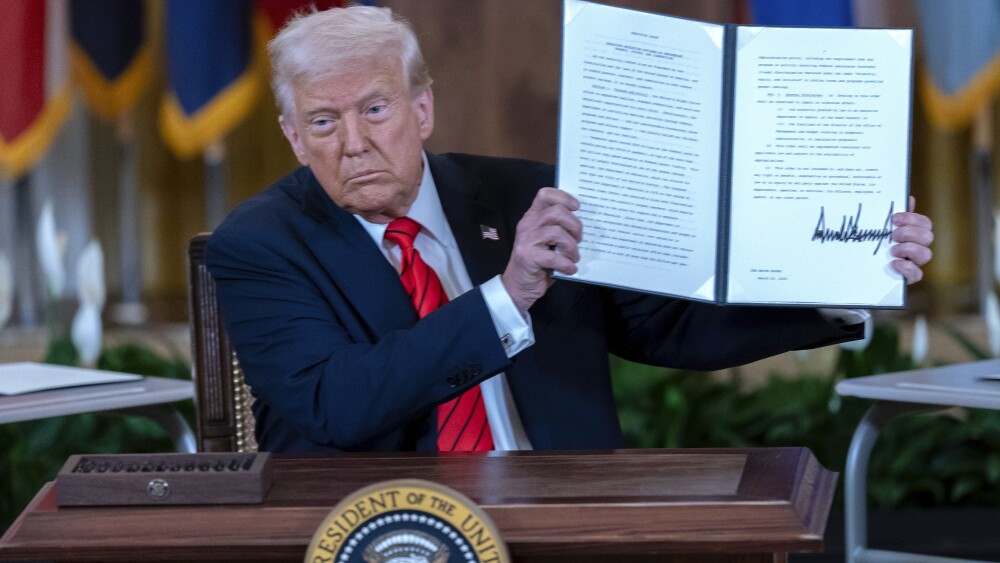
The Federal-State battle over AI regulation has heated up after President Trump signed an executive order on Dec. 11 that blocks states from enforcing their own regulations on artificial intelligence. The order seeks to create a “single national framework” for AI. However state lawmakers, tech experts, and civil rights organizations are worried about what this means for the country. Many believe that federal regulations could slow down America’s competitiveness in the global AI race and will have serious implications for national security.
ANALYSIS
Trump cites the use of 50 different regulatory regimes adopted by different states as a reason for the new regulations. To change this, his order directs Attorney General Pam Bondi to establish an AI Litigation Task Force (Task Force) within 30 days. The task force’s responsibility is to challenge state AI laws. Within 90 days of the order, Trump has ordered the Secretary of Commerce, in consultation with other advisors, to evaluate and publish an evaluation report on state AI laws. Focus will be on laws deemed to conflict with federal priorities like minimizing regulatory burden on AI developers, protecting national security and preventing what Trump called “ideological bias” in AI models.
The rationale behind the order was to update what Trump called a “patchwork” of regulations, which he felt hampered the progress and made compliance more challenging. In the order, Trump had written, “My Administration must act with the Congress to ensure that there is a minimally burdensome national standard — not 50 discordant State ones.” He added, “A carefully crafted national framework can ensure that the United States wins the AI race, as we must.”
In addition to addressing compliance challenges, the order seeks to correct state AI laws that Trump believes embed ideological bias in models and will impact 159 AI laws. This year has seen a large increase in new AI laws adopted by multiple states. According to a NYU State Technology Policy report, 46 states have enacted their own AI regulatory laws, which are now in the crosshairs. States like California and Colorado have some of the most comprehensive AI laws, which are now under threat. For example, the Colorado AI Act aims to protect people from algorithmic discrimination. State lawmakers have slammed the order, saying it weakens protections against algorithmic bias, reduces oversight of surveillance technologies, and undermines state authority. Some critics worry that the order could allow big tech companies to evade accountability.
Julie Scelfo, from the advocacy group Mothers Against Media Addiction, said in a statement that “Stripping states from enacting their own AI safeguards undermines states’ basic rights to establish sufficient guardrails to protect their residents.”
Colorado state Rep. Brianna Titone, whose recent AI law was referenced in the order, has no plans of stopping state AI regulation. Titone said, “States have rights to put policies in place that we feel are in the best interest of our constituents. The Constitution allows that … no executive order can legally stop us from doing that, and it will be challenged in court.”
The National Conference of State Legislatures took a stance against the order, and 280 state lawmakers sent a letter to Congress protesting it. The order has also sparked debate within the Republican Party, as members are divided over the path forward. Figures like Vice President JD Vance push for a lighter touch framework, while Florida Gov. Ron DeSantis has been vocal in his support for state-level regulation.
As state-level resistance grows, legal experts predict that the battle for AI-governance will be pushed into the courts for the Supreme Court to decide.
This isn’t the first attempt to prevent states from regulating AI. In July, Congress had blocked Republicans’ attempt to do the same thing, and some lawmakers believe the same could happen again. But for now, state governments, technology companies, and advocacy groups will have to face prolonged uncertainty as the scope of federal authority is tested.
Engagement Resources

Breaking the Chains: Niger’s Pivot from Neocolonialism to Sovereignty (Foreign Policy Brief #224)
Foreign Policy Brief #224 | Inijah Quadri | December 14, 2025
Policy Issue Summary
The July 2023 military takeover in Niger, led by General Abdourahamane Tchiani and the National Council for the Safeguard of the Homeland (CNSP), marked a significant setback for democratic governance in the Sahel. However, the removal of President Mohamed Bazoum must be viewed not merely as an isolated authoritarian power grab, but as a catalyst for a profound geopolitical realignment. In the two years since the coup, the CNSP has systematically dismantled long-standing security frameworks, resulting in the expulsion of French forces in late 2023 and the complete withdrawal of United States military personnel and the closure of key drone bases by September 2024.
Concurrently, Niger has pivoted toward a new model of regional autonomy. In September 2023, Niger joined Mali and Burkina Faso to form the Alliance of Sahel States (AES), a pact designed to prioritize mutual defense and internal sovereignty over traditional Western partnerships. This shift culminated in the three nations’ formal exit from the Economic Community of West African States (ECOWAS) in January 2025. While the rejection of democratic norms and the shift away from ECOWAS are concerning, they signal a deep-seated frustration with the status quo. The region remains volatile, but these developments underscore the urgent need to understand why long-standing US and Western engagement failed to secure stability or win the hearts and minds of the Nigerien people.
Analysis
The events in Niger serve as a critical wake-up call for Western policymakers. Popular support for the CNSP suggests that the previous democratic arrangement was failing to deliver tangible benefits to the average citizen. For decades, Niger has been integrated into Western economic and security architectures—most notably through uranium exports to France—yet its population remains among the poorest in the world. The CNSP’s recent moves to reclaim control over mining assets, including the revocation of Orano’s operating licenses, resonate with a public that perceives a disconnect between their country’s resource wealth and their own economic reality.
From a US security perspective, the loss of Air Base 201 in Agadez, among other military bases in the region, is a strategic failure that demands introspection. The United States invested millions (possibly billions) of dollars into these installations to project power and counter terrorism. Yet, despite this massive expenditure of tax dollars and a decade of operations, violent extremism in the Sahel metastasized rather than receded.
This creates a painful paradox: The US presence was viewed by many locals not as a partnership for development, but as a militarized occupation that offered little in the way of economic uplift. By prioritizing a “security-first” approach over holistic economic development and governance, US policy inadvertently created a vacuum that the military junta has filled with populist rhetoric and new alliances.
The Niger junta’s pivot toward Russia—evidenced by the arrival of military instructors and agreements for nuclear energy cooperation—is a direct challenge to American influence. However, dismissing this merely as “malign Russian influence” ignores the agency of African nations. Niger is seeking partners who they believe will offer better terms or more immediate security results. The failure of the “War on Terror” model in the Sahel suggests that without addressing root causes like poverty and lack of opportunity, military assistance alone is insufficient to sustain a democracy.
The lesson is clear: Democracy cannot just be a slogan; it must deliver results. The pivot in Niger is not simply anti-West, but a rejection of a policy framework that failed to improve the lives of Nigeriens. If the United States and France wish to champion democracy and counter the influence of authoritarian rivals like Russia, they must offer a value proposition that goes beyond drone bases and security assistance. Future engagement must respect Nigerien sovereignty while offering genuine economic partnerships that benefit the population, proving that democracy is the most viable path to prosperity.
Engagement Resources
- Tricontinental: Institute for Social Research (https://thetricontinental.org/): A global research institute that produces dossiers and analysis on the Sahel’s struggle for sovereignty, offering a perspective grounded in the needs of the working class and the Global South.
- Peoples Dispatch (https://peoplesdispatch.org/): A media project providing extensive coverage of the Alliance of Sahel States, offering on-the-ground reporting that counters mainstream Western narratives regarding the coups in West Africa.
- Black Agenda Report (https://www.blackagendareport.com/): A news and analysis outlet that consistently critiques US imperialism in Africa, providing detailed commentary on the role of AFRICOM and the political economy of the Sahel.
- Pan-Africanism Today (https://panafricantoday.com/): A secretariat coordinating solidarity with African struggles, which has organized conferences and webinars connecting the movements in Niger, Mali, and Burkina Faso with broader anti-imperialist networks.
- Urgences Panafricanistes (https://urpan-official.com/): An NGO led by Kemi Seba that campaigns against the CFA franc and French neocolonialism, playing a significant role in the civil society mobilization that supported the expulsion of foreign troops.
The Week That Was: Global News in Review (Foreign Policy Brief #223)
Foreign Policy Brief #223 | Abran C. | December 15, 2025
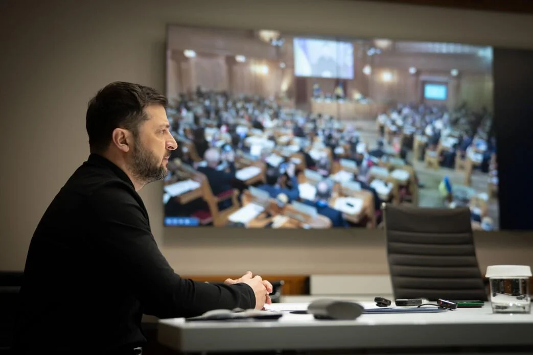
President Zelenskyy addressed the Swedish Parliament on Monday morning. www.president.gov.ua
Ukraine Peace deal?
Ukraine’s government has agreed to the core parts of a peace deal brokered by the Trump administration to end the now nearly four year long war. US officials have been meeting with both the Russians and Ukrainians in order to secure an end to the war. The plan was presented as a 28 point peace plan but upon revision by the Ukrainian side has been revised to a 19 point peace plan that no longer includes items such as amnesty regarding acts committed during the war. Ukraine as part of the deal has agreed not to increase the size of its military and will not join NATO under the updated plan.
However, the main criticism of the proposed plan is the legitimation of Russian control over captured Ukrainian territory in Dobas and does not have popular support from Ukraine or its European allies. European officials have called for the inclusion of a demilitarized zone and the inclusion of an article of defense for Ukraine similar to NATO’s article 5 which calls for mutual defense of all members. The Ukrainian President, Volodymyr Zelenskky recently stated as part of whether he would accept succeeding territory to Russia, “Are we considering giving up any territory? We have no legal right, under Ukrainian law, under our constitution, under international law, and honestly, we have no moral right, either”. Meanwhile, Russian President Vladimir Putin warned that Ukrainian troops must withdraw from Ukraine’s eastern Donbas region or Russia would seize it, rejecting any compromise over handing captured territory back to Ukraine and throwing a wrench in any prospects for peace that require concessions from the Russian side over captured land.

Escalating tensions between the US and Venezuela
Venezuelan President Nicolas Maduro addresses a crowd flanked by Interior Minister Diosdado Cabello (left) and his wife Cilia Flores during a rally in Caracas, Jan. 23, 2025.
Pedro Rances Mattey/Anadolu/Getty
Amid the buildup of US military forces in the Caribbean the Trump administration has now moved to designate Cartel de los Sols as a foreign terrorist organization (FTO) with Nicolas Maduro as the head. The new designation by the Trump administration is thought to be another indication that the administration is seeking to conduct strikes inside of Venezuela. Secretary of War/Defense Pete Hegseth recently said the FTO designation “gives more tools” to the Defense Department and “gives options” to the President.
The “Cartel de Los Soles” or Cartel of the Suns is a term used to describe groups within Venezuela’s armed forces implicated in a wide range of criminal activities, including gasoline smuggling, illegal mining, drug smuggling and other corruption schemes. It has only recently been used to describe an official formal drug cartel. Labelling an organisation as a terrorist group gives US law enforcement and military agencies broader powers to target and dismantle it. Over the last few days the Trump administration has declared the skies over Venezuela closed and airlines have halted flights in and out of the country. The Maduro government has criticized the moves by the US and dismissed drug trafficking accusations. Venezuela’s foreign ministry stated that it absolutely rejected the designation, which it describes as a “new and ridiculous lie”. Last week for the first time the US seized an oil tanker off the coast of Venezuela and President Trump has repeatedly raised the likelihood of US military intervention in Venezuela.
Deadly Floods in Asia
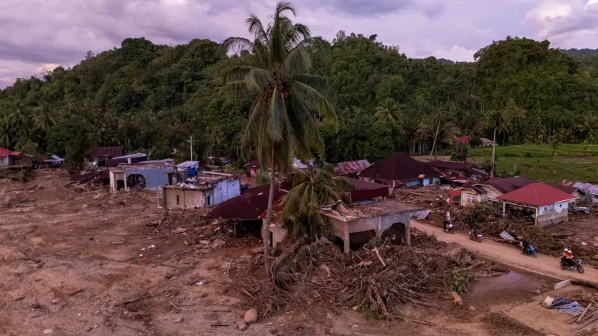
A drone view of an area hit by deadly flash floods following heavy rains in Palembayan, Agam regency, West Sumatra province, Indonesia [Willy Kurniawan/Reuters]
Catastrophic floods and landslides have hit multiple countries leaving over a thousand dead and hundreds more missing. Indonesia, Sri Lanka, Malaysia and Thailand have all been affected, with over 800 people reported missing and more than 1,400 declared dead. In Indonesia, the worst-hit country, washed-out roads and collapsed bridges have left rescuers struggling to reach some of the hardest-hit areas in North and Western Sumatra. Though unlike middle income countries such as Indonesia or Thailand, Sri Lanka has been less able to react to the floods devastation. Sri Lanka’s Prime Minister, Harini Amarasuriya, met with diplomats from the region to appeal to them to support the country’s relief and reconstruction efforts. Countries such as India, Pakistan and the United Arab Emirates have launched efforts to provide aid.
Three Typhoon storms hit the region in quick succession, Typhoon Koto which moved from the Philippines towards Vietnam, Cyclone Senyar, a rare storm that spun up in the narrow Strait of Malacca and lashed Indonesia, Malaysia, and southern Thailand and Tropical Cyclone Ditwah, which crossed Sri Lanka and India’s south-east coast. All of these storms in unison cause the massive flooding and loss of life witnessed in recent days. Water temperatures are reported to be warmer than normal in the region, warmer ocean temperatures provide more energy for storms. Climate scientists expect the frequency and ferocity of these storms to be a new normal.
Congo-Rawanda peace deal
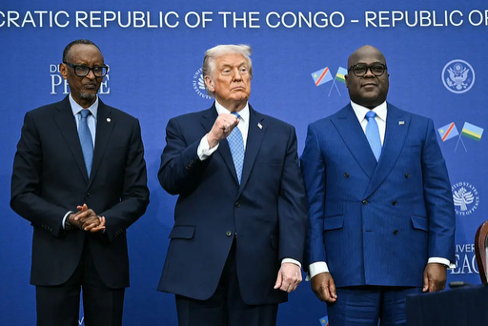
U.S. President Donald Trump gestures as he hosts the signing ceremony of a peace deal with the President of Rwanda Paul Kagame (L) and the President of the Democratic Republic of the Congo Felix Tshisekedi (R) at the United States Institute of Peace in Washington, DC, on Dec. 4, 2025. Andrew Caballero-Reynolds—AFP/Getty Images
Last week, President Donald Trump hailed a “historic” peace deal dubbed the “Washington Accords for Peace and Prosperity” between the Democratic Republic of Congo (DRC) and Rwanda. The deal brokered by the US and Qatar is a reaffirmed commitment to a US brokered deal signed in June which itself had failed to quell fighting. The two nations have had brewing conflicts over the past 30 years, but the violence sharply escalated in early 2025 after Rwanda-backed M23 rebels seized large parts of mineral-rich eastern DRC. The Trump administration has spearheaded talks between DR Congo and Rwanda, hoping that resolving the fighting would allow the US to increase investments in the resource rich region. However, even after the signing of the deal deadly clashes have marred efforts to begin implementing the terms of the agreement. The United States has accused Rwanda of fueling the instability and continued fighting. More than 400 civilians have been killed following the recent surge in fighting as the Rwanda-backed M23 armed group continues its offensive in South Kivu province in the eastern DRC.

Australia social media ban for minors
The teen social media ban will come into effect for some platforms today. (ABC News: Lindsay Dunbar)
Australia has become one of the first countries in the world to ban social media platforms from allowing children 16 and under from having accounts. While the law officially kicks in on December 10, Meta has already begun removing Instagram, Threads and Facebook accounts in order to comply with the new law. At the time of writing, the law applies to only ten major sites and platforms Facebook, Instagram, TikTok, Snapchat, X (formerly Twitter), YouTube, Reddit, Twitch, Kick and Threads. These companies, should they fail to comply with the removal of underaged accounts, would face fines of up to 50 million Australian dollars or $33 million USD.
The companies have been provided with a number of options for determining the age of users, the most common being an online scan of a users ID such as a drivers license. The Australian eSafety Commissioner will be sending the 10 platforms notices on Dec. 11 demanding information on the numbers of accounts removed. The Malaysian government has followed suit and said it would also ban social media accounts for children younger than 16 starting in 2026. Additionally the European Commission, France, Denmark, Greece, Romania and New Zealand have all also expressed interest in setting a minimum age for social media.

An Analysis of the California – Texas Re-Districting Fight (Civil Rights Brief #249)
Civil Rights Brief #249 | Rod Maggay | December 9, 2025
Policy Summary: After the State of Texas’ approval of a re – drawn state congressional map that would be used in 2026 to give them five more likely Republican districts, the State of California decided to respond.
California and Governor Gavin Newsom (D) placed on the 2025 state ballot Proposition 50, known as the Election Rigging Response Act. Since California uses an independent re – districting commission to draw its congressional and state legislative districts, it couldn’t simply have the state legislature pass a bill for a new map and have it signed by the governor like in Texas. The Election Rigging Response Act first re – affirmed its commitment to continue using an independent re – districting commission for future elections. However, the bill authorized a temporary situation where the Legislature would be permitted to re – draw the state map. The new map would make and add the same number of Democratic leaning districts that Texas allowed in their new map – in this case five. The Act was then placed on the ballot for approval from California voters. On November 4, 2025, the act was approved overwhelmingly – 64% voted yes to temporarily allow the Legislature to re – draw the map while 36% voted against. For the upcoming 2026 mid – term elections California would be using a re – drawn map that will likely give it five more Democratic leaning districts.
That was not the end of the re – districting war between the two states.
After the Election Rigging Response Act was approved by California voters, the California Republican Party filed a lawsuit in California to block implementation of the act and the new map. The Department of Justice intervened to become a plaintiff in the lawsuit. That case is now set to be heard in early 2026.
While in Texas, the situation took an unexpected turn. On November 18, 2025 the Federal District Court for the Western District of Texas barred the use of the newly re – drawn Texas congressional map and ordered the state to use the prior state legislative district map. The case was then appealed to the United States Supreme Court. On December 5, 2025, the Court in an unsigned opinion agreed to temporarily pause the order from the federal district court, in effect allowing Texas to use their newly drawn map for the upcoming 2026 mid – term elections.
Policy Analysis: The twists and turns during the re – districting war have seen head – scratching comments and an unlikely twist that weakens Texas’ rationale for re – districting while strengthening California’s efforts to push back on Texas’ efforts.
Attorney General Pam Bondi responded to California’s Proposition 50 by calling it “a brazen power grab that tramples on civil rights and mocks the democratic process.” Additionally, DOJ responded to California’s efforts with “we will stop your DEI districts for 2026.” The Department’s intervention in the California lawsuit to prevent implementation of Prop. 50 also claimed that the California map was re – drawn to favor one race over another. These comments are questionable with a closer examination of the facts.
First, for the Attorney General to call Prop. 50 a brazen power grab that tramples on civil rights while mocking the democratic process is non – sensical. California did not initiate this re – districting war – Texas did by re – drawing their maps first in a year when it didn’t have to. Texas only did so at the behest of President Donald Trump because of his rumored fears about being impeached. California even made efforts to not go through with their re – districting efforts – with Proposition 50 only going into effect if Texas did and with Governor Newsom calling Texas officials to let them know that they didn’t have to go forward with re – districting. If there was any alleged power grab or mockery of the democratic process, that likely is the fault of Texas and not California. And the claims of DEI and race as a motivation is even more non – sensical. California had no racial motivation to re – draw their maps and even the Supreme Court acknowledged that in their December 5 order written by none other than Justice Samuel Alito. The Justice wrote that it is “indisputable” that “the impetus for the adoption of the Texas map (like the map subsequently adopted in California) was partisan advantage pure and simple.” The Supreme Court here is unquestioningly rebuking the AG and the DOJ’s claims of racial motivation in the re – drawing of the California map and calling it exactly what it is – a partisan reason. For senior government Trump officials to get the motivation to re – draw the map completely wrong questions whether they are truly aware of how this re – districting war is playing out or are trying to mislead citizens.
Finally, the decision by the Supreme Court in the appeal of the El Paso district court decision on December 5 likely may have weakened the Republicans’ lawsuit in California while strengthening California’s legal defense of Proposition 50. The Republicans and DOJ claim in their lawsuit that California re – drew their map with the intent of depriving racial minorities of equal representation in Congress. However, the facts demonstrate that the only reason California put forth Proposition 50 was to counter Texas’ purely partisan reason to re – draw their state map. The proposition even had an escape clause that re – districting in California would only go forward if Texas did. The stated purpose of the proposition in ballot materials was to counter Texas which demonstrates that the bill was designed for partisan purposes and not race. There is no hint of race as being a factor at all. Even Justice Alito called California and Texas efforts “for partisan advantage” which is permitted under law. So, Texas and DOJ’s lawsuit in California to block Prop. 50 has essentially been undermined, no less than with words from the Supreme Court. It is difficult to argue that Prop. 50 had a racial motivation when all the facts demonstrate otherwise. And California gets a boost as their legal defense of the case against it puts their efforts on the right side of the law – that they crafted Proposition 50 for permitted partisan reasons and not racial terms.
These cases are likely not the last word on this re – districting battle as the case in California is still scheduled for a full trial as well as likely appeals to the Supreme Court. Not to mention that there are other re – districting battles going on in other red and blue states that have not been determined yet.