

JOBS POLICIES, ANALYSIS, AND RESOURCES
Latest Jobs Posts
Automatic Voter Registration Systems (AVR) Is The Latest Approach To Fight State Voter Suppression Bills
Brief #155—Civil Rights
By Rod Maggay
In 2015 Oregon became the first state in the country to implement an automatic voter registration (AVR) system for its residents. California became the second U.S. state to implement an AVR system when it approved a law in October 2015. Over the next few years an additional seventeen states and the District of Columbia have passed laws that enacted AVR systems for their states. An automatic voter registration system is one where an eligible voter must opt – out of voting. Under the old traditional system in place across the U.S., voters filled out paper voter registration forms and returned them to their local voting authority body. Under an AVR system, any eligible voter who interacts with a state or federal government agency for a non – voting purpose, such as applying for a driver’s license or identification card, will automatically be registered to vote in that state. There are differences across the states that have an AVR system but the person will be registered unless they affirmatively decline. In sixteen states, the person conducting a transaction with a state or federal agency can decline during their visit with the agency they are conducting business with while two other states give the person the option to decline a registration to vote via a paper mailer sent to the person who declines by mailing the paper back.
Biden Administration Gives the Green Light to Unionization Efforts in Amazon Warehouses
Brief #40—Technology
By Scout Burchill
By the end of the month, history may well be made in Bessemer, Alabama as workers at an Amazon warehouse there are currently voting on whether or not to unionize. If successful, it will be the first Amazon warehouse in the United States to be represented by a union and will surely send shockwaves throughout the nation, encouraging other Amazon warehouses to stand firm against the company’s notorious union busting tactics and begin the fight for their own collective bargaining rights.
Biden Progressive Poverty Policies
Brief #111—Economic
By Rosalind Gottfried
President Biden’s 1.9 trillion dollar American Rescue Plan contains the most comprehensive anti-poverty program since President Johnson’s War on Poverty in the 1960s. The program will reduce overall poverty by one third and child poverty by one half. Poverty is expected to be reduced to 8.7% for the year compared with 13.7% previously. The effect on Black and Hispanic families will be even greater bringing 38% of Black families and 43% of Hispanic families out of poverty while affecting more than one half of the children in these demographics. This wide ranging program attacks poverty from multiple sources though it contains one time payments and policies which will expire at the end of 2021; nothing in the program extends into 2022 at this time.
Media Literacy in Schools
Brief #56—Education
By Emily Carty
As of 2021, 14 states have passed some sort of legislation related to Media Literacy. The Majority of these states passed the laws in the past few years, signaling the growing interest in monitoring the media’s influence on society through increasing society’s ability to sift through the media’s information. Youth today are engaged in digital media, and therefore media in general, even more than in previous generations. With the political process playing out on a screen, sensationalist or “fake news” plastering social media, and real, extensive studies into the benefits of being media literate — society today is coming to terms with the dangers of media illiteracy.
Democrats Pass Massive Voting Rights Bill While President Biden Signs Voting Rights Executive Order
Brief #154—Civil Rights
By Rod Maggay
“The Times, Places and Manner of holding Elections for Representatives and Senators, shall be prescribed in each State by the Legislature thereof; but the Congress may at any time by Law make or alter such Regulations[.]”On January 4, 2021, Rep. John P. Sarbanes (D-MD) introduced H.R.1, better known as the “For The People Act of 2021.” The bill is a massive comprehensive bill that seeks to address a number of issues associated with voting and elections. The bill is divided into three sections – Voting, Campaign Finance and Ethics.The Voting component of the bill addresses Election Access by promoting the availability of online voter registration, automatic voter registration (AVR), standards for provisional voting and standards for voting by mail. The bill also promotes Voter Access by promoting voter friendly policies such as Election Day as a holiday and minimum notification requirements for polling place changes.
The House Passes a Bill to Help Small Farmers
Brief #2—Agriculture
By Katherine Cart
Before the industrial revolution reworked the entirety of agricultural processes in America, poultry, eggs and meat were not cheap. The average dozen, in 1913, cost today’s equivalent of $9.25. Chicken meat was served on Sundays, or for holidays, and could not be bought boneless, ground, breaded, molded into consumer-pleasing shapes. Small farms produced small quantities of meat and poultry product and lack of mass shipping transit kept businesses local. Now, however, only three mega-corporations control roughly 90% of the poultry market and four control 85% of the beef market. Legal red tape impedes the fair competition of smaller farms. Conversations concerning antitrust reforms are, once again, gaining momentum and new voices. The DIRECT (Direct Interstate Exemption for Certain Transactions) Act, seeks to amend selling restrictions and could be a boon for small meat and poultry producers. Currently, meat and poultry grown by many small processors are inspected and approved for sale within only the state of inspection. The act would lift bans on interstate sales by processors, butchers and other retailers of locally-produced meat and poultry, allowing for the direct-to-consumer sale of normal retail quantities across state lines. Congressman Cuellar says, “the bipartisan legislation will allow meat inspected by the State to be sold online and across state lines, opening up new markets for meat producers and processors.”
Restrictive State Voting Bills Have Multiplied In Aftermath of 2020 Election
Brief #153-Civil Rights
By Rod Maggay
In the aftermath of the 2020 election state legislatures from around the country have responded with a number of bills that relate to the ability to cast a ballot and other activities associated with voting, such as how ballots are returned and how voter rolls are updated. A significant number of these state bills raise red flags because they appear to be in response to former President Donald Trump’s assertion that the 2020 election was rife with fraud and were not as secure as they could have been. Despite statements from election officials, law enforcement and intelligence agencies that the 2020 elections were in fact secure and that no evidence of fraud was uncovered, state officials have still followed Trump’s lead and introduced a number of bills that purport to bring stability and security to future elections in their state.
What is the Biden administration doing in Afghanistan?
Brief #103—Foreign Policy
By Will Solomon
The War in Afghanistan is the longest running war in US history; this October will mark the 20th anniversary of the US-led invasion. Despite limited successes, the war has broadly been a failure. The Taliban remain active and in control of much of Brief Afghanistan, and likely will return to power in some form in the event of a US withdrawal. The state is deeply unstable, corruption is endemic, and new terror groups—including the Islamic State—remain active. The strategic objectives of the two-decade long war have not been achieved, and the US remains mired in a sort of stalemate.
Who are the Proud Boys?
Brief #9—Social Justice
By Erika Shannon
During the Presidency of Donald Trump, many events unfolded that left the American people feeling uneasy. One of these events was the January 6, 2021 Capitol riots that were planned by white supremacists and Trump supporters. While the end of his Presidency was near, Donald Trump sat idly by and allowed his supporters to get carried away with their actions. This is synonymous with his attitude for much of his time in office, where we saw the emergence of white supremacist groups at an alarming rate. Our then-President had the chance to condemn them, and chose not to. For that reason, many of these organizations have gained a larger following than they ever had before. One of these white supremacist organizations, the Proud Boys, was actually formed as Donald Trump came into power. Since then, the Proud Boys have been involved in countless acts of violence and harassment here in the U.S.


Consequences of the Lack of a Stimulus Package
Consequences of the Lack of a Stimulus Package
Rosalind Gottfried
Economics
November 20, 2020
Policy
The inability of Congress to reach an agreement on a second stimulus package has impacted both the rate of disease and the economic recovery in the country. Experts believe that if the stimulus had passed, as proposed by the Democrats, it would have provided for more funds for tracing and testing of the virus and possibly would have reduced the level of the current viral surge. The pot of money for businesses was largely emptied months ago, leaving small and mid-sized businesses vulnerable to failing. Experts in the largest hotel group predict that two of three hotels will close in the six months starting in September.
The $600 weekly federal supplement to unemployment elapsed at the end of July and the $300 weekly benefit Trump subsequently ordered ran out of money and was intended to last only six weeks. These payments were considered more essential to the health of the economy than the one time payouts to individuals with incomes of $75,000 or less and couples with $150,000 or less. With the failure of a stimulus program these payments have not been renewed and, though less effective than consistent unemployment support, did help families make rent and car payments and stave off potential disasters.
The House Democrats passed a three trillion program in May of this year and the Senate passed a one trillion plan in August. In September the House reconciled with a 2.2 trillion dollars plan which was opposed by the Republicans. Bickering ensued and Trump, prior to the election, encouraged the passing of some sort of stimulus bill. Since the election, he has fallen silent and Nancy Pelosi and Mitch McConnell have been unable to reach any kind of agreement. The Congress is poised to leave on vacation for a Thanksgiving break and it has become increasingly clear that a stimulus is unlikely to occur until President-elect Biden takes the reins. The recent news regarding imminent vaccination programs means that the ability to forecast a return to economic viability is at least conceptually closer than before the vaccination news but the essential problem of keeping individuals, families, and businesses afloat until then demands attention.
Analysis
Even when Biden assumes the presidency there is likely to be a lag time before the Congress agrees on a stimulus package. McConnell is pushing for a 500 billion dollar program and Biden supports a 2.5 trillion dollar package. Even arriving at a compromise hinges on the ultimate resolution of the two Senate seats still hanging in the balance in Georgia. If the Democrats do not gain them, compromise will be difficult as the Senate will retain its Republican majority and McConnell shows no inclination of softening his position. With the increasing likelihood of more failing businesses, and the suffering of lower income workers who are un- or underemployed and lacking access to full healthcare, our economic situation looks largely bleak right now.
However there have been some “winners.” Big national companies such as Wal-Mart, Targets, Costco, Amazon, and Home Depot are flourishing, making extra revenue off of the suffering of consumers and smaller businesses. There have been no talks between the political parties since the election and the only potential impetus to do anything hinges on the effort to avoid a government shut down on December 11th when the current budget agreements run out. With unemployment at 6.9%, and 12 million slated to lose their unemployment benefits after Christmas, the holiday season has another reason to be less than joyful.
References
- https://www.businessinsider.com/no-new-stimulus-may-have-worsened-the-coronavirus-pandemic-2020-11
- https://www.latimes.com/politics/story/2020-11-11/new-coronavirus-stimulus-package-looks-unlikely-until-biden-administration
- https://www.cbsnews.com/news/second-stimulus-check-status-update-2020-11-19/
- https://www.axios.com/congress-vacation-no-stimulus-bill-covid-coronavirus-a7683918-29de-4704-b24a-543712f7f48f.html
- https://thehill.com/policy/finance/526582-cnbcs-cramer-says-congress-trump-doomed-so-many-companies-by-not-passing-covid

President-Elect Joe Biden’s Immigration Plans
President-Elect Joe Biden’s Immigration Plans
November 22, 2020
Policy Overview
President Elect, Joe Biden has hefty goals for immigration reform and policies. After election, he seeks to undo much of the Trump Administration’s initiatives and policies he found to be detrimental to our core values. On his first day in office, Biden pledges to make DACA permanent and provide a road map to citizenship for people illegally living in the US within his first 100 days. Biden plans to end construction on Trump’s border wall immediately, raise the cap of refugees admitted to 125,000 in 2021, eliminate the practice of separating families at the border, and end the current travel bans on certain Muslim-majority countries.
Biden proposes a high-tech approach to the US border rather than a physical barrier. He wants to enlist the cooperation of a network of organizations, non-governmental organizations, legal non-profits, and refugee assistance agencies to assess the humanitarian needs of migrants. He seeks to expand existing opportunities for immigrants who served in the US Armed Forces, immigrants already residing in the US, and for expanded legal immigration through family-, work-, and humanitarian-based visas. Through these efforts, Biden aims to modernize the American immigration system and uphold its status as a global beacon of freedom and asylum.
Engagement Resources
- The National Immigration Law Center: an organization that exclusively dedicates itself to defending and furthering the rights of low income immigrants and strives to educate decision makers on the impacts and effects of their policies on this overlooked part of the population.
- Border Network for Human Rights: network to engage education, organization and participation of border communities to defend human rights and work towards a society where everyone is equal in rights and dignity.
- World Health Organization: the WHO provides updated information surrounding COVID-19 and global responses
- Center for Disease Control: the CDC provides updated information surrounding COVID-19 and the US responses

Court Rules Against Trump’s Unlawful Shutdown of DACA
November 22, 2020
Policy Summary
In June 2020, the Supreme Court barred the Trump Administration from carrying out a plan to shut down DACA (see brief #95). The Obama Administration’s Deferred Action for Childhood Arrivals (DACA) allowed nearly 800,000 young people – “Dreamers” – to avoid deportation and remain in the United States to work and study.
In July, the Department of Homeland Security – under Acting Secretary, Chad Wolf – issued a memorandum that effectively suspended the DACA program. The memorandum violated the Administrative Procedure Act and was capricious in nature. Last week, a Federal Judge in New York upheld this decision and declared the memorandum unlawful as Wolf was not lawfully serving as Acting Secretary. He was installed as a part of a series of several hasty actions to get people to the top of the Department through circumventing standard procedures. Therefore, he not only lacked the authority to hold his temporary position, but his actions were also void.
Analysis
This decision serves as an undeniable reminder that the Trump Administration is not exempt from the Rule of Law and cannot bypass official procedures. The efforts to reverse the DACA program were amongst its greatest pledges and the Supreme Court judgment firmly asserts the American Dream and core values are more important than acquiescing to a fanatical administration. President Elect Joe Biden has vowed to reinstate the original Obama era program when he assumes office.
Engagement Resources
- The National Immigration Law Center: an organization that exclusively dedicates itself to defending and furthering the rights of low income immigrants and strives to educate decision makers on the impacts and effects of their policies on this overlooked part of the population.
- Border Network for Human Rights: network to engage education, organization and participation of border communities to defend human rights and work towards a society where everyone is equal in rights and dignity.
- World Health Organization: the WHO provides updated information surrounding COVID-19 and global responses
- Center for Disease Control: the CDC provides updated information surrounding COVID-19 and the US responses

OxyContin Maker, Purdue Pharma, Pleads Guilty to Federal Criminal Charges
Author Taylor J Smith
Brief Title: OxyContin Maker, Purdue Pharma, Pleads Guilty to Federal Criminal Charges
The Case
In late October, Purdue Pharma agreed to plead guilty to three federal criminal charges for its clear and impactful role in the nation’s deadly opioid crisis. In addition to pleading guilty, the Purdue will pay more than $8 billion and permanently close the company. The financial contributions will primarily go to opioid treatment and abatement programs, on top of $3.5 billion fine, $2 billion forfeiture of past revenue, and $2.8 billion in civil liability fees. Because the company does not have $8.3 billion in cash, the company will dissolve, and its assets will be used to create a “public benefit company” controlled by a trust.
Purdue has pled guilty to three counts, including conspiracy to defraud the United States, and violating anti-kickback laws from 2009 -2017.
Analysis
This is the highest-profile settlement, finally holding a major drug maker responsible for a twenty plus yearlong opioid crisis, resulting in over 400,000 overdose fatalities. Democratic attorneys general criticized the settlement, claiming the settlement is feigned justice and the company likely will not fulfill its promise of paying fines and penalties. However, those who have been impacted by the opioid crisis say this is a step in the right direction and hope that the next step in justice will have members of the Sackler family found criminally liable. A hope that is possible as the plea bargain notably does not absolve any of Purdue’s company executives or owners – the Sackler family- from criminal liability. Such charges are still under investigation.
As expected, the Sackler family will lose control of their company and it will become a public benefit company, governed by a trust that must balance the trust’s interests against the interests of the American public and public health. Currently, the new company is expected to continue manufacturing Oxycontin and other painkillers, as well as lifesaving overdose medication. The idea of dissolving Purdue and creating a new company to sell OxyContin has raised concerns and objections across the country. Twenty-five state attorneys general oppose the government taking control of the company, arguing the federal government should have no business in selling OxyContin and playing a role in the ongoing crisis.
Many argue the settlement is far too lenient and the settlement was rushed, wrapping up the case before election day. Having a giant like Purdue Pharma held responsible in the largest opioid case adds to Trump’s re-election portfolio. While his promises of combatting drug addiction and holding Big Pharma responsible was an early pledge, Trump has done little in this area. However, the outcome here may provide a much-needed boost to his approval ratings. Only time will tell if the recent court cases against Big Pharma will repair the decades long damage it has caused.
Lawsuit Timeline
2001 – CT Attorney General Richard Blumenthal urges Purdue to take action regarding OxyContin abuse.
2003 – Federal Drug Administration issues a warning letter to Purdue about OxyContin’s misleading advertisements.
2004 – West Virginia – Purdue sued for reimbursements of “excessive prescription costs” paid by the state. Result: $10 million settlement.
May 2007 – Purdue pleads guilty to misleading the public about OxyContin’s addiction risk, company ordered to pay $600 million.
Oct 2007 – Kentucky – Purdue sued for the state’s widespread Oxycontin abuse. Result: $24 million settlement 8 years later, Dec 2015.
Jan 2017 – Washington – Purdue sued for not upholding agreement in previous suit to track suspicious excessive ordering and potential black-market sales. Result: Case is ongoing, Washington has dismissed offers to settle.
March 2019 – Oklahoma – Purdue sued for its contribution in the death of thousands in the state. Result: $270 million settlement.
Sept 2019 – Purdue Pharma sued for deceptive marketing practices and their role in the opioid crisis by thousands of municipal governments and nearly two dozen states. Result: A $10-12 billion settlement and Sacklers are to pay 3 billion over 7 years.
Sept 2019 – New York – Purdue Pharma and the Sackler family file for bankruptcy. Result: $10 – 12 billion settlement for company dissolvement.
Oct 2020 – Purdue pleads guilty to 3 federal crimes. Result: $8 billion settlement.
Engagement Resources:
- Reach out to your senators and representatives to take action!
- To keep up to date on the latest opioid news, SUBSCRIBE HERE!
Well, it’s official: the U.S. has withdrawn from the Paris Climate Agreement
Well, it’s official: the U.S. has withdrawn from the Paris Climate Agreement.
By Brandon Mooney
November 23, 2020
Policy Summary:
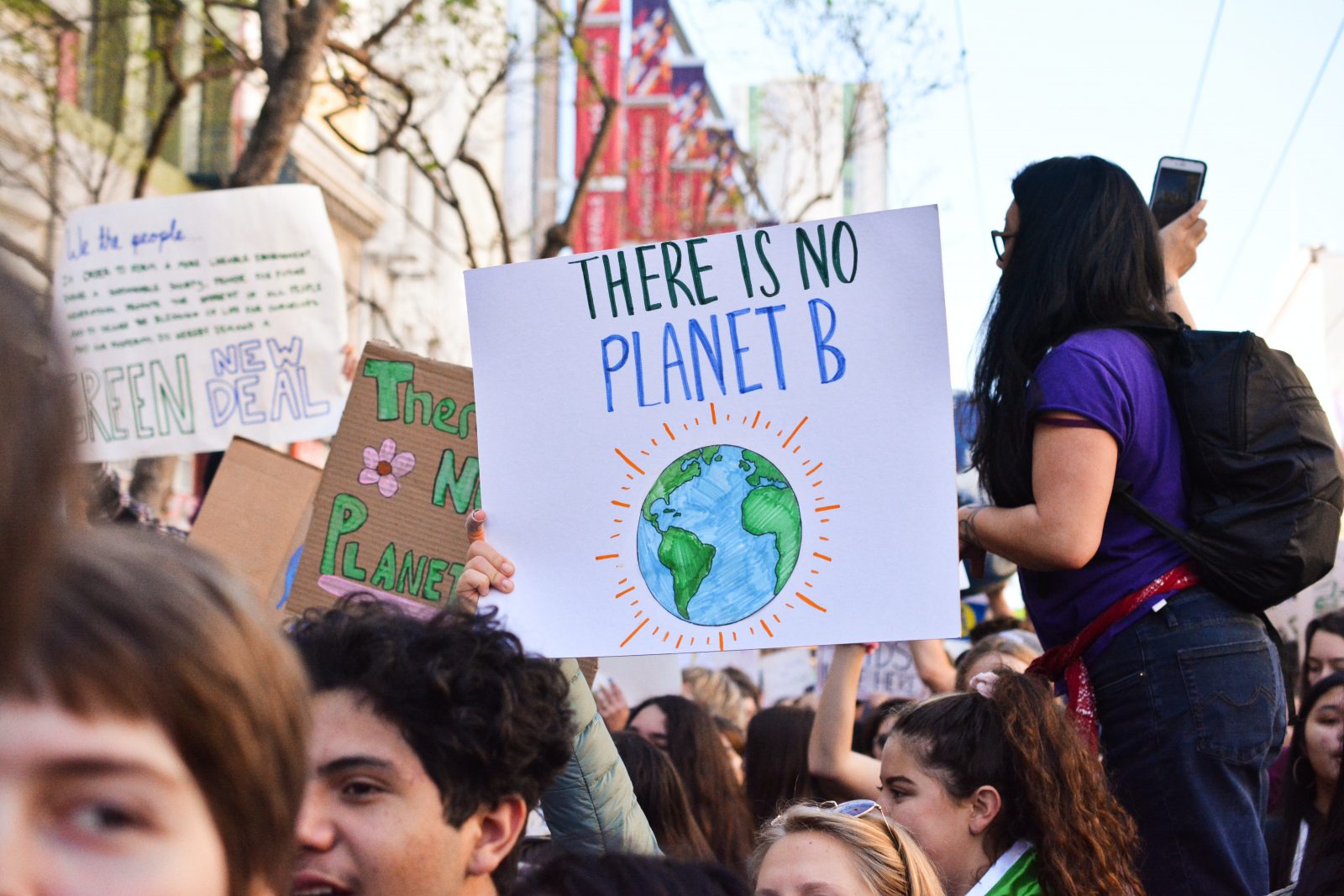
Well, it’s official: the U.S. has withdrawn from the Paris Climate Agreement. If you understandably missed the big news due to the media crescendo that was the 2020 presidential election, don’t feel too bad. The move was more of a whisper than a statement piece, occurring almost two weeks ago on November 4th. It was expected and due to pass, as Secretary of State Mike Pompeo put through the paperwork that finalized the withdrawal a year ago. Trump had assured his base that he would withdraw from the Paris Agreement during his campaign and followed through, arguing that it was costing American jobs, helping foreign competitors, and limiting domestic industrial potential.
The Paris Agreement has quickly become a partisan lighting rod following the Obama administration’s stamp of approval. But, like many international treaties, it does little in reality. More of a promise ring embellished into sham shackles by conservative pundits, the Paris Agreement requires signatories to set and work towards targets for reducing greenhouse gas emissions. Yet, bending to state sovereignty, there are no methods of enforcement or punishment, with states being free to meet, change, or ignore whatever targets they choose.
Putting aside these criticisms, the Paris Agreement was a landmark moment for the international community in fighting climate change. By signing on, countries at least tacitly admitted that it’s an issue that requires action. It is also a shared commitment, however slight, to reduce emissions and investigate collective ways to mitigate the effects of climate change. It was and still is an important first step towards an international effort.
Analysis:
Putting these facts aside and looking towards the future, it would appear that the incoming Biden administration is willing to and has said that they will rejoin the Paris Agreement. In addition, Biden has touted a plan to combat climate change, aiming to specifically bring about environmental justice and a boom in domestic clean energy. He wants Congress to create enforcement mechanisms to meet as-yet undetermined Paris Agreement targets and set aside federal funding for clean energy subsidies. He has promised to rebuild America’s infrastructure to be climate change resistant, make the U.S. an international model for the environmental movement, and sue polluters and industrial interests. There has also been a call to employ 1 million Americans in the electric car industry and help build over a million so-called “sustainable homes.”
Although all of that is campaign talk at this moment, it is campaign talk that diverges sharply from that of the Trump administration. Trump has personally put a lot of rhetoric behind improving domestic water and air quality, with $38 billion being set aside for clean water infrastructure. He has also rightfully pointed out America’s constantly improving air quality and claims responsibility; while failing to mention that domestic air quality has been improving for decades and that the trend wasn’t overly affected during his presidency. To his credit, Trump has pushed for more federal funding for national parks and state lands, along with calling for ocean clean-ups, but one could argue that his loosening of fracking regulations on state lands, support of the coal and fossil fuel industry at large, and the structural racism that underpins the park systems damages this record. He has notoriously denied climate change and attacked clean energy in speeches. And, relating back to the beginning of this article, withdrew the U.S. from an entirely non-binding, voluntary agreement that in its own piecemeal, half-hearted way attempts to combat greenhouse gas emissions.
As we wait to see what a Biden presidency has in store, I find myself hopeful for improved environmental standards and more importantly, a concerted effort by the government to address what is arguably the greatest existential threat to humanity hand-in-hand with the international community. Although I do have some fears that much of Biden’s tough talk on climate change is hot air and campaign narrative to spin up support among younger voters, I certainly believe that he will bring a welcome improvement over Trump’s unabashed attacks on the environment. I hope he does everything that he has promised and far more, and I would hope that we can all agree that such should be our expectation of the president-to-be.
Engagement Sources:
Joe Biden’s Clean Energy Revolution and Environmental Justice Plan – a quick look-see at Biden’s proposed climate change plan
Paris Climate Agreement Overview – a digestible, quick article about the Paris Agreement
Alliance for Climate Education – a coalition of citizens attempting to educate the wider public on the threat of climate change
Citizen’s Climate Lobby – a centrist lobbying group for climate change solutions that both conservatives and liberals should be able to agree on while both taking issue with certain areas

The American War on Venezuela
By Will Solomon
November 22,2020
Policy Summary:
On April 12, 2002, Hugo Chávez, then President of Venezuela, was briefly removed from power in a military coup. Chávez returned to power two days later, buoyed by popular support, largely from poor and working-class Venezuelans. At the time, American officials denied involvement and largely blamed Chávez for instigating the instability that led to his downfall; only two years later, redacted CIA documents revealed that the United States was aware of the coup well in advance, and likely had some amount of communication with the coup plotters.
To believe otherwise would have been naive; the long history of American involvement in Latin America is common knowledge at this point, and it has continued into the 21st century, if often more subtly. But this is an illustrative recent example, and Venezuela is a particular case.
The oil-rich nation’s recent history was largely defined by the government and policies of Hugo Chávez. Although not without blemishes, Chávez’s early policies had a dramatic ameliorative effect on the poorest members of Venezuelan society: unemployment and poverty dropped significantly during his early tenure, oil exports boomed, and per capita GDP more than doubled. Chávez was an outspoken opponent of US imperialism and aligned Venezuela with other “pink tide” Latin American leaders, like Rafael Correa in Ecuador and Evo Morales in Bolivia, as well as much older US antagonists like Fidel Castro in Cuba.
This is not to say suffering disappeared: violence was and remains high in Venezuela, inflation has been consistently high, and of course, the vast majority of the growth that took place was the result of high oil prices and an entirely oil-dependent economy. Things in the country have gotten dramatically worse since Chávez’s death in 2013 and Maduro’s ascension to power, clearly due in part to mismanagement of the economy by the government.
However, this situation has been dramatically worsened by US sanctions, beginning in 2014. Officially US sanctions have largely been in response to political repression and alleged links to drug trafficking by members of the Venezuelan government. In practice, the US maintains cozy links with far more repressive states than Venezuela, and it is difficult not to see Venezuelan socialism—and its opposition to US hegemony in the Western hemisphere—as a thorn in the side of Democratic and Republican administrations alike.
The noose around Venezuela has been increasingly tightened over the course of the Trump administration. Trump has repeatedly floated a military invasion of Venezuela, and in early 2019—along with numerous other Western nations—recognized Juan Guaido, the de facto leader of the Venezuelan opposition and self-proclaimed president of the country, as the legal president of Venezuela, an essentially unprecedented move.
While Venezuela has (temporarily) moved out of the national spotlight, the efforts to oust the government continue; in March of this year, the US State Department offered a $15 million reward for the capture of the current President of Venezuela, Nicolas Maduro, ostensibly for connections to drug trafficking, and in May of this year, a small and essentially privatized military invasion of Venezuela—with the goal of ousting Maduro—was stopped by the Venezuelan military. Indeed, in the last several days, Trump’s legal team has absurdly alleged that supposedly anti-Trump voting machines were created by Hugo Chávez.
Analysis:
In light of these ongoing destabilization attempts, it is with some nuance that we must consider the situation in Venezuela and the American relationship with that nation. Venezuela, perhaps more so than any other similar foreign nation (like Iran, or North Korea), holds a special status as a pariah in US media. The Venezuelan government is loathed and considered illegitimate by nearly as many Democrats as Republicans; even those towards the more progressive ends of the US electoral system, like Elizabeth Warren, have recognized Guaido as President of Venezuela.
None of this is to absolve the Chávez or Maduro governments from blame. The situation in Venezuela over the last several years has become catastrophic; the best one might say is that they took a bad situation and made it worse. But as Noam Chomsky has said, we ought to apply pressure to the leaders for whom we are responsible, not moralistically condemn foreign actors. With a nation like Venezuela—an oil-rich country with its own long history of American imperial aggression —this is even more true. If the United States had any serious interest in helping the people of Venezuela, sanctions would be lifted, or at least drastically altered, and humanitarian aid would genuinely be offered; the emphasis on regime change would be dropped, and a diplomatic detente would be pursued. We ought to be suspicious of anything short of that.
Resistance Resources
The Center for Economic and Policy Research—“The Center for Economic and Policy Research (CEPR) was established in 1999 to promote democratic debate on the most important economic and social issues that affect people’s lives.”
https://www.codepink.org — “CODEPINK is a women-led grassroots organization working to end U.S. wars and militarism, support peace and human rights initiatives, and redirect our tax dollars into healthcare, education, green jobs and other life-affirming programs.”
Democracy Now!—“Democracy Now! produces a daily, global, independent news hour hosted by award-winning journalists Amy Goodman and Juan González. Our reporting includes breaking daily news headlines and in-depth interviews with people on the front lines of the world’s most pressing issues.”

Despite Apparent Joe Biden Victory, Trump Supporters Flock to the Streets
By Erika Shannon
November 20, 2020
In the past weeks, there has been some confusion about who our next President truly is. The Associated Press has declared Joe Biden the projected winner due to his surpassing 270 electoral votes; yet, there are still some doubters out there who believe that this election could end up miraculously turning for Donald Trump. There are some recounts going on, and Trump has filed lawsuits in a couple of states to attempt to stall as long as possible. While there is a small chance that a recount may mean a Trump victory, most people have come to terms with the fact that Biden will be the next president. However, there are those who are still clinging to the idea that Trump could still somehow win, and that the election was rigged in Biden’s favor. Since the election has been called, there have been various pro-Trump protests occurring in cities across the country, including the nation’s capital, where protests turned violent and arrests were made.
This past weekend, several thousand Trump supporters showed up in Washington D.C. to protest the results of the election. Protesters marched in the streets at Freedom Plaza and the Supreme Court building. The rally was dubbed the “Million MAGA March” or “Stop the Steal Rally” on social media and was attended by members of the far-right group the Proud Boys. Other far-right groups in attendance included QAnon, Patriot Prayer, and the self-named American Guard. During the day, the protests were mild and mostly uneventful. However, as night fell, protesters clashed with ANTIFA and Black Lives Matter counter-protesters. Just blocks from the White House, police had to break up a brawl between the two groups. Tensions have been rising throughout 2020 at protests being held by both sides, and protests often end in violence or tragedy. Reports indicate that over the course of Saturday’s protests, at least twenty people were arrested. Charges from the arrests include firearms violations, simple assault, disorderly conduct, and assault on a police officer. Two police officers were injured and seven guns were recovered, though it is unknown if the guns belonged to the Trump supporters or counter-protesters.
With the election having been called by the Associated Press, there was hope that Donald Trump would simply concede to Joe Biden. However, Trump has managed to imply that the election was not fair and that he is, in fact, the winner. His comments have clearly caused quite the stir among Trump supporters; one can only wonder what they hope to achieve by protesting the election results. They often chant, “stop the steal” or, “four more years,” implying that they feel the democrats have stolen the election. Their motivation is a hope that somehow this election will end up being called in favor of Trump. The end result Trump supporters want does not seem likely at this point. The recounts being done are still projected to be in Biden’s favor for the presidency. This will hopefully result in Trump finally being satisfied with the results and peacefully conceding. There is the lingering concern that Trump will continue to insinuate that the election was unfair and that voter fraud occurred, which may incite his supporters to continue on with these protests. More protests could mean more violence and unrest for American citizens.
Regardless of Donald Trump’s claims, there are signs that this election was not actually fraudulent. In late September, FBI Director Christopher Wray wrote that the FBI had not seen any evidence of a “coordinated national voter fraud effort.” This included mail-in ballots, which goes against Trump’s statements regarding concerns over mail-in votes. The FBI investigates all instances of voter crimes, and so far none have been announced. Recently, sixteen federal prosecutors, who were specifically chosen to investigate elections crimes, have said that there was no proof of voter fraud or other irregularities that could substantially influence the election. It is also important to note that there are non-biased organizations at work to ensure that the election results are genuine. The National Task Force on Election Crises is a cross-partisan organization of over fifty experts ensuring that the outcome of the 2020 general election is free and fair. It seems that there are many powers at work to ensure that there is no election interference, here in America or internationally. There is no reason to believe that the election has been “stolen” by democrats, and those who state otherwise pose a threat to our democratic voting process. If Biden still has the most electoral votes when all legitimate votes are finally done being counted and there is no evidence of election fraud, Trump supporters will have no choice but to support Trump in his new endeavors — ones that do not include being the President of the United States.
Engagement Resources
- To report a hate crime or incident of discrimination, visit this Anti-Defamation League webpage.
- To learn more about how this election is being held to free and fair standards, visit the National Task Force on Election Crises.

Federal Appeals Court Upholds Harvard’s Use Of Race As A Factor in Admissions Case
U.S. RESIST NEWS has been following the important legal case Students for Fair Admissions v. Harvard for the past year. In this Brief we recap our earlier coverage and provide an update on an important ruling in the case that was made this week.
Policy Summary: On October 1, 2019 U.S. RESIST NEWS reported that Judge Allison Burroughs of the United States District Court for the District of Massachusetts issued a ruling in the case Students for Fair Admissions v. Harvard. The Students for Fair Admissions (SFFA) filed the case in November 2014. The group had brought previous cases aimed at challenging affirmative action policies at colleges and universities around the country. In the Harvard case, the group alleged that Harvard intentionally discriminated against Asian – American applicants to the school in violation of Title VI of the Civil Rights Act of 1964. That title prohibits discrimination by programs and activities that receive federal funding. After a three week trial conducted at the end of 2018, Judge Burroughs ruled against all of SFFA’s counts and ruled that [1] Harvard’s admissions program was narrowly tailored to serve a compelling government interest, [2] that Harvard did not engage in racial balancing, [3] did not use race as a plus factor, [4] that other race – neutral alternatives were not available and [5] that Harvard did not intentionally discriminate against Asian – American applicants. LEARN MORE
Analysis: After Judge Burrough’s ruling U.S. RESIST NEWS commented that Students for Fair Admissions Group and its director Edward Blum have wanted nothing but to discredit and dismantle affirmative – action programs around the country. In her ruling, Judge Burroughs was very careful in acknowledging that affirmative – action programs are “not perfect” and not meant to be permanent and showed that the admissions program at Harvard was constructed in a manner that was constitutionally sufficient. The “strict scrutiny” analysis applied to the program demonstrated that Harvard’s admissions program did enough to serve the interests of building a diverse student body and did not do more than was necessary to achieve that goal because race was used in a holistic fashion together with other non – race factors. And in all the remaining counts, she showed how race was never used as a deciding factor such as part of a fixed quota system and that the use of race as a “plus” factor still permitted the admissions committee enough flexibility to consider all other elements of the applicant’s application. In short, race, when used was constitutionally permissible according to the limits set by prior Supreme Court cases.
What also made this interesting was how selective the plaintiffs were in their use of statistical data while ignoring other facts that they found inconvenient to their arguments. As an example, SFFA tried to point to a Harvard recruitment program that sent recruitment letters based on PSAT scores. Those letters showed that Asian – American students received those unsolicited letters if they had a 1370 score while white males would receive those letters if they only received a 1310 on the PSAT. However, Harvard shot back that the letters are an invitation to apply to Harvard. Once a student enters the applicant pool different standards are used when reviewing an applicant’s application. And in another example, Harvard’s applicant rating system exposed SFFA due to the fact that their analysis omitted athletes and children of alumni. This led to accusations of SFFA trying to manipulate their statistics to fit their discrimination narrative. Again, Harvard pushed back and said that an entire review of the applicant pool was necessary and, more importantly, that their forthright statistical analysis showed that being Asian – American did not impact an applicant’s likelihood of getting accepted to the school.
Even though Judge Burroughs clearly demonstrated how this case was permissible within the limits of existing case law, the case will in all likelihood be appealed where it will be hotly debated more on a policy level than a legal one. LEARN MORE, LEARN MORE, LEARN MORE
Update: On November 12, 2020 Circuit Judge Sandra Lynch of the United States Court of Appeals for the First Circuit issued the opinion in the case Students for Fair Admissions, Inc. v. Harvard. The case was being heard on appeal after the trial case in federal district court ruled against SFFA’s claims that Harvard’s admissions policies discriminated against Asian – American applicants. In the opinion, Judge Lynch declared definitively that “under governing Supreme Court law Harvard’s race conscious admissions program does not violate Title VI.” The case was unanimous with a 2 – 0 vote in favor of Harvard. (The appeal was heard by a panel of three circuit judges but Judge Torruella passed away prior to the issuance of the opinion in the appeal).
The opinion is notable because of Judge Lynch’s focus and emphasis on the statistics used in the trial court. During the trial, SFFA was exposed for profferring statistical evidence that was misconstrued as viewed by SFFA, which led to accusations that SFFA was manipulating the evidence. SFFA’s efforts at omitting certain groups of students (athletes, children of alumni) and confusing marketing efforts with application review standards were not convincing at the trial level and not convincing again on the arguments at the appeal.
While SFFA’s evidence has been exposed to be shaky at a trial and appeal level thus far, it is a not very well kept secret that SFFA and its director Ed Blum are aiming for their day in the United States Supreme Court. By bringing the case through the appeals process they are simply following every step in the process in order to reach the high court where they hope that the case will end in a favorable decision for them. With the makeup of the high court now clear with a conservative majority (6 – 3) SFFA is gambling that the recent addition of conservative justices on the Supreme Court will help issue an opinion that will strike down affirmative action policies nationwide despite the benefits that the programs have brought about in terms of boosting diversity and opportunity for disadvantaged minority students. Due to the long time it takes to get a case before the Supreme Court it is unclear when the case will be heard by the high court, if at all, but it seems certain that this contentious issue has an ending that still has to be decided, whether in the courts as a legal issue or in the legislatures as a policy one. LEARN MORE, LEARN MORE, LEARN MORE
Engagement Resources:
Harvard Admissions Lawsuit – webpage from Harvard about the case.
American Civil Liberties Union (ACLU) – statement from group on case with link to amicus brief filed by the ACLU on in support of Harvard.
This brief was compiled by Rod Maggay. If you have comments or want to add the name of your organization to this brief, please contact Rod@USResistnews.org.

Trump’s Enablers
Transition of Power
A new blog post by U.S. RESIST Reporters on the transition of Presidential Power from the Trump to the Biden administration
Post # 2 Trump’s Enablers
By Sean Gray
November 19, 2020
Donald Trump has lost the 2020 presidential elections. His failure to acknowledge as much has no bearing on the outcome. Nor to date, have any of his frivolous and fast-failing legal challenges. The incoming Biden administration is already being hindered by the incumbent’s lack of cooperation. Trump’s insistence on claiming victory stolen by nonexistent voter fraud only serves to undermine public confidence in our elections. Sadly, but unsurprisingly, his political flunkies have faithfully parroted his dangerous rhetoric.
Trump’s failed running mate Mike Pence addressed a crowd of fawning supporters chanting ‘’four more years’’, to which Pence responded: ‘’that’s the plan.’’ It is hardly jaw-dropping as the outgoing Vice President has cosigned even the most heinous of Trump’s words and deeds during their time in office. Pence has previously stated that he is ‘’a Christian, conservative, and Republican, in that order.’’ It appears he has deliberately eschewed the honesty integral to the Judeo-Christian value system, omitted ‘’American’’ and committed wholeheartedly to Republican conservatism, cost be damned. That Pence mentioned a ‘’plan’’ is especially troubling in light of similar comments along the same lines by other members of the administration.
Mike Pompeo, Secretary of State and the nation’s top diplomat played a similar tune when asked about the prospects of a smooth transition. With the world watching, Pompeo flippantly remarked that ‘’there would be a smooth transition – to a second Trump administration.’’ This the day after slapping sanctions on former Nicaraguan leaders for ‘’undermining democratic institutions’’. In the same press conference Pompeo bemoaned the ‘’disenfranchisement’’ of voters in Myannmar. The irony might be humorous if it didn’t portend something sinister. In a world where authoritarian regimes are rapidly growing in numbers and influence, the US is nominally the standard bearer for free and fair elections. Its chief diplomat just nodded in approval at a weak coup attempt.
Since Trump co-opted the GOP in 2016, Congressional Republicans have mostly stayed silent or towed his line. Few are actively echoing his claim of outright voter fraud, but enough of his allies are acting at his behest to escalate an already bad situation.
Boisterous sycophants in the House, Jim Jordan and Matt Gaetz have both made the rounds on conservative media, and Twitter, insinuating malfeasance in vote counting has resulted in a victory stolen from their benevolent leader. Sen. Ted Cruz, he of degrees from law and public policy from Harvard and Princeton, has tweeted a steady stream of Trump-like blather about election fraud without actually committing to any specific accusation.
Most troubling of all is the news that broke Monday of a call between Senator Lindsey Graham and Georgia’s secretary of state, Brad Raffensperger. The historically red state, which went blue for Biden, has been a favorite target for baseless conservative conspiracy theories. Raffensperger told the Washington Post Graham inquired about signature matching on mail-in ballots and mechanisms to toss out legally cast votes. The allegations merit further investigations, and felony charges for the South Carolina senator if they are substantiated. For his role in upholding the integrity of Georgia’s election, Raffensperger, a Republican, has received death threats. If Pence and Pompeo are to be taken at their word (and this administration has a habit of telegraphing their most illicit designs), in conjunction with Graham’s freelancing voter suppression, it is difficult to interpret the administration’s collective ploys as anything other than a soft coup attempt.
50% of Republicans believe the election was neither free nor fair. Trump’s voter fraud claims most assuredly have a hand in that troublingly high number. The inevitable result will be a deepening of the political chasm in the country. Worse, an untold number of Americans will view Biden as an illegitimate president, which will likely embolden some Congressional Republicans to obstruct him at every turn.
The Government Services Administration (GSA) is the Executive Branch agency which signs off on presidential transitions, which ordinarily would occur when a victor is declared. To date, GSA Director Emily Murphy, yet to sign off on the switch, delaying Biden’s access to federal resources and personnel necessary to hit the ground running the minute after noon on January 20th. Pathetically delaying the inevitable will only intensify partisan gridlock and political divide.
44 previous presidential transitions have occurred without issue. In one final middle finger to democratic norms, Donald Trump is breaking with this tradition as well. Seamless transitions from one lawfully elected leader to another is a hallmark of a democracy. Power grabs and false claims of rigged elections, are endemic of authoritarian regimes. Trump looks poised to go kicking and screaming all the way to Marine One. It’s truly disheartening that he won’t be alone.

Update Election Legal Challenges #3: Wisconsin, Nevada, Georgia
By Zack Huffman
November 17, 2020
Wisconsin
Biden won Wisconsin’s 10 electoral votes, reclaiming a state that Hillary Clinton narrowly lost in 2016.
Biden held a slim 20,000-vote margin against Trump as of November 16. The state will have a final number once it has been able to complete canvassing, which must be done by November 17. After that point, either campaign can request a recount, assuming the final tally continues to show just a 0.4% lead for Biden.
On November 12, a trio of Trump supporters filed a lawsuit in the Eastern U.S. District Court for Wisconsin. The lawsuit was seeking to exclude votes from Menominee, Dane and Milwaukee counties which are all heavily blue, and are responsible for Biden lead on their own. Those three counties allowed voters to use a mail order ballot that is exempt from the state’s voter ID law, as a precaution against the spread of COVID-19.
Rather than submit evidence of voter fraud, the plaintiffs are seeking extensive registration and election data from the state. They claimed, in their lawsuit, to have “advanced technical capability” to analyze the data for trends that would indicate fraud.
The three plaintiffs dropped their suit on Monday, November 16, after reportedly being told that U.S. District Judge William Griesbach, who was appointed in 2002 by George W. Bush, was planning to dismiss their case.
Nevada
Days after the election, the U.S. District Court of Nevada tossed a suit from the Trump campaign ostensibly on behalf of local voters who challenged the validity of ballots scanned in Clark County. The plaintiffs had previously lost their case at the state superior court level, but appealed those results.
The Nevada Supreme Court dismissed their appeal on November 10 after the plaintiffs failed to obtain all of the required signatures of parties to a proposed settlement agreement that would allow additional campaign observers to monitor the ongoing vote counting in Clark County.
Biden won Nevada’s 6 electoral votes with more than 33,000 votes ahead of Trump, for a 2.4% lead.
Georgia
The Trump campaign abandoned its litigious rebuff of Biden’s apparent win in the Peach State, after its failed lawsuit to halt the counting of absentee ballots in Chatham County was tossed out of court two days after the election.
No further suits have been filed since then, but the Secretary of State, Republican Brad Raffensperger, ordered a recount, because Biden only held a slight 0.3% lead. The recount is still ongoing as of November 16, though 2,600 additional ballots were reportedly discovered. The discovered ballots favor Trump and will allow the president to gain 800 votes on his challenger, who still leads by about 14,000 votes.