

JOBS POLICIES, ANALYSIS, AND RESOURCES
Latest Jobs Posts
Political Comments About Coronavirus Help Spark Rise in Asian-American Hate Crimes
Brief #10—Social Justice
By Erika Shannon
Over the course of the past year, there has been a rise in the number of hate crimes against Asian Americans. This is being credited to COVID-19 originating in Asia, along with the rhetoric of former president Donald Trump. Trump often referred to COVID-19 as the “Chinese virus” on Twitter, and continued to defend his use of the term at a later press conference. While he finally agreed to not use the term, it had already done damage; it sparked a Twitter movement of anti-Asian sentiment and gave some people the fuel they needed to take that hate off the web and into the real world. According to The Center for the Study of Hate and Extremism, anti-Asian hate crimes spiked from 49 crimes resulting in charges in 2019 to 122 crimes in 2020. The findings are particularly disturbing because overall hate crimes actually dropped by 7% in 2020 due to the ongoing pandemic and associated business and school closures. In 2021, the racism towards Asian Americans seems to unfortunately not be slowing down.
Fishing Boat Dispatch
Brief #2—Marine Environment
By Katherine Cart
I came to Amaknak Island by plane. The mountains the plane passes between were, in June, very green. The visual sense that the Aleutian Chain gives is of a treeless Hawaii – its geology is similar; the landscape is very young, and active volcanoes grow the islands sporadically. Extending like a hooked arm, the Aleutians delineate the southern edge of the Bering Sea. Amaknak rises from the North Pacific, 800 miles south of Anchorage. Around the smidge of land that is the Aleutian Chain, there is very little but sea.
Fishing Boat Dispatch
Brief #3—Marine Environment
By Katherine Cart
Walk to Maine’s midcoast and look southwest. Unless you’ve gotten yourself in a spruce thicket, you will see Atlantic water filling the hole that is the Gulf of Maine. Likely, you will hear the sea, smell it, be standing in its sandy refuse. It will very possibly feel colder – or at least damper – here than a mile inland. Chilled oceanic air is sucked landwards, dumping sludgy precipitation, heaping fog, painting rime on roof, pine, window pane, dune hollow. A weathered-in gulf can be, to the casual observer, somewhat benign, rather like watching on a TV screen an avalanche shift some unpopulated mountain. Storms are spectacular to witness from the beaches, nasty to endure offshore. Inland Maine is a stronghold well protected from tidal degradation by granitic coastline, carved out over several millennia by the heaving of the Laurentide ice sheet over Appalachian stone. If you are standing at the coast and look down, between your feet you will see the long lateral scratches the Laurentide left, sloughing southwest into the sea. One cannot help but to think of fingernails, and a general determination to cling on.
The Impact of Biden’s American Rescue Plan on Education
Brief #57—Education
By Emily Carty
President Biden’s American Rescue Plan, signed into law on March 11, 2021, has a wide range of implications regarding the school system and, more generally, education and development of our youth population. Under the Act’s Title II (Committee on health, education, labor, and pensions), Subtitle A (Education Matters), Biden’s plan for our education system is laid out. Throughout the entirety of the act however, there are various sections that impact children or education, particularly notable is an increased child tax credit that will be extended to benefit lower-income families.
The Federal Deficit and Uncollected Taxes
Brief #112—Economics
By Rosalind Gottfried
Biden’s 1.9 trillion dollar American Rescue Plan is viewed as adding to the already ballooning federal deficit. Certainly the pandemic has added to that burden but the structural issues go much deeper than the necessary expenditures to address the desperate economic situation which befell many Americans. The deficit is expected to reach 35 trillion dollars by the end of the 2021 fiscal year; it stood at 28 trillion prior to the latest stimulus. In the first five months of the fiscal year the deficit was 68% greater than for the same time in the previous year.
The War On Government
U.S. Resist Blog
By Anand Giridharadas
Forty Januaries ago, Ronald Reagan, upon assuming the most powerful governmental office in the history of civilization, declared in his inaugural address that “in this present crisis, government is not the solution to our problem; government is the problem.” To show he meant it, Reagan soon proposed a budget that gutted social programs and cut taxes. The idea was that, down the road, it would be harder to restore such programs and still profess yourself dedicated to fiscal responsibility. Some years later, an incisive observer of American politics reflected on that pivotal moment in 1981: “The Reagan tax cuts have ended growth of the social agenda; it’s all come to a screeching halt.” The observer was a young senator named Joe Biden. He had voted for the Reagan budget. Now, like many of his Democratic colleagues, he would have to live in the political and moral — and narrative — universe it created.
The Five Things that Should Be On The Biden Tech Agenda
Brief #41—Technology
By Charles A. Rubin
As the Biden Administration fills out its policy teams, we at U.S. Resist News would like to suggest an urgent technology agenda for consideration. The geometric improvements in computer processor speeds and the dramatic breakthroughs in new technologies have made the need for leadership and open discussion imperative. We call on the Biden Administration to get out in front of these issues to make these technologies available to all Americans and ensure that these technologies work in the service of all Americans.
Biden and the American Relationship with Europe
Brief #104—Foreign Policy
By Will Solomon
The Biden campaign was extremely vocal about its intention to restore a “traditional” American role in foreign affairs, an essential component of this being a restitution of America’s typical postwar role with respect to its European allies. In theory, this would reverse Trump’s erratic position towards these traditionally central alliances, which involved the imposition of tariffs on European goods, mixed rhetoric on NATO (unusual for a postwar American president), and his rhetorical hostility to the European Union, among other phenomena.
A Surge of Unaccompanied Children at the US Southern Border
Brief #117—Immigration
By Kathryn Baron
The US is seeing a record-breaking influx of children held in government facilities after crossing the southern border. The amount of unaccompanied children crossing the border has increased 63% so far in 2021 and border facilities are over capacity due to COVID-19 social distance restrictions in addition to the sheer number of children needing accommodations. The US Customs and Border Patrol (CBP) is currently holding more than 13,000 unaccompanied children in custody. The children’s ages range from toddlers (usually with an older sibling) to teens. Those under 18 are being allowed to enter the US while their claims are processed.


Police Wall of Shame: The Philadelphia Police Department
Policing in America Series
“Police Wall of Shame” is a Policing in America series by Laura Plummer.
November 30,2020
Summary
Philadelphia is the sixth largest city in the U.S. and the largest city in Pennsylvania. It has a population of just over 1.5 million, with roughly equal percentages of Black and white citizens (42 and 41 percent respectively). Its police department is the fourth largest in the country, behind only New York, Chicago and Los Angeles. It employs over 6,300 full-time sworn officers, around one for every 238 people.
While the defeat of Pres. Trump in the Nov. 3 election elicits hope for an end to police brutality in our nation, this is not a time to rest on our laurels. One need only examine the litany of untoward events involving the Philadelphia Police Department to be convinced of the ongoing need for radical and comprehensive police reform.
Date: Feb. 10, 2020
Incident: The department graduated 19 officers, none of whom was African-American, despite the city’s Black population of 42 percent.
Date: April 27, 2020
Incident: A report by the Penn. ALCU showed significant racial disparities when it came to traffic stops by the department. Black people accounted for 71 percent of all stops, despite only representing 42 percent of the city’s population.
Date: June 4, 2020
Incident: In his new budget, the mayor proposed a massive funding increase for the department while slashing funds for anti-violence programs and civilian oversight of the police.
Date: June 5, 2020
Incident: A high-ranking commander was charged with aggravated assault after being caught on video beating protestors with a baton. The same commissioner was cited in 2014 for failing to supervise four narcotics officers accused of theft and lying.
Date: June 6, 2020
Incident: Thousands of UPenn students and faculty urged the institution to cut its ties with the department, claiming a militarized police presence on campus.
Date: July 23, 2020
Incident: A report revealed that officers misused their body cameras. Misuse included not turning on the camera prior to handcuffing a person, not filing arrest paperwork, and, in one instance, turning off a camera to allow a fellow officer to beat a detainee.
Date: Sept. 17, 2020
Incident: A former officer claimed he was harassed and demeaned by his colleagues for his support of the Black Lives Matter movement, which he believed led to his unjust termination from the force.
Date: Oct. 9, 2020
Incident: A former officer was charged with murder in the 2017 fatal shooting of an unarmed Black man.
Date: Oct. 26, 2020
Incident: Police shot dead Walter Wallace Jr. in an incident captured on video.
The 27-year-old Black man was suffering from severe mental illness.
Date: Oct. 28, 2020
Incident: It was revealed that, at the time of the shooting of Walter Wallace Jr., only one third of officers was equipped with tasers, an alternative to firearms.
Date: Oct. 30, 2020
Incident: In an event caught on camera, officers smashed a woman’s SUV windows before dragging her and her infant out. A police union falsely claimed that the child had been missing.
Date: Nov. 6, 2020
An attorney for the family of Walter Wallace Jr. claimed that the police department ignored a 2015 report from the Dept. of Justice urging that tasers be given to officers in order to prevent fatal shootings.
Date: Nov. 23, 2020
Incident: The city board tasked with overseeing police shootings did not meet since Oct. of 2019 and did not have any meetings slated for the remainder of 2020.
Analysis
Non-profit organizations and advocacy groups are hard at work in Philly. Amistad Law Project and #PhillyWeRise aim to gut the city’s police budget. POWER launched its Live Free/Justice Reform Campaign in response to recent police violence. The ACLU of Greater Philadelphia and Black Lives Matter Philly continue to push for broad criminal justice reform.
Resistance Resources
ACLU Greater Philadelphia Chapter is the local chapter of the national American Civil Liberties Union
Amistad Law Project is a human rights organization based in Philadelphia
Black Lives Matter Philly is the local chapter of the global Black Lives Matter movement
#PhillyWeRise is a campaign of the Movement Alliance Project
POWER is an interfaith religious organization serving Pennsylvania
This brief was compiled by Laura Plummer. Did we miss an incident? Contact me@lauraplummer.me.

California’s Prop 22 and the Gloomy Future of the Gig Economy
By Scout Burchill
November 27, 2020
Summary:
While the presidential election earlier this November was still brimming with controversy and suspense, major tech companies Uber, Lyft, Doordash, Instacart and Postmates were celebrating a massive victory with the passage of California’s Prop 22. Passing with 58% of the vote, the proposition will provide exemptions to app-based rideshare and delivery companies from a California labor law called AB5, which was passed in 2019 and extended employee protections to gig economy workers.
Under Prop 22 (officially titled: “Exempt App-Based Transportation and Delivery Companies from Providing Employee Benefits to Certain Drivers”) rideshare drivers and delivery workers essentially remain as contractors and are not entitled to employee benefits. This means these workers are not entitled to typical employee benefits afforded under law such as minimum wage, overtime, expense reimbursement, paid sick days, paid family leave, employer healthcare options, or unemployment insurance. In effect, these exemptions created a new class of workers specifically for these app-based companies and allowed the companies themselves to set labor and wage policies rather than the state legislatures.
The importance of Prop 22 cannot be overstated. Silicon Valley spent more than $200 million, the most ever spent in the history of U.S. ballot measures, to ensure the success of their ballot initiative. On top of this massive pile of cash, app-based companies used their apps to bombard drivers and riders with messages claiming drivers would lose their jobs and riders would face longer wait times and higher prices if Prop 22 failed to pass. App-based delivery companies had their workers include stickers and delivery packages emblazoned with “Yes on Prop 22” to customers. Uber and Lyft executives also threatened to end operations in California if Prop 22 did not pass. On the No side, labor groups raised around $20 million, meaning they were outspent by about 10 to 1.
The passage of Prop 22 is a massive victory for Silicon Valley and the gig economy as a whole, and it brings to the fore an increasingly pressing conversation about labor rights and tech companies that the Biden administration will have to answer to. Although Joe Biden and Kamala Harris urged California voters to reject Prop 22, their own political connections suggest a more complicated picture.
Analysis:
The ballot initiative for Prop 22 is essentially a response by these companies to the State of California suing them for incorrectly classifying their workers as contractors. Rather than take the risk of losing in court, tech companies, specifically Uber, Lyft, Doordash, Instacart and Postmates, created this ballot initiative, threw an unprecedented amount of money behind it and practically wrote their own labor laws. The result is that drivers that work for these app-based rideshare companies are denied the rights of both employees and, in a sense, contractors as well, seeing that a typical contractor would be able to set their own rates. According to an independent study by the Labor Center at the University of California Berkeley, after considering the multiple loopholes for these tech companies in the initiative, the pay guarantee promised by Uber and Lyft for drivers under the new initiative comes to a measly $5.64 an hour. Much of these loopholes are the result of only counting a driver’s time “engaged” with passengers and not reimbursing drivers for the cost of driving while not engaged, among other things.
The battle over Prop 22 offers a glimpse into the future of corporate politics and the labor battles ahead, especially as the gig economy expands and becomes a larger part of the formal economy. Moreover, it offers a bleak preview of what workers are up against.
There is a growing awareness that much of the “innovation” in the tech world involves the skirting of labor laws and the exploitation of loopholes in regulation and grey areas in the law. While there is a strong and persuasive case to be made that there does indeed need to be a rethinking of labor laws particularly for gig economy workers, it’s hard to argue that the companies themselves should be writing these laws. Prop 22 includes the provision that it can only be overturned by a seven-eighths vote of the state legislature or a new ballot initiative. That’s a pretty tall order. However, state labor laws can be superseded by federal labor laws, which is where the stance of the Biden administration becomes really important.
President-Elect Biden and Vice President-Elect Kamala Harris openly opposed Prop 22 during the presidential campaign. In his November 16th speech on the economy, Joe Biden declared that he will be on the side of American workers and talked at length about the importance of unions and proclaimed that he was a “union guy.” His website explicitly makes the case that he will aggressively pursue companies that misclassify their workers as contractors and there has been reporting that he has plans to implement California’s AB5 labor law as a model for reforms at the federal level. These are all good signs for workers and labor rights proponents, however, the circles that surround the Biden administration suggests a more nuanced story.
Vice president-elect Kamala Harris’s close ties to Silicon Valley are widely known. Early in her career as a prosecutor, working as the district attorney for San Francisco, she forged strong relations with Big Tech and Silicon Valley. Later, Silicon Valley’s backing and donations helped her get elected as the attorney general of California. As attorney general, Harris allowed tech companies to grow unchecked and did very little to curb Big Tech’s growing power and influence. Big Tech became Big Tech largely under her watch.
As an example of how deep these relations go, the legal chief officer of Uber and leading advocate of Prop 22, is Kamala Harris’s brother-in-law, Tony West. West, as well as Silicon Valley as a whole, were major fundraisers for the Biden campaign. The connections between Silicon Valley and the Biden administration are well known and trace back to the Obama administration. A large number of Obama administration officials have worked on behalf of Big Tech. Seth Harris, the former Secretary of Labor and member of Obama’s cabinet, actually wrote the proposal for Uber and Lyft that called for a new categorization of workers for app-based companies. According to reporting at Politico, Harris is currently under consideration for the Department of Labor. Furthermore, Jake Sullivan, Biden’s pick for National Security Advisor, has previously consulted for Uber and Lyft as an associate working for the geo-political risk advisory firm Macro Advisory Partners.
All things considered, the Biden administration will have to find a balance between tech interests and the interests of American workers. App-based rideshare and delivery companies such as Uber and Doordash are examples of a specific type of tech company that deserves extra scrutiny. In evaluating the costs and benefits of these types of companies it is worthwhile asking the larger question of whether these companies actually add value to our society. Uber, Doordash and the rest are astoundingly unprofitable, losing billions of dollars every year. However, as “tech companies” with the backing of enormous piles of money from venture capital firms and massive economies of scale built on these investment dollars, these companies have convinced many of their value with promises of future profitability. Others however have already begun questioning whether these business models can ever truly be sustainable.
These points are worth our careful consideration especially when weighing the labor rights for the workers of these companies. If their business model relies on the exploitation of labor and still fails to turn a profit, what is the end game here? Driverless cars maybe? In the meantime, how much must workers lose in order for these companies to actually turn a profit? The downstream effects of these services to our society are hard to calculate. Riders do not bear the actual costs of these services, and if they did they may not be as inclined to use them. In a sense, customers using these types of app-based services are heavily subsidized by tech companies burning piles of cash and skirting labor laws. What if, for example, the ‘subsidies’ every customer enjoyed while using Uber and Lyft went instead to building and investing in a more reliable and modern public transportation infrastructure? There probably exists alternative ways of operating these services that are both fairer and financially viable, but as they currently exist the question of who really benefits from these services remains open to interpretation.
Resistance Resources:
Understanding Prop 22:
UC Berkeley’s Study of Uber and Lyft Wage Guarantees Under Prop 22:
Human Rights Watch on Prop 22:
https://www.hrw.org/news/2020/11/09/california-prop-22-strips-gig-workers-minimum-wage
Organizations Working on Behalf of Gig Workers
https://www.wedriveprogress.org/
https://www.gigworkerscollective.org/home
Excellent Articles to Better Understand the Harmful Business Practices of DoorDash
https://themargins.substack.com/p/doordash-and-pizza-arbitrage
https://themargins.substack.com/p/doordash-and-societal-arbitrage

Rudy Giuliani-Misinformation Super Spreader
Transition of Power
A new blog post by U.S. RESIST Reporters on the transition of Presidential Power from the Trump to the Biden administration
Post # 3 Rudy Giuliani- Misinformation Super Spreader
By Sean Gray
November 24, 2020
Trump attorney, Rudy Giuliani, is now spearheading the president’s efforts to overturn the results of the presidential election. Not a moment too soon as the previous carriers of his treasonous water have withdrawn from his various legal challenges. At this point, the fact that Mr. Giuliani is licensed to practice law seems secondary, if not altogether irrelevant. Short on standing and lousy with bug-eyed conspiracy, the man once known as ‘’America’s mayor’’ held a press conference last week, detailing baseless accusations of fraud, hairspray dripping down his face all the while.
Based on his childish and deluded personality, it is fair to wonder if Trump was ever going to leave office willingly. Fox’s Chris Wallace asked him point blank in June, (as his election prospects fizzled) andTrump declined to commit to accepting unfavorable election results. For what it’s worth, he made similar comments leading up to his improbable 2016 Electoral College victory. That kind of rhetoric intensified as November 3rd neared. There were never not going to be legal challenges to a Biden win. 12 lawsuits were filed and summarily rejected in courts in four states. Oddly enough, the Trump campaign alleged no fraud in any state in which their candidate was victorious. Lawyers were no doubt willing to take the case, but bristled when the time came to lie in open court, which ‘’substantiating’’ their claims would have required. Giuliani has spent much of the last four years as Trump’s private counsel. In that time he’s schemed behind the scenes, plunging himself from grace and set in motion events that would lead to his client’s impeachment. Who better to take the reins for a fact-free attempt at sedition than the man who famously said ‘’Truth isn’t truth.’’.
In his bizarre press conference hosted by the Republican National Convention, Guiliani laid out Trump’s ‘’legal strategy’’ for reversing the will of the American people. A graphic behind him titled ‘’6 Paths to Victory’’ highlighted in red, six battlegrounds state that went for Joe Biden. He made a host of farfetched accusations that he backed up with dangerous sensationalism rather than legal substance.
Giuliani stated matter-of-factly that the focus of the conspiracy in these states were corrupt big cities with Democratic bosses. Urban mostly black voters in cities like Detroit and Philadelphia indeed played a role in pushing their states into Biden’s column, but no evidence of meaningful fraud or irregularity has emerged.
Giuliani amplified Trump’s long-standing claim that mail-in-voting is especially susceptible to fraud. This has long been debunked as election experts estimate fraud via mail in votes to be .0025%. Giuliani doubled down on his hysterics by adding that it’s very easy for a dead person, or ‘’even Mickey Mouse’’ to cast a ballot unlawfully through the postal service. In reality, mail-in-ballots were sent only to applicants on registered voter rolls who requested one, in record numbers due to fear of Covid-19. To date, there have been no credible reports of dead people or cartoon mice voting in the 2020 election. Some states do exclude early-ballots by individuals who pass away before the actual date of the election. Not nearly enough are going to be counted to make a difference in anything other than an improbably close race.
No press conference in Trump world would be complete without some shots at the ‘’fake news. Why isn’t this scandal of epic proportions receiving adequate coverage in the press, Giuliani was asked. ‘’Because the media is as dishonest as the scheme itself’’ was Giuliani’s half baked rationale. Of course. The same media asking Giuliani to substantiate his outlandish claims are complicit in the widespread conspiracy for which he can produce no evidence. In fact, granting him audience at all could be more irresponsible than shunning him altogether. It is Giuliani from his pulpit making outrageous, unfounded claims of a rigged election that was broadcast onto millions of American screens. Even Fox News’ Kristin Fisher, who was on air before and after Giuliani was finished, largely dismissed the spectacle, calling it ‘’colorful, but light on facts’’ and adding ‘’so much of what he said was simply not true.’’
Why would Trump tap Rudy at this desperate juncture. He faces serious debt coming due and potentially criminal charges in NY state if he is unable to strong-arm his way into a second-term. One would think he’d want a more competent and credible advocate in his crusade. Conversely it may be that reports of Trump privately acknowledging his defeat are accurate. In that case, Giuliani’s appointment makes a bit more sense. Trump knows he cannot litigate his way out of this jam. Spreading lies to distort unflattering facts against him has been an effective strategy for Trump. So with no legal recourse, the only weapon in his arsenal is misinformation designed to rile his base and cast doubt upon the legitimacy of the incoming administration. That requires an individual lacking so lacking in scruples that he is willing to spread seditious conspiracy through mass media for the sake of appeasing a president with a wounded ego and a lot to lose. Who better than Run Giuliani?

FBI Hate Crime Statistics, 2019
FBI Hate Crime Statistics, 2019
By Erika Shannon
November 26, 2020
The Federal Bureau of Investigation has put out their annual report on hate crimes in the United States. The report is made public and can be found here if you are interested in looking over it yourself for reference. Hate crimes are defined here as offenses that are motivated by bias toward race, ethnicity, ancestry, religion, sexual orientation, disability, gender, or gender identity. Throughout 2019, there were 7,314 total incidents reported, with 8,812 total victims of those incidents. The incidents are broken down into whether or not the victim was targeted due to a single bias against them, or multiple biases. When looking at single-bias incidents, there were 8,552 victims; a staggering 57.6% of those incidents were motivated by the victims race, ethnicity, or ancestry. Most hate crimes committed were classified as intimidation, simple assault, or aggravated assault; however, there is also data of fifty-one murders, thirty rapes, and three offenses of human trafficking. According to FBI data, racially motivated hate crimes have been on the rise for the past ten years. This is disturbing information, and leads one to wonder why this number continues to grow. Besides crimes against people, there were also 2,811 hate crimes classified as crimes against property and 236 classified as crimes against society. Regardless of who or what the target is, hate crimes should not be on the rise in today’s society.
The numbers put forth by the FBI regarding hate crimes are troubling – the Civil Rights Act of 1964 was passed 56 years ago, and it was one of the highlights of the civil rights movement. We also saw the passage of another Civil Rights Act in 1968, which came with more notable hate crime laws and punishments. Decades have passed, and one would assume that the amount of hate crimes would go down over the years; especially hate crimes motivated by a racial bias. Some hypothesize that the rise in hate crimes can be attributed to racist rhetoric being put forth, especially on social media platforms. Others blame our lack of a leader who will condemn white supremacist groups. While in office, Donald Trump himself told right-wing extremist group Proud Boys to “stand back and stand by” during a presidential debate just months ago. Confirmation of Trump’s influence came when one of the group’s social media accounts incorporated the phrase “Stand Back. Stand By” in their new logo. A nation’s leaders influence clearly stems far and wide, which is why there is concern when a leader will not condemn white supremacy himself. A leaders inactions can feed into a long-standing pattern of intolerance; it comes as no shock that white people commit the highest amount of hate crimes in any given year since data has been reported. In 2019, 52.5% of the 6,406 offenders were white. This statistic may be proportionate with the fact that there are a higher percentage of whites than any other race in the U.S. population; however, one must also take into consideration what race is the most targeted by hate crimes. 48.5% of victims of single-bias incidents were committed due to anti-Black or African American bias.. For a nation whose past is riddled with slavery, segregation, intolerance, and discrimination, we must do better to lower the amount of hate crimes and promote tolerance in our communities.
There is no clear solution on how we can overcome the evidently growing problems of racism in America. There are numerous programs that exist to attempt to eliminate discrimination in the workplace, schools, and other institutions, yet we still see it happening on all levels. For starters, a leader who condemns racism and works to unite America’s citizens, regardless of color, gender, religion etc., would be a step in the right direction. With an apparent Joe Biden victory, there is hope that his leadership will do something to discourage the rise of white supremacist groups.
While hate crimes have been on the rise in the past years, 2020 specifically was full of right-wing extremists spewing hate, antagonizing protesters, and at one point, even plotting to kidnap government officials. Something must be done to curb their hate-filled motivations. Besides the rise in white supremacist group activity, there are other issues that need to be addressed in order to make the U.S. a place where all feel safe and included. The FBI hate crimes report showed that of the 3,963 hate crimes motivated by race, 25.3% of those took place in or near homes, and 20.5% occurred on roads or highways. Minorities should not have to fear for their safety at all, much less in their home or on their commute. We live in such a fast-paced society that people seem to forget: everybody around them has the same rights that they do. No person is less significant because of his or her race, religion or gender. We as Americans must take a step back and remind ourselves that America is supposed to be the land of equal opportunity. Racism cannot be tolerated, and the FBI’s report is evidence that we have a long way to go before every American can live their life without fear of being discriminated against or harmed.
Resistance Resources
- If you or someone you know has been the victim a hate crime, you can fill out this form on the Anti-Defamation League website.
- To find out how you can join the fight to stop racism against African-Americans, check out the NAACP’s #WeAreDoneDying Campaign.
- Click here to find out more about hate crimes or to view Hate Crime Reports from past years.

Consequences of the Lack of a Stimulus Package
Consequences of the Lack of a Stimulus Package
Rosalind Gottfried
Economics
November 20, 2020
Policy
The inability of Congress to reach an agreement on a second stimulus package has impacted both the rate of disease and the economic recovery in the country. Experts believe that if the stimulus had passed, as proposed by the Democrats, it would have provided for more funds for tracing and testing of the virus and possibly would have reduced the level of the current viral surge. The pot of money for businesses was largely emptied months ago, leaving small and mid-sized businesses vulnerable to failing. Experts in the largest hotel group predict that two of three hotels will close in the six months starting in September.
The $600 weekly federal supplement to unemployment elapsed at the end of July and the $300 weekly benefit Trump subsequently ordered ran out of money and was intended to last only six weeks. These payments were considered more essential to the health of the economy than the one time payouts to individuals with incomes of $75,000 or less and couples with $150,000 or less. With the failure of a stimulus program these payments have not been renewed and, though less effective than consistent unemployment support, did help families make rent and car payments and stave off potential disasters.
The House Democrats passed a three trillion program in May of this year and the Senate passed a one trillion plan in August. In September the House reconciled with a 2.2 trillion dollars plan which was opposed by the Republicans. Bickering ensued and Trump, prior to the election, encouraged the passing of some sort of stimulus bill. Since the election, he has fallen silent and Nancy Pelosi and Mitch McConnell have been unable to reach any kind of agreement. The Congress is poised to leave on vacation for a Thanksgiving break and it has become increasingly clear that a stimulus is unlikely to occur until President-elect Biden takes the reins. The recent news regarding imminent vaccination programs means that the ability to forecast a return to economic viability is at least conceptually closer than before the vaccination news but the essential problem of keeping individuals, families, and businesses afloat until then demands attention.
Analysis
Even when Biden assumes the presidency there is likely to be a lag time before the Congress agrees on a stimulus package. McConnell is pushing for a 500 billion dollar program and Biden supports a 2.5 trillion dollar package. Even arriving at a compromise hinges on the ultimate resolution of the two Senate seats still hanging in the balance in Georgia. If the Democrats do not gain them, compromise will be difficult as the Senate will retain its Republican majority and McConnell shows no inclination of softening his position. With the increasing likelihood of more failing businesses, and the suffering of lower income workers who are un- or underemployed and lacking access to full healthcare, our economic situation looks largely bleak right now.
However there have been some “winners.” Big national companies such as Wal-Mart, Targets, Costco, Amazon, and Home Depot are flourishing, making extra revenue off of the suffering of consumers and smaller businesses. There have been no talks between the political parties since the election and the only potential impetus to do anything hinges on the effort to avoid a government shut down on December 11th when the current budget agreements run out. With unemployment at 6.9%, and 12 million slated to lose their unemployment benefits after Christmas, the holiday season has another reason to be less than joyful.
References
- https://www.businessinsider.com/no-new-stimulus-may-have-worsened-the-coronavirus-pandemic-2020-11
- https://www.latimes.com/politics/story/2020-11-11/new-coronavirus-stimulus-package-looks-unlikely-until-biden-administration
- https://www.cbsnews.com/news/second-stimulus-check-status-update-2020-11-19/
- https://www.axios.com/congress-vacation-no-stimulus-bill-covid-coronavirus-a7683918-29de-4704-b24a-543712f7f48f.html
- https://thehill.com/policy/finance/526582-cnbcs-cramer-says-congress-trump-doomed-so-many-companies-by-not-passing-covid

President-Elect Joe Biden’s Immigration Plans
President-Elect Joe Biden’s Immigration Plans
November 22, 2020
Policy Overview
President Elect, Joe Biden has hefty goals for immigration reform and policies. After election, he seeks to undo much of the Trump Administration’s initiatives and policies he found to be detrimental to our core values. On his first day in office, Biden pledges to make DACA permanent and provide a road map to citizenship for people illegally living in the US within his first 100 days. Biden plans to end construction on Trump’s border wall immediately, raise the cap of refugees admitted to 125,000 in 2021, eliminate the practice of separating families at the border, and end the current travel bans on certain Muslim-majority countries.
Biden proposes a high-tech approach to the US border rather than a physical barrier. He wants to enlist the cooperation of a network of organizations, non-governmental organizations, legal non-profits, and refugee assistance agencies to assess the humanitarian needs of migrants. He seeks to expand existing opportunities for immigrants who served in the US Armed Forces, immigrants already residing in the US, and for expanded legal immigration through family-, work-, and humanitarian-based visas. Through these efforts, Biden aims to modernize the American immigration system and uphold its status as a global beacon of freedom and asylum.
Engagement Resources
- The National Immigration Law Center: an organization that exclusively dedicates itself to defending and furthering the rights of low income immigrants and strives to educate decision makers on the impacts and effects of their policies on this overlooked part of the population.
- Border Network for Human Rights: network to engage education, organization and participation of border communities to defend human rights and work towards a society where everyone is equal in rights and dignity.
- World Health Organization: the WHO provides updated information surrounding COVID-19 and global responses
- Center for Disease Control: the CDC provides updated information surrounding COVID-19 and the US responses

Court Rules Against Trump’s Unlawful Shutdown of DACA
November 22, 2020
Policy Summary
In June 2020, the Supreme Court barred the Trump Administration from carrying out a plan to shut down DACA (see brief #95). The Obama Administration’s Deferred Action for Childhood Arrivals (DACA) allowed nearly 800,000 young people – “Dreamers” – to avoid deportation and remain in the United States to work and study.
In July, the Department of Homeland Security – under Acting Secretary, Chad Wolf – issued a memorandum that effectively suspended the DACA program. The memorandum violated the Administrative Procedure Act and was capricious in nature. Last week, a Federal Judge in New York upheld this decision and declared the memorandum unlawful as Wolf was not lawfully serving as Acting Secretary. He was installed as a part of a series of several hasty actions to get people to the top of the Department through circumventing standard procedures. Therefore, he not only lacked the authority to hold his temporary position, but his actions were also void.
Analysis
This decision serves as an undeniable reminder that the Trump Administration is not exempt from the Rule of Law and cannot bypass official procedures. The efforts to reverse the DACA program were amongst its greatest pledges and the Supreme Court judgment firmly asserts the American Dream and core values are more important than acquiescing to a fanatical administration. President Elect Joe Biden has vowed to reinstate the original Obama era program when he assumes office.
Engagement Resources
- The National Immigration Law Center: an organization that exclusively dedicates itself to defending and furthering the rights of low income immigrants and strives to educate decision makers on the impacts and effects of their policies on this overlooked part of the population.
- Border Network for Human Rights: network to engage education, organization and participation of border communities to defend human rights and work towards a society where everyone is equal in rights and dignity.
- World Health Organization: the WHO provides updated information surrounding COVID-19 and global responses
- Center for Disease Control: the CDC provides updated information surrounding COVID-19 and the US responses

OxyContin Maker, Purdue Pharma, Pleads Guilty to Federal Criminal Charges
Author Taylor J Smith
Brief Title: OxyContin Maker, Purdue Pharma, Pleads Guilty to Federal Criminal Charges
The Case
In late October, Purdue Pharma agreed to plead guilty to three federal criminal charges for its clear and impactful role in the nation’s deadly opioid crisis. In addition to pleading guilty, the Purdue will pay more than $8 billion and permanently close the company. The financial contributions will primarily go to opioid treatment and abatement programs, on top of $3.5 billion fine, $2 billion forfeiture of past revenue, and $2.8 billion in civil liability fees. Because the company does not have $8.3 billion in cash, the company will dissolve, and its assets will be used to create a “public benefit company” controlled by a trust.
Purdue has pled guilty to three counts, including conspiracy to defraud the United States, and violating anti-kickback laws from 2009 -2017.
Analysis
This is the highest-profile settlement, finally holding a major drug maker responsible for a twenty plus yearlong opioid crisis, resulting in over 400,000 overdose fatalities. Democratic attorneys general criticized the settlement, claiming the settlement is feigned justice and the company likely will not fulfill its promise of paying fines and penalties. However, those who have been impacted by the opioid crisis say this is a step in the right direction and hope that the next step in justice will have members of the Sackler family found criminally liable. A hope that is possible as the plea bargain notably does not absolve any of Purdue’s company executives or owners – the Sackler family- from criminal liability. Such charges are still under investigation.
As expected, the Sackler family will lose control of their company and it will become a public benefit company, governed by a trust that must balance the trust’s interests against the interests of the American public and public health. Currently, the new company is expected to continue manufacturing Oxycontin and other painkillers, as well as lifesaving overdose medication. The idea of dissolving Purdue and creating a new company to sell OxyContin has raised concerns and objections across the country. Twenty-five state attorneys general oppose the government taking control of the company, arguing the federal government should have no business in selling OxyContin and playing a role in the ongoing crisis.
Many argue the settlement is far too lenient and the settlement was rushed, wrapping up the case before election day. Having a giant like Purdue Pharma held responsible in the largest opioid case adds to Trump’s re-election portfolio. While his promises of combatting drug addiction and holding Big Pharma responsible was an early pledge, Trump has done little in this area. However, the outcome here may provide a much-needed boost to his approval ratings. Only time will tell if the recent court cases against Big Pharma will repair the decades long damage it has caused.
Lawsuit Timeline
2001 – CT Attorney General Richard Blumenthal urges Purdue to take action regarding OxyContin abuse.
2003 – Federal Drug Administration issues a warning letter to Purdue about OxyContin’s misleading advertisements.
2004 – West Virginia – Purdue sued for reimbursements of “excessive prescription costs” paid by the state. Result: $10 million settlement.
May 2007 – Purdue pleads guilty to misleading the public about OxyContin’s addiction risk, company ordered to pay $600 million.
Oct 2007 – Kentucky – Purdue sued for the state’s widespread Oxycontin abuse. Result: $24 million settlement 8 years later, Dec 2015.
Jan 2017 – Washington – Purdue sued for not upholding agreement in previous suit to track suspicious excessive ordering and potential black-market sales. Result: Case is ongoing, Washington has dismissed offers to settle.
March 2019 – Oklahoma – Purdue sued for its contribution in the death of thousands in the state. Result: $270 million settlement.
Sept 2019 – Purdue Pharma sued for deceptive marketing practices and their role in the opioid crisis by thousands of municipal governments and nearly two dozen states. Result: A $10-12 billion settlement and Sacklers are to pay 3 billion over 7 years.
Sept 2019 – New York – Purdue Pharma and the Sackler family file for bankruptcy. Result: $10 – 12 billion settlement for company dissolvement.
Oct 2020 – Purdue pleads guilty to 3 federal crimes. Result: $8 billion settlement.
Engagement Resources:
- Reach out to your senators and representatives to take action!
- To keep up to date on the latest opioid news, SUBSCRIBE HERE!
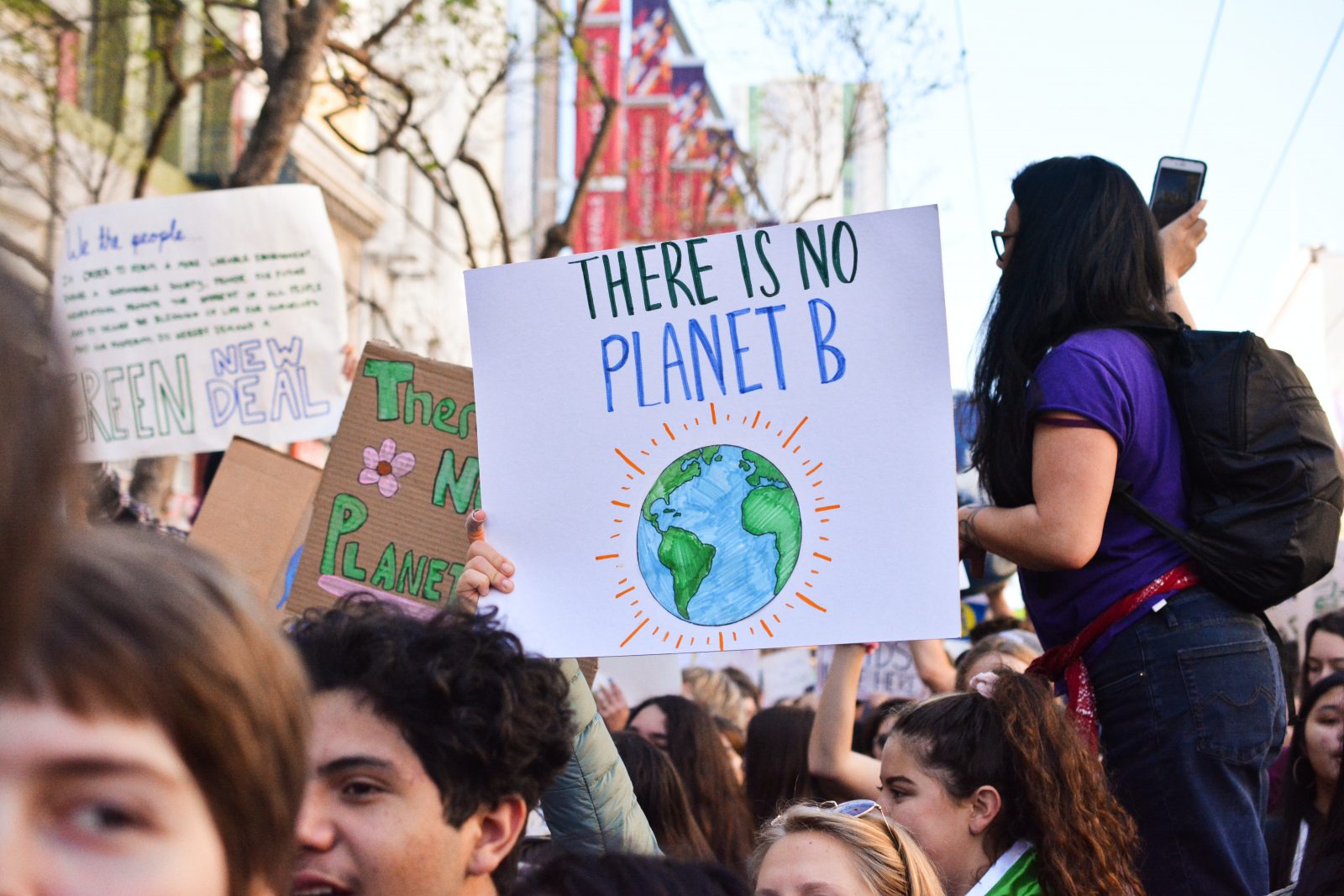
Well, it’s official: the U.S. has withdrawn from the Paris Climate Agreement
Well, it’s official: the U.S. has withdrawn from the Paris Climate Agreement.
By Brandon Mooney
November 23, 2020
Policy Summary:
Well, it’s official: the U.S. has withdrawn from the Paris Climate Agreement. If you understandably missed the big news due to the media crescendo that was the 2020 presidential election, don’t feel too bad. The move was more of a whisper than a statement piece, occurring almost two weeks ago on November 4th. It was expected and due to pass, as Secretary of State Mike Pompeo put through the paperwork that finalized the withdrawal a year ago. Trump had assured his base that he would withdraw from the Paris Agreement during his campaign and followed through, arguing that it was costing American jobs, helping foreign competitors, and limiting domestic industrial potential.
The Paris Agreement has quickly become a partisan lighting rod following the Obama administration’s stamp of approval. But, like many international treaties, it does little in reality. More of a promise ring embellished into sham shackles by conservative pundits, the Paris Agreement requires signatories to set and work towards targets for reducing greenhouse gas emissions. Yet, bending to state sovereignty, there are no methods of enforcement or punishment, with states being free to meet, change, or ignore whatever targets they choose.
Putting aside these criticisms, the Paris Agreement was a landmark moment for the international community in fighting climate change. By signing on, countries at least tacitly admitted that it’s an issue that requires action. It is also a shared commitment, however slight, to reduce emissions and investigate collective ways to mitigate the effects of climate change. It was and still is an important first step towards an international effort.
Analysis:
Putting these facts aside and looking towards the future, it would appear that the incoming Biden administration is willing to and has said that they will rejoin the Paris Agreement. In addition, Biden has touted a plan to combat climate change, aiming to specifically bring about environmental justice and a boom in domestic clean energy. He wants Congress to create enforcement mechanisms to meet as-yet undetermined Paris Agreement targets and set aside federal funding for clean energy subsidies. He has promised to rebuild America’s infrastructure to be climate change resistant, make the U.S. an international model for the environmental movement, and sue polluters and industrial interests. There has also been a call to employ 1 million Americans in the electric car industry and help build over a million so-called “sustainable homes.”
Although all of that is campaign talk at this moment, it is campaign talk that diverges sharply from that of the Trump administration. Trump has personally put a lot of rhetoric behind improving domestic water and air quality, with $38 billion being set aside for clean water infrastructure. He has also rightfully pointed out America’s constantly improving air quality and claims responsibility; while failing to mention that domestic air quality has been improving for decades and that the trend wasn’t overly affected during his presidency. To his credit, Trump has pushed for more federal funding for national parks and state lands, along with calling for ocean clean-ups, but one could argue that his loosening of fracking regulations on state lands, support of the coal and fossil fuel industry at large, and the structural racism that underpins the park systems damages this record. He has notoriously denied climate change and attacked clean energy in speeches. And, relating back to the beginning of this article, withdrew the U.S. from an entirely non-binding, voluntary agreement that in its own piecemeal, half-hearted way attempts to combat greenhouse gas emissions.
As we wait to see what a Biden presidency has in store, I find myself hopeful for improved environmental standards and more importantly, a concerted effort by the government to address what is arguably the greatest existential threat to humanity hand-in-hand with the international community. Although I do have some fears that much of Biden’s tough talk on climate change is hot air and campaign narrative to spin up support among younger voters, I certainly believe that he will bring a welcome improvement over Trump’s unabashed attacks on the environment. I hope he does everything that he has promised and far more, and I would hope that we can all agree that such should be our expectation of the president-to-be.
Engagement Sources:
Joe Biden’s Clean Energy Revolution and Environmental Justice Plan – a quick look-see at Biden’s proposed climate change plan
Paris Climate Agreement Overview – a digestible, quick article about the Paris Agreement
Alliance for Climate Education – a coalition of citizens attempting to educate the wider public on the threat of climate change
Citizen’s Climate Lobby – a centrist lobbying group for climate change solutions that both conservatives and liberals should be able to agree on while both taking issue with certain areas

The American War on Venezuela
By Will Solomon
November 22,2020
Policy Summary:
On April 12, 2002, Hugo Chávez, then President of Venezuela, was briefly removed from power in a military coup. Chávez returned to power two days later, buoyed by popular support, largely from poor and working-class Venezuelans. At the time, American officials denied involvement and largely blamed Chávez for instigating the instability that led to his downfall; only two years later, redacted CIA documents revealed that the United States was aware of the coup well in advance, and likely had some amount of communication with the coup plotters.
To believe otherwise would have been naive; the long history of American involvement in Latin America is common knowledge at this point, and it has continued into the 21st century, if often more subtly. But this is an illustrative recent example, and Venezuela is a particular case.
The oil-rich nation’s recent history was largely defined by the government and policies of Hugo Chávez. Although not without blemishes, Chávez’s early policies had a dramatic ameliorative effect on the poorest members of Venezuelan society: unemployment and poverty dropped significantly during his early tenure, oil exports boomed, and per capita GDP more than doubled. Chávez was an outspoken opponent of US imperialism and aligned Venezuela with other “pink tide” Latin American leaders, like Rafael Correa in Ecuador and Evo Morales in Bolivia, as well as much older US antagonists like Fidel Castro in Cuba.
This is not to say suffering disappeared: violence was and remains high in Venezuela, inflation has been consistently high, and of course, the vast majority of the growth that took place was the result of high oil prices and an entirely oil-dependent economy. Things in the country have gotten dramatically worse since Chávez’s death in 2013 and Maduro’s ascension to power, clearly due in part to mismanagement of the economy by the government.
However, this situation has been dramatically worsened by US sanctions, beginning in 2014. Officially US sanctions have largely been in response to political repression and alleged links to drug trafficking by members of the Venezuelan government. In practice, the US maintains cozy links with far more repressive states than Venezuela, and it is difficult not to see Venezuelan socialism—and its opposition to US hegemony in the Western hemisphere—as a thorn in the side of Democratic and Republican administrations alike.
The noose around Venezuela has been increasingly tightened over the course of the Trump administration. Trump has repeatedly floated a military invasion of Venezuela, and in early 2019—along with numerous other Western nations—recognized Juan Guaido, the de facto leader of the Venezuelan opposition and self-proclaimed president of the country, as the legal president of Venezuela, an essentially unprecedented move.
While Venezuela has (temporarily) moved out of the national spotlight, the efforts to oust the government continue; in March of this year, the US State Department offered a $15 million reward for the capture of the current President of Venezuela, Nicolas Maduro, ostensibly for connections to drug trafficking, and in May of this year, a small and essentially privatized military invasion of Venezuela—with the goal of ousting Maduro—was stopped by the Venezuelan military. Indeed, in the last several days, Trump’s legal team has absurdly alleged that supposedly anti-Trump voting machines were created by Hugo Chávez.
Analysis:
In light of these ongoing destabilization attempts, it is with some nuance that we must consider the situation in Venezuela and the American relationship with that nation. Venezuela, perhaps more so than any other similar foreign nation (like Iran, or North Korea), holds a special status as a pariah in US media. The Venezuelan government is loathed and considered illegitimate by nearly as many Democrats as Republicans; even those towards the more progressive ends of the US electoral system, like Elizabeth Warren, have recognized Guaido as President of Venezuela.
None of this is to absolve the Chávez or Maduro governments from blame. The situation in Venezuela over the last several years has become catastrophic; the best one might say is that they took a bad situation and made it worse. But as Noam Chomsky has said, we ought to apply pressure to the leaders for whom we are responsible, not moralistically condemn foreign actors. With a nation like Venezuela—an oil-rich country with its own long history of American imperial aggression —this is even more true. If the United States had any serious interest in helping the people of Venezuela, sanctions would be lifted, or at least drastically altered, and humanitarian aid would genuinely be offered; the emphasis on regime change would be dropped, and a diplomatic detente would be pursued. We ought to be suspicious of anything short of that.
Resistance Resources
The Center for Economic and Policy Research—“The Center for Economic and Policy Research (CEPR) was established in 1999 to promote democratic debate on the most important economic and social issues that affect people’s lives.”
https://www.codepink.org — “CODEPINK is a women-led grassroots organization working to end U.S. wars and militarism, support peace and human rights initiatives, and redirect our tax dollars into healthcare, education, green jobs and other life-affirming programs.”
Democracy Now!—“Democracy Now! produces a daily, global, independent news hour hosted by award-winning journalists Amy Goodman and Juan González. Our reporting includes breaking daily news headlines and in-depth interviews with people on the front lines of the world’s most pressing issues.”