

JOBS POLICIES, ANALYSIS, AND RESOURCES
Latest Jobs Posts
Law and Order or Overreach? When Soldiers Become Police (Immigration Policy Brief #191)
As summer draws to an end, President Trump is once again utilizing federal military forces for law enforcement, this time in the nation’s capital. In California, Trump cited immigration protests for the use of the National Guard & ultimately the deployment of U.S. Marines. Now we see the President citing crime & the inability of D.C. Democrats to stop it. President Trump’s coast-to-coast use of federal military force in Los Angeles and Washington, D.C. during 2025 highlights the growing tensions between public safety, constitutional boundaries, and presidential power, raising critical questions about the future of American democracy and civil-military relations.
Immigration Report
USRESIST NEWS presents a special report on Immigration Policy. This report entails the immigration policy briefs by our news team over the last 6 months.
The Downsizing of Student Learning Assessments (Education Policy Brief #208)
As the Trump Administration carries out its crusade to reduce the size of government, one of the targets has been the Department of Education (DOE). The DOE is made up of a number of agencies and offices that have been severely impacted by these actions, one of which is the Institute of Education Sciences (IES).
The U.S. Government Turns the Other Cheek to Resolving the Israel–Palestinian Conflict (Foreign Policy Brief #215)
Under the Trump administration, U.S. policy has shifted in tone, language, and substance: Washington has openly embraced Israeli priorities while sidelining Palestinian rights and claims. What had long been presented as a balancing act—security guarantees for Israel paired with a rhetorical commitment to Palestinian statehood—has become a policy that favors one side almost exclusively.
Suggestions for the Democratic 2026 Mid-Term Platform
The 2026 mid-term elections offer the Democratic party an opportunity to regain control of the House and Senate. However, Democrats face an uphill battle challenged by Trump policies, anti-Democratic rhetoric, internal divisions, and political maneuvers such as re-districting. To address these challenges the Democratics need to articulate a political platform with issues that resonate with voters. While the need in every race is to prioritize concerns of local communities, a set of party-wide policy priorities that can be adapted to fit local needs would be helpful.
The Texas and California Re – Districting Fight Explained
At the end of July 2025 President Trump suggested that Texas should re – district (or, redraw) their state congressional map prior to the 2026 general election. Trump’s purpose in suggesting a redraw of the map was to add five more reliably Republican districts in Texas. This would likely give the Texas congressional delegation five additional members of the House of Representatives in Washington. Texas Governor Greg Abbott then called a special session of the Texas State Legislature to consider the issue and issue a new map ahead of the 2026 elections.
Duped by Putin for months on end, Trump must now hold the line on Russia (Foreign Policy Brief #212)
Trump’s egregious pre-election claim that he could “end the war in a day” between Russia and Ukraine has instead resulted in Russia’s huge surge of attacks on Ukraine and an increasing number of civilian deaths. While Trump often tries to deflect his responsibility for handling this war onto past U.S. presidents, he is now in fact the commander in chief and must take action to support an ally in Ukraine, help prevent further carnage, and demonstrate American democratic mettle vis-a-vis a ruthless dictator in Putin.
Peace Prizes and Bombs: The Theater of Trump’s Nobel Pursuit (Foreign Policy Brief #211)
In the summer of 2025, President Donald Trump became the centerpiece of a surreal global spectacle: a campaign to nominate him for the Nobel Peace Prize. Israeli Prime Minister Benjamin Netanyahu lauded Trump for supposedly brokering stability in conflict zones, and Cambodia’s deputy prime minister praised him for his role in a temporary ceasefire with Thailand. The White House eagerly embraced this narrative, touting Trump as a global peacemaker and repeatedly pointing to “six major conflicts” that he allegedly helped resolve.
South Sudan: Oil and Matches (Foreign Policy Brief #210)
South Sudan is the youngest country in the world in terms of its autonomous foundation. Once part of Sudan, it achieved semi-autonomy in 2005 after years of brutal civil war as part of its now northern neighbor. Eventually, under referendum, the people of South Sudan voted for absolute autonomy in 2011, legally breaking away from Sudan.

The Week That Was: Global News in Review (Foreign Policy Brief #209)
Foreign Policy Brief #209 | Abran C | August 1, 2025
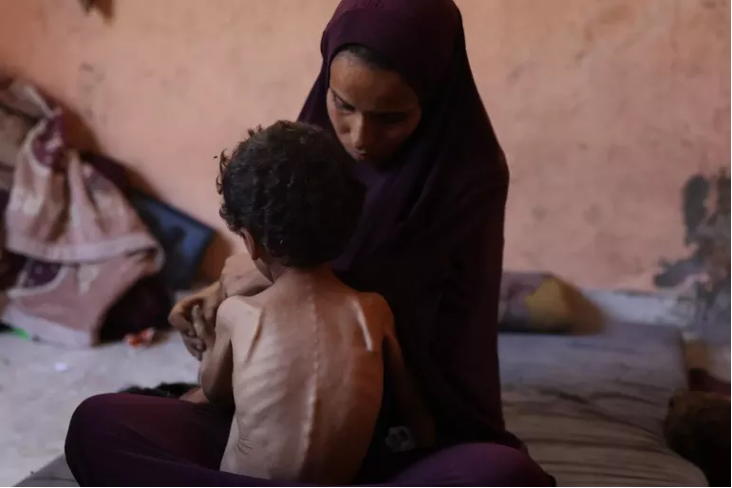
Two-year-old Yazan, severely malnourished, lives in the Shati (Beach) refugee camp in Gaza City. His mother, Naima, says, “We have not had flour or any food assistance for two months.” Yazan sits on a torn piece of foam, his wide eyes heavy with exhaustion, his thin body clearly showing signs of acute hunger. Malnutrition has spread rapidly among children in the Gaza Strip, with rates in Gaza City rising fourfold since February. UNICEF/UNI838255/El Baba
Israel’s blockade and starvation in Gaza
Palestinians in Gaza are now experiencing full blown famine as the total Israeli blockade, which for months made the extreme situation in the strip even worse as no food, water, medicine or fuel has been allowed to make its way into the strip. International humanitarian aid organizations, the UN and a majority of countries around the world acknowledge the forced starvation taking place in Gaza and expressed condemnation towards the Israeli government. Meanwhile various Israeli officials continue to deny the existence of mass starvation, claiming without evidence that Hamas steals and hoards aid and hinges blame on failures by the UN and its officials.
Following the barring of the UN and the criticism of its complete blockade of aid, Israel implemented a new humanitarian aid organization, the Gaza Humanitarian Foundation (GHF) , a controversial organization whose aid delivery model does not follow established humanitarian principles of neutral, independent, impartial, and safe aid distribution. It is estimated that the IDF at GHF sites have killed over 1,000 people at aid distribution sites since it began operations. Israel has also banned fishing and patrols the waters along Gaza’s coast to ensure no boats are launched from the shore. Some of Israel’s most important Western allies, under political pressure from voters appalled by mounting evidence of forced starvation in Gaza, now say that they will recognize a Palestinian state. In response to the international condemnation Israeli PM Netanyahu has promised only “minimal” aid would be allowed to enter. Yet the number of food trucks entering the territory is still well below the minimum needed to feed Palestinians there, much less reverse a famine.
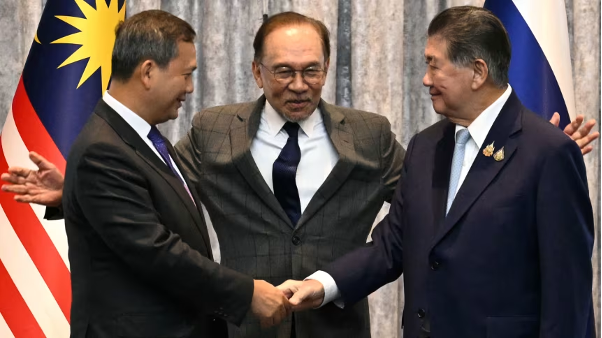
Cambodia’s Prime Minister Hun Manet (L) and Thailand’s acting Prime Minister Phumtham Wechayachai shake hands as Malaysia’s Prime Minister Anwar Ibrahim puts his arms around them after announcing the ceasefire on Monday. Mohd Rasfan/Pool/AFP via Getty Images
Thailand-Cambodia border conflict
Last week fighting flared up between Thailand and Cambodia after a land mine explosion along the border wounded five Thai soldiers. Both sides blamed each other for starting the clashes and both countries recalled their ambassadors. Thailand closed its border crossings with Cambodia, with an exception only for migrant Cambodian workers returning home. At least 35 people have been killed, over 200 injured, and more than 200,000 displaced since the fighting broke out.
Thailand and Cambodia have engaged militarily on and off for decades over un-demarcated areas along their 508-mile border, with ownership of ancient temples central to the disputes. Cambodian Prime Minister Hun Manet and acting Thai PM Phumtham Wechayachai both attended a peace summit in Kuala Lumpur, Malaysia, that was co-organized by China with the backing of the United States. Soon after the meeting Thailand and Cambodia reached a shaky ceasefire deal that was then quickly broken with both sides accusing the other of launching attacks in the other’s territory, though after the quick flare up in attacks both sides have since reaffirmed their commitment to the ceasefire and time will reveal if it holds or falls apart.
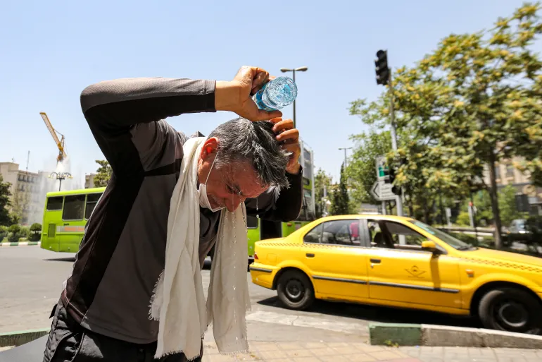
A man attempts to cool off during a heatwave in Iran’s capital Tehran [File: Atta Kenare/AFP]
Iran’s extreme heatwave and water crisis
Published On 20 Jul 2025
Last week Iran experienced its hottest week of the year, according to the national meteorological service, with temperatures exceeding 120 degrees fahrenheit (50c) in some areas. On top of the extreme heat, Iran is in the middle of a serious water crisis. The country has been in drought for five years, with rainfall even lower this year. The minister of energy, Abbas Aliabadi, announced last week that negotiations to import water from Turkmenistan, Afghanistan, Tajikistan and Uzbekistan were underway. The Iranian president, Masoud Pezeshkian, issued a stark warning during a recent cabinet meeting saying, “The water crisis is more serious than what is being discussed today, and if we do not take urgent action now, we will face a situation in the future for which no remedy can be found.”
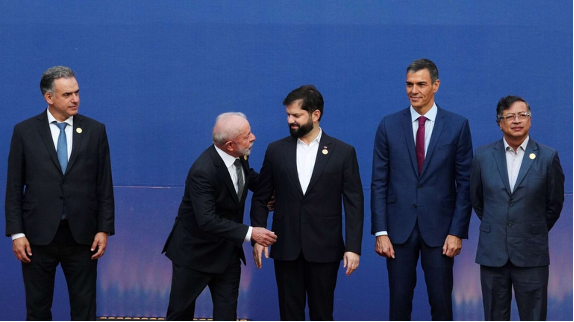
Uruguayan President Yamandu Orsi, Brazilian President Lula da Silva, Chilean President Gabriel Boric, Spanish Prime Minister Pedro Sanchez and Colombian President Gustavo Petro attend the Democracy Always summit, in Santiago, Chile, July 21, 2025 (AP photo by Esteban Felix)
Chile’s Democracy Summit
On July 21, leaders from five countries gathered in Santiago, Chile, with the aim of propelling a global battle against the rising anti-democratic far right. In attendance was Chilean President Gabriel Boric, President Lula da Silva of Brazil, President Gustavo Petro of Colombia, Uruguay’s President Yamandu Orsi and Spanish Prime Minister Pedro Sanchez. Though small, the group has committed to holding further summits and expanding participating countries and bringing forth proposals to be presented to the wider international community at the next UN General Assembly meeting in New York in September. Spain’s PM Sanchez saidat the meeting that, “Our societies face a real threat led by a coalition of interests between oligarchs and the far-right” – a coalition of “hatred and lies that is advancing dangerously.”
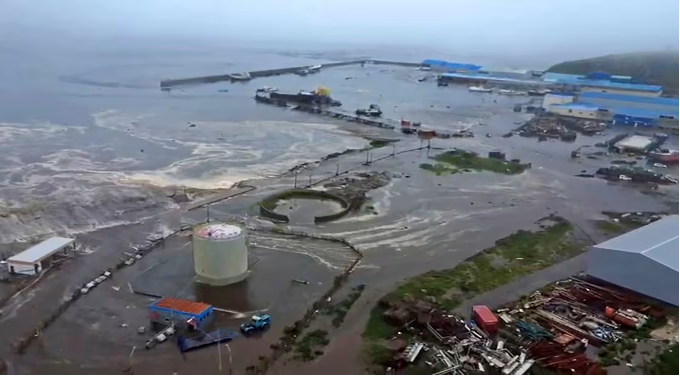
Tsunami-hit Severo-Kurilsk on Paramushir island in Russia’s northern Kuril Islands. Geophysical Service of the Russian Academy of Sciences / AFP via Getty Images
Earthquake in Russia and tsunami alert for nations on the Pacific
A massive magnitude 8.8 earthquake struck last week off Russia’s remote Far East and sparked tsunami warnings and evacuations across the Pacific. Following the main quake dozens of aftershocks of magnitude 5 or greater were recorded. The quake itself was one of the strongest ever recorded and occurred along the Pacific Ring of Fire, the ring of seismic faults around the Pacific Ocean where more than 80% of the world’s largest quakes occur as several tectonic plates meet there. Multiple countries situated in the Pacific or with coasts along the Pacific, from Russia to Tahiti to Chile, braced for impact. While not all earthquakes lead to tsunamis, this one coast of Russia’s Kamchatka Peninsula generated a series of them spreading outward from its epicenter towards other territories. Though thankfully after hours of tension and evacuations no major damage was reported and the waves had limited impact upon reaching land.
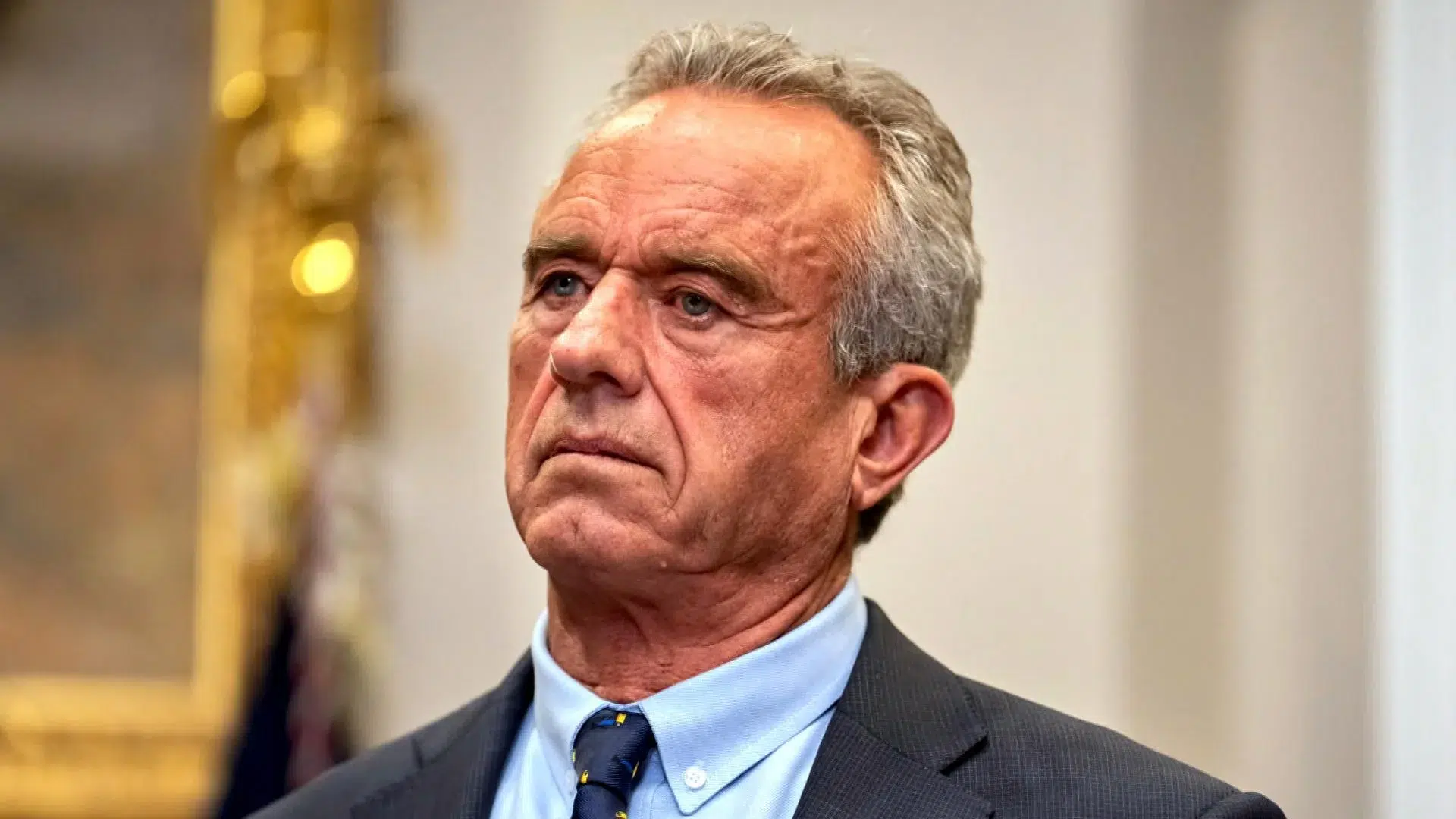
A Review and Analysis of the Health Policies of RFK Jr. (Health & Gender Policy Brief #181)
Health & Gender Policy Brief #181 | Inijah Quadri | July 26, 2025
Robert F. Kennedy Jr., confirmed on February 13, 2025, as U.S. Secretary of Health and Human Services under the Trump administration, launched a sprawling “Make America Healthy Again” (MAHA) agenda targeting chronic illness, food quality, and vaccine policy. His platform positions ultra‑processed foods (UPFs) and environmental toxins as primary drivers of America’s health crisis. Prominent proposals include banning UPFs in schools, nursing homes, and prisons; eliminating synthetic food dyes; restricting SNAP purchases of junk food; and overhauling the quintennial Dietary Guidelines to emphasize whole, minimally processed foods.
On infectious disease, Kennedy has already initiated major shifts: halting recommendations for COVID‑19 vaccines for healthy pregnant individuals and children; firing all 17 members of the CDC’s Advisory Committee on Immunization Practices (ACIP); rescinding CDC flu‑vaccine campaigns aimed at informed messaging; and delaying a COVID‑pill trial.
He has also pursued deep structural changes—cutting roughly 20,000 HHS positions, defunding flood‑prone chronic‑illness research in favor of lifestyle factors, and disrupting federal agencies including NIH, NIOSH, and CDC. His approach has alarmed many public health experts and advocates.
Analysis
Kennedy’s strategy tackles chronic disease by reframing public health priorities. His focus on diet and environmental toxins resonates with progressive calls for confronting corporate influence in the food and chemical sectors. Proponents argue that addressing obesity, diabetes, and mental illness through nutrition and prevention aligns with long‑standing calls for systems‑level reform . His administration has already directed FDA to phase out petroleum‑based dyes and Red 3, signaling potential transformation of national dietary guidelines.
Yet, these efforts are overshadowed by his unsettling embrace of anti‑scientific narratives around vaccines and pharmaceuticals. The May 2025 CDC decision advising healthy pregnant women and children against COVID‑19 vaccination and halting CDC flu‑vaccine outreach may drastically undermine immunization rates. Lawsuits filed by the American Academy of Pediatrics and allied organizations underscore the severity of this pivot. The abrupt dismissal of ACIP raises urgent questions about politicization and trust in federal health agencies.
Kennedy’s institutional shake‑ups further intensify concern. Large‑scale layoffs at CDC, NIH, and NIOSH threaten critical functions in disease surveillance, worker safety, and crisis preparedness . While framed as reallocating resources to “frontline services,” experts warn this may hollow out systemic capacity in emergency response. Public sentiment reflects this worry: Pew surveys indicate 72 % of Democrats disapprove of his performance, including 83 % of liberal Democrats; overall public view skews negatively.
MAHA’s first commission report on childhood chronic illness, released May 22, 2025, raised eyebrows for citing weak or non‑existent studies, a likely consequence of unvetted AI‑generated references—undermining its credibility. While progressive priorities like tighter food regulation and prevention are shared across the left, they are compromised by Kennedy’s anti‑vaccine posture and general dismissal of peer-reviewed science. His strategy appears inconsistent: leveraging public health rhetoric when it suits his food agenda, while sowing doubt when it challenges his ideological commitments.
As a progressive observer, it’s important to critique while acknowledging genuine efforts to tackle corporate influence in health. However, the erosion of immunization norms, the hollowing out of institutions, and reliance on conspiracy‑tinged narratives pose serious threats to collective wellbeing, especially among marginalized communities.
RFK Jr.’s agenda straddles populist ambition and scientific undoing. His MAHA platform reflects admirable aims on diet and corporate malfeasance, but these are overshadowed by alarming rollback of vaccine advocacy, deep federal dismantling, and erosion of evidence-based health systems. We all should support prevention-oriented reforms while vigorously opposing the anti-vaccine turn and institutional weakening, safeguarding both short‑term public health and long‑term trust in science.
Engagement Resources
- Children’s Health Defense Watch (https://www.chdwatch.org/): A progressive watchdog tracking RFK Jr.’s public health commission, especially its anti‑vaccine and AI‑generated content.
- Alliance for Science (https://allianceforscience.org/): Provides tools and research supporting vaccine science and counter‑disinformation; offers resources for advocacy in defense of immunization.
- Center for Science in the Public Interest (https://www.cspinet.org/): Monitors corporate influence on nutrition policy, including food additives and UPFs; offers public commentary avenues.
- Public Health Advocacy Institute (https://phai.org/): Focuses on transparency, public interest regulation, and resisting corporate capture in health policy.
- Community Immunity Project (https://communityimmunity.org/): Grounds local action to sustain vaccination coverage amid shifting federal guidance.
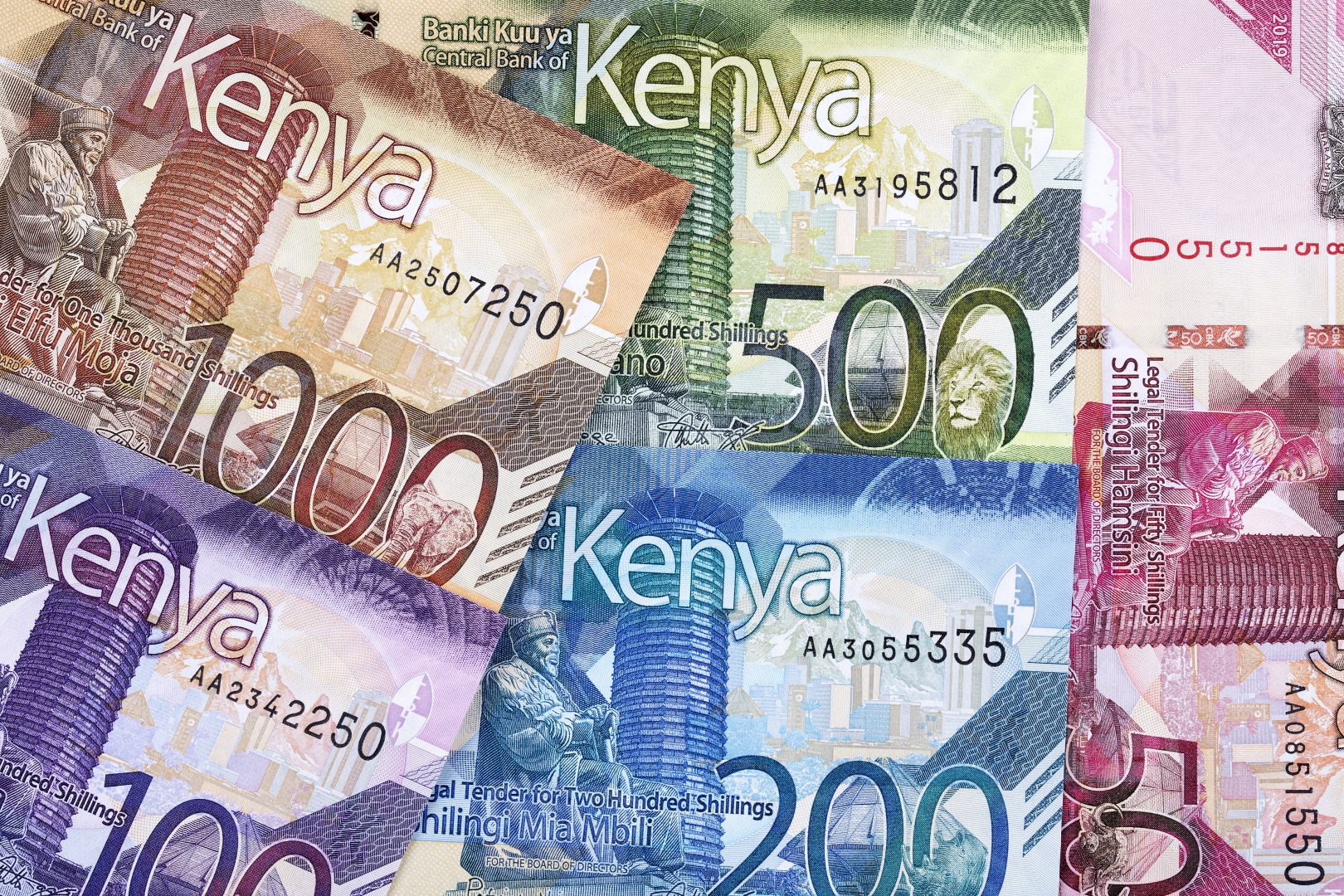
The Kenyan Debt Problem: A Tightrope of Austerity (Foreign Policy Brief #211)
Foreign Policy Brief #211 | Damian DeSola | July 25, 2025
On 19 July 2025, the Kenyan activist Boniface Mwangi was arrested under suspicion of “facilitation of terrorist activities during the June 25, 2025, protests.” He was released on 21 July on a KSh 1m personal bond ($7,723). He was charged not for terrorism, but for possession of two tear gas canisters and a single blank 7.62 bullet. This is not the first time Mwangi was arrested by Kenyan authorities, nor the first time a Kenyan journalist or human rights activist was arrested by federal authorities for similar reasons.
The Kenyan government is becoming increasingly authoritarian as popular protests against increasing costs of living, supposed government corruption, and remembrance of police brutality continually spring up. The President, William Ruto (elected 2022), whose policies much popular ire is focused, publicly ordered police to shoot live rounds at protesters’ legs, while also claiming the protests were “treasonous.” Why are these protests occurring, and why is the government so insecure about its policies? The answers are found in the past ten years of Kenyan financial mismanagement.
How Did We Get Here?
In the early 2010s, Kenya began to execute a strategy to improve its infrastructure in the hopes that these investments would show returns in economic productivity. To do so, Kenya sought foreign investment into projects like railroads and ports. This required in the financialization of Kenyan assets, for example, Kenya famously offered one of its major ports as collateral for a $3.2 billion loan from China to build a railway from Nairobi to Mombasa.
Over time, these investments accumulated into a massive increase in Kenyan public debt. In 2010, the Kenyan public debt to GDP ratio was 36.7%, in 2023 it peaked 73.1%. The annual interest payments on this debt alone cost over 1/3 of Kenya’s yearly revenues. Furthermore, infrastructure built with these investments shows little improvement in economic growth. The lack of returns on these large investments leaves the Kenyan economy financially insecure, with investing nations and organizations asking questions of Kenya’s future solvency.
Teetering at the Edge
To solve their fiscal troubles, the Kenyan government is engaging in austerity policies: put simply, reducing government spending and raising taxes to pay off outstanding debts. Unfortunately for the Kenyan government, and essentially all other nations implementing austerity measures, these policies cause rabid anti-government sentiment among the populace.
In 2024, President Ruto announced an International Monetary Fund-approved finance bill that proposed expansions and increases to various taxes. Over the following week, mass protests occurred across the country, culminating in the storming of Kenya’s Parliament. After the police failed to disperse crowds with tear gas and water cannons, they resorted to live gunfire, resulting in the deaths of five protesters. A day later, President Ruto withdrew the finance bill. This year, Ruto has introduced a new and altered finance bill that is currently being considered.
With poverty rates and cost of living already high, along with a people that already have little trust in government, the Kenyan government faces little public leeway with tax increases. The tax pool is already narrow due to Kenya’s crowding out of public debt, making it difficult for businesses to borrow, spend, and expand; the business environment has pushed out many existing businesses and prevents creation of new businesses. Without taxable industries and an impoverished population, raising money to pay off debt without foreign intervention is implausible. Hence, why the government deem controversial austerity bills that raise taxes absolutely necessary, and why its violent reaction to protestors is increasingly authoritarian.
What is Next?
While the stakes for Kenya’s economy seem dire, there is still potential for recovery. The government has succeeded in slowing expenditure, with a year-on-year increase of only 0.4% from 2023 to 2024. Meanwhile, Kenya is continuing work with the International Monetary Fundand the World Bank for advice and assistance in restructuring and repaying their debts. The government and its people still have a long way to go before escaping their debt trap. May their story be a lesson for other developing nations in the credible risks behind overreliance on loans from rich countries and the folly of spending beyond existing economic capacity.
Engagement Resources
- Learn about Kenya’s humanitarian crisis from the International Rescue Committee
- Donate to help Kenyan youth through Save the Children
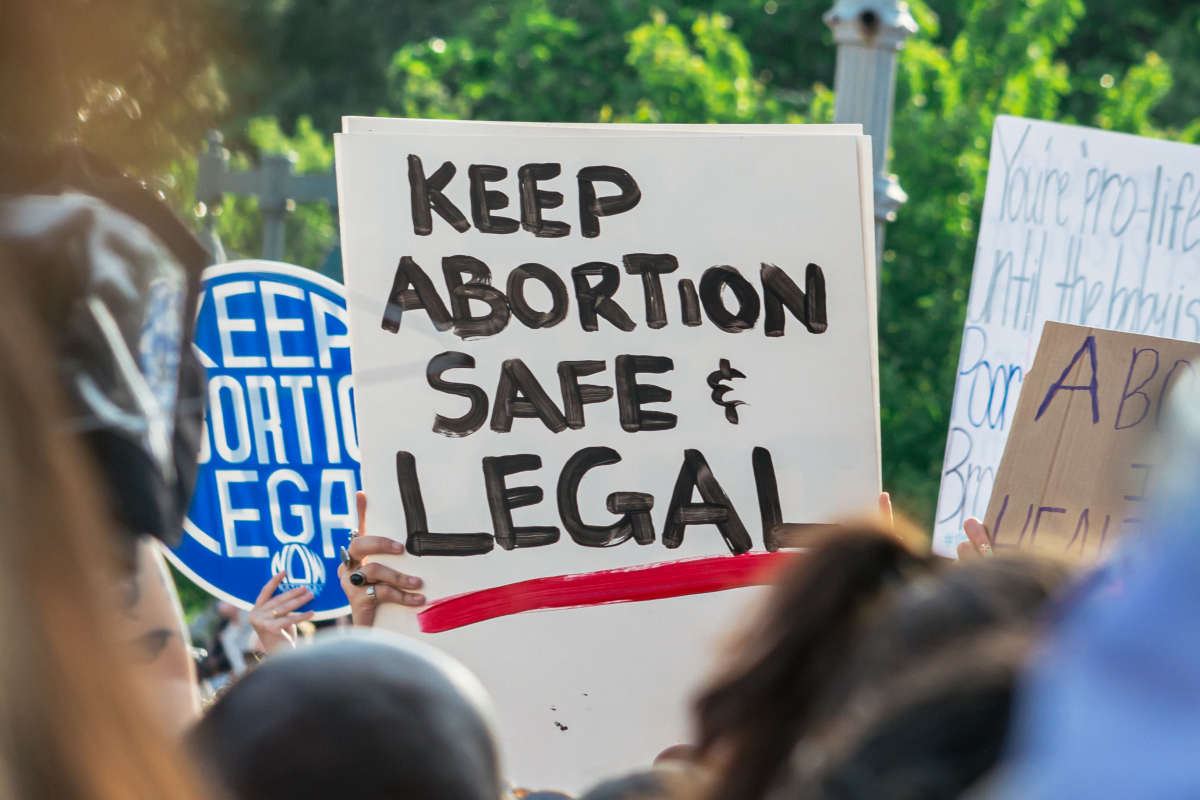
Current Abortion Laws and Their Challenge to Bodily Autonomy (Health & Gender Policy Brief #180)
Health & Gender Policy Brief #180 | Naja Barnes | June 27th, 2025
Before the overturning of Roe v. Wade on June 24th, 2022, concerns were raised about the potential effects and consequences it would have on reproductive rights. After the overturning, those concerns have come into fruition, and have not only affected the rights to an abortion, but also the rights to bodily autonomy.
Analysis
On January 22nd, 1973, abortion was legalized nationwide in the U.S. Supreme Court’s decision, Roe v. Wade. This decision allowed women to have the choice of whether or not to terminate their pregnancy, based on the stages of pregnancy, as part of their constitutional right to privacy. This landmark decision indirectly protected a woman’s right to bodily autonomy by allowing her the ability to have a choice in pregnancy and the protection from and of it. Now, with Roe v. Wade overturned, that decision lies solely upon each state, stripping away the autonomy and decision to continue or not continue the pregnancy. As of 2025, Alabama, Arkansas, Idaho, Indiana, Kentucky, Louisiana, Mississippi, Oklahoma, South Dakota, Tennessee, Texas, and West Virginia have banned abortions with the following exceptions: rape, incest, preserving the life of the pregnant person, and medical emergencies.
Abortion bans are not the only way that bodily autonomy is being attacked post-Roe v. Wade. Other forms of reproductive freedom are being attacked as well, such as contraceptives and the ability to protect oneself from pregnancy. In some states, lawmakers have blocked or opposed legislation aimed at protecting the right to contraception. Texas permits parents the ability to deny their minor children access to birth control.
The use of contraceptives is not only to prevent pregnancy but also to treat medical conditions such as complications due to menstrual cycles.
A recent case in Georgia demonstrates the dystopic consequences and harsh reality of overturning Roe v. Wade in the United States. Adriana Smith, 31, suffered a medical condition and was declared brain-dead on February 19th, 2025. During the time she was declared brain-dead, she was also about nine weeks pregnant. Due to Georgia’s strict abortion law, which bans abortions when a heartbeat is detected, usually around six weeks, Smith had to be kept on life support to allow the fetus to grow. On June 13th, 2025, an emergency C-section was performed at about six months of gestation, and Smith was taken off life support on June 17th. Smith was declared legally dead, so bodily autonomy no longer applied to her, but in situations of a declared brain-dead patient, bodily decisions are usually given to a next of kin or a legally authorized representative. However, due to Georgia’s abortion laws, the family had no choice in the matter.
Conclusion
Roe v. Wade was a historical decision that protected the lives, rights, and bodily autonomy of pregnant persons and those with a uterus. The decision to overturn it has provoked fear, increased mortality rates of infants and pregnant persons, and minimized the right to bodily autonomy in correlation to pregnancy. Not only will the current abortion laws continue to challenge bodily autonomy, but as demonstrated in the Smith case, these laws have the potential to challenge ethical considerations.
Engagement Resources
- Roe v. Wade: Its History and Impact
https://www.plannedparenthood.org/files/3013/9611/5870/Abortion_Roe_History.pdf - Supreme Court Overturns Constitutional Right to Bodily Autonomy in Transgressive Reproductive Rights Decision
https://www.naacpldf.org/press-release/supreme-court-overturns-constitutional-right-to-bodily-autonomy-in-transgressive-reproductive-rights-decision/#:~:text=It%20is%20a%20historic%20loss%20of%20a,draconian%20penalties%20on%20those%20who%20provide%20access - U.S. Abortion Rights by State
https://www.britannica.com/science/US-abortion-rights-by-state-2236312 - A pregnant brain-dead woman in Georgia was kept on life support. Experts say it raises ethical, legal questions
https://abcnews.go.com/Health/pregnant-brain-dead-woman-georgia-life-support-experts/story?id=122963319
An Energy Sector Stuck Between a Lump of Coal and a Hard Place (Environment Policy Brief #181)
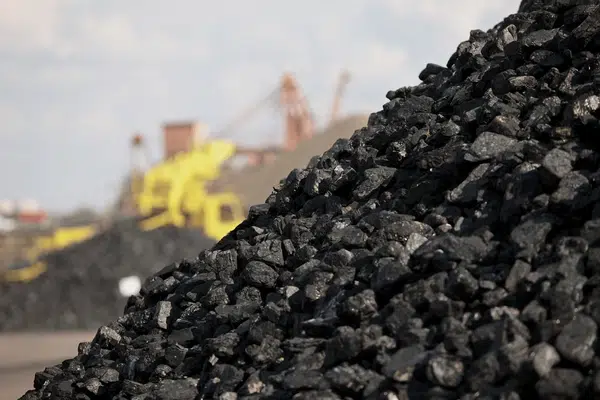
Coal is not going away anytime soon; it remains the dominant source of the world’s electricity. 15% of U.S. electricity is fueled by coal. Globally, it is forecasted that carbon in the form of coal will still contribute 22% of power generation by 2040. In China and India, the reliance upon coal is significantly higher, almost double that of the U.S. and Europe. And for good reasons: it is the most economical, stable, and reliable power source.
The U.S. government under Donald Trump has distanced itself from all international obligations to reduce carbon sources of energy, emphasizing the economic benefits and need for self-reliance that coal (and petroleum, natural gas) meets. Solar and wind are rejected because they are “ugly as hell” and “unsightly garbage” according to President Trump. This characterization stands in contrast to what he refers to as “clean, beautiful coal.” Trump endorses the increased use of nuclear power as well.
At the policy level, the administration has rolled out an America First Energy Agenda. Thus far, this policy has translated into funding (nearly $725 million) the restoration of dilapidated communities that had once been economically coal-driven. Among its principal aims: to bring older, abandoned mines back into production. Led by the Department of the Interior, there are monies to reduce mining hazards and ensure clean water. All this because coal is viewed as a stable provider of “baseload” energy.
Coal, in the form of U.S. exports, is a major source of revenue and as such can be used as a political lever. In particular, China and India purchase large quantities of thermal coal from the U.S. India is an outsized buyer and is dependent on coal for energy intensive industries like brick making. In fact, more thermal coal is exported from the U.S. to Asia than to Europe. Over half of China’s energy demand is met with coal. Metallurgical coal is the raw material for coke, necessary for steel production. Both Egypt and Morocco also receive significant U.S. coal shipments.
As expected, the administration’s First Energy agenda is now the centerpiece of the Department of Energy activities. They are looking to maintain and grow coal powered plants across the country, even when the operators of those plants find it economically disadvantageous to keep them running. The department recently issued an “emergency order” to keep Michigan’s J.H. Campbell coal plant in operation after the plant owner’s intention to close it. That action has brought together eight regional utilities (Midcontinent Independent System Operators – MISO) in a legal fight against the DOE. “This expansive use of emergency powers sets a troubling precedent,” MISO insists, “enabling intervention in routine, state-approved planning decisions without an actual crisis and risks establishing its use to circumvent normal utility, RTO, and state processes, and likely exposes ratepayers to costs that should not be borne.” As with other Trump directives, this one stretches the boundaries of executive power, “eroding the statutory balance between federal and state authority.”
The electric utility industry is carefully treading the line between currying White House favor while fulfilling its obligations to rate payers. Georgia Power CEO Kim Greene’s remarks reflect these often-oppositional forces: “As our state continues to grow and thrive, the approval of this comprehensive plan helps to ensure we have the resources and programs we need to reliably and economically meet the future energy needs of our customers.” In her case, the “plan” referenced is forecasting greatly increased energy demand going forward, mainly due to regional data center growth, and will include the continued operation of two coal plants that had been earmarked for closure.
The energy demand side will accelerate because of AI. (The average AI request consumes roughly ten times the energy of a common google search request). Huge new data centers are being designed and built across the country. In northern Virginia, an epicenter of data center construction, the additional energy required is equivalent to what is needed to power 6 million new homes. Renewable energy sources cannot meet that requirement. That fact has made West Virginia and its coal lobby excited, as is Talen Energy Corporation who plan to continue operating a couple of coal plants outside of Baltimore to help ensure sufficient supply for data center demands. (These plants had been ordered to close by 2028 in a federal court action brought by Sierra Club).
Analysis
The complexities involved in curtailing coal are highlighted by Searles Valley Minerals, a mining and processing plant that produces the raw materials for the manufacture of wind turbine blades, solar panels, pesticides and other products. The production process requires super high temperatures, specifications that cannot currently be met with renewable energy sources. About one half of the world’s energy is used for the heat required in industrial manufacturing and residential heating.
And there are new coal mines to be opened. Wyoming had a ribbon-cutting for the Brook Mine Carbon Ore Rare Earth project on July 11th, their first new coal mine in five decades. Wyoming’s Energy Secretary, Chris Wright, said all the right things: “This is just the beginning of an administration-wide effort to unleash the American mineral development needed to secure U.S. energy dominance, fuel economic growth, and safeguard our national security.” The state of Wyoming pitched-in $155 million for the project.
“I have a hard time understanding how people could think that solar panels are such a desecration of the land while mountaintop mining or drilling for natural gas and crude oil is not,” says Severin Borenstein, University of California at Berkeley’s Haas School of Business Energy Institute, reflecting the common-sense confusion of many. Communities do not want coal-fired power plants in their backyards, and not just for aesthetic reasons. While the Biden administration had set new carbon capture and storage regulations for coal-fired power plants, the EPA under Trump has proposed repealing all greenhouse gas emission standards (and carbon capture requirements) for carbon-based power plants.
Even though global dependence upon coal is expected to drop by 1.7 percent over the next year, coal burning in the U.S. will go up. Demand for energy is skyrocketing; in Virginia alone, there are nearly 300 data centers with Amazon’s $35 billion investment leading the growth trend. A new data center typically requires 50 times the power of a similarly sized office building. For the time being, renewables are not going to reliably support that demand.
If we add-in natural gas and oil as carbon sources, the total fossil fuel sources of energy in the U.S. are over 80%. Renewables would have to increase by 600% to replace our use of carbon. And this increase is just to replace carbon; we would still use hydropower and nuclear. America’s largest wind turbine farm is currently under construction off the Virginia coast and at 2,600 megawatts will provide the power equivalent to two nuclear reactors. Other large wind projects have been stalled or are on hold due to cost overruns and supply chain issues. Most wind energy investment is taking place in Europe.
Rather than curtail dirty coal, investment is following federal policies to increase coal use with regulatory barriers coming down and leases on coal tracts going up. DOE is also investing in coal technology modernization, going so far as to invoke emergency powers to keep toxic, mothballed coal plants open for burning. Costs to utilities to keep those plants running though, are exceedingly high versus alternatives such as natural gas and will require federal or state monetary support.
Engagement Resources:
- U.S. White House: Executive Order, Unleashing American Energy: https://www.whitehouse.gov/presidential-actions/2025/01/unleashing-american-energy/
- MIT Technology Review: https://www.technologyreview.com/
- Power Magazine: https://www.powermag.com/
TikTok vs. U.S. Government: The Battle Over Data Privacy and Platform Ownership (Technology Policy Brief #153)
The clash between TikTok and the U.S. government centers on national security and data privacy concerns tied to its Chinese parent company, ByteDance. TikTok, with around 170 million American users, faces a federal mandate under the Protecting Americans from Foreign Adversary Controlled Applications Act (PAFACA), signed April 24, 2024, requiring it to divest its U.S. operations or face a nationwide ban effective January 19, 2025. The Supreme Court upheld PAFACA in TikTok v. Garland on January 17, 2025, finding it constitutional and not in violation of First Amendment rights.
However, enforcement has been delayed: President Trump, upon re‐taking office January 20, 2025, issued multiple executive orders extending the divest‐or‐ban deadline by successive 75‑day periods—first to April 5, then June 19, and most recently to September 17, 2025. Meanwhile, ByteDance has been quietly developing a U.S.‑only version of TikTok (internally “M2”), with separate infrastructure and an American data repository, aiming for a September 5 launch to comply with legislative demands.
This standoff also underscores broader concerns: U.S. lawmakers, particularly from the national security side, argue the Chinese state could potentially access U.S. user data, while civil liberties advocates claim the policy disproportionately targets one platform and that comprehensive federal privacy legislation would be a far more equitable response.
Analysis
The TikTok controversy exemplifies the tension between national security prerogatives, data sovereignty, and democratic values. TikTok’s audience skews young, with the platform playing a growing role in cultural and political discourse—from pro-Palestine hashtags to election-related content. For many, TikTok symbolizes one of the last grassroots channels not dominated by older media institutions or big tech.
Proponents of the ban, primarily Republicans, assert that ByteDance could be compelled by Beijing to hand over U.S. user data or manipulate content to serve China’s interests. Despite TikTok’s repeated assurances—including storing American data in U.S. and Singaporean servers, and separating its operations from Beijing oversight—skepticism remains.
Legal developments have taken center stage. Congress passed PAFACA with significant bipartisan support, reflecting bipartisan anxiety over Chinese tech. TikTok challenged the law through judicial channels, but the D.C. Circuit and the Supreme Court affirmed its constitutionality, prioritizing national security concerns over free speech arguments.
Yet enforcement has been indefinitely postponed by executive decree—raising alarm about the erosion of Congressional authority and rule of law. Brookings Institution notes this precedent grants extraordinary discretion to the president, permitting the selective enforcement of laws irrespective of legislative or judicial mandates.
From the platform’s perspective, Project M2 and the U.S.-only TikTok app may be a technically viable workaround: American users, data, and algorithms will be separated from ByteDance’s global systems. But China’s possible resistance complicates matters—and leaves open questions about whether true independence has been achieved.
Meanwhile, critics argue this unilateral focus on TikTok is misguided. Al Jazeera quoted experts stating that banning TikTok won’t shield Americans from data harvesting by other platforms. True protection requires robust federal privacy legislation enforcing standards across all platforms.
The political dimensions can’t be ignored. Many on the left see TikTok as a vital platform for youth expression and alternative media—not a national security threat. The current campaign to block it appears, in part, as part of a “culture war” narrative: if enforced, the ban would effectively censor millions of voices and deepen distrust among younger Americans.
However, it is worth noting that European countries and EU institutions have banned TikTok on government-issued devices due to cybersecurity and data privacy concerns. These include France, Belgium, the Netherlands, Denmark, Ireland, and others. The European Commission, Parliament, and Council have also enforced similar bans for staff, and the EU has launched formal proceedings against TikTok under the Digital Services Act. A broader restriction hasn’t been ruled out.
Engagement Resources
- Center for Digital Democracy (https://www.democraticmedia.org): Advocates for strong privacy protections and transparency in digital platforms, and highlights the democratic value of community‐led media.
- Electronic Frontier Foundation (https://www.eff.org): Defends civil liberties in the digital age, including opposing blanket bans that undermine freedom of expression.
- American Civil Liberties Union (https://www.aclu.org): Offers legal research and action on First Amendment rights in tech policy, including active challenges to executive overreach.
- Future of Privacy Forum (https://fpf.org): Non‐partisan think tank promoting balanced privacy standards and federal data protection laws that do not single out specific tech companies.
- Tech Inquiry Project (https://techinquiry.org): Focuses on social justice in technology, supporting equitable reforms that center marginalized users rather than coercive bans.
- U.S. Public Interest Research Group (https://uspirg.org): Mobilizes grassroots advocacy for comprehensive privacy legislation in Congress to protect consumers broadly.
Profits and Protests at Palantir (Technology Policy Brief #152)
Palantir Technologies’ data tracking software and Artificial Intelligence tools are playing a huge role in the ICE sweeps plaguing communities throughout the US, sparking a national day of protests and concerns over a revolving door between the company and key government agencies. The contracts Palantir holds with the US government are largely responsible for soaring profits at the company, so far the second-best-performing stock in the S&P 500 in 2025.
Analysis
Since its founding by Alex Karp and billionaire investor Peter Thiel in 2003, Palantir Technologies has grown into a $36 billion company, largely thanks to its biggest and best client, the US Government. Its software and data analytics tools are used by federal law enforcement agencies to track and arrest people, by the Defense Department to analyze drone footage, by ICE agents to find and deport immigrants, and by local governments like the Los Angeles Police Department, which uses Palantir’s “predictive policing” tool to fight crime.
Palantir’s contracts with military and law enforcement agencies involve analyzing social media profiles, personal information, and physical characteristics to identify, arrest, and prosecute immigrants and others in the crosshairs of the police or the government. Their data-analyzing software uses AI to pull information from a multitude of sources and compiles it into charts, tables, and heat maps.
Palantir’s products can access just about anything: tax returns, employment records, records from educational institutions, immigration status, information on spouses, children, and siblings. After doing so, it uses AI to predict a person’s movements and patterns, making the work of ICE agents much easier.
These activities have aroused public anger for years. In 2019, demonstrators protested outside of Palantir’s Palo Alto offices, shouting, “Immigrants are welcome here, time to cancel Palantir.” That same year, over 200 employees sent a letter to Mr. Karp complaining of the use of the company’s software by ICE agents, a $49 million contract at the time.
Now, with the company’s software a cornerstone of the immigration crackdowns initiated by the Trump administration, protests are growing. As are profits. Not just for Palantir itself, but for the architect of Trump’s draconian immigration enforcement campaign, Stephen Miller, who has disclosed ownership of up to a quarter million dollars of stock in Palantir.
Others in government are getting in on the act. Congressman James Comer (R-Kentucky), Chair of the House Oversight Committee, from Kentucky bought $15,000 worth of stock in Palantir on the day Trump was inaugurated. Since then, the company’s stock has risen 73%, largely due to its booming business with the US government. In just one of many deals this year, Palantir inked an AI contract with the Department of Defense worth $795 million contract, adding to the previous $480 million contract it entered last year
According to the Tech Transparency project, Palantir has also been “laying the groundwork for a much deeper infiltration of Washington, building a sprawling influence network designed to secure government business for years to come.” That network is being built through a revolving door with the Trump administration; many Palantir executives have been given government positions, and many former government officials now work at Palantir.
Activists are fighting back. Thirteen former employees publicly condemned the company’s work with the Trump administration after it inked a $30 million deal with Immigration and Customs Enforcement to provide “near real-time visibility” into the movement of migrants in the U.S.
Six protestors who were arrested in front of Palantir’s New York City offices recently were demonstrating to bring attention to the firm’s work on targeting immigrants for deportation. The protest was organized by Planet Over Profit, a climate justice group that also works to challenge systemic inequality, with support from the immigrant rights group Mijente.
In Los Angeles, protesters converged at Palantir’s offices in June, occupying the lobby for a short time. More than 100 showed up at the company’s Palo Alto offices to decry the company as part of the “big brother” surveillance state, reportedly interrupting a recruiting event.
Many of these protests also reference the use of Palantir’s technology by the Israeli Defense Forces, which use it extensively to attack people in the ongoing attacks in the Gaza Strip. Protests are frequent at Palantir’s Denver headquarters, including one on May 15 by pro-Palestine groups marking Nabka Day, the day of the catastrophic displacement of Palestinians in 1948.
A coordinated national day of action against Palantir was held on July 14, with protests in Denver, Palo Alto, Seattle, Washington, D.C., and New York City. Activists interviewed on Democracy Now criticized the company’s increasing reach both here in the US and in Israel, saying, “our governments and Palantir should not be working side by side.” Unfortunately, they are getting closer and closer all the time.
Engagement Resources
Inside Palantir’s Expanding Influence Operation, February 7, 2025
https://www.techtransparencyproject.org/articles/inside-palantirs-expanding-influence-operation
Stephen Miller’s Financial Stake in ICE Contractor Palantir, Nick Schwellenbach, June 24, 2025, https://www.pogo.org/investigations/stephen-miller-conflicts-of-interest
“Purge Palantir”: Day of Action Protests Firm’s Role in Gov’t Surveillance, ICE & Genocide in Gaza, July 15, 2025, https://www.democracynow.org/2025/7/15/doge_20

Current Efforts to Change State Education Curricula (Education Policy Brief #205)
Recent changes to state laws and policies reflect conservative efforts to remove what they consider “divisive concepts” regarding race and gender. South Carolina, Alabama, Louisiana, and Utah have now joined 21 other states attempting to modify or eliminate curricula considered by many on the right to promote progressive concepts they say have direct, negative impacts on students.
Many of these changes reflect the controversial mission of the ultra-conservative Project 2025, as well as the backlash to fears over the implications of the highly criticized 1619 Project and its Critical Race Theory lesson content. Eighteen states have actually banned any practices based on the latter.
And even though a colleague letter sent out by the Department of Education that directed educational institutions to prevent discrimination in the treatment of students as well as limit its exploration as a subject matter was rescinded, the directive to affect whatever curricular changes are needed to affect that call for changes is now out there, loud and clear.
Following contentious episodes of confrontation at state and local levels, the extremist fervor has given way to state legislation, even if only in tones that have softened the language on discrimination as a topic. Soft or not, the implications for the reduction of civil rights and reduced freedom to address differences remain.
That this virtual bell curve of conservative activity may have appeased even those more towards the center of the spectrum, what actually ends up being taught, and how, is still a question.
Policy Analysis
Since the federal government is prohibited from dictating requirements and curriculum, it is generally up to the states to develop education standards and for the local educational agencies to provide curricula that support those standards.
While states’ curricula changes are commonplace, it’s not to say that any changes take place all at once. Curricula are always in a state of revision based on cycles that carry over from year to year, and often longer. The most visible changes are usually to student learning materials since it’s what parents see, and even then it’s not unusual for textbooks to take up to seven years to be adopted. Concepts themselves, and thus modifications to them, are traditionally less accessible, and only now are available online for all to monitor. That’s if someone knows how to access them.
The battle to make changes to a perceived liberal leaning education has been taking place for decades, ever since the passing of Brown v. Board of Education. Over the years, conservative reactions to desegregation have increasingly called for “rescuing” students from a perceived attack on family values, social norms, and historical shaming.
The last few years have been particularly divisive and many conservatives have been pushing hard for curricula based on newly adopted populist methodologies, such as classical education (think, liberal arts), the science of reading (methodology based on select data), and depoliticization of science’s hidden curriculum. Never mind that these ideas are tenets that have been at the core of educational debate for decades.
The most obvious example is Social Studies. With the agenda of Project 2025 in motion, there is ample evidence that there is a concern with lessons that are being construed as liberal attempts to place blame on racist actions or anything that might be an attempt to indoctrinate students on racial matters throughout history:
- In Louisiana, the Freedom Framework is being taught to promote American exceptionalism.
- Oklahoma’s HB1775 prohibits the discussion of topics related to discriminatory concepts.
- Texas proscribes titles related to African American History and Native American history(e.g. William Still’s Underground Railroad
Records, the Indian Removal Act) but it strictly forbids any lessons related to the 1619 Project.
It’s not as if dark moments in America’s past are non-existent. Georgia’s Social Studies curriculum, for example, mentions slavery in Grades 4, 6, and 8 and also in US History, which is taught at the secondary level. Yet, critics believe the material is misleading and inaccurate.
Inclusion of racial issues is largely supported by the public. In a study by Education Week, 85% total respondents (and 71% of Republicans) believe that it is vital for a democracy to have its citizens learn about the history of racism and slavery in the country and that it should be taught in K- 12 schools. Examination of curricula seems to reflect that, but under new laws and policy, teachers are concerned that speaking out against the evils of it or merely giving opinions on the topic might be cause for reprimand, or worse.
Some of the irony about the appearance of returning to curricula that soft peddles hard issues seems contradictory and counterproductive. To create a hype over protecting feelings of students who are uncomfortable with topics regarding race and gender, only then to turn around and reinforce a thin anti-discrimination stance, has more to do with the opportunistic gains of political power.
One reason it’s vital to maintain the public scrutiny on law and policy making is because without doing so institutionalizes unacceptable social practices such as discrimination. This does not stop politicians from giving the appearance of combating discrimination by declaring its evils and then repackaging systemic discrimination to conceal it. Exploiting K-12 curricula is a powerful means to achieve this end.
Change in education is, and has been, necessary and inevitable. But unless it includes an emphasis on an open and honest approach to civil rights, independent inquiry, and freedom of speech, the irreconcilable debate over the closing or arresting of the American mind will simply continue.
Engagement Resources
- The mission of CivxNow is to promote the accurate and responsible teaching of social studies with the aim of strengthening and sustaining democracy. For more information on current legislative action in each state, click here.
- The Leadership Conference on Civil and Human Rights advocates for the safe and fair education of all students through action within schools and at the state and local levels.
Nigeria’s Resource Curse (Foreign Policy Brief #209)
Foreign Policy Brief #209 | Damian DeSola | July 11, 2025
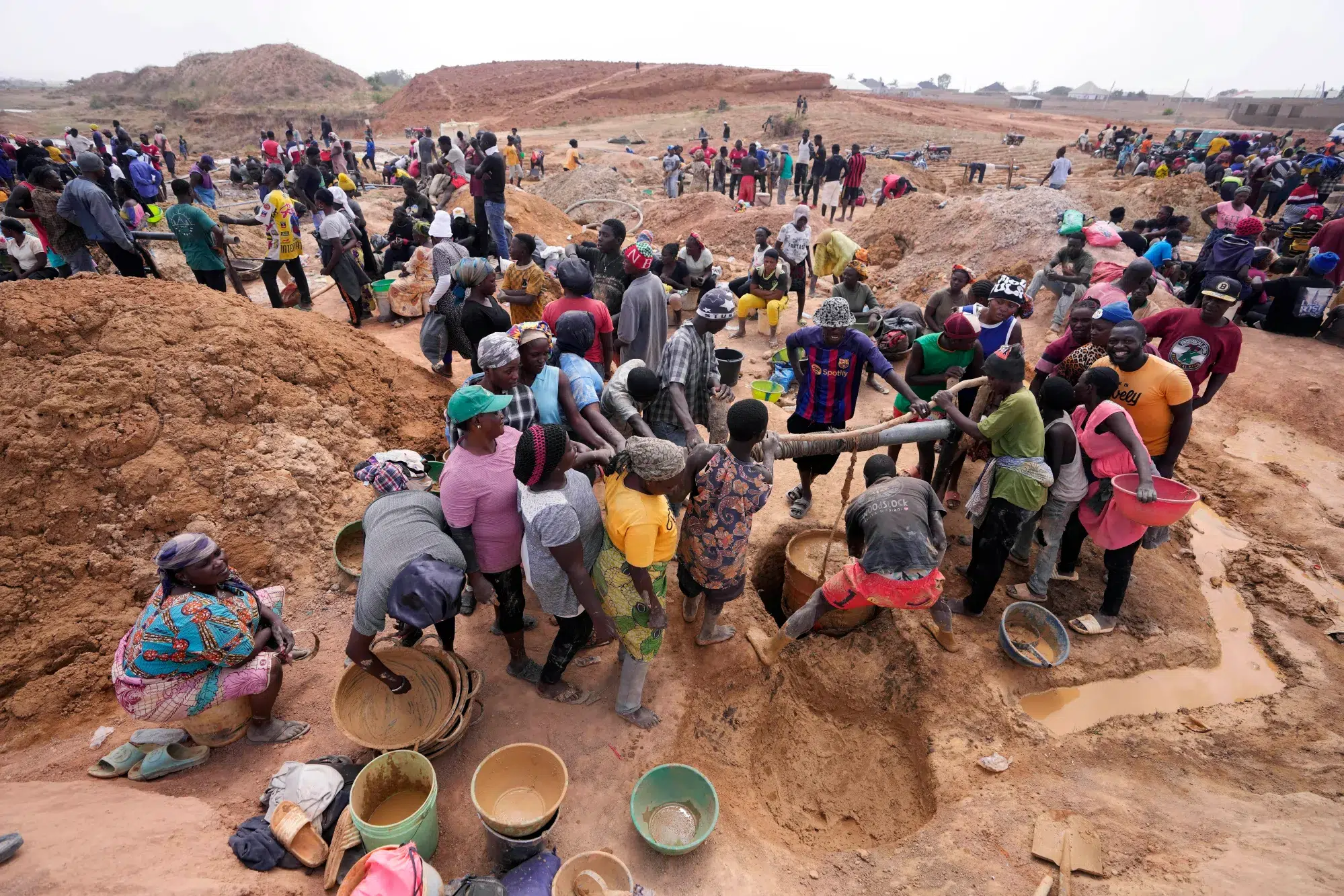
Those who have a casual understanding of history or geopolitics may react agreeably to the concept: the greater abundance of natural resources a country has the more well-off the people of that country will be. Unfortunately, for Nigerians, the opposite is their reality. The abundance of oil in Nigeria, along with their colonial history, has resulted in a “resource curse,” a theory posited by contemporary international relations scholars. Nigeria now finds its economy reliant on the export of oil and renting their oil fields to multinational corporations (MNCs), leading to a commodity industry based on corruption and wealth centralization.
Nigeria’s Resource Curse
The resource curse, a theory and term coined by economics Professor Richard Auty, says that certain circumstances of international trade, history, and industrial cultural development related to a particular abundant resource, cause a country to face an economic situation dependent on the export of this resource; conflicts, corruption, international exploitation, and an underdeveloped economy occur as a result. The benefits of the extracted resource are transferred away from those whose land it is mined from, and into the hands of the hosting government and the MNCs that handle its extraction, transportation, and refinement. The case of the resource curse is found across the continent of Africa that was once entirely an economic playground for European colonists. In short, it is a form of corporate neo-colonialism.
In the early 1800s, Britain began projecting power into Nigeria, but it was not until nearly a century later in 1914 that the Colony and Protectorate of Nigeria formed by the British. The colony was run by Nigerian chiefs that were given instructions by the British government. In 1956, commercial quantities of crude oil were discovered by European engineers. Soon after the discovery, Shell, Mobile, Texaco, and many of other Western oil companies began extraction operations in Nigeria.
As the industry developed, the Nigerian National Oil Corporation (NNOC) was established in 1971 (later reorganized into the Nigerian National Petroleum Corporation) as a state-owned oil company; simultaneously, it joined the Organization of the Petroleum Exporting Countries(OPEC). The NNOC and subsequent NNPC enabled the Nigerian government to participate in the oil market with oil Multi-National Corporations (MNCs). The government has historically “mismanaged” the revenues gained by the NNOC/NNPC, meanwhile receiving royalties from oil MNCs. This money has shown no signs of trickling down and remains in the hands of the Nigerian government leaders.
According to a World Bank Poverty and Equity Brief, approximately 40.1% of Nigerians livedbelow the National Poverty Line, with around 30.9% living below the International Poverty Line ($2.15/day). Further, 90.8% of Nigerians were living below the Upper Middle Income Poverty Line ($6.85/day) as of the most recent World Bank data (2018). This massive poverty rate displays the magnitude of wealth disparity when considering that Nigeria’s 2018 GDP was $421.74B.
As a result of this wealth disparity and resource disenfranchisement, local populations, primarily in the Niger River Delta where most of the oil resides, have shown high rates of militancy. Starting in 2003, regional militant groups organized in reaction to increasing anger over the paradoxical nature of their economic status. A UN Development Program report from 2006 briefly maps the rise in conflicts, highlighting attacks on oil companies’ infrastructure (e.g. Shell, Agip Oil). Violence subsided after 2009, resurged in 2015, calmed again, and has recently escalated due to the Nigerian president’s announcement of a state of emergency over oil pipeline vandalism.
The singular focus on oil production and export caused other industries to wither. While having major deposits of gold, commercially viable timber, and a once massive agriculture industry, all these potentially diversifying economic advantages find little room to compete. The Nigerian economy has found itself in an endless spiral due to its oil resource curse.
A Path Towards Reform
Due to external and internal factors on the oil market including the COVID-19 pandemic, the Russo-Ukrainian War, and oil theft, the production of crude oil in Nigeria has not recovered to pre-pandemic levels. In response, administration of President Bola Tinubu, elected in 2023, seeks aggressive reform to Nigeria’s economy.
Tinubu’s first act was to remove the oil subsidy that cost the government nearly $40M daily to keep the price of oil artificially low. The sudden removal caused a spike in transportation costs and subsequent scrambles for fuel. This reform also caused inflation to skyrocket, pushing the cost-of-living crisis to new levels.
Meanwhile, the International Monetary Fund points out the that the removal of the subsidy, alongside the government’s liberalization of foreign exchange, prevention of fiscal debt financing, and strengthened revenue collection as positive policies that show promise for future economic strength. Nigeria has also been upgraded by financial rating agencies, a sign of potential recovery.
President Tinubu justifies the subsidy removal by angling the act as short-term pain that would lead to a positive future. The president defended the reforms by saying, “Our economy has been in desperate need of reform for decades. It has been unbalanced because it was built on the flawed foundation of over-reliance on revenues from the exploitation of oil.” Meanwhile, a local taxi driver is quoted saying, “The situation is unbearable. As a family man, the already unfriendly economy has been worsened by this removal of fuel subsidy. I have had to suspend my taxi operations and rely on divine intervention.”
Due to these reforms, the Nigerian economy has struggled to cope, signified by the nearly 61% drop in GDP from 2022 to 2024 (approx. $289.6B). The World Bank responded to these attempts at reform and their subsequent economic impacts with the approval of multiple loansto support Nigeria’s economy. These loans, each amounting in the low billions and accumulate to over 15 billion in total, go towards education, nutrition, energy infrastructure, shoring up oil revenue losses, tax reforms, and overall poverty reduction.
Whether or not these reforms are successful at breaking the oil resource curse remains to be seen. However, attempts at reform are a step in the right direction away from the overtly corrupt system of wealth extraction.
Engagement Resources
The Art of the Heel: The Deadly Effects of Trump Abandoning the Iran Nuclear Deal (Foreign Policy Brief #208)
Foreign Policy Brief #208 | Nicholas Gordon | July 7, 2025
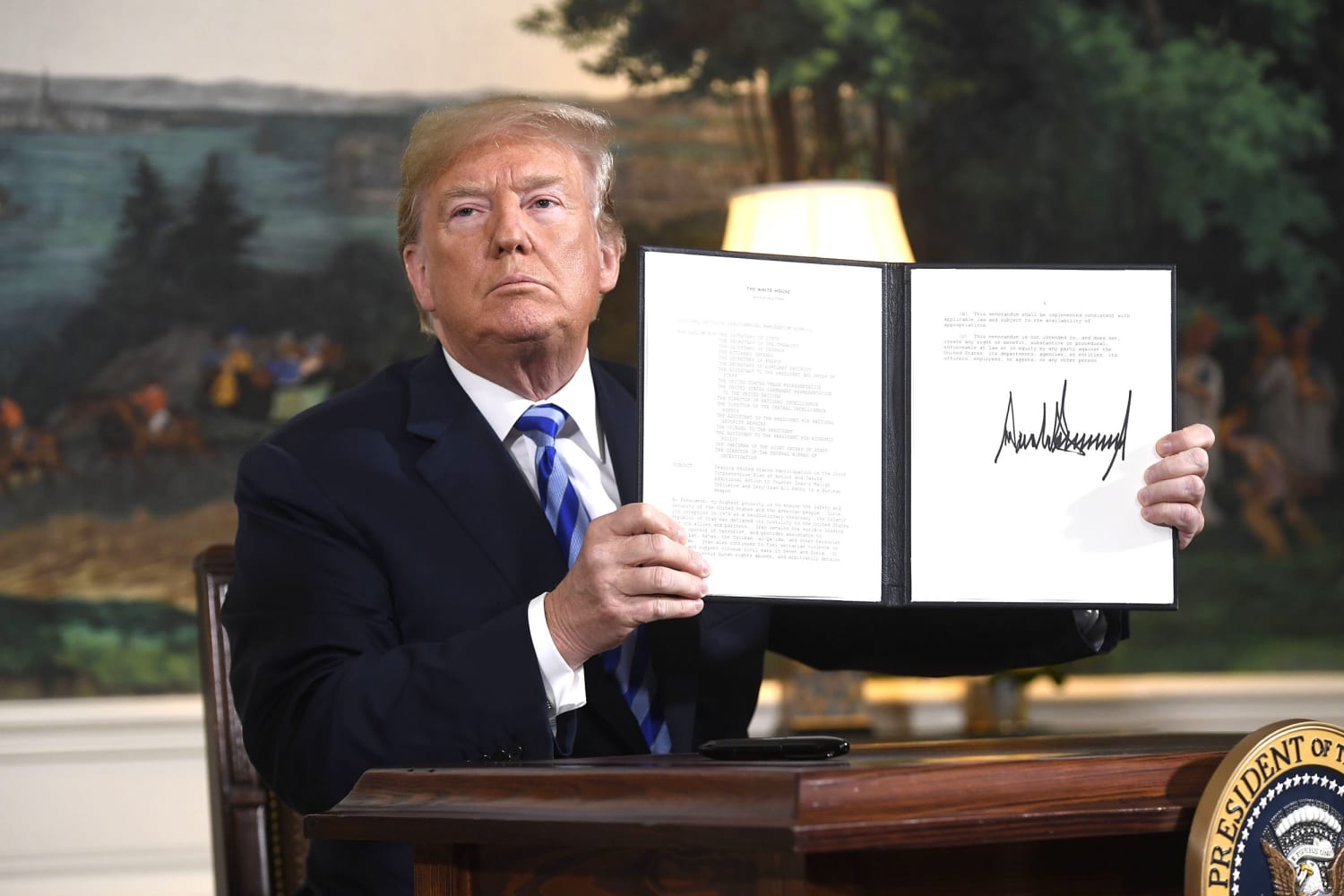
With a U.S.-brokered ceasefire currently holding between Israel and Iran, let’s take a moment to consider what role the Trump administration has played in bringing the conflict to its current precarious state. In his first term, President Trump—eschewing the advice of allies including France, Germany, and the U.K.—withdrew the U.S. from the Iran nuclear agreement, known as the Joint Comprehensive Plan of Action (JCPOA), an accord reached between Iran and several world powers, including the United States, in 2015. Under the JCPOA’s terms, Iran agreed to dismantle much of its nuclear program and open its weapons-making facilities to international inspections in exchange for sanctions relief worth billions of dollars.
Since the United States’ withdrawal from JCPOA in 2018 under President Trump, Iran has expanded its nuclear program, breaching its commitments to the agreement, including resuming uranium enrichment and violating limits on nuclear materials. While the JCPOA remains legally valid, Iran’s violations of the agreement’s terms have thus far thwarted negotiations to revive it or to forge a new deal with the Trump administration. Foreign diplomacy analysts and Israeli officials have identified Trump’s backing out of the deal as a costly blunder that has fueled both Iran’s pursuit of nuclear weapons and rising instability in the middle east.
Analysis
The negotiations of JCPOA with Iran were conducted by five permanent members of the UN Security Council —China, France, Russia, the United Kingdom, and the United States—and Germany, collectively known as the P5+1, as well as the European Union (EU). Without the Iran nuclear deal in place, the negotiating nations’ feared that Iran would take action to become a nuclear weapons state, which would in turn spur Israel to take preemptive military action against Iran’s nuclear facilities, as it had in Iraq and Syria, plunging the region into a new crisis.
Those fears were realized in June when Israel and Iran traded deadly attacks over a 12-day air war. Israel first unleashed a blistering barrage of ballistic missiles and drones at Iran’s nuclear facilities in an attempt to derail their adversary from building atomic weapons; and Iran retaliated. The Israeli strikes killed over 935 people in Iran, including several top Iranian security officials, and injured nearly 5,000 people, according to Iran’s health ministry. Iran’s retaliatory strikes killed over 20 people in Israel, and injured nearly 600 people, according to a statement released by Israeli officials.
In light of the Israeli strikes, President Trump claimed he gave Iran “chance after chance to make a deal,” ignoring the fact that he abandoned the landmark deal that was already in place with Iran. With his typical mix of self-congratulatoryself-absolvement, Trump then wrote on social media, “We remain committed to a Diplomatic Resolution to the Iran Nuclear Issue!”
Said ‘diplomatic resolution’ then included the U.S. bombing of Iran’s nuclear enrichment facilities, an act which Trump declared—with fallacious bluster and childish impetuousness— “totally destroyed” Iran’s nuclear capabilities, though the head of the U.N. nuclear watchdog organization, the International Atomic Energy Agency, contradicted Trump’s assertion, saying that Iran’s nuclear program was set back mere months.
Numerous national security and regional experts have assessed the U.S. withdrawal from the Iran nuclear deal as a reckless strategic mistake that undermined U.S. credibility, alienated the U.S. from its European allies, and increased the risks of war. Suzanne Maloney, the director of the Foreign Policy program at the Brookings Institution who has been researching and writing about Iran for decades, stated bluntly that “the American involvement in the strikes on Iran was the culmination of the decision Trump made in 2018 (to pull out of the deal) that left us in this dangerous escalatory moment with very few good options at the negotiating table.”
Iran has not agreed to a new deal with the Trump administration. Steve Witkoff, Trump’s friend and fellow real estate mogul, has been serving as the U.S. Special Envoy to the Middle East, leading negotiations with Iran. Witkoff’s lack of expertise, knowledge, and skill in this role has led to inconsistencies in the negotiations. Iranian officials state concerns about U.S. accountability on a new deal after Trump’s withdrawal from the JCPOA deal. Additional sticking points obstructing a new deal include: Iran asserting its right to enrich uranium for civilian purposes; Iran demanding sanctions relief; and Iran refusing to make any further concessions on its missile program, which it says is integral to its system of defense.
Israeli military leaders lament the disastrous consequences of Trump exiting the Iran deal, notwithstanding Trump’s claims of the U.S. being Israel’s “number one ally by far.” With tensions between Israel and Iran still inflamed, a full-blown regional war is within the realm of possibility. Further Israeli attacks on Iran could trigger retaliation from several regional terrorist groups, including Hezbollah, Hamas, and Iranian-backed Houthis, all of whom have conducted attacks on Israeli targets in the past. Moreover, Trump’s erasing of the stalwart, decade-long diplomatic effort by the Obama and Bush Administrations to hinder Iran’s nuclear ambitions could fuel a nuclear arms race in the Middle East. For example, Saudi Arabian leader Mohammed bin Salman has stated his country’s intentions to obtain a nuclear weapon if Iran, their longstanding foe, builds one.
Meanwhile, like some deranged carnival barker weighing in on a geopolitical conflict that his actions very well could have ignited, Trump wrote on Truth Social, “…we will have PEACE, soon, between Israel and Iran! I do a lot, and never get credit for anything, but that’s OK, the PEOPLE understand. MAKE THE MIDDLE EAST GREAT AGAIN!”
What the people understand is that a viable Iran nuclear deal was firmly in place before Trump ruined it without any foreseeable new deal in place. Trump then further undermined Americans’ safety and dignity by blabbing his way through the U.S. attacks on Iran with social media posts in real time.
Diplomatic solutions will indeed be imperative to quell the tensions between Israel and Iran in the days ahead and to avoid getting the U.S. embroiled in another catastrophic conflict in the Middle East. The pressure is on Trump to find a way to enact a new deal curtailing Iran’s nuclear program, because it was his withdrawal from the former deal that has precipitated the current crisis.
Engagement Resources:
- The Council on Foreign Relations
- An nonpartisan, nonprofit organization founded in 1921 focused on U.S. foreign policy and international relations.
- Quincy Institute for Responsible Statecraft
- A research institution that analyzes “the dangerous consequences of an overly militarized American foreign policy and presents an alternative approach that
promotes local ownership and resolution of local issues”
- Belfer Center for Science and International Affairs
- Harvard Kennedy School’s hub of research, teaching, and training in international security and diplomacy, environmental and resource issues, and science and technology policy
- International Crisis Group
- Independent organization working “to prevent wars and shape policies that will build a more peaceful world”