

JOBS POLICIES, ANALYSIS, AND RESOURCES
Latest Jobs Posts
A Review and Analysis of the Health Policies of RFK Jr. (Health & Gender Policy Brief #181)
Robert F. Kennedy Jr., confirmed on February 13, 2025, as U.S. Secretary of Health and Human Services under the Trump administration, launched a sprawling “Make America Healthy Again” (MAHA) agenda targeting chronic illness, food quality, and vaccine policy. His platform positions ultra‑processed foods (UPFs) and environmental toxins as primary drivers of America’s health crisis. Prominent proposals include banning UPFs in schools, nursing homes, and prisons; eliminating synthetic food dyes; restricting SNAP purchases of junk food; and overhauling the quintennial Dietary Guidelines to emphasize whole, minimally processed foods.
The Kenyan Debt Problem: A Tightrope of Austerity (Foreign Policy Brief #211)
On 19 July 2025, the Kenyan activist Boniface Mwangi was arrested under suspicion of “facilitation of terrorist activities during the June 25, 2025, protests.” He was released on 21 July on a KSh 1m personal bond ($7,723). He was charged not for terrorism, but for possession of two tear gas canisters and a single blank 7.62 bullet. This is not the first time Mwangi was arrested by Kenyan authorities, nor the first time a Kenyan journalist or human rights activist was arrested by federal authorities for similar reasons.
Current Abortion Laws and Their Challenge to Bodily Autonomy (Health & Gender Policy Brief #180)
Before the overturning of Roe v. Wade on June 24th, 2022, concerns were raised about the potential effects and consequences it would have on reproductive rights. After the overturning, those concerns have come into fruition, and have not only affected the rights to an abortion, but also the rights to bodily autonomy.
An Energy Sector Stuck Between a Lump of Coal and a Hard Place (Environment Policy Brief #181)
Coal is not going away anytime soon; it remains the dominant source of the world’s electricity. 15% of U.S. electricity is fueled by coal. Globally, it is forecasted that carbon in the form of coal will still contribute 22% of power generation by 2040. In China and India, the reliance upon coal is significantly higher, almost double that of the U.S. and Europe. And for good reasons: it is the most economical, stable, and reliable power source.
TikTok vs. U.S. Government: The Battle Over Data Privacy and Platform Ownership (Technology Policy Brief #153)
The clash between TikTok and the U.S. government centers on national security and data privacy concerns tied to its Chinese parent company, ByteDance. TikTok, with around 170 million American users, faces a federal mandate under the Protecting Americans from Foreign Adversary Controlled Applications Act (PAFACA), signed April 24, 2024, requiring it to divest its U.S. operations or face a nationwide ban effective January 19, 2025. The Supreme Court upheld PAFACA in TikTok v. Garland on January 17, 2025, finding it constitutional and not in violation of First Amendment rights.
Profits and Protests at Palantir (Technology Policy Brief #152)
Palantir Technologies’ data tracking software and Artificial Intelligence tools are playing a huge role in the ICE sweeps plaguing communities throughout the US, sparking a national day of protests and concerns over a revolving door between the company and key government agencies.
Current Efforts to Change State Education Curricula (Education Policy Brief #205)
Recent changes to state laws and policies reflect conservative efforts to remove what they consider “divisive concepts” regarding race and gender. South Carolina, Alabama, Louisiana, and Utah have now joined 21 other states attempting to modify or eliminate curricula considered by many on the right to promote progressive concepts they say have direct, negative impacts on students.
Nigeria’s Resource Curse (Foreign Policy Brief #209)
Those who have a casual understanding of history or geopolitics may react agreeably to the concept: the greater abundance of natural resources a country has the more well-off the people of that country will be. Unfortunately, for Nigerians, the opposite is their reality. The abundance of oil in Nigeria, along with their colonial history, has resulted in a “resource curse,” a theory posited by contemporary international relations scholars. Nigeria now finds its economy reliant on the export of oil and renting their oil fields to multinational corporations (MNCs), leading to a commodity industry based on corruption and wealth centralization.
The Art of the Heel: The Deadly Effects of Trump Abandoning the Iran Nuclear Deal (Foreign Policy Brief #208)
The Iran nuclear agreement, known as the Joint Comprehensive Plan of Action (JCPOA), is an accord reached between Iran and several world powers, including the United States, in 2015. Under its terms, Iran agreed to dismantle much of its nuclear program and open its weapons-making facilities to international inspections in exchange for sanctions relief worth billions of dollars. Since the United States’ withdrawal from JCPOA in 2018 under President Trump, Iran has expanded its nuclear program, breaching its commitments to the agreement, including resuming uranium enrichment and violating limits on nuclear materials. While the JCPOA remains legally valid, Iran’s violations of the agreement’s terms have thus far thwarted negotiations to revive it or to forge a new deal with the Trump administration. Foreign diplomacy analysts and Israeli officials have identified Trump’s backing out of the deal as a costly blunder that has fueled both Iran’s pursuit of nuclear weapons and rising instability in the middle east.

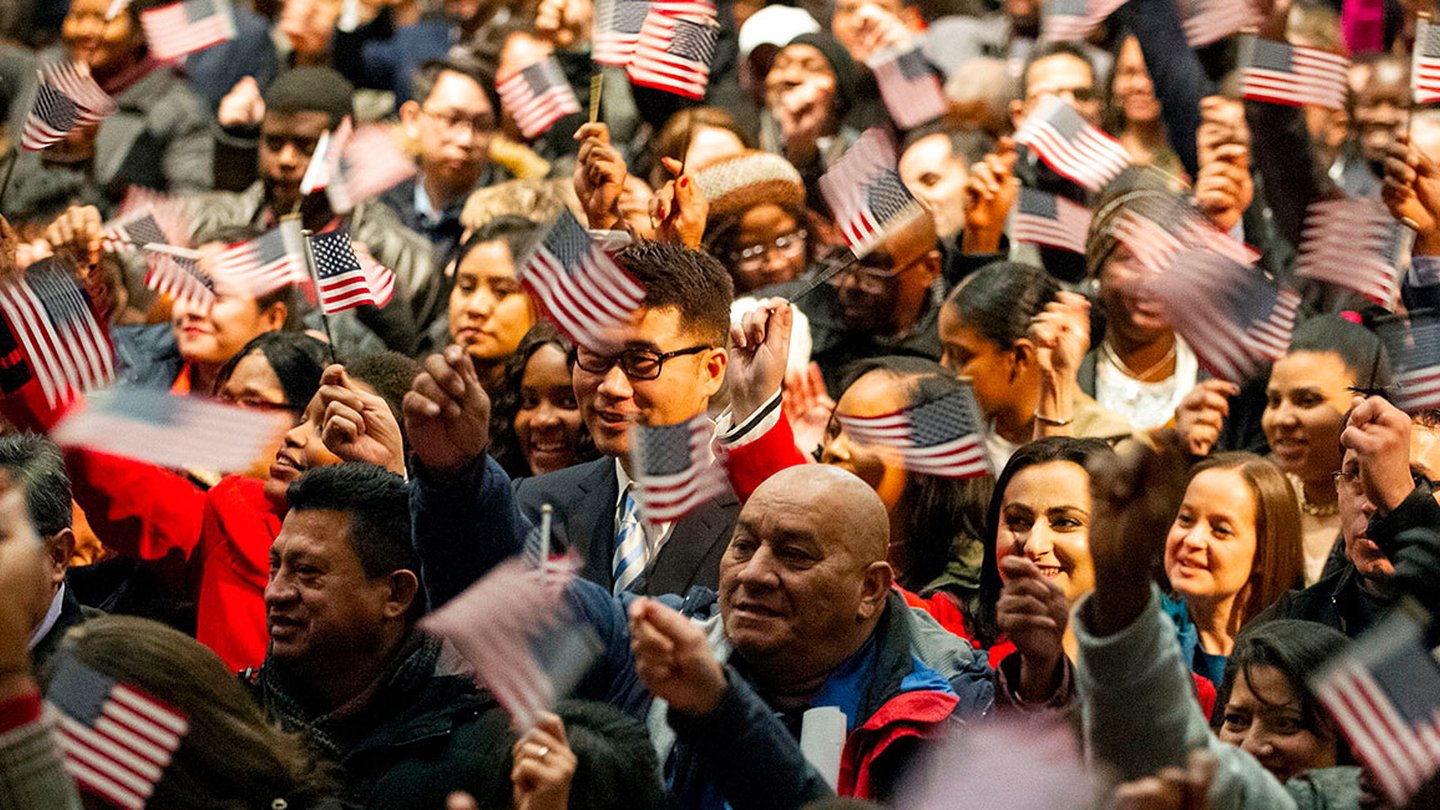
It Is Not an Invasion: How Undocumented People Got Here, Where They Live, & Why They Stay (Immigration Policy Brief #145)
It Is Not an Invasion: How Undocumented People Got Here, Where They Live, & Why They Stay
Immigration Policy Brief #145 | Morgan Davidson | June 25, 2025
According to estimates from Pew & the American Community Survey, there are between 10.5 & 11 million undocumented people living in the United States. For perspective, that’s fewer—by about 2 million—than the population of the L.A. metro area. On the one hand, that’s a large number; on the other, it’s far from an invasion in a country of 340 million people.
So, how did we get here? What has that number looked like over the last 20 years?
If you watch FOX, you probably believe most, if not all, of these people came into the country under Joe Biden. But the numbers don’t support that. The estimated 10.99 million in 2022 is only slightly higher than 10.51 million in 2020 & nearly identical to 10.49 million in 2005. Over the past 20 years, the undocumented population hasn’t dropped below 10 million & hasn’t exceeded 12 million.
The reason we don’t see massive swings is that most undocumented people have lived in the U.S. for over a decade. Contrary to what Donald Trump, Sean Hannity, Elon Musk & others claim, people are not coming to America in droves, radically shifting the population by the millions.
This population is the product of decades of economic shifts, foreign policy decisions, & a dysfunctional immigration system.
Analysis
America’s immigration system didn’t fall apart overnight; it’s been dysfunctional by design for decades. Three major laws helped shape today’s reality.
The 1965 Immigration & Nationality Act scrapped the old national origin quotas but introduced strict caps on immigration from the Western Hemisphere for the first time. That created long waitlists for countries like Mexico & those in Central America, a backlog that still exists.
The 1986 Immigration Reform & Control Act (IRCA), signed by Reagan, legalized nearly 3 million undocumented immigrants. It promised tougher enforcement in exchange, but that mostly meant increased border security, rather than real accountability for employers or reforms to the legal system. The undocumented population kept growing.
The 1996 Illegal Immigration Reform and Immigrant Responsibility Act (IIRIRA) made the situation even more challenging. It expanded deportation grounds, imposed the 3-year & 10-year reentry bans, & laid the groundwork for today’s massive deportation system. It didn’t reduce undocumented immigration; it just made the system more punitive.
In short, these laws didn’t stop undocumented immigration. If anything, they locked in a status quo where people could come here to work, but not stay legally. But legal changes only explain part of the picture. Economic forces are the engine behind most migration. After NAFTA took effect in 1994, small-scale farmers in Mexico were unable to compete with U.S. agricultural imports. Many lost their livelihoods, triggering one of the largest waves of migration in modern history. Meanwhile, the U.S. economy was booming in sectors like construction, agriculture, hospitality, & elder care; all industries that rely heavily on low-wage labor with few protections.
Add in the massive wage gap between the U.S. & countries like Mexico, Guatemala, Honduras, or El Salvador, & it’s not hard to see why people leave. For many, working an informal job in the U.S. still means earning five to ten times more than they would back home. When you add instability, violence, corruption, & climate disruptions into the mix, it’s not just an economic issue; it’s an existential one.
There’s also a persistent myth that undocumented immigrants all crossed the border illegally. In reality, roughly 40 to 50% of undocumented people came here legally & overstayed a visa. While border crossings have surged at certain moments, such as in the 1990s post-NAFTA boom or more recently in 2021, when asylum seekers arrived in large numbers from Central and South America. Those are waves, not the whole picture. Many of the people being labeled as “new arrivals” actually arrived years ago & have been here since, quietly living, working, paying taxes, & building families.
All of this explains why the number of undocumented immigrants has held relatively steady over the last 20 years. Despite constant political noise, most of these people aren’t “pouring in” recently; they’ve been here. They’re the product of decades of economic shifts, U.S. foreign policy, & an immigration system that can’t meet the moment.
Where people are & Where people came from
By the numbers, the top states with undocumented populations are California, Texas, Florida, New York, & New Jersey. That shouldn’t be surprising. These states offer a mix of large urban centers & sprawling agricultural or rural areas, places where undocumented immigrants can find work, whether in construction, food service, or farming.
Most undocumented people still originate from Mexico & the Northern Triangle countries: Guatemala, Honduras, & El Salvador. However, in recent years, there has also been a rise in migrants from South America, especially Venezuela, as well as from Asian countries such as China, India, the Philippines, Nepal, and Vietnam.
Some right-wing commentators have seized on the growing number of Asian migrants, particularly Chinese nationals, to stoke fears about national security threats. But the reality is far more familiar. Many of these migrants are fleeing authoritarian regimes, seeking political asylum, & often see the U.S. as a haven that aligns more with their values than the governments they’re fleeing.
In fact, these migrants are more likely to turn themselves in to Border Patrol agents, not sneak in, because they want to begin the asylum process through official channels. They’re not unlike the Cuban refugees who once fled Castro’s regime, looking to the U.S. for political safety & opportunity.
Why people stay & What keeps people here
As of 2021, the average undocumented immigrant has lived in the U.S. for over a decade, a fact that directly contradicts the narrative pushed by outlets like FOX or figures like Trump. These aren’t people who just arrived. Many have U.S.-born children, creating mixed-status families & deep community ties. That also makes them more likely to overstay visas, rather than risk leaving & being unable to return.
At the same time, militarization at the border has had an unintended consequence: it’s made undocumented immigrants more likely to stay permanently. Once someone makes it into the country, they’re less likely to leave, not because they don’t want to visit home, but because crossing back has become so dangerous & expensive. If they leave, they may not be able to return at all.
Crackdowns have also fed the rise of human smuggling networks. As enforcement has tightened, cartels & smugglers have stepped in to profit off desperation, charging migrants thousands of dollars for what they claim are safer crossings, though often, they’re anything but. The result is a system where fear, family, & policy traps keep people here in the shadows, not a wave of new arrivals, but a long-established population with nowhere else to go.
The policy problems don’t stop at the border. We’ve seen failed attempts at comprehensive immigration reform in 2007, 2013, & now 2024. Decades of gridlock in Congress have left us with a system built for a world that no longer exists, rooted in problems that date back to the 1960s, yet still shape the present.
Undocumented immigrants aren’t new, & they’re not going anywhere. They’re a long-standing, deeply rooted part of American society. They work, raise families, pay taxes, & contribute to their communities every day.
If we’re serious about fixing this, it’s going to take more than more agents or higher walls. It requires a full rethinking of legal migration, economic reality, & basic human dignity.
Engagement Resources
- Pew Research Center – What We Know About Unauthorized Immigrants Living in the U.S.
A concise, data-driven primer updated in July 2024 that breaks down the estimated 11 million unauthorized immigrants in America.
https://www.pewresearch.org/short-reads/2024/07/22/what-we-know-about-unauthorized-immigrants-living-in-the-us/ - Bipartisan Policy Center’s Immigration Reform Proposals: Explore balanced approaches to immigration policy that prioritize security, economic growth, and humanitarian concerns.
https://bipartisanpolicy.org/topics/immigration/ - ACLU Know Your Rights: The ACLU outlines the rights of Immigrants in the U.S.
https://www.aclu.org/know-your-rights/immigrants-rights
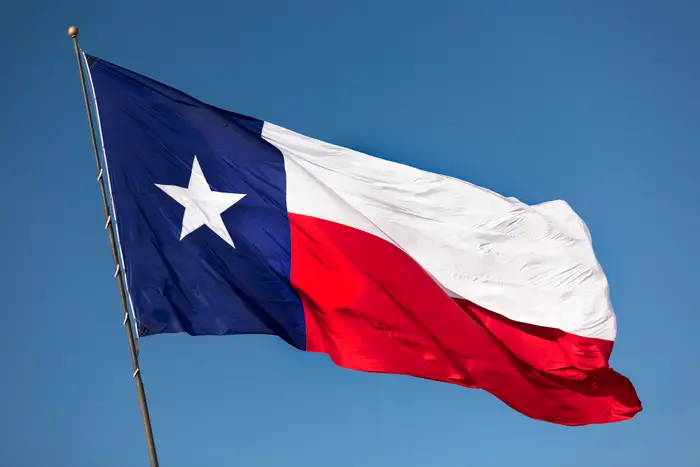
No Capital Gains Tax in Texas: What It Means for Businesses and Residents (Economic Policy Brief #88)
No Capital Gains Tax in Texas: What It Means for Businesses and Residents
In 2025, the Texas Legislature passed House Joint Resolution 6 (HJR 6), placing a proposed constitutional amendment on the ballot for the November 4, 2025, election. If approved by voters, the amendment would permanently prohibit Texas from ever imposing a tax on individuals’ net capital gains. While Texas already does not levy a personal income tax, including on capital gains, this measure would codify that policy into the state constitution, preventing any future changes without a subsequent constitutional amendment. If passed, the law will take effect on January 1, 2026. This move is part of a broader strategy to maintain Texas’s reputation as a low-tax haven and a pro-business environment. It aligns with other economic developments, including recent federal and state-level updates to labor laws such as the expanded overtime protections under the Fair Labor Standards Act (FLSA), which will also impact the Texas workforce beginning in 2025.
Analysis
Texas’s current lack of a personal income tax has long served as a magnet for high earners, investors, and businesses. Codifying this approach through HJR 6 ensures future legislatures cannot reverse this policy without going through the arduous process of another constitutional amendment.
Assuming it passes, the amendment will provide long-term financial predictability for investors, entrepreneurs, and business owners, particularly in sectors like real estate, finance, and technology. These stakeholders benefit from knowing that future capital gains—realized or unrealized—will not be subject to state tax, incentivizing investment and asset retention within Texas.
For residents, especially those with growing investment portfolios or planning for retirement, this could represent significant long-term savings. The law complements new labor developments like the expanded overtime eligibility set to take effect nationally in 2025, which will increase wages for lower- and middle-income workers. Together, these changes create an economic environment where upward mobility could be supported through both wage protection and tax shielding for long-term investments.
However, critics warn that the capital gains amendment primarily benefits the wealthy and could widen inequality. They argue that while higher earners receive greater tax advantages, the state risks limiting future policy flexibility—particularly in areas like education funding and infrastructure. Additionally, the federal overtime law’s increased payroll obligations for businesses could offset some of the tax savings realized through capital gains protections.
Texas’s proposed constitutional ban on capital gains taxes reflects a deep commitment to economic conservatism and low taxation. While the benefits are clearest for high earners and business owners, there are meaningful implications for broader economic stability and growth. When paired with updated labor protections such as expanded overtime eligibility, the policy may create a nuanced landscape: tax relief on long-term wealth accumulation alongside wage growth for working-class Texans. Nonetheless, this measure must be met with continued scrutiny to ensure it does not further entrench wealth inequality or strip future policymakers of tools needed to respond to fiscal challenges. Texas’s leadership must balance tax freedom with strategic investments that uplift all residents—not just those with capital gains to protect.
Engagement Resources
- Texas Public Policy Foundation
A conservative think tank that supports HJR 6 and promotes limited taxation and economic growth.
https://www.texaspolicy.com - Every Texan (formerly Center for Public Policy Priorities)
Offers policy research and advocacy focused on tax equity, labor protections, and economic justice.
https://everytexan.org - S. Department of Labor – Wage and Hour Division
Provides detailed information on new overtime eligibility and compliance standards under FLSA.
https://www.dol.gov/agencies/whd

Project 2025 and Federal Influence Over K-12 Curricula (Education Policy Brief #204)
Project 2025 and Federal Influence Over K-12 Curricula
Education Policy Brief #204 | Steve Piazza | June 11, 2025
Although President Trump campaigned by keeping distance between himself and Project 2025, it is clear that his agenda since his inauguration has run parallel to the movement in many areas, including education.
In no more than two months into his presidency, the President issued an Executive Order, Improving Education Outcomes by Empowering Parents, States, and Communities, calling for the elimination of the Department of Education (DOE) in order to give control of schools to the states and local education agencies. This is right in line with Project 2025’s philosophy.
While the executive branch is not legally permitted to completely eliminate the DOE, the department, like many other governmental agencies, has experienced staff reductions and policy reform has begun.
Another power the DOE itself does not have is mandating state curriculum. That authority already lies at the state and local level, as per the Department of Education Organization Act, 20 U.S.C. § 3403(b), and the
Elementary and Secondary Education Act, 20 U.S.C. § 7907(a).
But some of the changes called for by Project 2025 have indirect implications for curricular reform, many of which are presently being realized.
Policy Analysis
The intentions of Project 2025 regarding governmental reform are clearly presented in A Mandate for Leadership: The Conservative Promise, a 900-page document published in 2023 by the Heritage Foundation. Like other administration departments targeted, the DOE has undergone scrutiny and is presented as an obstacle to the general welfare of U.S. citizens.
In the opening sentence of the analysis of the DOE, the document states on page 319, “Federal education policy should be limited and, ultimately, the federal Department of Education should be eliminated.” The future of education, the authors believe, relies on the states untethering from any federal level interference and being able to themselves determine what changes are needed in schools.
Specified changes include such areas as student discipline, school choice, and parental involvement. But it also directly addresses specific areas of the curriculum that need to be affected. As early as page 5, the document demands that “the noxious tenets of “critical race theory” and “gender ideology” should be excised from curricula in every public school in the country.”
And one way that this can be enforced is through funding incentives, particularly the threat of withholding money from those states not complying.
Yet, even prior to Trump’s election to a second term, some states had already begun to make curricular changes that reflect this spirit of Project 2025. Over 20 states now have passed laws to restrict curricula that may include gender and race concepts that are determined divisive. This means that specific language and concepts are being avoided in the classroom, and that even books have been removed from classrooms and school libraries. Many of these actions have been challenged in court, but the spirit of reforms which coincide with Project 2025 initiatives, whether intentional or not, remains.
And now with the Trump Administration in place, states’ litmus test of curricular attacks seems to be over, and the attention has turned mostly to less incendiary issues. According to the National Governors Association, these six areas will be the focus of educational themes in 2025: funding, technical education, teacher training, achievements, early childhood, mental and physical being, and cell phone usage. A seventh item, school choice, is more controversial, but it’s been on the table for some time.
All this is to say is that the states can now rely on the federal government to divert the attention of social issues in curricula from the states and take the heat so they don’t have to. So, if and when curricular choices are made at the state and local level, they would not so quickly or easily find their way to mainstream attention. People must search deep into state departments of education and local resources to find out for themselves what’s actually being mandated to be taught.
The ongoing issue remains that many of the restrictive efforts encouraged by the federal level will have implications beyond the loss of financial support. Critics look at this as a means to side step federal law that protects civil rights of individuals. Proponents look at it as a means to reform schools along ideological grounds.
Indeed, the courts may determine how much the Trump Administration has influence over how curriculum development plays out. One thing is certain: it has had an impact on the way that educational policy is being discussed. This includes what is being taught, and how it has become highly politicized to the point that educators are fearing retribution for speaking out professionally on what works best for their students.
Time will tell what any forthcoming state laws inspired by Project 2025 will directly mandate which K-12 subjects are to be taught and what concepts need to be removed. It’s already begun at the college and university level, where legislation passed earlier this year in Florida, Utah, and Ohio require graduation requirements to include Western Civilization-centered courses with specified readings and drop any courses having to do with race and gender. Analysts agree that similar action is expected for elementary and secondary school curricula. If this does happen, Project 2025 has the momentum to outlast what its name implies.
Engagement Resources
Ballotpedia offers a comprehensive list of links to state education departments and the corresponding state content standards for each.
The revamped U.S. Department of Education site reflects many of the tenets of Project 2025.

2026 World Cup and President Trump’s Policies (Foreign Policy Brief #203)
2026 World Cup and President Trump’s Policies
Foreign Policy Brief #203 | Reilly Fitzgerald | June 6, 2025
The United States and its neighbors have long had a successful, and peaceful (mostly) existence. The United States, Canada, and Mexico have had free-trade agreements; entered into military alliances together; fought in wars together. However, since the inauguration of President Trump, these relationships have been tested – dramatically. The White House has called for Canada to become the “51st State”; the United States has changed the name of the Gulf of Mexico to the “Gulf of America”. Publicly, President Sheibaum and Prime Minister Carney, of Mexico and Canada, respectively, have criticized President Trump and his policies both from afar and in-person.
The idea of a North American World Cup has been in the making for years, having been chosen by the 68th FIFA Congress in 2018. What was once expected to be a great display of three countries and their relationship with one another, is perhaps heading to be a dramatic mess due to policies coming out of the White House.
Also the Trump Administration’s most recent ban on travel from Afghanistan, Iran, Somalia, Libya, Haiti, Chad, Congo-Brazzaville, Equatorial Guinea, Myanmar, Eritrea, Sudan, and Yemen, will most certainly have impacts on the major sporting tournaments that are upcoming in the United States through the rest of his administration (if this remains in effect). The upcoming sporting events being held in the United States during Trump’s term, include the CONCACAF Gold Cup this summer in the United States and the 2026 FIFA World Cup being hosted between Canada, Mexico, and the United States, and then the summer of 2028, the Olympic Games in Los Angeles.
Analysis
Trump’s most recent executive order, a travel ban, does make an exception for “any athlete or member of an athletic team, including coaches, persons performing a necessary support role, and immediate relatives, traveling for the World Cup, Olympics, or other major sporting event as determined by the Secretary of State”. However, it is unclear as to how this provision will play out with the sheer volume of fans and supporters likely to attend these major events and the wait times for visas to enter the United States.
This summer the team most impacted by any of these bans will be the Haitian National Team as they will be participating in the CONCACAF Gold Cup, which is a soccer tournament for North and South American teams and the Caribbean nations. Haitian refugees and immigrants have been victims of President Trump’s, and his supporters, false claims used to spew hatred and fear; this particularly culminated in the claims that Haitians were eating cats and dogs in Ohio right before the 2024 Presidential Election. This summer is also the FIFA Club World Cup competition in the United States, and that is expected to bring in about 3.5 million spectators to the United States.
Next summer’s World Cup is estimated to bring in over 6.5 million spectators to the United States, Canada, and Mexico. Iran has already qualified to participate in the World Cup, and will be expected to travel to North America for this event. Though, it seems the athletes and coaching staff will be able to come to the United States for this tournament; it remains to be seen what will happen with the families of the players, and the fans of their national team who should be able to travel to matches during the tournament in the United States. However, this could be tricky for Iranian fans due to the nature of the relationship between the American and Iranian governments.
The travel ban is most likely going to have a significant impact on the ability of spectators and fans to go to the United States during any of these massive sporting events (though could potentially still see matches in Canada and Mexico). The travel ban executive orders from the Trump Administration clearly states that the Secretary of State will have a significant role in this process of admitting or rejecting visa applications for athletes, coaches, and fans to come to the United States. According to Yahoo News, the State Department has promised to reduce the wait times for visas. Some countries are experiencing very high wait times for visas to the United States, such as Colombia which has a wait time of about 700 days, and Turkey’s wait time which is around 500 days as well. Both of these country’s teams will be present for the World Cup and the 2028 Olympics in Los Angeles.
Some countries have more reasonable wait times, like Brazil which has a wait time of about one month. There are about 43 countries in the world that qualify for the Visa Waiver Program, which the State Department says it “enables most citizens or nationals of participating countries to travel to the United States for tourism or business for stays of 90 days or less without obtaining a visa.” The make-up of these countries is mostly European countries (about 30 of the 43), Israel, Qatar, Australia and New Zealand, Chile, Singapore, Brunei, Taiwan, and Iceland. The Visa Waiver Program will make it easy for many fans to access the venues in the United States for the World Cup, but it ought to be noted that fans from other countries will face challenges getting visas for the tournament.
Human Rights Watch (HRW) has demanded that FIFA begin to examine alternatives to having the United States host the World Cup. HRW believes that the Trump Administration’s policies towards immigrants, LGBTQ+ communities, attacking free speech, and more, are grounds enough for FIFA to find an alternative to the United States as one of the three hosts. HRW has pointed out, according to Politico, FIFA’s own legislation says its role is “to promote the protection of human rights”. Andrea Florence, the Director of the Sports and Rights Alliance said last year to Amnesty International that “Before it awards any tournament, FIFA must ensure binding human rights agreements that fully protect workers, local communities, players and fans, including safeguarding against abuse and discrimination of racial and religious minorities, women and LGBTI people.”
Major sporting events around the world have drawn criticisms over the selection of host nations. One only has to go back to 1936 to see Nazi Germany host the summer Olympics – which anyone would agree is insane to consider. In modern times, Russia has hosted the Olympics and the World Cup (2014 and 2018, respectively). Brazil was under scrutiny for abuses in the lead up to hosting the World Cup and Olympics (2014 and 2016, respectively). Qatar hosted the most recent World Cup in 2022, with plenty of reported human rights abuses. Amnesty International has already reported on the risk for human rights issues with the 2030 World Cup being hosted by Spain, Portugal, and Morocco. The United States should have been a no-brainer to hosting the World Cup and upholding the values of international sporting competitions to value human rights and the rule of law. Now, it is much less clear.
Engagement Resources
- Executive Order – https://www.whitehouse.gov/presidential-actions/2025/06/restricting-the-entry-of-foreign-nationals-to-protect-the-united-states-from-foreign-terrorists-and-other-national-security-and-public-safety-threats/
- Human Rights Watch Letter to FIFA President – https://www.hrw.org/news/2025/05/06/letter-fifa-re-human-rights-responsibilities-2026-world-cup
- Playing a Dangerous Game? (Amnesty International) – https://www.amnesty.org/en/latest/news/2024/06/global-fifa-must-protect-human-rights-by-securing-binding-safeguards-from-2030-and-2034-world-cup-bidders-new-report/#:~:text=%E2%80%9CBefore%20it%20awards%20any%20tournament,%2C%20women%20and%20LGBTI%20people.%E2%80%9D
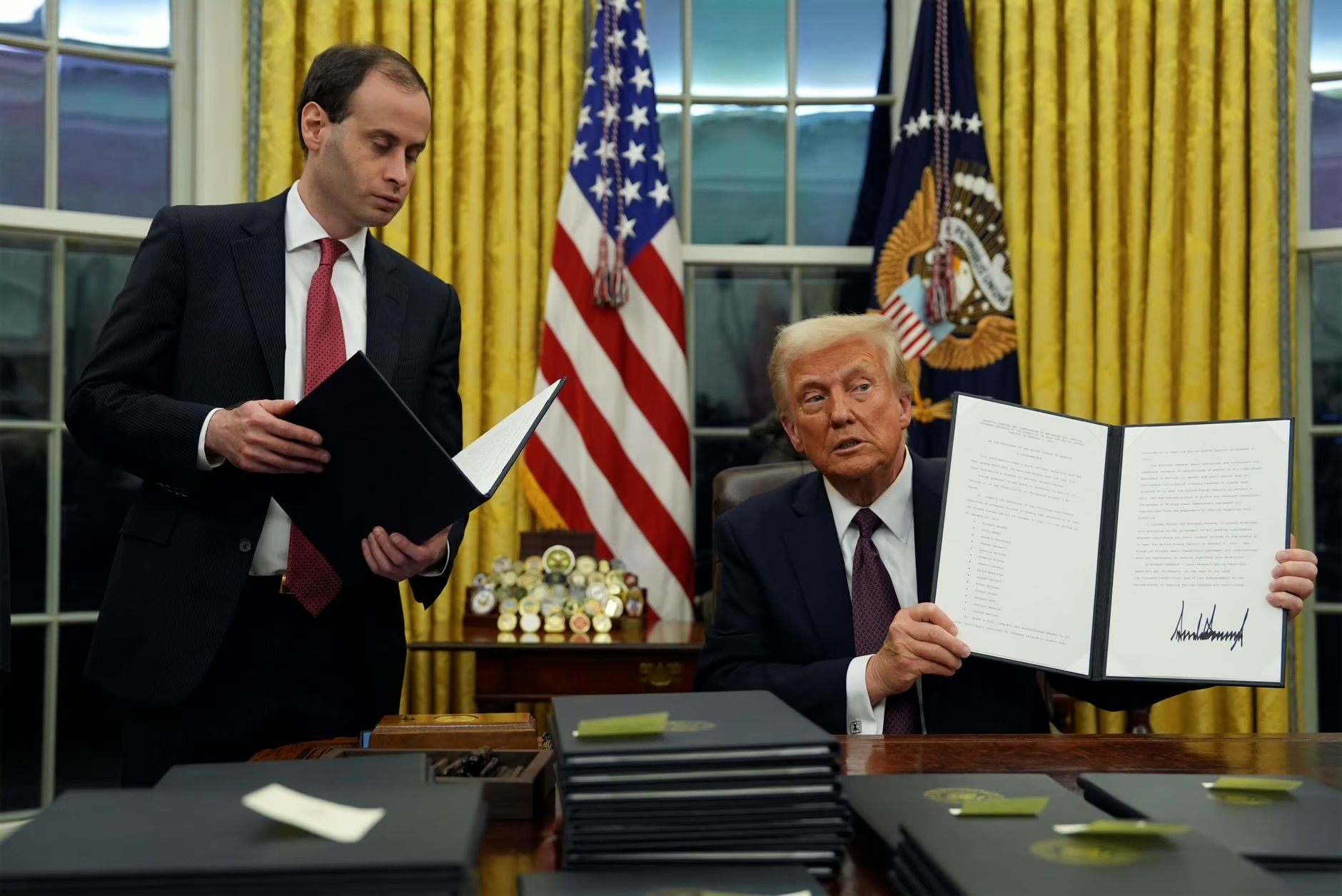
Pardons, Power, and Payback: Trump’s Legacy of Clemency — Part II (Social Justice Policy Brief #175)
Pardons, Power, and Payback: Trump’s Legacy of Clemency — Part II
Social Justice Policy Brief #175 | Valerie Henderson | June 16, 2025
Presidential pardons are a constitutionally granted power, intended to serve as instruments of mercy, justice, and healing. But under President Donald Trump’s second term (2024–2025), this power has again been wielded as a political tool, continuing a controversial legacy from his first term. The recent wave of pardons reflects a continuation—and escalation—of Trump’s willingness to use executive clemency to reward loyalists, pardon convicted political allies, and whitewash wrongdoing linked to his political movement.
Trump has already granted or signaled clemency for several individuals connected to the January 6 Capitol attack, corporate allies under white-collar investigations, and conservative media personalities with criminal convictions. These moves have further intensified scrutiny over the fairness and integrity of the presidential pardon system
Analysis
The most recent pardons in Trump’s second term have raised significant concerns about corruption, obstruction of justice, and abuse of executive authority. Among them:
- Enrique Tarrio and Stewart Rhodes, leaders of the Proud Boys and Oath Keepers respectively, received commutations or full pardons after being convicted for seditious conspiracy in connection with the January 6 insurrection.
- Peter Navarro, a former Trump adviser convicted of contempt of Congress, was granted clemency despite ongoing appeals and public refusal to cooperate with investigations into efforts to overturn the 2020 election.
- Steve Bannon, who was previously pardoned by Trump for fraud-related offenses in his first term, received a second clemency for contempt of court following his refusal to comply with subpoenas related to election interference.
- NBA YoungBoy, a popular rapper with a significant following among young Black Americans, was pardoned on weapons charges, with Trump using the announcement as a media spectacle to posture as a supporter of Black communities.
These actions defy bipartisan public criticism and continue to bypass standard review procedures traditionally handled by the Department of Justice’s Office of the Pardon Attorney. The pattern is consistent: Trump leverages the pardon process not as an act of justice but as a political tool—shielding loyalists and manipulating public perception.
While some pardons of individuals from marginalized communities may appear benevolent, they are often deployed as political cover—token acts meant to distract from a broader reality of justice inequity. The selective clemency of Black figures, particularly entertainers or nonviolent drug offenders, is rarely backed by systemic reform efforts and instead serves to generate media buzz and create a false narrative of inclusion.
Trump’s second-term pardon spree is a disgraceful abuse of constitutional authority. These are not acts of mercy—they are favors for cronies, extremists, and lawbreakers who advance his personal vendettas and political goals. His so-called support for marginalized individuals, such as pardoning a few high-profile Black men, is nothing more than performative politics. It is strategic tokenism—an attempt to appear racially inclusive while simultaneously empowering systems and actors who harm communities of color. These pardons have disproportionately shielded individuals whose actions directly harmed communities of color, the rule of law, and the peaceful transfer of power. For marginalized communities that are routinely over-policed and under-protected, these political pardons are a cruel reminder of a justice system that is anything but equal. We must call these acts what they are: political protection rackets wrapped in media theater. They erode the rule of law, reward corruption, and send a dangerous message that power, loyalty, and spectacle outweigh accountability and equity. Trump’s actions continue to push the limits of executive abuse and endanger the very foundations of a free society.
Engagement Resources
- Project on Government Oversight (POGO)
Investigates and exposes corruption, including misuse of presidential powers. Offers policy proposals to improve transparency and accountability.
https://www.pogo.org - Protect Democracy
Nonpartisan organization focused on preventing executive overreach and defending democratic institutions, including reforming the pardon process.
https://www.protectdemocracy.org - American Constitution Society (ACS)
A progressive legal organization researching structural reforms to limit unchecked executive power, including the reform of clemency authority.
https://www.acslaw.org
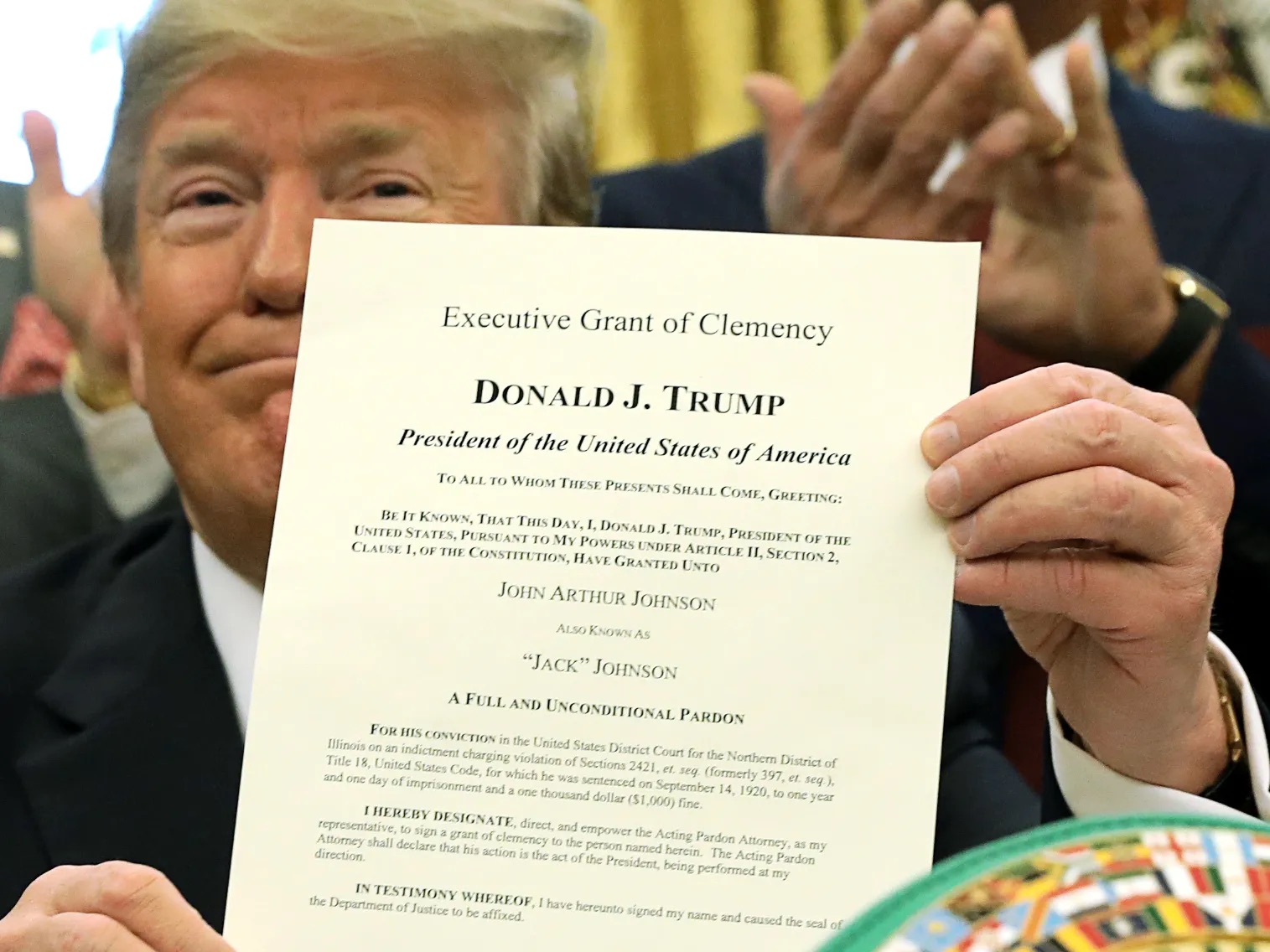
Pardons, Power, and Payback: Trump’s Legacy of Clemency — Part I (Social Justice Policy Brief #174)
Pardons, Power, and Payback: Trump’s Legacy of Clemency — Part I
The presidential pardon is a constitutional power granted to the President of the United States under Article II, Section 2 of the U.S. Constitution. It allows the President to grant reprieves and pardons for federal offenses, except in cases of impeachment. While originally intended to offer clemency as a form of mercy or to correct miscarriages of justice, the use of pardons has evolved—and at times, been weaponized for political purposes.
Historically, presidents have used the pardon power to heal national divisions, such as President Gerald Ford’s controversial pardon of Richard Nixon, or to correct injustices in the federal justice system. However, recent administrations—particularly Donald Trump’s—have drawn criticism for politicizing this executive tool.
Analysis
During Trump’s first term (2017–2021), his use of the pardon power was notable not just for its frequency, but for the profile and connections of those he pardoned. Unlike previous presidents who often relied on recommendations from the Department of Justice’s Office of the Pardon Attorney, Trump frequently bypassed that process.
Trump issued high-profile pardons to individuals such as:
- Joe Arpaio, former Arizona sheriff convicted of criminal contempt for racial profiling, seen as a nod to his anti-immigrant base.
- Roger Stone and Paul Manafort, Trump allies who were convicted during the Mueller investigation.
- Michael Flynn, former national security adviser who pleaded guilty to lying to the FBI.
- Charles Kushner, father of Trump’s son-in-law Jared Kushner, convicted of tax evasion and witness tampering.
These pardons were criticized for rewarding loyalty and shielding allies from accountability, raising alarms about abuse of power. Many legal scholars and former federal prosecutors warned that such actions undermined public trust in the impartiality of justice.
As Trump has begun his second term (2024–2025), there are mounting concerns about how he will wield the pardon power again. With open investigations into his political allies and continued rhetoric about the “deep state” and a “weaponized” justice system, there is widespread speculation that he will continue using pardons as political tools. Early signs include suggested clemency for convicted January 6 rioters and possible preemptive pardons for individuals under current federal scrutiny.
The broader concern is that Trump’s approach to pardons undermines the original purpose of clemency as a tool for compassion and justice, instead using it to reward loyalty, protect political allies, and punish perceived enemies. Trump’s use of presidential pardons is a gross distortion of a constitutional power meant to offer mercy, not reward political allegiance. His first-term pardons showed blatant favoritism, a disregard for the justice system, and a willingness to undermine legal accountability. As his second term unfolds, his pardon strategy appears not only self-serving but actively dangerous—eroding democratic institutions, emboldening corruption, and sending a clear message that loyalty to power is more valuable than the rule of law. The presidential pardon should be a solemn act of justice. Under Trump, it has become a transactional weapon, used to shield loyalists, inflame political divisions, and bypass accountability. This is not justice—it is authoritarianism disguised in constitutional legitimacy.
Engagement Resources
- Brennan Center for Justice
Conducts research and advocacy on abuse of executive power, including the reform of presidential pardon practices.
https://www.brennancenter.org - Citizens for Responsibility and Ethics in Washington (CREW)
Tracks and reports on corruption and ethics violations in government, including politically motivated pardons.
https://www.citizensforethics.org - Pardon Power at DOJ
Official portal providing background on the federal clemency process and historical records of presidential pardons.
https://www.justice.gov/pardon

The Role of the Judiciary Against The Other Branches of Government – A Historical Background (Civil Rights Policy Brief #244)
The Role of the Judiciary Against The Other Branches of Government – A Historical Background
Just this week a number of reports have surfaced that detailed President Trump’s frustration with the Supreme Court and both the federal and state level judiciary in general.
In private, it has been reported that the President is frustrated with Supreme Court Justice Amy Coney Barrett who he appointed to the Supreme Court in 2020. In addition, the President has also expressed concern about Justices Neil Gorsuch and Brett Kavanaugh, the other two justices he appointed to the Supreme Court during his first term. The basis of President Trump’s grievances are that the justices are not sufficiently supportive of his policy agenda. The President is reported to be angry that the justices, specifically Justice Barrett, have voted against the Administration in a number of the court’s rulings.
Prior to the President’s inauguration in January, Justice Barrett (along with Chief Justice John Roberts) joined a ruling that allowed the President to be sentenced in his hush money case in New York. In March, Justice Barrett voted with the majority to reject the Administration’s plan to freeze payments of foreign aid. And in May, Justice Barrett recused herself from the Oklahoma Catholic charter school case. Since she was not participating in the case – because of personal ties she had with the plaintiffs who brought the case – the remaining eight justices heard the case and issued a ruling. The case came out to a 4 – 4 tie. Since there was no majority or plurality opinion the lower court ruling from the Oklahoma Supreme Court was allowed to stand which had ruled using state funds to fund Catholic charter schools unconstitutional. Justice Barrett was blamed because if she had not recused herself she could have cast the deciding fifth vote that could have overturned the Oklahoma Supreme Court. Justice Barrett’s votes in these rulings against Trump Administration initiatives have sparked a backlash against her and has helped fuel the anger of not just the President but from those who identify as MAGA and those who support many MAGA supported policies. LEARN MORE, LEARN MORE
Policy Analysis: While the Trump Administration’s criticisms and attacks on the judiciary are ongoing, the central premise of his frustrations – that the Supreme Court and the judiciary are not fully supportive of his policy agenda – is completely flawed and unsupported by the historical record.
Since just about the beginning of this nation, the idea that the judciary/judicial department could render an act by the legislative or executive branch void has been generally accepted. At the 1787 Constitutional Convention where the Constitution was being drawn up, delegate Luther Martin stated, “As to the constitutionality of laws, that point will come before the judges in their proper official character. In this character they will have a negative on the laws.” During another point during the convention, delegate Gouvernor Morris expressed a similar sentiment when he stated, “A law that ought to be negatived will be set aside in the judiciary department.”
These ideas continued and were expanded on during the debates that were held for the ratification of the Constitution by the individual states. In Pennsylvania James Wilson published a speech where he wrote, “If a law should be made inconsistent with those powers vested by this instrument in Congress the judges, as a consequence of their independence, and the particular powers of government being defined, will declare such law to be null and void[.]” At the Connecticut Ratification Convention in 1788, Oliver Ellsworth proclaimed, “If the general legislature should at any time overleap their limits, the judicial department is a constitutional check. If the United States go beyond their powers, if they make a law which the Constitution does not authorize, it is void; and the judicial power, the national judges . . . will declare it to be void.”
And finally, Alexander Hamilton and James Madison, two of the leading minds on constitutional affairs during this era helped solidify the idea that the judiciary could strike down unconstitutional acts undertaken by the legislative or executive branches. In Federalist No. 78, Hamilton wrote that the duty of the judicial branch “must be to declare all acts contrary to the manifest tenor of the constitution void.” And in one of his most famous quotes James Madison said that the proper role of the courts was to act as “an impenetrable bulwark against every assumption of power in the legislative or executive.”
What history is showing to us is that the judiciary is not to act as a rubber stamp to a president’s policy agenda. Nor should courts be deferential to a president’s actions as Vice – President J.D. Vance has himself suggested. History is showing us that this Administration’s attacks on the judiciary are horribly misguided and have no place in their attempt to twist the constitutional role of the courts in order to implement their policy agenda. More than 200 years ago, the Founding Fathers envisioned a constitutional role for the judiciary that would act as a check on the bounds of the legislative and executive branch. When Justice Barrett or any other justice or court disagrees with this Administration, that disagreement emanating from the courts demonstrates that the courts are properly exercising their judicial power as the Founding Fathers intended.
Engagement Resources
- Constitution Annotated – historical background on judicial review.
- National Center for Constitutional Studies – origin of judicial review.

Trump’s Big Beautiful Gifts to Artificial Intelligence Companies (Technology Policy Brief # 149)
Trump’s Big Beautiful Gifts to Artificial Intelligence Companies
Technology Policy Brief # 149 | By Mindy Spatt | June 10, 2025
In his first few days in office, Donald Trump announced a $500 billion joint venture with OpenAI, Oracle, and Softbank to invest in growing the US’s AI infrastructure and rescinded former President Joe Biden’s executive order requiring safety submissions from AI developers. His big, beautiful bill showers much more money in the industry, and aims to eliminate state oversight or regulation of AI companies as well.
Analysis
The version of Trump’s budget bill passed by the House of Representatives would completely end the ability of states to regulate AI or even draft regulations for the next 10 years. The AI provisions were severely criticized by advocacy groups, democrats, and even some Republicans. A group of 40 state Attorneys General, both Democrats and Republicans, said in a press release, “Imposing a broad moratorium on all state action, while Congress fails to act in this area, is irresponsible and deprives consumers of reasonable protections.” California’s Attorney General Rob Bonta was one of the signatories. His state is currently considering 30 laws that wouldn’t pass muster under Trump’s proposal, laws designed to mitigate the discriminatory impacts of AI, better evaluate the use of AI in government services, and additionally analyze harmful effects.
“While artificial intelligence can have enormous benefits for consumers, it also presents special challenges…” said Grace Gedye, policy analyst at Consumer Reports. “This incredibly broad preemption would prevent states from taking action to deal with all sorts of harms, from non-consensual intimate AI images, audio, and video, to AI-driven threats to critical infrastructure or market manipulation, to protecting AI whistleblowers, to assessing high-risk AI decision-making systems for bias or other errors, to simply requiring AI chatbots to disclose that they aren’t human.”
Also at risk are rules related to AI’s use in political campaigns and elections. More than 20 states have enacted laws to address election misinformation and manipulation made easy by new AI tools. In the last presidential election, misinformation was rampant, and inflammatory content was often found to be fake. AI can create false images and false depictions of events, voting problems, and even election interference.
While the bill squeaked through in the House of Representatives, the AI provisions are meeting resistance in the Senate. Senator Marsha Blackburn (R-TN) defended her state’s right to protect artists from deepfakes, saying, “Tennessee passed the ELVIS Act, which is like our first generation of the NO FAKES Act, [and] we need those protections….”
The bill doesn’t make any provisions for victims of AI mistakes, even when the federal government is responsible. The two million Texas Medicaid patients who were kicked off the program or denied coverage might find it ironic that, while eliminating consumer protections, the bill allocates $25 million in contracts with AI companies to detect and recoup Medicare fraud. The money for fraud prevention is pennies when compared to other provisions of the bill, which include billions of dollars in AI contracts with the Pentagon and Homeland Security.
A provision being floated by Senate Republicans walks the ban back a bit, saying only states that don’t regulate AI would be eligible for federal broadband funding. Even if that amendment is accepted, it’s not likely to satisfy critics like The Center for Democracy and Technology, which has warned against eliminating regulatory oversight, saying“The resulting unfettered abuses of AI or automated decision systems could run the gamut from pocketbook harms to working families like decisions on rental prices, to serious violations of ordinary Americans’ civil rights…”
The group is urging rejection of the regulatory provisions under Congress’s Byrd Rule, which prohibits budget reconciliation bills from being padded with “extraneous matters” that have no direct impact on the federal budget, an elimination process known as a Byrd bath.
Engagement Resources
- These Hidden Provisions in the Budget Bill Undermine Our Democracy, by Eric Kashdan, June 6, 2025,https://campaignlegal.org/update/these-hidden-provisions-budget-bill-undermine-our-democracy
- Consumer Reports opposes AI state preemption language in House budget reconciliation bill, May 12, 2025, https://advocacy.consumerreports.org/press_release/consumer-reports-opposes-ai-state-preemption-language-in-house-budget-reconciliation-bill/
- Tracker: State Legislation on Deepfakes In Elections https://www.citizen.org/article/tracker-legislation-on-deepfakes-in-elections/
- Throw the AI Regulations Ban out with the Byrd Bath Water by Travis Hall, May 20, 2025 https://cdt.org/insights/throw-the-ai-regulations-ban-out-with-the-byrd-bath-water/

The Future of Student Loans in Trump’s Presidency (Education Policy Brief #203)
The Future of Student Loans in Trump’s Presidency
Education Policy Brief #203 | Naja Barnes | June 4 , 2025
Since Trump’s attack on the Department of Education, there has been some confusion surrounding the future of student loans. During the Biden Administration, there were discussions on a $20,000 loan forgiveness plan for each borrower, but that has since been struck down by the Supreme Court. Since then, there have been no discussed plans of mass loan forgiveness, but instead, mandatory loan repayments will be enacted.
The U.S. Department of Education has not collected defaults since 2020, during the pandemic. However, on May 5th, 2025, the Department resumed collections on defaulted student loans. Confusion has again begun to rise as discussions on loan repayment become more frequent, surrounding: Who will have to repay come May 5th, what is the default status on student loans, what will the effects be, and what are the different statuses of student loans?
Analysis
May 5th, 2025, was the start of the mandatory collection of defaulted student loans. If a borrower misses a payment, they are delinquent, but if a borrower has not made a payment for 270 days (120 days for private loans), they would be considered in default. Being in default with student loans could affect other aspects of a borrower’s life, such as their credit score and wages. There are options to help avoid automatic deductions from wages for a borrower in default. One option is a referral to a federal debt collection service, another is to make payments and to reach out to federal debt relief programs to arrange a payment plan. If none of those options are chosen by a borrower in default, involuntary collections are made through garnished wages.
How often borrowers make payments depends on how borrowers choose to repay their defaulted loans. An option is to pay the defaulted loan in full. However, the two main ways to get out of default are by loan rehabilitation and loan consolidation. Loan rehabilitation is a one-time process to remove defaulted status from a borrower’s credit history. Borrowers must make nine voluntary, uninterrupted payments over 10 months. Borrowers will have to contact their loan servicer and agree in writing to make the payments. The payment amount will be set by the loan servicer, and documentation of the borrower’s income is needed. Loan consolidation allows borrowers to combine multiple federal student loans into one loan with a single monthly payment, but borrowers will have to pay any future interest on the higher balance.
Student loan borrowers in forbearance or deferment will not be held to mandatory debt collections. Being in default with student loans is different from being in a state of forbearance and deferment. Forbearance and deferment allow a borrower to temporarily suspend payments while interest still accrues, but they differ. Forbearance is a temporary pause or reduction in student loan payments due to financial hardships. Some other eligibility criteria for forbearance are serving in AmeriCorps, serving in the National Guard, or working as a teacher. Deferment is a temporary pause in loan payments due to specific circumstances such as enrolling in school, serving in the military, undergoing cancer treatment, or experiencing economic hardship. Both are temporary solutions that might give a borrower extra time to create a plan on how to repay their student loan debt.
Conclusion
Not every student loan borrower will be forced into mandatory debt collection on May 5th, 2025. Borrowers whose student loans are in default will be faced with garnished wages if they fail to pay their student loans or arrange a payment plan. Borrowers in forbearance or deferment will not be susceptible to garnished wages. However, being in forbearance or deferment is only a temporary solution, as interest most likely will continue to accrue. In any instance of default, forbearance, or deferment, the borrower will most likely still need to complete the payment of their student loans.

Lawsuits Against the Trump Administration: A Busy 4-Month History
Lawsuits Against the Trump Administration: A Busy 4-Month History
It is no secret the disdain the Trump Administration has shown towards the Justice system in America. On Truth Social, President Donald Trump has blasted the judges who have ruled against his agenda as “Crazed”, “Trump Hating”, and rogue, “activist judges” who hate the legal system.
His rivalry with the courts extends to the personal arena as well, with a host of cases unrelated to his official actions as president being litigated in the past few years alone. Ranging from his hush money scandal to mishandling of government documents and trying to overturn the 2020 election, Trump is no stranger to courtrooms.
But Donald Trump’s second term has seen an onslaught of lawsuits and challenges to his agenda that is unprecedented. Judges across the board have had to issue temporary restraining orders and nationwide injunctions against the Trump Administration’s actions, allowing for the multitude of lawsuits to play out. Trump in his first term saw 55, and between his 2025 inauguration and April, he has already seen 25.
For context, George W. Bush faced six, Obama saw 12, and Biden faced 14. So what are the main cases that have triggered this wave of restraining orders and pushes by MAGA Republicans to seek the impeachments of justices who restrain Trump’s agenda?
Analysis
The list of lawsuits facing the Trump Administration is vast, with the law and policy journal Just Security tracking 260 cases, including 10 closed cases. But they can be broadly categorized into five different arenas: Immigration, Universities and Their Students, Federal Agencies and Their Staffs, DOGE, Foreign Policy, and then a mix of other miscellaneous, but still important, court cases.
Immigration
One of Trump’s biggest targets since assuming office has been undocumented immigrants, and he has targeted them aggressively. Citing a 1798 law called the Alien Enemies Act, Trump labeled the presence of foreign gang members (primarily those of Venezuelan gang Tren de Aragua) as warranted the classification of an invasion, and thus allowing him to detain and deport those he deems at fault. His legal woes really began with his mass deportation campaign, including many being sent to an infamous El Salvadoran prison or third-party countries that those deported had no connection to.
In connection with the El Salvador case, one man in particular became the focal point: Kilmar Abrego Garcia. His case revolved around the lack of due process the detainees had, and their inability to contest their detention, as Garcia claimed he wasn’t a member of the gang. After a huge back-and-forth, with injunctions preventing the detainee’s deportation and the Trump Administration ignoring those warnings, three courts, including the Supreme Court, have told the Trump administration to “facilitate” Garcia’s release.
Trump has yet to make a meaningful effort on this front, and even sat within El Salvador’s President Nayib Bukele as he said he also would not facilitate his return. As of now, federal judges are suggesting the government is stonewalling, and one has ordered an inquiry into whether the White House violated the Supreme Court’s order.
Trump is pushing back, invoking state secrets privilege to prevent the inquiry from going anywhere.
Universities and Their Students
Trump’s grudge against higher education has extended to extremely vast budget and grant cuts to universities that don’t do what he says. Almost each one has been challenged in court, with schools and researchers from Harvard all the way to UC Berkeley pushing back to regain funding for their projects, which are often lifesaving research.
Many judges have blocked these funding cuts while the cases pend, but his cuts extend far beyond collegiate and research funding.
There is also a host of foreign students who have been detained, deported, or denied entry into the country, often in connection with pro-Palestine protests on college campuses. In most cases, they were detained and transferred to a Louisiana detention center (likely for a favorable judge), but all have been released by judges.
As part of Trump’s campaign against Harvard, he has essentially banned international students from enrolling at the university. Harvard has stood its ground so far, and this case is still making its way to the courts, as the school has asked a judge to block the visa restrictions Trump placed.
Cuts in Government Agencies and Their Staffs
There are lawsuits against Trumps funding cuts of the Department of Health and Human Services immigration legal resources, which are currently being appealed. There are lawsuits by a coalition of nonprofits and small businesses against the Office of Management and Budget’s memo requiring every federal agency to pause any activities related to President Donald Trump’s executive orders. This is also in the process of being appealed in the D.C Court of Appeals.
Department heads, fired either by the Department of Government Efficiency (DOGE) or Trump, are also protesting their removals.
Gwynne Wilcox, a member of the National Labor Relations Board, cited a lack of valid legal reasoning for her removal. Cathy A. Harris, a member of the Merit Systems Protection Board, used the same reasoning in her lawsuit against her removal from the board.
Arguably more important has been the ongoing case launched after Susan Grundmann, former Chair of the Federal Labor Relations Authority, sued President Trump, challenging her removal from the authority.
All of the above cases are still in the appeal process, and the board members and workers have been, at least nominally, reinstated to comply with courts blocking their firings while the lawsuits play out.
But there have been cases where the government has outright won. Hampton Dellinger, a Special Counsel, sued Trump over his firing without cause. A federal judge allowed him to return to work while the case proceeded, and the Supreme Court rejected the government’s appeal of this decision in February. But in March, the circuit court then issued a decision that effectively removed Dellinger from his position. The next day, Dellinger dropped his case.
Lawsuits Against DOGE
Many of the aforementioned firings were tied to DOGE’s actions, which is also a common lawsuit target. Nonprofits and states have pushed back against the department’s firings of federal workers, including National Park staff, on the basis that DOGE does not have a legal right to do so.
DOGE has had a bit more of a troubled court history. In one case, labor unions sued them and the Social Security Administration over their access to the sensitive private information of Americans. Judges ordered a stay on the government’s access, but the government’s appeal was promptly denied. Although the case is still ongoing, for the moment, DOGE has lost access to the database (although they may have still gotten out of the database before losing access).
Elon Musk, Trump’s now ex-right-hand man, is also not immune to lawsuits. Fourteen states have filed a lawsuit questioning DOGE’s very basis for existing and the power it has so far been able to wield. After a very long back-and-forth of motions to dismiss and appeal, they issued an order and memorandum opinion that granted Defendant’s motion to judge agreed to dismiss the complaint against President Trump, but denied the motion to dismiss for all other Defendants.
One of the core cases here, Public Citizen Inc et al v. Donald J. Trump and Office of Management and Budget, recently was consolidated with a host of other similar lawsuits under Lentini v. DOGE. This case is currently consolidating evidence from Musk’s lawyers about what exactly his position is, and also weighing motions from the government to dismiss the case.
Foreign Polic Lawsuits
On the foreign policy front, the lawsuits against USAID’s dismantling have been a focal point from day one. Three main cases, one from the American Foreign Service Association, one from the AIDS Vaccine Advocacy Coalition, and one from the Global Health Council are all currently still being litigated.
Far more recently have been a slew of lawsuits challenging Trump’s “Liberation Day” tariffs. Oregon managed to get a stay on some tariffs placed while their case proceeds, as did five businesses that rely on imports who came together to sue Trump.
Other Important Cases
In almost all the arenas above, the government has resorted to a tried and true method of delaying decisions and appealing them until they can find a favorable court to give them the result they desire, whether that be a certain appellate court or even the Supreme Court.
But while those cases continue through the judicial system, there have been a handful of other canvases that warrant mentioning, as they have mostly already made their ways through the courts.
Mexico has been trying to sue American gun manufacturers in relation to the high rates of gun violence in the country by cartels using American-made weapons. On June 5th, the Supreme Court ruled unanimously that weapons manufactures were protected, ending a years long process
Another flashpoint have been the dropping of criminal cases against NY Mayor Eric Adams, which happened back in April in what many deem an explicit quid pro quo to help Donald Trump’s immigration agenda. But recently, the City Council has been considering a charter revision that could give the council the power to begin removal proceedings against a sitting mayor. The move comes as the NY mayoral race begins picking up speed, with Andrew Cuomo making a stunning comeback to be the front-runner while newcomers like Zohran Mamdani are gaining a lot of momentum.
Finally, there was a glimmer of hope for the separation of church and state. In late May, the Supreme Court, in an even 4-4 split after Justice Amy Coney Barrett recused herself, blocked funding for a religious charter school in Oklahoma. Taxpayer funds, including funds used for public schools, have long been considered off limits to religious institutions on a 1st Amendment basis.
The Supreme Court is about to have a very busy summer, between the older cases making their way through the appeals process up to them and new cases constantly being brought. Right now, 37 cases are awaiting decisions, over half of the court’s caseload this term. Each case will have far-reaching consequences, and the Supreme Court is beginning to look like one of the last bastions of resistance to Trump’s agenda.
Engagement Resources
- Court Listener is a free database giving direct access to court documents, legal opinions, and upcoming case dates on any U.S.-based case.
- Just Security’s Litigation Tracker is a database tracking the court documents in each case. Just Security is a non-partisan, digital law and policy journal.
- AP News has a database tracking the lawsuits, which have been blocked, which are pending, and which are in place, while also giving news updates.