

JOBS POLICIES, ANALYSIS, AND RESOURCES
Latest Jobs Posts
Twitter Layoffs Spark the Latest Accusations of Sexism in Tech
Brief #76 – Technology Policy
By Mindy Spatt
Elon Musk’s takeover of Twitter has sparked outrage, layoffs and lawsuits. But the news of a sex discrimination suit by laid off employees is no surprise; it is not the first for Musk or Twitter, and the tech industry is notorious for its unequal treatment of women.
Ukraine’s Effort to Maintain Its Infrastructure
Brief #161 – Foreign Policy
By Yelena Korshunov
There is another day in the city of Odessa when people are surviving without water, power, and heat. It is 34F on the streets and a little bit warmer in apartments. Adults throw extra blankets on children and wrap themselves in another layer. How long have they been living in this cold and darkness, just trying to survive? A week, a month? In the chilly morning some of them go to work. It’s cold there as well. However, power generators work 7/24 in hospitals, precincts, and some stores.
House Republicans’ Inability to Select a Speaker Foreshadows How They Will Govern
Brief #48 – Elections & Politics
By Ian Milden
The new terms for members of Congress will start in a few weeks. Current House Minority Leader Kevin McCarthy (R-CA) has yet to secure enough votes to become the next Speaker of the House. This brief will explain why he doesn’t have the votes yet and what it could mean for the next two years in the House of Representatives.
The Week That Was # 1
Brief #160 – Foreign Policy
By Abran C
President Biden hosted a US-Africa summit last week with 49 African leaders in Washington DC. It is the first such gathering in eight years, it comes after a strenuous time with African leaders’ relationships with former president Trump’s who alienated many leaders with controversial policy decisions and insulting comments. Africa, a continent with 1.2 billion people, only accounts for just over 1% of US foreign trade.
The Ukraine Crisis: Situation Update #17
Brief #159 – Foreign Policy
By Abran C
The US military has announced that it would be expanding its training of Ukrainian military personnel in Germany. Pentagon spokesman Brigadier General Patrick Ryder said the new training would include approximately 500 Ukrainians per month and would not require any increase in US troop deployments to Europe. Additionally, this week the US also announced it would send the Patriot air defence system to Ukraine, something Ukrainian President Zelensky has sought out for some time.
Legislative Priorities for the New Congress, Part 2
U.S. Resist News Op Ed
U.S. Resist News
Legislative Priorities for the New Congress, Part 2 – The US Mid-Term Elections resulted in a near political stalemate. Democrats will continue their control of the Senate. Republicans will have a slim majority in the House. Many observers think it will be next to impossible to get anything done in this environment.
On the other hand, there seem to be a sprinkling of Congresspersons on both sides willing to cross over on specific issues. Therefore we are hopeful that the next session of Congress, as well as the current lame-duck session, will result in some meaningful legislation
Court of Appeals For The Eleventh Circuit Takes Down Judge Cannon’s Mar – a – Lago Rulings
Brief #198 – Civil Rights
By Rodney A. Maggay
On December 1, 2022 the United States Court of Appeal for the Eleventh Circuit issued its ruling in the case Trump v. United States of America. The case was an appeal from the United States District Court for the Southern District of Florida and is popularly known as the Mar – a – Lago documents case.
Morocco and the World Cup
Brief #158 – Foreign Policy
By Reilly Fitzgerald
The tournament is set for an intriguing and compelling final few matches. The last time a South American nation won the World Cup was Brazil in 2002; and the last time Argentina has won a World Cup was 1986. Argentinian superstar Lionel Messi will lead his team into their semi-final match tomorrow against Croatia, a team that has never won the World Cup, but finished in second place in the last World Cup hosted in Moscow in 2018.
Legislative Priorities for the New Congress
Us Renew News Op Ed
U.S. Resist News
The US Mid-Term Elections resulted in a near political stalemate. Democrats will continue their control of the Senate. Republicans will have a slim majority in the House. Many observers think it will be next to impossible to get anything done in this environment.
On the other hand, there seem to be a sprinkling of Congresspersons on both sides willing to cross over on specific issues. Therefore we are hopeful that the next session of Congress, as well as the current lame-duck session, will result in some meaningful legislation.


Misinformation Money
Misinformation Money
Technology Policy Brief #64 | By: Maureen Darby-Serson | August 9, 2022
Header photo taken from: Stephen Maturen / Getty Images
Follow us on our social media platforms above
Browse more technology policy briefs from the top dashboard

Photo taken from: The New York Times / Briana Sanchez
Policy Summary
[SSB theme=”Official” align=”center” counter=”true” ]
Last month, conspiracy theorist Alex Jones was ordered to pay the families of the Sandy Hook massacre over $49 million in damages for spreading false claims that the mass shooting was a hoax. He was forced to pay to a group of parents that sued him and to an individual parent that sued him separately. And this is just one recent instance of a conspiracy theorist being forced to face the music after making hurtful claims about individuals or events.
Recently, there has been a significant increase in the number of defamation cases over misinformation and fake news. Many of these cases end in the defendant paying large sums to the plaintiffs for damages. How and why are these conspiracy theorists being told to pay this much money?
Policy Analysis
Defamation suits are lawsuits where one party (the plaintiff) sues another party (the defendant) because they have been “injuring their reputation”. So, Sandy Hook parents sued Alex Jones for saying that the mass shooting was staged and that they were all paid actors. The parents argued that this hurt their reputations. They won this argument.
How can Alex Jones pay that much money? Because he has made his $135 million fortune off selling misinformation to anyone who would listen. Many of the past defamation suits for defamation have been with major money makers.
For example, Fox News reached a settlement in 2020 to pay the family of a Democratic National Committee staffer who was shot during a robbery gone bad. But Fox News reported that this staffer was behind the 2016 presidential election leaked emails and he was murdered for leaking those emails. The leak turned out to have been carried out by Russian hackers.

Photo taken from: Matt Miller / The Washington Post / Getty Images
(click or tap to enlargen)
The question of why misinformation like this gets spread cannot be answered but at least the courts are getting it right and awarding the large sums of money conspiracy theorists make off of the pain of others to those who suffer the most.
Engagement Resources
Click or tap on resource URL to visit links where available


Monkeypox: Is the Biden Administration Learning from COVID-19 Mistakes?
Monkeypox: Is the Biden Administration Learning from COVID-19 Mistakes?
Health & Gender Policy Brief #139 | By: Geoffrey Small | August 8, 2022
Header photo taken from: Mario Tama / Getty Images
Follow us on our social media platforms above
Browse more health and gender policy briefs from the top dashboard

Photo taken from: The U.N. Report Preventing the Next Pandemic
Policy Summary
[SSB theme=”Official” align=”center” counter=”true” ]
A 2020 United Nations report outlined multiple factors contributing to the likelihood that the world will experience another pandemic. Global issues such as unsustainable agriculture, population growth, and climate change will have a significant impact on the severity and frequency of the next zoonotic diseases like monkeypox and COVID-19. The report recommended better overall international coordination.
This includes investing in the One Health perspective, where the public health response is coordinated across multiple disciplines, organizations, and sovereigns. Strengthening relationships with the WHO (World Health Organization) and improving international emergency response is necessary. Also, One Health promotes protections of marginalized groups from the unmitigated spread of disease.
On July 23rd, the WHO Director General declared that the global monkeypox outbreak is a public health emergency of international concern. The COVID-19 pandemic exposed the Trump Administration’s lack of cooperation during the initial outbreak. The question remains whether or not the Biden Administration has learned from past mistakes when responding to monkeypox.
Policy Analysis

Photo taken from: The U.N. Report Preventing the Next Pandemic
The U.N. One Health approach also emphasizes protections and support for marginalized groups. This strategy can decrease the likelihood of an unmitigated spread of disease in certain communities with accessibility issues.
Marginalized groups are also more likely to be stigmatized and become targets of hate during an outbreak. It is well known that Asian minorities have become victims of discrimination and violence during the COVID-19 pandemic. The LGBTQ community is now at risk with the spread of monkeypox. Equality California and three other major LGBTQ organizations recently sent a letter to the Director of the CDC requesting expanded testing and more vaccines.
The letter also advocates for a change in the name. It states the name monkeypox is discriminatory and misleading, as the U.S. version has no clear link to the original West African strain.
The letter cites CDC and WHO’s reported concerns that the majority of confirmed transmissions are in transgender, gay, and bisexual communities.
Despite the delay, the Biden Administration may have offered a reprieve by declaring a nation-wide public health emergency, which can expand access to vaccines and testing that the LGBTQ community needs. However, the consequences of the delay remain uncertain.
Organizations like Equality California and GLAAD are spreading awareness about monkeypox in the LGBTQ community. Biden is taking steps to embrace The U.N. One Health perspective more than the Trump administration.
However, Biden’s delay in declaring a public health emergency lacked international coordination. Donating to these organizations can help encourage The U.S. to be more proactive in protecting the LGBTQ community from unchecked spread of monkeypox and discrimination.
Engagement Resources
Click or tap on resource URL to visit links where available


Advance with Caution: Analyzing the Implications of Potential Supreme Court Reforms
Advance with Caution: Analyzing the Implications of Potential Supreme Court Reforms
Elections & Politics Policy Brief #42 | By: Ian Milden | August 8, 2022
Header photo taken from: Jeff Swensen / Getty Images – Interest Groups
Follow us on our social media platforms above
Browse more elections & politics policy briefs from the top dashboard

Photo taken from: Mandel Ngan / Getty / The Atlantic
Policy Summary
[SSB theme=”Official” align=”center” counter=”true” ]
In wake of the Dobbs v Jackson Women’s Health decision overturning Roe v Wade, there have been calls to reform the Supreme Court. In this brief, I will examine the implications of potential reforms. Specifically, I will look at reforms to the nomination process, expanding the court, and term limits.
Policy Analysis
Reforming the Nomination Process
Currently, the President of the United States nominates someone to be a Supreme Court Justice. The Senate gets to evaluate the nominee and choose to confirm or reject a nominee.
This system helps maintain the system of checks and balances between the executive, legislative, and judicial branches. If you take the power to nominate a Supreme Court Justice away from the President, that removes the Executive Branch check from the Judicial Branch. “The President is also unlikely to give up that power as Presidents view Supreme Court appointments as an important part of their legacy. Presidents have had a recent tendency to nominate people with experience as judges in lower courts or state courts.
Some activists have called for reforms focused on the involvement of interest groups in the selection of nominees.
Activists tend to focus on the relationship between the Republican Party and the Federalist Society, which has recommended all of the current Justices who were appointed by Republican Presidents. Republicans will continue to take the advice of the Federalist Society because Republican voters view judicial nominations as an important voting issue.
Changes in voter behavior would be the most likely thing to discourage Republicans from selecting conservative nominees to the Supreme Court in the future.

Photo taken from: FiveThirtyEight
Expanding the Court
Some activists frustrated with the current makeup of the Supreme Court have called for adding additional Justices to increase the chances of getting their preferred verdicts.
In the early years of the country, Congress altered the number of Justices on the Supreme Court. However, this number has remained at nine Justices since 1869 and has become an accepted norm. In 1937, Franklin Roosevelt made the most notable attempt to expand the Supreme Court when he had a supermajority in Congress.
Not only did he fail to expand the court, but he also divided his party. Opposition from the American Public helped defeat Roosevelt’s plan to expand the Court and it remains unpopular among Americans according to a PBS/NPR poll.
Even if a plan to expand the Supreme Court passed, there would be little to prevent the Supreme Court from expanding again when Congress and the Presidency come under Republican control. Continual expansion of the Supreme Court dilutes the influence of Supreme Court Justices and harms the Judicial Branch’s ability to be an effective check on the Legislative Branch.
Term Limits
Proponents of term limits argue that this will allow for the easier removal of Justices that they don’t like. However, the consequences of term limits are not well-understood by the public. There have been peer-reviewed academic studies of term limits in state legislatures, which can provide some insight into the potential consequences of term limits on the Supreme Court.
A study examining the effect of term limits on polarization found that term limits led to an increase in partisan polarization because legislators who were termed out of office would be replaced by more partisan successors.
Legislators and candidates also became more dependent on party structures to get through critical tasks such as fundraising to get and maintain their positions. Additional studies on term limits find that term limits harm the capacity of legislators to build subject matter expertise and relationships with other legislators. If term limits were applied to the Supreme Court, the existing body of research on term limits suggests a more partisan and divided Supreme Court that may not have the expertise to handle complicated legal issues.
For an alternative approach to the issue of Supreme Court reform, please see the U.S. RESIST NEWS Op Ed “It’s Time to Reform the Supreme Court.

Assessing Nancy Pelosi’s visit to Taiwan
Assessing Nancy Pelosi’s visit to Taiwan
Foreign Policy Brief #143 | By: Abran C | August 8, 2022
Header photo taken from: Global Times
Follow us on our social media platforms above
Browse more foreign policy briefs from the top dashboard
Policy Summary
[SSB theme=”Official” align=”center” counter=”true” ]

Photo taken from: Handout / Getty Images
On Tuesday August 2, 2022, House Speaker Nancy Pelosi touched down in Taiwan, becoming the highest-ranking US official to visit the island since former Speaker Newt Gingrich in 1997. Her trip was not officially approved by the Biden administration as a diplomatic mission.
The Chinese government had warned against the visit to the island that it regards as a part of its territory. The US officially recognizes Taiwan as a part of China per the one China policy, yet the US also has a long-standing relationship with Taiwan independent of China, and is its major source of military equipment. The US position regarding Taiwan is known as “strategic ambiguity”, a strategy that’s purpose is to reassure and provide assistance to Taiwan while not enraging China.
As a result of the visit, Beijing announced on August 5, 2022 that it was cancelling major communication channels and cooperation with the US in matters regarding climate change, narcotics, and military action. Beijing also moved to sanction Speaker Pelosi and immediately began military drills, sending warplanes, naval ships, and firing missiles near the island. The US, Japan, Australia, the EU, and ASEAN condemned the military actions and called for calm.
Policy Analysis
The Chinese Foreign Ministry called the Speaker’s actions an “egregious provocation”. The visit has fueled an already escalating crisis, raising fears of conflict in the region, and increased tensions between the US and China.
At last week’s ASEAN meeting top Southeast Asian diplomats urged maximum restraint in the Taiwan Strait, as regional concern over a potential conflict has grown following Pelosi’s visit. Strategic ambiguity has been the U.S. policy toward Taiwan since the 1950s.
While it does not explicitly commit the U.S. to defending Taiwan, after Pelosi’s stop on the island last week, President Biden, when asked again, stated that the US would back Taiwan in the event of a Chinese takeover. Biden’s statements more clearly defining the US position and away from ambiguity likely were made to signal the more dominant US presence in the Asia Pacific that he has sought to establish.

Photo taken from: Li Bingyu / AP
(click or tap to enlargen)
It also displayed a commitment to detering an invasion by a larger power onto a smaller one to capture territory like the ongoing Russian invasion of Ukraine.
The military drills and show off force by China ended on Sunday and with the new week a new normal between China and Taiwan, and a world with more great power rivalry and less opportunity for cooperation between the two leading global actors has started.

IT’S TIME TO REFORM THE SUPREME COURT
IT’S TIME TO REFORM THE SUPREME COURT
By: U.S. Resist News | August 2, 2022
Header photo taken from: iStock

Photo taken from: Getty / AFP / Jim Watson
The following U.S. RESIST NEWS Reporters contributed to this Op Ed: Rod Maggay, Geoff Small, Ian Sultan and Managing Editor Ron Israel
The events at the Supreme Court, such as the over-turn of Roe v Wade and the political actions of Justice Clarence Thomas’s wife, cast light on the need to reform the workings of the Court. In this Op Ed, U.S. RESIST NEWS makes suggestions for ways in which the Supreme Court can become more reflective of all Americans and not just a narrow few, and become more accountable for its actions.
Change the Nomination Process— We need to ensure a fairer nominating process. Nominations should become less ideologically driver. They should reflect the opinions of a variety of interest groups, not just the groups affiliated with the party in power. (Justices Gorsuch, Kavanaugh, Alito, Barrett, Roberts, and Thomas were all recommended by the Federalist Society.)Once a person is nominated, they should be carefully evaluated and then a vote on his or her nomination needs to be immediately taken in the Senate.
The ability of the Senate to block a hearing on a nominee, as the Republicans did with Merrick Garland, should not be allowed. Candidates who appear before the Senate should face a perjury penalty for lying during their nomination hearing.
Policy Analysis
Take Steps to Ensure a More Diverse Court:
We need a court that is more diverse and politically balanced court. We need a court that reflects the cultural, ethnic, racial and religious, and political differences of the country.
Ways in which such diversity can be achieved include expanding the number of justices, imposing term limits, and having the parties alternate the nomination responsibility each time a vacancy occurs, rather than have the President make the decision. justices should be put in place.

Photo taken from: Diego M. Radzinschi / ALM

Photo taken from: Center for American Progress
Implement a Code of Ethics:
Congress needs to draft a Code of Ethics to guide the conduct of Supreme Court justices.
Such a code of ethics should deal with issues such as committing perjury during the nomination process, conflicts of interest that might be appropriate for justices in specific cases, and requirement for justices to recuse justices to recuse themselves from cases where they have a conflict of interest.
A specific framework for the impeachment of Supreme Court
These and other Supreme Court reforms a greatly needed to reinstate public faith in our judicial system. Putting such reforms in place will be a monumental but important undertaking.
Perhaps the place to start is by establishing a bi-partisan national Judicial Reform Commission that can consider reforms such as these and make recommendations for Congressional review and action.

The Ukraine Crisis: Situation Update #11
The Ukraine Crisis: Situation Update #11
Foreign Policy Brief #142 | By: Abran C | August 2, 2022
Header photo taken from: Carlos Barria / Reuters
Follow us on our social media platforms above
Browse more foreign policy briefs from the top dashboard

Photo taken from: News Nation World
[SSB theme=”Official” align=”center” counter=”true” ]
Summary of Recent Events
Donetsk Region Evacuation
On July 31, 2022 Ukranian President Zelensky ordered civilians to evacuate from the Donetsk region. Between 200,000 and 220,000 civilians still live in the unoccupied area of Donetsk, according to Ukrainian estimates.

Photo taken from: CNN
Impact of US Weapons
On June 27, 2022 Ukrainian forces severely damaged a bridge that was vital to the Russian military’s supply lines in the city of Kherson.
The Ukranian defense ministry’s message to the occupying forces following the strike on the bridge was “Retreat or be annihilated”. The successful strike by Ukrainian forces was carried out by a high mobility artillery system that the U.S. has supplied in recent weeks.
Russia, in contrast, has relied on a less-precise artillery system that has indiscriminately shelled civilian areas.

Photo taken from: Alexander Ermochenko / Reuters
According to the UK defense ministry, Ukraine’s counteroffensive in the Russian-occupied Kherson region is gathering momentum and represents a positive development in its war effort.
Casualties
Ukraine has estimated total Russian military losses to be over 40,000 troops killed or wounded, along with 1,738 destroyed tanks, and 3,971 destroyed armored vehicles.

Photo taken from: Stringer / Getty Images
Grain Embargo Lifted
Following lengthy negotiations mediated by Turkey and the UN, Russia has agreed to unblock Ukrainian ports to allow the export of grain.
The agreement has begun with a slow, cautious start, and it’s only in effect for 120 days. The goal over the next four months is to get some 22 million tons of grain out of three Ukrainian sea ports that have been blocked since the beginning of the Russian invasion.

Photo taken from: Umit Bektas / Reuters
EU and Russian Gas
EU countries are preparing for further cuts in supply of Russian gas. On June 26, 2022 Russia’s energy company Gazprom began sending less gas due to what it claims are technical difficulties.
EU countries have claimed the recent gas reduction is an escalation of an energy stand-off between Moscow and the European Union that will make it harder for the bloc to fill up storages ahead of the winter heating season.

Photo taken from: Michael Probst / Associated Press
EU Cutting Ties with Russia
EU countries have continued to remove themselves from dependence and ties with Russia. For example, Estonia has said it would block Russian nationals from obtaining temporary residence permits or visas to study in Estonia.

Photo taken from: Butenkow / Dreamstime.com
Failed Prisoner Exchange
The Biden administration has offered to exchange Viktor Bout, a convicted Russian arms trafficker serving a 25 year prison sentence in the US, to secure the release of two Americans held by Russia, WNBA player Brittney Griner and ex-Marine Paul Whelan.
Whelan has been detained since 2018 on espionage charges and Garner earlier this year on charges of cannabis possession in Russia.

Photo taken from: CNN
Russia Gaining in Eastern Donbas
Although a deal was reached to allow grain exports to leave Ukranian ports, fighting has not subsided in the slightest.
The battle for the Eastern Donbas region is fierce and Ukraine calling for civilians to evacuate is another sign that Ukraine will lose the territory in the long run and may need to use it as a bargaining chip for any future peace deal.

Photo taken from: Institute for the Study of War
Hungary Needs Russia
As Ukraine continues fighting against the invasion, the EU looks to distance itself from Russia as much as possible.
Only Hungary and PM Viktor Orban have held up a deal to continue to cut off Russian energy imports. Russia currently supplies 65% of Hungary’s oil and 85% of its gas needs.

Photo taken from: Olivier Matthys / Associated Press
International Space Station Loses Russia
Russia recently announced it would pull out of the International Space Station after decades. The ISS until now had been a symbol of cooperation in spite of politics back on earth.
Russia now has pursued a future in space with China, signaling that fighting and polarization between global powers on Earth may someday soon reach into the stars.

Photo taken from: Reuters

Preview of US Senate Races in Colorado and New Hampshire
Preview of US Senate Races in Colorado and New Hampshire
Elections & Politics Policy Brief #41 | By: Ian Milden | August 3, 2022
Header photo taken from: cyprusandaxi.com
Follow us on our social media platforms above
Browse more elections & politics policy briefs from the top dashboard

Photo taken from: Erin Scott / Associated Press
Policy Summary
[SSB theme=”Official” align=”center” counter=”true” ]
Control of the U.S. Senate will be up for grabs in the 2022 mid-term elections. Competitive races in key states will determine the balance of power. In this brief, I will preview the US Senate races in Colorado and New Hampshire.
Policy Analysis
In Colorado, Senator Michael Bennet (D-CO) is running for a third full term. He was appointed to the Senate in 2009 after President Obama nominated Ken Salazar to be the Interior Secretary.
He won full terms in 2010 and 2016. In the Senate, Bennet fixed longstanding budget issues with the U.S. Forrest Service’s wildfire prevention programs.
Before his appointment to the U.S. Senate, Bennet was the superintendent of Denver Public Schools. He also worked as the chief of staff for John Hickenlooper when Hickenlooper was the Mayor of Denver. Bennet ran for President in 2020 but dropped out after the New Hampshire primary.
Republicans nominated Joe O’Dea to face Bennet in the general election. O’Dea is a construction company owner who has not previously run for public office.
He defeated Ron Hanks, a state legislator known for spreading conspiracy theories, in the primary. O’Dea has partially self-funded his campaign.
While Colorado has voted for Democrats in most of the recent statewide elections, Republicans still can win Colorado due to the large number of unaffiliated voters in Colorado. Unaffiliated voters outnumber both Democrats and Republicans in Colorado, which makes them important in Colorado elections.

Photo taken from: The Lines
(click or tap to enlargen)
While Cory Gardner’s (R-CO) 2014 upset win over Mark Udall (D-CO) remains an outlier in recent elections, it shows that Republicans can win in Colorado. Bennet has run in bad environments before and is preparing for a difficult race. There doesn’t appear to be any polling data available publicly, but I would expect Bennet to be ahead of O’Dea at the moment.
Senator Maggie Hassan (D-NH) is running for a second term. Before winning the seat in 2016, Hassan was the Governor of New Hampshire. Senator Hassan was involved in the negotiations for the bipartisan infrastructure bill that passed in 2021. She also worked with Senator Bill Cassidy (R-LA) to pass the STOP Surprise Medical Bills Act in 2020.
New Hampshire doesn’t hold primaries until September 13th, so Republicans have not picked a nominee yet. Eleven candidates have filed to run for the Republican nomination. Most of these candidates are not well-known or well-financed. The late primary will provide significant challenges for whoever wins the nomination because it leaves limited time to gain name recognition and campaign contributions needed for a general election campaign.
While New Hampshire Republicans are unlikely to nominate a formidable candidate, New Hampshire elections have been competitive. Senator Hassan won her first term by 1017 votes. While Senator Hassan was running against an incumbent in 2016, the political climate in 2022 might be worse than it was in 2016. If Democrats are having a tough night on election night in 2022, New Hampshire could be the first sign of trouble.
Engagement Resources
Click or tap on resource URL to visit links where available

Senator Michael Bennet’s campaign website

Senator Maggie Hassan’s campaign website

DSCC – Official Campaign Arm of Senate Democrats
A Conservative Supreme Court Handicaps the EPA in its Fight Against Climate Change
A Conservative Supreme Court Handicaps the EPA in its Fight Against Climate Change
Environmental Policy Brief #145 | By: Jacob Morton | August 1, 2022
Header photo taken from: Leigh Vogel / Getty Images
Follow us on our social media platforms above
Browse more environmental policy briefs from the top dashboard
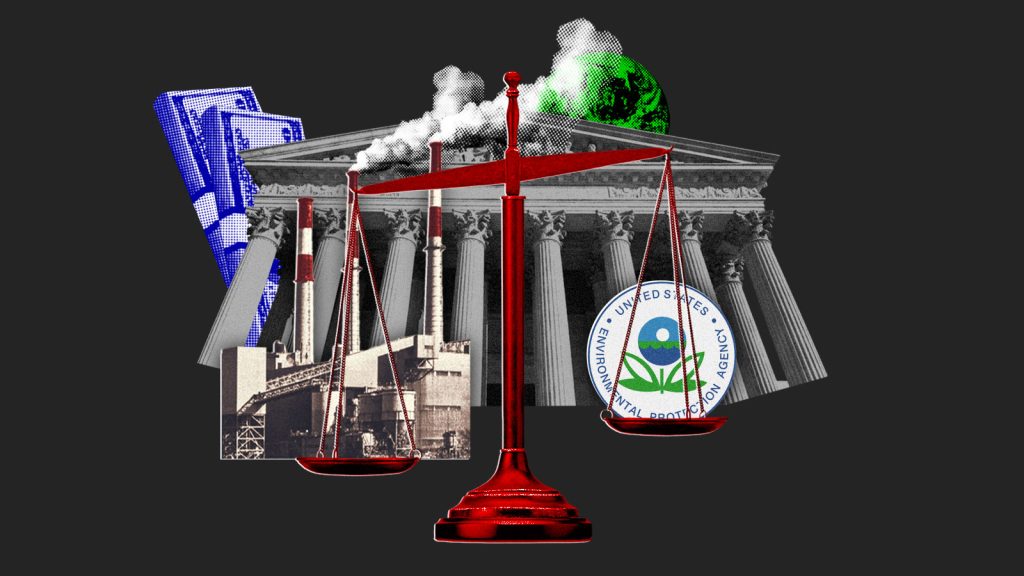
Photo taken from: Grist / Getty Images
Policy Summary
[SSB theme=”Official” align=”center” counter=”true” ]
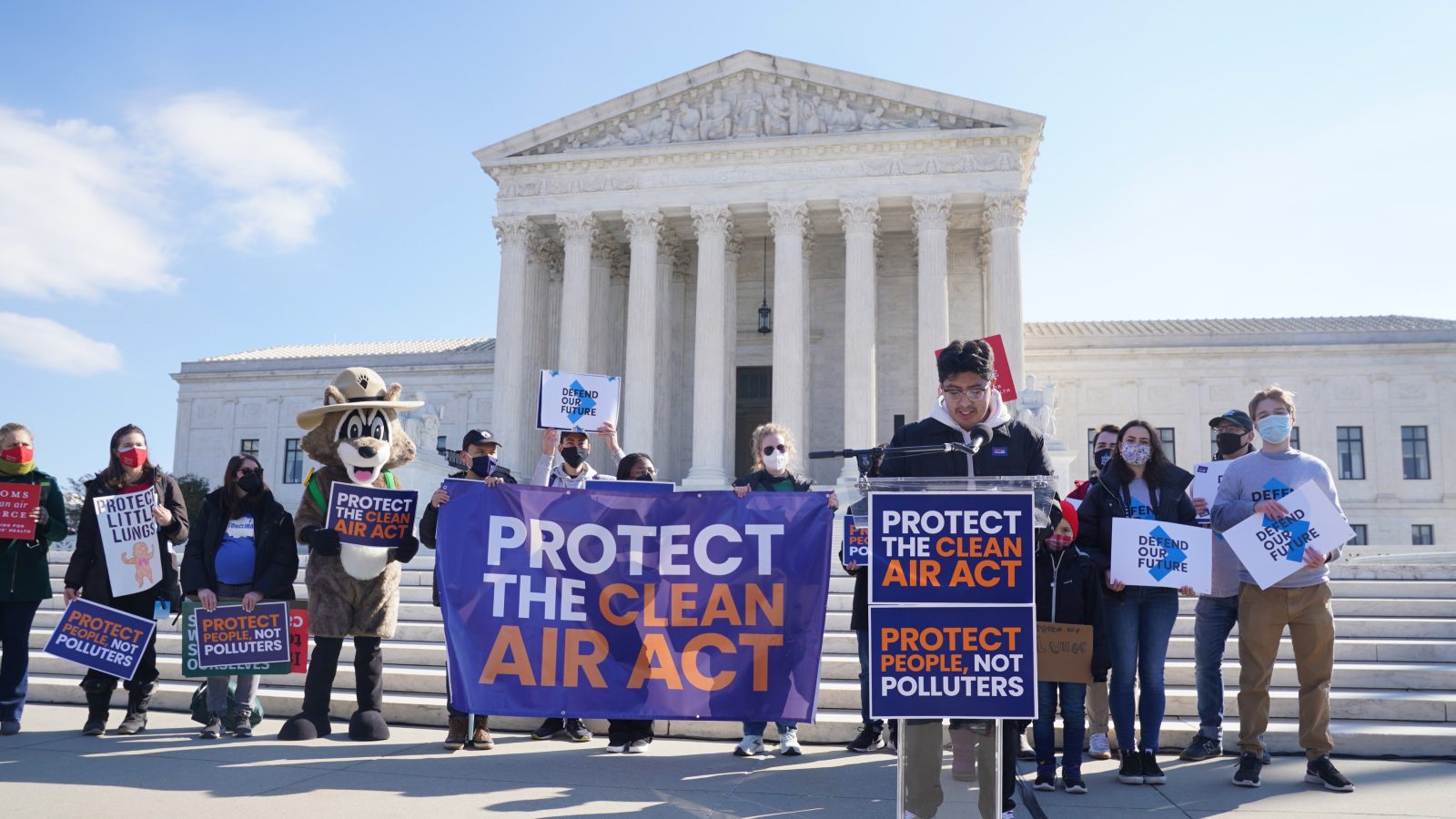
On June 30th, the US Supreme Court, in a 6-3 vote, issued a ruling on the case West Virginia v. EPA, to limit the authority of the Environmental Protection Agency (EPA) to regulate greenhouse gas emissions released by power plants that burn fossil fuels. The major coal producing state, West Virginia, along with a group of Republican-led states, various coal companies, and coal-friendly industry groups challenged the EPA’s authority to impose blanket regulations across an entire industry, asking the Supreme Court to limit the EPA’s ability to regulate greenhouse gas emissions from existing power plants. The court’s six conservative justices were in the majority in the ruling, with the three liberal justices dissenting.
The ruling does not eliminate the EPA’s authority to regulate greenhouse gas emissions, but it does considerably limit the scope by which the agency can do that. During the Obama administration, the EPA was given authority to reduce power plant carbon emissions through “a holistic or system-wide approach to reducing greenhouse gas emissions under the Clean Power Plan.” This plan allowed existing power plants to use so-called “outside-the-fence” measures, such as shifting some operations from coal to natural gas and renewable energy sources, or offsetting carbon emissions at one plant by reducing them at another to meet overall compliance standards. The plan, however, was revoked by the Trump Administration. Additionally, the Obama administration set state-by-state carbon limits and encouraged states to rely less on coal and more on alternative energy sources.
This program was ultimately blocked by the courts, but regardless, still met its targets 11 years ahead of schedule because coal became too expensive compared to other energy sources. The issue debated by the court in June’s West Virginia v. EPA case focused on how the EPA is allowed to regulate coal-fired power plants, which in this country are the single largest source of carbon emissions contributing to climate change.
The court’s decision allows the EPA to continue to regulate greenhouse gasses under the Clean Air Act, an authority that was confirmed by the Supreme Court in a 2007 decision, Massachusetts v. EPA, but with this new ruling, now asserts that such broad regulations that target not just a single power plant and the technology it uses, but rather a whole system of power plants, “comprised too significant an intervention in the U.S. economy to be justified under the authority of the EPA alone, without specific guidance from Congress.”
With this ruling, the Supreme Court severely limits the EPA’s ability to initiate any systemic approach to combating climate change. The majority opinion in this ruling based its argument on what the court has called “the major questions doctrine.” The court said that “neither the EPA nor any other agency may adopt rules that are transformational to the economy–unless Congress has specifically authorized such a rule to address a specific problem, like climate change.” In delivering the ruling, Chief Justice John Roberts pronounced that “The agency instead must point to ‘clear congressional authorization’ for the power it claims.”
Policy Analysis
Harvard law professor Richard Lazarus, an expert on environmental law, says, “That’s a very big deal because they’re not going to get it from Congress because Congress is essentially dysfunctional. This could not have come at a worse time … the consequences of climate change are increasingly dire and we’re running out of time to address it.” While this ruling handicaps the EPA’s ability to reduce carbon emissions fast enough to meet the Biden Administration’s 2030 greenhouse gas emissions goals, the agency could still potentially require coal- and gas-fueled energy producers to use carbon capture and storage processes when generating electricity, as an additional means for limiting emissions.
There are other federal actions that can be taken to reduce greenhouse gas emissions as well, such as revising fuel efficiency standards, appliance standards and tax credits to reduce emissions. State policies and corporate commitments to emissions reductions are also still in place. This Supreme Court decision, however, sets the stage for limitations on other federal agencies and their power to impose regulations as well and raises new legal questions about any big decisions made by federal agencies.
According to Case Western Reserve professor, Jonathan Adler, “The Court is definitely sending a signal to regulatory agencies more broadly that they only have the power that Congress delegated to them, and that agencies need to think twice before they try to pour new wine out of old bottles.” As Adler explains, an agency “can’t simply retrofit an old statute to create new tools or new mechanisms” to address a problem, even when that problem is within the agency’s jurisdiction. For instance, a new interim rule adopted by the Federal Energy Regulatory Commission “aimed at treating greenhouse gas emissions and their contribution to climate change the same as all other environmental impacts [the Commission] considers” may be threatened by this new ruling.
Professor Lazarus believes the ruling will have an immediate impact on the United States’ ability to fight climate change. Lazarus told NPR in an interview, “Remember when Joe Biden was elected, he said we’re going to use a whole big government approach to climate change, not just EPA regulation. Well, that whole government approach may now find itself under a cloud of this court’s opinion.” This ruling indicates that our current Supreme Court, and its conservative majority, will be a major obstacle to federal agencies seeking to implement broad policies of national importance.
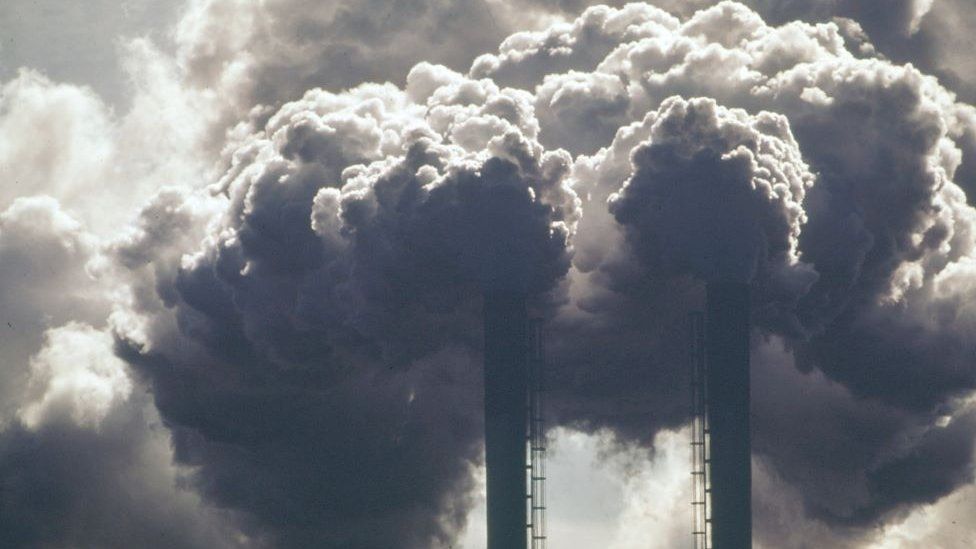
Photo taken from: Getty Images / BBC
(click or tap to enlargen)
In her dissenting opinion, Justice Elena Kagan, explained that the Court is making up new rules that contradict nearly a century of regulatory law. Kagan points to the text of the Clean Air Act, which “clearly anticipates that the EPA will have to deal with new problems and uses broad language to allow that.” The conservative Court majority, Kagan says, “does not have a clue about how to address climate change…yet it appoints itself, instead of congress or the expert agency…the decision-maker on climate policy. I cannot think of many things more frightening.”
Contrary to Justice Kagan’s opinion, Chief Justice Roberts wrote that while forcing a nationwide energy transition by capping carbon emissions might be sensible, “it is not plausible that Congress gave the EPA the authority to adopt on its own such a regulatory scheme.” However, Justice Kagan argues that Congress did give the EPA such authority. Kagan writes, “The limits the (Court’s) majority now puts on EPA’s authority fly in the face of the statute Congress wrote,” adding that the court “deprives the EPA of the power needed – and the power granted – to curb the emission of greenhouse gasses.” Further, Justice Kagan notes that the Court is attempting to derail President Biden’s climate agenda before his administration has even issued its rule.
According to West Virginia Attorney General, Patrick Morrisey, the ruling is a “huge victory against federal overreach and the excesses of the administrative state.” But as Justice Kagan emphatically asserts, the Court’s goal with this ruling is painfully clear: “Prevent agencies from doing important work, even though that is what Congress directed.”

Photo taken from: OMFIF
President Biden called the ruling “another devastating decision that aims to take our country backwards.” In a statement Biden said, “While this decision risks damaging our nation’s ability to keep our air clean and combat climate change, I will not relent in using my lawful authorities to protect public health and tackle the climate crisis.” The President said he has “directed his legal team to work with the Justice Department and affected agencies to review the ruling and find ways under federal law to protect against pollution including emissions that cause climate change.”
On the bright side, Amanda Shafer Berman with the law firm Crowell & Moring, and a former senior environmental attorney in Obama’s Justice Department, said the ruling was “about the best that EPA could have hoped for given the current composition of the court.” Berman said the EPA can now proceed to issue a new rule that regulates power plant carbon dioxide emissions “albeit in a more limited way than envisioned” under Obama’s plan.
The Supreme Court’s decision came on the final day of rulings for the Court’s current nine-month term, and unfortunately, seems to reject any holistic regulatory approach to dealing with climate change. However, the Biden administration is still committed to making the U.S. power sector decarbonized by 2035. Despite these obstacles imposed by the Supreme Court, the President and his administration understand that the United States, behind only China in greenhouse gas emissions, is a pivotal player in efforts to combat climate change on a global basis, and swift, bold action is essential to avoiding the most catastrophic impacts.
Even if Republican-led states and a conservative Supreme Court refuse to do what is necessary, Democratic-led states and major power companies including Consolidated Edison Inc (ED.N), Exelon Corp (EXC.O), PG&E Corp (PCG.N), and the Edison Electric Institute, an investor-owned utility trade group, have sided with the Biden administration’s position, acknowledging the need for a swift transition of the United States’ energy sector away from fossil fuels.
Engagement Resources
Click or tap on resource URL to visit links where available

The Nicholas Institute for Environmental Policy Solutions (duke.edu) – Meeting the energy needs of a growing population, while protecting the air and environment surrounding us, is the chief focus of the Climate and Energy Program at the Nicholas Institute for Environmental Policy Solutions.
By utilizing the interdisciplinary resources available at Duke University, the Nicholas Institute’s Climate and Energy Program is assessing how policies can work together and weighing their tradeoffs through a number of projects at the state, federal, and international level.

The Natural Resources Defense Council (NRDC) – To learn more about the Clean Air Act, the background to this Supreme Court decision, the implications of the ruling, and how to take action, check out the NRDC and the important work being done to fight for climate-smart policy.
Writer’s Resources

Hurley, L., & Volcovici, V. (2022, July 1). U.S. Supreme Court limits federal power to curb carbon emissions. Reuters. Retrieved August 1, 2022, from https://www.reuters.com/legal/government/us-supreme-court-limits-federal-power-curb-carbon-emissions-2022-06-30/
Khanna, S. (2022, July 1). Supreme Court ruling limits EPA’s authority to restrict greenhouse gases from energy production. Duke Today. Retrieved August 1, 2022, from https://today.duke.edu/2022/07/supreme-court-ruling-limits-epa%E2%80%99s-authority-restrict-greenhouse-gases-energy-production

Totenberg, N. (2022, June 30). Supreme Court restricts the EPA’s authority to mandate carbon emissions reductions. NPR. Retrieved August 1, 2022, from https://www.npr.org/2022/06/30/1103595898/supreme-court-epa-climate-change

Profiles of U.S. Anti-Abortion Groups
Profiles of U.S. Anti-Abortion Groups
Health and Gender Policy Brief #139 | By: Geoffrey Small | August 1, 2022
Header photo taken from: Center for American Progress
Follow us on our social media platforms above
Browse more health and gender policy briefs from the top dashboard

Photo taken from: Adriana Zehbrauskas / The New York Times
Policy Summary
[SSB theme=”Official” align=”center” counter=”true” ]
With Roe v. Wade overturned, a deluge of anti-abortion trigger laws have gone into effect across the country. States like Louisiana, Texas and Missouri have created some of the strictest laws and legislative proposals in the United States.
Recent proposals include criminal and civil prosecutions for providers, people who aid in out-of-state abortions, and potentially the patients who receive them.The overwhelming restrictions and bans that were put in place after the Supreme Court decision wouldn’t have been possible without coordination from anti-abortion groups aiding state legislators.
The Thomas More Society, National Right to Life Committee, and Abolish Abortion are some of the most influential organizations that are coordinating with Republican-led states to create new laws and help enforce them. In order to understand the long-term planning and legal coordination that has taken place in anti-abortion states, a profile of these groups can highlight the efforts being made to oppress reproductive rights.
Policy Analysis
The Thomas More Society
The Thomas More Society was founded in 1997 by corporate attorney Tom Brejcha after representing Joe Scheidler, an anti-abortion activist that was a defendant in the Supreme Court Case NOW (National Organization for Women v. Scheidler. The court case declared that a network of anti-abortion activists could face RICO (Racketeering Influenced and Corrupt Organizations Act) charges, commonly used in organized crime prosecutions.
Today the organization is coordinating with Republican state legislatures to propose laws that would allow private citizens to sue individuals who aid patients living in anti-abortion states with receiving an out-of-state procedure.
Peter Breen, the Senior Legal Counsel and Vice President stated in a Washington Post article “I see civil enforcement as important for the entire abortion law because of this issue of public officials not enforcing laws they don’t like.”

Photo taken from: DailyKos.com
(click or tap to enlargen)
The National Right to Life Committee
The NRLC was founded in 1968 and boasts 3,000 local chapters in all 50 states. NRLC claims to be the oldest and largest anti-abortion organization, with a goal of aiding in the development of new legislation.
After the Supreme Court decision to overturn Roe V. Wade, the organization released a model law that allows state officials, local officials, the father, or other family members to sue abortion providers.
Additionally, as a clear response to NOW v. Scheidler, the law states abortion providers would also be subject to RICO laws.

Photo taken from: texasobserver.org
Abolish Abortion
Abolish Abortion was founded by Bradley Pierce, a Constitutional Attorney who filed a brief during the Dobbs v. Jackson Women’s Health Organization, the Supreme Court case that overturned Roe v. Wade. Not only was he influential in helping pass abortion restrictions in Texas, but he is currently working with Louisiana State Representatives to pass a law that would allow prosecutors to criminally charge patients who receive an abortion as a homicide . This proposal forced many anti-abortion groups to sign an open letter, led by the NRLC, to oppose the criminalization of patients. However, Pierce was opposed to this stance stating to The Washington Post that this Louisiana bill “would have done exactly what [the signees] say they believe. That is, treat a person before birth as being worthy of protection.”
Despite the internal differences in these organizations’ positions on the severity of anti-abortion legislation, they remain united in their victory in overturning Roe v. Wade. All of these organizations are working to diminish generations of reproductive rights that women in the United States were afforded. Planned Parenthood and the ACLU are the two major organizations that are fighting back against the new laws and proposals that these influential anti-abortion organizations are developing. Therefore, it is crucial to donate to these organizations, in order to help protect patients from the potential to be criminally prosecuted for making decisions about their reproductive health.
Engagement Resources
Click or tap on resource URL to visit links where available



Round 10 in the Fight to Save the Planet – and Fatigue Has Set-in
Round 10 in the Fight to Save the Planet – and Fatigue Has Set-in
US Renew Op-Ed | By: Todd J Broadman | August 1, 2022
Header photo taken from: AP Photo / Noah Berger
Follow us on our social media platforms above
Browse more U.S. Resist News Op Eds from the top dashboard

Photo taken from: Caitlin O’Hara / The New York Times
Policy Summary
[SSB theme=”Official” align=”center” counter=”true” ]
Global warming as our single most important political issue has begun to wane, taking a backseat to economic concerns. A scant 1 percent of those recently polled by the New York Times / Siena College perceive climate change as the most important U.S. issue. That low ranking for climate as an issue held true for those under 30 as well. As this is a long-term issue and one that requires long-term determination, the apparent widespread apathy is cause for concern.
While we know that party affiliation plays a role in the perceived importance of this topic, we also know that if there is no direct experience of the impact of climate change on an individual’s life, motivation to act tends to waiver and often declines. In each succeeding year since 2010 there have been increasing extreme weather events that do impact lives. 2021 was the fourth-hottest in United States history. And the media is covering this summer’s wildfires and droughts, providing updates on Europe’s plight. Americans tend to feel more of a relationship with Europeans than they do with other groups.
A recent comment reflects broader change in voter sentiment: “Climate change is always going to be a problem. That’s just a given. Honestly, there’s only so much our leaders of the country can do.” Inflation, and its effect on housing and food, have now taken center stage along with the overturning of Roe vs. Wade. Over and above this, “People are exhausted by the pandemic, they’re terribly disillusioned by the government,” observed Anusha Narayanan, climate campaign director for Greenpeace.
Those whose passions were ignited by Greta Thunberg and Al Gore before her, have witnessed grand proclamations to address climate change only to be let down by lack of action on the ground. Last week, we saw an ambitious $2 trillion dollar program to reduce carbon emissions all but expire in the Senate due to concerns about inflation and tax hikes. A paltry $2.5 billion to assist with an infrastructure of electric vehicle charging stations was approved. This will do little to meet bold pledges to cut CO2 emissions.
Meanwhile, the latest IPCC projections put the earth on track for a temperature rise of 3°C (5.4°F) rise by the year 2100. UN secretary-general António Guterres described this latest report as “an atlas of human suffering and a damning indictment of failed climate leadership.” In the face of being directly in line with devastating climate impacts, citizens are reacting to what they perceive as a failure of leadership and turning away. It remains to be seen if a unified political movement can re-emerge, even if large numbers in the U.S. become displaced climate refugees.
Policy Analysis
The political paralysis characteristic of the U.S. legislature is just one of several significant developments that have led to a malaise and growing disappointment over repeated missed opportunities to take action to save a threatened planet. There is also the ever-present blame-game. China, the world’s largest emitter would not commit to any concrete actions to reduce their carbon footprint at COP26. 75% of India’s electricity is generated by burning coal and their position is to increase its usage going forward. With this as backdrop, the U.S. justifies its finger-pointing and rationalizes inaction.
The world’s poor, largely in the southern hemisphere point their fingers at the relatively wealthy north who they claim are the cause of their looming climate plight. More than half of Africa’s population will likely be displaced due to drought and resulting famine conditions now underway. At COP27 – to take place in Egypt in November – financing from the rich to the poorer countries in the form of a “loss and damage facility” will be on the agenda. We are already in the damage mitigation phase, and here we can expect little in the way of actual funding and coordination on the ground.
Consistent with the paralysis and finger-pointing is the long string of broken promises. The G7 broke a promise by making the decision to invest in the liquefied natural gas (LNG) industry. Germany issued this as rationale: “[Our investment is] a necessary response to Russia’s war on Ukraine and the related impacts on global fossil fuel supplies.” The U.S. for its part would seem more transparent about its lack of intention to keep its promises. There will be no “Build Back Better.”

Photo taken from: Down to Earth (.org)
(click or tap to enlargen)
The media itself, a corporate oligopoly itself, has played a key role in downplaying the need for political action while intensifying the concerns of buck-passing and finger-pointing. The media has determined their own economic model is not enhanced by in-depth reporting and holding politicians to promises, even when it involves the fate the living planet. Extractive industries and the banks that fund them are given a relatively free hand to continue their pursuit of profits without consequences. The media again remains silent.
In a sense, at least in the U.S., the waning interest in climate change can be seen as a victory by polluting industries and their well-managed and sumptuously funded information campaigns. Charles Koch who heads Koch Industries, the largest private company in the U.S., best exemplifies the effectiveness of “dark money.”
The right-wing activist network that he and partners financed over many years has paid dividends in the appointment of Supreme Court justices and their resulting decisions. One observer noted that the West Virginia v. EPA decision “represents the culmination of years of attacks by Koch-funded groups on these rules.” The power of predatory capitalism overrides environmental concerns.
There has been a tangible capitulation and surrender to these forces. Those who are willing to make sacrifices for a renewed planet are becoming more dejected. All the reasons I have described for this foreboding trend are contained within a statement given by Chuka Umunna, head of Environmental, Social and Governance for JP Morgan, when asked about their continued financing of the petroleum industry.
“We reflect society. Society has not come off oil and gas. We all want to get to the promised land where we do substantially reduce our reliance on oil and gas. But we do not, unfortunately, have renewables at scale right now to replace oil and gas… And that’s not JP Morgan’s fault. That is society’s challenge.”
The values menu has not changed: profits before people and planet. And we are witnessing the stunning success of that values mission in the demoralized apathy of the citizenry.