

JOBS POLICIES, ANALYSIS, AND RESOURCES
Latest Jobs Posts
Should Euthanasia and Assisted Suicide be Legal in the United States?
Brief #137 – Health & Gender
By Inijah Quadri
The debate surrounding euthanasia and assisted suicide in the United States is a complicated one. On one side of the argument are those who believe that people have a right to die with dignity, and that euthanasia and assisted suicide should be legal options for individuals who are terminally ill or suffering from a debilitating condition. On the other side of the argument are those who believe that euthanasia and assisted suicide are immoral, and that they should not be legal options for anyone.
U.S. Department of Justice Brings Voting Rights Lawsuit in Arizona
Brief #192 – Civil Rights
By Rodney A. Maggay
In March 2022 Arizona’s Republican Governor Doug Ducey signed into law HB 2492. The law is scheduled to go into effect in January 2023. The law included a number of voting restrictions that the Arizona Legislature wanted to implement.
Brittney Griner’s Trial in Russia
Brief #141 – Foreign Policy
By Reilly Fitzgerald
The WNBA is the premier basketball league in the world for professional female basketball players and has been at the center of American media attention due to the trial of Brittney Griner in Russia. Brittney Griner, an American basketball player, who plays for the WNBA’s Phoenix Mercury.
Griner was arrested quickly after the Russian invasion into Ukraine; with critics of the Putin regime and war suggesting that she was arrested as a political pawn, however, her charges are regarding the use of hashish oil which is illegal in Russia.
Biden-Harris Administration Pushing Back on Abortion Rights
Brief #156 – Health & Gender Policy
By Stephen Thomas
Striving to be proactive in reinstating abortion rights that the U.S. Supreme Court curtailed June 24, the administration of President Joseph R. Biden Jr. and Kamala D. Harris is taking steps to safeguard a right that the high court established in Roe v. Wade in 1973.
With Roe v. Wade Overturned, Some States Fight Back
Brief #157 – Gender and Health Policy
By Geoffrey Small
According to the Pew Research Center, the total number of abortion providers in the United States has decreased since 1982. The recent Supreme Court decision to overturn Roe V. Wade may lead to further decreases and declining accessibility.
The Ukraine Crisis #10
Brief #141 – Foreign Policy
By Abran C
As fighting continues to rage in Ukraine’s East, Russian President Putin on Monday, July 4th, 2022 declared victory in the region of Luhansk, only one day after Ukrainian forces withdrew from their last remaining bastion of resistance in the province, the city of Severodonetsk, which is now in Russian hands.
SCOTUS Tightens its Noose Around Another Federal Agency: the EPA
Brief #144 – Environment Policy
By Todd J. Broadman
The recent SCOTUS decision in the West Virginia vs. EPA case, though not unexpected, is further support for a clear ideological direction underway at the Court. The case was brought by several Attorney Generals along with mining industry plaintiffs from major coal producing states. The 6-to-3 decision in favor of the plaintiffs applies directly to the EPA’s authority to regulate the carbon emissions of power plants under the (Obama) 2015 Clean Power Plan.
Representative Boebert’s “Separation of Church and State
Brief #191 – Civil Rights
By Rodney A. Maggay
On June 26, 2022, Representative Lauren Boebert (R-CO) made remarks at the Cornerstone Christian Center in Basalt, Colorado about the role of religion and government in the United States. Representative Boebert stated, “The church is supposed to direct the government. The government is not supposed to direct the church.
Future of Abortion Medication and Women’s Equality: Look to Europe
Brief #154 – Health and Gender
By Geoffrey Small
On June 24, 2022, the U.S. Supreme Court overturned the landmark ruling and protections for abortion rights , Roe V. Wade. Recent polls indicate that the majority of U.S. citizens oppose this ruling, because it infringes upon women’s equality and their right to choose. This Supreme Court decision has made a seismic impact on accessibility to procedures that were previously available for generations of women.


Virtual Realty Education: The Future is Now.
Virtual Reality Education: The Future is Now.
Technology Policy Brief #69 | By: Erik Pillar | February 24, 2022
Header photo taken from: WINK News
Follow us on our social media platforms above
Browse more technology policy briefs from the top dashboard

Photo taken from: Perfect Design
Policy Summary
[SSB theme=”Official” align=”center” counter=”true” ]
Virtual reality in the modern age sees increased potential for online learning and education amidst the continued Covid-19 pandemic.
A charter school in Florida, The Optima Classical Academy, recently announced its intention to offer a tuition-free full virtual reality learning environment to students starting August 10th, 2022. According to the school’s website, the curriculum will be based on a classical education format with a heavy emphasis on history, classical literature, and logical reasoning skills. When the school opens, classrooms will be offered for grades 3-8, with plans for high school years to be added in the future.
Students at Optima will spend four hours a day of schooling with a teacher in a virtual environment, and four hours of free learning time. Students will be able to learn through digital recreations of historical locations, such as the Oval Office in the White House, sites in Ancient Rome and other grand historical locales.
Those interested in enrolling can navigate to https://www.optimaclassical.org/prospective-families/enrollment/apply-for-lottery and sign up for a lottery to obtain a seat.
Scientists and experts in child development and learning are interested in the use of VR in education. Stanford University recently released a study called Accessibility of Educational Virtual Reality for Children during the COVID-19 Pandemic. The study aimed to answer several key questions related to children and virtual reality use, and education, during the pandemic. Overall, their findings support a high rating being given to the technology by parents who were interviewed. Those parents, who took part in the study, commonly reported that virtual reality technology was more engaging and stimulating to their children than other methods of schooling.
One parent said, “My daughter takes Russian in school, and she’s very interested in it… in the language, in the country, so I gave her Wander (A VR software to explore digital locations) and said, ‘Go to St. Petersburg or go to Moscow.’ And we would pass the headset back and forth and do that.”
The full study can be read at: https://stanfordvr.com/pubs/2022/accessibility-of-educational-virtual-reality-for-children-during-the-covid-19-pandemic/
Policy Analysis
Virtual Reality offers an alternative to real time learning in a Metaverse, a virtual universe of worlds, servers, all connected and accessible for users to travel and live within; an idea that has been explored in popular genre fiction both recently and in the past.
The original VR metaverse was in William Gibson’s 1984 novel titled Neuromancer. That novel focused less on educational prospects and more on the metaverse as being a world within a world, a place just as real as the physical, but not. More recently, the hit novel and film Ready Player One helped further popularize VR, including its use in schools. With the first full virtual realty school for children opening, we may see more VR classrooms should it prove to be a success.

Photo taken from: Digital LA
(click or tap to enlargen)
If VR based learning were to become accepted mainstream, the gap in quality education for many rural or densely populated metro families could be bridged. However, the cost of set up may be a barrier to schools serving low-income communities.
Engagement Resources

Steam’s VIVE

Windows Mixed Reality

Meta’s Oculus
There are three primary shippers of the technology. From video game platform giant Steam, we have the VIVE, Windows shows us their Windows Mixed Reality, and the company formerly known as Facebook -now Meta- sponsors the OCULUS.
The three current primary headsets for Vive are the HTC VIVE PRO 2, the VIVE FOCUS 3, and the VIVE FLOW.
The PRO 2 is a powerhouse of technology offering 5k resolution with an increased field of view and advancements in the technology to eliminate most graphical fidelity problems from previous versions. Notably for gamers is that the PRO 2 offers full 120 Hz refresh rate, a near must to avoid motion sickness in fast paced gaming. The PRO 2 hits a high price though, with all additions included, of $1399 USD.
The VIVE FOCUS 3 brings most of the power of the PRO 2 but is marketed for businesses or training simulations and is less made for gaming. As such, some of the comforts of the PRO are missing or lessened, such as a lesser refresh rate. It makes up for what it is missing in having more advanced tracking software, hand tracking, not only motion controller, and it offers the possibility of wireless use. At the high end, the FOCUS 3 will cost up to $1300 USD.
Further differences between the PRO 2 and FOCUS 3 can be found in an excellent comparison chart at: https://versus.com/en/htc-vive-focus-3-vs-htc-vive-pro-2
The VIVE FLOW is tailored for more casual users. Flow has a much smaller resolution than either previous option, a lesser refresh rate, and a smaller field of view. It is much lighter however, is run right off your phone, and by default comes with a wireless option. The FLOW is made for those seeking VR experiences, such as meditation, yoga, movie watching, and other such less graphic intensive uses. The FLOW comes in cheapest of the VIVE headsets at a high of $499 USD.
Meta’s The QUEST 2 can be used with a PC or without, wireless at a diminished compacity, comes with the Quest Touch motion controllers, and is designed for a minimalist appeal. QUEST 2 runs at slightly less than true HD 4K resolution and comes with a max of 90 Hz refresh rate. The QUEST 2 will run up to $299 USD for its full bundle.
Windows Mixed Reality is Microsoft’s stab into the VR market. Mixed Reality is no different from VR, the change in name is only for branding purposes. The two primary options for Mixed Reality are the SAMSUNG ODYSSEY+ and the HP REVERB.
The ODYSSEY+ comes with a less than true HD 4K resolution, a 90 Hz Refresh rate, and proprietary screen technology to cut down on graphical issues and to improve the performance of the machine beyond its base specs. It comes with built in headphones and sports a wide range of adjustment and fit options, including interpupillary distance dials to physically move the screens to exactly fit your eye placement. The ODYSSEY+ is designed to not require any external tracking stations, comes with Samsung motion controllers, and will run up to $399 USD.

Biden Administration Plans to Construct an Alternative Fuel Corridor Across the Country
Biden Administration Plans to Construct an Alternative Fuel Corridor Across the Country
Environment Policy Brief #137 | By: Jacob Morton | February 25, 2022
Header photo taken from: KOTA
Follow us on our social media platforms above
Browse more environment policy briefs from the top dashboard

Photo taken from: Pima Association of Governments
Policy Summary
[SSB theme=”Official” align=”center” counter=”true” ]
Earlier this month, the Biden administration announced its plan to spend $5 billion to install electric vehicle (EV) charging stations along the nation’s highways. The $1.2 trillion bipartisan infrastructure package includes $7.5 billion allocated to building “a sprawling network of EV charging stations across the country,” and to “facilitate data collection, access, and reliability.” Biden’s plan intends to spend the first $5 billion over a span of five years, by providing funding directly to states that submit their own plans for developing their portion of what the administration calls an “Alternative Fuel Corridor,” that would connect forty states along interstate highways across the country.
Each state would have to submit its plans by August 1, 2022, on how the money would be used to create its section of the Alternative Fuel Corridor with EV charging stations and other EV infrastructure. The plans will be required to meet Federal Highway Administration guidelines, and the agency will approve eligible plans by September 30, 2022. The White House recently unveiled a new agency, the Joint Office of Energy and Transportation, to oversee this effort.
The US Department of Transportation has released a state-by-state disbursement plan that shows the largest funding levels going to Texas, California and Florida — the three most populous states, but also says 40 percent of the funding will be directed to underserved and rural areas.
This initial $5 billion will be divided and allocated to states through the new National Electric Vehicle Infrastructure (NEVI) Formula Program, which will also distribute the remaining $2.5 billion in available funding through discretionary grants later on. Funding from those grants will be eligible for installing EV stations along the Alternative Fuels Corridor, as well as for general community EV charging infrastructure, with the intent of creating access to EV charging stations in rural and underserved areas. The details of this grant program will be announced later this year.
The funds provided to states can only be used for battery-electric vehicles, not hydrogen or other alternative energy vehicles, and states can team up with private enterprises to build and maintain the stations. However, it will be up to the states to decide what kind of chargers to install. There are two types of EV chargers, DC fast chargers, which can charge a car to mostly full in 20-30 minutes, and L2 chargers, which can take hours. Typically, DC fast chargers cost around $100,000, compared to around $6,000 for a L2, according to Ellen Hughes-Cromwick, a senior resident fellow at the think tank, Third Way.
Hughes-Cromwick says that states will have to find the right balance between the faster, more expensive chargers and the slower, cheaper ones, but explains that generally, DC fast chargers are meant to be installed along highway corridors and at rest stops, while L2 chargers make more sense for homes, workplaces, restaurants and shopping centers, where people have time to step away from their vehicle. Additionally, she notes that while a L2 costs only $6,000, but charges much slower, “you can still put a lot of plugs in.”
According to the Department of Energy, there are currently around 45,000 publicly available charging stations across the United States. Biden’s plan seeks to build half a million more – five times the current number – by 2030. The goal is for owners of electric vehicles to be able to find a charging port anywhere within 50 miles of their location across all 50 states, the District of Columbia, and Puerto Rico.
Policy Analysis
According to Transportation Secretary, Pete Buttigieg, this funding will place America in a position to “lead the electric vehicle revolution.” Buttigieg says, “This is about making sure everybody can get in on the EV revolution, it’s already happening, but we have to make sure that it’s made in America; that everyone benefits from cities to rural areas.” To this end, the White House has been pushing for charging stations to be built domestically.
President Biden also has touted an Australian company called Tritium that is set to build a manufacturing facility in Tennessee that will produce up to 30,000 DC fast chargers each year and create 500 local jobs. According to forecasts from consulting firm Alix Partners, roughly 24% of new vehicles sold worldwide are likely to be fully electric by 2030, and the US sits behind Europe and China as the world’s third-largest market for EVs. “China has been leading the race up to now, but this is about to change,” says Biden. The President also argues that the program could save an average driver up to $1,000 each year on fuel costs when they switch to an electric vehicle.
The transportation sector accounts for one third of all US greenhouse gas pollution, and the Biden administration has pledged that half the vehicles sold in the US will be electric or plug-in hybrids by 2030. However, Energy Secretary, Jennifer Granholm, says, “We’re not going to go electric fast enough if we don’t have the ability to eliminate range anxiety for people and to be able to have them plug in wherever they live, wherever they work, wherever they want to head.” Granholm proclaims the infrastructure developed with these funds will allow “drivers across America to save money and go the distance, from coast to coast.”
Reports show that electric vehicles made up less than 3% of new auto sales last year, and while that number is expected to increase within the next decade, Deputy Federal Highway Administrator, Stephanie Pollack, says, “Americans need to know that they can purchase an electric vehicle and find convenient charging stations when they are using Interstates and other major highways.” However, the administration also recognizes that the cost of an electric vehicle is a significant roadblock for many consumers.
Secretary Granholm says, “This is exactly why the president has pushed, as part of the Build Back Better agenda, to have tax credits for the purchase of electric vehicles, both new and used ones.” Granholm argues that while part of the equation for a successful transition to EVs is to eliminate range anxiety in consumers, we also must “focus on areas where we haven’t seen a big uptake in electric vehicles. Maybe they are in urban areas. It might be poor communities.” Unfortunately, the Build Back Better Act remains stalled in the Senate because Senators like Joe Manchin of West Virginia oppose providing a tax credit for vehicles made by union workers.

Photo taken from: Ars Technica

Photo taken from: Good Word News
(click or tap to enlargen)
According to Elizabeth Gore, senior vice president of political affairs at the Environmental Defense Fund, “The Administration’s announcement demonstrates that clean energy investments deliver for America.” Gore says, “Building out a national network of charging stations will mean less pollution, more jobs and cleaner cars. It will also allow more Americans to skip paying at the pump by making electric vehicles a practical choice for more working families.” Additionally, the White House expects this funding to catalyze more investment from businesses, utilities, and state and local governments.
Some supporters of the new program, however, feel the administration may have to be more ambitious. Connor Morgan, a spokesperson for the Zero Emission Transportation Association, says the number of charging stations actually required, “[is] going to depend on consumer behavior.” Morgan explains that “Instead of driving until the tank is empty and then stopping to fill up, EV drivers need to think about refueling whenever they’re parked and close to an available charger.” He says Biden’s infrastructure funding will help make those chargers more accessible.
Dan Becker, director of the Safe Climate Transport Campaign at the Center for Biological Diversity, also notes that officials must ensure access to charging stations is equitable. A 2019 study by the Department of Energy found that 80% of electric vehicle owners have chargers in their homes, but for those who live in apartment buildings or multi-unit housing, that option may not be available. Becker says that Biden’s plan for more charging stations “will allow them to enter the EV revolution.”
Engagement Resources
Click or tap on resource URL to visit links where available

- Zero Emission Transportation Association (ZETA): The Zero Emission Transportation Association (ZETA) is the first industry-backed coalition of its kind advocating for 100% of vehicles sold by 2030 to be electric vehicles. ZETA brings together industry, advocates, and nongovernmental organizations whose values and strategic interests are fulfilled by meeting the 2030 goal of every vehicle sold being an EV.

- Environmental Defense Fund (edf.org): For more than 50 years the Environmental Defense Fund has been using science and different perspectives to make the environment safer and healthier for us all. EDF’s scientists, economists, attorneys, and policy experts work in 28 countries, alongside hundreds of partners, to fight climate change and protect people and the planet.

- Center for Biological Diversity (biologicaldiversity.org): Reducing transportation emissions is one of the most vital steps in fighting the climate emergency, and solutions to the transportation problem are already available. Our nation needs to shift away from fossil fuel-powered vehicle dependence and toward zero emissions in all transport sectors. The Center for Biological Diversity wages innovative legal and grassroots campaigns, including the Safe Climate Transport Campaign, to protect people, wildlife and ecosystems from climate change and the dirty and dangerous fossil fuel industry. They work to eliminate greenhouse pollution and speed the just transition to 100 percent clean, renewable energy.
Writer’s Resources
Click or tap on resource URL to visit links where available

Dent, S. (2022, February 10). Biden Administration unveils $5 billion plan for EV charging infrastructure. Engadget. Retrieved February 23, 2022, from https://www.engadget.com/biden-administration-unveils-5-billion-plan-or-ev-charging-infrastructure-133022348.html?src=rss

Kasper, K. (2022, February 10). Biden administration green lights funds for Nationwide Electric Vehicle Charging Network. https://www.hawaiinewsnow.com. Retrieved February 23, 2022, from https://www.hawaiinewsnow.com/2022/02/10/biden-administration-green-lights-funds-nationwide-electric-vehicle-charging-network/

Martin, G. (2022, February 11). Biden administration backs $5B network of electric vehicle charging stations. Review-Journal. Retrieved February 22, 2022, from https://www.reviewjournal.com/news/politics-and-government/biden-administration-backs-5b-network-of-electric-vehicle-charging-stations-2527429/

Newburger, E. (2022, February 10). White House rolls out $5 billion funding plan to States for Electric Vehicle Chargers. CNBC. Retrieved February 23, 2022, from https://www.cnbc.com/2022/02/10/biden-rolls-out-5-billion-to-states-for-electric-vehicle-chargers.html

Nilsen, E. (2021, November 23). How Biden’s infrastructure funding could push more Americans into the Electric Vehicle ‘revolution’. CNN. Retrieved February 23, 2022, from https://www.cnn.com/2021/11/23/politics/biden-electric-vehicle-chargers-climate/index.html

Coping with Crisis: Teacher Shortages Will Last Longer than the Pandemic
Coping with Crisis: Teacher Shortages Will Last Longer than the Pandemic
Educational Policy Brief #50 | By: Lynn Waldsmith | February 24, 2022
Header photo taken from: National Education Association
Follow us on our social media platforms above
Browse more edcuation policy briefs from the top dashboard

Photo taken from: Education Week
Policy Summary
[SSB theme=”Official” align=”center” counter=”true” ]
America’s teacher shortage, which was worsening even before the pandemic, is now reaching crisis levels in many parts of the country as a growing numbers of educators are not planning to ever return to the classroom. School districts are scrambling to think of ways to cope with the immediate situation, including calling in the National Guard in some cases, and urging policymakers to act now to stem the tide of teaching professionals who are leaving.
“It’s a problem that existed pre-pandemic, it has been exacerbated by the pandemic, and the teacher shortage will not disappear with the pandemic,” Michigan State Superintendent of Public Instruction Michael Rice told Axios earlier this month.
A pre-pandemic (2018) state-by-state map from the Learning Policy Institute shows that teacher shortages were already severe in many parts of the country, with “teaching attractiveness ratings” varying based on compensation, teacher turnover, working conditions, and qualifications.
But the pandemic has severely worsened the problem. According to data released by the U.S. Bureau of Labor Statistics, employment in local government education rose by 29,000 in January but is down by 359,000, or 4.4 percent, since February of 2020.
The reason for the teacher shortage boils down to a basic supply and demand problem: more and more teachers are retiring or quitting as the pandemic makes a stressful profession even more exhausting and frustrating, while fewer students are graduating from universities to fill the available jobs.
Based on a survey of its members, the National Education Association released a statement earlier this month that indicated 55 percent of educators are thinking about leaving the profession sooner than they had originally anticipated.
“After persevering through the hardest school years in memory, America’s educators are exhausted and increasingly burned out,” NEA President Becky Pringle said. “School staffing shortages are not new, but what we are seeing now, is an unprecedented staffing crisis across every job category. This crisis is preventing educators from giving their students the one-on-one attention they need. It is forcing them to give up their class planning and lunch time to fill in for colleagues who are out due to Covid. And, it is preventing students from getting the mental health supports needed.
“This is a five-alarm crisis,” she added. “We are facing an exodus as more than half of our nation’s teachers and other school staff are now indicating they will be leaving education sooner than planned. If we’re serious about getting every child the support they need to thrive, our elected leaders across the nation need to address this crisis now.”
Policy Analysis
Putting aside all of the mounting obstacles teachers have faced in the past few years by trying to navigate through the coronavirus crisis and, most recently, the omicron variant, the national teacher shortage has been decades in the making. A drop-off in hiring teachers actually began during the financial crisis of 2008, as the birth rate began to decline. At the same time, chronically underfunding education has resulted in lower salaries and less generous pensions for teachers compared to other professions requiring a college degree, and pay equity still has a long way to go.
An Economic Policy Institute analysis shows that the wage gap between teachers and the remainder of the comparably educated workforce was about 21% in 2018, compared to only 6% in 1996. And while salaries for teachers have gone up 0.7% in the last quarter, that progress was just half the 1.5% average for all civilian workers. Besides older teachers who are opting to retire earlier than they might have, younger teachers are being lured by an abundance of better paying options.
But money is only the tip of the iceberg. Teachers continue to endure a litany of other grievances, including the politicization of curriculum, frustrations over standardized tests, concerns about class size, a lack of autonomy and inadequate resources and mentoring.
For administrators who need more adults in schools right now, desperate times call for desperate measures. School districts facing staff shortages have implemented actions ranging from cancelling school, shortening the school day, returning to remote learning, relaxing requirements for substitute teachers, and even calling in the National Guard.
Besides enlisting civilian state employees, including herself, to volunteer as substitute teachers, New Mexico Gov. Michelle Lujan Grisham has deployed the National Guard to teach in classrooms on an emergency basis.
The move has drawn mixed reactions, including gratitude from many parents but criticism from some who view it as a slight against teachers and a move that could create anxiety for some students whose communities have historically had hostile experiences with law enforcement.

Photo taken from: The Los Angeles Times
(click or tap to enlargen)
In January, police officers in Moore, Oklahoma served as substitutes, which drew both support and criticism from those who felt it wasn’t appropriate for armed officers in full uniform to teach. So far, New Mexico has been the only state to use National Guard troops in a substitute teaching role, but they have been called upon to drive school buses in at least 11 states.
In Michigan, Gov. Gretchen Whitmer recently signed a bill that temporarily allows school support staff – including bus drivers and cafeteria workers — to substitute teach with just a high school diploma. The state House Education Committee is also considering a Republican-sponsored bill that would allow districts to hire not-yet-certified education majors as paid teachers with their own classrooms for up to one year.
But education leaders say stop-gap measures like emergency substitute teachers and even teacher bonuses aren’t enough to address the problem of staff shortages over the long-term. In addition to increasing salaries for teachers, Michigan State Superintendent Michael Rice wants to see the state offer scholarships to education majors, extend loan forgiveness to current teachers, provide better mentoring of new educators, and ease restrictions on accepting teacher licenses from other states.
In California, some districts have been using state and federal Covid-19 recovery funds to increase teacher compensation and develop “high-retention pathways into teaching” Through teacher residencies and Grow Your Own (GYO) programs that recruit local community members into teaching, districts helped recruits with tuition reimbursement as they completed coursework toward their credentials.
GYO programs and residencies are considered important strategies for recruiting more teachers of color.
In any event, teacher shortages are a complex problem requiring multiple approaches to ensure that teachers get the support, respect and autonomy they deserve.
Engagement Resources
Click or tap on resource URL to visit links where available

Pre-pandemic (2018) teacher shortage state-by-state map:
How California is addressing teacher shortages:
https://learningpolicyinstitute.org/product/california-teacher-shortages-response-report
Learning Policy Institute’s recommendations to address teacher shortages:

U.S. Bureau of Labor Statistics data
https://www.bls.gov/news.release/empsit.nr0.htm

NEA survey of its members:

Michigan House Bill 5685 proposing college education majors be allowed to teach:

EPI report showing wage gap between teachers and rest of the educated workforce:
Economic Policy Institute’s agenda to address teacher shortage:

Situation Update #3: The Ukraine Crisis
Situation Update #3: The Ukraine Crisis
Foreign Policy Brief #144 | By: Abran C | February 24, 2022
Header photo taken from: Press TV
Follow us on our social media platforms above
Browse more foreign policy briefs from the top dashboard
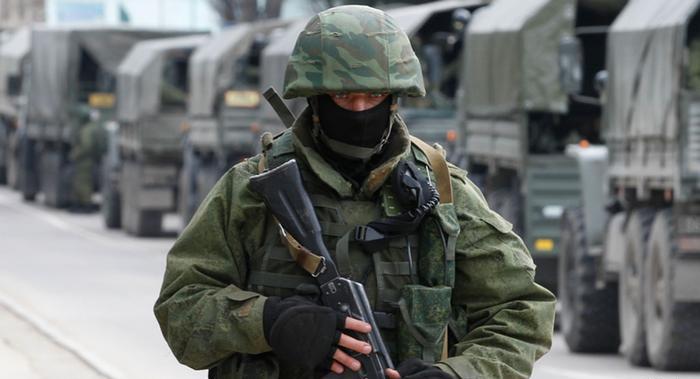
header photo: Biden says ‘this is the beginning of a Russian invasion’ as he announces sanctions
Photo taken from: Reuters
[SSB theme=”Official” align=”center” counter=”true” ]
On February 20, 2022, Belarus’ defense ministry announced that Russian troops which had been sent for military exercises and scheduled to return on Sunday would remain in the country indefinitely. The following day, Monday, February 21, 2022, Putin signed a presidential decree recognizing the independence of the separatist regions of Donetsk and Luhansk in eastern Ukraine. In his televised address, Putin described Ukraine as an integral part of Russia’s history and said eastern Ukrainian lands were ancient Russian lands.
On Tuesday, February 22, 2022, the upper chamber of the Russian Parliament, Federation Council, authorized the use of Russian armed forces in Ukraine. The Council’s decision comes after Russian President Vladimir Putin asked for the parliament’s permission to approve the use of the Russian military in the breakaway territories of Ukraine’s Donbas region. This decision marks the end of the Minsk peace deal which was signed in 2015 to bring peace to the area of Ukraine taken over by Russian separatists.
In his Monday address, Putin stated, “The Minsk agreements do not exist now, we recognized the DNR and LNR”. Condemnation from around the world swiftly followed. In response to the devolving situation, President Biden on Tuesday announced the implementation of sanctions against Russia. British Prime Minister Boris Johnson also said that the UK would press sanctions on five Russian banks. The German chancellor, Olaf Scholz on the same day, stopped the certification process for the Nord Stream 2 gas pipeline in response to Russia’s recognition of the two self-proclaimed republics. The U.S., UK, and EU together will impose harsh sanctions targeting Russian oligarchs, financial institutions, and its sovereign debt. The sanctions would effectively cut out the use of U.S. dollars (the global reserve currency) from the Russian institutions, as well as blocking it from trading in its debt using Western finance.

Photo taken from: The New York Times
(click or tap to enlargen)
President Biden also stated that NATO reinforcements would continue to operate in a defensive capacity, and would move additional troops to the Baltics to strengthen our Baltic Allies.
He emphasized that the United States would impose more sanctions if Russia moved forward with its invasion. Thus far only Cuba, Venezuela, Nicaragua, and Syria have joined Russia in recognizing the break-away regions of Donetsk and Luhansk.
As world leaders scramble to find appropriate counters to Russia’s invasion, the question now on everyone’s mind is, will Russia be content with its recognition of the regions within their current borders, or will it move to “regain” perceived lost territory of the separatist regions as a pretext for advancing further into Ukraine.

The Far-Right Insists That Even Butterflies Recognize Borders
The Far-Right Insists That Even Butterflies Recognize Borders
Environmental Policy Brief #136 | By: Todd J. Broadman | February 21, 2022
Header photo taken from: The Week
Follow us on our social media platforms above
Browse more environmental policy briefs from the top dashboard

Photo taken from: AZ Central
Policy Summary
[SSB theme=”Official” align=”center” counter=”true” ]
The politics of immigration along the border between Texas and Mexico now involves the National Butterfly Center (NBC). The NBC is a 100-acre nature preserve located in Mission, Texas. Since 1993, the NBC has served as a protected migratory refuge for the monarch, the rare pale sicklewing, and over 80 other butterfly species. They host 35,000 visitors annually, most of them school age children doing field education and were forced to close their doors recently.
Far-right conspiracists and QAnon followers have concocted a false claim that the NBC has been a hub for human-trafficking and illegal migration, and spread those allegations over social media outlets. Their motivation for doing so stems from the NBC’s actions to halt the building of a section of the immigration border wall through their property. The building of that section began unannounced in the summer of 2017 with contractors onsite cutting down trees. Even the US Border Patrol was uninformed of the construction. Armed federal agents are now onsite to protect the contractors.
One of President Joe Biden’s first actions after taking office was to issue an executive order to immediately stop border wall construction. 458 miles of border wall had already been built prior to Biden’s order. The wall consists mostly of 18- to 30-foot steel bollards anchored in concrete. With a federal mandate to stop construction, the state of Texas approved funding and carried on with extending the border wall.
Along with the NBC, the Children’s Museum of Denver and other non-profit public institutions across the country have had to close their doors because of safety concerns directed at staff and visitors that emanate from confrontational conspiracists.
The NBC filed a number of lawsuits, the first in December of 2017 claiming that the government violated the National Environmental Policy Act and the Endangered Species Act. The government also had not exercised eminent domain. The US Border Patrol does have the legal authority to “patrol” without a warrant, but not necessarily to build. In Arizona there has been active opposition from the native O’odham tribe as that section of wall passes through their ancestral sacred lands at Quitobaquito Springs.
The We Build the Wall organization is also tightly aligned: it is led by Trump’s former chief strategist Steve Bannon and founder Brian Kolfage. The organization used social media to spread the word that the NBC is run by “left wing thugs with a sham butterfly agenda” along with the “rampant sex trade” taking place on their property.
NBC Executive Director, Marianna Treviño-Wright, has been vocal in her defense of Butterfly Center’s mission and has been met with death threats. Along with her condemnation and lawsuits directed at the far-right, she points out that Democrats “are asleep at the wheel.” In late January, Virginia Republican congressional candidate Kimberly Lowe showed up at the Butterfly Center demanding to see “illegals crossing on rafts” and ended up allegedly pushing Treviño Wright to the ground. Scott Nicol, a McAllen-based environmental activist, said “Biden won’t build these border walls, but if Texas Governor Abbott wants to build them, we will give him free bollards.” He was referencing a government surplus purchase program used by Texas to buy 1700 unused wall panels.
Policy Analysis
While the NBC received a temporary reprieve in 2019 when the site was exempted from wall construction in a Department of Homeland Security spending bill, there will be continued political pressure for construction to continue. In all of 2021, Customs and Border Protection agents encountered more than 2 million unauthorized people at the southern border, a record high.
Jared Holt, a resident fellow at Atlantic Council who follows digital extremism points to a trend: “This conspiratorial wing has gained so much sway that we’ll see more politicians catering directly to it, and that means we’re going to get more Marjorie Taylor Greenes.” Biden’s executive order was even challenged by Arizona Attorney General, Mark Brnovich, with an argument that stopping construction required the government to do an environmental impact study. He went onto argue that gaps in the border wall actually “enticed migrants.” The federal judge ruled against Brnovich and in his ruling concluded that one cannot “attribute the immediate increase in migration to cessation of construction activities, given the border wall would not have otherwise been completed overnight.”

Photo taken from: Newsweek
(click or tap to enlargen)
The need for the butterfly refuge has inspired donors and activists. The North American Butterfly Association has acquired an additional 350 acres near to the current NBC acreage that will soon be developed as a refuge for the rare Manfreda Giant-Skipper.
Meanwhile, Marianna Treviño-Wright is plaintiff in two separate lawsuits aiming to halt construction of the border wall and a defamation suit against Bannon’s We Build the Wall. (Bannon has raised over $20 million from far-right activists under the pretense of building a private border wall).
Immigration from south of the U.S. border, based on living conditions in the “Northern Triangle” of Honduras, Guatemala, and El Salvador, is only expected to increase and this in turn is making activists on both sides of the aisle more vocal. What is taking place at the NBC now, portends further, more intense confrontations at the border between opposing sides. The issue will prove pivotal on the 2024 election stage.
Engagement Resources
Click or tap on resource URL to visit links where available

https://nationalbutterflycenter.org/ is dedicated to the conservation and study of wild butterflies in their native habitats.

https://www.scientificamerican.com/ is committed to sharing trustworthy knowledge, enhancing our understanding of the world, and advancing social justice.

https://www.borderreport.com/ provides real-time delivery of the untold local stories about people living, working and migrating along the U.S. border with Mexico.

How Race Has Emerged in Recent Redistricting Cases Months Before the 2022 Midterms
How Race Has Emerged in Recent Redistricting Cases Months Before the 2022 Midterms
Civil Rights Policy Brief #182 | By: Rodney A. Maggay | February 16, 2022
Header photo taken from: FiveThirtyEight
Follow us on our social media platforms above
Browse more civil rights policy briefs from the top dashboard

Photo taken from: Well News
Policy Summary
[SSB theme=”Official” align=”center” counter=”true” ]
For the first few months of 2022 reports emerged on the status of redistricting efforts in a number of states. Some of those battles have not been definitively resolved with one case even reaching the U.S. Supreme Court. Here is an update on those cases that are still ongoing and an analysis of the common themes found in the cases.
- On February 7, 2022 the United States Supreme Court refused to allow a federal district court order to redraw Alabama’s congressional map to go forward. The federal district court had ruled that the map drawn by the Republican controlled state legislature was likely in violation of Section 2 of the Voting Rights Act’s prohibition against vote dilution based on race.
- On February 8, 2022, arguments were wrapped up in an Arkansas State House redistricting case before U.S. District Court Judge Lee Rudofsky. The case is similar to the Alabama case in that the plaintiffs are challenging the recently drawn state maps as likely being in violation of Section 2 of the Voting Rights Act because of their weakening of Black Arkansans voting power. In the last decade Arkansas gained 30,000 black persons. But the new state House map reduced the number of black majority districts from twelve to eleven out of a total of 100 state House seats.
- On February 14th, 2022, the ACLU of Kansas and the Campaign Legal Center jointly brought suit to block Kansas’ new congressional map that had been drawn by the Republican controlled state Legislature. The map appears to have been intentionally drawn to defeat Representative Sharice Davids who is currently Kansas’s only Democratic member of Congress.
- In Georgia, Judge Steven Jones heard arguments as to whether Georgia’s new state legislative maps discriminate against Black voters in the state. Registered Black voters in Georgia increased 500,000 over the last decade and plaintiffs believe the maps were drawn to dilute the voting power of black voters in the state.
- On February 11, 2022, the NAACP of South Carolina filed a lawsuit against proposed congressional and state legislative district maps on the grounds that the new maps dilute Black voting power in a number of congressional and three state legislative districts.
Policy Analysis
According to former U.S. Attorney General Eric Holder, currently the chairman of the National Democratic Redistricting Committee, thirty – nine (39) states have completed their redistricting maps for Congress. Those states comprise 337 congressional districts. There are eleven states whose congressional redistricting has not been completed because of challenges to maps that had been drawn and submitted for approval. While some states such as Georgia and South Carolina are still debating new district maps for their state legislatures, there has been no comprehensive information on how many states have completed their state district maps for their state legislatures.
Of the eleven states remaining, a common theme has emerged to explain why these states have not completed their congressional maps and in some cases their state district maps. The proposed maps are being challenged on the basis of race and the state’s attempts to dilute the voting power of Black communities. Section 2 of the Voting Rights Act of 1965 explicitly prohibits voting practices that discriminate on the basis of race and color yet some states continue to ignore this prohibition especially when it comes to drawing new state legislative and congressional districts.
In Alabama, the claim that there was no racial gerrymandering was so weak that two Trump appointed judges ruled that there was an illegal gerrymander and Chief Justice Roberts even opined that the maps should not be allowed to go into effect. The case in Arkansas is just as stunning as Alabama as the Black population in Arkansas went up yet the number of majority Black districts redrawn in the proposed maps went down.

Photo taken from: MSNBC News
(click or tap to enlargen)
The theme in these states is to try and dilute the voting power of Black communities lest the states have to relent and concede a seat. And with many minority communities voting Democrat than Republican the redrawing of state legislative and congressional districts to accommodate another majority Black district would in essence be flipping a likely Republican district to one that would probably end up Democratic.
This is power politics being played at the expense of the Black community in many states, challenging their ability to participate fully in the democratic process. With the future of legislative proposals and elections being defeated by very slim margins , it is imperative that the selection of our representatives not be determined by the exclusion of a bloc of voters.
The representatives who cast their votes in state legislative house and Congress on issues that affect the lives of every citizen should be selected because they heard what their constituents have to say and not because only a selected few live in a particular district. The remaining eleven states can help to remedy this problem by choosing state maps that are not based on trying to exclude a selected minority community. LEARN MORE, LEARN MORE, LEARN MORE, LEARN MORE
This brief was compiled by Rod Maggay. If you have comments or want to add the name of your organization to this brief, please contact Rod@USResistnews.org.
Engagement Resources
Click or tap on resource URL to visit links where available

United States Department of Justice (DOJ) – guidance on enforcement of Section 2 of the Voting Rights Act of 1965.

National Democratic Redistricting Committee (NRDC) – non – profit group head by former U.S. Attorney General Eric Holder to combat gerrymandering and redistricting abuses.

The 2022 Wage-Gap Spiral: State and Federal action to Cap Nurses’ Pay
The 2022 Wage-Gap Spiral: State and Federal action to Cap Nurses’ Pay
Economic Policy Brief #135 | By: Alexandra Ellis | February 15, 202
Header photo taken from: Nurse.org
Follow us on our social media platforms above
Browse more economic policy briefs from the top dashboard

Photo taken from: Dallas Morning News
Policy Summary
[SSB theme=”Official” align=”center” counter=”true” ]
As the pandemic comes to its third year, state legislatures across the US are looking to cap nurses’ pay. States are calling for local and federal regulation of nursing agencies who employ nursing home nurses and travel nurses. Proponents of capping agency nurses pay suggest there has been a significant increase of hourly wage for agency nurses.
They claim the agencies are “price gouging.” However, they ignore the fact that (1) inflation plays a role and demand is created by (2) regular staff at hospitals being overworked and underpaid for their time. Yet, regular staff are expected to work overtime during surges in unsafe conditions. During the pandemic, regular nurses are subjected to a very high staff to patient ratio.
Policy Analysis
Currently two states cap nurses’ pay: Massachusetts and Minnesota. During the pandemic, both states addressed inflation and demands by increasing their caps by 35 percent. For example, in Minnesota, legislators increased the cap to a max of 58.08/hour per hour and 99.90/hour for holiday pay.
Other state legislatures are advocating for limiting travel nurses’ wages. Connecticut, New York, and Pennsylvania are among these states. During the pandemic, Connecticut forbid profiteering off the COVID-19 emergency. A joint conglomerate in New York state including, New York State Health Care Facilities Association (NYSHFA) and New York State Center for Assisted Living (NYSCAL), tried to introduce legislation to limit state budget expenses available to pay nurse staffing agencies but failed.
In November of 2021, Pennsylvania Representative Timothy R. Bonner wrote in an open letter to the public showing intent to introduce legislation that caps travel nurses pay. This legislation proposal has the support of Pennsylvania Health Care Association (PHCA). The memorandum cites concern that nursing homes are struggling to afford agency personnel, such as travel nurses.
Nursing homes have lost many of their regular staff due to the demand from the COVID-19 pandemic. Regular staff cite unsafe working conditions for both patients and nurses as their main concern. Nursing homes and hospitals have had to additionally rely on agency health personnel because of employee burnout.
Representative Boomer asserts that nursing homes and hospitals were charged substantially more for agency personnel during the pandemic, taking advantage of Medicaid and Medicare reimbursements.

Photo taken from: WBFO, an NPR member station
(click or tap to enlargen)
As wages mushroomed, Representative Boomer argues that staffing agencies have depleted the Medicaid budget. Instead of addressing unsafe conditions for both patients and nurses, Representative Boomer thinks the best way to solve the problem is to cap wages. This argument ignores public health needs and inflation.
On the federal level, many individuals and health care groups are soliciting White House intervention. One letter sent to the White House had over 200 individuals demanding regulation of health personnel staffing agencies. Another letter involved groups like the American Health Care Association (AHCA), National Center for Assisted Living, LeadingAge and a coalition of long-term care and senior living organizations. Their letter to White House officials seeking Congressional reform to cap travel nurses’ pay. Like Representative Boomer, they cite price gouging as their main concern. Most recently, the AHCA contacted the Federal Trade Commission to help regulate and cap travel nurses’ pay.
Engagement Resources
Click or tap on resource URL to visit links where available

A petition on Change.org has been circulating social media and nursing blogs. This petition was created by Nurse Jane and Impact in Healthcare. It currently has over half-a million signatures with the goal of a million. The petition calls for safe staffing for patients and healthcare workers. They plan to send this letter to the Joint Commission. See link:

Impact in Healthcare, a nonprofit group, also has a GoFund me to help support educating people about what patients and nurses are experiencing during COVID-19:
https://www.gofundme.com/f/donate-impact-in-healthcare-to-keep-up-the-fight.

To learn more about the current wage-gap spiral from the Wall Street Journal Podcast:

Situation Update: The Ukraine Crisis
Situation Update: The Ukraine Crisis
Foreign Policy Brief #143 | By: Abran C | February 15, 2022
Header photo taken from: The Telegraph
Follow us on our social media platforms above
Browse more foreign policy briefs from the top dashboard

Photo taken from: The Independent
[SSB theme=”Official” align=”center” counter=”true” ]
Tensions and the threat of war in Europe remain high in the ongoing crisis in Ukraine. On February 10th Russian Foreign Minister Sergey Lavrov and British Secretary of State Lizz Truss held talks in Moscow to air grievances and attempt to engage in diplomacy. The talks were unfruitful and the exchange between the two foreign ministers was described as “icy”. The Russian Foreign Minister even stated at one point to reporters “I’m honestly disappointed that what we have is a conversation between a mute and a deaf person”.
On the same day, Russia and Belarus (which shares a 1084 mile border with Ukraine) began war games which are scheduled to last for 10 days. Both countries insist that the drills are for training purposes and are not a threat. On February 11th White House National Security Advisor Jake Sullivan instructed Americans in Ukraine to evacuate within the next 48 hours as the war games have escalated fears of an imminent invasion. The UK, Japan, India, Norway, Estonia, and Latvia have also urged their citizens to leave Ukraine as soon as possible.
On February 12th thousands of Ukrainians marched in the capital Kyiv to present unity against Russian aggression. On February 15th German Chancellor Olaf Scholz headed to Moscow in a high-stakes diplomatic effort to avert war and reiterated that sanctions would be imposed in the event of an invasion. Ukrainian President Volodymyr Zelenskiy has called for a “Day of Unity” to take place on February 16th in response to the day some foreign media saw as the possible day of a Russian invasion.
Kyiv released a decree calling for all villages and towns in Ukraine to fly the country’s flags on Wednesday, and for the citizens of the nation to sing the national anthem.
At a meeting with President Vladimir Putin, Foreign Minister Sergey Lavrov signaled Monday that Russia was ready to continue talking to the West about the grievances that have led to the crisis to avoid a widespread conflict.

Photo taken from: Thai PBS World
(click or tap to enlargen)
President Biden also spoke directly with Russian President Vladimir Putijn warning that Russia would face severe consequences if it invaded Ukraine. He encouraged Putin to engage in talks with the US and Europe on the future of European security.

The U.S. House Select Committee Investigation of the January 6 Attack on the Capitol: Part 8
The U.S. House Select Committee Investigation of the January 6 Attack on the Capitol: Part 8
Social Justice Policy Brief #32 | By: Erika Shannon | February 11, 2022
Header photo taken from: Newsweek
Follow us on our social media platforms above
Browse more social justice policy briefs from the top dashboard

Photo taken from: Los Angeles Times
Policy Summary
[SSB theme=”Official” align=”center” counter=”true” ]
The investigation into the events that unfolded in our nation’s Capitol has been underway for several months and the Committee has interviewed hundreds of people and subpoenaed dozens. The Committee has also amassed tons of information; from text messages to data from social media sites. There is much to sort through. While the committee’s five teams work to sort through the information collected, the House Select Committee itself continues to subpoena persons of interest to figure out exactly what happened on January 6, 2021, and how they can help prevent something like it from happening again.
The most recent person to be subpoenaed by the committee is former White House trade advisor Peter Navarro. According to public reports and his own book, Navarro was involved in the efforts to delay Congress’s certification of the 2020 election and attempt to change the election of results. He also reportedly worked alongside Steve Bannon and others to develop and implement a plan to change the election’s outcome; in his book, Navarro refers to this plan as the “Green Bay Sweep.” He alleges that former President Trump was onboard with the plan. Since Navarro has not shied away from speaking about his role in delaying the certification of 2020 election results, the committee is hoping he will willingly come forth and testify along with the more than 500 people who have given information already.
The House Select Committee has also subpoenaed fourteen “alternate electors” for former President Trump from seven states. The states include Arizona, Georgia, Michigan, New Mexico, Nevada, Pennsylvania, and Wisconsin. The fourteen individuals are alleged to have met on December 14, 2020 in the seven aforementioned states (that were carried by President Biden) and submitted bogus slates of Electoral College votes for Former President Trump. They then transmitted the purported Electoral College certificates to Congress
Policy Analysis
Multiple people advised former President Trump to try to justify delaying or blocking the certification of the election during the Joint Session of Congress on January 6, 2021 based on the actions of these alternate electors. The individuals subpoenaed include Nancy Cottle, Loraine Pellegrino, David Shafer, Shawn Still, Kathy Berden, Mayra Rodriguez, Jewll Powdrell, Deborah Maestas, Michael McDonald, James DeGraffenreid, Bill Bachenberg, Lisa Patton, Andrew Hitt, and Kelly Ruh.
The January 6th Committee continues to face its share of obstacles as the investigation carries on. Besides dealing with people refusing to comply with subpoenas, they have also faced criticism along the way. Recently, U.S. Representative Jim Jordan came out and questioned why the Committee has more than a dozen former prosecutors on its panel when it is not a criminal inquiry; Jordan is saying that the congressional probe is reaching too far. The Representative himself is currently refusing to cooperate with the panel after being asked to voluntarily describe the nature of his conversations with the former President ahead of the January 6 riots. While the Committee has not yet commented on his allegations, Jordan may be trying to draw focus away from his role in the delaying of the certification of the 2020 election results and Capitol riot.

Photo taken from: The Washington Post
(click or tap to enlargen)
The Committee has been able to get access to Presidential documents and records that Trump took with him when he left office. By law these documents should have been turned over to the National Archives. Because they were not the Archives had to send a team to Trump’s winter home – Mara Lago – and reposes these records. Trump also is said to have torn up many documents and records while in the White House, according to eye witnesses.
The Committee is still waiting on certain people to come forth and give information, such as the former President’s daughter Ivanka Trump and talk show host Sean Hannity.
It is likely more people will be subpoenaed in the coming months as we wait for the investigation to eventually come to a head. It is clear that figuring out the truth will not be an easy feat, but the Committee is comprised of experienced representatives who have pledged to take an unbiased approach to this investigation.
The events that occurred on January 6, 2021 were unprecedented and posed a threat to our democracy here in the U.S. It’s important that the panel ascertains how to prevent an occurrence like this in the future.
This brief is part of an ongoing series in the Select Committee’s investigation; further updates will be provided as the investigation continues.
Engagement Resources
Click or tap on resource URL to visit links where available

To read subpoenas and access other committee news, visit their media page

New Study Shows Americans are Dying Early from Air Pollution
New Study Shows Americans are Dying Early from Air Pollution
Environment Policy Brief #135 | By: Jacob Morton | February 9, 2022
Header photo taken from: Newsweek
Follow us on our social media platforms above
Browse more environmental policy briefs from the top dashboard

Photo taken from: Air Purifier MD
Policy Summary
[SSB theme=”Official” align=”center” counter=”true” ]
A new study published by the Health Effects Institute shows that Federal air pollution regulations are not doing enough to protect our elders from serious illness and death. The Health Effects Institute (HEI), is a non-profit corporation established by Congress in 1980 as “an independent research organization to provide high-quality, impartial, and relevant science on the health effects of air pollution.” HEI states that it “typically receives balanced funding from the U.S. Environmental Protection Agency and the worldwide motor vehicle industry. Other public and private organizations periodically support special projects or certain research programs,” including funding from fossil fuel companies,” as reported by the New York Times. The recent report published by HEI shows that Americans 65 and older are still at risk of death from exposure to fine soot pollution in the air, even at the levels allowed by the Federal government.
Soot is a byproduct of the incomplete burning of carbon-containing materials. The fine black or brown powder that characterizes soot and often referred to as particulate matter or PM 2.5 (because its width is 2.5 microns or less), “may contain a number of carcinogens, including arsenic, cadmium, and chromium.” Typically, the general public can be exposed to soot through engine exhaust, furnaces, fireplaces, and particulate emissions from any combustion source, including industrial smokestack emissions.
The study found that if the Federal limits on allowable soot pollution had been just slightly lower, “as many as 143,000 deaths could have been prevented over the course of a decade.” In 1990, Harvard University’s “Six Cities” study found that “living in heavily polluted cities can shave two to three years off a person’s life.” The tiny particles in soot can enter the lungs and bloodstream to affect lung function, exacerbate asthma, and trigger heart attacks and other serious illnesses. It has been found that exposure to airborne PM 2.5 potentially contributes to roughly 20,000 deaths each year and has long been linked to respiratory illness and impaired cognitive development in children.
However, this new study published by HEI is the first in the United States to document the negative health impacts of air pollution from soot on people who live in rural areas and towns with little industrial activity. The study, led by Harvard professor of biostatistics, Francesca Dominici, over the course of four years, examined health data from 68.5 million Medicare recipients across the United States. The age requirement to qualify for Medicare is 65 years or older, and as such, this study documents the negative impacts of soot pollution specifically on older Americans.
Currently, the national standard for allowable pollution levels of PM 2.5 is set at a yearly average of 12 micrograms per cubic meter, a level higher than that recommended by the World Health Organization. The Biden administration has, however, considered strengthening those regulations. Dominici and her team of researchers concluded that 143,257 deaths could have been prevented between 2006 and 2016 if the standard had been tightened to 10 micrograms per cubic meter.
Every five years, the EPA is required, by law, to review the latest scientific findings on the health impacts of soot pollution, and to update the national standard for soot and PM 2.5 accordingly. Despite the growing scientific evidence available when the most recent review was conducted, the Trump administration chose not to strengthen the standard. However, HEI noted that “emissions of traditional pollutants like PM 2.5 have dropped significantly since the 1970s because of the use of cleaner automobile fuels and the rise of natural gas in power generation instead of coal.”
Policy Analysis
Hazel Chandler, a 76-year-old living in Phoenix, Arizona and a consultant to the non-profit group, Moms Clean Air Force, says she is a prime example of someone living with the cumulative effects of more than 40 years of air pollution. Chandler says, “I can tell by the pressure in my lungs and in my chest, the amount of coughing … I can tell if I wake up with a really bad cough, it’s probably a high pollution day.” Chandler says she moved to Phoenix when she was about 30 years old “and it still has impacted my ability to breathe.” She says, “If it’s affecting older people, what is it going to do to the children who are living here and breathing this their whole life?”
Jennifer L. Peel, head of epidemiology at Colorado State University’s Department of Environmental and Radiological Health Sciences, says there is an inherent challenge in studying areas that are not well monitored, such as rural communities and non-industrial towns, because it can be difficult to validate levels of exposure to pollution. However, Dr. Peel, who was not part of the Harvard research team and independently reviewed the study, called it an “amazing first step” and said, overall, the study was the most comprehensive she had seen.
Despite the data, some are not convinced that stronger regulations are the best solution. Lawyer and energy lobbyist, Jeffrey Holmstead, who served under both Bush administrations, including as assistant administrator for Air & Radiation for the EPA, and is now a Partner and head of the Environmental Strategies Group at Bracewell LLP (formerly Bracewell & Giuliani, the international law firm of Rudy Giuliani), says, “It’s a question of how much.”
Holmstead warns that a significant reduction in allowable limits would be “very costly” for companies, and notes that “in communities that do not have major industrial centers, much of the fine soot pollution comes from automobiles, making it difficult for state governments to regulate.” He says, “At what point do you say we’re going to prohibit any kind of combustion engines because everything contributes to PM 2.5?” Holmstead argues, “If you set a level that is overly-stringent, you basically prohibit any new economic development in certain parts of the country.”

Photo taken from: The New York Times
(click or tap to enlargen)
As we find ourselves at a critical juncture, deciding how best to mitigate an impending global climate disaster while trying to balance what policy analysts call the “Three E’s of sustainable development: Economy, Ecology, and Equity,” we must ask ourselves, what are we willing to sacrifice for economic development? Further, how can we reimagine economic development as we transition away from a fossil fuel dependent society? Other studies have already linked fine soot pollution to higher death rates from COVID-19, and we have seen that Black and other communities of color are at greater risk because they are more likely to be located near highways, power plants and other industrial facilities.
How do we respond when Daniel Greenbaum, president of the Health Effects Institute, reports that, “We found a risk of dying early from exposure to air pollution, even at very low levels of air pollution across the United States”? As far as professor Dominici is concerned, the new data is “highly significant” and “is important evidence for the EPA to consider.” Dominici says, “If we were to reduce PM 2.5, we would be saving a substantial amount of lives.” According to a spokesperson for the EPA, the agency is expected to propose a draft rule for a new national standard for fine soot pollution and PM 2.5 by summer and to issue a final rule by the spring of 2023.
Engagement Resources
Click or tap on resource URL to visit links where available

Clean Air Task Force (catf.us): Through technology innovation, policy change, and thought leadership, Clean Air Task Force drives impact to prevent catastrophic climate change through pragmatic solutions.

Health Effects Institute (healtheffects.org): A nonprofit corporation chartered in 1980 to provide high-quality, impartial, and relevant science on the health effects of air pollution. HEI has funded more than 330 research projects in North America, Europe, Asia, and Latin America, which have been published in more than 260 reports.

Moms Clean Air Force (MCAF): A community of over one million parents united against air and climate pollution to protect our children’s health. MCAF fights for Justice in Every Breath, recognizing the importance of equitable solutions in addressing air pollution and climate change.
Writer’s Resources
Click or tap on resource URL to visit links where available

Even low levels of soot can be deadly to older people, research finds. The New York Ledger. (2022, January 26). Retrieved February 8, 2022, from https://thenyledger.com/business/even-low-levels-of-soot-can-be-deadly-to-older-people-research-finds/

Friedman, L. (2022, January 27). Minor soot levels linked to older American deaths, study finds – The Boston Globe. BostonGlobe.com. Retrieved February 8, 2022, from https://www.bostonglobe.com/2022/01/26/nation/minor-soot-levels-linked-older-american-deaths-study-finds/
Health Effects Institute. (2022, February 7). Assessing adverse health effects of long-term exposure to low levels of ambient air pollution: Implementation of causal inference methods. Health Effects Institute. Retrieved February 8, 2022, from https://www.healtheffects.org/publication/assessing-adverse-health-effects-long-term-exposure-low-levels-ambient-air-pollution-0

Soot – cancer-causing substances. National Cancer Institute. (2019, February 20). Retrieved February 8, 2022, from https://www.cancer.gov/about-cancer/causes-prevention/risk/substances/soot