

JOBS POLICIES, ANALYSIS, AND RESOURCES
Latest Jobs Posts
New IPCC Report Indicts Failed Climate Leadership Around the World
Brief #138 – Environment Policy
By Todd J. Broadman
Since March 10, 2022, nearly all Americans can go without their masks indoors per new Center Disease Control guidance. Nearly for the entirety of the pandemic, different guidance has been given about masks – which has led to a lot of confusion and misinformation. Local, state, and federal government look to the CDC for guidance on how and when to guide their citizens on mask mandates.
As Cannabis is Increasingly Being Legalized, What Are Its Health Risks and Benefits?
Brief #148 – Health and Gender
By Inijah Quadri
In 36 states, medicinal marijuana is permitted, and in 14, it is lawful to consume marijuana recreationally. On the subject of legalizing marijuana, this article examines papers published in top economic, public policy, and medical publications, concentrating on the health repercussions of cannabis legalization.
Supreme Court Gerrymandering Ruling Opens Door To Potential Redistricting Problem
Brief #184 – Civil Rights
By Rodney A. Maggay
On November 4, 2021 in North Carolina the state legislature adopted a congressional map which gave the Republican Party in the state a huge advantage – it seemed likely that Republicans would win ten of the fourteen available congressional seats in the state despite total votes cast in state elections being evenly split between Republicans and Democrats.
High Profile Hostage: Free Brittney Griner and Make Some Noise About It
Brief #149 – Foreign Policy
By Randy Wyrick
American basketball superstar Brittney Griner is a political prisoner in Russia. To see her plight any other way is to fail to see it at all.
Profiles of White Supremacist Groups in America
Brief #35 – Social Justice
By Erika Shannon
The United States is attempting to heal in many ways since Donald Trump’s term as our President. One of the effects of a Trump Presidency in America was the rise in membership in many right-wing hate groups. Members of these groups took the former President’s silence on their views as silent agreement on their behavior, and ran with it.
Situation Update #5: The Ukraine Crisis
Brief #149 – Foreign Policy
By Abran C
As the Russian invasion of Ukraine enters its second week, the destruction and death toll have continued to worsen. Nearly 2 million people or 4.5% of the population, have fled Ukraine. Most refugees have made their way to neighboring countries such as Hungary, Poland, Moldova, and Slovakia.
Russia’s Bombs Target Women in Mariupol
Brief #148 – Foreign Policy
By Yelena Korshunov
My friend Maria is a New York volunteer who collects clothes, blankets, and medicines for Ukrainian hospitals. She sends it to Poland volunteers, paying for express air shipping from her own pocket. Maria was born in Mariupol. Had you ever heard about this place before the devastating war in Ukraine started? Mariupol was a beautiful green Ukrainian city on the coast of the Sea of Azov. If you travel there before February 24th, 2022, you would love this quiet nice place.
The U.S. House Select Committee Investigation of the January 6 Attack on the Capitol: Part 9
Brief #34 – Social Justice
By Erika Shannon
The investigation into the attack on our nation’s capitol last January has been underway for several months now. Countless subpoenas have been issued, to both companies and individuals, and thousands of pieces of video and photographic evidence has been submitted. The House Select Committee has been winding down a long list of people who are connected in some way to the events that transpired on and around January 6, 2021 in Washington, D.C.
The Olympic Games: Sports, Politics, or Both?
Brief #147 – Foreign Policy
By Reilly Fitzgerald
Sports and politics have always been intertwined, especially the Olympic Games (ancient or modern). The Games have had a history of many highly political moments such as the hosting of the Games in Berlin in 1936 under the Nazi regime; or the 1980 Summer Olympic Boycott against the Soviet Union; or the uproar after the 1968 Olympics Black Power salute atop the podium; and many other instances.

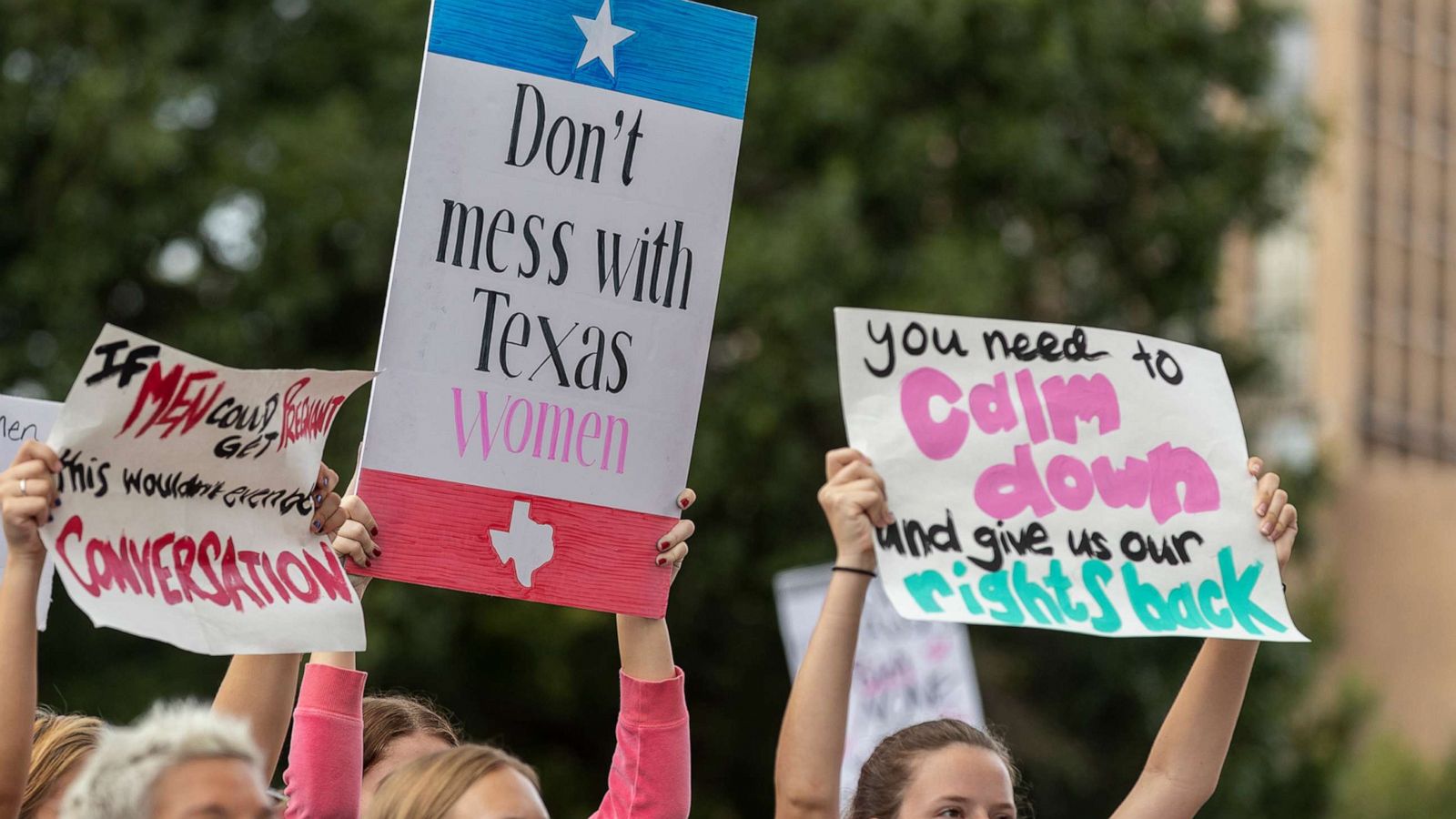
Judge Pitman’s Abortion Ruling Illustrates Flaws of Texas Senate Bill 8
Judge Pitman’s Abortion Ruling Illustrates Flaws of Texas Senate Bill 8
Civil Rights Policy Brief #176 | By: Rodney A. Maggay | October 15, 2021
Header photo taken from: ABC
Follow us on our social media platforms above
Browse more civil rights policy briefs from the top dashboard

Photo taken from: Dallas Morning News
Policy Summary
[SSB theme=”Official” align=”center” counter=”true” ]
Texas Senate Bill 8 (SB8) bans abortions approximately six weeks after pregnancy. Under the new law any person may sue a Texas health care provider to prevent them from performing an abortion and gives those persons who bring a lawsuit money damages of $10,000 if they are successful in their lawsuit against the health care provider.
On July 13, 2021 the American Civil Liberties Union (ACLU) brought a lawsuit to have the Texas abortion law declared unconstitutional based on existing court precedents such as Roe v. Wade. Whole Women’s Health v. Jackson eventually made its way to the Supreme Court but the high court instead refused an order for a temporary restraining order against the law and the Texas law was allowed to go into effect on September 1, 2021.
In response to the Supreme Court’s order Attorney General Merrick Garland announced on September 9, 2021 that the Department of Justice (DOJ) would initiate a lawsuit on a different basis. While Whole Women’s Health was brought on behalf of state abortion providers, the suit brought by DOJ – United States v. Texas – was pursuant to the Freedom of Access to Clinic Entrances Act and would be brought because SB8 “illegally interferes with federal interests.”
On October 6, 2021 U.S. District Judge Robert Pitman issued a 113-page order granting a temporary restraining order prohibiting SB8 from going into effect. However, an immediate appeal was again taken and on October 8, 2021 the United States Court of Appeal for the Fifth Circuit ordered a stay which blocked Judge Pitman’s order. The end result is that now the SB8 law banning abortions in Texas can continue while the trial on the case moves forward. LEARN MORE, LEARN MORE, LEARN MORE
Policy Analysis
While Whole Women’s Health and the DOJ case are very similar and have proceeded on an equivalent litigation track Judge Pitman’s sweeping ruling was able to put to paper the rationales as to why Senate Bill 8 is so troubling. The Whole Women’s Health case did not have this opportunity as the appeals process in that case moved rather swiftly and was primarily focused on whether a court could and should intervene with a temporary restraining order.
What DOJ lawyers did was focus on two main points that allowed Judge Pitman to expand on those points and give him a legal basis to temporarily suspend the law. First, the judge noted SB8’s novel enforcement scheme – allowing private citizens to bring lawsuits instead of Texas state officials – by calling it a “contrived” and “unprecedented” scheme to sidestep likely review by a judicial court.
The officials in Texas knew that SB8 directly contradicted Roe v. Wade and so the law was intentionally written in a way that allowed the state to prohibit abortions without having to take any legal responsibility for the new law. A woman’s right to have an abortion cannot be deprived simply by creating a different enforcement mechanism. Roe v. Wade established a constitutional right for women to have the procedure and that right doesn’t change by trying to sidestep the law by having private citizens instead of state officials bring lawsuits.

Photo taken from: Lynnwod Times
And, when the DOJ lawsuit was initiated, Attorney General Merrick Garland stated his concern that SB8 would become a model for other states to pass laws that could prohibit more than just abortion rights.
In his ruling Judge Pitman emphasized that this was another basis on why stepping in now was so important. He stated his concern that “any number of states could enact legislation that deprives citizens of their constitutional rights, with no legal remedy to challenge that deprivation, without the concern that a federal court would enter an injunction.” Judge Pitman recognized clearly that he needed to step in and, at least for now, push back on how SB8 was constructed.

Photo taken from: WILX
Other states could easily try to model laws after Texas SB8. The danger as Judge Pitman saw was depriving people of not just abortion rights but other constitutionally guaranteed rights. With a brilliant analysis and ruling by Judge Pitman parties in other lawsuits and courts around the country can now point to Judge Pitman’s order as legal precedent if states try to implement some kind of law that mirrors SB8’s enforcement mechanism.
However, with the reversal in the court of appeals, the case most likely is not finished and appears headed to the Supreme Court. LEARN MORE, LEARN MORE, LEARN MORE
Engagement Resources
Click or tap on image to visit resource website.

Center for Reproductive Rights – press release on United States v. Texas appeals court decision.

American Civil Liberties Union (ACLU) – group’s infopage on Texas’ Senate Bill 8.
This brief was compiled by Rod Maggay. If you have comments or want to add the name of your organization to this brief, please contact Rod@USResistnews.org.

Bears Ears National Monument: A Proper Boundary Reestablished
Bears Ears National Monument: A Proper Boundary Reestablished
Environmental Policy Brief #132 | By: Tim Loftus | October 16, 2021
Header photo taken from: Desert News
Follow us on our social media platforms above
Browse more environmental policy briefs from the top dashboard

Photo taken from: ABC
Policy Summary
[SSB theme=”Official” align=”center” counter=”true” ]
In December of 2016, President Obama issued Presidential Proclamation 9558 – Establishment of the Bears Ears National Monument. This relatively new monument is unique. Situated in southeastern Utah, the monument was created largely at the behest of the Bears Ears Inter-Tribal Coalition composed of five Colorado Plateau tribes who share a longstanding cultural connection to the landscape: Hopi, Navajo, Ute Mountain Ute, Ute Indian Tribe of the Uintah and Ouray Reservation, and Zuni Tribe.
San Juan County, where the monument is located, is one of the most scenic areas in the country. For example, the county is home to a large portion of Canyonlands National Park, other national monuments, and so much more. Much of the land features an abundance of archeological and paleontological resources that are well preserved due to the arid climate. Thus, a higher level of protection is warranted amid the area’s growing popularity with tourists and outdoor enthusiasts, not all of whom visit with the respect necessary for the special, and sacred to many, nature of this land.
In the spring of 2017, then-President Trump ordered a review of all national monuments created since 1996. The order was carried out by then-Secretary of Interior, Ryan Zinke. Months later, one year after Bears Ears was established, Mr. Trump took unprecedented action and with Presidential Proclamation 9681, modified the boundary and reduced the size of Bears Ears by 85 percent. In essence, Mr. Trump abolished the vast majority of a national monument that was legally established by a previous President. This highly controversial, if not illegal, action sparked immediate challenges that remain pending in federal court.
When the Biden Administration came into power and Congresswoman Deb Haaland was appointed Secretary of Interior, an immediate review commenced of actions undertaken by the previous administration including a reduction in the spatial extent of Grand Staircase Escalante National Monument, established by President Clinton in 1996, and a reduction in protections for a marine reserve that was also established by President Obama.
In April of this year, Secretary Haaland visited both monuments in southern Utah to hear from many of the competing voices on the matter including tribal leaders and Republican leaders including Utah Governor Spencer Cox and U.S. Senator Mitt Romney. Ms. Haaland submitted her report to the White House not long after and while the contents of the report were made public only this month, it was reported in the New York Times on June 14th that Ms. Haaland recommended that Mr.Biden reinstate the original boundaries to both monuments in Utah. It has been widely expected since his inauguration that President Biden would restore the monument boundaries established by President’s Obama and Clinton.
Late last month, the Bears Ears Inter-Tribal Coalition sent a letter to President Biden expressing their frustration with the delay in taking action to restore and expand Bears Ears National Monument. The Coalition cited evidence of ongoing desecration and an unwillingness by the BLM and USFS to engage the Coalition in management and planning activities. The Coalition requested that the President take immediate action “to restore the protections of the sacred cultural landscape we call Bears Ears.”
Policy Analysis
A president’s authority for establishing new national monuments is found in the Antiquities Act of 1906. As is typical of new designations, monuments encompass existing federal lands such as those managed by the U.S. Department of Interior’s Bureau of Land Management (BLM), the U.S. Department of Agriculture’s Forest Service (USFS), or other federal agencies. Thus, a new monument designation includes land that is already under federal ownership. Should any private holdings or state parcels be encompassed by the new boundary, those parcels remain private or in state control as before.
The controversy that sometimes accompanies a new monument designation is usually related to restrictions that will, for example, prevent issuance of new grazing or mineral/oil/gas/timber extraction leases. All-terrain vehicle (ATV) use may also become more restricted. In short, the privilege of using public land in certain impactful ways, often for profit, and by a relatively few individuals is deemed less appropriate than a longer-term conservation of the public land and its resources for all Americans, both current and those to come.
Controversy has long been part of the history of some of America’s most iconic landscapes. The Grand Canyon, for example, struggled for many years to become a national park because of insufficient support in Congress at the time. Using new authority given to presidents under the recently passed Antiquities Act, President Theodore Roosevelt established the Grand Canyon National Monument in 1908. Eleven years later, President Woodrow Wilson signed the Grand Canyon National Park Act. Who among us will argue now that setting aside the Grand Canyon was a mistake?

Photo taken from: The Southern Utah Wilderness Alliance (areas in yellow denote land restored by Biden in 2021 to the monument)
Bears Ears National Monument was created for the exact reason(s) that the Antiquities Act exists: to create national monuments from federal lands to protect significant natural, cultural, or scientific features (emphasis added). Furthermore, the promise of acknowledging the wishes of several native-American tribes and using their input going forward for planning and management purposes is in keeping with our nation’s current attempts at giving voice to marginalized or underserved people.
As to the legitimacy of whether a sitting President can unilaterally abolish or materially change a national monument that was established by an earlier President under the authority of the Antiquities Act of 1906, a legal team at Arnold & Kaye Scholer LLP provided an analysis in May 2017. The analysis, performed at the request of the National Parks Conservation Association, was in response to the review order by President Trump that preceded the rollback of the Bears Ears National Monument and nearby Grand Staircase Escalante National Monument.
The analysis found ample and unequivocal evidence that Congress alone has the authority to revoke or materially change a monument’s size once it has been established. This legal opinion occurred outside of any currently pending adjudication.

Photo taken from: Roadtrippers
Happy Ending
On October 8, 2021, President Biden restored the original boundary of Bears Ears National Monument and retained protections on additional acreage added by President Trump in his overall dismantlement of Bears Ears. In doing so, President Biden corrected what many believe to be an unprecedented mistake and unfortunate misreading of the relevant statute by his predecessor. Mr. Biden also restored the Grand Staircase Escalante National Monument to the boundaries that were in place on January 20, 2017. Furthermore, protections were restored to the Northeast Canyons and Seamounts Marine National Monument that was established by President Obama in September 2016.
Engagement Resources
Click or tap on image to visit resource website.

Friends of Cedar Mesa. Friends of Cedar Mesa – Stewarding the greater Cedar Mesa area in San Juan County, Utah (accessed October 15, 2021)

National Parks Conservation Association. 2021. Legal Analysis of Presidential Ability to Revoke National Monuments · National Parks Conservation Association (npca.org) (accessed October 15, 2021)

Rebecca M. Robinson. 2018. Voices From Bears Ears: Seeking Common Ground on Sacred Land. Tucson, AZ: The University of Arizona Press. 412 p.

The New York Times. June 14, 2021. Deb Haaland Wants to Restore National Monuments Slashed by Trump – The New York Times (nytimes.com) By Coral Davenport. (accessed October 4, 2021)

The Washington Post. September 28, 2021. Native American tribes tell Biden they want ‘immediate action’ on Bears Ears National Monument, which Trump shrank – The Washington Post By Joshua Partlow. (accessed October 15, 2021)

The White House. October 7, 2021. FACT SHEET: President Biden Restores Protections for Three National Monuments and Renews American Leadership to Steward Lands, Waters, and Cultural Resources | The White House (accessed October 15, 2021)

U.S. Dept. of the Interior, Office of Congressional and Legislative Affairs. 2016. STATEMENT FOR THE RECORD – UNITED STATES DEPARTMENT OF THE INTERIOR – BEFORE THE COMMITTEE ON ENERGY AND NATURAL RESOURCES, UNITED STATES SENATE – CONCERNING THE DESIGNATION OF MONUMENTS PURSUANT TO THE AUTHORITY PROVIDED BY THE ANTIQUITIES ACT July 27, 2016 Antiquities Act | U.S. Department of the Interior (doi.gov) (accessed October 14, 2021)

Supply Chain and Customer Service Shortages: The Real Drivers of Inflation
Supply Chain and Customer Service Shortages: The Real Drivers of Inflation
Economic Policy Brief #126 | By: Rosalind Gottfried | October 17, 2021
Header photo taken from: The Economist
Follow us on our social media platforms above
Browse more economic policy briefs from the top dashboard
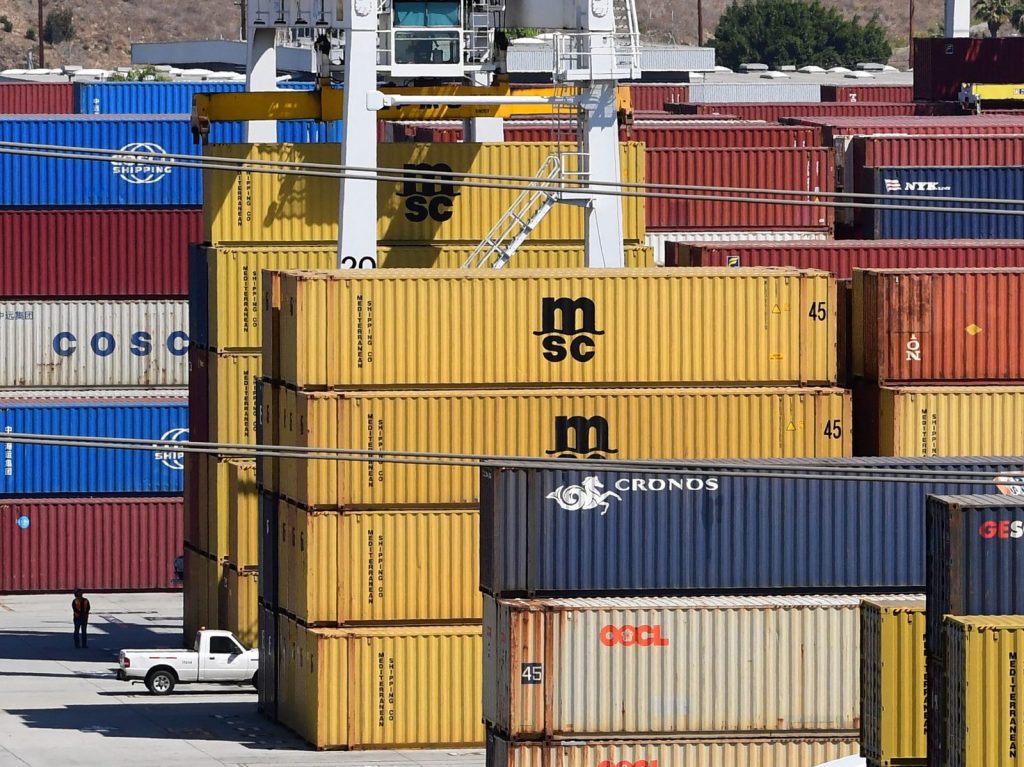
Photo taken from: Getty Images
Policy Summary
[SSB theme=”Official” align=”center” counter=”true” ]
There are some indications that the economy is strong. The US economy is expected to grow at 6% this year and fall to 3.9% for 2022, a greater rate than for most years since the turn of the century. Economists are predicting a steady expansion of the economy for the second half of 2021. The unemployment rate is under 5%, marking only 17 months to recover that rate since the pandemic started. Unemployment is currently at 4.8% which is down from 5.2% in August. In the previous recovery from the global economic crisis, it took 6.5 years after the official end of the recession to reach a level of less than 5%. Economists consider this good news and they are optimistic within limits, watching the issues of Biden’s ability to address long term increases in the debt ceiling and to pass an aggressive “rebuild America” infrastructure plan.
So what is the issue which can be viewed as worrisome? Inflation, which is high, is only one measure of the costs to consumers. Some economists are referring to the “shadow economy,” where unmeasurable aspects of services are deteriorating and reducing the satisfaction of consumers even when the prices are stable. They suggest that the measure of inflation cannot be limited to physical measures which, at any rate, are also hard to measure in that an item may have a price increase but it may also have improved functionality. Think of computer programs with less “bugs” and/or products with better carpentry or glass or other elements. The consumer price index captures only 237 of 273 components of major services; evidence points to many measures of customer dissatisfaction. Surveys of customer satisfaction in 60,000 restaurants showed a drop of 4.2% in satisfaction regarding cleanliness of tables, floors and restrooms. Even among highest rated retailers, consumers are facing long waits for customer service representatives and long waits for major house items such as windows, appliances, and furniture.
Shortages are jeopardizing the continuing health of the economy. There are back ups of container ships in major ports such as southern California and Savannah GA. The flow of goods is stymied by lack of port space and a scarcity of truckers. Merchandise for major retailers is being shipped to outer lying warehouses and being moved by the retailers privately hiring help; this is not an alternative readily available to smaller retailers. Auto plants are idle as factories wait for semi-conductors to be delivered. Restaurants and other services are cutting back hours for lack of workers. Economists say the issue of the late pandemic era is one of pent-up demand and a shortage of supplies and workers. This is a different story than in the last economic crisis where demand was low and the availability of workers and productivity was high and the mechanisms to address it are elusive.
Policy Analysis
The global economy is experiencing great demands for physical goods which will continue to put pressure on supply chains and transporting goods which could lead to an interruption in economic growth.
The increase in the debt ceiling is also seen as a crucial mechanism for assuring the solidity of the economy and the administration must assure that there is continued leverage after the early December deadline runs out.

Photo taken from: Forbes
Photo taken from: TBA
Engagement Resources
Click or tap on image to visit resource website.
Shadow Inflation Analysis
Jobs Report: September
Upshot Economy Risk Analysis
Business Supply Chain Crisis Analysis in Savannah

Screws Tighten on Unvaccinated Healthcare Workers
Screws Tighten on Unvaccinated Healthcare Workers
Health and Gender Policy Brief #137 | By: S. Bhimji | October 16, 2021
Header photo taken from: Yahoo
Follow us on our social media platforms above
Browse more health and gender policy briefs from the top dashboard

Photo taken from: The Associated Press
Policy Summary
[SSB theme=”Official” align=”center” counter=”true” ]
By now most people in the country are fed up with unvaccinated individuals. For whatever reason, there are still a significant number of Americans who are still refusing to be vaccinated against Covid. And sadly a great many of these unvaccinated individuals are healthcare professionals that include doctors, nurses, pharmacists, EMS technicians, nursing assistants, and lab technicians.
First, these healthcare workers refused the vaccine citing that it was unsafe. After numerous clinical trials done both in the US and abroad, showing minimal risk to vaccination, these healthcare workers still remain unconvinced. Now, despite overwhelming data showing that vaccination against Covid prevents serious infections and death, these individuals have refused the shot citing all kinds of beliefs.
It is estimated that anywhere from 10%-25% of healthcare workers remain unvaccinated. There has always been a belief in these unvaccinated healthcare workers that they are essential in the fight against Covid and will not be terminated. In addition, many of them feel that even if they are fired, they can always go work in other healthcare institutions, clinics, or even start their own practice. Well, many US states are about to change the work options for these workers.
Policy Analysis
Already many hospitals have started to fire healthcare workers who have not been vaccinated and if these healthcare workers think they will get another job, they are seriously wrong. State licensing boards in some states have stepped in to help fight the Covid pandemic and they have stated that healthcare workers who refuse to be vaccinated may lose their license to practice. Others may face suspension, revocation, and non-renewal of their license, which will make it very difficult to get a job in their profession anywhere in the continental USA. And once a license is lost, it is not only difficult to get it back but it is an expensive endeavor.
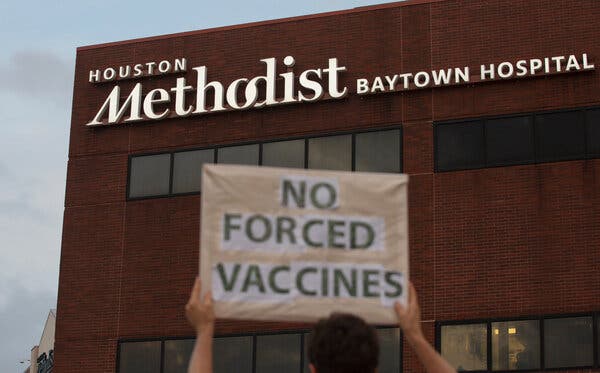
Photo taken from: The New York Times
And to make matters worse, for those who refuse to be vaccinated and do not have a religious or disability exemption, and are fired, they may not be eligible for unemployment compensation.
Engagement Resources
Click or tap on image to visit resource website.

Different COVID-19 Vaccines | CDC
https://www.cdc.gov/coronavirus/2019-ncov/vaccines/different-vaccines.html

Coronavirus disease (COVID-19): Vaccines safety
https://www.who.int/news-room/q-a-detail/coronavirus-disease-(covid-19)-vaccines-safety

COVID-19 Vaccines | FDA. https://www.fda.gov/emergency-preparedness-and-response/coronavirus-disease-2019-covid-19/covid-19-vaccines

Finally A Malaria Vaccine: A Monumental Discovery
Finally A Malaria Vaccine: A Monumental Discovery
Health and Gender Policy Brief #136 | By: S. Bhimji | October 13, 2021
Header photo taken from: Nature
Follow us on our social media platforms above
Browse more TBA policy briefs here

Photo taken from: Oxford Medical Sciences Division
Policy Summary
[SSB theme=”Official” align=”center” counter=”true” ]
While much of the talk these days is about covid-19, the parasite that causes malaria is far more sophisticated and insidious than coronavirus. The malaria parasite has evolved to escape the immune system and it also has a complicated life cycle that spans across humans and mosquitoes. Even when it is inside the body, it escapes surveillance and different forms affect different organs.
Malaria is caused by a parasite that is spread from the bite of blood-sucking mosquitoes. Once inside the body, the parasite breaks down human blood cells to replicate. Even after repeated infections, building immunity to malaria can take years; and even then the immunity is not complete.
According to the WHO report in 2019, close to 50% of the world’s population resides in areas at high risk for transmission of malaria. Each year there are over 220 million clinical cases of malaria, resulting in 445,000 deaths- most of them in children. For at least a century, researchers have been trying to develop a preventive treatment; and finally, a vaccine has become available.
This new vaccine, referred to as RTS, S was developed 6 years ago and in initial studies was shown to be effective. Now the WHO is considering large-scale mass vaccination across most of Sub-Saharan, East, and West Africa.
Malaria is a serious illness and besides death, it can cause brain damage, stillbirths in pregnant women, kidney failure, breathing problems, and much more. Many individuals are left with residual deficits for the rest of their life.
While many drugs have been developed to fight malaria, most of them have developed resistance to the parasite. At least 9 dozen types of malaria parasites exist but the RTS, S primarily targets the most deadly one found in Africa, plasmodium falciparum.
Policy Analysis
Malaria has been one of the biggest menaces to humanity for eons, mostly killing infants and babies. Finally, after 100 years of exhaustive research, scientists have discovered the vaccine called RTS, S. Even though only 40% effective, the vaccine is hailed as a monumental discovery.
The initial pilot immunization programs in Kenya, Ghana, and Malawi revealed that the vaccine did work and saved lives. Now the WHO thinks it is time to roll out the vaccine for a large-scale vaccination of African children. It is hoped that this vaccine will save tens of thousands of children each year, who would have otherwise perished.
Early trials showed that the vaccine was effective in preventing 4 out of 10 cases of malaria and even lowering the need for blood transfusion in children. The vaccine requires 4 doses to be effective, given soon after birth. So far no adverse effects of the vaccine have been reported and it is cost-effective.

Photo taken from: yabiladi.com
The malaria vaccine is very specific in its actions. It only targets the sporozoite form of the parasite, the stage between being bitten by a mosquito and the entrance of the parasite into the liver. That is why this vaccine is only 40% effective but this is considered a significant discovery as it paves way for the development of more effective vaccines. And even if the vaccine is only 40% effective, it will still save 160,000 lives each year.
The malaria vaccine is still not going to replace the other measures for controlling the disease such as mosquito nets, wearing appropriate garments, and getting rid of stagnant water. For now, the vaccine will be limited for use in Africa because it is not effective against other forms of malaria found in Latin America.
Engagement Resources
Click or tap on image to visit resource website.
About Malaria. https://wwwnc.cdc.gov/travel/diseases/malaria
Facts on Malaria. https://www.who.int/news-room/fact-sheets/detail/malaria
Malaria vaccine implementation. https://www.who.int/initiatives/malaria-vaccine-implementation-programme

How Redistricting In Oregon and Colorado Made The Case For State Independent Redistricting Commissions
How Redistricting In Oregon and Colorado Made The Case For State Independent Redistricting Commissions
Civil Rights Policy Brief #175 | By: Rodney A. Maggay | October 6, 2021
Header photo taken from: The Washington Post
Follow us on our social media platforms above
Browse more civil rights policy briefs from the top dashboard

Photo taken from: Politico
Policy Summary
[SSB theme=”Official” align=”center” counter=”true” ]
On September 27, 2021 Oregon became the first state in the union to pass congressional and state legislative redistricting maps after the 2020 Census. Soon thereafter one of Colorado’s two independent redistricting commissions approved a state map for Colorado’s congressional state map.
After the decennial U.S. Census counts the nation’s total population and determines how many congressional representatives each state should have based on the state’s population, every state redraws the boundaries of the congressional and state legislative districts in their state. This is done to accommodate changes such as if a state gained or lost an additional representative due to population growth. However, the process of re – drawing state maps had traditionally been done by the members of the state legislature, subject to approval by the state governor. This created problems because maps were sometimes drawn and manipulated to keep a certain person or political party in power.
Lately, states have tried to counter this by using state independent redistricting commissions. In the fourteen states that use independent redistricting commissions, a set number of people are appointed to the commission with an equal number given to members of both political parties. Additional persons unaffiliated with any political party are appointed to the remaining seats on the commission. The commissions generally hold public hearings to gather info and take this into consideration when drawing the state map. A simple majority vote is needed to approve the maps which are then subject to approval by the state supreme court.
Colorado’s Independent Congressional Redistricting Commission drew Colorado’s map for congressional representatives. Oregon’s map went through the traditional route of state legislative approval and signature by the state governor.
Policy Analysis
The approval of maps by Oregon and Colorado illustrates the stark differences when a state relies on the traditional method of state legislatures drawing state maps and when a state uses a state independent redistricting commission.
The problem of having state lawmakers draw new congressional and state legislative maps for their state is that state lawmakers will often try to draw a map that favors themselves and their political party. Historically in some states maps had been drawn to such an extreme to ensure a politician will stay in power or to ensure that minority communities will be spread out so much as to dilute any voting power the community might wield. Instead of voters electing the candidate of their choice in a balanced district, state lawmakers are instead manipulating which voters will vote for them or their party to ensure they stay in power. In Oregon, state lawmakers opposed to the new maps are using this argument to try and stop the maps from going into effect. Democrats there are the majority in the state legislature and have a Democratic governor and so they were able to get the maps they wanted approved and signed by Governor Kate Brown.
However, Oregon House Minority Leader Christine Drazan, a Republican, argued the maps were heavily gerrymandered to favor Democrats and that she is considering a lawsuit in order to have a court deem the map illegal. It is uncertain if a court would see it that way but this just shows that the traditional way of having the state legislature draw a state map is untenable and too rife with conflicts of interest to continue in this manner.

Photo taken from: The New York Times
The situation with Colorado’s drawing of the state congressional map is completely opposite from what happened in Oregon. In Colorado there are two independent redistricting commissions – one to draw the congressional map and a second one to draw the Colorado state legislative map.
Here the Colorado state legislature has no input in how the maps are drawn and cannot veto a state map if it does not like it. Colorado has a twelve – member commission comprised of four Republicans, four Democrats and four unaffiliated members and they were able to approve a map by an 11 – 1 vote. And according to the Princeton Gerrymandering Project, which analyzes the fairness and partisanship of states drawing legislative state maps, they have graded Colorado’s experience with an ‘A’ and said that it “should be studied closely by other states, and by friends of redistricting” for drawing “decent maps.”
The project even noted that the partisan fairness was acceptable for not giving any advantage to either political side. This is significant because by not allowing the state legislature and governor a role in the process Colorado has been able to come up with a state map that didn’t get bogged down in accusations from one political party to another of gerrymandering. And, there have been no threats of lawsuits to have the state map invalidated. It has been a relatively smooth process as far as redistricting goes.

Photo taken from: Wikimedia
As of today only 14 states use independent redistricting commissions. But based on how Oregon and Colorado were able to come up with state maps in 2021 and what happened afterwards, it is clear that independent redistricting commissions should be the way that states redraw their legislative maps in the future. LEARN MORE, LEARN MORE, LEARN MORE
This brief was compiled by Rod Maggay. If you have comments or want to add the name of your organization to this brief, please contact Rod@USResistnews.org.
Engagement Resources
Click or tap on image to visit resource website.

Princeton Gerrymander Project – group doing non – partisan analysis to understand gerrymandering at the state level.

National Conference of State Legislatures (NCSL) – a comprehensive report on how each state manages the redistricting process.

USC Sol Price School of Public Policy – academic research on independent redistricting commissions.

Russia’s Relationships with the Muslim World
Russia’s Relationships with the Muslim World
Foreign Policy Brief #134 | By: Avery Roe | October 5, 2021
Header photo taken from: The Moscow Times
Follow us on our social media platforms above
Browse more foreign policy briefs from the top dashboard

Photo taken from: The Organization of Islamic Cooperation
Policy Summary
[SSB theme=”Official” align=”center” counter=”true” ]
As President Biden is reinventing American foreign policy, particularly with regards to the Muslim world, Russia has been able to further establish itself as a viable alternative for those unhappy with President Biden’s plans and stances. Russia has befriended the Taliban, particularly after their takeover of Afghanistan. Despite being on Russia’s list of terrorist and banned organizations since 2003, the Taliban has been going to Moscow for talks since 2018 and maintained friendly relations in the aftermath of the takeover. Recently the Russian state news agency has replaced the term “terrorist” with the term “radical” in its reports on the Taliban signifying Russia’s desire to work together with the Taliban, largely with the goal of regional stability in mind.
On August 24th at the International Military-Technical Forum in Moscow Russia and Saudi Arabia signed a military cooperation agreement. While the specific terms of the agreement remain unclear, the goal is to develop “joint military cooperation between the two countries” according to Saudi Deputy Defense Minister Prince Khalid bin Salman. Given the traditionally close military ties between the United States and Saudi Arabia, this is being seen as a clear sign that the Saudis do not feel that they can fully rely on the United States, and they are willing to turn to Moscow for the support they need.
After recent talks between President Erdogan of Turkey and President Biden did not go well, Erdogan was open regarding his plans to form a closer relationship with Russia. That began last Wednesday with in-person talks between Putin and Erdogan regarding the situation in Syria. Neither party has made a detailed statement but both have indicated that the talks went well. Ties between the United States and Turkey have been tense for several years, especially in the aftermath of Turkey purchasing a Russian missile defense system two years ago. While Russia is the largest ally of the Syrian government and Turkey supports groups that have tried to unseat President Assad, troops from both sides have cooperated regarding rebel forces and in seeking a political solution.
Policy Analysis
The rest of the world continues to react to the Biden Administration’s redefining of American foreign policy in the aftermath of the Trump Administration. After such a high-profile blunder in Afghanistan, most of the Muslim world is looking to redefine how things will look moving forward, and Russia has successfully established itself as an alternative powerful ally for those who are unhappy with the United States.
The Biden Administration’s choices will inevitably alienate some while drawing others closer. The next big decision that the administration will need to make is if it is ok with the countries that they are distancing from and the exchange of who they are drawing closer to.

Photo taken from: The BBC
With the mistakes being made in Afghanistan the Administration risks alienating most of the Muslim world as countries such as Russia capitalize on the errors. While the United States needs to relate to countries on its own terms and with its own values, it is vital to maintain a relationship with the Muslim countries that have turned to Russia. Maintaining relationships with a wide variety of countries and cultures will allow the United States to maintain its security and power on the world stage.
Engagement Resources
Click or tap on image to visit resource website.

- https://womenforafghanwomen.org/afghanistan/- Women for Afghan Women works to empower women, children, and families to change the norms of violence and oppression.

- https://www.sams-usa.net/-The Syrian American Medical Society is a medical relief organization working on the front lines of crisis relief in Syria.

Bipartisan Outrage Over Biden Administration Rapid Deportation of Haitian Refugees
Bipartisan Outrage Over Biden Administration Rapid Deportation of Haitian Refugees
Immigration Policy Brief #130 | By: Kathryn Baron | October 6, 2021
Header photo taken from: The Daily Advent
Follow us on our social media platforms above
Browse more immigration policy briefs from the top dashboard

Photo taken from: Yahoo
Policy Summary
[SSB theme=”Official” align=”center” counter=”true” ]
After the July 2021 assassination of the Haitian president that plunged the nation into political turmoil and exacerbated existing violence, a 7.2 earthquake and major tropical storm hit the following month, displacing and killing thousands. The Biden Administration extended an existing Temporary Protected Status for Haitians already living in the US from deportation as a result.
Additionally, more than 14,000 Haitian asylum seekers and refugees have since camped out under a bridge near the US Southern border before crossing the Rio Grande into the US. The Department of Homeland Security closed the Del Rio, Texas entry after being quickly overwhelmed by border crossings and sent an additional 400 agents to help with processing operations. Some migrants have also been transferred to other parts of the border that are less crowded. Over 3,300 of the 14,000 have already been sent to detention centers and/or removed via deportation flights. To circumvent the asylum process, Department of Homeland Security has invoked the long-existed, newly invoked under Trump Title 42 policy (public health law to effectively close the borders due to COVID-19).
Haitians represent only about 4% of migrants encountered by border agents in August (especially compared to Central Americans and Mexicans) but have steadily increased their presence since the mass exodus from Haiti to the US via Mexico in recent months. Many Haitians at the border came from Chile where they had originally gone to seek asylum during an exodus from Haiti over a decade ago. Some possibly were the victims of the Trump administration’s expulsion of Haitians who were living in the US under temporary protection status.
The Biden Administration has quickly begun deporting Haitians; there are three (3) deportation flights booked for this upcoming Sunday and beginning Monday, there will be four (4) deportation flights per day. Images of immigration personnel rounding up Haitian refugees on horseback with whips have gone viral and outraged Democrats and Republicans, for different reasons.
Policy Analysis
Democrats have expressed discontent after seeing images of border patrol agents using aggressive tactics on horseback, and Republicans state that Biden’s policies and campaign promises falsely led Haitians to believe they would get asylum (even en masse).
In 2010, after another catastrophic earthquake hit Haiti, the US granted Temporary Protected Status to Haitians living in the US, thus shielding them from deportation. This was terminated by the Trump Administration in 2017, leaving Haitians until mid-2019 to either leave or face deportation. Under international law, the US is obliged to allow asylum seekers to apply for refuge and may not send them back should there be credible fear of persecution and/or to infrastructurally devastated countries of origin.

Photo taken from: Mother Jones
The US has signed and ratified two (2) major treaties that apply here: the 1967 Protocol Relating to the Status of Refugees (which also secures the notion of non-return, “non-refoulement”) and the 1984 Convention Against Torture. The US codified the provisions of the aforementioned treaties primarily in the 1980 US Refugee Act and it became universally acknowledged, and domestically by the Supreme Court. The 1980 Refugee Act was primarily created to codify and formally outline procedural guidelines for admission and resettlement of refugees and individuals of humanitarian concern to the US.
Engagement Resources
Click or tap on image to visit resource website.

- The National Immigration Law Center: an organization that exclusively dedicates itself to defending and furthering the rights of low-income immigrants and strives to educate decision makers on the impacts and effects of their policies on this overlooked part of the population.
- The ACLU: a non-profit with a longstanding commitment to preserving and protecting the individual rights and liberties of the Constitution and US laws guaranteed to all its citizens.
- Center for Disease Control: the CDC provides updated information surrounding COVID-19 and the US responses

Can Doctors Refuse Care to Unvaccinated Patients?
Can Doctors Refuse Care to Unvaccinated Patients?
Health & Gender Policy Brief #135 | By: S Bhimji | October 4, 2021
Header photo taken from: KCRW
Follow us on our social media platforms above
Browse more health and gender policy briefs from the top dashboard

Photo taken from: Adobe Stock
Policy Summary
[SSB theme=”Official” align=”center” counter=”true” ]
The coronavirus pandemic has created a lot of friction and unhappiness in society. Despite the continuing spread of the virus by the delta variant, a significant number of Americans are refusing to get vaccinated for a variety of reasons. And in almost every industry hundreds of workers are now asking for all kinds of exemptions.
The number of unvaccinated people has overwhelmed the emergency rooms and occupied the much-needed ICU beds for other critically ill patients as well. In fact, in many hospitals, the congestion has meant that some patients have to be transported hundreds of miles away from care, which further adds to healthcare costs.
The delta variant cases are crushing the rate of hospitalization but chiefly in areas of the county with low vaccination rates, especially the south. In fact, in many southern states, the crisis is so critical that even people with gunshots are waiting on gurneys for days.
Elective surgery for thousands of people across the nation has been canceled or delayed because of the emergent need to look after Covid patients. While the federal government continues to waver about its Covid response, some doctors have gone online and said that they will refuse care for unvaccinated patients. The question is, ‘can doctors refuse to look after unvaccinated patients?’
Policy Analysis
Can a doctor use the vaccination status of the individual to determine who receives care when resources are scarce?
Some physicians have gone online and stated they will refuse care of unvaccinated Covid patients. While this may sound bravado in the fight against Covid, there are legal and ethical repercussions to this approach.
First, there are the ethical implications of refusing medical care; the entire basis of medicine has one goal- to ‘do no more harm’ to the patient. Secondly, there is an entire demographic of people who would be considered as ‘undesirable’ or ‘unworthy of care’ but physicians have been offering them the best care since formal medicine evolved. There are people who commit violent crimes, alcoholics, domestic abusers, child killers, drug users, murderers, pedophiles, smokers, rapists, and the list is endless- and to date, no physician has denied these folks care.
So how is it justified that care cannot be provided to people who are not vaccinated against the coronavirus? We even offer life-saving liver and heart transplant surgery to prisoners.
But most important is that when an unvaccinated Covid patient visits the doctor with complaints of difficulty breathing, fever, malaise, or cough, these symptoms are not specific to Covid but could be due to pneumonia, lung cancer, lung fibrosis, emphysema, heart failure- all treatable conditions but without investigations, there is no way to know the cause of the symptoms.
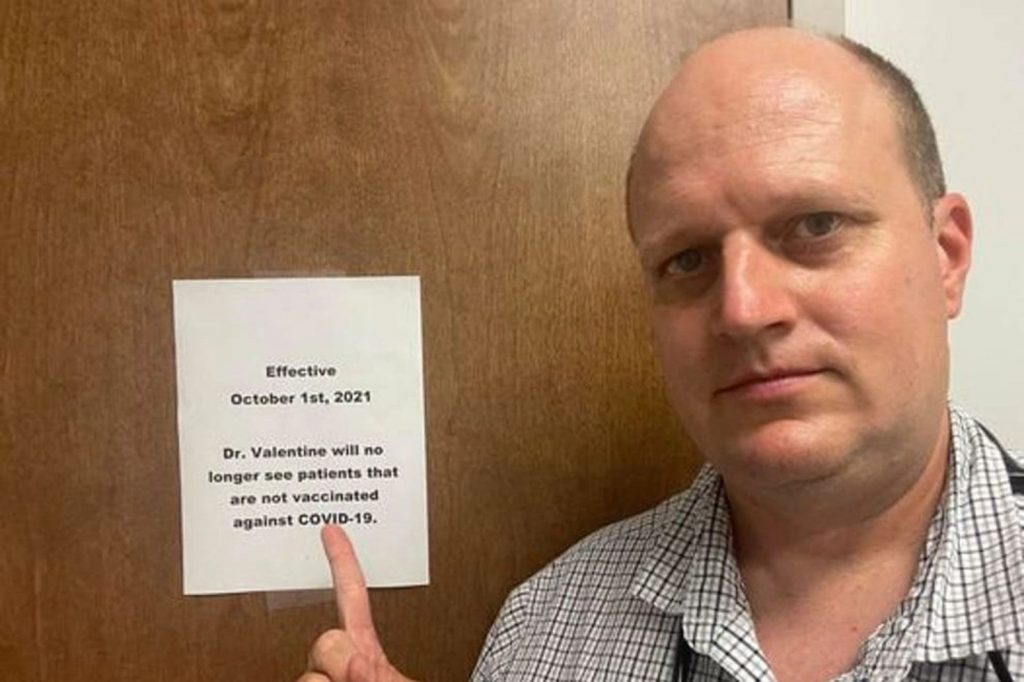
Photo taken from: The New York Post – Alabama doctor refuses to treat the unvaccinated
Plus, if the patient is refused treatment and he/she goes on to die because of a missed diagnosis of a heart attack or untreated pneumonia, the physician may face a case of medical malpractice involving negligence.
The law is clear on one aspect of healthcare- no patient in an emergency can be denied care- and the repercussions for refusing care are serious both for the physician and the facility where he or she works. The consensus of health experts is that refusing care no matter how unsavory the person is runs opposite to the fundamentals of medicine.
For now, conversations about refusing to treat unvaccinated people are few and far between but anecdotal reports indicate that many physicians would like to refuse treatment to unvaccinated people if they had a choice.
But all physicians who want to venture into this ‘perilous’ healthcare with their emotions better beware- if a patient dies as a refusal of treatment, this may not only result in a medical malpractice case but the state licensing boards have the power to rescind the medical license.
As ugly as the Covid numbers sound, rather than refusing care, physicians should make an effort to educate the unvaccinated and direct their rage at the politicians for not making the right policies.
Engagement Resources
Click or tap on image to visit resource website.

The Physician’s Oath: Historical Perspectives
www.ncbi.nlm.nih.gov/pmc/articles/PMC5755201/
Medical negligence: Coverage of the profession, duties, ethics, case law, and enlightened defense – A legal perspective
https://www.ncbi.nlm.nih.gov/pmc/articles/PMC2779963/

Medical Negligence
https://www.alllaw.com/articles/nolo/medical-malpractice/negligence.html

Analyzing the New Australia, U.K., U.S. (AUKUS) Security Pact
Analyzing the New Australia, U.K., U.S. (AUKUS) Security Pact
Foreign Policy Brief #133 | By: Abran C | October 5, 2021
Header photo taken from: CNN
Follow us on our social media platforms above
Browse more foreign policy briefs from the top dashboard

Photo taken from: United World International
Policy Summary
[SSB theme=”Official” align=”center” counter=”true” ]
On September 16, 2021, U.S. President Joe Biden, along with U.K. Prime minister Boris Johnson and Australian Prime minister Scott Morrison who joined in virtually, announced the creation of a new security partnership or the AUKUS pact, between the three nations that seeks to counter China’s growing influence in the Indo-Pacific. AUKUS includes a plan to increase technology and military capability sharing between the nations. These three already share intelligence through the Five Eyes Alliance, which includes New Zealand and Canada, but the new pact further entrenches the ties between them. Most notably, the pact will also provide nuclear-powered submarines from the U.S. and U.K. to Australia in order to counter Chinese expansion in the region.
China has condemned the pact, calling it extremely irresponsible, and accusing the U.S. of tactics that will incite a new Cold War. Under this deal, Australia will become just the seventh nation in the world to operate nuclear-powered submarines. These subs are much faster, more difficult to detect, able to stay submerged for longer, and theoretically could be armed with nuclear weapons, far beyond what traditional submarines can do. China is unsurprisingly angered at the deal that will see more advanced U.S. aligned weaponry in its hemisphere.
France, one of the U.S. and U.K.’s oldest and closest allies, has also been incensed by the deal. By joining the pact, Australia essentially tore up a $50 billion deal it previously made to purchase 12 submarines from France. The huge monetary loss for France, coupled with being left out of the major global players realpolitik angered Paris enough to recall the French ambassadors from both Australia and the United States. This is the first time since the United States’ inception that the U.S.’s first ally has gone as far as recalling its ambassador. French Foreign Minister Le Drian expressed “total incomprehension” at the move and criticized both Australia and the U.S. “It was really a stab in the back. We built a relationship of trust with Australia, and this trust was betrayed…This is not done between allies”.
Australia’s closest neighbor, New Zealand, which has a 30-year-old ban on nuclear-powered vessels entering its water, has tried not to align itself with either the U.S. or China. Thus, the small island nation, though a member of the Five Eyes alliance with the U.S. and Australia, has said it will make no exception for Australia’s nuclear-powered submarines to enter its waters.
Policy Analysis
Though no nation was singled out during the announcement of this security pact, it’s obvious the maligned actor the pact is intending to provide security against is China. The US, which is looking to reclaim its global role after a more isolationist policy from the former president, and now not involved on the ground in Afghanistan, has shifted its attention to the region, concerned about its slipping into the sphere of China’s growing influence. London also has been seeking to make alliances and deals with other global partners now that it has left the EU.
Biden had previously stated that contrary to the Trump administration’s America first handling of strategic foreign policy, he instead plans to work with allies to counter threats and tackle global issues. Still, while attempting to bring some allies closer, the U.S. pushed away another. Paris, having felt slighted, has called the actions of the Biden administration similar to what occurred under the America First era of the previous president.

Photo taken from: Politico
The deal seeks to counter China’s growing presence in the region. China has had increasing tensions with all three nations, and Australia is very keen to counter China in any way it can. Especially after a recent trade war with China that took a toll on the Australian economy. Though China is Australia’s largest trading partner and the two economies are deeply intertwined, the oceanic nation is more closely aligned with the US.
Engagement Resources
Click or tap on image to visit resource website.

Foreign Policy Association – The Foreign Policy Association hopes to inspire others to participate in international affairs and the foreign policy process through its balanced, nonpartisan programs and publications, the FPA encourages citizens to participate in the foreign policy process.

Council on Foreign Relations– The Council on Foreign Relations (CFR) is an independent, nonpartisan think tank, and publisher dedicated to being a resource for its members, government officials, journalists, and other interested citizens in order to help them better understand the world and the foreign policy choices facing the United States and other countries. Our goal is to start a conversation in this country about the need for Americans to better understand the world.