Social Justice

Does the Protect College Sports Act Protect College Athletes? (Social Justice Brief #192)

Does the Protect College Sports Act Protect College Athletes? (Social Justice Brief #192)

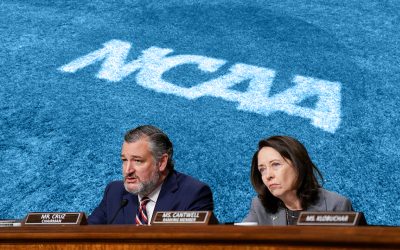
Last month, senators Maria Cantwell and Ted Cruz drafted the Protect College Sports Act in an attempt to regulate college sports at the federal level. The bipartisan bill is the latest of many such attempts to standardize the constantly fluctuating college sports industry—none of which have yet been signed into law. The Protect College Sports Act aims to regulate the NIL (name, image, and likeness) market, and it does so by drafting requirements for college athletes to report earnings of over $600 per year to athletic departments, which no other college students earning income are required to do.  

read more
World Cup of Exclusion (Social Justice Brief #193)

World Cup of Exclusion (Social Justice Brief #193)

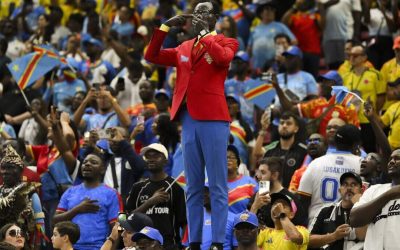
The 2026 FIFA World Cup was supposed to represent global unity, international sportsmanship, and the United States’ ability to welcome the world. Instead, as of June 29, 2026, the tournament is being overshadowed by growing concerns over U.S. immigration enforcement, visa delays, travel bans, airport detentions, and entry denials affecting players, referees, officials, and fans. The United States, along with Canada and Mexico, is co-hosting the largest World Cup in history, but early reports show that access to the tournament is not being experienced equally.

read more
Protect Communities, Not Criminals (Social Justice Brief #191)

Protect Communities, Not Criminals (Social Justice Brief #191)

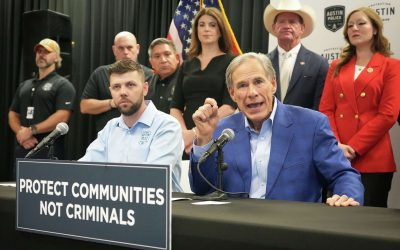
On May 15, Texas Governor Greg Abbott announced a new initiative titled “Protect Communities, Not Criminals,” which includes a proposal to create a statewide prosecutor with the authority to override local district attorneys in certain cases.  This proposed role would allow a state-appointed prosecutor to step in when a local prosecutor has not secured an indictment within 90 days, effectively creating a “backstop” to ensure cases move forward.  Supporters of the proposal frame it as a necessary response to what they describe as “rogue prosecutors” local district attorneys who decline to pursue certain categories of crimes based on policy or resource limitations.  The initiative is presented to ensure consistency in enforcement across Texas counties and to prioritize victims’ rights.

read more
The Department of Justice’s Inconsistencies Regarding the Release of the Epstein Files (Social Justice Policy Brief #189)

The Department of Justice’s Inconsistencies Regarding the Release of the Epstein Files (Social Justice Policy Brief #189)

On July 23rd, 2025, a House Subcommittee voted to subpoena the Department of Justice (DOJ) for the Epstein files. During that time, the Subcommittee agreed to redact the names and personal information to protect the victims. However, in January 2026, with the release of more than 3 million more documents, that agreement was not fulfilled.

read more
The Expanding Web: ICE Detention and the Machinery of Mass Removal (Social Justice Policy Brief #188)

The Expanding Web: ICE Detention and the Machinery of Mass Removal (Social Justice Policy Brief #188)

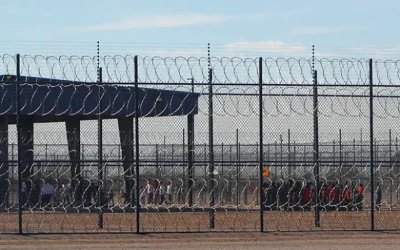
The American immigration detention system is currently undergoing an unprecedented and rapid metamorphosis, transitioning from a network of civil holding centers into a massive carceral apparatus designed for industrial-scale deportation. As of February 2026, the number of individuals held in U.S. Immigration and Customs Enforcement (ICE) custody has reached a historic peak of over 70,000 people across 225 facilities nationwide. This surge represents a nearly 75 percent increase in the detained population since early 2025, fueled by the staggering 45 billion dollars in ICE funding authorized under the signature One Big Beautiful Bill Act. The administration’s current strategic roadmap aims to bring upwards of 108,000 detention beds online by the end of this year, with a long-term capacity target of 135,000 beds to facilitate the largest mass removal operation in the history of the United States.

read more
Trans Athlete Case Faces Uphill Battle in SCOTUS (Social Justice Policy Brief #186)

Trans Athlete Case Faces Uphill Battle in SCOTUS (Social Justice Policy Brief #186)

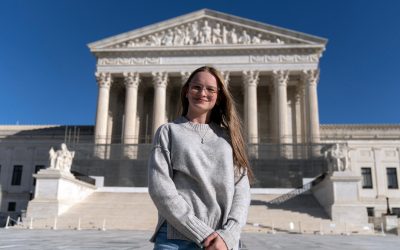
The Supreme Court is currently debating whether or not trans athletes should be able to compete in girls and women’s sports. SCOTUS is hearing a case challenging state-level laws that ban trans women and girls from competing in sports that align with their gender identity. The current case involves two different arguments involving trans female athletes who were barred from competing on sports teams that align with their gender identity.

read more
ICE and excessive use of force

ICE and excessive use of force

Earlier this month, the state of Minnesota made national and international headlines when Minneapolis resident and U.S. citizen, Renee Nicole Good, was fatally shot by an ICE officer while attempting to leave an area she was overseeing as a legal observer.

read more
The State of Sports Betting Policy in the United States (Social Justice Policy Brief #184)

The State of Sports Betting Policy in the United States (Social Justice Policy Brief #184)

The legal landscape of sports betting has been tumultuous for years now. Last February, for instance, Ohio banned prop bets on college sports and federal legislation to limit sports betting advertising has been introduced. Going further back, the 2017 Murphy v. NCAA Supreme Court ruling reversed the Professional and Amateur Sports Protection Act, which was passed in 1992 and prohibited sports gambling in most states, allowing for such a legal landscape today. Justice Samuel Alito authored the opinion and argued that the PASPA violated the 10th amendment which protects the power of the states. As of 2025, 38 states and the District of Columbia have legalized sports betting to some extent, whether through in-person or virtual avenues.

read more
Federal Court Blocks Texas’ Racially Discriminatory Redistricting Map (Social Justice Policy Brief #184)

Federal Court Blocks Texas’ Racially Discriminatory Redistricting Map (Social Justice Policy Brief #184)

In a major ruling upholding the rights of minority voters, a three-judge federal panel on November 18, 2025, issued a preliminary injunction blocking Texas from using its newly adopted 2025 congressional redistricting map for the upcoming 2026 elections. The map, enacted during a special legislative session in August, was found to be an unconstitutional racial gerrymander that harmed the voting power of Black and Hispanic Texans. The panel ordered that the elections proceed under the state’s 2021 map. Opponents, including State Senator Juan “Chuy” Hinojosa, applauded the decision, stating the map was a clear effort by the Trump administration and Texas Republicans to “silence the voices” of minority-majority districts. Texas has already filed a notice of appeal to the U.S. Supreme Court.

read more
x
x
Support fearless journalism! Your contribution, big or small, dismantles corruption and sparks meaningful change. As an independent outlet, we rely on readers like you to champion the cause of transparent and accountable governance. Every donation fuels our mission for insightful policy reporting, a cornerstone for informed citizenship. Help safeguard democracy from tyrants—donate today. Your generosity fosters hope for a just and equitable society.

Pin It on Pinterest