

JOBS POLICIES, ANALYSIS, AND RESOURCES
Latest Jobs Posts
House Votes to Decriminalize Marijuana: Manufacture, Distribution and Possession
Brief #151 – Health and Gender
By Stephen Thomas
By a vote of 220-204, the U.S. House of Representatives Friday, April 1, passed the Marijuana Opportunity Reinvestment and Expungement Act or the MORE Act aimed at decriminalizing the manufacture, distribution, and possession of marijuana. New York Democrat and House Judiciary Committee Chairman Rep. Jerrold Nadler introduced the legislation, an unsuccessful version of which the House passed in 2020.
Russia Gets Shunned by the Sports World as a Result of its Invasion of Ukraine
Brief #151 – Foreign Policy
By Reilly Fitzgerald
Russia’s invasion of Ukraine has seen an outpouring of support for Ukrainians from every facet of the Western world. One of the largest initial reactions to the war has come from the sports world which banded together following the Olympics and showed a united front against Putin’s war.
How COVID-19 Has Transformed Public Policy and Health Efforts
Brief #150 – Health and Gender Policy
By Katrenia Busch
The crisis surrounding the 2019 coronavirus pandemic has far from ended. Over the past several months, the virus has continued to spread and infect new countries at an alarming rate. The long-term effects of the outbreak are likely to manifest in a number of ways, from economic setbacks and incarceration rates to paradigmatic shifts in health care administration.
Lessons for American Democracy from the Russian War with Ukraine
Russia’s invasion and war with Ukraine has been unfolding in real time in front of our eyes. The war has succeeded in bringing out the courage of Ukrainian President Zelensky and the Ukrainian people and the ruthlessness and cruelty of President Putin and the Russian army.
Free Speech Advocates Push Back Against The 1619 Project Culture War, Book Bans
Brief #51 – Education Policy
By Lynn Waldsmith
As conservatives continue to inflame the culture war over “critical race theory” and curriculum or books that it labels as unpatriotic or offensive, free speech advocates are fighting back.
Situation Update #6: The Ukraine Crisis
Brief #150 – Foreign Policy
By Abran C
Over a month into Russia’s assault on Ukraine, there still is no end. Russia’s attempt to conquer Ukraine has stalled and taken a much larger toll than many predicted. A lack of preparedness, supplies, and morale has caused a stalemate among ground forces. Yet as Russia’s advance has slowed, its air assaults have intensified. About 300 people are believed to have been killed in an airstrike by Russian warplanes on a theatre in the city of Mariupol.
Congress Addresses Use Of Controversial Forced Arbitration Clauses In Two Bills
Brief #185 – Civil Rights
By Rodney A. Maggay
On March 17, 2022 the United States House of Representatives passed H.R. 963. The bill is known as the Forced Arbitration Injustice Repeal (FAIR) Act. The bill passed by a 222 – 209 vote. Introduced by Congressman Hank Johnson (D-GA) the bill will ban the enforcement of forced arbitration clauses for consumers, employees and small businesses involved in legal disputes. The bill would apply to all kinds of workplace and consumer disputes that have become routine in consumer and worker contracts.
Administration, Members of Congress Try to Make Equal Pay Day Meaningful
Brief #36 – Social Justice
By Stephen Thomas
The U.S. Office of Personnel Management (OPM) will issue a proposed regulation later in 2022 to prohibit federal agencies from seeking or relying on an applicant’s salary history in the hiring process unless the applicant raises the issue of her or his own volition. The administration of President Joseph R. Biden Jr. and Vice President Kamala D. Harris announced the upcoming rulemaking on Equal Pay Day, March 15.
COVID 19: The Great Unmasking
Brief #149 – Health and Gender
By Alexandra Ellis
Since March 10, 2022, nearly all Americans can go without their masks indoors per new Center Disease Control guidance. Nearly for the entirety of the pandemic, different guidance has been given about masks – which has led to a lot of confusion and misinformation.


Theranos: A Medical Fraud Case for the Record Books
Theranos: A Medical Fraud Case for the Record Books
Health and Gender Policy Brief #138 | By: S, Bhimji | October 18, 2021
Header photo taken from: ABC News
Follow us on our social media platforms above
Browse more health and gender policy briefs from the top dashboard

Photo taken from: Getty Images
Policy Summary
[SSB theme=”Official” align=”center” counter=”true” ]
Elizabeth Holmes, founder, and CEO of Theranos was on top of the world a decade ago. After just two semesters at Stanford, the dropout partnered with Ramesh Balwani (her BF) to develop a ground-breaking medical device that could run hundreds of medical tests on a tiny amount of blood obtained with a pinprick. She aspired to be the next Steve Jobs and emulated him in every respect.
Just 8 years ago, she was running a company worth $10 billion but today she is on trial with her partner, Balwani, for running one of the biggest scams in the world of medical testing.
In 2002, Holmes (19) was in China when she met Balwani (37) and soon they became business partners and lovers. They came up with an idea that they would change medicine for the better by doing two things: 1) develop a small medical appliance that could quickly run hundreds of medical tests within minutes and 2) the machine would only use a tiny amount of blood- that was obtained from a finger prick.
It is important to note that existing technology requires blood drawn from the arm with a needle and that outside of the most common dozen medical tests that take less than 60 mins, most laboratory tests take days. Holmes and Balwani were offering a technology that was fast, automated, and cheap.
With this idea in mind, Holmes recruited big-time investors to become part of her business. Some of the investors who sat on her board included Henry Kissinger, James Mattis, and George Shultz. Companies like Safeway and Walgreens paid hundreds of millions of dollars to have this technology in their stores to benefit their patients.
At its peak in 2013-14, Theranos was worth close to $10 billion and Holmes and Balwani were living the good life. Money from investors was pouring in, and both partners were on the front cover of every business magazine. They were hobnobbing with the most famous and richest business people on planet earth. In one email to Holmes, Balwani, said, “They’re not investing in our company, they’re investing in our destiny.”
Everything was going according to plans- or was it?
Policy Analysis
In 2014, a whistleblower shocked the world by revealing the extent of fraud that was taking place at Theranos. Firstly, Theranos never succeeded in developing a machine that could do all the hundreds of tests that they bragged about. The rates of false positives and false negatives were high leaving investors and patients very unhappy. Further staff revealed that the machine had never been verified for quality control, reliability, and reproducibility.
Of major concern was that Theranos was using third-party proprietary machines to do the testing and hid these machines when investors came to check the Theranos facility.
Also of importance was that the finger prick test never worked and Theranos was using blood drawn from the arm- as has been done for nearly a century. Yet, Holmes and Balwani continued to sell their technology and duped more investors; they never mentioned the flaws in their machine.
Everything at Theranos was surrounded by secrecy and intimidation. No one was allowed to speak about the incorrect medical tests. New lies were created to cover old lies.
The moment the inner workings about Theranos were published in the Wall Street Journal, the company started to spiral down. Initially, Holmes denied the newspaper report about her company. But within 3 years, both Holmes and Balwani were charged with criminal fraud for having allegedly made false claims and misleading investors about the efficiency of their groundbreaking blood-testing technology.

Photo taken from: Stat News
The case is expected to finish sometime in Dec 2021. If found guilty she faces at least 20 years in prison. Balwani faces a separate trial in Jan of 2022. And it is unlikely that the investors will see any of their money back- Holmes and Balwani lived a lavish lifestyle sparing no expenses.
In 2018, the FBI shut the company down and Holmes is facing numerous lawsuits from investors. Her trial is presently taking place in California and it is expected that she will claim that her boyfriend Balwani abused her, which led her to make all the wrong decisions.
Engagement Resources
Click or tap on image to visit resource website.

Medical Tests:
https://medlineplus.gov/lab-tests/

Practices of Science – False Positives and False Negatives:

Blood tests at your fingertips:
https://cen.acs.org/articles/95/i1/Blood-tests-fingertips.html
Numbers and Power: Congress and News Media
Numbers and Power: Congress and News Media
Elections and Politics Policy Brief #28 | By: Rosalind Gottfried | October 18, 2021
Header photo taken from: The Economist
Follow us on our social media platforms above
Browse more Elections and Politics policy briefs from the top dashboard

Photo taken from: Pew Rearch Center
Policy Summary
[SSB theme=”Official” align=”center” counter=”true” ]
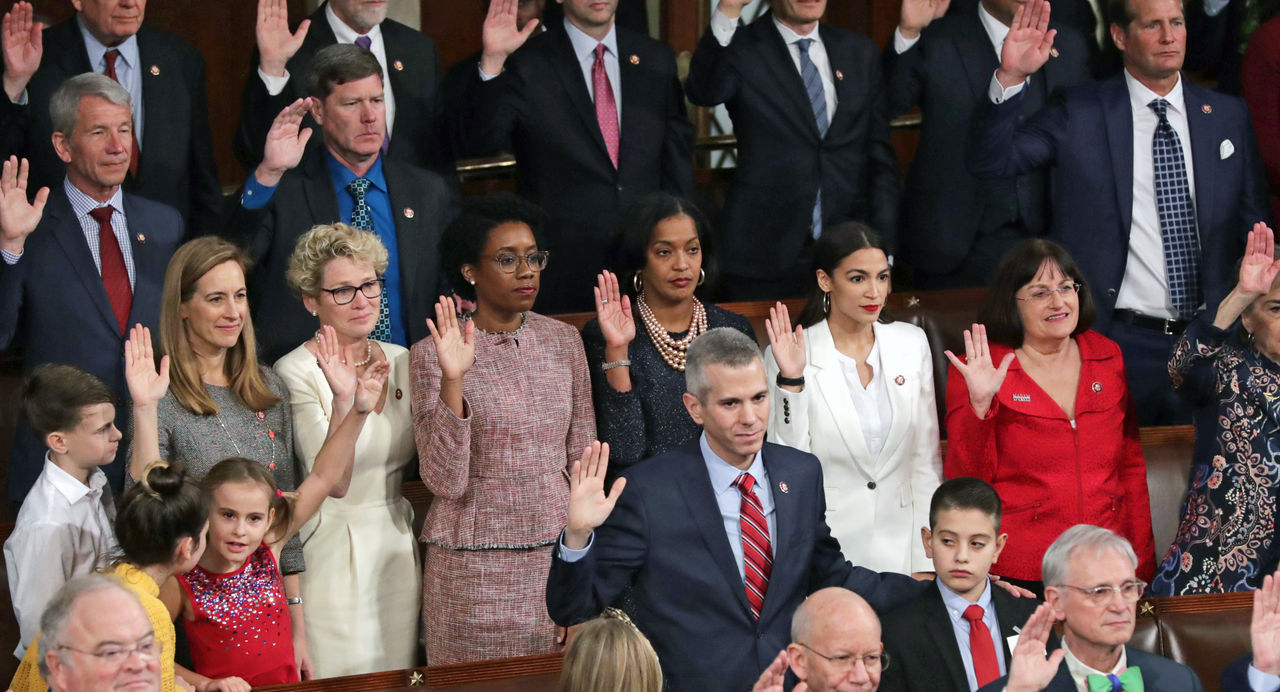
Congress is more diverse than previous Congresses but only slightly more than the 116th. Congress is 77% white while the general population is 60% white. Women comprise 24% of all seats though women are more than half of the American population. Though 23% of the Congress are racial or ethnic minorities, some groups are closer to proportionally represented than others. African Americans and Native American Congressional membership closely mirrors their populations with 13% and 1% members, respectively. The Hispanic population shows a more skewed relationship with 9% Congressional members and 19% in the general population.
The Asian American/pacific Islander corresponding data is 3% members and 6% general population. Democrats account for 83% of the nonwhite membership compared to 17% among Republicans. Although the numbers are growing seemingly larger than in the past, when looking at the relative proportions there is very little change. In 1981 Congress was 94% white while the population was 80% white, so the level of the gap between the Congressional composition and the general population has remained remarkably consistent.
Attaining parity is not a simple matter of numbers of Congresspersons, though that is one important aspect of gaining equitable representation. Eleven percent of top staff are people of color while they comprise 40% of the population. Congressional offices have a small proportion of African American staff and many have none in the top staff position. Research and reports by Black congressional organizations suggest a big problem in the composition and attrition with the Congressional staff offices. Low wages, high living expenses, and an insular culture make the Congressional offices inhospitable to people of color.
Nancy Pelosi raised the salary of top staffers to potentially $200,000 though the average staffer makes between $30-40,000 and the lowest entry level position pays $29,000. Median Black household income averages $20,000 less than in the average American Household, suggesting less access to resources. The disproportionate impact of the pandemic on nonwhite populations, and the threat and fear generated by the Jan 6 riot, have further increased the reluctance of nonwhite professionals to serve in the federal government. Although the Democrats generally have a more diverse staffing pattern than the Republicans, the Senate offices in the three states with the largest portion of African American voters had only one top staffer who was African American.
Another arena essential to establishing parity in the culture concerns the news media. The media personnel remain 75% non-Hispanic white and the percentage of people of color who are in leadership position is 13%. Seventeen percent of newsroom staff are white, according to surveys of research by the Columbia Journalism Review (CJR)*. Newspapers have reduced their workforces by half in the past ten years and many of the first to go are nonwhites. This against a declaration by the American Society of News Editors that pledged parity by 2000. Some data from the CJR show that the NPR editorial staff rose from 23% persons of color in 2012 to 25% in 2017. The WSJ newsroom staff is reported to be 90% white. Huffpost newsroom leaders are 86% white. The Washington Post newsroom staff is 69% white. The NYT newsroom is 81% white, down from 84% 16 years earlier. There were no people of color hosting prime time shows on
Fox and only one on CNN and MSNBC.
Policy Analysis
Examination of demographic data in politics and media regarding the relatively low presence of people of color, and women, often leads to scrutiny of these groups and can spiral into blaming their paucity on the groups themselves. A more accurate assessment would consider the structural and cultural barriers faced by these groups.
Wages and conditions of employment need to be assessed and biases regarding who represents a strong candidate need to be examined. A bias in favor of ivy league educated persons, as well as people with certain internships and experiences, negates the many assets people of other backgrounds can bring to a position and fails to assess the level of their actual skills.
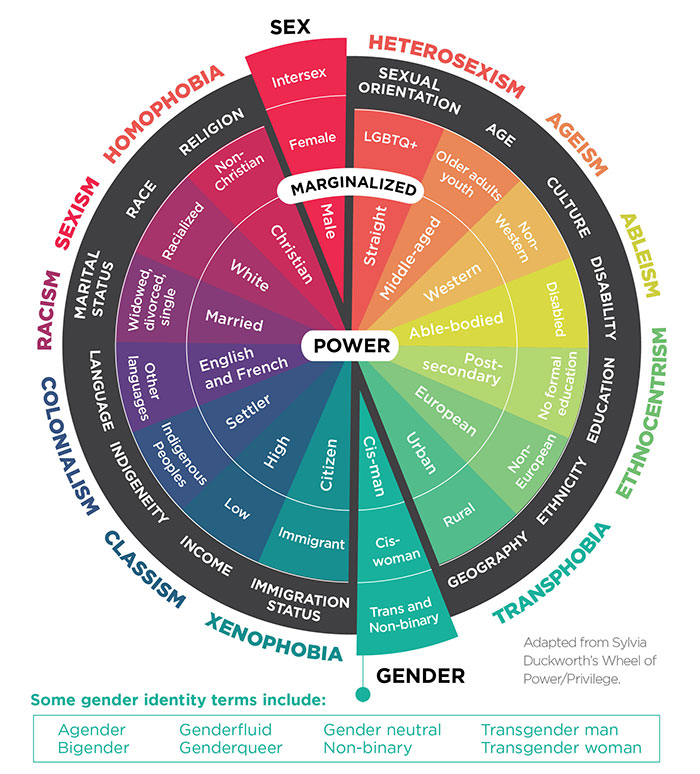
Photo taken from: Canadian Institutes of Health
If the powerful institutions which inform civic life are to become more inclusive, no aspect of them can go unexamined; self-examination of those in power is an integral part of bringing equity because no one is in a better position to identify and rectify problem areas.
Engagement Resources
Click or tap on image to visit resource website.

Race Ethnicity Newsrooms:
https://www.cjr.org/special_report/race-ethnicity-newsrooms-data.php

American Newsrooms Still Lack Racial Diversity:

Gender and Race:
https://www.opensecrets.org/news/reports/gender-and-race-2020

The racial divide on news coverage, and why representation matters

Newsroom employees are less diverse than U.S. workers overall
Racial, ethnic diversity increases yet again with the 117th Congress

As Some Black Staff Members Leave Congress, Those Who Remain Call for Change:

The Facebook Files Follow-Up: Facebook’s Terrible, Horrible, No Good, Very Bad Week
The Facebook Files Follow-Up: Facebook’s Terrible, Horrible, No Good, Very Bad Week
Technology Policy Brief #64 | By: Scout Burchill | October 18, 2021
Header photo taken from: Delano.lu
Follow us on our social media platforms above
Browse more technology policy briefs from the top dashbaord

Photo taken from: The New York Times
Policy Summary
[SSB theme=”Official” align=”center” counter=”true” ]
Frances Haugen, the whistleblower behind the Wall Street Journal’s hugely-consequential Facebook Files (see Brief #64 for more details) took center stage earlier this month, revealing her identity in a primetime interview with CBS’s 60 Minutes before testifying in front of Congress in a series of high-profile hearings. Haugen’s revelations, coupled with an hours-long complete blackout of all Facebook-owned platforms, added up to one of Facebook’s worst weeks ever.
And that was just the beginning of a long week for Zuckerberg and co. Compounding Facebook’s woes, progressive antitrust hero and seasoned Big Tech critic, Jonathon Kanter, was met with bipartisan plaudits on Capitol Hill, signaling that he will likely be confirmed as the head of the antitrust division at the Justice Department. Kanter’s confirmation will add jet fuel to the burgeoning antitrust movement picking up steam in Washington, which has Facebook high on the list of worst offenders. It’s hard to imagine an all time worst week for a company that has admitted to facilitating a genocide in Myanmar, but all things considered, from Facebook’s point of view, this one is definitely up there.
A big reason for this is Frances Haugen’s testimony, which managed to do something rare in our current political climate; it brought nuance and substance to a difficult and complex issue. The Facebook Files was the true star of the show, the meat of matter, as it were, but it was Haugen’s technical knowledge and formidable experience that might make the difference going forward. Instead of devolving into a carnival of geriatic Luddites performing their predictable political grandstanding and soundbite-level gamesmanship, Haugen’s presence brought sorely needed focus at a critical moment. Her ability to keep the discussion technically-grounded, specifically on the topic of algorithms, helped keep the culture war brain rottage at bay and move the overall conversation in a much more meaningful direction.
Although not all Big Tech reformists share the same ideas about how to go about making Big Tech companies less terrible for society, Haugen’s testimony presented a number of possible avenues for Congress to pursue, which are worth taking a closer look at.
Policy Analysis
It’s no surprise that of all the revelations exposed by the Facebook Files, the one that has gained the most traction in mainstream discourse is the piece about how their business model, which is built around maximizing engagement, is really bad for the mental health of individuals, and particularly young adults. Haugen argued this well, drawing a direct line to Big Tobacco’s infamous history of corporate coverups;
“In the case of cigarettes, ‘only’ about 10% of people who smoke ever get lung cancer… so the idea that 20% of your users could be facing serious mental health issues and that’s not a problem is shocking.” Indeed, it was hard not to leave Haugen’s testimony without thinking that Facebook was destroying the mental well-being of adolescents and was an all around anathema to informed, thoughtful and compassionate discourse and communication.
While the internal documents Haugen sheperded to the light of day certainly contained a number of new and shocking revelations, Haugen’s policy recommendations have actually been floating around the halls of Congress for some time now. They include stripping social media platforms of their Section 230 protections for content their algorithms promote, greater company transparency that would allow researchers and the public access to Facebook’s data and an independent agency to oversee social media companies. Notably, Haugen did not argue for breaking up the company.
Stripping Section 230 protections would mean Facebook could be held liable for the content users post on it (see Brief #23 for more details). Critics of this approach argue that stripping these protections and not breaking up Facebook would only consolidate even more power in the Big Tech giants.
Only massive companies like Facebook and Google would be able to allocate the necessary resources to carry out such massive content moderation regimes. In effect, Haugen’s policies reflect her tech background.

Photo taken from: brainstudy.info
They aim to adjust the architecture of the platform, targeting the algorithmic incentive structure that prioritizes harmful and polarizing content, without addressing the topic of concentrated power.
Advocates of anti-trust view many of the societal harms wrought by Big Tech companies principally as a symptom of their market power.
Anti-trust advocates argue that a combination of more competitors, as well as clear rules around harmful business practices like surveillance advertising and privacy would go a long way in solving many of the problems exacerbated by the Big Tech giants. While not a panacea in and of itself, breaking up the enormous power these companies have over society, the economy and issues of speech would greatly reduce their ability perpetrate harms and would prevent their power from being weaponized by political actors.

Photo taken from: Reuters
Taking a different route altogether, some Big Tech reformists argue that Google and Facebook should be regulated as a public utility, like electricity or water services. Ohio is currently going this route by suing Google, claiming that the company should be declared a public utility and therefore cannot discriminate in how they list searches by prioritizing the placement of its own product, services and websites. In Facebook’s case, the government would treat it as common carrier, which would lead to a whole host of government-set regulations that would dictate how the business operates.
While the road to reform is long and paved with uncertainty, Haugen’s testimony will certainly help guide the way. As Haugen points out, learning more about how Facebook’s algorithms and business model affects society is the only way to crafting good policy. One point all Big Tech reformists can agree upon is that more transparency is sorely needed.
Engagement Resources
Click or tap on image to visit resource website.

The Center for Humane Technology

American Economic Liberties Project
https://www.economicliberties.us/big-tech-monopolies/

Center for Digital Democracy
https://www.democraticmedia.org/

The Facebook Files (writer’s source):
https://www.wsj.com/articles/the-facebook-files-11631713039
Kanter Appointment (writer’s source):
https://www.nytimes.com/2021/10/06/technology/biden-jonathan-kanter-big-tech.html
Frances Haugen’s Testimony (writer’s source):
https://www.nytimes.com/2021/10/05/technology/facebook-whistle-blower-hearing.html
https://www.nytimes.com/live/2021/10/05/technology/facebook-whistleblower-frances-haugen

Frances Haugen on 60 Minutes (writer’s source):

Facebook Outage (writer’s source):
https://www.theverge.com/2021/10/4/22708989/instagram-facebook-outage-messenger-whatsapp-error

Facebook in Myanmar (writer’s source):

The Facebook Files: A Clarion Call for Real Accountability and Transparency
The Facebook Files: A Clarion Call for Real Accountability and Transparency
Technology Policy Brief #63 | By: Scout Burchill | October 18, 2021
Header photo taken from: Financial Times
Follow us on our social media platforms above
Browse more technology policy technology from the top dashboard

Photo taken from: The BBC
Policy Summary
[SSB theme=”Official” align=”center” counter=”true” ]
A remarkable investigative series published last month by the Wall Street Journal reveals the profound, and deeply disturbing, ways Facebook is warping our society. The Facebook Files, as they are called, expose bombshell revelations about the harms the biggest social media company in the world knowingly perpetrates. While much ink has been spilled on this topic before, the Facebook Files are already shaping up to be the most damning scandal to rock the company since Cambridge Analytica.
According to the Wall Street Journal, who received a wide-ranging cache of internal documents from Frances Haugen, a whistleblower within the company, Facebook has a secretive system of exclusive content moderation rules called ‘XCheck’ that only apply to about 5.8 million specially designated VIP users. A number of the reports, which feature company conducted research, also confirm that Facebook is well aware of the harms its platforms have unleashed on society. For example researchers found that Instagram has had a profoundly negative effect on teenage girls, with close to one-third of teen girls stating that when they feel bad about their bodies, Instagram makes them feel even worse. 13% of British teens and 6% of American teens who reported having suicidal thoughts attributed their desire to kill themselves back to Instagram.
Further internal documents reveal that 87% of all platform moderators’ time is spent on content in the United States, a massive inequality considering that 90% of Facebook users live outside the United States and Canada. As a result of their underinvestment, the company knew about drug cartel operations and human trafficking in developing regions, but did little about it. Just as equally damning, internal memos show that Facebook’s 2018 algorithm tweaks, which were made under the guise of incentivizing more meaningful social reactions, actually made the platform a measurably more effective manufacturer of outrage. Divisive and politically destabilizing content became even more rewarded. In fact, one political party from Poland estimated that the 2018 algorithm tweaks shifted their content from about 50% negative content to about 80% negative content.
If there is one takeaway from the Facebook Files it is the undeniable confirmation that Facebook is well aware of the harms of its platforms, and is either unable or unwilling to fix them. Its own workforce is now raising the alarm, calling for sorely needed accountability.
Policy Analysis
Facebook is increasingly living up to the precedent set by the ‘Big Tech’ moniker. Similar to Big Oil or Big Tobacco, the social media company is extracting massive profits at the expense of the well-being of our society. It is knowingly addicting users to cycles of manufactured outrage, polluting our mental health and poisoning our information ecosystems, all while engaging in sophisticated public relations campaigns and cover ups. The key here is not that Facebook’s business model is adversely affecting society, but rather that Facebook knows a lot more about how its business adversely affects our society than it cares to admit. And worse, the Facebook Files actually contradict a lot of what Facebook has been publicly telling us about its content moderation policies, algorithmic incentives and mental health impacts.
The Facebook Files, taken together with recent developments at Facebook, paints a picture of a company that is trying really hard to appear accountable, trustworthy and responsible, while actively undermining any real efforts to be so. Over the summer, Facebook banned a group of New York University researchers who were attempting to study political advertising on the platform. The researchers were crowdsourcing data on political ads from users through a browser extension called Ad Observer. Facebook claimed that the project puts users’ information at risk by collecting their data, however the open source codes of the extension prove that this is simply not true. The reality is Facebook is prioritizing the privacy of advertisers who pay big bucks for targeted political ads over true transparency.

Photo taken from: Washington Square News
Shortly after this incident, Facebook released a quarterly transparency report that proved to be anything but transparent. Not long after its release, the New York Times revealed that the original transparency report was shelved out of fear it would make the company look bad.
For over a decade Facebook has tricked the public, and probably even itself for a time, into thinking that everything bad about Facebook can be fixed with a tweak of the algorithm. One of the upshots of this thinking is the assumption that Facebook is the best equipped actor to solve the problems of Facebook because at the end of the day the platform’s problems are mainly technical in nature, like a lever gone awry or a dial turned too far up in the algorithmic amplification machine. Facebook itself goes to great lengths to prop up this fantasy, as well, because it allows the company to obscure its real business, which is fundamentally driven by profit, not good intentions. The Facebook Files shed light not only on the myriad ways Facebook’s policies affect society, but also help illuminate the company’s true priorities, which have always been maximizing profits by any means necessary.
Engagement Resources
Click or tap on image to visit resource website.

The Center for Humane Technology

Ad Observer
The Facebook Files (writer’s source):
https://www.wsj.com/articles/the-facebook-files-11631713039
Facebook Bans Researchers (writer’s source):
Facebook’s Transparency Report (writer’s source):
Judge Pitman’s Abortion Ruling Illustrates Flaws of Texas Senate Bill 8
Judge Pitman’s Abortion Ruling Illustrates Flaws of Texas Senate Bill 8
Civil Rights Policy Brief #176 | By: Rodney A. Maggay | October 15, 2021
Header photo taken from: ABC
Follow us on our social media platforms above
Browse more civil rights policy briefs from the top dashboard

Photo taken from: Dallas Morning News
Policy Summary
[SSB theme=”Official” align=”center” counter=”true” ]
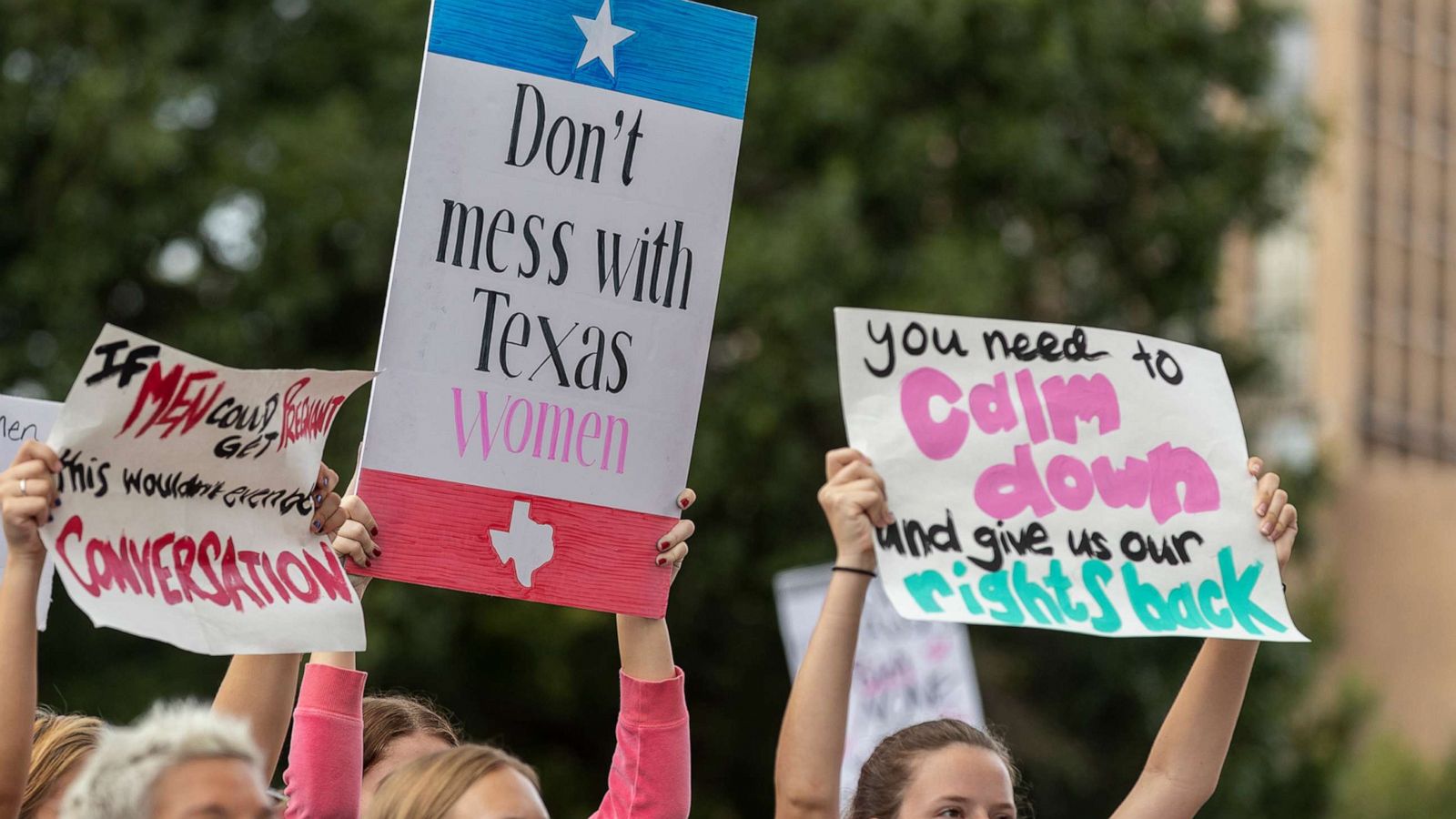
Texas Senate Bill 8 (SB8) bans abortions approximately six weeks after pregnancy. Under the new law any person may sue a Texas health care provider to prevent them from performing an abortion and gives those persons who bring a lawsuit money damages of $10,000 if they are successful in their lawsuit against the health care provider.
On July 13, 2021 the American Civil Liberties Union (ACLU) brought a lawsuit to have the Texas abortion law declared unconstitutional based on existing court precedents such as Roe v. Wade. Whole Women’s Health v. Jackson eventually made its way to the Supreme Court but the high court instead refused an order for a temporary restraining order against the law and the Texas law was allowed to go into effect on September 1, 2021.
In response to the Supreme Court’s order Attorney General Merrick Garland announced on September 9, 2021 that the Department of Justice (DOJ) would initiate a lawsuit on a different basis. While Whole Women’s Health was brought on behalf of state abortion providers, the suit brought by DOJ – United States v. Texas – was pursuant to the Freedom of Access to Clinic Entrances Act and would be brought because SB8 “illegally interferes with federal interests.”
On October 6, 2021 U.S. District Judge Robert Pitman issued a 113-page order granting a temporary restraining order prohibiting SB8 from going into effect. However, an immediate appeal was again taken and on October 8, 2021 the United States Court of Appeal for the Fifth Circuit ordered a stay which blocked Judge Pitman’s order. The end result is that now the SB8 law banning abortions in Texas can continue while the trial on the case moves forward. LEARN MORE, LEARN MORE, LEARN MORE
Policy Analysis
While Whole Women’s Health and the DOJ case are very similar and have proceeded on an equivalent litigation track Judge Pitman’s sweeping ruling was able to put to paper the rationales as to why Senate Bill 8 is so troubling. The Whole Women’s Health case did not have this opportunity as the appeals process in that case moved rather swiftly and was primarily focused on whether a court could and should intervene with a temporary restraining order.
What DOJ lawyers did was focus on two main points that allowed Judge Pitman to expand on those points and give him a legal basis to temporarily suspend the law. First, the judge noted SB8’s novel enforcement scheme – allowing private citizens to bring lawsuits instead of Texas state officials – by calling it a “contrived” and “unprecedented” scheme to sidestep likely review by a judicial court.
The officials in Texas knew that SB8 directly contradicted Roe v. Wade and so the law was intentionally written in a way that allowed the state to prohibit abortions without having to take any legal responsibility for the new law. A woman’s right to have an abortion cannot be deprived simply by creating a different enforcement mechanism. Roe v. Wade established a constitutional right for women to have the procedure and that right doesn’t change by trying to sidestep the law by having private citizens instead of state officials bring lawsuits.

Photo taken from: Lynnwod Times
And, when the DOJ lawsuit was initiated, Attorney General Merrick Garland stated his concern that SB8 would become a model for other states to pass laws that could prohibit more than just abortion rights.
In his ruling Judge Pitman emphasized that this was another basis on why stepping in now was so important. He stated his concern that “any number of states could enact legislation that deprives citizens of their constitutional rights, with no legal remedy to challenge that deprivation, without the concern that a federal court would enter an injunction.” Judge Pitman recognized clearly that he needed to step in and, at least for now, push back on how SB8 was constructed.

Photo taken from: WILX
Other states could easily try to model laws after Texas SB8. The danger as Judge Pitman saw was depriving people of not just abortion rights but other constitutionally guaranteed rights. With a brilliant analysis and ruling by Judge Pitman parties in other lawsuits and courts around the country can now point to Judge Pitman’s order as legal precedent if states try to implement some kind of law that mirrors SB8’s enforcement mechanism.
However, with the reversal in the court of appeals, the case most likely is not finished and appears headed to the Supreme Court. LEARN MORE, LEARN MORE, LEARN MORE
Engagement Resources
Click or tap on image to visit resource website.

Center for Reproductive Rights – press release on United States v. Texas appeals court decision.

American Civil Liberties Union (ACLU) – group’s infopage on Texas’ Senate Bill 8.
This brief was compiled by Rod Maggay. If you have comments or want to add the name of your organization to this brief, please contact Rod@USResistnews.org.

Bears Ears National Monument: A Proper Boundary Reestablished
Bears Ears National Monument: A Proper Boundary Reestablished
Environmental Policy Brief #132 | By: Tim Loftus | October 16, 2021
Header photo taken from: Desert News
Follow us on our social media platforms above
Browse more environmental policy briefs from the top dashboard

Photo taken from: ABC
Policy Summary
[SSB theme=”Official” align=”center” counter=”true” ]
In December of 2016, President Obama issued Presidential Proclamation 9558 – Establishment of the Bears Ears National Monument. This relatively new monument is unique. Situated in southeastern Utah, the monument was created largely at the behest of the Bears Ears Inter-Tribal Coalition composed of five Colorado Plateau tribes who share a longstanding cultural connection to the landscape: Hopi, Navajo, Ute Mountain Ute, Ute Indian Tribe of the Uintah and Ouray Reservation, and Zuni Tribe.
San Juan County, where the monument is located, is one of the most scenic areas in the country. For example, the county is home to a large portion of Canyonlands National Park, other national monuments, and so much more. Much of the land features an abundance of archeological and paleontological resources that are well preserved due to the arid climate. Thus, a higher level of protection is warranted amid the area’s growing popularity with tourists and outdoor enthusiasts, not all of whom visit with the respect necessary for the special, and sacred to many, nature of this land.
In the spring of 2017, then-President Trump ordered a review of all national monuments created since 1996. The order was carried out by then-Secretary of Interior, Ryan Zinke. Months later, one year after Bears Ears was established, Mr. Trump took unprecedented action and with Presidential Proclamation 9681, modified the boundary and reduced the size of Bears Ears by 85 percent. In essence, Mr. Trump abolished the vast majority of a national monument that was legally established by a previous President. This highly controversial, if not illegal, action sparked immediate challenges that remain pending in federal court.
When the Biden Administration came into power and Congresswoman Deb Haaland was appointed Secretary of Interior, an immediate review commenced of actions undertaken by the previous administration including a reduction in the spatial extent of Grand Staircase Escalante National Monument, established by President Clinton in 1996, and a reduction in protections for a marine reserve that was also established by President Obama.
In April of this year, Secretary Haaland visited both monuments in southern Utah to hear from many of the competing voices on the matter including tribal leaders and Republican leaders including Utah Governor Spencer Cox and U.S. Senator Mitt Romney. Ms. Haaland submitted her report to the White House not long after and while the contents of the report were made public only this month, it was reported in the New York Times on June 14th that Ms. Haaland recommended that Mr.Biden reinstate the original boundaries to both monuments in Utah. It has been widely expected since his inauguration that President Biden would restore the monument boundaries established by President’s Obama and Clinton.
Late last month, the Bears Ears Inter-Tribal Coalition sent a letter to President Biden expressing their frustration with the delay in taking action to restore and expand Bears Ears National Monument. The Coalition cited evidence of ongoing desecration and an unwillingness by the BLM and USFS to engage the Coalition in management and planning activities. The Coalition requested that the President take immediate action “to restore the protections of the sacred cultural landscape we call Bears Ears.”
Policy Analysis
A president’s authority for establishing new national monuments is found in the Antiquities Act of 1906. As is typical of new designations, monuments encompass existing federal lands such as those managed by the U.S. Department of Interior’s Bureau of Land Management (BLM), the U.S. Department of Agriculture’s Forest Service (USFS), or other federal agencies. Thus, a new monument designation includes land that is already under federal ownership. Should any private holdings or state parcels be encompassed by the new boundary, those parcels remain private or in state control as before.
The controversy that sometimes accompanies a new monument designation is usually related to restrictions that will, for example, prevent issuance of new grazing or mineral/oil/gas/timber extraction leases. All-terrain vehicle (ATV) use may also become more restricted. In short, the privilege of using public land in certain impactful ways, often for profit, and by a relatively few individuals is deemed less appropriate than a longer-term conservation of the public land and its resources for all Americans, both current and those to come.
Controversy has long been part of the history of some of America’s most iconic landscapes. The Grand Canyon, for example, struggled for many years to become a national park because of insufficient support in Congress at the time. Using new authority given to presidents under the recently passed Antiquities Act, President Theodore Roosevelt established the Grand Canyon National Monument in 1908. Eleven years later, President Woodrow Wilson signed the Grand Canyon National Park Act. Who among us will argue now that setting aside the Grand Canyon was a mistake?

Photo taken from: The Southern Utah Wilderness Alliance (areas in yellow denote land restored by Biden in 2021 to the monument)
Bears Ears National Monument was created for the exact reason(s) that the Antiquities Act exists: to create national monuments from federal lands to protect significant natural, cultural, or scientific features (emphasis added). Furthermore, the promise of acknowledging the wishes of several native-American tribes and using their input going forward for planning and management purposes is in keeping with our nation’s current attempts at giving voice to marginalized or underserved people.
As to the legitimacy of whether a sitting President can unilaterally abolish or materially change a national monument that was established by an earlier President under the authority of the Antiquities Act of 1906, a legal team at Arnold & Kaye Scholer LLP provided an analysis in May 2017. The analysis, performed at the request of the National Parks Conservation Association, was in response to the review order by President Trump that preceded the rollback of the Bears Ears National Monument and nearby Grand Staircase Escalante National Monument.
The analysis found ample and unequivocal evidence that Congress alone has the authority to revoke or materially change a monument’s size once it has been established. This legal opinion occurred outside of any currently pending adjudication.

Photo taken from: Roadtrippers
Happy Ending
On October 8, 2021, President Biden restored the original boundary of Bears Ears National Monument and retained protections on additional acreage added by President Trump in his overall dismantlement of Bears Ears. In doing so, President Biden corrected what many believe to be an unprecedented mistake and unfortunate misreading of the relevant statute by his predecessor. Mr. Biden also restored the Grand Staircase Escalante National Monument to the boundaries that were in place on January 20, 2017. Furthermore, protections were restored to the Northeast Canyons and Seamounts Marine National Monument that was established by President Obama in September 2016.
Engagement Resources
Click or tap on image to visit resource website.

Friends of Cedar Mesa. Friends of Cedar Mesa – Stewarding the greater Cedar Mesa area in San Juan County, Utah (accessed October 15, 2021)

National Parks Conservation Association. 2021. Legal Analysis of Presidential Ability to Revoke National Monuments · National Parks Conservation Association (npca.org) (accessed October 15, 2021)

Rebecca M. Robinson. 2018. Voices From Bears Ears: Seeking Common Ground on Sacred Land. Tucson, AZ: The University of Arizona Press. 412 p.
The New York Times. June 14, 2021. Deb Haaland Wants to Restore National Monuments Slashed by Trump – The New York Times (nytimes.com) By Coral Davenport. (accessed October 4, 2021)

The Washington Post. September 28, 2021. Native American tribes tell Biden they want ‘immediate action’ on Bears Ears National Monument, which Trump shrank – The Washington Post By Joshua Partlow. (accessed October 15, 2021)

The White House. October 7, 2021. FACT SHEET: President Biden Restores Protections for Three National Monuments and Renews American Leadership to Steward Lands, Waters, and Cultural Resources | The White House (accessed October 15, 2021)

U.S. Dept. of the Interior, Office of Congressional and Legislative Affairs. 2016. STATEMENT FOR THE RECORD – UNITED STATES DEPARTMENT OF THE INTERIOR – BEFORE THE COMMITTEE ON ENERGY AND NATURAL RESOURCES, UNITED STATES SENATE – CONCERNING THE DESIGNATION OF MONUMENTS PURSUANT TO THE AUTHORITY PROVIDED BY THE ANTIQUITIES ACT July 27, 2016 Antiquities Act | U.S. Department of the Interior (doi.gov) (accessed October 14, 2021)

Supply Chain and Customer Service Shortages: The Real Drivers of Inflation
Supply Chain and Customer Service Shortages: The Real Drivers of Inflation
Economic Policy Brief #126 | By: Rosalind Gottfried | October 17, 2021
Header photo taken from: The Economist
Follow us on our social media platforms above
Browse more economic policy briefs from the top dashboard
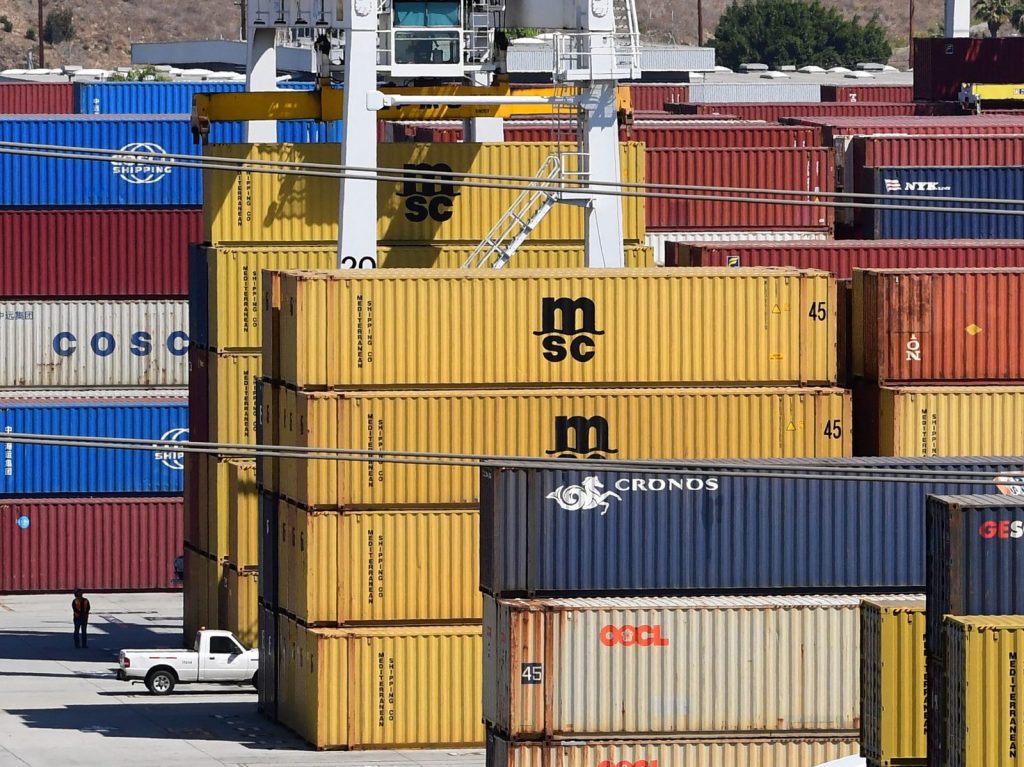
Photo taken from: Getty Images
Policy Summary
[SSB theme=”Official” align=”center” counter=”true” ]
There are some indications that the economy is strong. The US economy is expected to grow at 6% this year and fall to 3.9% for 2022, a greater rate than for most years since the turn of the century. Economists are predicting a steady expansion of the economy for the second half of 2021. The unemployment rate is under 5%, marking only 17 months to recover that rate since the pandemic started. Unemployment is currently at 4.8% which is down from 5.2% in August. In the previous recovery from the global economic crisis, it took 6.5 years after the official end of the recession to reach a level of less than 5%. Economists consider this good news and they are optimistic within limits, watching the issues of Biden’s ability to address long term increases in the debt ceiling and to pass an aggressive “rebuild America” infrastructure plan.
So what is the issue which can be viewed as worrisome? Inflation, which is high, is only one measure of the costs to consumers. Some economists are referring to the “shadow economy,” where unmeasurable aspects of services are deteriorating and reducing the satisfaction of consumers even when the prices are stable. They suggest that the measure of inflation cannot be limited to physical measures which, at any rate, are also hard to measure in that an item may have a price increase but it may also have improved functionality. Think of computer programs with less “bugs” and/or products with better carpentry or glass or other elements. The consumer price index captures only 237 of 273 components of major services; evidence points to many measures of customer dissatisfaction. Surveys of customer satisfaction in 60,000 restaurants showed a drop of 4.2% in satisfaction regarding cleanliness of tables, floors and restrooms. Even among highest rated retailers, consumers are facing long waits for customer service representatives and long waits for major house items such as windows, appliances, and furniture.
Shortages are jeopardizing the continuing health of the economy. There are back ups of container ships in major ports such as southern California and Savannah GA. The flow of goods is stymied by lack of port space and a scarcity of truckers. Merchandise for major retailers is being shipped to outer lying warehouses and being moved by the retailers privately hiring help; this is not an alternative readily available to smaller retailers. Auto plants are idle as factories wait for semi-conductors to be delivered. Restaurants and other services are cutting back hours for lack of workers. Economists say the issue of the late pandemic era is one of pent-up demand and a shortage of supplies and workers. This is a different story than in the last economic crisis where demand was low and the availability of workers and productivity was high and the mechanisms to address it are elusive.
Policy Analysis
The global economy is experiencing great demands for physical goods which will continue to put pressure on supply chains and transporting goods which could lead to an interruption in economic growth.
The increase in the debt ceiling is also seen as a crucial mechanism for assuring the solidity of the economy and the administration must assure that there is continued leverage after the early December deadline runs out.

Photo taken from: Forbes
Photo taken from: TBA
Engagement Resources
Click or tap on image to visit resource website.
Shadow Inflation Analysis
Jobs Report: September
Upshot Economy Risk Analysis
Business Supply Chain Crisis Analysis in Savannah

Screws Tighten on Unvaccinated Healthcare Workers
Screws Tighten on Unvaccinated Healthcare Workers
Health and Gender Policy Brief #137 | By: S. Bhimji | October 16, 2021
Header photo taken from: Yahoo
Follow us on our social media platforms above
Browse more health and gender policy briefs from the top dashboard
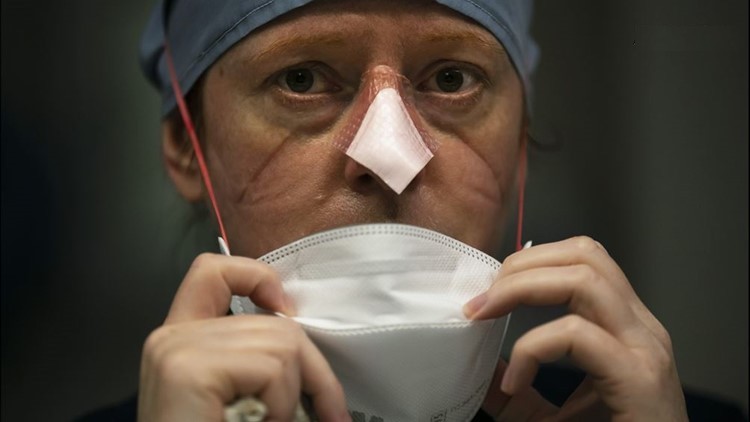
Photo taken from: The Associated Press
Policy Summary
[SSB theme=”Official” align=”center” counter=”true” ]
By now most people in the country are fed up with unvaccinated individuals. For whatever reason, there are still a significant number of Americans who are still refusing to be vaccinated against Covid. And sadly a great many of these unvaccinated individuals are healthcare professionals that include doctors, nurses, pharmacists, EMS technicians, nursing assistants, and lab technicians.
First, these healthcare workers refused the vaccine citing that it was unsafe. After numerous clinical trials done both in the US and abroad, showing minimal risk to vaccination, these healthcare workers still remain unconvinced. Now, despite overwhelming data showing that vaccination against Covid prevents serious infections and death, these individuals have refused the shot citing all kinds of beliefs.
It is estimated that anywhere from 10%-25% of healthcare workers remain unvaccinated. There has always been a belief in these unvaccinated healthcare workers that they are essential in the fight against Covid and will not be terminated. In addition, many of them feel that even if they are fired, they can always go work in other healthcare institutions, clinics, or even start their own practice. Well, many US states are about to change the work options for these workers.
Policy Analysis
Already many hospitals have started to fire healthcare workers who have not been vaccinated and if these healthcare workers think they will get another job, they are seriously wrong. State licensing boards in some states have stepped in to help fight the Covid pandemic and they have stated that healthcare workers who refuse to be vaccinated may lose their license to practice. Others may face suspension, revocation, and non-renewal of their license, which will make it very difficult to get a job in their profession anywhere in the continental USA. And once a license is lost, it is not only difficult to get it back but it is an expensive endeavor.
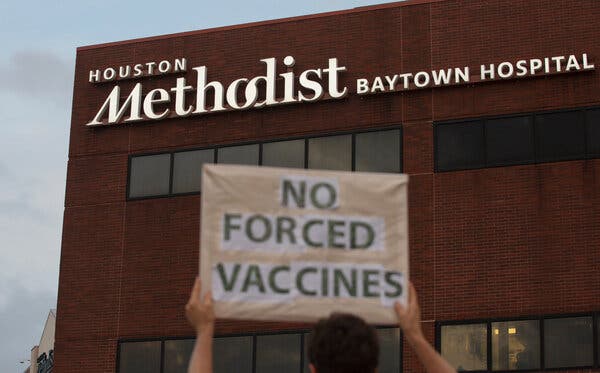
Photo taken from: The New York Times
And to make matters worse, for those who refuse to be vaccinated and do not have a religious or disability exemption, and are fired, they may not be eligible for unemployment compensation.
Engagement Resources
Click or tap on image to visit resource website.

Different COVID-19 Vaccines | CDC
https://www.cdc.gov/coronavirus/2019-ncov/vaccines/different-vaccines.html

Coronavirus disease (COVID-19): Vaccines safety
https://www.who.int/news-room/q-a-detail/coronavirus-disease-(covid-19)-vaccines-safety

COVID-19 Vaccines | FDA. https://www.fda.gov/emergency-preparedness-and-response/coronavirus-disease-2019-covid-19/covid-19-vaccines

Finally A Malaria Vaccine: A Monumental Discovery
Finally A Malaria Vaccine: A Monumental Discovery
Health and Gender Policy Brief #136 | By: S. Bhimji | October 13, 2021
Header photo taken from: Nature
Follow us on our social media platforms above
Browse more TBA policy briefs here

Photo taken from: Oxford Medical Sciences Division
Policy Summary
[SSB theme=”Official” align=”center” counter=”true” ]
While much of the talk these days is about covid-19, the parasite that causes malaria is far more sophisticated and insidious than coronavirus. The malaria parasite has evolved to escape the immune system and it also has a complicated life cycle that spans across humans and mosquitoes. Even when it is inside the body, it escapes surveillance and different forms affect different organs.
Malaria is caused by a parasite that is spread from the bite of blood-sucking mosquitoes. Once inside the body, the parasite breaks down human blood cells to replicate. Even after repeated infections, building immunity to malaria can take years; and even then the immunity is not complete.
According to the WHO report in 2019, close to 50% of the world’s population resides in areas at high risk for transmission of malaria. Each year there are over 220 million clinical cases of malaria, resulting in 445,000 deaths- most of them in children. For at least a century, researchers have been trying to develop a preventive treatment; and finally, a vaccine has become available.
This new vaccine, referred to as RTS, S was developed 6 years ago and in initial studies was shown to be effective. Now the WHO is considering large-scale mass vaccination across most of Sub-Saharan, East, and West Africa.
Malaria is a serious illness and besides death, it can cause brain damage, stillbirths in pregnant women, kidney failure, breathing problems, and much more. Many individuals are left with residual deficits for the rest of their life.
While many drugs have been developed to fight malaria, most of them have developed resistance to the parasite. At least 9 dozen types of malaria parasites exist but the RTS, S primarily targets the most deadly one found in Africa, plasmodium falciparum.
Policy Analysis
Malaria has been one of the biggest menaces to humanity for eons, mostly killing infants and babies. Finally, after 100 years of exhaustive research, scientists have discovered the vaccine called RTS, S. Even though only 40% effective, the vaccine is hailed as a monumental discovery.
The initial pilot immunization programs in Kenya, Ghana, and Malawi revealed that the vaccine did work and saved lives. Now the WHO thinks it is time to roll out the vaccine for a large-scale vaccination of African children. It is hoped that this vaccine will save tens of thousands of children each year, who would have otherwise perished.
Early trials showed that the vaccine was effective in preventing 4 out of 10 cases of malaria and even lowering the need for blood transfusion in children. The vaccine requires 4 doses to be effective, given soon after birth. So far no adverse effects of the vaccine have been reported and it is cost-effective.

Photo taken from: yabiladi.com
The malaria vaccine is very specific in its actions. It only targets the sporozoite form of the parasite, the stage between being bitten by a mosquito and the entrance of the parasite into the liver. That is why this vaccine is only 40% effective but this is considered a significant discovery as it paves way for the development of more effective vaccines. And even if the vaccine is only 40% effective, it will still save 160,000 lives each year.
The malaria vaccine is still not going to replace the other measures for controlling the disease such as mosquito nets, wearing appropriate garments, and getting rid of stagnant water. For now, the vaccine will be limited for use in Africa because it is not effective against other forms of malaria found in Latin America.
Engagement Resources
Click or tap on image to visit resource website.
About Malaria. https://wwwnc.cdc.gov/travel/diseases/malaria
Facts on Malaria. https://www.who.int/news-room/fact-sheets/detail/malaria
Malaria vaccine implementation. https://www.who.int/initiatives/malaria-vaccine-implementation-programme

How Redistricting In Oregon and Colorado Made The Case For State Independent Redistricting Commissions
How Redistricting In Oregon and Colorado Made The Case For State Independent Redistricting Commissions
Civil Rights Policy Brief #175 | By: Rodney A. Maggay | October 6, 2021
Header photo taken from: The Washington Post
Follow us on our social media platforms above
Browse more civil rights policy briefs from the top dashboard

Photo taken from: Politico
Policy Summary
[SSB theme=”Official” align=”center” counter=”true” ]
On September 27, 2021 Oregon became the first state in the union to pass congressional and state legislative redistricting maps after the 2020 Census. Soon thereafter one of Colorado’s two independent redistricting commissions approved a state map for Colorado’s congressional state map.
After the decennial U.S. Census counts the nation’s total population and determines how many congressional representatives each state should have based on the state’s population, every state redraws the boundaries of the congressional and state legislative districts in their state. This is done to accommodate changes such as if a state gained or lost an additional representative due to population growth. However, the process of re – drawing state maps had traditionally been done by the members of the state legislature, subject to approval by the state governor. This created problems because maps were sometimes drawn and manipulated to keep a certain person or political party in power.
Lately, states have tried to counter this by using state independent redistricting commissions. In the fourteen states that use independent redistricting commissions, a set number of people are appointed to the commission with an equal number given to members of both political parties. Additional persons unaffiliated with any political party are appointed to the remaining seats on the commission. The commissions generally hold public hearings to gather info and take this into consideration when drawing the state map. A simple majority vote is needed to approve the maps which are then subject to approval by the state supreme court.
Colorado’s Independent Congressional Redistricting Commission drew Colorado’s map for congressional representatives. Oregon’s map went through the traditional route of state legislative approval and signature by the state governor.
Policy Analysis
The approval of maps by Oregon and Colorado illustrates the stark differences when a state relies on the traditional method of state legislatures drawing state maps and when a state uses a state independent redistricting commission.
The problem of having state lawmakers draw new congressional and state legislative maps for their state is that state lawmakers will often try to draw a map that favors themselves and their political party. Historically in some states maps had been drawn to such an extreme to ensure a politician will stay in power or to ensure that minority communities will be spread out so much as to dilute any voting power the community might wield. Instead of voters electing the candidate of their choice in a balanced district, state lawmakers are instead manipulating which voters will vote for them or their party to ensure they stay in power. In Oregon, state lawmakers opposed to the new maps are using this argument to try and stop the maps from going into effect. Democrats there are the majority in the state legislature and have a Democratic governor and so they were able to get the maps they wanted approved and signed by Governor Kate Brown.
However, Oregon House Minority Leader Christine Drazan, a Republican, argued the maps were heavily gerrymandered to favor Democrats and that she is considering a lawsuit in order to have a court deem the map illegal. It is uncertain if a court would see it that way but this just shows that the traditional way of having the state legislature draw a state map is untenable and too rife with conflicts of interest to continue in this manner.

Photo taken from: The New York Times
The situation with Colorado’s drawing of the state congressional map is completely opposite from what happened in Oregon. In Colorado there are two independent redistricting commissions – one to draw the congressional map and a second one to draw the Colorado state legislative map.
Here the Colorado state legislature has no input in how the maps are drawn and cannot veto a state map if it does not like it. Colorado has a twelve – member commission comprised of four Republicans, four Democrats and four unaffiliated members and they were able to approve a map by an 11 – 1 vote. And according to the Princeton Gerrymandering Project, which analyzes the fairness and partisanship of states drawing legislative state maps, they have graded Colorado’s experience with an ‘A’ and said that it “should be studied closely by other states, and by friends of redistricting” for drawing “decent maps.”
The project even noted that the partisan fairness was acceptable for not giving any advantage to either political side. This is significant because by not allowing the state legislature and governor a role in the process Colorado has been able to come up with a state map that didn’t get bogged down in accusations from one political party to another of gerrymandering. And, there have been no threats of lawsuits to have the state map invalidated. It has been a relatively smooth process as far as redistricting goes.

Photo taken from: Wikimedia
As of today only 14 states use independent redistricting commissions. But based on how Oregon and Colorado were able to come up with state maps in 2021 and what happened afterwards, it is clear that independent redistricting commissions should be the way that states redraw their legislative maps in the future. LEARN MORE, LEARN MORE, LEARN MORE
This brief was compiled by Rod Maggay. If you have comments or want to add the name of your organization to this brief, please contact Rod@USResistnews.org.
Engagement Resources
Click or tap on image to visit resource website.

Princeton Gerrymander Project – group doing non – partisan analysis to understand gerrymandering at the state level.

National Conference of State Legislatures (NCSL) – a comprehensive report on how each state manages the redistricting process.

USC Sol Price School of Public Policy – academic research on independent redistricting commissions.