

JOBS POLICIES, ANALYSIS, AND RESOURCES
Latest Jobs Posts
Can the U.S. Fulfill Its COP 26 Climate Promises?
Brief #127 – Environmental Policy
By Katelyn Lewis
Climate experts say the gathering of leaders from around the world in Glasgow, Scotland, for a two-week climate meeting led to imperfect, yet possible, updates to the Paris Agreement to slow global warming. The success of COP 26 depends on whether countries, including the United States, hold up their end of the bargain.
Dos and Don’ts of Importing Medications from Canada
Brief #141 – Health & Gender Policy
By S. Bhimji
There is no question that prescription medications are expensive in the US and each year the prices keep on going up. Some Americans visit Mexico to buy their prescription medications but the problem is that the quality of Mexican products is often not guaranteed.
Labor, Inflation, and Supply Chain Problems Suggest a Slowing Economy
Brief #129 – Economic Policy
By Rosalind Gottfried
The economic recovery has slowed in the third quarter and the unprecedented circumstances make it unclear what the indicators ultimately will mean for future growth. It is estimated that worker shortages are costing the economy sixty billion dollars in sales every month. Increased wages are failing to attract a crucial influx in returning workers. There are millions of pre-pandemic workers who have not returned to work. Workers are reluctant to return to work likely due to health concerns; childcare issues; and reconsideration of life priorities.
Recent Global Agreement Sets New Rules For Corporate Tax Revenue
Brief #128 – Economic Policy
By Jared Sullivan
A new global agreement, endorsed by the Biden administration, aims to improve the international tax system by redistributing revenue that countries earn from taxing multinational corporations. The proposal was finalized and agreed upon on October 8th by the Organization for Economic Cooperation and Development (OECD). It is scheduled to go into effect in 2023.
January 6th Capital Riot Investigation Update # 4
Brief #29 – Social Justice
By Erika Shannon
The House Select Committee on the January 6 riot has been making a lot of headway into their investigation. They have been issuing subpoenas, looking over documents and tips, questioning people, and trying to work around those who are unwilling to help with their investigation. The Committee is doing their best to piece together the day’s events in the hopes that situations like this can be avoided in the future.
Optimistic Economic Outlet Coupled with Caution
Brief #127 – Economic Policy
By Rosalind Gottfried
There are positive indications of economic growth in the fourth quarter of the year and, while economists are optimistic, citizens are less so. The economy grew by .5% in the third quarter, and the fourth quarter is predicted to be strong. The October jobs report was encouraging. New jobs reached 531,000 and after adjustments in the August and September figures, the average for the three months was 442,000. October unemployment was down to 4.6% from 4.8%.
Offshore Turbines a Windfall for the Transition to Cleaner Energy
Brief #126 – Environmental Policy
By Todd J. Broadman
Today, 67,000 wind turbines are spinning kilowatts of energy throughout the country. That is the wind behind President Biden’s back in his recent wind energy initiative; that, and his pledge is to cut the nation’s fossil fuel emissions 50 percent from 2005 levels by 2030. The cost to make and deploy wind energy has gone down over 50 percent since 2008. The administration wants to seize the moment; the plan is to install 30 gigawatts (GW) of offshore wind turbines in U.S. waters by 2030.
Trapped by Bureaucrats: The Gray Wolf’s Struggle For Survival
Brief #135 – Environment Policy
By Tim Loftus
After a century of slaughter that brought an iconic species of the North American landscape to the brink of extinction, the gray wolf (Canis lupus) was among the first species to gain protection under the Endangered Species Act (ESA) in 1974. The ESA had just been signed into law by President Richard M. Nixon the year before and prohibited the “taking” of a listed species without explicit permission. “Taking” meant killing, harassing, or damaging habitat necessary for the survival and recovery of the species. The designation applied to all remaining wolf populations, small as they had become, in the lower-48 states.
What Motivates Covid Conspiracy Believers?
Brief #140 – Health & Gender Policy
By S Bhimji
As of Sept 2021, there are still close to 70 million adult Americans who have not been vaccinated against Covid. Despite all types of incentives, these folks have refused to get the shot. President Biden had signaled that he would have liked most of the country to be vaccinated by July 2021 but as of now, there are millions who adamantly refuse to be vaccinated.

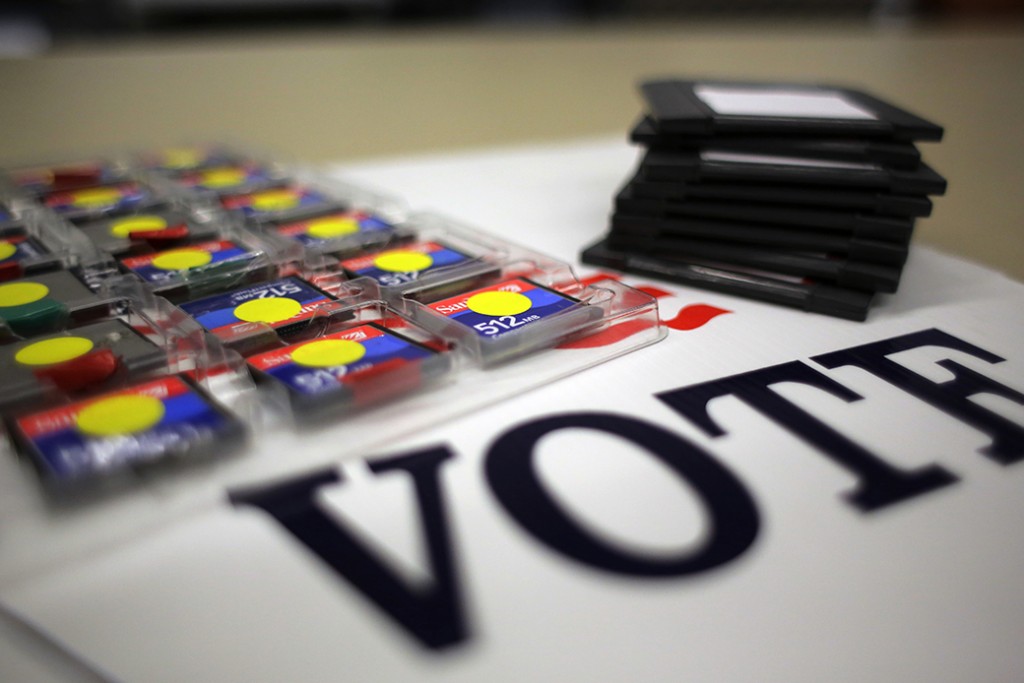
ENSURING FAIR ELECTIONS HELPS ENSURE DEMOCRACY
ENSURING FAIR ELECTIONS HELPS ENSURE DEMOCRACY
U.S. RESIST NEWS EDITORIAL | By: Ron Israel, Managing Editor | July 26, 2021
Header photo taken from: Center for American Progress
Follow us on our social media platforms above
Browse more US Renew editorials here
Photo taken from: Fair and Just Prosecution
[SSB theme=”Official” align=”center” counter=”true” ]
The United States of America was intended by our founders to be a democratic republic. Our Declaration of Independence enshrines our commitment to the core values of equality, freedom, and self-government. As Abraham Lincoln said in his Gettysburg address, we are a government “of the people, for the people, and by the people.” Those who govern America are accountable to the citizens they serve. This accountability gets renewed on a regular basis through an election system that is intended to be fair and transparent, with all citizens being given the opportunity to vote.
Over the past decade our electoral system has come under attack, first by Supreme Court decisions that diminished the effectiveness of the Voting Rights Act of 1965 and by a recent series of state level voting laws that are targeted at placing restrictions on minority voting rights ; second by the increasing use of state-level partisan gerrymandering to reapportion the way Congressional seats are chosen, third through a decision by the Supreme Court that allows corporations to make election contributions and allow unlimited special amounts of money to be spent , thereby favoring candidates supported and tethered to interests; and fourth by continued reliance on the outdated, undemocratic use of an electoral college system for determining the outcome presidential elections.
The Biden administration urgently needs to take steps to address these threats to our election system that in turn threaten to weaken our democracy. U.S. RESIST NEWS views the need to restore the equity and fairness of our voting system as more important than any other issue on President Biden’s agenda. We recommend that the administration put its utmost energies into passage of the following electoral reforms.
1.) Pass Federal voting rights legislation that ensures voting rights and easy access to the ballot box for all.
First and foremost, this means passage of the For The People Voting Rights Bill (HR 1) and the John Lewis Voting Rights Advancement Act now before Congress. The For the People Bill would expand voting rights, change campaign finance laws to reduce the influence of money in politics, ban partisan gerrymandering, and create new ethics rules for federal officeholders.
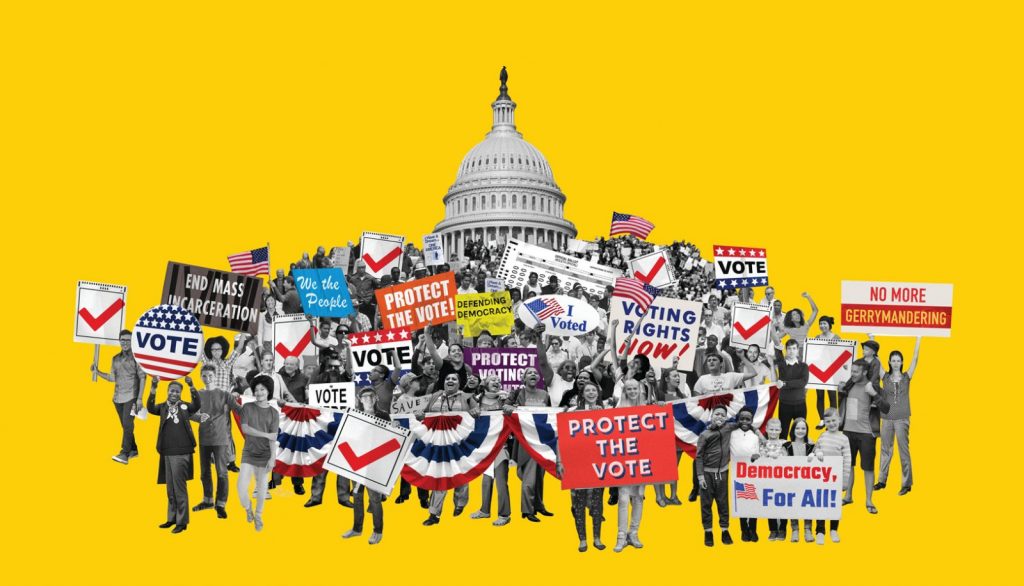
Photo taken from: Brennan Center for Justice
The John Lewis Voting Rights Advancement would restore the 1965 Voting Rights Act back to its original and full power which would prevent future discriminatory bills from being passed. The passage of these 2 bills will pre-empt ongoing Republican backed efforts to pass state level bills that severely restrict voting rights, especially for minorities, the disabled and young people.
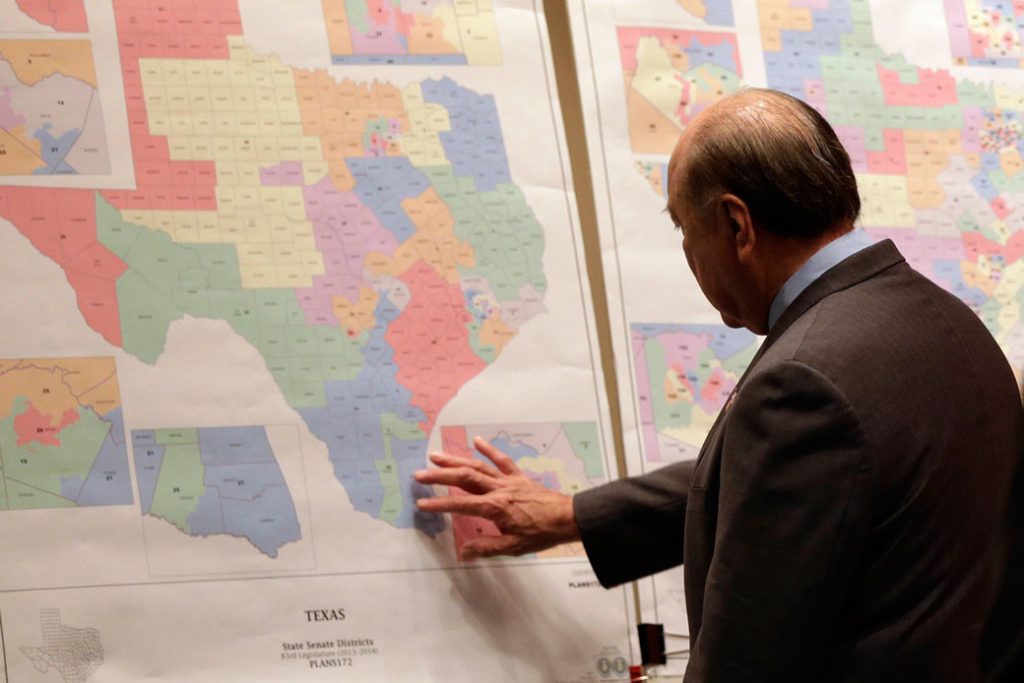
Photo taken from: Center for American Progress
2) Support efforts to establish state level non-partisan independent commissions responsible for re-districting.
The success of such commissions is largely dependent on their structure and i internal system of checks and balances. Carefully designing a commission to promote core values like independence, inclusivity, good-faith negotiation, and transparency is critical to fair redistricting that guards against partisan and racial gerrymandering.
Currently, 21 U.S. states have some form of non-partisan or bipartisan redistricting commission. Of these 21 states, 13 use redistricting commissions to exclusively draw electoral district boundaries. In 2015, the Supreme Court ruled that redistricting commissions, whose redistricting commission process is independent of the state legislature, were constitutional.
Learn more at https://www.brennancenter.org/our-work/policy-solutions/better-way-draw-districts
3) Initiate a legal challenge to overturn the Supreme Court’s Citizens United decision.
The idea is that a city or state can create a law cracking down on some of the big-money election tactics that have become commonplace, expecting that that law will then be challenged. Once challenged, the fight will advance through the court system and advocates hope, ultimately reach the Supreme Court.
At that point, the court will have the opportunity to reconsider the legal framework of the Citizens’ United case.
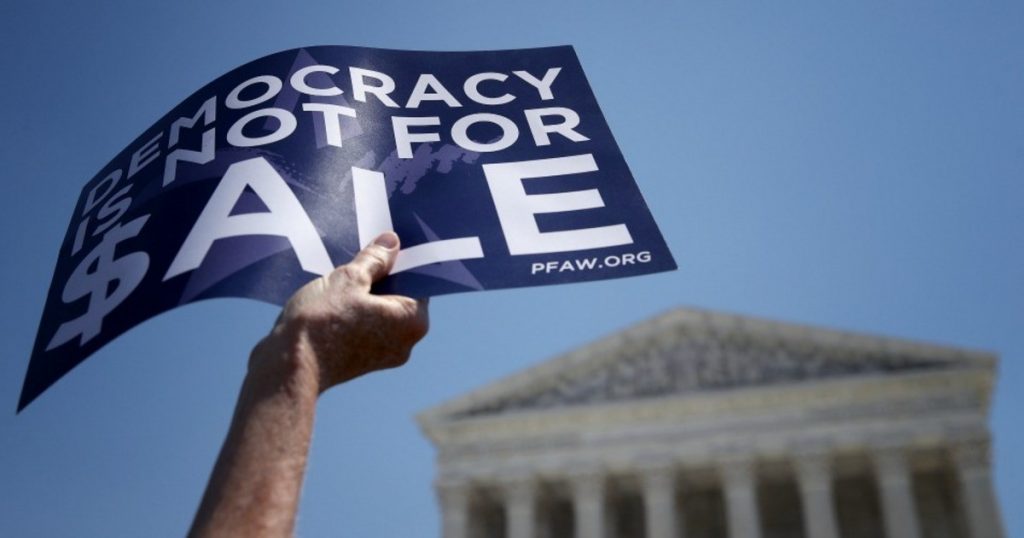
Photo taken from: Common Dreams
It also should be noted that a provision of the For the People Act-see # 1—above—calls for public financing of elections and support for a constitutional amendment to overturn the Citizens United Decision.
Learn more at www.defendourdemocracy.org.
4) Support the National Popular Vote Interstate Compact aimed at deciding presidential elections by popular vote.
The Compact will guarantee the Presidency to the candidate who receives the most popular votes across all 50 states and the District of Columbia. It ensures that every vote, in every state, will matter in every presidential election. The National Popular Vote Interstate Compact will go into effect when enacted by states possessing a majority of the electoral votes—that is, enough to elect a President (270 of 538).
So far, The National Popular Vote Compact has been endorsed by 16 jurisdictions possessing 195 electoral votes, including 4 small states (DE, HI, RI, VT), 8 medium-sized states (CO, CT, MD, MA, NJ, NM, OR, WA), 3 big states (CA, IL, NY), and the District of Columbia. The bill will take effect when enacted by states with 75 more electoral votes.
Learn more at www.nationalpopularvote.com
Learn more at www.defendourdemocracy.org.
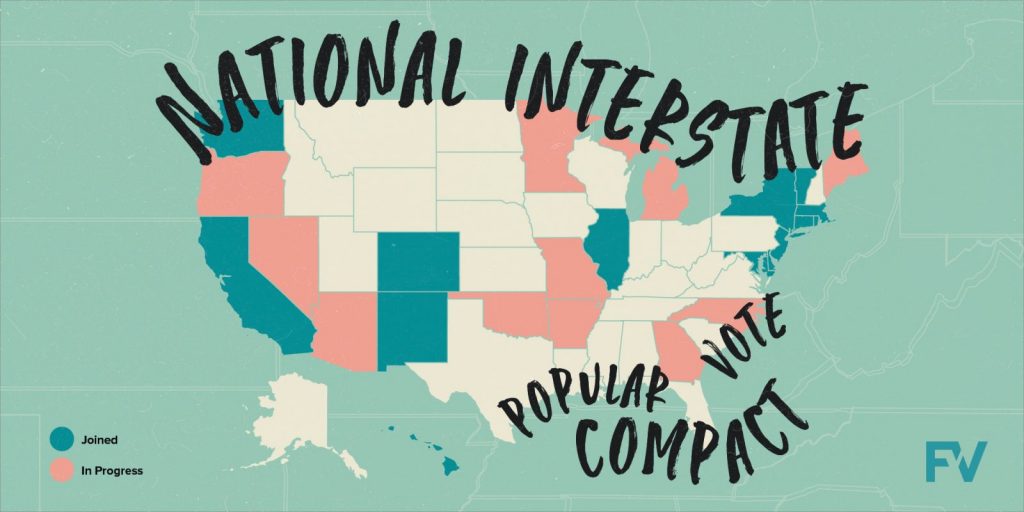
Photo taken from: Fairvote
Implementing these electoral reform proposals pose a challenge for the Biden administration, given our current highly charged political atmosphere. But it is a challenge well worth taking on if we are to preserve the democratic values and principles upon which our country and government stand.

Big Tech Antitrust Efforts Take a Step Forward
Big Tech Antitrust Efforts
Take a Step Forward
Technology Policy Brief # 56
By: Scout Burchill | July 26, 2021
Header photo taken from: Market Watch
Follow us on our social media platforms above
Browse more technology policy briefs here

Photo taken from: The Verge
Policy Summary
[SSB theme=”Official” align=”center” counter=”true” ]
The world of antitrust and Big Tech regulation has been brimming with developments lately, and all signs point to a transformational shift underway in Washington. Last month, in a rare show of bipartisanship, the Senate voted overwhelmingly to approve Lina Khan’s nomination to the Federal Trade Commission. A young, progressive antitrust scholar, Khan’s appointment at the FTC, along with the recent nomination of Jonathan Kanter to head the antitrust division at the Department of Justice, signifies a sea change in institutional attitudes towards Big Tech and Big Business.
Furthermore, late last month a bipartisan House Judiciary Committee approved a collection of six bills aimed at modernizing century-old antitrust laws in an effort to better equip the government to take on the anticompetitive practices of Big Tech companies. Shortly after these six bills passed their first hurdle in the House, the necessity of updating existing legal frameworks was put on full display as a federal judge handed Facebook a major legal win by dismissing two antitrust complaints against the company. Facebook’s legal woes are far from over, but the ruling still sent the company’s shares up 4%, and for the first time ever Facebook reached a market capitalization of $1 trillion.
Finally, on July 9th, President Biden signed a sweeping 72 point Executive Order aimed at curbing the power of corporations and delivered a remarkable speech condemning the past forty years of antitrust enforcement and policy. Channeling his role model Franklin D. Roosevelt, Biden bluntly asserted that, “capitalism without competition isn’t capitalism; it’s exploitation.” After signing the Executive Orders he handed his pen over to Lina Khan, a symbolic passing of the mantle intended to signify the beginning of a new era of governance in which reigning in the excesses of Big Tech are high on the agenda.
Policy Analysis
While Facebook may have parried away a major legal challenge, the developments of the past few weeks signal that the battle against Big Tech behemoths and Big Business giants is just ramping up.
A new consensus is taking shape in Washington with the potential to dramatically redefine the government’s role in regulating corporate power and safeguarding the interests of workers, individuals, small businesses, and competitors.
For starters, the appointment of Lina Khan to the FTC speaks volumes about how the Big Tech backlash is beginning to be reflected in American institutions.
Khan has become somewhat of a hero in progressive circles for her aggressive, straightforward stance on the necessity of curbing the dominance of Big Tech companies.

Photo taken from: The Seattle Times
However, her appeal extends beyond the left, as a number of Republicans have warmed to her hawkish approach.
In fact, Josh Hawley, the fist-pumping purveyor of election lies, was among the first to jump to Khan’s defense in response to a number of hit pieces published by the Wall Street Journal, her number one critic so far.
As Khan’s reign at the helm of the FTC portends to usher in a new era of antitrust regulation and enforcement, the Judiciary Committee’s six new bills attempting to modernize and update our current antitrust framework would add wind to her sails. The first two bills are relatively straightforward and are expected to receive the least amount of pushback.
The first would increase the FTC’s budget and resources by raising premerger filing fees on companies. The second would forbid companies from routinely moving cases to courts friendly to their interests. The remaining four bills specifically target Big Tech companies. They crack down on mergers, non-competitive behavior restricting interoperability between systems, the self-preferencing of a company’s products over those of competitors, and finally there is a bill that would allow Big Tech companies to be broken up if they own a business that presents a conflict of interest.
These laws would allow the government to crack down on some of the anti-competitive business practices of Big Tech that do not easily fit into the consumer welfare framework.

Photo taken from: Reuters
Although these bills will surely face an uphill battle in the legislative process to come, they are significant because they represent one of the most ambitious attempts in over forty years to modernize our current antitrust legal framework. They are in lockstep with the burgeoning movement taking shape in Washington to revitalize antitrust laws and update the existing consumer welfare framework, and most importantly, they would equip Khan’s FTC and Kanter’s antitrust division at the DOJ with the tools to take on the Big Tech behemoths.
You may wonder what this new antitrust era will look like, and the answer is that it is still too early to say. Our current legal framework is so entrenched in decades of rulings founded on the old consumer welfare framework. In his speech and sweeping 72 point executive order, Biden intentionally harkens back to FDR’s vision of an economy that prioritizes the power of workers, small businesses and competition over that of corporate greed.
In an effort to rebuild the American economy, the Biden Administration is attempting to position itself as both a spiritual successor to FDR’s New Deal politics and a repudiation of the past 40 years of neoliberal Reaganomics. Antitrust policy is quickly becoming one of the areas in which this radical rethinking may prove most successful, thanks in large part to the bipartisan nature of the Big Tech backlash. If history is to repeat itself, Big Tech may eventually succumb to the same fate as Rockefeller’s Standard Oil and other titans of the Gilded Age.
While Big Tech may represent only the tip of the iceberg when it comes to the odious influence of concentrated corporate power over our economy and society, it really is no surprise that these companies in particular have come to epitomize all that is wrong in our current antitrust framework. They control vast swaths of the economy and exert immense influence over our society with little to no accountability or oversight, they vigorously stifle competition and exploit labor laws, they have decimated local industries like journalism, and their influence and culpability is global in scope.
While a revolution in antitrust enforcement and philosophy can help guide the way to a more competitive and dynamic marketplace in all sectors of the economy, it surely seems the case that Silicon Valley, for better or worse, will bear the brunt of this new crusade. Even though they are far from alone in amassing tremendous power and wealth through unscrupulous and exploitative business practices, in the minds of lawmakers and the public they certainly appear to be worthy successors to the robber barons of the Gilded Age.
Engagement Resources
Click or tap on image to visit resource website.

American Economic Liberties Project
https://www.economicliberties.us/

Center for Digital Democracy
https://www.democraticmedia.org/
Sources
Click or tap on image to visit resource website.

Biden Executive Order and Speech

Lina Khan’s Amazon Antitrust Paradox
https://www.yalelawjournal.org/note/amazons-antitrust-paradox

NY Times
https://www.nytimes.com/2021/06/11/technology/big-tech-antitrust-bills.html
https://www.nytimes.com/2021/06/29/technology/facebook-google-antitrust-tech.html
https://www.nytimes.com/2021/06/23/technology/big-tech-antitrust-bills.html
https://www.nytimes.com/2021/06/24/technology/antitrust-overhaul-congress.html
https://www.nytimes.com/2021/06/28/technology/facebook-ftc-lawsuit.html
Jonathan Kanter’s Nomination

BIG by Matt Stoller
https://mattstoller.substack.com/p/the-antitrust-revolution-has-found
https://mattstoller.substack.com/p/why-did-congress-just-vote-to-break
https://mattstoller.substack.com/p/biden-launches-sweeping-action-on

Deconstructed Interview with Zephyr Teachout
https://theintercept.com/2021/07/16/deconstructed-podcast-antitrust-zephyr-teachout/

Colorado Takes Big Action Against Single-Use Plastics
Colorado Takes Big Action Against Single-Use Plastics
Environmental Policy Brief # 120
By: Katelyn Lewis | July 23, 2021
Header photo taken from: denverpost.com
Follow us on our social media platforms above
Browse more environmental policy briefs here

Photo taken from: CoPIRG
Policy Summary
[SSB theme=”Official” align=”center” counter=”true” ]
In a sweeping effort against plastic, Colorado Gov. Jared Polis signed into law a bill enabling municipalities to enforce local plastic bag and packaging ordinances as well as implementing a ban against the use of single-use plastic bags, polystyrene cups and containers statewide.
The passing of the law in July makes Colorado the first state to repeal a state preemption law on plastic waste, a type of policy that prevents local communities from going beyond state regulations. In this case, local governments will now be able to charge a fee or ban plastics outright sooner than the state’s planned dates.
Under the new law, most businesses and stores – excluding farmers’ markets, roadside stands, and small stores, defined as those with three or fewer locations in Colorado – will have to charge customers a 10-cent-per-bag fee for paper or plastic bags starting January 1, 2023, having until June 1, 2024 to use up their supplies.
But they will have to hand over 60% of the fee’s revenue to their local government, with those generated funds going toward enforcement costs or programs that educate citizens on the fee or other waste diversion efforts.
Those on food assistance programs would not be charged the 10-cent-per-bag fee, and medical plastics are also excluded from the ban. Grocery stores and retailers are also allowed to use the single-use plastic bags for bulk items or produce under the law, The Denver Gazette reports.
In addition, the law includes a ban on polystyrene food containers, starting on Jan. 1, 2024, with businesses having until then to use up their inventory. Colorado joins a handful of other states – New Jersey, Washington, and Virginia – in banning these often-called “Styrofoam” vessels.
Policy Analysis
The revocation of Colorado’s plastic preemption law comes more than 30 years after it was first passed. It’s the first successful bill for the regulation of single-use plastics to become law in the Centennial State since 2009.
The law makes Colorado the first state to remove preemption restrictions on plastic pollution for localities as well. It stands in sharp contrast against a recent trend in states invoking preemption laws to limit local governments’ authority on issues ranging from public health and police funding to gun control and climate change.
Colorado joins ten other states – California, Connecticut, Delaware, Hawaii, Maine, New Jersey, New York, Oregon, Vermont, and Washington – that have established laws banning single-use plastic bags.
The push for bans against single-use plastics comes as the reality of the inefficiency of recycling sinks in more at home.

Photo taken from: The Colorado Sun
Despite Americans recycling a lot more, less is actually being recycled than perceived. The overall recycling rate in the United States was 32.1% in 2018, and less than 10% of the plastic waste generated that year was recycled, according to the Environmental Protection Agency.
A large portion of the disparity between what is thrown into the recycling bin and what is actually recycled depends on where that waste actually goes and the quality of the plastics tossed.
The United States, among other nations, used to send a large majority of its trash and recyclables to China. But, sparked by trade wars under the former U.S. President Donald Trump, China began implementing import bans against solid waste, including plastics, in 2017. Eventually, China’s imports of scrap plastics practically stopped in 2020, Forbes reports, causing most plastics, marked as recyclable or not, to end up in landfills or the ocean.
Plus, the single-use, low-quality nature of plastic bags and polystyrene containers means they’re inevitably bound for the landfills. Many local communities are facing increasing environmental stress with what to do with their trash as more than half of U.S. landfills are expected to hit capacity in the next decade.
Stopping or reducing the use of these single-use plastics altogether – through laws like Colorado’s bans and allowances for local communities to make their own, stricter rules – may be one of most feasible, actionable ways to actually reduce our plastic waste.
Engagement Resources
Click or tap on image to visit resource website.

Plastic Pollution Coalition
https://www.plasticpollutioncoalition.org/

Environment Colorado
https://environmentcolorado.org/
Learn More

Pew Trusts – Colorado to Become First State to Revers Ban on City Plastic Bag Laws

The Denver Gazette – Gov. Jared Polis signs ban on single-use plastics, polystyrene into law

DACA Ruled Unlawful by Texan Federal Judge
DACA Ruled Unlawful by Texan Federal Judge
Immigration Policy Brief # 126
By: Kathryn Baron | July 21, 2021
Header photo taken from: Politico
Follow us on our social media platforms above
Browse more immigration policy briefs here

Photo taken from: KVIA Channel 7
Policy Summary
[SSB theme=”Official” align=”center” counter=”true” ]
On Friday, July 16, a Federal Judge in Texas ruled the Obama-era program that has protected more than 800,000 young immigrants brought to the US as children – Deferred Action for Childhood Arrivals (DACA) – from deportation as unlawful. The ruling asserted the Department of Homeland Security may no longer approve new applicants into the program but may continue to process existing DACA renewals while the issue moves through US courts. The ACLU’s Director of Immigrants’ Rights project found the decision to be amoral and subject to swift appeal
Policy Analysis
Senator Bob Menendez (D-NJ) regarded this decision as affirmation the US cannot rely on temporary immigration compromises and instead requires true immigration reform.
The need for a clear and comprehensive pathway to citizenship is crucial.
President Biden and the National Immigration Law Center’s Director of Federal Advocacy referred to this decision as a disappointment that will create uncertain futures for hundreds of thousands of young immigrants.
The Department of Justice intends to appeal this decision as soon as possible.

Photo taken from: Senator Robert Menendez
Democrats plan to include concrete immigration measures in an upcoming $3.5 trillion spending bill that will provide a clear pathway to citizenship for Dreamers, recipients of Temporary Protected Status, and essential workers.
Engagement Resources
Click or tap on image to visit resource website.

- The National Immigration Law Center: an organization that exclusively dedicates itself to defending and furthering the rights of low income immigrants and strives to educate decision makers on the impacts and effects of their policies on this overlooked part of the population.

- The ACLU: a non-profit with a longstanding commitment to preserving and protecting the individual rights and liberties the Constitution and US laws guarantee all its citizens. You can also donate monthly to counter Trump’s attacks on people’s rights. Recently, the ACLU has filed a lawsuit challenging the separation of families at the border.

- Deferred Action for Childhood Arrivals (DACA): Through the Department of Homeland Security’s website, this link provides additional information regarding the Obama era program.

Hospital Billing Transparency is Coming Soon
Hospital Billing Transparency
is Coming Soon
Health and Gender Policy Brief # 118
By: S. Bhimji | July 22, 2021
Header photo taken from: Healthcare Law Insights
Follow us on our social media platforms above
Browse more health and gender policy briefs here

Photo taken from: Ohio Capital Journal
Policy Summary
[SSB theme=”Official” align=”center” counter=”true” ]
Walk into any car dealership and the base price of the car is posted in large numbers on the windshield. Go to a hairdresser and before you even sit down you will be told the price of a haircut. But get your gallbladder taken out and you have no idea what the price is until you are ready to be discharged from the hospital.
If you go to a hospital in Maine, the cost of gallbladder removal maybe $5,000 but go to a hospital in New York and the price is three to four times that amount. For decades hospitals have refused to be transparent about the cost of their services. Even though insurers and Medicare do have a set reimbursement rate for every medical service and surgery, hospitals do tag on bills ad hoc.
If you have a headache and are given one Tylenol, most patients are usually charged for the whole bottle. Use one tissue to blow your nose and you will have to pay for the entire box. Everything from the mattress, linen usage, the room cleaning and if you request a wheelchair to the front door, rest assured, you will be paying for it. Hospital’s nickel and dime patients for everything.
No patient is ever told ahead of time what the cost of the medical care or the surgery will be, and rest assured the final bill at the time of discharge is usually eye-popping. All that is coming to an end. President Biden has now stated that this lack of transparency is going to stop soon.
Policy Analysis
When President Biden was elected he urged hospitals to become transparent about their pricing but 7 months later, most hospitals have ignored the Government.
Just last week, Biden signed an Executive Order that has instructed the Secretary of Health and Human Services to “support” price transparency regulations issued by the Trump administration.
On Jan 1, 2021, healthcare facilities were required to post the prices they were charging patients and the rates they had negotiated with insurers- figures that have for the most part been hidden from the public. But the hospitals just ignored the threat.

Photo taken from: NPR
Now proponents of greater transparency in the healthcare system agree that transparency will help patients shop for better deals and this will hopefully drive down the cost of healthcare. Amid widespread non-compliance by hospitals, President Biden has now signed the Executive Order to enforce compliance because if not, there will be penalties.
Several studies have shown that most hospitals in the US have only partially listed their cash prices for medical services on their website but less than 5% have revealed the rates they have negotiated with insurers. Close to 83% of hospitals in the US have so far been non-compliant with transparency rules.
Some hospitals have a pricing tool for patients but this tool is difficult to use because most patients have no idea what the medical jargon means or what services they are being provided. For example, the pricing tool may give the patient the cost of an appendectomy, but it doesn’t reveal the price of antibiotics, medications to control pain, the cost of anesthesia, the cost of imaging studies, or other ancillary services like the use of a hospital bed or even the use of a hospital gown.
Plus, different insurers have different reimbursement rates for medical and surgical services.

Photo taken from: The Washington Post
While Biden’s Executive Order is short on details, the Dept of Health and Human Services has started to send letters to all non-compliant hospitals warning them of an audit.
Even though insured patients don’t pay the full amount charged by hospitals, they are usually stuck with large deductibles and copayments. And the higher the medical bill, the higher the copayments.
The current Executive Order will apply to all medical services provided by healthcare institutions. The prices must be displayed in an easy-to-read format and must be annually updated.
While the exact monetary penalties for non-compliance have not been revealed, hospitals with less than 30 beds can face a monetary fine of $300/day and larger hospitals can face penalties of $5,500 a day.
Engagement Resources
Click or tap on image to visit resource website.

New Hospital Price Transparency Law Makes Hospitals Display Pricing

Hospital Price Transparency Frequently Asked Questions (FAQs)
https://www.cms.gov/files/document/hospital-price-transparency-frequently-asked-questions.pdf

Not all hospitals comply with the law on transparency of medical costs, advocacy groups say:

U.S. Targets China on Economic Espionage
U.S. Targets China on Economic Espionage
Technology Policy Brief # 55 | By: Henry Lenard | July 21, 2021
Header photo taken from: Ars Technica
Follow us on our social media platforms above
Browse more technology policy briefs here

Photo taken from: The Diplomat
Policy Summary
[SSB theme=”Official” align=”center” counter=”true” ]
In public remarks last week President Biden implied that China’s main intelligence service had a role in the cyberattack on Microsoft’s email software earlier this year. Biden’s remarks underscored China’s decades long history of economic espionage.
An unprecedented group of allies and partners – including the European Union, the United Kingdom, and NATO – joined the United States in exposing and criticizing China’s malicious cyber activities. The attacks targeted tens of thousands of individuals and businesses worldwide to acquire proprietary information.
Microsoft has blamed China for the cyberattacks on its Exchange Server software since March, but Biden’s statement was the first time the U.S. government has backed up those claims with a “high degree of confidence.”
Though China is not being sanctioned, a senior U.S. administration official told reporters the White House believes the public shaming sends an important message. The Chinese government has denied any involvement in the cyberattack.
That China was involved is not surprising. The FBI has said confronting the economic espionage threat from the Chinese government is the agency’s top counterintelligence priority.
While other countries partake in economic espionage, the U.S. Department of Justice reports that 80 percent of such cases involve China.
Beyond the effort to acquire US company data through cyberattacks, the Chinese government uses international collaboration in academic and scientific research and business development to directly steal trade secrets and IP. Foreign governments often sponsor talent recruitment programs, or talent plans, to bring outside knowledge and innovation back to their countries. China is the most prolific sponsor of such endeavors.

Photo taken from: Indianapolis Business Journal
To combat China’s cyberattacks and other economic espionage efforts, separate bills with broad bipartisan support have passed the Senate and House of Representatives that would limit Chinese access to U.S. trade secrets.
The United States Innovation and Competition Act (USICA) has passed the Senate, while the National Science Foundation for the Future Act has passed the House. Each spends at least $100 billion over five years on U.S. research and development.
Both bills prioritize NSF R&D funding for the industries of the future that will drive America’s continued economic growth, like quantum information sciences, artificial intelligence, supercomputing, cybersecurity, and advanced manufacturing.
The Senate bill includes many more provisions attempting to limit Chinese access than the House has to date. Even so, analysts believe that without stronger safeguards than even the Senate bill currently includes, China will still be able to capture new US technology.
Policy Analysis
The U.S.-led announcement pertaining to the Microsoft breach is the most significant action from the Biden administration to date concerning China’s years-long campaign of cyberattacks against the U.S. often involving routine nation-state espionage and the theft of valuable intellectual property such as naval technology and coronavirus-vaccine data.
The separate bills passed by the Senate and House focus on Chinese security threats through espionage, IP theft and foreign recruitment of U.S. researchers, such as through China’s Thousand Talents Program.

Photo taken from: The Chronicle of Higher Education
Conversely, there is the use of foreign nationals at U.S. universities in the role of students, faculty, visiting scholars, and postdoctoral researchers that have access to proprietary R&D information.
The National Institute of Health is currently investigating over 500 scientists and more than 90 institutions including universities for their alleged ties with Chinese Talent recruitment programs and the smuggling of U.S. research and technology to the Chinese government. There are multiple documented cases of Chinese trade-secret theft for almost every year of this century.
The U.S. encourages international collaboration in academic and scientific research and business development. American businesses, universities and laboratories, however, need to understand the potential risks and illegal conduct incentivized by Chinese talent plans and take steps to safeguard their trade secrets and intellectual property.
The U.S. and its allies have talked about placing restrictions on universities that work with known or suspected Chinese spies. Another proposal is no-fly lists, rigorous customs screening and worldwide travel limits on such individuals.
FBI experts say China is seeking to become the world’s greatest superpower through predatory lending and business practices, systematic theft of intellectual property, and brazen cyber intrusions.
“The greatest long-term threat to our nation’s information and intellectual property, and to our economic vitality, is the counterintelligence and economic espionage threat from China,” said FBI Director Christopher Wray.
Engagement Resources
Click or tap on image to visit resource website.
Official White House statement of July 19, 2021 on Chinese cyberattack:

U.S. Innovation and Competition Act of 2021:
https://www.congress.gov/bill/117th-congress/senate-bill/1260/text

National Science Foundation for the Future Act:
https://www.congress.gov/bill/117th-congress/house-bill/2225

FBI China Threat:
https://www.fbi.gov/investigate/counterintelligence/the-china-threat

Analyzing the U.S. Withdrawal from Afghanistan
Analyzing the U.S. Withdrawal from Afghanistan
Foreign Policy Brief # 123 | By: Abran C | July 21, 2021
Header photo taken from: United States Institute of Peace
Follow us on our social media platforms above
Browse more foreign policy briefs here

Photo taken from: Time Magazine
Policy Summary
[SSB theme=”Official” align=”center” counter=”true” ]
After 20 years of war, the United States is pulling its forces out of Afghanistan and the nation’s longest war is coming to a close with as many uncertainties as when the war began. The conflict was born from the 9/11 attacks on the World Trade Center in New York City. Then-President Bush vowed to win the newly declared war on terror. The declaration was followed by the U.S. military and NATO forces battling those responsible for the attack.
In October 2001 U.S. and NATO forces officially began their assault in Afghanistan. Quickly after the U.S. assault, the Taliban regime fell and Al-Qaeda militants continued to fight the U.S. around the country through guerilla tactics. In 2003 Bush announced the U.S. mission had been accomplished and major fighting was now over. In 2004 Afghanistan drafted a new constitution and elected its first democratically elected President. Still, throughout the years the U.S. and NATO forces have gone back and forth on their plan and commitments to Afghanistan, with drawdowns and surges happening all too frequently.
At the 10 year mark, the U.S. had finally caught and killed Osama Bin Laden and had about 100,000 troops in Afghanistan. The mission that the U.S. set out to do at the beginning of the war had come to fruition, Afghanistan had a democratically elected government, and the leader of Al-Qaeda was gone. Then-President Obama having seemed to accomplish the U.S. mission had plans to withdraw all forces by 2016.
In 2017 as the U.S. continued its fight in Afghanistan, an emerging Afghan government came onto the scene and a strengthened Taliban continued to fight Afghan and NATO forces. A then newly elected President Trump opted to add several thousand troops to join in what had become up to that point a war spanning three administrations. In 2018 the Trump administration sought negotiations with the Taliban. The talks were called off in 2019 when a U.S. soldier was killed but then restarted as Trump eagerly sought an end to the war. Then in 2020, after months of official talks in Doha between the Taliban and the U.S., a deal was struck to withdraw all troops from Afghanistan in a 14-month timeframe with the deadline to withdraw set for May 1st.
President Biden became the fourth President to inherit the war. Biden had extended the deadline for troop withdrawal to the 20th anniversary of 9/11, moved up from the May 1st deadline set by Trump. In recent weeks as troops are withdrawn and bases closed, the Taliban has undertaken a massive offensive push. Having taken up to 85% of the country within a short timeframe and stating they would not take part in peace talks until all foreign troops were gone, leaving Afghans with no choice but to attempt to resist or surrender to their assault. Faced with this, the U.S. has stated it will leave regardless of what progress is made in peace talks between the Taliban and the Afghan government.
Policy Analysis
President Biden set an enhanced timeline for U.S. withdrawal to August 31st and acknowledged that it was unlikely the Afghan government will remain in control of Afghanistan and that there would be no moment of celebration, no mission accomplished.
Biden has stated he does not believe there is a military solution to the conflict with the Taliban. “How many more, how many more thousands of American daughters and sons are you willing to risk?” Biden said in response to those calling for an extension of U.S. forces in the region.

Photo taken from: AP News
After twenty years of war, a coalition of forces pushing their way through the country, and hundreds of billions of dollars, before the U.S. has finished packing its bags, the Taliban have gained control of 85% of the territory in Afghanistan.
The Afghan army, even after years of training, cannot stop the Taliban’s offensive. Now as the U.S. commits to its pullout, it will have to watch as what is put in place in Afghanistan comes crashing down.
The U.S. military is quite good at getting what they want, able to kill in large numbers or small targeted raids if need be, it is the only military that trains for wars in other hemispheres. There was no doubt the Taliban regime was in for its downfall when it came within the sight of U.S. forces. But the situation in Afghanistan required more than just military might, and in this regard, the U.S. has fallen short in the past and has done so again. The U.S. has not restored security or prosperity in Afghanistan other than in a handful of pockets throughout the country.
President Biden recently remarked that the U.S. did not go into Afghanistan to nation-build. However, it should be noted that America did attempt to establish a system of government, a new constitution, train the army, with George W. Bush even launching the Afghanistan reconstruction project in 2002. Afghans have paid the highest price for our efforts. Since 2001, at least 47,245 civilians have been killed in the war. The United States’ project in nation-building has not gone according to plan if there ever even was one.
There have been hard-won gains by women in Afghanistan, they have taken on roles as politicians, soldiers, journalists, and actors, and many now fear a return to Taliban rule where their advances could all be lost. During their five-year rule from 1996-2001, the Taliban imposed their harsh interpretation of Islamic law on the public. During their rule, they forbade women and girls from employment and did not allow their education after the age of eight. And those who defied these rules faced beatings or death. Women and girl’s rights became a US selling point for the war in the eyes of a skeptical public and international community. Peace talks between the US and the Taliban have not included or paid attention to the rights of women.

Photo taken from: AP News
As we are on our way out, many questions about what the U.S.’s role in Afghanistan will be in the future continue to be asked. What will the United States’ commitment to Afghanistan be in the face of renewed Taliban offensive and Biden’s promise to support from afar? What will become of the Afghans who worked with U.S. and NATO forces and now fear for their safety as troops leave, will they all be granted asylum? When U.S. forces leave will that be the true end of U.S. military operations in Afghanistan? Biden has stated he would keep the option to conduct airstrikes open. These questions and the shadow of the war will loom over current and future administrations as the situation in Afghanistan deteriorates and the nation tries to emerge from decades of foreign intervention.
The twenty yearlong debacle that was America’s war in Afghanistan would never have had a clean ending. Had the U.S. not withdrawn it would have meant an untold number of years of continued fighting with no end in sight. Had President Biden gone back on former President Trump’s deal and stayed in Afghanistan there might have been increased attacks on U.S. troops and strong pushback at home. Were the U.S. to have pulled out sooner, the situation likely would have ended the same with the Taliban rising back into power as foreign forces left.
The humiliation of losing to the Taliban might have been more of a deterrent to pulling out years ago. Today with a host of domestic issues facing the United States it seems to be less about defeating the Taliban than it is how quickly we can leave to avoid blame now that the deal is done. That we stayed for twenty years is unfortunate, but it’s hardly surprising. The question now is how to develop an effective post-war US policy towards Afghanistan in the face of so much uncertainty.
Engagement Resources
Click or tap on image to visit resource website.

Action Aid Afghanistan: A global justice federation working to achieve social justice, gender equality, and poverty eradication.
In Afghanistan, we focus on ending violence against women and girls, promoting inclusive and resilient livelihoods, promote resilience among the right holders and promote civic participation.

HADAAF: Humanitarian Assistance & Development Association for Afghanistan is a not-for-profit, non-sectarian and political organization established in March 2004. HADAAF has implemented numerous short and long-term projects in partnership with IMC, SCI, UNICEF, WHO, Swedish committee.
The overall mission of the organization is to contribute to the development and rehabilitation of Afghanistan and empowerment of the community to decide on what, where, and when to conduct development.

CSIS: The Center for Strategic and International Studies closely follows developments in Afghanistan, especially the role of the United States and the international community there.
As security threats continue to evolve in Afghanistan, we must build and adjust U.S. policy accordingly. CSIS conducts research and analysis on major elements of U.S. policy toward Afghanistan.

Updates on US Gun Reform Efforts
Updates on US Gun Reform Efforts
Social Justice Brief #20 | By: Erika Shannon | July 20, 2021
Header photo taken from: nytimes.com
Follow us on our social media platforms above
Browse more social justice briefs here

Photo taken from: ABC News
The year 2021 has been filled with lots of violence for Americans across the country. From mass shootings to a rise in gun violence in major cities, it is clear that something must be done to put an end to the senseless killings. Earlier this year, President Biden signed several Executive Orders in an attempt to curb some of the gun violence the U.S. has been seeing. The orders placed new restrictions on pistol modification and nominating an anti-gun advocate to helm the Bureau of Alcohol, Tobacco, Firearms, and Explosives (ATF).
However, there has been more inaction than progress made in reducing the amount of gun incidents where people are harmed or lose their lives. This year has been especially deadly, according to recent statistics. The 300th mass shooting of the year took place on June 12th, which is four months sooner than in the past. To tack on to that, more than 1,800 people have been killed or injured in mass shootings so far this year.
While the numbers certainly look bad, some efforts are being attempted on a legislative front to keep firearms out of the wrong hands. The “Disarm Hate Act” was introduced in Congress in mid-June. Its purpose is to add on to the category of people who are not allowed to receive or possess a firearm. The bill would make it illegal for those who have been convicted of a misdemeanor hate crime or who have received an enhanced hate crime misdemeanor sentence from selling, transferring, possessing, shipping, or transporting firearms.
The hope is that those who have been convicted of hate crimes will not be able to use firearms to carry out acts of hate in the future, and there is hope that this bill will eventually become law.
Another proposed Congressional bill to help curb gun violence is the National Gun Violence Research Act. This bill would promote gun violence research by removing limitations on the use of firearms tracing data by the ATF, permitting funds made available to the Department of Health and Human Services to be used for gun violence research, and establishing the National Gun Violence Research Program.
The bill would also authorize various competitive grants to support research into the nature, causes, consequences, and prevention of gun violence.
Understanding why there is such a spike in gun crimes may be a key piece to fixing this problem across the country, and there is hope the bill will gain some traction.

Photo taken from: American Psychological Association
Proposing gun control legislation is no easy feat; many measures are knocked down before they even have a chance for fears that they violate 2nd Amendment rights. This year, the Sabika Sheikh Firearm Licensing and Registration Act was re-introduced.
The bill establishes a process for the licensing and registration of firearms, while also prohibiting the possession of certain ammunition and large capacity ammunition feeding devices. Its goal is for the Department of Justice to establish and maintain a publicly available database of all registered firearms; this is so that law enforcement knows whose possession they belong in.
One problem this bill might face is the fact that it also wants to change the licensing requirements for the possession of a firearm and ammunition by only issuing a license if the individual is of age twenty-one or older, undergoes a criminal background check and psychological evaluation, completes a certified training course, and has an insurance policy.

Photo taken from: Global Village Space
As with many bills, the Sabika Sheikh Firearm Licensing and Registration Act will likely face problems. A federal appeals court recently ruled that federal regulations setting a minimum age of twenty-one years old for purchasing handguns from licensed dealers is a violation of the Second Amendment. A three-judge panel of the 4th U.S. Circuit Court of Appeals decided that laws setting that minimum age downgraded “either the Second Amendment or 18- to 20-year olds to a second-class status.” One of the components of the Sabika Sheikh Firearm Licensing and Registration Act is changing the legal age to own a gun to twenty-one.
Any legislation regarding gun control is tricky, with the National Rifle Association and conservatives quick to accuse gun control measures of violating the Second Amendment. However, with shootings on the rise across the nation, there has to be some leeway on one side or the other to protect innocent Americans who are being shot and killed. There is hope that eventually there will be new legislation that addresses this epidemic of violence in the U.S.
If there is no movement soon on a federal level, local and state governments need to think about tackling the gun violence problem as well. President Biden himself has stated that local and federal leaders need to come together in order to reduce gun violence.
Some states have already began to deal with the problem in their own way. In New York, Governor Andrew Cuomo signed a statewide emergency declaration in an attempt to address gun violence throughout the state. The move would allow New York to spend $138 million towards gun control efforts. In Chicago, Mayor Lori Lightfoot announced a $1 million reward fund for tips about illegal guns. This is in an effort to get illegal guns off the streets and out of the hands of those who are killing innocent people across the city.
It is clear that there is no one-size-fits-all approach to ending the gun violence problem in the U.S. However, a combination of efforts at both local and federal levels is one of the most ideal ways to at least reduce the number of gun crimes being committed. While President Biden has made some conscious efforts in the area of gun control, many are hoping he will put more energy into delivering on his promise of tackling gun violence.
The bill would also authorize various competitive grants to support research into the nature, causes, consequences, and prevention of gun violence.
Understanding why there is such a spike in gun crimes may be a key piece to fixing this problem across the country, and there is hope the bill will gain some traction.
Just within the past several days there were mass shootings in Washington, D.C. and Portland, Oregon where several people were injured and two lost their lives; one of the victims was a six-year-old girl. Some further action must be taken to prevent these tragedies or else they will continue to occur across our nation at staggering rates.
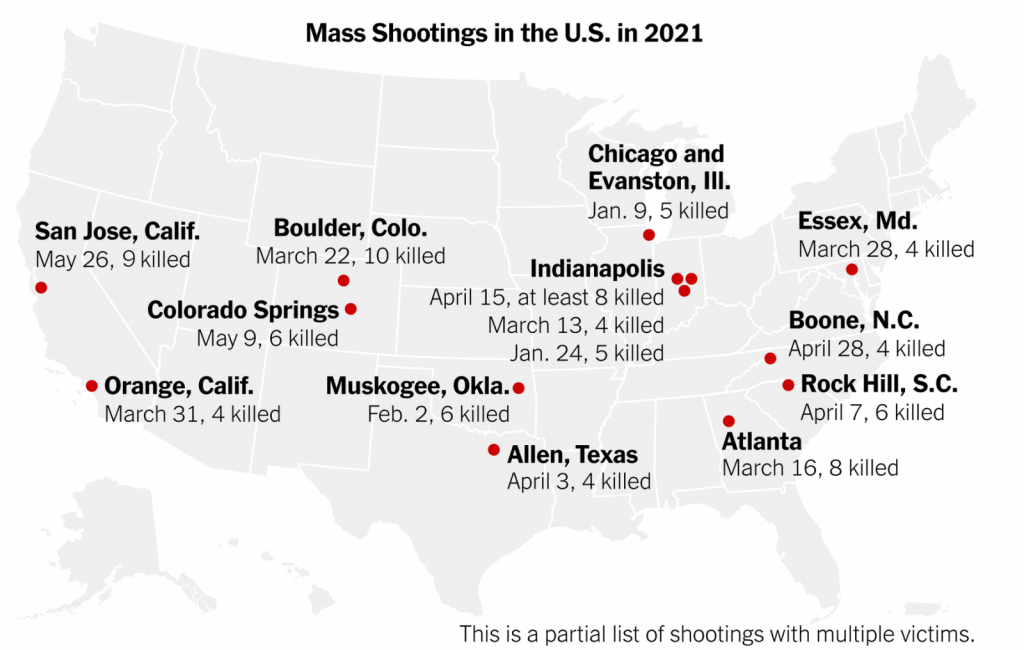
Photo taken from: The New York Times
Engagement Resources
Click or tap on image to visit resource website.

To see progress on proposed legislation and see what other measures have been introduced, visit Congress.gov

To learn more about preventing gun violence, visit the Prevention Institute website.

The Covid Pandemic Only Exists Now Among the Unvaccinated
The Covid Pandemic Only Exists Now Among the Unvaccinated
Health and Gender Policy # 117 | By: S.Bhimji | July 18, 2021
Header photo taken from: KTXS
Follow us on our social media platforms above
Browse more health and gender policy briefs here

Photo taken from: BBC.com
Policy Summary
[SSB theme=”Official” align=”center” counter=”true” ]
For reasons unknown, the US has a fair number of people who are adamant about not getting vaccinated against Covid 19. Some people believe that the government has a sinister agenda in having all the people vaccinated, others believe that the vaccine is not safe and yet others think that the vaccine has little value in healthy people.
Whatever the beliefs, the one absolute fact is that the number of Covid related deaths has drastically dropped since last year. From an average of 4,000 deaths a day, the latest data show that now we only have about 297 deaths a day. And the majority of the deaths that still occur are in people who remain unvaccinated. For all the doubters this just goes to show the effectiveness of the vaccines.
The current death rate of about 300 per day, would be zero if everyone eligible also got vaccinated. The latest data show that the number of hospital admissions is around 107,000 and the percentage of hospitalized individuals who have been vaccinated is 1.1% And in May 2021, of the 18,000 deaths, only 150 were in vaccinated individuals which translates to about 5 deaths per day.
While there have been breakthrough infections in vaccinated individuals, the numbers are small and the deaths are rare.
Policy Analysis
The overall trend is what the experts have been saying- if you are vaccinated, your chance of dying is very small. As of July 2021, data from the CDC reveals that close to 99% of Americans dying from Covid 19 are unvaccinated. This is a great tragedy because the vaccine can prevent high mortality but the anti-vaxxers still remain unconvinced.
Following the mass vaccination program which started in mid-January, deaths in the US have dropped from a peak of more than 3,400 a day to less than 300 per day.

Photo taken from: Axios.com
As of May 2021, about 63% of Americans older than 12 have received at least one dose of the vaccine, and 53% are fully vaccinated. Unlike the rest of the world, there is no shortage of vaccines in the US but the demand has dropped significantly in many southern (red) states.
Experts in infectious disease state that the preventable deaths will continue among the unvaccinated communities as we approach the Fall and Winter season when the flu virus will also be active.
In the South, Arkansas has one of the lowest vaccination rates, with only 1/3rd of the population fully protected; and tragically deaths and hospitalizations continue to rise.
The real tragedy of this pandemic is that these deaths can be prevented by people being vaccinated. There is no cost for the vaccine and it is without major adverse effects.
The other thing to note is that among the unvaccinated who have been admitted to the hospital with difficulty breathing, they now regret not being vaccinated. And while they can receive the vaccine even at this stage, they will still be faced with huge medical bills.
The Biden administration is now hoping that more stories about deaths in unvaccinated people may convince some individuals to get the shots. But despite all types of seductions including free groceries, discounts, coupons, etc, many Americans still remain adamant that they will not get vaccinated.
Many healthcare institutions and businesses are even offering paid-off time to workers who may suffer adverse effects from the vaccine.
But in the end it all boils down to the individual, if he or she does not want to be vaccinated, then in a democratic country like ours, there is little one can do besides telling them to wear a mask.
Engagement Resources
Click or tap on image to visit resource website.

U.S. COVID Deaths Are Rising Again. Experts Call It A ‘Pandemic Of The Unvaccinated’ https://www.npr.org/2021/07/16/1017002907/u-s-covid-deaths-are-rising-again-experts-call-it-a-pandemic-of-the-unvaccinated

US Experiencing ‘A Pandemic of the Unvaccinated’ https://www.voanews.com/covid-19-pandemic/us-experiencing-pandemic-unvaccinated

Unvaccinated people account for nearly all COVID-19 hospitalizations and deaths, White House officials said. https://www.deseret.com/u-s-world/2021/7/8/22568734/unvaccinated-nearly-all-covid-19-hospitalizations-deaths-white-house

Fishing Boat Dispatch # 6: What Have Subsidies Got To Do With It
Fishing Boat Dispatch # 6: What Have Subsidies Got To Do With It
Environmental Policy Policy Brief # 119 | By: Katherine Cart | July 17, 2021
Header photo taken from: Baird Maritime
Follow us on our social media platforms above
Browse more enivironmental policy briefs here

Photo taken from: theconversation.com
[SSB theme=”Official” align=”center” counter=”true” ]
Corporate wealth towers like megalithic fungi about the globe. Imagine the coagulated money of the world sprouting graphically in the areas in which the owners of that money are housed, bedded, fed. This should appear rather like a globular histogram, with, say, Beijing, New York City, Hong Kong, Moscow, Shenzhen, San Francisco etc. etc. sprouting great swaying money towers.
Now, conversely, consider a similar globular graph that depicts where the physical goods powering wealth are sourced from. We’ll call this a wealth-impact histogram. The swathes of open country where Big Ag spreads feedlots are now histogram platforms. As are: the rivers dammed, the rivers dried; Congo’s cobalt mines; Utah’s Bingham County; the Gulf of Mexico; the monocultured swathes of the global south; the arctic into which drills have dug; the delicate oceans. The world’s water is an eruption of wealth-impact.
Consider the government subsidy. It is not a watertight gift, this monetary boost. The power of money leaks, is in no way unidimensional. Big Ag subsidies clear ground, allow for aggressive farming techniques that lower consumer prices, stoking competition that in turn perpetuates even more aggressive farming techniques that lower consumer prices– etc.
Such centralized wealth is problematic in a species like ours that depends on long-term resource gathering; it alienates the consumer from the product, and from that product’s impact on the planet.
Which is not to say that the division of the consumer from the consumed has not allowed for awesome civil, scientific, cultural, artistic progress; I mean only to highlight the very obvious fact that, collectively we – or rather, the inherent human trend towards cultural leap-frog, a societal/tribal darwinism of sorts – have overplayed our parasitism of the planet.
We act en masse, problematically tied to our reptilian fear of falling behind, of not keeping up with the big dogs.

Photo taken from: TripAdvisor
I haven’t been aboard an Alaskan fishing vessel in nearly a year. Yesterday, however, I Facetimed with a former crew member. He tells me that fishing vessels targeting yellowfin sole (a relatively inexpensive and generally abundant flatfish caught by bottom trawl – and here I must define “inexpensive” as it relates to the consumer; bottom trawling is an ecologically extortionate practice) are hauling up, after several hours of towing, one half ton bags of yellowfin and/or “trash fin” AKA bycatch-to-be-unused-and-discarded.
This is, to my knowledge, abnormal. Inarguably, ecosystems and oceanic currents and marine populations do and would oscillate sans industrial reaping, but to consider industrial reaping to be trivial is asinine.
Marine life is vast in terms of the individual’s consumption. In terms of global consumption and the methods by which we harvest, marine life is finite.
To flatline the flux and smooth the potholes of the consumable fisheries market, fishing companies, families and communities are subsidized (this was especially true in 2020 and 2021 when Covid-19 relief packages assuaged the impact of closed restaurants). Subsidies are standard fare in “normal” years; in 2018, global fisheries corporations were subsidized by $22 billion in payout, allowing vessels to scrape bottom and scrape bottom, filling quotas one metric ton at a time.
Money speaks as a gauge of preciousness, of rarity, to the difficulty of acquisition. Money speaks too loudly: the true nature of production is lost in transit. Subsidies scrub the dirt, if you will, from the consumable. To subsidize the mega-companies that trawl the ocean floor is to alienate the consumer from the impact their meal has upon this earth.
To be witness to the slumping of ecosystems, to stand on a trawl deck and wonder to where the fish have gone and to see a limp codend sloughing black benthic mud, coral, crab, some fish is to be witness to the repetitive abuse of a living thing so harsh that that thing is changing shape. We beat the ocean, expecting her to produce.

Photo taken from: SouthCoastToday.com
Fuel is subsidized. The building of new, more efficient boats is subsidized (double trawl, faster factories, fewer employees, greater automation: we are aiming towards a remote-controlled fishing boat; that’s another story).
If we consumed without the power of money that sprouts en masse from the wealth centers of our world we would consume differently. A depleted place would be left not perhaps for any moral or long-view ecological reason but because the company and consumer that harvested there would not be able to turn profit.
Subsidies muddy the water, as it were, and cloud the judgement of the consumer, who is not wealthy, who is budgeted, who exists in a world that demands awareness of too much to leave room for the tracing of true food production.
Subsidies alienate us from earth, allow us to pretend we are not the rampant, squirming parasite in this overburdened ecosystem. The boreholes we make are kept wonderfully hidden from the eye.