

JOBS POLICIES, ANALYSIS, AND RESOURCES
Latest Jobs Posts
Offshore Turbines a Windfall for the Transition to Cleaner Energy
Brief #136 – Environmental Policy
By Todd J. Broadman
Today, 67,000 wind turbines are spinning kilowatts of energy throughout the country. That is the wind behind President Biden’s back in his recent wind energy initiative; that, and his pledge is to cut the nation’s fossil fuel emissions 50 percent from 2005 levels by 2030. The cost to make and deploy wind energy has gone down over 50 percent since 2008. The administration wants to seize the moment; the plan is to install 30 gigawatts (GW) of offshore wind turbines in U.S. waters by 2030.
Semaglutide: Is it The Panacea for Weight Loss?
Brief #139 – Health & Gender Policy
By S. Bhimji
There are over 70 million Americans who are considered obese and 99 million more who are said to be overweight. Today obesity has replaced smoking as public health enemy number one. Obesity has repercussions beyond just excess weight- it negatively affects almost every organ in the body and shortens the lifespan.
Climate Change Poses A National Security Threat Says 2 New U.S. Government Reports
Brief #134 – Environmental Policy
By Katelyn Lewis
In dual reports, the U.S. Department of Defense and the National Intelligence Council reached the same conclusion: Climate change poses an exacerbating, adverse effect on national security.
“To keep the nation secure, we must tackle the existential threat of climate change,” the DoD Climate Risk Analysis (DCRA) report said.
Both evidence-based reports were released on Oct. 21 in response to Executive Order 14008.
Surveillance Technology: A Useful Tool or a Threat to Our Security
Brief #65 – Technology
By Stephan Lherissen
Cities around the nation are adopting legislation that puts limits on the use of surveillance technology by their respective police forces. These cities are at the forefront of policy that could be adopted nationally by the federal government. These laws are being considered by some and established by others in response to growing criticism that these technologies do not respect the rights and privacy of citizens.
Future of School Mask Mandates Remains Uncertain
Brief #60 – Education Policy
By Lynn Waldsmith
Growing numbers of school districts are easing mask mandates in the face of pressure from Republican state lawmakers, strong opposition from parents and as the latest wave of Covid-19 appears to be declining in many parts of the country.
Supreme Court Passes On Chance To Modify The Qualified Immunity Doctrine
Brief #177 – Civil Rights
By Rodney A. Maggay
In Rivas – Villegas v. Cortesluna, Officer Daniel Rivas – Villegas responded to the scene of a 911 call. Upon arriving at the home he found a mother and her two daughters barricaded in a room trying to hide from the mother’s boyfriend. Ramon Cortesluna, the mother’s boyfriend, was in possession of a chainsaw and was destroying items in the house.
The U.S. House Select Committee Investigation of the January 6 Attack on the Capitol: Part 3
Brief #30 – Elections & Politics
By Erika Shannon
As the investigation into the January 6th Capitol Riots continues, it is becoming clear that getting to the bottom of that day’s events will be no easy task. There were already hurdles to overcome with the formation of a committee to investigate the day’s events; now that the committee is working towards piecing together what truly happened, more obstacles stand in the way.
Climate Change, Silent Killer of the World’s Precious Coral Reefs
Brief #133 – Environment Policy
By Jacob Morton
The world’s coral reefs are dying, and humans are to blame. 14 percent of the world’s coral reefs perished within just ten years from 2009 to 2019, says a report released earlier this month by the International Coral Reef Initiative, a partnership of countries and organizations that works to protect the world’s coral reefs. The cause? Climate change. If we act now, we may have a chance at redemption.
The Changing Faces of American Drone Warfare Policy
Brief #135 – Foreign Policy
By Reilly Fitzgerald
The issue of drones is one that is coming into further examination in recent weeks as President Joe Biden ordered a drone strike within Afghanistan on August 29th which killed numerous civilians. The Afghanistan debacle has drawn criticism from political circles in the United States, in the international community, and other foreign policy experts; and as it first hit the news in the last few days, the solution of the United States government is to pay the families of the victims for their losses.

Proposed Scientific Integrity Act Would Help Reverse Trump’s “War on Science”
Proposed Scientific Integrity Act Would Help Reverse Trump’s “War on Science”
Technology Policy Brief # 54 | By: Henry Lenard | July 15, 2021
Header photo taken from: People for the American Way
Follow us on our social media platforms above
Browse more technology policy briefs here
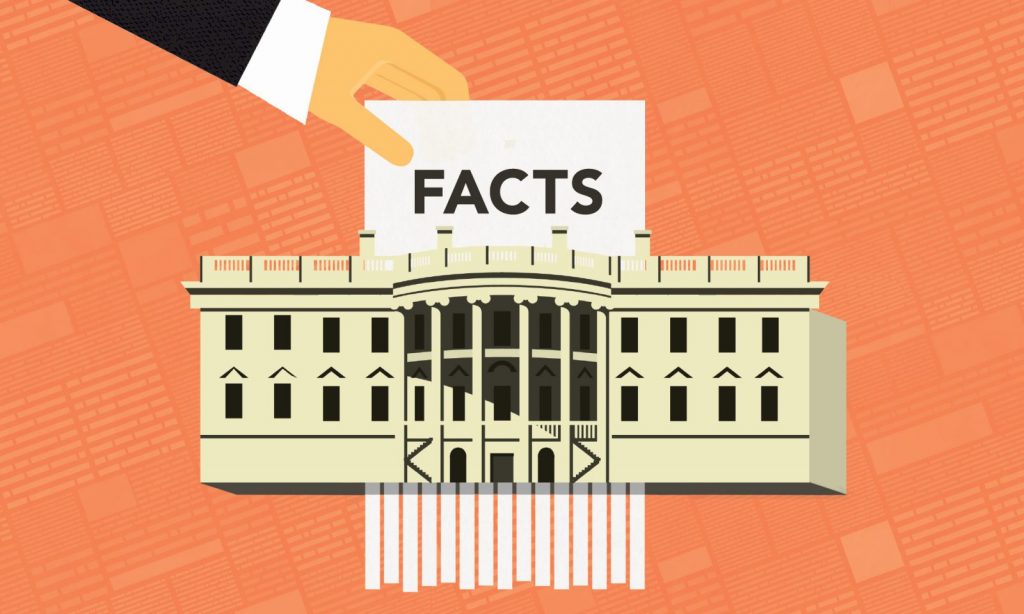
Photo taken from: TED Ideas
Policy Summary
[SSB theme=”Official” align=”center” counter=”true” ]
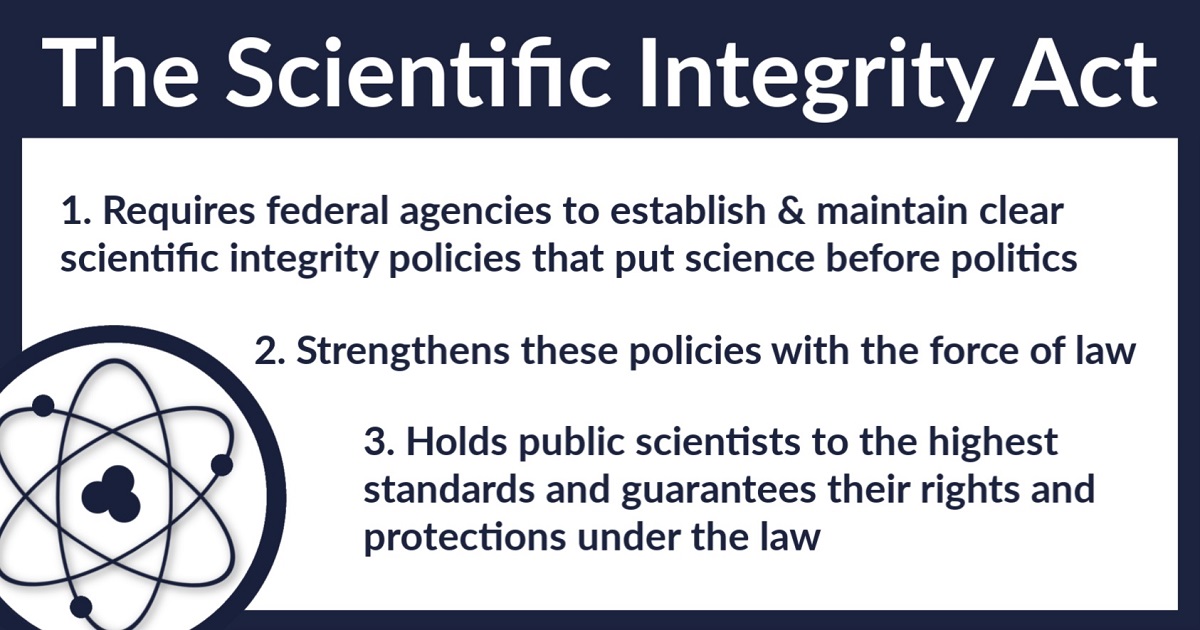
In response to the so-called ‘War on Science’ by the previous presidential administration of Donald Trump, Rep. Paul Tomko (D-NY) has reintroduced the Scientific Integrity Act. The bill currently has 169 co-sponsors.
The proposed legislation would help prevent undue political influence over federal science by establishing uniform standards at U.S. agencies to adopt or strengthen existing scientific integrity policies. It would protect policy decisions from political interference, ideology or financial conflicts of interest. More than 20 federal agencies have developed some form of scientific integrity policy, but standards remain inconsistent.
Further, it requires any federal agency addressing science to designate a scientific integrity officer, develop a scientific integrity policy that includes a set of minimum standards, provide scientific integrity and ethics training, and mandates that federal departments develop a transparent, internal review process for scientific papers.
Similar legislation was introduced in both chambers of Congress in the 2017 and 2019 sessions but failed to reach either floor for a full vote.
This bill is in the first stage of the legislative process. It was introduced into Congress on February 4, 2021 and referred to the House Committee on Science, Space and Technology, where it now sits. It will typically be considered by the committee next before it is possibly sent on to the House as a whole. If passed, it would then move on to the Senate for similar approval before going to President Joe Biden.
If it became law, it would complement President Biden’s “Memorandum on Restoring Trust in Government Through Scientific Integrity and Evidence-Based Policymaking”, issued on January 27, 2021. Directed to the heads of all executive departments and agencies, the memo stated it is the policy of the Biden administration to make evidence-based decisions guided by the best available science and data.
This memorandum also reaffirms and builds on former President Barack Obama’s Memorandum of March 9, 2009 on Scientific Integrity and the Director of the Office of Science and Technology Policy’s Memorandum of December 17, 2010 on Scientific Integrity.
Policy Analysis
Calls for a Scientific Integrity Act grew out of the regular interference in and denial of the work of government scientists during former President Trump’s administration. This included censorship of scientists, appointing industry insiders to head key agencies and failing to fill vital government science roles. This has led to a mass departure of scientists in the employ of the U.S. government.
A report prepared earlier this year by majority staff of the House Committee on Science, Space and Technology details that decline in the federal scientific workforce, particularly at the Environmental Protection Agency (EPA), the Department of Energy (DOE), and the National Oceanic and Atmospheric Administration (NOAA).
The report, “Scientific Brain Drain: Quantifying the Decline of the Federal Scientific Workforce”, singled out former President Trump.
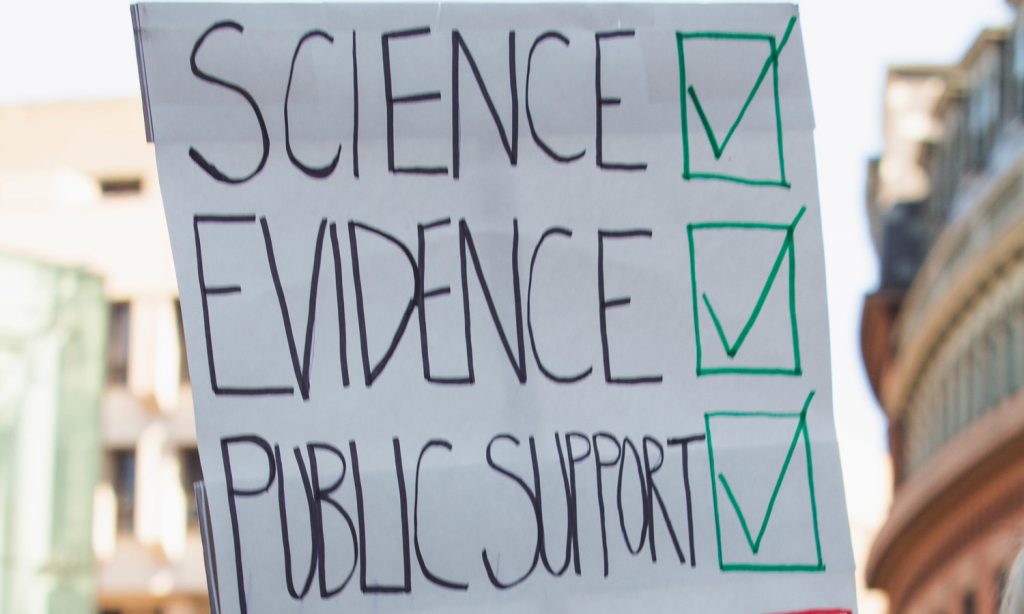
Photo taken from: Union of Concerned Scientists
“The four years of the Trump administration were devastating for the federal scientific workforce. Throughout many of the Federal Government’s civilian scientific agencies, career scientists experienced political interference, bureaucratic obstruction, and personal retaliation,” the report said.
According to the findings, the combined civil service workforces of the EPA, DOE, and NOAA declined by 4,874 employees between 2009 and 2020. The EPA’s Office of Research and Development’s workforce declined by 7.6 percent during the Trump administration and 17.2 percent between 2012 and 2019, losing nearly one-fifth of the office’s total workforce in seven years.
At NOAA that interference included the infamous “Sharpiegate” where Trump altered a weather map with a Sharpie marker to prove his comment that Hurricane Dorian was tracking toward Alabama. He then had NOAA publish an unsigned statement in support of that claim and appointed two climate change deniers to top positions at the agency.
Trump also regularly contradicted the CDC and government scientists on matters related to COVID-19, pushing unproven treatments and undercutting the experts at seemingly every turn.
“This type of political bullying compromised scientific integrity and caused morale among career scientists to plummet,” according to the staff report. Citing a 2018 Union of Concerned Scientists survey of federal scientists, the report said “political interference, censorship and a fear of retaliation had weakened the morale of scientists in a number of critical agencies.”
In a separate report, the Union of Concerned Scientists tracked 190 attacks on science from within the Trump administration. That compares with 22 during the Obama administration and 98 under the George W. Bush administration, both in office twice as long as Trump.

Photo taken from: Politico
Although there were cuts during the Obama administration, the “political marginalization of science” occurred under Trump and was most acute, the report added, when science conflicted with the administration’s political objectives. Government scientists who balked at suppressing climate change threats or industry deregulation proposals “found themselves at the center of the fiercest scientific clashes of the Trump era.”
Our country continues to grapple with the worst pandemic in over a century and a mounting climate crisis. Data shows that the American electorate trusts scientists to address the pandemic and other serious challenges we face more than those of people from other professional backgrounds.
Despite the attack on scientists by Trump and his political allies, public trust in the scientific community remains as strong as ever, according to a poll released last November by the Pew Research Center, confirming polling results dating back to the 1970s.
Thirty-eight percent of those polled in Pew’s survey in the U.S. say that they have a lot of trust in scientists to do what is right for the public. Pew’s data show respondents only ranked the military as more trustworthy than scientific institutions, while ranking lower trust in others like the national government, news media and business leaders.
Engagement Resources
Click or tap on image to visit resource website.
H.R. 849 Scientific Integrity Act official summary:
https://www.congress.gov/bill/117th-congress/house-bill/849

January 27, 2021 Memorandum on Restoring Trust in Government Through Scientific Integrity and Evidence-Based Policymaking from President Joe Biden:

Union of Concerned Scientists statement in support of Scientific Integrity Act of 2021:
https://www.ucsusa.org/about/news/science-group-urges-passage-scientific-integrity-act

Scientific Integrity Act fact sheet:
https://tonko.house.gov/uploadedfiles/scientific_integrity_117th_fact_sheet.pdf

U.S. Supreme Court’s Brnovice v. Democratic National Committee Decision Further Weakens Voting Rights Act of 1965
U.S. Supreme Court’s Brnovice v. Democratic National Committee Decision Further Weakens Voting Rights Act of 1965
Civil Rights Policy Brief # 169 |
By: Rod Maggay, Senior U.S. RESIST NEWS Writer | July 7, 2021
Header photo taken from: commondreams.org
Follow us on our social media platforms above
Browse more civil rights policy briefs here

Photo taken from: The Daily Signal
Policy Summary
[SSB theme=”Official” align=”center” counter=”true” ]
Under Section 2 of the Voting Rights Act (VRA) of 1965 “No voting qualification or prerequisite to voting, or standard, practice, or procedure shall be imposed or applied by any State or political subdivision to deny or abridge the right of any citizen of the United States to vote on account of race or color.” In 1982 amendments to the act provided a “results test” to Section 2. This meant that any voting law enacted which “resulted” in a discriminatory effect based on race or color was prohibited. An “intent test” which prohibited discriminatory voting laws only if the law was enacted with the intent to discriminate based on race or color had already been established under Section 2 in Mobile v. Bolden in 1980.
In 2016 the Arizona State Legislature passed H.B. 2023 which made it a felony crime to handle or submit a completed ballot on behalf of another person unless the person was a family member, caregiver or election official. Additionally, Arizona has an “out – of – precinct” policy which requires election officials to reject ballots if the voter submits his ballot to the wrong precinct.
The Democratic National Committee (DNC) brought a lawsuit to challenge these two voting provisions. The District Court ruled against the DNC and found that both provisions were not unconstitutional and not in violation of the Voting Rights Act of 1965. The case was appealed to the Court of Appeals for the Ninth Circuit, which reversed the judgment of the District Court in a 7 – 4 vote. The court found that both provisions violated Section 2 of the VRA. The court said that the “out – of – precinct” policy violated the “results test” of Section 2 of the VRA because the policy placed a significant burden on minority voters. As for H.B. 2023, the court ruled that this provision violated the “intent test” of Section 2 of the Voting Rights Act because the provision was enacted with discriminatory intent to burden ballot collectors who worked in predominantly minority areas. The case was then appealed to the U.S. Supreme Court which ultimately ruled 6 – 3 to overrule the Ninth Circuit decision. The Supreme Court held that both voting provisions were not in violation of Section 2 of the Voting Rights Act of 1965. LEARN MORE
Policy Analysis
The decision in Brnovice v. Democratic National Committee is clearly a blow for voting rights but when the case is viewed in a larger context with other recent Supreme Court voting rights cases it is clear that the active protections of the Voting Rights Act of 1965 has been significantly narrowed and weakened.
The Voting Rights Act of 1965 is one of the landmark legislative pieces of the Civil Rights Movement. Its intent is to prohibit racial discrimination in voting. The law had a number of provisions that sought to protect the right to vote but the most important were Section 2 (at issue in the Brnovice case) and Section 5.
Section 5 was designed to give the Federal Government a chance to review and object to proposed voting changes in selected states before they were implemented.

Photo taken from: Britannica
However, this Section was seriously weakened by the Supreme Court in Shelby County v. Holder in 2013. That left Section 2 as an avenue to try and stop attacks on voting rights but the Court again issued a decision that undercut Section 2 as a viable option to challenge voting laws.
In Abbot v. Perez in 2018 the Supreme Court raised the standard to prove intent to discriminate. Here, they imposed a presumption of legislative good faith. This rendered Section 2 “intent tests” cases difficult because of the high bar parties had to prove a racially motivated intent to discriminate. What remained was Section 2’s “results test.”
But in this case the Supreme Court completes the work it had started in previous cases by issuing an opinion that again makes implementation of the Voting Rights Act of 1965 so difficult as to make efforts to challenge voting laws, as a practical matter, nearly futile. While the intent test and the results test had been the test to challenge voting laws since 1982, Justice Alito scraped that and instead introduced a non – exhaustive five – factor “totality of the circumstances” test. Simply having a voting law that results in voter discrimination against a minority community is no longer enough to challenge the law.
Nor is a clear intent by a legislative body to enact a voting bill targeted at communities of color enough to challenge the voting law. Now to show a violation, according to Justice Alito, is to show what burdens the new voting rule imposes, show a comparison to the new voting rule and the prior standard practice in 1982 (when the Voting Rights amendments introducing the results test was passed), the disparities of the new voting rule among different minority communities, other opportunities to vote in the State’s voting system and the State’s interests in the proposed voting rule.

Photo taken from: The New Republic
This new legal standard just complicates matters and will likely make it harder to challenge any new voting rule or law and ultimately prevail. The five – factor test introduces too many requirements that groups would have to satisfy to show that a new voting rule is in violation of Section 2.
The Court, again, raised the legal standard to heights that question whether any party could meet it. And when this case is combined with the Shelby County and Abbott v. Perez cases and the conservative justices goal to defer to decisions made by state and local legislators except in the most egregious cases, it leaves one to wonder whether the Voting Rights Act of 1965 can be used to challenge questionable voting laws that are being introduced around the country. And this, in turn, raises the question whether the Voting Rights Act of 1965 can be used in a meaningful manner anymore.
The law was enacted to prohibit tactics and methods that prevent people from exercising their right to vote. But that protection disappears when additional legal requirements are imposed that act as another barrier to voting. These five new factors will simply be thrown up to make groups think twice about whether it is worth their time and effort to mount a challenge to a voting law and whether they can even succeed.
This will end up in the likely disenfranchisement of millions of minority voters around the country if the rate of voter suppression bills being introduced by Republicans around the country is any indication. After the Brnovice case, and taken together with the Supreme Court’s Shelby County and Abbott case, it is difficult to see if the Voting Rights Act of 1965 can continue to act in any meaningful way for the noble purpose for which it was enacted. LEARN MORE, LEARN MORE
Engagement Resources
Click or tap on image to visit resource website.

Brennan Center for Justice – infopage on Brnovice case and Supreme Court decision.

American Civil Liberties Union (ACLU) – comment on Brnovice Supreme Court decision.
This brief was compiled by Rod Maggay. If you have comments or want to add the name of your organization to this brief, please contact Rod@USResistnews.org.

What The CDC’s School Reopening Guidelines Tell Us
What The CDC’s School Reopening Guidelines Tell Us
Health and Gender Policy # 116 |
By: S Bhimji | July 14, 2021
Header photo taken from: usnews.com
Follow us on our social media platforms above
Browse more health & gender policy briefs here

Photo taken from: Union Track Engage
Policy Summary
[SSB theme=”Official” align=”center” counter=”true” ]
As the country starts to reopen, the one topic that has captured the nation is what will happen to students. For more than a year, students have not been able to physically attend classes. While the adult American population is getting vaccinated and gradually returning to the workplace, there is no vaccine for children under the age of 12.
Well, finally the CDC has updated its guidelines and stated that schools can reopen for in-person learning this fall for everyone. Plus, if students and teachers have been vaccinated, there will no longer be a need for masks in the classroom.
Since the currently available vaccines are only for use in children 12 years or older, most schools can expect a mix of student bodies that will comprise mixed vaccination status. Regardless of the vaccine status of the students, the CDC has urged all schools to take primary preventive measures that ensure a low risk of virus transmission.
For students over the age of 12, the agency highly recommends vaccination as the ideal prevention strategy. But despite the urgency of the situation, rollouts all over the nation have been low. As of June 2021, less than 25% of 12-15-year-olds and just over a third of 16-17-year-olds have been fully vaccinated.
For staff and students who remain unvaccinated, the CDC continues to recommend mask-wearing when indoors and in any outdoor area where crowds are likely. At the same time, the agency has repeated that masks will be required for students riding the school bus or public transport.
Policy Analysis
Finally, the American Federation of Teachers has welcomed the new CDC guidelines. For most of the year, teachers in most states have been very reluctant to offer in-student teaching but with these guidelines, they feel more at ease.
However, a more problematic area in schools is that of social distancing of at least 3 feet for children who remain unvaccinated. This is often not realistic in school settings and monitoring every student for social distancing can be a logistical nightmare.
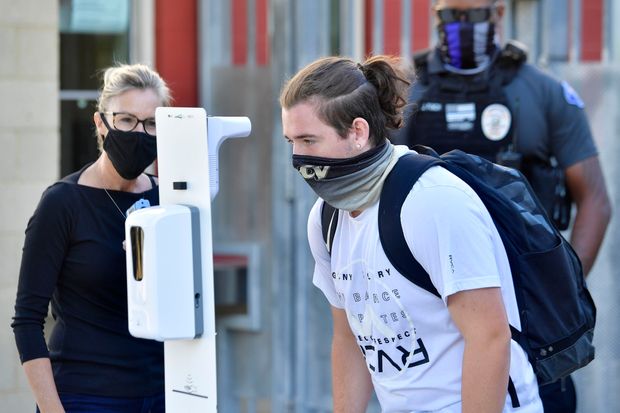
Photo taken from: Wall Street Journal
However, all concerned parties agree that as long as other prevention strategies are in place then social distancing may have to be compromised every now and then. Close monitoring will be the key to ensure that infections are not on the increase.
Unfortunately, not all states are abiding by the CDC’s prevention strategies. In Texas and Iowa, school districts have been told not to make masks mandatory, a prevention tool that has been used to lower the viral spread. Even though masks have been shown to prevent the spread of covid 19 and widely used as a preventive measure, in some parts of the country local government policies often override public health policies. For schools that do not practice masking, the CDC does recommend physical distancing.
Even though overall covid cases have dropped all over the nation, in certain vulnerable countries with low vaccination rates the infection rates have started to increase, resulting in a higher number of hospital admissions compared to previous months.
Currently, the highly transmissible Delta variant makes up more than 50% of cases nationwide, but the good news is that the current vaccines are all effective against this variant.
The CDC is confident that the schools can open safely with in-person learning but immunocompromised children and their families should work with their school district and determine if remote options are available.
There is no question that in school -learning offers more opportunities for students and nurtures healthy relationships with peers and educators compared to online teaching. Only time will tell if opening schools this fall will have a negative impact on the health of children and educators.
Engagement Resources
Click or tap on image to visit resource website.

Guidance for COVID-19 Prevention in K-12 Schools
https://www.cdc.gov/coronavirus/2019-ncov/community/schools-childcare/k-12-guidance.html
Schools and Child Care Programs
https://www.cdc.gov/coronavirus/2019-ncov/community/schools-childcare/index.html

CDC Updates Guidelines To Protect Kids From COVID In School. Plus: Vacation Tips

Maine Becomes the First State To Commit to Fossil Fuel Divestment Through Legislation
Maine Becomes the First State To Commit to Fossil Fuel Divestment Through Legislation
Environmental Policy # 118 | By: Jacob Morton | July 12, 2021
Header photo taken from: Common Dreams
Follow us on our social media platforms above
Browse more environmental policy briefs here

Photo taken from: Main Beacon
Policy Summary
[SSB theme=”Official” align=”center” counter=”true” ]
Last month the Governor of Maine, Janet Mills, signed into law a bill forbidding any state pension funds or other public savings funds from making new investments in stocks or securities of the 200 largest publicly traded fossil fuel companies. The new law requires the state treasurer and the board of trustees of the Maine Public Employees Retirement System, known as MainePERS, to review current investments and divest all holdings in coal, oil, and gas companies. MainePERS manages a $16.5 billion public employee retirement fund, 7.7% (about $1.3 billion) of which was invested in fossil fuel companies in 2020, according to documents filed with the legislature. The law also includes divestment from the state treasury’s cash pool and trust funds.
The governor’s action makes Maine the first state in the country to commit to fossil fuel divestment through legislation. In 2015, Connecticut and Vermont considered divestment bills, but neither state passed the measures into law. New York City has adopted similar legislation on a local level and most recently, New York State committed to divesting its $225 billion retirement fund from fossil fuels.
Currently Maine does not produce fossil fuels and is not a large consumer of them. According to the U.S. Energy Information Administration (EIA), about four-fifths of the state’s electricity net generation came from renewable sources in 2019. Natural gas-fired power plants fueled less than one-sixth of generation in 2019, its smallest share in at least two decades, according to EIA.
Policy Analysis
A major concern, and perhaps why states like Rhode Island, Connecticut, and Vermont have failed to pass similar legislation, is that divesting in fossil fuels could potentially mean lower earnings for the investment portfolio, and thus a smaller return for public employees’ retirement pensions. This concern may be justified by findings from the EIA that reports fossil fuel use is growing in the United States and around the globe:
“We forecast that global consumption of petroleum and liquid fuels will average 97.7 million b/d for all of 2021, which is a 5.4 million b/d increase from 2020. We forecast that global consumption of petroleum and liquid fuels will increase by 3.6 million b/d in 2022 to average 101.3 million b/d.”
However, EIA reports also show that despite an estimated global increase in fossil fuel consumption from May 2020 to May 2021, that level of consumption is still about 3.7 million b/d less than in May 2019.

Photo taken from: GoLocalProv
The question is, if fossil fuel consumption is expected to grow, how long will that growth last? Moves by major companies in the automotive industry and by the Federal and State governments to shift away from fossil fuels in an effort to meet greenhouse gas reduction goals by 2030 and 2050, indicate a trend favoring the clean and renewable energy industry. Pension fund and other public investments in fossil fuels could prove to be less fruitful in the long term, particularly for states already suffering from the economic impacts of climate change.
Richard Brooks, climate finance director at Stand.earth, an environmental group that uses a strategy known as “markets campaigning” to hold irresponsible natural resource extractors and the companies that source from them accountable for their actions, and which advocated for the new Maine law, said more pension funds should divest. “It is past time for every other public pension to address the mounting climate risk in their portfolios by holding onto fossil fuel investments,” Brooks said. “These are a ticking time bomb and fiduciaries must act.”
Not everyone feels the same as Brooks, however. MainePERS opposed the new law, and in testimony delivered to the legislature in February, executive director Sandy Matheson said divestment would have “no impact” on carbon emitters. “The only real impact making a statement of principle might have is to create a newspaper headline which in turn might further elevate the discussion around climate change,” Matheson said at the time.

Photo taken from: upriseri.com
But perhaps that is just the point. Elevating the discussion around climate change and encouraging other states to act through similar legislation represents another angle by which to collectively shift the nations focus away from traditional energy sources and towards a more sustainable future, not just for the planet, but for all our bank accounts as well. Even Matheson says the new law will not result in less money for public employee pensions. “We won’t be taking any actions that would result in a loss to the plan or achieve below expected earnings.”
One of the bill’s key provisions requires that any investment actions must be in accordance with sound investment criteria and consistent with the fund’s fiduciary obligations. “We have not developed a plan at this point,” says Matheson, “but any plan that we do develop has to put the financial interests of our members first.”
Though Matheson says the move is more symbolic than it is impactful, other states have been looking to do the same, including California, New York, Minnesota, Massachusetts, Connecticut, Vermont, and Rhode Island. “It’s beginning to look like there’s kind of a groundswell,” says Brooks. “It’s a snowball effect. That snowball is accumulating speed and size as it’s rolling down the hill.”
In Rhode Island, General Treasurer Seth Magaziner announced in April that the state’s pension fund reduced its investments in oil and gas by 50 percent. He predicted that the state would be fully divested by 2030, even though there is no mandate from the state legislature to do so.
In Massachusetts, Deb Pasternak, the Sierra Club’s Massachusetts director, said, “Maine legislators deserve enormous praise for this visionary and deeply responsible piece of legislation. Massachusetts should follow suit.” Pasternak added, “Pension funds, which are fundamentally about the long term, should divest from the greatest threat posed to our collective future. Let’s hope this inspires more action here in Massachusetts, in New England, and across the entire country.”
Maine state Senator Cathy Breen, said of the new law, “We want to make sure that [the pension] fund is healthy and it’s going to be sustainable for generations to come. But we also have an obligation to the planet and to the next generation of people who are going to be managing all of the climate change impacts.”

Photo taken from: The Maine Monitor
The original bill was sponsored by Democratic Rep. Maggie O’Neil of Saco, Maine and was backed by State Treasurer Henry Beck, local environmental group Maine Youth for Climate Justice, and other environmental advocacy organizations who say that it is “past time for public pensions and others to address the mounting climate risk by dropping fossil fuel investments from their portfolios.”
When asked why she believes the new law is so important despite claims that Maine’s divestment will have no impact on the fossil fuel industry, Representative O’Neil told me, that argument just does not hold weight. O’Neil says, “The movement to divest from fossil fuels is having an impact in the aggregate: To date, more than 1,325 institutions representing more than $14.5 trillion in assets have committed to divest from fossil fuels, including governments, philanthropic organizations, universities, non-profits, faith-based organizations, and national and state pension funds. Maine and the states that follow us will protect our future by pushing the divestment movement forward.”
O’Neil pointed to an annual report from Shell, which admits the divestment movement is having an impact on their business model and if the mounting pressure on investors from these campaigns continues, “it could have a material adverse effect on the price of our securities and our ability to access equity capital markets.” O’Neil also notes that “For many years, fossil fuel holdings provided returns for retirement savings, but times have changed. In fact, independent analysis shows that if MainePERS had divested from fossil fuels in 2014, when similar legislation was first proposed, the retirement fund would have avoided hundreds of millions of dollars in losses and could have instead achieved roughly $1 billion in additional gains.” O’Neil referenced a recent news release that Maine’s retirement system “lost around $30 million via a private equity fund that backed a risky oil refinery in the Virgin Islands that had been closed by the EPA.”
O’Neil explains that this demonstrates the risks of investing in the fossil fuel industry, and “As we transition to a reduced carbon economy, companies that are unable – or unwilling – to get out of risky fossil fuel production will lose value, making them a poor long-term investment. … Beyond ethical and environmental responsibilities, fossil fuel divestment fulfils the fiduciary responsibility to public employees who participate in the retirement system.” O’Neil says, “Maine, the United States, and the rest of the world have all made commitments to reduce greenhouse gas emissions. Meeting those commitments requires a significant reduction in fossil fuel consumption, and almost certainly will have negative impacts on the stock performance of companies involved.”
Engagement Resources
Click or tap on image to visit resource website.

Stand (Stand.earth) – Stand was created to challenge corporations and governments to treat people and the environment with respect, because our lives depend on it. Over the years, Stand’s work and approach has evolved from a dedicated focus on forest protection to taking on some of the root causes of climate change and environmental injustice. Join Stand in their efforts to protect our communities, climate and environment from the risks associated with outdated, climate-polluting energy.

Maine Youth for Climate Justice (MYCJ (wixsite.com)) – Maine Youth for Climate Justice (MYCJ) is a coalition of over 250 youth from all over Maine who fight for bold climate action, a just transition, and a livable future in Maine. MYCJ was founded by various high school and college groups, Maine Youth Action Network, and 350 Maine’s Youth Engagement team in February 2019. MYCJ is open to anyone under the age of 30 who is interested in engaging at the local or state level about climate justice issues.

Sierra Club Maine (Sierra Club Maine) – Founded in 1892, the Sierra Club is the oldest and largest environmental advocacy organization in North America. Their mission is to explore, enjoy and protect the planet. That includes divesting from fossil fuels.
References
Buckley, A. (2021, June 25). All pension funds in Maine must now divest from fossil fuels: The Optimist Daily. The Optimist Daily: Making Solutions the News |. https://www.optimistdaily.com/2021/06/all-pension-funds-in-maine-must-now-divest-from-fossil-fuels/.
Divestment Commitments. Fossil Free: Divestment. (2021). https://gofossilfree.org/divestment/commitments/.
Evans, C. (2021, June 22). Maine Moves to Purge Fossil Fuels from Pension Fund. Natural Gas Intelligence. https://www.naturalgasintel.com/maine-moves-to-purge-fossil-fuels-from-pension-fund/.
Sharon, S. (2021, June 17). Mills Signs Bill To Divest State Investments From Fossil Fuels. Maine Public. https://www.mainepublic.org/politics/2021-06-17/mills-signs-bill-to-divest-state-investments-from-fossil-fuels.
Shell Annual Report Acknowledges Impact of Divestment Campaign. 350.org. (2018, June 22). https://350.org/press-release/shell-report-impact-of-divestment/.
Starr, P. (2021, June 12). Maine Lawmakers Move to Divest State Pensions from Fossil Fuels. Breitbart. https://www.breitbart.com/politics/2021/06/11/maine-lawmakers-pass-bill-divest-state-pension-fossil-fuels-oil-usage-grows/.

The Wisdom in Bipartisanship
The Wisdom in Bipartisanship
U.S. RESIST NEWS EDITORIAL
By: Ron Israel | July 9, 2021
Header photo taken from: The University News
Follow us on our social media platforms above
Browse more U.S. RESIST NEWS editorials here

Photo taken from: Bloomberg.com
Many political observers question President Biden’s emphasis on bipartisanship. Why they ask should Biden put so much emphasis on bipartisanship when the other side of the aisle doesn’t seem interested.
Indeed today’s Republican party presents itself as a group of politicians aligned with former President Trump and his “big lie” that the election was stolen; who seem to want to see the Biden administration fail at all costs; who place power and party over country. The party’s Senate leader, Mitch McConnell, has pledged a platform of non-cooperation with the Biden agenda.
So what gives with President Biden? Why does he seem to be so obsessed with bipartisanship? The answer I believe is that Biden sees the main goal of his presidency to be the preservation of our democracy; to heal it from the wounds of the Trump administration. Biden sees bipartisan legislative agreement is a means to help achieve his goal.
And his approach may be beginning to work. Last month a bipartisan group of Republican and Democratic Senators agreed to a $1.2 trillion “hard infrastructure” bill to repeal America’s broken, bridges ports, and roads. While the bill has many hurdles to cross before being signed into law, it is an important signal that, even in this polarizing time, bipartisanship may be possible. Biden is trying to be a President for all Americans and his infrastructure bill is intended for everyone and not just for Democrats at the exclusion of Republicans.
Historically bipartisanship in most cases involves compromise. It means reaching an agreement on an issue that may disappoint those on both sides on the extreme ends of a political argument. But without compromise our country for the past several decades has languished in political gridlock as our quality of life diminishes.
So Biden may be justified in his obsession with bipartisanship. Bipartisan political agreement may be an important way of restoring Americans’ faith in our democratic system. It also might help drive a wedge between pro-Trump extreme right wingers and moderate Republicans who see the wisdom in bipartisan legislation.

Should the Supreme Court Have Term Limits?
Should the Supreme Court Have Term Limits?
US Renew Op Ed |
By: Paul M. Collins & Artemis Ward | July 6, 2021
Header photo taken from: Progress Texas
Follow us on our social media platforms above
Browse more US Renew Op-Eds here
Reprinted from The Coversation (www.theconversation.com)
[SSB theme=”Official” align=”center” counter=”true” ]
Pressure on Supreme Court Justice Stephen Breyer to step downwill likely grow now that the court’s session has ended.
Breyer, 82, joined the court in 1994. His retirement would allow President Joe Biden to nominate his successor and give Democrats another liberal justice, if confirmed.
Supreme Court justices in the U.S. enjoy life tenure. Under Article 3 of the Constitution, justices cannot be forced out of office against their will, barring impeachment. This provision, which followed the precedent of Great Britain, is meant to ensure judicial independence, allowing judges to render decisions based on their best understandings of the law – free from political, social and electoral influences.
Our extensive research on the Supreme Court shows life tenure, while well-intended, has had unforeseen consequences. It skews how the confirmation process and judicial decision-makingwork, and causes justices who want to retire to behave like political operatives.
Problems with lifetime tenure
Life tenure has motivated presidents to pick younger and younger justices.
In the post-World War II era, presidents generally forgo appointing jurists in their 60s, who would bring a great deal of experience, and instead nominate judges in their 40s or 50s, who could serve on the court for many decades.
And they do. Justice Clarence Thomas was appointed by President George H.W. Bush at age 43 in 1991 and famously said he would serve for 43 years. There’s another 13 years until his promise is met.
The court’s newest member, Donald Trump’s nominee Amy Coney Barrett, was 48 when she took her seat in late 2020 after the death of 87-year-old Justice Ruth Bader Ginsburg.

Brooks Kraft LLC/Corbis via Getty Images
Ginsburg, a Clinton appointee who joined the court at age 60 in 1993, refused to retire. When liberals pressed her to step down during the presidency of Democrat Barack Obama to ensure a like-minded replacement, she protested: “So tell me who the president could have nominated this spring that you would rather see on the court than me?”
Partisanship problems

William Thomas Cain/Getty Images
Justices change during their decades on the bench, research shows.
Justices who at the time of their confirmation espoused views that reflected the general public, the Senate and the president who appointed them tend to move away from those preferencesover time. They become more ideological, focused on putting their own policy preferences into law. For example, Ginsburg grew more liberal over time, while Thomas has become more conservative.
Other Americans’ political preferences tend to be stable throughout their lives.
The consequence is that Supreme Court justices may no longer reflect the America they preside over. This can be problematic. If the court were to routinely stray too far from the public’s values, the public could reject its dictates. The Supreme Court relies on public confidence to maintain its legitimacy.
Life tenure has also turned staffing the Supreme Court into an increasingly partisan process, politicizing one of the nation’s most powerful institutions.
In the 1980s and 1990s, Supreme Court nominees could generally expect large, bipartisan support in the Senate. Today, judicial confirmation votes are almost strictly down party lines. Public support for judicial nominees also shows large differencesbetween Democrats and Republicans.
Life tenure can turn supposedly independent judges into political players who attempt to time their departures to secure their preferred successors, as Justice Anthony Kennedy did in 2018. Trump appointed Brett Kavanaugh, one of Kennedy’s former clerks, to replace him.
The proposed solution
Many Supreme Court experts have coalesced around a solutionto these problems: staggered, 18-year terms with a vacancy automatically occurring every two years in nonelection years.
This system would promote judicial legitimacy, they argue, by taking departure decisions out of the justices’ hands. It would help insulate the court from becoming a campaign issue because vacancies would no longer arise during election years. And it would preserve judicial independence by shielding the court from political calls to fundamentally alter the institution.
Partisanship would still tinge the selection and confirmation of judges by the president and Senate, however, and ideological extremists could still reach the Supreme Court. But they would be limited to 18-year terms.
The U.S. Supreme Court is one of the world’s few high courts to have life tenure. Almost all democratic nations have either fixed terms or mandatory retirement ages for their top judges. Foreign courts have encountered few problems with term limits.
Even England – the country on which the U.S. model is based – no longer grants its Supreme Court justices life tenure. They must now retire at 70.
Similarly, although many U.S. states initially granted their supreme court judges life tenure, this changed during the Jacksonian era of the 1810s to 1840s when states sought to increase the accountability of the judicial branch. Today, only supreme court judges in Rhode Island have life tenure. All other states either have mandatory retirement ages or let voters choose when judges leave the bench through judicial elections.

C.M. Bell/Library of Congress/Corbis/VCG via Getty Images
Polling consistently shows a large bipartisan majority of Americans support ending life tenure. This likely reflects eroding public confidence as the court routinely issues decisions down partisan lines on the day’s most controversial issues. Although ideology has long influenced Supreme Court decisions, today’s court is unusual because all the conservative justices are Republicans and all the liberal justices are Democrats.
In April 2021, President Biden formed a committee to examine reforming the Supreme Court, including term-limiting justices. To end the justices’ life tenure would likely mean a constitutional amendment requiring approval from two-thirds of both houses of Congress and three-fourths of U.S. states.
Ultimately, Congress, the states and the public they represent will decide whether the country’s centuries-old lifetime tenure system still serves the needs of the American people.

Prospects for the Biden Agenda (Part 1)
Prospects for the Biden Agenda (Part 1)
Elections & Politics Policy Brief #24 |
By: William Bourque | July 7, 2021
Header photo taken from: The New York Times
Follow us on our social media platforms above
Browse more elections & politics policy briefs

Photo taken from: Vox.com
In this new series U.S. RESIST NEWS Reporter William Bourque examines the feasibility of implementing the different components of President Biden’s ambitious policy agenda. In Part 1 of the series we examine prospects for passage of Biden proposals in the areas of voting rights and gun control.
Voting Rights
[SSB theme=”Official” align=”center” counter=”true” ]
After President Biden’s hard-fought victory in November, it became clear that who can vote and how they can vote would become a national talking point in his first months in office. Indeed, President Biden has focused on voting rights but has yet to push a voting rights bill through the heavily divided Congress.
The “For The People” Act, was blocked by Senate Republicans before any debate or discussion even occurred. Essentially, this bill “addresses voter access, election integrity and security, campaign finance, and ethics for the three branches of government”. This, of course, is a wide-ranging piece of legislation, which is one reason many Senate Republicans didn’t even let the bill go to the floor for debate. It seems unlikely that Biden will be able to pass a bill with the sweeping reforms of the “For The People” act.
However, it is entirely possible that the President will be able to pass a series of common sense election laws that would eliminate many of the state-by-state irregularities. For instance, we believe Biden may first take a step to reduce partisan gerrymandering by establishing laws for independent districting committees, which is a large part of the “For The People” act. Additionally, Biden may opt to expand voter registration to ensure that every state allows same-day registration. All in all, we believe that Biden has a good shot at getting individual parts of the “For The People” act passed, but getting the more progressive portions, such as a ban on removing voters from voter rolls, will probably take significant effort and most likely won’t be passed this term.
Gun Control
Gun control was a prominent campaign issue for President Biden. In his first several months in office, the Biden Administration worked closely with congressional Democrats to close several loopholes in our gun-purchasing laws. A bipartisan Senate coalition is working towards eliminating “ghost guns”, which are weapons purchased without a background check and with no serial number and thus, no way to trace them. In the House, the “Bipartisan Background Checks Act of 2021” has passed the house and awaits a vote in the Senate, where it will face a test of Republican approval. This act makes sure that every legal firearm sale is done with an extensive background check, which would limit the sale of legal firearms to individuals who are unfit to own or operate one. However, it still will be a hard fought battle to bring more moderate Republicans like Susan Collins on board with this bill.

Photo taken from: Britannica.com
As Biden pointed out on the campaign trail, repeatedly,” there’s no time to wait to act on this issue. So my view is that this should be a priority for him,” said Igor Volsky of Guns Down America. Many more progressive members of both the House and Senate hoped that Biden would do more when it came to gun control, but it seems as though he is focused on passing attainable, bipartisan legislation before moving onto more drastic change. We think that, if Biden can get the “Bipartisan Background Checks Act” through the Senate, it will be a sign of greater action and legislation to come. However, if the bill stalls, it reflects the fact that that many Americans still have this notion that Biden and democrats want to take away their guns.

Many Legal Challenges to Georgia’s Restrictive Voting Law: Can They Succeed?
Brief #23 – Elections and Politics
Many Legal Challenges to Georgia’s Restrictive Voting Law: Can They Succeed?
By Zack Huffman
July 7, 2021
Policy Summary
Attorney General Merrick Garland announced, on June 25, that the Department of Justice was suing the State of Georgia in federal court to overturn Georgia’s recently-passed voter restriction law.
The new Georgia law, which was passed by Republicans along partisan lines, creates new hurdles for voter registration and for absentee voting, while making it easier for voters to be removed from the rolls.
“The Georgia legislature enacted SB 202 with knowledge of the disproportionate effect that these provisions, both singly and together, would have on Black voters’ ability to participate in the political process on an equal basis with white voters,” said the 46-page lawsuit filed in the Northern U.S. District Court of Georgia.
The lawsuit was announced less than a week after Democrats in the United States Senate failed to overcome a GOP filibuster of the Democrats’ attempt to overhaul federal voting rights. The DOJ’s legal action is actually the eighth court challenge since the Georgia law was signed three months prior by Governor Brian Kemp on March 25, 2021.
Policy Analysis
Governor Brian Kemp and the Georgia GOP passed a wide-sweeping election law overhaul in March, 2021, in part to assuage anger from Trump supporters in the state that Kemp would need for reelection in 2022. Kemp was first elected governor in 2018 in a close race after using his former position as Secretary of State to purge hundreds of thousands of voters from the state rolls.
Two years later Kemp, who was consistently an outspoken supporter of President Donald Trump, found himself under fire from Trump supporters after Biden became the first Democrat since Bill Clinton to win the Peach State. The Trump supporters argued that Georgia’s 16 electoral votes were stolen through fraud of some sort. No proof was ever presented and multiple audits failed to uncover electoral shenanigans, but many supporters still felt that Kemp had betrayed the Republican Party by not overriding the vote in favor of Trump.
Georgia’s new voter law, which just went into effect on July 1, requires voter ID for absentee ballots, limits the use of ballot drop boxes, expands early in-person voting, bars sending unsolicited absentee ballot request forms, reduces the amount of time available for requesting absentee ballots, increases voting stations to alleviate long lines, but limits drop box hours, makes it a crime for groups to provide food or water to voters waiting in line, gives the state greater control over election administration, and shortens the length of runoff elections.
Private citizens are not allowed to challenge the voter registration of any other voter, which is a method that Texas-based group True the Vote is using to challenge the legitimacy of over 364,000 Georgia voters through local surrogates, according to reports from investigative journalist Greg Palast.
The new Georgia law can trace its roots back to the 2013 5-4 decision from the U.S. Supreme Court in Shelby v. Holder, which stripped the 1965 Voting Rights Act of a requirement that states with a history of voter disenfranchisement could not enact new voting restrictions without prior consent from the federal government.
The DOJ’s lawsuit asks the court to invalidate every aspect of the new law that restricts voting or registration in any way, to authorize the appointment of federal observers and to restore the requirement that Georgia obtain federal pre-approval before making any additional changes to its election laws.
On the same day governor Kemp signed the bill into law, The New Georgia Project, Black Voters Matter Fund and Rise Inc. sued the state over the increased voter ID requirements, tighter restrictions on submitting applications for absentee ballots, shorter run off elections and the ability of a private citizen to challenge the voter status of anyone in the state.
A few days later, on March 29, the Georgia NAACP, Georgia Coalition for the People’s Agenda, League of Women Voters of Georgia, Galeo Latino Community Development Fund, Common Cause and the Lower Muskogee Creek Tribe all sued over the ID requirements, new absentee and provisional voting rules
The Sixth District African Methodist Episcopal Church, the Georgia Muslim Voter Project, Women Watch Afrika, the Latino Community Fund of Georgia and the Delta Sigma Theta Sorority filed their own lawsuit on March 29. – basically sued to change the whole law.
Asian Americans Advancing Justice-Atlanta sued the state on April 1, over the new absentee and provisional ballot rules arguing that the expansion of absentee ballot options in 2020, due to COVID-19, helped double the turnout of Asian Americans and Pacific Islanders from 2016.
VoteAmerica, Voter Participation Center and Center for Voter Information filed suit on April 7, arguing that the new restrictions on absentee voting and voter registration places on unfair and costly burden on organizations, such as themselves, that work on increasing voter turnout.
A collections of churches sued on April 27 to void the law, which they argued unfairly targets get-out-the-vote methods that are traditionally used by Black voters and other voters of color in Georgia, such as providing food and water to voters waiting in line, coordinating rides to polling places and distributing applications for voter registration and absentee ballots.
The Coalition for Good Governance, Jackson County Democratic Committee, and the Georgia Advancing Progress Political Action Committee sued to oppose the absentee and provisional voting changes, and also sued to halt the legislature from being able to replace local election boards with their own partisan board members.
The state has already filed motions to dismiss the first five suits, based on the organizations’ failure to show actual damage that the organizations have endured as a result of the new law. The state will likely file similar motions in the three most recent lawsuits in the next month, based on the timeline of the first five.
That requirement to establish standing or actual damages is likely to make success difficult for the majority of the lawsuits, though the Department of Justice brings more resources for litigation that can make it easier to use the lawsuit to pressure the Georgia GOP into making some conciliatory concessions on enforcement of the voting law.
Engagement Resources
Democracy Docket is currently maintaining a list of current lawsuits in Georgia over voting rights, along with recent court filings.
https://www.democracydocket.com/state/georgia/?by_case_type=active-cases
Justice Department sues Georgia over new voting law
https://www.ajc.com/politics/feds-sue-georgia-over-new-voting-law/BWMKLI2XJNHIVPCUKJ2HXCDEFY/
Guardian: GOP candidate improperly purged 340,000 from Georgia voter rolls, investigation claims
https://www.theguardian.com/us-news/2018/oct/19/georgia-governor-race-voter-suppression-brian-kemp
Truthout: Georgia GOP’s New Voter Suppression Tactic Violates Anti-Klan Law Passed in 1871
Truthout: Georgia’s New Voting Law is Rife With Hidden Horrors
https://truthout.org/articles/georgias-new-voting-law-is-rife-with-hidden-horrors/
Atlanta Journal Constitution: DOJ is the latest to sue over Georgia’s voting law; here are the others

College Athletes Can Now Earn Money
Brief # 57 – Education Policy
College Athletes Can Now Earn Money
By Lynn Waldsmith
July 7, 2021
Policy Summary
For the first time, college athletes can profit from their name, image and likeness (known as “N.I.L.), now that the NCAA decided to allow the historic change in a surrender to growing pressure from states and the Supreme Court. While student athletes still cannot be directly paid by the schools they represent, the sweeping change to the NCAA’s longstanding policy that student athletes not receive any form of payment, other than scholarships that cover tuition, room and board, opens the door to that possibility in the future.
The decision means college athletes have the potential to make millions from endorsement deals, selling autographs, social media business opportunities, etc. The NCAA’s announcement on the interim N.I.L. policy was made on June 30, just 9 days after the Supreme Court unanimously ruled that the NCAA may not place limits on education-related benefits, such as laptops, paid internships, study abroad opportunities and post-graduate opportunities.
The NCAA, which earns more than a billion dollars a year, “is not above the law,” Justice Brett Kavanaugh wrote in his concurring opinion. He added that the NCAA amateur model of not paying student athletes “would be flatly illegal in almost any other industry in America.”
In addition to the Supreme Court decision, the NCAA has been in the cross hairs of numerous states that have passed laws to allow student athletes to earn money from N.I.L. opportunities. Alabama, Florida and Georgia have such laws that took effort on July 1. California, New Jersey, Nebraska, New Mexico, Arizona, Michigan and Colorado are among the states with similar laws that will soon follow.
The interim N.I.L. policy from the NCAA applies to universities in Division I, whose members are the most well-known in college sports: the Atlantic Coast, Big Ten, Big 12, Pac-12 and Southeastern conferences. NCAA officials in Divisions II and III are expected to approve similar policy changes.
Policy Analysis
Many student athletes will earn only a modest, if any, income from N.I.L. opportunities, while others – most likely star football and basketball athletes – could earn tens of thousands, if not millions of dollars. And unless Congress comes to the aid of the NCAA, which is considered unlikely, the seismic shift in college sports prompts further questions about what changes may be forthcoming in the quest to achieve fair and equitable compensation for student athletes.
While some have suggested paying student athletes with salary caps to create a level playing field, Justice Kavanaugh suggested that collective bargaining be used “to provide student athletes a fairer share of the revenues that they generate for their colleges, akin to how professional football and basketball players have negotiated for a share of league revenues.”
Sen. Cory Brooker (D-New Jersey), has introduced the College Athletes Bill of Rights. It would require revenue-generating sports to share 50 percent of their profit with the athletes from that sport after accounting for the cost of scholarships.
“I know firsthand that college sports can open doors of opportunity that most young people never knew existed—but the unfortunate reality is that the NCAA is also exploiting college athletes for financial gain, and disproportionately exploiting Black athletes who are over-represented in the revenue generating sports,” Sen. Booker said. “Under its current operation, the NCAA is preventing college athletes from earning any meaningful compensation and failing to keep the athletes under its charge healthy and safe, and that needs to change.”
University of Notre Dame President John I. Jenkins opposes the idea of colleges compensating their student athletes, but he advocates for the creation of national policies that he says would reduce the exploitation of African-American students, in particular. These include allowing a scholarship to stay with a student athlete through graduation, regardless of injuries or performance on the field, and limiting the number of days during any academic term that a school may require its students to be away from campus for athletic purposes.
Engagement Resources
The NCAA’s new name, image and likeness rules and resources:
https://www.ncaa.org/about/taking-action
College Athletes Bill of Rights:

Georgia’s U.S. Senators Introduce Voting Bill To Limit Politicization of Elections
Brief # 168 – Civil Rights
Georgia’s U.S. Senators Introduce Voting Bill To Limit Politicization of Elections
By Rodney A. Maggay
June 30, 2021
Policy Summary
On June 21, 2021, Georgia Democratic Senators Raphael Warnock and Jon Ossoff along with three other Senators introduced the Preventing Election Subversion Act of 2021. The bill contains five parts:
[1] requires a “for cause” standard in order to limit arbitrary and unlimited removals of local election officials and provides a federal cause of action to enforce this standard,
[2] allows local election officials who have been subject to removal proceedings by a state elections board to remove that proceeding to federal district court,
[3] makes it a federal crime to attempt to or actually intimidate or harass an election worker,
[4] establishes a minimum buffer zone to limit how close a poll observer may come within a voter or ballot at a polling station, and
[5] requires challenges by a person to a voter’s eligibility to register to vote or to cast a ballot, other than from an election official, to be supported by personal knowledge with respect to each individual challenged.
Senator Ossoff stated, “This legislation will ensure nonpartisan election officials can carry out free and fair elections without partisan interference and help safeguard the sacred right to vote.” Additionally, Senator Amy Klobuchar (D-MN), who is chair of the Senate rules Committee, said, “We need to respond to these threats to our democracy head on which is why this legislation to protect election workers and prohibit voter intimidation tactics is so vital.” And finally, Senator Warnock stated “we can’t allow power-hungry state actors to squeeze the people out of their own democracy by overruling the decisions of local election officials.” LEARN MORE, LEARN MORE
Policy Analysis
Article 1, Section 4, Clause 1 of the U.S. Constitution provides “The Times, Places and Manner of holding Elections for Senators and Representatives, shall be prescribed in each State by the Legislature thereof; but the Congress may at any time by Law make or alter such Regulations[.]” This provision is key because it is the basis for a talking point Republicans have been making in their opposition to voting related bills. They believe that the conduct of elections resides with each individual state and that voting bills supported by Democrats is “federalizing elections” or, taking this power away from the states. However, the bill introduced by Sens. Ossoff and Warnock is not usurping power but instead addressing a problem that arose after the 2020 election. The bill does not propose an outright ban of state legislators trying to overturn an election but instead focuses on the tactics used to pressure or intimidate local election officials to “find a different result.”
The Preventing Election Subversion Act of 2021 addresses when state election officials are pressured to ensure a specific result that does not match the final election numbers and the threats, intimidation and harassment that come with those situations. The dominant theme of this bill is that it seeks to minimize the politicization of election challenges, such as trying to overturn election results, that have become all too common in the weeks after the 2020 election.
After Donald Trump lost the election to Joe Biden, Mr. Trump went on a campaign to try and have the election results in a number of states overturned even though the results showed that he lost. In one notorious incident, then President Trump tried to pressure Georgia Secretary of State Brad Raffensberger to overturn the results of the election in Georgia. Mr. Raffensberger rebuffed the President and stated that Biden’s win in Georgia was accurate. But that was not the end of it as local elections officials received threats in a number of states as state legislators made efforts to wrest control of elections and final certification of results from state elections officials.
According to the Brennan Center for Justice, they interviewed a number of local election officials and officials recounted stories of being pressured by partisan actors to interfere with the administration of elections or to favor candidates of a political party. By having state bills enacted that strips authority for elections from state election officials and giving final approval to state legislators the danger is that highly partisan state legislators will not approve or certify an election result if the result is not what the state representative or legislative chamber had hoped. A Republican controlled chamber would have the power to withhold approval of an election that a Democratic candidate wins and vice versa.
This act being introduced is intended to provide the legal resources to limit the role politics and partisanship have in the overall conduct and ultimate administration of local and statewide elections. State and local elections officials would be provided an avenue for redress in federal court if they feel the performance of their duties has come under undue partisan influence. It would make it a federal crime if an election worker were harassed or intimidated for performing their election related duties.
And it requires more physical distance between poll observers and voters as some poll observers were not shy about displaying their partisan loyalties during the 2020 election, which could be seen as intimidating to a voter as they observed him or her voting. While the other voting bills have gotten more attention the Preventing Election Subversion Act of 2021 is just as important due to its efforts to address the politicization of the administration and certification of elections. If Republicans are serious about securing the integrity of elections, as they like to proclaim, this is a bill they should scrutinize with an open mind and eventually support. A full debate in Congress and a closer look as to the merits of the bill is what this important voting rights bill deserves. LEARN MORE, LEARN MORE
Engagement Resources
Brennan Center for Justice – recently issued report compiled by group on how to protect election administrators and officials.
Democracy Docket – group with comprehensive database on current voting cases and voting bills/laws.
This brief was compiled by Rod Maggay. If you have comments or want to add the name of your organization to this brief, please contact Rod@USResistnews.org.