

JOBS POLICIES, ANALYSIS, AND RESOURCES
Latest Jobs Posts
Florida Gov. DeSantis Anti-Immigrant Policies
Brief #29 – Florida Gov. DeSantis Anti-Immigrant Policies
By Abran C
In recent months, the United States has seen large numbers of people attempting to cross into its borders from as far away as Afghanistan and as near as Haiti. Florida Governor Ron DeSantis has taken issue with the Biden administration’s handling of the border situations and has accused it of having lax immigration policies that have allowed in too many undocumented migrants. A problem he feels puts Americans and Floridians in danger.
Theranos: A Medical Fraud Case for the Record Books
Brief #138 – Health and Gender Policy
By S Bhimji
Elizabeth Holmes, founder, and CEO of Theranos was on top of the world a decade ago. After just two semesters at Stanford, the dropout partnered with Ramesh Balwani (her BF) to develop a ground-breaking medical device that could run hundreds of medical tests on a tiny amount of blood obtained with a pinprick. She aspired to be the next Steve Jobs and emulated him in every respect.
Numbers and Power: Congress and News Media
Brief #28 – Elections and Politics
By Rosalind Gottfried
Congress, responsible for policies and legislation, and the news media, responsible for dissemination of information and opinion, are two of the most powerful institutions in the country. How do they fare in terms of parity on race, ethnicity, and gender? The 117th Congress is more diverse than previous Congresses but only slightly more than the 116th. Congress is 77% white while the general population is 60% white. Women comprise 24% of all seats though women are more than half of the American population.
The Facebook Files Follow-Up: Facebook’s Terrible, Horrible, No Good, Very Bad Week
Brief #64 – Technology
By Scout Burchill
Frances Haugen, the whistleblower behind the Wall Street Journal’s hugely-consequential Facebook Files (see Brief #64 for more details) took center stage earlier this month, revealing her identity in a primetime interview with CBS’s 60 Minutes before testifying in front of Congress in a series of high-profile hearings. Haugen’s revelations, coupled with an hours-long complete blackout of all Facebook-owned platforms, added up to one of Facebook’s worst weeks ever.
The Facebook Files: A Clarion Call for Real Accountability and Transparency
Brief #63 – Technology
By Scout Burchill
A remarkable investigative series published last month by the Wall Street Journal reveals the profound, and deeply disturbing, ways Facebook is warping our society. The Facebook Files, as they are called, expose bombshell revelations about the harms the biggest social media company in the world knowingly perpetrates. While much ink has been spilled on this topic before, the Facebook Files are already shaping up to be the most damning scandal to rock the company since Cambridge Analytica.
Judge Pitman’s Abortion Ruling Illustrates Flaws of Texas Senate Bill 8
Brief #176 – Civil Rights
By Rodney A. Maggay
Texas Senate Bill 8 (SB8) bans abortions approximately six weeks after pregnancy. Under the new law any person may sue a Texas health care provider to prevent them from performing an abortion and gives those persons who bring a lawsuit money damages of $10,000 if they are successful in their lawsuit against the health care provider.
Bears Ears National Monument: A Proper Boundary Reestablished
Brief #132 – Environmental Policy
By Tim Loftus
In December of 2016, President Obama issued Presidential Proclamation 9558 – Establishment of the Bears Ears National Monument. This relatively new monument is unique. Situated in southeastern Utah, the monument was created largely at the behest of the Bears Ears Inter-Tribal Coalition composed of five Colorado Plateau tribes who share a longstanding cultural connection to the landscape: Hopi, Navajo, Ute Mountain Ute, Ute Indian Tribe of the Uintah and Ouray Reservation, and Zuni Tribe.
Supply Chain and Customer Service Shortages: The Real Drivers of Inflation
Brief #126 – Economic Policy
By Rosalind Gottfried
There are some indications that the economy is strong. The US economy is expected to grow at 6% this year and fall to 3.9% for 2022, a greater rate than for most years since the turn of the century. Economists are predicting a steady expansion of the economy for the second half of 2021. The unemployment rate is under 5%, marking only 17 months to recover that rate since the pandemic started. Unemployment is currently at 4.8% which is down from 5.2% in August.
Screws Tighten on Unvaccinated Healthcare Workers
Brief #137 – Health and Gender
By S. Bhimji
By now most people in the country are fed up with unvaccinated individuals. For whatever reason, there are still a significant number of Americans who are still refusing to be vaccinated against Covid. And sadly a great many of these unvaccinated individuals are healthcare professionals that include doctors, nurses, pharmacists, EMS technicians, nursing assistants, and lab technicians.


Crime is on the Rise in U.S. Cities: Is there a Plan?
Brief # 19 – Social Justice
Crime is on the Rise in U.S. Cities: Is there a Plan?
By Erika Shannon
July 5, 2021
The year 2021 has, fortunately, brought people many things to look forward to. With the pandemic beginning to get under control, people are excited to resume their normal lives. Unfortunately, this year has also brought over 250 mass shootings in the United States, along with a rise in other violent crimes. While pandemic-related restrictions lowered crime rates in certain places, many cities saw a continued rise in crime, even during the pandemic. Cities across the U.S. are reeling in the wake of their citizens being shot, and often killed, fairly regularly. Many of these shootings are youth related.
The rise in violent crimes in the past several years does not come as a shock to many, as racial and political tensions have been rising in the U.S. With Donald Trump at the reins for four years, there weren’t many laws introduced that were specifically aimed at reducing gun violence and crime in America. We saw a “law and order” approach that fell flat at making any true leeway. There is hope that the new administration will follow through on promises to reduce crime.
Besides the fact that the U.S. has begun resuming life as normal in many places post-coronavirus, it is clear that there are other factors at play with the rise in crime. The fact is there are too many guns already on the streets, unregistered, and in the wrong hands. Another potential reason for the rise in gun violence could be increased tensions between law enforcement and minority communities. We have seen a rise in police-involved shootings in the past years, and minorities are often on the other end of the officer’s gun. Finally rates of youth unemployment and gang related violence also are contributing to the spike in urban crime.
The Biden Administration has been taking steps to aid in gun control reform. There were four executive orders put forward by President Biden back in April of this year to help get more guns off the streets and out of the wrong hands. On June 23rd, the Biden-Harris Administration announced a comprehensive strategy to prevent and respond to gun crime and ensure public safety. The announcement is partially in response to the fact that in large cities, homicides rose 30% in 2020, and gun assaults rose 8%. The strategy will include using the American Rescue Plan to help state, local, territorial, and tribal governments get funding to put more police officers on the street with proper training. The emphasis is on proper training; with all the police-involved shootings, there have been cries to reform the police for the past several years. Fixing the rise in violence will go hand in hand with better policing across America, though it will take some time. In the plan, there will also be funding for Community Violence Intervention Programs and summer employment opportunities for youth. In addition, the new strategy will take aim at keeping guns out of the wrong hands, using the ATF’s resources to stem the flow of firearms used in crimes, as well as launching firearms trafficking strike forces.
There is fear that with rising temperatures and people beginning to socialize for the first time in over a year, there will likely be an even larger spike in shootings and gun crimes. People were cooped up and away from others in large social gatherings for quite awhile.
With the amount of mass shootings and other forms of violence soaring throughout the nation, many wonder if there will ever be true progress towards reducing the number of violent crimes. While intervention and funding from the federal government is a part of the solution, individual cities must also focus on what they can do to reduce violent crimes in their cities. A potential place to start would be putting more funding to the side for after-school programs, so that our youth have something productive to focus on. Studies show that with a constructive outlet, at-risk youth are less likely to commit crimes. Cities also need to stop defunding their public schools, as this act often disproportionately targets African-American and Hispanic communities; these are the communities already hit hardest by violence. When schools lose funding, they are forced to do things like fire teachers and cut sports or arts programs. This leads to overcrowded classrooms where students cannot get the help they need because staff is so overwhelmed. When kids are disinterested in school and have no opportunities to find hobbies, some kids turn to violence. This includes anything from bullying others and fighting on the playground to more serious crimes, such as sexual assault. While there is no simple solution to the problem, state and local governments must work together with the federal government to figure out what can be done to reduce violent crime across our nation.
Engagement Resources
- To read more about the current administration’s new strategy to reduce gun crimes, click here.
- For information on reducing youth violence, visit this CDC webpage.
- To read the Deputy Attorney General’s memorandum on reducing violent crime, click here.

Who Has Not Been Vaccinated?
Brief # 115 – Technology Policy
Who Has Not Been Vaccinated?
By S. Bhianji
July 5, 2021
Policy Summary
As of June 15, 2021, the Centers for Disease Control and Prevention stated that nearly 182 million Americans have received at least one dose of a Covid-19 vaccine. Of these 156 million have been fully vaccinated by the two-dose series made by Moderna & Pfizer or the single dose Johnson & Johnson vaccines.
On May 4th, President Biden had set a goal of vaccinating 70% of American adults by July 4th, 2021 and it appears this goal will be accomplished as nearly 67% of adults have already received at least one shot.
Healthcare providers are currently administering just above a million shots a day, but that is a decrease from a peak of 3.8 million two months ago. The key reason for the drop is that there were reports of blood clots in a small number of individuals; this led all states to pause the vaccination program. However, within a week, it was deemed that these blood clots were rare and only affected a handful of people; the vaccination was resumed but this time the population was not rushing to get vaccinated.
Experts indicate that in order to acquire resistance to the virus or reach herd immunity, at least 90% of the population will need to be vaccinated. But there are still millions of adult Americans who refuse to be vaccinated and children still are not eligible for the vaccine.
Policy Analysis
So far no vaccine has been approved for use in children but at the same time millions of Americans refuse to be vaccinated- so whether we will ever achieve herd immunity remains questionable. Further, the pace of vaccination varies across the nation.
Overall, far fewer people living in the Southern and Western states have been vaccinated compared to other states. Some of the reasons cited for low vaccination rates in Southern States include limited access to vaccine sites, ongoing limitations in supplies, very confusing pre-booking procedures to get vaccinated, and hesitancy in getting vaccinated for fear of developing an adverse reaction.
Analysis of vaccine records by the New York Times reveals that overall vaccination rates are much lower in counties/states where the majority of citizens voted to re-elect former President Trump in 2020 or are Republicans.
Sadly even though the Biden administration had sought to ensure that there was even distribution of the vaccine to all states, this has not been the case. More than 6 months since the vaccine roll-out, the vaccination rates are much lower in socially disadvantaged communities than in the rest of America. The majority of the socially disadvantaged communities who remain unvaccinated are in the South, while the exact opposite is seen in the Northeast and Midwest.
Part of the problem with uneven vaccination rates is because the initial vaccine eligibility criteria only included healthcare workers, older Americans, and those with multiple comorbidities. To increase vaccination rates, universal eligibility was recently introduced which includes every citizen above the age of 12.
The CDC has expanded the use of the Pfizer vaccine for use in children over the age of 12; the aim is to get most teenagers vaccinated during the summer so that they are ready to start school in Sept 2021.
One piece of good news is that the death rates from Covid-19 have dropped significantly but the bad news is that nearly all Covid deaths are now seen in unvaccinated Americans.
Engagement Resources
US Coronavirus vaccine tracker. https://usafacts.org/visualizations/covid-vaccine-tracker-states/
See How Vaccinations Are Going in Your County and State. https://www.nytimes.com/interactive/2020/us/covid-19-vaccine-doses.html
Reporting COVID-19 Vaccinations in the United States. https://www.cdc.gov/coronavirus/2019-ncov/vaccines/reporting-vaccinations.html
U.S., U.K. Warn of Ongoing Russian Hacking Efforts
Brief # 53 – Technology Policy
U.S., U.K. Warn of Ongoing Russian Hacking Efforts
By Henry Lenard
July 6, 2021
Policy Summary
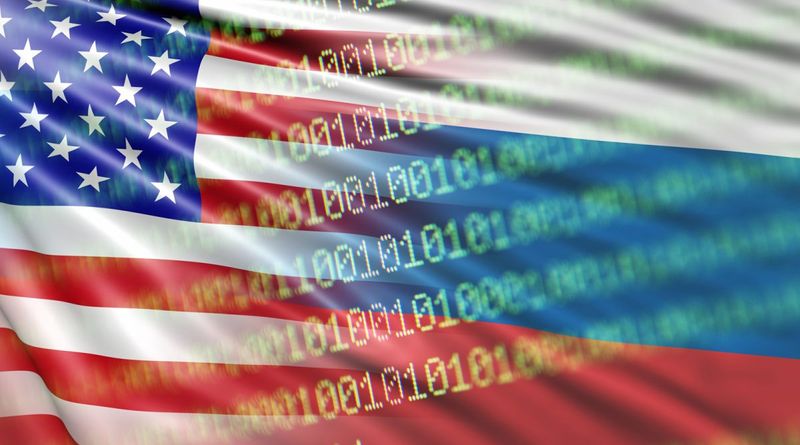
U.S. and British government agencies released details on July 1 of an ongoing cybersecurity threat linked to Russia’s military intelligence agency GRU against hundreds of government agencies, energy companies and other organizations worldwide.
The two governments said in a joint advisory on Thursday that Russian spies accused of interfering in the 2016 U.S. presidential election with the hack of the Democratic National Committee had spent much of the past two years abusing virtual private networks to target hundreds of internet sites globally. Those efforts include a similar attempt to disrupt the 2020 presidential election.
The advisory, issued through the U.S. National Security Agency, described the approach used by operatives with ties to the GRU. The Russian attacks involve an amplified and anonymized version of what are known as “brute force” access attempts: The automated spraying of sites with potential passwords until hackers gain access.
The NSA says GRU-linked actors have tried to break into networks using Kubernetes, an open-source tool originally developed by Google to manage cloud services. While a “significant amount” of the attempted break-ins targeted organizations using Microsoft’s Office 365 cloud services, the hackers went after other cloud providers and email servers as well.
The NSA advisory urges companies to adopt and expand cyber protection and mitigation techniques, including the use of multi-factor authentication and mandating strong passwords.
The campaign began in mid-2019 and is “almost certainly” ongoing, the advisory warned. The FBI and the Cybersecurity and Infrastructure Security Agency joined the advisory, as did the British National Cyber Security Centre.
Policy Analysis
The attempt by Russian hackers to penetrate sensitive American and international targets is ongoing and pervasive. The latest advisory from the NSA also shows the involvement of the Russian military intelligence agency in such endeavors.
The password-hacking scheme, most notorious for its interference in the 2016 U.S. presidential election, has targeted a range of organizations around the globe. The attacks include virtually every sector of interest on the internet, including government and military agencies, defense contractors, political parties and consultancies, logistics companies, energy firms, universities, law firms and media companies. The NSA advisory does not disclose specific targets of the campaign or its presumed purpose.
Through a Facebook post, the Russian Embassy in Washington vehemently denied Russian government involvement in the cyberattacks. “We hope that the American side will abandon the practice of unfounded accusations and focus on professional work with Russian experts to strengthen international information security.”
The U.S. has long accused the Russian government of supporting cyberattacks for espionage, spreading disinformation campaigns, and the disruption of government and key infrastructure.
The GRU has been repeatedly linked by U.S. officials in recent years to a series of hacking incidents. In 2018, special counsel Robert Mueller’s office charged 12 military intelligence officers with hacking Democratic National Committee emails that were then released by WikiLeaks to harm Hillary Clinton’s presidential campaign in support of Donald Trump.
An American intelligence assessment earlier this year said the GRU tried to monitor people in U.S. politics in 2019 and 2020 and staged a phishing campaign against subsidiaries of the Ukrainian energy company Burisma, likely to gather information damaging to President Joe Biden, whose son had earlier served on the Burisma board.
An NSA spokesperson said this GRU-led campaign was separate from the SolarWinds supply chain attack, which was attributed to a separate Russian intelligence service known as the SVR. It also differs from the ransomware attacks on Colonial Pipeline and meat supplier JBS, which were targeted by two distinct criminal ransomware groups known to have links to Russia.
The Biden administration in April sanctioned Russia after linking it to election interference and the SolarWinds breach.
In the latter case, Russian military hackers sabotaged a tiny piece of computer code buried in a popular piece of software called SolarWinds. That allowed the hidden virus to spread to 18,000 government and private computer networks when SolarWinds sent out a routine software update.
That gave Russian agents complete access to the digital files of such U.S. departments as Justice, State, Treasury, Energy and Commerce for nine months. During this time, they were able to view top-level government emails, court documents and even nuclear secrets.
Similarly, hacking into businesses gives access to proprietary intellectual property, corporate strategies and competitive information.
All this comes against the backdrop of President Biden and Russian President Vladimir Putin agreeing at their June summit that the two countries will start consultations on cybersecurity.
Putin claimed that “most of the cyberattacks in the world are carried out from the cyber realm of the United States,” with Canada and Britain coming second and third.
While the U.S., Canada and Britain all engage in cyberespionage, the most damaging cyberattacks on record have been attributed by the U.S. and the European Union to GRU, including two on Ukraine’s power grid and the 2017 NotPetya virus that caused more than $10 billion in damage globally.
Engagement Resources
NSA cybersecurity statement on Russian threat:
Full NSA advisory:
Cybersecurity & Infrastructure Security Agency tips:
https://us-cert.cisa.gov/ncas/tips
UC-Berkeley Information Security Office “Top 10” secure computing tips:
https://security.berkeley.edu/resources/best-practices-how-to-articles/top-10-secure-computing-tips

Biden’s Covid Investigation in China Pt.1
Brief # 120 – Foreign Policy
Biden’s Covid Investigation in China Pt.1
By Erin Meyer
July 2, 2021
Policy Summary
The Biden Administration has asked the intelligence community to investigate the potential Wuhan laboratory leak allegation. President Biden’s statement was clear. “I have now asked the Intelligence Community to redouble their efforts to collect and analyze information that could bring us closer to a definitive conclusion, and to report back to me in 90 days. As part of that report, I have asked for areas of further inquiry that may be required, including specific questions for China.”
China has denied and rebuffed the potential accusation that Covid-19 originated in a laboratory in China. “Smear campaigns and blame shifting are making a comeback, and the conspiracy theory of ‘lab leak’ is resurfacing,” the Chinese embassy in the US released in a statement.
White House national security adviser Jake Sullivan stated that China’s Xi Jinping’s administration would encounter “isolation” in regards to its foreign relations if the country were to resist or deny corroboration to assist the investigation behind the initial outbreak of Covid-19. Sullivan commented that the international and diplomatic stress may play a part in pressuring Beijing to cooperate further. “It is that diplomatic spadework – rallying the nations of the world, imposing political and diplomatic pressure on China, that is a core part of the effort we are undertaking to ultimately face China with a stark choice: either they will allow, in a responsible way, investigators in to do the real work of figuring out where this came from, or they will face isolation in the international community,” Mr Sullivan said.
Policy Analysis
As the Covid-19 outbreak initially began to hit the United States, former President Trump was pushing a separate agenda in regards to the origins of the virus. He and his ilk claimed it originated in a virus lab in Wuhan, where the virus was first documented to have occurred. The rumors escaping the Trump administration didn’t stop there. Trump and his followers also assisted in pushing a bold claim that “coronavirus was a bioweapon created in China.” There has been no evidence to support this claim at this point in time. Nonetheless, these accusations, without proof, were considered an insult by Chinese leadership. Xi Jinping’s administration claimed that the U.S. government was using these theories as a distraction from the failure to contain the outbreak domestically.
US President Joe Biden’s request for a deeper look into the origins of the coronavirus has the potential to significantly disrupt international relations around the world but more specifically between the United States and China. President Biden has recently expressed that a large part of the intelligence community has “coalesced” around the two potential origin points being the possibility of “human contact with an infected animal or from a laboratory accident” however there is not currently enough information to accurately predict which of the two is the true culprit. So why now? President Trump vowed to produce conclusive evidence to prove the origin of the Covid-19 virus but did not. Fast forward to 2021 and it would not be in President Biden’s interest to be perceived as any less resolute.
On July 1st, in celebration of the Chinese Communist Party centenary, President Xi Jinping warned that any country that would challenge China’s objectives “will find their heads bashed bloody against a great wall of steel.” Former Secretary of State Mike Pompeo spoke out about Jinping’s comment, claiming the fault lies with President Biden who has been too weak in the face of Chinese’s resistance to assist in the Covid-19 investigation. Pompeo highlighted what he believes is Biden’s resistance to castigate Jinping’s administrations.
The impact on international relations could be devastating. In March of 2020, Chinese government official Lijian Zhao went as far as to estimate that the “US army who brought the epidemic to Wuhan.” The government of China clearly would prefer to be recognized as a nation that overcame the virus locally and not the country responsible for releasing it upon the planet. Internationally, China is trying to paint it’s own image as a culpable, magnanimous world power that is assisting other nations with medical supplies through its mask diplomacy.
Add all of this to the events at the recent G20 meeting. The South China Morning Post wrote of the meeting, “The United States has told the G20 foreign ministers that ‘effective and accountable’ international institutions are needed as Beijing pointedly warned against empty calls for multilateralism and ‘vaccine hoarding’ by richer countries.” As tensions between the two nations rise, how will the Biden administration react?
Engagement Resources
COVID-19 Contact Tracing Communication Toolkit for Health Departments: State and local health department staff can use or adapt these ready-made materials to educate their community about case investigation and contact tracing for COVID-19.
Van Dermyden Makus COVID-19 Investigative Services and Resources – assists clients during the swiftly changing circumstances brought by COVID-19, we have consolidated information related to their services and practices that are directly relevant to current work conditions.
USA.Gov Covid Resources: Learn about the types of assistance the federal government offers people and businesses affected by the COVID-19 pandemic. This includes COVID-19 loans, debt relief, and grants that can help small businesses continue operating and paying their employees. Learn about the Paycheck Protection Program (PPP) and other SBA coronavirus relief options for businesses.
____________________________________________________________________________
Take a review on the Biden administration’s progress and updates on the Covid-19 investigation in China. How will this investigation impact diplomacy between the two strong nations?

How Effective Are Our Global Organizations?
Brief # 120 – Foreign Policy
How Effective Are Our Global Organizations?
Part 1 The World Health Organization
By Ailin Goode
June 30, 2021
Policy Summary
As the world continues to struggle with the pandemic and its compounding effects on global inequality, critical eyes have turned to the World Health Organization. Accusations of negligence and political ineptitude against the WHO have gained traction, particularly with the recent appointment of the Syrian government to the Executive Board.
Last year, the Trump administration began the process of withdrawing from the WHO amidst criticism of the way the institution was handling the pandemic. Shortly after President Biden was elected, he reversed this decision and returned the United States to its previous status as one of the most influential and active members in the organization. The administration has noted that cooperation with the WHO does not mean ignoring its shortcomings.
While questions and concerns over China’s influence in the WHO continue and the pandemic threatens the recently reported progress in global health, national and international discourse revolves around the effectiveness of the WHO itself.
Policy Analysis
The World Health Organization was initiated by Brazil and China as part of the development of the United Nations in 1945. Its constitution was ratified in 1948 and it became an internationally recognized global institution. Currently, WHO is made up of 194 member states and has over 8,000 professionals working with the organization.
According to its constitution, “The objective of the World Health Organization shall be the attainment by all peoples of the highest possible level of health.” This objective has been rephrased over the years. The most recent iteration on their website reads, “Dedicated to the well-being of all people and guided by science, the World Health Organization leads and champions global efforts to give everyone, everywhere an equal chance to live a healthy life.” The WHO goes on to define “health” in terms of mental health, physical well-being, and social security.
This objective has led to the creation and adoption by the member states and other organizations of global initiatives like the 8 Millennium Development Goals – the first time-bound set of global health goals adopted by the organization for implementation from 2000-2015 and the follow-up, Sustainable Development Goals, which are set for 2015-2030. There have also been countless smaller campaigns launched in individual countries.
There are many noteworthy criticisms of WHO. There are accusations of statistical manipulation designed to inflate the success of some of their initiatives. The research, data collecting, analysis, and reporting cycle that is used to indicate their progress is mostly internal, or at least conducted in conjunction with other organizations connected with the WHO, so it is difficult to find unbiased information regarding their affairs. There are legitimate concerns of reinforcement of social and gender inequality as well as inadequacies in their response to the climate crises, continued human rights abuses, and global conflict. There is also a recent audit that found WHO staff had broken the organization’s rules in order to award a consulting contract to BCG, including changing the bid criteria as well as working with the firm before receiving formal approval.
These are certainly things that should be addressed and managed. It is worth noting that many of the problems within the WHO are reflections of the problems each of its member countries are currently struggling with. A fact that has been evidenced by global protests, a record-breaking heat wave, and the ongoing struggle between data acquisition, big business, and privacy rights.
There is also statistical evidence of WHO’s success. There was measurable progress made on each of the MDGs. For example WHO just declared China free from Malaria. WHO’s organization of the international response to COVID-19 resulted in multiple tools and resources as well as the recent G7 commitment to dose sharing through their COVAX Facility, a co-led program designed to ensure equitable access to information and vaccines.
Global health has been steadily increasing since the formation of WHO 70 years ago. The exact reasons for this are difficult to determine because of the number of different factors involved. As there continues to be breakthroughs in science, technology, communication, and data acquisition, it makes sense that our understanding of health issues and our ability to address them would also continue to increase.
The effectiveness of WHO lies in the resources and frameworks it provides for the nation states that are able and willing to do the work, such as The ACT Accelerator or its publications that include everything from technical briefings to risk assessment manuals. It creates tools such as the “WHO Benchmarks for International Health Regulations,” to give countries expert-backed, actionable plans to achieve greater “health security.”It offers one of the largest compilations of health data available that isn’t behind an academic or business pay wall, a significant feat in the age of data monetization. It consistently researches and analyzes its own initiatives, compiling publicly available insight into the processes and challenges of everything from providing vaccines to education reform.
WHO is not designed to be a politically minded organization. It is a community of scientists, doctors, and world leaders that was created to facilitate ideas, share information, and develop programs and initiatives designed to benefit everyone. All information sharing, participation, and accountability is voluntary on the part of each member state. This means that the strength and success of the organization is the responsibility of every country. WHO is and will be as effective as its member states are cooperative.
Engagement Resources
Pan American Health Organization – COVID-19 Situation Reports
Volunteer Match – Volunteer opportunities to help fight COVID-19

U.S. Inaction as Conflict in Ethiopia Worsens
Brief # 119 – Foreign Policy
U.S. Inaction as Conflict in Ethiopia Worsens
By Avery Roe
June 28, 2021
Policy Summary
The conflict in the Tigray region of Ethiopia has not received much attention in the United States but is increasingly raising international concerns over the atrocities taking place. In November 2020, Prime Minister Abiy Ahmed launched a “law-and-order operation” supposedly to target domestic terrorists, but the operation has involved large-scale deployments of the National Defense Forces, aerial bombardments, and involvement of Eritrean forces, signifying a larger scale target of the Tigrayan leadership. This fighting has led to thousands of deaths and countless injuries, many due to the indiscriminate shelling of cities and other human rights abuses by the National Forces.
Since the launch of the operation over 60,000 refugees have fled the area as a result of the violence committed by the National Defense Forces, which gives the conflict regional implications as neighboring counties deal with the displaced peoples. Critical infrastructure has been destroyed and there have been reports of large-scale human rights abuses, raising concerns of genocide. Very few believe that the, already delayed, upcoming national elections will be free or fair, with the operations of key opposition parties severely curtailed.
The conflict became more complicated earlier this week when the Ethiopian Government called for a unilateral ceasefire for several months after the Tigrayan fighters retook the regional capital of Mekelle. Tigrayan leadership rejected the ceasefire. The stated goal of the Tigrayan forces at this point is a complete withdraw of Ethiopian and Eritrean troops from the region. The retaking of Mekelle also came with a near communications blackout, the cause of which is unclear.
After assuming the Presidency, Joe Biden has taken a more active role in dealing with the conflict, especially when compared to his predecessor. In a recent statement, the administration noted that; “The large-scale human rights abuses taking place in Tigray…are unacceptable and must end.” The administration has committed $305 million in funding for humanitarian relief efforts. United States UN Ambassador Linda Thomas-Greenfield has helped raise the profile of the conflict at the United Nations and a Special US Envoy has traveled to Ethiopia. In addition to this, the aid to Ethiopia withheld by the Trump administration over a disputed dam with Egypt will continue to be withheld because of the Tigray crisis.
Policy Analysis
While the Biden administration has taken steps to try to deal with the conflict, this largely seems to be following the general American pattern of ignoring atrocities in Africa. As the United States works to re-engage on an international stage this is an incredible opportunity to work with newly re-affirmed allies to pressure Prime Minister Ahmed into ceasing hostilities and working towards healing in the region. The United States’ diplomatic strategy thus far is not working and Tigrayans and those throughout the horn of Africa need to see a broader US involvement.
The continuation of the withholding of aid is the strongest step President Biden has taken, but it is significantly weakened by the fact that it is nothing new and was initially implemented by the Trump administration for a different reason. President Biden needs to take a strong stand with aid in a new way that is directly tied to the conflict. The United States can send a message that the conflict will not be tolerated and save lives in the process.
Especially in light of the most recent developments, The US also needs to place far more pressure on Eritrea to remove its troops from the region. At this point, they are only serving to flare up the conflict and the goal needs to be for tensions to settle and a viable solution to be reached. Senate Resolution 97 that called for the withdraw of Eritrean troops and condemned the human rights abuses clearly was not enough, The United States needs to exert more pressure on both Eritrea and Ethiopia to withdraw so that a solution can be agreed upon.
Engagement Resources
- https://twitter.com/zekuzelalem?lang=en- Zecharias Zelalem is a reporter on the ground in Tigray and shares updates on his Twitter feed.
- https://www.rescue.org/country/ethiopia?gclid=CjwKCAjww-CGBhALEiwAQzWxOu1CTC8NyHWHzuL5dtABfKMcXhAW6c8rfJ2R4eP79ZoHVqsq2Myg_BoCjkoQAvD_BwE- The International Rescue Committee is doing significant work in assisting the Ethiopian Refugees.

Supreme Court Rules Against Warrantless Entry Into Home In Misdemeanor Cases
Brief # 167 – Civil Rights
Supreme Court Rules Against Warrantless Entry Into Home In Misdemeanor Cases
By Rod Maggay
June 29, 2021
Policy Summary
On June 23, 2021 the United States Supreme Court handed down its decision in Lange v. California. The case examined whether a warrantless entry into a home by a police officer to apprehend a fleeing misdemeanor suspect was permissible under the Fourth Amendment to the U.S. Constitution.
The Fourth Amendment provides that “[t]he right of the people to be secure in their persons, houses, paper, and effects, against unreasonable searches and seizures, shall not be violated.” What this means is that law enforcement officers generally need to obtain a warrant prior to entering a person’s home without permission. While this is the general standard the law does provide exceptions to that rule. The exigent circumstances exception permits a law enforcement officer to enter a home for emergency situations that require official action and where there is no time to secure a warrant. Some common emergency scenarios which permit a warrantless entry by police officers is if there is a need to render emergency medical assistance or if there is a danger of destruction of evidence, like drugs.
In the Lange case, Arthur Lange was observed by police officers driving down the road with his windows down and loud music playing while he was consistently honking his horn. Highway patrol officers followed Mr. Lange and subsequently turned on their overhead lights to try and get Mr. Lange to pull over. However, Mr. Lange continued to his home and entered his garage. An officer followed Mr. Lange inside of his home where he questioned him and put Mr. Lange through a field – sobriety test which he failed. Mr. Lange was subsequently charged with a misdemeanor driving under the influence (DUI) and a misdemeanor noise infraction.
Mr. Lange tried to suppress all of the evidence obtained from his questioning and sobriety test but the Superior Court denied his motion which was later affirmed by the appellate division and the California Court of Appeal. The California Supreme Court refused to hear his appeal and the case was appealed to the U.S. Supreme Court. The Supreme Court sided with Arthur Lange and ended up vacating the California Court of Appeal decision in a unanimous judgment. LEARN MORE
Policy Analysis
This case helped reinforce what the Fourth Amendment stands for in terms of unreasonable searches. The Court even used the phrase “when it comes to the Fourth Amendment, the home is the first among equals” to emphasize the right of a citizen to retreat into his own home and be free from unreasonable government intrusion.
While the case should have been an easy one to decide based on Court precedents that prohibited warrantless entry into a home except in exigent circumstances this case differed significantly because this case only involved a person fleeing into his home while committing a misdemeanor crime. The other cases previously decided by the Court all dealt with officers entering the home without a warrant while the persons were committing a felony. It may seem like a very minor difference but the difference in the two categories of crime can have significant consequences. This is important because arguments from an amicus curiae brief submitted to the court pushed to have the Court recognize a rule that any time a person is fleeing from law enforcement, officers should always be allowed warrantless entry into the person’s home based on emergency circumstances.
Justice Kagan pushed back on this and eloquently described how not every fleeing person who retreats into their home presents a threat especially when the crime being committed is a misdemeanor. Misdemeanors are crimes usually categorized as minor and sometimes non – violent. It would be improper to have an all – encompassing rule that permits law enforcement officers wider powers to enter a person’s home any time a person flees regardless of the crime.
The very nature of the crime – misdemeanor – may not have the emergency situation that felonies do. It may very well be that there may be time to secure a warrant to enter the home in misdemeanor cases. What Justice Kagan’s opinion does here is not allowing an expansion of police powers to allow an officer to enter a fleeing person’s home whenever they please. A person’s home is too sacred to allow it to be violated so easily. The Fourth Amendment still prohibits unreasonable searches and seizures of a person, their homes and their papers and that command still applies even in misdemeanor cases. The Supreme Court in this case gets that right. LEARN MORE, LEARN MORE
Engagement Resources
American Civil Liberties Union (ACLU) – infopage on search and seizure issues.
Constitution Center – infopage with background and history of the Fourth Amendment.
This brief was compiled by Rod Maggay. If you have comments or want to add the name of your organization to this brief, please contact Rod@USResistnews.org.

Federal Judge Dismisses Facebook Antitrust Cases
Brief # 52 – Technology
Federal Judge Dismisses Facebook Antitrust Cases
By Henry Lenard
July 1, 2021
Policy Summary
Two antitrust cases filed against Facebook Inc. by the U.S. Federal Trade Commission and a coalition of nearly all state attorneys general led New York’s Letitia James were dismissed by Judge James E. Boasberg of the U.S. District Court of the District of Columbia on June 28, 2021.
Judge Boasberg said the FTC lawsuit filed in December failed to show that Facebook had monopoly power in the social media sector.
The FTC case was the government’s first attempt to reign in Facebook’s social networking dominance in the face of increased Congressional scrutiny of Facebook’s practices.
The judge said the FTC could refile an amended complaint within 30 days.
Judge Boasberg also dismissed the case brought by the states, criticizing them for waiting too many years after Facebook’s acquisitions of Instagram (2012) and WhatsApp (2014) to challenge the deals.
The stock market reacted to the news by pushing Facebook’s valuation to in excess of $1 trillion.
Policy Analysis
Judge Boasberg’s Facebook ruling underscored the difficulty regulators confront in taking on Big Tech. The judge said the FTC lawsuit was “legally insufficient” by failing to provide enough evidence to prove that Facebook had a monopoly in the personal social-networking sector and that its practices harmed competition.
The ruling dismisses the complaint but not the case, meaning the FTC could refile another complaint.
The FTC claimed that Facebook has had monopoly power since at least 2011, controlling “in excess of 60 percent” of the “personal social networking” market. The judge noted that the FTC failed to offer any metrics as to how it arrived at that figure, such as revenues or users.
“The FTC’s inability to offer any indication of the metric(s) or method(s) it used to calculate Facebook’s market share renders its vague ‘60%-plus’ assertion too speculative and conclusory to go forward,” wrote Boasberg.
Boasberg said regulators have a greater challenge against companies such as Facebook than they would against a more traditional business. The judge wrote that sites like Facebook “are free to use, and the exact metes and bounds of what even constitutes a [personal social network] service — i.e., which features of a company’s mobile app or website are included in that definition and which are excluded — are hardly crystal clear.”
The regulatory agency also narrowly defined the personal social networking market, excluding professional social networks such as LinkedIn and video streaming companies like YouTube.
Judge Boasberg’s ruling shows how antitrust law standards can be difficult for federal regulators to meet.
The decision was condemned by those calling for the reigning in of Big Tech, with calls for revisiting antitrust laws, which now require a company is shown to be a monopoly before a case can be pursued.
The House Judiciary Committee recently approved six bills focusing on Big Tech that would result in the most dramatic change to antitrust law in decades.
The bills include updating merger filing fees; determining venues for antitrust suits brought by state attorneys general; preventing Big Tech companies from buying upcoming competitors in an effort to eliminate competition; prohibiting Big Tech firms from giving their products and services preference over those of competitors; making it easier to use products from different companies together; and allowing federal regulators to sue to break up large tech companies when their role as operator of a platform creates an “irreconcilable conflict of interest” in their other business lines.
The next step for these bills, which have varying degrees of bipartisan support, will be a debate and vote in the full House. Already there is intense lobbying against the bills from Big Tech and the trade organizations representing the industry.
Engagement Resources
FTC v. Facebook decision:
New York v. Facebook decision:
American Economic Liberties Project statement:
House Judiciary Committee Chairman Jerrold Nadler statement on passage of bipartisan legislation to enhance antitrust enforcement:
https://judiciary.house.gov/news/documentsingle.aspx?DocumentID=4622

What Will Iranian Election Outcomes Mean for Relations with the US?
Brief # 118 – Foreign Policy
What Will Iranian Election Outcomes Mean for Relations with the US?
By Abran C
June 29, 2021
Policy Summary
On June 18, 2021, Iran held its thirteenth presidential elections since the establishment of the Islamic Republic. National Elections are held every four years in the Shia majority nation. In order to run for president a candidate must be pre-approved by Iran’s Guardian Council. For the recent election cycle the council only approved seven candidates out of nearly 600, and it disqualified many moderates and women from running. Of the seven, conservative hardliner and Judiciary head Ebrahim Raisi has been elected president. Raisi will be inaugurated in early August and will take control of significant domestic and foreign affairs from current President Hassan Rouhani. Rouhani is a moderate who has served two terms and was the spearhead in Iran signing the Nuclear Deal in 2015. Yet even with a new president Supreme Leader Ayatollah Ali Khamenei retains the majority of control in the nation.
President-elect Raisi has been favored by Khamenei and has long been groomed to one day succeed him as Iran’s Supreme Leader. Many see his ascendancy to the presidency as another step on his way to Iran’s top job. Yet Iranians and rights groups have signaled alarm and pointed to Raisi’s alleged role in mass executions of political prisoners in 1988. As well as his involvement in the regime’s brutal crackdown of Iran’s Green Movement protests in 2009, for which he was sanctioned in 2019 by the U.S. Treasury Department on the charge of human rights violations.
The Biden administration has held its breath awaiting the results of the election in order to continue negotiations to return to the JCPOA (The Iran Nuclear deal). The Trump administration had previously pulled back from the agreement and took an increasingly aggressive stance toward Iran. Iran in turn began breaching the limits of the deal and enriching uranium past the amount agreed upon in the deal. Ayatollah Khamenei supports Iran returning to the nuclear deal and Raisi has assured voters he would work to ensure Iran’s return to relieve economic hardship.
Policy Analysis
Voter turnout in the Iranian election had reached a record low with only around 48% of the public taking part, down from 70% in 2017. We can attribute the significant drop in electoral participation to the fact that many Iranians see elections in the nation as staged events. The event is more of a selection than an election considering only pre-approved candidates may run. Couple this with the fact that they clearly saw these elections as tailored for Mr. Raisi to win, a small voter turnout was to be expected.
The deep tensions Iran has faced with the west has paved the way for the election results. Four years of being hit by U.S. sanctions and the assassination of Iran’s top general, Qasem Soleimani, pushed by the former U.S. administration has led to a pivot to the hard right. Raisi’s key priority will be an economy that has been suffering from rampant inflation and high unemployment. Raisi has stated his interest in returning to the JCOPA in order to provide economic relief.
In this sense Iran’s hardline stance in wanting to return to the deal will benefit the U.S. in the short term by providing an avenue for the Biden administration to achieve its set goal in the Vienna talks. However, beyond the deal it is unlikely there will be a softening of the very tense relations. President-elect Raisi has already stated he does not want to meet with President Biden and claimed the regime would look Eastward to China to help its economy recover from its deep crisis.
Recent events such as the seizure of 33 Iranian government affiliated sites and air strikes against what the U.S. claims were Iran backed militia facilities have only increased tensions. With Raisi in office right-wing hardliners will now be on all levers of power. With this in mind Iran under Ebrahim Raisi will likely become a more closed off society, with less press freedom, more likely to respond aggressively to the U.S., and more repressive towards the Iranian population.
Engagement Resources
U.S. Department of State: The United States Department of State (DOS), is an executive department of the U.S. federal government responsible for the nation’s foreign policy and international relations.
U.S. Department of Defense: The United States Department of Defense is an executive branch department of the federal government charged with coordinating and supervising all agencies and functions of the government directly related to national security and the armed forces.
Inter-Parliamentary Union: The IPU is the global organization of national parliaments. We promote democratic governance, institutions and values, working with parliaments and parliamentarians to articulate and respond to the needs and aspirations of the people. We work for peace, democracy, human rights, gender equality, youth empowerment and sustainable development through political dialogue, cooperation and parliamentary action.

Supreme Court Again Punts On Non – Discrimination v. Religious Beliefs Issue
Brief # 166 – Civil Rights
Supreme Court Again Punts On Non – Discrimination v. Religious Beliefs Issue
By Rod Maggay
June 27, 2021
Policy Summary
On June 17, 2021 the United States Supreme Court handed down its decision in Fulton v. City of Philadelphia. In a unanimous judgment the Court ruled that Philadelphia’s decision to refuse to contract with Catholic Social Services of Philadelphia (CSS) unless CSS agreed to certify same – sex couples as foster parents violates the Free Exercise Clause of the First Amendment of the U.S. Constitution.
Catholic Social Services is one of many foster care agencies operating in the City of Philadelphia. The City of Philadelphia foster care system contracts with private foster care agencies to help them place children who may be in need of a home. Pennsylvania authorizes private foster care agencies to research families and determine if a foster family is suitable to “provide care, nurturing and supervision” to a child. If a private foster care agency approves than the agency “certifies” the family as a suitable foster family. The private agencies compile their own list of certified foster families and wait for Philadelphia’s Department of Human Services (DHS) to refer a child for foster care. Once a referral is received the private agency decides which family is suitable for the child.
In 2018 the Philadelphia Inquirer ran an article after investigating reports of difficulties that same sex couples had in becoming certified foster families with a number of agencies. Subsequently and in response to the article, the Archdiocese of Philadelphia announced that Catholic Social Services of Philadelphia would no longer consider same sex families as prospective foster parents. In response, the Department of Human Services announced that they would no longer refer children to CSS. CSS filed suit. In Federal District Court, the court denied relief to CSS which the Court of Appeals for the Third Circuit affirmed. The case was then appealed to the U.S. Supreme Court which sided with CSS in a unanimous judgment. LEARN MORE
Policy Analysis
The Fulton case was closely monitored because it was seen as a potential landmark case that could have set a new rule regarding religious liberty rights and the ability to discriminate based on religious beliefs. The issue of discrimination motivated by religious beliefs has been a simmering issue in the U.S. The Court had recently decided the Masterpiece Cakeshop, Ltd. v. Colorado Civil Rights Commission case but the Court there declined to set a new rule in that case and instead decided the case on very narrow grounds. When Fulton was appealed to the Supreme Court it was believed that the Court may have been ready to address the ability to discriminate based on religious beliefs head on due to the addition of Justice Amy Coney Barrett to the Court (she is viewed as a firm supporter of religion) and the number of cases the Court decided in 2020 supporting religious rights. But this case ended up following Masterpiece Cakeshop in that the case was decided on very narrow grounds. The Court again declined to issue a sweeping rule to govern the ability to discriminate based on religious beliefs issue.
The case turned not on whether there is a constitutional right to discriminate based on religious beliefs (which is what conservatives and religious people wanted) but simply on the wording of a clause in the standard contract that Department of Human Services (DHS) puts in all of its contracts with private foster care agencies. A clause in the contract obligated a private foster care agency to not reject a child or family – to not discriminate – unless it acquired an exemption from a DHS Commissioner. The Court latched on to this wording to find that Philadelphia improperly cut ties with Catholic Social Services because of the discretion it gave to DHS Commissioners to decide if a party may discriminate against a family or not. However, subsequent announcements by the parties involved make clear that the bottom line issue was with the placement of children with LGBQT families and not with terms in the standard contract. The Supreme Court simply decided to avoid addressing the ability to discriminate based on religious beliefs issue again.
The great debate between closely held religious beliefs and whether those beliefs can serve as a basis to discriminate and prevent other citizens from enjoying the benefits of American civic life is one of great importance and one the Court needs to get right for the sake of the LGBQT and minority communities. It is one that needs to be addressed in order to clarify how citizens can conduct their personal lives. What the Supreme Court did in this case was that it left alot of questions that need to be answered. Maybe not today but in the future the Court will have to address the constitutional implications of this very complex issue. LEARN MORE, LEARN MORE
Engagement Resources
American Civil Liberties Union (ACLU) – infopage on the Fulton v. City of Philadelphia case.
Americans United for Separation of Church and State (AU) – infopage on the Fulton v. City of Philadelphia case.
This brief was compiled by Rod Maggay. If you have comments or want to add the name of your organization to this brief, please contact Rod@USResistnews.org.