

JOBS POLICIES, ANALYSIS, AND RESOURCES
Latest Jobs Posts
U.S. Can Become 45% Solar Powered by 2050. Too Much to Ask or Too Important to ignore?
Brief #128 – The Environment
By Jacob Morton
A new report from the Department of Energy shows that solar power has the potential to generate 40% of the nation’s electricity by 2035 and outlines how the nation could move toward producing up to 45% of its electricity from solar power by 2050. The climate crisis suggests this is more than necessary, it is imperative. But does the country have what it takes to make it happen.
President Biden’s Important 30×30 Environmental Policy Goal
Brief #127 – Environment Policy
By Tim Loftus
President Biden wasted no time in making clear his position on climate change. One week after Inauguration Day last January, an Executive Order on Tackling the Climate Crisis at Home and Abroad was issued that, among other things, “… encourage broad participation in the goal of conserving 30 percent of our American lands and water by 2030.”
Afghan Refugee Resettlement in Post-Trump America
Brief #129 – Immigration Policy
By Kathryn Baron
The United States has already evacuated over 65,000 Afghans and nearly 24,000 have arrived in the US. In addition, 23,000 are on US military bases abroad and another 20,000 are waiting in other countries before continuing their travels to the US.
The Biden Administration has asked Congress for $6.5 billion in emergency funds to assist in resettlement endeavors. As of now, Afghan refugees are to receive $1,255 of government funds to help with some expenses but are not eligible for food stamps or Medicaid at this time.
Federal Court in Florida Bans Enforcement of Florida’s Anti – Riot Law;
Brief #173 – Federal Court in Florida Bans Enforcement of Florida’s Anti – Riot Law
By Rodney A. Maggay
On September 9, 2021 Chief United States District Judge Mark E. Walker of the U.S. District Court for the Northern District of Florida issued a preliminary injunction order in the case Dream Defenders v. DeSantis. The NAACP Legal Defense and Education Fund of Florida, Inc., the ACLU of Florida and Community Justice Project brought a lawsuit on behalf of Dream Defenders and other Black – led organizations.
Should a Mental Health Assessment be a Requisite for a US Presidency?
Brief #131 – Health and Gender Policy
By S Bhimji
The presidency of Donald Trump was an eye-opener for not only Americans but the entire world. Within the first few months of the presidency, Trump proved to everyone that even mentally challenged people can become leaders of the most powerful country on the planet; but whether they could govern is another matter.
Taxes and Tribulations – Brief on Biden Tax Plans
Brief #123 – Economic Policy
By Tyler-Joseph Ballard
A $3T USD budget shortfall in 2020 and the current deficit for 2021 of another $3T USD leaves the current administration in a considerable bind. The Biden administration’s proposed tax plans — The American Jobs Plan and the American Families Plan — impose considerable tax hikes for corporations and top earners while providing increased child and dependent tax credits.
Who is Florida Governor Ron Desantis?
Brief #131 – Elections and Politics
By Abran C
The conservative-leaning state of Florida which has not elected a Democratic governor since 1999 is currently being headed by its 46th governor Ron Desantis. Before being elected Desantis joined the U.S. Navy from 2004 to 2010, serving as a judge advocate general (JAG) officer advising troops in Iraq and at Guantanamo Bay. He represented Florida’s 6th congressional district for three terms until his election as Governor over Democratic rival Andrew Gillum in 2019.
China’s Relationships with the Muslim World
Brief #131 – Foreign Policy
By Avery Roe
With significant attention being drawn to the treatment of the Uyghur population and the rise of the Taliban, it is important to understand China’s relationship with the Muslim world as they contend for global influence.
The Fake Covid Card Marketplace
Brief #130 – Health & Gender Policy
By S. Bhimji
The pressure is now on the unvaccinated individuals. Many workplaces, restaurants, entertainment centers, hotels, the travel industry, and government offices are requiring mandatory vaccination for both employees and people who use their facilities. And like all things American, there is a thriving black market for fake vaccination cards.


The American Jobs Plan: A Spotlight on Airport Infrastructure
Brief # 119 – Economics Policy
The American Jobs Plan: A Spotlight on Airport Infrastructure
By Lily Cook
June 7, 2021
Policy Summary
President Biden’s American Jobs Plan (AJP) proposes $621 billion for improvements to transportation infrastructure with a specific focus on using green energy wherever possible. In the event that the bill passes without radical augmentation,
One component of the plan that has received broad bipartisan support is the money set aside for airport improvements. The Biden plan allocates $25 billion, and the Republican proposal actually surpasses that number to reach $44 billion. Although not a politically inflammatory point, upgrading America’s airports is by no means an easy task. The AJP envisions using funds to support terminal renovations, increased funding for the Federal Aviation Administration and the Airport Improvement Program—a grant program for public-use airports. There are also gestures towards “multimodal connections for affordable, convenient, car-free access to air travel,” which aligns with much of the Biden Administration’s clean energy goals.
The plan for airports as laid out in the AJP lacks much in the way of detail. In fairness, the entire AJP is more of a general road map of proposed projects rather than a granular blueprint for achieving them. Thus, the single paragraph devoted towards ports, waterways and airports amounts to a vague but promising beginning. If the AJP proceeds, it’s imaginable that America’s airports will slowly be revamped.
Analysis
The average U.S. airport is approximately 40 years old. If there’s something that Biden and Donald Trump can agree on with shocking specificity, it’s that certain airports need immediate upgrades. In 2011, Trump told CNN that New York’s LaGuardia Airport is “like a Third World airport, ” and Biden echoed this sentiment in 2014, stating that LaGuardia feels like “some Third World country.” One takeaway here is that U.S. presidents are too flippant when using the term ‘Third World’ in a derogatory context; but more to the point, crumbling airport infrastructure has been a subject of discussion for years now. Giving airports the attention they need is not easy, since development is usually up to local governments. Thus, if the AJP passes with $25 billion earmarked for the cause, real changes could make flying easier and more environmentally friendly.
The pandemic decreased airport travel by 62% from 2019 to 2020 and severely reduced airport revenues. According to The Airports Council International of North America (ACI-NA)—the most vocal organization of airport owners and operators—airports in the U.S. have a backlog of $115 billion in planned infrastructure projects.
While most U.S. airports are government owned and operated, recent years have seen more private funding for expensive projects. LaGuardia’s ongoing $8 billion makeover is partly funded by Delta Air Lines and a private organization created by New York State Governor Cuomo and the Port Authority of New York called ‘LaGuardia Gateway Partners.’ With the absence of private funding sources, some airport organizations such as the ACI-NA have attempted to lobby Congress to increase passenger fees beyond the current $4.50 per flight. Other interests, such as consumer groups and some airlines, have argued that revenues can be gathered from on-site sources like restaurants and stores. The $25 billion injection from the AJP will hopefully relieve this burden of choice and simplify the financing portion of things.
It’s possible that one day, America’s airports won’t be the subject of scorn, not for purposes of nationalistic hubris, but rather for the purely practical reason of expediting travel.
Engagement Resources
Let your senators know that passing the AJP is important to you.
Learn more about the ACI-NA and its advocacy for airport infrastructure funding.

Facebook Extends Trump Ban For 2 Years
Brief #48 – Technology
Facebook Extends Trump Ban For 2 Years
By Scout Burchill
June 6, 2021
Policy Summary
After an initial review from the Oversight Board, Facebook finally announced the company’s decision on the fate of former president Donald Trump’s account. In a blog post, the Facebook Vice President of Global Affairs Nick Clegg responded to the Oversight Board’s charge that the company’s initial decision of an indefinite punishment was ‘not appropriate’ by announcing that Trump’s ban would be in effect for 2 years starting from January 7th. This will keep Trump off Facebook through the 2022 primary season. At the end of this period, Facebook will “look to experts to assess whether the risk to public safety has receded” and if not, it will extend the ban for another set period of time.
Facebook also responded to the Oversight Board’s criticisms of its ‘newsworthiness’ policy in which the platform allows posts to remain up if they are deemed to be important or in the public’s interest even though they violate Facebook’s Community Standards. The company insisted that going forward they would not treat politicians differently than other users and would make public instances when the newsworthiness standard is applied. Additionally, Facebook also stated that it would publish its “strike policy” so that users can better understand what type of content and actions will be penalized.
Trump responded to the decision by calling it “an insult to the record-setting 75M people, plus many others, who voted for us in the 2020 Rigged Presidential Election.” He also added a personal message for the CEO of Facebook, Mark Zuckerberg, declaring that the “next time I’m in the White House there will be no more dinners, at his request, with Mark Zuckerberg and his wife.” Since Trump’s bans from social media, he has effectively been muzzled. His attempt to create his own platform, Trump’s Desk, failed to gain traction and was abandoned last week.
Analysis
While Facebook may be trying to respond to criticisms that its penalties are vague and indiscriminate, this decision fails to demonstrate the company is taking these criticisms to heart. Despite introducing a color-coded sliding scale of penalties for users, it’s the vague language that does most of the heavy lifting. For example, Trump is definitely banned until January 7, 2023, but what happens after that date is extremely unclear. Facebook claims it will rely on experts to assess things like levels of civil unrest and potential risks to public safety. Which experts and how exactly they will measure potential risks are anybody’s guess. If by chance some new domestic unrest is brewing around the same time Trump is up for his Facebook parole, it seems safe to assume he’ll surely be denied. In effect, Facebook could just keep extending this ban indefinitely by re-banning Trump every couple of years.
Ultimately, this logic seems backwards. Trump’s incendiary messages and blatant disregard for truth were obviously major factors in creating civil unrest in the United States in the first place. If they weren’t, then Facebook wouldn’t have suspended his account! How they will assess the potential dangers of introducing him back into an environment in which he has been absent for two years seems like it might require at least some measure of speculation. In other words, more ambiguity and vague standards. This kind of assessment and the two year timing makes it seem as if Facebook is just hoping the Trump train runs out of steam by the time the next presidential election cycle rolls around. Cutting off his ability to communicate with his base is definitely one way to pump the brakes on the Trump train.
Their reasoning also seems to suggest that America’s deep polarization and divisions are all Trump’s fault, as if America will now slowly return to a state of normal in the absence of the former Arsonist in Chief. This incredibly naive expectation seems like an easy way for Facebook to absolve itself of any responsibility for the current state of affairs. As profiled many times before, Facebook’s business model thrives off of conflict, sensationalism and outrage. In actuality, Trump’s rise to power was a symptom of a failing system stinking of rot, injustice, inequality, distrust and disdain. The information ecosystem that Facebook helped create contributed to this dismal state of affairs. Just because Trump’s gone America will not magically return to normal. In fact, whatever normal was before 2016, it proved to be a good time for someone like Trump to run for president.
One of the more positive outcomes of Facebook’s decision is its attempt to make its newsworthiness standard and strike policy more transparent. However, in this area too the language is sorely lacking in precision. For instance, Facebook declares they will no longer give preferential treatment to politicians and will instead “simply” apply their “newsworthiness balancing test” to all content. Of course this balancing test “simply” consists of “measuring whether the public interest value of the content outweighs the potential risk of harm by leaving it up.” On a separate page Facebook lays out some factors for newsworthiness that include whether or not a country is holding elections, at war or has a free press. Facebook’s promise to publish when a newsworthiness exception applies will be an interesting development to follow, and may be the only meaningful change bringing a bit of transparency to Facebook’s content moderation decisions.
In the end, there is a strange sense that Facebook is attempting to resolve extremely complex questions of freedom expression, due process and justice in ways that it is fundamentally unable to do, and frankly not in the business of doing. The back and forth between the Oversight Board and Facebook policy makers is a strange boardroom dance that is meant to give the company a veneer of accountability and transparency, but in this instance, very little seems to have actually been accomplished. But maybe that’s actually the point.
Engagement Resources
Facebook’s Decision
https://about.fb.com/news/2021/06/facebook-response-to-oversight-board-recommendations-trump/
New York Times on Facebook’s Decision
https://www.nytimes.com/2021/06/04/technology/facebook-trump-ban.html
Trump’s Desk Shuts Down
https://www.cnbc.com/2021/06/02/trump-blog-page-shuts-down-for-good.html

Governor’s Recall Failing to Gain Traction
Brief #21 – Elections and Politics
Governor’s Recall Failing to Gain Traction
By Patrick Dwire
June 7, 2021
Policy Summary & Analysis
The campaign ads of the Republican challengers of Galvin Newsom for governor of California in the upcoming recall election portray the state as suffering the same dystopian fate as Venezuela- with flash frames of despair and voice-over narratives of businesses and workers fleeing the economic collapse brought on by the government over-reach of Covid restrictions.
They speak about rampant homelessness, crime, civil unrest and the pending shutting down of the oil and gas industry with the radical Green New Deal. All this is the consequence of a single-party, proto-socialist state led by a governor with strong ties to the liberal elite in Washington, with the ads concluding that the “California Dream,” whatever that is, will be lost forever if Democrats stay in power.
Meanwhile, a recent public opinion survey completed by the reputable, non-partisan Public Policy Institute of California (PPIC) found that a clear majority of Californians approve of Governor Newsom’s overall handling of the pandemic and vaccine rollout, do not support the recall, are optimistic about their own and the state’s near-term economic future and generally believe the worst of the pandemic is behind them.
According to the PPIC Statewide Survey, based on telephone interviews with 1,700 adults including at least 1000 “likely voters” conducted between May 9th and May 18th, nearly six out of ten likely voters say they do not support the recall of Newsom, with 54 per cent approving of the governor’s job performance, and an even larger majority (61 per cent) approving his handling of the pandemic.
Overall, the survey results reflect “a sea of optimism on so many factors,” said Dean Bonner, associate survey director at the PPIC, in a virtual event for the release of the survey results on May 26th. Bonner said he was “surprised at how things have changed” in consistently positive directions for the Newsom administration among “unlikely voters” since the same survey was conducted in January. These included increases in the approval ratings of Newsom’s handling of the pandemic and vaccine roll out, as well as the overall expectation of economic “good times” soon to come to California, all up over 11 per centage points since January.
What surprised Mark Baldassare, CEO of the PPIC, is what did not change in the attitudes of “likely voters” toward the recall election over the course of three PPIC surveys conducted in January, March, and now May. These surveys consistently found around 40 per cent in favor of recalling Newsom with about 60 per cent opposed, which is basically consistent with the 38 per cent of voters who did not vote for Newsom in November of 2018.
These two different worlds of political perception, with one believing the state is on the brink of collapse from which it will not be able to recover with the current governor (about 40 per cent) and the other believing the state is doing relatively well with widespread expectation of doing better in the near future (about 60 per cent) – could not be much farther apart than they are in California.
California is, after all, one of the states that Trumpian Republicans love to hate precisely because it is so big, so affluent, with such a remarkably diverse economy and work force, and, despite relatively high taxes, is so stubbornly and predominantly liberal, pro-immigration and anti-Trump. If Trumpism is right about liberals and the Democratic Party, then California must be a failed, near socialist state under the control of a corrupt Democratic Party. The real problem for the Republican Party in California is that this is simply not the case – and most Californians know it.
With veto-proof Democratic majorities in both chambers of the state house, with no Republican holding any state-wide office and with Republican Party registration dwindling (down to 24 percent from 27 percent in 2016), the Republican Party is not just a minority party in California, it’s a minority party with virtually no political power in state politics.
Perhaps that’s the real energy behind the recall – an attempted legal coup by a relatively powerless minority of California Republicans who have a good deal of money to spend- not because of reality-based corruption, incompetence or incapacity of the incumbent- but because it is simply possible to do, to try to upend the results of the last gubernatorial election. Writ large after the 2020 presidential election, discrediting fair elections is apparently the mainstay of the Republican Party’s national political strategy. Ironically enough, the anti-democratic orientation of the Republican Party has exploited an opportunity in California by abusing a Progressive-era democratic reform that allows direct voter recall of the governor, one of only 19 states that does so.
The campaign to collect signatures for the recall of Gavin Newsom was eventually sustained with considerable financial support from outside the state, and considerable attention was paid to this campaign and the “first to declare” candidates by right-wing media. This investment may well have been done with the cynical calculation that a Republican candidate will have a much better shot at the Governor’s mansion in an off- year special election in 2021, when voter turn-out is likely to be lower, and the sense of pandemic burn-out likely to be higher, than would be the case in the regular gubernatorial race at the end of 2022, when economic recovery could be in full swing.
But here’s the rub. Back in 2003, when Gray Davis was about to become the first California governor to be recalled, the PPIC measured the degree voters believed things would get better if Gray Davis was, in fact, recalled. Never enjoying widespread popular support, Gray Davis was beleaguered by huge budget deficits, chromic energy shortages and spiking utility bills, which were later revealed to have originated in the Enron Corporation’s gaming of the state’s energy supply for illegal profit.
In a PPIC survey conducted in August, 2003, fully 47 per cent of voters said they believed things would get better if Davis were removed from office, while 17 per cent said that things would get worse if he was recalled. This widespread expectation was confirmed the following month in another PPIC survey, and in October of that year, 55 per cent voted to remove Davis, and 49 per cent voted to replace him with Arnold Schwarzenegger.
In contrast, only 29 per cent of Californians believe things will get better if Newsom is recalled, less than a third, while 34 per cent believe things would get worse. A surprising number responded it would make no difference if Newsom is recalled or not —fully 28 per cent. According to Baldassare, CEO of the PPIC, “For a recall election to gain traction this time, many more voters need to believe that things would get better afterward.”
Contributor Outreach
Patrick Dwire is a freelance writer based in of Santa Cruz, CA. He can be reached at paddyd385@gmail.com

It’s Frustrating to Negotiate with Republicans
Brief # 118 – Economic Policy
It’s Frustrating to Negotiate with Republicans
By Rosalind Gottfried
June 4, 2021
Policy Summary
In March Biden proposed a 2.3 trillion dollar infrastructure plan which he has trimmed to 1.7 trillion. The Republicans initially proffered a plan of 568 billion and have raised it to 928 billion, after sustained discussion with Republican Negotiator Senator Shelley Moore Capito of West Virginia. Biden, after much negotiation with Republican leaders has rejected that offer saying that it fails to address significant needs in the transportation, climate control, and job creation.
Biden also wants to establish a 15% minimum corporate tax, with no exceptions, to end major corporations escaping the tax burden altogether with deductions and write offs. The Republicans flatly refuse to amend the Trump tax reform of 2017 which had no minimum and established a 21% ceiling, less than the 28% Biden has proffered. Another sticking point is that the Republicans want to fund the bill with unspent pandemic relief money, a proposal Biden has unequivocally rejected.
On the same day that Biden announced the lack of agreement on an infrastructure package, the May jobs report unveiled the addition of 559,000 new jobs. Though this figure is greater than the tepid 278,000 added in April, Biden says it points to the need for more aggressive action. Unemployment dropped to 5.8% from the previous month’s 6.1% and remains significantly higher than pre-pandemic rates.
Analysis
Although the Biden administration has reduced its initial infratsructure process, Biden has been frustrated with the negotiation process; the Republicans have raised their funding level but they started very low, at about a quarter of Biden’s original plan. Biden will continue negotiations in the hope of getting somewhere when Congress returns from their Memorial Day break but commentators are not optimistic. The more progressive elements among the Democrats are agitating for passing a plan with a simple majority and foregoing any bi-partisan agreement. Republican hostility to infrastructure spending promoted by Biden is ironic in that President Trump proposed a two trillion dollar plan (that also went nowhere) a year before Biden announced his plan.
Engagement Resources
https://www.nytimes.com/live/2021/06/04/us/biden-news-today
https://apnews.com/article/health-coronavirus-pandemic-business-bb295afe6ec8d8b88b1b944f3eba7931

Biden’s Global Vaccine Distribution Plan: More Than Just a Show
Brief # 107 – Health and Gender Policy
Biden’s Global Vaccine Distribution Plan: More Than Just a Show
By Justin Lee
June 5, 2021
Policy Summary
On June 3rd 2021, President Biden announced a plan to distribute over 25 million COVID vaccines globally; a new and separate initiative to the already $4 billion US has committed to COVAX. Under this agreement, 19 million doses will be dedicated to COVAX, which will distribute 6 million doses to Latin America and the Caribbean, 7 million doses for south and southeast Asia, and 5 million doses for Africa. The remaining 6 million doses will be shared with countries experiencing surges and US partners and neighbors.
Analysis
The implications from this plan goes further than a mere “be a good guy” persona. Americans and world leaders should embrace this plan as a recognition and extension of several objectives from the Biden administration:
Recognition the COVID-19 pandemic is a global crisis that requires a global response
As all 50 states have relaxed COVID restrictions and vaccination among adults surpassed 50%, it is easy for Americans to forget that COVID continues to rampage across the world. High-density countries such as India, Brazil, and Japan continue to struggle with alarming COVID positivity rates, crumbling health infrastructures, and inability to gain access to vaccine supply. New variants continue to emerge from these COVID hotspots, and the possibility of a total vaccine-resistant variant is always possible (though unlikely).
As long as the world continues to see COVID hotspots, countries will still have to remain vigilant and the pandemic cannot come to an end. This plan is a sign of recognition the Biden administration acknowledges this fact and understands the importance of getting COVID under control via vaccines for the benefits of public health and local economies.
Restoration of the US being a global leader and advocate for public health
Much to the dismay for the rest of the world, the previous administration pulled out of the WHO, spread misinformation about COVID, and failed to implement mask mandates. The Biden administration has and continues to take a drastically different approach in leading initiatives to control and end the COVID-19 pandemic. From set vaccination goals to implementing global dose distribution plans like today, President Biden continues to instill confidence and guidance to other global leaders and allies that public health is a priority and a human right; not a privilege.
Engagement Resources
>> Learn More
Helpful links:
White House: Statement June 3rd 2021
CNN: Biden Plan for Vaccine Sharing
Trust for America’s Health is a public health policy and research organization that advocates for a nation that values the health and well-being of Americans. Their organization has valuable information regarding health policies and issues on a federal and state level, and also actively publishes reports regarding public health on their website. To find more information or to get involved, use the link below:
The American Public Health Association is an organization aimed to Improve the health of the public and achieve equity in health status. As the main publishers for the American Journal of Public Health and The Nation’s Health newspapers, APHA educates the public on public health, policy statements, and advocacy for public health. To volunteer or become a member, use the link below:

Anti-Abortion Laws to Face the Supreme Court
Brief # 108 – Health and Gender Policy
Anti-Abortion Laws to Face the Supreme Court
By Erin McNemar
June 5, 2021
Policy Summary
While abortion has long been a controversial topic in American politics, there has been a recent increase in policies attempting to restrict a women’s right to chose. Last month, legislators in Texas worked to pass laws shortening the amount of time women have to make a decision regarding terminating their pregnancy.
The Texas law comes on the heels of the Supreme Court’s decision to review the Mississippi Abortion law beginning next session. This will be the first time the majority conservative leaning court will hear cases that will directly impact Roe v. Wade.
Analysis
Texas’ Heartbeat Ban
Last month, Texas Governor Greg Abbott signed SB 8, also known as the Heartbeat Ban, into law. The law prohibits abortions from occurring if a fetal heartbeat can be detected. This can occur as early as six weeks in some pregnancies, which is before many people know they are pregnant. The state requires that providers are to check for a fetal heartbeat prior to performing an abortion.
Similar to other anti-abortion laws, the ban does make the exception for medical emergencies but not for cases of rape or incest. The law even goes as far as bringing civil charges against those that perform abortions if the heartbeat is detected and those who “knowingly engage in conduct that aids or abets the performance or inducement of an abortion, including paying for or reimbursing the costs of an abortion through insurance or otherwise,” after the discovery of a fetal heartbeat.
Individuals will face a $10,000 fine for every abortion performed or facilitated.
Mississippi & the Supreme Court
In 2018, then Governor Phil Bryant signed Mississippi’s 15 week abortion ban into law. Like the current Texas law, some exceptions for abortion are made for medical emergencies or “severe fetal abnormality.” However, the law does not make any exception in the cases of rape or incest. A federal judge in Mississippi struck down the law in November of 2018. Then the 5th U.S. Circuit Court of Appeals upheld that ruling in December of 2019.
After being rescheduled dozens of times, the Supreme Court has agreed to review the case during their next session. The Mississippi law directly impacts the ruling of Roe v. Wade legalizing abortion nationwide prior to viability, which can happen around 24 weeks of pregnancy.
If the conservative court is to rule in favor of the 15 week abortion ban, it is likely we will see many Republican states implementing laws challenging Roe v. Wade as well. Laws such as the Heartbeat Ban in Texas have the potential to become increasingly common with the Supreme Court not standing in the way. However, it is important to note that a ruling supporting the 15 week abortion ban would not simply make abortion illegal. It would however give states the ability to make their own rules regarding abortion.
Engagement Resources
- Learn more about Roe v Wade.
- Read more about what the Mississippi case could mean for Roe v. Wade.
- Contact Planned Parenthood for resources.
- Reach out to your senators and representatives to take action!
- To keep up to date on the latest health & gender policy news, SUBSCRIBE HERE!
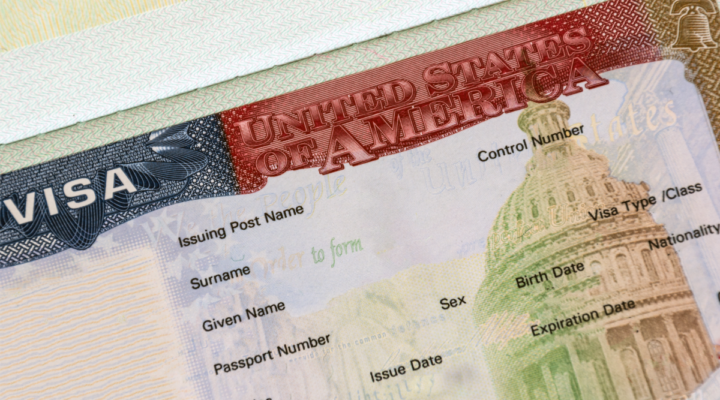
Biden Administration Announces Intent to Expand US Immigration System
Brief # 124 – Immigration Policy
Biden Administration Announces Intent to Expand US Immigration System
By Kathryn Baron
June 3, 2021
Policy Summary
Recently, the Biden Administration announced its intent to expand the existing American immigration system. The administration’s goal is to reverse anti-immigration efforts from the Trump Administration that led to lower levels of foreign workers, families and refugees, and numerous procedural hurdles.
Biden seeks to allow more foreigners to move to the US, particularly high-skilled workers, victims of human trafficking, refugees and asylum seekers, farm workers, American Indians living in Canada, and families of Americans living abroad. He seeks to address the backlogs in the immigration system by expanding virtual interview and electronic filing capacities and restoring operations for foreign employers through H-1B visas (intended for special and high-skilled workers). Biden also intends to start a new citizenship program for individuals and foreign entrepreneurs who wish to start businesses and/or create jobs for American workers.
Additionally the administration intends to reboot the program (U-visas) that provides pathways to citizenship for undocumented immigrants who help law enforcement by cooperating with policy and testifying in court when necessary. US immigration officials are working on regulations that would allow migrants to seek asylum if they are victims of domestic violence and/or have relatives who were persecuted. During the Trump Administration, Attorney General Barr attempted to end protections for these individuals.
Lastly, the Biden Administration hopes to expand immigration opportunities for individuals who identify as LGBTQ+, especially LGBTQ+ refugees hailing from countries where same-sex marriage is banned and/or members of the LGBTQ+ are often persecuted and oppressed.
Analysis
Under Trump, the average time to approve an employer-sponsored green card doubled, there is an 80% backlog on applications dating back to 2014 (now hovering around 900,000 cases), and the average approval time for U-visa programs has gone from five months to five years. Conservative activists and policymakers vow to stop Biden’s plans to expand the US immigration system, as it would reverse their previous efforts to lower levels of immigration.
Engagement Resources
- The National Immigration Law Center: an organization that exclusively dedicates itself to defending and furthering the rights of low income immigrants and strives to educate decision makers on the impacts and effects of their policies on this overlooked part of the population.
- The ACLU: a non-profit with a longstanding commitment to preserving and protecting the individual rights and liberties the Constitution and US laws guarantee all its citizens. You can also donate monthly to counter Trump’s attacks on people’s rights. Recently, the ACLU has filed a lawsuit challenging the separation of families at the border.
- Center for Disease Control: the CDC provides updated information surrounding COVID-19 and the US responses
- Deferred Action for Childhood Arrivals (DACA): Through the Department of Homeland Security’s website, this link provides additional information regarding the Obama era program.

Democracy Now | The Lethal Nexus: Mass Shootings and Domestic Violence
The Lethal Nexus: Mass Shootings and Domestic Violence
Amy Goodman & Denis Moynihan
June 3, 2021
You know the United States is emerging from the COVID-19 pandemic when the pace of mass shootings gets back to “normal.” As of June 2nd, there were 244 mass shootings in the U.S. this year. That’s one to two per day. The place and time of the next of these horrific acts is unknown, but that one will happen is a certainty. Then another, and another. One consequence of the number of mass shootings in the U.S. is that we possess data related to the crimes, which show a correlation between mass shooters and domestic violence. A majority of the men who commit mass shootings (and men commit at least 97% of them) also have a history of domestic violence. That knowledge, along with sensible, fully-enforced gun control measures, could help stem the epidemic of mass shootings that blights our society, and save the lives of women threatened by intimate partner violence.
Early in the morning of May 26th, as workers at the Santa Clara Valley Transportation Authority light rail hub prepared trains for the morning commute, employee Samuel Cassidy, 57, arrived and within an hour embarked on a shooting rampage, killing nine of his coworkers before taking his own life. He had three pistols with him, as many as 32 magazines, at least some of which were illegal in California, and dozens more guns at home. The guns he used were all registered and purchased legally.
Cecilia Nelms, Cassidy’s ex-wife, told the New York Times that he said of his coworkers several times, “I wish I could kill them.” Nelms and Cassidy divorced in 2004 after 10 years of marriage, during which time Cassidy became increasingly given to fits of rage and uncontrollable anger with her. In 2009, Samuel Cassidy sought a restraining order against an ex-girlfriend. In her court filing rebutting his accusations, the ex-girlfriend detailed occasions when Cassidy raped her and other times when he attempted to do so. She described episodes of his alcohol-fueled mood swings and violent rages.
“The nexus between firearms violence and domestic violence is a particularly lethal one,” Julia Weber of the Giffords Law Center and an expert on domestic violence policy, said on the Democracy Now! news hour. “We have over a million women alive today in the United States who have been shot or shot at by male partners. We have 600 women a year, at least, who are killed by their intimate partners as a result of firearms violence. That’s one about every 14 hours or so.”
Giffords is the gun violence prevention organization co-founded by former Congresswoman Gabby Giffords, who was shot in the head in Tucson while meeting constituents in a shopping center parking lot on January 8th, 2011. She survived, with brain injuries that she continuously works to overcome. Six people were killed by the mass shooter that day, and twelve were injured.
Julia Weber described some of the actions that would help stop perpetrators of domestic violence from committing acts of mass violence: “Getting the firearms from someone who currently owns firearms and becomes prohibited. Ensuring that we have universal background checks, so that if someone who is prohibited attempts to purchase firearms or ammunition, they would be denied. We also need to do a much better job addressing misogyny and domestic violence from the start — recognizing that there’s real harm that occurs as a result of gender bias.”
A recent study from researchers at the University of Indianapolis found that “[m]ale abusers with guns who take the lives of their intimate partners are much more likely to take the lives of others at the same time.” The study also summarized earlier findings that “the presence of a firearm in the home has been shown to increase the risk of death in domestic violence situations as much as five-fold.”
In 2020, Bloomberg News published a study of 749 mass shootings, finding that 60% of those mass shootings were perpetrated during an act of domestic violence or by a man with a history of domestic violence. Bloomberg also found that mass shootings perpetrated by domestic abusers had a consistently higher body count.
The COVID-19 pandemic trapped countless women at home with their abusers, sparking increased calls to domestic abuse hotlines. There was also a surge in gun purchases. Small Arms Analytics reported that, in a country already awash with over 300 million guns, more than 26 million guns were sold in the U.S. in 2020.
Two necessary steps to stop mass shootings is to deny men who beat and abuse women at home the freedom they currently enjoy to buy and own guns, and to take violence against women seriously, strengthening the laws and institutions that protect them from their abusers.
——————-
Amy Goodman – Award-winning investigative journalist and syndicated columnist, author and host/executive producer of Democracy Now! www.democracynow.org
Denis Moynihan is a writer and radio producer who writes a weekly column with Democracy Now’s Amy Goodman.

One Hundred Years After the Destruction of Black Wall Street, the Community Still Suffers Economic Violence
Brief # 16: Social Justice
One Hundred Years After the Destruction of Black Wall Street, the Community Still Suffers Economic Violence
Rosalind Gottfried
May 31, 2021
Policy Summary:
On this Memorial Day it is time to remember the post-Civil War achievements of Black communities and the violence suffered to halt their progress. One hundred years ago today, the thriving Tulsa community known as Greenwood was incinerated by two days of riots, replete with arson firebombs, and dynamite dropped from airplanes above. The entire Black community was ravaged, leaving 300 dead, thousand homeless, and businesses permanently lost. Thirty five city blocks were razed in the riot and the ultimate cost to the community can never accurately be assessed.
The history was literally wiped out as police reports, news articles, and any other remnants of its existence disappeared. Many were unaware of the existence of the community until the 2019 Watchman HBO series dramatized it, re-introducing it to public consciousness. As a consequence, the Oklahoma school curriculum now covers the massacre. Other thriving Black communities developed in the early twentieth century including Durham, NC, Richmond VA, and Rosewood Florida; the latter also met with destruction.
The cause of the Tulsa massacre is debated; some attribute it to a young white woman’s assault by a Black teenager. However, the woman in question denied the assault and refused to be a foible for racist police actions, stating that she did not wish to be “used” in that way. Underlying reasons are likely more systemic; Black affluence threatened the white “ownership” of success or perhaps there were plans to run the railroad through the areas and the Black community just happened to be the desired corridor. Tulsa had a strong anti-Black, anti-Native American, Anti-Communist culture and shortly before the massacre a Jewish man was lynched and burned there.
Policy Analysis:
In communities like Greenwood, prosperity was not only stopped but regressed, possibly never to be recovered. Other historical acts have been perpetrated against citizens ranging from Native American “relocation” to the internment of Japanese during WWII. But persistent white economic hegemony has been prevalent and embedded into the country’s economic systems. It has been demonstrated that African Americans, and other people of color as well as immigrants, have been subjected to discrimination in student loans, real estate, farm loans, housing practices, pay scales, unionization and other related practices. A study just released showed that African American individuals were four times more likely to be evicted than their white counterparts by corporate landlords, even when holding constant the social class of the tenants and their communities. The time for discussion regarding these practices seems passed while the moment to institute reparations appears upon us.
Engagement Resources:
Documentaries of the 1921 Tulsa Massacre

Aid to Black Farmers Sparks Backlash
Brief # 117: The Environment
Aid to Black Farmers Sparks Backlash
Katherine Cart
May 31, 2021
Policy Summary:
Intentional social inclusivity is, once again, generating backlash and the vexed use of the word “all” is causing reaction to a highlighting and attempted remediation of historical discrimination. The March 2021 American Rescue Plan (ARPA) released by the Biden Administration included a $5 billion dollar package designated for the support of “socially disadvantaged farmers.” In the bill’s language these include Black, hispanic, indiginous and other nonwhite farmers.
As discussed previously, minority farmers have received significantly less aid than white farmers. This disparity is the unmistakable upshot of deeply entrenched racism within the systems of the USDA and its many local farm offices, generally staffed by white county officials. The Aid package seeks to uproot such racist establishments, find equilibrium in farming aid – in part by attempting to assuage with financial support the long-standing, disproportionate financial burden minority farmers have hoisted.
Aid release and the relieving of large scale farm loans for minority farmers began within the spring months of 2021. Now, as the federal government takes monetary steps to amend centuries of social injustice within farming communities, some white farmers are retorting to the shifting balance of aid distribution (in a year of great and universal need) and espousing such slogans as “All Farmers Matter,” the phraseology of which , in 2021, is remarkably familiar.
Disregarding the specific intent of the $5 billion aid package to remediate past established racial discrimination, one group of five white Midwestern farmers have filed a lawsuit against the USDA. The lawsuit stresses the exclusion of white farmers from the farm aid bill. The lawsuit repeats, in detailing each of the five plaintiffs, “[plaintiff] has three 4 direct loans with FSA and would otherwise be eligible for the loan-forgiveness program in Section 1005 of ARPA, except that he is white.” The plaintiffs are dairy, cattle, corn and other major crop farmers of significant acreage. They seek no specific aid or inclusion within the ARPA, but only to legally conclude that the ARPA’s exclusion of white farmers from loan forgiveness and other aid is unconstitutional.
Policy Analysis:
Racially discriminatory practices within the USDA are notorious. A 1990 House Committee on Government Operations report describes entrenched racism and sexism within USDA loan programs; in 1997 the USDA released a Civil Rights report detailing the agency’s discriminatory practices; the 1999 Pigford v. Glickman settlement allows Black farmers to apply for $50,000 cash awards, but the convolutions of application process and lack of awareness exclude many farmers; an additional $1.2 billion was appropriated by Congress in 2010 for Pigford II. All this (though multitudes of injustices and legal confirmations of injustices are left unmentioned) to say that the USDA’s systematic, injurious discriminatory policies have long been confirmed. Their history and persistence is established and undebatable. In an opening statement to the House Committee of Agriculture in March 2021, USDA Secretary Tom Vilsack affirmed that “the [USDA’s] history of systemic discrimination against Black farmers has been well-documented.”
The fair inclusion of historically excluded, underrepresented groups has sparked a linguistic backlash.. The Black Lives Matter movement inspired such idioms as: All Lives Matter and Blue Lives Matter. The language of inclusion is precarious; one should not need to say “black lives matter, too,” or “black farmers matter, too,” in an effort to include those majority groups who have long enjoyed the larger handout. Indeed, groups who have for so long enjoyed sustained federal and social support that that aid can be taken for granted. The plaintiffs and their peers, decrying alleged reverse racism, now say with the submission of the lawsuit that All Farmers Matter. Which is not untrue, but disregards the direct purpose of the ARPA’s farm aid package to attempt to level a playing field long unbalanced by federal practices.
USDA has begun a review of the complaint. The lawsuit may solely serve as means to give prominence to the debate of what qualifies as discrimination paralleled in so many sectors as of late. Across the country, outside of government offices and courts, the conversation continues.
Engagement Resources:
Congressional Research Service. (2013, May 29). The Pigford Cases: USDA Settlement of Discrimination Suits by Black Farmers. EveryCRSReport.com. https://www.everycrsreport.com/reports/RS20430.html.
Civil Rights at the United States Department of Agriculture: A Report by the Civil ACtion Team February 1997 Retrieved May 28 from: https://static.ewg.org/reports/2021/BlackFarmerDiscriminationTimeline/1997-crat-report.pdf?_ga=2.45691367.2133131730.1622112124-1993943889.1622112124.
House Committee on Government Operations Report 1990 Retrieved May 27 from: https://static.ewg.org/reports/2021/BlackFarmerDiscriminationTimeline/1990_House-Report.pdf?_ga=2.107737537.2133131730.1622112124-1993943889.1622112124.
Faust V. Vilsack 2021 Complaint for Declaratory and Injunctive Relief Retrieved May 27 from: https://will-law.org/wp-content/uploads/2021/04/Vilsack-Draft-complaint-v12.pdf.
Opening Statement of Thomas J. Vilsack Before the House Committee on Agriculture – Remarks as Prepared. USDA. (n.d.). Retrieved 29 May from: https://www.usda.gov/media/press-releases/2021/03/25/opening-statement-thomas-j-vilsack-house-committee-agriculture.