

JOBS POLICIES, ANALYSIS, AND RESOURCES
Latest Jobs Posts
Biden’s Covid Investigation in China Pt.1
Brief # 121 – Foreign Policy
By Erin Meyer
The Biden Administration has asked the intelligence community to investigate the potential Wuhan laboratory leak allegation. President Biden’s statement was clear. “I have now asked the Intelligence Community to redouble their efforts to collect and analyze information that could bring us closer to a definitive conclusion, and to report back to me in 90 days.
How Effective Are Our Global Organizations?
Brief # 120 – Foreign Policy
By Ailin Goode
As the world continues to struggle with the pandemic and its compounding effects on global inequality, critical eyes have turned to the World Health Organization.
U.S. Inaction as Conflict in Ethiopia Worsens
Brief # 119 – Foreign Policy
By Avery Roe
The conflict in the Tigray region of Ethiopia has not received much attention in the United States but is increasingly raising international concerns over the atrocities taking place. This fighting has led to thousands of deaths and countless injuries, many due to the indiscriminate shelling of cities and other human rights abuses by the National Forces.
Supreme Court Rules Against Warrantless Entry Into Home In Misdemeanor Cases
Brief # 167 – Civil Rights
By Rod Maggay
On June 23, 2021 the United States Supreme Court handed down its decision in Lange v. California. The case examined whether a warrantless entry into a home by a police officer to apprehend a fleeing misdemeanor suspect was permissible under the Fourth Amendment to the U.S. Constitution.
Federal Judge Dismisses Facebook Antitrust Cases
Brief # 52 – Technology
By Henry Lenard
Two antitrust cases filed against Facebook Inc. by the U.S. Federal Trade Commission and a coalition of nearly all state attorneys general led New York’s Letitia James were dismissed by Judge James E. Boasberg of the U.S. District Court of the District of Columbia on June 28, 2021.
What Will Iranian Election Outcomes Mean for Relations with the US?
Brief # 118 – Foreign Policy
By Abran C
On June 18, 2021, Iran held its thirteenth presidential elections since the establishment of the Islamic Republic. National Elections are held every four years in the Shia majority nation. In order to run for president a candidate must be pre-approved by Iran’s Guardian Council. For the recent election cycle the council only approved seven candidates out of nearly 600, and it disqualified many moderates and women from running.
Supreme Court Again Punts On Non – Discrimination v. Religious Beliefs Issue
Brief # 166 – Civil Rights
By Rod Maggay
On June 17, 2021 the United States Supreme Court handed down its decision in Fulton v. City of Philadelphia. In a unanimous judgment the Court ruled that Philadelphia’s decision to refuse to contract with Catholic Social Services of Philadelphia (CSS) unless CSS agreed to certify same – sex couples as foster parents violates the Free Exercise Clause of the First Amendment of the U.S. Constitution.
The New Alzheimer Drug Controversy
Brief # 114 – Health & Gender
By S Bhimji
For decades, there has been intense research to develop drugs that could either slow down or prevent Alzheimer Disease (AD). So far there is no such drug. A few older drugs are available but these agents only diminish early-stage symptoms in a few patients. In most people the drugs are not helpful and their adverse effects are more harmful than the benefits. For the majority of AD patients, the treatment so far has been supportive care.
The Way Forward for Voting Rights Reform
Brief # 165 – Civil Rights
By Rodney A. Maggay
On June 22, 2021 the United States Senate held a procedural vote on the floor of the Senate to determine if the For The People Act would be brought to the floor for a debate on the merits of the bill. The For The People Act is the massive 800 page voting rights bill already passed by the House of Representatives that would bring wholesale changes and minimum standards to voting laws in federal elections.


Automatic Voter Registration Systems (AVR) Is The Latest Approach To Fight State Voter Suppression Bills
Policy Summary: In 2015 Oregon became the first state in the country to implement an automatic voter registration (AVR) system for its residents. California became the second U.S. state to implement an AVR system when it approved a law in October 2015. Over the next few years an additional seventeen states and the District of Columbia have passed laws that enacted AVR systems for their states.
An automatic voter registration system is one where an eligible voter must opt – out of voting. Under the old traditional system in place across the U.S., voters filled out paper voter registration forms and returned them to their local voting authority body. Under an AVR system, any eligible voter who interacts with a state or federal government agency for a non – voting purpose, such as applying for a driver’s license or identification card, will automatically be registered to vote in that state. There are differences across the states that have an AVR system but the person will be registered unless they affirmatively decline. In sixteen states, the person conducting a transaction with a state or federal agency can decline during their visit with the agency they are conducting business with while two other states give the person the option to decline a registration to vote via a paper mailer sent to the person who declines by mailing the paper back.
H.R. 1, popularly known as the “For The People Act of 2021” contains provisions that will require States to establish and operate automatic voter registration systems. H.R.1 was approved by the House of Representatives by a vote of 220 – 210. The bill now goes to the Senate where its approval is uncertain. LEARN MORE
Policy Analysis: Automatic voter registration systems (AVR) have begun gaining steam around the country. While Oregon and California led the way for the systems states from all regions of the country are following. Georgia in the South has approved it while Illinois in the Midwest, Colorado in the Rocky Mountain region, West Virginia in the Mid – Atlantic region and a number of states in the Northeast have implemented it. With its inclusion in the just approved H.R. 1 national voting rights bill, AVR systems has gained acceptance as a way to try and combat voter suppression tactics that were exposed in the run up to the 2020 presidential election.
Since the implementation of AVR in those states that use it, most states have seen an increase in voter registrations statewide. The system was so successful that former Vice President Al Gore gave an interview in which he supported the automatic registration of voters to help improve access to voting. Still, there is some opposition to AVR in many states. Some of the opposition to AVR have come with the same old and tired arguments of potential fraud. But subsequent analyses and reports on AVR systems have not shown any increase in fraud in states that use it. These accusations of fraud conveniently ignore the fact that the required electronic transmission of voter registration information can help to reduce the incidents of mistakes and delays that could occur with the processing of paper voter registration applications.
While the success of AVR systems is obvious in the rise of voter registrations in Oregon, California and other states, it is in the way that an AVR system is dependent on state and federal agencies that makes AVR an efficient and accurate way of registering voters. The system does not merely sign up anyone who has a name in a state or federal database. Only people who go to a state agency like a Department of Motor Vehicles (DMV) or other state social services agency as required in a few states will be automatically registered based on the personal information that they give to the agency. This information will then be electronically transmitted to the state elections board. This will increase efficiency in that the voter will not have to duplicate information on a separate paper form. And it will increase the accuracy of the state voter rolls because the information provided to the state or federal agency will be the most up to date personal information of the person. And there will be a high degree of accuracy since a person will be deterred from giving false and inaccurate information to state and federal agencies because they know that agencies can now cross check personal information for discrepancies. And with AVR systems being opt – out instead of the traditional opt – in, a voter will still have the final say as to whether they want to be registered or not. It will no longer be a voter looking for a way to register and possibly being turned away because of some complication. A voter will have all his information set up and ready to go and all the voter has to do is say yes or no.
AVR has helped to simplify registering to vote and all states that have not done so should urge their Senators to approve H.R.1. And even if it does not pass in the Senate, states should move forward anyways and implement an automatic voter registration system. LEARN MORE, LEARN MORE, LEARN MORE
Engagement Resources:
Brennan Center for Justice – non – profit group’s webpage on automatic voter registration systems.
National Conference of State Legislatures (NCSL) – group’s infopage containing info and details on automatic voter registration systems.
This brief was compiled by Rod Maggay. If you have comments or want to add the name of your organization to this brief, please contact Rod@USResistnews.org.
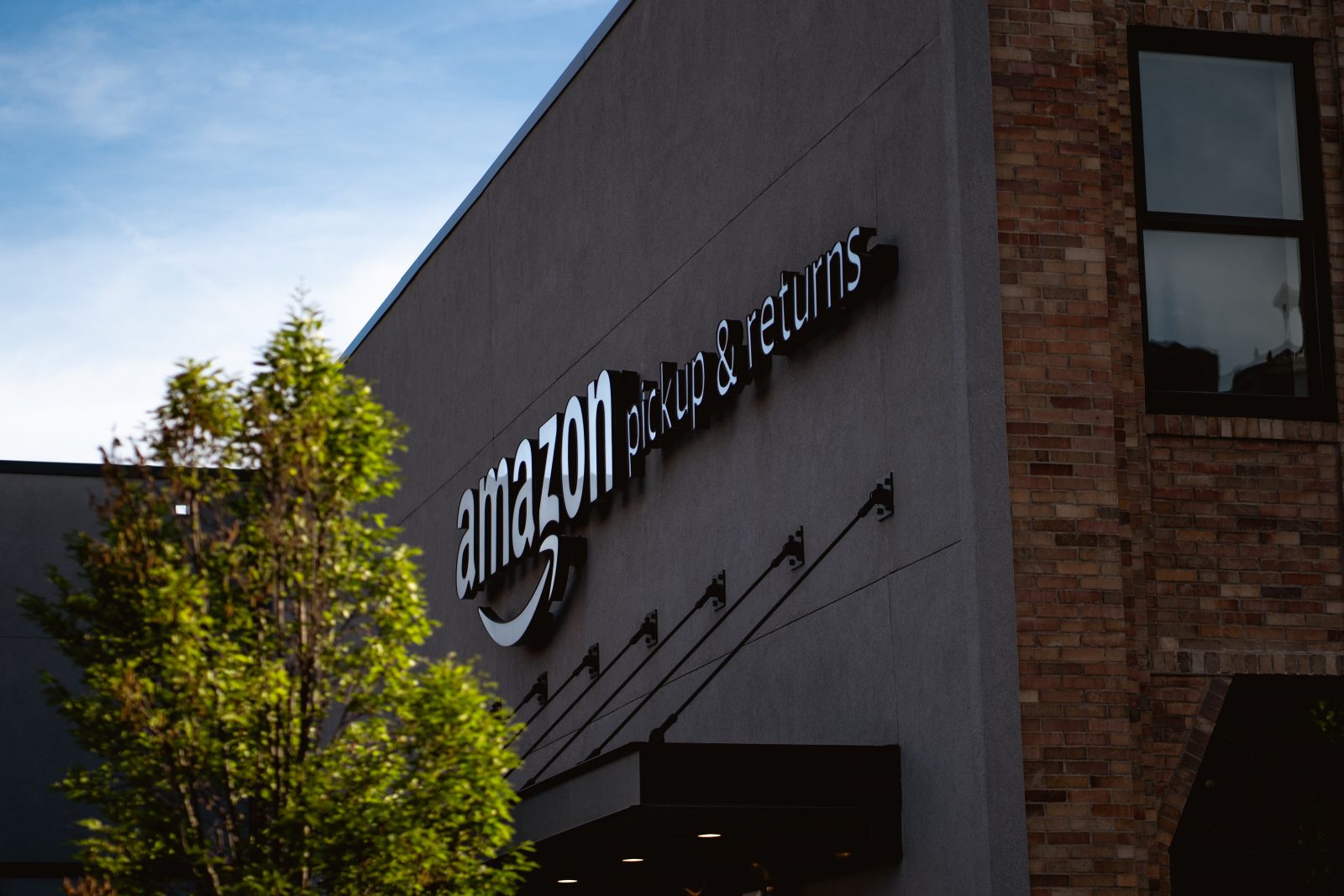
Biden Administration Gives the Green Light to Unionization Efforts in Amazon Warehouses
Technology Brief #40
Biden Administration Gives the Green Light to Unionization Efforts in Amazon Warehouses
By Scout Burchill
March 14, 2021
Summary:
By the end of the month, history may well be made in Bessemer, Alabama as workers at an Amazon warehouse there are currently voting on whether or not to unionize. If successful, it will be the first Amazon warehouse in the United States to be represented by a union and will surely send shockwaves throughout the nation, encouraging other Amazon warehouses to stand firm against the company’s notorious union busting tactics and begin the fight for their own collective bargaining rights.
In a short video shared on Twitter, President Biden delivered an emphatic message of support for the warehouse workers of Bessemer, Alabama. He condemned any attempts by Amazon to intimidate, threaten or coerce employees who attempt to organize and exercise their rights. Doubling down on the Biden Administration’s pro-union agenda, on Tuesday, March 9th, the House of Representatives passed the Protecting the Right to Organize (PRO) Act. It is one of the most transformative labor rights bills to see the light of day in recent memory. The bill’s fate is far from certain as it will face a considerable uphill battle in the Senate by both Republicans and Democrats that are more sympathetic to the interests of big business than those of the multiracial working class.
President Biden’s strong pro-union signaling, along with the PRO Act and the growing momentum of workers organizing for their collective bargaining rights in Amazon warehouses nationwide could set the stage for a long-overdue resurgence in labor rights. The warehouse in Bessemer, Alabama, which employs around 5,800 workers, will be voting by mail on whether or not to unionize through the end of March.
Analysis:
Despite paying substantial lip service to social justice causes – especially in the wake of the Black Lives Matter protests – Amazon’s business model, which has captured record profits during a deadly pandemic and a harrowing economic crisis for the working class, exploits the labor of working class Black and Brown communities. Look no further than their vile treatment and vilification of Staten Island warehouse employee Chris Smalls to see how the company actually treats their Black and working class employees who speak out about mistreatment in the workplace (See Technology Brief #27 for more details on this case and Amazon’s notorious union-busting tactics). On their website, Amazon claims to, “stand in solidarity with the Black community,” and rightfully denounces “the inequitable and brutal treatment of Black and African Americans.” The company also boasts of $10 million donations to organizations, “working to bring about social justice and improve the lives of Black Americans.” If Amazon truly cared about Black lives, they would not spend even more millions of dollars crushing unionization efforts that allow them to exploit the labor and lives of these communities. The example of Bessemer, Alabama presents a powerful case that labor rights are integral to rebuilding our democracy and strengthening the civil, political and economic rights of marginalized communities and the multiracial working class as a whole.
Bessemer, Alabama is an unlikely battleground for such a potentially momentous moment in American history to play out, but there are clues that help make sense of why Bessemer and why now. Alabama is one of the 28 ‘right to work’ states that have laws prohibiting union contracts from requiring non-union members to share in the cost of union representation and bargaining efforts even though these efforts tend to directly benefit them. These laws have proved extremely successful in undercutting the strength of unions in workplaces by causing union membership and funding to deteriorate. Amazon has quickly become the second largest employer in the United States, which was fueled by an unprecedented hiring spree this past summer as the company raked in record profits during the pandemic. As previously covered, the work in these warehouses is often physically demanding and workers are constantly tracked and monitored. This context is important in making sense of what is currently going on in Bessemer.
For one, Amazon has expended significant resources and hired specialists to track, crush and intimidate unionizing efforts in warehouses and Whole Foods Markets (also owned by Amazon) nationwide. There is a good chance that Bessemer, Alabama flew under the radar in their workplace surveillance efforts, as it is a ‘right to work’ state that lacks the aggressive organizing infrastructure and ethos of other states and communities. Furthermore, the Bessemer warehouse is a part of the incredible growth of Amazon during the pandemic. The warehouse is only about a year old, opening right as the pandemic started. According to the Retail, Wholesale and Department Store Union (RWDSU), which is assisting the unionizing efforts at the warehouse, employees reached out to them in the summer, shortly after the warehouse opened. In the midst of Amazon’s sky-rocketing growth and in the heat of the Black Lives Matter protests that rocked the nation, the beginnings of what could be Amazon’s first unionized warehouse in the United States took shape in the Deep South.
Bessemer is a largely working class suburb of Birmingham, Alabama with a population that is over 70% Black or African American. The area owes much of its early prosperity to steel and mining industries, which tended to be heavily unionized and integrated. Union members marched with Martin Luther King Jr. in the 1960’s and unions raised bail money to free demonstrators in Birmingham during the civil rights protests there. Labor rights, or workers’ rights, and civil rights are deeply intertwined and best complement one another through solidarity.
The political climate certainly seems ripe for a change. The results of the unionization vote in Bessemer, Alabama will be declared by the end of March. Whatever happens, the effect of this working class movement has already encouraged other Amazon employees to advocate for themselves. Over 1,000 Amazon employees across the country have since reached out to the RWDSU to learn how to unionize their workplaces. President Biden has so far positioned himself on the right side of this battle and hopefully he will continue to steer the rest of the Democratic Party in the same direction. As tech giants and corporate behemoths like Amazon continue to rake in record profits and serve the interests of their shareholders, the public is primed for a political party to truly represent the economic interests of the multiracial working class. The Democratic Party is being presented with an opportunity to do exactly that.
Engagement Resources:
AFL-CIO
https://actionnetwork.org/forms/pro-act?source=afl cio
The Congress of Essential Workers (Established by Chris Smalls)
Economic Policy Institute Study on Unions
Learn More Sources:
Biden’s message to workers
https://twitter.com/POTUS/status/1366191901196644354
Guardian Reporting on Union Vote in Bessemer
https://www.theguardian.com/technology/2021/feb/23/amazon-bessemer-alabama-union
Amazon’s Statements on Black Lives Matter
https://www.amazon.com/b?ie=UTF8&node=21226351011
Biden’s Pro-Union Campaign
New York Times Reporting on Union Vote in Bessemer
https://www.nytimes.com/2021/03/09/us/politics/amazon-union-alabama-biden.html
Vox news on the passage of the PRO Act in the House
https://www.vox.com/22319838/house-passes-pro-act-unions
Economic Policy Institute on PRO Act
https://www.epi.org/blog/the-pro-act-giving-workers-more-bargaining-power-on-the-job/

Biden Progressive Poverty Policies
Brief #111
Biden Progressive Poverty Policies
Rosalind Gottfried
March 12, 2021
Policy
President Biden’s 1.9 trillion dollar American Rescue Plan contains the most comprehensive anti-poverty program since President Johnson’s War on Poverty in the 1960s. The program will reduce overall poverty by one third and child poverty by one half. Poverty is expected to be reduced to 8.7% for the year compared with 13.7% previously. The effect on Black and Hispanic families will be even greater bringing 38% of Black families and 43% of Hispanic families out of poverty while affecting more than one half of the children in these demographics. This wide ranging program attacks poverty from multiple sources though it contains one time payments and policies which will expire at the end of 2021; nothing in the program extends into 2022 at this time.
The plan includes stimulus checks of $1400 per person, including children under 18, and will go out rapidly. The payments are available to individuals with incomes of less than $80,000, couples with income of less than $160,000, and heads of households with less than $120,000 of income. Though this infusion of cash is a lifeline for struggling families, other plan elements represent changes which could have a greater impact if they are extended beyond the year.
One program, heralded as the most innovative in addressing child poverty, is the extension of the child tax credit to $3600 for children under 6 and $3000 to children under 18. These tax credits can be taken in monthly installments from July through December, the rest to be credited in 2021 tax filings. This will give households up to $300 a month and extends the benefit to 23 million children whose families previously were ineligible due to their incomes being too low to qualify. Some observers consider this the most effective innovation in all of the anti-poverty programs since it will bring extra cash into the household before the end of the tax year.
Childless workers will also get a tax break in the form of an expanded Earned Income tax Credit of $1502, the largest increase since 2009, and increase of almost $1000. This program also drops the age limit to 19, from 25, and eliminates the upper age limit altogether.
The food supplement assistance program will be increased by 15% which would amount to close to $100 a month more for a family of four, and would extend through September. This is an effort to help families like those who reported being food insecure during the last two weeks of February.
State unemployment insurance will be federally subsidized by $300 a week through September 6th, and the first $10,200 of benefits will not be taxed. Federal pandemic assistance programs for freelance, gig workers, and private contractors will be extended. Housing assistance and healthcare aid will also be extended. Federal subsidies for purchasing health insurance under the ACA will be increased.
These programs provide a significant impact for struggling families and are widely supported by American voters. Not a single Republican in either chamber of Congress voted for Biden’s bill.
Analysis
Biden’s American Stimulus Plan represents a more comprehensive effort to address poverty than anything past administrations have done. A reduction in poverty, though it increases the annual budget, can be a cost saving measure in the long run. It is well documented that impoverished children sustain decreases in education, income, and stability as adults creating costs in lost revenue and government expenditures. Addressing poverty is the humane path to promote well-being in the present; America has a high rate of hunger and poverty when compared to other developed nations. Extending these programs beyond 2021 is one way to make a significant long term impact on poverty. Biden and the Democrats want to extend these programs but their battle is an uphill one if the stimulus vote is emblematic of the opposition.
Learn More
https://www.cnn.com/2021/03/11/politics/stimulus-package-poverty-child-tax-credit/index.html
Engagement Resources
https://www.jwj.org/ Jobs with Justice supports workers and increasing their wages and standard of living.

Media Literacy in Schools
Brief # 56 Education Policy
Media Literacy in Schools
By Emily Carty
March 12, 2021
As of 2021, 14 states have passed some sort of legislation related to Media Literacy. The Majority of these states passed the laws in the past few years, signaling the growing interest in monitoring the media’s influence on society through increasing society’s ability to sift through the media’s information. Youth today are engaged in digital media, and therefore media in general, even more than in previous generations. With the political process playing out on a screen, sensationalist or “fake news” plastering social media, and real, extensive studies into the benefits of being media literate — society today is coming to terms with the dangers of media illiteracy.
This topic of teaching Media Literacy in schools is multifaceted. Its moving parts include: changing landscape of digital media; abilities to use and access to technology and other forms of media; the known and unknown influence that misinformation has on the political process and society at-large; and of course, the resources and support to teach media literacies and critical thinking for the modern world in schools.
On media literacy in modern times the New York Times suggests that, “in a digital age, media literacy also includes understanding how websites profit from fictional news, how algorithms and bots work, and how to scrutinize suspicious websites that mimic real news outlets.” Not to mention, it involves teaching critical thinking, research, self-reflection — not all of our news and media will align with our beliefs. The presence of partisan, extremist, and conspiratorial media outlets, as well as mainstream social media platforms, have proven to attract millions of people who wish to read the things they want to believe, and research suggests that “fake news” travels farther and faster than less sensationalist, fact-checked news. This goes to show that unless algorithms and media sources provide all readers with multiple perspectives — and unless those readers are prepared to come into contact with perspectives differing from their own — our media-consuming society will continue to lean toward media aligned with their own perspectives.
While it may be daunting to combat media illiteracy, small, everyday practices and school assignments related to analyzing digital media, thinking critically, and following the source will teach students from a young age the value of asking questions and thinking critically about representation and identity in the media.
For students who spend several hours per day consuming non-print or non-academic media, schools have an opportunity to validate and even curb this form of media consumption through cultivating critical-thinking skills. If schools and states were to implement a curriculum that analyzed Facebook ads or Instagram “news” stories, it would give youth the opportunity to learn valuable skills in a way that is meaningful and relevant — rather than solely analyzing literature or poetry, which is also important.
A growing interest in media literacy over the past decade, and especially the past few years, has produced a handful of important studies analyzing young peoples’ competencies around media. A study sampling over 200 kids nationwide suggests that increased literacy in digital media — civics-related media and digital-engagement practice in this case — correlates with increased political participation. Other studies with larger samples have demonstrated that digital media literacy improves other learning indicators and health outcomes and even simple games and supportive teachers can improve young peoples’ ability to think critically about media.
Media literacy is more than just being able to spot “fake news.” It is about thinking holistically, thinking critically, and being able to recognize how different forms of media work and their impacts. Schools have a duty to prepare kids for adult life, and to be a prepared adult in democratic society we must be able to think critically and advocate for what we believe. To ensure a modernized curriculum that promotes media and digital literacy, we need legislation and common core standards — as well as buy-in and policies on a local level — that particularly address these issues.
Engagement Resources
Media Literacy Now — This group has toolkits for media literacy education implementation, provides templates and examples of legislation around media literacy education, and connects you with tools to start a chapter, reach out to representatives, or learn about the status of Media Literacy Education near you.
Common Sense Media — In addition to providing overviews of popular sites and games for kids, as well as collecting resources for teachers, Common Sense Media has a page dedicated to Advocacy work. Keep up to date on advocacy around media literacy, learn about actions you can take, and reach out to your representatives for applicable actions.
Youth Voices – This platform is used by schools and individual young people to interact with and create media that is relevant and insightful. Check out their posts, resources, best practices, and discussion questions to support youth voices or to encourage a young person you know to participate.
Sources
The New York Times – Should Media Literacy be Required in Schools?
Scientific American – We Should Teach Media Literacy in Elementary School
Education Week – More States Say They’re Teaching Media Literacy
Education Week -Teaching Media Literacy
Center For Media Literacy – Making the Case for Media Literacy in the Classroom
Critical Media Project – Media Literacies
ACT for Youth – Media Literacy
Connected Learning Alliance – Impact of Civic Media Literacy Engagement
Misinformation Review Harvard Kennedy School – Games and Media Literacy
https://asistdl.onlinelibrary.wiley.com/doi/epdf/10.1002/pra2.2017.14505401053
Association for Information Science and Technology – BeNetWise Program and Youth Literacy
Thinking, Skills, and Creativity – Social Media News Consumption and Literacy

Democrats Pass Massive Voting Rights Bill While President Biden Signs Voting Rights Executive Order
Policy Summary: Article One, Section Four, Clause One of the United States Constitution states
“The Times, Places and Manner of holding Elections for Representatives and Senators, shall be prescribed in each State by the Legislature thereof; but the Congress may at any time by Law make or alter such Regulations[.]”
On January 4, 2021, Rep. John P. Sarbanes (D-MD) introduced H.R.1, better known as the “For The People Act of 2021.” The bill is a massive comprehensive bill that seeks to address a number of issues associated with voting and elections. The bill is divided into three sections – Voting, Campaign Finance and Ethics.
The Voting component of the bill addresses Election Access by promoting the availability of online voter registration, automatic voter registration (AVR), standards for provisional voting and standards for voting by mail. The bill also promotes Voter Access by promoting voter friendly policies such as Election Day as a holiday and minimum notification requirements for polling place changes.
The Campaign Finance Section of the bill imposes additional disclosure and disbursement of campaign funds requirements, disclosure of contributions to PACs prior to an election and the proposal of a new small dollar financing framework for federal candidates.
The Ethics Section of H.R.1 seeks to impose a new ethical code for federal judges as well as for the federal legislative and executive branches and a new requirement for the disclosure of tax information for future presidential and vice – presidential candidates.
On March 7, 2021 President Joe Biden signed the Executive Order on Promoting Access to Voting. The Executive Order will direct federal agencies to expand access to voter registration and election information and also direct federal agencies to assist states under the National Voter Registration Act (NVRA). LEARN MORE, LEARN MORE
Policy Analysis: The two separate measures which were approved this week both address voter access and election administration issues that emerged during the 2020 election season but differ widely in their approach. The starting point for voter and election issues begins with Article One, Section Four, Clause One of the U.S. Constitution. That clause places the power for the administration of elections with the various states. That clause is the reason why there has been no uniformity in election practices across the country. As an example, all states have an absentee ballot component in their state laws but the power of the various states illustrates that there can be little differences. There can be a deadline of receipt of an absentee ballot by Election Day in one state and a deadline of seven days after Election Day in another state. These differences may seem inconsequential but in the 2020 chaos of a pandemic and falsehoods about voting these differences were magnified more than they should have been.
With H.R. 1, the Democratic controlled House of Representatives has signaled that expanding voter access and improving election administration will be a priority for the Democratic Party during this session of Congress. While states have been exercising their power to set rules for elections in their respective states by introducing a wave of bills to restrict voting Congress has decided to act by introducing a number of proposals that States should implement along with the enticement of financial assistance and grants for the States from the Federal Government. Some of the key provisions of H.R. 1 are not new but update existing laws such as the National Voter Registration Act of 1993 and the Help America Vote Act of 2002. There are updates that seek to utilize the Internet to help people register to vote and updates to the absentee ballot framework such as prohibiting voters from having to request an absentee ballot every year and allowing them to register for an absentee ballot once. The bill also encourages the use of independent redistricting commissions to prevent gerrymandering and also encourages youths under the age of 18 to register to vote. This bill is big, bold and comprehensive and tackles alot of voting related issues that, even if some provisions do not pass, still require a discussion about whether it should be something included in voting laws that may be passed in the future.
While H.R.1 addresses a significant amount of voting issues and faces a looming roadblock in the evenly split Senate, President Joe Biden’s executive order of March 7, 2021 tries to address what can be done now. President Biden has directed all federal agencies to report to him on what they can do to help expand voting rights. Additionally, he has directed all federal agencies to assist states under the National Voter Registration Act of 1993 (NVRA). This is significant because federal agencies that provide services to minority and underserved communities in a state can now provide their facilities to states to act as a voter registration center. People now don’t have to make long journeys to state Department of Motor Vehicles (DMV) or local voting offices. A federal agency providing unrelated services can now, with the approval of a state, offer voter registration services. This may sound like something that should have already been in place but for whatever the reason that had not been the case. With this executive order, President Biden has potentially expanded the options citizens, specifically underserved communities, have for where they can register to vote. This is an option that can be implemented relatively quickly unlike H.R.1 which will likely take months before it’s provisions are sorted out not to mention an upcoming difficult vote in the Senate.
It’s only been two months but the Democrats in Congress and President Biden have hit the ground running in tackling the voting issues that need to be addressed after the chaotic 2020 election season. LEARN MORE, LEARN MORE, LEARN MORE
Engagement Resources:
Brennan Center for Justice – non – profit group advocating for voting rights.
American Civil Liberties Union (ACLU) – non – profit group’s webpage on voting rights.
This brief was compiled by Rod Maggay. If you have comments or want to add the name of your organization to this brief, please contact Rod@USResistnews.org.

The House Passes a Bill to Help Small Farmers
Brief # 2 Agricultural Policy
The House Passes a Bill to Help Small Farmers
Katherine Cart
March 11, 2021
POLICY
The late spring months of 2020 saw coolers and freezers emptied of steaks, chicken thighs, pork chop. COVID-19 outbreaks amongst the workers of large meat processing plants slashed profits for beef, pork and poultry slaughterhouses. The size of meat retailers tends towards the massive. Three corporations control roughly 90% of the poultry market and four control 85% of the beef market. During that eerie period of empty supermarket freezers and vacant transport trucks, consumers turned to e-commerce for their meat shopping. This abrupt surge of buying power was aimed at a wall of red tape: many small meat and poultry processors are unable to sell beyond their own state lines. Consumers came up empty-handed. Retailers missed out on sales.
The DIRECT (Direct Interstate Exemption for Certain Transactions) Act, seeks to amend selling restrictions and could be a boon for small meat and poultry producers. Currently, twenty-seven states adhere to state-regulated processing inspections; many of their processors cannot sell out of state. The act would allow for “meat inspected by the State to be sold online and across state lines, opening up new markets for meat producers and processors,” says Congressman Cuellar
The act does not loosen any inspection guidelines or allow for lower product quality; processors producing meat and poultry for human consumption already are appraised by federally-approved guidelines. Products would still be traceable from retailer to consumer in the event of a wide recall. While some small processors already sell interstate through the Cooperative Interstate Shipment programs, processors outside of CIS programs that are inspected by Meat and Poultry Inspection programs approved by the Food Safety Inspection Service cannot sell out of state. The means of interstate sales are already in place but are limited by current legislation. The DIRECT Act would allow the continuance of CIS sales while broadening the scope of the consumer and the market of the small retailer.
ANALYSIS
Introduced by Representatives Dusty Johnson (R-SD) and Henry Cuellar (D-TX) in late February 2021, the DIRECT Act has bipartisan support. However, similar bills have been introduced before: the New Markets for State-Inspected Meat and Poultry Act of 2007 died without public hearing. Some of the act’s language was evident in the 2008 Farm Bill, founding the option for state-inspected meat and poultry plants to ship across state lines via the CIS program. In 2018, seeking broader selling freedom for processors of less than fifty employees, the New Markets for State-Inspected Meat and Poultry Act was introduced, but ultimately did not go to vote. The DIRECT Act has been submitted to the Subcommittee on Livestock and Foreign Agriculture. Though its future may yet be uncertain, perhaps the trials and trends of the past year will play out the DIRECT Act in a stronger light. Consumer reports show buyers searching out small retailers online. Small meat retailers with state-line road blocks between production and market, like the cattle ranchers of South Dakota, have amplified support of previous years.
There is some push-back against the DIRECT Act. The North American Meat Institute (NAMI) maintains that as just seven states since 2011 have adopted the CIS program, the roadblock to interstate-selling is of the state, not federal, level. However, the CIS program is restricted for use by meat processors with fewer than 25 employees. Furthermore, the CIS application is long and – though the processors applying already adhere to FSIS-approved guidelines – uncertain to yield approval. Individual livestock and poultry producers cannot apply, but can sell their product across state lines if they choose to process through a CIS-inspected meat processor. State inspection programs are required by law to abide by standards “at least equal to” those of federal-inspected plants. These are the same standards that foreign meat and poultry processors selling to the U.S. are required to have.
The COVID-19 pandemic has underlined the need to strengthen the relationship between small retailers and consumers across all markets. Though the language of the DIRECT Act is concise, the implications are many. Erik Jennings, President of the South Dakota Cattlemen’s Association, noted that “through the COVID-19 pandemic we have experienced a trend for consumers wanting to source beef directly from ranchers.” Current restrictions on interstate sales prevented consumers from freely choosing meat products. Instead, most consumers are presented with what their nearby grocers have displayed – products most likely sourced from meat conglomerates like Tyson, Cargill, JBS USA or SYSCO.
The National Cattlemen’s Beef Association began advocating early last year for the allowance of interstate e-commerce, responding, says NCBA’s Todd Wilkinson to an “urgent need for our industry to expand opportunities for state-inspected meatpackers.” The DIRECT Act will provide consumers with the opportunity to voice both dissent and support for individual processors through e-commerce and support retailers across a broader spectrum of industry practices. “There is no reason a steak should be more difficult to order online than any other items on your grocery list,” says Patrick Robinette of the U.S. Cattleman’s Association.
Currently, twenty-three states operate under USDA inspection. The processors in these states are able to sell across state lines. Large meat producers have the financial capital to choose in which state they ranch, thus opening wide their market. Smaller ranchers typically have less freedom to move their place of business to a state operating under USDA inspection. Wealth begets wealth.
The act is not alone in its focus on US meat production policy. The Packers and Stockyards act of 1921 has received recent attention; the recently introduced Justice for Black Farmers Act would reform the language of the act to better protect workers, ranchers and consumers of meat mega-corporations. Larger, industrial meat-processing employees often suffer deleterious conditions, a fact painfully highlighted by COVID-19 outbreaks in unsafe, cramped production environments. While the DIRECT Act does not provide direct reform of large meat and poultry processors, it does allow for the growth and diversification of smaller processors, the employees of which generally report higher job satisfaction.
The DIRECT Act is of benefit to consumers and small retailers alike, and though the allowance of consumers to choose from whom they purchase meat and poultry products could detract some profit from big processors already selling interstate, the immediate difference is nominal. President of the South Dakota Pork Producers council Shane Odegaard says that, “any way we can increase sales, or make our products more readily available to consumers is a win-win situation for farmers, small businesses, and our consumers.”
Learn More:
Niche Meat Processor Assistance Network
While NMP is an excellent resource for small meat and poultry processors, this Oregon State University extension also provides the consumer an in-depth look at what it takes to maintain the American meat market. https://www.nichemeatprocessing.org/
Get Free Range
Beyond providing educational content on small, sustainable animal products, GFR is an interactive tool that allows consumers to map-search for small meat and poultry processors in their area, supplying contact info, connecting consumers to producers and eliminating the need for corporate middle-man contracts. https://www.getfreerange.info/
Sources:
“”At Least Equal To” Data System Guidance for State Cooperative Meat and Poultry Inspection (MPI) Programs Electing Not to Use Public Health Information System (PHIS)” United States Department of Agriculture (January, 2015) Retrieved 9 March from: https://www.fsis.usda.gov/guidelines/2015-0003
Direct Interstate Retail Exemption for Certain Transactions Act. H.R. 547 117th Cong. (2021) https://www.congress.gov/bill/117th-congress/house-bill/547/text?q=%7B%22search%22%3A%5B%22meat%22%5D%7D&r=4&s=10
Nemetz, Russel. “Bi-Partisan DIRECT Act Introduced to Help Local Meat Processors.” (2 February, 2021) Retrieved 5 March from: https://www.aginfo.net/report/48580/Land-Livestock-Report/Bi-Partisan-DIRECT-Act-Introduced-to-Help-Local-Meat-Processors#:~:text=The%20DIRECT%20Act%20will%3A,of%20beef%2C%20100%20lbs.&text=of%20lamb
New Markets for State-Inspected Meat and Poultry Act of 2007. S. 1150 110th Cong. (2007) https://www.congress.gov/bill/110th-congress/senate-bill/1150/text?q=%7B%22search%22%3A%5B%22%5C%22New+Markets+for+State-Inspected+Meat+and+Poultry+Act%5C%22%22%5D%7D&r=6&s=9
“Open Markets and Allies Demand Antitrust Enforcement in Meat Industry to Protect Workers, Farmers.” (1 May, 2020) Retrieved 5 March from: https://www.openmarketsinstitute.org/publications/open-markets-allies-demand-antitrust-enforcement-meat-industry-protect-workers-farmers
Schwab, Andy. “DIRECT Act Could Help Sell State Inspected Meat Through e-Commerce.” Northern Ag Network (28 January, 2021) Retrieved 5 March from: https://www.northernag.net/direct-act-could-help-sell-state-inspected-meat-through-e-commerce/

Restrictive State Voting Bills Have Multiplied In Aftermath of 2020 Election
Policy Summary: In the aftermath of the 2020 election state legislatures from around the country have responded with a number of bills that relate to the ability to cast a ballot and other activities associated with voting, such as how ballots are returned and how voter rolls are updated. A significant number of these state bills raise red flags because they appear to be in response to former President Donald Trump’s assertion that the 2020 election was rife with fraud and were not as secure as they could have been. Despite statements from election officials, law enforcement and intelligence agencies that the 2020 elections were in fact secure and that no evidence of fraud was uncovered, state officials have still followed Trump’s lead and introduced a number of bills that purport to bring stability and security to future elections in their state.
The two most common ways that election improvements have been suggested are with restrictions on mail – in voting and in the registration and purge of voters from the state voter rolls. According to the Brennan Center for Justice one hundred sixty five bills have been filed in 2021 that restrict voting access and more than half of these bills deal with mail – in voting. And when it comes to adding and deleting voters to the state voting rolls, twelve states have introduced legislation that would expand the practice of how a voter can be removed from the state voter rolls. LEARN MORE
Policy Analysis: Despite the fact that many of these state bills are stated to help provide confidence and integrity in the conduct of elections, the bills have come under fire as being nothing more than voter suppression efforts by the Republican Party. Nearly all of the restrictive bills identified by the Brennan Center of Justice were filed by Republican state legislators.
An examination of the state bills associated with mail – in and absentee voting show a determined effort by states to make it much more difficult to vote in this manner. According to the Pew Research Center mail – in voting accounted for more than 50% of all ballots cast during the 2020 primary season which exceeded by half the totals from the 2016 and 2018 general election. This can likely be attributed to the COVID-19 pandemic. Yet states are still seeking to restrict who is eligible to vote by mail by eliminating the “no – excuse” rule and even prohibiting who can assist a voter. Bills in Arizona have even gone so far as to require absentee ballots to be returned in person and to have their ballots notarized. These bills in Arizona and other states that introduce technical requirements are questionable because they do not address President Trump’s assertion that the 2020 election was riddled with fraud. With no evidence that there had been any fraudulent activity during the 2020 election these bills do nothing to address any structural flaws in the mail – in voting system in each state. What is being proposed are simply more barriers to casting a mail – ballot without any justification as to why these new barriers are needed. Eliminating “no – excuse” mail – in voting won’t stop a person from simply going to their polling booth as a last resort. And requiring absentee ballots to be returned in person would undermine the purpose of the absentee ballot in the first place – that people cannot always be in their precinct on election day, such as military and diplomatic personnel. The bills imposing new restrictions and limitations on absentee ballots and mail – in voting have no connection to Trump’s unfounded claims of fraud and will only serve to create more barriers to voting in each state.
The same problems plague the bills targeted at voter registration activities and purges of the voter rolls. Their connection to Trump’s claims of fraud are not rooted in fact and can therefore be considered unnecessary. Again, with no evidence of voter fraud or that an ineligible voter tried to cast a ballot, eliminating avenues to register to vote – such as the elimination of automatic voter registration bills in Arizona and New Jersey and the elimination of election day voter registration bills in five states – seem to address a problem that is non – existent. There are no instances of ineligible voters rushing to register to vote.
Instead, states like Georgia are introducing bills that seem to target minorities to prevent them from voting at all. And, in other cases, like in New Hampshire’s SB 31, procedures to purge voter rolls that have already been found to be in violation of the National Voter Registration Act are still being re – introduced. These unfocused and in many cases unnecessary bills only seem to be introduced to change the rules and give an advantage to Republican candidates. That may seem to be an unfounded accusation but a Republican election chair board was overheard remarking election changes are needed to give Republicans “a shot at winning.” If the only purpose is to give a political party an advantage then the bills being introduced in states should be given extra scrutiny to determine that they are in the best interest of the electorate and in having a safe and secure election and not introduced simply for a partisan advantage. LEARN MORE, LEARN MORE
Engagement Resources:
- Brennan Center for Justice – non – profit group advocating for voting rights.
- American Civil Liberties Union (ACLU) – non – profit group’s webpage on voting rights.
This brief was compiled by Rod Maggay. If you have comments or want to add the name of your organization to this brief, please contact Rod@USResistnews.org.

What is the Biden administration doing in Afghanistan?
Brief # 103
Foreign Policy
What is the Biden administration doing in Afghanistan?
By Will Solomon
Policy Summary:
The War in Afghanistan is the longest running war in US history; this October will mark the 20th anniversary of the US-led invasion. Despite limited successes, the war has broadly been a failure. The Taliban remain active and in control of much of Afghanistan, and likely will return to power in some form in the event of a US withdrawal. The state is deeply unstable, corruption is endemic, and new terror groups—including the Islamic State—remain active. The strategic objectives of the two-decade long war have not been achieved, and the US remains mired in a sort of stalemate.
While other issues overshadowed the 2020 election, the Biden administration came into office with this reality fully clear—and pledged, during the campaign, to end the war. Indeed, Biden inherited from his predecessor an agreement with the Taliban to withdraw American troops from Afghanistan by May of this year. However, it has been unclear whether Biden intends to stick to this timetable, and many in his orbit are opposed to the agreement.
All this begs the question—if the United States is mired in an unwinnable war, and American soldiers’ presence is effectively the sole guarantor of the current regime not collapsing—what is this country doing in Afghanistan?
Analysis:
The thorniness of the question has deep parallels in US history—Vietnam, and Iraq, to name the obvious. As with Iraq in particular, the US also has a long history of meddling in Afghanistan, including supplying and promoting the forces it now seeks to defeat.
The obvious reality now is that the US cannot “win” this war in any meaningful way. It is also true, as critics of a US withdrawal point out, that without US military support the current Afghan government may fall to the Taliban, meaning the country would be a similar position to where it was on the eve of the US invasion. These critics argue that we should not sacrifice the “progress” that has been made in the intervening two decades—in women’s rights, representative democracy, etc.
So what exactly should we do?
While improvements in some aspects of the social situation in Afghanistan are real, they have come at the price of perpetual instability, an unfathomable civilian death toll—including heinous war crimes, committed by and with support from the United States, deeply rooted corruption, and an expanding drug trade. As was revealed in detail in the Afghanistan Papers, the US government has systematically lied about the course and status of the war.
At this point, it’s unclear what the United States can meaningfully do about the war, outside of withdrawing in an organized fashion. This is especially true given that the divide is increasingly between those who insist on a withdrawal, and those who would be content with a US military presence in that country in perpetuity.
This said, a recent article in Foreign Policy suggests that Biden may be attempting to facilitate a sort of power-sharing agreement between the current Afghan government and the Taliban. This suggests one sort of “compromise” to the current situation. While it’s frankly difficult to see this holding up long-term, without US troops in the country, a more organized withdrawal than the sort undertaken by the Trump administration—in Syria, for instance—might help lessen the impact of the United States leaving.
All this said, it must be made clear: it is long past time for the United States to exit this war. The US presence in Afghanistan is doing more harm than good, both in the Greater Middle East, and in this country. Ideally withdrawal will be completed in an organized fashion and obviously, the US should support all diplomatic efforts, including working with NATO and the UN, to help stabilize the country upon its withdrawal and end violence. But the US remaining in Afghanistan adds fuel to the fire, and it is time to leave.
Engagement Resources:
https://quincyinst.org — “The Quincy Institute is an action-oriented think tank that will lay the foundation for a new foreign policy centered on diplomatic engagement and military restraint. The current moment presents a once-in-a-generation opportunity to bring together like-minded progressives and conservatives and set U.S. foreign policy on a sensible and humane footing.”
https://www.democracynow.org — “Democracy Now! produces a daily, global, independent news hour hosted by award-winning journalists Amy Goodman and Juan González. Our reporting includes breaking daily news headlines and in-depth interviews with people on the front lines of the world’s most pressing issues.”
https://aboutfaceveterans.org — “We are Post-9/11 service members and veterans organizing to end a foreign policy of permanent war and the use of military weapons, tactics, and values in communities across the country.”

Who are the Proud Boys?
Brief # 9 Social Justice
Who are the Proud Boys?
By Erika Shannon
March 8, 2021
During the Presidency of Donald Trump, many events unfolded that left the American people feeling uneasy. One of these events was the January 6, 2021 Capitol riots that were planned by white supremacists and Trump supporters. While the end of his Presidency was near, Donald Trump sat idly by and allowed his supporters to get carried away with their actions. This is synonymous with his attitude for much of his time in office, where we saw the emergence of white supremacist groups at an alarming rate. Our then-President had the chance to condemn them, and chose not to. For that reason, many of these organizations have gained a larger following than they ever had before. One of these white supremacist organizations, the Proud Boys, was actually formed as Donald Trump came into power. Since then, the Proud Boys have been involved in countless acts of violence and harassment here in the U.S.
Gavin McInnes launched the Proud Boys in 2016; McInnes was a far-right political commentator originally from Canada, who has become more of a political activist in recent years. His violent nature is reflected in the actions and principles of the Proud Boys, who will resort to violence if they feel it is necessary. According to their archived Proud Boys USA website, their basic tenet is that they are “Western chauvinists who refuse to apologize for creating the modern world” and they long for the days when “girls were girls and boys were boys.” The group has four degrees of membership within it, and in order to become a first-degree, you must publically and proudly declare your Western chauvinism. To become a second-degree member of the Proud Boys, you must endure a beating until you can yell out the names of five breakfast cereals. This is to demonstrate your endurance and control. The third-degree of membership requires a “Proud Boy” tattoo. A fourth-degree member is one who has taken part in “engaging in a major conflict for the cause.”
Their archived website also states that while they do not encourage being arrested, those who are will immediately become a fourth-degree. A rule for members to follow is that they may not watch pornography or masturbate more than once a month, in order to show sexual restraint and be able to resist women.
Over the past five years of being in existence, the Proud Boys have participated in protests and rallies, while attempting to spread false information and instigate conflict with left-wing groups. A “Unite the Right” rally was held in August 2017, where an assault took place, and in October 2018, members of the Proud Boys charged protesters at a speech being given by McInnes. In January 2019, a member of the Proud Boys threatened the Democratic mayor of Portland, Oregon, saying that he was “coming for him.” There were also reports in 2019 that Proud Boys were going to the homes of their critics and menacing them to try and show that there were “consequences” to their actions.
Throughout 2020, the Proud Boys showed up at Black Lives Matters protests to heckle them and incite violence. They often showed up armed and ready to use their weapons; some members were arrested for things like pointing firearms at others and unlawful use of a weapon. The Proud Boys also were accused of spreading conspiracy theories and misinformation about COVID-19 on Twitter, Facebook, and Telegram. Donald Trump even acknowledged the Proud Boys during a presidential debate, telling them to “stand back and stand by,” regarding ANTIFA. Trump repeatedly refused to condemn the actions and values of the Proud Boys, which ultimately contributed to their role in the Capitol riots on January 6th. Not only were members of the Proud Boys present for the riots, some were also arrested and federally charged with their actions and involvement.
It is a sad day when a country moves backwards, and by allowing white supremacist groups such as the Proud Boys to rise and flourish, Donald Trump certainly contributed to this problem. By the end of his Presidency, Proud Boys membership was in the thousands
The Proud Boys exist to further divide our nation, and to foster hate against the left and anything the left stands for. This includes civil rights issues, LGBTQ+ issues, social justice issues, and women’s rights. The Proud Boys have been designated as a terrorist organization for good reason: their violent, racist ideology is a threat to American democracy and civility. While we should be focusing on rebuilding America to be a more inclusive place for all, groups like the Proud Boys only wish to further the place of white men in society. In order to truly move forward and rebuild America, an emphasis must be placed on silencing these white supremacist groups, like the Proud Boys, and making sure that they are not able to expand.
Engagement Resources
- For information on other hate groups or to report a hate crime, visit the Southern Poverty Law Center.
- To find out how the FBI investigates hate crimes committed by these groups, click here.

The Equality Act Seeks To Expand LGBQT Discrimination Protections
Policy Summary: On February 18, 2021 Rep. David Cicilline (D-RI) introduced H.R. 5 in the House of Representatives. The bill is popularly known as the Equality Act and had been introduced in various forms in previous sessions of Congress. The bill seeks to “prohibit discrimination on the basis of sex, gender identity and sexual orientation, and other purposes.” The text of the bill uniquely specifies and amends the Civil Rights Act of 1964 to state that discrimination on the basis of gender identity and sexual orientation are protected categories under that law. In addition to adding these new protected categories to that landmark law the bill also expands coverage for discrimination on the basis of sexual orientation and gender identity to the Equal Credit Opportunity Act, the Jury Selection and Services Act housing and education laws and a number of other federally funded programs. And finally, the bill states specifically that the Religious Freedom Restoration Act (RFRA) of 1993 cannot be used to challenge a provision in the Act and cannot be used as a defense to a claim of unlawful discrimination under the Act.
On February 25, 2021, the House of Representatives voted to pass the bill by a 224 – 206 vote. The bill was then sent to the Senate for a vote in the coming weeks. LEARN MORE
Policy Analysis: The Equality Act that was introduced in 2021 is one of the legislative priorities that President Biden promised during his presidential campaign. While the stated purpose of the bill is straightforward in that it seeks to “prohibit discrimination on the basis of sex, gender identity and sexual orientation” a closer examination of the text of the bill reveals that the bill is not as open – ended as it may seem on the surface. The bill directly targets existing federal laws that may be vulnerable to unexpected interpretations and seeks to get out in front of these gaps in the law in order to provide more clarity on the application of the law in the future.
By directly including gender identity and sexual orientation in the Equality Act, the bill is directly responding to the Bostock v. Clayton County Supreme Court employment discrimination case that was decided last year. That case provided protections to lesbian, gay and transgender persons. Nowhere were gender identity and sexual orientation included in the case. So, in order to prevent those categories of persons being left out, they were specifically mentioned in the Equality Act in order that they not be left out and vulnerable to discrimination claims in a future interpretation of the case that might omit them. The law is so often open to opposing interpretations and this bill clarifies what a future interpretation must include.
While mandating that gender identity and sexual orientation must be included in discrimination claims under the Civil Rights Act of 1964 the bill then expands those protections into a number of areas that were not previously covered. The protections against discrimination on those bases now extend into financial credit, service on juries and “public accommodations” like retail shops and stadiums. This bill seeks more comprehensive coverage against discrimination on the basis of gender identity and sexual orientation and the fact that this bill is national in scope will provide that since twenty – seven (27) states do not currently provide LBGQT anti – discrimination laws.
Finally, the bill anticipates the counter argument from religious supporters that protections against discrimination on the basis of gender identity and sexual orientation violates religious liberty by specifically eliminating the use of the Religious Freedom and Restoration Act (RFRA) of 1993 as a basis to challenge the Act and to use it as a defense when accused of discrimination. That law states that the federal government cannot substantially burden a person’s exercise of religion but the law has come under fire recently. Supporters of religious liberty often cite that law as a way to avoid complying with laws they disagree with, such as laws in support of LGBQT rights. The RFRA did not anticipate this recent situation. The Equality Act handles this by stating specifically that the RFRA can no longer be used as a defense in these kinds of discrimination cases.
There likely is a fight brewing in the Senate (and maybe in the courts down the road) but for now the Equality Act does what it can to include gender identity and sexual orientation as protected categories, expand those protected categories in various areas of social life and across the nation where states have not provided protections for the LGBQT community and in declaring that religious liberty cannot be used to deprive LGBQT persons of basic civil rights. It is now up to the Senate to vote in support of the Equality Act. LEARN MORE, LEARN MORE, LEARN MORE
Engagement Resources:
Human Rights Campaign – non – profit group advocating for Equality For All.
American Civil Liberties Union (ACLU) – non – profit group’s webpage on LGBQT non – discrimination protections.
This brief was compiled by Rod Maggay. If you have comments or want to add the name of your organization to this brief, please contact Rod@USResistnews.org.