

JOBS POLICIES, ANALYSIS, AND RESOURCES
Latest Jobs Posts
An Analysis of the California – Texas Re-Districting Fight (Civil Rights Brief #249)
After the State of Texas’ approval of a re – drawn state congressional map that would be used in 2026 to give them five more likely Republican districts, the State of California decided to respond.
Should Transgender Athletes be Allowed to Compete? (Foreign Policy Brief #225)
The goal for the IOC now is to create a blanket gender testing policy that would specifically for the 2028 Olympics in Los Angeles. President Trump has been one of the most ardent supporters of policies limiting the participating, or erasing the participation, of transgender athletes in sports at all levels; and has even called for more testing by the IOC ahead of the 2028 Games. President Trump has also made mention of Title IX , a federal law that prohibits sex-based discrimination, as his means of ‘protecting women in women’s sports’ while excluding and perhaps discriminating against transgender athletes. Meanwhile, Democratic lawmakers around the country have fought to create more inclusionary policies. California, currently, allows transgender athletes to participate in sports through the high school level; and their policy is based on gender identity rather than genetics. The Olympics in LA in 2028 are going to be a contentious one to watch on this issue as the stage is being set for inclusive California to be hosting the Olympics who may very well end the inclusionary practices that have been in place since 2000.
Is Trump trying to dig up the ocean? And what does the rest of the world think? “Seabed Mining” (Environment Policy Brief #185)
In keeping with the administration’s bull-in-a-China-shop approach to the environment, foreign policy, tariffs, and just about every other domestic and international issue, the Trump team now wants to dig up the bottom of the sea.
How low will he go? President Trump’s penchant for debasing himself undermines U.S. Credibility (Elections & Politics Brief #201)
If you were new to President Trump’s Oval Office press conferences with world leaders, you might have found his meeting with Saudi Arabia’s Crown Prince Mohammed bin Salman (MBS) on Tuesday, November 18, to be an astonishingly low moment for a U.S President. As though determined to debase himself and weaken U.S. credibility, Trump dismissed U.S. intelligence findings linking the crown prince to the murder of journalist Jamal Khashoggi, while savagely attacking the reporter who asked about it. And, per usual, Trump went out of his way to denigrate past presidents and brag about himself ad nauseum.
The Need for a US Technology Policy
It is a technological age, but America lacks the semblance of a policy to regulate our use of technology. We have so far failed to develop policies to help assure us that our economic and social well-being is not being picked apart by our use of unregulated technological platforms.
A Congressional Bill to Improve the Nation’s Water Infrastructure (Environment Policy Brief #185)
The official Environmental Protection Agency (EPA) report states that about 240,000 water main breaks occur each year in the United States. This highlights the urgent state of the nation’s water infrastructure. Rep. Salud Carbajal, D-Calif., introduced the Water Infrastructure Resilience and Sustainability Act (H.R. 5566) on Sept. 26, 2025. Rep. Carbajal, introduced the bill to modernize the aging water systems across the nation.The bill seeks to amend the Federal Water Pollution Control Act and the Safe Drinking Water Act.
The Challenges to Federal Vaccination Policy (Health & Gender Policy Brief #182)
The Protecting Free Vaccines Act (H.R. 5448) aims to preserve stable vaccine coverage by freezing ACIP recommendations as of 2024 and requiring all major insurance programs to continue covering those vaccines without cost-sharing until 2030. H.R. 5448 was introduced on Sept. 18, 2025, by Rep. Frank Pallone D-NJ-6. Since this is a Democrat-sponsored bill in a Republican-controlled House, its chances of passing are currently low unless bipartisan support grows.
Rideshare Drivers Organize As Earnings Decline (Technology Policy Brief #160)
When Uber and Lyft came on the scene, taxi drivers protested vociferously. Now it’s the rideshare drivers protesting, as their earnings go down and the threat of autonomous vehicles looms. Organizing by rideshare drivers has had some success, but how effective hard-won changes will be remains to be seen. Workers scored an apparent victory in securing collective bargaining rights in California. But a similar law in Massachusetts has yet to yield results and the California law was a compromise that included enormous giveaways to the companies.
Arkansas (2026 Democratic Primary Preview Series)
Arkansas is approaching an election season where five of its six congressional representatives are up for election. The current delegation consists of Republican Senators John Boozman and Tom Cotton, and Republican House Representatives Rick Crawford, French Hill, Steve Womack, and Bruce Westerman for districts 1-4 respectively. The only one not up for election is Boozman.

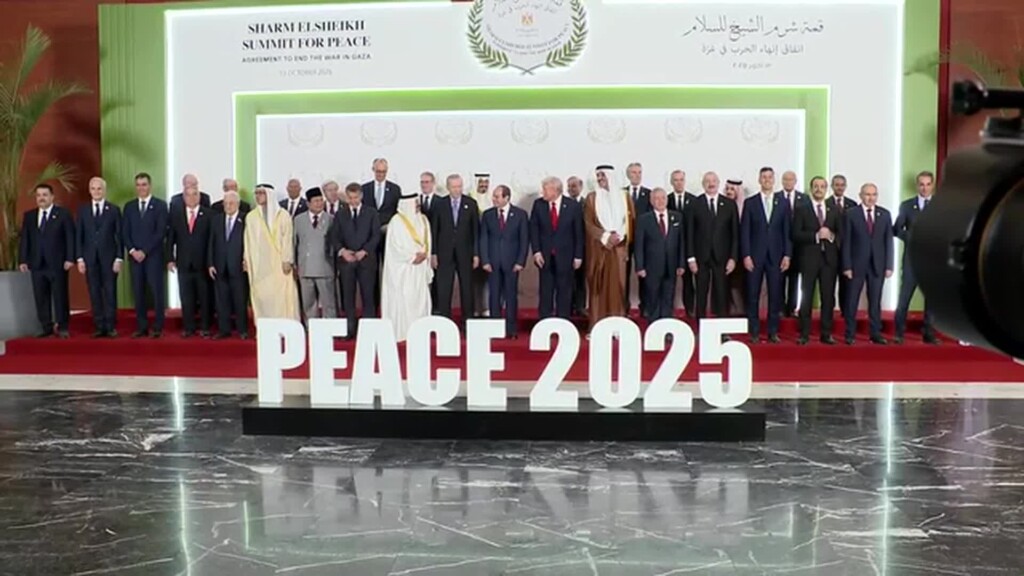
Deconstructing “Peace”: Trump’s Settled Conflicts and the Ceasefire Illusion (Foreign Policy Brief #222)
Foreign Policy Brief #222 | Inijah Quadri | November 22, 2025
Policy Issue Summary
In political discourse, the language of peacemaking is often employed for its potent rhetorical value, yet the terms used can obscure the reality on the ground. A critical distinction must be drawn between a ceasefire and a peace settlement. A ceasefire, or an armistice, is a military and temporal arrangement. It is an agreement to stop active hostilities, to put down the weapons, often temporarily and along existing lines of control. It is a pause. It does not resolve the underlying political, economic, or social grievances that ignited the conflict. A peace settlement, by contrast, is a comprehensive political and legal resolution. It is a formal treaty or agreement that ends the state of war by addressing the root causes—such as sovereignty, borders, justice, and security guarantees—and attempts to build a framework for a new, sustainable relationship.
This distinction is central to evaluating the foreign policy legacy of President Donald Trump, who has built a brand on being a “dealmaker” who “settles” intractable conflicts. These claims demand rigorous scrutiny, particularly as they are applied to new and ongoing wars. An examination of the key conflicts he cites—from the Middle East and Afghanistan to his current overtures on Ukraine—reveals a consistent pattern of conflating temporary de-escalations, transactional realignments, or a victor’s imposition with the arduous, multi-generational work of genuine peace. The core policy issue is whether these interventions are substantive resolutions or dangerous illusions that entrench the very power imbalances that fuel conflict.
Analysis
A critical analysis of these “settled” wars shows that none have resulted in a genuine peace settlement, and the model itself is deeply flawed. The 2020 Doha Agreement with the Talibanin Afghanistan is a primary exhibit. This was never a peace treaty for the Afghan people; it was a withdrawal agreement for the United States. The accord explicitly bypassed the sitting Afghan government, and as of late 2025, the war has not ended. It has merely transformed. The nation is gripped by a humanitarian and economic catastrophe, women’s and girls’ rights have been severely curtailed (including bans on secondary and university education, sweeping restrictions on most employment, and limits on movement without a male guardian—with only narrow exceptions), and the country faces renewed armed conflict from groups like ISIS-Khorasan. This is not peace; it is abandonment.
The celebrated Abraham Accords followed the same transactional logic. These accords were a significant diplomatic realignment, announcing normalization with four Arab states (the UAE, Bahrain, Morocco, and Sudan), though Sudan’s agreement was never ratified and full ties weren’t established. However, this was a deal built on avoiding the central conflict: the Israeli occupation of Palestinian territories. By bypassing the question of Palestinian self-determination, the accords did not “settle” the Middle East. The catastrophic Gaza war of 2023-2025 and the new, fragile “Gaza accord” of October 2025 are testaments to this failure. The new accord is a ceasefire, not a settlement. It has halted the most intense bombing, but it does not address the occupation, the blockade, or the right of return. It has merely put a lid on a boiling pot.
Similarly, the diplomatic overtures with North Korea were pure spectacle. The summits produced photo-ops but no tangible denuclearization. Today, in late 2025, North Korea is more brazen than ever, testing advanced solid-fuel ICBMs and hypersonic missiles, and has declared its nuclear status “irreversible.” The “peace” was purely rhetorical. The same is true in the Balkans, where a “Serbia-Kosovo” economic deal did nothing to resolve the core sovereignty dispute, which continues to flare up with Serbian-backed hybrid warfare and requires a NATO peacekeeping presence.
Likewise, the Thailand-Cambodia border dispute remains unsettled. Although large-scale military clashes over the Preah Vihear Temple (Khao Phra Wihan) have subsided since the major confrontations in 2008 and 2011, the core sovereignty issue has never been fully settled. Despite President Trump’s declaration of peace following his involvement in an October 2025 accord, tensions have since reignited, with both nations increasing their military presence in contested areas. This situation underscores the critical difference between a temporary ceasefire and a durable political resolution.
Now, the elephant in the room: the Russia-Ukraine war. President Trump, who recently admitted his campaign-trail “24 hours” settlement claim was “a little bit sarcastic,” is now actively attempting to broker a deal. This situation provides the clearest possible illustration of the ceasefire-versus-peace-settlement-fallacy. The administration’s plan, as reported, is not a peace settlement. It is an attempt to force a ceasefire by pressuring Ukraine to halt its fightand, according to multiple sources, to surrender its claim to the Donbas and Crimea. This is not diplomacy; it is the imposition of a victor’s terms on the victim. A “peace” that rewards Russian imperial aggression by allowing it to keep the territory it conquered through war and occupation is not a settlement. It is a violation of international law and a betrayal of Ukrainian sovereignty. It would be a temporary, amoral truce that guarantees future conflict by validating the principle that might makes right.
Policymakers must critically distinguish between a temporary ceasefire and a genuine peace settlement. The analysis shows that branding transactional withdrawals (Afghanistan) or diplomatic realignments (Abraham Accords) as “peace” creates a dangerous illusion. These approaches do not resolve underlying conflicts; they bypass core grievances, abandon allies, or entrench power imbalances, leading to predictable future crises (e.g., the 2023-2025 Gaza war).
Engagement Resources
- Uppsala Conflict Data Program (UCDP) (https://ucdp.uu.se/): A leading academic resource for data on organized violence and armed conflicts. It provides the empirical data necessary to distinguish between active wars, ceasefires, and genuine peace.
- Crisis Group (https://www.crisisgroup.org/): An independent organization providing in-depth field research, analysis, and recommendations on current and emerging conflicts. Its reports are essential for understanding the complexities on the ground, beyond official government narratives.
- Institute for Policy Studies (IPS) (https://ips-dc.org/): A progressive research and advocacy center that critiques US foreign policy and militarism. It offers analysis that connects foreign interventions with domestic priorities and advocates for non-militarist solutions.
- Foundation for Middle East Peace (FMEP) (https://fmep.org/): A nonprofit organization dedicated to promoting a just resolution to the Israeli-Palestinian conflict. It provides resources, analysis, and grant-making that center international law and human rights.
- Council on Foreign Relations (CFR) Global Conflict Tracker (https://www.cfr.org/global-conflict-tracker): A comprehensive, interactive guide that monitors the status of dozens of ongoing conflicts worldwide, clarifying their background, current intensity, and prospects for resolution.

The State of Sports Betting Policy in the United States (Social Justice Policy Brief #184)
Social Justice Policy Brief #184 | Katie Lever | November 13, 2025
The Issues
The legal landscape of sports betting has been tumultuous for years now. Last February, for instance, Ohio banned prop bets on college sports and federal legislation to limit sports betting advertising has been introduced. Going further back, the 2017 Murphy v. NCAA Supreme Court ruling reversed the Professional and Amateur Sports Protection Act, which was passed in 1992 and prohibited sports gambling in most states, allowing for such a legal landscape today. Justice Samuel Alito authored the opinion and argued that the PASPA violated the 10th amendment which protects the power of the states. As of 2025, 38 states and the District of Columbia have legalized sports betting to some extent, whether through in-person or virtual avenues.
Legalizing sports betting has always had its fair share of pros and cons. Critics point out that one of the cons of a legal sports betting industry is that it offers legitimacy to an industry that is to some extent, dependent on addiction. It’s also hard to ignore the monetary pull of sports gambling, as ESPN reported earlier this year that sports betting brought in $13.7 billion dollars in revenue. The digital nature of sports betting also creates what is called “frictionless gambling,” which is gambling that exists without traditional barriers like entry fees, that streamline the gambling process and make it easier and more accessible, especially for minors. Experts also note that, while alcohol or cigarettes are known to be addictive, similar initiatives highlighting the addictiveness of gambling do not exist on the same scale, leaving consumers less aware of their potential to develop a gambling addiction than, say, alcoholism.
Analysis
Some argue that legalizing sports betting has also put athletes at increased risk of addiction and harassment. Because college athletes are easier to physically locate and digitally access than the pros, safety issues like stalking, harassment, threats, and abuse from irate gamblers arise. This concern is bolstered by the NCAA’s data. A recent report shows that 12% of online abuse aimed at college athletes come from sports bettors. These numbers spike during peak athletic seasons like March Madness, when women basketball athletes are three times more likely than men to be victims of gambling-related abuse online than male basketball players. Add to these critiques a history of point shaving and match fixing, dating back to the 1919 World Series tainted by the infamous “Black Sox scandal,” and sports betting has faced significant pushback for decades. Such history has critics wondering if the current state of sports betting is eroding the integrity of fair competition in sports.
However, supporters of legalization and regulation of sports betting argue that, legalized or not, sports betting is a hugely popular vice that needs legal guardrails for consumer protection. Like any other legal vice, regulation of sports betting is key to consumer safety. Without a regulated industry, dedicated gamblers will find unregulated markets abroad and face further stigma should they fall into addiction. Legal, regulated gambling markets ensure gamblers see helpful messaging and addiction resources, while unregulated markets leave them with all the risks and no support.
Regardless, it is clear after the Murphy v. NCAA ruling that sports betting in the United States is here to stay. And a more digital gambling landscape necessitates policies that put consumer safety first, expand education on addiction, and guarantee real support for those at risk or already affected.
Federal Court Blocks Texas’ Racially Discriminatory Redistricting Map (Social Justice Policy Brief #184)
Social Justice Policy Brief #184 | Valerie Henderson | November 22, 2025
Summary
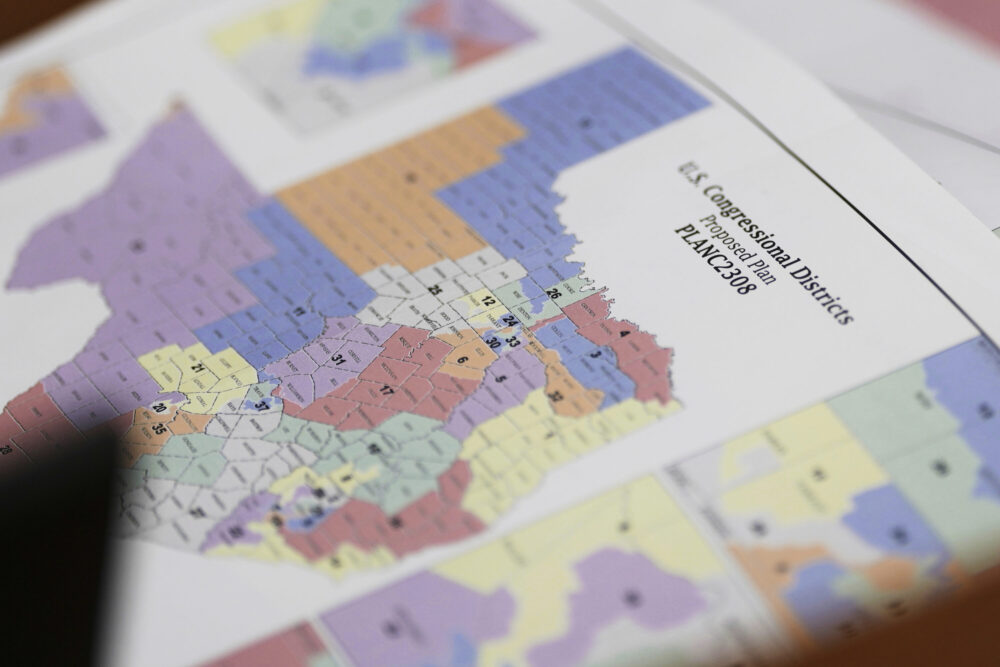
In a major ruling upholding the rights of minority voters, a three-judge federal panel on November 18, 2025, issued a preliminary injunction blocking Texas from using its newly adopted 2025 congressional redistricting map for the upcoming 2026 elections. The map, enacted during a special legislative session in August, was found to be an unconstitutional racial gerrymander that harmed the voting power of Black and Hispanic Texans. The panel ordered that the elections proceed under the state’s 2021 map. Opponents, including State Senator Juan “Chuy” Hinojosa, applauded the decision, stating the map was a clear effort by the Trump administration and Texas Republicans to “silence the voices” of minority-majority districts. Texas has already filed a notice of appeal to the U.S. Supreme Court.
Analysis
The federal court’s finding of unlawful racial gerrymandering exposes a cynical attempt by the Texas Legislature to subordinate democratic representation to racial targets in order to cement partisan control.
Race as the Predominant Factor
The court ruled that race, not merely partisanship, was the predominant factor in how the new 2025 Texas map was drawn. This finding was supported by evidence showing the legislature used precise racial targets (often drawing districts with “on-the-nose” bare majorities just over 50%) and dismantled several existing minority-majority “coalition districts”. Senator Hinojosa underscored this critique, arguing the redrawn districts were all districts represented by Black and Hispanic members of Congress. He directly accused the effort—which was precipitated by a controversial U.S. Department of Justice letter misrepresenting a prior Fifth Circuit ruling—of being “targeted racial discrimination” designed to “wipe out four congressional districts” elected by minority-majority voters.
Undermining Democracy and the Appeal
This injunction is a crucial win for Black and Hispanic voters, reaffirming constitutional protections against unlawful maneuvering that harms the voices of communities of color. The majority opinion, written by U.S. District Judge Jeffrey Brown, rejected the argument that the case was “just politics,” emphasizing the constitutional mandate against racial discrimination in districting.
The case’s ultimate fate rests with the Supreme Court, which is already set to rule on a similar racial gerrymandering challenge in Louisiana v. Callais. Depending on that ruling, the Texas map—and the underlying legal precedent—could be either swiftly reinstated or permanently struck down. However, for the 2026 election cycle, the court’s action immediately preserves the existing representation of minority communities and halts a clear political power grab.
My Opinion
This ruling is a powerful affirmation that in Texas, voters choose representatives; representatives do not choose their voters. The 2025 mid-decade redistricting effort was a shameful and cynical attempt to dilute the political strength of Texas’s growing Black, Hispanic, and Asian populations.
The legislature’s defense—that they were simply responding to federal guidance—is rendered hollow by the court’s finding that they deliberately prioritized racial targets over all other traditional criteria. This was an act of political self-preservation, weaponizing the census data and judicial complexity to entrench one party’s power at the expense of democracy.
The immediate blocking of the map is a social justice imperative. It ensures that the 14th and 15th Amendments remain the guardians of equal representation, preventing the Texas Legislature from making a mockery of the principle of “one person, one vote” through calculated, discriminatory line-drawing.
Engagement Resources
- Campaign Legal Center (CLC): A non-partisan organization involved in fighting partisan and racial gerrymandering cases across the U.S., including Texas.
- Mexican American Legal Defense and Educational Fund (MALDEF): Key legal group representing Hispanic plaintiffs in voting rights and redistricting litigation in Texas.
- Texas Legislative Council (TLC) Redistricting Page: The official source for all map drafts, census data used, and the legislative history of the 2025 map.
Broad, Dramatic Changes Threaten the Environment as Trump Lifts Protections (Environment Policy Brief #184)
Environment Policy Brief #184 | Charlie Sweeney | November 24, 2025
Dolphins in New York Harbor, whales breaching off Lower Manhattan, oysters thriving in the waters around New York City, and the Hudson River—long written off as dead—now supports fishing again. These signs of environmental recovery, while miraculous, all could slam into reverse as the latest Trump administration rollbacks take effect.
For those keeping score at home, Trump’s disregard for climate control and environmental protections goes back to his first administration. But this week has been described by some activists as “the week from hell,” as the administration moved to end automatic protections for newly listed
threatened species under the Endangered Species Act. Conservationists warn that weakening these protections could accelerate population declines and push vulnerable species toward possible extinction.
At the same time, the administration is reviving and expanding plans to open huge stretches of public land in the Arctic and the Western U.S. for oil and gas drilling. These landscapes are some of the last truly intact ecosystems on Earth, home to carbon-rich soils, rare species, and deep Indigenous heritage. The Center for Biological Diversity has warned that drilling in these regions would “cause irreparable damage to one of the world’s most important wild places and its wildlife,” a stark reminder of how quickly these ecosystems could be lost.
Climate policy is being dismantled just as aggressively. On ‘day one’ of Trump’s second term, the administration’s “Unleashing American Energy” order signaled a full embrace of fossil fuels, directing agencies to reconsider whether greenhouse gases are dangerous—a foundational scientific finding behind every major U.S. climate rule. Coal-mining safety rules and air-toxics standards for power plants are being rolled back too, even as black lung, asthma, and air-quality concerns rise.
And now the court battles are beginning. Environmental groups, and several states, have filed lawsuits challenging these rollbacks and the broader effort to shield fossil fuel companies from accountability.
For example, Ii Hawaiʻi’s pending climate deception lawsuit against Big Oil, Attorney General Anne Lopez stated that companies have “put profits ahead of people,” a sentiment that mirrors the broader fear that business interests are being elevated over environmental science in Washington.
Taken together, these actions form a clear and troubling pattern: extraction over preservation, deregulation over public health, short-term profit over long-term survival.
Nature is resilient, but it has limits. The return of dolphins and whales to New York waters happened because decades of regulation and cleanup made it possible. The booming oyster populations are the result of sustained pollution controls. Cleaner waters, returning wildlife, healthier ecosystems—these are achievements that can only be sustained through robust protections.
The stakes are high as the planet’s biological clock ticks, and without legal protections, this administration’s policy and regulation changes could have effects lasting for generations.
Engagement Resources
- “Dolphins Return to New York City Waters” — The New York Times: https://www.nytimes.com/2023/03/02/nyregion/dolphins-nyc-hudson-river.html
- “Oyster Restoration Shows Promise in New York Harbor” — EcoWatch: https://www.ecowatch.com/new-york-harbor-oysters-restoration.html
- “Trump Administration Seeks to Roll Back Protections for Imperiled Species” — Associated Press: https://apnews.com/article/endangered-species-act-trump-regulations-bf92e52c78f345a2853a64ad6e12e1db
- “Lawsuit Aims to Block Drilling in Arctic National Wildlife Refuge” — Center for Biological Diversity: https://biologicaldiversity.org/w/news/press-releases/lawsuit-aims-block-drilling-arctic-national-wildlife-refuge-2020-08-24/
- “Trump Signs Order to Boost Fossil Fuels and Review Climate Rules” — The Verge: https://www.theverge.com/2025/1/20/trump-fossil-fuel-executive-order-climate-regulations
- “Hawaii Supreme Court Upholds Climate Lawsuit Against Big Oil” — Hawaii Attorney General: https://ag.hawaii.gov/news-release/hawaii-supreme-court-upholds-climate-lawsuit-against-big-oil/

Reclaiming the Pedestal: Monument Removal and the Struggle for Public Memory (Social Justice Policy Brief #183)
Social Justice Policy Brief #183 | Inijah Quadri | November 14, 2025
Policy Issue Summary
The ongoing, contentious debate over public monuments is not a referendum on history, but a profound struggle over power, memory, and the definition of public space. For generations, city squares, parks, and government buildings have been dominated by statues celebrating figures of colonialism, slavery, and state violence—from Confederate generals and slave traders to architects of Indigenous genocide. These monuments have never been neutral historical markers. They are active political statements, erected to assert a specific, dominant narrative of power and to legitimize a social hierarchy built on white supremacy.
The mass protests for racial justice in 2020, following the murder of George Floyd, catalyzed a global reckoning. This movement, led by Black Lives Matter activists and Indigenous groups, brought new urgency to what community organizers had demanded for decades. Consequently, dozens of monuments honoring figures like Robert E. Lee, Christopher Columbus, and others were toppled, relocated, or officially removed. This represented a significant shift in public consciousness, a grassroots rejection of publicly funded symbols of oppression.
However, this progress is now facing a powerful and organized counter-offensive. The fourth edition of the Southern Poverty Law Center’s “Whose Heritage?” report, released in April 2025, notes a slowdown in removals. This is coupled with a reactionary political movement. A March 2025 executive order, “Restoring Truth and Sanity to American History,” actively seeks to halt removals and even restore toppled statues, such as the bronze of Confederate General Albert Pike. This, along with state-level laws designed to “protect” these monuments, has re-established the central conflict: public space is a battlefield, and these statues are symbols of an ideology that refuses to release its grip.
Analysis
The most common argument against monument removal is the claim that it is “erasing history.” This is a deliberate fallacy. Removing a statue does not erase history; it ceases the public veneration of a historical figure. History is not learned from bronze statues. It is preserved in books, archives, museums, and classrooms. The “history” that is truly being erased by these statues is the history of those they oppressed. A statue of a Confederate general, for example, tells one story—a false one of “heritage” and the “Lost Cause”—while actively silencing the history of the millions of enslaved people he fought to keep in bondage.
The majority of Confederate monuments were not built in the immediate aftermath of the Civil War as gestures of grief. They were erected decades later, during the height of the Jim Crow era, as a coordinated propaganda campaign. Their purpose was to terrorize Black communities and unmistakably assert the persistence of white supremacy, even in the face of legal defeat. These monuments are not history; they are artifacts of historical intimidation. To maintain them in places of honor is to co-sign that intimidation and to force Black citizens to navigate a public landscape that celebrates their ancestors’ enslavers.
This struggle is not isolated to the United States. It is a central component of a global decolonization movement. From the “Rhodes Must Fall” campaign in South Africa to the toppling of slaver Edward Colston’s statue in Bristol, England, communities across the world are demanding a re-evaluation of their commemorative landscapes. They are asking a fundamental question: who is worthy of our honor, and who has the power to decide? This process is not about destruction; it is about creation. It is about making space for new monuments that tell a fuller, more honest, and more just story—monuments to resistance, to liberation, and to the victims of the very figures currently cast in bronze. This is not an erasure of history, but a profound and necessary engagement with it, demanding a public memory that reflects collective liberation rather than selective oppression.
Engagement Resources
- Southern Poverty Law Center (SPLC) – Whose Heritage?(https://www.splcenter.org/whose-heritage) A comprehensive project that tracks public symbols of the Confederacy across the United States. It provides an interactive map, data, and reports on the history of the “Lost Cause” narrative and the status of removal campaigns.
- Monument Lab (https://monumentlab.com/) A public art and history studio that works to advance justice and equity by reimagining the future of monuments. Through participatory research, such as the National Monument Audit, and artistic commissions, it helps communities rethink public symbols and create new, inclusive forms of remembrance.
- Equal Justice Initiative (EJI) – Community Remembrance Project(https://eji.org/projects/community-remembrance-project/) This project works with communities to document the history of racial terror, memorialize its victims, and erect historical markers. It is a powerful example of creating new, truthful memorials as a corrective to the false narratives of Confederate monuments.

The Potential Harm Posed to Society Due to the Inaccuracies of AI (Technology Policy Brief #159)
Technology Policy Brief #159 | Naja Barnes | November 20th, 2025
The future of Artificial Intelligence (AI) is not fully determined, but it will continue to have a significant impact on our society and the way we live. The ways it currently impacts society are through improvements in efficiency, productivity, and accessibility. Self-driving cars relying on AI, AI-powered robots are used to provide aid and assistance in the healthcare system, and AI security systems are used to automate threat detection, among other examples. Although AI creates positive advantages and impacts, it also creates negative effects. The negative effects cover the environment, employment and other fields. These examples are often caused by products that use and incorporate AI, but what (potential) harm is created due to inaccuracies within the actual systems of AI?
Analysis
Inaccuracies within the data quality of AI systems can create threatening situations that then lead to harmful outcomes. At Kenwood High School in Baltimore County, Maryland, Taki Allen, a high school student, was handcuffed and had a firearm pointed at him. The incident occurred because the school’s AI-powered security system mistook the teen’s Doritos bag for a possible firearm. The school’s district security department canceled the gun detection alert, but the principal was unaware that the alert was canceled when she reported the incident. This harmful mistake could have possibly physically harmed the teen, and very clearly highlights the limitations of AI’s capabilities. It was able to incorrectly check for a threat quickly, but was unable to correctly identify that there was a threat in the first place. It was the action of humans that corrected the mistake created by the AI-powered security system.
Self-driving cars, powered by AI systems, have also caused harm and even casualties. In 2018, Elaine Herzberg was struck and killed by a self-driving car as she walked her bicycle across the street. There was a backup driver (Rafaela Vasquez) in the car, but he was visibly distracted and had no hands on the wheel at the time of the accident. Most backup drivers are instructed to keep their hands on the wheel to take control of the car quickly in emergencies. However, the self-driving car failed to detect the woman in the street, highlighting the limitations of AI systems. This instance demonstrated AI’s limitations in reacting to unpredictable situations. This is another example of an AI-powered system creating a potentially harmful situation that a human could have fixed.
Conclusion
AI systems enable our society to operate more efficiently, but there is no denying the potential harm they pose due to issues with data quality and limited capabilities. Human intervention is sometimes necessary in instances involving AI-powered products.
Engagement Resources
- What is the history of artificial intelligence (AI)? https://www.tableau.com/data-insights/ai/history
- Student handcuffed after Doritos bag mistaken for a gun by school’s AI security system https://www.cnn.com/2025/10/25/us/baltimore-student-chips-ai-gun-detection-hnk
- When AI Gets It Wrong: Addressing AI Hallucinations and Bias https://mitsloanedtech.mit.edu/ai/basics/addressing-ai-hallucinations-and-bias/
- How a Self-Driving Uber Killed a Pedestrian in Arizona https://www.nytimes.com/interactive/2018/03/20/us/self-driving-uber-pedestrian-killed.html
Keywords: AI, Harm, Impact, Threat, System
Antisemitism Is the Weapon, Teachers are the Target (Education Policy Brief #213)
Education Policy Brief #213 | Mindy Spatt | November 10, 2025
Summary
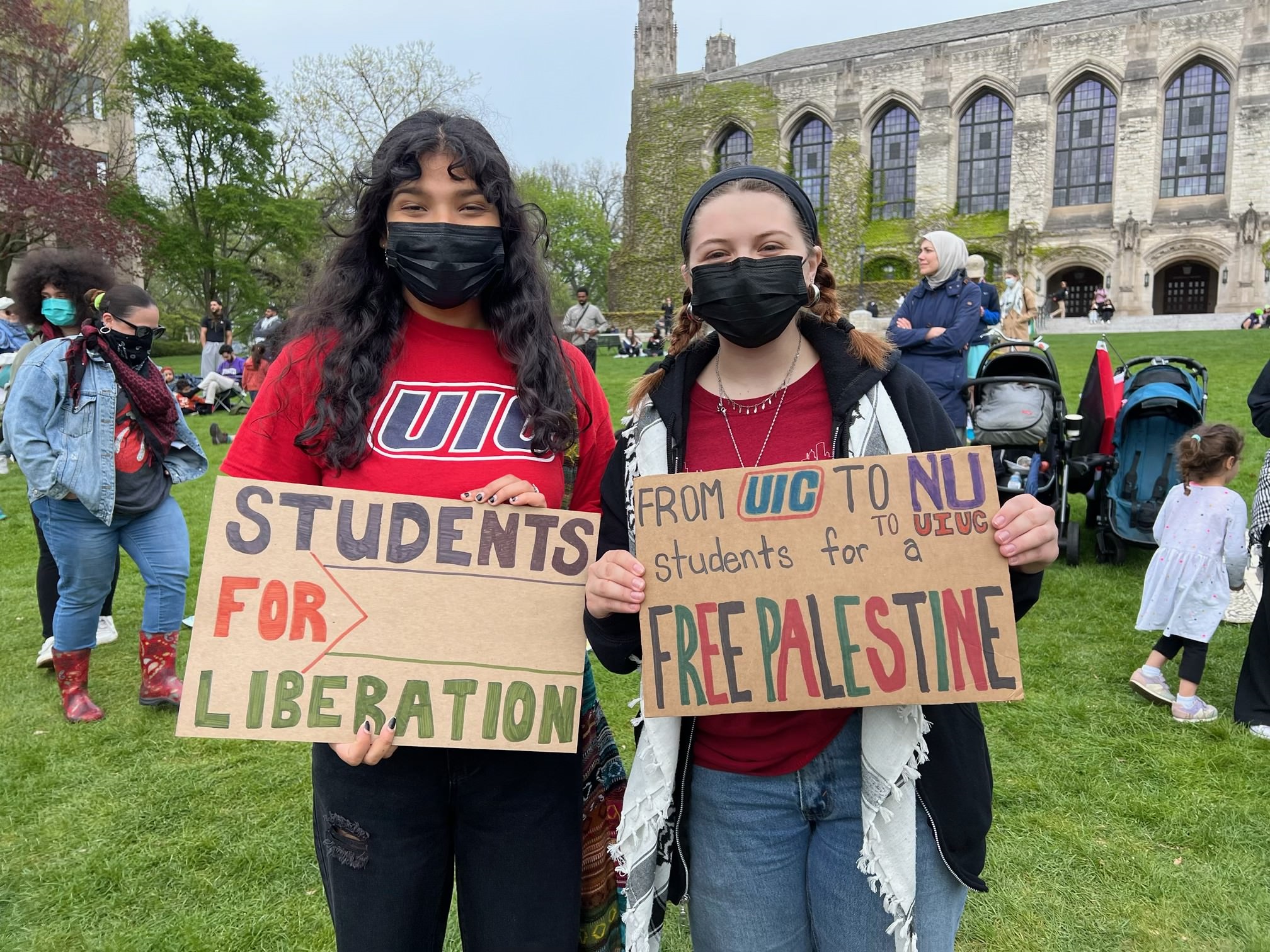
Educators who are critical of the Israeli government or the occupation, or who voice support for Palestinian statehood, are increasingly at risk of disciplinary action or even job loss. Extremist pro-Israel groups are advocating for and winning statutory and regulatory limits on educational content critical of Israel, all under the guise of fighting rampant Antisemitism. Even the use of pro-Palestinian slogans like “From the River to the Sea, Palestine will be Free” on social media has led to teachers being placed on leave. Educators and free speech advocates are organizing to fight back, and a recently approved law in California, ostensibly to curb antisemitism, is being challenged in federal court by the ADC.
Analysis
The House Committee on Education and Workforce recently opened an investigation into whether the National Education Association (NEA) is “contributing to antisemitism among its members and in classrooms across the United States.” The investigation is in response to allegations of anti-Semitism against the nation’s largest teachers’ union, the National Education Association (NEA).
The NEA’s Representative Assembly had initially rejected a set of holocaust education materials promoted by the pro-Israel Anti-Discrimination League, due to a determination that the materials were biased. Although the NEA leadership overturned the initial determination after public pressure, lawmakers have expressed concern about an NEA handbook that says the group will “educate members about the difference between anti-Zionism and antisemitism” and promote “free speech in defense of Palestine at K-12 schools, colleges, and universities. Investigators are demanding that the union give them all communications, documents, or meeting minutes that include the words “antisemitism,” “Israel,” “Israeli,” “Palestine,” or “Palestinian,” since Oct. 7, 2023.
Committee chairman Tim Walberg (R., Mich.) said in a statement that the committee is weighing “legislation to specifically address antisemitic discrimination within labor unions and to combat antisemitism in federally funded schools.” He referenced another teachers’ union that has come under fire over its “anti-Israel” agenda. After the American Federation of Teachers (AFT) launched a fundraising campaign for ANERA, a 50-year-old Gaza humanitarian aid organization registered as a 501(c)(3) nonprofit organization, it was accused of “working with Hamas” by the radical Zionist North American Values Institute, whose mission is to “mitigate and eventually overcome the impacts of extreme social justice ideology in their children’s classroom.”
Dr. Maura Finkelstein, a Jewish tenured associate professor and chair of the Department of Sociology and Anthropology at Muhlenberg College in Pennsylvania lost her job after a January 2024 social media repost related to Zionism. The American Association of University Professors investigated her firing concluded that the College, in “dismissing Professor Finkelstein from the faculty solely because of one anti-Zionist repost on Instagram, acted in violation of AAUP-supported principles and standards of academic freedom and due process.” In addition, “the administration’s hasty action, facilitated by the monitoring and dissemination of Finkelstein’s social media posts by administrators, has severely impaired the climate for academic freedom at Muhlenberg College.”
In Massachusetts, a legislatively mandated Special Commission on Combating Antisemitism approved a controversial set of educational and training recommendations related to the Holocaust and antisemitism. The recommendations reference the International Holocaust Remembrance Alliance (ILHRA) definition of antisemitism, which advocates have long argued conflates criticism of Israel with antisemitism. In a public response, educators from Concerned Jewish Faculty and Staff and Together criticized the recommendations as ineffective and warned they could undermine safe learning environments for both students and teachers.
In California, a fierce battle erupted over AB 715, a bill sponsored by the Jewish Legislative Caucus ostensibly to address rising antisemitism in schools. A large statewide coalition organized to oppose the bill, which, in its original version, tied all Jewish students to Israel and elevated accusations of antisemitism for treatment different from other types of bias.
The California Coalition to Defend Public Education (CCDPE) organized a broad statewide coalition including teachers’ organizations, parents’ groups, civil rights groups, religious congregations, racial justice organizations, and supporters of ethnic studies to lobby hard against the bill and raise awareness of its unequal treatment of students and censoring of teachers. The powerful California Teachers Association eventually opposed the bill, delaying its progress, and the Northern California American Civil Liberties Union also rejected AB715 as infringing on free speech.
They weren’t able to stop the bill, but did get some of the worst provisions amended. Still, the American-Arab Anti-Discrimination Committee (ADC) is seeking to have it overturned in federal court on First Amendment grounds. Plaintiffs include teachers and families who want accurate instruction and robust debate about modern Middle East history, including Palestinian perspectives. Their complaint alleges SB 715 recommends teaching standards that “repeatedly conflate criticism of the State of Israel and of Zionism with antisemitism—for example, by deeming it ‘antisemitic’ to question Jewish people’s right to a majority state in a region inhabited by an equal number of Palestinians.”
In its Statement on Legislation Restricting Teaching about Race the AAUP comes out strongly against these types of statutory limits on educational content, saying “When politicians mandate the academic content that faculty can and cannot teach or the scholarly areas they can or cannot research or study, they prevent colleges and universities from fulfilling their missions. Such restrictions …portray robust academic inquiry and teaching as dangerous, deny students the opportunity to learn, and undercut the purpose of higher education. We therefore urge the defeat of these legislative initiatives and others of their kind to protect the academic freedom that is vital to the preservation of democracy.”
Engagement Resources
- Legislative Threats to Academic Freedom: Redefinitions of Antisemitism and Racism, American Association of University Professors, March 2022, https://www.aaup.org/reports-publications/aaup-policies-reports/policy-statements/legislative-threats-academic-freedom
- Academic Freedom and Tenure: Muhlenberg College, American Association of University Professors, April, 2025, https://www.aaup.org/reports-publications/aaup-policies-reports/investigation-and-inquiries/academic-freedom-and-tenure
- California Democrats Are Fighting Trump’s Battle for Him, Lily Greenberg Call, Aug. 15, 2025, https://www.nytimes.com/2025/08/15/opinion/california-democrat-jewish-trump.html
- ADC Files Federal Suit Challenging California’s AB 715 for Chilling Classroom Speech, American-Arab Anti-Discrimination Committee, Nov. 3, 2025, https://adc.org/adc-files-federal-suit-challenging-californias-ab-715-for-chilling-classroom-speech/
The Week That Was: Global News in Review Week (Foreign Policy Brief #221)
Foreign Policy Brief #221 | Abran C. | October 6-November 3
By Abran C.
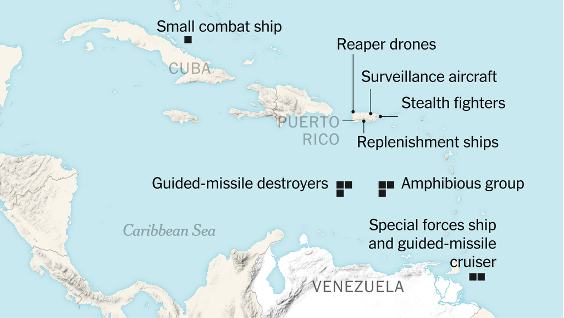
US military buildup near Venezuela’s coast
https://www.nytimes.com/2025/10/17/us/politics/trump-caribbean-venezuela-us-military-maps.html
Since early September, the United States has carried out at least 14 strikes against alleged drug smuggling boats in the Caribbean and Pacific. The US has now deployed fighter jets, warships and thousands of troops to the Caribbean. The military buildup in the region is the largest since 1994 when the United States sent two aircraft carriers and more than 20,000 troops into Haiti to take part in “Operation Uphold Democracy.”
The presumed goal of US action in the Caribbean is regime change in Venezuela and the interest in removing the current regime from power likely stems from Venezuela’s strategic importance due to its natural resource wealth. It is worth noting that the Venezuela winner of the Nobel Peace Prize, Maria Cornia Machado, called on President Trump to stop Maduro’s war on her country.
President Donald Trump recently stated that Venezuelan leader Nicolas Maduro’s days in power were numbered, seemingly following on statements previously made where he and other officials announced the high likelihood of an expansion in strikes taking place against drug and military related targets within the country. Republican Senator Lindsey Graham, recently stated that there was a likelihood of the US conducting military operations against both Venezuela and Colombia.
Meanwhile, Colombian President Gustavo Petro has said his country would not lend its territory or troops to aid US intervention in Venezuela. In response to the US military buildup Nicolas Maduro has ordered the Venezuelan armed forces, police and militia to deploy across 284 battlefronts across the country. Additionally 4.5 million members of Venezuela’s National Bolivarian Militia, an auxiliary force created in 2005 and made up of civilian volunteers and reservists, have reportedly mobilized to combat any incursion into the country.

War crimes in Sudan
UNFPA Women who fled the fighting in El Fasher wait for services at a UNFPA clinic in Tawila, Sudan.
Sudan’s ongoing three year brutal civil war last week witnessed a horrific phase of the war as paramilitary Rapid Support Forces took over the city of El Fasher in western Darfur. El Fasher was the last holdout in Darfur of the Sudanese Armed Forces. During the RSF’s invasion of the city, the group began a campaign of mass killing against civilians.In one instance condemned by the UN and international humanitarian groups who accuse the RSF of entering a hospital in El Fasher’s and killing everyone inside leaving at least 450 people dead. Experts estimate tens of thousands have been killed in the past week. More than 150,000 people have died since the conflict began, and about 12 million people have fled their homes in what the United Nations has called the world’s largest humanitarian crisis. In recent days the RSF has agreed to a proposal from the United States and Arab powers for a humanitarian ceasefire to allow in aid and is reportedly open to talks on a full cessation of hostilities. However it is worth noting that both the RSF and the Sudanese army have agreed to various ceasefire proposals during their nearly three year-long war, and none have held firm. The Trump administration has said it is putting efforts toward ending fighting in Sudan.
Hurricane Melissa hits the Caribbean
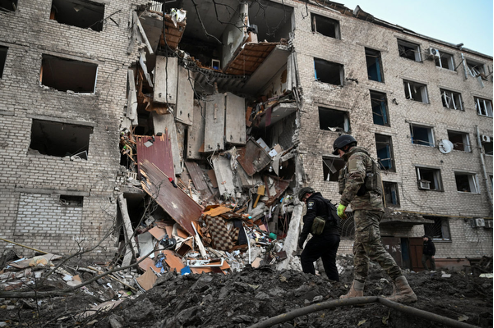
A man rests on a bicycle near destroyed houses in Black River, Jamaica, on Thursday [Matias Delacroix/AP Photo
Six million people in the Caribbean have been impacted by the recent deadly path of Hurricane Melissa according to the United Nations (UN).Multiple island nations including Haiti, Dominican Republic, Jamaica, and Cuba all suffered extensive damage and loss of life as a result of the monstrous storm. Hurricane Melissa made its deadly path with winds of up to 185 mph, with extreme rains and overwhelming storm surge causing widespread damage and panic across the Caribbean. The death toll in the wake of Hurricane Melissa’s path through the Caribbean stands at 75 and may rise as countries continue to assess the damage done. The majority of deaths have come from Haiti, with Jamaica, The Dominican Republic and Cuba following.
In the worst hit states, more than 43 deaths have been recorded and 16,000 people displaced in Haiti. In Jamaica 32 deaths have been counted and 60% of the island remains without power. Cuba suffered only a single loss of life but the hurricane caused widespread flooding, power outages, and damage to infrastructure. The US has announced it would be providing $24 million worth of aid to the affected countries. This funding will be used to provide shelter, water, sanitation, hygiene, food assistance, and emergency healthcare. Hurricane Melissa broke several records on its destructive path and became the most intense recorded storm to make landfall in the Atlantic this late in the season. Unusually warm ocean temperatures fueled the storm and similar warming ocean and atmospheric conditions make intense storms like Melissa more likely in the future.
Ukraine receives more patriot missiles
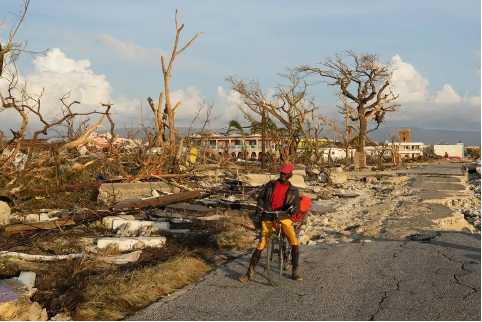
Police investigators inspect debris at a site of a dormitory building heavily damaged during an overnight Russian missile and drone strikes, amid Russia’s attack on Ukraine, in Zaporizhzhia, Ukraine, on Oct. 30, 2025. Photo by Stringer/ Reuters
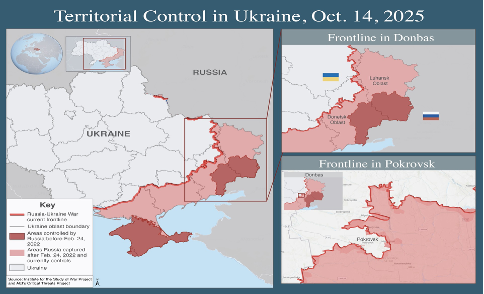
Ukraine has recently received more US-made Patriot air defence systems from Germany to help it counter Russia’s daily missile barrages. However, President Donald Trump has ruled out sending Tomahawk missiles to Ukraine for now despite repeated requests from Kyiv for the long-range cruise missiles to strike at Russian targets across the border. The Russian army made territorial gains in Ukraine in October as it focused attacks on the eastern Donetsk region. Russia is reported to have taken 286 sq miles from Ukraine in just the last month. Additionally it has stepped up attacks on Ukraine’s energy infrastructure, as it has done in previous winters since beginning the war. In early October Russia unleashed its largest-ever attack on Ukraine’s natural gas sector and sent a missile barrage that knocked power outacross a large swath of Kyiv and created blackouts in nine regions nationwide.

Strategies To Win The Mid-Terms (Op Ed)
USRESIST NEWS OP ED | November 2025
Democrats lost considerable power in the 2024 elections-relinquishing control over the House, the Senate, and the Presidency. In the upcoming 2026 mid-terms they have a chance to regain at least partial control of the levers of government — if they win majorities in the House and the Senate. Can they learn from their mistakes of the past? Can they take advantage of the poor performance of the Republicans since 2024? Can they actually win in 2026? A USRESIST NEWS Editorial team recently met to consider strategic options for the Dems to pursue in their upcoming mid-term campaign. Here’s what was suggested:
- Make sure you have a populist** message to motivate working class and younger audiences: It’s a message that needs to focus on making things affordable again like groceries, health care and housing; a message targeted to working class people of all races living in both rural as well as urban areas. Wherever possible messages should be hyper-local, focused on the issues relevant to the local electorate.
- Promote your message loudly and clearly through as many channels as possible: Rely as much on social media platforms as legacy media; make sure you are messaging constantly through every kind of media available; make use of influencers; where appropriate candidates should appear on TV, including righty-wing stations such as FOX News.
- Run new candidates, especially younger ones, who are authentic and represent the audiences they are targeting: There is a general consensus that we need a new generation of leaders, less encumbered by big money donors and middle of the road platforms; who are not afraid to support and fight for new policies.
- Steer away from the middle of the road and extreme left positions: In 2024 the Dems were hurt by their focus on identity politics. While identity issues are important they tend to ignore issues of basic human needs that cut across identities. They also make it easy for Republicans to overexaggerate the role of identities in Democratic platforms.
In addition to identity politics many Democrats ran on conservative middle-of-the-road policies focused on tinkering with budgets and amending existing programs. They were hesitant to be bolder and more innovative, thus turning off voters who were looking for something other than politics-as-usual. The Democrat reliance on corporate donors often makes it hard for them to support more class conscious candidates.
- Call out Republican mistakes: Trump and the Republicans have not done a great job in governing til now. They have ignored their commitment to the middle class, and have focused instead on racist and xenophobic policies such as indiscriminate arrest of immigrants and sending armed troops into US cities. They also can be blamed for the government shutdown, escalating costs of health care, and giving tax breaks to the wealthy. But Dems need to be careful not to run entirely negative anti-Republican campaigns. They need to emphasize positive actions they will help working families,
- Make sure the voting system is not rigged: Dems need to take steps to challenge and offset any moves that Republicans make to gerrymander voting districts. The successful effort made in California on a ballot initiative that supports additional Democrat leaning districts should be copied in other states. Also Republican initiatives against early voting and mail-in ballots must be strongly opposed. It is to the advantage of Democrats to have as many people vote as possible. The Dems also need to have an army of attorneys, poll watchers, and lawyers to monitor and call out Republican voting system shenanigans. And of course the Dems need to draw down on their well oiled get-out-the-vote machines in as many states as possible,
** Here the term “populist message” refers to a message aimed at addressing the quality of life issues affecting many working and middle class Americans, and which are not being successfully addressed by the current administration.
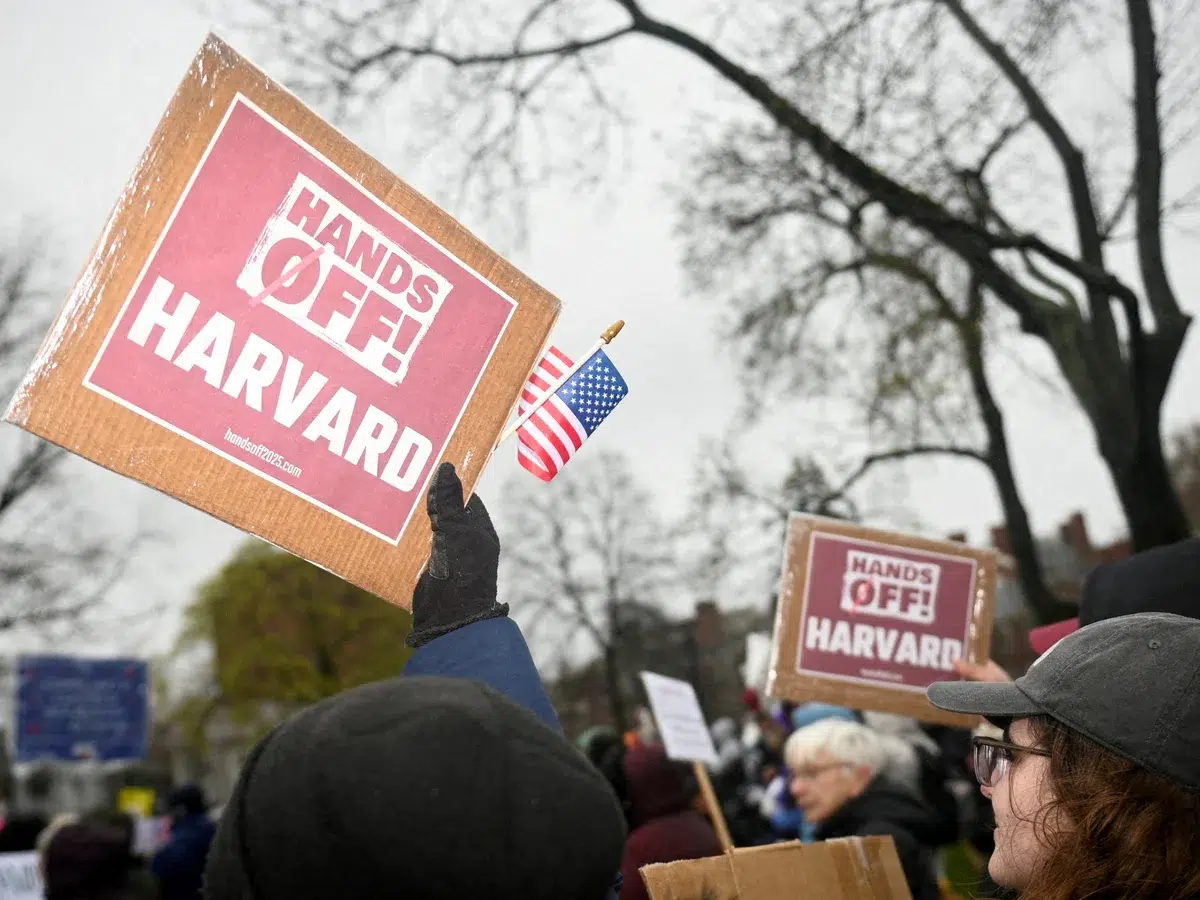
Trump’s War on Highest Ed: Shake-up or Shakedown? (Education Policy Brief #212)
Education Policy Brief #212 | Charlie Sweeney | November 5, 2025
If this were a Harvard–Yale football game, it would be a blowout.
Unlike the famed 1968 matchup—when a heavily underdog Harvard team tied Yale and The Harvard Crimson ran the cheeky-but-triumphant headline, “Harvard Beats Yale, 29–29,” this contest has been one-sided from the start.
In relentless fashion, with the nation’s premier universities in its sights, the Trump administration’s assault on academic freedom has been lopsided, swift, punishing, and unwavering—with no signs of letting up.
The scorecard tells the story: Columbia University capitulated and paid more than $220 million in damages; Northwestern’s president resigned under pressure after nearly $790 million in federal funds were frozen; and the University of Virginia’s president stepped down amid an administrative purge of diversity programs.
From Harvard to Stanford, the message was unmistakable—comply or be cut off. The campaign, launched soon after Trump’s return to office in 2025, has transformed federal education funding into a weapon aimed squarely at the nation’s most prestigious campuses.
While showing no signs of slowing, Trump‘s assault on the nation’s premier universities has not gone unnoticed by academia. Irene Mulvey, president of the American Association of University Professors, warned, “What we’re seeing is not policy correction—it’s political retribution dressed as reform.” She added, “The federal government is holding higher education hostage to ideology.”
In an interview with the Chronicle of Higher Education, Lee C. Bollinger, former Columbia president and first amendment scholar, said, “This is a dangerous inversion of academic freedom. Instead of protecting the independence of knowledge, the state is now dictating its boundaries.”
Signs of Trump’s upcoming “War on Higher Ed” were clear in his first administration, but nothing could’ve prepared academics for the assault that was to come after his inauguration this passed January.
Beginning in 2025, the Trump administration escalated it’s long-standing feud by accusing major universities of political bias, intellectual intolerance, and moral decay. Officials claimed that elite schools had become “woke factories,” indoctrinating students instead of educating them.
The administration charged that universities protected antisemitic speech while silencing conservative viewpoints, prioritized diversity and inclusion over merit, and wasted taxpayer dollars on gender, race, and global-studies programs that “undermined American values.”
Federal officials also turned their attention overseas, questioning research partnerships with China and other foreign entities. The White House framed these collaborations as potential national-security risks and argued that universities were “selling out American innovation.” The rhetoric marked a new frontier in federal oversight—an effort to reassert Washington’s authority over what universities teach, fund, and research.
But this was no mere war of words: the administration quickly followed its rhetoric with punitive action.
In early 2025, the Department of Education froze $400 million in funding to Columbia University, citing its “failure to protect Jewish students” during campus protests following the Israel–Hamas conflict.
Harvard was next: the administration withheld roughly $2.2 billion in research and education grants after the university refused to dissolve DEI offices and modify admissions policies.
By spring, the White House introduced the “Compact for Academic Excellence in Higher Education,” offering restored or expanded funding to schools that agreed to a suite of federal conditions—among them tuition caps, limits on foreign students, and an “alignment with American and Western values” across curricula.
Analysts estimated that the administration had frozen or threatened between $3.3 billion and $3.7 billion in grants affecting more than 600 institutions nationwide. These measures represented a radical reimagining of federal education policy: research grants, once distributed on merit and peer review, became bargaining chips in a broader ideological campaign.
Universities have met this assault with a mix of compliance, defiance, and crisis management. Columbia University chose capitulation—paying more than $220 million, adopting the IHRA definition of antisemitism, and rewriting its protest and disciplinary codes to regain access to federal funds.
Harvard University, by contrast, sued the administration, arguing that the funding freeze violated the First Amendment and represented unconstitutional retaliation against perceived ideological opposition.
Elsewhere, leadership turnover signaled turmoil. Northwestern’s Michael Schill resigned amid frozen grants; at the University of Virginia, James E. Ryan was ousted following accusations of “pervasive DEI bias.”
Other institutions, including Brown University and MIT, outright rejected the administration’s compact, asserting that the terms would “compromise academic independence.”
Yet even some defiant campuses quietly restructured diversity offices, modified speech codes, or altered admissions practices in anticipation of further scrutiny—gestures that blended resistance with survival.
As 2026 approaches, the clash between academia and Washington shows no signs of easing. The Trump administration appears intent on using federal dollars to realign higher education with its political agenda, while universities brace for sustained financial and ideological pressure.
Courts may ultimately determine how far an administration can go in conditioning public funding on ideological conformity—but by then, the cultural terrain of American higher education may already be transformed.
If the administration’s campaign succeeds, the result could be a compliance-driven academic landscape—less independent, more politically policed, and divided between institutions that capitulate for funding and those that resist at great cost.
If universities prevail, however, this era may be remembered not as the downfall of academic freedom, but as its hard-won reaffirmation in the face of unprecedented federal coercion.
Engagement Resources
- The Guardian – Columbia University Settlement (July 2025)The Guardian – Columbia University Settlement (July 2025)
- Reuters – Northwestern President Resigns After Funding FreezeReuters – Northwestern President Resigns After Funding Freeze
- Chronicle of Higher Education – Interview with Lee C. BollingerChronicle of Higher Education – Interview with Lee C. Bollinger
- Time – Overview of Trump Administration’s Higher Education PoliciesTime – Overview of Trump Administration’s Higher Education Policies
- American Association of University Professors – Statement by Irene MulveyAmerican Association of University Professors – Statement by Irene Mulvey