

JOBS POLICIES, ANALYSIS, AND RESOURCES
Latest Jobs Posts
The Wisdom in Bipartisanship
U.S. RESIST NEWS EDITORIAL
By Ron Israel
Many political observers question President Biden’s emphasis on bipartisanship. Why they ask should Biden put so much emphasis on bipartisanship when the other side of the aisle doesn’t seem interested.
Should the Supreme Court Have Term Limits?
U.S. RESIST OP-ED
Paul M. Collins and Artemis Ward
Pressure on Supreme Court Justice Stephen Breyer to step down will likely grow now that the court’s session has ended. Breyer, 82, joined the court in 1994. His retirement would allow President Joe Biden to nominate his successor and give Democrats another liberal justice, if confirmed.
Prospects for the Biden Agenda (Part 1)
Brief #24 – Elections and Politics
By William Bourque
After President Biden’s hard-fought victory in November, it became clear that who can vote and how they can vote would become a national talking point in his first months in office. Indeed, President Biden has focused on voting rights but has yet to push a voting rights bill through the heavily divided Congress.
Many Legal Challenges to Georgia’s Restrictive Voting Law: Can They Succeed?
Brief #23 – Elections and Politics
By Zack Huffman
Attorney General Merrick Garland announced, on June 25, that the Department of Justice was suing the State of Georgia in federal court to overturn Georgia’s recently-passed voter restriction law.
The new Georgia law, which was passed by Republicans along partisan lines, creates new hurdles for voter registration and for absentee voting, while making it easier for voters to be removed from the rolls.
College Athletes Can Now Earn Money
Brief # 57 – Education Policy
By Lynn Waldsmith
For the first time, college athletes can profit from their name, image and likeness (known as “N.I.L.), now that the NCAA decided to allow the historic change in a surrender to growing pressure from states and the Supreme Court. While student athletes still cannot be directly paid by the schools they represent, the sweeping change to the NCAA’s longstanding policy that student athletes not receive any form of payment, other than scholarships that cover tuition, room and board, opens the door to that possibility in the future.
Georgia’s U.S. Senators Introduce Voting Bill To Limit Politicization of Elections
Brief # 168 – Civil Rights
By Rodney A. Maggay
On June 21, 2021, Georgia Democratic Senators Raphael Warnock and Jon Ossoff along with three other Senators introduced the Preventing Election Subversion Act of 2021. Senator Ossoff stated, “This legislation will ensure nonpartisan election officials can carry out free and fair elections without partisan interference and help safeguard the sacred right to vote.”
Crime is on the Rise in U.S. Cities: Is there a Plan?
Brief # 19 – Social Justice
By Erika Shannon
The year 2021 has, fortunately, brought people many things to look forward to. With the pandemic beginning to get under control, people are excited to resume their normal lives. Unfortunately, this year has also brought over 250 mass shootings in the United States, along with a rise in other violent crimes.
Who Has Not Been Vaccinated?
Brief # 115 – Health and Gender Policy
By S. Bhianji
As of June 15, 2021, the Centers for Disease Control and Prevention stated that nearly 182 million Americans have received at least one dose of a Covid-19 vaccine. Of these 156 million have been fully vaccinated by the two-dose series made by Moderna & Pfizer or the single dose Johnson & Johnson vaccines.
U.S., U.K. Warn of Ongoing Russian Hacking Efforts
Brief # 53 – Technology Policy
By Henry Lenard
U.S. and British government agencies released details on July 1 of an ongoing cybersecurity threat linked to Russia’s military intelligence agency GRU against hundreds of government agencies, energy companies and other organizations worldwide.


The War On Government
Forty Januaries ago, Ronald Reagan, upon assuming the most powerful governmental office in the history of civilization, declared in his inaugural address that “in this present crisis, government is not the solution to our problem; government is the problem.” To show he meant it, Reagan soon proposed a budget that gutted social programs and cut taxes. The idea was that, down the road, it would be harder to restore such programs and still profess yourself dedicated to fiscal responsibility.
Some years later, an incisive observer of American politics reflected on that pivotal moment in 1981: “The Reagan tax cuts have ended growth of the social agenda; it’s all come to a screeching halt.” The observer was a young senator named Joe Biden. He had voted for the Reagan budget. Now, like many of his Democratic colleagues, he would have to live in the political and moral — and narrative — universe it created.
In a remarkable swerve of history, forty years later, Biden, now president of the United States, has a chance, should he choose to embrace it, to break us all out of that universe. The war on government bankrupted itself spiritually and materially a long time ago. What dances on the horizon is the prospect of a war for government.
First came the American Rescue Plan, which was far from everything progressives wanted and far from everything the country needed, and yet, with that longer 40-year view in mind, a departure from the hegemony of the government-is-the-problem caucus. Now comes word of Biden’s plans for the second phase of his policy rollout, dealing with more chronic ailments, having already targeted the most acute crises.
According to a new report in The New York Times, President Biden’s economic advisers are preparing to recommend spending as much as $3 trillion on a sweeping set of efforts aimed at boosting the economy, reducing carbon emissions and narrowing economic inequality, beginning with a giant infrastructure plan that may be financed in part through tax increases on corporations and the rich.
Included in the package, which advisers told The Times might be broken into pieces, are “the construction of roads, bridges, rail lines, ports, electric vehicle charging stations and improvements to the electric grid,” plus “free community college, universal pre-K education, a national paid leave program and efforts to reduce child care costs,” plus plans to “make permanent two temporary provisions of Mr. Biden’s recent relief bill: expanded subsidies for low- and middle-income Americans to buy health insurance and tax credits aimed at cutting poverty, particularly for children.”
Now, I have my own preferred policy rollout list, and I’m sure you have yours, and many of my priorities, including, say, Medicare for All or all public college being free, aren’t anywhere on this list. But while we can, and should, get into the particular policies, there seems to be something more elemental and fundamental to say about this moment. With this proposed $3 trillion in spending, over and above the $1.9 trillion of the rescue plan, and with the philosophy animating the spending more importantly, Biden has become an unlikely deserter of the war on government.
More than former Presidents Bill Clinton and Barack Obama, who, unlike Biden, were not fixtures of Washington in the Reagan years and didn’t vote for any of his agenda. We don’t yet know if Biden has the stomach to make as strident a case for government-as-solution as Reagan made against the state. But it would be foolish not to observe that, thanks in part to the agitations of those who have shown the war on government to be an epic disaster (and who have fought Biden oftentimes), something new is happening. The proof that it is happening is that a moderate like Biden is on board.
In the coming weeks, there will be the familiar haggling and begging and bully pulpiting and Manchining as these proposals run through the congressional grinder. But it would be a mistake to treat this as a purely legislative challenge. Think back to Reagan. First there was the argument against government; then there was the dismantling of it. In the coming months, I long to hear an equal and opposite case for government, one unlike any I’ve heard in my gray, elder-millennial lifetime.
I heard the faintest hint of it some days ago when, in celebrating the passage of the American Rescue Plan, President Biden said these words: “We need to remember, the government isn’t some foreign force in a distant capital. No, it’s us, all of us, we the people.” In the United States of America, this is a more radical statement than it ought to be. I threw out all my bingo cards in 2020, but I will say that I didn’t have Joe Biden making the case that the government is us.
I don’t think Biden had a religious awakening. I think the five intersecting crises of the past year made it impossible for anyone in his position to attempt to be anything but transformational and go down in history as a serious person. There was Covid, of course, and the more chronically unhealthy country it found. There was the economic crisis it unleashed, and, again, the more chronically precarious and hard-up econony that crisis exacerbated. There was the racial crisis put front and center by Black Lives Matter and, more generally, a growing recognition of the need to reckon with things long overdue and make the society safe and healthy and dignified for people of all marginalized backgrounds. There was the democratic crisis revealed by the fact that, for a while there, we weren’t sure about a peaceful transfer of power. And there was climate, the question that refuses to go away, even in plagues, with coronatime perhaps serving as a test drive for what it looks like for the world to rally together.
There are no personal solutions to problems like these. There are no corporate solutions to them. There are no nonprofit solutions to them. As Carol Hanisch once taught us, there are only political solutions to shared political problems like these. The strange gift President Biden inherited was a network of problems so deep-rooted, so far-reaching, so long-in-the-making, so gnarled in their intersections, that they provide the best cover and ammunition in years to advocate for government.
Again, by this I don’t just mean introduce governmental solutions and spend money, which Biden is already doing. I mean adding to that a militant case for government that is every bit as emotive and powerful as the forty-year case against, which was so compelling that it persuaded millions of people to vote for their own subjugation.
I’m talking about truly educating Americans about what the government does — not just the famous parts of it that we hear about on the news and argue about without end. But the uncelebrated and obscure and dull parts of it that keep our food safe and roads clean and Social Security checks printing and markets open and schools teaching and medical research coming, that give us things like the internet.
Some of this advovacy is the work of people in government itself. But we in the media have a role to play. Mark Zuckerberg didn’t make himself an entrepreneur-hero-king (before he became a fallen emperor). We made him that. We put him on magazine covers. We covered his thoughts as if they reflected thinking. We built him up into something more than yet another guy running an ad-based business without scruples.
Well, it’s going to take many of us in media, in Hollywood, in music, in the culture more generally to reflect on how we have been captured by Reagan’s story, however we may think we despise it. Captured by the basic narrative that what we do alone matters more than what we do together, that denigrates or just overlooks the commons. And we ought to find ways to tell other stories. Stories of solidarity and collective adventure and shared purpose and systemic answers. Stories of unsung heroes. Stories of kind and decent structures rather than just kind and decent individuals.
I don’t know if those who can, will choose to take advantage of this moment in this way. But I believe they have a window of opportunity to end a whole damned age.

The Five Things that Should Be On The Biden Tech Agenda
Brief #41 – Technology
By Charles A. Rubin
March 22, 2021
Summary
As the Biden Administration fills out its policy teams, we at U.S. Resist News would like to suggest an urgent technology agenda for consideration. The geometric improvements in computer processor speeds and the dramatic breakthroughs in new technologies have made the need for leadership and open discussion imperative. We call on the Biden Administration to get out in front of these issues to make these technologies available to all Americans and ensure that these technologies work in the service of all Americans.
Analysis
1. Cybersecurity – State actors are increasingly involved in attacks on elections, on critical infrastructure and business systems. In recent weeks attacks against Microsoft Exchange based email systems have been uncovered affecting government agencies and businesses large and small. These intrusions have primarily been detected by private sector security firms but the onus should be on our Federal government in cooperation with open societies throughout the world to coordinate intelligence and devise mechanisms to thwart these attacks.
2. Free Speech – The Biden Administration should lead the debate on what constitutes journalism and free speech in the internet age. We need to have a frank and open discussion on how to combat misinformation and the responsibilities of social media platforms in moderating their content. This is, again, a problem that open societies need to confront together to devise common definitions and solutions.
3. Worker Displacement – The pandemic has accelerated a trend to automate repetitive tasks and employ artificial intelligence (AI) to augment or replace workers. By one estimate, 45 million American workers will be displaced by technology over the next 15 years. While the technology often promises better services and lower prices, we can not let it create poverty in the process. We need opportunities for workers to retrain and a solid understanding of what the workforce of the future will look like.
4. Artificial Intelligence – We are increasingly relying on sophisticated algorithms to make complex decisions. There are indeed exciting opportunities for better medical diagnoses, more efficient and safer transportation systems and technologies that will remove the human factor from dangerous work. There is, however, a dark side. Facial recognition technologies have been shown to be inaccurate when attempting to identify women and people of color leading to false arrests and further distrust of our police. Fully autonomous weapons systems presage a frightening battlefield where humans are targeted by machines. The Biden Administration must be clear as to their goals and stake out a leadership position on the world stage.
5. Technology Accessibility – The COVID19 pandemic has also brought into sharp relief the widening digital divide in the United States. Our nation’s school children in particular suffered disproportionately as classes moved on-line and, in many places, continue on-line. In many parts of the country, where broadband was spotty or unavailable, this meant little or no learning at all. The US must embark on a program similar to the Rural Electrification Act of 1936 to close these gaps and provide reliable internet service to all Americans.
While this list is not exhaustive, we believe that it provides a good starting point for the Administration to set a tone and make real progress.
Renewal Resources
- The Federation of American Scientists provides science-based analysis of and solutions to protect against catastrophic threats to national and international security.
- The Information Technology and Innovation Foundation is a think tank whose Its mission is to formulate, evaluate, and promote policy solutions that accelerate innovation and boost productivity to spur growth, opportunity, and progress.
- Electronic Frontier Foundation Founded in 1990, EFF champions user privacy, free expression, and innovation.
- The Technology Policy Institute focuses on the economics of innovation, technological change in the United States and around the world

Biden and the American Relationship with Europe
Brief # 104 Foreign Policy
Biden and the American Relationship with Europe
By Will Solomon
March 22, 2021
Policy Summary:
The Biden campaign was extremely vocal about its intention to restore a “traditional” American role in foreign affairs, an essential component of this being a restitution of America’s typical postwar role with respect to its European allies. In theory, this would reverse Trump’s erratic position towards these traditionally central alliances, which involved the imposition of tariffs on European goods, mixed rhetoric on NATO (unusual for a postwar American president), and his rhetorical hostility to the European Union, among other phenomena.
While it is tempting to read America’s shifting relationship to Europe and NATO as solely a product of the Trump administration, the reality is that it is indicative of a more complex geopolitical shift. Individual European nations and the European Union collectively are both highly attuned to the reality of waning American power and domestic American instability. Other phenomena, like the rise of China, and Europe’s reliance (potential or otherwise) on Russian fossil fuels, exist independently of the Trump administration’s geopolitical choices.
Thus, Biden’s approach to reconstructing European alliances and (attempting to) reassert a traditional American role in world affairs must be seen as connected to, but not wholly defined by, the Trump administration’s approach.
Analysis:
There is clearly a widespread sense in Europe that the era of American hegemony is waning, and that its protective attitude over Europe cannot be counted on in perpetuity. While most European allies were evidently pleased by a break from Trump, they simultaneously recognized that, for many reasons, the world is changing.
Myriad specific issues come up. One is the European relationship with Russia, embodied in the nearly-completed Nord Stream 2 pipeline, which will transport natural gas from Russia to Germany. Both the Trump and Biden administrations have vocally opposed the pipeline, for fear it will give Russia increased leverage over Europe. At this point, it remains unclear how severely the Biden administration will work to undermine the project, but this challenge is likely indicative of further stress in coming years.
A similar point of tension has been the years-long negotiation of an EU-China trade deal. This occurs in the context of rising geopolitical tension between the United States and China, and growing assertiveness on both sides. But from the US perspective, it is increasingly clear that the Trump administration’s bellicose rhetoric and posture towards China was not a one-off approach—the Biden administration’s tone towards China has also been consistently antagonistic, and has been matched by actions like sending warships through the Taiwan Strait, and engaging in aggressive “vaccine diplomacy” in Asia. There is clear concern in Europe about being caught in the middle of this dispute, a possibility that will likely continue to grow in probability over the next several years.
A specific detail of this potential conflict was raised in a recent New York Times article: secondary sanctions. As the article describes, there is growing concern about the effect secondary sanctions—which could target European businesses involved with China—might have on Europe in future US/China trade disputes. The problem has already come up with respect to countries like Iran and Russia, as secondary sanctions have targeted European firms that do business with these countries (including on the aforementioned Nord Stream 2 pipeline).
Iran in particular is worth noting, because the Biden administration could (in theory) resolve this issue by removing Trump-era sanctions on Iran and recommitting to an Obama-era posture, as a meaningfully good faith attempt to restart negotiations around the JCPOA. But Biden has expressed unwillingness to do this, which may well ultimately doom the entire nuclear deal—as well as drive a bigger wedge between the US and Europe.
Ironically, if the Biden administration were seriously committed to engaging more diplomatically with Europe, its best bet would be to do so elsewhere around the world—this sort of multilateralism would avoid the American-European relationship being caught in the global crossfire. But in its burgeoning aggressiveness—behaving confrontationally towards China and Russia, and potentially neglecting to re-join the JCPOA (the Joint Comprehensive Plan of Action, aka the Iran Nuclear Deal) —the Biden administration is ultimately undermining its own position with respect to Europe. Thus to meaningfully re-engage with European allies, the Biden administration must reconsider how it is engaging with the rest of the world.
Engagement Resources:
https://quincyinst.org — “The Quincy Institute is an action-oriented think tank that will lay the foundation for a new foreign policy centered on diplomatic engagement and military restraint. The current moment presents a once-in-a-generation opportunity to bring together like-minded progressives and conservatives and set U.S. foreign policy on a sensible and humane footing.”
https://www.democracynow.org — “Democracy Now! produces a daily, global, independent news hour hosted by award-winning journalists Amy Goodman and Juan González. Our reporting includes breaking daily news headlines and in-depth interviews with people on the front lines of the world’s most pressing issues.”
https://ecfr.eu — “The European Council on Foreign Relations (ECFR) is an award-winning international think-tank that aims to conduct cutting-edge independent research on European foreign and security policy and to provide a safe meeting space for decision-makers, activists and influencers to share ideas. We build coalitions for change at the European level and promote informed debate about Europe’s role in the world.”

A Surge of Unaccompanied Children at the US Southern Border
Brief #117– Immigration
By Kathryn Baron
A Surge of Unaccompanied Children at the US Southern Border
March 22, 2021
Policy Summary
The US is seeing a record-breaking influx of children held in government facilities after crossing the southern border. The amount of unaccompanied children crossing the border has increased 63% so far in 2021 and border facilities are over capacity due to COVID-19 social distance restrictions in addition to the sheer number of children needing accommodations. The US Customs and Border Patrol (CBP) is currently holding more than 13,000 unaccompanied children in custody. The children’s ages range from toddlers (usually with an older sibling) to teens. Those under 18 are being allowed to enter the US while their claims are processed.
An overwhelming majority are from Guatemala and other Central American countries. The Federal Emergency Management Agency – a government organization that normally handles major crises such as natural disasters – is responding to the situation.
Analysis
Immigration laws prevent unaccompanied children from being immediately sent away as quickly as adults and/or families. Due to the fact that they are fleeing abuse and/or other harms, they must be given the opportunity to file for asylum upon entering the US. Government agencies are scrambling to find facilities to accommodate the influx of children and place them in humane settings. The Biden Administration also is turning away adults – predominantly adult males – who try to enter at legal points of entry.
Engagement Resources
- The National Immigration Law Center: an organization that exclusively dedicates itself to defending and furthering the rights of low income immigrants and strives to educate decision makers on the impacts and effects of their policies on this overlooked part of the population.
- The ACLU: a non-profit with a longstanding commitment to preserving and protecting the individual rights and liberties the Constitution and US laws guarantee all its citizens. You can also donate monthly to counter Trump’s attacks on people’s rights. Recently, the ACLU has filed a lawsuit challenging the separation of families at the border.
- Center for Disease Control: the CDC provides updated information surrounding COVID-19 and the US responses
- Deferred Action for Childhood Arrivals (DACA): Through the Department of Homeland Security’s website, this link provides additional information regarding the Obama era program.

Automatic Voter Registration Systems (AVR) Is The Latest Approach To Fight State Voter Suppression Bills
Policy Summary: In 2015 Oregon became the first state in the country to implement an automatic voter registration (AVR) system for its residents. California became the second U.S. state to implement an AVR system when it approved a law in October 2015. Over the next few years an additional seventeen states and the District of Columbia have passed laws that enacted AVR systems for their states.
An automatic voter registration system is one where an eligible voter must opt – out of voting. Under the old traditional system in place across the U.S., voters filled out paper voter registration forms and returned them to their local voting authority body. Under an AVR system, any eligible voter who interacts with a state or federal government agency for a non – voting purpose, such as applying for a driver’s license or identification card, will automatically be registered to vote in that state. There are differences across the states that have an AVR system but the person will be registered unless they affirmatively decline. In sixteen states, the person conducting a transaction with a state or federal agency can decline during their visit with the agency they are conducting business with while two other states give the person the option to decline a registration to vote via a paper mailer sent to the person who declines by mailing the paper back.
H.R. 1, popularly known as the “For The People Act of 2021” contains provisions that will require States to establish and operate automatic voter registration systems. H.R.1 was approved by the House of Representatives by a vote of 220 – 210. The bill now goes to the Senate where its approval is uncertain. LEARN MORE
Policy Analysis: Automatic voter registration systems (AVR) have begun gaining steam around the country. While Oregon and California led the way for the systems states from all regions of the country are following. Georgia in the South has approved it while Illinois in the Midwest, Colorado in the Rocky Mountain region, West Virginia in the Mid – Atlantic region and a number of states in the Northeast have implemented it. With its inclusion in the just approved H.R. 1 national voting rights bill, AVR systems has gained acceptance as a way to try and combat voter suppression tactics that were exposed in the run up to the 2020 presidential election.
Since the implementation of AVR in those states that use it, most states have seen an increase in voter registrations statewide. The system was so successful that former Vice President Al Gore gave an interview in which he supported the automatic registration of voters to help improve access to voting. Still, there is some opposition to AVR in many states. Some of the opposition to AVR have come with the same old and tired arguments of potential fraud. But subsequent analyses and reports on AVR systems have not shown any increase in fraud in states that use it. These accusations of fraud conveniently ignore the fact that the required electronic transmission of voter registration information can help to reduce the incidents of mistakes and delays that could occur with the processing of paper voter registration applications.
While the success of AVR systems is obvious in the rise of voter registrations in Oregon, California and other states, it is in the way that an AVR system is dependent on state and federal agencies that makes AVR an efficient and accurate way of registering voters. The system does not merely sign up anyone who has a name in a state or federal database. Only people who go to a state agency like a Department of Motor Vehicles (DMV) or other state social services agency as required in a few states will be automatically registered based on the personal information that they give to the agency. This information will then be electronically transmitted to the state elections board. This will increase efficiency in that the voter will not have to duplicate information on a separate paper form. And it will increase the accuracy of the state voter rolls because the information provided to the state or federal agency will be the most up to date personal information of the person. And there will be a high degree of accuracy since a person will be deterred from giving false and inaccurate information to state and federal agencies because they know that agencies can now cross check personal information for discrepancies. And with AVR systems being opt – out instead of the traditional opt – in, a voter will still have the final say as to whether they want to be registered or not. It will no longer be a voter looking for a way to register and possibly being turned away because of some complication. A voter will have all his information set up and ready to go and all the voter has to do is say yes or no.
AVR has helped to simplify registering to vote and all states that have not done so should urge their Senators to approve H.R.1. And even if it does not pass in the Senate, states should move forward anyways and implement an automatic voter registration system. LEARN MORE, LEARN MORE, LEARN MORE
Engagement Resources:
Brennan Center for Justice – non – profit group’s webpage on automatic voter registration systems.
National Conference of State Legislatures (NCSL) – group’s infopage containing info and details on automatic voter registration systems.
This brief was compiled by Rod Maggay. If you have comments or want to add the name of your organization to this brief, please contact Rod@USResistnews.org.
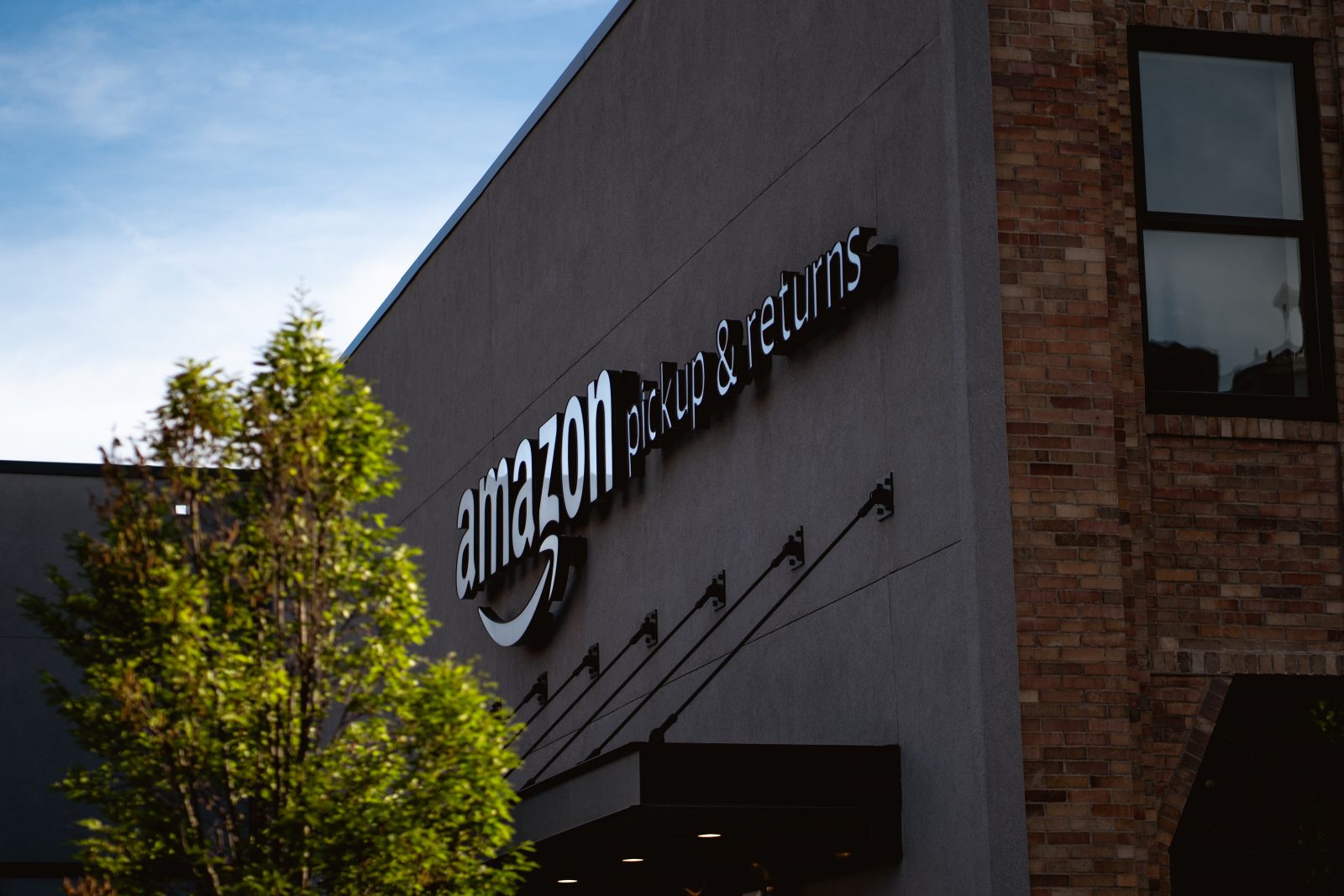
Biden Administration Gives the Green Light to Unionization Efforts in Amazon Warehouses
Technology Brief #40
Biden Administration Gives the Green Light to Unionization Efforts in Amazon Warehouses
By Scout Burchill
March 14, 2021
Summary:
By the end of the month, history may well be made in Bessemer, Alabama as workers at an Amazon warehouse there are currently voting on whether or not to unionize. If successful, it will be the first Amazon warehouse in the United States to be represented by a union and will surely send shockwaves throughout the nation, encouraging other Amazon warehouses to stand firm against the company’s notorious union busting tactics and begin the fight for their own collective bargaining rights.
In a short video shared on Twitter, President Biden delivered an emphatic message of support for the warehouse workers of Bessemer, Alabama. He condemned any attempts by Amazon to intimidate, threaten or coerce employees who attempt to organize and exercise their rights. Doubling down on the Biden Administration’s pro-union agenda, on Tuesday, March 9th, the House of Representatives passed the Protecting the Right to Organize (PRO) Act. It is one of the most transformative labor rights bills to see the light of day in recent memory. The bill’s fate is far from certain as it will face a considerable uphill battle in the Senate by both Republicans and Democrats that are more sympathetic to the interests of big business than those of the multiracial working class.
President Biden’s strong pro-union signaling, along with the PRO Act and the growing momentum of workers organizing for their collective bargaining rights in Amazon warehouses nationwide could set the stage for a long-overdue resurgence in labor rights. The warehouse in Bessemer, Alabama, which employs around 5,800 workers, will be voting by mail on whether or not to unionize through the end of March.
Analysis:
Despite paying substantial lip service to social justice causes – especially in the wake of the Black Lives Matter protests – Amazon’s business model, which has captured record profits during a deadly pandemic and a harrowing economic crisis for the working class, exploits the labor of working class Black and Brown communities. Look no further than their vile treatment and vilification of Staten Island warehouse employee Chris Smalls to see how the company actually treats their Black and working class employees who speak out about mistreatment in the workplace (See Technology Brief #27 for more details on this case and Amazon’s notorious union-busting tactics). On their website, Amazon claims to, “stand in solidarity with the Black community,” and rightfully denounces “the inequitable and brutal treatment of Black and African Americans.” The company also boasts of $10 million donations to organizations, “working to bring about social justice and improve the lives of Black Americans.” If Amazon truly cared about Black lives, they would not spend even more millions of dollars crushing unionization efforts that allow them to exploit the labor and lives of these communities. The example of Bessemer, Alabama presents a powerful case that labor rights are integral to rebuilding our democracy and strengthening the civil, political and economic rights of marginalized communities and the multiracial working class as a whole.
Bessemer, Alabama is an unlikely battleground for such a potentially momentous moment in American history to play out, but there are clues that help make sense of why Bessemer and why now. Alabama is one of the 28 ‘right to work’ states that have laws prohibiting union contracts from requiring non-union members to share in the cost of union representation and bargaining efforts even though these efforts tend to directly benefit them. These laws have proved extremely successful in undercutting the strength of unions in workplaces by causing union membership and funding to deteriorate. Amazon has quickly become the second largest employer in the United States, which was fueled by an unprecedented hiring spree this past summer as the company raked in record profits during the pandemic. As previously covered, the work in these warehouses is often physically demanding and workers are constantly tracked and monitored. This context is important in making sense of what is currently going on in Bessemer.
For one, Amazon has expended significant resources and hired specialists to track, crush and intimidate unionizing efforts in warehouses and Whole Foods Markets (also owned by Amazon) nationwide. There is a good chance that Bessemer, Alabama flew under the radar in their workplace surveillance efforts, as it is a ‘right to work’ state that lacks the aggressive organizing infrastructure and ethos of other states and communities. Furthermore, the Bessemer warehouse is a part of the incredible growth of Amazon during the pandemic. The warehouse is only about a year old, opening right as the pandemic started. According to the Retail, Wholesale and Department Store Union (RWDSU), which is assisting the unionizing efforts at the warehouse, employees reached out to them in the summer, shortly after the warehouse opened. In the midst of Amazon’s sky-rocketing growth and in the heat of the Black Lives Matter protests that rocked the nation, the beginnings of what could be Amazon’s first unionized warehouse in the United States took shape in the Deep South.
Bessemer is a largely working class suburb of Birmingham, Alabama with a population that is over 70% Black or African American. The area owes much of its early prosperity to steel and mining industries, which tended to be heavily unionized and integrated. Union members marched with Martin Luther King Jr. in the 1960’s and unions raised bail money to free demonstrators in Birmingham during the civil rights protests there. Labor rights, or workers’ rights, and civil rights are deeply intertwined and best complement one another through solidarity.
The political climate certainly seems ripe for a change. The results of the unionization vote in Bessemer, Alabama will be declared by the end of March. Whatever happens, the effect of this working class movement has already encouraged other Amazon employees to advocate for themselves. Over 1,000 Amazon employees across the country have since reached out to the RWDSU to learn how to unionize their workplaces. President Biden has so far positioned himself on the right side of this battle and hopefully he will continue to steer the rest of the Democratic Party in the same direction. As tech giants and corporate behemoths like Amazon continue to rake in record profits and serve the interests of their shareholders, the public is primed for a political party to truly represent the economic interests of the multiracial working class. The Democratic Party is being presented with an opportunity to do exactly that.
Engagement Resources:
AFL-CIO
https://actionnetwork.org/forms/pro-act?source=afl cio
The Congress of Essential Workers (Established by Chris Smalls)
Economic Policy Institute Study on Unions
Learn More Sources:
Biden’s message to workers
https://twitter.com/POTUS/status/1366191901196644354
Guardian Reporting on Union Vote in Bessemer
https://www.theguardian.com/technology/2021/feb/23/amazon-bessemer-alabama-union
Amazon’s Statements on Black Lives Matter
https://www.amazon.com/b?ie=UTF8&node=21226351011
Biden’s Pro-Union Campaign
New York Times Reporting on Union Vote in Bessemer
https://www.nytimes.com/2021/03/09/us/politics/amazon-union-alabama-biden.html
Vox news on the passage of the PRO Act in the House
https://www.vox.com/22319838/house-passes-pro-act-unions
Economic Policy Institute on PRO Act
https://www.epi.org/blog/the-pro-act-giving-workers-more-bargaining-power-on-the-job/

Biden Progressive Poverty Policies
Brief #111
Biden Progressive Poverty Policies
Rosalind Gottfried
March 12, 2021
Policy
President Biden’s 1.9 trillion dollar American Rescue Plan contains the most comprehensive anti-poverty program since President Johnson’s War on Poverty in the 1960s. The program will reduce overall poverty by one third and child poverty by one half. Poverty is expected to be reduced to 8.7% for the year compared with 13.7% previously. The effect on Black and Hispanic families will be even greater bringing 38% of Black families and 43% of Hispanic families out of poverty while affecting more than one half of the children in these demographics. This wide ranging program attacks poverty from multiple sources though it contains one time payments and policies which will expire at the end of 2021; nothing in the program extends into 2022 at this time.
The plan includes stimulus checks of $1400 per person, including children under 18, and will go out rapidly. The payments are available to individuals with incomes of less than $80,000, couples with income of less than $160,000, and heads of households with less than $120,000 of income. Though this infusion of cash is a lifeline for struggling families, other plan elements represent changes which could have a greater impact if they are extended beyond the year.
One program, heralded as the most innovative in addressing child poverty, is the extension of the child tax credit to $3600 for children under 6 and $3000 to children under 18. These tax credits can be taken in monthly installments from July through December, the rest to be credited in 2021 tax filings. This will give households up to $300 a month and extends the benefit to 23 million children whose families previously were ineligible due to their incomes being too low to qualify. Some observers consider this the most effective innovation in all of the anti-poverty programs since it will bring extra cash into the household before the end of the tax year.
Childless workers will also get a tax break in the form of an expanded Earned Income tax Credit of $1502, the largest increase since 2009, and increase of almost $1000. This program also drops the age limit to 19, from 25, and eliminates the upper age limit altogether.
The food supplement assistance program will be increased by 15% which would amount to close to $100 a month more for a family of four, and would extend through September. This is an effort to help families like those who reported being food insecure during the last two weeks of February.
State unemployment insurance will be federally subsidized by $300 a week through September 6th, and the first $10,200 of benefits will not be taxed. Federal pandemic assistance programs for freelance, gig workers, and private contractors will be extended. Housing assistance and healthcare aid will also be extended. Federal subsidies for purchasing health insurance under the ACA will be increased.
These programs provide a significant impact for struggling families and are widely supported by American voters. Not a single Republican in either chamber of Congress voted for Biden’s bill.
Analysis
Biden’s American Stimulus Plan represents a more comprehensive effort to address poverty than anything past administrations have done. A reduction in poverty, though it increases the annual budget, can be a cost saving measure in the long run. It is well documented that impoverished children sustain decreases in education, income, and stability as adults creating costs in lost revenue and government expenditures. Addressing poverty is the humane path to promote well-being in the present; America has a high rate of hunger and poverty when compared to other developed nations. Extending these programs beyond 2021 is one way to make a significant long term impact on poverty. Biden and the Democrats want to extend these programs but their battle is an uphill one if the stimulus vote is emblematic of the opposition.
Learn More
https://www.cnn.com/2021/03/11/politics/stimulus-package-poverty-child-tax-credit/index.html
Engagement Resources
https://www.jwj.org/ Jobs with Justice supports workers and increasing their wages and standard of living.

Media Literacy in Schools
Brief # 56 Education Policy
Media Literacy in Schools
By Emily Carty
March 12, 2021
As of 2021, 14 states have passed some sort of legislation related to Media Literacy. The Majority of these states passed the laws in the past few years, signaling the growing interest in monitoring the media’s influence on society through increasing society’s ability to sift through the media’s information. Youth today are engaged in digital media, and therefore media in general, even more than in previous generations. With the political process playing out on a screen, sensationalist or “fake news” plastering social media, and real, extensive studies into the benefits of being media literate — society today is coming to terms with the dangers of media illiteracy.
This topic of teaching Media Literacy in schools is multifaceted. Its moving parts include: changing landscape of digital media; abilities to use and access to technology and other forms of media; the known and unknown influence that misinformation has on the political process and society at-large; and of course, the resources and support to teach media literacies and critical thinking for the modern world in schools.
On media literacy in modern times the New York Times suggests that, “in a digital age, media literacy also includes understanding how websites profit from fictional news, how algorithms and bots work, and how to scrutinize suspicious websites that mimic real news outlets.” Not to mention, it involves teaching critical thinking, research, self-reflection — not all of our news and media will align with our beliefs. The presence of partisan, extremist, and conspiratorial media outlets, as well as mainstream social media platforms, have proven to attract millions of people who wish to read the things they want to believe, and research suggests that “fake news” travels farther and faster than less sensationalist, fact-checked news. This goes to show that unless algorithms and media sources provide all readers with multiple perspectives — and unless those readers are prepared to come into contact with perspectives differing from their own — our media-consuming society will continue to lean toward media aligned with their own perspectives.
While it may be daunting to combat media illiteracy, small, everyday practices and school assignments related to analyzing digital media, thinking critically, and following the source will teach students from a young age the value of asking questions and thinking critically about representation and identity in the media.
For students who spend several hours per day consuming non-print or non-academic media, schools have an opportunity to validate and even curb this form of media consumption through cultivating critical-thinking skills. If schools and states were to implement a curriculum that analyzed Facebook ads or Instagram “news” stories, it would give youth the opportunity to learn valuable skills in a way that is meaningful and relevant — rather than solely analyzing literature or poetry, which is also important.
A growing interest in media literacy over the past decade, and especially the past few years, has produced a handful of important studies analyzing young peoples’ competencies around media. A study sampling over 200 kids nationwide suggests that increased literacy in digital media — civics-related media and digital-engagement practice in this case — correlates with increased political participation. Other studies with larger samples have demonstrated that digital media literacy improves other learning indicators and health outcomes and even simple games and supportive teachers can improve young peoples’ ability to think critically about media.
Media literacy is more than just being able to spot “fake news.” It is about thinking holistically, thinking critically, and being able to recognize how different forms of media work and their impacts. Schools have a duty to prepare kids for adult life, and to be a prepared adult in democratic society we must be able to think critically and advocate for what we believe. To ensure a modernized curriculum that promotes media and digital literacy, we need legislation and common core standards — as well as buy-in and policies on a local level — that particularly address these issues.
Engagement Resources
Media Literacy Now — This group has toolkits for media literacy education implementation, provides templates and examples of legislation around media literacy education, and connects you with tools to start a chapter, reach out to representatives, or learn about the status of Media Literacy Education near you.
Common Sense Media — In addition to providing overviews of popular sites and games for kids, as well as collecting resources for teachers, Common Sense Media has a page dedicated to Advocacy work. Keep up to date on advocacy around media literacy, learn about actions you can take, and reach out to your representatives for applicable actions.
Youth Voices – This platform is used by schools and individual young people to interact with and create media that is relevant and insightful. Check out their posts, resources, best practices, and discussion questions to support youth voices or to encourage a young person you know to participate.
Sources
The New York Times – Should Media Literacy be Required in Schools?
Scientific American – We Should Teach Media Literacy in Elementary School
Education Week – More States Say They’re Teaching Media Literacy
Education Week -Teaching Media Literacy
Center For Media Literacy – Making the Case for Media Literacy in the Classroom
Critical Media Project – Media Literacies
ACT for Youth – Media Literacy
Connected Learning Alliance – Impact of Civic Media Literacy Engagement
Misinformation Review Harvard Kennedy School – Games and Media Literacy
https://asistdl.onlinelibrary.wiley.com/doi/epdf/10.1002/pra2.2017.14505401053
Association for Information Science and Technology – BeNetWise Program and Youth Literacy
Thinking, Skills, and Creativity – Social Media News Consumption and Literacy

Democrats Pass Massive Voting Rights Bill While President Biden Signs Voting Rights Executive Order
Policy Summary: Article One, Section Four, Clause One of the United States Constitution states
“The Times, Places and Manner of holding Elections for Representatives and Senators, shall be prescribed in each State by the Legislature thereof; but the Congress may at any time by Law make or alter such Regulations[.]”
On January 4, 2021, Rep. John P. Sarbanes (D-MD) introduced H.R.1, better known as the “For The People Act of 2021.” The bill is a massive comprehensive bill that seeks to address a number of issues associated with voting and elections. The bill is divided into three sections – Voting, Campaign Finance and Ethics.
The Voting component of the bill addresses Election Access by promoting the availability of online voter registration, automatic voter registration (AVR), standards for provisional voting and standards for voting by mail. The bill also promotes Voter Access by promoting voter friendly policies such as Election Day as a holiday and minimum notification requirements for polling place changes.
The Campaign Finance Section of the bill imposes additional disclosure and disbursement of campaign funds requirements, disclosure of contributions to PACs prior to an election and the proposal of a new small dollar financing framework for federal candidates.
The Ethics Section of H.R.1 seeks to impose a new ethical code for federal judges as well as for the federal legislative and executive branches and a new requirement for the disclosure of tax information for future presidential and vice – presidential candidates.
On March 7, 2021 President Joe Biden signed the Executive Order on Promoting Access to Voting. The Executive Order will direct federal agencies to expand access to voter registration and election information and also direct federal agencies to assist states under the National Voter Registration Act (NVRA). LEARN MORE, LEARN MORE
Policy Analysis: The two separate measures which were approved this week both address voter access and election administration issues that emerged during the 2020 election season but differ widely in their approach. The starting point for voter and election issues begins with Article One, Section Four, Clause One of the U.S. Constitution. That clause places the power for the administration of elections with the various states. That clause is the reason why there has been no uniformity in election practices across the country. As an example, all states have an absentee ballot component in their state laws but the power of the various states illustrates that there can be little differences. There can be a deadline of receipt of an absentee ballot by Election Day in one state and a deadline of seven days after Election Day in another state. These differences may seem inconsequential but in the 2020 chaos of a pandemic and falsehoods about voting these differences were magnified more than they should have been.
With H.R. 1, the Democratic controlled House of Representatives has signaled that expanding voter access and improving election administration will be a priority for the Democratic Party during this session of Congress. While states have been exercising their power to set rules for elections in their respective states by introducing a wave of bills to restrict voting Congress has decided to act by introducing a number of proposals that States should implement along with the enticement of financial assistance and grants for the States from the Federal Government. Some of the key provisions of H.R. 1 are not new but update existing laws such as the National Voter Registration Act of 1993 and the Help America Vote Act of 2002. There are updates that seek to utilize the Internet to help people register to vote and updates to the absentee ballot framework such as prohibiting voters from having to request an absentee ballot every year and allowing them to register for an absentee ballot once. The bill also encourages the use of independent redistricting commissions to prevent gerrymandering and also encourages youths under the age of 18 to register to vote. This bill is big, bold and comprehensive and tackles alot of voting related issues that, even if some provisions do not pass, still require a discussion about whether it should be something included in voting laws that may be passed in the future.
While H.R.1 addresses a significant amount of voting issues and faces a looming roadblock in the evenly split Senate, President Joe Biden’s executive order of March 7, 2021 tries to address what can be done now. President Biden has directed all federal agencies to report to him on what they can do to help expand voting rights. Additionally, he has directed all federal agencies to assist states under the National Voter Registration Act of 1993 (NVRA). This is significant because federal agencies that provide services to minority and underserved communities in a state can now provide their facilities to states to act as a voter registration center. People now don’t have to make long journeys to state Department of Motor Vehicles (DMV) or local voting offices. A federal agency providing unrelated services can now, with the approval of a state, offer voter registration services. This may sound like something that should have already been in place but for whatever the reason that had not been the case. With this executive order, President Biden has potentially expanded the options citizens, specifically underserved communities, have for where they can register to vote. This is an option that can be implemented relatively quickly unlike H.R.1 which will likely take months before it’s provisions are sorted out not to mention an upcoming difficult vote in the Senate.
It’s only been two months but the Democrats in Congress and President Biden have hit the ground running in tackling the voting issues that need to be addressed after the chaotic 2020 election season. LEARN MORE, LEARN MORE, LEARN MORE
Engagement Resources:
Brennan Center for Justice – non – profit group advocating for voting rights.
American Civil Liberties Union (ACLU) – non – profit group’s webpage on voting rights.
This brief was compiled by Rod Maggay. If you have comments or want to add the name of your organization to this brief, please contact Rod@USResistnews.org.

The House Passes a Bill to Help Small Farmers
Brief # 2 Agricultural Policy
The House Passes a Bill to Help Small Farmers
Katherine Cart
March 11, 2021
POLICY
The late spring months of 2020 saw coolers and freezers emptied of steaks, chicken thighs, pork chop. COVID-19 outbreaks amongst the workers of large meat processing plants slashed profits for beef, pork and poultry slaughterhouses. The size of meat retailers tends towards the massive. Three corporations control roughly 90% of the poultry market and four control 85% of the beef market. During that eerie period of empty supermarket freezers and vacant transport trucks, consumers turned to e-commerce for their meat shopping. This abrupt surge of buying power was aimed at a wall of red tape: many small meat and poultry processors are unable to sell beyond their own state lines. Consumers came up empty-handed. Retailers missed out on sales.
The DIRECT (Direct Interstate Exemption for Certain Transactions) Act, seeks to amend selling restrictions and could be a boon for small meat and poultry producers. Currently, twenty-seven states adhere to state-regulated processing inspections; many of their processors cannot sell out of state. The act would allow for “meat inspected by the State to be sold online and across state lines, opening up new markets for meat producers and processors,” says Congressman Cuellar
The act does not loosen any inspection guidelines or allow for lower product quality; processors producing meat and poultry for human consumption already are appraised by federally-approved guidelines. Products would still be traceable from retailer to consumer in the event of a wide recall. While some small processors already sell interstate through the Cooperative Interstate Shipment programs, processors outside of CIS programs that are inspected by Meat and Poultry Inspection programs approved by the Food Safety Inspection Service cannot sell out of state. The means of interstate sales are already in place but are limited by current legislation. The DIRECT Act would allow the continuance of CIS sales while broadening the scope of the consumer and the market of the small retailer.
ANALYSIS
Introduced by Representatives Dusty Johnson (R-SD) and Henry Cuellar (D-TX) in late February 2021, the DIRECT Act has bipartisan support. However, similar bills have been introduced before: the New Markets for State-Inspected Meat and Poultry Act of 2007 died without public hearing. Some of the act’s language was evident in the 2008 Farm Bill, founding the option for state-inspected meat and poultry plants to ship across state lines via the CIS program. In 2018, seeking broader selling freedom for processors of less than fifty employees, the New Markets for State-Inspected Meat and Poultry Act was introduced, but ultimately did not go to vote. The DIRECT Act has been submitted to the Subcommittee on Livestock and Foreign Agriculture. Though its future may yet be uncertain, perhaps the trials and trends of the past year will play out the DIRECT Act in a stronger light. Consumer reports show buyers searching out small retailers online. Small meat retailers with state-line road blocks between production and market, like the cattle ranchers of South Dakota, have amplified support of previous years.
There is some push-back against the DIRECT Act. The North American Meat Institute (NAMI) maintains that as just seven states since 2011 have adopted the CIS program, the roadblock to interstate-selling is of the state, not federal, level. However, the CIS program is restricted for use by meat processors with fewer than 25 employees. Furthermore, the CIS application is long and – though the processors applying already adhere to FSIS-approved guidelines – uncertain to yield approval. Individual livestock and poultry producers cannot apply, but can sell their product across state lines if they choose to process through a CIS-inspected meat processor. State inspection programs are required by law to abide by standards “at least equal to” those of federal-inspected plants. These are the same standards that foreign meat and poultry processors selling to the U.S. are required to have.
The COVID-19 pandemic has underlined the need to strengthen the relationship between small retailers and consumers across all markets. Though the language of the DIRECT Act is concise, the implications are many. Erik Jennings, President of the South Dakota Cattlemen’s Association, noted that “through the COVID-19 pandemic we have experienced a trend for consumers wanting to source beef directly from ranchers.” Current restrictions on interstate sales prevented consumers from freely choosing meat products. Instead, most consumers are presented with what their nearby grocers have displayed – products most likely sourced from meat conglomerates like Tyson, Cargill, JBS USA or SYSCO.
The National Cattlemen’s Beef Association began advocating early last year for the allowance of interstate e-commerce, responding, says NCBA’s Todd Wilkinson to an “urgent need for our industry to expand opportunities for state-inspected meatpackers.” The DIRECT Act will provide consumers with the opportunity to voice both dissent and support for individual processors through e-commerce and support retailers across a broader spectrum of industry practices. “There is no reason a steak should be more difficult to order online than any other items on your grocery list,” says Patrick Robinette of the U.S. Cattleman’s Association.
Currently, twenty-three states operate under USDA inspection. The processors in these states are able to sell across state lines. Large meat producers have the financial capital to choose in which state they ranch, thus opening wide their market. Smaller ranchers typically have less freedom to move their place of business to a state operating under USDA inspection. Wealth begets wealth.
The act is not alone in its focus on US meat production policy. The Packers and Stockyards act of 1921 has received recent attention; the recently introduced Justice for Black Farmers Act would reform the language of the act to better protect workers, ranchers and consumers of meat mega-corporations. Larger, industrial meat-processing employees often suffer deleterious conditions, a fact painfully highlighted by COVID-19 outbreaks in unsafe, cramped production environments. While the DIRECT Act does not provide direct reform of large meat and poultry processors, it does allow for the growth and diversification of smaller processors, the employees of which generally report higher job satisfaction.
The DIRECT Act is of benefit to consumers and small retailers alike, and though the allowance of consumers to choose from whom they purchase meat and poultry products could detract some profit from big processors already selling interstate, the immediate difference is nominal. President of the South Dakota Pork Producers council Shane Odegaard says that, “any way we can increase sales, or make our products more readily available to consumers is a win-win situation for farmers, small businesses, and our consumers.”
Learn More:
Niche Meat Processor Assistance Network
While NMP is an excellent resource for small meat and poultry processors, this Oregon State University extension also provides the consumer an in-depth look at what it takes to maintain the American meat market. https://www.nichemeatprocessing.org/
Get Free Range
Beyond providing educational content on small, sustainable animal products, GFR is an interactive tool that allows consumers to map-search for small meat and poultry processors in their area, supplying contact info, connecting consumers to producers and eliminating the need for corporate middle-man contracts. https://www.getfreerange.info/
Sources:
“”At Least Equal To” Data System Guidance for State Cooperative Meat and Poultry Inspection (MPI) Programs Electing Not to Use Public Health Information System (PHIS)” United States Department of Agriculture (January, 2015) Retrieved 9 March from: https://www.fsis.usda.gov/guidelines/2015-0003
Direct Interstate Retail Exemption for Certain Transactions Act. H.R. 547 117th Cong. (2021) https://www.congress.gov/bill/117th-congress/house-bill/547/text?q=%7B%22search%22%3A%5B%22meat%22%5D%7D&r=4&s=10
Nemetz, Russel. “Bi-Partisan DIRECT Act Introduced to Help Local Meat Processors.” (2 February, 2021) Retrieved 5 March from: https://www.aginfo.net/report/48580/Land-Livestock-Report/Bi-Partisan-DIRECT-Act-Introduced-to-Help-Local-Meat-Processors#:~:text=The%20DIRECT%20Act%20will%3A,of%20beef%2C%20100%20lbs.&text=of%20lamb
New Markets for State-Inspected Meat and Poultry Act of 2007. S. 1150 110th Cong. (2007) https://www.congress.gov/bill/110th-congress/senate-bill/1150/text?q=%7B%22search%22%3A%5B%22%5C%22New+Markets+for+State-Inspected+Meat+and+Poultry+Act%5C%22%22%5D%7D&r=6&s=9
“Open Markets and Allies Demand Antitrust Enforcement in Meat Industry to Protect Workers, Farmers.” (1 May, 2020) Retrieved 5 March from: https://www.openmarketsinstitute.org/publications/open-markets-allies-demand-antitrust-enforcement-meat-industry-protect-workers-farmers
Schwab, Andy. “DIRECT Act Could Help Sell State Inspected Meat Through e-Commerce.” Northern Ag Network (28 January, 2021) Retrieved 5 March from: https://www.northernag.net/direct-act-could-help-sell-state-inspected-meat-through-e-commerce/