

JOBS POLICIES, ANALYSIS, AND RESOURCES
Latest Jobs Posts
New Top Dogs, Same Old Tricks: Uncovering the Power of Big Tech, Part 1 Washington’s Biggest Influencers
Brief #44—Technology
By Scout Burchill
Move over Big Oil and Big Tobacco. According to a new report by Public Citizen, Big Tech companies now run the largest lobbying operations in Washington. For the first time ever, Facebook and Amazon topped the 2020 list of individual corporate lobbying spenders. Facebook spent close to $20 million and Amazon was not far behind spending close to $19 million, about 30% more than Comcast Corporation, the third highest spender. Since 2018, Amazon and Facebook have increased their spending by 30% and 56%, respectively.
These sums only represent reported federal lobbying dollars. Additional spending to gain influence through campaign contributions, Super Pacs, advertising campaigns, research funding, non-profits, associations, federations or trade groups, as well as state, local and international political spending are not included. Taking reported campaign contributions into account, Amazon and Facebook spent a combined $124 million in lobbying and campaign contributions during the 2020 election cycle alone.
Will Biden Save OSHA? An Assessment of the Weakened Regulatory Agency
Brief #103—Health And Gender
By Lily Lady Cook
The Occupational Safety and Health Administration (OSHA) was founded in 1971 to protect workers from hazards on the job. OSHA has faced intermittent funding challenges since the ‘70s, and reached new lows under the previous administration. Currently, the U.S. has one labor inspector for every 70,000 people although The International Labor Organization recommends one for every 10,000 people. This means that about 1,850 inspectors are responsible for overseeing the safety of 130 million workers. At the height of the COVID-19 pandemic, the Department of Labor criticized OSHA for its lack of regulatory guidance and decreased on-site inspections. On the campaign trail, President Biden called upon then-President Trump to double the amount of OSHA investigators; once in office, he instructed OSHA to release Emergency Temporary Standard (ETS) guidelines for employers by March 15. OSHA did not follow through on this order, possibly due to legal barriers related to the ‘grave danger’ precondition necessary for their release. In the absence of federal guidelines, separate states established their own ETSs. OSHA did, however, issue a National Emphasis Program in March, which increased pandemic-related inspection mandates for high hazard industries.
New Top Dogs, Same Old Tricks: Uncovering the Power of Big Tech, Part 2
Brief #45—Technology
By Scout Burchill
What exactly does progressivism mean nowadays? This question is worth thinking about as a consortium of tech companies have recently announced the creation of a business association called the Chamber of Progress. Positioning itself as a center-left progressive organization, it is funded by tech companies like Amazon, Facebook, Doordash, Google, Grubhub, Instacart, Twitter, Uber, Zillow and a few others. Their website describes the partnership as “a new tech industry coalition devoted to a progressive society, economy, workforce, and consumer climate.”
Beyond advocating for progressive causes, the organization aims to steer the conversation around tech regulation and Section 230, of which they oppose any reform or repeal. The Chamber’s first official policy engagement is to support the passage of two recent voting rights legislation bills (the “For the People Act” and the “John Lewis Voting Rights Advancement Act”) and to condemn voter suppression proposals that are currently pending in 43 states.
American Withdrawal From Afghanistan
Brief #108—Foreign Policy
By Will Solomon
Last week, President Biden announced plans for an American military withdrawal from Afghanistan by September 11 of this year. The date will mark the 20th anniversary of the 9/11 attacks, the events that precipitated the invasion of that country, and the catalyst for what subsequently became the longest-running war in American history. Biden’s announcement was received largely positively, both by those who have demanded the withdrawal for a long time (Biden himself once stated that America would leave Afghanistan by 2014) and even by some more traditionally hawkish members of the national security establishment, who recognize the war has lost popular support and legitimacy, and is in practice un-winnable.
This is not to say approval was universal: a significant sector of the national security state would evidently be content with a drawn-out occupation, and many neoconservatives—Max Boot, Bill Kristol, Liz Cheney, and others—have been vocal in their opposition to Biden’s plan. There are also reservations from the anti-war sector: many contend that Biden’s announcement obscures the heavy unofficial American military presence, in the form of special forces, drones, and mercenaries and other contractors who will remain after American troops leave. Across the spectrum, there is also concern for the direction Afghanistan may go, even if clear solutions to avoiding outcomes like a Taliban takeover are not readily apparent.
Derek Chauvin Found Guilty in Trial over George Floyd’s Death
Brief #13—Social Justice
By Erika Shannon
For almost a month, the nation has been watching the trial of former Minneapolis police officer Derek Chauvin. He was on trial for murdering 46-year-old George Floyd; the unfortunate events leading to Floyd’s death unfolded when police were called to a convenience store over a counterfeit twenty-dollar bill. Former officer Chauvin responded to this call (with 3 other Minneapolis police officers), and ended up kneeling on George Floyd, cutting off his air supply for approximately 9 minutes and 29 seconds.
On April 20th, Derek Chauvin was found guilty on all three counts that he was facing in the trial: unintentional second-degree murder, third-degree murder, and second-degree manslaughter. Sentencing will be in eight weeks, and while the charges collectively add up to 75 years in prison, focus will be on the most serious charge of second-degree murder. This charge carries with it up to 40 years in prison. Many are holding their breath and hoping for the maximum sentence possible.
Our Migrant Workforce: Who Are They? How Did They Get Here?
Brief #121—Immigration
By Kathryn Baron
Migrant workers support the US economy providing American industries like agriculture and technology the critical labor force they need to prosper. In 2019, more than 900,000 temporary foreign workers visas were granted, compared to only 400,000 in 1994. During lockdown measures in 2020, Trump suspended all temporary work visas to ensure public health safety.
The first migrant labor program came during WWI due to severe labor shortages and drew in agricultural laborers primarily from Mexico. In 1952, lawmakers attempted to regulate and consolidate temporary visa regulations into a comprehensive Immigration and Nationality Act (INA), which introduced the H2 visa (the precursor to the H1B). There are currently 4 types of H-visas for temporary workers (with the 4th being for spouses and unmarried children of H-visa recipients). See below for an explanation of the different H type visas that that are used by migrant workers.
Is Broadband Internet Access for All Possible? Ask the Biden Administration
Brief #43—Technology
By Charles A Rubin
The Biden administration infrastructure bill will prioritize broadband expansion as a top goal. The plan earmarks $100 billion to bring affordable internet to all Americans by 2029. The plan’s goals are to reach 100% high-speed broadband coverage across the US by prioritizing broadband networks owned, operated by, or affiliated with local governments, non-profits, and cooperatives. The emphasis of this plan is to not make this endeavor the province of big tech for which the Biden administration has a healthy mistrust. The scope is on a scale as such projects as rural electrification during the administration of FDR. Is it enough?
Reunited; Science and Government… And It feels so good.
Brief #112—Environment
By Shannon Q. Elliot
Biden and Harris walked into a cyclone of environmental ludicrousness as they entered The White House. The previous four years disavowed regulatory science, and neglected to create policies which would support public health and the environment. The policies enacted during the Trump era are now being reevaluated via Executive Order (EO) “Protecting Public Health and the Environment and Restoring Science to Tackle the Climate Crisis.” Under the EO, federal agencies will vet existing environmental policies, vowing to hold polluters accountable, and discuss innovative ways in which to restore and confront environmental crisis.
Biden and the Conflict in Ukraine
Brief #107—Immigration
By Will Solomon
The last several weeks have seen a significant escalation of tensions in Eastern Ukraine, a focal point of confrontation between the United States/NATO, and Russia. It has been reported that Russia has amassed troops on the Ukrainian border, with some estimates suggesting as many as 40,000 are currently stationed there. Russia has publicly claimed their troop movements are due to NATO provocations. Much of Eastern Ukraine, a predominately Russian-speaking region, has been effectively controlled by Russian-backed separatists since 2014.


Income Inequality in California Points to Economic Shifts Nationwide
Economic Policy
Brief # 103
Income Inequality in California Points to Economic Shifts Nationwide
By Linda F. Hersey
December 29, 2020
As California goes, so goes the nation.
Whether it is culture, policy or innovation, the nation’s most populous state has long been a frontier for change and a reliable predictor of trends for the rest of the U.S. and around the globe.
That is among the reasons why the widening income gap between the state’s wealthiest and poorest citizens, coupled with an outmigration of the middle and working class, increasingly concerns economists and policy makers.
California may command the nation’s largest economy – indeed, among the largest in the world — but it also has among the highest poverty rates in the U.S. California’s poverty rate is 19 percent while the poverty rate for the nation is 14 percent.
Economists warn there is no easy fix. Income inequality in California, they argue, points to significant changes well under way across the economy, as high-tech automation deletes the need for human labor in manufacturing and other traditional jobs.
For Californians, these are the best of times and the worst of times, economically. The San Francisco Bay area, for example, enjoys a net worth of close to a half-million dollars per resident. Yet San Francisco’s historic Tenderloin neighborhood reports a poverty rate that hovers at just over 50 percent.
Fundamental Structural Shifts in the Economy
Richard Florida, who directs the Martin Prosperity Institute at the University of Toronto, argues that California is experiencing fundamental structural changes in its economy that are likely to occur in other states.
Florida told the New York Times that income inequality seen dramatically in California is a “symptom of the bifurcation of the labor market into a small share of knowledge jobs and a much larger share of low-wage service jobs.”
California, the leading incubator state for knowledge jobs, ranks among the top 10 states in economic growth, outpacing the nation as a whole.
California also is experiencing a population decline – with a net outmigration of residents to nearby western states that include Texas, Arizona and Oregon, as people who are struggling move elsewhere.
People most likely to leave California are high-school educated, low- and middle-income adults with families, while college-educated high-income earners are more likely to move to the Golden State, according to a 2018 report by the California Legislative Analyst’s Office.
The Public Policy Institute of California reports that the biggest determining factor for economic prosperity for Californians is education.
The job market in the knowledge economy rewards people with a four-year college degree or higher, while median income has dropped for adults without college degrees.
There also are racial disparities in income levels that need solutions. The Public Policy Institute of California found that only about 10 percent of the state’s top wage earners – those with incomes above the 90th percentile — are Latino and African American, though they make up more than 40 percent of the state population.
Renewed Focus on Education, Economic Development
California is a bellwether for economic transformation in the U.S. and other advanced nations around the globe. While less dramatic, income inequality is up in other states, including Alabama, Nebraska, New Hampshire, Virginia and New Mexico.
The California experience, and the lessons learned, need to be recognized and applied in economies moving rapidly into the new Knowledge Age, which favors the well-educated and technological elite.
Closing the income gap will require a combination of policy changes to reduce disparities, including more tax and safety net programs, along with a renewed focus on improving opportunities for education, economic development, housing and transportation.
Engagement Resources
Public Policy Institute of California is a nonpartisan think tank dedicated to improving and advancing the state’s public policies through independent research.
Legislative Analyst’s Office of California is a nonpartisan fiscal and public policy adviser to the state Legislature.
U.S. Census Bureau follows a directive to measure poverty in the United States. Here is a primer on how the Bureau defines and measures poverty.

Biden and COVID-19: 100 Million Vaccine Doses in 100 Days
Brief # 87 Health and Gender Policy
Biden and COVID-19: 100 Million Vaccine Doses in 100 Days
By Justin Lee
December 28, 2020
Policy
In early December, President-elect Joe Biden announced the new members of his public health team and objectives he plans to implement within in his first 100 days in office. These objectives include a federal requirement for Americans to wear masks where Biden is legally able to enforce compliance and seeking strategies to open the majority of schools across the country.
Another objective Biden specifically mentioned is his plan to distribute 100 million doses of COVID-19 vaccine within his first 100 days in office. The Food and Drug Administration (FDA) issued Emergency Use Authorizations (EUA) for the Pfizer-BioNTech vaccine on December 11th, 2020 and for the Moderna vaccine on December 18th, 2020. Since then, over 9.5 million doses have been distributed across the nation, yet only a little more than a million people have been vaccinated as of the end of December.
The Trump administration had a federal goal of inoculating 20 million Americans by the end of 2020; a goal that was missed by a laughable margin. Is Biden’s plan to vaccinate 50 million Americans before May 2021 another laugh for skeptics?
Analysis
In short, Biden’s road to vaccinate 50 million Americans is possible but filled with many challenges. Here are some basics to consider:
Vaccine delivery timing: In late December, the Trump administration reached a second deal with Pfizer to secure an additional 100 million doses of the COVID-19 vaccine. This news follows a similar agreement with Moderna, with the government reaching a second agreement to double their initial order by 100 million doses. In total, the US has secured 400 million doses; enough to vaccinate 200 million Americans (over 65% of the US population) with additional options with both companies to purchase hundreds of millions of more doses.
The potential issue here is not necessarily “how much”, but of “when”. The government’s second agreements with Pfizer and Moderna for over 200 million doses indicate delivery completion well into Q2 and early Q3 of 2021. As the first 200 million doses of the Pfizer and Moderna vaccines are currently being distributed, Biden’s estimate of 100 million doses by mid Q2 does seem realistic. However, both vaccines have had slower-than-anticipated launches and distributions. As the supply seems to be readily available to hit Biden’s goal, administrating the vaccine into patients seem to have its own separate hurdles.
Manufacturing supply chain: Both vaccines are composed of the active ingredient messenger RNA, a series of lipids (fats), salts, and sugars. Each ingredient serves a different purpose as the vaccine is frozen/refrigerated, thawed, and administered. A shortage of one of these components, or a shortage of the laboratory equipment used to manufacture the vaccines, can lead to delays in dose delivery. As Pfizer, a global biopharmaceutical giant which generated over $50 billion in revenue in 2019, has experience in mass-scale global supply chains, Moderna is the opposite. Moderna has never had a marketed product, and their inexperience in global launches and the current unprecedented demand can lead to future supply chain bottlenecks.
Vaccine storage: As many are aware, both vaccines require storage under specific temperatures. Pfizer, in particular, require their vaccines to be stored in minus 70 Celsius, which in turn requires administering health clinics to have the specialized freezers for storage. Distributing vaccines requiring sub-arctic temperatures also require large amounts of dry ice and packaging compartments suitable for freeze delivery. A shortage or unavailability of either can also pose critical risks to delays in vaccine distribution.
Learn More
Helpful links
https://www.cbsnews.com/news/biden-covid-vaccine-100-million-doses-first-100-days/
https://www.fda.gov/media/144412/download
https://www.fda.gov/media/144636/download
Engagement Resources
The American Red Cross heavily relies on volunteers to assist during a health crisis; including the COVID-19 pandemic. Volunteers play active roles in clinical and non-clinical settings. The American Red Cross also operates one of the largest blood donation networks in the US. To volunteer in a clinical setting and/or to give blood, use the links below:
https://www.redcross.org/volunteer/become-a-volunteer.html#step1
Trust for America’s Health is a public health policy and research organization that advocates for a nation that values the health and well-being of Americans. Their organization has valuable information regarding health policies and issues on a federal and state level, and also actively publishes reports regarding public health on their website. To find more information or to get involved, use the link below:
The American Public Health Association is an organization aimed to Improve the health of the public and achieve equity in health status. As the main publishers for the American Journal of Public Health and The Nation’s Health newspapers, APHA educates the public on public health, policy statements, and advocacy for public health. To volunteer or become a member, use the link below:

Still No Vaccine For Misinformation: Anti-Vax Conspiracies Spread Online Despite New Policies
Technology Brief #30
Still No Vaccine For Misinformation: Anti-Vax Conspiracies Spread Online Despite New Policies
By Scout Burchill
December 23, 2020
Summary:
As vaccines for the COVID-19 virus begin to be distributed across the country, social media platforms have pledged to combat anti-vaccination misinformation. Deceptive and unfounded conspiracy theories purporting a host of wide-ranging claims about the Covid vaccine have been spreading on social media for a number of months, but now that the vaccine is finally out, these claims are multiplying. These conspiracies allege, among other things, that the vaccine will microchip and track individuals, that it will cause genetic damage or cancer, that many people are experiencing adverse reactions to it, and that it has links to the Chinese Communist Party.
In response to this contagion of misinformation, social media sites have announced new policies to target debunked vaccine information. On December 3rd, Facebook announced that it would remove false claims about Covid vaccines that could result in “imminent physical harm.” Twitter followed suit by implementing a similar policy on December 16th, targeting the worst offenses and only labeling those that could mislead users. In spite of these more aggressive tactics, vaccine misinformation still runs rampant on these platforms. Among the worst culprits of this misinformation are the Children’s Health Defense, founded by Robert F. Kennedy Jr. and WorldTruth.TV. The National Vaccine Information Center is another leading source of misinformation and fear mongering that is widely shared on social media sites.
Analysis:
Anti vaccine (Anti-vax) sentiment is nothing new on social media, and has been a part of the online ecosystem for years. Despite social media companies’ promises to combat its spread, anti-vax propaganda has taken root in many conspiracy minded groups on social media and there seems to be no penalty for the worst super-spreaders of these falsehoods. The Children’s Health Defense and the National Vaccine Information Center are both examples of well established organizations with links to important figures in American politics and society. The anti-vax community is organized and has been around for years, so attempts by social media companies to suddenly clamp down now, just as the Covid vaccines begin distribution, is a bit like trying to put out a forest fire with a garden hose.
One of the more uniquely pernicious aspects of anti-vax conspiracies is that they are appealing to large swaths of the population and are found across the political spectrum. For various reasons, anti-vax conspiracies appeal to the libertarian right, Big Pharma skeptics, helicopter parents, ‘cruchy-granola’ liberals, minority groups, the affluent and the poor and a number of other sub-sections of society. Even Robert De Niro, a celebrity champion of the left due to his outspoken criticisms of President Trump, joined forces with Robert F. Kennedy to promote anti-vaccine views in Washington D.C. a mere three years ago. At this point, it’s an entrenched feature of American society.
For now, as the vaccine roll out is well underway, far more people are demanding vaccinations than the number of vaccines available. On the whole, this is a good thing. Public health officials, however, have expressed concern about the effect of anti-vaccine misinformation down the road, as a significant proportion of the population will need to be inoculated to stop the spread of the virus. In a recent Pew study, a majority of Americans said that they would get the vaccine, but 21% of the adult population said that they would not get the vaccine and are fairly certain that further information would not change their minds.
On top of conspiracy theories and institutional distrust, attitudes toward vaccines have unfortunately been affected by their politicization. Anti-vax sentiments have mostly found their home in the Republican party, who just this month invited an anti-vax doctor to testify in front of a Senate Committee. Despite being miles ahead of the Republican party on this issue, Democrats have also needlessly undermined public trust in vaccines for political reasons. When asked whether or not she would take the vaccine, Kamala Harris was widely criticized for expressing doubt about any vaccines introduced under a Trump administration, saying she “didn’t trust Donald Trump.” Perhaps the greatest irony of the vaccine’s politicization is the predicament it now puts President Trump in. Despite wanting to claim all the credit for the vaccine, many of his supporters refuse to take it and Trump has so far been unwilling to get vaccinated publicly.
To be fair, it is rational to have at least some legitimate concerns about the safety of these vaccines, considering that they have not been approved by the FDA and instead were fast-tracked to authorization under an Emergency Use Authorization. However, these concerns have largely been addressed by scientists and health officials. In fact, the science on vaccines in general is pretty clear for those who care to put in the effort. Vaccine misinformation online is largely based on falsehoods, and those political actors and opportunists who frame the issue as one of individual freedom rather than public health are equally at fault for misleading the public.
At its core, vaccine misinformation is a public health issue and should be treated as such. Facebook and other social media platforms have certainly played a part in proliferating misinformation, and in turn they do have a role to play in tamping down its continued spread. However, social media companies alone cannot stem the spread of these pernicious and misleading falsehoods.
While it is heartening to see high ranking officials demonstrate the safety of these vaccines by being publicly inoculated, in the long-run there is no vaccine for misinformation. The best way to combat anti-vax propaganda is to treat it like the public health emergency that it is.
Engagement Resources:
CDC information on the COVID-19 vaccines
https://www.cdc.gov/vaccines/hcp/vis/index.html
https://www.cdc.gov/coronavirus/2019-ncov/vaccines/vaccine-benefits/facts.html
Learn More:
Vaccine misinformation spreading despite new policies
https://popular.info/p/despite-new-policy-vaccine-misinformation
Social media platforms’ policies and their failures
https://www.vox.com/recode/22188680/facebook-twitter-youtube-misinformation-anti-vaccine-covid-19
Facebook’s newest coronavirus policy
https://about.fb.com/news/2020/12/coronavirus/
Pew Research on vaccine confidence
Anti-vax doctor at Senate hearing
https://www.nytimes.com/2020/12/06/us/politics/anti-vax-scientist-senate-hearing.html
Kamala Harris’s comments about vaccines
https://www.politico.com/news/2020/09/05/kamala-harris-trump-coronavirus-vaccine-409320

Recently Muzzled Voice Of America Fights to Renew its Voice
Foreign Policy
Author: Todd J. Broadman
Title: Recently Muzzled Voice Of America Fights to Renew its Voice
December 28, 2020
POLICY
Voice Of America (VOA) was established in 1942 to counter Nazi propaganda. The VOA is funded by the federal government and is overseen by the U.S. Agency for Global Media (USAGM). As a news broadcaster, the VOA’s mission is to provide “a balanced and comprehensive projection of significant American thought and institutions.” Since inception, the VOA has grown its weekly TV and radio programming to 1,800 hours in 40 languages with an audience of 236.6 million people worldwide. Its annual budget is $218.5 million and has about 1,050 employees.
In June of 2020, Trump appointed with US Senate confirmation, Michael Pack, as CEO of the USAGM. Pack is a conservative documentary filmmaker and close collaborator with Steve Bannon. Since his appointment, Pack has let go many senior VOA staff including its general counsel, dissolved its Board, begun an investigation of VOA’s chief White House reporter, and held up visas for many of VOA’s foreign journalists. His most flagrant move came recently when he lowered VOA journalist protections, limiting the independence of their reporting.
Significant among his replacements, Pack replaced VOA Director Amanda Bennett with conservative author and veteran broadcaster Robert Reilly as the VOA’s new director. According to Pack, “Bob’s inimitable experience and proven leadership as both a public servant and a private citizen will greatly benefit the entire agency.” Reilly, himself a former VOA director, authored “Making Gay Okay: How Rationalizing Homosexual Behavior Is Changing Everything,” in which he argues that widespread acceptance of gay culture harms society. For the past five years, Reilly has run the Westminster Institute, which focuses on anti-terrorism and the threat from Islamist extremism.
Because of its independent voice, the White House has termed the VOA a “disgrace.” In response, former Director, Amanda Bennet said that, “One of the big differences between publicly-funded independent media, like the Voice of America, and state-controlled media is that we are free to show all sides of an issue and are actually mandated to do so by law as stated in the VOA Charter.” In support of maintaining that charter and the integrity of the “firewall” between VOA journalists and political appointees, a federal judge has recently ruled that Pack’s decision to lower journalist protections was in breach of the VOA’s mission.
ANALYSIS
Pack’s appointment, and in turn, Reilly’s appointment, are in line with the Trump administration’s agenda and its “America First” policies. Due to their extreme views, VOA insiders have voiced the risk of reputational damage to the organization. What will listeners and readers overseas extrapolate from Reilly’s assertion that homosexual behavior is an “habitual moral failure?”
More damaging perhaps is abandoning balanced reporting altogether in favor of using this government media outlet to further an us versus them nationalistic stance. “VOA’s job should be to advance the justice of the American cause while simultaneously undermining our opponents,” wrote Reilly in a piece for the Wall Street Journal.
In stark contrast, VOA journalists who served overseas talk about their vital role in nourishing the many “information deserts” where the populace, particularly the poor, depend upon the VOA to deliver accurate information not only about the U. S., but more importantly, about their own country or area of the globe. Information blocked by governments that do not protect a free press.
In Chief US District Court Judge Beryl A. Howell’s 76-page ruling – originated from a VOA whistleblower lawsuit – he underscored the VOA’s charter to aim for objective journalism even as applied to the US government and the President. Trump’s lawyers argued the opposite: that as an arm of the government and as funded by US taxpayers, the VOA media outlets are not protected by the First Amendment. Objective journalism, in their view, is not to include the “propaganda” of other countries such as a recent VOA report comparing Chinese and American coronavirus deaths or the re-broadcasting of threats issued by the Iranian Foreign Minister.
The turmoil within the VOA has not gone unnoticed by President-elect Joe Biden. He has indicated that he’ll replace Pack and “clean house”; his choice may be Richard Stengel, former State Department official and Time magazine managing editor. Stengel is currently tasked with looking into the changes at USAGM wrought by the Trump administration. As with other agencies under this administration, roadblocks are feverishly being put in place to help extend holds on positions of power. One such roadblock is legislation now underway requiring a Senate-confirmed bipartisan board approve appointments to the position of VOA Director.
Resistance Resources:
- https://www.voanews.com/
- https://nieman.harvard.edu/ The Nieman Foundation houses a dynamic set of initiatives to promote and elevate the standards of journalism and educate and support those poised to make important contributions to its future.
- https://freedomhouse.org/ The Freedom House speaks out against the main threats to democracy and empower citizens to exercise their fundamental rights through a unique combination of analysis, advocacy, and direct support.
- https://cpj.org/ The Committee to Protect Journalists is an independent, nonprofit organization that promotes press freedom worldwide.

National Popular Vote Compact Best Bet To Reform Election Of U.S. Presidents
Policy Summary: Under Article II, Section 1, Clause 2 of the U.S. Constitution each individual State has the power to appoint the slate of electors who will vote in every presidential election. The Federal Government has no role in a State’s selection of its slate of presidential electors.
On February 23, 2006 the group National Popular Vote introduced their plan for a proposed interstate compact entitled “Agreement Among the States to Elect the President by Nationwide Popular Vote.” The plan was formulated by Dr. John Koza, a former professor at Stanford University, and was initially endorsed by a number of former Republican and Democratic politicians. The plan would be an agreement by a number of states to award all of their selected presidential electors to whoever wins the popular vote nationwide. The goal is to sign on as many states whose total number of electors would be more than 270 since a candidate must win more than 270 electors to win the presidency. On April 10, 2007 the State of Maryland became the first state to enter the compact when the National Popular Vote bill was signed into law by Governor Martin O’Malley after having passed both houses of the Maryland Legislature. On January 13, 2008, the State of New Jersey became the second state to enter into the compact after Governor Jon Corzine signed it into law.
Since the time those two states entered into the National Popular Vote Compact an additional 14 jurisdictions have entered into the agreement – an additional thirteen states and the District of Columbia. The total number of electoral votes from these 16 jurisdictions is 196. The interstate compact needs an additional 75 electoral votes (for a grand total of 271) to go into effect.
As of December 2020 and by the count of the National Popular Vote group of the remaining states that have not officially entered the compact, a National Popular Vote bill has passed at least one legislative chamber in nine states (AR, AZ, ME, MI, MN, NC, NV, OK, VA) that have eighty – eight (88) electoral votes combined. LEARN MORE
Policy Analysis: With the recent vote by the Electoral College to affirm Joe Biden’s victory over Donald Trump in the 2020 U.S. Presidential Election discussions about the role of the Electoral College have sprung up again. This time the discussion was a little more subdued and did not have the controversy of the 2016 election since Mr. Biden won both the popular vote and the Electoral College vote, which had not been the case in 2016 when Mr. Trump was elected. But with Mr. Biden’s razor – thin margins in states like Georgia and Pennsylvania and the likelihood that President Trump could have won re-election had he won those states the discussion turned to how to correct the flaws that are inherent in the Electoral College. Could a candidate who lost the nationwide popular vote win the presidency again?
The National Popular Vote Compact is one of the more intriguing proposals because of the support it has garnered. The fifteen states and the District of Columbia have been a good foundational step to get the interstate compact moving. But after closer inspection of the other states who have not joined yet the truth is that support for this compact is much more significant than what is being acknowledged on the surface.
Of the nine states comprising 88 electoral votes the bill has been approved in at least one legislative chamber, which means that there is some support for the bill in those states. And these are not states where Democrats are in control of the government. Arizona, Arkansas and Oklahoma are traditionally Republican states while Virginia and North Carolina are swing states that have voted both blue and red in recent years. In Nevada the National Popular Vote bill actually passed both state legislative houses but did not become official because Democratic Governor Steve Sisolak vetoed the bill. And in Colorado just this past election in November voters voted on whether to stay in the interstate agreement and the ballot measure passed with 52% voting to remain in the National Popular Vote Compact. (Colorado had officially joined in 2019 but the issue proved contentious and the issue was placed on the 2020 ballot for Colorado voters to vote on.).
What all of this information means is that this proposal is not a Democrat proposal or a Republican proposal. This plan has had bipartisan support from the beginning and has had bipartisan support as it has made its way through various state legislatures. And it has proven to have wide appeal as evidenced by the fact that it has passed at least one legislative chamber from states in various regions of the country and even has grassroots level support as evidenced by the 2020 ballot measure in Colorado. This indicates that support to reform the presidential election process is growing even if it has not cleared all of the bill enactment procedures in a number of states yet. The goal for the National Popular Vote Group is to continue lobbying state legislators in the remaining states and add enough states in order to surpass the 270 electoral vote threshold. There is real support behind this movement and once this agreement can add enough states the unique situation of installing a president who lost the nationwide popular vote can finally be discarded from the American political experience. LEARN MORE, LEARN MORE, LEARN MORE,
Engagement Resources:
National Popular Vote – group pursuing National Popular Vote Compact to reform U.S. Presidential Elections.
This brief was compiled by Rod Maggay. If you have comments or want to add the name of your organization to this brief, please contact Rod@USResistnews.org.

Congress Finally Agrees to a Tepid Stimulus and a Federal Budget
Brief #102
Congress Finally Agrees to a Tepid Stimulus and a Federal Budget
Rosalind Gottfried
December 20, 2020
Policy
A sustained disparity in the goals of Congressional Democrats and Republicans has ended in a compromise bill which leaves many Americans still vulnerable to the effects of the corona virus economy while providing a stopgap measure to avoid the worst case scenario. The 900 billion Stimulus bill is tied to a government spending plan which avoids a last minute government shutdown.
The stimulus includes a $600 direct payment to persons earning under $75,000. It includes money for people using Taxpayer Identification Numbers, making undocumented immigrants eligible who were barred for participation in the March stimulus. This figure represents a lower amount than proposed by the Democrats and more than that initially supported by the Republicans; it also had the support of President Trump. It also provides $600 per child. Direct infusion is necessary to help strapped citizens but insufficient for the 8 million who have fallen into poverty since June. It also may not be enough to help the unemployed avoid some of the consequences of long term unemployment.
The plan also provides for $300 a week of federal subsidies for regular unemployed benefits. It also extends the access of gig and freelance workers though these will expire in less than three months. Without the new stimulus, an additional 12 million workers would have lost their benefits at the end of the year. Both the direct cash payments, and the unemployment subsidies, are half of what was provided in the March stimulus.
The stimulus also covers $285 billion for businesses in Paycheck Protection Programs of forgivable loans; $20 billion in federal loans for small businesses, extension of aid to nonprofits, local news sources; and $15 billion for entertainment venues including independent movie theaters. The bill provides $82 billion in aid to colleges and schools; $13 billion in nutritional supplements; funding for tracing, testing, and vaccine distribution; $7 billion for broadband access; 25 billion in rental assistance; and an extension of the moratorium on evictions which had been set to expire at the end of the year.
In reaching this agreement, the Democrats dropped demands for aid to state and local governments which face large layoffs. They also won an extension for spending funds remaining from the March stimulus. The Republicans dropped demands for liability protections for hospitals and businesses. The two parties agreed on language limiting the power of the Federal Reserve to make loans and emergency funding for businesses, municipalities, and other institutions to prohibiting copycat programs passed in the March stimulus; the Republicans wanted to make a more sweeping limitation on the power of the Fed.
The government spending bill, scheduled to begin at 12:01 Tuesday (with a one day emergency provision for Monday) will see funding for twelve major federal departments, and the safety net, sustained to the end of the fiscal year (September 30, 2021). The spending bill contains a provision to ban supplemental bills form out of network providers, forcing the providers to work with the insurance companies, as promoted by the Democrats. The budget will also expand federal Pell grants for tuition to low income students and revoke a ban on grants to prisoners pursuing education while incarcerated. Provisions for clean energy to counter climate change and to reduce hazardous chemicals in refrigeration and air conditioning are also in the spending plan for the first time in ten years. These are seen as a hit on President Trump’s administration.
Analysis
In the end, the program represents a huge step down from the over 2 trillion plan the Democrats supported and the more stingy plan proposed by the Republicans. Nancy Pelosi has called the current agreement an “initial step” and Biden sees it as a down payment on the stimulus plans he hopes to implement in his initial weeks as President.
The current program may help the most desperate situations from occurring in families with unemployed and curtailed workers but it comes too late for many workers and businesses. Research indicates that half of the businesses that shut down in the spring failed to reopen or did so but then shuttered again. The ultimate fate of these businesses is hard to predict. Biden’s commitment to provide more aid is highly likely to falter with the expectation of economic recovery anticipated by the availability of vaccination programs.
Long terms effects of the recession are disproportionately felt by the lower income workers who are more likely to be women and persons of color. The racial income gap has widened and women are leaving the labor force in greater numbers.
Time will tell whether President-elect Biden will successfully infuse more aid into the struggling economy but if the debacle of the prolonged debate on the current stimulus is any indication, he appears unlikely to meet the challenge, especially with the Republicans touting the return of commerce that the vaccine promises.
Learn More References
https://www.nytimes.com/2020/12/20/us/politics/congress-stimulus-deal.html
https://www.nytimes.com/2020/12/20/business/economy/stimulus-bill-congress.html
Resistance Resources
Organization to get out the vote in Georgia where two pivotal Senate seats will be elected in early January

The Crisis In American Higher Education; College Enrollment; Student Debt; Student Loan Forgiveness
Brief #101
The Crisis In American Higher Education; College Enrollment; Student Debt; Student Loan Forgiveness
Rosalind Gottfried
Economics
December 21, 2020
Policy
The pandemic has exacerbated troubling trends in higher education. College enrollment fell by 11% from 2011-2019. The rate of decline accelerated in the past year, with undergraduate enrollment falling by 3.6% from the previous year; that is two times the previous year’s rate. The brunt of the decline has been sustained by Community Colleges where enrollment fell by 10%. Community Colleges, public institutions with two year college degree and certificate programs, educate the largest group of college students in the country and service a disproportionately high percentage of low income students and students of color. They also suffer the most underfunding, in higher education, as they don’t command as much public money as four year schools and they maintain low tuition as part of their mandate.
The high school class of 2020 demonstrated a 21.7% drop in college enrollment which was unevenly spread over the graduating class. In high poverty high schools the drop was 32.6% while the drop was only 16.4% in low poverty schools. The fear is that the class of 2021 will have similar data. FAFSA (the federal application for student financial aid) applications are down 14% and some colleges, including the California State University system, have extended their admissions deadlines in the hope of gaining more applications. During the pandemic, short certificate graduate programs and Masters Programs showed some increased enrollment, along with for profit schools. Many for profit undergraduate programs spend a lot of money on advertising and they charge high tuition and generally show low graduation and employment rates. These colleges are thought to be siphoning some of the potential pool of community college students, partially because of their advertising and also because they have a history of easy access and online learning.
Even when the effects of the pandemic are eliminated, demographic shifts in the population point to a decreased pool of eligible college students. The portion of students graduating from high school will peak in 2025 and then face a period of sustained decline until 2037. In response to lowered enrollments, many institutions have experienced layoffs and furloughs among staff and faculty. Some schools have canceled sports, certain majors, and even whole departments. Fifty universities have suspended enrollment in their doctoral programs.
The pandemic has many students questioning the efficacy of gaining a higher education, especially among low income students. Many students are wary of paying tuition for online learning instead of opting to join the workforce and make money, potentially saving it for future education opportunities. Data show, however, that the longer an individual delays college attendance, the less likely they are to ever attend. The most vulnerable students are first generation college students and they are disproportionately from low income and/or non-white households. These students are also vulnerable to failing to complete degree programs and still owing payments on student loans, without the benefits of jobs requiring college degrees.
Student loan debt is at a record high of 1.6 trillion dollars. Student loan debt is second to mortgage debt. Forty five million people hold student loans. Forty five percent of loan holders, benefitting from student loan forbearance in place until January 31st, say they fear they will be unable to make their subsequent payments. The median loan payment is $222 and the average (mathematical) is $393, likely accounting for the small proportion of students with over 100K in debt. Thirty percent of students graduate without any loan debt and 23% have less than $20,000 in debt. These figures likely represent the students from affluent families or the small portion that gain full financial aid. These figures highlight the likelihood that the low and moderate income students are the most likely to accrue debt and they are also the ones who are most likely to struggle to make payments. If young adults are not saddled with student debt, they could buy houses, cars, start businesses and families—all things which have been delayed or eliminated. It is estimated that loan forgiveness would boost the GDP by 108 billion dollars per year and add 1.5 million jobs.
Analysis
President elect Joe Biden has pledged to address the issue of student debt forgiveness. Senators Warren and Schumer support eliminating up to $50,000 in student debt and that is one consideration. A majority of Americans favor student loan forgiveness of up to $50,000. Another possibility is that Biden will move quickly to forgive $10,000 in federal student loans per individual, through Executive Order which is possible under the current Higher education Act. The senators also want to eliminate the tax liability on the loan forgiveness which is currently accrued by the small portion of students who have gained forgiveness under public programs. Americans feel that tax breaks made for the very wealthy are unfair and “regular” Americans should also get a comparable break. Those tax breaks made under the Trump administration did not improve the economy though canceling debt for the lower income groups would boost the consumer power of that group.
The Biden administration is considering multiple fixes to the crisis in higher education. In addition to forgiving debt, the proponents of reform suggest restructuring education funding and making four year public colleges tuition free. The federal government will have to support higher education in new programs because tuition increases already have stretched family budgets. In 1968, the ratio of college tuition to income was 1:30; today it is 1:5. Incomes have stagnated or increased only minimally. Many schools increased tuition during the Great Recession to compensate for slashed state budgets and cannot sustain viability without a federal infusion of funds. The millennials are the first generation to be worse off than their parents and the bulk of this trend is seen among the most vulnerable groups, namely low income students and students of color. Biden can help, though there is concern that if he invokes his power of Executive Order it will be contested in the courts, possibly up to the US Supreme Court, a worrying prospect.
Learn More References
- https://www.npr.org/2020/12/17/925831720/losing-a-generation-fall-college-enrollment-plummets-for-first-year-students
- https://www.forbes.com/sites/zackfriedman/2020/02/03/student-loan-debt-statistics/?sh=280d965c281f
- https://www.forbes.com/sites/robertfarrington/2020/12/17/can-biden-really-forgive-student-loans-by-executive-order/?sh=3cd411f1eed5
- https://www.nbcnews.com/think/opinion/why-biden-should-get-rid-student-debt-or-without-congress-ncna1251160
- https://www.forbes.com/sites/zackfriedman/2020/02/01/do-you-really-need-student-loan-forgiveness/?sh=a61b94b507eb
Resistance Resources
- https://studentaid.gov/manage-loans/lower-payments/get-temporary-relief/forbearance
- Website for help with student loan payments

Alternatives to Deadly Force: Tasers
Social Justice Brief # 2
Alternatives to Deadly Force: Tasers
Policing in America Series: Alternatives to Deadly Force
By Laura Plummer
December 21, 2020
Summary
On Oct. 26, Philadelphia police shot and killed Walter Wallace Jr. in broad daylight. In a viral video of the incident, Wallace can be seen approaching officers with a knife. After issuing a verbal warning, they unloaded 14 rounds into the 27-year-old from a distance of around 15 feet. He quickly collapsed to the pavement and was later pronounced dead.
What the video doesn’t show is that police were actually responding to a 911 call that Wallace was experiencing a mental health crisis. The event sparked a nationwide debate about the role of law enforcement in mental health emergencies. At minimum, many believe Wallace’s death could have been prevented if officers on the scene had been equipped with tasers.
A taser is a conductive electrical device (CED) that causes painful muscle contractions. It came on the market in 1993 to provide law enforcement with an alternative to firearms. Over 90 percent of police departments in the U.S. issue them. But at the time of Wallace’s death, only one third of Philadelphia officers were trained to use tasers.
Tasers are often confused with stun guns. While both are CEDs that deliver an electric shock, a stun gun must be used directly against the skin. Depending on the model, police tasers can be effective at a distance up to 35 feet. This makes them especially useful if a suspect is fleeing, resisting arrest or behaving in a menacing way. They can incapacitate someone for five minutes to an hour without causing any permanent injury.
While tasers are less lethal than firearms, they still present the possibility of serious injury or death if misused or abused. Some people are also at higher risk, including pregnant women, the elderly, children, and those with certain medical conditions. In addition, secondary risks exist if a tasered subject falls from a height, crashes his vehicle, or hits the ground while running. Tasers have even been known to catch flammable materials on fire.
Analysis
Despite the taser’s shortcomings, it is likely Walter Wallace Jr. would still be alive today had he been tasered rather than shot. The Philadelphia Police Department has a use-of-force continuum on the books, which prescribes an officer’s level of force according to an offender’s behavior. Additionally, the department requires police to exhaust all alternatives prior to discharging their firearms. Because Wallace was at a sufficient distance away, and armed with only a knife, a compliant officer may have first reached for his taser.
Policies around use of force and exhausting alternatives are only effective when police have access to less lethal weapons like tasers. When officers only have firearms in their tool belts, that will be their go-to weapon when responding to a threat.
This brief was compiled by Laura Plummer.

Pfizer and BioNTech Vaccine Receives US Approval
Brief #86 – Health and Gender
Author Taylor J Smith
Brief Title: Pfizer and BioNTech Vaccine Receives US Approval
The Policy
The US saw a million new COVID-19 cases in the first five days of December and states have begun reimplementing restrictions; However, the US Food and Drug Administration approved the Pfizer & BioNTech vaccine last weekend and Moderna was approved this week. First doses of the Pfizer & BioN Tech vaccine have arrived in the US with health care workers and nursing home residents are at the top of distribution lists.
Moderna’s coronavirus vaccine’s data review confirmed that it is highly protective, with an efficacy rate of 94.1%. Side effects of the vaccine include a fever, a headache and fatigue, while all were found to be unpleasant, none were in fact dangerous. Once approved, the distribution of millions of doses could begin as early as next week.
Over the summer, the US government signed deals with both companies to acquire 200 million doses by early 2021, and last week, the White House announced they had purchased an additional 100 million doses from Moderna. With 300 million expected doses, 150 million Americans can be expected to be vaccinated with one of the two-dose vaccines developed through Operation Warp Speed. However, that number is less than half of the US population and it is unclear how long it will take to get everyone vaccinated.
COVID-19 Internationally
-Puerto Rico reports it has received only half of the doses of the 32,500 doses expected for the island. The mix up is said to be a result of logistical error, with the other half of doses expected to arrive in the next two days.
-The first doses of the Pfizer & BioNTech vaccine has been administered in the United Kingdom. Notably, a William Shakespeare was the second patient in the UK to receive a vaccination. For the first time in the organization’s history, humanitarian organization UNICEF will help feed people in Britain as children struggle with food insecurity amid the pandemic.
-Ecuador’s health ministry has approved the use of Pfizer & BioNTech’s vaccine, with doses arriving in January 2021.
-Russian President Vladimir Putin has announced that mass vaccination is necessary to end the pandemic, a shift from his previous stance on the pandemic. With this statement, he still has not been vaccinated with Russian-made Sputnik V, as it is not advised for people older than 60 and Putin is 68.
-French President Emmanuel Macron has tested positive for the virus on Thursday morning. Currently no Prime Ministers who recently met with the President have tested positive.
-European Union plans on vaccinating citizens on December 27, 28, and 29, according to European Commission President Ursula von der Leyen.
-Japan’s capital Tokyo reported the highest single-day rise in cases since the start of the pandemic on Thursday.
Analysis:
There have been over 300,000 American deaths due to the coronavirus. Multiple vaccines during what is expected to be one of America’s darkest winters is a feigned beacon of hope, as experts say the vaccine is too late to stop the impending wave of infections and deaths. New estimates put covid-19 related deaths over 500,000 by April, another 200,000+ deaths in the next three months.
The expected approval of Moderna’s vaccine reassures vaccine shortage fears, as both manufactures are capable of mass production, with hopes of having enough for the entire country by late 2021. Both vaccines are provided free of charge, quelling fears of accessibility. However, Pfizer & BioNTech’s vaccine requires much colder storage, making shipping, storage, and handling more complicated, especially for communities with limited or insufficient infrastructure. These potential issues are small in comparison to the very real possibility that a good portion of Americans will not want to get vaccinated. A new survey found that around a quarter of Americans simply don’t want the vaccine, most citing lack of government trust and possible side effects as top concerns.
Here’s how some of the vaccines compare:
| Producers | Type | Doses Needed | Efficacy | Storage | Cost Per Dose |
| Oxford / AstraZeneca | Viral Vector | Two | 62-90% | Regular fridge temp |
$4 |
| Moderna | RNA | Two | 95% | -20C, up to 6 months | $33 |
| Pfizer / BioNTech | RNA | Two | 95% | -70C | $20 |
| Gamaleya (Sputnik V) | Viral Vector | Two | 92% | Regular fridge temp | $10 |
Engagement Resources:
For concerns about COVID-19, please seek assistance with the Center for Disease Control, the World Health Organization, or local health officials.
Subscribe HERE to stay up to date with COVID-19
Number of COVID-19 cases and deaths as of December 17, 2020 – Consult the CDC or Johns Hopkins for an update in numbers.
| Nation | Confirmed Cases | Deaths |
| Globally | 74,467,555 | 1,654,461 |
| United States | 17,011,532 | 308,098 |
| India | 9,956,557 | 144,451 |
| Brazil | 7,040,608 | 183,735 |
| Russia | 2,736,727 | 48,568 |
| France | 2,465,246 | 59,472 |
| Turkey | 1,928,165 | 17,364 |
| United Kingdom | 1,918,786 | 65,618 |
| Italy | 1,906,377 | 67,220 |
| Spain | 1,773,290 | 48,596 |
| Argentina | 1,517,046 | 41,365 |
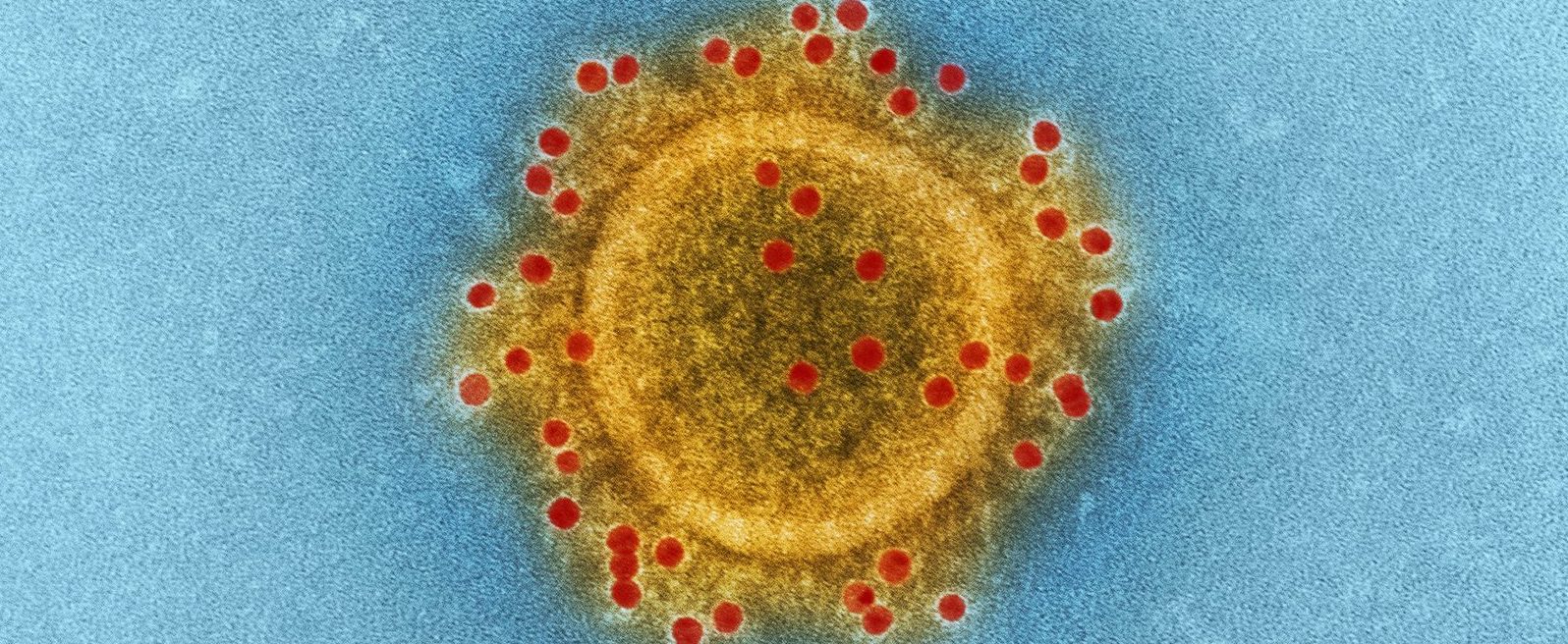
A Look at the Trump Administration’s Response to the Coronavirus
Transition of Power
A new blog post by U.S. RESIST Reporters on the transition of Presidential Power from the Trump to the Biden administration
Brief # 7 A Look at the Trump Administration’s Response to the Coronavirus
By Sean Gray
December 18,, 2020
With the first Covid-19 vaccines being administered in the US, a light is beginning to emerge at the end of the pandemic’s tunnel. President Trump is taking a curious victory lap. Boasting about the success of Operation Warp Speed has represented his only break from incessant election fraud conspiracy. While his administration undoubtedly played a role in the record-setting vaccine, it belies the fact that every step of the way, Trump himself exacerbated the pandemic, largely by viewing it through a politically transactional lens.
Trump’s misleading, revisionist history in relation to the pandemic is apt; He has consistently misled and confused Americans about the coronavirus. News of the incoming pandemic was reportedly in his daily brief around the turn of the year, 2020. Only in mid-March did he begrudgingly acknowledge the ugly reality. In the intervening time he dismissed the obvious dangers and suggested it was his political opponent’s ‘’new hoax’’. At the mid-March press conference, he said without irony ‘’I felt it was a pandemic long before it was called a pandemic’’. This type of self-serving double-talk would categorize the federal government’s Covid-19 response.
Worse than that was his effort to distort facts and silence medical experts that might reflectepoorly on him. Trump supporters have demonstrated an uncanny willingness to swallow whole whatever cockamamie he offers up. Placing him alongside experts in infectious disease, like Dr. Fauci, in the pandemic’s early days, lent undue credibility to his dangerous spit balling. From his pulpit he suggested injecting disinfectants, or direct sunlight could prove a miraculous cure for the mysterious virus. He vigorously promoted the anti-malarial drug, hydroxychloroquine, even after quality research suggested it had no meaningful benefit and serious side effects. Medical experts willing to debase themselves for attention took to conservative media to echo the president’s reckless claims, thereby legitimizing misinformation from the commander-in-chief.
No instance of Trumpian ineptitude would be complete without a touch of graft, which was focus of the whistleblower complaint filed by former government scientist, Rick Bright. Bright claimed he awarded contracts to the companies connected to the administration, including a drug company linked to a friend of Jared Kushner’s. In his report, Bright called for an inspector general investigation into the ‘’cottage industry’’ of political influence which determined to whom contracts were awarded. His concerns about the administration’s Covid response mostly fell on deaf ears, but found an unlikely ally in Trump economic advisor, Peter Navarro, to whom Bright advocated creating a ‘’Manhattan Project’’ for coronavirus. That idea would eventually become, Operation Warp Speed, well after it was initially proposed and the pandemic had grown in severity.
FDA head, Stephen Hahn had a major role in the ultimate success of the vaccine endeavor. His role, by necessity, is a nonpartisan one. That didn’t deter Trump from making a political pawn out of him. In August, Trump announced the emergency approval of convalescent plasma for treatment of Covid patients. Hahn endorsed the decision publicly, despite the fact that the National Health Institute had serious concerns that its efficacy had not been demonstrated. The move came as a direct result of Trump leaning on the FDA, accusing them of slowing approval for political reasons. Hahn was the subject of widespread criticism from the scientific community, which led to a rare apology and admission of fault out of the Trump administration.
Even with the finish line in sight, Trump doubled-down on his political meddling by tweeting out that Hahn ought to ‘’stop playing games’’ and ‘’start saving lives. In doing so, he implied that bureaucratic red tape was delaying the approval and fanning the flames of his ‘’deep state saboteur’’ rhetoric. The end result is a significant decrease of public confidence in the nation’s public health institutions from a man with no expertise in the subject.
Claiming to fight for the forgotten working class while serving the interests of the incredibly wealthy has been a staple of Trump’s political brand. His own Covid-19 experience illustrates the contradiction well. After months of deceiving the American public about the scope and severity of the pandemic, Trump came down with the virus himself. He was airlifted to Walter Reed Medical Center (roughly 14 miles from the White House) and treated nonstop with experimental remedies at no personal expense. Then, as if tooprove he was right all along, took an ill-advised limo ride (presumably while still infected) in a sealed vehicle full of Secret Service agents. Trump followed up the plague-spreading publicity stunt with an odd appearance on the White House balcony, walking under his own power. In the aftermath he seemed to use the incident to support the notion that the whole thing had been blown out of proportion, to damage him politically. This dangerous bit of deception ignores obvious realities. Trump and every member of Congress are covered by top-top-notch medical coverage at taxpayer expense. The Covid-19 experience of Donald Trump (or Rep. Louie Gohmert or Sen. Ted Cruz) bares little resemblance to that of the average citizen. Most are independently wealthy on top of their six-figure salaries. Independent of the helicopter ride, the estimated cost of Trump’s medical treatment was $183K, and completely inaccessible to the general public. Contracting a virus about which he has been habitually dishonest, and escaping its worse consequences because of privilege, is as on-brand Trump as it gets. It also likely reinforced the positions of his Covid-skeptic supporters, whose own experience might be considerably more fraught.
A coronavirus vaccine in record time is a win for the nation across party lines. Trump’s attempt to take an outsized amount of credit does not detract from the unprecedented accomplishment. But true to form it does represent a distortion of reality. Trump may have signed off on Warp Speed, but it is difficult to make a good faith argument that he aided the process more than he impeded it.