

JOBS POLICIES, ANALYSIS, AND RESOURCES
Latest Jobs Posts
The Cost of Neglect: The Price of Unpreparedness (The State Response)
The catastrophic July 2025 Central Texas floods left more than 135 people dead, including 27 children and staff members at Camp Mystic, a tragedy that has rocked the state and sparked a political firestorm. In the days following the disaster, Texas lawmakers publicly turned their ire toward Kerr County officials, accusing them of slow evacuations and communication failures. But behind the headlines and finger-pointing lies a harsher reality: Texas has systematically underfunded emergency preparedness, and local governments have been left scrambling with inadequate resources to face a crisis of this magnitude.
Third Party Possibilities
The United States is currently in the throes of a political transformation, one being driven mostly by President Donald Trump and his allies in the Republican Party. However, there is a part of this transformation that revolves instead around the opposition Democratic Party.
Quantity Over Justice: The Coming ICE Expansion (Immigration Policy Brief #190)
If you have been following the news surrounding Trump’s so-called “Big Beautiful Bill,” one of the provisions you would see is the $170 billion for immigration enforcement & border security. Of this $170 billion, approximately $75 billion represents an increase in funding to ICE, making it the highest-funded law enforcement branch of the federal government. The funding for ICE is intended to build more detention centers, aid in retention through bonuses, & expand the total number of personnel.
The New Wave of Progressive Politicians is Growing (Elections & Politics Brief #189)
It has been just over six months since Donald Trump ascended to the presidency, and he and his GOP allies have wasted no time or effort in pushing the United States as far to the right as it can.
The Democratic Push for the Release of the Epstein Files (Elections & Politics Brief #190)
There has been deep curiosity, unsettling truths, and controversies surrounding Jeffrey Epstein and the Epstein files. The public has been pushing for and putting pressure on the Trump Administration to release the documents. Democrats, however, are making efforts to disclose the Epstein files. On July 23rd, a House subcommittee voted 8-2 to subpoena the Department of Justice for the Epstein files.
New Trump Rule Targets The Head Start Program (Education Policy Brief #206)
Earlier this month, on Thursday, July 10, Health and Human Services Secretary Robert F. Kennedy Jr. announced that children of undocumented immigrants will no longer be allowed to attend Head Start—the free, federally funded program for low-income families that provides education, nutrition, and health services to 800,000 infants, toddlers, and preschoolers. Head Start is remarkable for enjoying bipartisan support for most of its 60-year existence.
The Week That Was: Global News in Review (Foreign Policy Brief #209)
Palestinians in Gaza are now experiencing full blown famine as the total Israeli blockade, which for months made the extreme situation in the strip even worse as no food, water, medicine or fuel has been allowed to make its way into the strip. International humanitarian aid organizations, the UN and a majority of countries around the world acknowledge the forced starvation taking place in Gaza and expressed condemnation towards the Israeli government. Meanwhile various Israeli officials continue to deny the existence of mass starvation, claiming without evidence that Hamas steals and hoards aid and hinges blame on failures by the UN and its officials.
A Review and Analysis of the Health Policies of RFK Jr. (Health & Gender Policy Brief #181)
Robert F. Kennedy Jr., confirmed on February 13, 2025, as U.S. Secretary of Health and Human Services under the Trump administration, launched a sprawling “Make America Healthy Again” (MAHA) agenda targeting chronic illness, food quality, and vaccine policy. His platform positions ultra‑processed foods (UPFs) and environmental toxins as primary drivers of America’s health crisis. Prominent proposals include banning UPFs in schools, nursing homes, and prisons; eliminating synthetic food dyes; restricting SNAP purchases of junk food; and overhauling the quintennial Dietary Guidelines to emphasize whole, minimally processed foods.
The Kenyan Debt Problem: A Tightrope of Austerity (Foreign Policy Brief #211)
On 19 July 2025, the Kenyan activist Boniface Mwangi was arrested under suspicion of “facilitation of terrorist activities during the June 25, 2025, protests.” He was released on 21 July on a KSh 1m personal bond ($7,723). He was charged not for terrorism, but for possession of two tear gas canisters and a single blank 7.62 bullet. This is not the first time Mwangi was arrested by Kenyan authorities, nor the first time a Kenyan journalist or human rights activist was arrested by federal authorities for similar reasons.


Current Efforts to Change State Education Curricula (Education Policy Brief #205)
Recent changes to state laws and policies reflect conservative efforts to remove what they consider “divisive concepts” regarding race and gender. South Carolina, Alabama, Louisiana, and Utah have now joined 21 other states attempting to modify or eliminate curricula considered by many on the right to promote progressive concepts they say have direct, negative impacts on students.
Many of these changes reflect the controversial mission of the ultra-conservative Project 2025, as well as the backlash to fears over the implications of the highly criticized 1619 Project and its Critical Race Theory lesson content. Eighteen states have actually banned any practices based on the latter.
And even though a colleague letter sent out by the Department of Education that directed educational institutions to prevent discrimination in the treatment of students as well as limit its exploration as a subject matter was rescinded, the directive to affect whatever curricular changes are needed to affect that call for changes is now out there, loud and clear.
Following contentious episodes of confrontation at state and local levels, the extremist fervor has given way to state legislation, even if only in tones that have softened the language on discrimination as a topic. Soft or not, the implications for the reduction of civil rights and reduced freedom to address differences remain.
That this virtual bell curve of conservative activity may have appeased even those more towards the center of the spectrum, what actually ends up being taught, and how, is still a question.
Policy Analysis
Since the federal government is prohibited from dictating requirements and curriculum, it is generally up to the states to develop education standards and for the local educational agencies to provide curricula that support those standards.
While states’ curricula changes are commonplace, it’s not to say that any changes take place all at once. Curricula are always in a state of revision based on cycles that carry over from year to year, and often longer. The most visible changes are usually to student learning materials since it’s what parents see, and even then it’s not unusual for textbooks to take up to seven years to be adopted. Concepts themselves, and thus modifications to them, are traditionally less accessible, and only now are available online for all to monitor. That’s if someone knows how to access them.
The battle to make changes to a perceived liberal leaning education has been taking place for decades, ever since the passing of Brown v. Board of Education. Over the years, conservative reactions to desegregation have increasingly called for “rescuing” students from a perceived attack on family values, social norms, and historical shaming.
The last few years have been particularly divisive and many conservatives have been pushing hard for curricula based on newly adopted populist methodologies, such as classical education (think, liberal arts), the science of reading (methodology based on select data), and depoliticization of science’s hidden curriculum. Never mind that these ideas are tenets that have been at the core of educational debate for decades.
The most obvious example is Social Studies. With the agenda of Project 2025 in motion, there is ample evidence that there is a concern with lessons that are being construed as liberal attempts to place blame on racist actions or anything that might be an attempt to indoctrinate students on racial matters throughout history:
- In Louisiana, the Freedom Framework is being taught to promote American exceptionalism.
- Oklahoma’s HB1775 prohibits the discussion of topics related to discriminatory concepts.
- Texas proscribes titles related to African American History and Native American history(e.g. William Still’s Underground Railroad
Records, the Indian Removal Act) but it strictly forbids any lessons related to the 1619 Project.
It’s not as if dark moments in America’s past are non-existent. Georgia’s Social Studies curriculum, for example, mentions slavery in Grades 4, 6, and 8 and also in US History, which is taught at the secondary level. Yet, critics believe the material is misleading and inaccurate.
Inclusion of racial issues is largely supported by the public. In a study by Education Week, 85% total respondents (and 71% of Republicans) believe that it is vital for a democracy to have its citizens learn about the history of racism and slavery in the country and that it should be taught in K- 12 schools. Examination of curricula seems to reflect that, but under new laws and policy, teachers are concerned that speaking out against the evils of it or merely giving opinions on the topic might be cause for reprimand, or worse.
Some of the irony about the appearance of returning to curricula that soft peddles hard issues seems contradictory and counterproductive. To create a hype over protecting feelings of students who are uncomfortable with topics regarding race and gender, only then to turn around and reinforce a thin anti-discrimination stance, has more to do with the opportunistic gains of political power.
One reason it’s vital to maintain the public scrutiny on law and policy making is because without doing so institutionalizes unacceptable social practices such as discrimination. This does not stop politicians from giving the appearance of combating discrimination by declaring its evils and then repackaging systemic discrimination to conceal it. Exploiting K-12 curricula is a powerful means to achieve this end.
Change in education is, and has been, necessary and inevitable. But unless it includes an emphasis on an open and honest approach to civil rights, independent inquiry, and freedom of speech, the irreconcilable debate over the closing or arresting of the American mind will simply continue.
Engagement Resources
- The mission of CivxNow is to promote the accurate and responsible teaching of social studies with the aim of strengthening and sustaining democracy. For more information on current legislative action in each state, click here.
- The Leadership Conference on Civil and Human Rights advocates for the safe and fair education of all students through action within schools and at the state and local levels.
Nigeria’s Resource Curse (Foreign Policy Brief #209)
Foreign Policy Brief #209 | Damian DeSola | July 11, 2025
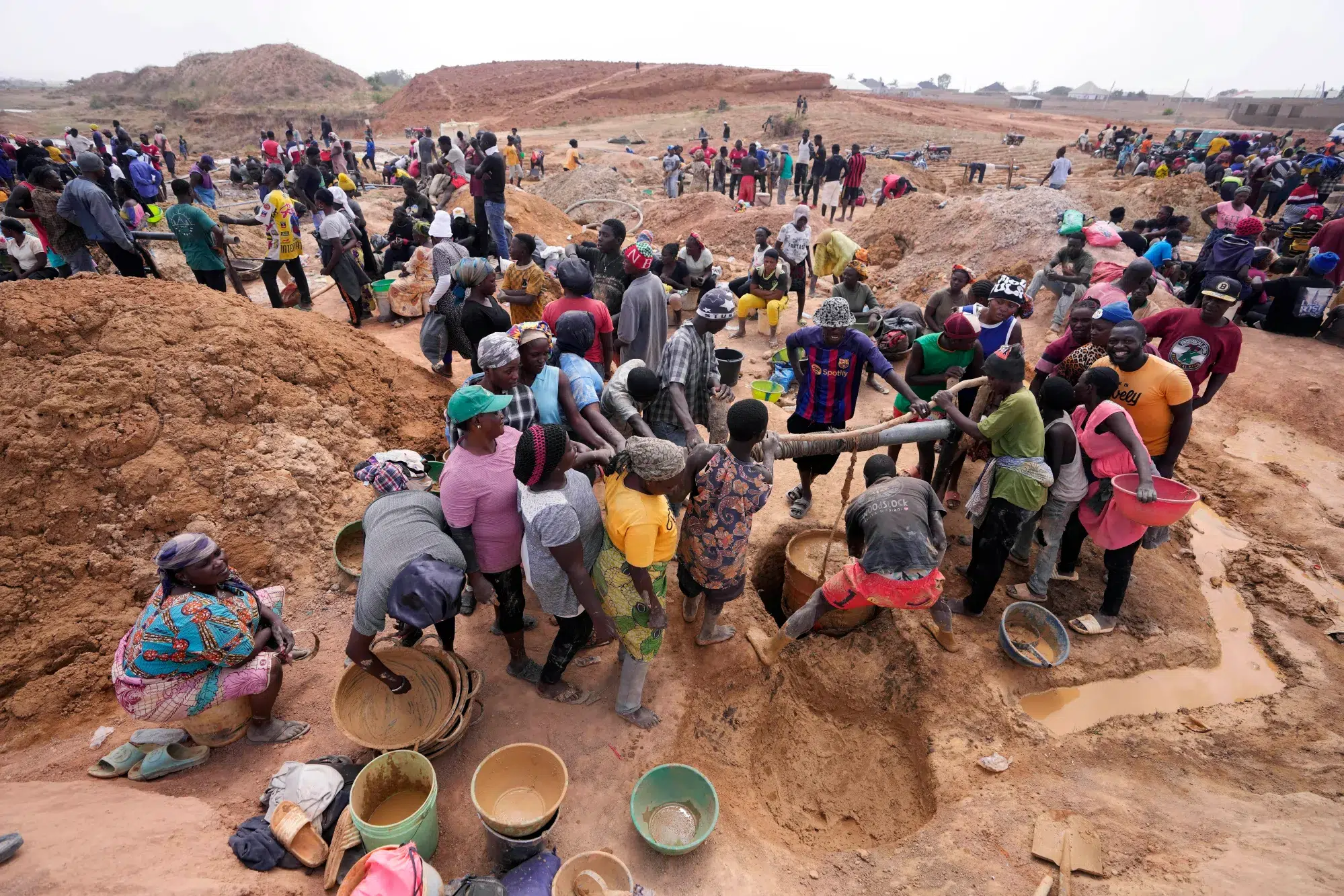
Those who have a casual understanding of history or geopolitics may react agreeably to the concept: the greater abundance of natural resources a country has the more well-off the people of that country will be. Unfortunately, for Nigerians, the opposite is their reality. The abundance of oil in Nigeria, along with their colonial history, has resulted in a “resource curse,” a theory posited by contemporary international relations scholars. Nigeria now finds its economy reliant on the export of oil and renting their oil fields to multinational corporations (MNCs), leading to a commodity industry based on corruption and wealth centralization.
Nigeria’s Resource Curse
The resource curse, a theory and term coined by economics Professor Richard Auty, says that certain circumstances of international trade, history, and industrial cultural development related to a particular abundant resource, cause a country to face an economic situation dependent on the export of this resource; conflicts, corruption, international exploitation, and an underdeveloped economy occur as a result. The benefits of the extracted resource are transferred away from those whose land it is mined from, and into the hands of the hosting government and the MNCs that handle its extraction, transportation, and refinement. The case of the resource curse is found across the continent of Africa that was once entirely an economic playground for European colonists. In short, it is a form of corporate neo-colonialism.
In the early 1800s, Britain began projecting power into Nigeria, but it was not until nearly a century later in 1914 that the Colony and Protectorate of Nigeria formed by the British. The colony was run by Nigerian chiefs that were given instructions by the British government. In 1956, commercial quantities of crude oil were discovered by European engineers. Soon after the discovery, Shell, Mobile, Texaco, and many of other Western oil companies began extraction operations in Nigeria.
As the industry developed, the Nigerian National Oil Corporation (NNOC) was established in 1971 (later reorganized into the Nigerian National Petroleum Corporation) as a state-owned oil company; simultaneously, it joined the Organization of the Petroleum Exporting Countries(OPEC). The NNOC and subsequent NNPC enabled the Nigerian government to participate in the oil market with oil Multi-National Corporations (MNCs). The government has historically “mismanaged” the revenues gained by the NNOC/NNPC, meanwhile receiving royalties from oil MNCs. This money has shown no signs of trickling down and remains in the hands of the Nigerian government leaders.
According to a World Bank Poverty and Equity Brief, approximately 40.1% of Nigerians livedbelow the National Poverty Line, with around 30.9% living below the International Poverty Line ($2.15/day). Further, 90.8% of Nigerians were living below the Upper Middle Income Poverty Line ($6.85/day) as of the most recent World Bank data (2018). This massive poverty rate displays the magnitude of wealth disparity when considering that Nigeria’s 2018 GDP was $421.74B.
As a result of this wealth disparity and resource disenfranchisement, local populations, primarily in the Niger River Delta where most of the oil resides, have shown high rates of militancy. Starting in 2003, regional militant groups organized in reaction to increasing anger over the paradoxical nature of their economic status. A UN Development Program report from 2006 briefly maps the rise in conflicts, highlighting attacks on oil companies’ infrastructure (e.g. Shell, Agip Oil). Violence subsided after 2009, resurged in 2015, calmed again, and has recently escalated due to the Nigerian president’s announcement of a state of emergency over oil pipeline vandalism.
The singular focus on oil production and export caused other industries to wither. While having major deposits of gold, commercially viable timber, and a once massive agriculture industry, all these potentially diversifying economic advantages find little room to compete. The Nigerian economy has found itself in an endless spiral due to its oil resource curse.
A Path Towards Reform
Due to external and internal factors on the oil market including the COVID-19 pandemic, the Russo-Ukrainian War, and oil theft, the production of crude oil in Nigeria has not recovered to pre-pandemic levels. In response, administration of President Bola Tinubu, elected in 2023, seeks aggressive reform to Nigeria’s economy.
Tinubu’s first act was to remove the oil subsidy that cost the government nearly $40M daily to keep the price of oil artificially low. The sudden removal caused a spike in transportation costs and subsequent scrambles for fuel. This reform also caused inflation to skyrocket, pushing the cost-of-living crisis to new levels.
Meanwhile, the International Monetary Fund points out the that the removal of the subsidy, alongside the government’s liberalization of foreign exchange, prevention of fiscal debt financing, and strengthened revenue collection as positive policies that show promise for future economic strength. Nigeria has also been upgraded by financial rating agencies, a sign of potential recovery.
President Tinubu justifies the subsidy removal by angling the act as short-term pain that would lead to a positive future. The president defended the reforms by saying, “Our economy has been in desperate need of reform for decades. It has been unbalanced because it was built on the flawed foundation of over-reliance on revenues from the exploitation of oil.” Meanwhile, a local taxi driver is quoted saying, “The situation is unbearable. As a family man, the already unfriendly economy has been worsened by this removal of fuel subsidy. I have had to suspend my taxi operations and rely on divine intervention.”
Due to these reforms, the Nigerian economy has struggled to cope, signified by the nearly 61% drop in GDP from 2022 to 2024 (approx. $289.6B). The World Bank responded to these attempts at reform and their subsequent economic impacts with the approval of multiple loansto support Nigeria’s economy. These loans, each amounting in the low billions and accumulate to over 15 billion in total, go towards education, nutrition, energy infrastructure, shoring up oil revenue losses, tax reforms, and overall poverty reduction.
Whether or not these reforms are successful at breaking the oil resource curse remains to be seen. However, attempts at reform are a step in the right direction away from the overtly corrupt system of wealth extraction.
Engagement Resources
The Art of the Heel: The Deadly Effects of Trump Abandoning the Iran Nuclear Deal (Foreign Policy Brief #208)
Foreign Policy Brief #208 | Nicholas Gordon | July 7, 2025
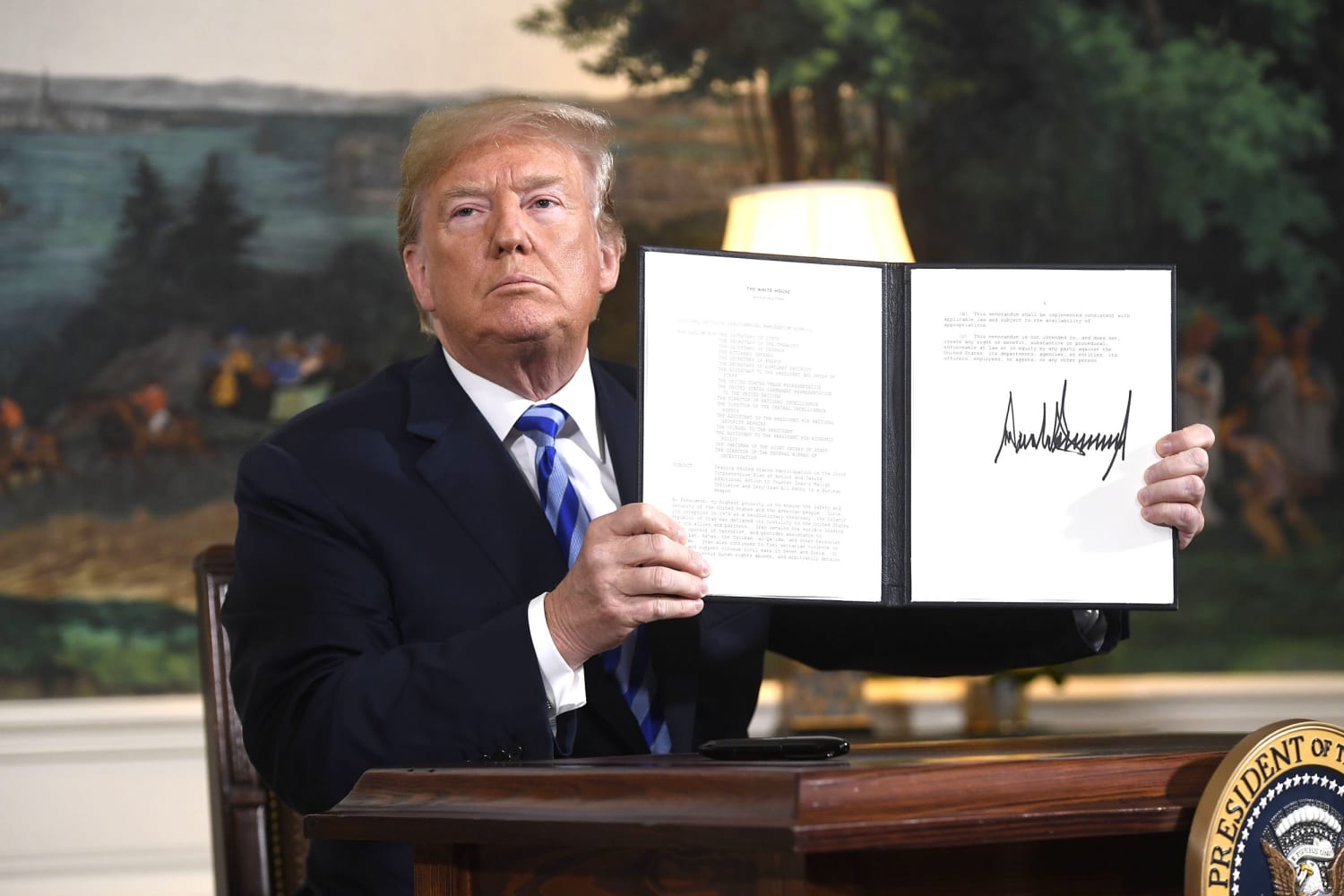
With a U.S.-brokered ceasefire currently holding between Israel and Iran, let’s take a moment to consider what role the Trump administration has played in bringing the conflict to its current precarious state. In his first term, President Trump—eschewing the advice of allies including France, Germany, and the U.K.—withdrew the U.S. from the Iran nuclear agreement, known as the Joint Comprehensive Plan of Action (JCPOA), an accord reached between Iran and several world powers, including the United States, in 2015. Under the JCPOA’s terms, Iran agreed to dismantle much of its nuclear program and open its weapons-making facilities to international inspections in exchange for sanctions relief worth billions of dollars.
Since the United States’ withdrawal from JCPOA in 2018 under President Trump, Iran has expanded its nuclear program, breaching its commitments to the agreement, including resuming uranium enrichment and violating limits on nuclear materials. While the JCPOA remains legally valid, Iran’s violations of the agreement’s terms have thus far thwarted negotiations to revive it or to forge a new deal with the Trump administration. Foreign diplomacy analysts and Israeli officials have identified Trump’s backing out of the deal as a costly blunder that has fueled both Iran’s pursuit of nuclear weapons and rising instability in the middle east.
Analysis
The negotiations of JCPOA with Iran were conducted by five permanent members of the UN Security Council —China, France, Russia, the United Kingdom, and the United States—and Germany, collectively known as the P5+1, as well as the European Union (EU). Without the Iran nuclear deal in place, the negotiating nations’ feared that Iran would take action to become a nuclear weapons state, which would in turn spur Israel to take preemptive military action against Iran’s nuclear facilities, as it had in Iraq and Syria, plunging the region into a new crisis.
Those fears were realized in June when Israel and Iran traded deadly attacks over a 12-day air war. Israel first unleashed a blistering barrage of ballistic missiles and drones at Iran’s nuclear facilities in an attempt to derail their adversary from building atomic weapons; and Iran retaliated. The Israeli strikes killed over 935 people in Iran, including several top Iranian security officials, and injured nearly 5,000 people, according to Iran’s health ministry. Iran’s retaliatory strikes killed over 20 people in Israel, and injured nearly 600 people, according to a statement released by Israeli officials.
In light of the Israeli strikes, President Trump claimed he gave Iran “chance after chance to make a deal,” ignoring the fact that he abandoned the landmark deal that was already in place with Iran. With his typical mix of self-congratulatoryself-absolvement, Trump then wrote on social media, “We remain committed to a Diplomatic Resolution to the Iran Nuclear Issue!”
Said ‘diplomatic resolution’ then included the U.S. bombing of Iran’s nuclear enrichment facilities, an act which Trump declared—with fallacious bluster and childish impetuousness— “totally destroyed” Iran’s nuclear capabilities, though the head of the U.N. nuclear watchdog organization, the International Atomic Energy Agency, contradicted Trump’s assertion, saying that Iran’s nuclear program was set back mere months.
Numerous national security and regional experts have assessed the U.S. withdrawal from the Iran nuclear deal as a reckless strategic mistake that undermined U.S. credibility, alienated the U.S. from its European allies, and increased the risks of war. Suzanne Maloney, the director of the Foreign Policy program at the Brookings Institution who has been researching and writing about Iran for decades, stated bluntly that “the American involvement in the strikes on Iran was the culmination of the decision Trump made in 2018 (to pull out of the deal) that left us in this dangerous escalatory moment with very few good options at the negotiating table.”
Iran has not agreed to a new deal with the Trump administration. Steve Witkoff, Trump’s friend and fellow real estate mogul, has been serving as the U.S. Special Envoy to the Middle East, leading negotiations with Iran. Witkoff’s lack of expertise, knowledge, and skill in this role has led to inconsistencies in the negotiations. Iranian officials state concerns about U.S. accountability on a new deal after Trump’s withdrawal from the JCPOA deal. Additional sticking points obstructing a new deal include: Iran asserting its right to enrich uranium for civilian purposes; Iran demanding sanctions relief; and Iran refusing to make any further concessions on its missile program, which it says is integral to its system of defense.
Israeli military leaders lament the disastrous consequences of Trump exiting the Iran deal, notwithstanding Trump’s claims of the U.S. being Israel’s “number one ally by far.” With tensions between Israel and Iran still inflamed, a full-blown regional war is within the realm of possibility. Further Israeli attacks on Iran could trigger retaliation from several regional terrorist groups, including Hezbollah, Hamas, and Iranian-backed Houthis, all of whom have conducted attacks on Israeli targets in the past. Moreover, Trump’s erasing of the stalwart, decade-long diplomatic effort by the Obama and Bush Administrations to hinder Iran’s nuclear ambitions could fuel a nuclear arms race in the Middle East. For example, Saudi Arabian leader Mohammed bin Salman has stated his country’s intentions to obtain a nuclear weapon if Iran, their longstanding foe, builds one.
Meanwhile, like some deranged carnival barker weighing in on a geopolitical conflict that his actions very well could have ignited, Trump wrote on Truth Social, “…we will have PEACE, soon, between Israel and Iran! I do a lot, and never get credit for anything, but that’s OK, the PEOPLE understand. MAKE THE MIDDLE EAST GREAT AGAIN!”
What the people understand is that a viable Iran nuclear deal was firmly in place before Trump ruined it without any foreseeable new deal in place. Trump then further undermined Americans’ safety and dignity by blabbing his way through the U.S. attacks on Iran with social media posts in real time.
Diplomatic solutions will indeed be imperative to quell the tensions between Israel and Iran in the days ahead and to avoid getting the U.S. embroiled in another catastrophic conflict in the Middle East. The pressure is on Trump to find a way to enact a new deal curtailing Iran’s nuclear program, because it was his withdrawal from the former deal that has precipitated the current crisis.
Engagement Resources:
- The Council on Foreign Relations
- An nonpartisan, nonprofit organization founded in 1921 focused on U.S. foreign policy and international relations.
- Quincy Institute for Responsible Statecraft
- A research institution that analyzes “the dangerous consequences of an overly militarized American foreign policy and presents an alternative approach that
promotes local ownership and resolution of local issues”
- Belfer Center for Science and International Affairs
- Harvard Kennedy School’s hub of research, teaching, and training in international security and diplomacy, environmental and resource issues, and science and technology policy
- International Crisis Group
- Independent organization working “to prevent wars and shape policies that will build a more peaceful world”
Zohran Mamdani’s Campaign Has Been A Wake-Up Call. Who Is Following His Lead? (Elections & Politics Brief #188)
Elections & Politics Brief #188 | Nate Iglehart | July 11, 2025
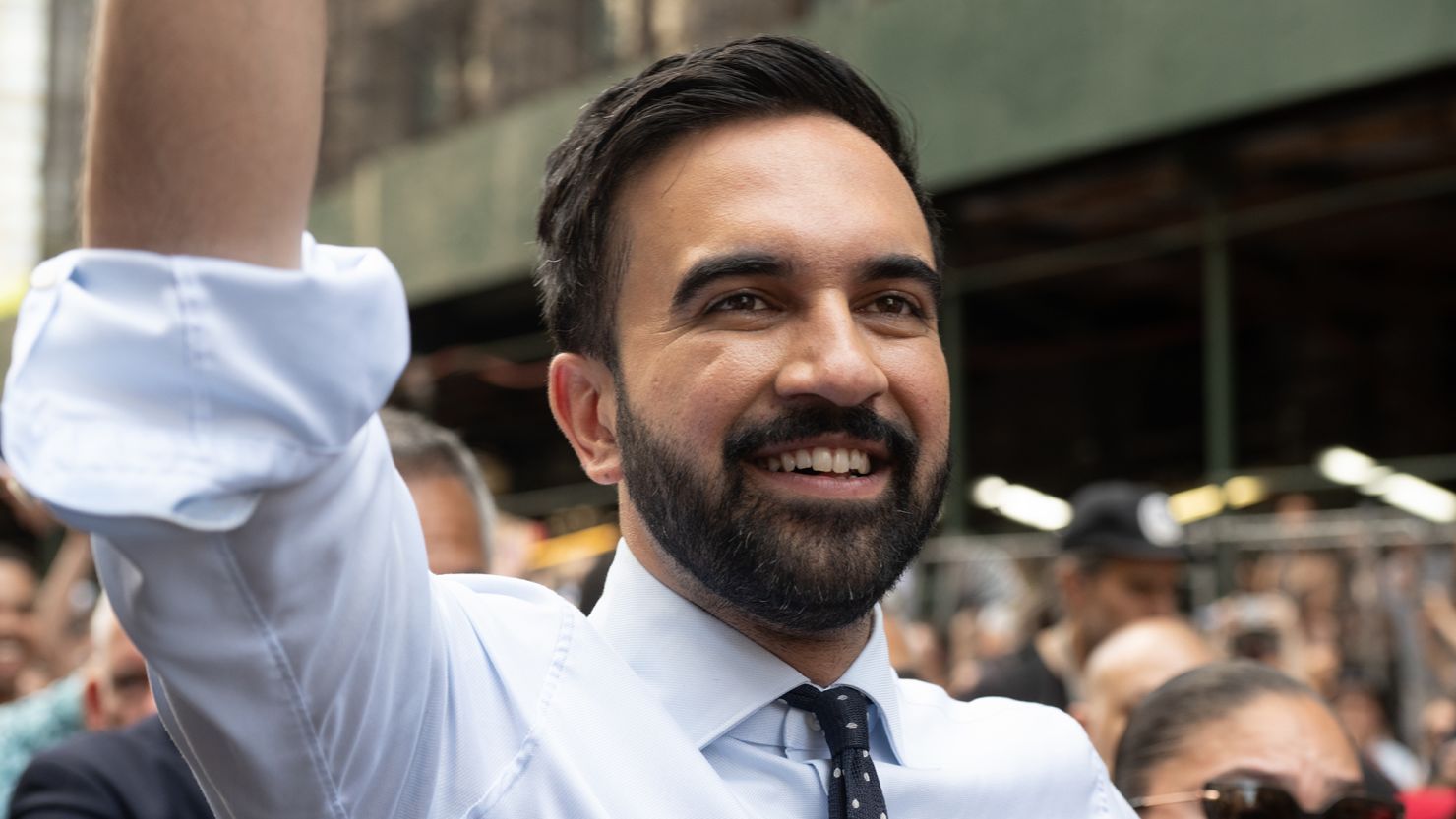
The Democratic primary for the New York mayoral race was seen as a “perfect storm”, “clearly a rebuke”, and a surprise to many onlookers. In it, self-proclaimed democratic socialist Zohran Mamdani managed to pull off a stunning and decisive victory over establishment Democrat and former governor Andrew Cuomo. As Mamdani began gaining steam in the latter weeks of the campaign, the mayoral race began to be seen as a litmus test for the future of the Democratic Party.
In previous election cycles, Democratic planners have opted more often to court the independent and undecided voters in the middle of the political spectrum. But the results have been mixed at times.
Now, Mamdani has showcased the popularity of more progressive policies and the feasibility of running on them to win important elections, like in New York City. And other candidates are taking note across the country, in a wave that could herald a new direction in Democratic Party politics.
Analysis
Mamdani’s politics aren’t anything particularly new to the party; representatives like Bernie Sanders and Alexandria Ocasio-Cortez stand in similar positions on similar issues. But Mamdani has helped spark a surge that galvanized younger voters in a new wave across the country, with many prospective leaders at the local and state level parroting his campaign strategy.
There are two main takeaways that candidates and planners are incorporating from Mamdani. First is the use of social media and TikTok in a campaign (this has been the takeaway for many establishment Democrats who still see progressive politics as too volatile a flag to wave). For years now, Republicans have taken the lead in pursuing alternative media avenues, like podcasts and social media. Mamdani’s use of these helped garner last-minute support, and Democrats are taking note.
The second has been an embrace of those progressive politics and a rejection of the old guard. This has been something that David Hogg, once the vice chair of the DNC, has piloted, with his “Leaders We Deserve” PAC actually having supported Mamdani’s campaign.
This PAC, amongst others, has been a key player in facilitating campaign growth for progressives challenging once-safe seats for Democrats as well as Republican seats. And across the country, those progressives are also beginning to gain momentum.
First, in California, school board trustee Randy Villegas has begun wielding economic populism in his quest to unseat Republican moderate David Valadao in the state’s 22nd district. Although Villegas has hesitated to call himself a progressive, his focus on countering corporate messaging and special interest money has given Democrats a chance in a district they have long sought to win over.
Another arena is in Atlanta. Democratic Rep. David Scott has long been criticized by his peers for being too old and having too many health issues to be in office, which has resulted in a lack of appearances with his constituents. Two challengers, state Rep. Jasmine Clark and former chair of the state’s largest school district, Everton Blair, are mounting challenges to the status quo. Both are on the younger side (42 and 33, respectively), and lean further left than Scott.
But one major test for the young progressive movement across the country will be Arizona’s 7th Congressional District, which is holding a special election to replace Rep. Raúl Grijalva, who passed away in March. Most of the democratic establishment has coalesced behind his daughter, Adelita Grijalva, who has received support from most of the party.
But what has been interesting is that while progressives AOC and Sanders have endorsed Grijalva, David Hogg’s PAC has instead backed 25-year-old influencer and activist Deja Foxx. She has blasted the Democratic Party for not doing enough to stand up to Trump while also targeting Grijalva as an extension of the establishment that has, in her eyes, let voters down.
It is also notable that both Grijalva and Foxx, along with another candidate Daniel Hernandez, all have similar policy values. The main driver in this race appears to be just how much change voters want the party to undergo on both a generational and a personality front.
What sets Foxx apart is her age, her personality, and most of all, her online presence. As an influencer, she has had the ability to draw donations and support both from within and outside of her state. It also has targeted a far younger bloc, one that is entering politics frustrated at the state of the country and blaming those in power (which includes establishment Democrats).
This conflict, between the old guard and the new generation, between the established representatives and the new wave of progressive politics, is happening in elections across the nation. Whether they are backed by progressive organizations or independently built, young progressives are eyeing office more than ever.
Pocketbook issues, anti-corporate messaging, and investing in online spaces are increasingly popular and effective, and if the Democrats want to have a shot at retaking the presidency and Congress in the coming years, they will need to incorporate the lessons learned from NYC and these other elections. If they don’t, America may be in for the slow death of a major party for the first time since right before the Civil War.
Engagement Resources
- Zohran Mamdani’s Platform is a useful resource for learning about the policies that earned him such support in NYC, and could spread further.
- Vote Smart is a non-profit, non-partisan research organization researching every official’s and candidate’s voting records and policy platforms.
- Run For Something is an organization focused on fostering young and progressive campaigns across the nation.

Why The Birthright Citizenship Rule Is Still Valid Today And What Comes Next (Civil Rights Brief #245)
Civil Rights Brief #245 | Rodney A. Maggay | July 2025
On the first day of his second presidential term, President Donald J. Trump issued Executive Order No. 14160. This executive order is popularly known as the birthright citizenship executive order which purports to make changes to the Birthright Citizenship rule embodied in the 14th Amendment to the United States Constitution. That rule declares, with modest exceptions, that children born within the geographic territory of the United States are instantly granted United States citizenship. That constitutional rule was later affirmed by the United States Supreme Court in the 1898 case United States v. Wong Kim Ark. However, with the ongoing national debate on immigration and immigrants in the United States, President Trump made a campaign promise to abolish the rule in order to try and stem the flow of immigrants from Latin American and South American countries to the United States.
In response to the executive order, three lawsuits were filed in three separate federal district courts (in the states of Maryland, Massachusetts and Washington) to prevent enforcement of the executive order. In all three cases, the federal district court agreed with the plaintiffs and issued a nationwide injunction that temporarily paused enforcement of the order until the cases were resolved at trial. The cases were then appealed and consolidated at the Supreme Court but with a new twist. Instead of arguing for the overturn of the birthright citizenship rule embodied in the Fourteenth Amendment and the United States v. Wong Kim Ark case, the government asked the Supreme Court to review the issuance of nationwide injunctions by federal district courts. The government argued that these injunctions were improper as they prevented the Trump Administration from implementing their policy agenda prior to trial.
The question thus presented to the Supreme Court to resolve was not whether the birthright citizenship executive order violated the U.S. Constitution but whether federal courts have the authority to issue injunctions that covered the entire U.S. under the Federal Judiciary Act of 1789. On June 27, 2025, the Supreme Court issued a 6 – 3 decision holding that federal courts were not authorized under their equitable powers to issue a national injunction. LEARN MORE
Policy Analysis: While many news articles and reports tried to frame the opinion as a win for President Trump and an expansion of executive branch power, the case can more properly be classified as a case that dealt with an aspect of legal procedure for federal courts. To be clear, the Supreme Court did not review the birthright citizenship rule as it examined the case nor did it likely give the President a “win” as so many right – wing news outlets tried to claim. The immediate impact of the decision is that it narrowed how much of President Trump’s policy agenda (or any President in the future) can be temporarily paused before a trial.
Justice Amy Coney Barrett’s majority opinion states that the Federal Judiciary Act of 1789 does not give federal courts the power to issue a national injunction since that power did not exist at the time the Federal Judiciary Act was passed more than two hundred years ago. Nor was the power to issue national injunctions contemplated as a power under that Act. Justice Sonia Sotomayor’s dissent pushes back on Justice Barrett’s assertions by claiming that equitable powers of a federal court were meant to be “flexible” in order to dispense justice. This flexibility would certainly include the power to craft a national injunction if the need arises. Justice Sotomayor also forcefully states that the Government would not suffer irreparable harm if a court paused the implementation of a president’s policy. This is because all the Court would be ordering is for the Government to follow the law (the birthright citizenship rule) while his policy or executive order is temporarily paused until a trial is concluded. While Justice Barrett does make a meritorious argument with her opinion she misses or refuses to address the points made in Justice Sotomayor’s dissenting opinion. This makes Justice Sotomayor’s points – rooted in “history and tradition” – more persuasive than Justice Barrett about the use of national injunctions.
But another aspect of the decision comes from Justice Brett Kavanaugh’s concurring opinion. While he joins Justice Barrett’s majority opinion in full, he brings up an interesting scenario when the request for a temporary preliminary injunction is brought against a major new federal statute or executive order. Justice Kavanaugh suggests that there should be a uniform legal standard when granting a national injunction or not in order to prevent conflicting decisions from different states and regions. He cites the chaotic nature where individuals would not know whether the new statute is valid, temporarily paused or outright invalid while a trial proceeds. In order to prevent this confusion before a trial is finished, sometimes taking years, he suggests that the Court make an exception and determine an interim legal status for major new statutes, but not for any ordinary run – of – the – mill injunctions that are often presented to the Court. Justice Kavanaugh’s opinion suggests a possible opening for the use of national injunctions in the future which is decidedly different from Justice Barrett’s opinion which has ruled out the use of national injunctions based on English common law.
Whatever new rules develop about what federal courts can or cannot do from this opinion, it is the birthright citizenship rule that provided the backdrop to this case. And since the Court did not rule on the merits of the rule, the birthright citizenship rule is still valid. Babies born today anywhere in the United States will still be granted United States citizenship. But the Trump Administration is treading on shaky ground if it believes that they now have a green light to implement whatever domestic policy they want without having to be accountable to a court. Since the birthright citizenship rule was not overturned by the Supreme Court, the Trump Administration still has a duty to obey the Constitution and all lawful statutes and Supreme Court precedents. Do they expect to deprive babies born in the U.S. from U.S. citizenship? The Trump Administration cannot legally do that because the birthright citizenship rule is still valid and the national rule of the land. It would also likely be an operational disaster too if the Trump Administration tried to deprive babies of citizenship across so many differing states. So, despite prevailing in the Supreme Court in the Trump v. Casa, Inc. birthright citizenship case, it does not appear likely that his executive order can be enforced for the moment. All the case does is limit what a federal court can order prior to trial while all babies born today and going forward within United States territory can still be granted United States citizenship. The case will likely land before the Supreme Court again to decide the birthright citizenship rule but that will come at a later date. LEARN MORE
Engagement Resources:
- American Civil Liberties Union (ACLU) – non – profit group’s petition to save birthright citizenship.
National Public Radio (NPR) – possible options for birthright citizenship after SCOTUS ruling.
A Hick-Lib’s Rebellion: Kyle Rable, No Kings!, & the Fight for West Texas (Elections and Politics Brief #187)
Elections and Politics Brief #187 | Morgan Davidson | July 6, 2025
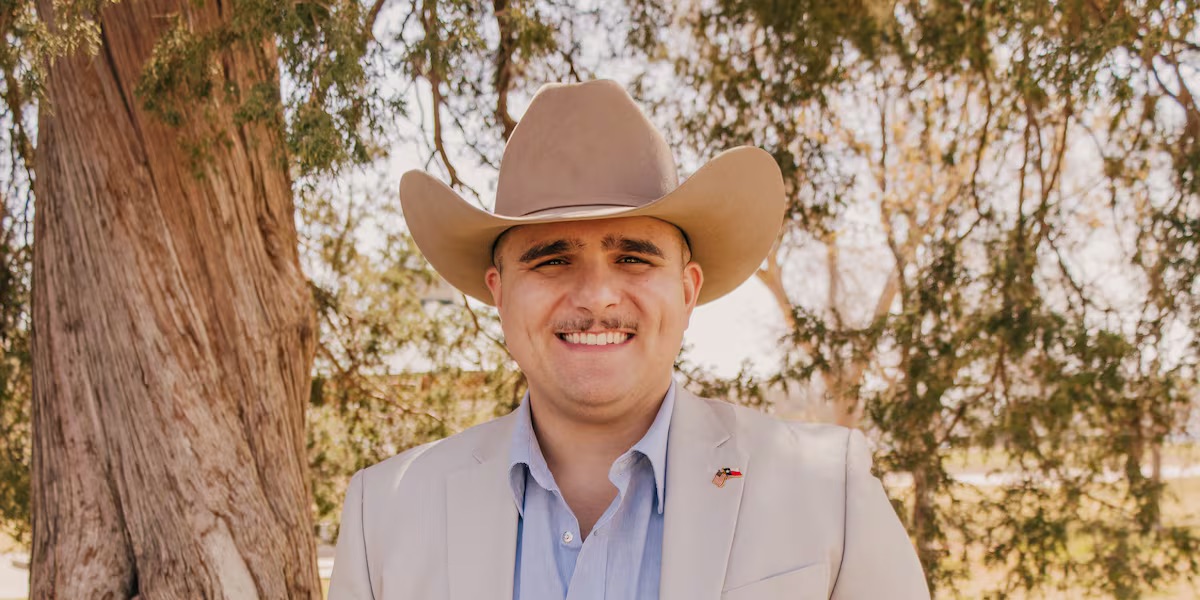
I sat down with Kyle Rable to learn more about the No Kings! protests. Kyle is a new father, a Ph.D. candidate in History at Texas Tech, a U.S. Army Reserves Captain, a card-carrying union member, & self-described “hick-lib”; he is running for Congress in Congressional District 19 against Jodey Arrington. Kyle serves as Secretary for the Lubbock County Democrats and helps organize protests in Lubbock.
Our discussion focused on the No Kings! protests, specifically coming on the heels of the movement’s success, going back to Trump’s birthday & counterprotests to the military parade. It is estimated that there were over 5 million protesters across more than 2,100 locations. In Lubbock alone, there were over 600, estimated by LPD, to have engaged in the protests in the deep-red Trump+40 county. We discuss the behind-the-scenes organizing, impact, implications, future, and even touch on immigration, given my other work here at U.S. Resist News.
Kyle is running against Rep. Arrington, who is a key Trump ally & instrumental in passing the “Big Beautiful Bill” that guts Medicaid, & rural health care, which are key to the people in District 19. In Texas, it is crucial to have energetic challengers up & down the ballot to incumbent Republicans who have taken Texans for granted for too long. Mr. Arrington can rely on a war chest of upwards of $ 2 million and on PACs to fund his campaign. My friend, Kyle Rable, needs our help. Please visit https://www.rableforwesttexas.com/ and consider making a donation or sharing his information to help us give power back to West Texans, not special interests in D.C.
Analysis
One of the things I was interested in was how a place like Lubbock gets involved in these large national movements, particularly those that are aligned with the left. Don’t be mistaken, Lubbock has a metropolitan population of over 360,000 people. That said, the people here revel in the rural makeup of West Texas and have deeply conservative beliefs. Kyle mentions people like Doreen, who first reached out about the protests emerging from the 50501 movement. Then, he and others, such as Kim Gonzalez, a community organizer and member of the Texas Democratic Executive Committee, were able to help make things happen.
This grassroots organization in Lubbock gets into the roots of how movements like this & other No Kings! protests emerge nationally. While the rallying cry is at the national level through things like 50501, it takes members of the local community to organize & rally others without outside funds or assistance. These things start at the local level and get connected to the national level after the effort and organizing have occurred.
This localized approach is key to the movement’s goals in Lubbock. When I asked Kyle about the purpose behind organizing these protests in Lubbock, a big part of it is awareness. Kyle says- “People in West Texas feel alone & don’t like what they see” in reference to the current administration’s policies. Rable continues- “There are no blue dots in West Texas,” and that “There’s people who don’t know there is a community.” In the Red Sea, that is CD 19, raising awareness, showing people that there is a community, is a key component of these protests. With candidates like Kyle & organization by local advocates like Kim, the blue dots that are missing in West Texas should begin popping up, helping people find community, get involved in their localities, & hopefully start getting people to run up & down the ballot.
One critique I keep seeing about the protest movements is that they are too broad. Even those on the left, like Tommy Vietor of Crooked Media, were critical of the Palestinian flags at the protests in L.A. surrounding the actions of ICE, which led to the deployment of Marines by President Trump in a U.S. city. When I asked Kyle how he would respond to similar critiques, he mentioned that “In the 60’s & 70’s change didn’t just happen on one pinpoint issue”. He highlights how the fight for civil rights tied itself to other movements like workers’ rights & ending the war in Vietnam. Rable says, “When you have a big coalition like the Democrats have, you have to offer room”. He continues- “It can be arguing for the end of Tyranny from the Trump administration to the end of bombing Palestine & those are intrinsically related I believe & that’s why there is room for everyone at those protests.”
One thing I was interested in asking Kyle about was the branding of the No Kings! protests. Given his background in History, he was quick to tie it back to core ideas of the founding & why it resonates nationally & in red areas like Lubbock. He mentions that the AI image Trump released of himself dressed as a King with the White House posting on X, “LONG LIVE THE KING!” Given the imagery & the policies emerging from Washington, it isn’t hard to see what people do not like about this administration across the nation & in deep West Texas, which Rable notes is quite different from the swamp in D.C. that Trump & Arrington roll around in. On a personal note, Rable says he likes the historical ties & that “I’m not going to bend a knee; I bend a knee to God & not much else.” This blend of patriot, believer, & activist is why I believe that Rable is right for West Texas.
When asked about the long-term goals of the protest movement, whether that’s a cultural shift or purely aimed at the 2026 midterms, Rable mentions that it can be both. He says we need to have hard discussions where people can come together & say we don’t like what we see happening & demand better. Kyle says, “The most American thing you can do is protest your government, in my opinion.” In terms of shifts at the leadership level, Rable goes on to say, “We need people who actually want to represent their constituents, not billion-dollar pacts.” These cultural shifts will shape 2026 & beyond if these movements can achieve them. Electing leaders like Rable, rather than politicians like Arrington, is key to giving power back to the people, not special interests.
That said, can these movements actually bring about these changes? I asked about possible impacts we have seen or should be aware of. For instance, we have seen that Elon Musk has taken a step back from the Trump administration & even attacked the President on his social media platform X. Additionally, we have seen Trump’s approval rating take hits since the No Kings! protests started. Rable says he thinks that these protests have a direct negative effect on Musk’s influence & Trump’s approval, saying, “its a net positive to change a President’s opinion, if you can, through protests” linking the possibility to historical examples with LBJ & Nixon.
Those examples tie into Rable’s response to a question I posed about what he would say to those who feel discouraged with the political process, feel that protests don’t work, or that change doesn’t happen fast enough. Rable mentions that it is important to get out there to show others the positive impacts protests can have, the change they can make, & further build that community just like others in the past have done. Further, he says, “if you are frustrated with the pace, not only should you protest, but you should go down to your local parties” and find ways to get involved, from volunteering, attending local meetings, serving as a precinct chair, to running yourself.
Shifting to immigration, I was eager to ask Kyle about this. Immigration & Trump’s immigration policies are key to the protest movements around the country. They are also key to my work here & to West Texans in Kyle’s district. I asked about his stances, policy-wise & philosophically. Rable says- “Our immigration system is flawed… & needs to be revamped”. Like all Americans, Rable has a family history with immigration. His family came from Italy & Poland to the U.S. & some of them served in the armed forces. Rable acknowledges that a country needs a strong border but that this nation “was & still needs to be built by immigrants”. Rable highlights the challenges facing people getting here legally from time to money & that under the current administration, the challenges have only gotten more difficult. Philosophically, Rable leans into his Catholic roots, saying- “there is no stranger in the land that you are if you are a christian & therefore the person who is your neighbor is your neighbor regardless of status.” Again he highlights the need for reform in the process highlighting that we need workers & that we need to make it easier not harder for these people to get here. He speaks to the humanness of these people that are often left out of right-wing discussions on immigrants, highlighting that these people are people & not these evil caricatures found on FOX. Rable says, “Anyone that is a worker is my brother & sister.”
When asked for final comments, Kyle reiterated his commitment to fighting for the working class & West Texans. Specifically, he says- “I’ll reimphasize the need for us all to consolidate & realize the most important things to uplift workers & the working class. Expanding access to medicare, medicaid, social security, & the VA because at the end of the day the best way to help America is to help a worker. If you are a card carrying AFL-CIO member, you are my brother & sister. If you are an immigrant working any job you’re my brother & sister and we need to refocus on that. Also, you need to get involved with your local party. If you can, you should run for something regardless of what it is because it’s time that West Texas, all of Texas, has someone to vote for with a D next to their name.”
If you enjoyed getting to know Kyle and his work in Lubbock or simply want to help fight against Trump’s agenda, please consider visiting his website, making a donation, or getting involved. My friend, Kyle Rable, is up against big money and deep-rooted power, but he’s not running alone. Even something as little as $5 or $10 helps him get around West Texas and get his message out. Again, you can check out his page here- https://www.rableforwesttexas.com/.
Engagement Resources
- 50501: A protest movement organizing nationwide actions against the Trump administration.
- https://www.fiftyfifty.one/
- Rable for West Texas: This is a link to Kyle’s candidate site, specifically, his donation page!- https://www.rableforwesttexas.com/donate
- Protest Sign Ideas: Here is a Reddit link affiliated with 50501 where you can discover ideas for protest signs
- https://www.reddit.com/r/50501/comments/1jkpz02/fun_impactful_protest_sign_ideas/
Ranked Choice Voting is On the Rise. How does it work and why is it popular? (Elections & Politics Brief #186)
Elections & Politics Brief #186 | Nate Iglehart | July 5, 2025
The most important aspect of democracy is being able to vote for who represents you in government. Without that ability, democracy gives way to less accountable forms of governance. However, this core part of democracy is also one that can come in many different ways, each of which can drastically impact how candidates run their campaigns.
Ranked choice voting (RCV) is one such way that has been gaining a lot of traction in recent years. In comparison to the current “first-past-the-post” system, in which each vote is cast once and the candidate who gets a plurality of the votes (or in America, over 50%) wins, RCV presents an alternative method of choosing leaders.
Recently, it has received a lot of attention via its use in New York City’s mayoral election, in which the previously unknown democratic socialist Zohran Mamdani managed to pull off a surprise upset of former NY governor Andrew Cuomo alongside a wide range of other candidates. But there are certain quirks and outcomes of that election that are worth diving into.
Analysis
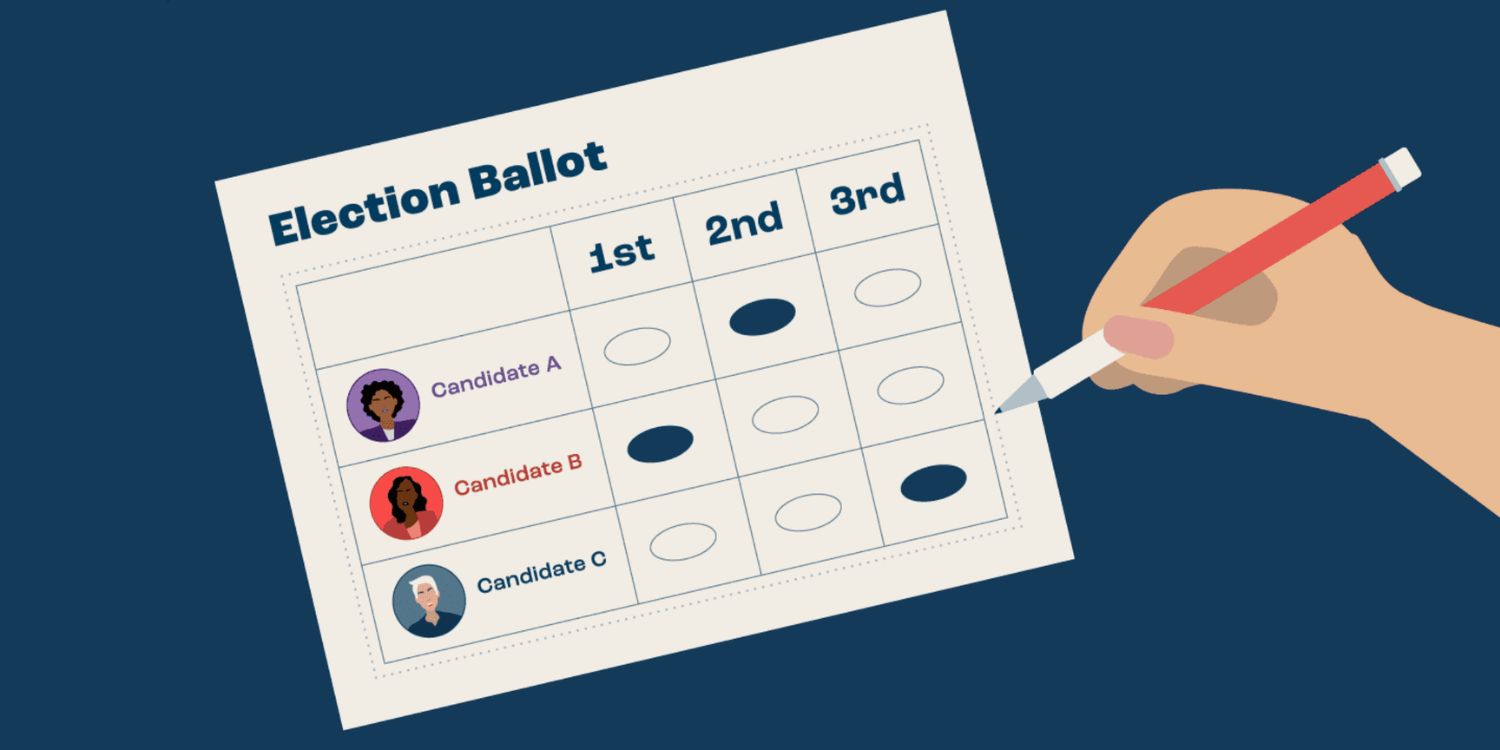
First, it is important to look at how RCV actually works. Instead of simply choosing to vote for one candidate, RCV requires the voter to rank the candidates in order of preference. For example, in a 5 candidate race, there would be five spots to rank the candidates in.
In the first round, each candidate is ranked on how many first place votes they received. If they have over 50% of the first place votes, that candidate wins outright (similar to first-past-the-post). However, if no candidate has that, then the candidate with the least amount of first place votes is eliminated, and the ballots that had that candidate ranked first now get counted to whoever they had ranked as their second preference. This process continues until a candidate has over 50% of the voters’ preferences supporting them.
For a clearer graphic explanation, the city of Fort Collins, Colorado, has a great video example. But the Democratic primary for the New York mayoral race gave a real-life example of why RCV is gaining steam.
One of the more interesting aspects of the NY mayoral race was that it allowed for a broader range of candidates. Normally, in American elections, there is an effect called the “spoiler effect”. When an outside candidate enters a two-person race, they draw voters away from the candidate with the most similar views. Often, that leads to the last candidate, who didn’t have their votes siphoned, winning, with the outside candidate having “spoiled” both their chances and the similar candidate’s chances of winning.
This has led to tactical voting in the U.S. where voters often back who has the best chance to win and to prevent a specific candidate from winning. As a result, outside parties and candidates often have an incredibly hard time winning elections because they aren’t seen as viable AND they would siphon support from a candidate who has a better chance to beat the worst-case candidate.
The NY mayoral race tempered this effect with RCV allowing voters to have a 1st preference of a candidate who isn’t mainstream, while allowing them to then have backup preferences to dilute tactical voting. With this freedom to choose, New Yorkers saw candidates ranging from the democratic socialist Zohran Mamdani and pro-labor progressive Jessica Ramos to moderates like Michael Blake and pro-charter school investor Whitney Tilson.
RCV also allowed each candidate to focus on specific issues more intensely, whether that be specifically tackling homelessness, affordability, or early childhood education, which has served to make policies regarding those issues more thought-out and solid, as the candidates have to run a campaign based heavily on that platform.
There’s another positive outcome from embracing RCV; cordial and amicable campaigns. As mentioned before, having a list of preferences allows voters more freedom to choose, but it also allows campaigns room to bypass the (unfortunately) common practice of attacking their fellow candidates.
If two candidates have very similar policies, like Brad Landers, Michael Blake, and Zohran Mamdani did, they can acknowledge that they agree on many things and even go so far as cross-endorsing each other. It effectively tells voters, “we like each other a lot, and if one of us isn’t likely to win as the votes get tallied, put this other candidate next so that we can still tackle the issues we agree on”.
Save for Andrew Cuomo, who was attacked from all sides in a debate, the campaigns in the mayoral race had far more upbeat and policy-forward atmospheres, which stands in stark contrast to the presidential elections over the past few cycles.
All of this, between a wide range of candidates, policy-forward campaigns, and amicable campaigns, has come together to showcase one final aspect of RCV that the NY mayoral race revealed: it got younger voters out to the ballot box.
For the first time in recent memory, 25- to 34-year-olds turned out in the highest numbers, with 21% of the total votes and voters under 40 represented 40%. Additionally, there was a significant jump in first-time voters this year. With disillusionment in politics pervasive, especially among young people, RCV gave them a way to find a candidate who aligns with their values while also having an actual chance of winning. These candidates often fall outside of traditional Democrat or Republican circles, and it seems more freedom of choice has led to more civic engagement.
However, there are short-comings of RCV that are important to note.
For starters, the number of candidates and complexity of voting (relative to filling in just one bubble normally) can be confusing for voters while also making mistakes in filling out ballots more common, leading to those ballots being discounted. Another factor is that multiple rounds of ballot tallying takes longer and is more expensive, and it has raised concerns of transparency between rounds.
But even with these downsides, RCV is beginning to spread across the country. Nine states, beginning with Maine in 2018, already use RCV, although six only use it for the military and citizens living overseas. It’s also used in local and city elections in another 17 states with more states considering legislation to adopt RCV including Washington D.C.
On the flip side, 13 states have banned RCV in local elections, and the current political juggernauts will likely be disinclined to pursue it on account of it diluting their power and influence towards smaller parties. But with the momentum growing, it seems unlikely that RCV won’t continue to spread at the local and state levels.
Engagement Resources
- FairVote is a nonprofit organization that is a proponent of both RCV and the Fair Representation Act.
- Fair Elections Center is a litigation and election policy nonprofit who keeps a database of legislation related to elections
- Many states, including Maine and Virginia, have FAQ’s regarding their RCV policies in order to help voters and legislators understand the voting system.
The Sudanese Civil War (Foreign Policy Brief #204)
Foreign Policy Brief #204 | Damian DeSola | June 27, 2025
Introduction
Across the world conflicts are raging, and in their paths leave levels of humanitarian crisis that reach peaks never seen in human history. One of these lesser reported upon conflict regions has the largest humanitarian crisis in recorded history: Sudan.
The Sudanese Civil War has been raging since 15 April 2023 with little sign of a potential ceasefire or peace agreement. Meanwhile, millions find themselves displaced and in need of humanitarian assistance, hundreds of thousands facing food insecurity, and thousands more are being subjected to sexual violence and genocide. It is the goal of this USRESIST Brief review the main actors in this conflict and bring to forefront the massive humanitarian needs of the Sudanese people.
The War
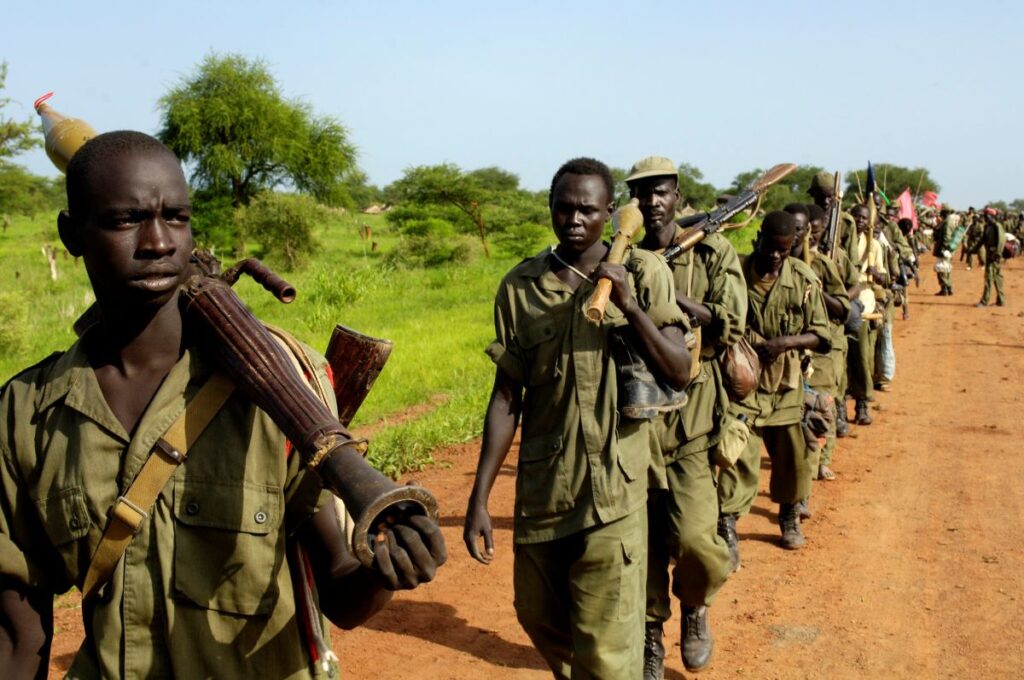
The main actors boil down to two major groups seeking to gain control over Sudan: the Sudanese Armed Forces (SAF) and the Rapid Support Forces (RSF). The former is the official government’s military, while the latter is a paramilitary group established by the government.
Leading the SAF is President of Sudan General of the SAF Abdel Fattah al-Burhan. Al-Burhan played a major role in representing the military in the transitional government that replaced President Omar al-Bashir, the 30-year sitting head of state, in 2019. His role allowed him to consolidate power away from civilians and placing himself at the top of Sudan’s governance.
The RSF is led by General Mohamed Hamdan Dagalo, also known as Hemedti. He is also the chairman of the recently established Government of Peace and Unity, a parallel government meant to consolidate power in RSF held territory and establish legitimacy. The RSF was established in 2013 by the Sudanese government to fight rebellion in the Southwest of Sudan. Eventually, the RSF became a powerful entity and a personal paramilitary organization for President al-Bashir.
After al-Burhan’s consolidation of power, the RSF was placed below the SAF and was poised to have it integrated into the regular military. The spark that ignited hostilities was the SAF’s attempt to disperse RSF forces across Sudan as part of integration efforts. General Hemedti and the RSF viewed these actions as an immediate existential threat and took up arms against the military. The war is ongoing and the SAF has made gains over the RSF, but analysts believe that neither side has the capacity to defeat the other outright. Paradoxically, both sides still seem to believe that there are further opportunities to achieve strategic victories over the other.
The international community has attempted to facilitate negotiations between the SAF and RSF, but efforts quickly broke down. On January 7th and 16th of 2025, the US announced sanctions against Hemedti and al-Burhan respectively. The announcement aimed at punishing the military leaders for obstructing peace talks and democratic transition, as well as committing war crimes and crimes against humanity. The United Arab Emirates and Iran have armed the RSF and SAF respectively. Both nations have denied these reports even as shrapnel recovery and analysis prove otherwise.
The Humanitarian Crisis
As a result of this civil war, the people of Sudan are enduring extreme humanitarian distress. As previously mentioned, the United Nations and the International Rescue Committee (IRC)have declared the crisis to be the worst in recorded history. UN experts have also said that the humanitarian and diplomatic support for Sudan is dismal and insufficient for the prevention of further conflict and the reduction of the crisis. The IRC reports that 30.4 million Sudanese are experiencing humanitarian crisis while 14.6 million Sudanese have been displaced. The IRC states that it is “the largest and fastest displacement crisis in the world.”
According to the World Food Programme, Sudan is on the verge of “becoming the world’s largest hunger crisis in recent history”. They report that 24.6 million Sudanese face acute hunger, 637,000 are at catastrophic levels of hunger, and that famine has been confirmed in 10 areas of Sudan.
Mounting evidence of genocide collected by the United Nations and other organizations points to attempts at ethnic cleansing across Sudan. On 7 January 2025, US Secretary of State Blinken announced that members of both “SAF and the RSF had committed war crimes.” Furthermore, that “the RSF and allied Arab militias had committed crimes against humanity and ethnic cleansing.” The RSF in particular is found to be committing widespread killings in the West Darfur region of Sudan, with a particular aim at wiping out non-Arab communities in the region. Recently, the UN reported that the RSF killed over 100 people at an internally displaced peoples camp.
Sexual violence in Sudan, technically termed Conflict Related Sexual Violence (CRSV), is also reported as part of these ethnic cleansing activities. The UN reports that the conflict has disproportionately affected women and girls with crimes of “rape, sexual slavery, abduction, and other brutal forms of violence.” There have also been cases of sexual violence against boys and men. CRSV against non-Arabs has increased, and evidence shows these targeted assaults are attached with goals of producing “Arab babies”.
Conclusion
Little is being done by the international community to prevent further atrocities or reduce the humanitarian crisis happening before our eyes. Western policy or media has very little interest in seeking awareness or attempts at reducing human suffering in a nation of 50 million people. The United States is ignoring the situation, as the Trump administration has reduced funding for international humanitarian aid and has recently proposed reduction in funding for the investigation of war crimes.
Your writer hopes you keep the Sudanese people in mind as you consider the status of our world today and consume the corporate media that prefers your mind focused on the wars they care about.
Engagement Resources
Trump’s Tech Ventures Positioned for Top Profits (Technology Policy Brief #151)
Technology Policy Brief #151 | Mindy Spatt | July 1, 2025
The Trump organization has dropped any pretense of avoiding conflicts of interest. Instead, it is blatantly cashing in on Trump’s presidency in every conceivable way. At the top of the list is tech, with both Trump and his wife selling digital currencies and a new Trump mobile phone on the way. An additional bonus is that Trump has a great deal of power over the agencies that oversee these industries, and Congress is doing nothing to stop him from taking advantage of it.
Analysis
With the Trumps coming up with new ways to profit off the presidency every day, it was no surprise that Eric Trump recently announced a new venture in the family’s ballooning cryptocurrency portfolio.
Bitcoin mining uses a network of computers to verify Bitcoin transactions. Profits are made through the computers that are rewarded for their “work” with, what else, Bitcoin! And, the icing on the cake, it is the perfect investment for a climate change denier. Bitcoin mining is oddly named since, unlike actual mining, it involves no physical labor at all. The computers do the work and need massive amounts of electricity to do so. It is an energy-intensive endeavor that doesn’t deliver benefits like light, refrigeration, or manufacturing. It adds to the emissions in our air simply in the service of higher profits off of investments in “coins” that likewise have no physical existence.
Trump’s memecoin has already received a big presidential boost. Trump recently threw a gala dinner at his Virginia golf club for the top holders of his memecoin. They paid, collectively, $148,000 for the privilege. The $TRUMP memecoin had been sinking in value and was worth next to nothing until Trump offered a private dinner to the top 25 buyers of his product. Prices went up quickly, as did Trump’s profits.
Those profits can be maximized under the terms of legislation recently approved by the Senate. The National Innovation for U.S. Stablecoins Act (GENIUS Act)
limits the issuance of payment stablecoins, a type of cryptocurrency issued by Trump’s World Liberty Financial, to “permitted payment stablecoin issuers” and qualifying foreign issuers. Either state or federal authorities could approve permits, and foreign issuers would have to use a US-based intermediary. In both cases, Trump would have enormous influence over any competitors seeking to enter the market.
It is a given that most republicans will rubber stamp all of Trump’s legislation. But in this case, although some democrats objected to the bill, 18 democratic senators voted in favor, even though there was nothing in the bill that addressed Trump’s glaring conflicts of interest. The bill, introduced by Senator Bill Hagerty (R-Tenn.) and co-sponsored by Senators Tim Scott (R-S.C.) and Kirsten Gillibrand (D-N.Y.), goes to the House of Representatives next.
Trump’s profit-making ventures as President don’t stop there. There are golf courses, resorts, watches, and soon a Mobile phone in Trump’s favorite color, gold. Phone service, like the airwaves, is regulated by the Federal Communications Commission, which Trump has weaponized to launch investigations of media outlets he believes have challenged or insulted him, and in some cases, is suing.
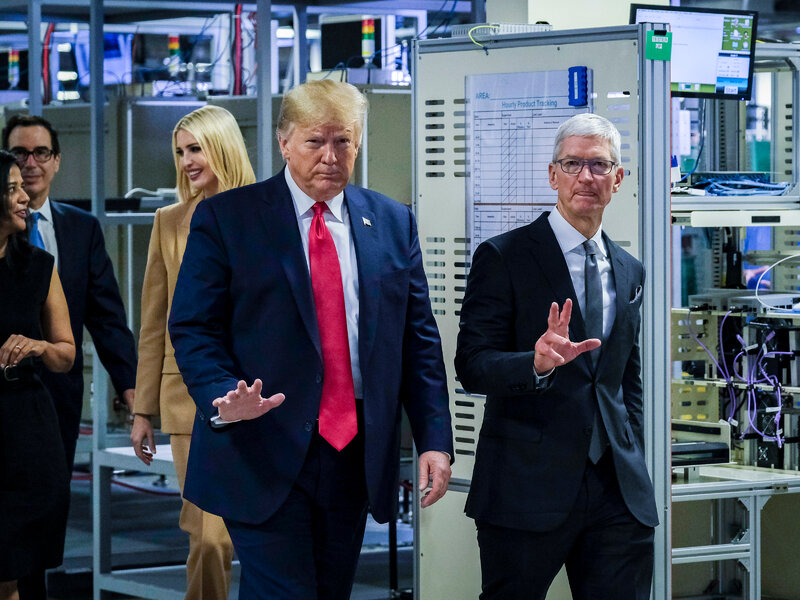
As President, he has many ways to destroy his business competitors. Despite Tim Cook’s attendance at his inauguration- with a $1 million contribution- Trump recently rebuked Apple for making its phones in India, and threatened the company with a 25% tariff. He promises his phone will retail for $500 and be “built in the United States.” Commentators all say it is impossible to manufacture smartphones from all US-made parts; at best, the phones could be put together domestically with imported parts.
The presidency looks to be the most successful business venture of Trump’s entire life. In March of this year, Forbes estimated Trump’s net worth at $5.1billion, which is more than double what it was the year before. And this is only the beginning.
Engagement Resources
- Bitcoin Mining Increases Levels of Air Pollution Harmful to Human HealthBy Maya Brownstein, April 24, 2025https://hsph.harvard.edu/news/bitcoin-mining-increases-levels-of-air-pollution-harmful-to-human-health/#:~:text=Bitcoin%20mining—the%20process%20through,Chan%20School%20of%20Public%20Health.
- Tracking Electricity Consumption From U.S. Cryptocurrency Mining Operations, February 1, 2024, https://www.eia.gov/todayinenergy/detail.php?id=61364
- Crypto Bills Surrender to Trump’s Crypto Corruption Press Release: Crypto Bills Surrender to Trump’s Crypto Corruption, June 17, 2025https://www.citizen.org/news/crypto-bills-surrender-to-trumps-crypto-corruption/
Going to War for Human Rights? (Foreign Policy Brief #206)
Foreign Policy Brief #206 | Abran C | July 2, 2025
With Israel and Iran now having engaged in a direct war, trading attacks on each other’s cities, and the US carrying out attacks inside Iran, there’s a high chance that the US could be dragged into a full on war. It’s a prospect that is causing fear in many in the United States, but also being pushed for by others. Regime change has come up as one of the goals of the war and there are those in the US who are in favor of going to war and overthrowing the Iranian government.
Once again, not only is an enemy nation baselessly a short-way away from a nuclear weapon that they would obviously be compelled to use immediately, but the government is oppressive to those that live under its rule and Americans must fly across continents to liberate them. Women, ethnic minorities and the LGBTQ community would apparently welcome American/Israeli forces invading and overthrowing their government.
Now of course, this is not to say the Iranian government is not oppressive, one would only need to look at the recent sweeping public protests that erupted across Iran in response to the death of Mahsa Amini in custody of Iran’s morality police in September 2023. Iranian authorities after suppressing the protests adopted an even more draconian law that further targeted the rights of women and girls, imposing the death penalty, flogging, prison terms and other severe penalties to crush ongoing resistance to compulsory veiling, according to a 2024 report by Amnesty International. Many more examples could be given and presented by this point alone proves that the egregious situation for women in the country is true.
There is no question that in Iran women are less free than men in society and other minority communities or dissidents to the government’s policies do live under religious authoritarian rule. However, that is not a justification for overthrowing a government of a sovereign nation, and especially one in a region that has already seen multiple governments toppled and then thrown into instability. The argument over different oppressed groups in Iran is being used primarily to manufacture consent for the US to go to war. Even as the IAEA recently made statements that Iran has no nuclear weapons program, the facts proved irrelevant when faced against the argument that because Iran is run by an evil regime it clearly needed to be invaded. Only recently and very quickly have many media pundits, commentators, and politicians come to care about the well being of various groups in this foreign country.
Take this excerpt from an article published in Politico, written by Mathias Döpfner, titled “Iran’s Target Isn’t Just Israel. It’s Us”. The article seeks to make the claim that the US should go to war, with a section stating “In Iran, women are systematically oppressed and abused. Homosexuals are murdered. Those who think differently are imprisoned and tortured.”
Another example, from a journalist that has gained notoriety over the last few years covering events in the Middle East, Pierce Morgan, who on a recent episode of his show Pierce Morgan Uncensored, interviewed Iranian Professor Mohammed Marandi. While interviewing the professor, he read a list of repressive aspects of Iranian society, stating “women face severe restrictions when it comes to marriage, women banned from certain professions… Lgbt people suffer systematic discrimination and violence… authorities censor the media… it doesn’t sound like a great place to visit” he said.
Chris Cuomo on his podcast took aim at both Bernie Sanders and AOC for making statements against going to war with Iran, saying “If you’re a feminist how do you not decry the fact that Iran would jail you for how you speak, for how you dress?… they would slaughter your LGBTQ plus constituents.”
On the popular morning talk show The View, Alyssa Farah Griffin, a republican former White House director of strategic communications said, “Let’s remember too, the Iranians literally throw gay people off of buildings. They don’t adhere to basic human rights,”.
These arguments in other contexts are wholly justified and should be made, people regardless of gender, sexual orientation or race should not be made to live in fear or as second class citizens in any state around the world. However the arguments are being presented now not out of genuine concern but are the same claims used to launch and sustain decade long wars in Afghanistan and Iraq. The mental leap from having issues with a country’s domestic and social policies to then suggest that they then can only be solved through regime change by our armies overthrowing and occupying the country is outrageous.
There are numerous other examples of government oppression and oppression of minorities from all across the globe. For example, in 2024 Peru classified transgender identities as ‘mental health problems’. In 2023 Uganda passed one of the world’s harshest anti-gay laws. The law states that “a person who promotes homosexuality commits an offense and is liable, on conviction, to imprisonment for a period not exceeding twenty years.” It also requires Ugandans to report suspected homosexuals or violations of the law to the authorities. In Saudi Arabia, one of Donald Trump’s most closely allied foreign partners, women only gained the right to drive in 2018 and are still subjected to strict male guardianship laws. We must also not pay mind that different states in the US have varying degrees of discrimination towards the LGBTQ community and that there is currently a nationwide hunt in the United States by masked agents for both documented and undocumented people of a particular ethnic group with many being sent to a detention facility in Central America with no due process.
Under the arguments made by those listed and others in the media that cite Iran’s treatment of various groups, all of the above-mentioned countries should have their governments toppled. An obviously ridiculous suggestion, which if not only for the hardship it would create within those countries, for the damage it would do to an already unstable international system. If we seek to ameliorate the situation of women, ethnic minorities, the LGBTQ community and others in Iran and elsewhere, we could do so through uplifting their voices internationally. Funding projects and encouraging journalism, education, diplomacy and more through international programs like those cut by the Trump administration. We should offer refuge to those fleeing oppressive regimes and not close our borders or implement travel bans to any and all nationals escaping said “evil regimes”. There are numerous ways to help and none of those should include invading and occupying those we claim to seek to protect and liberate.