

JOBS POLICIES, ANALYSIS, AND RESOURCES
Latest Jobs Posts
Biden Expected to Reverse Trump Rollbacks and Strengthen Policies Affecting Americans with Disabilities
Brief #89—Health & Gender
By Linda F. Hersey
For people with disabilities and their advocates, the victory of Joe Biden over Donald Trump offers hope the incoming president will renew support of, and emphasis on, the Americans with Disabilities Act (ADA), which offers protections to people with disabilities in the workplace and in the community.
Breonna Taylor Case Update
Brief #3—Social Justice
By Erika Shannon
On March 13, 2020, Breonna Taylor was sleeping in her home when Louisville, Kentucky police executed a no-knock search warrant.
Remote Learning Projected to Increase Inequality in Education Achievement
Brief #104—Immigration
By Rosalind Gottfried
Demographic inequities characteristic of American society continue to grow in different sectors. In education the widespread shift to remote learning will have a dramatic impact on students, long after the virus has been controlled and students returned to the classroom.
The New COVID-19 Variant: What We Know, and What Should be Done
Brief #88—Health and Gender
By Justin Lee
In early December 2020, President-elect Joe Biden announced the new members of his public health team and objectives he plans to implement within in his first 100 days in office.
The Trump Administration’s Last Push to Open Land to Energy and Mining Companies
Brief #104—Environment
By Jacob Morton
As the Trump administration’s single term nears its end, top agency officials are attempting a last-minute push to approve a flush of large-scale energy and mining projects for companies hoping to secure contracts to extract various natural resources.
The American-Chinese Relationship & the Incoming Biden Administration
Brief #103—Foreign Policy
By Will Solomon
Over its nearly four years in office, the Trump administration’s relationship with China has been nothing if not visibly inconsistent. Trump has, on the one hand, appeared to cultivate a dynamic personal relationship with Chinese leader Xi Jinping—he has publicly praised Xi on multiple occasions and, broadly speaking, clearly appears to revere the “strongman” image.
The Georgia Runoff Election: Who Will Win?
Brief #14—Election News
By William Borque
Early voting for the Senate runoffs has finished in Georgia, and the races are closer than ever. As candidates and their colleagues in the senate clash over stimulus checks and Covid restrictions, democrats, republicans, and independents alike have begun to cast their ballots.
Martial Law Is Not in the Cards
Brief #13—Election News
By Zach Huffman
After weeks of refusing to accept the results of last November’s election, President Donald Trump has reportedly discussed the possibility of declaring martial law as the latest in a series of attempts to retain power despite losing the election to President-elect Joe Biden.
Biden Brings a Fresh Perspective to US China Policy
Brief #102—Foreign Policy
By Brandon Mooney
As President-Elect Biden and President Trump squared off during the past campaign, we got a front-row seat to the past and current versus the future U.S. foreign policy strategy regarding China.


Latest Police Shooting Leaves Kenosha, Wisconsin Reeling in Its Wake
This past Sunday, August 23, police officers in Kenosha, Wisconsin shot 29-year-old Jacob Blake seven times in the back. Reportedly, Blake was attempting to break up a fight between two women, when police responded to the call. When police arrived words were exchanged, and Jacob Blake attempted to retreat to his vehicle, where his three small children were waiting in the backseat. There was an effort to use a Taser against Blake to stop him from returning to his vehicle, but it was not successful. One of the officers, now identified as Rusten Sheskey, grabbed Blake by the shirt and discharged his weapon seven times into Blake’s back as Blake opened his driver’s side door. According to lawyers for his family, Jacob Blake is now paralyzed from the waist down and it would take a miracle for him to be able to walk again. The unlawful shooting of Blake is just the latest police-involved shooting where unnecessary force is used by police on African American suspects.
This incident has prompted protests every night in Kenosha since its occurrence. There is currently a 7 p.m. curfew in place until Sunday night. Tensions have been on the rise since the shooting, and Tuesday night some of those tensions came to a head in Kenosha. 17-year-old Kyle Rittenhouse traveled from Antioch, Illinois to Kenosha, Wisconsin armed with an AR-15 rifle to allegedly help defend businesses from looters. While in Kenosha, he shot three people, killing two of them. Although some speculate this was self-defense, most people are wondering why a minor was there in the first place. It is unlawful for someone under the age of 18 to carry a gun across state lines; in Illinois, where Rittenhouse resides, it is unlawful for someone under the age of 18 to own a gun. Rittenhouse was not immediately arrested, and was able to spend the night at home. This adds fuel to the idea that the police target black criminals with violence and shots to the back, while peacefully arresting their white counterparts. To contribute to the uproar, certain mainstream media outlets have labeled Jacob Blake as a man with a criminal past, while Kyle Rittenhouse has been labeled as a young man aspiring to be a police officer.
In response to the protests and rioting, President Donald Trump has sent in federal assets to help Kenosha “restore law and order.” After Wisconsin Governor Tony Evers had already sent in the Wisconsin National Guard, Trump tweeted “Governor should call in the National Guard in Wisconsin. It is ready, willing, and more than able. End problem FAST!” This tweet is similar to others, where Trump is quick to paint Democratic leaders as incompetent, even though they have acted on the problem. It has since been announced that the Department of Justice is sending in federal law enforcement to Kenosha, including the FBI and U.S. Marshals. Thursday, Governor Evers requested the help of other National Guard troops under the Emergency Management Assistance Compact. National Guard troops from Alabama, Arizona, and Michigan will be heading to Kenosha to support the Wisconsin National Guard.
There is already evidence that many votes in Wisconsin will be voting for President Trump this November, with residents feeling that he better understands what they need. Some residents feel that Democrats are only focusing on systemic racism, and not on other issues. The Republicans have painted a picture that if Democrats are elected, the looting and rioting will continue. This idea has potentially swayed some voters back to President Trump.
The consequences of the actions of the Kenosha Police Department have put the national spotlight on the Black Lives Matter movement. With the protesting and rioting that has been abundant in Kenosha the past week, some opponents have voiced their criticism of Black Lives Matter, insinuating that they exist to inspire hatred against the police. These claims are unfounded and unsubstantiated. The movement is responding to Jacob Blake and many others being shot unlawfully by the police, and wants transparency from investigators. Black Lives Matter protestors attempted to remain peaceful, but tensions with police led to both sides escalating the situation. On Sunday night, the police antagonized the already agitated protestors with tear gas and rubber bullets. Protestors are frustrated over a lack of accountability in police-involved shootings, and become angry when they are responded to with either silence or violence from the police. By the time leaders from the local NAACP arrived, the national spotlight was already on Kenosha and the violence was spiraling out of control. There is speculation that until there is transparency, and until the officer that shot Blake is arrested or officially fired, the protests and rioting will continue for this Wisconsin city, with Black Lives Matter at the forefront.
Resistance Resources
- To find out more about the organization, donate, or get involved, visit the Black Lives Matter website.
- The NAACP is a civil rights organization that responds to violence against African Americans and advocates for civil rights and equality for everybody.
- To donate or find out more about their mission in Kenosha, visit the Wisconsin ACLU website.

History And The Law Are Against President Trump’s Proposal For Law Enforcement Officers At Polling Booths
Policy Summary: On August 20, 2020 President Donald J. Trump said in an interview that he would send law enforcement officials to polling stations around the country. The intent was to protect against voter fraud in the upcoming November 2020 election. In his interview with Sean Hannity of Fox News the President said, “We’re going to have sheriffs, and we’re going to have law enforcement, and we’re going to have, hopefully, U.S. attorneys, and we’re going to have everybody and attorney generals.”
The idea floated by President Trump has its roots at a February 2020 conference in Orange County, CA sponsored by the Council for National Policy, a right – wing religious group. Other groups in attendance at the meeting, such as the group True the Vote, have advocated for more voting restrictions and for aggressively challenging a voter’s credentials at the polls.
Despite the President’s announcement, no plan or details have been revealed thus far to implement the President’s proposal. LEARN MORE
Policy Analysis: The President’s announcement was met with widespread disapproval. Dale Ho of the American Civil Liberties Union’s (ACLU) Voting Rights Project dismissed President Trump’s suggestion by saying the President neither had the power to order a local sheriff to do something nor had the power to send federal forces into polling places. Wendy Weiser, Director of the Democracy Program at the Brennan Center for Justice cleverly pointed out that a number of states and local jurisdictions have laws against law enforcement officers being in polling places. A number of state Secretaries of State pushed back on Trump with Colorado Secretary of State Jena Griswold calling the proposal “voter intimidation” reminiscent of “tactics used against Black voters in the Jim Crow South.” The common themes that could be found in the pushback against the President are of a President trying to exert non – existent powers and an attempt to intimidate potential voters and suppress the vote.
While comparing President Trump’s proposal to old Jim Crow tactics is a useful analogy an incident from New Jersey in 1981 best illustrates why armed law enforcement officers at polling booths is easily one of the worst ideas. That year the Republican National Committee (RNC) decided to create the National Ballot Security Task Force. The RNC hired two hundred (200) off – duty police officers and private security officers to maintain a presence at polling booths while carrying visible firearms and walkie – talkies. They also wore armbands with the name “Task Force.” The members of the group were deployed to polling booths in predominately Black and Latino neighborhoods in New Jersey during a heated election for Governor that year. On Election Day, members of this group tried to intimidate voters by asking for voter registration cards from Blacks. They also chased many Latinos away from the polls. Eventually, the RNC was sued which resulted in a consent decree where the RNC agreed to not engage in poll watching without prior court approval. That consent decree was in effect for nearly four decades before it expired in 2018. What that incident in New Jersey showed was that poll monitors employed by the RNC were nothing more than a way to intimidate voters of color from voting. Now, with President Trump suggesting that armed law enforcement officers be stationed at polling booths, it is clear that the Republicans might again be on the verge of trying to intimidate voters, specifically voters of color, with agents visibly displaying weapons. While that consent decree was helpful in reigning in Republican voter suppression tactics it can no longer be relied on since it has expired. What is needed now is a concerted effort to employ all local, state and federal laws that prohibit law enforcement officers from polling booths. There also is a need for a campaign to inform and warn the citizenry that President Trump’s proposal is not a proposal for election integrity but nothing more than a discredited old tactic used by racists from the Jim Crow era. The United States of America does not need an armed law enforcement presence to conduct a national election. LEARN MORE, LEARN MORE, LEARN MORE
Engagement Resources:
- American Civil Liberties Union (ACLU) – infopage on the group’s Voting Rights Project.
- Brennan Center for Justice – infopage for group’s voting rights efforts.
This brief was compiled by Rod Maggay. If you have comments or want to add the name of your organization to this brief, please contact Rod@USResistnews.org.

Trump Orders Most Biodiverse Area of the Arctic National Wildlife Refuge be Leased for Drilling
Policy
The Arctic National Wildlife Refuge (ANWR) is a 19.3 million acre stretch of wilderness in northern Alaska, the largest in the United States, and has been protected from development for nearly six decades. It is home to 45 different species of mammals and 200 species of birds from 6 continents, making it one of, if not the most biodiverse areas in all the arctic. Environmentalists have considered it “one of the finest examples of wilderness left on earth.” Specifically, the coastal plain along the refuge’s northern edge, known as the 1002 Coastal Plain portion, is particularly diverse, containing the largest number of polar bear dens in Alaska, and provides habitat for muskoxen, Arctic wolves, foxes, hares, migrating waterfowl and herds of Porcupine caribou. This coastal plain portion is also believed to sit atop possibly the largest onshore oil reserves in North America that have yet to be tapped.
Most of the ANWR has been designated as “wilderness” since it first became a federally protected area in 1960, and so is off limits to development. However, when the ANWR was expanded in 1980, the 1002 Coastal Plain portion was recognized as “a promising area for energy development” (which was later supported by a seismic study in 1987), and essentially became bookmarked as an area with potential for oil extraction, but requiring Congressional authorization before any drilling. Based on the seismic data from the 1987 study and new well samples, a 1998 study of the area by USGS indicated the possibility of up to 11.8 billion barrels of oil. Interest in the area by the energy industry, however, has been up and down over the years for various reasons, such as fluctuating oil prices, political and legal challenges, and the discovery of other nearby oil deposits. It has remained largely untouched for nearly 60 years, within which Republicans in Congress have attempted nearly fifty times to allow drilling in the ANWR.
In 2017, the Republican-controlled Congress finally succeeded when it passed the Tax Cuts and Jobs Act, which included a mandated time frame for the Department of the Interior (DOI) to begin leasing land for development on the coastal plain. Donald Trump signed the Act into law in December 2017, directing his administration to open the 1002 Coastal Plain area for development and to begin leasing the land. Political controversy and environmental assessment requirements have prevented the lease of any plots so far, but in September 2019, the DOI submitted a final environmental impact statement (EIS), recommending that the coastal plain be open for leasing and that although the DOI admits that “activities associated with oil and gas development — including new roads and truck traffic, as well as air, noise and water pollution — could potentially harm wildlife,” the statement claims that measures can be taken to minimize the disturbance to wildlife by heavy machinery, such as not operating in certain areas for a month out of the year, so as not to disturb calving caribou.
With a supporting environmental impact statement approved by the Trump-nominated Secretary of the Interior, David Bernhardt, the Trump administration, on August 17, 2020, released a Record of Decision, outlining a plan for where and under what terms and conditions leasing for the oil and gas development program will occur on the refuge’s coastal plain. Trump’s Record of Decision makes “the approximately 1,563,500 acres, or the entire Coastal Plain program area, available for oil and gas leasing, and consequently for potential future exploration, development and transportation.” The decision orders the Interior Secretary and Bureau of Land Management (BLM) to make at least two area-wide lease sales of no less than 400,000 acres each, by December 22, 2024, with the first sale by December 22, 2021 (Even if Donald Trump does not win reelection in November, it could be quite difficult for his successor to reverse any lease rights that have already been auctioned off to energy companies). Trump’s Decision also states that the BLM is required to authorize “any rights-of-way or easements across the Coastal Plain for the exploration, development, production, or transportation necessary to carry out [the Coastal Plain Oil and Gas Program].” This means that the BLM has the ability to approve the building of any new road, pipeline, or other infrastructure for anyone, even if they don’t have a lease in the area, for any reason that might aid the gas and oil industry in the region.
Analysis
Republican Senator from Alaska, Dan Sullivan, supports the new Record of Decision, saying, “Thousands of Alaskans are employed in our oil industry, and their livelihoods depend on the good-paying jobs created by our state’s reserves. Today, we are one step closer to securing a bright future for these Alaskans and their families.” Local energy firms and some Alaska Native groups also support the Decision, believing it could provide jobs for a state that has seen a decline in oil production since the 1980’s.
Republican Senator, Lisa Murkowski and Republican Governor of Alaska, Michael J. Dunleavy both agree. Murkowski says, “New opportunity in the 1002 Area is needed both now, as Alaskans navigate incredibly challenging times, and well into the future as we seek a lasting economic foundation for our state.” Governor Dunleavy proclaims, “The Record of Decision is a definitive step in the right direction to developing this area’s energy potential – between 4.3 and 11.8 billion barrels of technically recoverable oil reserves.” Republican Congressman Don Young also praises the Decision, proclaiming, “In Alaska, we have proven that protecting the environment, honoring our history, and developing our natural resources can go hand-in-hand.”
Environmentalists, however, are not so convinced. Many criticize the DOI’s latest environmental impact statement, claiming that the review was rushed, insufficient, and “largely based on older research,” as well as “failed to address several concerns,” such as not providing an estimate of how many polar bears could potentially be killed or harmed by exploration in the coastal plain. Opponents to drilling in the area also say the Interior Department downplayed the climate change risks in its review. The agency’s impact statement claims the greenhouse gas emissions that would ultimately result from the drilling of 11 billion barrels of oil would be minimal, “since most of that oil would simply displace oil being produced elsewhere in the country.” Attorneys general from 15 different states have submitted comments to the Interior Department, calling this displacement theory “completely unsupported.”
Banks including Goldman Sachs and JPMorgan Chase say they will not directly finance any oil and gas drilling operations in the Arctic, because of pressure from environmental groups and the Gwich’in Alaska Native group. The caribou are a primary subsistence food for the Gwich’in, and they are fearful of the development’s potential negative impact on the Porcupine caribou herds that come to the area to calve. The Gwich’in believe the leasing of the land they refer to as “Iizhik Gwats’an Gwandaii Goodlit” or “The Sacred Place Where Life Begins,” is a violation of their human rights.
Exploring and drilling for oil in the Arctic is a costly operation, and it is unclear how interested the industry really is. For a large company with public name recognition, the project carries a lot of stigma and the possibility of “litigation, investor anger and a tarnished brand.” Robert Hayes, executive director of the State Energy and Environmental Impact Center at the New York University School of Law and former deputy interior secretary under President Barack Obama says of the program, “You’ve got a lot of tripwires ahead. Anyone buying a lease is potentially buying years of litigation along with that lease.”
Critics of Trump’s move are also unsure about how profitable the lease sale program could even be for the Federal Government. Little is known about how much oil sits under the coastal plain. The last seismic studies to identify possible oil and gas reservoirs were performed back in the ‘80’s when the technology was far inferior to today’s, and according to the New York Times, evidence shows that “The only well ever drilled within the refuge’s boundaries was a disappointment.” Even Governor Dunleavey referred to the estimated oil reserves as only “technically recoverable.”
Opponents to the oil and gas program believe that opening the refuge’s coastal plain to fossil fuel energy development “would be a step backward” in an era when the majority of Americans believe we should be burning less fossil fuels and doing more to fight climate change. Environmental groups argue that drilling could harm the already vulnerable and struggling wildlife in the area and that concerns from the Gwich’in Tribal Council and Vuntut Gwich’in Government have been largely ignored.
Most analysts seem to agree that drilling for oil and gas in the 1002 Coastal Plain area of the ANWR comes with a lot of uncertainty and risk, and that the highly contested area “will have far more meaning and value as a wildlife refuge in a warming world that is starting to seriously move away from hydrocarbon energy.” Kristen Monsell, a senior attorney with the environmental group, the Center for Biological Diversity, makes a strong point when she says, “There’s no good time to open up America’s largest wildlife refuge to drilling and fracking, but it’s absolutely bonkers to endanger this beautiful place during a worldwide oil glut.”
Environmental groups like the Center for Biological Diversity, the Alaska Wilderness League, and some Alaska Native groups are expected to file lawsuits to try to block any lease sales of the coastal plain land. Adam Kolton, executive director of the Alaska Wilderness League wrote in a statement, “We will continue to fight this at every turn. Any oil company that would seek to drill in the Arctic Refuge will face enormous reputational, legal and financial risks.” The climate plan for Democratic presidential nominee Joseph R. Biden Jr. calls for permanent protection of the Arctic National Wildlife Refuge and the banning of new oil and gas permitting on public lands and waters.
Resistance Resources
- Center for Biological Diversity Working to secure a future for all species, great and small, hovering on the brink of extinction. We do so through science, law and creative media, with a focus on protecting the lands, waters and climate that species need to survive. https://www.biologicaldiversity.org/
- Alaska Wilderness League The Alaska Wilderness League (AWL) is a nonprofit organization that works to protect Alaska’s most significant wild lands from oil and gas drilling and from other industrial threats. The Alaska Wilderness League galvanizes support to secure vital policies that protect and defend America’s last great wild public lands and waters. https://www.alaskawild.org/
- Gwich’in Alaska Native group Established in 1992, the Gwich’in Tribal Council (GTC) is an indigenous organization that represents Gwich’in Participants in the Mackenzie-Delta of the Northwest Territories and across Canada. The Gwich’in have traditionally used and occupied lands in the Northwest Territories and the Yukon from time immemorial. https://gwichintribal.ca/
Learn More
Interior Press. (2020, August 17). Secretary Bernhardt Signs Decision to Implement the Coastal Plain Oil and Gas Leasing Program in Alaska. Retrieved August 23, 2020, from https://www.doi.gov/pressreleases/secretary-bernhardt-signs-decision-implement-coastal-plain-oil-and-gas-leasing-program
Montgomery, S. L. (2020, August 21). Trump greenlights drilling in the Arctic National Wildlife Refuge, but will oil companies show up? Retrieved August 23, 2020, from https://theconversation.com/trump-greenlights-drilling-in-the-arctic-national-wildlife-refuge-but-will-oil-companies-show-up-144715
Plumer, B., & Fountain, H. (2020, August 17). Trump Administration Finalizes Plan to Open Arctic Refuge to Drilling. Retrieved August 23, 2020, from https://www.nytimes.com/2020/08/17/climate/alaska-oil-drilling-anwr.html?name=styln-climate
U.S. Department of the Interior Bureau of Land Management. (2020, August 17). Coastal Plain Oil and Gas Leasing Program Record of Decision. Retrieved August 23, 2020, from https://eplanning.blm.gov/public_projects/102555/200241580/20024135/250030339/Coastal%20Plain%20Record%20of%20Decision.pdf
USGS. (1998). Arctic National Wildlife Refuge, 1002 Area, Petroleum … Retrieved August 23, 2020, from https://pubs.usgs.gov/fs/fs-0028-01/fs-0028-01.pdf
Vuntut Gwitchin Government and Gwich’in Tribal Council. (2020, August 18). VGG and GTC Joint Response to Record of Decision for the Coastal Plain Oil and Gas. Retrieved August 24, 2020, from https://gwichintribal.ca/about-gtc/news/vgg-and-gtc-joint-response-record-decision-coastal-plain-oil-and-gas

Is Canada A National Security Threat? It is Under the Trump Administration’s Trade Policy
Policy Summary:
Just 1 month after the USMCA officially succeeded NAFTA as the framework for North American trade, one of the country’s most reliable allies finds itself, once again, in the crosshairs of U.S. protectionist trade policy. Under Section 232 of the U.S. Trade Expansion Act of 1962, the Trump Administration cited national security concerns as the underlying condition necessitating the re-application of tariffs on Canadian aluminum. Since the 2016 election, President Trump has continuously claimed that the health and security of the nation rest on the stability of industrialized manufacturing. Moreover, he believes that the inherent strength of the military is dependent on the success of the industrial base, essential for the production of specialized strategic supplies and artillery equipment necessary to ensure protection.
Back in 2018, prior to trade negotiations, the U.S. imposed tariffs on a wide sector of industrial metals ranging from competitive adversaries like China to the traditional alliances of Canada, Mexico, and the European Union. One of the components that became part of the framework of the new trade agreement was to mutually eliminate all forms of duties on steel and aluminum imported from within the production zones of North America, meaning that the U.S. Canada, and Mexico would all work collectively to allow the free-flow of industrialized products to and from supply chains within the region. Recently, however, President Trump insisted that since the country has experienced a surge of metal imports from Canada, the agreement reserved him the right to re-administer tariffs if aluminum continued to flood the U.S. market. The administration believes that the excess importation of Canadian aluminum into the country forces downward pressure on prices, restricting manufacturers from maximizing potential output. Proponents of the president’s trade policy advise the reason for supporting the 10% tariff is that it counteracts the massive degree of state subsidization granted to Canadian steel and aluminum producers, which, they claim, levels the playing field.
Analysis:
Although President Trump’s populist rhetoric has resonated with many blue-collar industrial capitalist and factory workers, his policies are rooted in a fundamental misunderstanding of the mutual benefits compatible with free trade. The reckless political approach of the Trump Administration continues to depart from the traditions that have been the staple of American foreign policy. In the first place, to declare any industry in Canada a threat to national security is both shortsighted and obtuse. While the U.S. has acquired steel and aluminum from Canadians for several decades now, it has never occurred at the expense of public safety. In fact, the U.S. and Canadian metal industries are highly integrated. Mid-stream metal producers from both countries utilize supply chains interchangeably when one develops any type of competitive advantage over the other. By taxing “Canadian” aluminum, it is quite conceivable that the US is taxing itself as the product is a collective meld from both foreign and domestic manufacturers alike.
In the second place, subjecting Canadian aluminum to a 10% tariff in no way facilitates American competitiveness. Policies that encourage tariffs and quotas never seem to accomplish the most optimal economic outcome, because it is predicated on protecting the few at the cost of the many. One can argue that levying aluminum tariffs protects the concentrated sector of those who are directly competing against foreigners, but it comes at the detriment and costs to the greater population. Proposing to prop up the handful of aluminum manufacturers by forcing artificially higher costs on other intermediaries utilizing aluminum as inputs to production is rife with error. 97% of the U.S. aluminum industry is positioned in the median to downstream sector of the production process. Consequently, the majority of firms in the aluminum industry would encounter more costs than benefits from tariffs that supposedly protect American producers. The energy market, appliance manufacturers, the beverage industry, and auto-makers are just some of the major commercial interests adversely affected by the billions of dollars of excess costs they will be forced to absorb from the tariffs. It is impossible to protect one sector of the American economy without further damaging another, which only achieves a lateral effect at best.
While President Trump continues to propagate the notion that foreigners are taking advantage of Americans in the international market, he is either evidently unaware of the mechanism that fuels the global economy, or he is blatantly attempting to sabotage American enterprise. If Canadian taxpayers want to subsidize their commercial aluminum industries to the betterment of American standards of living, why should we discourage them? Doing so allows Americans to lower costs and acquire more disposable income, effectively translating into greater capital investment. Companies becoming inundated with excess costs become a drag on the U.S. economy by being forced to allocate more resources without any additional increase in output. Is anyone surprised why manufacturers seek supply chains abroad when the commander in chief has basically declared war on certain businesses for political objectives. The way to enhance American competitiveness is not by shielding them from competition, but by allowing them to choose from as open a market as possible, to achieve the advantage of maximizing output.
Under the Trump Administration, relationships built through the virtues of globalization continue to erode. Free trade is described as mutually beneficial voluntary exchanges between a buyer and a seller, done in the absence of coercion, force, or pressure, where peace and prosperity have been the benefits built by the coalescence of cooperation and support among nations. Declaring Canada a national security threat not only deviates from the perseverance of peace, but actually exists as a greater threat to the nation’s security. The U.S. is supposed to be the beacon of freedom, liberty, and prosperity. Yet the leader of the free world continues restricting freedom, disregarding allies, and propping up special interests.
At a time when the international community should be collectively seeking unification to solve universal problems such as Covid, climate change, and human rights issues, the U.S. continues to promote isolation rather than integration. The global landscape has changed. The planet is more interconnected through technology, communication, supply chains, and travel, than ever before. No longer do global actors compete on the basis of raw power and control, but rather through cooperation in promoting the general well-being and welfare of the global community. Countries who are commercially or actively integrated rarely have conflict. Yet through misguided logic and understanding, the president is threatening to reverse the years of progress made by Americans, allies, and adversaries alike who have all worked together in achieving a safer and more secure world.
Resistance Resources:
- Cato Institute – [https://www.cato.org/research/trade-policy] – is a public policy research organization dedicated to the principles of freedom, free-markets, and peace. Through publishing policy proposals, blogs, web features, op‐eds and TV appearances, Cato has worked vigorously to present citizens with incisive and understandable analysis.
- FEE – Foundation for Economic Education – [fee.org] – An educational foundation that inspires leaders with sound economic and political solutions in both domestic and international policy issues.
- New York Times – [https://www.nytimes.com/2020/08/06/business/economy/trump-canadian-aluminum-tariffs.html] – assisting people in understanding domestic and global issues through expert, independent, non-partisan journalism.
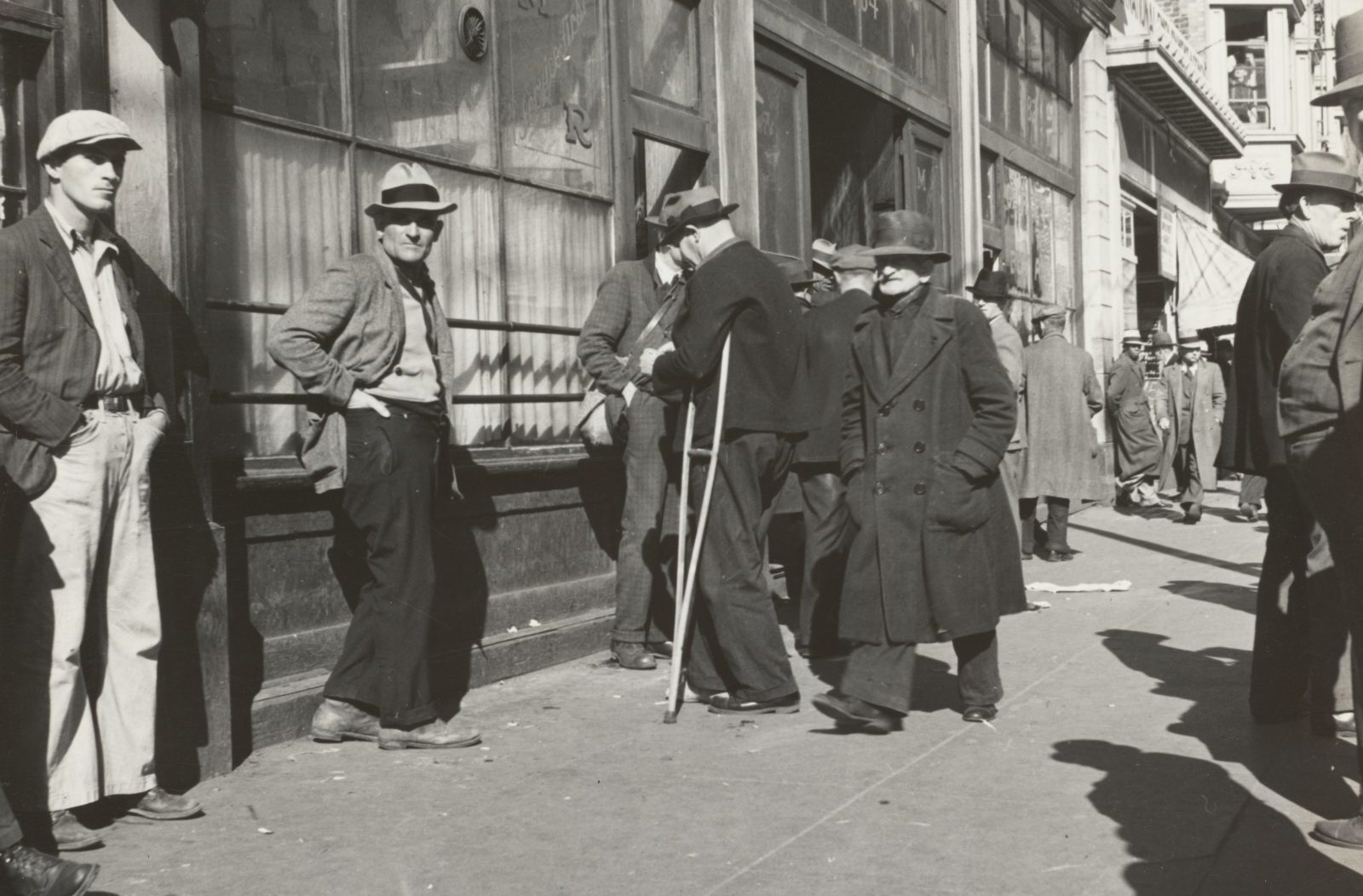
Will Trump’s Executive Actions Really Help Workers?
Rosalind Gottfried
Economics
August 18, 2020
Policy
Trump asserts that his payroll tax holiday will stimulate the economy, help workers take home more money, and generally be a boon to families suffering economic stress. The payroll tax stems from a 6.2% tax on wages from the employee and an identical payment from the employer. Each will be suspended retroactively from August 1 to December 27. Workers who make less than $100,000 per year will be eligible for the payroll tax cut. Individuals collecting less than $100 a week from the state’s program will not be eligible for this federal subsidy, eliminating supplemental payments to one million workers in need. Employers will also have a cut in taxes but both of these “tax holidays” will be short lived and each will ultimately be paid back unless the President waives the reimbursement in 2021. These taxes support social security which will compensate for the loss by siphoning money from the general fund, the budget that covers government operating costs. The loss of revenues to the Social Security system will be steep. In 2011 and 2012, a recessionary fix included a 2% payroll tax cut to stimulate the economy costing 10 billion dollars per month in revenue loss to the social security system.
The 38 million jobless Americans will have no impact from this executive memo. The real effect of this tax “holiday” is contingent on several vague mandates. For example, an employer can withhold the suspended employee portion for future payback expenses except in states where such actions are prohibited. Another potential negative impact is that repayment may be taken out of future checks as early as the end of the year or in early 2021 and employers can take the whole amount out of one check. Another potential option is that the extra payment will be taken from 2020 income taxes.
Another Trump executive memo to “help” the economy provides a federal unemployment payment of $400 per week, retroactive to August 1, down from the $600 ended on July 31. One challenge of the new order is the requirement that one hundred dollars of it be provided by state funds. Since the states are already covering the regular state benefits many cannot source another $100 a week. Such a mandate would add, for example, $700 million dollars per week to the California state system, a prohibitive burden. The federal funds for this program, Trump proposes, can be taken from FEMA, the federal emergency management agency. This is a terrifying prospect since the summer storm season is already looking severe and storms can cost 22 billion dollars each.
Trump’s executive order regarding evictions does not extend the ban on evictions established in the earlier CARES act but leaves the decision making to the secretary of Health and Human Services and to the CDC director. The potential for assisting renters with payments rests with action by HUD, the federal Housing and Urban Development agency. It estimated that as many as 40 million Americans will be vulnerable to losing their residences.
Finally, Trump extended a suspension of interest payments on student loans until January 1, 2021 but this doesn’t apply to loans private entities like banks.
Trump’s executive acts represent a contracted group of workers with decreased aid in comparison to the earlier CARES act. As in keeping with the federal response to the Covid-19 emergency, this “remedy,” will be a day late and a dollar short.
Analysis
The bickering between the Republicans and the Democrats has stalled the process and left many workers vulnerable to food shortages, homelessness, and loss of health insurance. The democrats want to extend emergency with a three trillion dollar Heroes plan, more generous than the 2 trillion CARES act passed in March and now expired. The republican program, called HEALS Act would cost one trillion dollars and be far less comprehensive. Chuck Schumer, Senate majority leader, maintains that in addition to help for wages, housing, and tax relief Americans should have programs which include testing, tracing, and treatment of the COVID-19; money for schools to safely reopen and to purchase adequate personal protection equipment; food assistance; budgetary support for local and state governments; money to support safety for the November election; and adequate funding for the Postal Service to support the demands of the election. The likelihood of attaining these measures seems tenuous, at best.
References
- https://www.marketwatch.com/story/what-does-trumps-payroll-tax-deferral-mean-for-your-paycheck-not-much-experts-say-2020-08-10
- https://www.cnet.com/personal-finance/trumps-pa yroll-tax-plan-when-the-holiday-starts-how-much-you-get-when-you-pay-it-back/
- https://www.cnet.com/personal-finance/heals-vs-cares-vs-heroes-what-are-the-differences-between-the-acts/
Resources
- https://democraticwoman.org/gotv/ Resource for Supporting voting Democratic in the upcoming election
- https://www.committoflipblue.com/ Resource for Supporting voting Democratic in the upcoming election

Trump Expands ‘Operation Legend’ in Re-Election Bid; 1,500 Arrests
By Erika Shannon
August 24, 2020
Policy Summary: Operation Legend has now been up and running since July 8, 2020. Named after four-year-old gun violence victim LeGend Taliferro, we originally saw 1,000 federal agents and investigators deployed to Portland, Chicago, Albuquerque, Detroit, Cleveland, Milwaukee, St. Louis, and Kansas City. In recent weeks, other U.S. cities have seen the arrival of federal agents. Indianapolis will be the site of a 45-day effort from Operation Legend to help curb gun violence; 57 federal agents will be a part of this recent deployment. There have been recent talks of expanding the program to Cincinnati, Ohio, to respond to high murder rates in the midwestern city.
On August 19, 2020, Attorney General William Barr gave an update on Operation Legend. It is estimated that there have been 1,485 arrests and almost 400 guns seized by federal agencies. Of those arrested, 217 have been charged federally and more than 90 have been charged with homicide. In Chicago there have been 61 arrests alone, with another 32 arrested in Cleveland. There has been concern of federal agents interfering with lawful protests around the country, but Barr stated that Operation Legend remains separate from any federal agents that have been deployed to respond to civil unrest.
Policy Analysis: Since its original announcement, Operation Legend has been met with opposition from state and local leaders. It has been seen as a political move by President Trump to boost his approval before the November elections, where he is on the ballot opposite Democrat hopeful Joe Biden. According to data from a recent Gallup Poll, President Trump’s approval rating is at 42%, leading some to believe that any actions taken by President Trump at this point are purely to increase ratings. President Trump is attempting to present himself as a candidate who is tough on crime and prides himself on “law and order.” It is true that the cities that have been targeted by Operation Legend do need federal resources; however these resources should not be limited to federal agents and investigators. Cities like Chicago are still seeing record shootings and homicides, despite the presence of federal agents. Operation Legend may be resulting in higher arrest rates, but it has not contributed to a drop in overall gun violence.
Local politicians have voiced their opposition to Operation Legend, feeling that they are being used as pawns in the President’s bid for re-election. There is the idea that President Trump is attempting to make some democrat-led cities seem like they are more violent and need intervention from simply federal law enforcement agencies. Leaders in Albuquerque and Kansas City learned of the federal intervention in their cities at the last minute, and some of the details are still unclear to them due to a lack of coordination between federal and local investigators. Chicago leaders, on the other hand, have seen positive results from working with federal investigators. There has been the integration of federal agents working closely with the Chicago Police Department, and other state and local leaders are hopeful that Operation Legend will eventually yield positive results for their cities, as well.
Resistance Resources
- Crime Victim Assistance Indianapolis is a resource for people who have been directly or indirectly affected by gun violence and other crimes and will send out a Victim Assistance Unit to those in need
- The American Civil Liberties Union is an organization that can defend your civil liberties if they are violated

Major Hotel Chains to House Detained Migrants Amidst Pandemic
August 24, 2020
Policy Summary
In July, there were 40,476 detentions at the US Southern Border, a 24% increase from June and more than 50% from April. Major hotel chains – such as Quality Suites, Hampton Inns, Comfort Suites Hotel, Best Western, and Econo Lodge in Seattle, Los Angeles, El Paso, Miami, Phoenix, and San Diego – have been used to detain migrant children and families taken into custody at the border during the pandemic. The aggressive border closures as a result of COVID-19 have caused hotel detentions to increase rapidly. Most of the detained include unaccompanied children and families.
Additionally, the hotel detention system has created a path for swift expulsions without safeguards intended to protect vulnerable migrants. Expulsions surged under the Trump Administration’s COVID-19 border ban and take place almost immediately once migrants encounter immigration agents. Due to the uptick in border crossings, the Administration has worked closely with MVM, Inc., a private corporation that largely provides transportation and security to detained migrant children and families. Before the pandemic, MVM was used to transport migrant families from the border to family detention centers. MVM security workers were also sent to oversee the erected tent courts established to process cases of asylum seekers who have waited out their cases in Mexico, per the Remain in Mexico policy of 2019. Expulsions have replaced deportation proceedings as the primary way of processing migrants who have tried to enter during the pandemic and over 100,000 have been expelled since.
Analysis
Hotel detainment operates as an unregulated system of detention that exists outside the formal federal detention system. Participating hotels are not subject to providing access to phones, healthy food, medical and mental health care nor policies intended to prevent abuse in federal custody, such as the Prison Rape Elimination Act (allows for independent reporting of physical or sexual abuse by government workers/contractors) and the Trafficking Victims Protection Reauthorization Act (ensures children who will be abused or tortured in their home countries are not sent back). Detained migrants are not assigned identification numbers in the hotel system and thus parents and/or lawyers have no regulated way of finding or monitoring children in hotel custody.
Engagement Resources
- The National Immigration Law Center: an organization that exclusively dedicates itself to defending and furthering the rights of low income immigrants and strives to educate decision makers on the impacts and effects of their policies on this overlooked part of the population.
- Border Network for Human Rights: network to engage education, organization and participation of border communities to defend human rights and work towards a society where everyone is equal in rights and dignity.
- The ACLU: a non-profit with a longstanding commitment to preserving and protecting the individual rights and liberties the Constitution and US laws guarantee all its citizens. You can also donate monthly to counter Trump’s attacks on people’s rights. Recently, the ACLU has filed a lawsuit challenging the separation of families at the border.
- Center for Disease Control: the CDC provides updated information surrounding COVID-19 and the US responses

Wolf and Cuccinelli Unlawfully Occupy their Senior Roles at DHS
August 24, 2020
Policy Summary
The Government Accountability Office (GAO), an independent investigative branch of Congress, has recently declared Ken Cuccinelli and Chad Wolf to be ineligible to serve in their current positions. The Department of Homeland Security has not had a properly appointed leader since the resignation of Kjiersten Nielsen in April 2019. Under the Vacancies Reform Act, Wolf and Cuccinelli – the Acting Secretary of DHS and Acting Deputy, respectively, are unlawfully serving due to an “invalid order of succession.” The Vacancies Reform Act requires that temporary government appointments must be confirmed by the Senate. Legally, according to the GAO, the Director of the Cybersecurity and Infrastructure Security Agency should have succeeded Nielsen. Instead, Kevin McAleenan – at the time, head of US Customs and Border Protection – was appointed by President Trump. Once appointed, he altered the order of succession so Wolf and Cuccinelli would have a path to their current roles.
The GAO is referring the matter to DHS Inspector General for review and if further actions need to be taken, the issue will be passed on to Congress. Department of Homeland Security was quick to defend with a statement disagreeing with the GAO announcementThey states that President Trump has made clear he prefers when senior officials serve in an acting capacity because it “gives [him] great, great flexibility.” None of the three major immigration agencies (CBP, ICE, or USCIS) have a Senate-confirmed leader.
Analysis
Trump’s affinity to appointing senior officials in an acting capacity exemplifies his blatant disregard for procedural dignity and heightens the culture of nepotism in the Trump Administration. Since the majority of Trump’s original fanbase has proven they are largely supportive of his anti-immigration efforts, regardless of the morality or procedures, it is unlikely the matter will be swiftly and justly prosecuted without a thorough investigation by the DHS Inspector General and pressure from Congress.
Engagement Resources
- The National Immigration Law Center: an organization that exclusively dedicates itself to defending and furthering the rights of low income immigrants and strives to educate decision makers on the impacts and effects of their policies on this overlooked part of the population.
- Border Network for Human Rights: network to engage education, organization and participation of border communities to defend human rights and work towards a society where everyone is equal in rights and dignity.
- The ACLU: a non-profit with a longstanding commitment to preserving and protecting the individual rights and liberties the Constitution and US laws guarantee all its citizens. You can also donate monthly to counter Trump’s attacks on people’s rights. Recently, the ACLU has filed a lawsuit challenging the separation of families at the border.
- Center for Disease Control: the CDC provides updated information surrounding COVID-19 and the US responses.

The Corruption of Steve Bannon
Steve Bannon’s arrest on Wednesday marks yet another arrest on fraud-related charges of someone connected to President Trump. He and three co-defendants stand charged with wire fraud and money laundering in connection with an attempt to privately fund a wall at the US-Mexico Border. Bannon had previously operated mostly in lawful, ethical grey areas. Propagandist and prevaricator would have previously been completely appropriate words to describe the president’s former confidante. With the unveiling of a scathing indictment against him and his co-conspirators this week, his skullduggery has made a foray into the criminal. It is another in long line of criminal charges brought against the associates of the leader of the free world.
‘’Build the Wall’’ was a ubiquitous chant at Trump rally’s during his 2016 campaign. To fight the dubious scourge of immigrants and the drugs and crime he associates with them, the then-candidate promised to erect a physical barrier between the contiguous 48 and our neighbor to the south. Steve Bannon is a staunch opponent of immigration, legal and illegal. He was brought aboard to manage Trump’s campaign in no small part because of the alignment of his nationalistic views with those of Donald Trump. Following Trump’s victory, Bannon was made chief political strategist; he was said to keep a whiteboard charting the progress of promises made on the campaign. The pledge to build a ‘’big, beautiful wall’’, that Mexico would pay for no less, never gained much steam. To date, roughly 80 miles of new fencing has been erected across the 1,954 miles border. Disputes with Congress over funding, never resulted in the president’s desired appropriation and led to a government shutdown from December 2018- January 2019. Bannon’s tenure at the White House was brief. Based on the charges against him, his white whale of a wall across the Southern US border was never far from mind.
In December of 2018, Air Force veteran, Brian Kolfage started a GoFundMe drive attempting to raise money for private construction of a border wall. Steve Bannon joined the cause shortly thereafter. It was successful to the tune of $25 million in contributions. GoFundMe appears to have expressed skepticism of the campaign, which would be converted to a 501c nonprofit, We Build the Wall. Upon, the switch, donors were made to opt-in to the new charity, to safely ensure the transfers of their previous donation to the new entity. They donated under the premise that none of fund raisers would take any compensation for themselves. All of their donations were to go to the federal government. That premise was a rouse, leading to the charges against Bannon and co. Kolfage is alleged to have siphoned roughly $350K from the fund. Among other personal expenses, he used his ill-gotten gains for payments on a boat, luxury SUV and existing credit card debt. Bannon is alleged to have received just under $1 million for his personal use. Investigators had been on the scent of the crime for over a year. In a move indicating awareness of their guilt, the group regularly moved money around through shell companies and wrote off payments to themselves as seemingly legitimate business expenses. Prosecutors have no text messages between the co-conspirators after October of 2019, as the group switched to an encrypted messaging service for all We Build the Wall related communications, suggesting they were aware they were the targets of a criminal investigation.
The 24-page indictment in the case outlines a carefully orchestrated fraud scheme over the course of a year and change. Each charge is a felony, for which the defendants face up to 20 years imprisonment. A wall on the Southern border was a dog whistle that propelled Steve Bannon to prominence and Donald Trump to the White House. When it failed to materialize through normal channels, it became the perfect centerpiece for an opportunistic grift.
The charges against Bannon are severe. They also fit neatly into a pattern of deceitful criminal behavior by those in Trump’s orbit. All three of the men who oversaw his 2016 campaigned have faced criminal charges. Corey Lewandowski was arrested in 2016 for grabbing a female reporter who had addressed a question towards the then-candidate. Per the Mueller Report, he was also involved in Trump’s obstruction of justice, for acting as a go-between in Trump’s attempt to fire then-attorney general, Jeff Sessions.
Paul Manafort was convicted of bank and tax fraud charges and sentenced to seven and a half years in prison. The recently released Senate Intelligence Report categorized him as a ‘’grave national security threat’’ given that he served as an interface between the Trump campaign and Kremlin-backed operative Konstantin Kilmnik. He secretly shared internal campaign data with Kilmink and worked to undermine evidence of Russia’s election interference, seeking to point suspicions towards the Ukraine. How these efforts shaped Trump’s thinking, and his presidency, need no elaboration. Guilt by association is a dubious principle. But it is telling that Donald Trump’s two longest serving campaign managers have been convicted or credibly accused of fraudulent, criminal behavior.
Brian Kolfage in in many ways perfectly emblematic of the pervasive corruption of all things Trump. He is an Air Force veteran who lost both his legs and arms serving in Iraq. He is a sympathetic figure who one would think has the best interests of the nation at heart. Exploiting xenophobia masquerading as patriotism, he claimed to earnestly solicit donations in the name of national security. Very little of the donations went towards construction of a border wall. A substantial portion went into the pockets of the fund raisers despite their promises to the contrary. If the charges in the indictment are substantiated, Steve Bannon was an active and willing participant almost from the con’s inception. Although he and Trump parted ways in the summer of 2017, it is difficult to completely disassociate the two considering the disturbing overlap in their respective patterns of fraud and toxic rhetoric.

WE ALL MUST VOTE THIS TIME
A U.S. RESIST NEWS EDITORIAL
WE ALL MUST VOTE THIS TIME
A) INTRODUCTION
The 2020 Presidential election is the most important election of our lifetimes. At stake is the future of our rule of law and our democratic system of government. For the past four years President Trump and the Republican party have been tearing down the basic political, legal and moral principles that our country stands for; such as respect for our legal process, the separation of political powers and the rights of citizens as enshrined in our Constitution and Declaration of Independence. They have polarized the country leaving us divided, angry, and fearful of one another. This has got to stop; and the best way of stopping it is by voting Trump out of office.
Most polls show that the democrats have a considerable electoral lead right now. But that lead could evaporate if people do not turn out to vote. Everyone needs to play their part in making sure that voting is maximized, that efforts to subvert the voting process are stopped and that the electoral process is fair and transparent.
B) ROLES OF KEY PLAYERS
Citizens
The most important spoke in the wheel. All citizens must do what they need to do to cast a ballot. So we advise
- If you live in a state where universal ballots are part of state policy, cast a mail-in or absentee ballot. For a list of states that have authorized mail-in ballots for all citizens see https://www.usa.gov/election-office
- If you live in a state where mail-in ballots are an option cast a mail-in or absentee ballot, especially if you are an elderly person, have underlying health conditions, or can’t get to the polls.
- If you are physically able to vote in-person, exercise that option but please be sure to wear a mask and protect the health and well-being of yourself and others when you vote
- Register to vote as early as possible, preferably in the coming days. By registering now will ensure that you will be eligible to vote regardless of which method you choose to use – in – person, absentee or mail.
States, Cities, and Towns
In the absence of Federal guidance and electoral support states, cities, and towns must undertake the government regulatory functions needed to ensure a fair and transparent election. They need to
- Make mail-in/absentee ballots available
- If need be setup alternative mail-in/absentee ballot delivery systems that bypass
US Postal Service obstructions
Make enough polling stations available; with extended hours if needed
Make sure polling stations are operated in a sanitized environment with volunteers who are not highly at-risk for Covid
Make sure ballots get counted expeditiously, ideally with results announced the same day or as soon after the election as possible
Keep the public informed of vote tallying process and announce the results as soon as they are known
The Federal Government
The Federal Government should be at the forefront of a national effort to make voting easily accessible to all citizens, ensure all votes are counted, and protect our electoral system from unwarranted foreign or domestic intrusions. It’s not doing this. However normally here is what should happen:
The President should stress the importance of voting and encourage all Americans to vote by mail or in-person
- Congress should pass the Voting Rights Act and provide funding to states to ensure that all citizens have the ability to vote and that all votes are counted in a timely manner
- The Post Office must prioritize the handling and processing of mail-in and absentee ballots
- The Intelligence Community should take actions necessary to stop election interference by foreign or domestic agents
C) Voting Rights Organizations and Activists
Because the Federal government is abnegating its electoral responsibilities, and there are ongoing efforts to suppress voting and interfere in our electoral system, activists and voting rights organizations need to step in to help fill the gap. They need to take steps needed to:
Stop the postal service from obstructing the election
Arrange to have enough polling places open and staffed to accommodate in-person voters
Arrange to have enough people on hand to tabulate all in-person, mail-in, and absentee ballots as expeditiously as possible
Conduct get-out-the-vote and voter registration campaigns
Serve as voter watchdogs and call out any efforts to suppress voting
D) Resistance Resource Organizations
Here is a partial list of the many voting rights organizations working to ensure a fair and transparent 2020 Federal election.
- American Civil Liberties Union Voting Rights Project: Works to protect the gains in political participation won by racial and language minorities since passage of the 1965 Voting Rights Act (VRA). https://www.aclu.org/other/about-voting-rights-project
- Common Cause: Works to make the process of voting more democratic from all angles — they’re fighting to expand voting rights, eliminate gerrymandering, and push for popular vote presidential elections (see you later, Electoral College!) www.comoncause.org
- Fair Fight: Brings awareness to the public on election reform, advocates for election reform at all levels, and engages in other voter education programs and communications. www.fairfight.com
- Lawyers Committee for Civil Rights Under Law: Works to advance and protect the right to vote and to ensure that the right is afforded equally to all. www.Lawyerscommitteee.org
- League of Women Voters: Encourages informed and active participation in government, works to increase understanding of major public policy issues, and influences public policy through education and advocacy. www.lwv.org
- National Conference of State Legislatures: Publishes a state-by-state list of voter identification laws: www.ncsl.org
- National Vote At Home Institute: works with election officials in optimizing their processes and governing laws for both mail ballot and in-person voting methods. https://voteathome.org/
- Rock the Vote: Dedicated itself to building the political power of young people. www.rockthevote.org
- USA.Gov: Offers a guide to the voting requirements in each state. https://www.usa.gov/election-office
- Vote.org: Vote.org uses technology to simplify political engagement, increase voter turnout, and strengthen democracy. They provide information on voting requirements of every state. www.vote.org
- Vote Vets: Uses public issue campaigns to give a voice to veterans on matters of national security, veterans care and everyday issues that affect veterans and their families. www.votevets.org