

JOBS POLICIES, ANALYSIS, AND RESOURCES
Latest Jobs Posts
How Fox News and MSNBC have tied the BLM Protests to the 2020 Presidential Election
Brief #1—U.S. RESIST NEWS Media Blog
By John McCabe
The death of George Floyd not only sparked more than three months of protests against police brutality and racism, but also made these issues a focal point of the 2020 presidential election.
What’s the Accord Between Israel and the United Arab Emirates All About?
Brief #90—Foreign Policy
By Colin Rugg
On August 31, flight LY971 landed in the United Arab Emirates after a three-hour journey from Israel
The Corruption of Sonny Perdue
Brief #22—Corruption Blog
By Sean Gray
Secretary of Agriculture, Sonny Perdue, stands out among his fellow Executive Branch appointees in that he bring relevant experience to the post.
Trump administration loosens limits on coal pollution
Brief #94—Environment
By Jacob Morton
On Monday, August 31, the US EPA under the Trump administration announced that it has made revisions to a 2015 Obama era policy that places pollution restrictions on power plants that burn coal.
Fed Commits to Keeping Borrowing Rate Low to Stimulate Economy
Brief #91—Economics
By Rosalind Gottfried
In mid-summer, with the resurgence of reported cases of Corona virus, the Federal Reserve announced its intention to maintain its benchmark lending rate at 0 to .25%, until at least 2022.
Education in the time of Covid — Part 2 (Technology in Schools)
Brief #47—Education
By Emily Carty
Now that the nation is well into the school year, educators are grappling with the new reality of educational technology (EdTech) in and out of the classroom in order to provide quality, safe education for all students.
Medicaid Holdout States and the Covid-19 Crisis
Brief #78—Health
By Linda F. Hersey
Medicaid is the primary government-funded health insurance for low-income Americans available in every state.
A Tale of Two Conventions
Brief #7—Presidential Campaign Update
By William Bourque
The 2020 Democratic National Convention was anything but conventional.
From Colin Kaepernick to the NBA: The Evolution of Kneeling as Protest
Brief #12—Criminal Justice
By Amy Swain
At the start of the 2016 NFL Preseason, San Francisco 49ers quarterback Colin Kaepernick sat on the bench during the National Anthem, as the rest of the players as well as stadium attendees stood, hand on heart.


UPDATE : Coronavirus
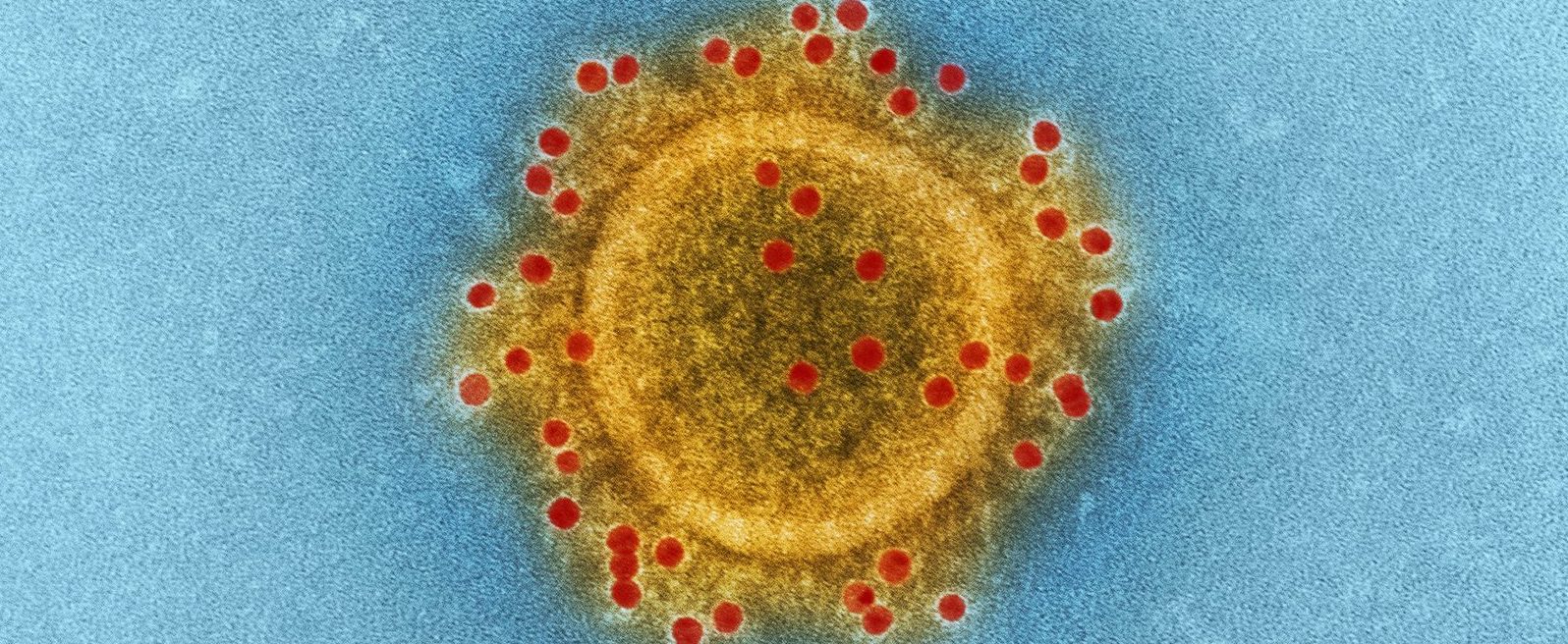
This fourteen-day period has been dubbed the most critical point of this pandemic, where if the Americans efficiently limit the spread of the coronavirus, an anticipated crash of the healthcare system can be avoided. The commonly heard “flattening of the curve” refers to the wave of cases, where the high wave is a surge in cases. Flattening this curve is the result of the community doing their best to lower the peak, thereby preventing an onslaught of new patients. This crucial step can provide healthcare officials the much-needed reprieve in order to take care of those suffering from COVID-19, without burning through their already limited resources. With COVID-19 reaching all 50 states, cases are soaring as people do not adhere to the concept of social distancing or other safe practices.
The most effective way to prevent the spread is by practicing social distancing, which has been defined as simply keeping 6 feet way from people and by limiting your interaction with people outside of your home. With nearly a third of the globe’s population under movement restrictions, governments are somewhat in
Figure 1 Cases in the United States as of March 25, 2020
agreement that this approach can halt the spread, as predicted by experts. This practice is likely going to need to be in place until the pandemic subsides, but for now, it is important to do it for at least 14 days, ensuring those who have coronavirus or have been exposed to coronavirus, have time to fight the disease and not pass it along.
In response to the current crisis, US lawmakers agreed on a $2 trillion stimulus package early morning on March 25th to kickstart the struggling economy. While a final vote is expected later in the day, the creation and agreement of the bill is a momentous feat. It is expected that the bill will include $250 billion for direct payments to Americans and their families, $350 billion in small business loans, $250 billion in unemployment insurance benefits, and $500 billion in loans for distressed companies. An additional $27 billion is to go to the Public Health and Social Services Emergency Fund to develop COVID-19 vaccines and countermeasures. Finally, the Centers for Disease Control will get an additional $4.3 billion through the fiscal year 2024 to combat the virus.
Again, below are best practices to protect yourself and others from getting and spreading the coronavirus:
- Wash you hand thoroughly and frequently with soap and water for at least 20 seconds
- If you cannot wash your hands, use an alcohol-based sanitizer with at least 60% alcohol
- Cough into your elbow or a tissue, immediately throw the tissue away and wash your hands
- Avoid touching your face
- Keep a safe distance from others, 6 feet is recommended
- Stay home if you can and avoid going out unless it is necessary
- Clean frequently touched surfaces.
The Policy
Recent US policies:
- 30-day travel ban to and from EU- except the United Kingdom for non-Americans.
- Closures of restaurants and eateries. Majority are only permitted to provide takeout and delivery, some states, like Virginia, are limiting restaurants to only serving 10 guests at a time.
- State-wide lockdowns and stay-at-home orders have been put in place across the country.
- Both a national stimulus and a relief package are being developed in congress, with an estimated ~$1000 going to adults and $500 per dependent to all Americans, expected to reach Americans by April 6th.
- State Department officials say that terrorism charges may apply to individuals who intentionally spread COVID-19.
Analysis:
The severity of this pandemic is not being felt by all, with reports of college students still traveling for spring break, or people taking advantage of the rock-bottom prices of international flights. Nevertheless, this is a key time in this pandemic, and it could determine the success of healthcare workers and the duration of life under quarantines.
Critics of the proposed stimulus plan argue that it does not do enough for Americans and caters to businesses and corporations. With details still undisclosed, it cannot be effectively commented on. New York Governor Andrew Cuomo, in a press conference, said the stimulus bill would fall very short of the needed assistance for New York. However, there is a provision within the bill that prevents Donald Trump, his family, and other top officials from getting loans or investments from the package. Supporters have praised the bill’s proposal of funding the recently defunded science led by the CDC and other public health services.
Engagement Resources:
For concerns about COVID-19, please seek assistance with the Center for Disease Control, the World Health Organization, or local health officials.
Subscribe HERE to stay up to date with COVID-19
Numbers as of March 25, 2020 – Consult the CDC or Johns Hopkins for an update in numbers.
Top Ten Nations with Cases
| Nation | Confirmed Cases
Mar 25 |
Deaths |
| Globally | 454,398 | 20,499 |
| China (Mainland) | 81,661 | 3,281 |
| Italy | 74,386 | 7,503 |
| United States | 61,167 | 809 |
| Spain | 47,610 | 3,434 |
| Germany | 37,066 | 205 |
| Iran | 27,017 | 2,077 |
| France | 22,654 | 1,100 |
| Switzerland | 10,897 | 153 |
| South Korea | 9,137 | 126 |
| United Kingdom | 8,365 | 435 |
The Pluses and Minuses of Government’s Recent Response
The Coronavirus Government Watch Post is a new U.S. RESIST NEWS blog post written by Sean Gray. The Post provides information and analysis of the federal government’s response to the coronavirus. Wherever possible we seek to be supportive as the coronavirus threatens the health and economic welfare of our nation, and we need government leadership to deal with the virus crisis. However, we also will offer constructive criticism, as merited, of our government’s efforts.
At a Press Conference on March 13th, President Trump took the podium in front of the White House, acted presidential and refrained from political cheap shots. While denying any personal responsibility, he finally appeared to be responding to the crisis with concern commensurate to the situation. The Coronavirus outbreak will unquestionably be the defining moment of the Trump presidency. His administration’s initial response left much to be desired. What happens as a result of the measures taken going forward will go a long way in determining how the 2020 Covid-19 outbreak reads in the history books.
Critics have claimed Trump disbanded Obama’s pandemic team. This is largely misleading. Trump did eliminate Obama’s Directorate for Global Health and Biosecurity at the National Security Council, but many of its employees would fill similar roles. The decision may have undercut an optimum response to this crisis. In an effort to streamline government, the pandemic team was folded into several offices. While not a terrible idea in theory, Ron Klain, Ebola czar in the Obama administration remarked that biodefense and pandemic preparation require specific skill sets and expertise. He likened the organizational shuffling to terminating the fire chief and putting the firefighters in the police department; ‘’the next time you have a fire, they’ll send a police cruiser with a couple of firefighters in the back.’’ The changes may have been made with the intention of reducing bureaucratic bloat, but the result is an administration reacting to a crisis on the fly, rather than deploying a team that had been preparing for such an issue for years.
Nevertheless, since Trump’s Road to Damascus moment, he has handled the emergency with a competence and humility previously unseen during his tenure in the Oval Office. At least for now he is no longer publicly contradicting health officials or denying the underlying science behind the outbreak. These may seem like givens from a president, but he’s unlike any other president, and consistent messaging from leaders is crucial in a public health crisis. He still bristles at questions he perceives as critical but has largely remained civil with assembled media covering the outbreak. And more significantly, since daily briefings have resumed at the White House, the administration has presented itself as a capable team with a singular focus in mind.
Also absent from Trump’s newfound approach to coronavirus is the incessant partisan bickering that has been a staple of his presidency. New York, Washington and California are three of the states most severely affected by Coronavirus. Each has a Democratic governor Trump has bad mouthed in the past. However, he still declared a major federal disaster in Washington, in response from a 74-poage letter from Gov. Jay Inslee. This means FEMA aid will be available to millions of residents struggling with basic necessities. Earlier in March, Trump called Inslee a snake on Twitter for his criticisms of the administration. Trump has had similar choice words for Gavin Newsome and Andrew Cuomo, of California and New York, respectively. It hasn’t prevented him from deploying the National Guard in all three states or providing each with additional medical stations. The medical stations in question will provide 4,000 more desperately needed beds between the three states Trump usually perceives as politically unfriendly. He shouldn’t be lauded for providing critical aid to needy citizens, but he had not previously shown an ability to put politics aside for the greater good. That’s not ideal in a leader, but Trump is the one we’ve got. And it finally appears to be trying to act in the best interest of the nation.
That being said there are several important issues related to Trump’s leadership in the coronavirus crisis that we need to pay attention to:
(1) Trump’s relationship to medical experts and advice. Will the President continue (as he has done in the last week) to heed to advice of medical experts, even when they disagree with him?
It is distressing that in the last 2 days, Dr Anthony Fauci, the respected CDC doctor has not been seen on the podium during Trump briefings on the coronavirus.
(2) Trump’s relationship with the states: The President seems to be taking a let the states lead approach, which is good because states are on the front lines. But is it in the best interest of the nation if each state takes a different approach? And can the Federal government deliver in a timely manner the medical equipment and supplies that states need?
(3) Trump’s relationship with business: The private sector is needed to combat the virus. The President seems to be relying on businesses to step up and make voluntary contributions to the crisis response effort. But will that guarantee that states get what they need? Would it be better on occasion to invoke the powers of the Defense Production Act to get industry to provide needed medical supplies?
Adam Vinatieri missed two field goal attempts in Super Bowl XXXVIII before hitting the game-winner as time expired. The two unsuccessful attempts are often-forgotten footnotes as a result of eventual triumph. Donald Trump has positioned himself similarly in regard to Covid-19. His initial response, or lack thereof, was woeful and did not promote a successful outcome. He is unlikely to change the minds of those who love or hate him. But the five or six weeks he spent with his head in the sand, could too become a forgotten footnote if the administration’s current course of action minimizes damage to the United States. Join us as we report on his efforts.
Learn More:

Coronavirus and the Economy: What a difference a week makes!
Policy:
In the past week a potential economic slowdown has escalated to predictions of a recession with one article describing the economy as “all gone to hell.” With many people adopting a social distancing approach and public events being canceled, repercussions have been felt across many industries and activities whereas previously it was hoped that these would be limited to industries directly impacted by the public health contagion. Many employees have been asked to work from home and these employees’ isolation has caused a drop in restaurant business, coffee and alcohol purchases at bars, and transportation cuts. Canceled events from theater, to sports, to graduations, to parades to Disneyland have correlative losses in areas of food travel, lodging, and transportation. The limiting of the effects of the virus to delayed shipments from China has proven to be an optimistic call that did not pan out.
The government has responded with a bill, obtained by negotiations between the Congress and the administration, providing for emergency measures to keep workers solvent but the final agreement has been criticized as a tepid attempt to provide aid which won’t reach the most needy. The agreement is centered on helping workers to get paid sick leave but in actuality it will help only 20% of workers affected and largely leaves the most vulnerable excluded from the aid. It is limited to coverage only for the coronavirus and no other potential future pandemics. The bill does not pertain to large companies with 500 or more employees though these account for 50% of workers; some large companies like Wal-Mart, Target, Gap, and Wawa have implemented voluntary programs to help employees by offering two weeks of paid leave for the virus or for quarantine. The bill also provides exemptions for companies with less than 50 employees which account for an additional 26% of workers. The bill does provide for some assistance for longer leave, under the Family and Medical Leave Act, but this also excludes large companies. In arriving at this agreement, the Trump administration has prioritized corporate profit by denying workers’ benefit and further jeopardized the public health since workers will be reluctant to stay home. Many people do not relate directly to market shifts since they have no stake in the market but the prospect of losing wages and being unable to pay for essential bills looms ominously.
Analysis:
A recession is predicted if the economy contracts for two consecutive quarters. So far economic indicators have not indicated downturns in such areas as unemployment claims but job postings have taken a significant cut in areas such as restaurants, catering, and aviation. There is generally a lag in real changes and the reporting of related data. Steven Mnuchin, the Treasury Secretary, suggests that the market’s ups and downs are not a concern and that no recession will occur since the economy will pick up when the response to the virus stabilizes. He also suggests that some areas of the economy are thriving such as medical supplies, groceries, health aids, and other household items are experiencing a surge in purchases.
Opinion columnists suggest that the Democrats have failed to help the most vulnerable workers and should have stuck to their original proposal providing for seven days of sick leave and a temporary ten days in a public emergency. They suggest that the Democrats folded when they should have proceeded leaving the Republicans to publicly justify blocking this broader program.
Some economists suggest that the economy is headed for big troubles unless the government steps in with quick and comprehensive support for households. Home buying, which was earlier seen as maintaining a strong trajectory in sales has plummeted due to loss of funds in the market and the belief that the prices will go down. In areas highly impacted by the virus, such as Seattle, there are widespread repercussions from workers remaining at home. One owner of a dozen Seattle restaurants has closed his stores for 2-3 months and is laying off almost all of his 800 employees.
Liberal and conservative economists diverge on how the government should respond to the crisis. Jason Furman, formerly chief of economic advisors to President Obama, supports an immediate infusion of cash of one thousand dollars to adults and 500 to minors. This is the most expedient measure to protect spending and stop expanding job losses while allowing households to cover necessities. Helping the broader economy with such a measure would be part of a stimulus and would help states defray costs by expanding Medicaid. More conservative economists suggest that these measures are unnecessary. The Congress is currently poised to provide 1000 dollars to all adults which some Senators are pressing for a two thousand dollar payment now and another 2500 dollars before the end of the year. Glen Hubbard, formerly an economic advisor to President Bush, suggests investing in long term infrastructure projects paid for with cheap government loans, an approach which that has been supported by both parties in the past. Trump has been considering a decreased payroll tax but such measures have been shown to be ineffective in stimulating the economy while lump sum payments have proven to be beneficial. What tepid responses have been made to address the expanding crisis so far have clearly not been sufficient to the most recent movements in the economy and threaten to disproportionately affect the most vulnerable segments of the population.
Learn More:
- https://www.nytimes.com/2020/03/14/opinion/sunday/coronavirus-paid-sick-leave.html?action=click&module=Opinion&pgtype=Homepage
- https://www.nytimes.com/2020/03/14/opinion/coronavirus-pelosi-sick-leave.html?action=click&module=Opinion&pgtype=Homepage
- https://abcnews.go.com/Politics/forecasting-economic-slowdown-mnuchin-coronavirus-recession/story?id=69599660
- https://www.buzzfeednews.com/article/paulmcleod/coronavirus-aid-congress-vote
Resistance Resources:
https://www.house.gov/representatives Provides addresses and contact information for House members so that they can be contacted with concerns regarding the impact of the coronavirus.

WORLD WAR III IS THE FIGHT TO CONTAIN THE CORONA VIRUS
By Ron Israel
Managing Editor
U.S. RESIST NEWS
March 18,2020
We have worried that there would be a 3rd world war since the end of the 2nd World War in 1945. Pundits speculated that the 3rd world war would come from an escalation of an existing great power confrontation, like the Cuban missile crisis of 1962, or by the gradual global expansion of a regional conflict like the Korean or Vietnam wars; or through the unauthorized use of nuclear weapons by rogue states and non-state actors. But although none of these predictions has materialized we find ourselves today at the onset of World War III caused by a microbe—the corona virus.
From its origins in the Wuhan province of China in December 2019 the virus has spread with deadly effect to 150 countries around the world. It has no geographical preference for whom it affects, and all who are in its path become its victims. Sadly as of yet the global community has failed to come together and marshal the forces needed to defeat this enemy. Each country seems to be struggling on its own to do what it can to protect its own people.
The victors in World Wars I and II were the allied forces— countries who came together united by the presence of a common foe who challenged their mores and threatened their freedom. They shared armies and intelligence, coordinated battle plans, and helped out members of their communities who were hard hit by the conflict.
A winning response to World War III needs to have such an alliance on a global scale. Sure each country needs to adapt its own measures to help safeguard its citizens, including travel bans for people from other countries. But countries also need act on a global scale in order to win this war. The planet needs a World War III Global Pandemic Alliance to combat the spread of Covid-19. The alliance should be open to all countries provided they commit to the transparent sharing of all information about the status of the virus in their countries, and to joining in collaborative efforts to combat the virus.. The battle plan for the alliance would include:
-The exchange of data and information about the virus and its spread.
-Joint scientific research focused on critical tasks such as vaccine development
-The setting of operational standards for important operations such as testing and risk status.
-The establishment of a global fund for poor countries affected by the virus who may lack the funds to pay for its treatment.
-The exchange of information and technology related to approaches that work in combatting the virus.
-The monitoring of the incidents of the virus in each country, the morbidity and mortality rates, and a periodic assessment of the status of risk in all countries.
The Global Pandemic Alliance will need leadership. It can come from national leaders with global perspectives, leading scientists, business leaders and leaders from the philanthropic and NGO community. The World Health Organization is one possible convening organization for the Alliance but there may be others. We need the organizations and people with the ability to bring the world together to fight and win World War III to step forward.

US EPA Seeks to Limit What is Considered Usable Science
Policy Summary
The Trump administration has proposed a new rule that would limit the kinds of research studies deemed credible and usable by the EPA for analysis of existing and proposed legislation and environmental practice. The administration is proposing that when the EPA is evaluating scientific research for the purposes of writing new legislation or revising existing legislation, the agency is to “give preference” to those studies that make all their underlying data available to the public. Though transparency is of course important, this proposal concerns many, because many significant and credible research studies rely on the personal data of individuals (such as health records), which are only made available by individuals to research scientists under the condition that their personal information will remain confidential. For example, a 1993 study by Harvard University called the Six Cities Study, found a link between air pollution and premature deaths. This study used the personal health records of its study subjects as part of its data analysis, including confirming that premature deaths weren’t just simply a result of other underlying illnesses the subjects may have already had. However, that data from the health records is confidential to those individuals and, under law, is not allowed to be released to the public. Many of the study participants were only persuaded to provide personal information, because they were ensured that their personal information would remain confidential. The Trump administration is essentially saying that those studies should no longer be considered so credible and thus, either shouldn’t be used in EPA analysis, or shouldn’t carry as much weight and influence as any other study that happens to have only publicly available data.
Analysis
This proposal is justified by the administration under the guise that it is making government research more transparent, but in reality, it is simply limiting the research that is available for analyzing many important environmental issues, including research that currently supports legislations that the administration has been unsuccessfully trying to roll back. Andrew R. Wheeler, the current Administrator of the EPA says the new rule “will ensure that all pivotal studies underpinning significant regulatory actions at the EPA, regardless of their source, are available for transparent review by qualified scientists” (Friedman). Contrary to Wheeler’s opinion, this comes off to many as simply a strategy to make credible, and possibly damaging, research un-usable in the analyses of many environmental issues. Lisa Friedman, of the New York Times, writes that the American Association for the Advancement of Science feels “The administration’s real goal was to raise suspicions about the bedrock studies that helped establish modern regulations governing clean air and water” (Friedman). And, that this is just another effort “to dilute scientific research, especially on climate change and air pollution, which has underpinned rules that the fossil fuel industry calls burdensome” (Friedman).
The scientific community has criticized the proposal since it was first initiated in 2018. At first, the new proposal mandated that only studies with full public data would be allowed for analysis by the EPA, but the administration recently revised that proposal to say “give preference” to studies that have made all of their underlying data public. Still, the proposal is being criticized by environmental activists and leaders from the Obama administration as making it “easier for the EPA to weaken or repeal existing health regulations, because studies that had previously been used to show the benefits might now be discarded or assigned less importance” (Friedman). Back in January, even an Advisory Panel of scientists appointed by Trump and Wheeler, criticized the new proposal, stating that the EPA has not “fully identified” what the health problem is that this rule is supposedly addressing. What health issue is the EPA trying to solve by implementing this proposal?
Gina McCarthy, Head of the EPA under the Obama administration, is criticizing the current agency leaders for moving forward with this new rule while our country is in the middle of the Covid-19 health crisis. She says, “Now is not the time to play games with critical medical research that underpins every rule designed to protect us from harmful pollution in our air and in our water” (Friedman). Andrew Rosenberg, Director of the Union of Concerned Scientists at the Center for Science and Democracy, said of the proposal, “Benchmark science like Harvard’s Six Cities air pollution study might soon be deemed inadmissible” (Friedman). Rosenberg continued, “They’re putting in non-scientific criteria to decide what science the agency can use.” “Now the most important thing is whether the data is public, not the strength of the scientific evidence” (Friedman). The proposal essentially gives the EPA Administrator the discretion to decide whether or not to use a study that has not made all its personnel and other data public. According to Rosenberg, this would essentially “take scientific decision-making out of the hands of scientists and hand it to a politically appointed administrator” (Friedman). In short, implementing this proposal would mean that at the United States Environmental Protection Agency, scientists no longer decide what the most credible data is, now a politician does.
Resistance Resources:
- The American Association for the Advancement of Science
- The world’s largest general scientific society, and an American international non-profit organization with the stated goals of promoting cooperation among scientists, defending scientific freedom, encouraging scientific responsibility, and supporting scientific education and science outreach for the betterment of all humanity. Publisher of the scientific journal Science.
- https://www.aaas.org/
- The Union of Concerned Scientists
- Nonprofit science advocacy organization. Founded in 1969 to “initiate a critical and continuing examination of governmental policy in areas where science and technology are of actual or potential significance.”
- https://ucsusa.org/
- The National Association of Pediatric Nurse Practitioners
- Dedicated since 1973 to “improving the quality of health care for infants, children and adolescents, and to advancing the APRN’s role in providing that care.”
- https://www.napnap.org/
-
-
- “Supporting academic health sciences libraries and directors in advancing the patient care, research, education, and community service missions of academic health centers through visionary executive leadership and expertise in health information, scholarly communication, and knowledge management.”
- https://www.aahsl.org/The Association of Academic Health Science LibrariesPhoto by Hans Reniers
-

UPDATE : Coronavirus
COVID-19 has continued to wreak havoc on the health of thousands, now officially being called a pandemic by the World Health Organization. Conflicting information from the US government, specifically Donald Trump, and the Center for Disease Control has prompted confusion and panic across the US. With numbers climbing daily, the severity of this virus can no longer be ignored. After close monitoring for the past three months, it appears to be more fatal for older people and people with chronic diseases, specifically, autoimmune diseases. Even with this information, a cure is still at least a year away. The best course of action while a cure is still being developed is to prevent the spread, mitigate the symptoms, and take care of those suffering from COVID-19.
How do you protect yourself and others from the coronavirus and COVID-19?
- Avoid exposure to the virus by avoiding coming in contact with people who have the virus. It is thought to spread through person to person contact, through respiratory droplets.
- Wash your hands frequently with soap and water for at least 20 seconds, especially after being in a public space, or after coughing, sneezing or blowing your nose.
- If soap is not available, use hand sanitizer with at least 60% alcohol.
- Avoid touching your eyes, nose, and mouth (entire face to be safe) with unwashed hands.
- Put distance between yourself and other people; neither you nor that person may know if they are sick, best practice is to stay six feet away.
- Stay home if you are sick, except to get medical care and be mindful when seeking treatment to not spread whatever you may have.
- Use your elbow or a tissue to cover your cough or sneeze, immediately dispose of the tissue and wash your hands.
- Only wear a face mask if you are sick, if you are not, please do not wear one unless you are caring for someone who is sick. Face masks are in short supply and should be saved for care givers and medical professionals.
- Clean and disinfect commonly and frequently touched surfaces.
While many understand to self-quarantine after experiencing symptoms, many are reporting feeling little solace due to the lack of available testing. There are presumptive positives across the country, but confirmation is difficult when test availability is low. Instead, people who are sick wait indefinitely for an administered test that may come after their 14-day quarantine, only to be told after, yes, they have COVID-19 or succumb to the virus.
With a coronavirus and COVID-19 finding its way to every American, there have been reports of citizens stockpiling in preparation for quarantines. Stores like Target are rationing hand sanitizer, Lysol, and toilet paper, as people are buying in bulk. Canned items and pasta are also flying off the shelves, notably, provinces in Italy too report empty aisles as the country grinds to a halt.
The Policy
Recent policies that have been enacted by the US have been directed at preventing the spread of COVID-19:
- World Health Organization officially announces the outbreak of coronavirus as a pandemic.
- Trump announced a 30-day travel ban on US flights to Europe, excluding the United Kingdom on March 11, 2020.
- Italy’s nation-wide quarantine and travel ban. All stores and restaurants, except supermarkets, have been ordered to close after an already nation-wide lockdown. No flights are permitted in or out of Italy.
Analysis:
The current pandemic is testing the abilities of healthcare systems across the globe. With health care professionals also falling sick, resources are diminishing without much hope of an end in sight. As mentioned in a previous brief, the Administration has repeatedly announced conflicting information regarding the virus which does nothing, but ensure panic and confusion.
Current state of the economy
Markets have plunged as fears of the pandemic have taken hold in every avenue of life. Fears of a wider economic downturn loom as the virus spread across the globe and affects other markets. However, the Federal Reserve announced March 12th, that there would be multiple cash injections, totaling more than $1.5 trillion, to fund struggling markets.
Additional outcomes of this outbreak
| United States | Internationally | |
| State of Emergency | Washington state, New York, Massachusetts announce March 10th | China, Italy, Iran, Japan (some regions). |
| Cities or regions on lockdown | New, Rochelle, NY – National Guard to deliver food | Initially just northern Italy, now the entire country is restricted |
| Prohibition of gatherings | Cancellation of political rallies, conferences, concerts; changes in how religious groups worship; the NBA has cancelled the rest of the season after Utah Jazz player contracts the virus. | Futbol matches have been played without fans, large sports events have done the same or cancelled all together |
| Restriction on travel | Amtrak Acela train cancellations from DC to NYC, Travel ban from US to Europe (excluding UK) | All European flights to Italy have been cancelled, some nations considering curtailing international travel. |
| Schools cancel classes and go online | Entire state of Washington has sent students home, many universities are following suit | Nations have taken the precaution of keeping school children home |
| Notable Quarantines | Multiple US GOP leaders, Actor Tom Hanks and Wife test positive | Brazilian press secretary Fabio Wajngarten, Iran’s vice president and ministers. |
Most recently, and seemingly most drastically, is the Trump Administration’s implementation of a 30-day travel ban to Europe, except for the UK. It is likely that cancellation of large events and the closing of education institutions will continue until the virus is under control. The stock market has repeatedly been rocked by the virus, prompting concern and insecurity. With little hope in sight, experts predict and economic downturn and a mild level of chaos, as people stop working.
The drastic changes that have happened as a result of COVID-19, outside of the health effects, have hurt people’s wallets, as they cannot work and are less likely to be spending money. Schools and students have and will continue to suffer through online courses replacing in-person ones, having to navigate quickly moving out of dorms, and for some losing access to food. These measures are drastic and will certainly have wide-ranging affects. Only time will tell if officials are making the right decisions in preventing the spread of the virus.
Engagement Resources:
For concerns about COVID-19, please seek assistance with the Center for Disease Control, the World Health Organization, or local health officials.
Subscribe HERE to stay up to date with COVID-19
Updated from Feb 27, 2020-
Numbers as of March 12, 2020 – Consult the CDC or Johns Hopkins for an update in numbers. (NOTE: numbers now include “presumed positives” which are defined as cases that have been confirmed through state provided test kits or recommendations by physicians; where the results are waiting for confirmation from the CDC through their own tests.)
| Nation | Confirmed Cases
Feb 27/Mar 12 |
Deaths |
| Globally | 127,800 | 4,718 |
| Afghanistan | 1/7 | 0/0 |
| Albania | -/15 | -/1 |
| Algeria | 1/24 | 0/1 |
| Andorra | -/1 | -/0 |
| Argentina | -/19 | -/1 |
| Armenia | -/1 | -/0 |
| Australia | 23/128 | 0/3 |
| Austria | 2/302 | 0/1 |
| Azerbaijan | -/11 | -/0 |
| Bahrain | 33/195 | 0/0 |
| Bangladesh | -/3 | -/0 |
| Belarus | -/12 | -/0 |
| Belgium | 1/314 | 0/3 |
| Bhutan | -/1 | -/0 |
| Bolivia | -/2 | -/0 |
| Bosnia & Herzegovina | -/11 | -/0 |
| Brazil | 1/52 | 0/0 |
| Brunei | -/11 | -/0 |
| Bulgaria | -/7 | -/1 |
| Burkina Faso | -/2 | -/0 |
| Cambodia | 1/3 | 0/0 |
| Cameroon | -/2 | -/0 |
| Canada | 11/117 | 0/2 |
| Chile | -/23 | -/0 |
| China (mainland) | 77,658/80,932 | 2,744/3,172 |
| Colombia | -/9 | -/0 |
| Costa Rica | -/22 | -/0 |
| Croatia | 3/19 | 0/0 |
| Cuba | -/3 | -/0 |
| Cyprus | -/6 | -/0 |
| Czech Republic | -/94 | -/0 |
| Democratic Republic of Congo | -/1 | -/0 |
| Denmark | 1/615 | 0/0 |
| Dominican Republic | -/5 | -/0 |
| Ecuador | -/17 | -/0 |
| Egypt | 1/67 | 0/1 |
| Estonia | 1/16 | 0/0 |
| Faroe Islands | -/2 | -/0 |
| Finland | 2/59 | 0/0 |
| France | 18/2,284 | 2/48 |
| Germany | 27/2,078 | 0/3 |
| Greece | 1/99 | 0/1 |
| Georgia | 1/24 | 0/0 |
| Gibraltar | -/1 | -/0 |
| Guyana | -/1 | -/1 |
| Honduras | -/2 | -/0 |
| Hong Kong | 92/129 | 2/3 |
| Iceland | -/85 | -/0 |
| India | 3/73 | 0/1 |
| Indonesia | -/34 | -/1 |
| Iran | 245/ 10,075 | 26/429 |
| Iraq | 6/71 | 0/8 |
| Ireland | -/34 | -/1 |
| Israel | 2/127 | 0/0 |
| Italy | 453/12,462 | 12/827 |
| Ivory Coast | -/1 | -/0 |
| Hungary | -/13 | -/0 |
| Jamaica | -/2 | -/0 |
| Japan | 894/1,316 | 3/21 |
| Jordan | -/1 | -/0 |
| Kuwait | 26/80 | 0/0 |
| Latvia | -/10 | -/0 |
| Lebanon | 2/61 | 0/1 |
| Liechtenstein | -/1 | -/0 |
| Lithuania | -/3 | -/0 |
| Luxembourg | -/19 | -/0 |
| Macau | 10/10 | 0/0 |
| Malaysia | 22/149 | 0/0 |
| Maldives | -/8 | -/0 |
| Malta | -/6 | -/0 |
| Mexico | -/12 | -/0 |
| Moldova | -/3 | -/0 |
| Monaco | -/1 | -/0 |
| Mongolia | -/1 | -/0 |
| Morocco | -/6 | -/1 |
| Nepal | 1/1 | 0/0 |
| Netherlands | -/503 | -/5 |
| New Zealand | -/5 | -/0 |
| Nigeria | -/2 | -/0 |
| Norway | 1/632 | 0/0 |
| North Macedonia | -/7 | -/0 |
| Oman | 4/18 | 0/0 |
| Pakistan | 2/20 | 0/0 |
| Panama | -/11 | -/1 |
| Paraguay | -/5 | -/0 |
| Peru | -/15 | -/0 |
| Philippines | 3/52 | 0/2 |
| Poland | -/47 | -/0 |
| Portugal | -/59 | -/0 |
| Qatar | -/262 | -/0 |
| Reunion | -/1 | -/0 |
| Romania | 1/49 | 0/0 |
| Russia | 2/28 | 0/0 |
| San Marino | -/69 | -/3 |
| Saudi Arabia | -/45 | -/0 |
| Senegal | -/4 | -/0 |
| Serbia | -/19 | -/0 |
| Singapore | 93/178 | 0/0 |
| Slovakia | -/10 | -/0 |
| Slovenia | -/57 | -/0 |
| South Africa | -/17 | -/0 |
| Spain | 13/2,277 | 0/55 |
| Sri Lanka | 1/2 | 0/0 |
| Sweden | 2/500 | 0/1 |
| Switzerland | 4/652 | 0/4 |
| Taiwan | 32/49 | 1/1 |
| Thailand | 40/70 | 0/1 |
| The Republic of Korea | 1,766/7,869 | 13/66 |
| Togo | -/1 | -/0 |
| Tunisia | -/7 | -/0 |
| Turkey | -/1 | -/0 |
| Ukraine | -/1 | -/0 |
| United Arab Emirates | 13/74 | 0/0 |
| United Kingdom | 15/456 | 0/8 |
| United States | 41/1,269 | 0/37 |
| Vatican City | -/1 | -/0 |
| Vietnam | 16/39 | 0/0 |
| West Bank & Gaza | -/26 | -/0 |

Hunter Biden, Donald Trump Jr. and the Perks of Their Father’s Offices
With decisive wins in key states, Joe Biden has reemerged as the favorite to secure the Democratic nomination for president. That development means the foreign business dealing of his son, Hunter will come back into public discourse. While Biden served as Obama’s Vice President, his son took a lucrative position on the Board of Ukranian gas company, Burisma. The company has ties to crooked oligarchs and has been investigated for money laundering. Hunter Biden had no previous experience in the energy sector.
Donald Trump baselessly accused Biden and his son of impropriety and withheld military aid to Ukraine to see them investigated, leading to his impeachment. The optics were poor and the situation was rife with potential conflicts of interest. However no credible evidence has surfaced to suggest Biden, in his capacity as Vice President, did anything untoward in regard to his official duties towards Ukraine.
Trump’s eldest son, Don Jr. has challenged Hunter Biden to a debate. It is his position that he has not benefited from his father’s public office, while Hunter has. Here’s what the substance of that debate might look like.
Trump Jr.’s argument would probably start with a kernel of truth and sprout into a bevy of untruths in misdirection. Hunter Biden has most assuredly benefitted from having a father who held a Senate seat from 1973, until he served as VP from 2009-2017. After law school he secured a position in the US Chamber of Commerce and later a five year term on Amtrak’s Board of Directors. Biden was able to join the Navy at the age of 43, needing waivers due to his age and drug-related issues. He was made a direct commissioned officer. Could the younger Biden have earned these positions on merit? It’s possible, but it is farfetched to think that having a father entrenched in Washington politics played no role in him securing one cushy government position after another. Those charges would all be a matter of public record, and examples of nepotism, but hardy fitting any reasonable definition of graft or corruption.
Most all other accusations of impropriety by the Bidens are right-wing conspiratorial disinformation. Rudy Giuliani, the president’s personal lawyer said Hunter pulled a billion dollars out of China and his father had a prosecutor who was investigating him fired. Such claims are completely unsubstantiated. Biden served on Burisma’s board at a salary of up to $50,000/month. The prosecutor, whom Joe Biden helped have fired,Viktor Shokin, was lax on corruption and an impediment to reform. Biden’s efforts to help fire Shokin were in support of US government and International Monetary Fund policy towards Shokin’s office. If Hunter Biden was involved in anything nefarious in Ukraine, his father firing a pro-corruption prosecutor could only stand to damage him.
In China, Hunter was a co-founder at BHR, a firm looking to invest Chinese money abroad. The ‘’billion dollars’’ he got out of China, appears to be pulled completely from thin air. One could argue Hunter was under qualified for either position, and that he created a faux scandal for his father to contend with, but he has not been credibly accused of personal malfeasance in either role. Nor is there any evidence to suggest Joe Biden, as vice president, took any action to benefit his son’s business interest or that ran counter to US policy.
Hunter’s debate talking points would be far more substantive. According to Forbes, Donald Trump Jr. has a net worth of approximately $25 million. After graduating from college, he bartended for a year, then joined the Trump Organization. He has remained there for the last 18 years and change, rising to the level of Executive Vice President. Trump Jr. followed his father’s footsteps into real estate as well as several failed ventures, such as Trump Morgages, which failed after less than a year. It is not inaccurate or unfair to say that his extravagant wealth is derived solely from his role as a Trump Org. Executive, which is predicated on his last name, and not his business acumen.
President Trump’s decision not to divest of his businesses was a controversial one from the time of his election. Don Jr., along with his brother Eric, took over the reins of the family business when their father was sworn in. It was fortuitous timing for them as rates for rooms at Trump hotels tended to tick upwards once Trump took office. The Trump International for instance, hiked rooms from $416/nigh to $660/night. Membership fees doubled to $200,000 at Mar-a-Lago. Around the same time Trump properties saw a sharp increase in investments by political, business and advocacy groups, potentially looking to curry favor with the president. This created a serious conflict of interest, but not for the president’ eldest son, a private citizen who needed only sit back and fill his coffers with the dollars of those looking to buy influence.
A sizable and untold sum of tax-payer dollars have been funneled into Trump Properties since January of 2017. Since he was elected, Trump alone has spent 202 days between his resorts at Bedminster and Mar-A-Lago. Accompanying him, at full cost are the Secret Service members assigned to protect him, and any other staff that may be necessary. With each visit, the president and his entourage stay in posh lodgings (at an artificially inflated rate), with the bill going to the American taxpayer. Though the exact figure is deliberately incalculable (still waiting on those tax returns), Trump Jr. has been the direct beneficiary of his father’s ongoing scheme to profit off his office.
Don Jr. has also monetized other opportunities that would not be possible without his father’s position. Triggered, his rambling political diatribe in book form, debuted at No.1 on the New York Times Nonfiction list. The sale were boosted by a bulk purchase by the Republican National Convention of 94,000 units. Eight other conservative groups made similar purchases. The RNC offered signed copies with a pledge of at least $50 to Donald Trump’s reelection campaign. Trump Jr. has been paid handsomely on the lecture circuit. Prices start at $50,000 and go as high as $100,000 to be graced with a beautiful, tremendous oration from the president’s son. Could he have written a book or solicited speaking fees independent of his father’s tax-payer funded office? Of course, but without his father’s position and his built-in fanbase, Jr. would be culturally irrelevant with a much smaller pool of clientele lining up to throw money at him.
Hunter Biden’s international business endeavors are a product of run of the mill nepotism, afforded all too many children of wealthy individuals. It isn’t fair or meritorious, but it is not in and of itself illicit or indicative of any graft. Trump Jr.’s monetary gains of the last four years lie in far murkier ethical waters. His father had had conflicting interests since he was sworn in, and Trump Jr has overseen the day-to-day operations of the business that presents said conflict. Additionally he has branched out into other ventures, which would not be possible otherwise.
Any network would be delighted to host the ratings bonanza that would be a Biden vs. Trump: Who’s Grifted More? debate. Hunter Biden has yet to respond to Trump Jr.’s challenge earlier in the week, but it’s a safe bet it won’t materialize. Perhaps it’s best the hypothetical spectacle remains just that, because the subject of which son has profited more from his father’s public office isn’t debatable at all.
Learn More:

U.S. Congress On Verge Of Passing First Federal Anti – Lynching Law
Policy Summary
On January 3, 2019 Rep. Bobby L. Rush (D-IL) introduced in the U.S. House of Representatives H.R. 35, known as the Emmett Till Anti – Lynching Act. The bill proposes to modify the Civil Rights Act of 1968 and other relevant civil rights sections by including the act of lynching as a punishable federal crime for the first time. The bill permits a term of imprisonment to be extended to a full ten years if the term of imprisonment imposed is less than ten years. The bill was referred to the House Judiciary Committee, which recommended on October 31, 2019 that the bill be passed. On February 26, 2020 the full House chamber voted on the bill and the bill passed by a vote of 410 to 4. The bill is now before the U.S. Senate and is scheduled for a likely conference committee meeting to iron out differences with a similar anti – lynching bill that the U.S. Senate passed in 2019. LEARN MORE
Policy Analysis
The history of lynching in the United States is one of the darkest chapters in this nation’s history. The term came to be associated with the vigilante act of “punishment without trial” and took root in the United States South as a way to terrorize and intimidate African – Americans from participating in American civic and social life. In general terms, whites who became outraged at a perceived insult or some misconceived act of disrespect often kidnapped one or more African – Americans, killed the persons and then hung the people from a tree where pictures were taken with smiling white people. According to the National Association for the Advancement of Colored People (NAACP) from 1882 to 1968 there were 4,743 lynchings in the United States. 3,446 of those people were African – American and occurred in all U.S. states except four although most occurred in the U.S. South.
Efforts to try and pass a law to make lynching a federal crime have been ongoing for more than one hundred years. The first known anti – lynching bill was introduced in Congress in 1900 by the lone black Congressman at the time, George Henry White of North Carolina. That did not succeed but numerous bills continued to be brought through the decades with nearly 200 separate attempts through the years. But most bills, even if they were successful in the House, would be filibustered and blocked by Southern senators who said it was a state’s rights issue. As a result every attempt failed and lynchings continued nearly unabated in the Southern states.
A century after Congressman White’s initial federal anti – lynching bill, acknowledgment of the horrific crimes and the Senate’s refusal to do anything helped renew interest in the topic. In 2005 the Senate put forth a formal apology for obstructing attempts to pass an anti – lynching law for the last one hundred years. And now with the passage of H.R. 35 it seems that a federal law outlawing lynching looks likely to pass and become law. Since the Senate had passed a slightly different version in 2019, the two chambers have set up a conference committee to align both versions so that the final version of the bill that is approved is the one that was approved by both houses of Congress. Senator Mitch McConnell (R-KY) has expressed support for the bill as well as President Donald Trump who has pledged to sign the bill whenever a bill is presented to him for his signature. Some say the bill is merely a symbolic measure but the text of the bill indicates that this bill is necessary now as an act of national contrition and as an attempt to try and curb the rise of racist and white nationalist rhetoric that has been on the upswing in America in recent years. LEARN MORE, LEARN MORE, LEARN MORE
Engagement Resources:
- National Association for the Advancement of Colored People (NAACP) – civil rights organization’s webpage on history of lynching in the U.S.
- Southern Poverty Law Center – non – profit group dedicated to fighting hate and bigotry.
This brief was compiled by Rod Maggay. If you have comments or want to add the name of your organization to this brief, please contact Rod@USResistnews.org.
Photo by John Mark Arnold

Supreme Court Upholds Remain In Mexico Policy and a Federal Judge Voids Trump’s Appointment of Director of ICE
Policy Updates
The US Circuit Court temporarily blocked the Trump Administration’s Remain in Mexico policy, only to reverse its own order the same day. The court reinstated the policy due to emergency requests from the Trump Administration and is allowing the Administration another week to persuade the US Supreme Court to step in before blocking the policy. The program was initially launched in January 2019 and has since returned 60,000 migrants. This violates the international and US legal principle of non-refoulement (law of no returns) in which migrants shall not be sent back to the place they have fled.
However the Supreme Court this week upheld President Trump’s Remain in Mexico policy for at least another 3 months. Forcing more than 10,000 asylum seekers to stay in Mexico while they await hearings by the US, without food, housing, healthcare, or other protections. Only 1 member of the Court dissented: Justice Sonia Sotomayor.
Federal Judge Moss of Washington, DC ruled that Ken Cuccinelli was unlawfully appointed to lead the US Citizenship and Immigration Services and Director of ICE. The court claimed President Trump violated federal law that outlines who can fill vacant leadership positions at federal agencies by quickly appointing Cuccinelli and disregarding the Department’s order of succession. Judge Moss also ruled that 2 policies Cuccinelli sought to implement be nullified as void. Both policies limited asylum seekers access to counsel and preparation time for credible fear interviews, which in practice could possibly deny many migrants asylum.
President Trump has expressed he enjoys installing individuals as leaders under the guise of “acting” leaders because it allows him more flexibility and the ability to “move quickly.” However, this completely disregards the rule of law and executive limitations. The president must obtain the advice and consent of the Senate before appointing any individual to a senior federal position of the US. This practice is a blatant act of cronyism and is not permissible, nor tolerated, in a democratic society with checks and balances.
Analysis
By reinstating the Remain in Mexico policy, the US may continue to send migrants to Mexico, but specifically to areas the State Department of Mexico have warned the US not to visit due to the plausibility of kidnapping, sexual assault, exploitation, lack of basic necessities, and other abuses. It also prolongs the amount of time these migrants are not granted due process because they likely will not be able to find lawyers (in time) in Mexico to argue their case(s) in front of a judge. Additionally, it only gives the Trump Administration more time to curate bilateral decisions with nations in the Northern Triangle to repatriate citizens, if not to their country of origin a neighboring country in the Northern Triangle, which could be a death sentence for many.
Resistance Resources
- The National Immigration Law Center: an organization that exclusively dedicates itself to defending and furthering the rights of low income immigrants and strives to educate decision makers on the impacts and effects of their policies on this overlooked part of the population.
- Protect Democracy: a non-partisan, non-profit organization dedicated to fighting domestic and international attacks to free, fair and fully formed self-government
- Border Network for Human Rights: network to engage education, organization and participation of border communities to defend human rights and work towards a society where everyone is equal in rights and dignity.
This brief was submitted by U.S. RESIST News Immigration Policy Reporter Kathryn Baron
Photo by Metin Ozer
EU Leaders React to Trump’s Coronavirus Travel Ban
Policy Summary
Shortly after the World Health Organization declared COVID-19 a pandemic, many countries are revising their entry policies. President Trump has imposed travel restrictions that will go into effect the end of this week on foreigners travelling from any of the 26 countries within the EU Schengen Zone. Travelers who have been in China or Iran within the last 14 days will also be banned from entering the US.
These restrictions do not apply to US citizens who will be returning from travel abroad; however, US citizens who have been in China in the last 14 days may enter the US only through 1 of 11 airports (Atlanta, Chicago, Dallas, Detroit, Honolulu, Los Angeles, San Francisco, Seattle, New York City (JFK and EWR)) where they will undergo thorough screenings. Vice President Pence has stated US citizens returning to the US will have to self-quarantine for 14 days upon their return. The travel limitations will only impact humans and not goods, though the Asian and European markets are plummeting. During this initial scramble to get back to the US before the ban goes into effect plane tickets have sky rocketed, and over the course of long-term profits, airlines and global businesses could face potentially dire consequences.
Analysis
European leaders are furious with President Trump’s decision to restrict entry to the US. They concur that due to the worldwide nature of the pandemic, a travel ban is not the most effective route. But instead such an ordeal that enshrines global health, economics, and politics, should demand cooperation amongst global leaders rather than unilateral decisions.
In regard to the Remain in Mexico policy being upheld, in addition to asylum seekers being stranded and left resource-less in an already compromised scenario, the pandemic adds an extra layer of hysteria on the quest to get into the US and be protected by certain rights granted to asylum seekers.
Engagement Resources
- The National Immigration Law Center: an organization that exclusively dedicates itself to defending and furthering the rights of low income immigrants and strives to educate decision makers on the impacts and effects of their policies on this overlooked part of the population.
- Border Network for Human Rights: network to engage education, organization and participation of border communities to defend human rights and work towards a society where everyone is equal in rights and dignity.
- World Health Organization: the WHO provides updated information surrounding COVID-19 and global responses
- Center for Disease Control: the CDC provides updated information surrounding COVID-19 and the US responses
Photo by CDC