

JOBS POLICIES, ANALYSIS, AND RESOURCES
Latest Jobs Posts
An Early Look at the 2024 Race for the Republican Presidential Nomination
Brief #77 – Elections & Politics Policy
by Ian Milden
The race for the 2024 Republican presidential nomination has started to develop.
The Week That Was: Global News in Review
Brief #76 – Foreign Policy
by Abran C
This is our 7th in a series designed to help our readers catch up on international events of the past week.
Help Wanted: Seeking Support for Unaccompanied Children
Brief #147 – Social Justice Policy
by Steve Piazza
This is the second part of a report on how child labor laws are failing to protect minors from work related abuses and the implications that has for their education.
Two Judges Have Opposing Rulings, and Backgrounds, on Abortion Rights
Brief #161 – Health & Gender Policy
by Geoffrey Small
Last month two federal judges issued contradictory rulings on the abortion medication mifepristone, the most commonly used procedure in the United States.
Navigating the Complexities of Content Moderation: Strategies and Challenges in the Digital Age
Brief #87 – Technology Policy
by Inijah Quadri
Content moderation is the process of monitoring and filtering user-generated content to ensure that it adheres to a platform’s guidelines and community standards.
Can a UN Treaty Curtail Industrial Revolution on the High Seas?
Brief #154 – Environmental Policy
by Todd J. Broadman
Oceans make up over 70% of the Earth’s surface and contain 95% of total habitat – only 9% of which has been classified. Most of that watery habitat lies unprotected from human exploitation.
An Early Overview of the 2024 U.S. Senate Races
Brief #76 – Elections & Politics Policy
by Ian Milden
One-third of the U.S. Senate will be up for election in 2024. This Brief will provide an overview of what seats will be up this cycle, and where each party has strengths and weaknesses for this cycle’s elections.
The Battle Over Gig Worker Protections Heads to the California Supreme Court and the US Senate
Brief #86 – Technology Policy
by Mindy Spatt
Rideshare companies have won the latest round in their fight to stop California’s gig worker protection legislation from becoming law.
Justice Thomas’ Ethical Lapses Illustrate The Need of An Ethical Code for the Supreme Court
Brief #204 – Civil Rights Policy
by Rodney A. Maggay
Except for the United States Supreme Court, members of the federal bench (judges, magistrates) are bound by the Code of Conduct for United States Judges.


The True Color of Efforts to Strike Down Affirmative Action
The True Color of Efforts to Strike Down Affirmative Action
Education Policy Brief #59 | By: Steve Piazza | January 7, 2022
Header photo taken from: Julian J. Giordano
Follow us on our social media platforms above
Browse more education policy briefs from the top dashboard

Photo taken from: Shutterstock, Rutgers.edu
Policy Summary
[SSB theme=”Official” align=”center” counter=”true” ]
The U.S. Supreme Court recently heard arguments relating to the use of Affirmative Action, or policies designed to reduce discrimination during the college admission process. The focus was on two cases: Students for Fair Admissions v. Harvard, No. 20-1199, and Students for Fair Admissions v. University of North Carolina, No. 21-707.
Lower courts had previously ruled in favor of the two universities stating they do not use race as the deciding factor, but attorneys for Students for Fair Admissions, a group that has long been advocating for the eliminating Affirmative Action altogether, appealed.
Though no USSC ruling is expected before June of this year, the questioning by the Court’s majority conservative justices might be viewed as a signal that the longstanding law’s days of anti-discriminatory protections may be nearing its end.
Policy Analysis
The central question in the case is this: Is race being used as the deciding factor when making decisions about college applicants? But based on statements, questions, and answers during oral arguments, clearly what’s at issue is this larger question: Should race be used at all?
The session began with the central question itself, but the nearly three hour session mostly reflected the skepticism of the conservative justices towards the need for anti-discrimination protections, while the three liberal justices argued for the sake of them.
From the moment that the oral arguments began with petitioners’ attorney Patrick Strawbridge stating, “Racial classifications are wrong,” it seemed that lines were drawn. Strawbridge went on to assert that the policy at UNC is reducible to one indicator, race, and that application points go only to non-whites or Asians, claims that had already been disproved according to lower court records.
By then the focus turned to the value not only of such decision making, but segregation itself. At one point, Justice Thomas stated that though he’s familiar with the word “diversity,” he doesn’t have a clue what it means, and then went on to question the educational benefits of it.
The questions from the conservative side continued to avoid the central question consistently. Perhaps it’s because the question whether race can be used as a single criterion has already been answered in precedents set back in Grutter v. Bollinger, 539 U.S. 306 (2003), and Regents of the University of California v. Bakke (1978).
The fact that arguing semantics via terms such as diversity, permissible and impermissible classification, race-neutral alternatives, etc. still exists says a lot about where we are as a society right now. Even questioning the advantages of Affirmative Actions seems contrived and partial. When three liberal judges have to explain to the rest of their colleagues that Affirmative Action programs have resulted in advancements in leadership and the socio-economic welfare of millions across the country, it seems that the conservative justices are peeking a little too much above the blindfold.

Photo taken from: The Chronicle of Higher Education
(click or tap to enlargen)

Photo taken from: Grinnel.edu
(click or tap to enlargen)
The downside of removing Affirmative Action has already been seen. Since nine states have banned it, research shows that it has affected enrollment for non-white students across the board. For example, a May, 2022 study at UCLA shows that in states where bans were implemented, there was a drop in public medical school enrollment of more than 30% of students identified with underrepresented racial and minority groups.
It should be noted that the larger question is not solely about attitudes regarding racial equality, as they are about the continued inequitable lack of access to resources for students at the K-12 level. Truly, judicial procedures must be about results and process and not seen as an easy way out for those opposed to Affirmative Action.
A law such as Affirmative Action is in place to deter. If it has any impact at all, and it has, it’s still only taking care of symptoms of something underlying it. It doesn’t make racism go away, particularly when those attitudes have existed in this country since its founding. If that seems hyperbolic, think of all the recent turmoil that surfaced once civil rights voting protections were relaxed in 2013.
If Affirmative Action is defeated, the negative effect on admissions by people of color across the country will most likely return to the spotlight. Again. And again. Spotlights are good, but not if they have previously been in place, and over time too many spotlights tend to overlap and hide the racial injustices they’re attempting to expose.
The end result of the demise of Affirmative Action will once again be another systemic failure that will cause so many students, and eventually employment seekers, to suffer.
Engagement Resources
Click or tap on resource URL to visit links where available

This is a link to the entire transcript of the oral arguments by the USSC on 10.31.22: https://www.supremecourt.gov/oral_arguments/argument_transcripts/2022/21-707_9o6b.pdf

The American Civil Liberties Union (ACLU) has provided support in this and many other related cases. To learn more about ACLU efforts regarding Affirmative Action, click here:
https://www.aclu.org/issues/racial-justice/affirmative-action

Another organization that has been advocating for equitability and fairness is the American Association for Access Equity and Diversity (AAAED), whose information can be found here: https://www.aaaed.org/aaaed/About_Us.asp

Netanyahu’s New Coalition Government is Jeopardizing Israeli Democracy
Netanyahu’s New Coalition Government is Jeopardizing Israeli Democracy
Foreign Policy Brief #163 | By: Ian Milden | January 4, 2023
Header photo taken from: The Associated Press
Follow us on our social media platforms above
Browse more foreign policy briefs from the top dashboard

Photo taken from: GPO / Kobi Gideon
Policy Summary
[SSB theme=”Official” align=”center” counter=”true” ]
After nearly two months of negotiating with the far-right religious parties, Benjamin Netanyahu reached an agreement with them to become Prime Minister again. Netanyahu made major concessions to become the new Prime Minister. While Netanyahu appears to have successfully shielded himself from the criminal justice system, the policy decisions that his coalition of his supporters are making may imperil the future of democracy in Israel.
Policy Analysis
After an early November election, Benjamin Netanyahu spent nearly two months negotiating with far-right parties and religious conservative parties to form a government. Conservative voters turned out at higher-than-expected rates, which allowed Netanyahu’s Likud Party and his allies to win a slim majority of seats in the Knesset (Israeli parliament). The far-right parties and religious conservative parties decided to use their leverage to extract significant concessions from Netanyahu. These concessions were both on policy and positions within Netanyahu’s government.
There are several aspects of Netanyahu’s deal with his conservative allies that prompted significant concern for members of the Israeli public as well as the international community. There are proposals to expand Israeli settlements in the West Bank, which will likely increase conflict with the Palestinians. The United States is concerned enough to send National Security Advisor Jake Sullivan to Israel to discuss the issue with the new Israeli Government.
Netanyahu appointed Itamar Ben-Gvir, who has advocated for Israeli soldiers to be immunized in cases related to shooting Palestinians, to be the Security Minister. This appointment has caused great concern within the Israeli military. The retiring leaders of the Israeli military expressed concern to Netanyahu that Ben-Gvir could drag the Israeli military into domestic political disputes.
Many of Netanyahu’s allies outside of his party are pushing for proposals that would weaken legal protections for members of the LGBTQ community, Palestinians, and other minority groups. These proposals have received pushback from the Israeli tech sector and members of the secular middle class. The religious conservative allies of Netanyahu are pushing for increased funding for Orthodox Jewish students, who do not serve in the military or work. Existing funding for these students is unpopular with the Israeli public.
While all of these are concerning developments, the proposals by Netanyahu’s allies to weaken the Israeli judicial system have implications for the future of democracy in Israel. The proposal would prevent sitting Prime Ministers from facing prosecution for a range of offenses, including the types of corruption charges that Netanyahu is currently facing.

Photo taken from: Maya Alleruzzo / Associated Press
The proposal would also change the structure of the Attorney General’s office to make most of the top officials in that office political appointees, rather than having officials selected based on merit. The Attorney General’s office is currently the office in charge of prosecuting Netanyahu on the corruption charges.
Netanyahu’s judicial proposals would also severely restrict the Supreme Court’s ability to engage in judicial review. Judicial review is the power of the courts to review laws passed by the legislature and strike them down if they violate Israel’s Basic Laws (the document in Israeli politics that protects many civil rights and freedoms).
Judicial review is an important power for the judicial system in republic systems of government because it gives the judicial system the ability to check the potential misuse of power by the legislature. Members of the Israeli far-right parties want to curtail this because the Supreme Court has used judicial review to strike down several laws that the far-right parties supported.
If the Israeli government moves forward on the proposals to significantly alter the judicial system, the Biden Administration and other Israeli allies may take steps to alter Israeli behavior. Preventing and reversing countries’ attacks on democratic norms and systems has been a priority for the Biden administration. Changes to the judicial branch’s power in Israeli would not go unnoticed by the Biden Administration.
It is still possible that some of these proposals will not become law. Some members of the Likud Party were unhappy with the concessions that Netanyahu made to his coalition partners, particularly with some of the cabinet positions he conceded to them. Some of the policy proposals that Netanyahu’s coalition partners want to pass are deeply unpopular with the Israeli public.
It would only take a few disgruntled members of Netanyahu’s party to block any proposal from becoming law. If a significant and lasting divide opens within the Likud Party, that could cause the coalition to collapse and force the country into another election. While there are currently no public signs of a significant rebellion within the Likud Party, it is something that could occur in the future as Netanyahu will need to put some of the controversial policy decisions up for a vote to keep his coalition partners happy.

The Latest Spill Finds Politicians Ankle Deep in Tar Sands Oil
The Latest Spill Finds Politicians Ankle Deep in Tar Sands Oil
Environment Policy Brief #151 | By: Todd J. Broadman | January 3, 2023
Header photo taken from: TC Energy
Follow us on our social media platforms above
Browse more environmental policy briefs from the top dashboard
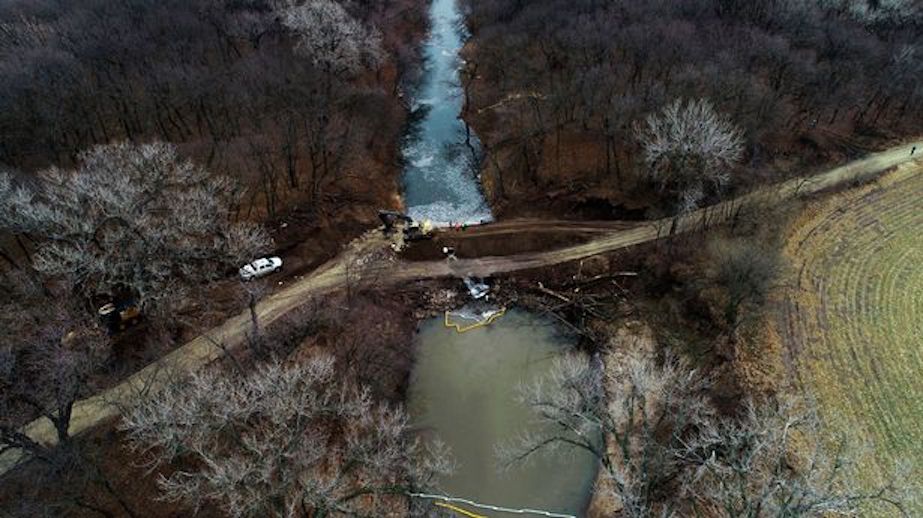
Photo taken from: Uncredited / AP / REX / Shutterstock
Policy Summary
[SSB theme=”Official” align=”center” counter=”true” ]
Since the beginning of its operations in 2010, the Keystone pipeline has experienced 22 oil spills totaling 26,000 barrels of tar sands oil leaked into the surrounding land and water. The pipeline traverses approximately 2,700 miles, starting from the tar sands of Alberta, Canada and terminating at refinery locations in the Midwest and Oklahoma. The pipeline’s owner and operator is TC Energy.
The most recent leak occurred on December 7, 2022, and spilled an estimated 14,000 barrels of oil. As each barrel is the equivalent of 42 gallons, this a record 600,000-gallon spill, the biggest spill on US soil over the last decade.
Government agencies responsible for the pipeline’s regulation and spill cleanup efforts are: Environmental Protection Agency (EPA), the federal Pipeline and Hazardous Materials Safety Administration (PHMSA), as well as state and local agencies. The permit to operate the pipeline was issued by PHMSA. The pipeline was operating at 80 percent of the maximum recommended rate – actually, above the maximum 72 percent rate, and the exception in this case was granted to TC Energy because the pipeline was made “using higher-grade steel.”
The pipeline does not carry conventional oil, it carries a crude tar sands oil termed bitumen, far heavier than conventional oil. Bitumen needs to be thinned to allow for flow through the pipeline and that is done by incorporating a lighter gas called a diluent. When this mixture is exposed to the environment in the event of a spill though, its chemical composition reverts back to its original thick consistency.
From research done in a very large 2010 spill which took place in Michigan, the extent of environmental damage and “special risks” caused by bitumen were detailed. According to scientists, “The response becomes more complex because there are few proven techniques in the responder ‘tool box’ for detection, containment, and recovery.” In that Kalamazoo River spill, it proved easier to dredge and remove entire rocks than to attempt to scrape off the bitumen coating.
Fearing just this kind of incident or worse, President Joe Biden cancelled the proposed pipeline extension, Keystone XL, in 2021. TC Energy is still pressing for this additional line which would pipe the sludge directly through Montana, and then to South Dakota and Nebraska. Matt Casale, director with U.S. PIRG, said, “The latest spill is another tragic reminder of the costs of our reliance on fossil fuels.”
Policy Analysis
The construction permits for the Keystone extension “XL” were revoked by the Obama administration only to be approved by Trump. Biden, soon after being elected, again revoked the XL permits. Throughout the process though, advocates were advertising Keystone as the “safest pipeline ever built.” When the spills started mounting, the GAO issued a report that said the material failures were the result of “construction issues.”
“It is a lemon,” said Paul Blackburn, an attorney with Bold Alliance specializing in pipeline law. “It’s leaked a remarkable number of times and while there may be certain kinds of specific causes for each leak, the fact that it leaks so often suggests that there may be some underlying systemic reasons on what’s going wrong.” One report pointed to substandard steel and a lack of corrosion protection. Land that was not willingly sold to TC Energy for the pipeline was taken through eminent domain along with an access easement.
From a broader perspective, we know that most crude-oil spills originate from rail and truck transport, not from pipelines. The PHMSA points out that there are thousands of spills involving hazardous materials, many on a much larger scale – that involve non-petroleum related chemicals. Even when it is oil, much of that oil is recovered in the remediation efforts.
Beyond the typical demonstrations of political outrage, there are no motions at the federal or state level to halt the flow of bitumen from Canada. “I request that TC Energy provide a formal plan for preventing further oil spills and for remediating the significant damage caused by this most recent incident,” is the reaction of Rep. Frank Pallone, D-N.J., chairman of the House Energy and Commerce Committee.

Photo taken from: Topeka Capital Journal
Along those same tepid lines, there is Senator (D-MA) Ed Markey’s, “enough is enough,” comment. In a letter to TC Energy President and CEO François Poirier, he wrote: “Communities threatened by your pipeline urgently need an explanation of how and why these spills keep happening, and whether your company will continue to put people nationwide and our environment at risk.”
More tangible action comes from Kansas Governor Laura Kelly who is threatening TC Energy’s state property tax exemptions for the pipeline. “I thought we should have done that a long time ago,” Kelly said. Kansas lawmakers had, early on, passed a package of tax benefits in their effort to woo the Keystone pipeline to Kansas. Fines levied on TC Energy have thus far totaled $300,000.
The company’s official communications on this and other spills have been carefully formatted. “We have the people, expertise, training and equipment to mount an effective response and clean-up, and that’s what we’re doing.” Meanwhile, they have gotten the green light to restart the remaining segment of the Keystone pipeline – which runs from Nebraska to Oklahoma – that had been shut down since the Dec. 7 spill.
Engagement Resources
Click or tap on resource URL to visit links where available

https://pirg.org/ is an advocate for the public interest, speaking out for a healthier, safer world.

https://boldalliance.org/ is a network of “small and mighty” groups in rural states working to protect land and water.

https://tarsandsaction.org/ an activist group moved by the 1,253 Americans who went jail to protest Keystone in the biggest civil disobedience action in many years in this country.

Excerpts from Ukrainian President’s Emotional Speech Before US Congress
Excerpts from Ukrainian President’s Emotional Speech Before US Congress
Foreign Policy Brief #162 | By: Yelena Korshunov | December 27, 2022
Header photo taken from: Getty Images
Follow us on our social media platforms above
Browse more foreign policy briefs from the top dashboard
Last week the Ukrainian president, Volodymyr Zelensky, addressed the US Congress in a persuasive, emotional speech highlighting Americans’ support in protecting Ukraine and world democracy. Here are some memorable excerpts from his speech.

Photo taken from: The Hill
[SSB theme=”Official” align=”center” counter=”true” ]
“Dear Americans, in all states, cities and communities, all those who value freedom and justice, who cherish it as strongly as we Ukrainians in our cities, in each and every family, I hope my words of respect and gratitude resonate in each American heart.”
“Against all odds and doom-and-gloom scenarios, Ukraine didn’t fall. Ukraine is alive and kicking. Thank you. And it gives me good reason to share with you our first, first joint victory: We defeated Russia in the battle for minds of the world. We have no fear, nor should anyone in the world have it. Ukrainians gained this victory, and it gives us courage which inspires the entire world.”
“We have artillery, yes. Thank you. We have it. Is it enough? Honestly, not really. To ensure Bakhmut is not just a stronghold that holds back the Russian Army, but for the Russian Army to completely pull out, more cannons and shells are needed.”
“But we do not complain. We do not judge and compare whose life is easier. Your well-being is the product of your national security; the result of your struggle for independence and your many victories. We, Ukrainians, will also go through our war of independence and freedom with dignity and success.”
“… Together with you [Americans], we’ll put in place everyone who will defy freedom… This will be the basis to protect democracy in Europe and the world over.”

Photo taken from: Getty Images
“Our country is alive and actively fighting Russia, pushing back its troops. Defeating Russia is the battle for minds of the world”
“The restoration of international legal order is our joint task. We need peace, yes. Ukraine has already offered proposals, which I just discussed with President Biden, our peace formula, 10 points which should and must be implemented for our joint security, guaranteed for decades ahead and the summit which can be held.
“Our war with Russia will succeed in uniting the global community to protect freedom and international law” and in making Europe “stronger and more independent than ever”.
“This battle is not only for the territory, for this or another part of Europe. The battle is not only for the life, freedom and security of Ukrainians or any other nation which Russia attempts to conquer. This struggle will define in what world our children and grandchildren will live, and then their children and grandchildren…From the United States to China, from Europe to Latin America, and from Africa to Australia, the world is too interconnected and interdependent to allow someone to stay aside and at the same time to feel safe when such a battle continues.”

January 6th Committee Criminal Referrals
January 6th Committee Criminal Referrals
Elections & Politics Policy Brief #49 | By: Maureen Darby-Serson | December 27, 2022
Header photo taken from: Jabin Botsford / Pool / Reuters
Follow us on our social media platforms above
Browse more elections and politics policy briefs from the top dashboard

The Justice Department is not obligated to act on such referrals to charge Trump, or even to acknowledge them. But the public hearings outlining Trump’s “multi-part scheme” to overturn the 2020 presidential election have amped up pressure on Attorney General Merrick Garland to bring criminal charges against Trump, which would be the first in history against a former president.
Photo taken from: The Associated Press
Policy Summary
[SSB theme=”Official” align=”center” counter=”true” ]
On Monday, December 19th, 2022, the January 6th Committee announced that it would be sending several criminal referrals, including referrals for former President Donald Trump, to the Department of Justice. Donald Trump was referred for at least four criminal charges: obstructing an official proceeding, defrauding the United States, making false statements, and assisting or aiding an insurrection.
John Eastman was the only other individual specifically named in the referals but the committee said that others may be referred as well. The Committee also referred several Republican House members to the House Ethics Committee for not complying with subpoenas. It is unclear what the referrals to the Ethics Committee will amount to when the newly elected House takes over in January. These House members are Kevin McCarthy, Jim Jordan, Scott Perry, and Andy Biggs.
Policy Analysis
The criminal referrals are mostly symbolic as the Department of Justice is not required to follow through with them. However, the Committee made the referrals because they believed they had enough evidence to bring forth criminal charges against Donald Trump and will be turning over that evidence to the Justice Department with their recommendations. If the Justice Department goes through their evidence and finds that the Committee was correct, they may agree and charge the former President with a crime. This will be an unprecedented moment as a former President, let alone one that has announced that they are running for a new term as President, has never been charged with a crime after leaving office.

Infographic taken from: Yahoo Finance & ABC
(click or tap to enlargen)
In addition, these referrals may not diretly be acted upon due to the current Department of Justice’s on-going investigations into former President Trump and what they have found so far. The Justice Department and Special Counsel may have already found evidence of criminal conduct during their investigations and may already be preparing criminal charges.
Either way, Donald Trump is in trouble. Whether that is criminal trouble or a problem for his new presidential run is yet to be determined. It also has yet to be determined how this will impact the 2024 election and Trump’s ability to run for President.
Engagement Resources
Click or tap on resource URL to visit links where available

https://s3.documentcloud.org/documents/23466412/the-summary-of-the-house-jan-6-panels-report.pdf

https://www.cnn.com/politics/live-news/jan-6-committee-public-meeting/index.html

https://www.nytimes.com/live/2022/12/19/us/jan-6-committee-trump

https://www.npr.org/live-updates/jan-6-hearings-committee-criminal-referrals-trump-final-report
A Primer on US Immigration Policy
A Primer on US Immigration Policy
Social Justice Policy Brief #143 | By: Inijah Quadri | December 22, 2022
Header photo taken from: Getty Images
Follow us on our social media platforms above
Browse more social justice policy briefs from the top dashboard
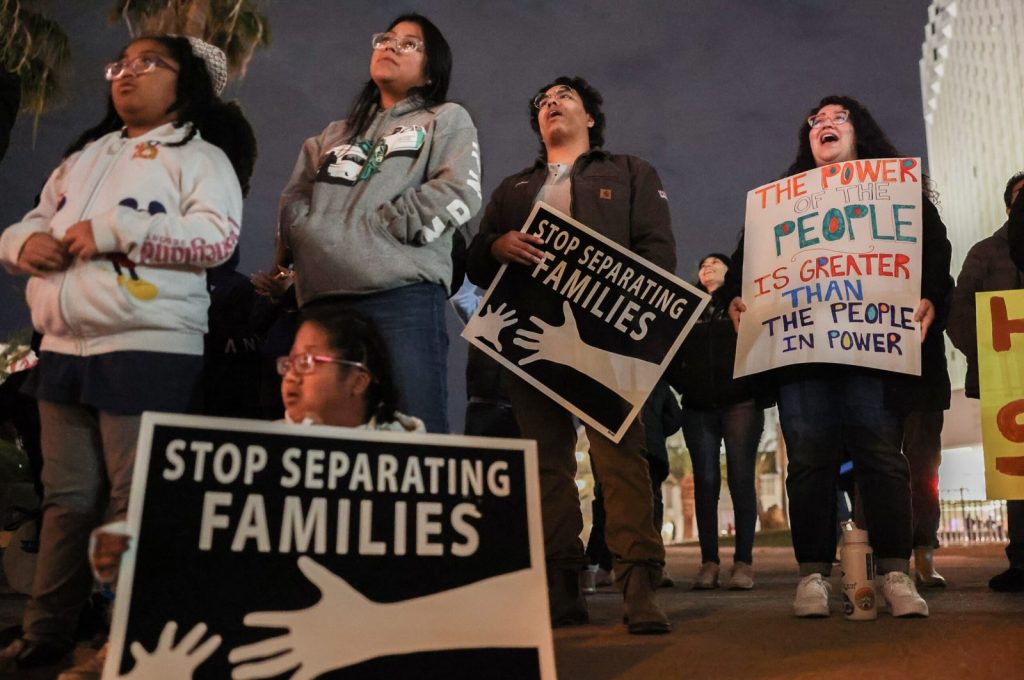
Photo taken from: Jeff Scheid / The Nevada Independent
Policy Summary
[SSB theme=”Official” align=”center” counter=”true” ]
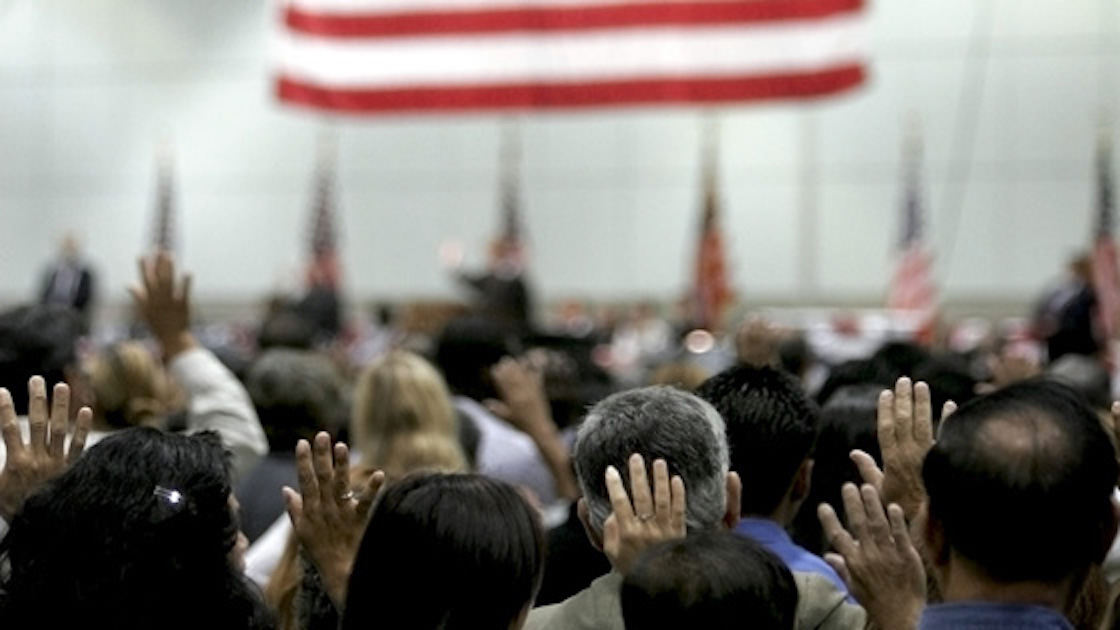
Immigration policy and border control in the United States have long been contentious and divisive issues in American politics and society. The United States has a long history of immigration, with millions of people from around the world coming to the country seeking a better life, freedom, and opportunity. At the same time, the issue of immigration and border control has also been a source of tension and debate, as the country grapples with questions of how to balance the needs and rights of immigrants with the need to protect national security and control its borders.
Types of Immigration
There are several different types of immigrants seeking admission to the United States, including:
a. Asylum seekers: These are individuals who seek refuge due to persecution, violence, or other threats to their safety in their home countries. According to U.S. law, asylum seekers have the right to apply for protection in the United States and have their cases considered by immigration officials.
b. Immigrants fleeing poverty and climate change: Many people immigrate to the United States in search of economic opportunity and a better standard of living. In recent years, there has also been an increase in immigrants fleeing poverty and climate change in their home countries.
c. Skilled immigrants: The United States has traditionally welcomed skilled immigrants, such as doctors, engineers, and other professionals, as they can contribute to the country’s economy and competitiveness.
d. Dreamers: The term “Dreamers” refers to individuals who were brought to the United States as children without proper documentation. The Deferred Action for Childhood Arrivals (DACA) program, which was established in 2012, provides temporary protection from deportation and work authorization for certain Dreamers.

Photo taken from: CitizenPath

Chart taken from: Center for Immigration Studies
(click or tap to enlargen)
Statistics on Immigrants
Over the past few years, the number of immigrants in the United States has remained relatively stable, hovering around 44.9 million. According to data from the American Immigration Council, the top countries of origin for immigrants in the United States are Mexico, China, India, and the Philippines. The majority of immigrants in the United States are legal permanent residents, though there is also a significant number of unauthorized immigrants and temporary workers in the country.
The Roles Immigrants Play in American Life
Immigrants have played a vital role in American life and have significantly contributed to the country’s economy, culture, and diversity. Many immigrants work in industries such as agriculture, construction, and healthcare, filling important labor shortages and helping to drive economic growth. Immigrants are also more likely to start their own businesses than native-born Americans, and their entrepreneurial spirit has contributed to the country’s innovation and competitiveness.
Diverse Issues in Immigration Reform
There are many different issues that are involved in immigration reform, including:
a. Border security: The United States has long sought to control its borders to prevent illegal immigration and protect national security. This has included measures such as building a wall along the U.S.-Mexico border and increasing the number of Border Patrol agents.
b. Deportation: The United States has a system in place for deporting individuals who are in the country illegally or who have violated the terms of their visas. This has been a controversial issue, as many immigrants and advocacy groups argue that the system is unfair and can result in the separation of families.
c. Legal immigration: The United States has a complex system for legal immigration, which includes various visas and pathways for people to come to the country. Some people argue that the system is too slow and cumbersome, while others argue that it needs to be more selective in order to protect national security and ensure that immigrants are able to assimilate into American society.
d. Dreamers: As mentioned above, Dreamers are individuals who were brought to the United States as children without proper documentation. The DACA program provides temporary protection from deportation for certain Dreamers, but there has been debate over whether the program should be made permanent or whether Dreamers should be given a pathway to citizenship.
Existing Policy Under Consideration
There are several immigration policies that are currently under consideration in Congress and the administration. These include:
a. The U.S. Citizenship Act of 2021: This bill, which was introduced in the Senate in February 2021, would provide a pathway to citizenship for Dreamers and other immigrants who are in the country illegally. It would also provide additional resources for border security and increase the number of visas available for skilled immigrants.
b. The Border Security and Immigration Reform Act: This bill, which was introduced in the House of Representatives in 2018, would provide funding for border security measures such as a wall along the U.S.-Mexico border and increase the number of Border Patrol agents. It would also provide a pathway to citizenship for Dreamers and other immigrants who are in the country illegally, but only if they meet certain requirements, such as paying a fine and passing a criminal background check.

Photo taken from: Getty Images
Chances of New Policies Being Enacted
It is difficult to predict the chances of immigration policies being enacted in the new Congress. Immigration reform has long been a divisive issue in American politics, and it is likely that any new policies will face significant opposition from some members of Congress. However, the Biden administration has made it a priority to address immigration reform, and it is possible that some new policies could be enacted with the support of a Democratic-controlled Congress.
Conclusion
American immigration policy and border control are complex and multifaceted issues that have a significant impact on American society and the lives of millions of people. While the United States has a long history of welcoming immigrants and has benefited from their contributions, the issue of immigration reform remains controversial and divisive. It is important for the country to find a balance between protecting its borders and national security, and providing opportunities and protections for immigrants who come to the United States seeking a better life.
Engagement Resources
Click or tap on resource URL to visit links where available

American Immigration Council: (https://www.americanimmigrationcouncil.org/research/immigrants-in-the-united-states)

Migration Policy Institute: (https://www.migrationpolicy.org/article/frequently-requested-statistics-immigrants-and-immigration-united-states#:~:text=How%20many%20U.S.%20residents%20are,of%20approximately%20950%2C000%20from%202020.)

MIT News: (https://news.mit.edu/2022/study-immigrants-more-likely-start-firms-create-jobs-0509)

Pew Research Center: (https://www.pewresearch.org/fact-tank/2022/04/27/key-facts-about-title-42-the-pandemic-policy-that-has-reshaped-immigration-enforcement-at-u-s-mexico-border/)

The Guardian: (https://www.theguardian.com/news/2022/aug/18/century-climate-crisis-migration-why-we-need-plan-great-upheaval)

The White House: (https://www.whitehouse.gov/briefing-room/statements-releases/2021/07/27/fact-sheet-the-biden-administration-blueprint-for-a-fair-orderly-and-humane-immigration-system/)

US Congress Legislation: (https://www.congress.gov/bill/115th-congress/house-bill/6136)
US Congress Legislation: (https://www.congress.gov/bill/117th-congress/house-bill/1177)


Washington Post: (https://www.washingtonpost.com/news/monkey-cage/wp/2018/06/27/the-news-media-usually-show-immigrants-as-dangerous-criminals-thats-changed-for-now-at-least/)

Brittney Griner: A Lesson for Activists on Intersectionality
Brittney Griner: A Lesson for Activists on Intersectionality
Health and Gender Policy Brief #TBA | By: Geoffrey Small | December 22, 2022
Header photo taken from: Getty Images
Follow us on our social media platforms above
Browse more health and gender policy briefs from the top dashboard

Photo taken from: Michael Key
Policy Summary
[SSB theme=”Official” align=”center” counter=”true” ]
On February 17, 2022, WNBA All Star Brittney Griner was arrested in Russia on smuggling charges for containing less than a gram of hash oil, which was prescribed to her medically in the state of Arizona. The Biden Administration stated that Griner was “wrongfully detained” for political leverage in response to sanctions imposed on Russia for the Ukraine invasion. She was eventually sentenced to nine years in one of Russia’s penal colonies, which are notorious for human rights abuses. Griner, a Black professional athlete who identifies as a lesbian, immediately became a focal point of intersecting political dialogues in the United States related to women’s equality, LGBTQ rights, marijuana decriminalization, and Critical Race Theory.
As a result, multiple high-profile political organizations and celebrities from different backgrounds simultaneously advocated for the U.S. government to facilitate her release in exchange for a detained high-profile arms dealer Viktor Bout. The most effective strategies in messaging were rooted in the principles of Kimberlé Crenshaw’s theory on intersectionality. The critical race theory of intersectionality may be the key high-profile organizations can use to collaborate more effectively on political activism in order to help influence similar socioeconomic issues in the future.
Policy Analysis
While Griner was detained, Black Lives Matter voiced support through twitter, stating to Britney “your community has your back. We’re thinking about you every day and we’re fighting for you to come back home.” Cannabis activists protested outside the Russian Embassy in Washington D.C. GLAAD, one of the most prominent LGBTQ organizations, stated in a press release that Griner “is a hero. We admire her courage and loudly echo President Biden’s statement that she is being wrongfully detained. Our community remains gravely concerned for Brittney’s safety and demand urgent action from the State Department.”
However, Griner’s WNBA head coach, Vanessa Nygaard truly defined what the issue really was about. She stated “If it was LeBron [James], he’d be home, right?” Nygaard continued describing the imprisonment of Griner after several months as “a statement about the value of women. It’s a statement about the value of a Black person. It’s a statement about the value of a gay person. All of those things.”
Kimberlé Crenshaw, first used the term “intersectionality” as a professor at Colombia Law School in 1989. It was used to describe how class, gender, race and other characteristics like sexual orientation “intersect” or overlap. Crenshaw’s theory explains that individuals living in the U.S., who identify with multiple characteristics, can struggle exponentially in a system that is rooted historically in white-male dominance. In Griner’s case, she was playing in Russia to support herself financially, because a WNBA’s average player income is significantly less than what a male NBA player makes.

Chart taken from: The Williams Institute
(click or tap to enlargen)
She was imprisoned for almost ten months while conservative political pundits questioned her value as a high-profile prisoner that was worth the exchange for a white-male arms dealer. It is well documented that Black communities in the United States have significant socioeconomic disadvantages. However, being a Black female lesbian statistically comes with even more disadvantages. According to the UCLA Williams Institute, 56% of Black LGBT households have a low income, compared to 49% Black non-LGBT. 60% of Black LGBT adults have been threatened with violence and 79% face verbal abuse.
Advocacy groups like Black Lives Matter and GLAAD may have different organizational goals when it comes to their activism, but based on Crenshaw’s principles, they also share intersecting principles. Griner’s harrowing story of unlawful detainment while making a living as a black professional athlete, who identifies as a lesbian, provides a lesson on how these organizations can collaborate on intersecting struggles to carry out their overall goal for a better system of equality. Donating to Back Lives Matter and GLAAD can help these organizations achieve their common goals.
Engagement Resources
Click or tap on resource URL to visit links where available

https://blacklivesmatter.com/?gclid=EAIaIQobChMIzfzpjqqN_AIVk7jICh3vmgUJEAAYAiAAEgI_t_D_BwE


Should Machine-Made Art Be Subject to Copywrite Protection?
Should Machine-Made Art Be Subject to Copyright Protection?
Technology Policy Brief #77 | By: Steve Piazza | December 23, 2022
Header photo taken from: Ryan Abbott
Follow us on our social media platforms above
Browse more technology policy briefs from the top dashboard

Photo taken from: Stability AI
Policy Summary
[SSB theme=”Official” align=”center” counter=”true” ]
Last February, the U.S. Copyright Office upheld a rule that artwork created by machines or animals cannot be protected under copyright law. Referring to the Copyright Act of 1976, the U.S. Copyright Review Board reasserted that only works by humans can be protected.
Creativity is a constitutionally protected endeavor as stated in Article I Section 8 of the U.S. Constitution. What’s in question here, however, is not whether something is “creative” or not, but whether the Artificial Intelligence (AI) itself that produces artwork deliberately created without human intervention can be granted the protection.
In this case, researcher Stephen Thaler had applied for protections on behalf of the AI that generated an image, but Thaler was unable to convince the three member panel that his “Creativity Machine” algorithm passed as a person.
Policy Analysis
Neil Netanel, UCLA Law Professor and copyright scholar states that copyright law is used by “market institutions to enhance the democratic character of civil society.” It helps maintain a “careful balance between exclusivity and access” to creative expression necessary to a civil society.
In other words, disputes over who deserves compensation for work and who has access to it are unavoidable, and therefore laws designed to provide protections are required.
Copyright, as the country’s founders also understood it, plays a vital role in the economic stability of a democracy.
This is not an alarmist view, but a pragmatic one, considering that history is full of instances where totalitarian governments have seized control of creative expression in one way or another. Protecting creative expression is simply protecting freedom.
Regarding AI image generators, certain text is entered into algorithms that search the web for images which are then blended together to create a new image. In and of itself, artificially generated art is not a bad practice. It is quite amazing what is being created these days.
Some argue that it’s not art because in the end it’s generated by machine. Others contend it is because ultimately it requires some human involvement along the way. Either way, the purpose of the law goes beyond that debate because it raises legal questions about authorship. At its core it’s more about protecting the relationship between creator and end user, or in effect, the marketplace.
Yet the language of the law is constantly called into question as new technologies arrive. Thaler’s attempts for protection (he’s been applying for similar protections, even suing in countries around the globe, and with some success) should be viewed as a wake up call to copyright lawyers and Congress that present day statutes in the U.S. are not enough to prevent any upset to the equilibrium.

Photo taken from: Selvam & Selvam: an Intellectual Property Law Firm
(click or tap to enlargen)
Entire industries have changed as a result of emerging digital content and delivery systems, and there have been casualties, particularly on the artist’s end. Providing protection directly to AI without anticipating and adapting to newly forming consequences will only continue the trend.
Copyright does not protect the ideas themselves, but only the expression of them. What makes the future of copyright protections even more complicated is that it’s difficult to distinguish between an idea and its expression in a virtual world.
The test of a creative work is that it’s based on a human idea and resulting creation, but an AI work is resulting from the output of a machine ultimately on its own. Yet, as Thaler would argue, that independence is the point. Just as some citizenship rights are granted to a corporation, authorship to machines logically follows.
As these practices are allowed, one tends to look at society in a completely different light. It begs the question: How secure is someone supposed to feel if some of their constitutional protections are weighted equally against abstractions?
It’s comforting to know that the Office of Copyright has recently been addressing the issue of new technologies. In 2021, it held a conference (along with the U.S Patent and Trademark Office) entitled Copyright Law and Machine Learning for AI: Where Are We and Where Are We Going?.
This resulted in some discussion on possible approaches to sensible safeguards, such as shared authorship, tax incentives, and distinguishable data protection. Yet there seems widespread agreement there that changing the Copyright Law at this time is not yet warranted because of the belief that it still provides the best balance for existing creative markets.
Continued attention is warranted, though. If left unclear, the ambiguities inherent to the nature of digital content development and the law could lead to inequities, and an undesirable civil imbalance the law was attempting to avoid in the first place.
Engagement Resources
Click or tap on resource URL to visit links where available

This is the panel’s written response to Thaler’s request for copyright protection, which also includes work by the AI:
https://www.copyright.gov/rulings-filings/review-board/docs/a-recent-entrance-to-paradise.pdf
Learn more about copyright law and policy in general by clicking here: https://copyright.gov/

This is a link to the Federal Register Notice calling for public input on Non-Fungible Tokens (NFTs) and Intellectual Property: https://www.govinfo.gov/content/pkg/FR-2022-11-23/pdf/2022-25211.pdf

Here is information on Copyright Alliance, a group that represents artists concerned about copyright issues: https://copyrightalliance.org/

Twitter Layoffs Spark the Latest Accusations of Sexism in Tech
Twitter Layoffs Spark the Latest Accusations of Sexism in Tech
Technology Policy Brief #76 | by: Mindy Spatt | December 23, 2022
Header photo taken from: Getty Images
Follow us on our social media platforms above
Browse more technology policy briefs from the top dashboard

Photo taken from: The Associated Press
Policy Summary
[SSB theme=”Official” align=”center” counter=”true” ]
Elon Musk’s takeover of Twitter has sparked outrage, layoffs and lawsuits. But the news of a sex discrimination suit by laid off employees is no surprise; it is not the first for Musk or Twitter, and the tech industry is notorious for its unequal treatment of women.
Policy Analysis
The suit claims that women were unfairly targeted for layoffs, with 57% of its female workers getting the sack compared with 47% of male employees. Women engineers were particularly hard hit, with 635 losing their jobs compared with 485 of their male counterparts.
Cited in the complaint are sexist tweets by Musk’ including one in which he refers to a school using the acronym “TITS”.
It also cites his request for workers to either be in the office 24/7 or leave, alleging “Musk would certainly have known that these policy changes and expectations would have a disproportionate impact on women, who are more often caregivers for children and other family members, and thus not able to comply with such demands.”
Twitter is no stranger to high profile sex discrimination suits. In 2015 Tina Huang, who had been a software engineer at the company, filed a class action against Twitter for what she claimed was an “impenetrable glass ceiling” stopping females engineers like herself from being promoted.
Huang’s suit followed Ellen Pao’s against her former employer, Kleiner Perkins, which drew widespread media attention. She not only alleged gender discrimination but also that she’d been retaliated against for complaining. Although she lost, she her case became a touchstone for the problems women were experiencing in the tech industry.
After the barrage of negative publicity these cases caused, many companies made noises about the need to change. But the discriminatory practices persisted, Including under Musk’s watch. In 2017 the New Yorker reported on a sex discrimination suit against Tesla; not just for failing to promote women but also complaining of a hostile work environment that included catcalling and other daily harassments.
Infographic taken from: CyprusMail
(click or tap to enlargen)
More recently, a 2020, a report on “The State of Women in Tech” found that in Silicon Valley men, on average, earned roughly 61% more than women ..and that less than 5% of leadership positions were held by women.
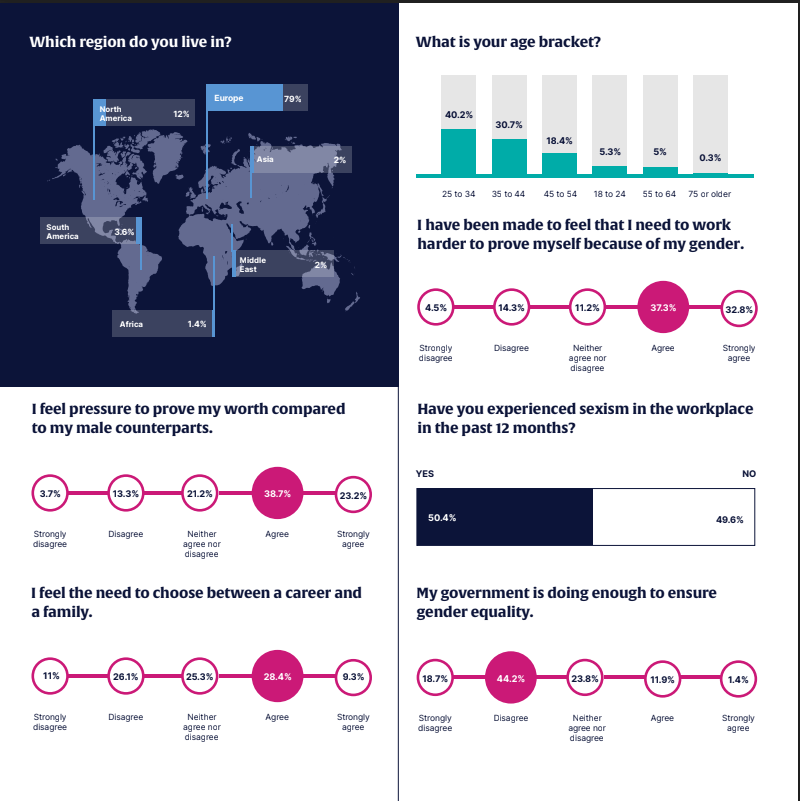
The problem isn’t limited to the US. An international survey by Web Summit Women in Tech found that in 2022 sexism remains pervasive in the industry. The majority of respondents, 78.5 per cent, were from Europe.
Approximately one half of women surveyed said they had experienced sexism in the last year, and 66.9 per cent believe they are paid unfairly as compared to their male counterparts,. A full 62.9 per cent feel pressure to choose between career and family and believe they have to work harder to prove themselves.
The technology industry has not just generated highly paid jobs, it has also generated enormous wealth, which has also gone almost exclusively to men. While tech executives have become the wealthiest people in human history only two women currently appear on Forbes’ list of tech’s 20 richest people. One is a widow of a male billionaire, the other an ex-wife of another.
The plaintiffs suing Twitter over the layoffs are seeking lost back pay and lost benefits, bonuses, and equity. They also asking for damages for emotional distress and punitive damages. And while Musk says Twitter is losing millions of dollars every day he can still easily afford to provide the plaintiffs with everything they are asking for. He remains the second wealthiest person in the world with an estimated fortune of $164 Billion.
Engagement Resources
Click or tap on resource URL to visit links where available

The State of WOMEN IN TECH 2020
https://adevait.com/state-of-women-in-tech

8 Charts that Show the Impact of Race and Gender on Technology Careers
Natalie Merchant, World Economic Forum, April 13, 2021
https://www.weforum.org/agenda/2021/04/gender-race-tech-industry/

Women Who Tech is nonprofit organization building a culture and inclusive economy to accelerate women tech entrepreneurs and close the funding gap. https://womenwhotech.org

Ukraine’s Effort to Maintain Its Infrastructure
Ukraine’s Effort to Maintain Its Infrastructure
Foreign Policy Brief #161 | By: Yelena Korshunov | December 20, 2022
Header photo taken from: Vladyslav Musiienko / Reuters
Follow us on our social media platforms above
Browse more foreign policy briefs from the top dashboard

Photo taken from: pravda.com.ua
[SSB theme=”Official” align=”center” counter=”true” ]
There is another day in the city of Odessa when people are surviving without water, power, and heat. It is 34F on the streets and a little bit warmer in apartments. Adults throw extra blankets on children and wrap themselves in another layer. How long have they been living in this cold and darkness, just trying to survive? A week, a month? In the chilly morning some of them go to work. It’s cold there as well. However, power generators work 7/24 in hospitals, precincts, and some stores.
Odessa is one of many Ukrainian regions where energy infrastructure has been continually destroyed by Russia’s missiles. Last time it was fixed and almost restored within a week, and right after that another boost of missiles turned Ukrainians back to darkness and cold. Municipal electric transport doesn’t work due to the energy deficit. It’s the holiday season there as well, but this year it’s so different for Ukrainians from what we have on the peaceful land.

Photo taken from: meduza.io
In Odessa, after the Russian attack on energy facilities, more than one million residents were left without power. On the morning of December 10th the Ukrainian military said that power sites were attacked at night by kamikaze drones again. There were also emergency power outages in the entire Odessa region. Millions across the country experienced the same condition. Russia has been regularly shelling Ukrainian energy infrastructure since October, leaving populated areas of Ukraine without electricity, water and heat.
On December 13, a fragment of the program “Vesty with Alexei Kazakov” on Russia’s state TV channel “Russia 24″ was distributed on mass media. In it, TV anchor Alexey Kazakov and Evgenia Petrukhina mockingly talked about the difficulties Ukrainians face due to regular power outages, not mentioning that they were caused by Russian strikes. “There is a shortage of generators in Nezalezhnaya (”Independent” in ukr.) … But even those who have generators do not have a peaceful life. After all, generators are stolen. … The life of a Ukrainian now generally looks like this. Charging phones in stores. Dinner by candlelight. It’s almost romantic, but it only takes about an hour to reheat the food in this way. But the man is forced to shave next to the ATM. … Another example is that it is possible to remain hairless if you dry your head over a gas stove.
And this is in the best case. There are more and more news reports about carbon monoxide poisoning…”- humiliate Russia’s reporters – “For almost a week, the city of Nezalezhnaya (”Independent” in ukr.) has been in the dark. … Simple Ukrainians cannot afford complex cooking now: even 100 milliliters of water (half a glass) will boil for at best 40 minutes on a candle flame… And Russian borscht, which Ukrainians love very much, is impossible to cook purely physically without generators, gas stoves or bonfires… But even in such a situation you can see your advantages. Without classic stoves, it is difficult to fry meat with spices or bake flour, and this is harmful. Why not take advantage of the situation and switch to healthier and simple food? After all, the recovery of Ukrainian society is the main goal of strikes on the Nezalezhnaya (”Independent” in ukr.) power system.”

Photo taken from: gazeta.ua
“The main thing today is energy. During the day, we managed to restore electricity to almost 6 million Ukrainians. Repair work continues without a break after yesterday’s attack by terrorists. Russia does not spare resources for the war against our people – precisely against the people, against all Ukrainians, from Lutsk to Kharkov, Sumy to Odesa region,” the head of state said.
Zelensky reported that there are problems with the supply of heat and water. “Thank you to all our energy workers, everyone who works to provide heat and water, everyone who repairs communications damaged by shelling and restores normal life every time, no matter how the terrorists try to leave us in the cold and in the dark. The terrorists will still lose.”