JOBS POLICIES, ANALYSIS, AND RESOURCES
Latest Jobs Posts
Democrats May be Making a Mistake with the Iowa Caucuses
Brief #47 – Elections & Politics
By Ian Milden
The DNC recently voted to approve a plan to shake up the schedule for the 2024 Democratic presidential primaries. While parts of the proposal would require the cooperation of several state governments (some of which are controlled by Republicans), the biggest change that will likely come from this plan is the removal of the Iowa Caucuses from its first-in-the-nation status. This Brief will examine the reasons why the Democratic Party approved this plan and the potential hazards this plan may pose for Democrats down the road.
The Reckless Growth of BlackRock and Other Asset Management Companies
Brief #142 – Social Justice
By Abigail Hunt
As of December 2021, BlackRock, an asset management company – and one of the “Big Three” global money managers along with Vanguard and State Street – had more than $10 trillion in assets under management. The company controls so much capital if it were a country its GDP would rival that of the wealthiest nations in the world. BlackRock describes itself as “a global investment manager and fiduciary” and a leading provider of financial technology.
Are Tech Billionaires the Worst Polluters on Earth?
Brief #75 – Technology Policy
By Mindy Spatt
Tech Billionaires Leave an Outsize Carbon Footprint, Despite Their Carbon Neutral Claims. Advocates claim allowing polluters to purchase carbon offsets is a “scam” and hurting, rather than helping the planet.
January 6th Committee Will Send Criminal Referrals to Department of Justice
Brief #46 – Elections & Politics
By Maureen Darby-Serson
On December 8th, 2022, sources revealed that the January 6th Committee were considering referring 5 individuals, including former President Donald Trump, for criminal charges to the US Department of Justice. Mark Meadows, John Eastman, Jeffrey Clark, and Rudy Giuliani are the other four alleged targets of these referrals. What do these referrals means and what will come of them?
The Need to Reframe Education Reform
Brief #58 – Education Policy
By Steve Piazza
In the United States, no single, comprehensive K-12 academic curriculum exists at the Federal level. The states maintain the authority to design and mandate systemic curricula, but even then there is no real consistency.
FCC Stumbles As It Tries to Increase Access to Broadband
Brief #74 – Technology Policy
By Mindy Spatt
Will $65 billion in Infrastructure funds finally bridge the digital divide and connect the 19 million Americans who still lack access to high-speed internet? The FCC’s First Step Appears to be a Misstep.
Should There Be Term Limits For Members of Congress?
Brief #197 – Civil Rights Policy
By Rodney A. Maggay
The United States Constitution describes the qualifications a person must have in order to be eligible to be a Representative in Article One, Section Two, Clause Two. And for Senators, the qualifications are described in Article One, Section Three, Clause Two. Minimum age limits and minimum years of citizenship, among other qualifications, are listed. But the last few decades have seen an interest in adding an interesting limitation – term limits for Members of Congress.
Abortion Rights Prevent a “Red Wave”
Brief #150 – Health & Gender Policy
By Geoffrey Small
As the dust settles from the 2022 mid-term election, it’s clear that the threat to abortion rights helped galvanized activists into bringing the prospect of a “red wave” down to a small tidal shift in Republican representation. An Emerson College poll conducted in July already predicted a tightening of the races after the Supreme Court overturned Roe V. Wade.
The Ukraine Crisis; Situation Update #16
Brief #157 – Foreign Policy
By Abran C
Deadly missile strikes in Ukraine have made headlines in recent days for the widespread destruction and chaos being generated through their use. Last week a missile strike killed two civilians in Poland’s eastern region near its border with Ukraine.
The missiles were at first thought to have been fired by Russian forces, which would have indicated a Russian attack on a NATO member state. The situation created such panic that an emergency NATO roundtable was held on the sidelines of the G20 summit to address the attack.


IT’S TIME TO REFORM THE SUPREME COURT
IT’S TIME TO REFORM THE SUPREME COURT
By: U.S. Resist News | August 2, 2022
Header photo taken from: iStock

Photo taken from: Getty / AFP / Jim Watson
The following U.S. RESIST NEWS Reporters contributed to this Op Ed: Rod Maggay, Geoff Small, Ian Sultan and Managing Editor Ron Israel
The events at the Supreme Court, such as the over-turn of Roe v Wade and the political actions of Justice Clarence Thomas’s wife, cast light on the need to reform the workings of the Court. In this Op Ed, U.S. RESIST NEWS makes suggestions for ways in which the Supreme Court can become more reflective of all Americans and not just a narrow few, and become more accountable for its actions.
Change the Nomination Process— We need to ensure a fairer nominating process. Nominations should become less ideologically driver. They should reflect the opinions of a variety of interest groups, not just the groups affiliated with the party in power. (Justices Gorsuch, Kavanaugh, Alito, Barrett, Roberts, and Thomas were all recommended by the Federalist Society.)Once a person is nominated, they should be carefully evaluated and then a vote on his or her nomination needs to be immediately taken in the Senate.
The ability of the Senate to block a hearing on a nominee, as the Republicans did with Merrick Garland, should not be allowed. Candidates who appear before the Senate should face a perjury penalty for lying during their nomination hearing.
Policy Analysis
Take Steps to Ensure a More Diverse Court:
We need a court that is more diverse and politically balanced court. We need a court that reflects the cultural, ethnic, racial and religious, and political differences of the country.
Ways in which such diversity can be achieved include expanding the number of justices, imposing term limits, and having the parties alternate the nomination responsibility each time a vacancy occurs, rather than have the President make the decision. justices should be put in place.

Photo taken from: Diego M. Radzinschi / ALM

Photo taken from: Center for American Progress
Implement a Code of Ethics:
Congress needs to draft a Code of Ethics to guide the conduct of Supreme Court justices.
Such a code of ethics should deal with issues such as committing perjury during the nomination process, conflicts of interest that might be appropriate for justices in specific cases, and requirement for justices to recuse justices to recuse themselves from cases where they have a conflict of interest.
A specific framework for the impeachment of Supreme Court
These and other Supreme Court reforms a greatly needed to reinstate public faith in our judicial system. Putting such reforms in place will be a monumental but important undertaking.
Perhaps the place to start is by establishing a bi-partisan national Judicial Reform Commission that can consider reforms such as these and make recommendations for Congressional review and action.

The Ukraine Crisis: Situation Update #11
The Ukraine Crisis: Situation Update #11
Foreign Policy Brief #142 | By: Abran C | August 2, 2022
Header photo taken from: Carlos Barria / Reuters
Follow us on our social media platforms above
Browse more foreign policy briefs from the top dashboard

Photo taken from: News Nation World
[SSB theme=”Official” align=”center” counter=”true” ]
Summary of Recent Events
Donetsk Region Evacuation
On July 31, 2022 Ukranian President Zelensky ordered civilians to evacuate from the Donetsk region. Between 200,000 and 220,000 civilians still live in the unoccupied area of Donetsk, according to Ukrainian estimates.

Photo taken from: CNN
Impact of US Weapons
On June 27, 2022 Ukrainian forces severely damaged a bridge that was vital to the Russian military’s supply lines in the city of Kherson.
The Ukranian defense ministry’s message to the occupying forces following the strike on the bridge was “Retreat or be annihilated”. The successful strike by Ukrainian forces was carried out by a high mobility artillery system that the U.S. has supplied in recent weeks.
Russia, in contrast, has relied on a less-precise artillery system that has indiscriminately shelled civilian areas.

Photo taken from: Alexander Ermochenko / Reuters
According to the UK defense ministry, Ukraine’s counteroffensive in the Russian-occupied Kherson region is gathering momentum and represents a positive development in its war effort.
Casualties
Ukraine has estimated total Russian military losses to be over 40,000 troops killed or wounded, along with 1,738 destroyed tanks, and 3,971 destroyed armored vehicles.

Photo taken from: Stringer / Getty Images
Grain Embargo Lifted
Following lengthy negotiations mediated by Turkey and the UN, Russia has agreed to unblock Ukrainian ports to allow the export of grain.
The agreement has begun with a slow, cautious start, and it’s only in effect for 120 days. The goal over the next four months is to get some 22 million tons of grain out of three Ukrainian sea ports that have been blocked since the beginning of the Russian invasion.

Photo taken from: Umit Bektas / Reuters
EU and Russian Gas
EU countries are preparing for further cuts in supply of Russian gas. On June 26, 2022 Russia’s energy company Gazprom began sending less gas due to what it claims are technical difficulties.
EU countries have claimed the recent gas reduction is an escalation of an energy stand-off between Moscow and the European Union that will make it harder for the bloc to fill up storages ahead of the winter heating season.

Photo taken from: Michael Probst / Associated Press
EU Cutting Ties with Russia
EU countries have continued to remove themselves from dependence and ties with Russia. For example, Estonia has said it would block Russian nationals from obtaining temporary residence permits or visas to study in Estonia.

Photo taken from: Butenkow / Dreamstime.com
Failed Prisoner Exchange
The Biden administration has offered to exchange Viktor Bout, a convicted Russian arms trafficker serving a 25 year prison sentence in the US, to secure the release of two Americans held by Russia, WNBA player Brittney Griner and ex-Marine Paul Whelan.
Whelan has been detained since 2018 on espionage charges and Garner earlier this year on charges of cannabis possession in Russia.

Photo taken from: CNN
Russia Gaining in Eastern Donbas
Although a deal was reached to allow grain exports to leave Ukranian ports, fighting has not subsided in the slightest.
The battle for the Eastern Donbas region is fierce and Ukraine calling for civilians to evacuate is another sign that Ukraine will lose the territory in the long run and may need to use it as a bargaining chip for any future peace deal.

Photo taken from: Institute for the Study of War
Hungary Needs Russia
As Ukraine continues fighting against the invasion, the EU looks to distance itself from Russia as much as possible.
Only Hungary and PM Viktor Orban have held up a deal to continue to cut off Russian energy imports. Russia currently supplies 65% of Hungary’s oil and 85% of its gas needs.

Photo taken from: Olivier Matthys / Associated Press
International Space Station Loses Russia
Russia recently announced it would pull out of the International Space Station after decades. The ISS until now had been a symbol of cooperation in spite of politics back on earth.
Russia now has pursued a future in space with China, signaling that fighting and polarization between global powers on Earth may someday soon reach into the stars.

Photo taken from: Reuters

Preview of US Senate Races in Colorado and New Hampshire
Preview of US Senate Races in Colorado and New Hampshire
Elections & Politics Policy Brief #41 | By: Ian Milden | August 3, 2022
Header photo taken from: cyprusandaxi.com
Follow us on our social media platforms above
Browse more elections & politics policy briefs from the top dashboard

Photo taken from: Erin Scott / Associated Press
Policy Summary
[SSB theme=”Official” align=”center” counter=”true” ]
Control of the U.S. Senate will be up for grabs in the 2022 mid-term elections. Competitive races in key states will determine the balance of power. In this brief, I will preview the US Senate races in Colorado and New Hampshire.
Policy Analysis
In Colorado, Senator Michael Bennet (D-CO) is running for a third full term. He was appointed to the Senate in 2009 after President Obama nominated Ken Salazar to be the Interior Secretary.
He won full terms in 2010 and 2016. In the Senate, Bennet fixed longstanding budget issues with the U.S. Forrest Service’s wildfire prevention programs.
Before his appointment to the U.S. Senate, Bennet was the superintendent of Denver Public Schools. He also worked as the chief of staff for John Hickenlooper when Hickenlooper was the Mayor of Denver. Bennet ran for President in 2020 but dropped out after the New Hampshire primary.
Republicans nominated Joe O’Dea to face Bennet in the general election. O’Dea is a construction company owner who has not previously run for public office.
He defeated Ron Hanks, a state legislator known for spreading conspiracy theories, in the primary. O’Dea has partially self-funded his campaign.
While Colorado has voted for Democrats in most of the recent statewide elections, Republicans still can win Colorado due to the large number of unaffiliated voters in Colorado. Unaffiliated voters outnumber both Democrats and Republicans in Colorado, which makes them important in Colorado elections.

Photo taken from: The Lines
(click or tap to enlargen)
While Cory Gardner’s (R-CO) 2014 upset win over Mark Udall (D-CO) remains an outlier in recent elections, it shows that Republicans can win in Colorado. Bennet has run in bad environments before and is preparing for a difficult race. There doesn’t appear to be any polling data available publicly, but I would expect Bennet to be ahead of O’Dea at the moment.
Senator Maggie Hassan (D-NH) is running for a second term. Before winning the seat in 2016, Hassan was the Governor of New Hampshire. Senator Hassan was involved in the negotiations for the bipartisan infrastructure bill that passed in 2021. She also worked with Senator Bill Cassidy (R-LA) to pass the STOP Surprise Medical Bills Act in 2020.
New Hampshire doesn’t hold primaries until September 13th, so Republicans have not picked a nominee yet. Eleven candidates have filed to run for the Republican nomination. Most of these candidates are not well-known or well-financed. The late primary will provide significant challenges for whoever wins the nomination because it leaves limited time to gain name recognition and campaign contributions needed for a general election campaign.
While New Hampshire Republicans are unlikely to nominate a formidable candidate, New Hampshire elections have been competitive. Senator Hassan won her first term by 1017 votes. While Senator Hassan was running against an incumbent in 2016, the political climate in 2022 might be worse than it was in 2016. If Democrats are having a tough night on election night in 2022, New Hampshire could be the first sign of trouble.
Engagement Resources
Click or tap on resource URL to visit links where available

Senator Michael Bennet’s campaign website

Senator Maggie Hassan’s campaign website

DSCC – Official Campaign Arm of Senate Democrats
A Conservative Supreme Court Handicaps the EPA in its Fight Against Climate Change
A Conservative Supreme Court Handicaps the EPA in its Fight Against Climate Change
Environmental Policy Brief #145 | By: Jacob Morton | August 1, 2022
Header photo taken from: Leigh Vogel / Getty Images
Follow us on our social media platforms above
Browse more environmental policy briefs from the top dashboard
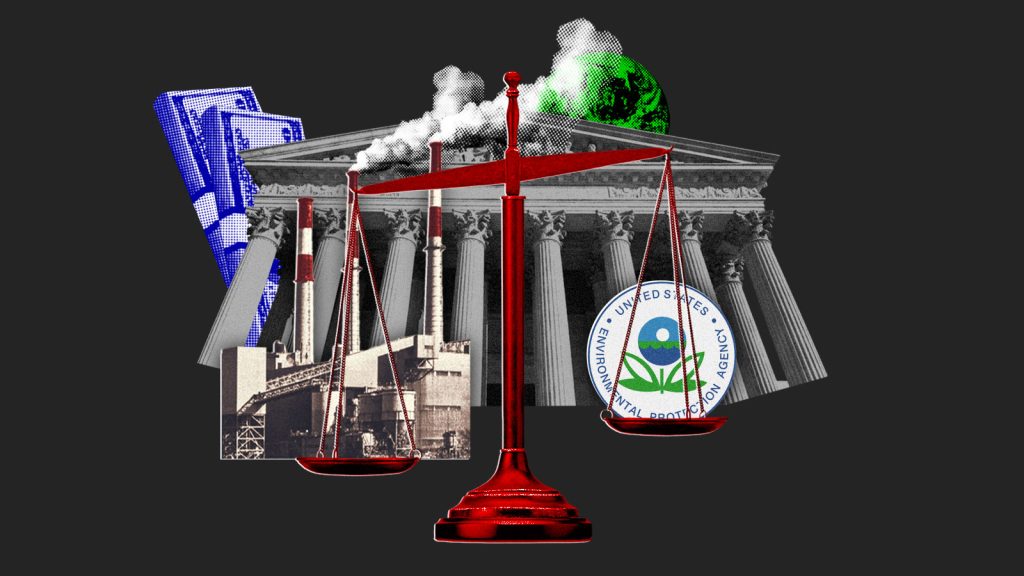
Photo taken from: Grist / Getty Images
Policy Summary
[SSB theme=”Official” align=”center” counter=”true” ]
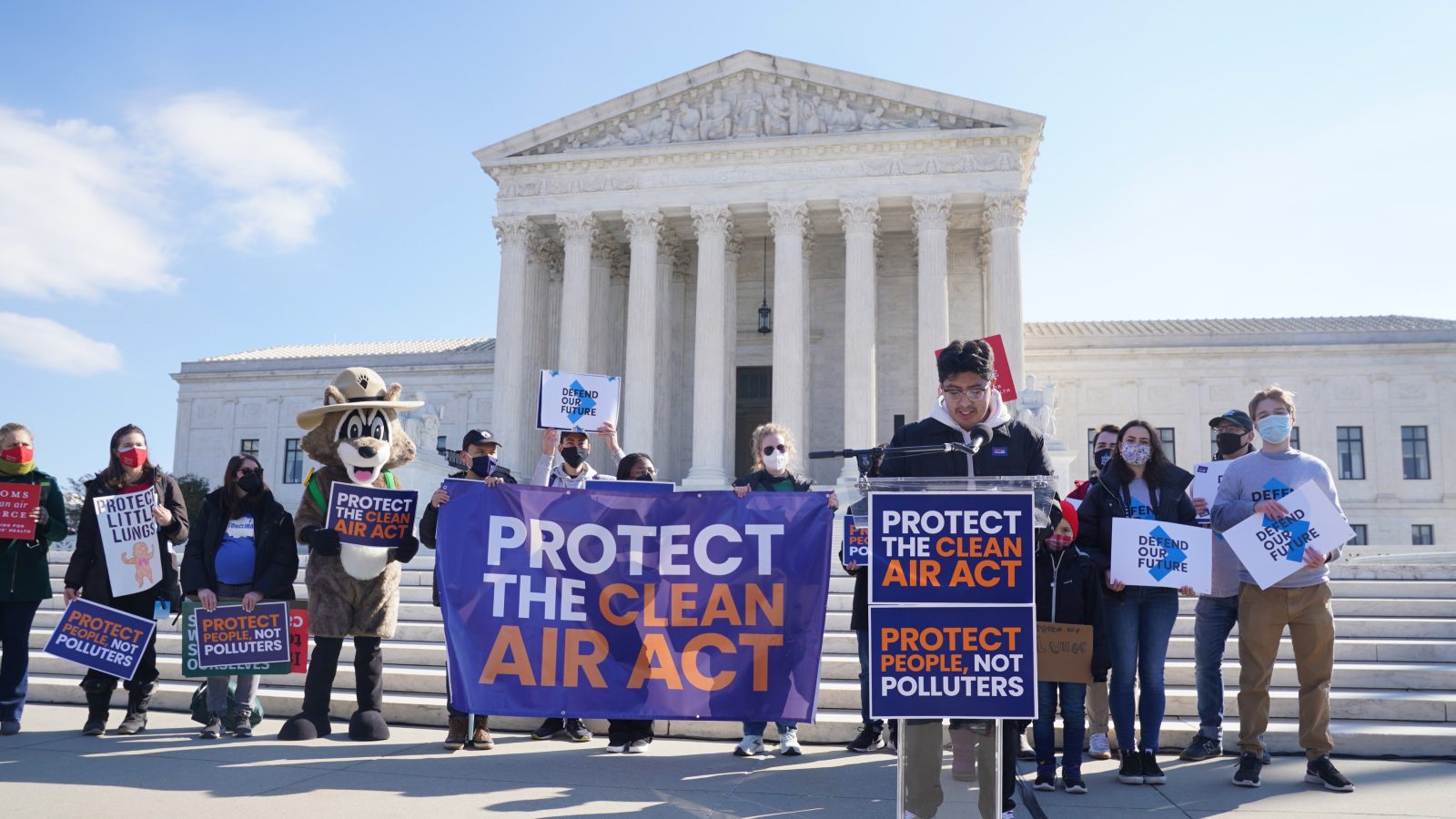
On June 30th, the US Supreme Court, in a 6-3 vote, issued a ruling on the case West Virginia v. EPA, to limit the authority of the Environmental Protection Agency (EPA) to regulate greenhouse gas emissions released by power plants that burn fossil fuels. The major coal producing state, West Virginia, along with a group of Republican-led states, various coal companies, and coal-friendly industry groups challenged the EPA’s authority to impose blanket regulations across an entire industry, asking the Supreme Court to limit the EPA’s ability to regulate greenhouse gas emissions from existing power plants. The court’s six conservative justices were in the majority in the ruling, with the three liberal justices dissenting.
The ruling does not eliminate the EPA’s authority to regulate greenhouse gas emissions, but it does considerably limit the scope by which the agency can do that. During the Obama administration, the EPA was given authority to reduce power plant carbon emissions through “a holistic or system-wide approach to reducing greenhouse gas emissions under the Clean Power Plan.” This plan allowed existing power plants to use so-called “outside-the-fence” measures, such as shifting some operations from coal to natural gas and renewable energy sources, or offsetting carbon emissions at one plant by reducing them at another to meet overall compliance standards. The plan, however, was revoked by the Trump Administration. Additionally, the Obama administration set state-by-state carbon limits and encouraged states to rely less on coal and more on alternative energy sources.
This program was ultimately blocked by the courts, but regardless, still met its targets 11 years ahead of schedule because coal became too expensive compared to other energy sources. The issue debated by the court in June’s West Virginia v. EPA case focused on how the EPA is allowed to regulate coal-fired power plants, which in this country are the single largest source of carbon emissions contributing to climate change.
The court’s decision allows the EPA to continue to regulate greenhouse gasses under the Clean Air Act, an authority that was confirmed by the Supreme Court in a 2007 decision, Massachusetts v. EPA, but with this new ruling, now asserts that such broad regulations that target not just a single power plant and the technology it uses, but rather a whole system of power plants, “comprised too significant an intervention in the U.S. economy to be justified under the authority of the EPA alone, without specific guidance from Congress.”
With this ruling, the Supreme Court severely limits the EPA’s ability to initiate any systemic approach to combating climate change. The majority opinion in this ruling based its argument on what the court has called “the major questions doctrine.” The court said that “neither the EPA nor any other agency may adopt rules that are transformational to the economy–unless Congress has specifically authorized such a rule to address a specific problem, like climate change.” In delivering the ruling, Chief Justice John Roberts pronounced that “The agency instead must point to ‘clear congressional authorization’ for the power it claims.”
Policy Analysis
Harvard law professor Richard Lazarus, an expert on environmental law, says, “That’s a very big deal because they’re not going to get it from Congress because Congress is essentially dysfunctional. This could not have come at a worse time … the consequences of climate change are increasingly dire and we’re running out of time to address it.” While this ruling handicaps the EPA’s ability to reduce carbon emissions fast enough to meet the Biden Administration’s 2030 greenhouse gas emissions goals, the agency could still potentially require coal- and gas-fueled energy producers to use carbon capture and storage processes when generating electricity, as an additional means for limiting emissions.
There are other federal actions that can be taken to reduce greenhouse gas emissions as well, such as revising fuel efficiency standards, appliance standards and tax credits to reduce emissions. State policies and corporate commitments to emissions reductions are also still in place. This Supreme Court decision, however, sets the stage for limitations on other federal agencies and their power to impose regulations as well and raises new legal questions about any big decisions made by federal agencies.
According to Case Western Reserve professor, Jonathan Adler, “The Court is definitely sending a signal to regulatory agencies more broadly that they only have the power that Congress delegated to them, and that agencies need to think twice before they try to pour new wine out of old bottles.” As Adler explains, an agency “can’t simply retrofit an old statute to create new tools or new mechanisms” to address a problem, even when that problem is within the agency’s jurisdiction. For instance, a new interim rule adopted by the Federal Energy Regulatory Commission “aimed at treating greenhouse gas emissions and their contribution to climate change the same as all other environmental impacts [the Commission] considers” may be threatened by this new ruling.
Professor Lazarus believes the ruling will have an immediate impact on the United States’ ability to fight climate change. Lazarus told NPR in an interview, “Remember when Joe Biden was elected, he said we’re going to use a whole big government approach to climate change, not just EPA regulation. Well, that whole government approach may now find itself under a cloud of this court’s opinion.” This ruling indicates that our current Supreme Court, and its conservative majority, will be a major obstacle to federal agencies seeking to implement broad policies of national importance.
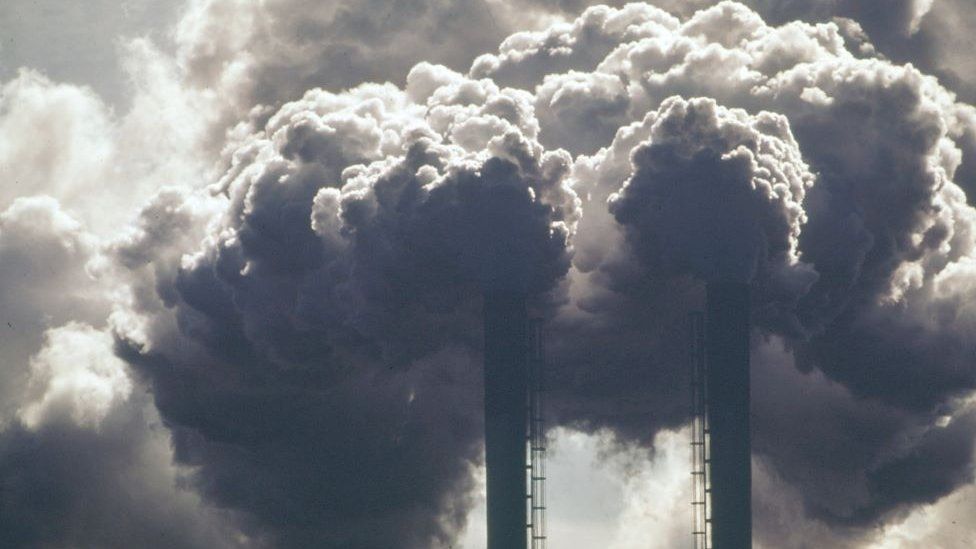
Photo taken from: Getty Images / BBC
(click or tap to enlargen)
In her dissenting opinion, Justice Elena Kagan, explained that the Court is making up new rules that contradict nearly a century of regulatory law. Kagan points to the text of the Clean Air Act, which “clearly anticipates that the EPA will have to deal with new problems and uses broad language to allow that.” The conservative Court majority, Kagan says, “does not have a clue about how to address climate change…yet it appoints itself, instead of congress or the expert agency…the decision-maker on climate policy. I cannot think of many things more frightening.”
Contrary to Justice Kagan’s opinion, Chief Justice Roberts wrote that while forcing a nationwide energy transition by capping carbon emissions might be sensible, “it is not plausible that Congress gave the EPA the authority to adopt on its own such a regulatory scheme.” However, Justice Kagan argues that Congress did give the EPA such authority. Kagan writes, “The limits the (Court’s) majority now puts on EPA’s authority fly in the face of the statute Congress wrote,” adding that the court “deprives the EPA of the power needed – and the power granted – to curb the emission of greenhouse gasses.” Further, Justice Kagan notes that the Court is attempting to derail President Biden’s climate agenda before his administration has even issued its rule.
According to West Virginia Attorney General, Patrick Morrisey, the ruling is a “huge victory against federal overreach and the excesses of the administrative state.” But as Justice Kagan emphatically asserts, the Court’s goal with this ruling is painfully clear: “Prevent agencies from doing important work, even though that is what Congress directed.”

Photo taken from: OMFIF
President Biden called the ruling “another devastating decision that aims to take our country backwards.” In a statement Biden said, “While this decision risks damaging our nation’s ability to keep our air clean and combat climate change, I will not relent in using my lawful authorities to protect public health and tackle the climate crisis.” The President said he has “directed his legal team to work with the Justice Department and affected agencies to review the ruling and find ways under federal law to protect against pollution including emissions that cause climate change.”
On the bright side, Amanda Shafer Berman with the law firm Crowell & Moring, and a former senior environmental attorney in Obama’s Justice Department, said the ruling was “about the best that EPA could have hoped for given the current composition of the court.” Berman said the EPA can now proceed to issue a new rule that regulates power plant carbon dioxide emissions “albeit in a more limited way than envisioned” under Obama’s plan.
The Supreme Court’s decision came on the final day of rulings for the Court’s current nine-month term, and unfortunately, seems to reject any holistic regulatory approach to dealing with climate change. However, the Biden administration is still committed to making the U.S. power sector decarbonized by 2035. Despite these obstacles imposed by the Supreme Court, the President and his administration understand that the United States, behind only China in greenhouse gas emissions, is a pivotal player in efforts to combat climate change on a global basis, and swift, bold action is essential to avoiding the most catastrophic impacts.
Even if Republican-led states and a conservative Supreme Court refuse to do what is necessary, Democratic-led states and major power companies including Consolidated Edison Inc (ED.N), Exelon Corp (EXC.O), PG&E Corp (PCG.N), and the Edison Electric Institute, an investor-owned utility trade group, have sided with the Biden administration’s position, acknowledging the need for a swift transition of the United States’ energy sector away from fossil fuels.
Engagement Resources
Click or tap on resource URL to visit links where available

The Nicholas Institute for Environmental Policy Solutions (duke.edu) – Meeting the energy needs of a growing population, while protecting the air and environment surrounding us, is the chief focus of the Climate and Energy Program at the Nicholas Institute for Environmental Policy Solutions.
By utilizing the interdisciplinary resources available at Duke University, the Nicholas Institute’s Climate and Energy Program is assessing how policies can work together and weighing their tradeoffs through a number of projects at the state, federal, and international level.

The Natural Resources Defense Council (NRDC) – To learn more about the Clean Air Act, the background to this Supreme Court decision, the implications of the ruling, and how to take action, check out the NRDC and the important work being done to fight for climate-smart policy.
Writer’s Resources

Hurley, L., & Volcovici, V. (2022, July 1). U.S. Supreme Court limits federal power to curb carbon emissions. Reuters. Retrieved August 1, 2022, from https://www.reuters.com/legal/government/us-supreme-court-limits-federal-power-curb-carbon-emissions-2022-06-30/
Khanna, S. (2022, July 1). Supreme Court ruling limits EPA’s authority to restrict greenhouse gases from energy production. Duke Today. Retrieved August 1, 2022, from https://today.duke.edu/2022/07/supreme-court-ruling-limits-epa%E2%80%99s-authority-restrict-greenhouse-gases-energy-production

Totenberg, N. (2022, June 30). Supreme Court restricts the EPA’s authority to mandate carbon emissions reductions. NPR. Retrieved August 1, 2022, from https://www.npr.org/2022/06/30/1103595898/supreme-court-epa-climate-change

Profiles of U.S. Anti-Abortion Groups
Profiles of U.S. Anti-Abortion Groups
Health and Gender Policy Brief #139 | By: Geoffrey Small | August 1, 2022
Header photo taken from: Center for American Progress
Follow us on our social media platforms above
Browse more health and gender policy briefs from the top dashboard

Photo taken from: Adriana Zehbrauskas / The New York Times
Policy Summary
[SSB theme=”Official” align=”center” counter=”true” ]
With Roe v. Wade overturned, a deluge of anti-abortion trigger laws have gone into effect across the country. States like Louisiana, Texas and Missouri have created some of the strictest laws and legislative proposals in the United States.
Recent proposals include criminal and civil prosecutions for providers, people who aid in out-of-state abortions, and potentially the patients who receive them.The overwhelming restrictions and bans that were put in place after the Supreme Court decision wouldn’t have been possible without coordination from anti-abortion groups aiding state legislators.
The Thomas More Society, National Right to Life Committee, and Abolish Abortion are some of the most influential organizations that are coordinating with Republican-led states to create new laws and help enforce them. In order to understand the long-term planning and legal coordination that has taken place in anti-abortion states, a profile of these groups can highlight the efforts being made to oppress reproductive rights.
Policy Analysis
The Thomas More Society
The Thomas More Society was founded in 1997 by corporate attorney Tom Brejcha after representing Joe Scheidler, an anti-abortion activist that was a defendant in the Supreme Court Case NOW (National Organization for Women v. Scheidler. The court case declared that a network of anti-abortion activists could face RICO (Racketeering Influenced and Corrupt Organizations Act) charges, commonly used in organized crime prosecutions.
Today the organization is coordinating with Republican state legislatures to propose laws that would allow private citizens to sue individuals who aid patients living in anti-abortion states with receiving an out-of-state procedure.
Peter Breen, the Senior Legal Counsel and Vice President stated in a Washington Post article “I see civil enforcement as important for the entire abortion law because of this issue of public officials not enforcing laws they don’t like.”

Photo taken from: DailyKos.com
(click or tap to enlargen)
The National Right to Life Committee
The NRLC was founded in 1968 and boasts 3,000 local chapters in all 50 states. NRLC claims to be the oldest and largest anti-abortion organization, with a goal of aiding in the development of new legislation.
After the Supreme Court decision to overturn Roe V. Wade, the organization released a model law that allows state officials, local officials, the father, or other family members to sue abortion providers.
Additionally, as a clear response to NOW v. Scheidler, the law states abortion providers would also be subject to RICO laws.

Photo taken from: texasobserver.org
Abolish Abortion
Abolish Abortion was founded by Bradley Pierce, a Constitutional Attorney who filed a brief during the Dobbs v. Jackson Women’s Health Organization, the Supreme Court case that overturned Roe v. Wade. Not only was he influential in helping pass abortion restrictions in Texas, but he is currently working with Louisiana State Representatives to pass a law that would allow prosecutors to criminally charge patients who receive an abortion as a homicide . This proposal forced many anti-abortion groups to sign an open letter, led by the NRLC, to oppose the criminalization of patients. However, Pierce was opposed to this stance stating to The Washington Post that this Louisiana bill “would have done exactly what [the signees] say they believe. That is, treat a person before birth as being worthy of protection.”
Despite the internal differences in these organizations’ positions on the severity of anti-abortion legislation, they remain united in their victory in overturning Roe v. Wade. All of these organizations are working to diminish generations of reproductive rights that women in the United States were afforded. Planned Parenthood and the ACLU are the two major organizations that are fighting back against the new laws and proposals that these influential anti-abortion organizations are developing. Therefore, it is crucial to donate to these organizations, in order to help protect patients from the potential to be criminally prosecuted for making decisions about their reproductive health.
Engagement Resources
Click or tap on resource URL to visit links where available



Round 10 in the Fight to Save the Planet – and Fatigue Has Set-in
Round 10 in the Fight to Save the Planet – and Fatigue Has Set-in
US Renew Op-Ed | By: Todd J Broadman | August 1, 2022
Header photo taken from: AP Photo / Noah Berger
Follow us on our social media platforms above
Browse more U.S. Resist News Op Eds from the top dashboard

Photo taken from: Caitlin O’Hara / The New York Times
Policy Summary
[SSB theme=”Official” align=”center” counter=”true” ]
Global warming as our single most important political issue has begun to wane, taking a backseat to economic concerns. A scant 1 percent of those recently polled by the New York Times / Siena College perceive climate change as the most important U.S. issue. That low ranking for climate as an issue held true for those under 30 as well. As this is a long-term issue and one that requires long-term determination, the apparent widespread apathy is cause for concern.
While we know that party affiliation plays a role in the perceived importance of this topic, we also know that if there is no direct experience of the impact of climate change on an individual’s life, motivation to act tends to waiver and often declines. In each succeeding year since 2010 there have been increasing extreme weather events that do impact lives. 2021 was the fourth-hottest in United States history. And the media is covering this summer’s wildfires and droughts, providing updates on Europe’s plight. Americans tend to feel more of a relationship with Europeans than they do with other groups.
A recent comment reflects broader change in voter sentiment: “Climate change is always going to be a problem. That’s just a given. Honestly, there’s only so much our leaders of the country can do.” Inflation, and its effect on housing and food, have now taken center stage along with the overturning of Roe vs. Wade. Over and above this, “People are exhausted by the pandemic, they’re terribly disillusioned by the government,” observed Anusha Narayanan, climate campaign director for Greenpeace.
Those whose passions were ignited by Greta Thunberg and Al Gore before her, have witnessed grand proclamations to address climate change only to be let down by lack of action on the ground. Last week, we saw an ambitious $2 trillion dollar program to reduce carbon emissions all but expire in the Senate due to concerns about inflation and tax hikes. A paltry $2.5 billion to assist with an infrastructure of electric vehicle charging stations was approved. This will do little to meet bold pledges to cut CO2 emissions.
Meanwhile, the latest IPCC projections put the earth on track for a temperature rise of 3°C (5.4°F) rise by the year 2100. UN secretary-general António Guterres described this latest report as “an atlas of human suffering and a damning indictment of failed climate leadership.” In the face of being directly in line with devastating climate impacts, citizens are reacting to what they perceive as a failure of leadership and turning away. It remains to be seen if a unified political movement can re-emerge, even if large numbers in the U.S. become displaced climate refugees.
Policy Analysis
The political paralysis characteristic of the U.S. legislature is just one of several significant developments that have led to a malaise and growing disappointment over repeated missed opportunities to take action to save a threatened planet. There is also the ever-present blame-game. China, the world’s largest emitter would not commit to any concrete actions to reduce their carbon footprint at COP26. 75% of India’s electricity is generated by burning coal and their position is to increase its usage going forward. With this as backdrop, the U.S. justifies its finger-pointing and rationalizes inaction.
The world’s poor, largely in the southern hemisphere point their fingers at the relatively wealthy north who they claim are the cause of their looming climate plight. More than half of Africa’s population will likely be displaced due to drought and resulting famine conditions now underway. At COP27 – to take place in Egypt in November – financing from the rich to the poorer countries in the form of a “loss and damage facility” will be on the agenda. We are already in the damage mitigation phase, and here we can expect little in the way of actual funding and coordination on the ground.
Consistent with the paralysis and finger-pointing is the long string of broken promises. The G7 broke a promise by making the decision to invest in the liquefied natural gas (LNG) industry. Germany issued this as rationale: “[Our investment is] a necessary response to Russia’s war on Ukraine and the related impacts on global fossil fuel supplies.” The U.S. for its part would seem more transparent about its lack of intention to keep its promises. There will be no “Build Back Better.”

Photo taken from: Down to Earth (.org)
(click or tap to enlargen)
The media itself, a corporate oligopoly itself, has played a key role in downplaying the need for political action while intensifying the concerns of buck-passing and finger-pointing. The media has determined their own economic model is not enhanced by in-depth reporting and holding politicians to promises, even when it involves the fate the living planet. Extractive industries and the banks that fund them are given a relatively free hand to continue their pursuit of profits without consequences. The media again remains silent.
In a sense, at least in the U.S., the waning interest in climate change can be seen as a victory by polluting industries and their well-managed and sumptuously funded information campaigns. Charles Koch who heads Koch Industries, the largest private company in the U.S., best exemplifies the effectiveness of “dark money.”
The right-wing activist network that he and partners financed over many years has paid dividends in the appointment of Supreme Court justices and their resulting decisions. One observer noted that the West Virginia v. EPA decision “represents the culmination of years of attacks by Koch-funded groups on these rules.” The power of predatory capitalism overrides environmental concerns.
There has been a tangible capitulation and surrender to these forces. Those who are willing to make sacrifices for a renewed planet are becoming more dejected. All the reasons I have described for this foreboding trend are contained within a statement given by Chuka Umunna, head of Environmental, Social and Governance for JP Morgan, when asked about their continued financing of the petroleum industry.
“We reflect society. Society has not come off oil and gas. We all want to get to the promised land where we do substantially reduce our reliance on oil and gas. But we do not, unfortunately, have renewables at scale right now to replace oil and gas… And that’s not JP Morgan’s fault. That is society’s challenge.”
The values menu has not changed: profits before people and planet. And we are witnessing the stunning success of that values mission in the demoralized apathy of the citizenry.

The Banning Surveillance Advertising Act of 2022
The Banning Surveillance Advertising Act of 2022
Technology Policy Brief #63 | By: Mindy Spatt | July 29, 2022
Header photo taken from: Advertise Mint
Follow us on our social media platforms above
Browse more technology policy briefs from the top dashboard

– Erica Darragh, campaigner, Fight for the Future
Photo taken from: DedMityay / Shutterstock
Policy Summary
[SSB theme=”Official” align=”center” counter=”true” ]
Internet giants like Google and Facebook are selling our personal data or selling access to the data they collect. The resulting barrage of advertisements are not just annoying, they violate our privacy, perpetuate discrimination and spread misinformation.
But with data sales generating billions for powerful companies that have consistently evaded regulation, this low-key effort is by Sen. Cory Booker and two democratic Congresswomen to stop online tracking is unlikely to be successful.
Policy Analysis
The targeted ads- here being recast as “surveillance ads” -that are ubiquitous on Facebook, Google and other websites are increasingly zeroing in on us, not just on our shopping habits but on our health, finances, job opportunities and more.
The Banning Surveillance Advertising Act of 2022 (H.R. 6416, S. 3520) wouldn’t stop companies from selling ads and some location data but would ban the retention of personal data and the targeting of ads based on personal characteristics. Contextual advertising, ads related to whatever content the user is browsing, would still be allowed.
The push for this bill along with many other attempts to rein in tech companies comes from advocacy organization Accountable Tech. Their webpage lays out the case for the ban thoroughly and persuasively, with the help of a coalition supporting the effort that includes the Consumer Federation, Public Citizen, Media Justice and many others.
Among the harms cited:
- Spreading misinformation- as we have seen regarding election fraud and COVID cures, for example.
- Promoting discrimination by targeting based on race and income, which can be gleaned from our Internet behavior.
- Aiding and abetting violent extremists as occurred on Jan. 6 at the US Capitol.
- Sale and release of very personal information regarding our health, finances and families.

Jeff Chester, executive director, Center for Digital Democracy.
Photo taken from: The Intercept
(click or tap to enlargen)
- Potential release to law enforcement, now including the potential release of data related on abortion to authorities in states with abortion bans.
- Targeting children- here the coalition cites an investigation by the Guardian and the Danish Broadcasting Corporation that found that “740,000 children under the age of 18 are flagged [by Facebook] as being interested in gambling. Some 940,000 minors are flagged as being interested in alcoholic beverages.”
One of the act’s authors, Jan Schakowsky (D-IL), Chair of the Subcommittee on Consumer Protection and Commerce of the House Committee on Energy and Commerce, said “Surveillance advertising is at the heart of every exploitative online business model that exacerbates manipulation, discrimination, misinformation, extremism, and fundamentally violates people’s privacy in ways they would never choose if given a true choice.”
The Banning Surveillance Advertising Act will put a stop to this repulsive practice and therefore protect consumers by removing the financial incentive for companies to exploit consumers’ personal information….”
The tech and advertising industries predictably oppose the bill, but don’t appear to be overly concerned. It was introduced on January 18 of this year and there has been no action on it since then, nor does accountabletech.org show any advocacy or press coverage since that date.
Most commentators agree the legislation doesn’t have a snowball’s chance in hell of passing, and is at best a message to big tech that Congress is watching and concerned.
Engagement Resources
Click or tap on resource URL to visit links where available

DuckDuckGo is a browser that doesn’t use surveillance advertising and a member of Accountable Tech. Learn more here: https://spreadprivacy.com/why-use-duckduckgo-instead-of-google/

According to Influencewatch.org , Accountable Tech is “a left-of-center nonprofit that advocates for expanded government regulation of social media platforms, [and] conducts pressure campaigns calling for online platforms to censor conservative content creators …..created in 2020 as a fiscally sponsored project of the North Fund, a “dark money” 501(c)(4) nonprofit that operates as a wing of the Arabella Advisors network.”

Join the campaign at https://www.bansurveillanceadvertising.com

Surveillance Giants: How the Business Model of Google and Facebook Threatens Human Rights by Amnesty International https://www.amnesty.org/en/documents/pol30/1404/2019/en/

How Facebook Tracks You by Consumer Reports https://www.consumerreports.org/privacy/how-facebook-tracks-you-even-when-youre-not-on-facebook-a7977954071/

How Donald Trump Changed the Government
How Donald Trump Changed the Government
Social Justice
Policy Brief #38 | By: Maureen Darby-Serson | July 29, 2022
Header photo taken by: The White House
Follow us on our social media platforms above
Browse more social justice policy briefs from the top dashboard

Trump supporters subsequently gathered at state capitals across the country to protest the ratification of President-elect Joe Biden’s Electoral College victory over President Trump in the 2020 election on that fateful and historic day
Photo taken from: Matthew Hatcher / Getty Images
Policy Summary
[SSB theme=”Official” align=”center” counter=”true” ]
A President can change the course of the United States in many ways. Donald Trump was no different. But the ways that Trump changed the government are haunting us and will follow us for decades to come.
While there are most likely hundreds of things Trump did that will affect us for years, here are a few that come to mind – naming three Supreme Court Justices, appointing hundreds of federal court judges, changing the way we do the census, making lists of fake electors, and the list goes on.
What does this mean for our country and what can we do about it now?
Policy Analysis
In 2016, President Obama was not given the opportunity to name a Supreme Court Justice, mainly because the Republicans held up his pick of Merrick Garland. With the retirement of another justice and the death of Ruth Bader Ginsberg, Donald Trump was able to put three Justices on the bench.
The first being Neal Gorsuch, then the drama filled confirmation hearing of Brett Kavanaugh and the unprecedently speedy confirmation hearing of Amy Coney Barrett. The first president to be able to put that many justices on the court in one term. These justices will likely serve on the court for decades.
In addition, Trump was able to appoint over 200 federal judges to various courts throughout the country. These appointees switched the balance of the courts from democrat to republican. These judges have lifetime appointments and will serve on benches for decades, similar to Supreme Court judges.
While Donald Trump was in office, the 2020 census took place. Emails showed that the Trump administration stopped the census early and did not want to include those that were included in other census counts, such as undocumented immigrants.

Photo taken from: The Guardian, Doug Mills / AFP / Getty Images
(click or tap to enlargen)
Why do this?
Because we use the census to draw the maps for political districts, which help determine which party gets more seats in Congress. Trump wanted the census to work in the Republicans favor. Redistricting to favor republicans will have a lasting effect on our country.
To help perpetuate his own presidency, Donald Trump and his administration created a list of fake electors to try to get Vice President Mike Pence to not certify the election for Joe Biden. These people would claim that they were from the Electoral College and say that they were voting for Donald Trump and not Joe Biden. This would give Donald Trump the victory. Emails from the administration have shown that these lists of electors were faked.
So, what can you do? Vote. Vote in your local elections. Vote in every election you can. Use your voice to elect candidates committee to maintaining and strengthening our democracy.
Engagement Resources
Click or tap on resource URL to visit links where available

https://www.supremecourt.gov/about/biographies.aspx

How Trump compares with other recent presidents in appointing federal judges

Schools, Universities Now Leading Targets of Ransomware Attacks
Schools, Universities Now Leading Targets of Ransomware Attacks
Education Policy Brief #54 | By: Lynn Waldsmith | July 25, 2022
Header photo taken from: Shutterstock
Follow us on our social media platforms above
Browse more education policy briefs from the top dashboard

Photo taken from: Dale Crosby Close / Politico
Policy Summary
[SSB theme=”Official” align=”center” counter=”true” ]
A new viral threat known as ransomware is attacking schools and universities throughout the country. According to security company Sophos, 64 percent of higher education institutions and 56 percent of K-12 schools were struck by ransomware last year.
According to the company’s State of Ransomware in Education 2022 report, that means an average of 60 percent across the education sector overall, up from 44 percent in 2020.
Schools, whose administrators, teachers and students are already weary from fighting COVID-19, are now the most popular targets of ransomware attacks, according to the FBI. While the average ransom is about $50,000, the biggest demands have topped $1.4 million. And the total cost of cyberattacks targeting the education sector is difficult to estimate because many schools don’t report attacks. Many schools only publicly acknowledge a breach when their systems are disrupted or student data is lost.
Ransomware is a type of malicious software that infects computer servers, desktops, laptops, tablets and smartphones, often spreading across a campus from one device to another. Once it infects a system, the virus quietly encrypts every data file it finds, then displays a ransom note to the user. The extortion message usually demands an online payment in some untraceable cryptocurrency like Bitcoin in return for the decryption keys needed to restore the users’ locked files.
The demand often includes a series of deadlines for payment: each missed deadline leads to a higher ransom demand and perhaps some destroyed files. If the victim doesn’t pay up, the attacker discards the decryption keys, making the data permanently inaccessible.
Policy Analysis
Ransomware attacks can be extremely costly, whether ransomware is paid or not. These cyberattacks can lock down key systems, shut down schools, and prevent teachers from accessing lesson plans and student data. The costs to restore computer systems, recover data, and shore up systems to prevent future attacks can be astronomical.
IT professionals in higher education also report the slowest recovery times from ransomware attacks. Colleges and universities, on average, take twice as long as organizations in other industries to recover — 40 percent took over a month, 31 percent took one to three months and 9 percent recovered from a ransomware attack in a three-to-six-month period, according to Sophos.
Lincoln College is an example of a worst-case scenario. After being attacked with ransomware in December of 2021, the 157-year-old historically black Lincoln College announced in May that it was shutting down permanently. While the college was already coping with declining enrollment, the impact of the attack and paying the hackers a ransom fee struck the final blows.
The education sector itself is also to blame for being such a tempting target for cybercriminals.
First, students often engage in risky online behaviors that expose them to ransomware attacks, such as treating email attachments without appropriate wariness, and visiting unsecure websites.

Who’s next?
Photo taken from: Governoring.com / Mark Gordon / Lincoln College
(click or tap to enlargen)
Second, the highly open and interconnected nature of campuses and “bring your own device” educational cultures open up multiple points of malware infiltration and make it difficult to secure the entire network.
Third, a lack of cyber policies for using a network and making sure they’re adhered to are contributing factors.
Perhaps one of the biggest problems educational institutions are facing is a lack of money and resources. This makes it difficult to fund IT security investments; the education sector generally lags well behind industries like finance, retail, healthcare, energy and government in its ability to protect its tech infrastructure.
Schools and universities are encouraged to educate students, faculty and staff on the techniques that ransomware distributors use, teaching them to be wary of the email links they click on, websites they visit, and attachments they open. IT departments need to segment networks to make it harder for ransomware to spread from system to system, keep anti-malware software up-to-date, and fix known vulnerabilities in operating systems and applications as quickly as possible.
But paying the ransom is never a good idea. According to law enforcement and security experts, over half of ransomware victims who pay do not successfully recover their files. Routine, frequent backup remains the most foolproof defense against ransomware: if your systems are compromised, you can simply identify the onset of the attack and restore your systems from clean backups created before the attack.
Engagement Resources
Click or tap on resource URL to visit links where available

“The State of Ransomware in Education 2022” (key findings):
https://news.sophos.com/en-us/2022/07/12/the-state-of-ransomware-in-education-2022/
“The State of Ransomware in Education 2022” (full report):

Cyber Threats to K-12 Remote Learning Fact Sheet:
StopRansomware.gov:
https://www.cisa.gov/stopransomware

Free ransomware decryption tools:

The New Gun Law Also Helps Address the U.S. Mental Health Crisis
The New Gun Law Also Helps Address the U.S. Mental Health Crisis
Social Justice Policy Brief #37 | By: Geoffrey Small | July 25, 2022
Header photo taken from: AAMC
Follow us on our social media platforms above
Browse more social justice policy briefs from the top dashboard
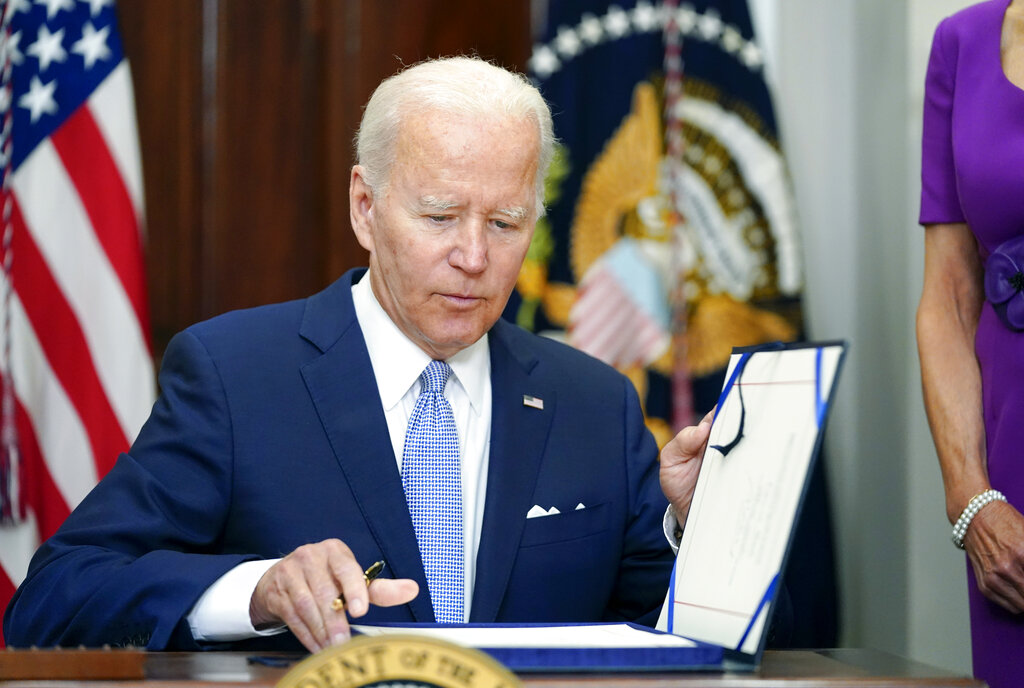
Photo taken from: Time, The Associated Press
Policy Summary
[SSB theme=”Official” align=”center” counter=”true” ]
On June 25th, 2022, President Joe Biden signed The Bipartisan Safer Communities Act. The Congressional Bill is a measure touted to address gun safety. However, this bipartisan legislation is the culmination of almost a decade of mental health advocacy spearheaded by Republican Senator Roy Blunt and Democratic Senator Debbie Stabenow. The most effective measure of this bill may be the record $8 billion in funding allocated to school programs and mental health programs.
The mental health crisis has steadily increased since the national closing of psychiatric care hospitals in the fifties and sixties. It may become exponentially worse as people are grappling with obstacles they’ve experienced during the COVID-19 pandemic. Exploring the data related to this growing crisis can help clarify why targeted funding was developed to bolster federally certified health clinics, which serves as a comprehensive and innovative model for mental health and substance abuse.
Policy Analysis
The National Alliance of Mental Illness provides data collected in 2020 on the state of mental health and substance abuse in the United States. NAMI reported that 1 in 5 adults have experienced mental illness annually.
Also, 32.1% of adults with a mental illness disorder experienced substance abuse issues. Mental Health America reports that suicidal ideation among adults has increased every year since 2011. More than half of U.S. adults who are experiencing mental illnesses do not receive treatment.
This lack of treatment is also true for youths with major depression, as more than 60% have not received the help they need. 15.08% of youths experienced a major episode of depression this past year, which is a 1.24% increase from the previous year. Most organizations have not yet provided comprehensive data on the COVID-19 pandemic’s impact on mental health. However, the World Health Organization reported a recent increase of 25% in the prevalence of anxiety and depression globally.
Based on this sobering data, targeted legislation could not come at a better time. The Substance Abuse and Mental Health Services Administration graph, illustrated below, corroborates Mental Health America’s assessment that all demographics were already experiencing a significant increase in major depressive episodes before the pandemic, and some of the biggest increases involves youth groups.
One solution the new gun law provides is the expansion of Certified Behavioral Community Health Clinics.
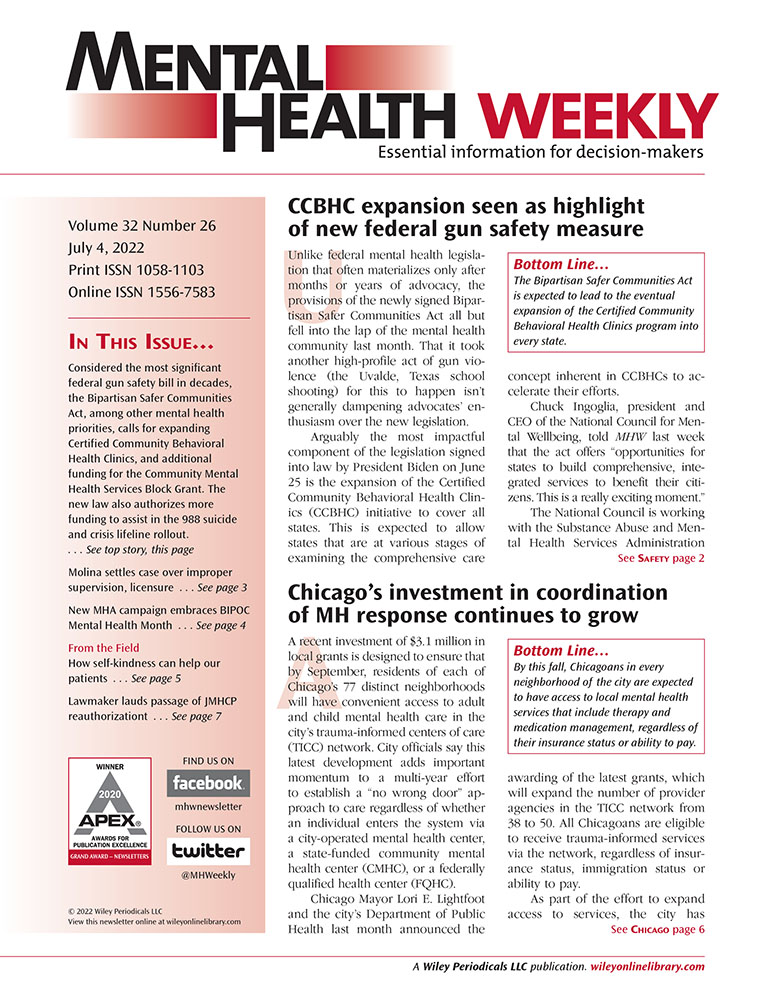
Photo taken from: Wiley Online Library
(click or tap to enlargen)
These federally funded clinics are designed to treat anyone who requests help for mental health and substance abuse issues, regardless of their ability to pay. Senator Stabenow first introduced legislation in 2014, which led to a trial development of over 300 certified clinics in forty states.
A 2021 Government Accountability Office report indicated that these clinics saved the State of New York more than $1 million in decreased hospitalizations and an $100,000 decrease in emergency room visits.
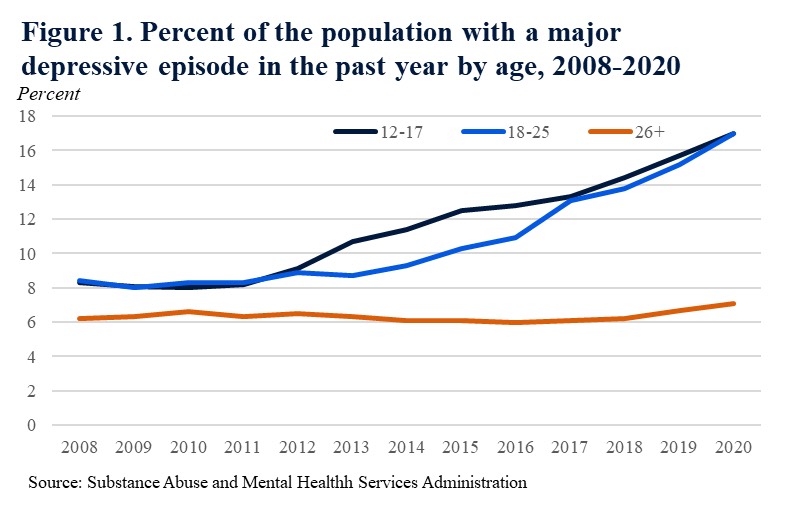
Photo taken from: Whitehouse.gov
Supporters agree these clinics will reduce the overall burden on state budgets. It may also help improve accessibility for youths in a lower socioeconomic status. A 2017 University of Maryland School of Public Health study reported that children of lower income families have higher rates of mental health issues and needs.
The study recommended better integrated care amongst physicians and mental health teams with federal or local policies that support a “system transformation.” Therefore, this law can provide the transformation needed for youths in lower income families. U.S. Congress and the President approved over $2 billion in increased aid to support the development of more certified clinics in all fifty states, as well as funding for better integrated school mental health programs.
The new bipartisan gun law targeting the pervasive mental health and substance abuse issues in the U.S. wouldn’t have been possible without the data and advocacy from organizations like The National Alliance of Mental Illness and Mental Health America. It is important to donate to these organizations, because they can effectively measure the pandemic’s impact on these growing issues. The better understanding Congress has to fight the mental health and substance abuse crisis can lead to a transformative system that the U.S. desperately needs.
Engagement Resources
Click or tap on resource URL to visit links where available