

JOBS POLICIES, ANALYSIS, AND RESOURCES
Latest Jobs Posts
The Ethical Dilemma of A.I. and Mental Health
Brief #158 – Health and Gender
By Geoffrey Small
The United States continues to fall short in providing basic healthcare necessities that other high-income nations provide globally. The proportionally low quality healthcare system in the U.S is compounded by a growing mental health crisis in a post-pandemic society, where demand for psychological help is higher than ever.
A Third of the Population Continue to Cook our Planet
Brief #153 – Environment Policy
By Todd J. Broadman
The methods that many humans apply to cooking their food are proving to have a substantial effect on our environment and health. About 2.4 billion people cook food using a “dirty” biomass method of cooking which uses wood, animal dung, and charcoal fire pits or kerosene stoves.
Facing the Dubious Paradigm of School Shooting Responses
Brief #61 – Education
By Steve Piazza
In response to a spate of shooting incidents in schools over the last several decades, state and local governments have attempted a number of ways to keep students safe.
Four Ways to Improve the United Nations
Brief #174 – Foreign Policy
By Inijah Quadri
The United Nations (UN) was established in 1945 with the aim of promoting international cooperation, peace, and security. Over the years the organization has evolved, taking on new roles and addressing new challenges.
However, the UN is not without its shortcomings, and there have been calls for reform and improvement. In this article, we will explore some of the ways in which the UN could be improved.
Will Regulation Stifle Crypto, And Do We Care?
Brief #80 – Technology Policy
By Mindy Splatt
Fans of crypto have enthusiastically told me it enables lower income people to invest and earn money. They think it is more democratic and less corrupt than the stock market. And they eschew consumer protections, believeing that in order for it to accomplish these wonders it must not be hampered by a governmental bureaucracy.
Will the Republicans Nominate Trump again? Examining Potential Indicators
Brief #64 – Elections & Politics
By Ian Milden
Donald Trump launched his third campaign for the Presidency in November. For several months, he had the field to himself. With Republican rivals launching campaigns to oppose him, this Brief will examine potential indicators that will come up over the next several months to help us determine Trump’s chances of winning the Republican nomination again.
State Bill To Test Limits of Election Fraud Claims In California
Brief #201 – Civil Rights
By Rodney A. Maggay
Last month in California Assemblymember Bill Essayli, a Republican from Riverside County, introduced AB 13 that seeks to make changes to existing California state election law.
Is The Premier League Getting Out of Control?
Brief #173 – Foreign Policy
By Reilly Fitzgerald
The UK government has been debating the idea of having more oversight in regards to the finances of Premier League clubs. Over the past few years, the world has seen unprecedented amounts of money on individual player transfers, team acquisitions by actors within foreign governments like the Saudi Arabian Public Investment Fund (PIF) among others, talks of teams entering into new leagues across Europe at the exclusion of other teams, and so much more.
Everyday Life in Ukraine in the Midst of a War
Brief #172 – Foreign Policy
By Yelena Korshunov
February 24th 2022 is now the day in world history when Russia started a bloody violent war against Ukraine. For another year Ukrainians have been suffering from Russian missiles, cruelty, and terrorist attacks on energy infrastructure. People are used now to constant power outages.


Why Are China / US Sanctions Such a Big Issue? (Part I – General Sanctions)
Why Are China / US Sanctions Such a Big Issue? (Part I – General Sanctions)
Foreign Policy Brief #153 | By: Inijah Quadri | October 22, 2022
Header photo taken from: Shutterstock.com
Follow us on our social media platforms above
Browse more foreign policy briefs from the top dashboard

Photo taken from: Mark Wilson / Getty Images
Policy Summary
[SSB theme=”Official” align=”center” counter=”true” ]
Trade sanctions on the US imposed by China, in the last several years, are a reflection of Beijing’s desire to respond to similar sanctions imposed by America. In particular Chinese sanctions are a reaction to the effects of the trade war that the United States exacerbated during Trump’s presidency. It is essential for businesses in the US and China to have a solid understanding of the China / US sanctions conflict and the compliance repercussions associated with it, given the growing influence that these restrictions have on the global financial landscape.
What Exactly Is the Sanctions Regime Against China?
In recent years, Washington’s sanctions against China have been focused on several industries, including telecommunications, semiconductors, data security, financial services, amongst others. There has been a flurry of new US limitations on Chinese exports, imports, FDI (foreign direct investment), and financial securities, which are radically altering the economic relationship between the United States and China. Due to increasing caution and mistrust on both sides of the Pacific, cross-border business travel between the United States and China is at a standstill.
Congress has supported this US offensive by appropriating more funds to sectors seen as crucial to sustaining U.S. competitive advantages in technology, manufacturing, and defense. For example, the U.S. Senate passed the U.S. Innovation and Competition Act that increases funding for semiconductor manufacturing, hastens the rollout of 5G telecommunications capabilities, and restructures the National Science Foundation with the goal of making the US more competitive in science.
Congressional support for American industries that compete with China is expected to persist beyond 2022, with far-reaching consequences for a wide range of industries. A recent example are American sanctions on the Chinese company Huawei. The US suspected that Huawei was using its operations to spy on American technology.
The government banned Huawei products in the US asked its allies to stop using Huawei equipment in their 5G mobile networks. The American government also used export prohibitions to deprive Huawei of essential American goods and technologies.
Recently the US also has blocked deals that would have put the dating app Grindr under Chinese control and US chipmaker Qualcomm under Singaporean control (for fear of Chinese influence); it’s pressured multiple Chinese companies to leave the New York Stock Exchange; and the Trump administration attempted to ban the Chinese owned WeChat and TikTok, the latter of which is still under investigation by an interagency national security panel.


Photos taken from: Str / Nikkei montage / Getty Images
What Has China’s Response Been?
The Chinese Ministry of Commerce (MOFCOM) said in 2019 that it would initiate its own foreign sanctions program. This started in 2021 with the Anti-Foreign Sanctions Law. Article 6 of this law makes provision for the Chinese government to seize and freeze movable property, real estate, and other types of property of listed individuals.
It also creates provisions to enable the government to forbid or restrict organizations or individuals in China from conducting transactions and engaging in any cooperation with listed foreign organizations or individuals. Finally, it also grants powers to remove listed persons from Chinese soil and prevent them from ever returning.
Other designations to counter foreign sanctions against China have been put in place including posting US organizations an Unreliable Entity List, as well as a new Data Security Law. These laws buttress the Anti-Foreign Sanctions Law.
Are the US/China Sanctions Working?
According to studies, sanctions can be viewed as a technique that alert parties to a problem without actually addressing it. Still, both Chinese and American governments use sanctions to show that they don’t like the policies of the other. However, many people think it’s a safe result because no one gets hurt or dies. So, what is the effect of these sanctions?
Even as the two countries have imposed sanctions on each other, they have nevertheless found alternative ways to produce their affected products. But there has been a cost: prices have increased. This is according to the International Monetary Fund. Sanctions have only served to sow seeds of distrust, and going down this line, the end result will most likely be devastating for both parties.
Engagement Resources
Click or tap on resource URL to visit links where available

IMF Blog (https://www.imf.org/en/Blogs/Articles/2019/05/23/blog-the-impact-of-us-china-trade-tensions)

International Trade Administration: (https://www.trade.gov/country-commercial-guides/china-import-tariffs)

Mercator Institute for China Studies (MERICS): (https://www.merics.org/de/kurzanalyse/chinas-anti-foreign-sanctions-law-warning-world)

The United States Innovation and Competition Act of 2021 (S.1260): (https://www.congress.gov/bill/117th-congress/senate-bill/1260)

A Candidate Code of Ethics
A Candidate Code of Ethics
U.S. RESIST NEWS OP ED | By: Ron Israel Abigail Hunt, Rod Maggay, Geoffrey Small,and Steve Piazza | October 28, 2022
Header photo taken from: Matt Dorfman

Photo taken from: The Washington Post
The US election system, at the core of our democracy is under attack. Many politicians still refuse to accept the results of the 2020 Presidential election; others refuse to go on record saying they will accept the result of mid-term races where they are candidates. Debates are at a minimum, and campaigns are rife with lies, false statements, and dark money.
In the face of this assault U.S. RESIST NEWS puts forward the following Candidate Code of Ethics intended to restore integrity and respect for the election process. We ask all candidates in the upcoming midterm elections and beyond to agree to adhere to the following Code.
Candidate Code of Ethics
1. Abide by the Results of the Election:
I pledge to honor the results of this election contest, even if I am the losing candidate.
2. Be Transparent Regarding Sources of (and Limits to) Campaign Finance:
I will make my donors and my donation sources a matter of public record; and will abide by any agreed upon campaign spending limits among myself and other candidate.
3. Disclose and Recuse Oneself from Involvement with All Actual and Potential Conflicts of Interest, including Investments:
I will disclose any existing and potential conflicts of interest that might unnecessarily bias my positions on campaign issues, and recuse myself from taking positions on issues where I might have a conflict of interest.
4. Refrain from Making False Claims About Your Background:
I will not lie about my past record or background.
5. Display Respect for Your Opponent:
I will not slander my opponent or make false statements about his or her actions or words.
6. Agree to a Moratorium on Speeches 5 Days Prior to the Election:
I agree to refrain from making campaign speeches 5 days prior to Election Day.

Photo taken from: Stand By Your Ad
7. Commit to Advertising that Supports the Issues in My Platform:
My campaign advertising will focus only on the issues I am supporting.
8. Participate in at Least 2 Debates:
I agree to participate in at least 2 debates with my opponent(s).
I agree to have a bi-partisan panel monitor the use of this Code by candidates for office and highlight any violations.

Increasing Reports of Voter Intimidation Incidents As Election Day Nears
Increasing Reports of Voter Intimidation Incidents As Election Day Nears
Civil Rights Policy Brief #196 | By: Rodney A. Maggay | October 23, 2022
Header photo taken from: Ben Torres / The Texas Tribune
Follow us on our social media platforms above
Browse more civil rights policy briefs from the top dashboard

Photo taken from: Alexia Faith
Policy Summary
[SSB theme=”Official” align=”center” counter=”true” ]
On October 17, 2022 in Mesa, Arizona a couple approached an outdoor voting drop box to deposit their ballots for the upcoming 2022 midterm elections. The couple was legally permitted to drop off their ballots early as Arizona’s early voting period had begun on October 12th. As the couple neared the outdoor drop box they were met by a group of people who were simply hanging around the ballot drop box. The group began to film and photograph the couple as they dropped their ballots into the box. The situation became hostile as the group accused the voter of being a “mule.”
The term “mule” is a reference to the 2022 film “2000 Mules” which claims that groups associated with the Democratic Party are paying people to illegally collect and submit voting ballots. The couple then retreated to their car. Members of the group followed the couple, took photographs of the couple’s license plate and continued to follow the couple in a separate car as the couple drove away. The couple subsequently filed a complaint with the Arizona Secretary of State’s Office. That complaint was referred to the United States Department of Justice and the Arizona Attorney General’s Office for investigation.
Under 18 U.S.C. § 594 it is “illegal to intimidate, threaten, coerce” or “attempt to intimidate, threaten or coerce, any other person for the purpose of interfering with the right of such other person to vote or to vote as he may choose.” Under 52 U.S.C. § 20511(1) it is a crime to “intimidate, threaten or coerce any person” for “registering to vote, or voting.” In addition to these federal statutes, nearly every state has a state statute prohibiting the intimidation of voters in order to prevent the voter from casting a ballot. LEARN MORE
Policy Analysis
With mere weeks before Election Day for the 2022 midterm elections, it is not just the integrity and security of elections that has become the focus nationwide but the safety of voters themselves.
The incident in Mesa, Arizona is not a random incident where a voter has been approached by groups of people questioning the couple’s right to vote. Also in Arizona in Maricopa and Yavapai counties there have been incidents reported where unauthorized groups have suddenly appeared to monitor ballot drop boxes in those counties. While it would be easy to simply label these incidents as unique to Arizona that has not been the case.
State election officials in Colorado, North Carolina and Nevada have also reported incidents of voter intimidation. And in California in Shasta County, voters have reported receiving suspicious phone calls where the caller has questioned the voter about their voter registration status. The callers did not identify as an election official from the county elections office.
While the incident in Arizona is disturbing because of the close physical proximity that the group had with the voting couple, intimidation and harassment is not limited to only approaching voters at ballot drop boxes or at voting booths. According to the ACLU, intimidation of voters can occur by spreading false information about voter and language requirements and displaying false and misleading signs in order to confuse a voter. This could falsely sow doubt in a voter’s mind that could deter them from voting or registering to vote at all. Other methods or techniques are brandishing weapons and wearing military style uniforms in order to create a hostile atmosphere.

Sheet taken from: Georgetown Law – Georgetown University
(click or tap to enlargen)
Being armed or portraying a military demeanor can be a huge deterrent to a voter especially when that is combined with an aggressive questioning of a voter about their qualifications to vote or their preferred language. The incident in California where voters have received phone calls at their homes demonstrates that this intimidation of voters is not restricted to areas surrounding a polling booth or a ballot drop box. Certain groups are now calling voters at their homes which is just as illegal as physically approaching a voter out on the street.
So with days to go, what recourse do voters have if they feel they are being approached or questioned inappropriately while trying to cast their ballot? First, the Institute for Constitutional Advocacy and Protection at Georgetown Law School has compiled a useful list of laws by states that ban armed militias and groups from state polling places.

Image taken from: Protect Democracy
The guide lists every state and compiles the laws that prohibit armed groups from approaching polling sites and how to recognize these groups based on their words, actions and dress. Local phone numbers are also listed so a voter who feels threated can call a local number and request help immediately. Additionally, the American Civil Liberties Union (ACLU) has issued a fact sheet with how to calmly respond if a voter is challenged on their qualifications and how to request a provisional ballot if there is a mixup with a voter’s registration.
With right wing elements believing the “Big Lie” that the 2020 election was stolen from Donald Trump, it appears that more groups are determined to be out in force to monitor polling places for perceived fraud. But this is also a situation that could easily turn into harassment and intimidation of voters. What voters can do is make themselves aware of these harassment tactics and work with the options made available by the ACLU and other groups to report what is happening out there as Election Day nears. Any voter who is qualified to vote should not have any obstacles to cast a ballot. LEARN MORE, LEARN MORE
This brief was compiled by Rod Maggay. If you have comments or want to add the name of your organization to this brief, please contact rodwood@email.com.
Engagement Resources
Click or tap on resource URL to visit links where available

FairVote – a comprehensive report from non – profit group chronicling historical incidents of violence and intimidation used to deter voters from casting a ballot.

American Civil Liberties Union (ACLU) – info sheet with listing of a voter’s voting rights as well as info on what to do when confronted with inappropriate interference when trying to vote.

Campaign Legal Center (CLC) – info page on protecting voters from voter intimidation.

The Trump Subpoena
The Trump Subpoena
Elections & Politics Policy Brief #41 | By: Maureen Darby-Serson | October 26, 2022
Header photo taken from: Rebecca Noble / The New York Times
Follow us on our social media platforms above
Browse more elections and politics policy briefs from the top dashboard

Photo taken from: The New York Times
Policy Summary
[SSB theme=”Official” align=”center” counter=”true” ]
Last week, the January 6th Committee issued a subpoena to former President Donald Trump in one of its most brazen moves to uncover Trump’s involvement in the insurrection that happened early in 2021. This will likely start a long and arduous court fight over whether Trump will actually appear before the committee.
The biggest reason the Committee issued this subpoena is to investigate Trump’s involvement in finding fake electors to say that he won the 2020 presidential election.
Policy Analysis
What does this mean for the committee hearings and Trump? The short answer is not much. The long answer is that it is complicated. The short answer stems from the reality that Trump will likely not testify or will do so in a very limited manner, potentially by invoking his fifth amendment right to self-incrimination.
The complicated answer comes after Steve Bannon received a 4-month prison sentence for defying the January 6th Committee’s subpoenas. If Donald Trump refuses to testify and does not do so, he may face a similar fate, depending on if the Department of Justice decides to pursue charges.
Trump’s lawyers have indicated that he will comply with the subpoena but only time will tell.

Photo taken from: Kevin Dietsch / Getty Images
Engagement Resources
Click or tap on resource URL to visit links where available

https://www.nytimes.com/2022/10/21/us/politics/trump-subpoena-jan-6.html
https://www.nytimes.com/2022/10/21/us/politics/steve-bannon-sentence-contempt-congress.html

International Sports and Performance Enhancing Drugs, Part 1
International Sports and Performance Enhancing Drugs, Part 1
Foreign Policy
Policy Brief #153 | By: Reilly Fitzgerald | October 24, 2022
Header photo taken from: Marijuana Moment
Follow us on our social media platforms above
Browse more foreign policy briefs from the top dashboard

Photo taken from: The Creative Commons
Policy Summary
[SSB theme=”Official” align=”center” counter=”true” ]
The World Anti-Doping Agency, known as WADA, is the overseer of the sporting world’s rules on banned substances for athletes. Recently, they updated their rules to continue to ban marijuana-based drugs (containing THC), and added a new drug to the list, tramadol; an opiate painkiller used often in cycling.
The use of drugs in sports for performance benefits goes back many, many years. The early riders of the Tour de France used alcohol, cocaine, and other drugs to fuel their endurance feats and then there is the use of anabolic steroids across the sport of baseball, or the use of blood transfusions and other methods that ruined the career of American cycling legend Lance Armstrong.
Both of the substances at the center of this article have had consequences on athletics this year, and years prior. Right before the Tokyo Olympics in 2021, American sprinter Sha’Carri Richardson tested positive for having THC in her system during the Olympic Trials – and received a 30-day ban from competition, all but excluding her from the Games.
Policy Analysis
The requirements for WADA to ban a substance, or to have one removed, is to prove three things: the first, that the substance is harmful to the health of an athlete; the second, that the substance can enhance the performance of an athlete; and the final, that it is against the spirit of sport. Marijuana has been a bit of a contentious member of this list, as many countries (and states) have legalized its use for recreation users, and there has been debate regarding its ability to enhance one’s performance athletically.
In fact, there have been studies that suggest marijuana could be an effective treatment tool for concussion related illnesses, and that there is no evidence to support the idea that it provides a performance benefit outside of chronic pain management. One does not need to look further than the American National Institute of Health’s website to find such studies.
Sha’Carri Richardson’s 30-day ban from competing in the Olympics for the United States raised a major question over the use of marijuana in sports. She tested positive for the substance at the Olympic Trials. She explained this by stating that she learned of the death of her biological mother by a reporter, and was distraught and sought the relief of marijuana to cope with her feelings of grief.
It is important to note that marijuana use is acceptable, amongst athletes, as long as it is used outside of a competition – so it is acceptable to use it during the months of training leading up to a major event, but not at/during the event.

Photo taken from: REUTERS / George Frey
(click or tap to enlargen)
WADA also states that the test for marijuana at competitions has a high threshold, which in their eyes is trying to account for the amount of THC that may be in one’s system as a recreational user, who used the substance prior to competing.
The more serious and pressing concern in the WADA list of banned substances is the inclusion of tramadol, an opiate painkiller. Though, this will officially take effect in January of 2024. WADA is hoping that by waiting to put the substance on the list immediately, that athletes and medical professionals can work together to educate each other and work to get rid of its use in sport.
WADA’s Monitoring Program found that between the years of 2012 and 2015 that 71-82% of tramadol use was in professional cycling. The most notable moment of the year, regarding this substance, was the disqualification of Nairo Quintana from the results at the end of the Tour de France, as the race had already banned that substance (he had placed 6th in the three week Grand Tour).
His disqualification from the race is being fought in the Court of Arbitration For Sport. WADA states that this drug is dangerous due to its risk for addiction among athletes, and also the UCI (Union Cycliste Internationale) suggests that it is a major risk for the riders in the peloton due to the drug’s side effects. WADA also said that tramadol is “against the spirit of sport”, along with it being clearly harmful to athletes and providing a clear, though dangerous, performance benefit.
Engagement Resources
Click or tap on resource URL to visit links where available

Cannabis and the Health and Performance of the Elite Athlete ( https://www.ncbi.nlm.nih.gov/pmc/articles/PMC6116792/ )

WADA Prohibited List 2022 ( https://www.wada-ama.org/sites/default/files/resources/files/2022list_final_en.pdf )

A New Book Points the Finger at Social Media
A New Book Points the Finger at Social Media
Technology Policy Brief #71 | By: Steve Piazza | October 23, 2022
Header photo taken from: Max Fisher via Twitter
Follow us on our social media platforms above
Browse more technology policy briefs from the top dashboard

Photo taken from: Possessed Photography / Unsplash
[SSB theme=”Official” align=”center” counter=”true” ]
One has to wonder how many people would sign on to become addicted to a new technology promising rabbit holes of misinformation and manipulation, alienation from family and friends, and the inability for the government to protect them from it.
Max Fisher argues in his new book, The Chaos Machine, that social media companies like Facebook, Twitter, and YouTube knew that number would be miniscule. So they engineered clandestine artificial intelligence (AI) programs that would make decisions for users worldwide in order to keep them interminably engaged. Millions and millions never stood a chance to think for themselves and avoid damage to their emotional and mental health, let alone the political landscape, and perhaps even the future of democracy.
Fisher, a writer for the New York Times who, along with a team of reporters, nearly won a Pulitzer prize in 2019 reporting on the effects of social media, continues here with extremely thorough reporting.
Though most of the examples Fisher pulls from have been highly publicized and may seem all too familiar, the book’s strength comes from Fisher’s sound, journalistic abilities seeking out and securing primary sources.
He scours the world like a war correspondent, putting himself in touch with people on the front lines of the Rohingya genocide in Myanmar or the Zika outbreak in Brazil. At times we find him in executive meeting rooms at Facebook, while at others he’s seamlessly citing scholars and industry professionals as needed. He even spends time with leading psychologists where he speaks with them about user syndromes like status threat, deindividuation, and others. Without question, this is extremely solid reporting.

Max Fisher: when you open up a social media platform, what you think you’re seeing are posts, thoughts and sentiment from people in your community, from your friends, and you think when you interact with them, when you post something and get a response, what you’re seeing is the feedback from your community and what they like and don’t like. And that is not the case.
Photo taken from: ABC
(click or tap to enlargen)
At the center of it all is the indictment of a Silicon Valley built upon the drive to disrupt and break the status quo without concern for reprimand. This revolutionary attitude towards authority dates back to the 1990’s, when the industry informed world governments they were governing themselves and stood behind a manifesto that free speech of any kind, was thereafter non negotiable.
This explains why hate speech and conspiracy theories have been allowed to proliferate.
Despite occasional outcry and non-aggressive government attempts to intervene, nothing prevented the companies from developing algorithms that increased user engagement while maximizing profits.
As the potential for subscribers and ad revenues became unlimited, so was the power for the companies to ignore criticism and deny responsibility for any harm done. Fisher writes that the “social media overlords” defended themselves by believing “…any bad behavior was users’ fault, no matter how crucial a role the platform played in enabling, encouraging, and profiting from those transgressions.”
Fisher often reminds us that controversy sells, citing instances where Facebook deliberately ignored calls for help from countries with snowballing subscriber lists that misinformation from social media posts had gotten out of control resulting in violence and death.
Sri Lankan Government Minister, Sudarshana Gunawardana said in 2018 after hate riots driven by viral rumors, “We’re a society, we’re not just a market.”
It’s pretty clear who the villains are here. Yet, it’s one thing to spotlight the negligence of corporations and their stockholders, the incriminating statements made by Mark Zuckerberg and other CEOs and administrators, and the lack of urgency and fortitude by the government; it’s another to get things to change.
And, recalling the murderous actions by the computer HAL in Stanley Kubrick’s 2001: A Space Odyssey which prioritizes mission over humans, Fisher also is explicit who the victims are and that something, whatever that might be, must be done to protect them the moment a threat is evident.
This book may not have the impact of forcing a CEO to resign or topple a corporation, but at least it can add to any momentum towards a tipping point of systemic change.
We just have to hope that the AI does not get their first.

The Ukraine Crisis; Situation Update #15
The Ukraine Crisis; Situation Update #15
Foreign Policy Brief #152 | By: Abran C | October 17, 2022
Header photo taken from: Finbarr O’Reilly / The New York Times
Follow us on our social media platforms above
Browse more foreign policy briefs from the top dashboard

Photo taken from: AP / Olivier Matthys
Here is the latest update regarding U.S. RESIST NEWS coverage of Russia’s war with Ukraine.
Nuclear threats
[SSB theme=”Official” align=”center” counter=”true” ]
At nearly eight months of war the threat of nuclear weapons continues to grow. Putin has repeatedly threatened that use of nuclear weapons was a possibility should he deem their use necessary. On October 13, 2022 EU foreign policy chief Josep Borrell warned that Russia’s army would be “annihilated” by the West’s military response if Vladimir Putin used nuclear weapons against Ukraine. NATO has also issued warning to the Kremlin about possible nuclear strikes with NATO’s Secretary General Jens Stoltenberg stating that a “very important line would be crossed” if it uses nuclear weapons in Ukraine.
Any nuclear use in Ukraine would be likely to involve non-strategic weapons that have shorter-range delivery systems, and which are usually less powerful than strategic arms. However on average these weapons are many times more powerful that the Hiroshima or Nagasaki bombs and would still cause untold damage. Still, it is far from certain that Putin would be prepared to be the first leader to use nuclear weapons in wartime since 1945.
If his primary goal is to stay in power, a nuclear strike would be exactly the wrong way of going about it. The Russian president is reported to be facing dissent from his inner circle after the debacle that has been their invasion of Ukraine. Taking the step to use nuclear arms could bring his authority to its breaking point.
Missile strikes and rival alliances
Areas of Ukraine such as the capital Kyiv and Zaporizhzhia have once again been hit by missiles. It is likely that Russia’s attacks on the capital came as a response to gains made by Ukraine in territory captured by Russia and the blowing up of a Russian made bridge connection with Crimea.
On the same day as the strikes, Russia’s President Vladimir Putin met with Turkish President Recep Tayyip Erdogan for talks in Kazakhstan. Putin had previously offered to continue to send gas to Europe via the Nord Stream 2 but was rejected by European governments which have worked to remove their reliance on Russian energy over the past year.
During the meeting, Putin suggested Turkey could be used as a hub to deliver Russian gas to Europe. Meanwhile, Zelensky has urged President Biden and leaders of the other G7 industrialized countries for further support for Ukraine. If Western support for Ukraine remains in place there is a possibility to continue to make gains against Russian forces.
The UN General Assembly on October, 12, 2022 overwhelmingly voted to condemn Russia’s annexation of parts of Ukraine. Only 35 nations abstained from the vote including China, India, Pakistan and South Africa.

Photo taken from: North Atlantic Treaty Organization
(click or tap to enlargen)
Additionally, the defense ministers of 14 NATO countries, including recently joined Finland, signed a letter of intent to create a European air and missile defense system. The new air defense system further outlines the failure of Putin’s gamble to weaken the region’s unity and reduce NATO’s influence.

Oh, What a Splintered Web We Weave
Oh, What a Splintered Web We Weave
Technology Policy Brief #70 | By: Steve Piazza | October 17, 2022
Header photo taken from: Radio Free Europe
Follow us on our social media platforms above
Browse more technology policy briefs from the top dashboard

Photo taken from: AP Photo / Michael Sohn
Policy Summary
[SSB theme=”Official” align=”center” counter=”true” ]
The Biden Administration recently announced that it was going to ease restrictions on internet usage in Iran following ongoing protests over the killing of Mashi Amini while she was in police custody for violating the country’s stringent dress code. The restrictions had been part of larger sanctions levied against Iran for its nuclear program and for state-supported acts of terrorism around the world.
U.S. Treasury GENERAL LICENSE D-2, which allows for the reopening of the internet in Iran, is not unlike its issuance of GENERAL LICENSE 25 of April 4, 2022 in response to Russia’s invasion of Ukraine. D-2 also allows for communication exchanges involving such tools as instant messaging, social networking, video conferencing authorization servers, and basic internet cloud based servers. And just like the earlier agreement, the more recent license makes it clear that anything other than communications that are prohibited in earlier regulations are still not allowed.
This reversal is now consistent with past U.S. and international attempts to promote rules designed to prevent global citizens from being unable to access networks open to the rest of the world. It’s long been agreed that a spliternet, or an internet that is separate and centrally controlled, does not promote democratic values and must be discouraged.
Policy Analysis
Early internet pioneers envisioned a networked system that promoted democratic principles, and thus designed its infrastructure to achieve that. The open internet has grown to consist of over 12.2 billion connected computers around the world, each with its own unique hardware name and IP address (location).
It would seem that the idea of controlling so many devices would be difficult, but in reality that’s not the case. It only takes an authoritative will to force local internet providers to surrender the necessary machine information in order to control what users see, and don’t. Knowing which IP addresses to filter, a disreputable government can break its own citizens off from each other, and the rest of the world.
The concept of a fragmented internet is not a new one. The term splinternet was first coined back in 2001 to describe sovereign states’ decisions to break up the global network into different, somewhat separate systems via the implementation of filters.
Justification for the filters, applied from within a country or without, may convey that they are designed to protect privacy or block culturally undesirable or threatening sites. However, the filters are too often implemented for censorship or propaganda purposes.
Despite agreements between many countries to prevent splintering, such as the 2017 International Strategy of Cooperation on Cyberspace, splintering has not been thwarted. China, Russia, Iran and North Korea have long been considered the worst offenders in splintering the internet, even though China has paid plenty of lip service in support of the accord. Its latest move to censor social media posts showing protest banners hanging off of Beijing’s Sitong bridge shows how much their internet Great Firewall is still very much in play.
In Iran’s case, the splintering had taken place incrementally over time by an outside state or states, particularly the United States. A country-wide internet shutdown was embedded within overarching sanctions attempting to influence changes in behavior and perhaps even a regime change.
Effects on the Iranian government and officials aside, the lack of access mostly ended up creating a closed, controlled environment that runs counter to the web’s original design promoting democracy and free speech. Instead, this isolationism tragically resulted in great economic, physical, and emotional suffering to Iranian civilians.

Photo taken from: TBA
(click or tap to enlargen)
Since 2016, when the US severed its contractual relationship with The Internet Corporation for Assigned Names and Numbers (ICANN), its global leadership towards an unencumbered world wide web has waned. Thus, it now has the flexibility to develop its own splinternet-like tactics in the name of policies that serve its own interests, all the while endorsing the idea of openness as a central value.
It’s a tricky walk, though. Using sanctions in Iran for a regime change, for example, becomes a human rights issue, according to Assla Rad, Research Director at the National Iranian American Council. “If broad-based sanctions are indeed to be understood as a tool of accountability in international relations, then they should not themselves violate international law by carrying out collective punishment against a civilian population.”
But yet, bereft of cooperative agreements with a global commitment, the U.S. seems determined to turn the internet on and off as needed. Certainly the recent moves show that they believe they are able to do so in order to achieve favorable results.
In the future, it would be important for all governments to prioritize the inclusion of civilians and industry to be a part of the conversation as sanctions are being considered. Especially before implementation, so those in government can be reminded that specific bad players can be identified, even sanctioned, without having to bring the whole system down and causing harm in the first place. Collateral damage is not a strategy.
An open internet that allows for the free flow of substantiated news and verified information is what stands between us and totalitarianism. Taking the internet away and restoring it only after people suffer, and even die, is nothing short of barbarism.
Engagement Resources
Click or tap on resource URL to visit links where available

To read the actual text of the U.S. Department of the Treasury GENERAL LICENSE D-2, click this link: https://home.treasury.gov/system/files/126/iran_gld2.pdf

Organizations like the Global Network Initiative (GNI) are actively working to keep the internet private and safe while at the same to protecting freedom of expression: https://globalnetworkinitiative.org/about-gni/

This letter from the human digital rights advocacy group Access Now is a good example of what strength through collaboration can look like: https://www.accessnow.org/letter-us-government-internet-access-russia-belarus-ukraine/

NetBlocks monitors internet outages and disruptions around the world and reports on digital rights as part of its mission: https://netblocks.org/

Will Republican Policy Makers Survive Scandal Post-Roe V. Wade?
Will Republican Policy Makers Survive Scandal Post-Roe V. Wade?
Health and Gender Policy Brief #147 | By: Geoffrey Small | October 16, 2022
Header photo taken from: David Frum
Follow us on our social media platforms above
Browse more health and gender policy briefs from the top dashboard

Photo taken from: Naral Pro-Choice America
Policy Summary
[SSB theme=”Official” align=”center” counter=”true” ]
Republican policy-makers are facing a post-Roe v. Wade political landscape, where hypocrisy on anti-abortion platforms is in the national spotlight. The Herschel Walker controversy is just the latest scandal to impact the GOP.
Examining mainstream abortion-related controversies can provide some insight into the potential consequences today’s Republican politicians and officials may face.
Policy Analysis
Herschel Walker and The Georgia 2022 Senate race are the latest examples of these controversies. An Emerson College Poll indicated that Democratic incumbent Raphael Warnock is pulling ahead of Walker, the Republican challenger. The recent polling data may be related to the bombshell report by the Daily Beast. Walker’s stance on abortion has been well documented.
He stated that the procedure is equivalent to murder and there’s “no exception” related to the life of the mother, incest, or rape. However, a woman who asked to remain anonymous has told the Daily Beast that she became pregnant during a relationship with Walker in 2009.
After informing the Republican candidate, he requested that she undergo an abortion. The woman provided a copy of a receipt from the abortion clinic, a Bank of America receipt showing a $700 check written by Walker to cover the cost, and a signed “get well” card he sent to the woman.

Photo taken from: Daily Herald
(click or tap to enlargen)

Photo taken from: The Associated Press
(click or tap to enlargen)
Scott DesJarlais , the U.S Representative for Tennessee’s 4th Congressional District, was embroiled in a similar campaign controversy in 2012. The Huffington Post reported transcripts of a phone conversation, which he recorded in 2000, pressuring a woman he was having an affair with into getting an abortion.
DesJarlais was a practicing physician at the time, and the woman was also his patient. Information about his affair and abortion was already heavily circulated when he rose to power on the Tea Party platform in 2011. It was also reported that Washington D.C watchdog group, The Citizens for Responsibility in Ethics, helped initiate a Tennessee Board of Health investigation into claims that he was having multiple affairs with patients.
As a result, he was officially reprimanded and fined a total of $1500 for his conduct. Despite the reported controversies, DesJarlais is still a Republican representative for Tennessee with a pro-life stance. Democratic candidate Wayne Steele is currently challenging his seat for the 2022 election in November.

Photo taken from: Politico
(click or tap to enlargen)
Scott Lloyd’s abolitionist stance on abortion is similar to Walker’s. Lloyd was selected as the Director of the Office of Refugee Resettlement under the Trump Administration in 2017. During his college years, Lloyd wrote a class assignment about assisting a woman he had gotten pregnant with getting an abortion, despite his own reluctance. The controversy escalated when it was reported that he personally intervened in preventing pregnant refugees from receiving an abortion during his time as Director.
These interventions caused major lawsuits claiming that he was violating the constitutional rights of young refugee women. After less than a year-and-a-half mishandling refugee family separations, he was removed from his position in July 2018. He recently resigned from a town council position in Fort Royal, Virginia, due to a conflict of interest.
Republicans certainly faced less severe consequences before the recent Supreme Court Roe V. Wade decision, but that may come to an end. The majority of the U.S. public are in favor of a women’s right to choose and Republican policy-makers may not be as insulated as Scott DesJarlais was in 2012.
It is important for pro-choice advocates to donate to the campaigns for Democratic Senator Raphael Warnock of Georgia and Tennessee Democratic challenger Wayne Steele. This will send a message to anyone in the GOP that a hypocritical stance on abortion will no longer be tolerated.
Engagement Resources
Click or tap on resource URL to visit links where available


Analyzing the Impact of Reapportionment in the 2022 Mid-Term Elections
Analyzing the Impact of Reapportionment in the 2022 Mid-Term Elections
Elections & Politics Policy Brief #39 | By: Ian Milden | October 12, 2022
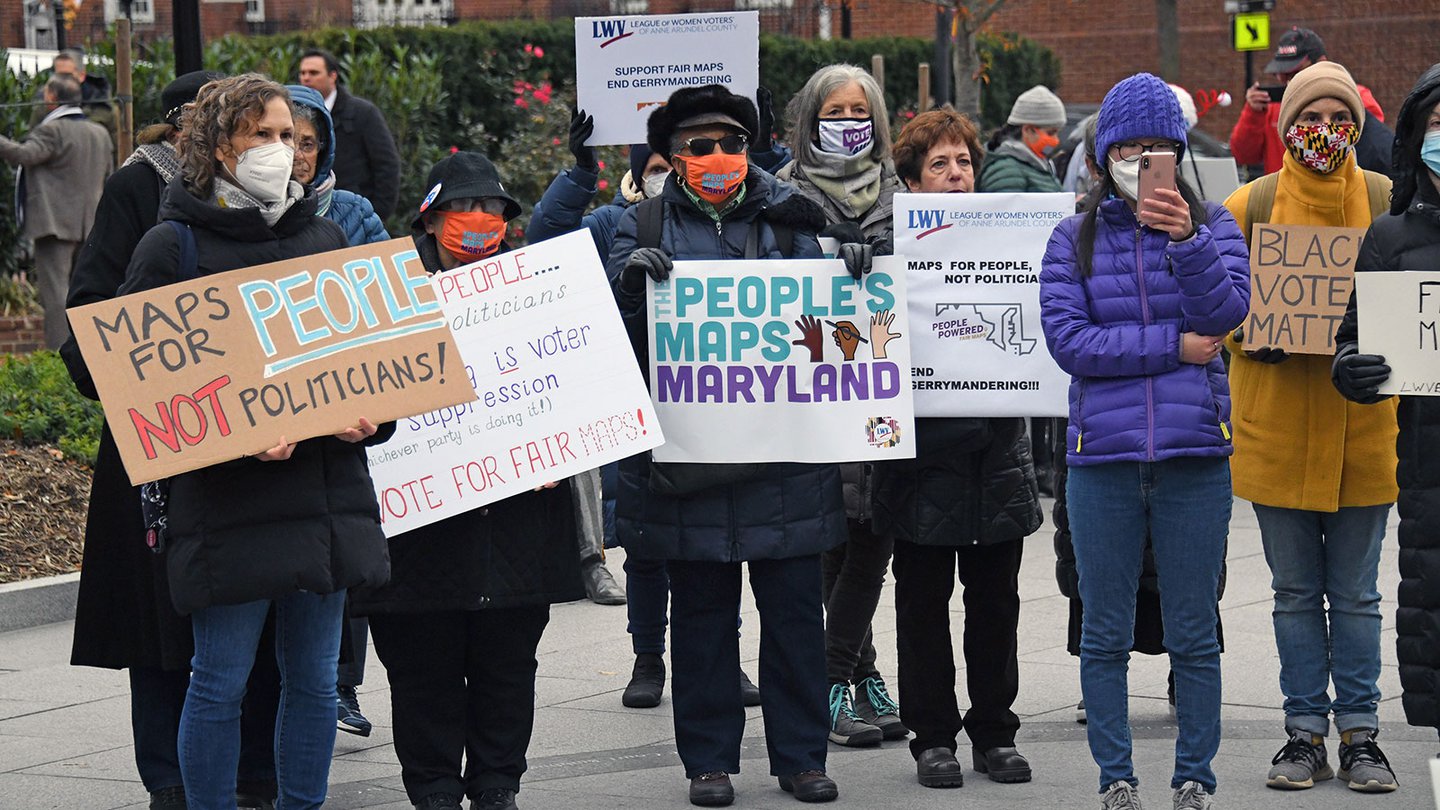
Header photo taken from: Kim Hairston/Baltimore Sun/Tribune News Service via Getty Images
Follow us on our social media platforms above
Browse more election & politics policy briefs from the top dashboard

Photo taken from: Ally Finn / National Conference of State Legislatures, All About Redistricting
Policy Summary
[SSB theme=”Official” align=”center” counter=”true” ]
Control of the U.S. House is up for grabs in the 2022 mid-term elections. Democrats currently have 220 seats and require 218 seats to retain a majority (there are three vacant seats). This brief will examine the impact of reapportionment on the U.S. House races in 2022. It will also discuss some strategies that Democrats can use to mitigate or work around the challenges created by redistricting.
Policy Analysis
Every ten years, U.S. House seats are reapportioned based on the latest census data. States are required to draw new district lines based on the number of seats they have been allocated and population changes within the state. Most new district lines are drawn by state legislatures, which have limited incentives to draw them impartially.
The 2020 census reapportionment gave additional seats to Texas, North Carolina, Florida, Montana, Colorado, and Oregon. Texas gained two seats in reapportionment, while the other states gained one seat. Republicans controlled the redistricting process in Texas, Florida, Montana, and North Carolina. North Carolina does not give the governor a role in the redistricting process. Colorado has an independent redistricting commission.
Those seats that came from California, New York, Illinois, Pennsylvania, Michigan, Ohio, and West Virginia. California and Michigan have an Independent Redistricting Commission, so Democrats did not control the process in those states. New York’s redistricting was done at the direction of the state judicial system due to lawsuits over the initial maps. Illinois’ redistricting led to a pair of Democratic incumbents facing each other as well as a pair of Republican incumbents.
Ohio’s redistricting process was controlled by Republicans and they dismembered the district represented by Tim Ryan (D-OH), who is now running for the U.S. Senate.

Photo taken from: Julie Carr Smyth / Associated Press
(click or tap to enlargen)
The Ohio state Supreme Court ruled that the maps have been illegally gerrymandered to provide partisan benefit to Republicans, but those maps will be used in 2022 because the primaries have already occurred.
The reapportionment is helpful to Republicans because Republicans have control of the redistricting process in key states. The reapportionment might be enough to give Republicans the majority in the House. This does not account for incumbents of both parties who could face a difficult re-election campaign because they are in swing districts. Many of these swing districts are held by Democrats who won difficult races in 2018 and managed to hold on in 2020.
Strategies for Democrats
There are several strategies that Democrats have used successfully to win House seats and several new strategies that they could employ to win seats. Filing lawsuits to force states with gerrymandered maps to redraw them has been a successful strategy for Democrats. Democrats have been more successful when those lawsuits are filed in state courts. Democrats managed to gain some seats in Virginia, North Carolina, and Florida during the middle of the previous decade due to successful lawsuits overturning the original congressional district maps.
Expanding the party’s coalition is what helped Democrats pick up enough House seats in 2018 to win control of the House. The voters who left the Republican Party to vote for Democrats that year tended to be well-educated suburban residents who did not like the direction that Donald Trump was taking the Republican Party in. Using campaign strategies that made these voters comfortable with voting for Democrats was the key to winning these voters and keeping them in the Democratic coalition.
Democrats can also target Republican districts if they run candidates who fit the districts and change their communications strategies to appeal to those constituencies. For example, Democrats have been losing support from Latino voters, which has cost them seats in Florida and Texas. Democrats have also struggled in recent years with rural voters and blue-collar voters, which has cost them seats in states like Iowa.
There are Democrats currently in Congress, such as Senator Jon Tester (D-MT), who won races in rural states. Studying their campaigns can provide Democrats with strategies to win in districts where they have struggled in recent years. There are also a few signs from the special elections that rural voter turnout may be down. If this proves to be the case in the 2022 general elections, then Democrats should develop and test some ideas in the 2024 election cycle to try to win support from these voters.
Finally, Democrats should consider the viability of passing new federal laws governing the redistricting process. States can be required to have an independent redistricting commission if federal law requires it. State legislators and governors may oppose this proposal because it would force them to give up some power and possibly create an unfunded mandate. If there isn’t a path to mandate the creation of Independent Redistricting Commissions at the state level, Democrats should consider other policy alternatives to improve the redistricting process.
Engagement Resources
Click or tap on resource URL to visit links where available

DCCC – Official Campaign Arm of House Democrats

National Democratic Redistricting Commission