

JOBS POLICIES, ANALYSIS, AND RESOURCES
Latest Jobs Posts
Checking in on US Senate Races Before Election Day, Part 2
Brief #42 – Elections & Politics
By Ian Milden
Election Day is November 8th. This Brief will take a look at some of the Senate Races I previewed over the summer and early fall and provide some short updates on the state of those races.
Abbott Running Scared: Texas Incumbent Limited Voter Access to Polls Ahead of Midterms
Brief #43 – Elections & Politics
By Abigail Hunt
For the disillusioned and jaded non-conservatives of the Lone Star state, seeing Beto O’Rourke within spitting distance of Greg Abbott in a dead heat for governor thrills our withered-but-still-beating Grinchy little hearts. From 1847 to 1979, with the exception of a few years here and there, Texas was Democratic.
Education Takes a Back Seat in the 2022 Midterms
Brief #57 – Education Policy
By Steve Piazza
Most polls show that 2022 midterm election voters seem to have prioritized the economy over all other issues. Not surprisingly, since it often holds voter interest more than crime, foreign affairs, health, and the environment.
Medicare Drug Prices: Listen to the Organizations that Matter
Brief #148 – Health and Gender Policy
By Geoffrey Small
Understanding these organizations’ assessments on the benefits of reducing drug prices and inflation is necessary during a time when election seasons lead to misleading political rhetoric. Donating to the AARP foundation and the NAACP can help keep Americans informed and balanced when making decisions about the future of health care and senior benefits in the United States.
Checking in on US Senate Races Before Election Day
Brief #40 – Elections & Politics
By Ian Milden
Election Day is November 8th. This brief will take a look at some of the Senate Races I previewed over the summer and provide some short updates on the state of those races.
Why Are China / US Sanctions Such a Big Issue? (Part I – General Sanctions)
Brief #153 – Foreign Policy
By Inijah Quadri
Trade sanctions on the US imposed by China, in the last several years, are a reflection of Beijing’s desire to respond to similar sanctions imposed by America. In particular Chinese sanctions are a reaction to the effects of the trade war that the United States exacerbated during Trump’s presidency.
A Candidate Code of Ethics
U.S. Resist News Op Ed
By Ron Israel Abigail Hunt, Rod Maggay, Geoffrey Small, and Steve Piazza
The US election system, at the core of our democracy is under attack.
Many politicians still refuse to accept the results of the 2020 Presidential election; others refuse to go on record saying they will accept the result of mid-term races where they are candidates. Debates are at a minimum, and campaigns are rife with lies, false statements, and dark money.
Increasing Reports of Voter Intimidation Incidents As Election Day Nears
Brief #196 – Civil Rights
By Rodney A. Maggay
On October 17, 2022 in Mesa, Arizona a couple approached an outdoor voting drop box to deposit their ballots for the upcoming 2022 midterm elections. The couple was legally permitted to drop off their ballots early as Arizona’s early voting period had begun on October 12th.
The Trump Subpoena
Brief #41 – Elections & Politics
By Maureen Darby-Serson
Last week, the January 6th Committee issued a subpoena to former President Donald Trump in one of its most brazen moves to uncover Trump’s involvement in the insurrection that happened early in 2021. This will likely start a long and arduous court fight over whether Trump will actually appear before the committee.

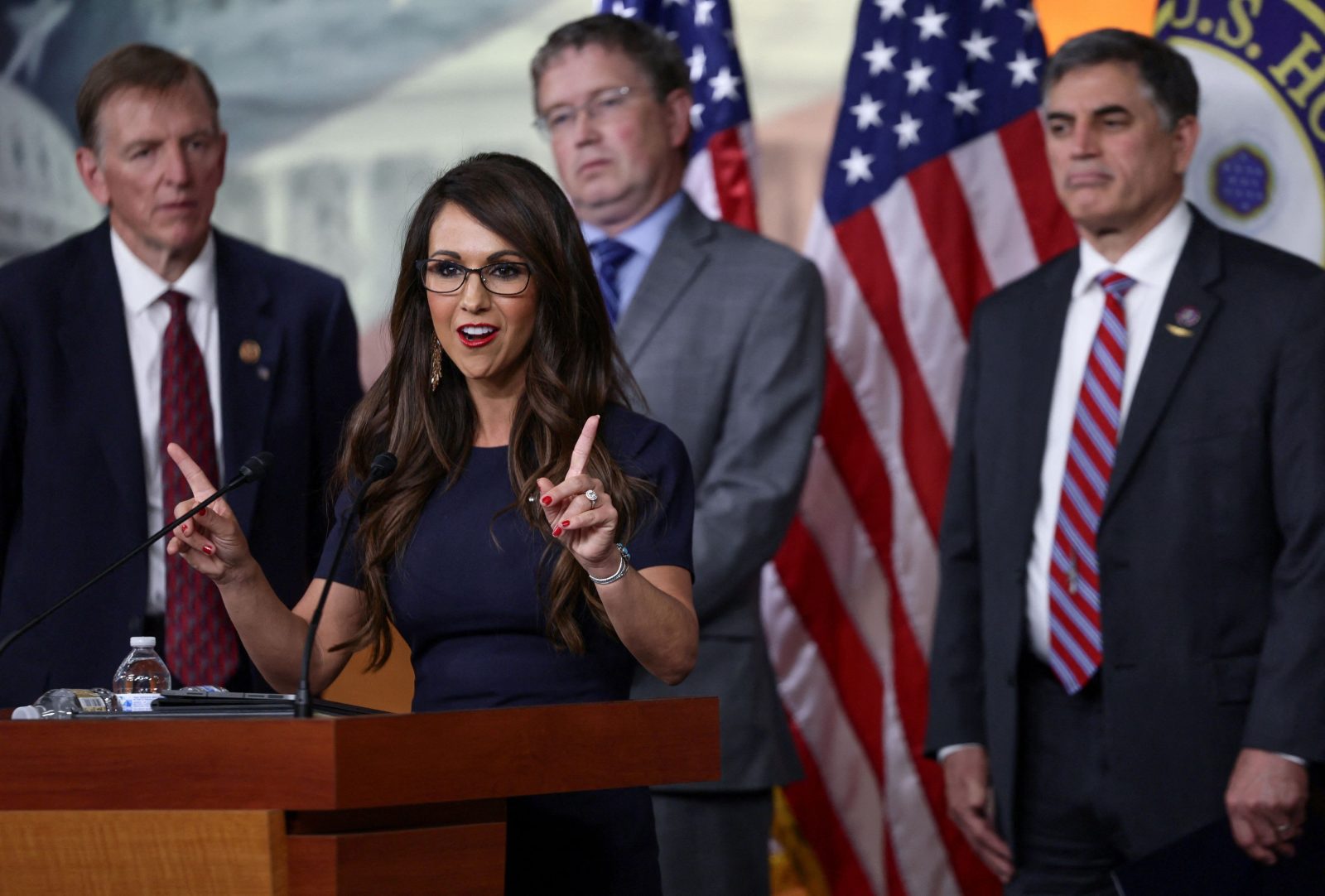
Representative Boebert’s “Separation of Church and State
Representative Boebert’s “Separation of Church and State” Comment Misinformed And Historically Inaccurate
Civil Rights Policy Brief #191 | By: Rodney A. Maggay | July 2022
Header photo taken from: The Washington Post
Follow us on our social media platforms above
Browse more civil rights policy briefs from the top dashboard

Photo taken from: WND
Policy Summary
[SSB theme=”Official” align=”center” counter=”true” ]
On June 26, 2022, Representative Lauren Boebert (R-CO) made remarks at the Cornerstone Christian Center in Basalt, Colorado about the role of religion and government in the United States. Representative Boebert stated, “The church is supposed to direct the government. The government is not supposed to direct the church. That is not how our Founding Fathers intended it.” She continued by stating “I’m tired of this separation of church and state junk – that’s not in the Constitution. It was in a stinking letter and it means nothing like they say it does.”
The comments were heavily criticized not just from politicians but also from American citizens from all walks of life. On June 29, 2022 Representative Adam Kinzinger (R-IL) responded and blasted Representative Boebert for her comments. In a tweet posted to his Twitter account that was posted with a picture of Ms. Boebert, Representative Kinzinger said, “There is no difference between this and the Taliban.
“We must [be] opposed [to] the Christian Taliban. I say this as a Christian.” The mention of the Taliban is a reference to the currently ruling government of Afghanistan and its establishment of Islam as the religion of the state. The phrase Christian Taliban likely implies that Representative Boebert’s comments support a state mandated Christian religion in the United States similar to how the Taliban have declared Islam as the state religion in Afghanistan.
The Establishment Clause of the First Amendment to the United States Constitution provides “Congress shall make no law respecting an establishment of religion[.]” LEARN MORE, LEARN MORE
Policy Analysis
Representative Boebert’s remarks, which received applause from the crowd, is incredibly ignorant of the history of the First Amendment and the Establishment Clause and the goals that the Founding Fathers, specifically Thomas Jefferson and James Madison, had for this particular clause.
When Ms. Boebert mentioned the “stinking letter” in her comments she was very likely referring to a letter Thomas Jefferson wrote to the Danbury Baptists Association in 1802. In that letter, President Jefferson assured the association that there was “a wall of separation between Church and State.” President Jefferson wanted to reassure the group that the government would not interfere with their religious affairs and that the government would not give favor to any other religion. But because the words “separation of church and state” appear in this personal letter and nowhere in the U.S. Constitution, religious conservatives claim this is evidence that there was never any intent for the church and the state to be separate.
But this claim by religious conservatives is completely wrong and there is overwhelming evidence that the intent of the Founding Fathers was a strict separation of church and state.
In 1777 Thomas Jefferson wrote the Virginia Statute for Religious Freedom. That statute provides that no person can be forced to attend any church or even be forced to support any church with his taxes. And, it provides that any man is free to worship as he pleases with no discrimination. However, Virginia did not pass the statute at that time. In 1786, James Madison revived Jefferson’s bill in order to defeat another bill that would have required Virginia taxpayers to support a Christian church. Additionally, Madison also wrote a long document advocating for the strict separation of church and state titled “Memorial and Remonstrance Against Religious Assessments.” What is clear is that James Madison and Thomas Jefferson both favored the doctrine of a separation of church and state even if they did not use those exact words at the time. And since James Madison subsequently authored the Bill of Rights to the U.S. Constitution, including the Establishment Clause embodied in the First Amendment, it is clear that a strict separation of church and state was the intent of the Founding Fathers in the 1780’s.
This background has helped inform the development of the Establishment Clause down through the modern day. With only ten words the clause has been remarkably durable in standing for the doctrine of a separation of church and state. Through the years, the Supreme Court has interpreted the clause to strike down state laws requiring the recitation of school prayer in public schools, moments of silence for private prayer in public schools and the recitation of prayers before other school events such as graduations and athletic contests. The Court has even relied on the clause to prohibit the display of religious symbols such as the Ten Commandments on state grounds such as a courthouse.

Photo taken from: The Hill
(click or tap to enlargen)
The key for the Court in these cases under an Establishment Clause challenge was in determining whether a state law had a secular purpose or was enacted solely to promote or inhibit religion. Promoting or inhibiting religion would be enough to render a statute void. In the 1947 case Everson v. Board of Education Justice Hugo Black said it best when he stated, “The ‘establishment of religion’ clause of the First Amendment means…[n]either can pass laws which aid one religion, aid all religions, or prefer one religion over another.”
So, despite overwhelming evidence that there was an intent for a “wall of separation” why do religious conservatives ignore the history of cases at the Supreme Court and also claim Jefferson’s 1802 letter as evidence that the government and the church should not be separate? By trying to claim Jefferson’s letter as proof, religious conservatives find it easier to dismiss the concept that there is a separation of church and state. This would then permit them to propose laws that are more in line with Christian thought without having to deal with the possibility that their laws would be declared void because of the Establishment Clause. People on the religious right want nothing more than to have Christianity declared as the official religion of the United States.
But that ignores the fact that there are other religions and sects in the U.S. Declaring Christianity as the only religion the U.S. Government supports would exclude millions of people who practice different faiths and hold different religious values. Representative Kinzinger’s response was very likely alluding to the dangers of a state sponsored religion when he suggested Representative Boebert’s wish for more religion in government policies would be the introduction of a “Christian Taliban” in the U.S.

Photo taken from: Business Insider
But while it might be easy to dismiss Representative Boebert’s comments as being uninformed, recent incidents in the U.S. show that she is not alone in trying to propose a Christian worldview on official government policy. Just this week in Florida, Florida parents and educators raised concerns of new Christian nationalist teachings put into public school lessons in revised civics studies. In 2015, the Idaho GOP proposed to have Idaho declared a Christian state. And, there have been numerous incidents where legislators have proposed more prayer and more God in public schools to deal with a myriad of problems such as school shootings, unwed and teenage mothers and student drug abuse.
These politicians do not understand, or do not want to understand, that there is a clear separation of the government and the church. It seems probable that these politicians are simply ignoring what the First Amendment and the Establishment Clause provide in order to try and impose a Christian worldview on government activities. The United States was founded with the intent that all religious faiths, beliefs and sects would be tolerated and that the U.S. Government would not favor or aid any one religion above all others. Representative Kinzinger was right in calling out Representative Boebert’s uninformed comments and the historical evidence clearly shows that Ms. Boebert was simply wrong in calling the separation of church and state “junk.” LEARN MORE, LEARN MORE
Engagement Resources
Click or tap on resource URL to visit links where available

The Free Speech Center at Middle Tennessee State University – article explaining James Madison’s “Memorial and Remonstrance Against Religious Assessments” document and Madison’s views on religious liberty.

Freedom From Religion Foundation – news release from non – profit group on Representative Boebert’s controversial comments.

Americans United for Separation of Church and State – news release from non – profit group investigating White Christian Nationalism teaching in Florida school curriculum.

Future of Abortion Medication and Women’s Equality: Look to Europe
Future of Abortion Medication and Women’s Equality: Look to Europe
Health and Gender Policy Brief #154 | By: Geoffrey Small | July 6, 2022
Header photo taken from: EURACTIV
Follow us on our social media platforms above
Browse more health and gender policy briefs from the top dashboard

Photo taken from: AFP / Twitter
Policy Summary
[SSB theme=”Official” align=”center” counter=”true” ]
On June 24, 2022, the U.S. Supreme Court overturned the landmark ruling and protections for abortion rights, Roe v. Wade. Recent polls indicate that the majority of U.S. citizens oppose this ruling, because it infringes upon women’s equality and their right to choose. This Supreme Court decision has made a seismic impact on accessibility to procedures that were previously available for generations of women. According to the Guttmacher Institute, 42 states have already enacted 541 restrictions and 11 states have legislated abortion bans since the beginning of 2022.
Some state laws, like Mississippi’s Gestational Age Act, ban clinical abortion procedures after 15 weeks. These restrictions are just the beginning, as Republican states are now targeting the growing accessibility of abortion medications. In order to understand the future of abortion legislation and accessibility, one can look to studies conducted in European countries, where abortion medication was made available over a decade before the United States. The European Union has a public perception of being a hub for progressive values and institutions.
However, further analysis of European countries’ access to abortion medication, when correlated with their societal values on women’s equality and activism, paint a more complicated picture. This insight can help determine the potential outcome on widespread restrictions that can take place in the United States if the public doesn’t take action.
Policy Analysis

Photo taken from: The Guttmacher Institute
The Guttmacher data analysis illustrated above highlights that, since their legalization in 2000, medication-based abortions account over half of abortion procedures in the United States. A recent ACLU legal victory in 2021 over the FDA has led to unprecedented access to abortion medicatations.
Women are now able to legally receive the medication through the mail via a Telehealth consultation from a licensed physician. This victory may be temporary. Republican states, now emboldened by the overturned Supreme Court ruling, are targeting abortion medication through additional restrictions and bans.
The future of abortion accessibility in the U.S. may be uncertain. However, analysis of abortion policy in European countries can provide some insight. A Bielefeld University study from Germany correlates European countries’ abortion medication accessibility with their societal perspectives on equal representation through participation.

Photo taken from: Bielefeld University’s Medical abortion ratios and gender equality in Europe: an ecological correlation study
(click or tap to enlargen)
The data shown above highlights the disparities between European countries that promote progressive reproductive health practices, gender equality, and feminist movements and countries that are more conservative. The German University study assessed these values by collecting multiple ratings on gender equality conducted by the U.N, Social Watch, and the World Economic Forum.
The ratings were then correlated with each European countries’ ratios on abortion medication availability. As illustrated, countries like the ones located in the Scandinavian region have better access to abortion medications because their institutions encourage feminist activism and reproductive rights. When you look at a country like Spain, heavily rooted in Catholicism and less progressive overall, abortion medication is more restricted.
The data is an ominous sign for the future of abortion rights in the United States. Kentucky, South Dakota, and Tennessee have already enacted state abortion medication restrictions. These states can arguably be characterized as religiously conservative supporting institutions that repress reproductive rights. The U.S. may be entering a downward spiral where states that are legalizing these restrictions are simultaneously preventing a women’s right to choose and to have a voice politically with the legislation they pass.
There is hope with recent ACLU legal victories supportingabortion and a woman’s right to choose.. Therefore, it is critical that the public coordinate their response and donate to the ACLU and Planned Parenthood in order to challenge the growing legislative restrictions that Republican states are attempting to implement.
Engagement Resources
Click or tap on resource URL to visit links where available


It’s Time to Declare Independence from America’s Two Political Parties
It’s Time to Declare Independence from America’s Two Political Parties
U.S. Resist News Op Ed | By: John Halpin | July 5, 2022
Header photo taken from: Politico
Follow us on our social media platforms above
Browse more U.S. Resist News Op Eds from the top dashboard

Photo taken from: National Archives
[SSB theme=”Official” align=”center” counter=”true” ]
Nothing ever changes with America’s broken political system. Despite reams of evidence that an increasing proportion of voters despise both political parties and want to see internal changes or alternative party choices, neither Democrats nor Republicans have gotten the message.
Republicans vie to elevate the dimmest bulbs in the country to office, pledging loyalty to a corrupt former president who actively sought to overturn an election he lost. In turn, Democrats vie to elevate those who live in a fantasy world where things like high gas prices or violent crime aren’t real problems while mystical structural forces and improper language use are keeping Americans in a permanent state of oppression.
Normal Americans—a mix of traditional conservatives, liberals, and moderates—look at the two parties and just shake their heads. Out to lunch. Whack jobs. Extremists. Arrogant blowhards. Clowns who don’t understand my life. They’re right. The two parties have failed to adequately represent the views of ideologically unaligned Americans. And the two parties don’t particularly care to change this situation as they make yet another call to the partisan ramparts ahead of the 2022 elections.
Pundits like to say we are a nation divided between red and blue, separated along partisan lines over abortion, guns, gender, climate, and economic issues. In reality, America is a 30-30-40 nation split between partisan diehards on the left and right and a large pool of people who don’t fit into either one of these categories.
According to Gallup trend data, no more than 3 in 10 Americans today identify as either a Democrat or Republican, respectively, while roughly 4 in 10 call themselves Independent with equal proportions of these voters leaning Democratic and Republican when forced to choose.

Table taken from: Gallup, The Liberal Patriot
There’s vast unoccupied terrain in American politics with lots of unrepresented voters. A political party that chooses to inhabit this middle space on both economic and cultural issues will certainly reap electoral benefits. Alternatively, party leaders who shun this middle ground should expect more and more Americans to ignore their pitches and reject their candidates.
A successful political future that truly represents all Americans will be less doctrinaire, more independent, and grounded in equal dignity and rights for all peoplewith economic policies that advance America’s interests.

Table taken from: Gallup, The Liberal Patriot
Political scientists argue that this independence is not real and that these voters are just embarrassed by party labels even as they mostly vote one way or another. But what else are self-identified Independents supposed to do? They only get two viable choices, if at all, and the only other option is not to participate.
But imagine if there were two additional parties—one on the center-left and one on the center-right—that were given fair ballot access with resources to compete. Would these Independent voters who lean one way or another bolt given the chance? Probably a good chunk of them would. Or what if we had more competitive districts, open and nonpartisan primaries, and ranked choice voting to help break the “two-party doom loop”? Then we’d have a situation where the two main parties would have to genuinely fight for the middle portion of voters who don’t accept the down-the-line economic and cultural ideologies of the big dogs.
The parties would be forced to be more tolerant of people with different personal views and positions on hot-button issues rather than insisting on fealty across the board. They would need to recruit and field a diverse array of candidates from different backgrounds who are not beholden to ideologically predetermined positions. Perhaps with more competition the parties would adjust their governing visions to better represent a “pro-worker, pro-family, pro-America” centrist agenda that is economically nationalist and culturally moderate.
Unfortunately for America, the two parties aren’t likely to allow for real competition anytime soon.
Ideologically homeless Americans will therefore need to protect themselves and their sanity by declaring independence from the two parties. If the parties won’t voluntarily shift to more sensible positions designed to help all people in all parts of the country succeed, then American voters in the broad middle should take control of their own lives, join forces, and make the two parties come to them.

Congressional Effort to Regulate Internet Algorithms May Impact Efforts that Support Reproductive Rights
Congressional Effort to Regulate Internet Algorithms May Impact Efforts that Support Reproductive Rights
Technology Policy Brief #61 | By: Mindy Spatt | July 6, 2022
Header photo taken from: Los Angeles Times
Follow us on our social media platforms above
Browse more technology policy briefs from the top dashboard

Photo taken from: The Tribune Content Agency
Policy Summary
[SSB theme=”Official” align=”center” counter=”true” ]
According to a US Surgeon General’s advisory, online misinformation is dangerous to our health. Abortion advocates agree. So does my pregnant daughter whose Tik Tok and Instagram are filled with horror stories of premature births and preeclampsia that just exacerbate the normal anxieties that come with being pregnant. According to a recent LA Times article she is not alone. The Times interviewed pregnant women about their social media use and found that “Across the country and around the world, pregnant women are finding themselves pummeled on social media with video after video about the most terrifying aspects of pregnancy”.
Algorithms, those mysterious inner workings that enable Facebook, Google and other online companies to relentlessly target us with content and ads based on our past searches and activities, are increasingly the determinants of what we see on our phones, tablets and computers. And it’s gone beyond just selling products.
Knowing you are pregnant algorithms send you not only diaper sales but also but also disaster stories. Knowing you are house hunting, algorithms send you apartments and houses, but also likely contribute to redlining. Advocates for marginalized communities say algorithms are impacting access to housing and jobs by, for example, directing people of color to certain neighborhoods or professions.
To combat some of these issues, Representative Yvette D. Clarke, D-N.Y., with U.S. Senator Ron Wyden, D-Ore., and Senator Cory Booker, D-N.J., have introduced the Algorithmic Accountability Act of 2022, which they describe as “a landmark bill to bring new transparency and oversight of software, algorithms and other automated systems that are used to make critical decisions about nearly every aspect of Americans’ lives.”
Policy Analysis
The bill requires companies to conduct impact assessments for bias, effectiveness and other factors when using automated decision systems (algorithms) to determine what content they feed to users. It would also make it illegal for platforms to segregate or discriminate in their treatment of data on the basis of race, ethnicity, gender identity, religious belief, sexual orientation, disability status, immigration status, and other categories.
The effort is supported by numerous established nonprofit advocacy organizations including the National Hispanic Media Coalition (NHMC), Consumer Reports, Public Knowledge and Color of Change.
Arisha Hatch, Vice President and Chief of Campaigns at Color of Change, said “When bias in algorithms goes unchecked, Black people are subjected to discrimination in healthcare, housing, education, and employment — impacting nearly all parts of our lives. In order to reduce the impact of this bias, Big Tech and their operations must proactively detect and address discrimination.” She added that “Companies conducting their own audits is a first step but prevention will be key.”

Photo taken from: bankinfosecurity.com
It is hard to imagine that the bill won’t face stiff opposition. Algorithms are at the core of every profitable digital platform. And while critics may say this legislation doesn’t go far enough it is likely to encounter strict opposition from Facebook, Google and other companies that have vociferously fought any sort of public accountability.
The shady data broker industry, now estimated to be raking in about $200 billion annually from information gleaned from our phones, searches and social media posts, surely doesn’t want to see anything change.
While Public Knowledge supports the bill its’ blog posts note that privacy protections are equally important, perhaps even more so, since ultimately the less that data is collected the less that data can be misused.
That is certainly the case as the battle over abortion access is increasingly moving online. In post-Roe America patients needing abortions in states where it is illegal will have no place other than the Internet to go to find services and access doctors and medication. That data could result in prosecution of both patient and doctor in some states.
Abortion foes have taken advantage of algorithms in the past to push their fake Pregnancy Crisis Centers to pop up when the user is actually searching for an abortion provider. Google now says these ads will be flagged to note that they don’t provide abortions but activists are saying they will remain vigilant. And we can assume the pregnancy center ads are just as unwanted by someone seeking an abortion as the pregnancy horror stories are by my daughter.
Engagement Resources
Click or tap on resource URL to visit links where available

Take Action: Tell Congress to Protect Our Personal Information https://www.votervoice.net/PublicKnowledge/campaigns/90100/respond

Learn more: For Pregnant Women, the Internet Can Be a Nightmare By BRIAN CONTRERAS, May 25, 2022 https://www.latimes.com/business/technology/story/2022-05-25/for-pregnant-women-the-internet-can-be-a-nightmare

Google Improves Flagging of Fake Abortion Clinic Ads
By CARRIE N. BAKER, 6/14/2022
https://msmagazine.com/2022/06/14/google-fake-abortion-clinic-ads/

Cataloging the Harms of Algorithmic Decision Making By Lisa Macpherson and Antoine Prince Albert III, March 9, 2022

Changes in Google Cookie Policy Could Help Improve Consumer Privacy
Changes in Google Cookie Policy Could Help Improve Consumer Privacy
Technology Policy Brief #60 | By: Christopher Quinn | July 5, 2022
Header photo taken from: DIGIT
Follow us on our social media platforms above
Browse more technology policy briefs from the top dashboard

Photo taken from: Tam Nguyen / Ad Age
Policy Summary
[SSB theme=”Official” align=”center” counter=”true” ]
In 2023 Google Chrome is phasing out third party cookies. What this means is the entire global browser market will no longer track users’ every move across the web. Safari, Firefox and Brave already block third-party cookies by default to protect users’ privacy. Google Chrome currently holds 64.9 percent of the global browsing market.
Cookies are tiny, but crucial, identifiers that track internet users’ activities across the web.
They help advertisers target ads and measure the effectiveness of their marketing campaigns.
The following is a list of what information cookies can hold:
- The amount of time you spend on a website
- The links you click while visiting the website
- The options, preferences or settings you choose
- Accounts you log into.
- Recording which pages you’ve visited in the past
- Items in shopping basket
They’ve become one of the central technologies underpinning the business model of publishing on the web. Ever notice when you open a website, there often is a 2-3 sentence blurb that says the site uses cookies and asks you to accept. If you do accept you are given the site license to share your privacy information with advertisers
Policy Analysis
The death of third-party cookies comes at a time of widespread backlash against advertisers’ digital surveillance. The public has become increasingly vocal about its discomfort with ad tracking.
Europe’s landmark digital privacy (Directive on Privacy and Electronic Communications) otherwise known as The Cookie Law) passed initially in 2002 and added additional directives in 2011. The directives recognize the need for cookies to create the personalized online universe we enjoy today, but also makes it clear that cookies could be considered an invasion of privacy and that users deserve the right to be made aware of the presence of cookies and their usage.
Certain cookies that are considered “strictly necessary for the delivery of a service requested by the user” don’t have to be declared, because they are of far higher benefit to the user than the company.
This includes cookies used to track shopping carts in e-commerce and important logon information that the user requires.
Apple, sensing an opportunity to market itself as the privacy-friendly tech giant, has announced software updates that will make it much harder for advertisers to track what users do in apps and mobile browsers.
Google’s plan is to provide a set of APIs that will offer aggravated data, similar to what the third-party cookies of today offer.

Photo taken from: Quartz
(click or tap to enlargen)
Brands will be able to use the APIs, but instead of being specific to any one person, the data will be more like a sample of similar kinds of people.
For example, if today a brand is using data to better target John Doe, a 28 year old male in Louisville, by 2023, they’ll be working from a sample set of data that can target people similar to John Doe in terms of age, gender, and geography, but not specifically John Doe himself.
Essentially they’re planning to remove explicit tracking and rely on a more cohort-based option instead. When it comes to marketing, the term cohort refers to specific experiences, events, or other factors shared by a group of consumers according to Google.
Google says it will be effective, marketers and advertisers seem less convinced.
Until the changes take effect, marketers are going to have to find other ways of gathering and handling prospect data to ensure they’ve got coverage.
The internet is now at an inflection point. Industry groups representing advertisers, agencies, browsers and publishers are scrambling to come up with alternatives to the old methods of invasive personal tracking.
The decisions they make over the next year will have widespread implications for the future of privacy on the web and how the businesses that operate on the internet carve up the spoils of the 336 billion dollar digital advertising industry.
Engagement Resources
Click or tap on resource URL to visit links where available

https://blog.google/products/chrome/updated-timeline-privacy-sandbox-milestones/

Analyzing the Implications of the Dissolution of the Israeli Knesset
Analyzing the Implications of the Dissolution of the Israeli Knesset
Foreign Policy Brief #140 | By: Ian Milden | July 5, 2022
Header photo taken from: AP News
Follow us on our social media platforms above
Browse more foreign policy briefs from the top dashboard

Photo taken from: The Wall Street Journal
Policy Summary
[SSB theme=”Official” align=”center” counter=”true” ]
On June 22nd, Prime Minister Naftali Bennett announced plans to dissolve the Knesset, Israel’s parliament. This means that a snap election will be held this fall. This will be the fifth election in Israel in under four years. Bennett, a conservative, stepped down and his coalition partner, Foreign Minister Yair Lapid, was selected to be the interim Prime Minister until new elections are held. Lapid, a centrist, was supposed to become the Prime Minister after two years if the coalition survived that long. The Knesset was dissolved on June 30th.
Policy Analysis
The governing coalition in the Knesset came together because all members of the coalition wanted someone other than Benjamin Netanyahu in the Prime Minister role and a broad ideological coalition was the only way to achieve that. The coalition was composed of Israeli moderates, liberals, Arab parties, and conservatives who were disgusted with Netanyahu’s corruption and style of governing. Netanyahu is facing multiple corruption charges from cases that have been public for years. He has remained in the Knesset as the opposition leader.
The coalition collapsed because of its inability to agree on major policy issues with the policy on the West Bank being the breaking point. Members of the coalition threatened to withhold support over positions that they did not like leaving the Israeli government unable to make significant policy changes on many policy issues. This coalition was formed because it was the only way to establish a government without Netanyahu as Prime Minister.
The election will take place on November 1st. Netanyahu remains the leader of his Likud Party and three religious right-wing parties continue to support him. In the past few elections, this group of four parties has not been large enough to give Netanyahu a stable majority, but it was large enough to prevent anyone else from forming a majority in the Knesset until the coalition that just collapsed was formed last year. There do not appear to be any significant challenges to Netanyahu’s leadership within the Likud Party at the moment.
It’s hard to say what the results of this fall’s election might be. Complicating matters is Netanyahu’s corruption trial, which remains ongoing and may not finish by the time the election occurs due to the judicial system’s summer recess.

Photo taken from: The Times of Israel
(click or tap to enlargen)
If the trial does not conclude, Netanyahu could form a coalition if his supporters win enough seats by capitalizing on anti-Arab sentiment or if his party gets additional seats due to an opposition party not meeting the 3.5% viability threshold. Many of Naftali Bennett’s supporters are not happy that he formed a government with Arab parties, which affected policy in a manner that Bennett’s supporters did not like. This dynamic led to Bennett announcing that he would not run in the upcoming election, so there are voters that Netanyahu can try to persuade to support him.
Bennett handed leadership of the Yamina Party to Ayelet Shaked, who has expressed an openness to forming a coalition with Netanyahu. It is unclear how the change in leadership will affect the support for the Yamina Party, an ideologically conservative party, in the upcoming election. Arab parties have never been in the governing coalition before, so it is not known how their participation in the previous coalition will affect voter behavior.
Netanyahu becoming Prime Minister again is not guaranteed, even if his corruption trial does not conclude. The election may produce a Knesset where nobody can form a majority coalition. This has been the result of most of the recent elections, which is why there have been so many elections in such a short period of time.
The polls indicate that this is the most likely result if the election were held today. However, the polls do not account for the recent changes with the Yamina Party’s leadership. Yair Lapid could also remain as the Prime Minister, but that will depend on which parties get seats in the Knesset and their willingness to cut a deal with him.
The results of the Israeli elections also have implications for the United States. The United States is being urged by the European Union to reengage with Iran and reinforce the nuclear agreement that was made in 2015. Any deal between the United States and Iran would have to be structured to deter Iran and Israel from taking unilateral offensive action against each other. Defense Minister Benny Gantz suggested the current government would be interested in participating in talks while Netanyahu has been a vocal opponent of the deal with Iran.
Engagement Resources
Click or tap on resource URL to visit links where available

Jerusalem Post – https://www.jpost.com/

The Times of Israel – https://www.timesofisrael.com/

Haaretz (Israeli newspaper of record) – https://www.haaretz.com/

The Supreme Court Weakens The Separation of Church and State With High School Football Coach Decision
The Supreme Court Weakens The Separation of Church And State With High School Football Coach Decision
Civil Rights Policy Brief #190 | By: | June 28, 2022
Header photo taken from: Reuters
Follow us on our social media platforms above
Browse more civil rights policy briefs from the top dashboard

Photo taken from: Americans United for Separation of Church and State
Policy Summary
[SSB theme=”Official” align=”center” counter=”true” ]
Joseph Kennedy was a football high school coach at a public high school in Bremerton, Washington. During his time as a coach in the Bremerton School District Mr. Kennedy had started a routine where he would pray at the fifty – yard line of the football field at the conclusion of the game. It started as small quiet moments but through the years had grown to include many of his players, parents and even players from the opposing team. Mr. Kennedy also conducted pre and post game prayers in the locker rooms with players from the team.
In September 2015, the school district instituted an inquiry into Mr. Kennedy’s activities. The District soon informed him that some of his activities such as prayers in the locker rooms and talks with students that included religious expression and prayer were constitutionally problematic. The school was worried that Mr. Kennedy’s activities were an endorsement of religion while he was engaged in his duties as a public school football coach. The District sought to work with Mr. Kennedy to set clear parameters as to what he could and could not do. Mr. Kennedy ceased some of his religious activities but his attorney later sent a letter that stated that Mr. Kennedy felt compelled to offer a personal post game prayer. After a game on October 26, 2015 where Mr. Kennedy led players in prayer, the District placed Mr. Kennedy on paid administrative leave and prohibited him from team related football activities.
Soon thereafter, Mr. Kennedy filed a lawsuit in the Federal District Court for the Western District of Washington. He alleged violations of the Free Speech and Free Exercise Clause of the First Amendment to the U.S. Constitution. The trial court ruled against Mr. Kennedy and in favor of the Bremerton School District. An appeal to the Court of Appeals for the Ninth Circuit affirmed the trial court. An appeal was taken to the U.S. Supreme Court, which was denied in 2019. The case went back to the trial court which led to another trial and another appeal at the Ninth Circuit which ruled against Mr. Kennedy again. A second appeal was made to the U.S. Supreme Court. On June 27, 2022 the Court ruled 6 – 3 that Mr. Kennedy’s rights under the Free Speech and Free Exercise Clauses were violated. LEARN MORE
Policy Analysis
In a Supreme Court term that has been defined by religion, the Court issued another disappointing decision in a religion case. On the heels of Carson v. Makin, which permitted state taxpayer funds to be used for tuition assistance at religious schools, the court issued the opinion in Kennedy v. Bremerton School District that an employee at a public school has the right to pray at the fifty – yard line of a football field after a game. While being contrary to previous Supreme Court precedents these two decisions are also disappointing because of how it weakens the American ideal that there should be a separation of church and state.
In the First Amendment there is the Free Speech Clause and the two religion clauses – the Free Exercise Clause and the Establishment Clause. The text of the Amendment states “Congress shall make no law respecting an establishment of religion, or prohibiting the free exercise thereof…” And it continues “or abridging the freedom of speech.”
The problem with the majority opinion’s analysis is its sweeping dismissal of the Establishment Clause in this case and Justice Gorsuch’s use of misleading facts to reach a conclusion. Under the Establishment Clause and the 2000 case Santa Fe Independent School District v. Doe, the court held that pre – game prayers on school property were not permitted because it would be seen as state endorsement of prayer at public schools. The key here is endorsement of prayer during school hours. Mr. Kennedy’s status as a state employee should have prohibited him from leading prayers after games because it would appear that the public school district would be endorsing religion. Justice Sotomayor in her dissent points out that the endorsement inquiry is not for any one or hypothetical person but the effect that the perceived endorsement would have on the community as a whole and how the community would perceive that.

Photo taken from: Berkeley Political Review
(click or tap to enlargen)
Yet the majority opinion quickly dismisses this precedent. It does so by discarding the Lemon test (from the Lemon v. Kurtzman case) and implementing a new and uncertain test. The Lemon test asked three questions to determine if a law or policy violated the Establishment Clause – whether a statute or policy had a secular purpose or not, whether the statute had the effect of advancing or inhibiting religion and if the statute excessively entangled the government with religious matters. This case could have easily been decided by using this established Supreme Court legal test but Justice Gorsuch instead dismisses the test and states that future violations should be decided based on “original meaning and history.” This new standard is entirely unclear.
The Lemon test was much more precise and better suited for analysis because it is direct in its inquiry – whether a law is secular, whether religion is being promoted or suppressed and whether a state is getting too mixed up in religious affairs. What Justice Gorsuch and the five conservative members of the majority may have done is make government policies that favor or promote religion much harder to strike down. Under Justice Gorsuch’s new “original meaning and history” analysis, laws that may have been struck down under the Lemon test because they imply an endorsement of religion will now have a better chance of being held valid. That paves the way for more government laws and policies that favor or promote religion and weakens the wall of separation between church and state.
Finally, with the issuance of the opinion, Justice Gorsuch is coming under fire from an unexpected direction. As the author of the majority opinion, Justice Gorsuch is being accused of relying on a false narrative and a misleading use of the facts to resolve the case. He states that Mr. Kennedy was simply taking a quiet moment away from his players and staff to pray by himself. Justice Gorsuch may have stated this in order to generate more sympathy for Mr. Kennedy but the evidence shows that Mr. Kennedy was not engaged in quiet moments off by himself. Justice Sotomayor’s dissent actually went so far as to include pictures to show what was really going on on the football field.

Photo taken from: Vox
Mr. Kennedy was often shown surrounded by a number of players and parents. The evidence also shows that Mr. Kennedy often invited the other team to come and join him in the post – game prayer at the fifty – yard line. Mr. Kennedy was not, as Justice Gorsuch stated, taking a quiet moment to pray by himself. The fact that Justice Gorsuch would use false facts in his opinion in the face of contrary photo evidence makes his reasoning in the majority opinion less credible.
This opinion was clearly a disappointing decision and has generated a massive debate about the scope and limits of state sponsored religious activity in everyday American life. Simply put, this Court got it wrong and it remains to be seen if a future Court will recognize that and overturn this misguided decision. LEARN MORE
This brief was compiled by Rod Maggay. If you have comments or want to add the name of your organization to this brief, please contact Rod@USResistnews.org.
Engagement Resources
Click or tap on resource URL to visit links where available
Freedom From Religion Foundation – press release from non – profit group about the Kennedy v. Bremerton decision.

Americans United For Separation of Church and State – statement from non – profit group about the Kennedy v. Bremerton decision.

For a ‘Young’ Country, the U.S. Has an Old and Outdated Constitution
For a ‘Young’ Country, the U.S. Has an Old and Outdated Constitution
U.S. Resist News Op Ed | By: Alexander Clarkson | June 29, 2022
Header photo taken from: World Politics Review
Follow us on our social media platforms above
Browse more U.S. Resist News Op Eds from the top dashboard

Photo taken from: The New Yorker, Barry Blitt
[SSB theme=”Official” align=”center” counter=”true” ]
The belief that the United States is a uniquely youthful society in contrast to an aging and decadent Europe has become so entrenched that it is rarely questioned. Whether out of politeness or genuine belief, Europeans encountering this recurring trope often turn to their own, emphasizing their belief that a European point of view is more mature than that of the supposedly youthful and naive United States.
Very rarely is there much consideration about what it means for a society to be “old” or “young.” Sometimes commentators point to the steady birthrates and higher immigration that once sustained a more youthful and dynamic labor market in the United States. Yet in the past two decades, U.S. demographic growth has slowed down to a more “European” balance between older and younger generations, with all the societal and policy challenges that entails.
The emphasis on Europe’s age is certainly more accurate when pointing to its history of continuous settlement going back thousands of years. By contrast, the colonial-settler foundations of U.S. society in the 17th century mark the beginning of what is at most a 400-year history of what would now be recognized as a distinctly American way of life. Yet in many European cities, much of the urban landscape of industrial Europe emerged at the same time as similar processes in the United States. For every ancient cathedral city built many centuries before the first colonial settlement in North America, there are cities like Sheffield in the U.K. or Dortmund in Germany that only expanded at the same time as Chicago or St. Louis.
While European societies can look back to long histories, the forms of identity on which their political systems hinge are much more recent. Medieval linguistic and religious traditions provided the cultural foundations of state formation in Europe. But the emergence of national identities as we would understand them now was a product of the economic and social changes that engulfed Europe at the same time that the settler communities of North America’s Eastern seaboard began their expansion through the forced displacement of Indigenous peoples. The formation of nation-states in much of Europe only took shape in the century after the start of the American Revolution in 1776. And as the U.S. experienced vast territorial expansion and profound internal instability, culminating in the Civil War of the early 1860s, every European society was experiencing its own period of disorienting economic transformation and vicious political conflict.
During this period, almost every European state developed a lasting constitutional order, long after the U.S. Constitution was ratified in 1788. In the 234 years since then, France has lived through two royal dynasties, two empires, three revolutions, a fascist collaboration regime and five republics, each with its own distinct political system. Though Germany’s basic law was set out in the West German Constitution of 1949, only with the absorption of East Germany through reunification in 1990 did the modern German system fully take its current form. The constitutional orders of Greece, Spain and Portugal only emerged after the fall of dictatorships in the 1970s, while the political systems of every Eastern European state, from Estonia to Ukraine to Albania, are all products of the Soviet Union’s collapse in the early 1990s.
The European state in which radical constitutional experimentation and improvisation are most effectively hidden by a facade of symbolic continuity is the United Kingdom, which consolidated as a cohesive state with the merger of the Scottish and English Parliaments in 1707. For all its royal pomp and circumstance, however, when looked at more closely, the U.K. as a state has gone through dizzying institutional and political change in the past two centuries. The brutal war that led to the formation of an independent Ireland in the 1920s marked the most fundamental break of all. But the devolution of substantial power to the Northern Irish Assembly, the Welsh Senedd and the Scottish Parliament in the 1990s also represented huge changes to the basic configuration of British political life.
Combined with Britain’s fraught involvement in European integration as a member of the European Union, by the early 2000s the U.K.’s constitutional order had been fundamentally transformed. In the context of a society undergoing such vast and sudden changes, it is far less surprising that a huge institutional gamble like leaving the EU gained so much traction among voters during the 2016 Brexit referendum.
The European integration process that elicited so much hostility among parts of the British public marked the most radical constitutional innovation facing European societies. Though the first steps toward what is now the EU were taken with the Treaty of Rome in 1957, the EU came much closer to its current form as an increasingly state-like entity with the 1992 Maastricht Treaty. With such rapid consolidation of the EU’s collective currency, parliament, legal system and border controls, the period between 1992 and the Treaty of Lisbon in 2009 marked a massive transformation in how power is organized across Europe. Even as they try to diverge from the EU’s system, successive British governments have struggled to manage the shock of leaving, showing how deeply intertwined the economies and constitutional orders of European states have become with EU institutions.
While the EU has experienced a succession of shocks that have kept its young system in a state of flux, the polarization and gridlock paralyzing U.S. politics have been severely exacerbated by an inflexible U.S. constitutional order that is beginning to show its age. Even as European states experienced dizzying constitutional turnover, the last significant changes to the U.S. Constitution were put in place with the creation of the Federal Reserve and introduction of direct elections to the U.S. Senate in 1913, and the expansion of suffrage to women in 1920.

Photo taken from: New York Magazine, Ron Edmonds / AP Photo
(click or tap to enlargen)
Yet after decades of relative stability, the United States’ political system was already beginning to show signs of stagnation and dysfunction in the years before former President Donald Trump’s authoritarian populism brought it close to the breaking point.
In the early 1990s, growing ideological polarization between Democrats and Republicans hollowed out procedural conventions that had provided the basis for effective governance. In the wake of Pat Buchanan’s ferocious “Culture War” speech at the GOP convention of 1992, the Republican leadership’s focus on mobilizing the party’s base and polarizing the electorate turned U.S. politics into the zero-sum environment that enabled Trump’s rapid rise.
An awareness of such dynamics and a more critical view of old tropes that portray the United States as young and Europe as decrepit does not mean ignoring the strengths of U.S. society or the weaknesses of the EU system. But it can provide a clearer understanding of the challenges both face when trying to secure stability, prosperity and democracy.
If one sees European integration as a state-building process, then the disparate responses to the repeated waves of crisis that have hit the EU and its neighborhood begin to make more sense. As a new system, the EU’s structures were often still only half-formed when plunged into managing crises that threatened to overwhelm the continent’s societies.

Photo taken from: Time
So, it should come as no surprise that substantial numbers of European voters proved to be susceptible to populist demagogues who promised to restore order in a disordered world. Yet operating in a young system that is still being formed also gives policymakers room to experiment and improvise as they try to help European societies adapt to a changing world, which explains how those same crises also drove significant advances in the process of integration.
In the United States, the institutional continuity provided by a constitution that has remained largely unchanged since 1920 provided the basis for decades of political stability and economic growth. Yet the breakdown of bipartisan consensus since 1992 has made that constitution seem increasingly unable to manage a technologically advanced urban society with a population of 330 million people, while also making it impossible to overhaul it.
Despite all the signs of systemic dysfunction, it is the chaos of the Trump years that has finally made it impossible to ignore the extent of the problem, building momentum for a much wider debate. If the political will can be found to reform the United States’ ancient constitution, then perhaps the country will once again enjoy the opportunity of being young again.
Alexander Clarkson is a lecturer in European studies at King’s College London. His research explores the impact that transnational diaspora communities have had on the politics of Germany and Europe after 1945 as well as how the militarization of the European Union’s border system has affected its relationships with neighboring states. His weekly WPR column appears every Wednesday.

New Tech Regulation Bill Being Considered by Congress American Innovation and Choice Online Act
New Tech Regulation Bill Being Considered by Congress American Innovation and Choice Online Act
Technology Policy Brief #59 | By: Christopher Quinn | June 24, 2022
Header photo taken from: TechCrunch
Follow us on our social media platforms above
Browse more technology policy briefs from the top dashboard

Photo taken from: Yahoo
Policy Summary
[SSB theme=”Official” align=”center” counter=”true” ]
A major piece of legislation that could re-shape the tech industry is just a few steps away from becoming law.
The American Innovation and Choice Online Act, S.2992 (117) led by Senators Amy Klobuchar (D-Minn) and Chuck Grassley (R- Iowa) would prohibit dominant tech platforms from what its sponsors believe amounts to unfairly ranking their services above those of its rivals. The new law would help small businesses and entrepreneurs by barring Amazon, for instance, from giving preference to its own products. In other words, the Seattle-based company, couldn’t put its own goods on page one of the platforms search engine and its competitor’s on page sixteen.
The bill marks the most serious attempt at tightening oversight of the tech industry in years and passed the Senate Judiciary Committee with support from both parties earlier this year.
Many advocates believe the bill must pass ahead of the mid-term elections, or at least before House control potentially changes, in order to achieve the reforms.
Policy Analysis
Tech lobbyists and several members of Congress have voiced concerns that the bill could have negative ramifications on user privacy and security. It could prevent covered platforms from installing or maintaining default security measures on their services, such as Google Chrome’s spam filters and malware protection.
Google, Amazon, Apple and Meta have shelled out tens of millions of dollars over the past year alone, supporting lobbying spending and advertising campaigns, arguing that the bills would hurt national security and aggravate consumers that rely on products like Google Search and Amazon Prime.
There’s a growing concern on Capitol Hill that the privacy of Americans’ data could be at risk and the new law could make it harder to tamp down Russian dis-information. It could also prevent companies from imposing privacy or security rules for third-party businesses that use their platforms. Moreover, the third-party data access and portability provisions, could in the absence of further privacy protections, lead covered platforms to transfer sensitive customer information to bad actors.

Photo taken from: Freedom House
(click or tap to enlargen)
The bill would need to pass both the Senate and the House and there’s concern by advocates of the bill that there are a handful of Senators that have expressed support for the bill in the past that are either non-committal or not engaged or just giving a poker face – so the bill may never make it to the Senate floor for a vote.
One member of Congress, who requested anonymity to speak freely, added that it will be a challenge to get through a tango between Nancy Pelosi in the House and Chuck Schumer in the Senate, neither of whom want to be the first to bring the bill to a vote in their full chamber.
There’s concern among some Congressional staffers and anti-monopoly activists that two of Schumer’s daughters work at Facebook and Amazon respectively and this is a reason Schumer is not focused on fast-tracking a vote on the bills.
For a lot of members of Congress they want to be able to talk about what they’ve actually done to reign in tech and what they’ve done to help small businesses in their districts and this bill is a good plank for them to stand on.
Engagement Resources
Click or tap on resource URL to visit links where available

The Bill:
https://www.congress.gov/bill/117th-congress/senate-bill/2992/cosponsors

Advocates and Opponents:

https://www.csis.org/analysis/breaking-down-arguments-and-against-us-antitrust-legislation

Preview of US Senate Races in Nevada and North Carolina
Preview of US Senate Races in Nevada and North Carolina
Elections & Politics Policy Brief #39 | By: Ian Milden | June 28, 2022
Header photo taken from: Nation World News
Follow us on our social media platforms above
Browse more elections & politics policy briefs from the top dashboard
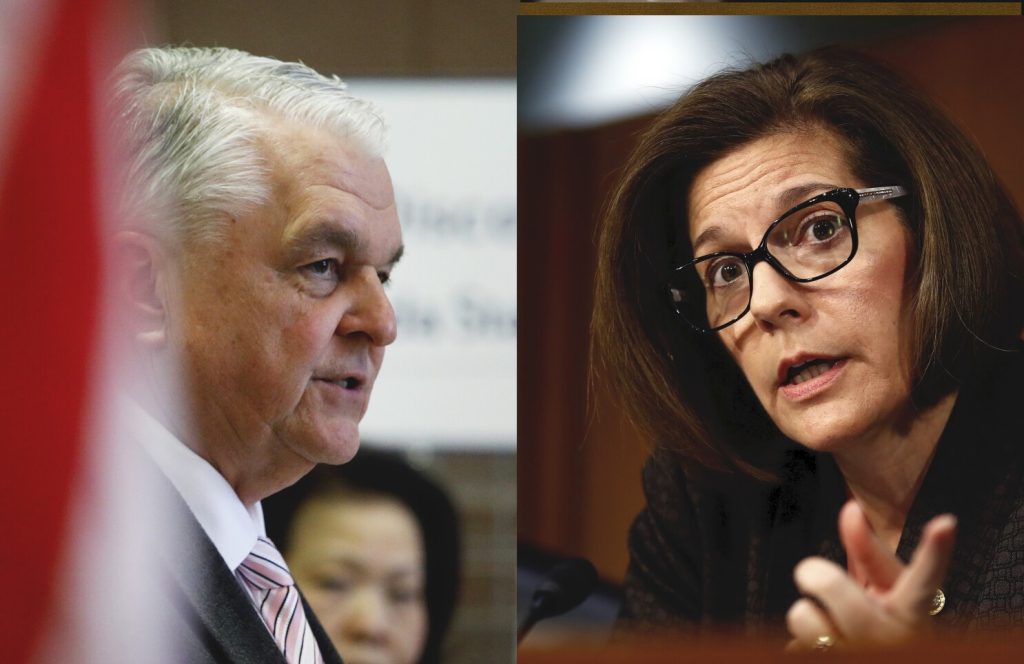
Photo taken from: The Los Angeles Times
Policy Summary
[SSB theme=”Official” align=”center” counter=”true” ]
Control of the U.S. Senate will be up for grabs in the 2022 mid-term elections. Competitive races in key states will determine the balance of power. In this brief, I will preview the US Senate races in Nevada and North Carolina.
Policy Analysis
In Nevada, Senator Catherine Cortez Masto (D-NV) is running for a second term. Cortez Masto won the seat in 2016 by defeating Congressman Joe Heck (R-NV) in a close race. Before her election to the U.S. Senate, Cortez Masto was the state attorney general for two terms. Her current committee assignments include the Senate Finance Committee, the Senate Banking, Housing, and Urban Affairs Committee, and the Senate Natural Resources Committee.
She will be facing former state attorney general Adam Laxalt (R-NV). Laxalt was the 2018 Republican nominee for Governor. Adam Laxalt is the grandson of Paul Laxalt, the former Governor and US Senator from Nevada. Adam Laxalt also chaired the Trump 2020 campaign in Nevada, so he is well-connected with influential Nevada Republicans.
His website emphasizes his military background and endorsements from other Republicans such as Donald Trump, Senator Ted Cruz (R-TX), and Governor Ron DeSantis (R-FL). His website does not provide much information on his policy positions. The limited information on his campaign website regarding his policy positions is in-line with the rhetoric used by many of the Republicans who have endorsed him.
It does not appear that there have been any polls of the Nevada Senate race since the primary was held. Democrats have won most of the recent statewide races, but often by narrow margins. Democrats have owed recent victories in Nevada to a strong get-out-the-vote operation that was built by Harry Reid and his political staff. However, Reid has since passed away, and the leadership of the state Democratic party has changed.
The change in leadership at the state Democratic Party has led to disputes about important data files and multiple staff resignations. Uncertainty about the Democratic voter turnout operation in Nevada will lead to a significant investment of outside resources in Nevada by both Democrats and Republicans. This race will be close and will be determined by who shows up to vote.

Photo taken from: TBA
(click or tap to enlargen)
In North Carolina, there is an election for an open Senate seat due to the retirement of Senator Richard Burr (R-NC). The Republicans nominated Congressman Ted Budd (R-NC), and the Democrats nominated former state Supreme Court Justice Cheri Beasley (D-NC). Beasley previously served as an elected state judge before becoming a state Supreme Court Justice. Ted Budd was elected to Congress in 2016 after court-ordered redistricting created an open seat.
Before his election to Congress, Budd owned a gun store and did not have experience in public office. Budd is a member of the House Freedom Caucus, and he has compiled a very conservative voting record in Congress. Budd was not well-known outside of his district before he got the endorsement of Donald Trump and the Club for Growth started paying for advertisements that helped Budd’s campaign.
A recent poll conducted for WRAL, a local news station in Raleigh, finds that the race is within the margin of error. Both candidates registered support in the low 40s, indicating that they both have some work to do on persuading voters to support them in November. This could be due to the candidates not being well-known. The polling data does not include name ID data, which would have been valuable with this race.
According to the poll’s data, Beasley seems to be performing better among moderate and independent voters while her support is a little weaker than a Democratic nominee would prefer among very liberal voters. Budd has strong support among very conservative voters, but he doesn’t perform as well with moderate and independent voters.
His conservative voting record and his efforts to project a very conservative image to win the Republican nomination could be limiting his appeal to moderate and unaffiliated voters. I expect this race to remain in the poll’s margin of error until something shakes up the race. Republicans tend to win statewide races in North Carolina, but Democrats can win in North Carolina if they have the right candidate and get their supporters out to vote.
Engagement Resources
Click or tap on resource URL to visit links where available

Senator Catherine Cortez Masto’s Campaign Website
https://catherinecortezmasto.com/

Cheri Beasley’s Campaign Website

DSCC – Official Campaign Arm of Senate Democrats