

JOBS POLICIES, ANALYSIS, AND RESOURCES
Latest Jobs Posts
House Votes to Decriminalize Marijuana: Manufacture, Distribution and Possession
Brief #151 – Health and Gender
By Stephen Thomas
By a vote of 220-204, the U.S. House of Representatives Friday, April 1, passed the Marijuana Opportunity Reinvestment and Expungement Act or the MORE Act aimed at decriminalizing the manufacture, distribution, and possession of marijuana. New York Democrat and House Judiciary Committee Chairman Rep. Jerrold Nadler introduced the legislation, an unsuccessful version of which the House passed in 2020.
Russia Gets Shunned by the Sports World as a Result of its Invasion of Ukraine
Brief #151 – Foreign Policy
By Reilly Fitzgerald
Russia’s invasion of Ukraine has seen an outpouring of support for Ukrainians from every facet of the Western world. One of the largest initial reactions to the war has come from the sports world which banded together following the Olympics and showed a united front against Putin’s war.
How COVID-19 Has Transformed Public Policy and Health Efforts
Brief #150 – Health and Gender Policy
By Katrenia Busch
The crisis surrounding the 2019 coronavirus pandemic has far from ended. Over the past several months, the virus has continued to spread and infect new countries at an alarming rate. The long-term effects of the outbreak are likely to manifest in a number of ways, from economic setbacks and incarceration rates to paradigmatic shifts in health care administration.
Lessons for American Democracy from the Russian War with Ukraine
Russia’s invasion and war with Ukraine has been unfolding in real time in front of our eyes. The war has succeeded in bringing out the courage of Ukrainian President Zelensky and the Ukrainian people and the ruthlessness and cruelty of President Putin and the Russian army.
Free Speech Advocates Push Back Against The 1619 Project Culture War, Book Bans
Brief #51 – Education Policy
By Lynn Waldsmith
As conservatives continue to inflame the culture war over “critical race theory” and curriculum or books that it labels as unpatriotic or offensive, free speech advocates are fighting back.
Situation Update #6: The Ukraine Crisis
Brief #150 – Foreign Policy
By Abran C
Over a month into Russia’s assault on Ukraine, there still is no end. Russia’s attempt to conquer Ukraine has stalled and taken a much larger toll than many predicted. A lack of preparedness, supplies, and morale has caused a stalemate among ground forces. Yet as Russia’s advance has slowed, its air assaults have intensified. About 300 people are believed to have been killed in an airstrike by Russian warplanes on a theatre in the city of Mariupol.
Congress Addresses Use Of Controversial Forced Arbitration Clauses In Two Bills
Brief #185 – Civil Rights
By Rodney A. Maggay
On March 17, 2022 the United States House of Representatives passed H.R. 963. The bill is known as the Forced Arbitration Injustice Repeal (FAIR) Act. The bill passed by a 222 – 209 vote. Introduced by Congressman Hank Johnson (D-GA) the bill will ban the enforcement of forced arbitration clauses for consumers, employees and small businesses involved in legal disputes. The bill would apply to all kinds of workplace and consumer disputes that have become routine in consumer and worker contracts.
Administration, Members of Congress Try to Make Equal Pay Day Meaningful
Brief #36 – Social Justice
By Stephen Thomas
The U.S. Office of Personnel Management (OPM) will issue a proposed regulation later in 2022 to prohibit federal agencies from seeking or relying on an applicant’s salary history in the hiring process unless the applicant raises the issue of her or his own volition. The administration of President Joseph R. Biden Jr. and Vice President Kamala D. Harris announced the upcoming rulemaking on Equal Pay Day, March 15.
COVID 19: The Great Unmasking
Brief #149 – Health and Gender
By Alexandra Ellis
Since March 10, 2022, nearly all Americans can go without their masks indoors per new Center Disease Control guidance. Nearly for the entirety of the pandemic, different guidance has been given about masks – which has led to a lot of confusion and misinformation.


Future of School Mask Mandates Remains Uncertain
Future of School Mask Mandates Remains Uncertain
Education Policy Brief #60 | By: Lynn Waldsmith | October 28, 2021
Header photo taken from: nymag.com
Follow us on our social media platforms above
Browse more education policy briefs from the top dashboard

Photo taken from: Chalkbeat
Policy Summary
[SSB theme=”Official” align=”center” counter=”true” ]
Growing numbers of school districts are easing mask mandates in the face of pressure from Republican state lawmakers, strong opposition from parents and as the latest wave of Covid-19 appears to be declining in many parts of the country.
While the Biden administration has recommended universal masking in schools, more than 30 governors have refused to implement such mandates — and some have banned them altogether. Most notable is the ongoing public battle between the federal government and Florida Gov. Ron DeSantis, who maintains that only parents have the right to order their children to wear masks.
Yet more than half of Florida’s students live in counties where mask mandates are in place. A Florida judge is expected to rule by Nov. 5 in a lawsuit where six school boards are challenging the state Dept. of Health rule designed to prevent student mask requirements. The state says parents or guardians should have the right to opt out of mask requirements. Districts face state financial penalties for adopting policies that require students to wear masks to try to prevent the spread of COVID-19.
Policy Analysis
After DeSantis began to withhold funding from Florida districts that were enforcing mask mandates, the U.S. Education Department launched a civil rights investigation into Florida’s ban on mask mandates in schools, arguing it could harm students with disabilities. The Biden administration has also threatened similar action against several other states, but to date the strategy has produced no tangible results.
Meanwhile, U.S. Education Secretary Miguel Cardona, in a recent “Axios on HBO” interview, said he’s reluctant to withhold federal funding from states that won’t enforce school mask mandates.
“I don’t know that holding funds from students is the best approach,” Cardona said. “Ultimately, the students need more support, not less.”
According to Burbio, which tracks the developments and runs a dashboard on schools:
- About 42 percent of students live in states that have mask mandates for all schools.
- Nearly 31 percent live in states that have removed school mask mandates, though local districts have flexibility to mandate masks.
- About 24 percent of public K-12 students live in “legal limbo” states where state-level mandate bans face legal challenges and some districts require masks.
- Less than 3 percent of students live in states where local districts do not have the power to require masks.
The trend for face coverings in schools appears to be shifting away from state control towards local authority, and to encouraging mask wearing rather than requiring it. Burbio’s most recent data shows 78 percent of the 500 largest districts still require masks, with many of the schools that have made a change making face coverings optional.
In Michigan, for example, more than half of all students attend a school with a mask mandate. Gov. Gretchen Whitmer and Michigan Dept. of Health and Human Services Director Elizabeth Hertel have the power to enact a statewide mask mandate, but have asked local health and education leaders to enact their own rules.

Photo taken from: National Review
As in many parts of the country, that approach has led to vitriol, personal attacks and even death threats against members of local school boards and health departments from angry parents who vehemently oppose mask mandates for their children in the name of personal freedom.
“Conditions are continuing to deteriorate and have become even more volatile at the local level,” Norm Hess, executive director of the Michigan Association for Local Public Health, told The Detroit Free Press. The association has formally pleaded for a statewide school mask mandate.
“One of the reasons we had heard from the state that it was preferable to have local orders is the notion that people would be more likely to comply with a local order than with a statewide order, but we are not finding that to be true.”
The shift towards making mask-wearing optional in more schools is likely also partly due to the waning of the U.S. delta wave, which hit just as schools were preparing to return from summer break. According to The Washington Post’s tracking, new daily coronavirus cases have fallen about 60 percent nationwide since a mid-September peak.
When the 2021-2022 school year began, every state was in the U.S. Centers for Disease Control and Prevention’s worst Covid-19 community-transmission category, “high,” meaning they were all recording at least 100 new weekly cases per 100,000 residents or had a case positivity rate of 10 percent or more. Now, at least 9 states have dropped to the “substantial” level, the second worst of the four categories.
At the local level, there’s even more reason for optimism, since the CDC has 171 counties, or 5.3%, in its “moderate” or “low” transmission categories. At those levels, the agency has more relaxed guidelines for schools.

Photo taken from: CQ Press Library
However, it’s not clear how winter weather will impact Covid-19 transmission levels going forward. While the future of mask mandates remains uncertain in America’s schools, the question of vaccine mandates for students also looms on the horizon, especially now that pediatricians may be able to start vaccinating children ages 5-11 years against Covid-19 in a matter of weeks.
Advisers to the Food and Drug Administration have now endorsed the shots for younger children in that age group, concluding that the benefits outweigh the risks. The FDA is now expected to grant emergency use authorization, clearing the way for 28 million kids to receive the vaccine.
California recently became the first state to announce Covid-19 vaccines will be required for in-person learning for K-12 age groups after the FDA grants full approval for children. It remains to be seen, however, how many states will follow California’s lead.
Engagement Resources
Click or tap on image to visit resource website.

Prevalence of Mask Policies in US K-12 Schools:

Guidance for COVID-19 Prevention in K-12 Schools:
https://www.cdc.gov/coronavirus/2019-ncov/community/schools-childcare/k-12-guidance.html
Level of Community Transmission of COVID-19, by State/Territory:
https://covid.cdc.gov/covid-data-tracker/#cases_community

US coronavirus cases and state maps:
https://www.washingtonpost.com/graphics/2020/national/coronavirus-us-cases-deaths/

Coronavirus in the U.S./ Latest Map and Case Count:
https://www.nytimes.com/interactive/2021/us/covid-cases.html

Supreme Court Passes On Chance To Modify The Qualified Immunity Doctrine
Supreme Court Passes On Chance To Modify The Qualified Immunity Doctrine
Civil Rights Policy Brief #177 | By: Rodney A. Maggay | October 24, 2021
Header photo taken from: The Atlantic
Follow us on our social media platforms above
Browse more civil rights policy briefs from the top dashboard

Photo taken from: Reason Magazine
Policy Summary
[SSB theme=”Official” align=”center” counter=”true” ]
In Rivas – Villegas v. Cortesluna, Officer Daniel Rivas – Villegas responded to the scene of a 911 call. Upon arriving at the home he found a mother and her two daughters barricaded in a room trying to hide from the mother’s boyfriend. Ramon Cortesluna, the mother’s boyfriend, was in possession of a chainsaw and was destroying items in the house. The officers perceived he was carrying a knife. The officers shot him with two non – lethal beanbag shots at which point Cortesluna began to cooperate. He lay on the floor and Officer Rivas – Villegas placed his knee on Cortesluna’s back and removed the knife from his pocket.
Afterwards, Cortesluna sued Officer Rivas – Villegas for excessive force. The case was tried and subsequently appealed to the Ninth Circuit Court of Appeals which ruled that Officer Rivas – Villegas was not entitled to qualified immunity in the case because the facts in the case were similar to the case LaLonde v. County of Riverside. The court indicated that this case showed there was “clearly established law” which meant that the Rivas – Villegas case had to follow the Lalonde case and deny immunity to Officer Rivas – Villegas. Cortesluna would then be permitted to sue the officer for his injuries. However, the Supreme Court overruled the Ninth Circuit’s decision and declared that Officer Rivas – Villegas was entitled to the qualified immunity defense.
In City of Tahlequah v. Bond, another officer also responded to a 911 call. When the officers arrived on the scene, they found the woman’s ex – husband drunk and refusing to leave the woman’s home. The officers approached the ex – husband who then grabbed a hammer and raised it in a manner that indicated he might throw the hammer at the officers. The officers then shot and killed him. The estate of the victim then sued the two officers for excessive force but the officers were found not liable because of the qualified immunity defense. The case was appealed to the Tenth Circuit Court of Appeals which reversed and found that the officers were not entitled to the defense. An appeal was then made to the United States Supreme Court which reversed the Court of Appeals and ruled that the officers were not liable because “the officers plainly did not violate any clearly established law.”
Policy Analysis
The qualified immunity doctrine is one of the most controversial legal doctrines today and has come under heightened scrutiny in the current environment focusing on police misconduct and calls for law enforcement reform.
The doctrine of qualified immunity offers a defense to law enforcement officers (and other state and local officials) for their official conduct so long as their conduct does not violate clearly established statutory or constitutional rights of which a reasonable person should have known. Without this defense most officers would lose the civil suits brought against them. For a plaintiff to prevail they would have to show a “clearly established law” which would probably mean pointing to a factually similar case. However, because officers always invoke the defense when sued there is rarely a case to point to that has similar facts and which has held the officer liable. It is a Catch – 22 situation since courts are asking plaintiffs to show “clearly established law” when in reality there are no such cases since the legal defense prevents an officer from being held responsible.
There had been hope that either of these two cases would have resulted in a landmark case that could have overruled or modified the doctrine. Use of the doctrine had become so skewed and generated some head scratching results that Justices Clarence Thomas and Sonia Sotomayor – two justices on opposite ends of the political spectrum – both questioned the validity of the defense and called for a reexamination of the legal doctrine. Prior cases had seen officers invoke the legal defense and prevail even though the officers were engaged in some egregious conduct.

Photo taken from: Komorn Law
Officers who stole evidence and as much as $225,000 in cash in a California case were held not liable to the plaintiff only because they invoked the qualified immunity defense. Officers in Idaho were also found not liable even though their excessive actions caused the complete destruction of plaintiff’s home, again only because they claimed the qualified immunity defense.
And officers who killed a person they mistook for a suspect escaped liability by again using the qualified immunity doctrine as their defense. The doctrine was not meant to provide an absolute immunity shield for police officers but that is what the doctrine has evolved into. The Supreme Court could have taken steps to rein in the most extreme applications of the doctrine or even eliminate it but sadly chose not to in the two cases this term. Other options to reform the doctrine have been presented, most notably from Senator Ed Markey (D-MA) and his bill “Ending Qualified Immunity Act” but nothing definite has been passed in Congress thus far. The two cases at the Supreme Court offered the best opportunity at the moment but the Court failed to take the issue up.
It remains to be seen if Congress or the Supreme Court will address the doctrine and make the necessary modifications so that citizens can hold police officers accountable for their conduct.
This brief was compiled by Rod Maggay. If you have comments or want to add the name of your organization to this brief, please contact Rod@USResistnews.org.
Engagement Resources

Ending Qualified Immunity Act Bill – press release from Sen. Ed Markey’s office introducing bill.

Constitutional Accountability Center – opinion piece from center advocating for elimination of the qualified immunity doctrine.

The U.S. House Select Committee Investigation of the January 6 Attack on the Capitol: Part 3
The U.S. House Select Committee Investigation of the January 6 Attack on the Capitol: Part 3
Elections & Politics Policy Brief #30 | By: Erika Shannon | October 27, 2021
Header photo taken from: The New Civil Rights Movement
Follow us on our social media platforms above
Browse more elections and politics policy briefs from the top dashboard

Photo taken from: Getty Images
Policy Summary
[SSB theme=”Official” align=”center” counter=”true” ]
As the investigation into the January 6th Capitol Riots continues, it is becoming clear that getting to the bottom of that day’s events will be no easy task. There were already hurdles to overcome with the formation of a committee to investigate the day’s events; now that the committee is working towards piecing together what truly happened, more obstacles stand in the way. While companies like Facebook are working with the panel to turn over requested information, other subpoenaed parties are doing their best to avoid speaking with the congressional panel.
Former Trump Administration Chief Strategist Steve Bannon has ignored the subpoena issued by the House Select Committee. If Bannon continues to refuse to comply with their investigation, the Committee will be holding him in contempt of Congress. A 26-page contempt report has already been issued wherein the panel documented its repeated attempts to make contact with Bannon regarding his testimony. According to Bannon, he has executive privilege in these matters, meaning that a president can keep certain documents or discussions with advisers private. However, since there is a new sitting president, the House Select Committee argues that protection rests with President Biden, who has already waived executive privilege when releasing an earlier document per the panel’s request.
Besides dealing with those who refuse to cooperate, the House Select Committee is now being sued by former President Donald Trump in an attempt to stop documents related to the riots from being handed over to the panel. Trump himself has been urging former Trump Administration officials not to comply with the subpoenas, again citing executive privilege. Donald Trump is clearly unfamiliar with the idea surrounding executive privilege; since he is not the current sitting president, executive privilege no longer pertains to this situation. The move is not a shocking one coming from Trump, as turning to the courts and filing lawsuit was a move used by him throughout his presidency to keep potentially embarrassing documents out of the public realm. In a statement from Committee Chairman Bennie G. Thompson, he makes it clear that the panel will continue to fight their way to the records they need, regardless of Trump’s efforts to delay or obstruct their probe.
Policy Analysis
Though it seems that making any headway is impossible, the House Select Committee is doing their best to continue to gather any relevant information. Earlier this month, the committee issued subpoenas related to the “Stop the Steal” rally that took place on January 6th.
The subpoenas seek depositions from Ali Abdul Akbar AKA Ali Alexander, and Nathan Martin, who are connected to permit applications for the rally that day. The committee wants records from those two, as well as records from Stop the Steal LLC, an organization that was affiliated with the event.
Recently, the House Select Committee also subpoenaed former Department of Justice Official Jeffrey Clark. Clark was allegedly involved in efforts to overturn the 2020 presidential election and interrupt the peaceful transfer of power. The committee’s subpoena seeks deposition testimony, as well as records, from Clark as part of their probe into the January 6th Capitol riots. There is skepticism of whether or not he will appear at his deposition, or ignore the subpoena the way Steve Bannon did.

Photo taken from: Yahoo Finance
The congressional committee has a long way to go before their investigation is over, but there are some people who are willing to help it along. There are reports that at least five former members of the Trump Administration have voluntarily spoken with the House Committee. When they were texted or emailed by counsel for the committee asking if they were interesting in speaking with them, these five former staffers came forward. It is assumed that some of they may have information worth sharing, while others are hoping to avoid any legal repercussions in the future.
It has been a roller coaster ride from the start for this House Select Committee, and it will likely continue to be as the investigation continues. There is still work to be done, and it is clear that not all who were involved in that day’s events are going to come forward of their own free will. The committee will continue to figure out how to handle those who refuse to cooperate so that they can compile and complete their report.
This brief is part of an ongoing series on the Select Committee’s investigation; further updates will be provided as the investigation continues.
Engagement Resources

To see the latest news from the House Select Committee, visit their homepage.
To submit a tip to the House Select Committee, click here.

Climate Change, Silent Killer of the World’s Precious Coral Reefs
Climate Change, Silent Killer of the World’s Precious Coral Reefs
Environment Policy Brief #133 | By: Jacob Morton | October 22, 2021
Header photo taken from: World Atlas
Follow us on our social media platforms above
Browse more environmental policy briefs from the top dashboard

Photo taken from: Mongabay
Policy Summary
[SSB theme=”Official” align=”center” counter=”true” ]
14 percent of the world’s coral reefs perished within just ten years from 2009 through 2019, says a report released earlier this month by the International Coral Reef Initiative, a partnership of countries and organizations that works to protect the world’s coral reefs. The cause? Climate change. Pollution from human sewage and agricultural runoff, which cause harmful algal blooms, as well as heavy metals and other industrial chemicals from manufacturing industries, were cited as major contributors as well. Destructive fishing practices that harm coral reefs also earned a dishonorable mention.
The report presents an analysis of data collected by more than 300 scientists in 73 countries. Its editors concluded that “Since 2009, it’s a constant decline [of coral populations] at the global level.” According to the editors, what is particularly alarming is the trajectory of this decline. They point out that the first major global coral bleaching event occurred in 1998, but afterwards, most of the affected reefs seemed to bounce back. Today, they report, “That no longer appears to be the case.”
The report does note, however, that around 900 species of coral exist, and “some appear more resilient to the heat and acidification that accompany climate change.” Unfortunately, as researchers in the report point out, “those tend to be slower-growing and not the more familiar, reef-building varieties that support the richest biodiversity.” Despite this, editors of the report provide some optimism, stating that, “Many of the world’s coral reefs remain resilient and can recover if conditions permit.” They emphasize that if the world can limit the amount of global warming, these corals could still potentially recover, or at least regenerate over time.
Policy Analysis
According to the National Oceanic and Atmospheric Administration (NOAA) “Climate change is the greatest global threat to coral reef ecosystems,” and the clearly evidenced warming of the earth’s atmosphere and oceans “are primarily due to greenhouse gases derived from human activities.” NOAA explains that, “As temperatures rise, mass coral bleaching events and infectious disease outbreaks are becoming more frequent. Additionally, carbon dioxide absorbed into the ocean from the atmosphere has already begun to reduce calcification rates in reef-building and reef-associated organisms by altering seawater chemistry through decreases in pH,” a process known as ocean acidification.
A report by NOAA’s Florida Keys National Marine Sanctuary explains this process: “Rising (or even falling) water temperatures can stress coral polyps, causing them to lose algae (or zooxanthellae) that live in the polyps’ tissues. This results in “coral bleaching,” so called because the algae give coral their color and when the algae “jump ship,” the coral turns completely white. The algae also give coral polyps the food they need to survive.” The report adds that, “While a bleached coral is not dead, and corals can survive bleaching events, they are under greater stress, are less resistant to other threats such as disease, and are thus subject to mortality.”
Additionally, the ocean absorbs approximately one-third of the atmosphere’s excess carbon dioxide. As humans emit more carbon dioxide into the atmosphere, our oceans absorb more of the excess CO2, which alters the water’s pH, resulting in a more acidic ocean. “In order for a coral reef to grow, it must produce limestone (or calcium carbonate) at a rate that is faster than the reef is being eroded. Ocean acidification slows the rate at which coral reefs generate calcium carbonate, thus slowing the growth of coral skeletons.” Compounding these affects, as global warming worsens, “sea level rise; changes in the frequency, intensity, and distribution of tropical storms; and altered ocean circulation,” all create harsher conditions for coral reefs.
While the report by the International Coral Relief Initiative (ICRI) makes clear that tackling climate change should be our top priority for saving coral reefs, it stresses that “reducing pollution is also critical.” If corals are to be as healthy as is necessary to survive the warming temperatures that are already here to stay, we must reduce the amounts of pollution that cause algal blooms and murky and toxic waters in coral ecosystems.

Photo taken from: Walking on Life
Coral reefs occupy a small percentage of the sea floor, but according to the ICRI report, they collectively support “an estimated $2.7 trillion per year in goods and services.” The fish that live amongst them supply a critical source of protein for human consumption; their large limestone branching formations protect coastlines from storms; and their well-known beauty attracts billions of dollars in tourism revenue.
According to Dr. David Obura, chairperson of the coral specialist group for the International Union for Conservation of Nature and a contributing editor to the ICRI report, the 14 percent decline in the planet’s living coral reefs that took place between 2009 and 2019, is deeply concerning. Obura says, “In finance, we worry about half-percent declines and half-percent changes in employment and interest rates.”
A 14 percent decline in an ecosystem that supplies so much revenue globally, should be concerning to everyone. As Obura points out, “Coral reefs are the canary in the coal mine telling us how quickly [things] can go wrong.”
Just a week after the release of the ICRI report, United Nations world leaders met to discuss a new global biodiversity agreement (much like the Paris Agreement on Climate Change), called the Post-2020 Global Biodiversity Framework (GBF). The UN’s draft GBF sets targets for protecting marine and land habitats and reducing pesticides and plastic waste. The agreement is expected to set “21 targets and 10 milestones for governments to meet by the end of the decade. These include protecting a minimum of 30% of the world’s oceans and land, reducing pesticide use by at least two-thirds, eliminating plastic waste, and increasing financial resources dedicated to biodiversity to at least US$200 billion annually.”
For coral reefs, some leaders are pushing to protect the most pristine reefs that still remain. Dr. Obura, however, says “this approach would not suffice.” Obura argues, “People are so dependent on reefs around the world, we need to focus a lot of effort on the mediocre reefs, or all the other reefs, as well. We need to keep them functioning so that people’s livelihoods can continue.” The UN’s GBF agreement is set to be finalized in Spring 2022.
Engagement Resources

The International Coral Reef Initiative (ICRI) – A global informal partnership between Nations and organizations which strives to preserve coral reefs and related ecosystems around the world.

The Center for Biological Diversity (The Center) – Because diversity has intrinsic value, and because its loss impoverishes society, we work to secure a future for all species, great and small, hovering on the brink of extinction. We do so through science, law, and creative media, with a focus on protecting the lands, waters, and climate that species need to survive.

The International Union for Conservation of Nature (IUCN) – IUCN is a membership Union composed of both government and civil society organizations. It harnesses the experience, resources and reach of its more than 1,400 Member organizations and the input of more than 18,000 experts. This diversity and vast expertise make IUCN the global authority on the status of the natural world and the measures needed to safeguard it.
Writer’s Sources
Einhorn, C. (2021, October 5). Climate change is devastating coral reefs worldwide, major report says. The New York Times. Retrieved October 22, 2021, from https://www.nytimes.com/2021/10/04/climate/coral-reefs-climate-change.html.

NOAA. (2011, April 4). Coral bleaching and ocean acidification are two climate-related impacts to coral reefs. How is climate change affecting coral reefs? Retrieved October 22, 2021, from https://floridakeys.noaa.gov/corals/climatethreat.html.
NOAA. (2015, March 3). How does climate change affect coral reefs? NOAA’s National Ocean Service. Retrieved October 22, 2021, from https://oceanservice.noaa.gov/facts/coralreef-climate.html.

The sixth status of corals of the world: 2020 report. GCRMN. (2021, October 8). Retrieved October 22, 2021, from https://gcrmn.net/2020-report/.

Willige, A. (2021, October 18). UN’s 2022 Global Biodiversity Framework could become the new ‘Paris agreement for nature’. ThePrint. Retrieved October 22, 2021, from https://theprint.in/world/uns-2022-global-biodiversity-framework-could-become-the-new-paris-agreement-for-nature/751267/.

The Changing Faces of American Drone Warfare Policy
The Changing Faces of American Drone Warfare Policy
Foreign Policy Brief #135 | By: Reilly Fitzgerald | October 19, 2021
Header photo taken from: The Print
Follow us on our social media platforms above
Browse more TBA policy briefs here

Photo taken from: Stimson Center
Policy Summary
[SSB theme=”Official” align=”center” counter=”true” ]
Drones have been a weapon of choice for previous Presidential administrations from George W. Bush to Joe Biden. Drones have been used all across the globe by the United States military and the intelligence community, especially by the Central Intelligence Agency. Drone warfare has tested the rule of law in many instances from surveillance usages for intelligence and law enforcement purposes, to the extra-judicial killing of an American citizen like Anwar Al-Awlaki; who was executed via drone by the Obama administration without his constitutional right to due process of law.
The issue of drones is one that is coming into further examination in recent weeks as President Joe Biden ordered a drone strike within Afghanistan on August 29th which killed innocent civilians and numerous civilians. The Afghanistan debacle has drawn criticism from political circles in the United States, in the international community, and other foreign policy experts; and so far the solution of the United States government is to pay the families of the victims for their losses.
Policy Analysis
According to data published by the Council of Foreign Relations in 2017, in an article by Micah Zenko called “Obama’s Final Drone Strike Data”, President Obama authorized over 500 drone strikes in his time as President of the United States; these strikes were mostly limited to Yemen, Somalia, and Pakistan. This data shows the number of drone strikes in each country between the years of 2004 (pre-Obama) to 2017. The number of strikes clearly rises on almost a yearly basis.
Documents have come to light regarding the ‘rules’ that President Trump had while in office for his use of drones. According to the ACLU, President Trump changed the policy of using drones in response to a direct attack, to using it as a retaliatory measure against just the mere threat of violence against US interests. According to US News on March 8th of 2021, the Department of Defense (DOD) confirmed that the federal government (DOD, White House, etc) were starting to review these policies and attempt to make changes toward a more legal footing regarding the use of drones inside (and outside) of conflict zones and other standards regarding the presence of the target, or the presence of civilians.

Photo taken from: Voanews
Drones capabilities and policies have been the subject of many national discussions since the US left Afghanistan at the end of August. Those within the administration, like Secretary of State Antony Blinken, have touted the United States’ ability to strike “over the horizon” via our extensive drone warfare capabilities. These were the same capabilities that killed 12 Afghan citizens in a mistaken US drone strike.
It is unclear if the Biden administration will make much progress toward bringing the drone program towards a more legal footing than previous Presidents. Our ability to conduct these strikes with accuracy in former warzones (Afghanistan, Iraq, etc) is going to be directly impacted by the lessening of our intelligence collection in these places.
During the war in Afghanistan, the US intelligence community had an extensive presence throughout the country. Many of these assets are now either out of the country, or unable to conduct intelligence due to the lack of American (and allied) personnel in Afghanistan.
Engagement Resources
Click or tap on image to visit resource website.

Just Security (https://www.justsecurity.org/ )
Just Security is based at the Reiss Center on Law and Security at New York University School of Law. Just Security writes on many issues regarding American foreign policy and international security issues.

Human Rights Watch, Afghanistan
(https://www.hrw.org/asia/afghanistan# ) – Human Rights Watch investigates and reports on abuses happening in all corners of the world. We are roughly 450 people of 70-plus nationalities who are country experts, lawyers, journalists, and others who work to protect the most at risk, from vulnerable minorities and civilians in wartime, to refugees and children in need.

ACLU, National Security Project
(https://www.aclu.org/issues/national-security) – The ACLU National Security Project is dedicated to ensuring that U.S. national security policies and practices are consistent with the Constitution, civil liberties, and human rights.

Florida Gov. DeSantis Anti-Immigrant Policies
Florida Gov. DeSantis Anti-Immigrant Policies
Elections and Politics Policy Brief #29 | By: Abran C | October 20, 2021
Header photo taken from: Florida Phoenix
Follow us on our social media platforms above
Browse more elections and politics policy briefs from the top dashboard

Photo taken from: Getty Images
Policy Summary
[SSB theme=”Official” align=”center” counter=”true” ]
In recent months, the United States has seen large numbers of people attempting to cross into its borders from as far away as Afghanistan and as near as Haiti. Florida Governor Ron DeSantis has taken issue with the Biden administration’s handling of the border situations and has accused it of having lax immigration policies that have allowed in too many undocumented migrants. A problem he feels puts Americans and Floridians in danger.
Governor DeSantis has announced three actions being taken to curb what he sees as an immigrant crisis in the U.S. with the first action being that the State of Florida will sue the Biden administration over its immigration policies. The lawsuit alleges that the Biden administration violated a law known as the Administrative Procedure Act, by overstepping its legal authority when deciding not to detain undocumented immigrants arriving. It also alleges that the federal government’s actions violate the law because they are “arbitrary and capricious”. Secondly, the Governor has signed Executive order 21-223, which is also called the “Biden Border Crisis Executive Order”, which prohibits Florida agencies from cooperating with the federal government over certain immigration issues, for example prohibiting state agencies under Governor’s purview from providing support for the resettlement of illegal aliens to Florida… and, encouraging state law enforcement to detain any vehicle suspected of transporting illegal aliens if there is reasonable suspicion it is being used for human or drug trafficking.
Lastly, Larry Keefe a former U.S. attorney for Florida who was nominated by former President Donald Trump to become a federal prosecutor has been appointed to a new position, as the state’s “public safety czar”. Keefe’s stated purpose in the new role is to help keep Floridians safe from dangerous illegal immigrants who may try to enter the state or are already in it. The governor also recently called on state law enforcement to ‘audit’ private companies to ensure their workers are legally permitted to work in the United States and he has encouraged Florida authorities to detain buses, planes, or cars that they “reasonably believed” to be transporting people who entered the country illegally.
Policy Analysis
Under former president, Donald Trump DeSantis had no quarrels with Florida authorities cooperating with the federal government on issues of immigration. DeSantis and Biden have clashed over many issues in the past year, from lockdowns, to mask mandates and now immigration.
President Biden has not exactly been “soft” on immigration. He has continued keeping migrants in Mexico to await asylum claims hearings. The administration has also carried on using migrant detention centers used under the Trump administration that was promised would be shut down. They have also deported a large number of Haitians back to Haiti even as the situation continues to deteriorate and it is labeled unsafe for travel.
Still, DeSantis claims the administration has been far too soft on immigration and continues to implement draconian policies in his state. His new public safety czar will likely pursue new policies targeting immigrants and those Floridians who are suspected of being immigrants.

Photo taken from: AP News
DeSantis has worked hard to brand himself in Trump’s likeness and his Florida policies are examples of what kind of governing he would do at the national level. In further harming and alienating Florida’s large Latino and black citizens, he is gaining the national spotlight and attracting the Right-wing with a growing reputation for being the U.S.’s most rebellious, provocative, and anti-immigrant politician.
Engagement Resources
Click or tap on image to visit resource website.

Florida immigration coalition- The Florida Immigrant Coalition (FLIC) is a statewide coalition of more than 65 member organizations. We work together for the fair treatment of all people, including immigrants. With staff in six counties and members throughout Florida
ACLU Florida- The mission of the ACLU of Florida is to protect, defend, strengthen, and promote the constitutional rights and liberties of all people in Florida. We envision a fair and just Florida, where all people are free, equal under the law, and live with dignity.

Theranos: A Medical Fraud Case for the Record Books
Theranos: A Medical Fraud Case for the Record Books
Health and Gender Policy Brief #138 | By: S, Bhimji | October 18, 2021
Header photo taken from: ABC News
Follow us on our social media platforms above
Browse more health and gender policy briefs from the top dashboard
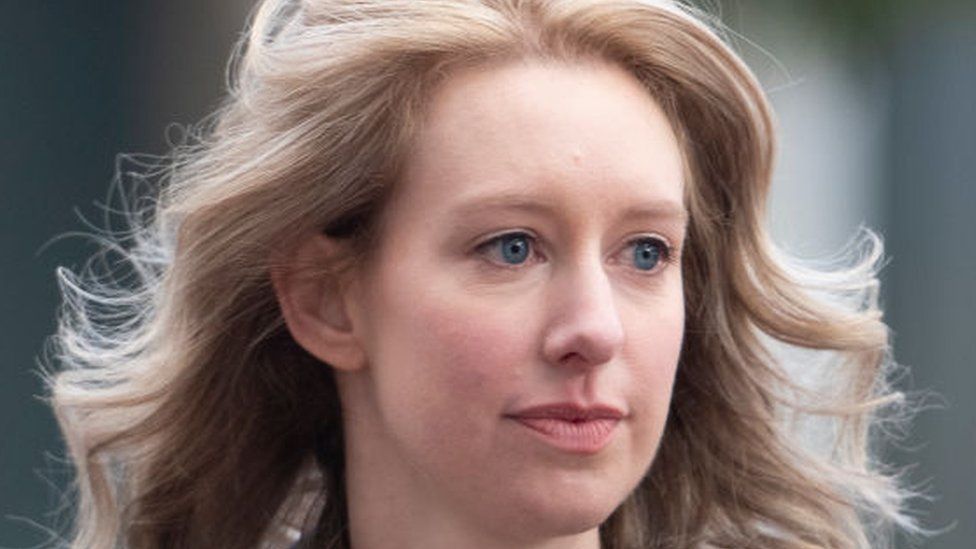
Photo taken from: Getty Images
Policy Summary
[SSB theme=”Official” align=”center” counter=”true” ]
Elizabeth Holmes, founder, and CEO of Theranos was on top of the world a decade ago. After just two semesters at Stanford, the dropout partnered with Ramesh Balwani (her BF) to develop a ground-breaking medical device that could run hundreds of medical tests on a tiny amount of blood obtained with a pinprick. She aspired to be the next Steve Jobs and emulated him in every respect.
Just 8 years ago, she was running a company worth $10 billion but today she is on trial with her partner, Balwani, for running one of the biggest scams in the world of medical testing.
In 2002, Holmes (19) was in China when she met Balwani (37) and soon they became business partners and lovers. They came up with an idea that they would change medicine for the better by doing two things: 1) develop a small medical appliance that could quickly run hundreds of medical tests within minutes and 2) the machine would only use a tiny amount of blood- that was obtained from a finger prick.
It is important to note that existing technology requires blood drawn from the arm with a needle and that outside of the most common dozen medical tests that take less than 60 mins, most laboratory tests take days. Holmes and Balwani were offering a technology that was fast, automated, and cheap.
With this idea in mind, Holmes recruited big-time investors to become part of her business. Some of the investors who sat on her board included Henry Kissinger, James Mattis, and George Shultz. Companies like Safeway and Walgreens paid hundreds of millions of dollars to have this technology in their stores to benefit their patients.
At its peak in 2013-14, Theranos was worth close to $10 billion and Holmes and Balwani were living the good life. Money from investors was pouring in, and both partners were on the front cover of every business magazine. They were hobnobbing with the most famous and richest business people on planet earth. In one email to Holmes, Balwani, said, “They’re not investing in our company, they’re investing in our destiny.”
Everything was going according to plans- or was it?
Policy Analysis
In 2014, a whistleblower shocked the world by revealing the extent of fraud that was taking place at Theranos. Firstly, Theranos never succeeded in developing a machine that could do all the hundreds of tests that they bragged about. The rates of false positives and false negatives were high leaving investors and patients very unhappy. Further staff revealed that the machine had never been verified for quality control, reliability, and reproducibility.
Of major concern was that Theranos was using third-party proprietary machines to do the testing and hid these machines when investors came to check the Theranos facility.
Also of importance was that the finger prick test never worked and Theranos was using blood drawn from the arm- as has been done for nearly a century. Yet, Holmes and Balwani continued to sell their technology and duped more investors; they never mentioned the flaws in their machine.
Everything at Theranos was surrounded by secrecy and intimidation. No one was allowed to speak about the incorrect medical tests. New lies were created to cover old lies.
The moment the inner workings about Theranos were published in the Wall Street Journal, the company started to spiral down. Initially, Holmes denied the newspaper report about her company. But within 3 years, both Holmes and Balwani were charged with criminal fraud for having allegedly made false claims and misleading investors about the efficiency of their groundbreaking blood-testing technology.

Photo taken from: Stat News
The case is expected to finish sometime in Dec 2021. If found guilty she faces at least 20 years in prison. Balwani faces a separate trial in Jan of 2022. And it is unlikely that the investors will see any of their money back- Holmes and Balwani lived a lavish lifestyle sparing no expenses.
In 2018, the FBI shut the company down and Holmes is facing numerous lawsuits from investors. Her trial is presently taking place in California and it is expected that she will claim that her boyfriend Balwani abused her, which led her to make all the wrong decisions.
Engagement Resources
Click or tap on image to visit resource website.

Medical Tests:
https://medlineplus.gov/lab-tests/

Practices of Science – False Positives and False Negatives:

Blood tests at your fingertips:
https://cen.acs.org/articles/95/i1/Blood-tests-fingertips.html
Numbers and Power: Congress and News Media
Numbers and Power: Congress and News Media
Elections and Politics Policy Brief #28 | By: Rosalind Gottfried | October 18, 2021
Header photo taken from: The Economist
Follow us on our social media platforms above
Browse more Elections and Politics policy briefs from the top dashboard

Photo taken from: Pew Rearch Center
Policy Summary
[SSB theme=”Official” align=”center” counter=”true” ]
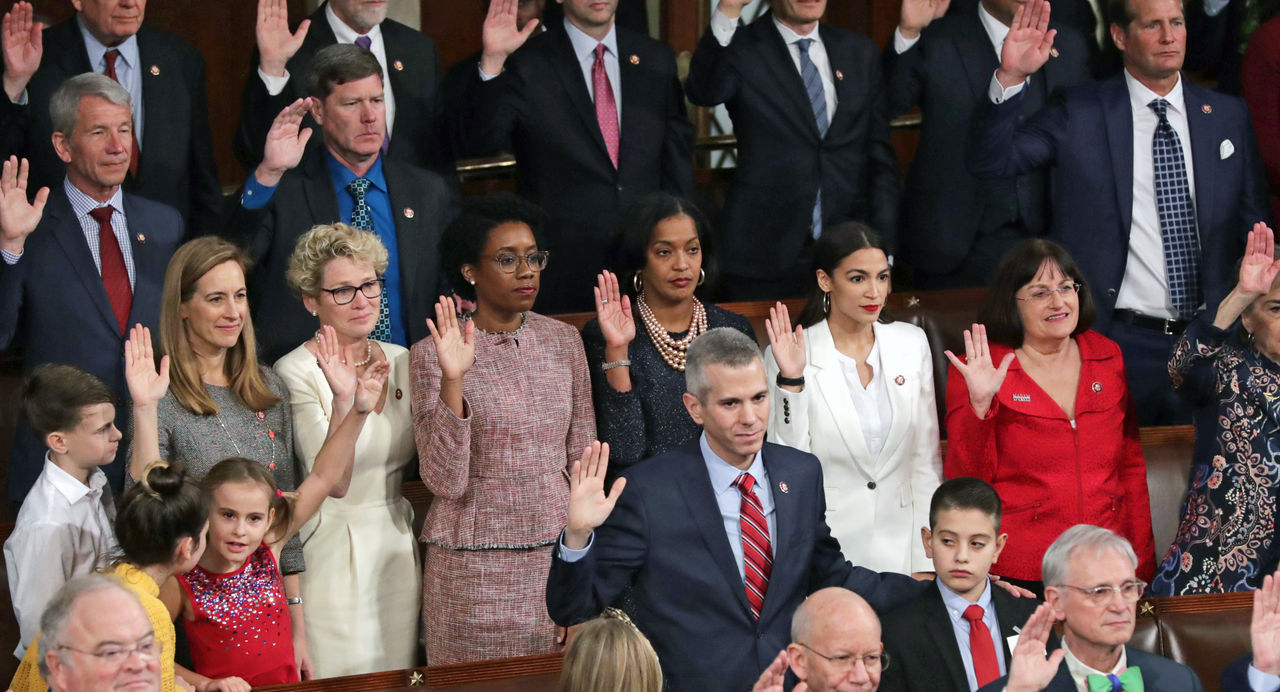
Congress is more diverse than previous Congresses but only slightly more than the 116th. Congress is 77% white while the general population is 60% white. Women comprise 24% of all seats though women are more than half of the American population. Though 23% of the Congress are racial or ethnic minorities, some groups are closer to proportionally represented than others. African Americans and Native American Congressional membership closely mirrors their populations with 13% and 1% members, respectively. The Hispanic population shows a more skewed relationship with 9% Congressional members and 19% in the general population.
The Asian American/pacific Islander corresponding data is 3% members and 6% general population. Democrats account for 83% of the nonwhite membership compared to 17% among Republicans. Although the numbers are growing seemingly larger than in the past, when looking at the relative proportions there is very little change. In 1981 Congress was 94% white while the population was 80% white, so the level of the gap between the Congressional composition and the general population has remained remarkably consistent.
Attaining parity is not a simple matter of numbers of Congresspersons, though that is one important aspect of gaining equitable representation. Eleven percent of top staff are people of color while they comprise 40% of the population. Congressional offices have a small proportion of African American staff and many have none in the top staff position. Research and reports by Black congressional organizations suggest a big problem in the composition and attrition with the Congressional staff offices. Low wages, high living expenses, and an insular culture make the Congressional offices inhospitable to people of color.
Nancy Pelosi raised the salary of top staffers to potentially $200,000 though the average staffer makes between $30-40,000 and the lowest entry level position pays $29,000. Median Black household income averages $20,000 less than in the average American Household, suggesting less access to resources. The disproportionate impact of the pandemic on nonwhite populations, and the threat and fear generated by the Jan 6 riot, have further increased the reluctance of nonwhite professionals to serve in the federal government. Although the Democrats generally have a more diverse staffing pattern than the Republicans, the Senate offices in the three states with the largest portion of African American voters had only one top staffer who was African American.
Another arena essential to establishing parity in the culture concerns the news media. The media personnel remain 75% non-Hispanic white and the percentage of people of color who are in leadership position is 13%. Seventeen percent of newsroom staff are white, according to surveys of research by the Columbia Journalism Review (CJR)*. Newspapers have reduced their workforces by half in the past ten years and many of the first to go are nonwhites. This against a declaration by the American Society of News Editors that pledged parity by 2000. Some data from the CJR show that the NPR editorial staff rose from 23% persons of color in 2012 to 25% in 2017. The WSJ newsroom staff is reported to be 90% white. Huffpost newsroom leaders are 86% white. The Washington Post newsroom staff is 69% white. The NYT newsroom is 81% white, down from 84% 16 years earlier. There were no people of color hosting prime time shows on
Fox and only one on CNN and MSNBC.
Policy Analysis
Examination of demographic data in politics and media regarding the relatively low presence of people of color, and women, often leads to scrutiny of these groups and can spiral into blaming their paucity on the groups themselves. A more accurate assessment would consider the structural and cultural barriers faced by these groups.
Wages and conditions of employment need to be assessed and biases regarding who represents a strong candidate need to be examined. A bias in favor of ivy league educated persons, as well as people with certain internships and experiences, negates the many assets people of other backgrounds can bring to a position and fails to assess the level of their actual skills.
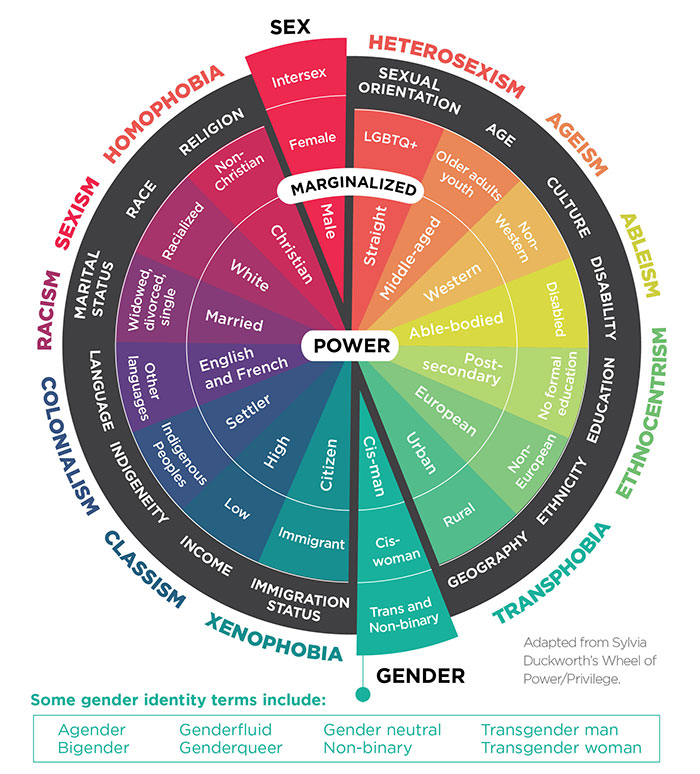
Photo taken from: Canadian Institutes of Health
If the powerful institutions which inform civic life are to become more inclusive, no aspect of them can go unexamined; self-examination of those in power is an integral part of bringing equity because no one is in a better position to identify and rectify problem areas.
Engagement Resources
Click or tap on image to visit resource website.

Race Ethnicity Newsrooms:
https://www.cjr.org/special_report/race-ethnicity-newsrooms-data.php

American Newsrooms Still Lack Racial Diversity:

Gender and Race:
https://www.opensecrets.org/news/reports/gender-and-race-2020

The racial divide on news coverage, and why representation matters

Newsroom employees are less diverse than U.S. workers overall
Racial, ethnic diversity increases yet again with the 117th Congress
As Some Black Staff Members Leave Congress, Those Who Remain Call for Change:

The Facebook Files Follow-Up: Facebook’s Terrible, Horrible, No Good, Very Bad Week
The Facebook Files Follow-Up: Facebook’s Terrible, Horrible, No Good, Very Bad Week
Technology Policy Brief #64 | By: Scout Burchill | October 18, 2021
Header photo taken from: Delano.lu
Follow us on our social media platforms above
Browse more technology policy briefs from the top dashbaord

Photo taken from: The New York Times
Policy Summary
[SSB theme=”Official” align=”center” counter=”true” ]
Frances Haugen, the whistleblower behind the Wall Street Journal’s hugely-consequential Facebook Files (see Brief #64 for more details) took center stage earlier this month, revealing her identity in a primetime interview with CBS’s 60 Minutes before testifying in front of Congress in a series of high-profile hearings. Haugen’s revelations, coupled with an hours-long complete blackout of all Facebook-owned platforms, added up to one of Facebook’s worst weeks ever.
And that was just the beginning of a long week for Zuckerberg and co. Compounding Facebook’s woes, progressive antitrust hero and seasoned Big Tech critic, Jonathon Kanter, was met with bipartisan plaudits on Capitol Hill, signaling that he will likely be confirmed as the head of the antitrust division at the Justice Department. Kanter’s confirmation will add jet fuel to the burgeoning antitrust movement picking up steam in Washington, which has Facebook high on the list of worst offenders. It’s hard to imagine an all time worst week for a company that has admitted to facilitating a genocide in Myanmar, but all things considered, from Facebook’s point of view, this one is definitely up there.
A big reason for this is Frances Haugen’s testimony, which managed to do something rare in our current political climate; it brought nuance and substance to a difficult and complex issue. The Facebook Files was the true star of the show, the meat of matter, as it were, but it was Haugen’s technical knowledge and formidable experience that might make the difference going forward. Instead of devolving into a carnival of geriatic Luddites performing their predictable political grandstanding and soundbite-level gamesmanship, Haugen’s presence brought sorely needed focus at a critical moment. Her ability to keep the discussion technically-grounded, specifically on the topic of algorithms, helped keep the culture war brain rottage at bay and move the overall conversation in a much more meaningful direction.
Although not all Big Tech reformists share the same ideas about how to go about making Big Tech companies less terrible for society, Haugen’s testimony presented a number of possible avenues for Congress to pursue, which are worth taking a closer look at.
Policy Analysis
It’s no surprise that of all the revelations exposed by the Facebook Files, the one that has gained the most traction in mainstream discourse is the piece about how their business model, which is built around maximizing engagement, is really bad for the mental health of individuals, and particularly young adults. Haugen argued this well, drawing a direct line to Big Tobacco’s infamous history of corporate coverups;
“In the case of cigarettes, ‘only’ about 10% of people who smoke ever get lung cancer… so the idea that 20% of your users could be facing serious mental health issues and that’s not a problem is shocking.” Indeed, it was hard not to leave Haugen’s testimony without thinking that Facebook was destroying the mental well-being of adolescents and was an all around anathema to informed, thoughtful and compassionate discourse and communication.
While the internal documents Haugen sheperded to the light of day certainly contained a number of new and shocking revelations, Haugen’s policy recommendations have actually been floating around the halls of Congress for some time now. They include stripping social media platforms of their Section 230 protections for content their algorithms promote, greater company transparency that would allow researchers and the public access to Facebook’s data and an independent agency to oversee social media companies. Notably, Haugen did not argue for breaking up the company.
Stripping Section 230 protections would mean Facebook could be held liable for the content users post on it (see Brief #23 for more details). Critics of this approach argue that stripping these protections and not breaking up Facebook would only consolidate even more power in the Big Tech giants.
Only massive companies like Facebook and Google would be able to allocate the necessary resources to carry out such massive content moderation regimes. In effect, Haugen’s policies reflect her tech background.

Photo taken from: brainstudy.info
They aim to adjust the architecture of the platform, targeting the algorithmic incentive structure that prioritizes harmful and polarizing content, without addressing the topic of concentrated power.
Advocates of anti-trust view many of the societal harms wrought by Big Tech companies principally as a symptom of their market power.
Anti-trust advocates argue that a combination of more competitors, as well as clear rules around harmful business practices like surveillance advertising and privacy would go a long way in solving many of the problems exacerbated by the Big Tech giants. While not a panacea in and of itself, breaking up the enormous power these companies have over society, the economy and issues of speech would greatly reduce their ability perpetrate harms and would prevent their power from being weaponized by political actors.

Photo taken from: Reuters
Taking a different route altogether, some Big Tech reformists argue that Google and Facebook should be regulated as a public utility, like electricity or water services. Ohio is currently going this route by suing Google, claiming that the company should be declared a public utility and therefore cannot discriminate in how they list searches by prioritizing the placement of its own product, services and websites. In Facebook’s case, the government would treat it as common carrier, which would lead to a whole host of government-set regulations that would dictate how the business operates.
While the road to reform is long and paved with uncertainty, Haugen’s testimony will certainly help guide the way. As Haugen points out, learning more about how Facebook’s algorithms and business model affects society is the only way to crafting good policy. One point all Big Tech reformists can agree upon is that more transparency is sorely needed.
Engagement Resources
Click or tap on image to visit resource website.

The Center for Humane Technology

American Economic Liberties Project
https://www.economicliberties.us/big-tech-monopolies/

Center for Digital Democracy
https://www.democraticmedia.org/

The Facebook Files (writer’s source):
https://www.wsj.com/articles/the-facebook-files-11631713039
Kanter Appointment (writer’s source):
https://www.nytimes.com/2021/10/06/technology/biden-jonathan-kanter-big-tech.html
Frances Haugen’s Testimony (writer’s source):
https://www.nytimes.com/2021/10/05/technology/facebook-whistle-blower-hearing.html
https://www.nytimes.com/live/2021/10/05/technology/facebook-whistleblower-frances-haugen

Frances Haugen on 60 Minutes (writer’s source):

Facebook Outage (writer’s source):
https://www.theverge.com/2021/10/4/22708989/instagram-facebook-outage-messenger-whatsapp-error

Facebook in Myanmar (writer’s source):

The Facebook Files: A Clarion Call for Real Accountability and Transparency
The Facebook Files: A Clarion Call for Real Accountability and Transparency
Technology Policy Brief #63 | By: Scout Burchill | October 18, 2021
Header photo taken from: Financial Times
Follow us on our social media platforms above
Browse more technology policy technology from the top dashboard

Photo taken from: The BBC
Policy Summary
[SSB theme=”Official” align=”center” counter=”true” ]
A remarkable investigative series published last month by the Wall Street Journal reveals the profound, and deeply disturbing, ways Facebook is warping our society. The Facebook Files, as they are called, expose bombshell revelations about the harms the biggest social media company in the world knowingly perpetrates. While much ink has been spilled on this topic before, the Facebook Files are already shaping up to be the most damning scandal to rock the company since Cambridge Analytica.
According to the Wall Street Journal, who received a wide-ranging cache of internal documents from Frances Haugen, a whistleblower within the company, Facebook has a secretive system of exclusive content moderation rules called ‘XCheck’ that only apply to about 5.8 million specially designated VIP users. A number of the reports, which feature company conducted research, also confirm that Facebook is well aware of the harms its platforms have unleashed on society. For example researchers found that Instagram has had a profoundly negative effect on teenage girls, with close to one-third of teen girls stating that when they feel bad about their bodies, Instagram makes them feel even worse. 13% of British teens and 6% of American teens who reported having suicidal thoughts attributed their desire to kill themselves back to Instagram.
Further internal documents reveal that 87% of all platform moderators’ time is spent on content in the United States, a massive inequality considering that 90% of Facebook users live outside the United States and Canada. As a result of their underinvestment, the company knew about drug cartel operations and human trafficking in developing regions, but did little about it. Just as equally damning, internal memos show that Facebook’s 2018 algorithm tweaks, which were made under the guise of incentivizing more meaningful social reactions, actually made the platform a measurably more effective manufacturer of outrage. Divisive and politically destabilizing content became even more rewarded. In fact, one political party from Poland estimated that the 2018 algorithm tweaks shifted their content from about 50% negative content to about 80% negative content.
If there is one takeaway from the Facebook Files it is the undeniable confirmation that Facebook is well aware of the harms of its platforms, and is either unable or unwilling to fix them. Its own workforce is now raising the alarm, calling for sorely needed accountability.
Policy Analysis
Facebook is increasingly living up to the precedent set by the ‘Big Tech’ moniker. Similar to Big Oil or Big Tobacco, the social media company is extracting massive profits at the expense of the well-being of our society. It is knowingly addicting users to cycles of manufactured outrage, polluting our mental health and poisoning our information ecosystems, all while engaging in sophisticated public relations campaigns and cover ups. The key here is not that Facebook’s business model is adversely affecting society, but rather that Facebook knows a lot more about how its business adversely affects our society than it cares to admit. And worse, the Facebook Files actually contradict a lot of what Facebook has been publicly telling us about its content moderation policies, algorithmic incentives and mental health impacts.
The Facebook Files, taken together with recent developments at Facebook, paints a picture of a company that is trying really hard to appear accountable, trustworthy and responsible, while actively undermining any real efforts to be so. Over the summer, Facebook banned a group of New York University researchers who were attempting to study political advertising on the platform. The researchers were crowdsourcing data on political ads from users through a browser extension called Ad Observer. Facebook claimed that the project puts users’ information at risk by collecting their data, however the open source codes of the extension prove that this is simply not true. The reality is Facebook is prioritizing the privacy of advertisers who pay big bucks for targeted political ads over true transparency.

Photo taken from: Washington Square News
Shortly after this incident, Facebook released a quarterly transparency report that proved to be anything but transparent. Not long after its release, the New York Times revealed that the original transparency report was shelved out of fear it would make the company look bad.
For over a decade Facebook has tricked the public, and probably even itself for a time, into thinking that everything bad about Facebook can be fixed with a tweak of the algorithm. One of the upshots of this thinking is the assumption that Facebook is the best equipped actor to solve the problems of Facebook because at the end of the day the platform’s problems are mainly technical in nature, like a lever gone awry or a dial turned too far up in the algorithmic amplification machine. Facebook itself goes to great lengths to prop up this fantasy, as well, because it allows the company to obscure its real business, which is fundamentally driven by profit, not good intentions. The Facebook Files shed light not only on the myriad ways Facebook’s policies affect society, but also help illuminate the company’s true priorities, which have always been maximizing profits by any means necessary.
Engagement Resources
Click or tap on image to visit resource website.

The Center for Humane Technology

Ad Observer
The Facebook Files (writer’s source):
https://www.wsj.com/articles/the-facebook-files-11631713039
Facebook Bans Researchers (writer’s source):
Facebook’s Transparency Report (writer’s source):