

JOBS POLICIES, ANALYSIS, AND RESOURCES
Latest Jobs Posts
Situation Update #3: The Ukraine Crisis
Brief #144 – Foreign Policy
By Abran C
On February 20, 2022, Belarus’ defense ministry announced that Russian troops which had been sent for military exercises and scheduled to return on Sunday would remain in the country indefinitely.
The Far-Right Insists That Even Butterflies Recognize Borders
Brief #136 – Environmental Policy
By Todd J. Broadman
The politics of immigration along the border between Texas and Mexico now involves the National Butterfly Center (NBC). The NBC is a 100-acre nature preserve located in Mission, Texas. Since 1993, the NBC has served as a protected migratory refuge for the monarch, the rare pale sicklewing, and over 80 other butterfly species.
How Race Has Emerged in Recent Redistricting Cases Months Before the 2022 Midterms
Brief #182 – Civil Rights
By Rodney A. Maggay
For the first few months of 2022 reports emerged on the status of redistricting efforts in a number of states. Some of those battles have not been definitively resolved with one case even reaching the U.S. Supreme Court.
The 2022 Wage-Gap Spiral: State and Federal action to Cap Nurses’ Pay
Brief #135 – Economic Policy
By Alexandra Ellis
As the pandemic comes to its third year, state legislatures across the US are looking to cap nurses’ pay. States are calling for local and federal regulation of nursing agencies who employ nursing home nurses and travel nurses. Proponents of capping agency nurses. pay suggest there has been a significant increase of hourly wage for agency nurses.
Situation Update: The Ukraine Crisis
Brief #143 – Foreign Policy
By Abran C
Tensions and the threat of war in Europe remain high in the ongoing crisis in Ukraine. On February 10th Russian Foreign Minister Sergey Lavrov and British Secretary of State Lizz Truss held talks in Moscow to air grievances and attempt to engage in diplomacy.
The U.S. House Select Committee Investigation of the January 6 Attack on the Capitol: Part 8
Brief #32 – Social Justice
By Erika Shannon
The most recent person to be subpoenaed by the committee is former White House trade advisor Peter Navarro. According to public reports and his own book, Navarro was involved in the efforts to delay Congress’s certification of the 2020 election and attempt to change the election of results.
New Study Shows Americans are Dying Early from Air Pollution
Brief #135 – Environment Policy
By Jacob Morton
A new study published by the Health Effects Institute shows that Federal air pollution regulations are not doing enough to protect our elders from serious illness and death. The recent report published by HEI shows that Americans 65 and older are still at risk of death from exposure to fine soot pollution in the air, even at the levels allowed by the Federal government.
Mental Health Needs of Children and Youth Escalate During COVID-19 Era
Brief #69 – Education Policy
By Yelena Korshunov
Before the COVID-19 pandemic, everybody said that Greg was an exceptional basketball player. He was a leader of his middle school basketball team. He shot a basketball at the school court with his friends every single day after class, unless it was pouring rain. When the COVID-19 tsunami came, Greg had to quarantine, as did all of his friends.
How the U.S. Should Counter Russian Aggression in Ukraine
Brief #142 – Foreign Policy
By Abran C
The crisis and possible looming war in Ukraine have historical implications that include more than just Russia and Ukraine. Though the ties between Russia and Ukraine run far back into history, the conflict also involves the historical involvement of the United States and its NATO allies in Europe.


Introducing A Fossil Fuel State’s Carbon-Pricing Plan
Introducing A Fossil Fuel State’s Carbon-Pricing Plan
Environment Policy Brief #130 | By: Katelyn Lewis | September 21, 2021
Header photo taken from: Fox 43
Follow us on our social media platforms above
Browse more environmental policy briefs

Photo taken from: Times Observer
Policy Summary
[SSB theme=”Official” align=”center” counter=”true” ]
Pennsylvania’s carbon-pricing plan cleared its final regulatory hurdle on September 1, making the Keystone State the first major fossil fuel state to adopt a cap-and-trade policy.
The plan is two-pronged: It imposes a price on carbon dioxide emissions and sets declining limits on carbon dioxide emissions from power plants. It also paves Pennsylvania’s way into the Regional Greenhouse Gas Initiative (RGGI), a consortium of nearly a dozen Northeastern and Mid-Atlantic states – Connecticut, Delaware, Maine, Maryland, Massachusetts, New Hampshire, New Jersey, New York, Rhode Island, Vermont, and Virginia – working “to cap and reduce CO2 emissions from the power sector,” according to the initiative’s website.
Under RGGI, each state establishes its own carbon dioxide emissions budget, setting the total amount of greenhouse gases released from fossil fuel-fired electric generating units, or EGUs. Power producers can buy credits at an annual auction, but the policy incentivizes them to lower their overall emissions as the total available decreases while making the energy market more cost-competitive for renewable energy sources, such as nuclear, wind and solar.
In Pennsylvania, this initiative translates to the dozens of coal, oil, and natural gas-fueled power plants across the state being “forced to buy hundreds of millions of dollars in credits in the coming years that the state could then spend on clean energy efforts,” the Associated Press reports. These efforts include promotion of and investments in emissions reductions and energy efficiency programs.
“By participating in RGGI, Pennsylvania is taking a historic, proactive and progressive approach that will have significant positive environmental, public health and economic impacts,” Pennsylvania Gov. Tom Wolf said in a statement.
Over the next decade, the Wolf administration estimates the state’s GDP will increase by $2 billion while creating 27,000 jobs and eliminating up to 225 million metric tons of carbon dioxide from the atmosphere, the Washington Examiner reports. It will simultaneously lower rates of childhood asthma, respiratory disease, premature deaths, lost work days, and healthcare costs, according to Pennsylvania’s Department of Environmental Protection (DEP).
“Participating in RGGI is one more way for Pennsylvania, which is a major electricity producer, to reduce carbon emissions and achieve our climate goals,” Wolf said. “[P]articipating in this cap-and-trade initiative will (also) allow Pennsylvania to make targeted investments that will support workers and communities affected by energy transition.”
Pennsylvania is the fifth leading carbon dioxide emitting electricity generation sector In the United States, according to the Pennsylvania Pressroom. With a regulatory limit set on carbon emissions from these electric generating units, Pennsylvania’s leaders hope the RGGI “cap and invest” program will help to reduce the state’s net greenhouse gas emissions from 2005 levels by 26% by 2025, and 80% by 2050.
The annual carbon dioxide allowance will total 78 million metric tons in the 2022 RGGI auction, according to the DEP. To hit their emissions reduction goals, this total is expected to shrink 25%, to 58 million metric tons, by 2030.
“Pennsylvania (has) moved one step closer to assuring that its residents and visitors can live healthier lives,” Patrick McDonnel, the state’s secretary for the Department of Environmental Protection, said in a statement. “Participating in RGGI will have immediate and lasting beneficial impacts on our communities.”
While the Wolf administration hopes to join the regional carbon initiative by Jan. 1, the package awaits review by Pennsylvania’s General Assembly.
Policy Analysis
The progression of Pennsylvania Gov. Tom Wolf’s climate action plan with this carbon pricing policy in a state sometimes referred to as “The Coal State” or “The Oil State” shows a big step in the environmentally friendly direction, but it still faces an uphill battle in the state’s legislature and most likely the courts.
The plan to reduce carbon emissions in Pennsylvania has, of course, become political – in fact, the Independent Regulatory Review Commission’s vote was 3-2, falling along party lines. On one side sits many of the state’s Democrats as well as nuclear power plant owners and the renewable energy sector, while its Republicans, fossil fuel plant owners, blue-collar labor unions, and heavy industry sit adamantly on the other.
Fossil fuel-rich and heavily populated, Pennsylvania is the United States’ No. 2 in natural gas and No. 3 in coal mining production, and its energy sector releases about 34% of the state’s overall carbon dioxide emissions.
One primary argument against the plan has been its potential push of power generation to neighboring states that have no caps, destroying local coal-mining jobs and economies.

Photo taken from: Public News Service
There’s also little evidence the carbon pricing plan will significantly reduce greenhouse gases in a state that has long been one of the nation’s biggest polluters and power producers, AP reports. Its effectiveness could depend on where emissions caps are set and whether money from the emissions credits are wisely spent on clean energy and energy efficiency programs
“It’s easy to say that I’m going to stand for the environment and we will see how that shakes out,” Commission Vice Chairman John Mizner said before voting against the plan. “But when I think of those people, especially in Indiana and Armstrong [counties], whose livelihoods for generations have relied on coal, I don’t think we’ve thought enough through how we are going to help them when it’s them who are going to bear the most cost.”

Retrieved from Fox 43 (click or tap link to view video)
Proponents argue that the state can’t wait to act on climate change, and this action will put Pennsylvania ahead in the growing clean energy market while paving the way for more states and the federal government to follow suit.
“Not only is it the right thing to do, but it is in each state’s self-interest to do it,” Mark Szybist, a senior attorney for the Natural Resources Defense Council, told AP.
Its effectiveness at reaching its carbon-cutting goals therefore lie in the time it takes to navigate the state legislature, changes made in the process, the emissions caps set, and the use of the funds generated from the credit program toward sustainable and effective clean energy and energy efficiency programs.
Engagement Resources
Click or tap on image to visit resource website.

Big greenhouse gas emitter moves to join climate initiative – Associated Press (Oct. 3, 2019) – https://apnews.com/article/71f1649b5dc84c99a589f7dc855f0410

Carbon pricing on Pennsylvania power generators clears latest regulatory hurdle – Washington Examiner/The Center Square (Sept. 2, 2021) – https://www.washingtonexaminer.com/politics/carbon-pricing-on-pennsylvania-power-generators-clears-latest-regulatory-hurdle

Climate Change – Pennsylvania Department of Environmental Protection (2015) – https://files.dep.state.pa.us/publicparticipation/citizens%20advisory%20council/cacportalfiles/Meetings/2015_01/Climate%20Change.pdf
Gov. Wolf Issues Statement on Commission Approval of RGGI – Office of Governor Tom Wolf (Sept. 1, 2021) – https://www.governor.pa.gov/newsroom/gov-wolf-issues-statement-on-commission-approval-of-rggi/
Independent Regulatory Review Commission Approves CO2 Budget Final Rulemaking – Pennsylvania Pressroom (Sept. 1, 2021) – https://www.media.pa.gov/pages/DEP_details.aspx?newsid=1488

Pennsylvania’s carbon-pricing plan at last regulatory hurdle – Associated Press (Sept. 1, 2021) – https://www.wfmz.com/news/area/poconos-coal/pennsylvanias-carbon-pricing-plan-at-last-regulatory-hurdle/article_fbf021fa-0b53-11ec-9cac-2f1548932a5e.html
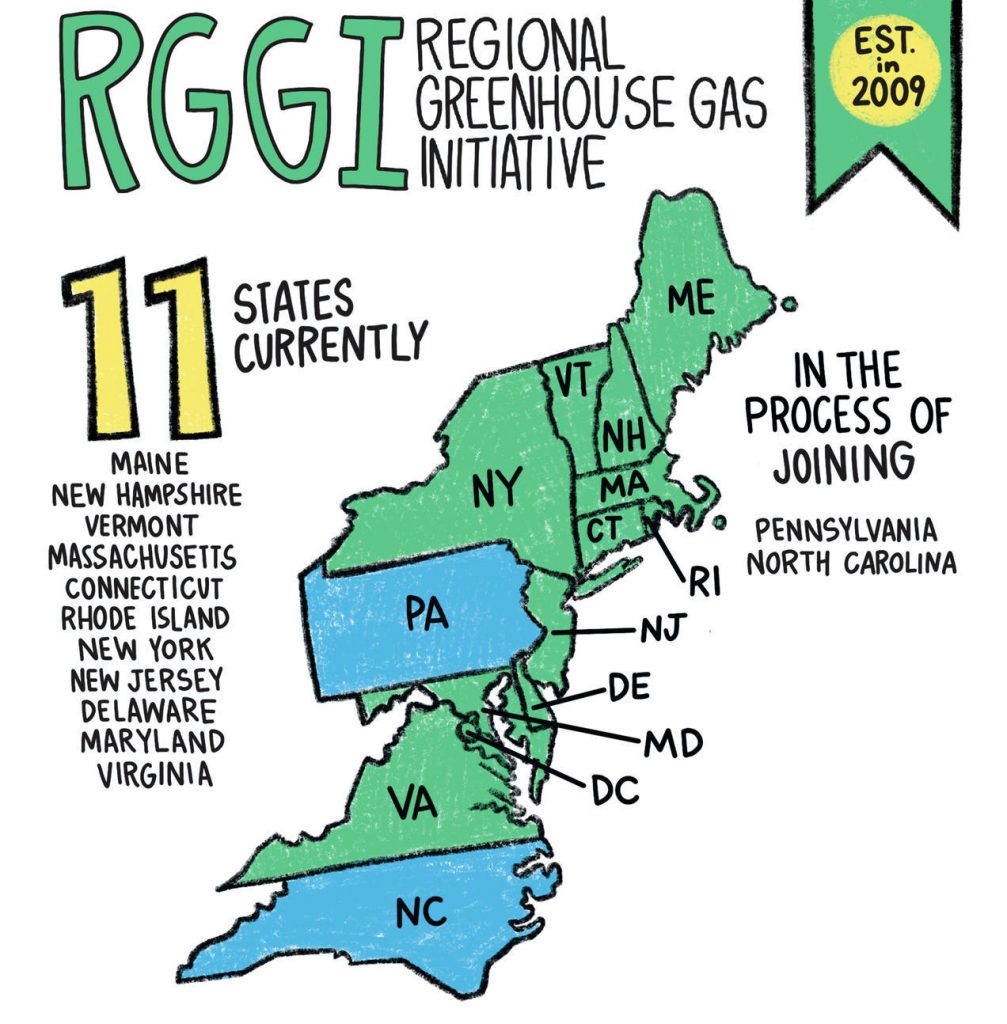
Welcome – The Regional Greenhouse Gas Initiative – https://www.rggi.org/

Wolf’s carbon-cutting plan ‘in the public interest,’ review board finds – Pittsburgh Post-Gazette (Sept. 1, 2021) – https://www.post-gazette.com/business/powersource/2021/09/01/RGGI-carbon-dioxide-regulation-Independent-Regulatory-Review-Commission-IRRC/stories/202109010110

Reducing Persistent Child Poverty
Reducing Persistent Child Poverty
Economic Policy Brief #124 | By: Rosalind Gottfried | September 21, 2021
Header photo taken from: Population Review
Follow us on our social media platforms above
Browse more economic policy briefs

Photo taken from: Children’s Defense Fund
Policy Summary
[SSB theme=”Official” align=”center” counter=”true” ]
Child poverty persists in the US at a much greater rate than in other comparable countries. Among the countries in The Organization for Economic Co-operation and Development (OECD), the US is on a par with Mexico, Chile, Turkey, and Spain on the low end of expenditures to combat child poerty. In contrast, Finland, Denmark, Poland and Spain evidence the highest spending. In spite of having the highest GDP of any country, and one of the highest per capita incomes, the US spends 1% of its GDP on family benefits in contrast to the 3.5% spent by France. As a result, 14.4% of the country’s children live in poverty. This translates into 1 in 4 Black children; 1 in 5 Hispanic children; and one in 12 non-Hispanic white children.
The causes of this persistent poverty are found in the lack of an adequate safety net, low wages with a federal minimum wage stagnant for decades, and the high cost of childcare. Low-income families spend 35% of monthly income on childcare as opposed to 7% spent in affluent families. Housing costs also play a factor with only 1 in 10 households receiving housing vouchers for which they qualify. Racist ideas regarding helping the poor also contribute to the relative stinginess of American poverty programs. Recent reductions in the IRS funding, extending a twenty-year trend, are calculated to cost one trillion dollars in avoided taxes.
Inequality and the insufficiency of the safety net have been illuminated in the disparities emerging in the pandemic rate of survival, employment, and health. Poverty has been shone to negatively impact the essential growth of the first three years of life with respect to brain development and other mental and psychological developments. These impact long term educational achievement, health, mental health, and income. Yet, it has been shown that spending ofonearly childhood education and heakthresults in a 13% return.
Policy Analysis
There is no great mystery regarding the evidence-based mechanisms to address poverty and Biden and Harris have taken steps to implement these. Biden has enacted a mandate, starting in July, to provide monthly payments for tax credits to parents, rather than waiting for tax refunds after filing for the previous year. These are paid out at $300 monthly per child under 6 to individuals earning $75,000 and couples earning up to $150,000. This will amount to $1800 by the end of the year and will be matched by another $1800 at tax filing. This program helps 88% of families with children. Parents of older children, age 6 to 17, will get $250 per month. Biden has proposed extending this payment structure through 2025 while Nancy Pelosi has proposed making it permanent.
The Republicans also have promoted programs to impact child poverty. Most notably Mitt Romney has proposed a monthly benefit of $350 for younger children and $250 for older ones in what he is calling the Family Security Plan. These payments would start four months prior to the due date during pregnancy.

Photo taken from: KUTV
Missouri Senator Josh Hawley has proposed a Parent Tax credit of $6000 for single parents and $12,000 for married couples. These plans, however, come with a reduction in other federal anti-poverty programs and tax credits for daycare.
While the child poverty rate has dropped from a whopping 27% in 1959, it has not improved significantly in recent decades. It has been noted that elderly poverty has significantly decreased during this period and is now less than the rate of child poverty. This is due to the development of the Social Security system and to Medicare. Comparable programs could be initiated for children. Many low-income families suffer with childcare, housing and medical costs; all issues which have been shown to be amenable to the development of federal programs.
Engagement Resources
Click or tap on image to visit resource website.
Why Does the Richest Country in the World Have So Many Poor Kids? (Ep. 475)


https://www.cnbc.com/2021/04/28/child-tax-credit-biden-4-years-democrats-permanent.html

U.S. Can Become 45% Solar Powered by 2050. Too Much to Ask or Too Important to ignore?
U.S. Can Become 45% Solar Powered by 2050. Too Much to Ask or Too Important to ignore?
Environmental Policy Brief #128 | By: Jacob Morton | September 19, 2021
Header photo taken from: Department of Energy
Follow us on our social media platforms above
Browse more environmental policy briefs here

Photo taken from: Interesting Engineering
Policy Summary
[SSB theme=”Official” align=”center” counter=”true” ]
The Biden administration’s Department of Energy (DOE) released an encouraging report on September 8, called the Solar Futures Study, showing that solar energy has the potential to generate 40% of the nation’s electricity by 2035, and outlines how the nation could move toward producing up to 45% of its electricity from solar power by 2050.
Though solar energy only contributed less than 4% of the country’s electricity last year, that number is up from less than 1/10 of 1% in 2010. The industry is growing fast and renewable energy as a whole now provides about 20 percent of the country’s electricity. Natural gas and coal account for about 60%.
According to an earlier report by the DOE this past February, “the share of electricity produced by all renewable sources, including solar, wind and hydroelectric dams, would reach 42 percent by 2050 based on current trends and policies.” To increase the production of electricity to 45% by 2050 through solar power alone, will no doubt require the solar industry to continue to grow in a major way, but thanks to supportive policies the industry is positioned to do that.
Achieving 45% electricity generation from solar power alone is no small task, and “will require trillions of dollars in investments by homeowners, businesses and the government.” Traditionally, the primary sources of power for the electric grid have been coal, natural gas, and nuclear power plants. A decarbonized grid “would have to be almost completely remade with the addition of batteries, transmission lines and other technologies” that not only generate electricity, but that can also store that power and “send it from one corner of the country to another.”
However, the cost of solar panels has fallen substantially over the last decade, and the technology has only improved with the industry’s expansion. Over the past ten years, the cost of utility scale solar has dropped by 90% and rooftop solar 60%. Not only that, “Solar panels being installed today are 37% more efficient at converting the sun’s rays to electricity than they were 10 years ago.” The DOE’s Solar Futures report indicates that “solar panels have fallen so much in cost that they could produce 40 percent of the country’s electricity by 2035 — enough to power all American homes — and 45 percent by 2050.”
How the country will achieve this is unclear, and at the moment, the Biden administration appears to be leaving the details to Congress to decide as they work through the bipartisan infrastructure bill and the Democrats’ $3.5 trillion infrastructure measure. However, while Congress debates the specifics of implementing such a transition, the DOE’s report presents a guiding blueprint, calling for “strong decarbonization policies coupled with a massive deployment of renewable energy sources, large-scale electrification, and grid modernization.” The key findings presented in the DOE’s report include:
- A clean grid requires massive, equitable deployment of diverse, sustainable energy sources — The U.S. must install “an average of 30 GW of solar capacity per year between now and 2025 and 60 GW per year from 2025-2030. The study’s modeling further shows the remainder of a carbon-free grid supplied by wind (36%), nuclear (11%-13%), hydroelectric (5%-6%) and biopower/geothermal (1%).”
- A decarbonized power sector will create millions of cross-sector jobs – “The study modeling shows that solar will employ 500,000 to 1.5 million people across the country by 2035. Overall, the clean energy transition will generate around 3 million jobs across technologies.”
- New tools that increase grid flexibility, like storage and advanced inverters, as well as transmission expansion, will help to move solar energy to all pockets of America – Storage capabilities across the country will have to grow from “30 GW to nearly 400 GW in 2035 and 1,700 GW in 2050. Advanced tools like grid-forming inverters, forecasting, and microgrids will play a role in maintaining the reliability and performance of a renewable-dominant grid.”
- A renewable-based grid will create significant health and cost savings – Reduced carbon emissions and improved air quality would result in savings of “$1.1 trillion to $1.7 trillion, far outweighing the additional costs incurred from transitioning to clean energy. The projected price of electricity for consumers does not rise by 2035, because the costs are fully offset by savings from technological improvements,” according to the DOE.
- Supportive decarbonization policies and advanced technologies are needed to further reduce the cost of solar energy — Without a strategy that combines limits on carbon emissions with incentives for adopting clean energy, the U.S. cannot fully decarbonize the grid—”models show that grid emissions fall only 60% without policy. Continued technological advances that lower the cost of solar energy are also necessary to enable widespread solar deployment.”

Photo taken from: Quick Electricity
Alongside the report, President Biden has made clear that he wants legislators to use tax credits to encourage utilities, businesses, and homeowners to install solar power systems and batteries. The administration has also indicated it would like to see local governments make internal adjustments to speed up the permitting process for new solar projects. DOE officials also say various other incentives ought to be offered to utility companies to encourage solar energy use.
Jennifer M. Granholm, Biden’s Energy Secretary, said part of the administration’s strategy would focus on its Clean Electricity Payment Program, which would reward utilities for adding renewable energy to the electric grid, including energy generated from rooftop solar installations. Many utility companies, however, have resisted promoting rooftop solar panels because “they see a threat to their business and would rather build large solar farms that they own and control.”
Granholm says she recognizes the concern held by utility companies, but that “Both have to happen, and the utilities will be incentivized to take down the barriers.” She notes that it is a combination of strategies that will produce the greatest results for all during this transition, “We’ve got to do a series of things.”
Director of the Solar Energy Technology Office at the DOE, Becca Jones-Albertus, says of the report, “One of the things we’re hoping that people see and take from this report is that it is affordable to decarbonize the grid.” She says, “The grid will remain reliable. We just need to build.”
Policy Analysis
Some question whether the plan to reach 40% solar generated electricity by 2035 or 45% by 2050 is actually realistic. However, many analysts, despite the drastic measures required to achieve those goals, present optimism when citing the recent growth of the solar industry and the adoption of policies that have supported that growth.
As well, the impact of the recent advance in solar technology and its deployment is made even more potent by the fact that energy efficiency and electrification of homes and businesses has increased, with the potential to cut energy use in half by 2050. According to Johanna Neumann, Senior Director of Environment America’s Campaign for 100% Renewable Energy, “By reducing the amount of energy we use overall, it makes it that much easier to get more of the energy we need to power our lives from renewable sources like the sun.”
When asked how feasible it would be to achieve the DOE’s goal of 40% solar electricity by 2035, Neumann writes, “Very.” Neumann says, “We have 14 years before we hit 2035. We can achieve 40% solar and we don’t need revolutionary new policy to make it happen. But we do need a steady hand on the tiller to point America in the direction of growing renewables.” Achieving 45% solar electricity by 2050 should not be much harder.

Retrieved from Twitter
Neumann argues that “limitless energy” from the sun shines down on American communities every day, “We just need the will to put solar collectors under more of the sun’s rays to produce electricity.” She says, “The constraints are not technical. In fact, using today’s technology, America could repower itself 75 times over from the sun. So, the 40% solar ambition that the Department of Energy lays out in this new report is really very doable.”
Beyond finding the will to do it, skeptics argue that building and installing enough solar panels to generate up to 45% of the country’s power needs “will strain manufacturers and the energy industry, increasing demand for materials like aluminum, silicon, steel and glass. The industry will also need to find and train tens of thousands of workers, and quickly.” This could potentially present a significant image problem for the President, as reporting by the New York Times suggests a number of labor groups report that “in the rush to quickly build solar farms, developers often hire lower-paid nonunion workers rather than the union members Mr. Biden frequently champions.”
Trade disputes with China could also present a significant challenge to the endeavor. China dominates the supply chain for solar panels, and the administration recently began blocking imports connected with the Xinjiang region of China over concerns about the use of forced labor. According to energy experts, at least in the short term, the import ban could slow the development of solar projects in the United States.
Additionally, the need for batteries to store energy generated by solar panels will increase, and though the cost of batteries has been falling, many analysts say the cost remains too high for such a rapid shift to renewables and electric cars.

Photo taken from: Reuters
Despite these challenges, most energy analysts contend that without a massive increase in the use of solar energy, it would be impossible to achieve the President’s climate goals. “No matter how you slice it, you need solar deployments to double or quadruple in the near term,” says Michelle Davis, a principal analyst at the energy research and consulting firm, Wood Mackenzie. “Supply chain constraints are certainly on everyone’s mind.”
The need for decarbonization is here, now more than ever. According to a new report released by the United Nations this past Friday, “the planet is on track to warm by more than 2.7 degrees Celsius by the end of the century.” This is in grim contrast to the maximum limit of warming set by the Intergovernmental Panel on Climate Change (IPCC) in August, of 2 degrees Celsius (but better yet 1.5 degrees C) that is needed “to prevent the most severe climate consequences and suffering, especially of the most vulnerable, throughout the world.”
Heeding this call to action, Energy Secretary Granholm points to her Department’s Solar Futures report, saying, “The study illuminates the fact that solar, our cheapest and fastest-growing source of clean energy, could produce enough electricity to power all of the homes in the U.S. by 2035 and employ as many as 1.5 million people in the process.” Granholm says, “Achieving this bright future requires a massive and equitable deployment of renewable energy and strong decarbonization policies – exactly what is laid out in the bipartisan Infrastructure Investment and Jobs Act and President Biden’s Build Back Better agenda.”
Bernadette Del Chiaro, Executive Director of the California Solar and Storage Association, representing solar developers in the industry’s most active state, says, “In essence the D.O.E. is saying America needs a ton more solar, not less, and we need it today, not tomorrow.” Del Chiaro argues, “That simple call to action should guide every policymaking decision from city councils to legislatures and regulatory agencies across the country.”
Engagement Resources
Click or tap on image to visit resource website.

Environment America (Voices for 100% Renewable Energy) – A national network of 29 state environmental groups with members and supporters in every state. Together, the Environment America network focuses on timely, targeted action that wins tangible improvements in the quality of our environment and our lives.

Sierra Club (Ready For 100) – It’s time for 100% clean energy for, of, and by the people. Clean energy is here. Let’s make it for everyone. City by city and state by state, it’s time for an equitable and just transition to 100% clean, renewable energy. Communities are ready for 100%. Find a Ready For 100 campaign or city that is committed to—or powered by—100% clean energy near you. Learn more or take action now!

Clean Air Task Force (CATF.us) – Catalyzing resilient solutions, scaled to meet the climate challenge. Every year people produce almost forty billion tons of carbon dioxide that is pumped into the atmosphere – that’s a hundred times faster than the Earth has ever seen. If we don’t take action, our planet will change far faster than we can adapt. This is the mother of all environmental problems, and the Clean Air Task Force is on it.
References
Click or tap on image to visit resource website.
Neumann, J. (2021, September 10). Our solar FUTURE: Reacting to a new Department of energy report. Environment America. Retrieved September 18, 2021, from https://environmentamerica.org/blogs/environment-america-blog/ame/our-solar-future-reacting-new-department-energy-report.
Baxter-Griffith, L., Schneider, C., & Davis, S. (2021, August). Clean Electricity Payment Program. Clean Air Task Force. Retrieved September 18, 2021, from https://www.catf.us/wp-content/uploads/2021/08/CATF_CEPP_2Pager_08.05.21.pdf.

Booth, W. (2021, September 17). As climate pledges fall short, U.N. Predicts globe could warm by CATASTROPHIC 2.7 degrees Celsius. The Washington Post. Retrieved September 18, 2021, from https://www.washingtonpost.com/climate-environment/2021/09/17/un-climate-2030-biden/.

DOE releases Solar Futures Study providing the blueprint for a ZERO-CARBON GRID. Energy.gov. (2021, September 8). Retrieved September 18, 2021, from https://www.energy.gov/articles/doe-releases-solar-futures-study-providing-blueprint-zero-carbon-grid.
Solar futures study. Energy.gov. (2021, September 8). Retrieved September 18, 2021, from https://www.energy.gov/eere/solar/solar-futures-study.

Penn, I. (2021, September 8). From 4% TO 45%: Biden OFFERS Ambitious blueprint for solar energy. The New York Times. Retrieved September 18, 2021, from https://www.nytimes.com/2021/09/08/business/energy-environment/biden-solar-energy-climate-change.html.

United Nations. (2021, September 17). Full NDC Synthesis Report: Some Progress, but Still a Big Concern. unfccc.int. Retrieved September 18, 2021, from https://unfccc.int/news/full-ndc-synthesis-report-some-progress-but-still-a-big-concern.

President Biden’s Important 30×30 Environmental Policy Goal
President Biden’s Important 30×30 Environmental Policy Goal
Environment Policy Brief #127 | By: Tim Loftus | September 16, 2021
Header photo taken from: KSN-TV
Follow us on our social media platforms above
Browse more environmental policy briefs here

Photo taken from: Joe Biden for President
Policy Summary
[SSB theme=”Official” align=”center” counter=”true” ]
President Biden wasted no time in making clear his position on climate change. One week after Inauguration Day last January, an Executive Order on Tackling the Climate Crisis at Home and Abroad was issued that, among other things, “… encourage broad participation in the goal of conserving 30 percent of our American lands and water by 2030.”
In the first of two parts, Executive Order 14008 places the climate crisis at the center of foreign policy and national security. International efforts are to be collaborative and multilateral, comprehensive, and ambitious in ways that both recognize the current threats and the trajectory of consequences if insufficient action is taken to reduce greenhouse gas emissions. The second part is focused on the home-front where the executive order promises a “government-wide approach” to the crisis at hand. In short, this approach brings the considerable workforce, financing and spending power, and influence of federal government actions, to bear on the matter at the heart of the policy.
In addition to supporting climate change adaptation efforts and clean energy goals, the 30×30 policy goal aims to support biodiversity, now in grave decline from the sixth extinction event underway on Earth. The President’s executive order represents the first-of-its-kind goal of coordinated and proactive stewardship of nature in our country. In a follow-up report to the newly formed National Climate Task Force and titled “Conserving and Restoring America the Beautiful” the emphasis on the role and importance of nature in our collective health, well-being, and prosperity – in short, our way of life – is repeated and unmistakable. And the 30×30 policy goal is deemed essential for the stewardship of nature called for. With both the policy and first report, coauthored by the secretaries of Interior, Agriculture, Commerce, and the Council on Environmental Quality, an inclusive and practical roadmap is laid out for achieving the goal.
The 30×30 policy goal is also poised to address inequitable access to the outdoors that people of color and those of lower income are too often faced with. The data make clear that disadvantaged segments of American society commonly lack access to clean air, clean water, and access to nature. Thus, the 30×30 goal offers a timely acknowledgment of interrelated and urgent issues that pose a threat to life as we have known it to be.
Policy Analysis
Federal leadership to mitigate climate change (i.e., reduce greenhouse gas emissions) and slow down or halt the disappearance of nature has arrived and not a moment too soon. We the American people have ten years to take action and achieve results. Beginning in 2022, annual reports will be made available by various government entities to assess our progress. And the good news is the 30×30 policy goal is guided by eight core principles that are practical, common-sense, and seemingly noncontroversial. Among them are a commitment to a collaborative and inclusive approach to conservation, support for locally-led and locally-designed conservation efforts, support for the priorities of tribal nations, and respect for private-property rights with support for the stewardship efforts provided voluntarily by private landowners.
According to the Protected Areas Database of the United States (PAD-US) compiled by the U.S. Geological Survey, Gap Analysis Project, approximately 13 percent of land in the U.S. is currently protected (i.e., assigned to GAP Status Codes 1 and 2.) While not “starting from scratch,” there remains much work to do to achieve the policy goal.

Photo taken from: KRWG
Several states (e.g., California, Nevada, Maine) are declaring their own complementary goal. Last month, for example, Governor Michelle Lujan Grisham of New Mexico issued Executive Order 2021-052, “Protecting New Mexico’s Lands, Watersheds, Wildlife, and Natural Heritage” that sets the goal of having at least 30 percent (30%) of all lands in New Mexico conserved by 2030, with an additional twenty percent (20%) designated as climate stabilization areas. New Mexico like most western states features above-average biodiversity, a relatively low population density, and a considerable base of public land. Furthermore, the state’s outdoor economy supports $1.2 billion in income, over 33,000 jobs, and attracts 15.2 million visitors a year according to the preamble in the executive order. Governor Lujan Grisham makes clear that private working lands are threatened by climate change too and have equal opportunity to voluntarily participate in ways that work for all parties involved.

Retrieved from Twitter
It’s also worth noting that conservation efforts in the USA that are guided by this new policy goal, are not occurring in a vacuum. Similar efforts have been underway globally as guided by Biodiversity Target 11 of the Aichi Convention established for the decade ending in 2020. The Aichi Biodiversity Targets are a component of a revised and updated strategic plan to conserve biodiversity across the globe. The international Convention on Biological Diversity continues to build on the plan with its “Sharm El-Sheikh to Kunming Action Agenda for Nature and People” and is an important global corollary to new actions in America that have been catalyzed by President Biden’s executive order.
Finally, the policy goal of 30×30 is supported by policy-makers like city mayors to policy shapers including nongovernmental organizations such as the Center for Biological Diversity and Defenders of Wildlife. The momentum already generated by Executive Order 14008 is encouraging and will need to be sustained to achieve the policy goal.
Engagement Resources
Click or tap on image to visit resource website.

Center for Western Priorities. 2021. Road to 30: A Bold Vision for Conserving 30% of America. THE ROAD TO 30 (accessed September 16, 2021)

Convention on Biological Diversity. 2021. PRESS RELEASE: CBD Secretariat’s new Action Agenda platform fosters “whole-of-society approach” to showcase commitments and actions from non-state actors to put biodiversity on a path to recovery by 2030. pr-2021-08-18-actionagenda-en.pdf (cbd.int) (accessed September 16, 2021)
Convention on Biological Diversity. 2020. Aichi Biodiversity Targets. Aichi Biodiversity Targets (cbd.int) (accessed September 16, 2021)

Defenders of Wildlife. 2020. Getting to 30X30: Guidelines for Decision-Makers. Getting to 30×30: Guidelines for Decision-makers | Defenders of Wildlife (accessed September 16, 2021)

Kolbert, Elizabeth. 2014. The Sixth Extinction: An Unnatural History. New York, NY: Picador. 319 p.
State of New Mexico. 2021. Executive Order 2021-052: Protecting New Mexico’s Lands, Watersheds, Wildlife, and Natural Heritage E0-2021-052-30-by-30.pdf (nmwild.org) (accessed September 16, 2021)

The White House. 2021. Executive Order on Tackling the Climate Crisis at Home and Abroad. Executive Order on Tackling the Climate Crisis at Home and Abroad | The White House (accessed September 16, 2021)

U.S. Dept. of Interior, U.S. Dept. of Agriculture, U.S. Dept. of Commerce, and Council on Environmental Quality. 2021. Conserving and Restoring America the Beautiful. Report: Conserving and Restoring America the Beautiful 2021 (doi.gov) (accessed September 16, 2021)

U.S. Geological Society. 2021. Protected Areas Database of the United States (PAD-US) 2.1 Summary Statistics by Public Access CategoryProtected Areas Database of the United States (PAD-US) 2.1 Summary Statistics by Public Access Category – ScienceBase-Catalog (accessed September 16, 2021)
U.S. Geological Society. 2021.Analysis of Updated USGS Database Finds Increase in America’s Lands and Waters Managed for Biodiversity. Analysis of Updated USGS Database Finds Increase in America’s Lands and Waters Managed for Biodiversity (accessed September 20, 2021)

Afghan Refugee Resettlement in Post-Trump America
Afghan Refugee Resettlement in Post-Trump America
Immigration Policy Brief #129 | By: Kathryn Baron | September 19, 2021
Header photo taken from: Council on Foreign Relations
Follow us on our social media platforms above
Browse more immigration policy briefs here

Photo taken from: Roll Call
Policy Summary
[SSB theme=”Official” align=”center” counter=”true” ]
The United States has already evacuated over 65,000 Afghans and nearly 24,000 have arrived in the US. In addition, 23,000 are on US military bases abroad and another 20,000 are waiting in other countries before continuing their travels to the US.
The Biden Administration has asked Congress for $6.5 billion in emergency funds to assist in resettlement endeavors. As of now, Afghan refugees are to receive $1,255 of government funds to help with some expenses but are not eligible for food stamps or Medicaid at this time.
California and Texas will receive the largest amount of Afghan refugees (of the US states accepting Afghan refugees); the Biden Administration is striving to bring 65,000 Afghans to the US by the end of September and an additional 30,000 in 2022.
Policy Analysis
Most Afghans are arriving in the US under humanitarian parole rather than as refugees, so the administration can get around the Trump era lowered refugee cap (see below) and the process could be expedited. The regular refugee process can take around 2 years, in an already backlogged system. Many will have to apply for asylum and/or reunite with family members already in the US for quicker resettlement.
Prior to the Trump Administration, there was bipartisan support in Congress for refugee resettlement and generally widespread public support. The Muslim Ban of 2017 effectively barred most refugees from Syria and Yemen and allowed for the refugee cap to be lowered from 110,000 to 15,000 annually.

Photo taken from: Wall Street Journal
Money was also allocated to other agencies at the expense of the 9 existing refugee resettlement agencies. Until the US raises its refugee cap to pre-Trump levels, existing resettlement programs will continue to be overwhelmed and it will be increasingly difficult to resettle refugees in a timely manner.
Engagement Resources
Click or tap on image to visit resource website.

- National Immigration Law Center: an organization that exclusively dedicates itself to defending and furthering the rights of low income immigrants and strives to educate decision makers on the impacts and effects of their policies on this overlooked part of the population.

- Miles 4 Migrants: A charity that accepts frequent flyer mile donations to help individuals impacted by war, persecution, and/or disaster by providing flights for refugees, asylum-seekers, and their immediate family members who have legal approval for travel but cannot afford it.

- Protect Afghan Women: A project affiliated by the Georgetown Institute for Women, Peace, and Security to focus on the role women play in preventing conflict and building peace, addressing global threats, and seeking to ensure Afghan women are free from persecution.

Federal Court in Florida Bans Enforcement of Florida’s Anti – Riot Law;
Federal Court in Florida Bans Enforcement of Florida’s Anti – Riot Law
Civil Rights Policy Brief #173 | By: Rodney A. Maggay | September 13, 2021
Header photo taken from: News Journal Online
Follow us on our social media platforms above
Browse more civil rights policy briefs here

Photo taken from: Reason Magazine
Policy Summary
[SSB theme=”Official” align=”center” counter=”true” ]
On September 9, 2021 Chief United States District Judge Mark E. Walker of the U.S. District Court for the Northern District of Florida issued a preliminary injunction order in the case Dream Defenders v. DeSantis. The NAACP Legal Defense and Education Fund of Florida, Inc., the ACLU of Florida and Community Justice Project brought a lawsuit on behalf of Dream Defenders and other Black – led organizations. The basis of the lawsuit was that HB1, known as the Combatting Public Disorder Law, violates the Constitution’s First Amendment right to free speech and the Fourteenth Amendment by criminalizing legitimate protest activity. Chief Judge Walker’s order barred the State of Florida from enforcing the bill temporarily. After being passed by the Florida Legislature earlier this year, Governor DeSantis signed the bill into law on April 19, 2021.
HB1 sought to address the racial justice protests that had erupted in 2020. The bill created new definitions for the term “riot” and how a person could be charged with inciting a riot. A person acting together with only two or more persons that results in a violent public disturbance could be charged with inciting a riot. A person could also be charged under the new law if there is injury to another person or property or imminent damage to another person or property as a result of the gathering.
As a result of HB1 this lawsuit was brought by Plaintiff Dream Defenders against Gov. DeSantis. The order issued on September 9 is for a preliminary injunction which prohibits enforcement of the law until the case brought by the plaintiffs has been decided. LEARN MORE
Policy Analysis
The preliminary injunction issued by Chief Judge Walker does not close the book on HB1 but only serves to suspend the law while the case is being litigated. The case brought could still end up finding the law valid or it could find the law unconstitutional. But the way Chief Judge Walker wrote the order shows that the law has some structural weaknesses that will make it unlikely that it will pass constitutional muster.
The first thing that Chief Judge Walker did was begin his written order with the story of Florida A & M of Tallahassee students Wilhelmina Jakes and Carrie Patterson from 1956. Both students, who were Black, were arrested for inciting a “riot.” All they had done was refuse to move out of the “whites – only” seats they were sitting in on the local city bus. By doing this, Chief Judge Walker was signaling that the current use of HB1 is no different from the use of “anti – riot” laws to uphold Jim Crow laws in Florida in the 1950’s and 1960’s. Connecting HB1 with racial incidents from Florida’s past is an effective way to illustrate how HB1 was being used to target racial justice protestors.

Photo taken from: First Coast News
But as his written order went on, Chief Judge Walker brilliantly illustrated how the law was severely flawed. One theme he continually returned to was how the law was “vague and overbroad.” A law that is deemed “vague and overbroad” cannot be enforced because the terms and phrases in the bill/law are open to multiple and varying interpretations. This means that a law can mean one thing in one situation and can mean another in the same situation. There is no specificity to provide guidance to citizens and law enforcement officials who are relying on the law as to how to behave. Chief Judge Walker went on to list numerous hypothetical incidents that may or may not run afoul of HB1.

Photo taken from: Orlando Weekly
He asks what does “willfully participate in a violent public disturbance” mean? Does it mean actively taking part or merely being present while only holding a protest sign? What about giving a rioter a bottle to wash their eyes? Is this willfully participating in a riot? And, does violent actions caused by a minority of protesters implicate other attendees? Chief Judge Walker determined that the law as written does not offer answers to these situations and therefore the law was “vague and overbroad” and could not be enforced with any consistency.
While the order is only a preliminary injunction that temporarily prohibits the state from enforcing the law while the case proceeds, Chief Judge Walker has written a brilliant rebuttal as to why HB1 is flawed and likely not even constitutional. A law like HB1, which was clearly written to target racial justice protesters, should be permanently struck down and left as a relic of Florida’s past. LEARN MORE, LEARN MORE
Engagement Resources
Click or tap on image to visit resource website.

American Civil Liberties Union (ACLU) of Florida – statement on federal court’s ban on HB1 enforcement.

Community Justice Project – Florida group’s statement on HB1 court decision.

Should a Mental Health Assessment be a Requisite for a US Presidency?
Should a Mental Health Assessment be a Requisite for a US Presidency?
Health and Gender Policy Brief #131 | By: S Bhimji | September 15, 2021
Header photo taken from: The Conversation
Follow us on our social media platforms above
Browse more health & gender policy briefs here

Photo taken from: Politico
Policy Summary
[SSB theme=”Official” align=”center” counter=”true” ]
The presidency of Donald Trump was an eye-opener for not only Americans but the entire world. Within the first few months of the presidency, Trump proved to everyone that even mentally challenged people can become leaders of the most powerful country on the planet; but whether they could govern is another matter.
From the very beginning, Trump’s character was revealed as brash, turbulent, volatile, impulsive, and divisive, and his lack of political experience was obvious- but he did not care or listen to anyone. The leadership traits that the public values like diligence, honesty, intelligence, and compassion were absent in Trump. Instead, his leadership style was that of a strongman or more like a dictator who hated to lose and lacked empathy.
During his entire presidency, he defiantly flipped the presidential scripts and created chaos everywhere. There was combativeness with everyone including his staff, the media, and even members of his party. There was a constant turnover of staff- all of whom were praised as great workers in the beginning and then deemed to be the worst employees when fired. Almost all briefings with the media were hostile and the modus operandi under Trump was to take no prisoners.
Everything that resonated with the prestige and tradition of being a US president was thrown out of the window- it was either Donald’s way or no way at all. And to make matters worse, most people believe that Trump was in some way responsible for the social insurrection that occurred on January 6, 2021.
Over the past few months, millions of Americans have become baffled by his personality and alarmed by the policies and tactics he was employing to stay in power. Some of these policies were regressive, unlawful, and undermined the long established democratic processes which the USA preaches to other nations.
But it was his ability to distort facts about everything from the crowd size at his inauguration to the mismanagement of the Covid crises which revealed that Trump has some deep underlying mental issues. If the facts did not suit him, he reiterated that they were fake or false news. Every single day, rather than go to his office, he would spend the early hours of the morning sending irrational tweets and insults to everyone including US Supreme court justices.
The persistent falsehoods by Trump eroded public trust in the US government. Trump made it sound that people are entitled to lie if they feel they have been maligned. But was this president under too much stress or was he another mental case?
Policy Analysis
One thing is clear; Donald Trump has some type of mental disorder, and one does not have to be a psychiatrist to make that diagnosis. But aside from his pathological lying, experts note his narcissistic personality, grandiose ideas and delusions are common traits observed in psychotic individuals.
Psychologists have labeled Trump’s persona as brash, belligerent, volatile, and outlandish; he has a constant need to seek attention; criteria that fit a diagnosis of narcissistic, paranoid, and antisocial personality disorders. Notes from Trump’s niece, Mary, reveals that Trump had no role models for empathy and reciprocity when growing; his mother was often absent and self-focused whereas his father lacked empathy. Throughout his life, Donald tried to win his father’s affection and approval.
Whatever position one takes on Trump and his policies, most people agree that he has been divisive and corrosive to the nation. He has failed to appreciate the reality of matters like losing an election. His beliefs appear to be delusional and destabilizing for the country. But it his bald-faced lies that have been the most disturbing; why he lies persistently remains a mystery.

Photo taken from: The Milwaukee Independent
Trump had almost no ability to govern or make any type of strategic policy to run a country. His tweeting reflected that his thinking was haphazard, impulsive, offensive, and boisterous. Trump is emotionally immature and has never been able to handle criticism or praise. When criticized he always gets angry and fires that individual. What was worse is that he was surrounded by people who agreed to meet all his demands and whims, which set a dangerous precedent for the nation.
Health professionals have come to know a fair bit about Trump’s personality and they have a cause for concern should he run again.
Government officials are considering legislative action about when and where to invoke the 25th amendment to the Constitution, which calls for the orderly transfer of power when a president is temporarily or permanently incapacitated.
Engagement Resources
Click or tap on image to visit resource website.

About mental health: https://www.cdc.gov/mentalhealth/learn/index.htm

Tyranny and mental health:
https://academic.oup.com/bmb/article/72/1/1/272832

Mental Illness in the Oval Office
https://www.nami.org/Blogs/NAMI-Blog/February-2016/Mental-Illness-in-the-Oval-Office

Taxes and Tribulations – Brief on Biden Tax Plans
Taxes and Tribulations – Brief on Biden Tax Plans
Economic Policy Brief #123 | By: Tyler-Joseph Ballard | September 15th, 2021
Header photo taken from: Bright! Tax
Follow us on our social media platforms above
Browse more economic policy briefs here

Photo taken from: Shutterstock
Policy Summary
[SSB theme=”Official” align=”center” counter=”true” ]
A $3T USD budget shortfall in 2020 and the current deficit for 2021 of another $3T USD leaves the current administration in a considerable bind. The Biden administration’s proposed tax plans — The American Jobs Plan and the American Families Plan — impose considerable tax hikes for corporations and top earners while providing increased child and dependent tax credits.
The Biden tax plan would increase federal spending by an estimated $1.7T USD between 2022-2031 while generating about $1.7T in additional revenue to supplant the additional spending during that same time frame. After-tax income among the bottom two earning quintiles would see increases over the next decade under the Biden Families Plan. This plan aims to execute upon the common American progressive talking points of redistributing wealth to lower earners through taxation of the highest earners and corporations.
Some of the key changes in these proposed plans include the following:
- An increased tax rate for top earners from 37% to 39.6%
- An increase in statutory federal corporate tax rate from 21% to 28%
- Extension of the enhanced Child Tax Credit through 2025
- A tax hike on US corporations operating in foreign countries (GITLI) from 10.5% to 21%.
Projections from the Congressional Budget Office indicate an overall deficit of $12.1 USD through the next decade, with an annual average of a 4% deficit to GDP ratio. The Tax Foundation projects that even with the increase in revenue to offset increased federal spending, about 200,000 full time jobs will be lost as a result of the two tax plans, as the workforce is expected to hit a significant reduction in growth over the latter half of the Biden tax timeline.
Policy Analysis
The immediate benefits and long-term positive impacts of the Biden tax plans for the lowest quintiles of earners are a significant takeaway of the plan, but the ramifications for corporations and top earners have and will continue to be a point of contention which holds up the passage of the plans in Congress.
Presently, Democrats in the House of Representatives have introduced an economic plan which is in line with the wishes of the Biden Administration, but reduces proposed tax rate increases upon corporations. Though Democrats have the capacity to pass such legislation through Congress, moderate Democrats remain concerned about the extremely high price tags that come with the Biden plans. Proposed legislation fluctuates between $1T and $3.5T USD in additional federal spending, and it is unclear what kind of compromise will be made between House Democrats for these proposals.

Photo taken from: CNBC
In response to these proposals, a business coalition called “America’s Job Creators for a Strong Recovery” has aimed to lobby moderate House Democrats to ease up on proposed corporate tax hikes, arguing that it is not a solution to the current economic crisis. The spending bills in Congress find solutions to funding the additional spending. But, similarly to previous administrations, the Biden administration is unlikely to yield a solution which cuts into the deficit and overall federal debt. Spending to get out of economic turmoil has been a feature of the American presidency since Roosevelt’s New Deal.
Photo taken from: TBA
Engagement Resources
Click or tap on image to visit resource website.

Key groups to follow to get reliable assessments of the Biden tax plan and Congressional action upon those plans are both the Tax Foundation (tax foundation.org)

and the Congressional Budget Office (cbo.gov). As House Democrats mediate between the White House and lobbyists, expect party line voting, with successful passage of whatever the finalized bills will be.

Who is Florida Governor Ron Desantis?
Who is Florida Governor Ron DeSantis?
Elections and Politics Policy Brief #131 | By: Abran C | September 18, 2021
Header photo taken from: Tampa Bay Times
Follow us on our social media platforms above
Browse more elections and politics policy briefs here
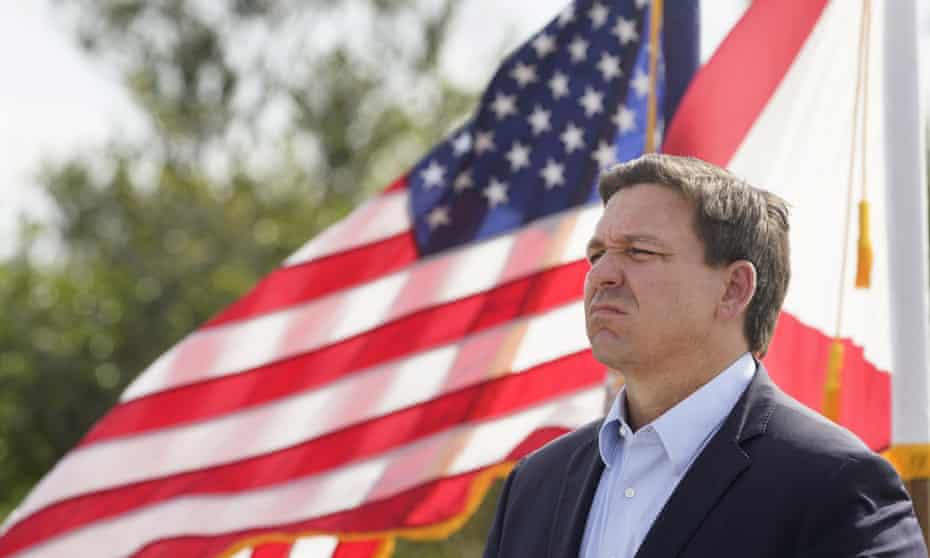
Photo taken from: The Guardian
Background
[SSB theme=”Official” align=”center” counter=”true” ]
The conservative-leaning state of Florida which has not elected a Democratic governor since 1999 is currently being headed by its 46th governor Ron Desantis. Before being elected Desantis joined the U.S. Navy from 2004 to 2010, serving as a judge advocate general (JAG) officer advising troops in Iraq and at Guantanamo Bay. He represented Florida’s 6th congressional district for three terms until his election as Governor over Democratic rival Andrew Gillum in 2019.
Controversies
Desantis’ term as governor has been full of controversy but also praise and high approval ratings among conservatives in both Florida and around the U.S. DeSantis has signed a number of controversial bills into law such as Florida bill 168: an Anti-Immigrant law that attempts to ban sanctuary cities in Florida and requires local law enforcement and jails to comply with ICE requests to find and hold illegal immigrants. This law received backlash from immigrant rights organizations and the ACLU.
Earlier this year in April 2021, DeSantis also signed HB 1 or what his administration called an anti-riot bill into law. In the wake of the Black Lives Matter protests of 2020, which were met with disapproval among conservatives, the Florida Governor signed into law a bill that granted civil legal immunity to people who drive through protesters blocking a road. Supporters of HB 1 say the bill targets those who would act violently during protests, block highways or engage in looting.
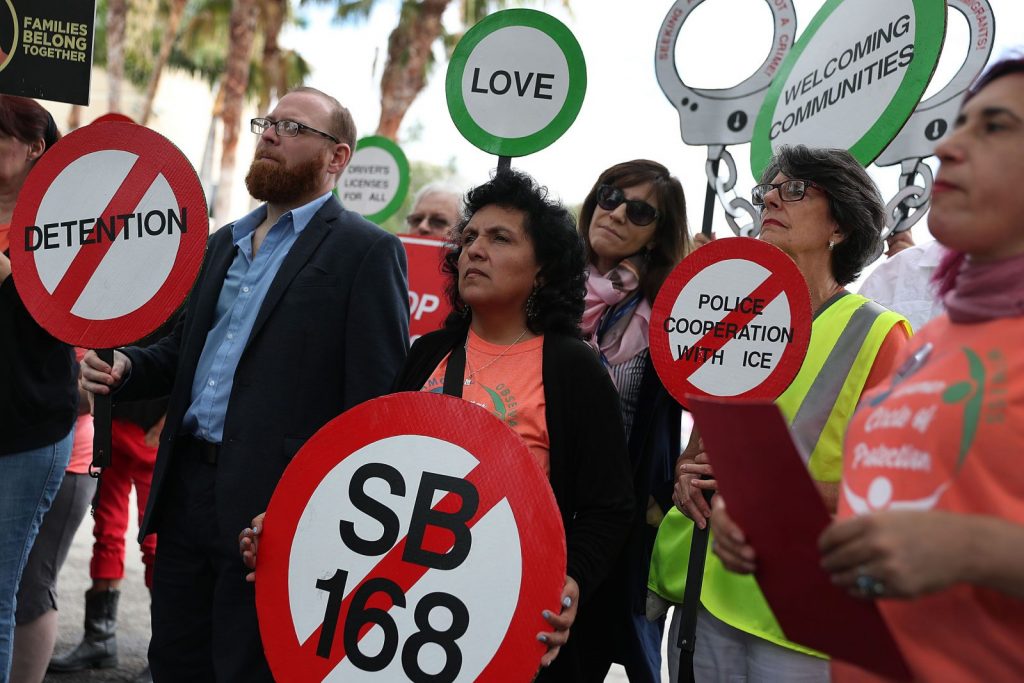
Photo taken from: The Washington Post
The claim is that protests that impede traffic and block roads are dangerous and any citizens encountering protestors doing so are legally allowed to drive through the crowd. This law was recently declared unconstitutional by a federal judge in Florida but the judge’s ruling does not block all law enforcement in the state from enforcing HB 1.
Governor Ron DeSantis is also accused of sending Florida law enforcement to the home of former state data scientist Rebekah Jones. Jones had been fired from her job after refusing to change data that would put Florida counties meeting criteria for easing Covid restrictions and reopening. Jones says a superior asked her to open up the data and alter the numbers so that the state’s coronavirus positivity rating would change from 18% to 10% — and the state would appear to meet its target to reopen.
When she refused and continued posting data independently a search warrant was issued for her home and video emerged of several agents with weapons drawn entering her home and seizing her computers and phone. DeSantis alleges Jones sent illegal messages to state health department groups, though Jones was never arrested or charged with any crime.

Photo taken from: The Guardian
COVID-19
During the start of the U.S. shut down due to COVID-19, DeSantis issued a stay-at-home order on April 1st, 2020, but quickly set a reopening date for only a month later, May 4th, 2020. Having resisted lockdowns and mask mandates throughout the pandemic, he has become the leading the voice for the Republican hands-off approach to the virus. Allowing Floridians to deal with the virus as they pleased has resulted in Florida becoming among the worst in the nation for infection rates with about 22,000 per day and most ICUs in the state being filled to the brim. DeSantis has worked to ban mask mandates in schools even as the COVID-19 cases and deaths among children have risen with the new Delta variant. The U.S.
Department of Education recently it had begun a new program to provide funding for school districts in Florida that lose money for implementing safe COVID-19 practices such as mandatory masks.
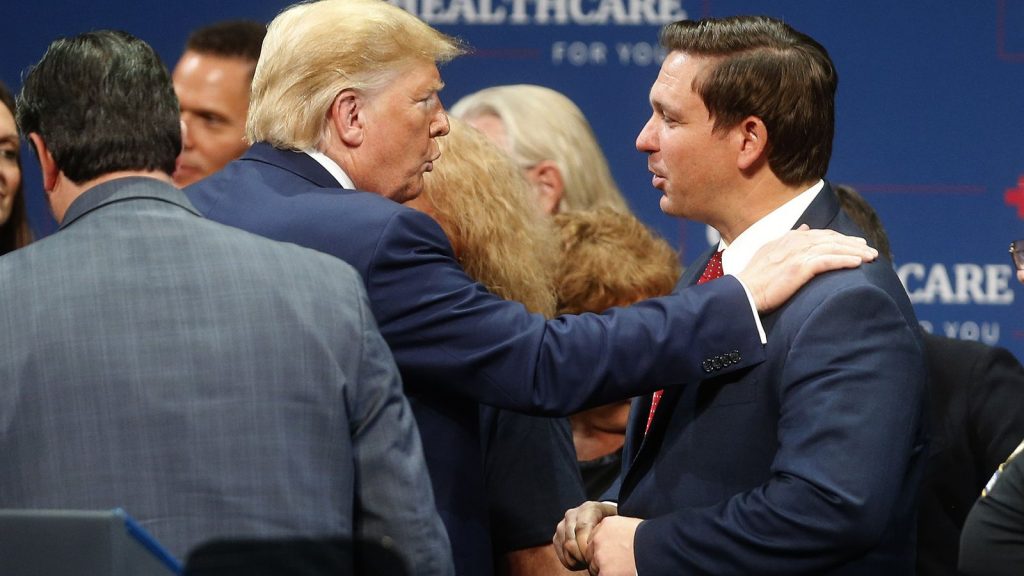
Photo taken from: Tampa Bay Times
Future of the GOP and Presidential Hopeful
DeSantis has made it clear that he is looking to embrace Trumpism and the Republican party’s shift to the far right. Many see DeSantis as the new rising star to take the mantle and Presidency whenever Donald Trump is defeated or relinquishes his grip on the Republican party. Others see DeSantis as the right man to join former President Trump on the 2024 ticket, with the two being among the most popular of all potential Republican candidates.
Of the laws passed during his administration, many have caused concern by civil society organizations. His in-action and lack of acceptance of mainstream science have placed Florida as one of the worst states in COVID-19 deaths. And his politics signal the growing problem of a growing list of conservative governors and senators who are banking their re-elections on who can be the most inflammatory regardless of the toll on their constituents and who can best emulate Trump. Whatever the possibilities in the future, DeSantis seems secure to win re-election in Florida if he chooses to run.

China’s Relationships with the Muslim World
China’s Relationships with the Muslim World
Foreign Policy Brief #131 | By: Avery Roe | September 15, 2021
Header photo taken from: Middle East Institute
Follow us on our social media platforms above
Browse more foreign policy briefs here

Photo taken from: Getty Images
Policy Summary
[SSB theme=”Official” align=”center” counter=”true” ]
With significant attention being drawn to the treatment of the Uyghur population and the rise of the Taliban, it is important to understand China’s relationship with the Muslim world as they contend for global influence
One of the most newsworthy relationships China has with the Muslim world is the treatment of the Uyghurs. The Uyghurs are a population of approximately 12 million, predominately Muslim people, that live in the Xinjiang region of China. Most do not speak Mandarin. The Chinese Government has orchestrated a mass crackdown in the region, including restricting people’s rights to practice their religion and the construction of forced re-education camps. The Chinese say this these moves are to prevent terrorism and root out Islamist extremism. However, these acts have been called Genocide by multiple Western Countries, including the United States.
China;s treatment of the Uyghurs is in stark contrast to China’s actions towards Muslims abroad and even other groups of Muslims within the Chinese borders. The Chinese Communist Party is officially atheist but recognizes five religions, including Islam. Religious practices are tightly monitored and limited to “normal religious activities,” normal remains undefined. Hui Muslims within China have not faced nearly the same repression that Uyghurs have. Historically relations between the Hui people and the ethnic majority Han have been very friendly. This is largely considered to be because the two cultures have merged. Whereas the Uyghurs have a strong desire to be autonomous, the Hui are culturally very similar to the Han, including speaking Mandarin. The Hui have largely been allowed to practice their faith in ways that they see fit.
China has also cultivated very positive relationships with Pakistan and The Taliban, two largely Muslim entities. While China is still concerned about the threat of terrorism with regards to the Taliban, they have given them their political and diplomatic support in the aftermath of their takeover of Afghanistan. In the eyes of Chinese leadership, the fall of Afghanistan shows that the values of Western Democracy aren’t universal and that their system could be a viable alternative to American ideas. China has also forged a very strong economic relationship with Pakistan through the China-Pakistan Economic Corridor. This gives China access to ports and further trade and Pakistan gains a very valuable trade ally.
Policy Analysis
In actively working on its relationships with the Muslim world China is finding a foreign policy gap that the United States has struggled with, especially in the post-9/11 era. As the United States has left Afghanistan to disastrous results, China is stepping in to fill that gap and present what could be a valuable alternative. This should be of some concern to the United States as it tries to establish its post-Afghanistan foreign policy. If the United States wants to maintain its influence it is important to maintain an awareness of Chinese activities and how China is attempting to portray itself as an alternative to the United States. It could be incredibly beneficial for the United States to reach out to Muslim countries in order to create more depth in those relationships.

Photo taken from: The Times
China’s relationship with religion becomes much more nuanced when looking internally. Given the difference in treatment between the Hui and Uyghur peoples, it is clear that religion is not the sole issue, it comes down to cultural differences and how each group practices their faith. While this is important to understand it does not diminish the urgency in the circumstances of the Uyghur people. The international community, including the United States, needs to take the more active role so that further harm can be prevented.
While China has rightfully been receiving significant negative attention for its treatment of the Uyghur population, it is clear that their concerns are far more cultural than religious. Not acknowledging the intricacies in China’s relationship with the Muslim world could be a dangerous way to ignore China’s attempts at gaining international influence.
Engagement Resources
Click or tap on image to visit resource website.

- https://uhrp.org/- The Uyghur Human Rights Project is an American-based organization promoting the rights of the Uyghur people through research and events.

- https://enduyghurforcedlabour.org/- End Uyghur Forced Labor calls on corporations to exit the Uyghur region at all levels of their supply chain to stop the system of forced labor that has been occurring.