

TRUMP RUSSIA INVESTIGATIONS
Get your latest Op Eds from U.S. Resist News.
Latest U.S. Resist Op Eds
IMPROVING THE EFFECTIVENESS OF CONGRESS
U.S. RESIST NEWS OP ED
U.S. Resist News
The current ineffectiveness of Congress is one of the biggest threats to our democracy. Increasingly Americans are losing faith in the ability of Congress to pass meaningful legislation and respond to their needs. In this Op ED U.S. RESIST NEWS Reporters offer practical suggestions that will enable Congress to act as the legislative body the founders intended it to be.
Legislative Priorities for the New Congress, Part 2
U.S. Resist News Op Ed
U.S. Resist News
Legislative Priorities for the New Congress, Part 2 – The US Mid-Term Elections resulted in a near political stalemate. Democrats will continue their control of the Senate. Republicans will have a slim majority in the House. Many observers think it will be next to impossible to get anything done in this environment.
On the other hand, there seem to be a sprinkling of Congresspersons on both sides willing to cross over on specific issues. Therefore we are hopeful that the next session of Congress, as well as the current lame-duck session, will result in some meaningful legislation
Legislative Priorities for the New Congress
Us Renew News Op Ed
U.S. Resist News
The US Mid-Term Elections resulted in a near political stalemate. Democrats will continue their control of the Senate. Republicans will have a slim majority in the House. Many observers think it will be next to impossible to get anything done in this environment.
On the other hand, there seem to be a sprinkling of Congresspersons on both sides willing to cross over on specific issues. Therefore we are hopeful that the next session of Congress, as well as the current lame-duck session, will result in some meaningful legislation.
A Candidate Code of Ethics
U.S. Resist News Op Ed
By Ron Israel Abigail Hunt, Rod Maggay, Geoffrey Small, and Steve Piazza
The US election system, at the core of our democracy is under attack.
Many politicians still refuse to accept the results of the 2020 Presidential election; others refuse to go on record saying they will accept the result of mid-term races where they are candidates. Debates are at a minimum, and campaigns are rife with lies, false statements, and dark money.
The U.S. Must Assure Voting Access for All and Free and Fair Elections
U.S. RESIST NEWS OP ED – September 2022
By Abigail Hunt, Inijah Quadri, Steve Piazza, Rod Maggay and Ron Israel
At the core of the American republic is the principle of consent of the governed, or as Alexander Hamilton put it, “Here, sir, the people govern” (Alexander Hamilton “Remarks on the U.S. House of Representatives, at the New York state convention on the adoption of the Federal Constitution,” July 27, 1788
IT’S TIME TO REFORM THE SUPREME COURT
U.S. RESIST NEWS OP ED
By Rod Maggay, Ian Milden, Geoff Small, Ian Sultan and Managing Editor Ron Israel
The events at the Supreme Court, such as the over-turn of Roe v Wade and the political actions of Justice Clarence Thomas’s wife, cast light on the need to reform the workings of the Court. In this Op Ed, U.S. RESIST NEWS makes suggestions for ways in which the Supreme Court can become more reflective of all Americans and not just a narrow few, and become more accountable for its actions.
Round 10 in the Fight to Save the Planet – and Fatigue Has Set-in
US Renew Op-Ed
By Todd J Broadman
Global warming as our single most important political issue has begun to wane, taking a backseat to economic concerns. A scant 1 percent of those recently polled by the New York Times/Siena College perceive climate change as the most important U.S. issue.
That low ranking for climate as an issue held true for those under 30 as well. As this is a long-term issue and one that requires long-term determination, the apparent widespread apathy is cause for concern.
It’s Time to Declare Independence from America’s Two Political Parties
U.S. Resist News Op Ed
John Halpin
The parties insist everyone must toe the line and hold the same ideological views. If the parties won’t change, then voters in the middle should just reject them.
For a ‘Young’ Country, the U.S. Has an Old and Outdated Constitution
U.S. RESIST NEWS OP-ED
By Alexander Clarkson
The belief that the United States is a uniquely youthful society in contrast to an aging and decadent Europe has become so entrenched that it is rarely questioned. Whether out of politeness or genuine belief, Europeans encountering this recurring trope often turn to their own.

A Candidate Code of Ethics
A Candidate Code of Ethics
U.S. RESIST NEWS OP ED | By: Ron Israel Abigail Hunt, Rod Maggay, Geoffrey Small,and Steve Piazza | October 28, 2022
Header photo taken from: Matt Dorfman

Photo taken from: The Washington Post
The US election system, at the core of our democracy is under attack. Many politicians still refuse to accept the results of the 2020 Presidential election; others refuse to go on record saying they will accept the result of mid-term races where they are candidates. Debates are at a minimum, and campaigns are rife with lies, false statements, and dark money.
In the face of this assault U.S. RESIST NEWS puts forward the following Candidate Code of Ethics intended to restore integrity and respect for the election process. We ask all candidates in the upcoming midterm elections and beyond to agree to adhere to the following Code.
Candidate Code of Ethics
1. Abide by the Results of the Election:
I pledge to honor the results of this election contest, even if I am the losing candidate.
2. Be Transparent Regarding Sources of (and Limits to) Campaign Finance:
I will make my donors and my donation sources a matter of public record; and will abide by any agreed upon campaign spending limits among myself and other candidate.
3. Disclose and Recuse Oneself from Involvement with All Actual and Potential Conflicts of Interest, including Investments:
I will disclose any existing and potential conflicts of interest that might unnecessarily bias my positions on campaign issues, and recuse myself from taking positions on issues where I might have a conflict of interest.
4. Refrain from Making False Claims About Your Background:
I will not lie about my past record or background.
5. Display Respect for Your Opponent:
I will not slander my opponent or make false statements about his or her actions or words.
6. Agree to a Moratorium on Speeches 5 Days Prior to the Election:
I agree to refrain from making campaign speeches 5 days prior to Election Day.

Photo taken from: Stand By Your Ad
7. Commit to Advertising that Supports the Issues in My Platform:
My campaign advertising will focus only on the issues I am supporting.
8. Participate in at Least 2 Debates:
I agree to participate in at least 2 debates with my opponent(s).
I agree to have a bi-partisan panel monitor the use of this Code by candidates for office and highlight any violations.
The U.S. Must Assure Voting Access for All and Free and Fair Elections
The U.S. Must Assure Voting Access for All and Free and Fair Elections
U.S. Resist News Op Ed | By: Abigail Hunt, Inijah Quadri, Steve Piazza, Rod Maggay and Ron Israel | September 26, 2022
Header photo taken from: Getty Images

Photo taken from: Jay Janner / Austin American-Statesman / The Associated Press
Policy Summary
At the core of the American republic is the principle of consent of the governed, or as Alexander Hamilton put it, “Here, sir, the people govern” (Alexander Hamilton “Remarks on the U.S. House of Representatives, at the New York state convention on the adoption of the Federal Constitution,” July 27, 1788
And yet in recent years there have been efforts in several states, e.g. Georgia, Texas, Florida, to restrict the right to vote. Many of these efforts seem to be aimed restricting minority access to the ballot box and keeping Republicans in power.
They have been enacted in response to the Trump big lie that the 2020 election was stolen. They respond to problems that heretofore have not existed. The regulations threaten the fairness and the outcomes of the 2022 and 2024 federal elections.
U.S. RESIST NEWS offers the following suggestions to prevent these regulations from going into effects. In the long-term Congress needs to pass several important pending federal legislative proposals that will put all federal elections on a fair and equal footing for American citizens.
These proposals include passage of pending Federal voting rights legislation aimed at ensuring and maximizing voter access, transparent counting of ballots, and the security of election workers. Much needed efforts also are underway in several states to do away with the practice gerrymandering by establishing non-partisan Independent Redistricting Commissions
Policy Analysis
Options are limited for addressing new state-level voting restrictions before the mid-terms. However there are some actions that have already been taken and may help. These include the following:

Photo taken from: New York Civil Liberties Union
- Mounting legal challenges to the new restrictions, are are being done by the ACLU and the Department of Justice.

Photo taken from: PBS Newshour
- Taking steps to protect poll workers from harassment, as is being done through a new Law Enforcement Election Task Force established by the Department of Justice, the FBI, and the Department of Homeland Security.

Photo taken from: Our Common Purpose
- Accelerate voter education and voter turnout efforts that make people aware of the new voter restrictions and how to address them.
Open, free and fair voting processes are at the heart of our democracy. We must protect the right to vote at all cost.
IT’S TIME TO REFORM THE SUPREME COURT
IT’S TIME TO REFORM THE SUPREME COURT
By: U.S. Resist News | August 2, 2022
Header photo taken from: iStock

Photo taken from: Getty / AFP / Jim Watson
The following U.S. RESIST NEWS Reporters contributed to this Op Ed: Rod Maggay, Geoff Small, Ian Sultan and Managing Editor Ron Israel
The events at the Supreme Court, such as the over-turn of Roe v Wade and the political actions of Justice Clarence Thomas’s wife, cast light on the need to reform the workings of the Court. In this Op Ed, U.S. RESIST NEWS makes suggestions for ways in which the Supreme Court can become more reflective of all Americans and not just a narrow few, and become more accountable for its actions.
Change the Nomination Process— We need to ensure a fairer nominating process. Nominations should become less ideologically driver. They should reflect the opinions of a variety of interest groups, not just the groups affiliated with the party in power. (Justices Gorsuch, Kavanaugh, Alito, Barrett, Roberts, and Thomas were all recommended by the Federalist Society.)Once a person is nominated, they should be carefully evaluated and then a vote on his or her nomination needs to be immediately taken in the Senate.
The ability of the Senate to block a hearing on a nominee, as the Republicans did with Merrick Garland, should not be allowed. Candidates who appear before the Senate should face a perjury penalty for lying during their nomination hearing.
Policy Analysis
Take Steps to Ensure a More Diverse Court:
We need a court that is more diverse and politically balanced court. We need a court that reflects the cultural, ethnic, racial and religious, and political differences of the country.
Ways in which such diversity can be achieved include expanding the number of justices, imposing term limits, and having the parties alternate the nomination responsibility each time a vacancy occurs, rather than have the President make the decision. justices should be put in place.

Photo taken from: Diego M. Radzinschi / ALM

Photo taken from: Center for American Progress
Implement a Code of Ethics:
Congress needs to draft a Code of Ethics to guide the conduct of Supreme Court justices.
Such a code of ethics should deal with issues such as committing perjury during the nomination process, conflicts of interest that might be appropriate for justices in specific cases, and requirement for justices to recuse justices to recuse themselves from cases where they have a conflict of interest.
A specific framework for the impeachment of Supreme Court
These and other Supreme Court reforms a greatly needed to reinstate public faith in our judicial system. Putting such reforms in place will be a monumental but important undertaking.
Perhaps the place to start is by establishing a bi-partisan national Judicial Reform Commission that can consider reforms such as these and make recommendations for Congressional review and action.
Round 10 in the Fight to Save the Planet – and Fatigue Has Set-in
Round 10 in the Fight to Save the Planet – and Fatigue Has Set-in
US Renew Op-Ed | By: Todd J Broadman | August 1, 2022
Header photo taken from: AP Photo / Noah Berger
Follow us on our social media platforms above
Browse more U.S. Resist News Op Eds from the top dashboard

Photo taken from: Caitlin O’Hara / The New York Times
Policy Summary
[SSB theme=”Official” align=”center” counter=”true” ]
Global warming as our single most important political issue has begun to wane, taking a backseat to economic concerns. A scant 1 percent of those recently polled by the New York Times / Siena College perceive climate change as the most important U.S. issue. That low ranking for climate as an issue held true for those under 30 as well. As this is a long-term issue and one that requires long-term determination, the apparent widespread apathy is cause for concern.
While we know that party affiliation plays a role in the perceived importance of this topic, we also know that if there is no direct experience of the impact of climate change on an individual’s life, motivation to act tends to waiver and often declines. In each succeeding year since 2010 there have been increasing extreme weather events that do impact lives. 2021 was the fourth-hottest in United States history. And the media is covering this summer’s wildfires and droughts, providing updates on Europe’s plight. Americans tend to feel more of a relationship with Europeans than they do with other groups.
A recent comment reflects broader change in voter sentiment: “Climate change is always going to be a problem. That’s just a given. Honestly, there’s only so much our leaders of the country can do.” Inflation, and its effect on housing and food, have now taken center stage along with the overturning of Roe vs. Wade. Over and above this, “People are exhausted by the pandemic, they’re terribly disillusioned by the government,” observed Anusha Narayanan, climate campaign director for Greenpeace.
Those whose passions were ignited by Greta Thunberg and Al Gore before her, have witnessed grand proclamations to address climate change only to be let down by lack of action on the ground. Last week, we saw an ambitious $2 trillion dollar program to reduce carbon emissions all but expire in the Senate due to concerns about inflation and tax hikes. A paltry $2.5 billion to assist with an infrastructure of electric vehicle charging stations was approved. This will do little to meet bold pledges to cut CO2 emissions.
Meanwhile, the latest IPCC projections put the earth on track for a temperature rise of 3°C (5.4°F) rise by the year 2100. UN secretary-general António Guterres described this latest report as “an atlas of human suffering and a damning indictment of failed climate leadership.” In the face of being directly in line with devastating climate impacts, citizens are reacting to what they perceive as a failure of leadership and turning away. It remains to be seen if a unified political movement can re-emerge, even if large numbers in the U.S. become displaced climate refugees.
Policy Analysis
The political paralysis characteristic of the U.S. legislature is just one of several significant developments that have led to a malaise and growing disappointment over repeated missed opportunities to take action to save a threatened planet. There is also the ever-present blame-game. China, the world’s largest emitter would not commit to any concrete actions to reduce their carbon footprint at COP26. 75% of India’s electricity is generated by burning coal and their position is to increase its usage going forward. With this as backdrop, the U.S. justifies its finger-pointing and rationalizes inaction.
The world’s poor, largely in the southern hemisphere point their fingers at the relatively wealthy north who they claim are the cause of their looming climate plight. More than half of Africa’s population will likely be displaced due to drought and resulting famine conditions now underway. At COP27 – to take place in Egypt in November – financing from the rich to the poorer countries in the form of a “loss and damage facility” will be on the agenda. We are already in the damage mitigation phase, and here we can expect little in the way of actual funding and coordination on the ground.
Consistent with the paralysis and finger-pointing is the long string of broken promises. The G7 broke a promise by making the decision to invest in the liquefied natural gas (LNG) industry. Germany issued this as rationale: “[Our investment is] a necessary response to Russia’s war on Ukraine and the related impacts on global fossil fuel supplies.” The U.S. for its part would seem more transparent about its lack of intention to keep its promises. There will be no “Build Back Better.”

Photo taken from: Down to Earth (.org)
(click or tap to enlargen)
The media itself, a corporate oligopoly itself, has played a key role in downplaying the need for political action while intensifying the concerns of buck-passing and finger-pointing. The media has determined their own economic model is not enhanced by in-depth reporting and holding politicians to promises, even when it involves the fate the living planet. Extractive industries and the banks that fund them are given a relatively free hand to continue their pursuit of profits without consequences. The media again remains silent.
In a sense, at least in the U.S., the waning interest in climate change can be seen as a victory by polluting industries and their well-managed and sumptuously funded information campaigns. Charles Koch who heads Koch Industries, the largest private company in the U.S., best exemplifies the effectiveness of “dark money.”
The right-wing activist network that he and partners financed over many years has paid dividends in the appointment of Supreme Court justices and their resulting decisions. One observer noted that the West Virginia v. EPA decision “represents the culmination of years of attacks by Koch-funded groups on these rules.” The power of predatory capitalism overrides environmental concerns.
There has been a tangible capitulation and surrender to these forces. Those who are willing to make sacrifices for a renewed planet are becoming more dejected. All the reasons I have described for this foreboding trend are contained within a statement given by Chuka Umunna, head of Environmental, Social and Governance for JP Morgan, when asked about their continued financing of the petroleum industry.
“We reflect society. Society has not come off oil and gas. We all want to get to the promised land where we do substantially reduce our reliance on oil and gas. But we do not, unfortunately, have renewables at scale right now to replace oil and gas… And that’s not JP Morgan’s fault. That is society’s challenge.”
The values menu has not changed: profits before people and planet. And we are witnessing the stunning success of that values mission in the demoralized apathy of the citizenry.
It’s Time to Declare Independence from America’s Two Political Parties
It’s Time to Declare Independence from America’s Two Political Parties
U.S. Resist News Op Ed | By: John Halpin | July 5, 2022
Header photo taken from: Politico
Follow us on our social media platforms above
Browse more U.S. Resist News Op Eds from the top dashboard

Photo taken from: National Archives
[SSB theme=”Official” align=”center” counter=”true” ]
Nothing ever changes with America’s broken political system. Despite reams of evidence that an increasing proportion of voters despise both political parties and want to see internal changes or alternative party choices, neither Democrats nor Republicans have gotten the message.
Republicans vie to elevate the dimmest bulbs in the country to office, pledging loyalty to a corrupt former president who actively sought to overturn an election he lost. In turn, Democrats vie to elevate those who live in a fantasy world where things like high gas prices or violent crime aren’t real problems while mystical structural forces and improper language use are keeping Americans in a permanent state of oppression.
Normal Americans—a mix of traditional conservatives, liberals, and moderates—look at the two parties and just shake their heads. Out to lunch. Whack jobs. Extremists. Arrogant blowhards. Clowns who don’t understand my life. They’re right. The two parties have failed to adequately represent the views of ideologically unaligned Americans. And the two parties don’t particularly care to change this situation as they make yet another call to the partisan ramparts ahead of the 2022 elections.
Pundits like to say we are a nation divided between red and blue, separated along partisan lines over abortion, guns, gender, climate, and economic issues. In reality, America is a 30-30-40 nation split between partisan diehards on the left and right and a large pool of people who don’t fit into either one of these categories.
According to Gallup trend data, no more than 3 in 10 Americans today identify as either a Democrat or Republican, respectively, while roughly 4 in 10 call themselves Independent with equal proportions of these voters leaning Democratic and Republican when forced to choose.

Table taken from: Gallup, The Liberal Patriot
There’s vast unoccupied terrain in American politics with lots of unrepresented voters. A political party that chooses to inhabit this middle space on both economic and cultural issues will certainly reap electoral benefits. Alternatively, party leaders who shun this middle ground should expect more and more Americans to ignore their pitches and reject their candidates.
A successful political future that truly represents all Americans will be less doctrinaire, more independent, and grounded in equal dignity and rights for all peoplewith economic policies that advance America’s interests.

Table taken from: Gallup, The Liberal Patriot
Political scientists argue that this independence is not real and that these voters are just embarrassed by party labels even as they mostly vote one way or another. But what else are self-identified Independents supposed to do? They only get two viable choices, if at all, and the only other option is not to participate.
But imagine if there were two additional parties—one on the center-left and one on the center-right—that were given fair ballot access with resources to compete. Would these Independent voters who lean one way or another bolt given the chance? Probably a good chunk of them would. Or what if we had more competitive districts, open and nonpartisan primaries, and ranked choice voting to help break the “two-party doom loop”? Then we’d have a situation where the two main parties would have to genuinely fight for the middle portion of voters who don’t accept the down-the-line economic and cultural ideologies of the big dogs.
The parties would be forced to be more tolerant of people with different personal views and positions on hot-button issues rather than insisting on fealty across the board. They would need to recruit and field a diverse array of candidates from different backgrounds who are not beholden to ideologically predetermined positions. Perhaps with more competition the parties would adjust their governing visions to better represent a “pro-worker, pro-family, pro-America” centrist agenda that is economically nationalist and culturally moderate.
Unfortunately for America, the two parties aren’t likely to allow for real competition anytime soon.
Ideologically homeless Americans will therefore need to protect themselves and their sanity by declaring independence from the two parties. If the parties won’t voluntarily shift to more sensible positions designed to help all people in all parts of the country succeed, then American voters in the broad middle should take control of their own lives, join forces, and make the two parties come to them.
For a ‘Young’ Country, the U.S. Has an Old and Outdated Constitution
For a ‘Young’ Country, the U.S. Has an Old and Outdated Constitution
U.S. Resist News Op Ed | By: Alexander Clarkson | June 29, 2022
Header photo taken from: World Politics Review
Follow us on our social media platforms above
Browse more U.S. Resist News Op Eds from the top dashboard

Photo taken from: The New Yorker, Barry Blitt
[SSB theme=”Official” align=”center” counter=”true” ]
The belief that the United States is a uniquely youthful society in contrast to an aging and decadent Europe has become so entrenched that it is rarely questioned. Whether out of politeness or genuine belief, Europeans encountering this recurring trope often turn to their own, emphasizing their belief that a European point of view is more mature than that of the supposedly youthful and naive United States.
Very rarely is there much consideration about what it means for a society to be “old” or “young.” Sometimes commentators point to the steady birthrates and higher immigration that once sustained a more youthful and dynamic labor market in the United States. Yet in the past two decades, U.S. demographic growth has slowed down to a more “European” balance between older and younger generations, with all the societal and policy challenges that entails.
The emphasis on Europe’s age is certainly more accurate when pointing to its history of continuous settlement going back thousands of years. By contrast, the colonial-settler foundations of U.S. society in the 17th century mark the beginning of what is at most a 400-year history of what would now be recognized as a distinctly American way of life. Yet in many European cities, much of the urban landscape of industrial Europe emerged at the same time as similar processes in the United States. For every ancient cathedral city built many centuries before the first colonial settlement in North America, there are cities like Sheffield in the U.K. or Dortmund in Germany that only expanded at the same time as Chicago or St. Louis.
While European societies can look back to long histories, the forms of identity on which their political systems hinge are much more recent. Medieval linguistic and religious traditions provided the cultural foundations of state formation in Europe. But the emergence of national identities as we would understand them now was a product of the economic and social changes that engulfed Europe at the same time that the settler communities of North America’s Eastern seaboard began their expansion through the forced displacement of Indigenous peoples. The formation of nation-states in much of Europe only took shape in the century after the start of the American Revolution in 1776. And as the U.S. experienced vast territorial expansion and profound internal instability, culminating in the Civil War of the early 1860s, every European society was experiencing its own period of disorienting economic transformation and vicious political conflict.
During this period, almost every European state developed a lasting constitutional order, long after the U.S. Constitution was ratified in 1788. In the 234 years since then, France has lived through two royal dynasties, two empires, three revolutions, a fascist collaboration regime and five republics, each with its own distinct political system. Though Germany’s basic law was set out in the West German Constitution of 1949, only with the absorption of East Germany through reunification in 1990 did the modern German system fully take its current form. The constitutional orders of Greece, Spain and Portugal only emerged after the fall of dictatorships in the 1970s, while the political systems of every Eastern European state, from Estonia to Ukraine to Albania, are all products of the Soviet Union’s collapse in the early 1990s.
The European state in which radical constitutional experimentation and improvisation are most effectively hidden by a facade of symbolic continuity is the United Kingdom, which consolidated as a cohesive state with the merger of the Scottish and English Parliaments in 1707. For all its royal pomp and circumstance, however, when looked at more closely, the U.K. as a state has gone through dizzying institutional and political change in the past two centuries. The brutal war that led to the formation of an independent Ireland in the 1920s marked the most fundamental break of all. But the devolution of substantial power to the Northern Irish Assembly, the Welsh Senedd and the Scottish Parliament in the 1990s also represented huge changes to the basic configuration of British political life.
Combined with Britain’s fraught involvement in European integration as a member of the European Union, by the early 2000s the U.K.’s constitutional order had been fundamentally transformed. In the context of a society undergoing such vast and sudden changes, it is far less surprising that a huge institutional gamble like leaving the EU gained so much traction among voters during the 2016 Brexit referendum.
The European integration process that elicited so much hostility among parts of the British public marked the most radical constitutional innovation facing European societies. Though the first steps toward what is now the EU were taken with the Treaty of Rome in 1957, the EU came much closer to its current form as an increasingly state-like entity with the 1992 Maastricht Treaty. With such rapid consolidation of the EU’s collective currency, parliament, legal system and border controls, the period between 1992 and the Treaty of Lisbon in 2009 marked a massive transformation in how power is organized across Europe. Even as they try to diverge from the EU’s system, successive British governments have struggled to manage the shock of leaving, showing how deeply intertwined the economies and constitutional orders of European states have become with EU institutions.
While the EU has experienced a succession of shocks that have kept its young system in a state of flux, the polarization and gridlock paralyzing U.S. politics have been severely exacerbated by an inflexible U.S. constitutional order that is beginning to show its age. Even as European states experienced dizzying constitutional turnover, the last significant changes to the U.S. Constitution were put in place with the creation of the Federal Reserve and introduction of direct elections to the U.S. Senate in 1913, and the expansion of suffrage to women in 1920.

Photo taken from: New York Magazine, Ron Edmonds / AP Photo
(click or tap to enlargen)
Yet after decades of relative stability, the United States’ political system was already beginning to show signs of stagnation and dysfunction in the years before former President Donald Trump’s authoritarian populism brought it close to the breaking point.
In the early 1990s, growing ideological polarization between Democrats and Republicans hollowed out procedural conventions that had provided the basis for effective governance. In the wake of Pat Buchanan’s ferocious “Culture War” speech at the GOP convention of 1992, the Republican leadership’s focus on mobilizing the party’s base and polarizing the electorate turned U.S. politics into the zero-sum environment that enabled Trump’s rapid rise.
An awareness of such dynamics and a more critical view of old tropes that portray the United States as young and Europe as decrepit does not mean ignoring the strengths of U.S. society or the weaknesses of the EU system. But it can provide a clearer understanding of the challenges both face when trying to secure stability, prosperity and democracy.
If one sees European integration as a state-building process, then the disparate responses to the repeated waves of crisis that have hit the EU and its neighborhood begin to make more sense. As a new system, the EU’s structures were often still only half-formed when plunged into managing crises that threatened to overwhelm the continent’s societies.

Photo taken from: Time
So, it should come as no surprise that substantial numbers of European voters proved to be susceptible to populist demagogues who promised to restore order in a disordered world. Yet operating in a young system that is still being formed also gives policymakers room to experiment and improvise as they try to help European societies adapt to a changing world, which explains how those same crises also drove significant advances in the process of integration.
In the United States, the institutional continuity provided by a constitution that has remained largely unchanged since 1920 provided the basis for decades of political stability and economic growth. Yet the breakdown of bipartisan consensus since 1992 has made that constitution seem increasingly unable to manage a technologically advanced urban society with a population of 330 million people, while also making it impossible to overhaul it.
Despite all the signs of systemic dysfunction, it is the chaos of the Trump years that has finally made it impossible to ignore the extent of the problem, building momentum for a much wider debate. If the political will can be found to reform the United States’ ancient constitution, then perhaps the country will once again enjoy the opportunity of being young again.
Alexander Clarkson is a lecturer in European studies at King’s College London. His research explores the impact that transnational diaspora communities have had on the politics of Germany and Europe after 1945 as well as how the militarization of the European Union’s border system has affected its relationships with neighboring states. His weekly WPR column appears every Wednesday.
THE DEPARTMENT OF JUSTICE SHOULD INDICT FORMER PRESIDENT TRUMP
THE DEPARTMENT OF JUSTICE SHOULD INDICT FORMER PRESIDENT TRUMP
U.S. RESIST NEWS OP-ED | By: Ron Israel | June 28, 2022
Header photo taken from: Business Insider
Follow us on our social media platforms above
Browse more U.S. Resist News Op Eds from the top dashboard
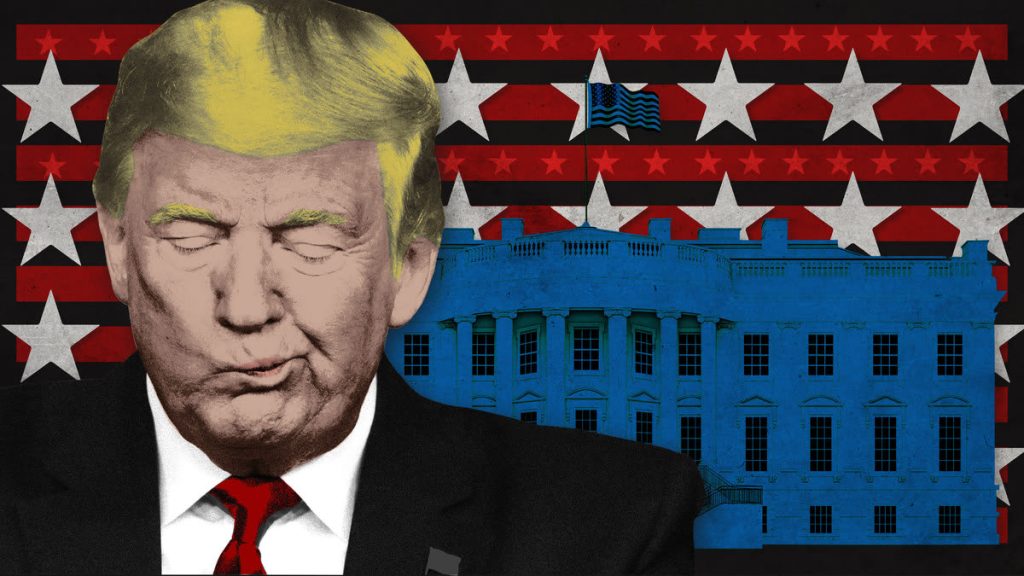
Photo taken from: The Daily Beast
Policy Summary
[SSB theme=”Official” align=”center” counter=”true” ]
The January 6th Committee, through its publicly televised hearings has revealed that it has enough evidence to indict former President Donald Trump. The indictment would be focused on Trump’s illegal efforts to overturn the results of the 2020 Presidential elections.
The evidence would be based on Trump’s efforts to coordinate a slate of fake electors from states that President Biden legitimately won; his efforts to encourage the mob that stormed the US Capitol on January 6th hoping to prevent Vice-President Pence from certifying the election’s legitimate outcome; his publicly visible attempt to get the Secretary of State in Georgia to find him enough votes to overturn Biden’s election in that state; and his effort to get the Justice Department to declare that the 2020 election results were fraudulent.
There would be a great deal of risk involved if the Justice Department prosecuted Trump. They would need to have an iron -lad case to prove Trump’s intent to overturn the election, and they would need to convince a grand jury to unanimously agree that the evidence merited conviction. It would be a case that would drag on for some time; might further inflame existing political divisions, and might take place against the backdrop of a Republican-controlled Congress.
Policy Analysis
Some argue that rather than prosecute Trump it would be sufficient to find a way to bar him from taking public office again. There is a clause in the 14th Amendment to the Constitution that could apply. That clause, developed after the civil war, says that officeholders who “have engaged in insurrection or rebellion against the government are disqualified from future office.” However no one is sure how such a clause would be invoked today. At a minimum it probably would require the approval of both houses of Congress, a far-fetched possibility in this day and age.
So it appears that criminally prosecuting Trump for his leadership in seeking to overturn a legitimate election outcome is the best approach to dealing with the former President’s illegal actions. It is a risky approach but it is a risk worth taking. To do otherwise, to ignore and not prosecute Trump, would be setting a standard that a President is above the law Such a standard would be a slap in the face of American democracy.
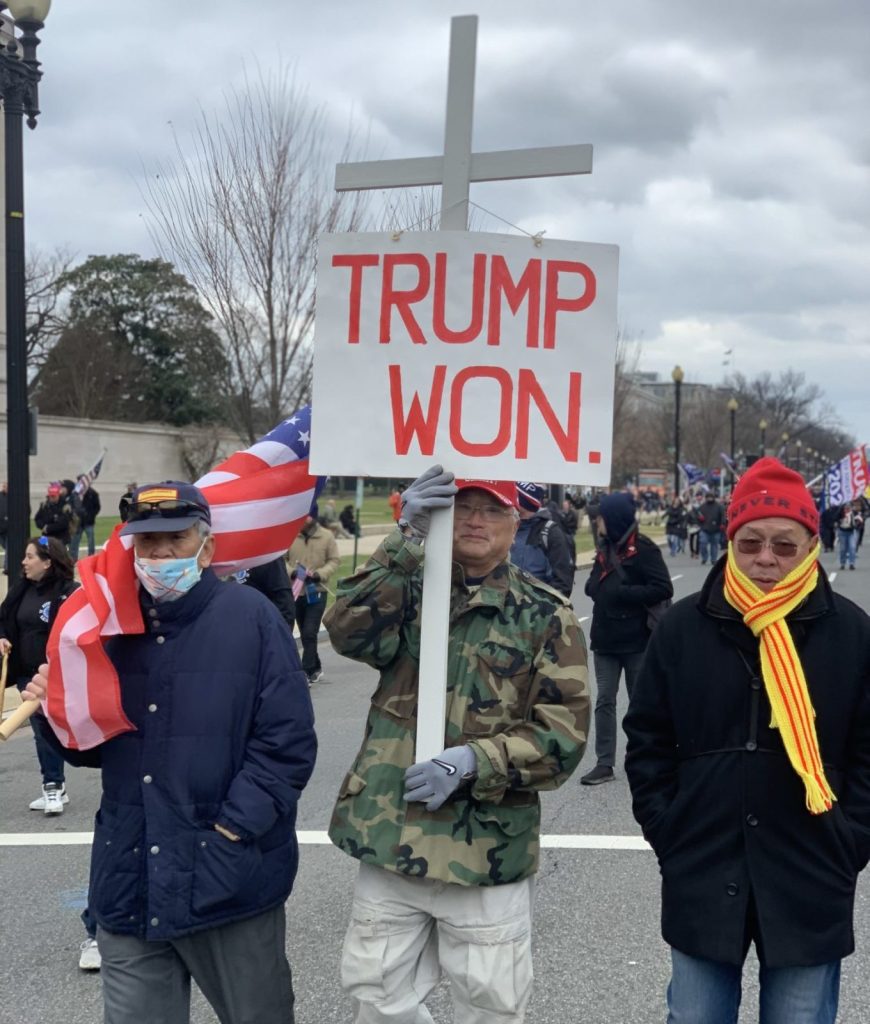
Photo taken from: Washington Monthly
(click or tap to enlargen)
We know that other countries with democratic constitutions have prosecuted presidents who committed crimes and violated laws, such as France, South Africa, Colombia, Peru, and Honduras; so there is precedent from countries around the world for the United States to take such action. Failing to do so will put a stain on the character of our nation.
The Center Lane is Wide Open
The Center Lane is Wide Open
U.S. Resist News Op Ed | By: John Halpin |
June 7, 2022
Header photo taken from: Mike Blake / Reuters
Follow us on our social media platforms above
Browse more U.S. Resist News Op Eds from the top dashboard

Photo taken from: Mod DB
Policy Summary
[SSB theme=”Official” align=”center” counter=”true” ]
After the Democratic primaries in 2020, Joe Biden’s comeback victory over more left-leaning opponents was hailed as a triumph for his traditional brand of pragmatic centrism and bipartisan cooperation that later enabled him to win a decisive popular vote majority over Donald Trump in the general election. Biden swooped into office promising to “end this uncivil war that pits red against blue, rural versus urban, conservative versus liberal.”
A year and half later, this center ground appears all but abandoned and out of reach—for both President Biden and former President Trump.
According to fresh new polling from Global Progress and YouGov, conducted among more than 10,000 respondents in 9 leading democracies, an eye-catching 44 percent of Americans today place President Biden on either the very left-wing (30 percent) or somewhat left-wing (14 percent) side of the ideological scale. Only 12 percent of Americans place Biden directly in the center of the political spectrum, with another 14 percent placing him on the center-left.
Perceptions of former President Trump are even more extreme: nearly 4 in 10 Americans place Trump on the very right-wing side of the political scale and another 17 percent see him as somewhat right-wing. A mere 7 percent of Americans place Trump in the ideological center and another 8 percent on the center right.
Likewise, about one third of Americans overall view the Democratic Party as very left-wing and an equal percentage view the Republican Party as very right-wing. Only around 10 percent of Americans place either Democrats or Republicans in the center of the ideological spectrum, respectively.
In stark contrast to perceptions of their national leaders and the two parties, one quarter of Americans place themselves directly in the center of the ideological spectrum, with another 18 percent placing themselves either on the center-left or center-right in equal percentages. Only 1 in 10 Americans place themselves on either the far left or the far right, respectively. There’s clearly a wide gulf between how Americans conceive of their own politics versus those represented by their national leaders and the two political parties.
Part of the explanation for this divergence lies in partisan interpretations of opposition leaders and parties in the United States.
For example, more than 7 in 10 Trump voters place President Biden on the very left-wing side of the ideological scale compared to less than 10 percent of Biden voters who think similarly. In turn, 6 in 10 Biden voters place former President Trump on the very right-wing extreme of the spectrum—nearly double the percentage of Trump voters who label their own guy as far right.
These patterns are repeated on views of the two parties: 73 percent of Trump voters place the Democratic Party on the very left-wing side of the ideological spectrum while 62 percent of Biden voters place the Republican Party on the very right-wing side. In comparison, only 12 percent of Biden voters place the Democratic Party on the far left and only 15 percent of Trump voters place the Republican Party on the far right.
These data suggest that regardless of what national leaders do or say in politics these days, most voters from the opposition party are likely to view them as ideologically extreme.
Policy Analysis
This does not happen to the same degree in other countries according to the new Global Progress/YouGov data.
In the United Kingdom, for example, most British citizens view Labour Party leader Keir Starmer as slightly left-of-center (26 percent) and another 1 in 10 place him directly in the center. Only 8 percent of British people view Starmer as very left-wing—more than three times lower than the percentage of Americans who label Biden as very left-wing.
Even among Conservative voters from 2019, only 15 percent place Starmer on the far left with most seeing him as fairly left-wing or slightly left-of-center. In turn, most British citizens label Prime Minister Boris Johnson as fairly right-wing (28 percent), above the 16 percent who place him on the far right of the ideological scale. Labour voters from 2019 are more likely to view Johnson’s ideology as fairly right-wing rather than as very right-wing.
The pattern is repeated in Germany, Sweden, and Norway where current Social Democratic and Labour party leaders are all seen as more center-left than far left by citizens of their respective countries. Only 4 percent of Germans place Chancellor Olaf Scholz on the far-left side of the ideological spectrum, with most locating him in the center. Only 7 percent of Swedes place Prime Minister Magdalena Andersson on the far left with nearly one third seeing her as slightly left-of-center. Only 6 percent of Norwegians place Prime Minister Jonas Gahr Støre on the very left-wing side of the scale with a plurality seeing him as center-left.
Interestingly, in France nearly 4 in 10 citizens place President Emmanuel Macron on the slightly right-of-center or fairly right-wing side of the ideological scale.


Charts taken from: The Liberal Patriot
(click or tap to enlargen)
So, what’s going on? Why do Americans seem to view their leaders in such extreme ways compared to those in other democracies?
Perhaps citizens in European countries with multi-party systems have a keener understanding of the gradations of political ideology than do Americans with their two-party system. Perhaps citizens in these countries assess their leaders and parties more fairly than do Americans who appear to think most of their leaders are extremists. Perhaps the leaders in these European countries are more centrist in temperament and in practice than those in American politics.
More likely than not, American citizens are not any worse or better than others at understanding political ideology, and a leader like President Biden is not any more left-wing than his social democratic peers in Europe.
The difference in evaluations probably lies in the sorry state of national political discourse in the United States today. Americans operate under a daily barrage of culture war battles in the media along with constant partisan accusations of national treachery and radicalism hurled at opponents. In a context where all politics is presented as a zero-sum ideological fight for moral supremacy, many Americans are primed by media elites, social media trolls, and the billion dollar campaign industrial complex to view their leaders, particularly those from another party, as extremists. Sane Americans respond by tuning out the nonsense and turning away from politics altogether.

Chart taken from: Gallup / Knight Foundation
(click or tap to enlargen)
Yet, for America to flourish and overcome its biggest economic and security challenges, we all need to ratchet down the actual crazy politics—as well as the nonstop accusations of extremism for otherwise normal behavior and policy positions. Americans need to get out of the doom cycle of anger and mistrust that fuels partisan polarization. Those running our media and political institutions also need to relearn the art of measured political coverage and reasonable debate.
Although our politics seems hopelessly divided between the extremes, the center lane is still open to any political leader, party, or citizen willing to move over and occupy the space. To do this, Donald Trump needs an entirely different mode of politics to earn a legitimate second chance from a majority of American voters. In turn, Joe Biden needs to permanently shift back to the center lane where he started out—and be perceived as doing so by more Americans—if he wants to be reelected in 2024. And Americans themselves need to take a break from political combat and start rewarding those leaders who genuinely occupy the political center and stand up for the well-being of the entire nation.
What to Expect During the First January 6th Committee Open Hearings
What to Expect During the First January 6th Committee Open Hearings
Elections & Politics Policy Brief #37 | By: Maureen Darby-Serson | June 6nd, 2022
Header photo taken from: NBC
Follow us on our social media platforms above
Browse more elections and policy briefs from the top dashboard

Photo taken from: Yahoo
Policy Summary
[SSB theme=”Official” align=”center” counter=”true” ]
On Thursday June 2nd, the January 6th committee announced when it would hold its first round of public hearings. The first open hearing will be Thursday, June 9th at 8pm. Primetime. No other details were released, but more information would be made available next week. For example, no witness list was published.
This announcement was made a day after former Republican Congressman Denver Riggleman called text messages on Mark Meadow’s phone scary. He then went on to described Meadows as the “MVP” for the committee and that the texts showed a “roadmap” to the January 6th riots, starting as early as November 3rd.
In addition to the public hearing announcement, the Department of Justice has filed criminal charges against Former Trump White House Official Peter Navarro for failing to comply with a subpoena the January 6th committee sent to him months ago. He has spent his time since he was served with the subpoena fighting in court representing himself unsuccessfully. Normally, the DOJ allows an individual to self-surrender, but they considered Navarro a flight risk, so they arrested him at an airport in Nashville. He faces up to one year in prison.
Policy Analysis
So, what should you expect on the first days of the hearings? Assuming it is like most committee hearings, each member will get time to make an opening statement. This will set the stage for the future public hearings and will likely give the first look into the overarching findings of the committee.
They have spent months combing through thousands of emails and text messages, looking through intelligence data, and speaking with witnesses present on that day. These smaller details will likely be presented in later public hearings.
Mark Meadow’s text messages and information from him seem to be a big player in the committee’s investigations and will likely be a large part of these public hearings.

Photo taken from: CNN
(click or tap to enlargen)
Engagement Resources
Click or tap on resource URL to visit links where available

January 6th Committee Hearings – https://january6th.house.gov/committee_activity

Anderson Cooper Interview with Denver Riggleman
Support for the Separation of Church and State Should be Part of the Democrats Platform in the 2022 Mid-terms
Support for the Separation of Church and State Should be Part of the Democrats Platform in the 2022 Mid-terms
U.S. RESIST OP ED | May 19, 2022
Header photo taken from: Pew Research Center
Follow us on our social media platforms above
Browse more US Renew op eds from the top dashboard

Photo taken from: South Bend Tribune
Policy Summary
[SSB theme=”Official” align=”center” counter=”true” ]
In the upcoming Congressional elections Democrats should emphasize their commitment to supporting a democratic pluralistic society that respects individual rights, and the principle of separation of church and state, and how not showing support for these values opens the doors for outlawing abortions, banning books and other culture war issues. They need to highlight how many Republicans are backing laws that seek to impose a particular religious point of view on the lives of all Americans..
We are a nation of diverse peoples representing different religious, ethnic, and racial groups. Our Constitution recognizes and give us the ability to worship as we choose, freely express ourselves, and feel that our rights as individuals are protected
The First Amendment Bill of Rights reads “congress shall make no law respecting the establishment of religion,” and has been referred to as the establishment clause. Though not explicitly stated in the First Amendment, the clause often has been interpreted by the Supreme Court and others to mean that the Constitution requires the separation of church and state.
Recently the separation clause has been threatened by right wing religious extremists whose views are working their way into the political platform and cultural assertions of the Republican party and the Supreme Court. Republican efforts to assert an Evangelical Christian point of view and way of life span many areas.
The most high profile of these is the anticipated forthcoming Supreme Court decision to overturn Roe v Wade and make abortion illegal, denying women the constitutional right to control their own bodies. Other religious right culture war offensives include efforts to have schools ban books and classroom discussions that focus on issues related to sex education, gay and transgender rights, and racial discrimination, and efforts to enforce religious school prayer.
Majorities in all major religions believe in human induced global warming. However, many evangelicals believe our current global warming and climate change are simply part of a natural cycle and not caused by humans.

Photo taken from: Politico
(click or tap to enlargen)
Democrats need to push back on this trend by defending the values of a pluralistic democracy and making a defense of separation of church and state a key part of their own platform in the upcoming Fall elections.
As the late Mario Cuomo said in a speech at Notre Dame University in 1984. “The Catholic who holds political office in a pluralistic democracy — who is elected to serve Jews and Muslims, atheists and Protestants, as well as Catholics — bears special responsibility,” Cuomo said. “He or she undertakes to help create conditions under which all can live with a maximum of dignity and with a reasonable degree of freedom; where everyone who chooses may hold beliefs different from specifically Catholic ones — sometimes contradictory to them; where the laws protect people’s right to divorce, to use birth control and even to choose abortion.”