On the first day of his second presidential term, President Donald J. Trump issued Executive Order No. 14160. This executive order is popularly known as the birthright citizenship executive order which purports to make changes to the Birthright Citizenship rule embodied in the 14th Amendment to the United States Constitution. That rule declares, with modest exceptions, that children born within the geographic territory of the United States are instantly granted United States citizenship. That constitutional rule was later affirmed by the United States Supreme Court in the 1898 case United States v. Wong Kim Ark. However, with the ongoing national debate on immigration and immigrants in the United States, President Trump made a campaign promise to abolish the rule in order to try and stem the flow of immigrants from Latin American and South American countries to the United States.

Search Results
How Elon Stays in Business (Economic Policy Brief #89)
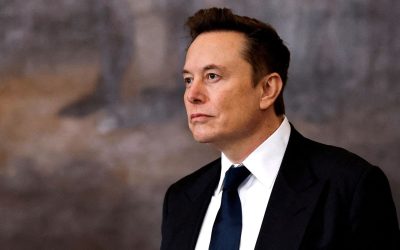
Elon Musk’s corporate empire—Tesla, SpaceX/Starlink, X, Neuralink and the Boring Company—has become a single, privately steered ecosystem whose combined annual revenues now rival the GDP of a midsize nation.
AI Regulation: Who’s Up to the Challenge? (Technology Policy Brief #150)
Artificial intelligence (AI) is the discipline of designing computer systems that can perform tasks normally requiring human cognition—pattern recognition, language generation, planning—by learning statistical relationships from large data sets. Modern AI works by training vast machine-learning models on petabytes of text, images, audio, and code and then applying those models to new inputs to produce predictions or content; it now powers everything from chatbots and fraud detection to medical imaging and autonomous drones.
Justice Delayed: The Mounting Crisis of America’s Immigration Court Backlog (Immigration Policy Brief #144)
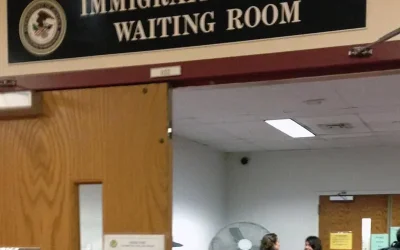
There are over 3 million cases currently pending in U.S. immigration courts, with the trend steadily rising since 2012, according to Syracuse University’s TRAC project. These cases reflect more than just bureaucratic dysfunction—they represent a failing immigration system. The problem goes beyond inefficient government & red tape; it’s a legal & human rights crisis affecting families, asylum seekers, & entire communities.
The Trump Administration and University Communities: Part II
Following the initial wave of federal funding suspensions, the Trump administration has intensified its campaign to reshape American higher education. The effort has moved beyond merely withholding grants and now seeks deeper operational control over elite universities. This expansion marks an unprecedented federal intervention into how universities govern themselves, raising alarms over the future of academic independence in the United States. The campaign has expanded into direct interventions at major institutions, citing issues ranging from anti-Semitism management to alleged ideological bias in curricula. Universities such as Harvard, Yale, Columbia, and the University of Michigan have become central battlegrounds in this escalating conflict, responding with legal challenges, public protests, and high-profile statements defending academic freedom.
Deporting Democracy: The Crackdown on Foreign Student Visas (Immigration Policy Brief #143)
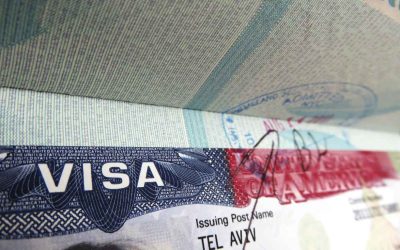
Institutions of higher education are under attack. Since the return of the Trump administration, more than 1,500 international students and recent graduates from over 240 institutions, across at least 45 states and Washington, D.C., have had their F-1 academic and J-1 exchange visas revoked.
The Administration Efforts to Avoid a Judicial Ruling
On April 9, 2025 the House of Representatives voted on the No Rogue Rulings Act bill. The bill was sponsored by Rep. Darrell Issa (R-CA). H.R. 1526 would prohibit a federal district court judge from issuing an injunction or prohibition regarding a case unless the injunction or prohibition only applied to the parties of the particular case before the district judge’s court. The bill passed the House by a vote of 219 – 213 in favor of the bill, almost exclusively on party lines. One Republican voted against the bill, Rep. Mike Turner from Ohio.
Strategies for the Democrats for the Democrats to Push Back
Since last year’s election, in which Republicans gained control of all three branches of government, the Democrats have seemed somewhat lost and unable to develop a pushback strategy to counter the new administrations policies. The Op Ed team at USRESIST NEWS has the following suggestions to help the Democratic party get its act together.
Trump Administration Changes to the Civil Service
The United States federal civil service stands as the backbone of our nation’s governance, ensuring the implementation of public policies and the delivery of essential services. In recent years, however, this institution has faced unprecedented challenges, with political maneuvers threatening its foundational principles. Understanding the intricacies of civil service employment—including hiring and firing procedures, reporting hierarchies, rights, responsibilities, benefits, and the distinction between civil servants and political appointees—is crucial, especially as these issues have come to the forefront in today’s political climate.
The Con Man’s Coffers: Trump’s Unfettered Leveraging of Government Power to Reap Personal Profits Soars Yet Again
Inked deals for new Trump-branded properties overseas, increased stock sales to foreign investors in the Trump Organization’s media and cryptocurrency sectors, business partnerships with companies funded by foreign governments – all of these actions by a sitting U.S. president signify an unprecedented leveraging of presidential power for personal profit, and they’re all in a day’s work for President Donald Trump.