Search Results

Watching their home go up in smoke: the indigenous of the Amazon ( Environment Policy Brief #187)

Watching their home go up in smoke: the indigenous of the Amazon ( Environment Policy Brief #187)

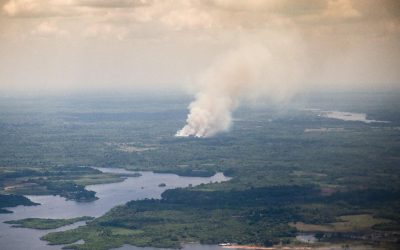
The Amazon rainforest is rapidly degrading. The ecological functions of the rainforest such as absorbing greenhouse gases and releasing oxygen into the atmosphere are diminishing as the size of the rainforest shrinks. Global precipitation patterns depend upon the Amazon’s unique location on the planet. The diversity of plant life in the Amazon constitutes about a quarter of the globe’s stock of carbon biomass. There are 80,000 species of plants.
FTC Escalates Enforcement Against Algorithmic Discrimination in Hiring and Credit Systems (Technology Policy Brief #162)

FTC Escalates Enforcement Against Algorithmic Discrimination in Hiring and Credit Systems (Technology Policy Brief #162)

In 2025, the Federal Trade Commission (FTC) signaled that it would use existing federal law to address algorithmic discrimination in automated decision-making services regarding hiring, lending, and tenant screening. Some tech companies argue that the FTC is overreaching in the absence of explicit AI laws. The FTC’s push highlights how federal agencies are reshaping AI governance on a case-by-case basis rather than implementing broad new laws.

Montana Youth Return to Court to Block Laws Weakening Climate Protections (Environment Policy Brief #186)

Montana Youth Return to Court to Block Laws Weakening Climate Protections (Environment Policy Brief #186)

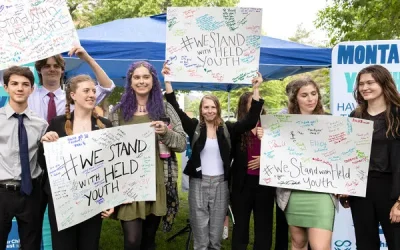
A group of young activists from the landmark Held v. Montana case filed a new challenge against recent state laws. The filed petition challenges several statutes passed by Republicans that threaten the activist group’s victory in the Montana Supreme Court in 2024. According to the group, the new changes are violations of the state’s guarantee of a “clean and healthful environment.” The youth plaintiffs are preparing for a renewed legal fight and highlighting that climate harms are a constitutional issue.

The Week That Was: Global News in Review (Foreign Policy Brief #224)

The Week That Was: Global News in Review (Foreign Policy Brief #224)

Latin America’s shift towards the political right has continued following the recent elections in both Chile and Honduras. In Chile the election of the far-right Jose Antonio Kast marked the country’s most significant shift rightward since the former Chilean dictator, Agusto Pinochet. The election of Kast now makes three neighboring South American states formerly at odds, Argentina, Bolivia and Chile, firmly in control by the rightwing and all seeking closer relations with the United States. In Honduras the Trump backed candidate, Nasry Asfura has been declared the winner after a more than two week long vote count left those in the small Central American country in suspense. Following the election results, the opposing Liberal Party candidate, Salvador Nasralla refused to concede and alleged interference in the election process by the United States after President Trump conditioned continued aid to the country on whether the right-wing candidate won. Trump also pardoned the former Honduran President found guilty of trafficking drugs to the United States.

Arizona (2026 Democratic Primary Preview Series Brief #3)

Arizona (2026 Democratic Primary Preview Series Brief #3)

There are ten federal seats up for election in Arizona in 2026. All nine of Arizona’s U.S. House of Representatives seats and one of two Senate seats. Arizona’s Federal congressional delegation reflects its status as a pivotal battleground state. Multiple House districts and a Senate seat are held by Democrats in a state that has historically leaned Republican.

The Final Bill: The Economics, Ethics, and Ecology of American Death Care

The Final Bill: The Economics, Ethics, and Ecology of American Death Care

Death in the United States has evolved from a community-centered rite into a sprawling, multi-billion-dollar commercial sector often dubbed the funeral industrial complex. With approximately three million Americans dying annually, a figure projected to rise as the baby boomer generation ages, the logistics of disposition have become a pressing socioeconomic challenge. For decades, the default American way of death involved embalming, heavy metal caskets, and concrete vaults, a practice that is historically an anomaly and environmentally taxing. However, economic pressures and shifting cultural attitudes have catalyzed a massive transition toward cremation. In 2024, the cremation rate surpassed 61 percent, with projections suggesting it will exceed 80 percent by 2045.

Trump’s AI Executive Order and the Federal–State Power Struggle (Technology Policy Brief #161)

Trump’s AI Executive Order and the Federal–State Power Struggle (Technology Policy Brief #161)

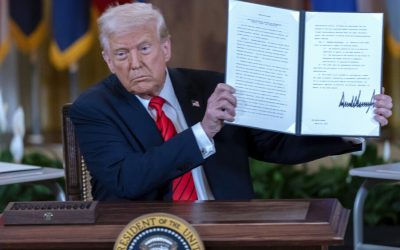
The Federal-State battle over AI regulation has heated up after President Trump signed an executive order on Dec. 11 that blocks states from enforcing their own regulations on artificial intelligence. The order seeks to create a “single national framework” for AI. However state lawmakers, tech experts, and civil rights organizations are worried about what this means for the country. Many believe that federal regulations could slow down America’s competitiveness in the global AI race and will have serious implications for national security.

Breaking the Chains: Niger’s Pivot from Neocolonialism to Sovereignty (Foreign Policy Brief #224)

Breaking the Chains: Niger’s Pivot from Neocolonialism to Sovereignty (Foreign Policy Brief #224)

The July 2023 military takeover in Niger, led by General Abdourahamane Tchiani and the National Council for the Safeguard of the Homeland (CNSP), marked a significant setback for democratic governance in the Sahel. However, the removal of President Mohamed Bazoum must be viewed not merely as an isolated authoritarian power grab, but as a catalyst for a profound geopolitical realignment. In the two years since the coup, the CNSP has systematically dismantled long-standing security frameworks, resulting in the expulsion of French forces in late 2023 and the complete withdrawal of United States military personnel and the closure of key drone bases by September 2024.

x
x
Support fearless journalism! Your contribution, big or small, dismantles corruption and sparks meaningful change. As an independent outlet, we rely on readers like you to champion the cause of transparent and accountable governance. Every donation fuels our mission for insightful policy reporting, a cornerstone for informed citizenship. Help safeguard democracy from tyrants—donate today. Your generosity fosters hope for a just and equitable society.

Pin It on Pinterest