Before the overturning of Roe v. Wade on June 24th, 2022, concerns were raised about the potential effects and consequences it would have on reproductive rights. After the overturning, those concerns have come into fruition, and have not only affected the rights to an abortion, but also the rights to bodily autonomy.

Search Results
An Energy Sector Stuck Between a Lump of Coal and a Hard Place (Environment Policy Brief #181)
Coal is not going away anytime soon; it remains the dominant source of the world’s electricity. 15% of U.S. electricity is fueled by coal. Globally, it is forecasted that carbon in the form of coal will still contribute 22% of power generation by 2040. In China and India, the reliance upon coal is significantly higher, almost double that of the U.S. and Europe. And for good reasons: it is the most economical, stable, and reliable power source.
Profits and Protests at Palantir (Technology Policy Brief #152)
Palantir Technologies’ data tracking software and Artificial Intelligence tools are playing a huge role in the ICE sweeps plaguing communities throughout the US, sparking a national day of protests and concerns over a revolving door between the company and key government agencies.
Current Efforts to Change State Education Curricula (Education Policy Brief #205)
Recent changes to state laws and policies reflect conservative efforts to remove what they consider “divisive concepts” regarding race and gender. South Carolina, Alabama, Louisiana, and Utah have now joined 21 other states attempting to modify or eliminate curricula considered by many on the right to promote progressive concepts they say have direct, negative impacts on students.
Nigeria’s Resource Curse (Foreign Policy Brief #209)
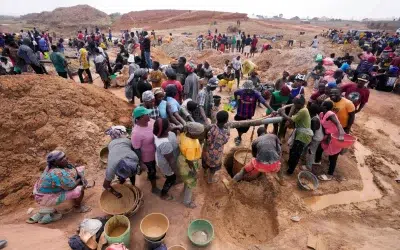
Those who have a casual understanding of history or geopolitics may react agreeably to the concept: the greater abundance of natural resources a country has the more well-off the people of that country will be. Unfortunately, for Nigerians, the opposite is their reality. The abundance of oil in Nigeria, along with their colonial history, has resulted in a “resource curse,” a theory posited by contemporary international relations scholars. Nigeria now finds its economy reliant on the export of oil and renting their oil fields to multinational corporations (MNCs), leading to a commodity industry based on corruption and wealth centralization.
The Art of the Heel: The Deadly Effects of Trump Abandoning the Iran Nuclear Deal (Foreign Policy Brief #208)
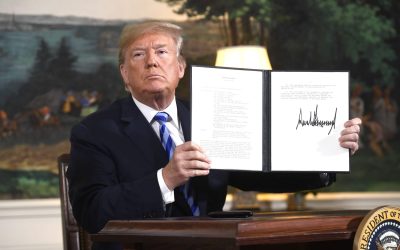
The Iran nuclear agreement, known as the Joint Comprehensive Plan of Action (JCPOA), is an accord reached between Iran and several world powers, including the United States, in 2015. Under its terms, Iran agreed to dismantle much of its nuclear program and open its weapons-making facilities to international inspections in exchange for sanctions relief worth billions of dollars. Since the United States’ withdrawal from JCPOA in 2018 under President Trump, Iran has expanded its nuclear program, breaching its commitments to the agreement, including resuming uranium enrichment and violating limits on nuclear materials. While the JCPOA remains legally valid, Iran’s violations of the agreement’s terms have thus far thwarted negotiations to revive it or to forge a new deal with the Trump administration. Foreign diplomacy analysts and Israeli officials have identified Trump’s backing out of the deal as a costly blunder that has fueled both Iran’s pursuit of nuclear weapons and rising instability in the middle east.
A Hick-Lib’s Rebellion: Kyle Rable, No Kings!, & the Fight for West Texas (Elections and Politics Brief #187)
I sat down with Kyle Rable to learn more about the No Kings! protests. Kyle is a new father, a Ph.D. candidate in History at Texas Tech, a U.S. Army Reserves Captain, a card-carrying union member, & self-described “hick-lib”; he is running for Congress in Congressional District 19 against Jodey Arrington. Kyle serves as Secretary for the Lubbock County Democrats and helps organize protests in Lubbock.
The Sudanese Civil War (Foreign Policy Brief #204)
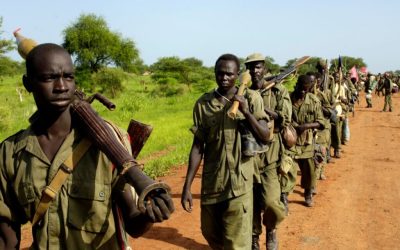
Across the world conflicts are raging, and in their paths leave levels of humanitarian crisis that reach peaks never seen in human history. One of these lesser reported upon conflict regions has the largest humanitarian crisis in recorded history: Sudan.
Going to War for Human Rights? (Foreign Policy Brief #206)
With Israel and Iran now having engaged in a direct war, trading attacks on each other’s cities, and the US carrying out attacks inside Iran, there’s a high chance that the US could be dragged into a full on war. It’s a prospect that is causing fear in many in the United States, but also being pushed for by others. Regime change has come up as one of the goals of the war and there are those in the US who are in favor of going to war and overthrowing the Iranian government.
The Week That Was: Global News in Review (Foreign Policy Brief #205)
For over 12 days Israel and Iran exchange strikes after their long-time conflict hit a flashpoint following Israel’s surprise attack on Iran’s nuclear program and assassination of Iranian leadership. The attack kicked off a sequence of events that has left hundreds reported killed and put the United States at risk of being dragged further into the war. The head of the International Atomic Energy Agency (IAEA) recently stated that Iran has been enriching higher amounts of uranium and in breach of the non-proliferation treaty. While also confirming that the agency had not found “any proof” of an effort to develop a nuclear weapon by Iran.