The North Atlantic Treaty Organization, better known as NATO, has been one of the most influential political and military alliances in modern history. Formed in 1949 by 12 countries, NATO has grown into a 32-member alliance across Europe and North America, with Sweden becoming the newest member in March 2024. Its stated purpose is to guarantee the freedom and security of its members through political and military means, especially through the principle of collective defense: under Article 5, an attack against one member is treated as an attack against all.
Search Results
Space Junk and Corporate Accountability in Orbit (Foreign Policy Brief # 231)
Space exploration has transitioned from a public endeavor driven by international cooperation to a heavily privatized industry dominated by billionaire-backed mega-corporations. At the center of this shift is Low Earth Orbit (LEO), defined by the Inter-Agency Space Debris Coordination Committee (IADC) and NASA as the region of space at an altitude of 2,000 kilometers (1,240 miles) or less. Low Earth Orbit, once viewed as a pristine global commons, is rapidly becoming a celestial dumping ground. The exponential deployment of satellite megaconstellations by private tech monopolies has drastically accelerated the accumulation of space junk, raising profound environmental and safety concerns. While these networks boast of bridging global connectivity gaps, their unchecked proliferation commodifies the orbital environment, prioritizing corporate dominance over the long-term sustainability of the cosmos.
Unmanned Imperialism: The Proliferation, Human Cost, and Future of Drone Warfare (Foreign Policy Brief #229)
Unmanned aerial vehicles, commonly known as drones, have fundamentally reshaped modern conflict, transforming the skies into a perpetual zone of surveillance and lethal action.
The Illusion of Global Data Privacy Standards (Technology Policy Brief #165)
A single, binding global data privacy standard does not yet exist. Instead, governments and companies operate under regional systems with different priorities.
The Expanding Web: ICE Detention and the Machinery of Mass Removal (Social Justice Policy Brief #188)
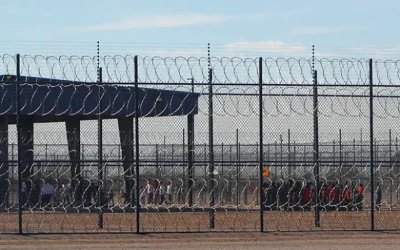
The American immigration detention system is currently undergoing an unprecedented and rapid metamorphosis, transitioning from a network of civil holding centers into a massive carceral apparatus designed for industrial-scale deportation. As of February 2026, the number of individuals held in U.S. Immigration and Customs Enforcement (ICE) custody has reached a historic peak of over 70,000 people across 225 facilities nationwide. This surge represents a nearly 75 percent increase in the detained population since early 2025, fueled by the staggering 45 billion dollars in ICE funding authorized under the signature One Big Beautiful Bill Act. The administration’s current strategic roadmap aims to bring upwards of 108,000 detention beds online by the end of this year, with a long-term capacity target of 135,000 beds to facilitate the largest mass removal operation in the history of the United States.
The Beijing Summit: Global Capital, Nationalist Rhetoric, and the Future of U.S.–China Coexistence (Foreign Policy Brief #227)
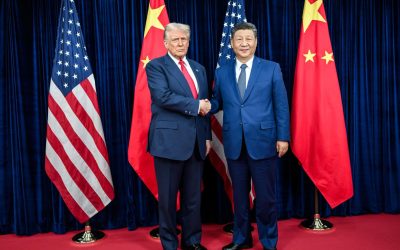
As the global community enters the second quarter of 2026, the geopolitical landscape is dominated by the upcoming summit between President Donald Trump and President Xi Jinping, scheduled for the first week of April in Beijing. This meeting follows a period of extreme volatility in bilateral relations that defined the first year of the second Trump administration. Throughout 2025, the relationship was characterized by a reignited trade war, with the United States imposing aggressive reciprocal tariffs that at times reached triple digits on Chinese imports. These measures were met with targeted Chinese retaliation, including boycotts of American agricultural products and export controls on rare earth minerals. However, a significant turning point occurred in October 2025 during a meeting in Busan, South Korea, where both leaders agreed to a one-year trade truce. This temporary reprieve rolled back the most punitive levies and led to a resumption of Chinese purchases of American soybeans and energy, providing a fragile stability that the April summit seeks to formalize and extend.
Democracy on the Brink: Structural Suppression and the Fight for the 2026 Midterms (Elections & Politics Brief #202)
The concept of a free and fair election in the United States has always been more of an aspiration than a reality, but as we approach the 2026 midterms, the gap between that ideal and the ground truth is widening at an alarming rate. By definition, a “free and fair” election in the U.S. context requires three non-negotiable pillars: universal access for all eligible citizens without coercion, a transparent and secret balloting process, and an impartial tabulation and certification that reflects the genuine will of the people
The Final Bill: The Economics, Ethics, and Ecology of American Death Care
Death in the United States has evolved from a community-centered rite into a sprawling, multi-billion-dollar commercial sector often dubbed the funeral industrial complex. With approximately three million Americans dying annually, a figure projected to rise as the baby boomer generation ages, the logistics of disposition have become a pressing socioeconomic challenge. For decades, the default American way of death involved embalming, heavy metal caskets, and concrete vaults, a practice that is historically an anomaly and environmentally taxing. However, economic pressures and shifting cultural attitudes have catalyzed a massive transition toward cremation. In 2024, the cremation rate surpassed 61 percent, with projections suggesting it will exceed 80 percent by 2045.
Breaking the Chains: Niger’s Pivot from Neocolonialism to Sovereignty (Foreign Policy Brief #224)
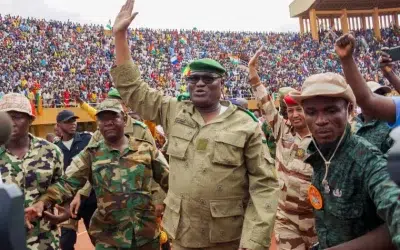
The July 2023 military takeover in Niger, led by General Abdourahamane Tchiani and the National Council for the Safeguard of the Homeland (CNSP), marked a significant setback for democratic governance in the Sahel. However, the removal of President Mohamed Bazoum must be viewed not merely as an isolated authoritarian power grab, but as a catalyst for a profound geopolitical realignment. In the two years since the coup, the CNSP has systematically dismantled long-standing security frameworks, resulting in the expulsion of French forces in late 2023 and the complete withdrawal of United States military personnel and the closure of key drone bases by September 2024.
Deconstructing “Peace”: Trump’s Settled Conflicts and the Ceasefire Illusion (Foreign Policy Brief #222)
In political discourse, the language of peacemaking is often employed for its potent rhetorical value, yet the terms used can obscure the reality on the ground. A critical distinction must be drawn between a ceasefire and a peace settlement. A ceasefire, or an armistice, is a military and temporal arrangement. It is an agreement to stop active hostilities, to put down the weapons, often temporarily and along existing lines of control. It is a pause. It does not resolve the underlying political, economic, or social grievances that ignited the conflict. A peace settlement, by contrast, is a comprehensive political and legal resolution. It is a formal treaty or agreement that ends the state of war by addressing the root causes—such as sovereignty, borders, justice, and security guarantees—and attempts to build a framework for a new, sustainable relationship.