Search Results

The Effects of The War in Ukraine on Russian Athletes

The Effects of The War in Ukraine on Russian Athletes

Brief #124 – Foreign Policy
By Reilly Fitzgerald

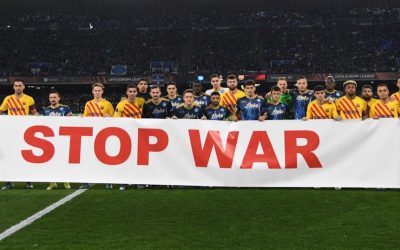
The larger question regarding the banning of Russian and Belarussian athletes is, should it apply to athletes who openly oppose the war and/or Vladimir Putin? An interesting example is Andrey Rublev. He wrote “No War Please” on a TV camera lens after advancing to the final match of the Dubai Championship. Is this sort of outward expression of anti-war sentiment something to be considered when banning athletes from sports based on the actions of their governmental leaders?

The Olympic Games: Sports, Politics, or Both?

The Olympic Games: Sports, Politics, or Both?

Brief #147 – Foreign Policy
By Reilly Fitzgerald

Sports and politics have always been intertwined, especially the Olympic Games (ancient or modern). The Games have had a history of many highly political moments such as the hosting of the Games in Berlin in 1936 under the Nazi regime; or the 1980 Summer Olympic Boycott against the Soviet Union; or the uproar after the 1968 Olympics Black Power salute atop the podium; and many other instances.

Ukraine: Back In The USSR?

Ukraine: Back In The USSR?

Brief #141 – Foreign Policy
By Reilly Fitzgerald

Ukraine poses a threat in some ways to the stability of the borders around Russia as they have long sought entrance to the European Union and have also sought NATO membership. Russia sees these actions as threatening because it would bring Russia closer to the military alliances of the West that they have rejected since the days of the USSR.

China: Genocide and the Olympics

China: Genocide and the Olympics

Brief #137 – Foreign Policy
By Reilly Fitzgerald

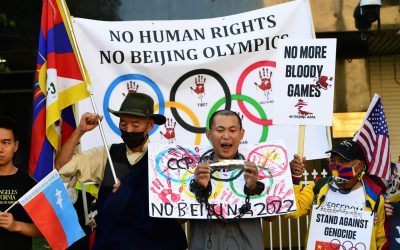
The detention (or internment) camps that are housing the Uyghurs (and several other ethnic minority groups) are essentially prisons. According to NBC News, they reported that a high-level Communist Party official in Xinjiang described, in leaked documents, the security measures of the camps and they more closely align with a prison than a “vocational center”.

The leaked documents mention video surveillance in/around classrooms, dormitories, and even watch towers. The Chinese government has cited worries about extremism and even terrorism from within the Uyghur population as a main driver of these policies.

Yemen : A Complex Situation For American Policy Makers

Brief #136 – Foreign Policy
By Reilly Fitzgerald

For American policymakers, the conflict in Yemen is going to be particularly challenging on many levels. The conflict intertwines regional tensions between Saudi Arabia; religious tensions between Shia and Sunnis; and the mixing in of terrorist organizations with no allegiances to either side but taking advantage of the wide-scale chaos and instability. President Biden announced three major points that outline his policy agenda towards Yemen: ending support of offensive acts in the conflict by Saudi Arabia, promoting peace talks and initiatives, and sending US Special Envoy Tim Lenderking to the region to work towards solutions to the conflict.

The Changing Faces of American Drone Warfare Policy

The Changing Faces of American Drone Warfare Policy

Brief #135 – Foreign Policy
By Reilly Fitzgerald

The issue of drones is one that is coming into further examination in recent weeks as President Joe Biden ordered a drone strike within Afghanistan on August 29th which killed numerous civilians. The Afghanistan debacle has drawn criticism from political circles in the United States, in the international community, and other foreign policy experts; and as it first hit the news in the last few days, the solution of the United States government is to pay the families of the victims for their losses.

Afghanistan : What To Do Now with the Taliban?

Afghanistan : What To Do Now with the Taliban?

Brief #128 – Foreign Policy
By Reilly Fitzgerald

The last time the Taliban was in power of Afghanistan was for approximately 20-25 years prior to 9/11. The Taliban has, as they are trying to tell the world, changed a bit from their previous reign; though, they are still highly religious and conservative. The United States, and every nation who aided the United States in the war, will have to start to deal with the Taliban as a governmental entity that is representing the people of Afghanistan. The United States, and its allies, will in their dealings with the Taliban be confronting their largest foreign policy failure in the last twenty years.

Israel Update

Israel Update

Brief # 124 – Foreign Policy
By Reilly Fitzgerald

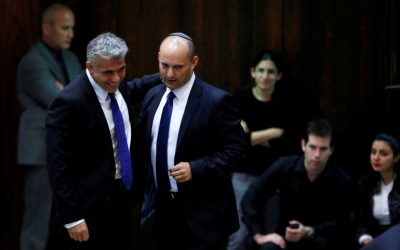
Early June saw the Israeli Parliament oust the former Israeli Prime Minister, Benjamin Netanyahu, and replace him with a new coalition government and new Prime Minister. The new coalition government consists of nine differing political parties that were brought together in a loose alliance due to their shared displeasure of former PM Netanyahu.

Israel’s New Coalition Government: Can It Succeed?

Israel’s New Coalition Government: Can It Succeed?

Brief #115 – Foreign Policy
By Reilly Fitzgerald

Over the past month, Israel has been a hotbed of political turmoil which has included mass protests, an 11-day war, and now a political coalition in the Knesset that includes eight political parties trying to remove Prime Minister Netanyahu. The eight party coalition is interesting in that it includes factions of the entire political spectrum in Israel with the exception of the ultra-Orthodox parties.

x
x
Support fearless journalism! Your contribution, big or small, dismantles corruption and sparks meaningful change. As an independent outlet, we rely on readers like you to champion the cause of transparent and accountable governance. Every donation fuels our mission for insightful policy reporting, a cornerstone for informed citizenship. Help safeguard democracy from tyrants—donate today. Your generosity fosters hope for a just and equitable society.

Pin It on Pinterest