Search Results

A Court’s Options To Enforce Compliance With Court Orders

A Court’s Options To Enforce Compliance With Court Orders

Under Rule 3.3 of the American Bar Association’s Model Rules of Professional Conduct, titled “Candor Toward the Tribunal,” a lawyer has a number of duties when dealing with a court of law. Rule 3.3(a)(1) states “A lawyer shall not knowingly make a false statement of fact or law to a tribunal or fail to correct a false statement of material fact or law previously made to the tribunal by the lawyer. Additionally, Rule 3.3(a)(3) provides “A lawyer shall not knowingly offer evidence that the lawyer knows to be false. While these are model rules, each state has a version of these rules, including the section on “Candor Toward the Tribunal,” that all lawyers must abide by when dealing with a tribunal or court.

The Pettiness of President Trump Targeting Law Firms For Revenge

The Pettiness of President Trump Targeting Law Firms For Revenge

On February 25, 2025 President Donald Trump signed an executive order suspending the security clearances of lawyers and staff at the Washington, D.C. law office of the international law firm Covington & Burling. The firm had provided legal services to former Special Prosecutor Jack Smith.

Civil Rights; Will The Supreme Court Have The Last Word On Trump Executive Orders and Policies?

Civil Rights; Will The Supreme Court Have The Last Word On Trump Executive Orders and Policies?

40% of the U.S. population line our coasts. That equates to approximately 130 million people residing in coastal counties. In addition to those who retire seaside, entire economies are integrated into the coastal industries of fishing, tourism, energy, shipbuilding, and recreation. Even a cursory glance using google maps shows how tightly clustered the built space is, all on only 10% of the total U.S. land mass. Shoreline communities have five times the population density as compared to the U.S. average.

Takeaways From the Presidential Immunity Decision

Takeaways From the Presidential Immunity Decision

Brief #227 – Civil Rights Policy Brief
by: Rodney A. Maggay

The presidential immunity case was expected to be a blockbuster case and when it finally was handed down it did not disappoint. The case was always going to be controversial. While there are notable points to highlight, a closer examination of the decision reveals…

An Unconstitutional and Dangerous State Trend: Chaplains as School Counselors

An Unconstitutional and Dangerous State Trend: Chaplains as School Counselors

Brief #223 – Civil Rights Policy Brief
by: Rodney A. Maggay

As state legislatures across the nation flirt with the dangerous notion of substituting unqualified chaplains for trained school counselors, the fundamental principle of separation between church and state is under dire threat. By permitting unlicensed individuals to wield influence over vulnerable students’ mental health and social well-being, these policies jeopardize not only constitutional freedoms but also the safety and welfare of countless students.

Is Judge Cannon Tilting The Classified Documents Case In Trump’s Favor?

Is Judge Cannon Tilting The Classified Documents Case In Trump’s Favor?

Brief #222 – Civil Rights Policy Brief
by Rodney A. Maggay

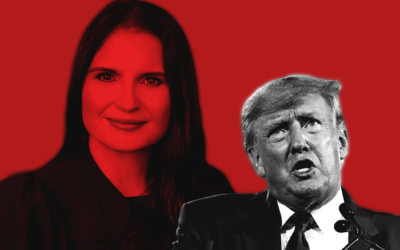
In a controversial turn of events, Judge Aileen Cannon’s handling of cases involving former President Trump is under scrutiny, with accusations of favoritism towards Trump. Allegations point to questionable orders and scheduling delays, raising concerns that Judge Cannon may be intentionally tilting the trial in Trump’s favor, prompting widespread debate on the integrity of the judicial process.

Should Trump Be Given Classified Foreign Intelligence Briefings As A Candidate?

Should Trump Be Given Classified Foreign Intelligence Briefings As A Candidate?

Brief #221 – Civil Rights Policy Brief
by Rodney A. Maggay

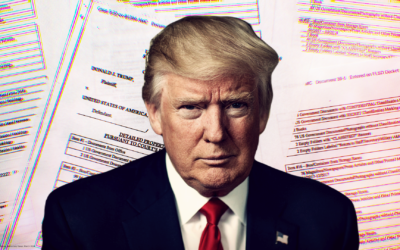
Amidst former President Trump’s legal battles over mishandling classified documents, questions arise over his eligibility to receive classified foreign intelligence briefings as a 2024 election candidate. With bipartisan concerns and differing expert opinions, debates ensue regarding the potential national security implications of such briefings.

Supreme Court Issues Unanimous Ruling in Trump Ballot Case

Supreme Court Issues Unanimous Ruling in Trump Ballot Case

Brief #220 – Civil Rights Policy Brief
by Rodney A. Maggay

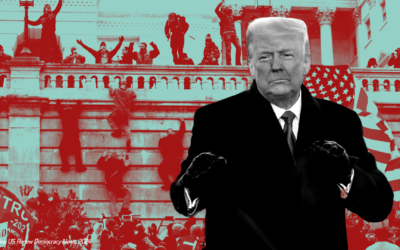
In a unanimous ruling, the Supreme Court addressed the Trump ballot case, affirming that states cannot remove Donald Trump from the ballot for the 2024 presidential election, despite allegations of inciting the January 6th insurrection. The Court highlighted the requirement for congressional legislation to apply Section 3 of the Fourteenth Amendment, raising queries about presidential eligibility clauses.

x
x
Support fearless journalism! Your contribution, big or small, dismantles corruption and sparks meaningful change. As an independent outlet, we rely on readers like you to champion the cause of transparent and accountable governance. Every donation fuels our mission for insightful policy reporting, a cornerstone for informed citizenship. Help safeguard democracy from tyrants—donate today. Your generosity fosters hope for a just and equitable society.

Pin It on Pinterest