Search Results

Why Universal Pre-K is So Important

Why Universal Pre-K is So Important

Brief #59 – Education Policy
By Lynn Waldsmith

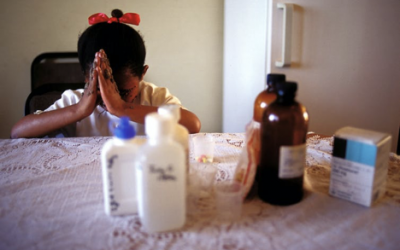
The evidence is overwhelming that children who attend preschool not only dramatically improve the quality of their own lives but the welfare of their communities. Yet, far too many kids aren’t able to attend because their parents simply can’t afford it. President Biden is hoping to change that by making universal pre-K a reality, if Congress passes the $1.8 trillion American Families Plan.

Part 2: Drought and Our Plans to Deal With it are Running Dry

Part 2: Drought and Our Plans to Deal With it are Running Dry

Brief #126 – Environmental Policy
By Todd J. Broadman

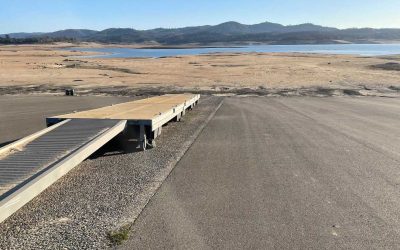
This brief is another segment to help further explain the megadrought in the U.S. Southwest. The megadrought now encompasses Arizona, Nevada, Utah and parts of California, Colorado and New Mexico. This region has undergone chronic drought conditions since 2000, the year that the Lake Mead reservoir (the largest in the U.S. and now at an historic low) was considered close to full.

Drought and Plans to Deal with Running Dry

Drought and Plans to Deal with Running Dry

Brief # 116 – Environmental Policy
By Todd J. Broadman

A prolonged period with little or no precipitation combined with an extended period of abnormally high temperatures has created “extreme” drought conditions in much of the western half of the U. S. In California, Gov. Gavin Newsom has placed 41 counties under a state of drought emergency. In some areas of Oregon and California, scientists conclude the drought is the most severe it has been in centuries.

The sobering reality of a post-carbon world starts with lithium

The sobering reality of a post-carbon world starts with lithium

Brief #116—Environment
By Todd Broadman
The Biden Administration has recognized what previous administrations have not: that carbon-based energy has been destroying our planet and must stop, that greenhouse gas emissions must be reduced to net zero by 2050. Recognition is a major step forward. Government action to replace our fossil fuel economy with renewables is a colossal task and one that Biden aims to tackle.

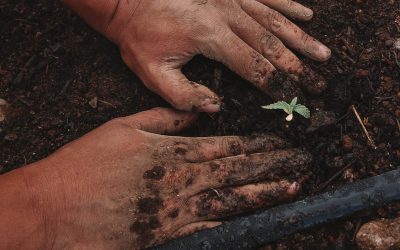
What we know is that carbon-free energy is actually more mineral intensive than its oil-based counterpart. There are some 35 rare earth minerals that are key components to making the transition from fossil-fuels to clean energy. Lithium has recently garnered much attention for its essential role in the production of lithium-ion batteries that power our next generation of EV cars. (Other essential minerals include aluminum, cobalt, copper, and nickel).

Will Biden’s Bold Climate Plan See Its Way Through the Political Storms?

Will Biden’s Bold Climate Plan See Its Way Through the Political Storms?

Brief #113—Environment
By Todd J Broadman
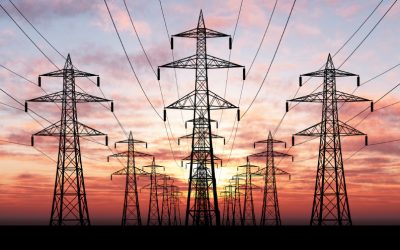
The world is in need of a climate action plan; the U.S. under President Biden is proposing one. At its core, the proposed plan is a set of policies that shift or transition energy from fossil fuels to renewable sources. The glaring challenge to this shift though, is current and future projections for energy demand. Americans are accustomed to the luxury of 24-7 access to energy at the touch of a button. As the Biden plan points to, solar and wind power are the go-to sustainable energy sources. Electricity though, accounts for only a quarter of CO2 emissions – carbon-intensive manufacturing, agriculture, and transportation demands comprise the vast majority. Biden’s plan subscribes to Bill Gates’s “Show me a problem, and I’ll look for technology to fix it,” approach. Others, particularly in Europe, place more emphasis on ‘degrowth’ as the direction the developed world ought to be heading.

The Biden Agenda for Women Series Part 3: Helping Women Navigate Work & Family

The Biden Agenda for Women Series Part 3: Helping Women Navigate Work & Family

Brief #101—Gender and Policy
By Erin Mcnemar
In President Joe Biden’s policy proposal, “The Biden Agenda for Women,” he highlights how women have been disproportionately impacted in a number of sectors. Biden explains in the United States women are typically the ones that end up having the responsibility of taking care of their families. While that alone can be a large task, typically only one in six American workers qualify for paid family leave. Additionally, Black and Latina individuals are even less likely to qualify according to Biden.

A Surge of Unaccompanied Children at the US Southern Border

A Surge of Unaccompanied Children at the US Southern Border

Brief #117—Immigration
By Kathryn Baron
The US is seeing a record-breaking influx of children held in government facilities after crossing the southern border. The amount of unaccompanied children crossing the border has increased 63% so far in 2021 and border facilities are over capacity due to COVID-19 social distance restrictions in addition to the sheer number of children needing accommodations. The US Customs and Border Patrol (CBP) is currently holding more than 13,000 unaccompanied children in custody. The children’s ages range from toddlers (usually with an older sibling) to teens. Those under 18 are being allowed to enter the US while their claims are processed.

The House Passes a Bill to Help Small Farmers

The House Passes a Bill to Help Small Farmers

Brief #2—Agriculture
By Katherine Cart
Before the industrial revolution reworked the entirety of agricultural processes in America, poultry, eggs and meat were not cheap. The average dozen, in 1913, cost today’s equivalent of $9.25. Chicken meat was served on Sundays, or for holidays, and could not be bought boneless, ground, breaded, molded into consumer-pleasing shapes. Small farms produced small quantities of meat and poultry product and lack of mass shipping transit kept businesses local. Now, however, only three mega-corporations control roughly 90% of the poultry market and four control 85% of the beef market. Legal red tape impedes the fair competition of smaller farms. Conversations concerning antitrust reforms are, once again, gaining momentum and new voices. The DIRECT (Direct Interstate Exemption for Certain Transactions) Act, seeks to amend selling restrictions and could be a boon for small meat and poultry producers. Currently, meat and poultry grown by many small processors are inspected and approved for sale within only the state of inspection. The act would lift bans on interstate sales by processors, butchers and other retailers of locally-produced meat and poultry, allowing for the direct-to-consumer sale of normal retail quantities across state lines. Congressman Cuellar says, “the bipartisan legislation will allow meat inspected by the State to be sold online and across state lines, opening up new markets for meat producers and processors.”

x
x
Support fearless journalism! Your contribution, big or small, dismantles corruption and sparks meaningful change. As an independent outlet, we rely on readers like you to champion the cause of transparent and accountable governance. Every donation fuels our mission for insightful policy reporting, a cornerstone for informed citizenship. Help safeguard democracy from tyrants—donate today. Your generosity fosters hope for a just and equitable society.

Pin It on Pinterest