U.S. Resist NewsKeeping Democracy Alive: A Mission We Take To Heart

A Preview of Supreme Court June Cases (Civil Rights Policy Brief #253)

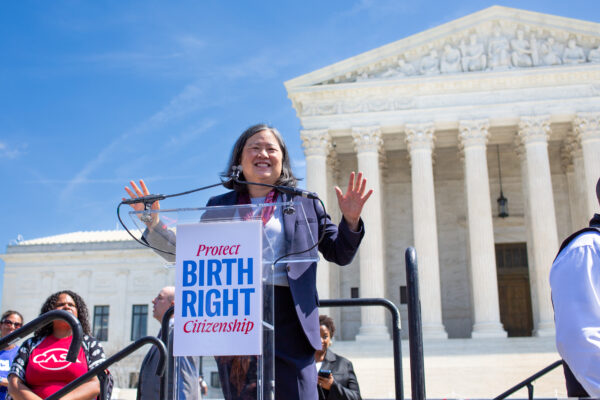
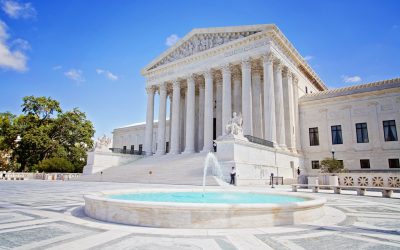
President Donald Trump may have gotten what he most wanted from the U.S. Supreme Court when it ruled on July 1, 2024 – by a 6-3 vote – that former presidents have absolute immunity from criminal prosecution by, essentially, being president. Trump named three justices to the high court during his first term in office – Neil Gorsuch, Brett Kavanaugh and Amy Coney Barrett – and all three ruled in his favor in Trump v. United States (Barrett in part). The latest raft of major SCOTUS rulings, due next month, may continue to largely meet with Trump’s approval, or at least conservative priorities, but by no means is the court’s October 2025 term, as it’s officially known, likely to be a slam dunk for the right.

Why Louisiana v. Callais Is Problematic For The Voting Rights Act (Civil Rights Policy Brief #252)

After the 2020 United States Decennial Census Louisiana was allocated six congressional seats in the U.S. House of Representatives. Accordingly the Louisiana State Legislature drew its state congressional map that had five districts with white majorities and one with a black majority.

2026 Democratic Primary Preview Series: Missouri

Missouri, the “Show Me State,” enters the 2026 election cycle as a firmly Republican-controlled state, with all eight U.S. House seats on the ballot and no Senate race this cycle. Democrats currently hold just two congressional districts, MO-01 and MO-05, represented by Wesley Bell and Emanuel Cleaver, respectively. Both districts are anchored in the state’s urban cores of St. Louis and Kansas City and are considered safely Democratic.

When War Becomes Routine (Foreign Policy Brief #225)

The war in Ukraine, which is Europe’s largest land war since 1945, has entered the peculiar phase familiar to historians and unbearable to those living through it — the phase in which catastrophe becomes routine. Loud air raid sirens still interrupt dinners in Kyiv. Young men still disappear into the trench lines of Donetsk and Zaporizhzhia. Russian drones still arrive nightly, buzzing in the dark like giant mechanical mosquitoes. As the rumble draws nearer, exhausted people rise from their beds and head into the narrow corridors of their apartments or into the basements of their houses. It happens night after night, year after year, while outside the region, the war increasingly competes with other crises for attention, just becoming a part of the atmospheric background of modern life.

Crony Diplomacy Is Failing U.S. Foreign Policy (Foreign Policy Brief #233)

At a recent press conference, U.S. Defense Secretary and Christian nationalist Pete Hegseth justified the Trump administration’s unconstitutional act of starting the war with Iran by saying that before launching missiles, “We sent our best people to negotiate — Steve and Jared.”

The Value of NATO—Past, Present, and Future (Foreign Policy Brief #224)

The North Atlantic Treaty Organization, better known as NATO, has been one of the most influential political and military alliances in modern history. Formed in 1949 by 12 countries, NATO has grown into a 32-member alliance across Europe and North America, with Sweden becoming the newest member in March 2024. Its stated purpose is to guarantee the freedom and security of its members through political and military means, especially through the principle of collective defense: under Article 5, an attack against one member is treated as an attack against all.

California Seeks to Limit Passenger Abuse by Uber Drivers (Technology Policy Brief #167)

Uber has buried statistics on assaults and accidents on its platform for years.  Journalists and advocates have dug hard and are revealing disturbing levels of both.  As more customers are suing the company for its inadequate safety measures, Uber is responding with a ballot initiative in California that would limit its liability for accidents, and consumer attorneys are supporting measures that would increase Uber’s liability and accountability.

2026 Democratic Primary Preview Series: Oklahoma

Oklahoma’s 2026 federal elections will feature one U.S. Senate race and five House contests. The state is reliably Republican across all five congressional districts, and post-redistricting maps have made each seat structurally safe for the GOP.

Trending Now

Generational Change

Op Ed | Ron Israel | Managing Editor, USRESIST NEWS |  April 19, 2026 Look at the evolution of life in America over the last several generations. I did this recently after my daughter came and asked me how she would be able to live well during her later years, when...
A Preview of Supreme Court June Cases (Civil Rights Policy Brief #253)

A Preview of Supreme Court June Cases (Civil Rights Policy Brief #253)

President Donald Trump may have gotten what he most wanted from the U.S. Supreme Court when it ruled on July 1, 2024 – by a 6-3 vote – that former presidents have absolute immunity from criminal prosecution by, essentially, being president. Trump named three justices to the high court during his first term in office – Neil Gorsuch, Brett Kavanaugh and Amy Coney Barrett – and all three ruled in his favor in Trump v. United States (Barrett in part). The latest raft of major SCOTUS rulings, due next month, may continue to largely meet with Trump’s approval, or at least conservative priorities, but by no means is the court’s October 2025 term, as it’s officially known, likely to be a slam dunk for the right.

read more

Featured Articles

Why Louisiana v. Callais Is Problematic For The Voting Rights Act (Civil Rights Policy Brief #252)

After the 2020 United States Decennial Census Louisiana was allocated six congressional seats in the U.S. House of Representatives. Accordingly the Louisiana State Legislature drew its state congressional map that had five districts with white majorities and one with a black majority.

The Removal of the Climate Science Chapter From The U.S. Judiciary’s Scientific Reference Manual (Environmental Policy Brief #164)

In early February 2026, the Federal Judicial Centre removed a chapter explaining climate science from the Reference Manual on Scientific Evidence. Judges used this manual to evaluate scientific testimony in U.S. courtrooms. The removal was prompted after Republican state attorneys argued that the chapter presented climate science in a manner that could influence litigation against fossil fuel companies. The chapter,

US Resist Logo 2022 White

Keeping Democracy Alive

US Resist Logo 2022 White

Keeping Democracy Alive

donation

Reporter Spotlight

Journalist of the Month - November 2024

Mindy Spatt, a published essayist and freelance journalist, has written for publications including the San Francisco Chronicle and Lambda Book Report. Her background includes legal editing and union organizing, and she served as Communications Chief for a California nonprofit advocating for fair energy and telecom policies.

x
x
Support fearless journalism! Your contribution, big or small, dismantles corruption and sparks meaningful change. As an independent outlet, we rely on readers like you to champion the cause of transparent and accountable governance. Every donation fuels our mission for insightful policy reporting, a cornerstone for informed citizenship. Help safeguard democracy from tyrants—donate today. Your generosity fosters hope for a just and equitable society.

Pin It on Pinterest