

JOBS POLICIES, ANALYSIS, AND RESOURCES
Latest Jobs Posts
The Economics of an Aging Population
Brief #144 – Health & Gender Policy
By Rosalind Gottfried
The aging of the baby boom generation will continue to change the shape of the American labor force. Curremtly,16.5% of the US population of 328 million, or 54 million, are over the age of 65. By 2030, the figure will be 74 million and the fastest growing group are those over 85.
Secret Unit in U.S. Customs and Border Patrol Agency Raises Freedom of the Press Issues
Brief #179 – Civil Rights
By Rodney A. Maggay
On December 11, 2001 investigative journalist Jana Winter published an explosive article on Yahoo News that exposed a secret unit within the Counter Network Division of the U.S. Customs and Border Patrol (CBP) agency. At the heart of the disturbing story is that a CBP employee staffed to the secret unit was authorized to investigate a national security journalist named Ali Watkins with regards to her confidential sources for the source of her work.
Understanding The Crisis in Ukraine
Brief #138 – Foreign Policy
By Abran C
Ukraine and Western allies are concerned about a Russian troop buildup near its border that may signal a plan for a further invasion into Ukraine. As a former Soviet republic, Ukraine shares deep social and cultural ties with Russia and, in certain parts of the country, Russian is widely spoken.
Record Numbers of People Quitting Jobs But Employment Remains High
Brief #133 – Economic Policy
By Rosalind Gottfried
The number of people quitting or switching jobs reached a record high of 4.5 million in November, the fourth episode of record setting in 2021. As seen in previous assessments, the biggest changes are in lower paying occupations such as restaurant/bar and retail staffs.
Federal Laws Versus States Rights Re-Visited
U.S. RESIST NEWS EDITORIAL
By U.S. RESIST NEWS Reporters (Scout Burchill, Ron Israel, Tim Loftus, Rod Maggay and Lynn Waldsmith)
The United States has a democratic federal form of governance with law-making responsibilities divided between the federal government and our 50 states. The U.S. Constitution, written in 1789, seeks to provide a framework for areas of governance that belong to the states and those that belong to the federal government.
The Politics of Heating Buildings
Brief #132 – Environment Policy
By Todd J. Broadman
Seventy million American homes and businesses depend on natural gas, oil, or propane on-site for heating, hot water, and cooking. The annual carbon dioxide generated is 560 million tons or 40% of total US emissions when you include the carbon used in building construction. The amount of methane, a far more potent CO2 gas, that routinely leaks as part of the gas distribution process, is equivalent to all US vehicle emissions.
How YouTube Stokes Political Division
Brief #67 – Technology Policy
By Erik Pillar
Social media algorithms, political echo chambers, and more are feeding into an ever-increasing disparity between rightwing-leftwing political perspectives.
Pandemic Related Mental Health Crisis Hits U.S. Schools
Brief #62 – Education Policy
By Lynn Waldsmith
Therapy dogs. Sensory rooms with comfy furniture, tents and weighted blankets. Playing with sand or building with Legos. These are the kinds of things that many schools throughout the country are making available to students when they need a break or when it just becomes too hard to cope in the classroom. But it’s not about fun and games.
EPA Strengthens Policy Against Lead in Drinking Water, But Is It Enough?
Brief #131 – Environment Policy
By Katelyn Lewis
Federal officials announced Thursday their plan to tighten restrictions on the amount of lead allowed in drinking water in an effort to reduce the health hazards such exposure has caused in poor, often minority communities across the U.S.

Trouble in Haiti Part 1: The Assassination of President Moise
Trouble in Haiti Part 1: The Assassination of President Moise
Foreign Policy Brief # 125 | By: By Erin Mayer | August 17th , 2021
Header photo taken from: The New Yorker
Follow us on our social media platforms above
Browse more foreign policy briefs here
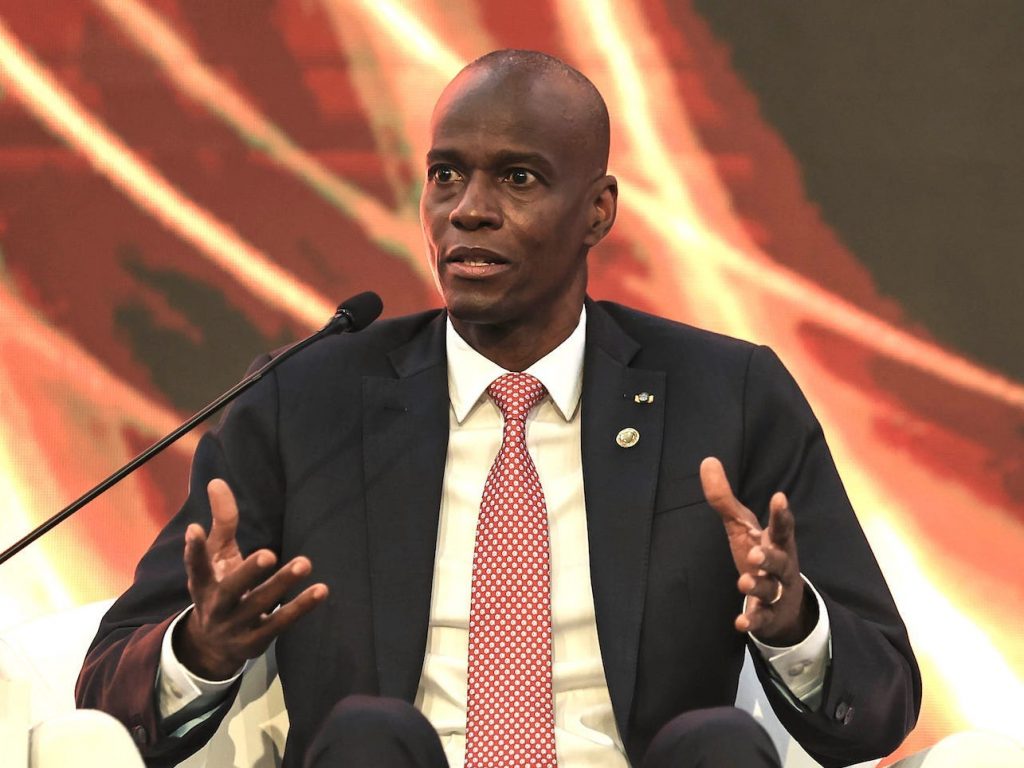
Photo taken from: businessinsider.com
Policy Summary
[SSB theme=”Official” align=”center” counter=”true” ]
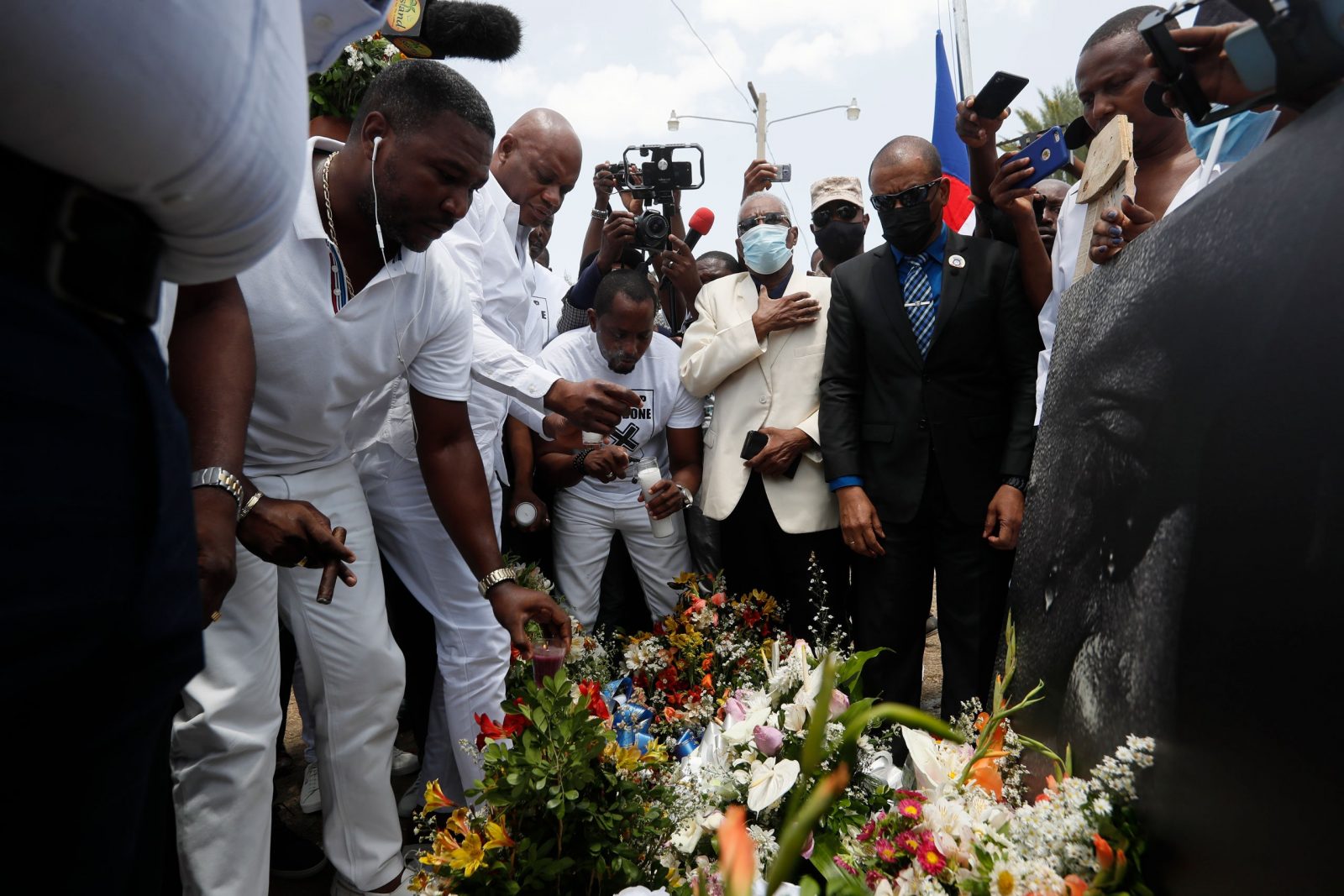
A band of armed men assassinated President Jovenel Moïse of Haiti. The President’s wife was also wounded during a home invasion on July 7th. Police killed four of the attackers.Two others were arrested the same day. Though there have been arrests in regards to Moïse’s prosecution yet to take place..
A number of those rumored to have been involved in Moïse’s death were from Colombia. Approximately 20 Colombian mercenaries are thought to have been connected to the murder. Authorities in Colombia, Haiti and the United States continue to investigate. Additionally, a “former Haitian guerrilla; a convicted cocaine smuggler and DEA informer called ‘Whiskey’; a US-based evangelist with dreams of becoming Haiti’s president; and a Miami security firm which apparently took its name from the television series 24” are linked to Moïse’s murder. However the reasoning for the assassination still is not thoroughly understood.
The Haitian ambassador to the United States, Bocchit Edmond, said that the murder of President Moïse “was carried out by foreign mercenaries and professional killers — well-orchestrated.” Edmond went on to explain that the men were impersonating officials from the local U.S. Drug Enforcement Administration office, in Port-au-Prince, at the time of the attack.
After the assassination Prime Minister Claude Joseph requested U.S. assistance in deploying armed services to help maintain order. President Biden denied the request and made his intentions clear when he clarified that sending troops to assist the island nation’s government was “not on the agenda.” “We’re only sending American Marines to our embassy to make sure that they are secure and nothing is out of whack at all. But the idea of sending American forces into Haiti is not on the agenda at this moment,” Biden said.
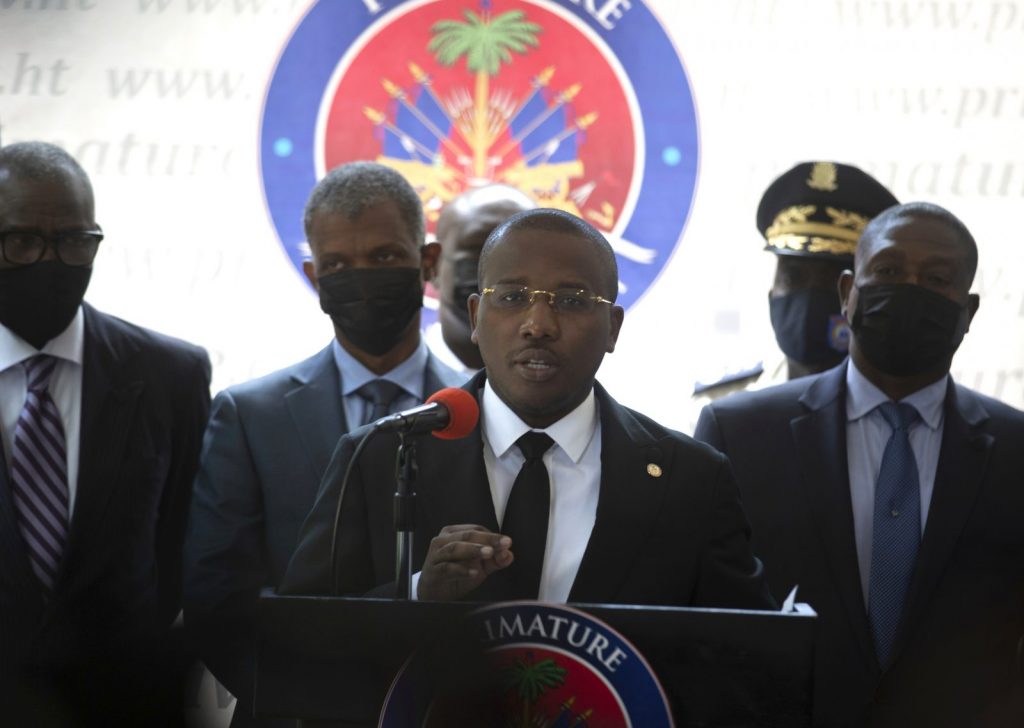
Photo taken from: The Washington Post
Joseph then agreed to step down in order to ensure stability on the island nation. Power was transferred to Ariel Henry, a former neurosurgeon, who had been appointed Haiti’s prime minister just barely 24-hours prior to Mr. Moïse’s death. Henry had the support of the CORE Group, a network of concerned countries from Europe and the U.S. Mr. Joseph agreed to step into a position as foreign minister in Henry’s cabinet.
Haiti had previously been experiencing reported revolts and mob violence due to the expanding authoritarian control exercised by Moïse. Over the weeks following Moïse’s death, masses of Haitian citizens have been forced to find sanctuary in churches and other safe havens. Others are often afraid to leave their homes at all but risk exposure to local attacks. An estimated 19,000 Haitians have fled areas that have become battle zones, worsening already deteriorating circumstances. This is especially true in neighborhoods surrounding the capital.
Policy Analysis
During a Visit to Haiti U.S. United Nations Ambassador Thomas-Greenfield’s was able to meet the new Prime Minister Ariel Henry as well as Claude Joseph. Thomas-Greenfield said, “Our delegation is here to bring a message to the Haitian people: You deserve democracy, stability, security, and prosperity, and we stand with you in this time of crisis. So, we come here in solidarity with the Haitian people during this difficult time.
And also, it’s important that we share our condolences with First Lady Martine Moïse and her family. But we also come to show our support for democracy and democratic process.” Thomas-Greenfield also urged Prime Minister Henry to ensure stability in order to conduct proper presidential elections “as soon as feasible.”
Jake Sullivan, U.S. National Security Advisor, expressed concern over the growing turmoil in the island nation. In a recent statement he said , “We strongly urge all parties to express themselves peacefully, and call on Haiti’s leaders to be clear that their supporters must refrain from violence.”
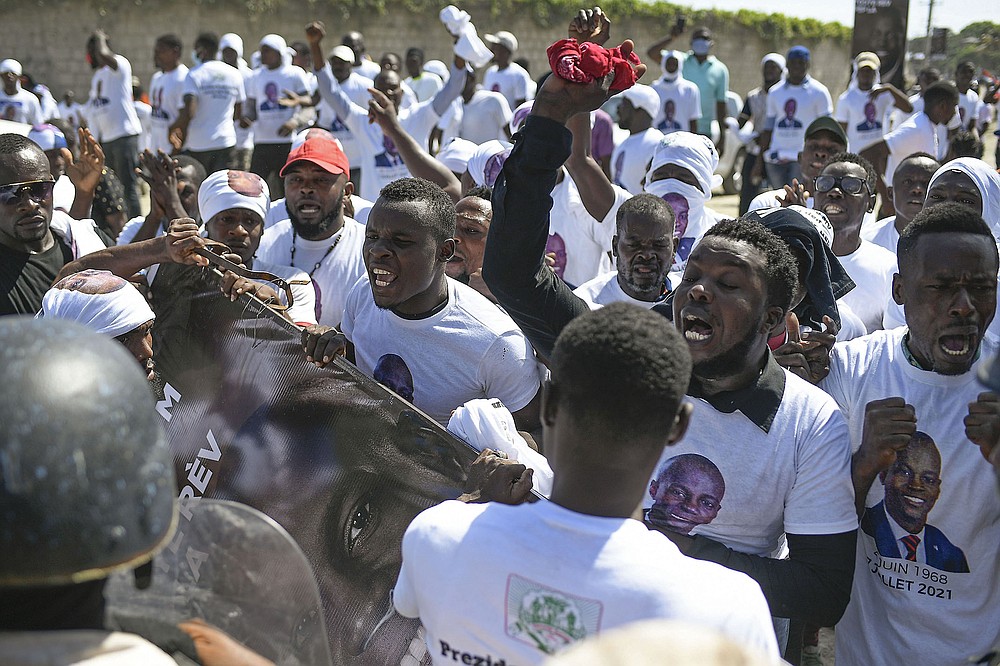
Photo taken from: The Arkansas Democrat-Gazette
Haiti, a country which is typically spoken about in regards to tragedy and disaster, is now a country in political turmoil and whose resources are dwindling. The future of the island rests in the hands of the local media, activists, scholars and academics. With any luck, the true sentiments and concerns of the Haitian citizens, who are exposed to violent crime daily, will be expressed through these channels. Moïse’s murder was shocking. However Haitians now have an opportunity to rewrite their own story; they have a chance to push for their own objectives. If Haitian citizens speak loudly enough, they can change the future of their island nation.
Engagement Resources
Click or tap on image to visit resource website.

HELP’s mission is to create, through merit and needs based scholarships, a community of young professionals and leaders who will promote a more just society in Haiti.

Hope for Haiti is focused on providing support and partnership for the Haitian people, specifically children, every single day.

The Lambi Fund tout a proven record of success in assisting Haitian communities to not just rebuild, but become sustainable.

Sow A Seed places a focus on orphans in the Caribbean. The organization provides training for teachers, assisting students with the tools and encouragement they need to continue their education, fighting malnutrition with the help of different food organizations, and building a sense of cultural identity and creative expression with arts programs.

The Politics of Mask Mandates
The Politics of Mask Mandates
Health & Gender Policy Brief # 124 | By: S. Bhimji | August 16th, 2021
Header photo taken from: Getty Images
Follow us on our social media platforms above
Browse more health & gender policy briefs here

Photo taken from: Wisconsin Public Radio
Policy Summary
[SSB theme=”Official” align=”center” counter=”true” ]
Almost every month over the past year, healthcare experts have been offering different views on the wearing of masks in public places and schools. The subject has become very controversial and now permeates the political arena. In July of this year, most schools had plans for reopening but now with the rapid spread of the delta variant, schools have had to readjust their plans.
Because there are no Covid vaccines for children under the age of 12, the only preventive method today is social distancing and masks. But the new mandatory rules governing the use of masks in schools have created enormous turmoil and controversy especially in southern states with a high number of unvaccinated individuals.
Mask mandates and other mitigation measures have led to an ongoing debate among government-run schools and raging parents who want to be the ones to make the decision rather than the school or the government. Many school board meetings regarding mask mandates have resulted in chaos, screaming, and shouting by irate parents who have hurled threats at healthcare workers and school board members.
At issue is the recently reinstated mask mandate in many schools that require all students to wear a mask in the classroom when they return to school in the fall. The core problem is that many parents feel that their personal freedom is being compromised, in a nation that has always valued liberty and independence. But liberty also comes with responsibilities. While one can choose not to vaccinate themself or don a mask, there is a risk that they may harm another individual or impose healthcare costs on the hospital, if the fall ill. More important liberty does not release that person the liability from any harmful consequences of their choice.
The mask mandates that have appeared intermittently over the past year have now become a thorny subject and many Americans feel that the government is bullying them. In addition, the draconian measures that led to business shutdowns and loss of jobs are still fresh in the memory of most Americans. In many parts of the nation, there is a deep distrust and resentment towards the government and healthcare workers.
Policy Analysis
The two states where the mask mandates have created extreme controversy are Florida and Texas. Recently the governors of both these states banned school districts from making mask mandates.
And while some schools have agreed with the governor’s orders, others have resisted. The Broward County School Board in Florida has ignored governor DeSantis’s ban on mask requirements and vowed to keep the masks in place for staff, students, and teachers. To further worsen the problem, Governor DeSantis has defied President Biden and his mask recommendations for schools, telling the president to first secure the border.
DeSantis has gone one step ahead and threatened to withhold salaries of school district officials who ignore his mask mandate ban. This has spurred the White House to support Florida schools that defy Governor DeSantis’s order with federal dollars if the governor withholds money from them.
Earlier this week, four teachers in the same county in Florida died from Covid 19, three of whom were unvaccinated.

Photo taken from: WLRN
Like Florida, the governor of Texas has also prevented schools from introducing mask mandates but some schools have opposed his ruling; in fact, a recent Texas court ruling announced that Governor Abbot’s ban on mask mandates is not legally binding.
Healthcare experts warn that the politics around mask mandate may allow the delta variant to rapidly spread across the nation, especially in people who are not vaccinated and even in children, for whom there is no vaccine. Just this past week 94,000 Covid 19 cases were reported in children and nearly 4.3 million children have tested positive for the infection since the onset of the pandemic.

Photo taken from: ABC News
President Biden has strongly criticized the politicization of the mask mandate by the governors of Texas and Florida, stating they are undermining the safety of millions of children. Hundreds of Florida physicians have asked DeSantis to repeal his executive order restriction on mask mandates in schools but the governor has not budged.
Dr. Francis Collins, director of the U.S. National Institutes of Health has urged Americans to understand the benefits of masks. Collins recently stated, “This is not a political statement or invasion of your liberties. This is a life-saving medical device, and asking kids to wear a mask is uncomfortable, but kids are pretty resilient,”
Engagement Resources
Click or tap on image to visit resource website.

Guidance for Wearing Masks
https://www.cdc.gov/coronavirus/2019-ncov/prevent-getting-sick/cloth-face-cover-guidance.html

Risk compensation and face mask mandates during the COVID-19 pandemic
https://www.ncbi.nlm.nih.gov/pmc/articles/PMC7862259/

Face Masks, Including Surgical Masks, and Respirators for COVID-19

Republicanism is Dead: How Today’s Global Challenges Invalidate Current Republican Politics.
Republicanism is Dead: How Today’s Global Challenges Invalidate Current Republican Politics
Elections and Politics Policy Brief # 24 | By: Adrian Cole | August 16, 2021
Header photo taken from: The Atlantic
Follow us on our social media platforms above
Browse more elections and politics policy briefs here

Photo taken from: The New Yorker
Many people on the Left have for decades considered Republican politics anathema. But as the twenty-first century advances into ever-more perilous territory, Republicans are clinging to political and ideological stances which simply defy common sense, logic, reality and efficacy. Bearing in mind the existential nature of the problems facing the country and the world, it is clear that the foundational pillars of today’s Republican party are all premised on untenable positions, false assumptions, bad science and ill-faith, and will, if pursued, lead us all into further crisis.
They are already largely responsible for wasting several decades in the struggle to control our climate; climate obfuscation is almost a religion among today’s Republicans, such has been their determination to deny reality and obstruct positive change in terms of fossil fuel emissions.
Recently, probably in response to a summer unlike any other in human history, a few Republican lawmakers have begun to deviate from the party line on climate change. The penny, as my mother would have put it, referring to my teenage brain, is beginning to drop. As ten-thousand-year floods inundated subways in Henan Province, rivers in Germany washed away villages, and a heat dome hovered over the perennially temperate Pacific Northwest, a few lawmakers who had hitherto insisted that any discernable change in weather was attributable to natural cycles, began to sing a different song.
Senator Rick Scott, former governor of Florida, known for his inaction on climate change in a state which has spent more than 100 billion dollars on climate-related disasters (according to the federal government) now appears to recognize the reality of climate change, but—because of his tenacious adherence to Republican positions—is unable to propose any solutions. Said solutions, according to the global scientific community, begin with de-cabonization. But to Scott, de-carbonization rhymes with economic instability (even if it doesn’t). As the recent IPCC report makes crystal clear, the planet needs to effect radical change, now. But for Scott: “I’m not doing anything to raise the cost of living for American families.”
Several assumptions—and deeply held Republican positions—are at play here. The first assumption is that Republicans like Scott care about American families (and not the large corporations that extract fossil fuels). That’s a low blow, I know, but one strongly suspects that any reluctance to impinge on the dominance of the fossil fuel industry is about just that, not American families. Another assumption is that American families won’t be affected by climate change. Strangely enough though, they already are being affected by climate change, and disproportionately amongst the poor. Talk to survivors of Hurricane Katrina.
Another assumption—and this is perhaps the big one—is that investing in our planet’s future will actually hurt American families, presumably by taxing them more to pay for a “Green Revolution,” or whatever solutions are proposed by the “socialist” democrats. The notion of rising taxes—and by extension expanding government—is a key Republican hot-button, which, as Scott demonstrates, is responded to by knee-jerk, flat-out rejection.
Republicans are more afraid of tax increases than they are of the prospect of an uninhabitable earth. The Republican religion of business uber alles is what has gotten us into this pretty pass. Adherence to neoliberal, laissez faire economics has, and will continue to, present obstacles to the business of slowing the warming of the climate.

Photo taken from: Home Sweet Home
Laissez faire economics and the cult of business are cozy bedmates with Republicans’ other obsession: small government. Seeing government, as Reagan put it, as “the problem” is very unhelpful these days; the problems we face as a global community cannot be resolved with an anti-government ideology.
The two recent Republican administrations, that of King Donald, and his vastly preferable predecessor, G.W., both worked assiduously to reduce the size of government based, not on a scientific approach to government and economics, but a slavish adherence to an ideology originating in a quasi-scientific dogma birthed by Milton Friedman, and harking back to his predecessor Friedrich Hayek. G.W. only failed to reduce government to a skeleton crew because he chose to go to war, twice, and needed all the resources available to humanity to do so. To riff on Reagan’s epithet, however, one could say that Laissez faire economics is not the solution to our problems, it is the cause of our problems. We have, for decades now, let be, to revert to English for a second. And, as they say in Spain, aqui estamos.
Laissez faire economics and small government are hand-in-glove conspirators in the ending of the world as we know it. The more you let go, the less government you need. Justice is then meted out by militias. Or vigilantes. Corporations regulate themselves, financially, environmentally, which is great, because for business and industry to rule, in a free market, nothing must get in their way, not even clean air, water and soil. In the real world, however, Government, with all its bureaucratic meddlesomeness and inefficiency, is necessary in order to guarantee a semblance of equality and to protect the vast majority of the population from the acquisitive, rapacious minority. To paraphrase Winston Churchill on Democracy, government is the worst system of social organization that we have. Except for all the other systems of social organization.

Photo taken from: csmonitor.com
The Other way in which Rick Scott’s rhetoric about “American families,” represents key, unhelpful, Republican pillars is the “American” bit. As we found with Trump and his America First priorities, modern Republicanism like other nationalisms around the world these days, cannot get to grips with global problems because they don’t really recognize the global community and cannot see past their own borders. Such borders are of course largely invented, because nations are fictions. “Nationalism,” said the preeminent historian of nationalism, Ernest Gellner, “is not the awakening of nations to self-consciousness: it invents nations where they do not exist.”
Having said that, there is nothing per-se wrong with nationalism. Nations developed for a reason. Historian Yuval Hariri writes about how ancient tribes along the Nile Valley could not cope, individually, with the river’s annual flooding. But together as a much larger entity—a nation—they could effect change for everyone. But the problem starts, says Hariri, “when benign patriotism morphs into chauvinistic ultranationalism. Instead of believing that my nation is unique…I might begin feeling that my nation is supreme…” Hariri is referring to the difference between patriotism and nationalism, the former often defined as love of country, the latter as hate of other people’s.
But in terms of effective governance, nationalism might have been just that in the pre-war period. After 1945, in the new era of nuclear weapons, there were reasons to look for a more overarching authority to control the world’s propensity for self-destruction. For the first time in history there were global problems which required global solutions. Now, with ecological collapse and climate change, that is more true than ever. There are notable differences, however, between the nuclear crisis and the environmental crisis, as far as nationalist politics are concerned. Nuclear weapons are an immediate and imminent threat that cannot be ignored. Climate (perhaps until very recently) has been more abstract, allowing some politicians to ignore the threat, or even deny the existence of it.

Photo taken from: sciencemag.org
“It isn’t a coincidence,” writes Hariri, “that skepticism about climate change tends to be the preserve of the nationalist right…Since there is no national answer to global warming, some nationalist politicians prefer to believe that the problem does not exist.”
The recent softening of some Republican positions on climate tend to recognize climate change, and even humanity’s role, but fall short of doing anything meaningful about it. Bill Cassidy of Louisiana, for example, (“We cannot live without fossil fuels or chemicals. Period. End of Story,”) helped craft the recent 1 trillion-dollar infrastructure bill which included billions to protect coastal states from sea level rise.
He will not, however, support policies to curb the amount of oil drilled off the Louisiana coast, the burning of which contributes to ice caps melting and rising sea levels. Other Republican senators, like Kevin Cramer of North Dakota, promote mitigation policies, such as cleaning up the gases produced by burning fossil fuels, instead of limiting the burning of such fuels themselves. All of this is to protect the fossil fuel industry, which pushes the same line: we’ve got this; we’re going to use science to mitigate the problem.
In summation, then, this little handful of core beliefs, to which Republicans cling like a group of seals on a rapidly-melting chunk of ice, laissez faire economics, small government and nationalism, have been extraordinarily destructive. Such ideologies cannot provide a way out of humanity’s current predicament.
If we are to limit warming to well below 2 degrees, and still have a habitable planet, there will have to be governmental action and public spending on a huge scale and it will have to be carried out by a community of nations who act cooperatively for the same goal, all the while listening to scientists. Republicans, however, if they cannot think themselves out of the box of their own narrow economic status quo, will take us all down with them.

No One is Safe From the Data Brokerage Industry
No One is Safe From the Data Brokerage Industry
Technology Policy Brief #61 | By: Scout Burchill | August 13, 2021
Header photo taken from: Minc Law
Follow us on our social media platforms above
Browse more technology policy briefs here

Photo taken from: Avast
Policy Summary
[SSB theme=”Official” align=”center” counter=”true” ]
While you may not be familiar with the shadowy world of the data brokerage industry, there’s a good chance that it knows a lot about you. Data brokers are the unsavory middlemen in our rampant, unregulated surveillance economy. In short, they collect, purchase and aggregate our personal data from the smartphone applications we use and then refine, re-package and sell it for profit. A recent scandal involving the outing of a closeted Catholic priest validates critics’ worst fears about this predatory industry: no one is safe.
Monsignor Jeffrey Burrill, the former secretary general of the U.S. bishop’s conference, resigned from his post in late July after a little known Catholic newsletter by the name of The Pillar used commercially available location tracking data from Grindr, a gay dating application, to trace, identify and ultimately out Burrill.
Although app signal data does not identify the names of users, each mobile device is identifiable by a unique numerical identification number that can be used to unmask the identities of individuals. To identify Burrill, The Pillar cross-referenced the Grindr location data it got a hold of from a “data vendor” with other publicly available information and were able to correlate his Grindr locations with other places known to be frequented by Burrill, such as the Catholic Bishop staff residences, Burrill’s family lake house, the homes of Burrill’s family members, and Burrill’s own apartment.
As The Pillar puts it, “app data signals correlated to Burrill’s mobile device shows the priest also visited gay bars and private residences while using a location-based hookup app in numerous cities from 2018 to 2020, even while traveling on assignment for the U.S. bishops’ conference.”
Whatever opinion you may have about Msgr. Burrill’s private actions in relation to his public position, this affair exposes the Big Lie of the surveillance economy: that all the information companies collect on us is anonymous. The truth is, any actor with the wherewithal to do so can use so-called anonymous data to track the movements and unmask the identity of any individual.

Photo taken from: The New York Post
Policy Analysis
Currently, Americans couldn’t be in a more lopsided relationship with digital brokerage companies. The digital traces we leave in our wake after family outings, first dates, financial hardships, personal milestones, and intimate conversations are voraciously gobbled up and harvested by these digital vultures for any number of questionable ends. This granular and highly personal data of both our past and present can easily be weaponized against us, and the truth is, there is very little we can do about it. In fact, there is not one single comprehensive federal law on the books that safeguards the digital rights and privacies of Americans. As long as federal privacy protections are left neglected by lawmakers, our civil liberties, rights to privacy and even our national security will be left to the whims of the worst actors imaginable.
The data brokerage industry represents the murky and secretive underbelly of the surveillance economy. At the heart of this sordid industry is a central contradiction. To consumers and regulators, tech and data companies claim the data they collect, store and sell is anonymous. However, large data brokers also tout the accuracy and detail of the data sets they sell, which contain information on millions, and even billions of people. Look no further than a 2013 Senate report on the dangers of the data brokerage industry to see how this data is marketed in incredibly disturbing ways. For example, say you run a payday loan company and are looking to target poor, rural Americans with advertising for your highly exploitative services.
You would probably want to purchase the “Rural and Barely Making It” data set from a reputable data broker. But why not also purchase the “Ethnic Second-City Strugglers” data set as well, to really break into those poor, urban communities beset with decades of disinvestment and racial disparities? The point is, the more data points and details a brokerage can offer on income level, race, gender, marital status, or online behavior, the better the product.

Photo taken from: The New York Times
This is where the idea that this data is anonymous becomes totally untenable. A 2013 study found that location data was often more than enough to ‘de-anonymize’ individuals from a data set. Researchers studied 15 months of human mobility data from 1.5 million people and were able to uniquely identify 95% of the individuals! This means that even the coarsest data sets providing only rough location and time information provide little anonymity.
In fact, in February the New York Times used smartphone location data collected by apps to identify individuals who stormed the Capitol on January 6th. The piece reads, “While there were no names or phone numbers in the data, we were once again able to connect dozens of devices to their owners, tying anonymous locations back to names, home addresses, social networks and phone numbers of people in attendance.
In one instance, three members of a single family were tracked in the data.” Whatever you may think of this kind of reporting, it is easy to imagine a not so distant future in which anonymous sources pay for and hand over data to journalists in order to undermine political, social or business rivals. Even the authors of the New York Times piece stress their deep concern about the perils of “the advertising infrastructure that undergirds unchecked corporate data collection.”

Photo taken from: CSO Online
But let’s zoom out even further. It’s not just predatory companies, journalists and individuals with personal vendettas who can weaponize this data. American law enforcement agencies, the Department of Homeland Security, the FBI, and the U.S. military routinely use this data to track, monitor and gain intelligence on American citizens as well as foreign nationals. The U.S. military receives a lot of personal data from a Muslim prayer and Quran app, according to reporting at Motherboard. The Department of Homeland Security uses cell phone location data to track undocumented people and deport them. Police departments also use these databases in tandem with social media mining programs to track protestors, activists and citizens. Contracting through unscrupulous data brokers allows our domestic institutions and agencies to both sidestep democratic accountability and evade their constitutional responsibilities.
Although this industry directly affects our lives and freedoms just as much as the Big Tech giants, the names of even the top players in the data brokerage industry are virtually unknown to the wider public. When was the last time you heard of Venntel, who supplies cell phone location data to the FBI, or Oracle, Acxiom, and CoreLogic? Probably never, but your representatives on Capitol Hill probably have. According to reporting by The Markup, 25 data brokerage companies spent upwards of $29 million on lobbying in 2020, rivaling even the Big Tech money machines. Oracle, the biggest spender of 2020 by far at close to $10 million, is notorious for promoting its products and services to the Chinese government and other repressive regimes, often by marketing its successful usage by American law enforcement agencies.
The bottom line is that the data brokerage industry represents a clear and present threat to civil liberties, personal privacy, and the health of American democracy. The federal government must step up to safeguard the rights of Americans from the excesses and dangers of the surveillance economy. The good news is that American lawmakers can look across the pond to existing frameworks for guidance. In 2018, the European Union implemented sweeping data protection laws dictating how personal data can be processed and transferred. It’s about time that American lawmakers start playing catch up.
Engagement Resources
Click or tap on image to visit resource website.
Ban Surveillance Advertising:
https://www.bansurveillanceadvertising.com/coalition-letter

International Coalition to Ban Surveillance Advertising:
Sources
Click or tap on image to visit resource website.

The Pillar Article:
https://www.pillarcatholic.com/p/pillar-investigates-usccb-gen-sec

Motherboard Reporting on Data Brokerage Industry:
https://www.vice.com/en/article/pkbxp8/grindr-location-data-priest-weaponization-app
https://www.vice.com/en/article/jgqm5x/us-military-location-data-xmode-locate-x

New York Times Tracking January 6th Rioters:
https://www.nytimes.com/2021/02/05/opinion/capitol-attack-cellphone-data.html

Wired on Data Brokers as Threat to Democracy:
https://www.wired.com/story/opinion-data-brokers-are-a-threat-to-democracy/

Vermont’s Attempt to Regulate Data Brokers:

Academic Research on Location Data and Anonymity:
https://www.nature.com/articles/srep01376

The Markup Report on Lobbying:

Oracle Marketing to Chinese Government:
https://theintercept.com/2021/05/25/oracle-social-media-surveillance-protests-endeca/

European Union Digital Privacy Laws:
https://digital-strategy.ec.europa.eu/en/policies/digital-privacy

Post-Election Investigations Could Yield Criminal Charges for Trump
Post-Election Investigations Could Yield Criminal Charges for Trump
Elections and Politics Policy Brief # 24 | By: Zack Huffman | August 16, 2021
Header photo taken from: ABC News
Follow us on our social media platforms above
Browse more elections and politics policy briefs here

Photo taken from: Getty Images
Policy Summary
[SSB theme=”Official” align=”center” counter=”true” ]
Despite the 2020 election results decisively showing a majority of Americans wanted Donald Trump out of office, the former president showed that he was not willing to go down without a fight. And now he may face criminal charges for his post-election shenanigans.
In the weeks following the election, Trump reportedly attempted to pressure Georgia’s attorney general to reverse the results oforthe state, which went blue for the first time since 1996,
Fulton County District Attorney announced that she had opened a criminal investigation into Trump’s alleged efforts to pressure Georgia Secretary of State Brad Raffensperger to overturn the results of the election, and award Trump Georgia’s 20 electoral votes.
Trump called Raffensperger on January 2, and urged the secretary of state to “find 11,780 votes” which would have theoretically given Trump the win in the Peach State by 1 vote. The phone call was leaked by the Washington Post.
Days later, Trump spoke before a large crowd in Washington D.C. on January 6, and urged his supporters to “stop the steal” in reference to Congress certifying the election results in favor of Joe Biden, which was taking place at the same time.
“And we fight. We fight like hell,” said Trump, according to a transcript published by the Associated Press. “And if you don’t fight like hell, you’re not going to have a country anymore.”
Trump then instructed the crowd to march down Pennsylvania Avenue to the Capital.
That is exactly what his supporters did, before storming the Capital.
Both the phone call to Raffensperger and Trump’s Jan. 6 speech have now potentially left the former president vulnerable to legal action.
Policy Analysis
District Attorney Fani Willis, who serves Fulton County, which includes Atlanta, Georgia, announced on February 10 that her office had opened an investigation into possible election crimes.
“This investigation includes, but is not limited to, potential violations of Georgia law prohibiting the solicitation of election fraud, the making of false statements to state and local governmental bodies, conspiracy, racketeering, violation of oath of office and any involvement in violence or threats related to the election’s administration,” wrote Willis in a series of letters sent to Georgia’s governor, lieutenant governor, secretary of state and attorney general on February 10.
The Washington Post reported, last month, that Willis’ office said that it was preparing to issue subpoenas to individuals who have yet to comply with requests to be interviewed as part of the investigation.
A more recent article from Business Insider noted that as of August 11, Willis was still conducting her investigation, but she was also avoiding publicly speaking about the case.
Meanwhile, Washington D.C. attorney general, Karl Racine is considering criminal charges against Trump for his January 6 speech under the district’s disorderly conduct law.

Photo taken from: ABC News
Racine told MSNBC, in a January interview, that his office was considering charging Trump with a misdameanor. As attorney general of the District Columbia, Racine has limits on what his office can pursue legally, since D.C. is not a state.
The district amended its disorderly conduct law in 2011, to make it a crime to “incite or provoke violence where there is a likelihood that such violence will ensue.” The crime is a misdemeanor and carries a maximum sentence of six months in prison, according to Racine’s interview with MSNBC.
The D.C. Attorney General has limited powers to pursue criminal charges, but a spokesperson from Racine’s office told U.S. Resist News that as of mid-August they were still considering whether or not to pursue criminal charges under the disorderly conduct law in relation to the Jan. 6 riot.
Both investigations are still early, and may or may not yield actual charges. But it is likely that Trump could face additional charges depending on what kind of information comes out of recent hearings that the legislature has been conducting into post-election activity.

Photo taken from: The New York Times
Most recently, former acting Attorney General Jeffery Rosen told the Senate Judicial Committee that he had to resist Trump’s demands to use the Justice Department to discredit the election results.
Aside from criminal charges, Trump is also facing civil litigation for his role in the January 6 riot.
U.S. representative Eric Swalwell filed a lawsuit against Trump in March, seeking a court order barring Trump from holding future large gatherings in D.C. or state capitals without first providing a seven-day notice.
The lawsuit is similar to one filed by U.S. representative Bennie Thompson against Trump and his allies from the January 6 rally. Thompson’s lawsuits seeks a court order establishing that Trump violated the Ku Klux Klan act, which covers threats made to elected officials.
Engagement Resources
Click or tap on image to visit resource website.

Associated Press:
Transcript of Trump’s speech at rally before US Capitol riot

D.A. Willis’ letter announcing her investigation. (obtained through NPR)

MSNBC:

Washington D.C.’s disorderly conduct law

Just Security maintains a webpage that tracks ongoing civil and criminal cases against Donald Trump.

Business Insider:
The longtime prosecutor leading the Georgia investigation into Trump has gone silent

Washington Post:

Federal Task Force Needed To Attack Roots of Public Despair
Federal Task Force Needed To Attack Roots of Public Despair
Social Justice Policy Brief # 22 | By: Katelyn Lewis | August 16, 2021
Header photo taken from: Brookings Institution
Follow us on our social media platforms above
Browse more social justice policy briefs here

Photo taken from: ABC News
Policy Summary
[SSB theme=”Official” align=”center” counter=”true” ]
The ongoing COVID-19 pandemic has become a stellar example of how ill-fitted U.S. policy is toward addressing the root causes of despair in society, a Brookings Institution policy analysis suggests, with most policies providing reactive solutions and further impairing economic recovery.
“Despair in American society is a barrier to reviving our labor markets and productivity, jeopardizing well-being, health, longevity, families, and communities – and even national security,” the report says. “The COVID-19 pandemic was a fundamental shock, exacerbating an already … growing problem of despair.”
The report proposes the development of a federal interagency task force, commissioned to coordinate existing and new addiction, despair, and economic recovery efforts “as a critical first step to sustainable economic recovery.”
The task force would also oversee the addition of national well-being statistics to existing annual data on illness; reframe the narrative around mental health to include the positive impacts of well-being on economic growth; and work to connect and expand mental health treatment with hope-building community revival and resilience efforts. Further, the report suggests the task force help to coordinate public–private partnerships focused on creatively improving worker well-being, and to treat despair as a national security issue – especially in its exponential spread through online and physical organizing.
“Without a dedicated and coordinated effort, the large cohort of workers that have simply dropped out of the labor force and have lost hope of having a purposeful existence – among others – will continue to suffer and remain a barrier to a full social and economic recovery,” the analysis says. “This in turn will make it more likely that their children will become the next generation in despair.”

Photo taken from: Brookings Institution
The root causes of despair include, but are not limited to, unemployment, poverty, cultural dislocation, rising health care costs, and feeling of hopelessness. They may present themselves in suicides, addictions, overdoses, and increased mental health issues ranging from depression and anxiety to increased anger and frustrations.
The COVID-19 pandemic not only became a leading cause of death in the U.S. in 2020, but it also has led to increases in long-term unemployment and social isolation – both of which initiate and exacerbate poor mental health on the individual and community level.
And, while some policies and programs aim to address these issues, they are few and far between, with no master plan in place to connect the dots, according to the analysis.
“There is no federal level entity to provide financial or logistical support to these bottom-up efforts, nor is there a system that can disseminate relevant information to other communities seeking solutions,” the report says. “While federal agencies – such as the CDC – track mortality trends, no system tracks the underlying causes of these deaths, especially their psychosocial correlates.”
Policy Analysis
The Brookings Institution proposal is thorough in both outlining the depth of and providing solutions for documenting and addressing societal despair in the U.S., but leaves the logistics of setting the interagency up to the higher leadership powers that be.
It envisions an interagency task force connecting with others already in existence, so as not to create another “siloed activity.” The task force would take into account existing, working concepts from community-led efforts and devise paths forward for scaling them to others nationally. It models the interagency National Climate Task Force, using an executive order to bring much-needed attention, resources, and support to tackling the systemic roots of despair.

Photo taken from: Brookings Institution

Photo taken from: Brookings Institution
But left out of the equation are some of the finer details – for example, the process for selecting and scaling initiatives operating “in disconnected siloes which do not lead to generalizable or scalable operations”; the potential costs or funding required to launch it uniformly; or how to remove the political bias that often comes with the issuing of an executive order, even if the problems it addresses are universal.
The paper suggests some of these answers are beyond its purview, but without them, it’s possible this report joins others in setting idealistic goals, but not being taken seriously or noticed by policymakers. In fact, no media outlets have covered the report since its release in July 2021.
Engagement Resources
Click or tap on image to visit resource website.

Brookings Working Group on Despair and Economic Recovery – Addressing America’s crisis of despair and economic recovery (July 2021) –

Community Initiatives –
https://communityin.org/?doing_wp_cron=1628883540.9932980537414550781250

Smart Growth America:
https://smartgrowthamerica.org/
Trust for America’s Health

Well Being Trust:

A Coup or a Necessary Reset in Tunisia?
A Coup or a Necessary Reset in Tunisia?
Foreign Policy Brief # 126 | By: Avery Roe | August 9, 2021
Header photo taken from: peaknewsonline.com
Follow us on our social media platforms above
Browse more foreign policy briefs here

Photo taken from: International Business Times
Policy Summary
[SSB theme=”Official” align=”center” counter=”true” ]
On July 25, 2021, President Kais Saied of Tunisia fired the country’s Prime Minister and suspended Parliament in what he called an emergency situation, giving him total power. Article 80 of the Tunisian Constitution allows the President to take any actions necessary in the event of imminent danger to the country in consultation with the prime minister and parliament. While President Saied did not consult with others in the government, there has been debate on whether or not his actions otherwise fall inside the law. He has promised to appoint a new government within 30 days. In the weeks since he acted, there has been considerable debate as to what happened and what will come next as the country remains in limbo.
Since Tunisia first transitioned to democracy in the aftermath of the Arab Spring in 2011, the results haven’t been what people were hoping for. The economy has been overdependent on outside forces, such as tourism, and has failed to create jobs as inflation has ballooned. All of these issues became much worse during the COVID-19 pandemic as Tunisia is in its worse economic downturn since 1956 and has one of the world’s highest COVID-19 mortality rates. This has created a negative perception of the government and corruption throughout parliament.
Three days after President Saied acted, a public opinion poll found that 87% of Tunisians surveyed supported the President and only 3% opposed him. Leading Tunisian civil society groups have given President Saied their cautious support, saying that his actions were within the law but that he urgently needs to present a route out of the crisis.
The American reaction has been far different. Voices such as Senator Lindsey Graham have called for the United States to be “on the ground” in Tunisia and a senior fellow at the Brookings Institution has called for the suspension of all U.S. aid to Tunisia. Meanwhile, Secretary of State Anthony Blinken has taken a milder approach, encouraging President Saied to adhere to the principles of democracy and human rights.
Policy Analysis
This is undoubtedly a frightening moment for such a young democracy. However, because the President’s actions have popular support and there has been a history of dissatisfaction with the government in Tunisia, the international community must remain cautious in both their judgments and actions. If President Saied keeps his promises, it is likely that this move will be a major step forward for Tunisian Democracy and the Tunisian peoples’ quality of life. The United States needs to be watching with a close eye on the situation but does not need to be “on the ground.”
There is also the threat that President Saied does not keep his word and attempts to retain his complete control. In this instance, it would be important to see how public opinion evolves depending on President Saied’s other actions. It would be ideal to see the United States start to put more support behind Tunisian civil society groups regardless of how exactly public opinion turns out.

Photo taken from: Prospect Magazine

Photo taken from: The New York Times
After 2011 Tunisian civil society has played a large role in being responsive to the population’s needs and desires and up to this point that appears to be their plan going forward. Instances that might require the United States to get more involved include human rights abuses, a shutting down of civil society, or a drastic public opinion shift. Its options could include withholding aid or putting people on the ground to encourage a shift back to more of a democratic system.
The recent news coming out of Tunisia, one of the few states to adopt such a democratic system after The Arab Spring, has scared western observers. But there seems to be a disconnect in perception between western observers and those within Tunisia. As outsiders, it is the United States’ role to understand and keep a close eye on the country at this point and wait to see what happens. An overreaction could be incredibly damaging to American relations with Tunisia while reacting appropriately could give the relationship a large boost.
Engagement Resources
Click or tap on image to visit resource website.

- https://www.hrw.org/middle-east/n-africa/tunisia- Human Rights Watch has an overview of the history of Human Rights violations in Tunisia and shares concerns about the current situation.

- https://www.youtube.com/watch?v=NIcAh9jr7r0- A Revolution in Four Seasons follows two women with opposing views for four years after the Arab Spring began.

Who is Spreading Misinformation About Covid Vaccines?
Who is Spreading Misinformation About Covid Vaccines?
Health & Gender Policy Brief # 123 | By: S. Bhimji | Aug 9, 2021
Header photo taken from: US News
Follow us on our social media platforms above
Browse more health & gender policy briefs here

Photo taken from: The New York Times
Policy Summary
[SSB theme=”Official” align=”center” counter=”true” ]
While the internet has been a good thing, it also has one major negative; it has allowed everyone with a keyboard to become an author and publish whatever they want. Misinformation and fallacies permeate every single topic on the internet but none more so than the Covid vaccines.
Major sources of misinformation are the Internet and social media, television, mainly in the form of Foxnews
For the past 12 months, the internet has been flooded with all types of conspiracy theories about the Covid vaccines and despite the huge number of online articles, it now appears that only a dozen or so individuals may be responsible for this misinformation according to the Center for Countering Digital Hate (CCDH).
The CCDH, a combined UK/US non-profit organization, noted that about 12 online individuals with a combined following of 59 million people across many social media platforms have been responsible for the most disinformation.
The social media platform where the largest amount of misinformation occurs is Facebook. Analysis done by CCDH revealed that of the 800,000 Facebook posts on Covid, nearly two-thirds came from the ‘disinformation dozen.’
Even President Biden has been alarmed at the amount of vaccine misinformation and he has claimed that it is one of the driving forces behind the spread of the virus.
Close to 73% of all anti-vaccine content on Facebook is from the disinformation dozen, despite good evidence showing that the vaccines are effective and safe. And shockingly, the majority of misinformed Covid posts on some social media platforms are not removed.
Policy Analysis
Who are the ‘Disinformation Dozen?’
They include some healthcare workers who have embraced quackery and pseudoscience, a wellness blogger, a bodybuilder, a religious fanatic, and most notably the nephew of JFK, Robert F Kennedy Jr who has raged about how vaccines have led to high rates of autism.
But perhaps the biggest source of misinformation is a Doctor of Osteopathic Medicine, Dr. Joseph Mercola. While he may not have the appeal of Dr. Oz, he still has considerable online influence in the world of alternative medical practice. Mercola is essentially an opportunist who knows how to promote his business.
His musings revolve around the world of vitamins, minerals, and antioxidants and millions subscribe to his philosophy- the key reasons people embrace Mercola is because conventional medicine is not perfect, it is expensive and often fails to deliver; hence millions of Americans have now turned to alternative medicine for cures. And Dr. Mercola preys on them with false promises. What he does is refuse to accept most conventional medical treatments and then markets his own vitamins and minerals as a cure.

Photo taken from: Daily Mail
And among the media, the biggest source of misinformation is Foxnews. For some unknown reasons, presenters on Foxnews have been saying that the vaccine drive is coercive and that it represents government over-each. To make matters worse, Fox reporters are frequently engaged in a policy to discredit the vaccine benefits and the bipartisan values of the democratic party.
So what have the social media platforms done?
Only in recent months have Twitter, Instagram, and Facebook started to clamp down on people who misinform the public about vaccines- but the fact is that all have been ineffective at removing the misinformation. None of these platforms consistently enforce their policies on misinformation, often citing freedom of speech.
And the Covid misinformation is not an American thing- it is a global phenomenon which the WHO has branded as an ‘infodemic.’
There is an abundance of conspiracy theories online linked to covid-19, the majority of which manipulate the emotions of the reader. Plus the pandemic has created an opportunity for scammers who offer almost everything under the sun as a remedy against the virus; unfortunately, many people buy into these theories and purchase products that have zero medicinal value.
Besides the homegrown ‘dozen’ who spread misinformation, China, Russia, and Iran continue to spread even bigger lies. China recently stated that the Covid pandemic started in the USA and the American military personnel helped spread it across geographical borders.

Photo taken from: World Health Organization
Finally, there are the celebrities who also put out a great deal of misinformation. While they have the right to refuse vaccines, they often spread their false beliefs to others. And because celebrities are worshiped in America, thousands of people believe every word they say.
For the public, the best way to avoid Covid misinformation is to consider the source of information and use caution when reading posts on social media.
Engagement Resources
Click or tap on image to visit resource website.

Covid19misinfo.

Fighting misinformation in the time of COVID-19, one click at a time.
How to Address COVID-19 Vaccine Misinformation.
https://www.cdc.gov/vaccines/covid-19/health-departments/addressing-vaccine-misinformation.html

Critical Race Theory Debate Rages On
Critical Race Theory Debate Rages On
Education Policy Brief # 58 | By: Lynn Waldsmith | Aug. 9, 2021
Header photo taken from: theweek.com
Follow us on our social media platforms above
Browse more education policy briefs here
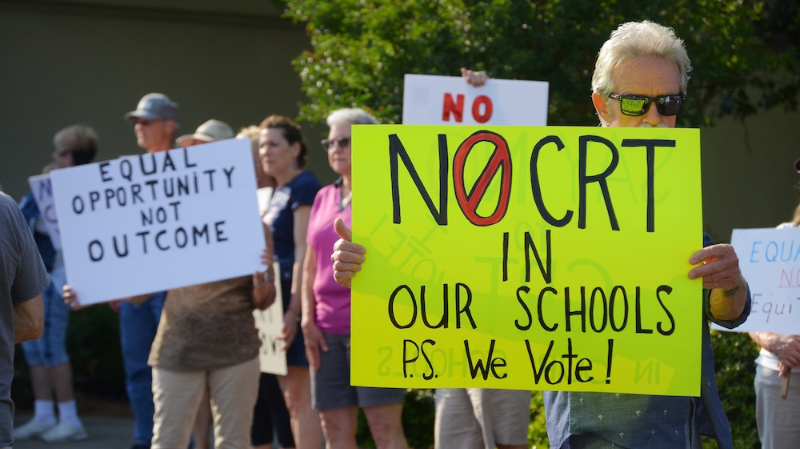
Photo taken from: Blavity
Policy Summary
[SSB theme=”Official” align=”center” counter=”true” ]
As millions of K-12 students head back to school in the coming weeks, many conservative lawmakers and anxious parents continue to rail against what they see as the dangers of teaching critical race theory, or CRT, in the classroom. But the reality is that myths and misinformation about CRT are based in fear and being perpetuated as a political tool.
In fact, most people don’t understand what CRT is, nor do they realize that proposals to ban its teaching are counter-intuitive since it is currently not being taught in the vast majority of social studies curricula.
While CRT has no universally accepted definition, its central premise is that race is a social construct. In other words, CRT maintains that racism is more than the aberrational result of prejudices and biases from individuals; instead, it is the idea that racism inherently exists in American institutions, systems and policies, thus continually fueling discrimination and creating an uneven playing field for minorities.
CRT actually began more than 40 years ago when Harvard Law School’s Derrick Bell and other scholars began exploring how race and racism affect society. They essentially concluded that racism is part of everyday life and that people of all races make choices that exacerbate racism, even when they don’t intend to be racist. Thus, the theory goes, racism has become embedded in the social justice system, in the housing industry, in education, etc. For example, CRT might be used in education to examine policies and practices that contribute to racially segregated schools, underfunding of majority-Black and Latino school districts, disproportionate disciplining of Black students, curricula that reinforce racist ideas, and other problems.
In short, CRT focuses on the outcomes of systemic racism and how they might be rectified, not merely the fact that some individuals are overtly racist.
Unfortunately, critics of CRT see it as a hate-mongering threat. They say white students, especially, will be demoralized by dividing races into “oppressed” and “oppressor” groups, and by teaching students that the United States was founded on racism and white privilege. Some also claim CRT encourages discrimination against white people in order for racial equity among racial groups to be achieved.
“Critical Race Theory teaches kids to hate our country and to hate each other,” Florida Gov. Ron DeSantis tweeted on June 10. “It is state-sanctioned racism and has no place in Florida schools.”

Photo taken from: District Administration
According to a recent poll by the advocacy group Parents Defending Education, “74 percent of the respondents said they were somewhat or strongly opposed to teaching students that white people are inherently privileged and black and other people of color are inherently oppressed” and “69 percent opposed schools teaching that America was founded on racism and is structurally racist.”
Yet, for the most part, the term “critical race theory” is nowhere to be found in K-12 schools; it’s an academic concept that most often is introduced at the college or post graduate level. However, some CRT principles are used in diversity, equity and inclusion (DEI) training for teachers, such as the concept of white privilege.
Policy Analysis
So why is the furor over CRT rising now? The murder of George Floyd by a white Minneapolis police officer in the summer of 2020 not only ignited waves of national Black Lives Matter protests, it also prompted American businesses and institutions to deeply self-reflect on matters of race and racism.
Schools were not immune from the revolution and began to search for more ways to teach about the legacy of slavery. Some districts introduced the New York Times Magazine’s “1619 Project” curriculum. The 1619 Project is a controversial series of essays and articles that “reframes” America’s “history by placing the consequences of slavery and the contributions of black Americans at the very center of our national narrative”, according to the magazine’s description.
Many point to conservative activist Christopher Rufo for creating the national CRT debate. Rufo, who has promoted his ideas on Fox News, cites diversity trainings and other anti-bias programs as critical race theory. His examples struck a chord with former President Donald Trump, who signed an executive order in September of 2020 prohibiting diversity training and critical race theory. (President Biden later rescinded the order upon taking office.)

Photo taken from: Mark Lewis Taylor
Several GOP state leaders have followed Trump’s lead. The issue has become another culture war battle, especially with many Americans not fully understanding what CRT means. So far, more than 10 Republican-controlled states have taken action to ban the teaching of CRT in schools. Yet not all CRT opponents are conservative or white.
“Liberalism assumes that we are all individuals, capable of reasoning with each other as equals,” said political commentator Andrew Sullivan, whereas CRT assumes that “we are mere representatives of racial constructs which are part of a permanent struggle between the oppressors (white) and oppressed (non-white)”.
The anti-CRT bills are vague, and CRT proponents worry that if they become law teachers might self-censor their own lessons about race. Questions surrounding the constitutionality of the new bills and whether they restrict free speech also exist.
The Association of American Law Schools (AALS), the nation’s largest organization of legal educators, recently issued a public statement which says laws banning the teaching of critical race theory create a “dangerous precedent”.
“The efforts to ban critical theories, just like other attempts at censorship, undermine one of the primary purposes of education: teaching students how to think for themselves.”
Engagement Resources
Click or tap on image to visit resource website.

Anti-C.R.T. activist Christoper Rufo lists 11 examples of “critical race theory in education”

Parents Defending Education poll:

Former President Trump’s executive order 2020 prohibiting diversity training and critical race Theory:

Chalkbeat’s tracking of state efforts to restrict critical race theory in schools:
https://www.chalkbeat.org/22525983/map-critical-race-theory-legislation-teaching-racism

Statement by AALS on Efforts to Ban the Use or Teaching of Critical Race Theory:
https://www.aals.org/aals-newsroom/statement-on-critical-race-theory/

Will This Summer’s Extreme Weather Affect the World’s Resolve to Tackle Climate Change?
Will This Summer’s Extreme Weather Affect the World’s Resolve to Tackle Climate Change?
Environmental Policy Brief # 123 | By: Adrian Cole | August 9, 2021
Header photo taken from: Earth Justice
Follow us on our social media platforms above
Browse more environmental policy briefs here

Photo taken from: Yale E360
Policy Summary
[SSB theme=”Official” align=”center” counter=”true” ]
COP 26 is the latest climate gathering in a process which began with the 1992 Earth Summit in Rio de Janeiro. The United Nations Framework Convention (UNFCCC), established then, is comprised of 200 members who commit to meeting annually in a Conference of the Parties (COP). This year the UK will host, and has the presidency. The meeting has been billed as the “last, best chance” to deal with climate change. What are its goals?
At the 2015 Paris COP, the delegates agreed to limits on emissions which would allow for around 2.0 degrees of warming above pre-industrial levels by 2100. (This target has been subsequently revised downwards by scientists to 1.5 degrees.) In the Paris agreement all countries committed to updating their emissions reduction targets every five years, and 2020 represented the end of the first five-year cycle.
The commitments made in Paris in 2015, known as Nationally Determined Contributions (NDCs) did not come close to limiting warming to 1.5 degrees. As of the end of July, the UN has received updated NDCs from only 58% of parties pledged to present them ahead of COP26. Furthermore, according to the UNFCC these new NDCs are insufficient. Collective efforts fall short of limiting warming to even 2 degrees. COP 26 is therefore urging all countries to now update their NDCs to reflect this priority. The COP 26 website says that much more action is necessary:
The world needs to halve emissions over the next decade and reach net zero carbon emissions by the middle of the century if we are to limit global temperature rises to 1.5 degrees.
COP 26 will urge participants to come up with more aggressive 2030 NDCs, in order to achieve this goal. More specifically, the UK COP presidency says it is cooperating with countries on three main goals— the ending of coal power, scaling up clean power, and increasing energy efficiency. (India recently failed to show up at a preliminary meeting in London, and another pre-COP26 meeting in Italy failed to achieve agreement on phasing out coal).
Finance, to help poor countries reduce emissions, is key here also, and COP 26 has set a goal of raising 100 billion in climate finance per year—a goal set in Paris and not achieved as of yet. Another major focus of COP 26 will be China, the world’s largest emitter of carbon dioxide. China has yet to submit an updated NDC.
Policy Analysis
For its part, the UN certainly gets it: “The most recent and accelerating climate change impacts constitute a clarion call to action,” read its climate Twitter feed in late July.
The summer of 2021 has been something of a wake-up call to all COP nations—and the world in general: Unheard of temperatures and “heat domes” in the otherwise temperate Pacific Northwest; inundations and flash floods in Germany and northern Europe; “5000” year flood events in China’s Henan Province; mudslides in India and river flooding in Uganda, to name just a few of the most notable events, all of which combine to make of 2021 a shocking year in terms of climate change, killing thousands and destroying billions of dollars of property.
These events have prompted climate scientists to rethink basic assumptions about the scale and speed of change. Such events, according to many of these scientists, would have been impossible without anthropogenic climate change. If this much climate disruption happens at our current level of around 1.2 degrees of warming, even 1.5 will be disastrous.

Photo taken from: Daily Express
Will this summer fuel COP 26 with renewed motivation to achieve its goals? As people experience the affects of climate change, will there be more calls for aggressive climate action? The answer is yes….and no. Common sense might suggest that extreme weather events such as experienced in Lytton, B.C., will spur rapid action on climate, and there is some truth to that. One study conducted in New York State explored the psychological theory of experiential processing and applied it to individuals’ perception of weather. They found that those who believed in—especially human-caused (anthropogenic)—climate change were more likely to connect extreme weather to climate change.
But Jennifer Marlon of the Yale Program on Climate Change writes that people may interpret similar experiences differently. A hard rain may fall on a town of hundreds, and multiple narratives will emerge about about the origins, causes and consequences of that rain, and the future of humanity’s relationship with falling water. In the United States, as an example, sixty percent of Democrats polled nationally say they have experienced global warming, whereas the same is true of only 24% of Republicans living under the same skies.
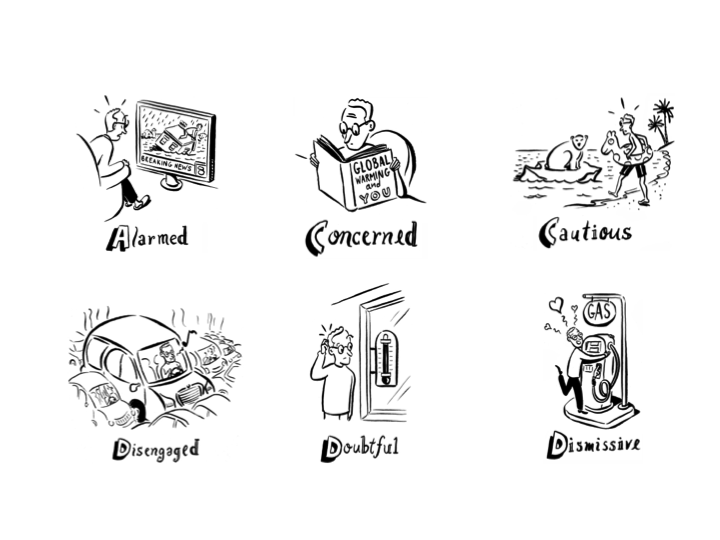
Photo taken from: Yale Program on Climate Change Communication
The Yale Program on Climate Change conducted an experiment using twelve years of survey data to assess whether there are some kinds of weather that people associate more with climate change. They found that hot, dry weather is much more likely to make people feel that they have experienced global warming. The 2011 drought in Texas showed up as a clear influencer of people in this regard, as did the droughts in the West in 2008, 2010, and 2014, and in the Midwest in 2012 and 2013. Extreme precipitation, however, was not so closely associated with climate change, even though there are clear causal relationships between global warming and rainfall.
Ominous clouds are on the horizon, for COP 26, especially in the East. China’s Communist party, perhaps the major player at COP 26, might well be driven to take climate seriously, out of self-interest, and there are certainly noises to that effect from the leadership. But as of yet, the party has been downplaying the relationship between this summer’s extreme rains and climate change, preferring instead to highlight heroic acts of bravery, its own rapid response, and random acts of nature. In conclusion, the events of the summer of 2021—as of this writing—will likely affect some people’s views of the seriousness of changing weather patterns globally, and in nations in which popular will translates to legislative power this might move the needle. Politics and ideology, however, are as always, the two curve balls which will likely act as a drag on a serious response, especially from the world’s most populous nation.
Engagement Resources
Click or tap on image to visit resource website.

Website for the UK host of COP 26:

Statement from Patricia Espinoza, Executive Secretary of the United Nations Framework Convention on Climate Change:

Yale Program on Climate Change:
https://yaleclimateconnections.org

Article from The Conversation on how the summer of 2021 has influenced our understanding of climate change:
https://theconversation.com/how-summer-2021-has-changed-our-understanding-of-extreme-weather-165268