

JOBS POLICIES, ANALYSIS, AND RESOURCES
Latest Jobs Posts
Income Inequality in California Points to Economic Shifts Nationwide
Brief #103—Economic Policy
By Linda F. Hersey
Whether it is culture, policy or innovation, the nation’s most populous state has long been a frontier for change and a reliable predictor of trends for the rest of the U.S. and around the globe.
Biden and COVID-19: 100 Million Vaccine Doses in 100 Days
Brief #87—Health & Gender
By Justin Lee
In early December, President-elect Joe Biden announced the new members of his public health team and objectives he plans to implement within in his first 100 days in office
Still No Vaccine For Misinformation: Anti-Vax Conspiracies Spread Online Despite New Policies
Brief #30—Technology
By Scout Burchill
As vaccines for the COVID-19 virus begin to be distributed across the country, social media platforms have pledged to combat anti-vaccination misinformation.
Recently Muzzled Voice Of America Fights to Renew its Voice
Brief #101—Foreign Policy
By Todd J. Broadman
Voice Of America (VOA) was established in 1942 to counter Nazi propaganda. The VOA is funded by the federal government and is overseen by the U.S. Agency for Global Media (USAGM).
National Popular Vote Compact Best Bet To Reform Election Of U.S. Presidents
Brief #146—Civil Rights
By Rod Maggay
Under Article II, Section 1, Clause 2 of the U.S. Constitution each individual State has the power to appoint the slate of electors who will vote in every presidential election. The Federal Government has no role in a State’s selection of its slate of presidential electors.
Congress Finally Agrees to a Tepid Stimulus and a Federal Budget
Brief #102—Economics
By Rosalind Gottfried
A sustained disparity in the goals of Congressional Democrats and Republicans has ended in a compromise bill which leaves many Americans still vulnerable to the effects of the corona virus economy while providing a stopgap measure to avoid the worst case scenario.
The Crisis In American Higher Education; College Enrollment; Student Debt; Student Loan Forgiveness
Brief #101—Economics
By Rosalind Gottfried
The pandemic has exacerbated troubling trends in higher education. College enrollment fell by 11% from 2011-2019.
Alternatives to Deadly Force: Tasers
Brief #2—Social Justice
By Laura Plummer
On Oct. 26, Philadelphia police shot and killed Walter Wallace Jr. in broad daylight. In a viral video of the incident, Wallace can be seen approaching officers with a knife.
Pfizer and BioNTech Vaccine Receives US Approval
Brief #86—Health & Gender
By Taylor J Smith
The US saw a million new COVID-19 cases in the first five days of December and states have begun reimplementing restrictions; However, the US Food and Drug Administration approved the Pfizer & BioNTech vaccine last weekend and Moderna was approved this week.

Will Trump’s Executive Actions Really Help Workers?
Rosalind Gottfried
Economics
August 18, 2020
Policy
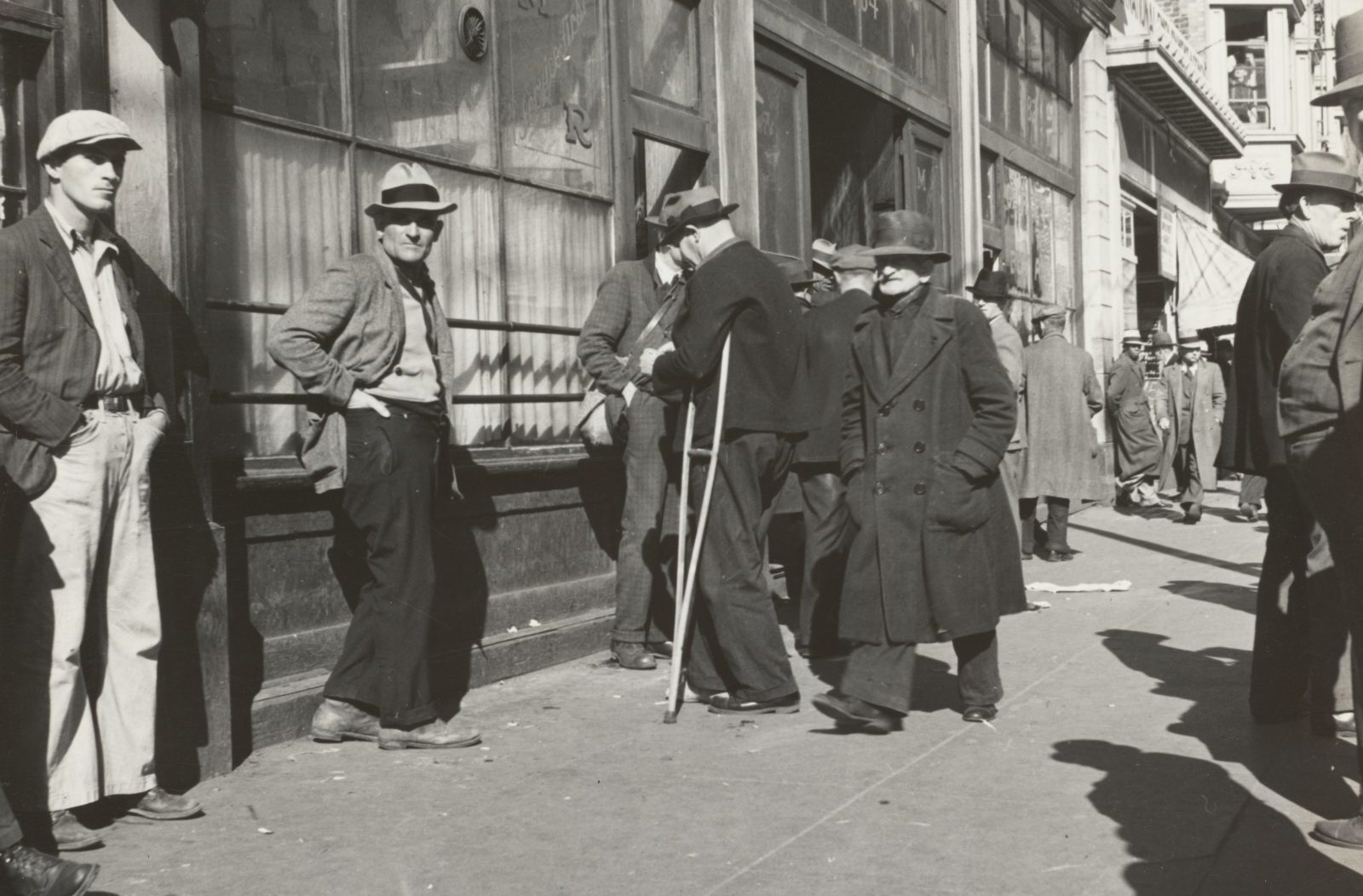
Trump asserts that his payroll tax holiday will stimulate the economy, help workers take home more money, and generally be a boon to families suffering economic stress. The payroll tax stems from a 6.2% tax on wages from the employee and an identical payment from the employer. Each will be suspended retroactively from August 1 to December 27. Workers who make less than $100,000 per year will be eligible for the payroll tax cut. Individuals collecting less than $100 a week from the state’s program will not be eligible for this federal subsidy, eliminating supplemental payments to one million workers in need. Employers will also have a cut in taxes but both of these “tax holidays” will be short lived and each will ultimately be paid back unless the President waives the reimbursement in 2021. These taxes support social security which will compensate for the loss by siphoning money from the general fund, the budget that covers government operating costs. The loss of revenues to the Social Security system will be steep. In 2011 and 2012, a recessionary fix included a 2% payroll tax cut to stimulate the economy costing 10 billion dollars per month in revenue loss to the social security system.
The 38 million jobless Americans will have no impact from this executive memo. The real effect of this tax “holiday” is contingent on several vague mandates. For example, an employer can withhold the suspended employee portion for future payback expenses except in states where such actions are prohibited. Another potential negative impact is that repayment may be taken out of future checks as early as the end of the year or in early 2021 and employers can take the whole amount out of one check. Another potential option is that the extra payment will be taken from 2020 income taxes.
Another Trump executive memo to “help” the economy provides a federal unemployment payment of $400 per week, retroactive to August 1, down from the $600 ended on July 31. One challenge of the new order is the requirement that one hundred dollars of it be provided by state funds. Since the states are already covering the regular state benefits many cannot source another $100 a week. Such a mandate would add, for example, $700 million dollars per week to the California state system, a prohibitive burden. The federal funds for this program, Trump proposes, can be taken from FEMA, the federal emergency management agency. This is a terrifying prospect since the summer storm season is already looking severe and storms can cost 22 billion dollars each.
Trump’s executive order regarding evictions does not extend the ban on evictions established in the earlier CARES act but leaves the decision making to the secretary of Health and Human Services and to the CDC director. The potential for assisting renters with payments rests with action by HUD, the federal Housing and Urban Development agency. It estimated that as many as 40 million Americans will be vulnerable to losing their residences.
Finally, Trump extended a suspension of interest payments on student loans until January 1, 2021 but this doesn’t apply to loans private entities like banks.
Trump’s executive acts represent a contracted group of workers with decreased aid in comparison to the earlier CARES act. As in keeping with the federal response to the Covid-19 emergency, this “remedy,” will be a day late and a dollar short.
Analysis
The bickering between the Republicans and the Democrats has stalled the process and left many workers vulnerable to food shortages, homelessness, and loss of health insurance. The democrats want to extend emergency with a three trillion dollar Heroes plan, more generous than the 2 trillion CARES act passed in March and now expired. The republican program, called HEALS Act would cost one trillion dollars and be far less comprehensive. Chuck Schumer, Senate majority leader, maintains that in addition to help for wages, housing, and tax relief Americans should have programs which include testing, tracing, and treatment of the COVID-19; money for schools to safely reopen and to purchase adequate personal protection equipment; food assistance; budgetary support for local and state governments; money to support safety for the November election; and adequate funding for the Postal Service to support the demands of the election. The likelihood of attaining these measures seems tenuous, at best.
References
- https://www.marketwatch.com/story/what-does-trumps-payroll-tax-deferral-mean-for-your-paycheck-not-much-experts-say-2020-08-10
- https://www.cnet.com/personal-finance/trumps-pa yroll-tax-plan-when-the-holiday-starts-how-much-you-get-when-you-pay-it-back/
- https://www.cnet.com/personal-finance/heals-vs-cares-vs-heroes-what-are-the-differences-between-the-acts/
Resources
- https://democraticwoman.org/gotv/ Resource for Supporting voting Democratic in the upcoming election
- https://www.committoflipblue.com/ Resource for Supporting voting Democratic in the upcoming election

Trump Expands ‘Operation Legend’ in Re-Election Bid; 1,500 Arrests
By Erika Shannon
August 24, 2020
Policy Summary: Operation Legend has now been up and running since July 8, 2020. Named after four-year-old gun violence victim LeGend Taliferro, we originally saw 1,000 federal agents and investigators deployed to Portland, Chicago, Albuquerque, Detroit, Cleveland, Milwaukee, St. Louis, and Kansas City. In recent weeks, other U.S. cities have seen the arrival of federal agents. Indianapolis will be the site of a 45-day effort from Operation Legend to help curb gun violence; 57 federal agents will be a part of this recent deployment. There have been recent talks of expanding the program to Cincinnati, Ohio, to respond to high murder rates in the midwestern city.
On August 19, 2020, Attorney General William Barr gave an update on Operation Legend. It is estimated that there have been 1,485 arrests and almost 400 guns seized by federal agencies. Of those arrested, 217 have been charged federally and more than 90 have been charged with homicide. In Chicago there have been 61 arrests alone, with another 32 arrested in Cleveland. There has been concern of federal agents interfering with lawful protests around the country, but Barr stated that Operation Legend remains separate from any federal agents that have been deployed to respond to civil unrest.
Policy Analysis: Since its original announcement, Operation Legend has been met with opposition from state and local leaders. It has been seen as a political move by President Trump to boost his approval before the November elections, where he is on the ballot opposite Democrat hopeful Joe Biden. According to data from a recent Gallup Poll, President Trump’s approval rating is at 42%, leading some to believe that any actions taken by President Trump at this point are purely to increase ratings. President Trump is attempting to present himself as a candidate who is tough on crime and prides himself on “law and order.” It is true that the cities that have been targeted by Operation Legend do need federal resources; however these resources should not be limited to federal agents and investigators. Cities like Chicago are still seeing record shootings and homicides, despite the presence of federal agents. Operation Legend may be resulting in higher arrest rates, but it has not contributed to a drop in overall gun violence.
Local politicians have voiced their opposition to Operation Legend, feeling that they are being used as pawns in the President’s bid for re-election. There is the idea that President Trump is attempting to make some democrat-led cities seem like they are more violent and need intervention from simply federal law enforcement agencies. Leaders in Albuquerque and Kansas City learned of the federal intervention in their cities at the last minute, and some of the details are still unclear to them due to a lack of coordination between federal and local investigators. Chicago leaders, on the other hand, have seen positive results from working with federal investigators. There has been the integration of federal agents working closely with the Chicago Police Department, and other state and local leaders are hopeful that Operation Legend will eventually yield positive results for their cities, as well.
Resistance Resources
- Crime Victim Assistance Indianapolis is a resource for people who have been directly or indirectly affected by gun violence and other crimes and will send out a Victim Assistance Unit to those in need
- The American Civil Liberties Union is an organization that can defend your civil liberties if they are violated

Major Hotel Chains to House Detained Migrants Amidst Pandemic
August 24, 2020
Policy Summary
In July, there were 40,476 detentions at the US Southern Border, a 24% increase from June and more than 50% from April. Major hotel chains – such as Quality Suites, Hampton Inns, Comfort Suites Hotel, Best Western, and Econo Lodge in Seattle, Los Angeles, El Paso, Miami, Phoenix, and San Diego – have been used to detain migrant children and families taken into custody at the border during the pandemic. The aggressive border closures as a result of COVID-19 have caused hotel detentions to increase rapidly. Most of the detained include unaccompanied children and families.
Additionally, the hotel detention system has created a path for swift expulsions without safeguards intended to protect vulnerable migrants. Expulsions surged under the Trump Administration’s COVID-19 border ban and take place almost immediately once migrants encounter immigration agents. Due to the uptick in border crossings, the Administration has worked closely with MVM, Inc., a private corporation that largely provides transportation and security to detained migrant children and families. Before the pandemic, MVM was used to transport migrant families from the border to family detention centers. MVM security workers were also sent to oversee the erected tent courts established to process cases of asylum seekers who have waited out their cases in Mexico, per the Remain in Mexico policy of 2019. Expulsions have replaced deportation proceedings as the primary way of processing migrants who have tried to enter during the pandemic and over 100,000 have been expelled since.
Analysis
Hotel detainment operates as an unregulated system of detention that exists outside the formal federal detention system. Participating hotels are not subject to providing access to phones, healthy food, medical and mental health care nor policies intended to prevent abuse in federal custody, such as the Prison Rape Elimination Act (allows for independent reporting of physical or sexual abuse by government workers/contractors) and the Trafficking Victims Protection Reauthorization Act (ensures children who will be abused or tortured in their home countries are not sent back). Detained migrants are not assigned identification numbers in the hotel system and thus parents and/or lawyers have no regulated way of finding or monitoring children in hotel custody.
Engagement Resources
- The National Immigration Law Center: an organization that exclusively dedicates itself to defending and furthering the rights of low income immigrants and strives to educate decision makers on the impacts and effects of their policies on this overlooked part of the population.
- Border Network for Human Rights: network to engage education, organization and participation of border communities to defend human rights and work towards a society where everyone is equal in rights and dignity.
- The ACLU: a non-profit with a longstanding commitment to preserving and protecting the individual rights and liberties the Constitution and US laws guarantee all its citizens. You can also donate monthly to counter Trump’s attacks on people’s rights. Recently, the ACLU has filed a lawsuit challenging the separation of families at the border.
- Center for Disease Control: the CDC provides updated information surrounding COVID-19 and the US responses

Wolf and Cuccinelli Unlawfully Occupy their Senior Roles at DHS
August 24, 2020
Policy Summary
The Government Accountability Office (GAO), an independent investigative branch of Congress, has recently declared Ken Cuccinelli and Chad Wolf to be ineligible to serve in their current positions. The Department of Homeland Security has not had a properly appointed leader since the resignation of Kjiersten Nielsen in April 2019. Under the Vacancies Reform Act, Wolf and Cuccinelli – the Acting Secretary of DHS and Acting Deputy, respectively, are unlawfully serving due to an “invalid order of succession.” The Vacancies Reform Act requires that temporary government appointments must be confirmed by the Senate. Legally, according to the GAO, the Director of the Cybersecurity and Infrastructure Security Agency should have succeeded Nielsen. Instead, Kevin McAleenan – at the time, head of US Customs and Border Protection – was appointed by President Trump. Once appointed, he altered the order of succession so Wolf and Cuccinelli would have a path to their current roles.
The GAO is referring the matter to DHS Inspector General for review and if further actions need to be taken, the issue will be passed on to Congress. Department of Homeland Security was quick to defend with a statement disagreeing with the GAO announcementThey states that President Trump has made clear he prefers when senior officials serve in an acting capacity because it “gives [him] great, great flexibility.” None of the three major immigration agencies (CBP, ICE, or USCIS) have a Senate-confirmed leader.
Analysis
Trump’s affinity to appointing senior officials in an acting capacity exemplifies his blatant disregard for procedural dignity and heightens the culture of nepotism in the Trump Administration. Since the majority of Trump’s original fanbase has proven they are largely supportive of his anti-immigration efforts, regardless of the morality or procedures, it is unlikely the matter will be swiftly and justly prosecuted without a thorough investigation by the DHS Inspector General and pressure from Congress.
Engagement Resources
- The National Immigration Law Center: an organization that exclusively dedicates itself to defending and furthering the rights of low income immigrants and strives to educate decision makers on the impacts and effects of their policies on this overlooked part of the population.
- Border Network for Human Rights: network to engage education, organization and participation of border communities to defend human rights and work towards a society where everyone is equal in rights and dignity.
- The ACLU: a non-profit with a longstanding commitment to preserving and protecting the individual rights and liberties the Constitution and US laws guarantee all its citizens. You can also donate monthly to counter Trump’s attacks on people’s rights. Recently, the ACLU has filed a lawsuit challenging the separation of families at the border.
- Center for Disease Control: the CDC provides updated information surrounding COVID-19 and the US responses.

The Corruption of Steve Bannon
Steve Bannon’s arrest on Wednesday marks yet another arrest on fraud-related charges of someone connected to President Trump. He and three co-defendants stand charged with wire fraud and money laundering in connection with an attempt to privately fund a wall at the US-Mexico Border. Bannon had previously operated mostly in lawful, ethical grey areas. Propagandist and prevaricator would have previously been completely appropriate words to describe the president’s former confidante. With the unveiling of a scathing indictment against him and his co-conspirators this week, his skullduggery has made a foray into the criminal. It is another in long line of criminal charges brought against the associates of the leader of the free world.
‘’Build the Wall’’ was a ubiquitous chant at Trump rally’s during his 2016 campaign. To fight the dubious scourge of immigrants and the drugs and crime he associates with them, the then-candidate promised to erect a physical barrier between the contiguous 48 and our neighbor to the south. Steve Bannon is a staunch opponent of immigration, legal and illegal. He was brought aboard to manage Trump’s campaign in no small part because of the alignment of his nationalistic views with those of Donald Trump. Following Trump’s victory, Bannon was made chief political strategist; he was said to keep a whiteboard charting the progress of promises made on the campaign. The pledge to build a ‘’big, beautiful wall’’, that Mexico would pay for no less, never gained much steam. To date, roughly 80 miles of new fencing has been erected across the 1,954 miles border. Disputes with Congress over funding, never resulted in the president’s desired appropriation and led to a government shutdown from December 2018- January 2019. Bannon’s tenure at the White House was brief. Based on the charges against him, his white whale of a wall across the Southern US border was never far from mind.
In December of 2018, Air Force veteran, Brian Kolfage started a GoFundMe drive attempting to raise money for private construction of a border wall. Steve Bannon joined the cause shortly thereafter. It was successful to the tune of $25 million in contributions. GoFundMe appears to have expressed skepticism of the campaign, which would be converted to a 501c nonprofit, We Build the Wall. Upon, the switch, donors were made to opt-in to the new charity, to safely ensure the transfers of their previous donation to the new entity. They donated under the premise that none of fund raisers would take any compensation for themselves. All of their donations were to go to the federal government. That premise was a rouse, leading to the charges against Bannon and co. Kolfage is alleged to have siphoned roughly $350K from the fund. Among other personal expenses, he used his ill-gotten gains for payments on a boat, luxury SUV and existing credit card debt. Bannon is alleged to have received just under $1 million for his personal use. Investigators had been on the scent of the crime for over a year. In a move indicating awareness of their guilt, the group regularly moved money around through shell companies and wrote off payments to themselves as seemingly legitimate business expenses. Prosecutors have no text messages between the co-conspirators after October of 2019, as the group switched to an encrypted messaging service for all We Build the Wall related communications, suggesting they were aware they were the targets of a criminal investigation.
The 24-page indictment in the case outlines a carefully orchestrated fraud scheme over the course of a year and change. Each charge is a felony, for which the defendants face up to 20 years imprisonment. A wall on the Southern border was a dog whistle that propelled Steve Bannon to prominence and Donald Trump to the White House. When it failed to materialize through normal channels, it became the perfect centerpiece for an opportunistic grift.
The charges against Bannon are severe. They also fit neatly into a pattern of deceitful criminal behavior by those in Trump’s orbit. All three of the men who oversaw his 2016 campaigned have faced criminal charges. Corey Lewandowski was arrested in 2016 for grabbing a female reporter who had addressed a question towards the then-candidate. Per the Mueller Report, he was also involved in Trump’s obstruction of justice, for acting as a go-between in Trump’s attempt to fire then-attorney general, Jeff Sessions.
Paul Manafort was convicted of bank and tax fraud charges and sentenced to seven and a half years in prison. The recently released Senate Intelligence Report categorized him as a ‘’grave national security threat’’ given that he served as an interface between the Trump campaign and Kremlin-backed operative Konstantin Kilmnik. He secretly shared internal campaign data with Kilmink and worked to undermine evidence of Russia’s election interference, seeking to point suspicions towards the Ukraine. How these efforts shaped Trump’s thinking, and his presidency, need no elaboration. Guilt by association is a dubious principle. But it is telling that Donald Trump’s two longest serving campaign managers have been convicted or credibly accused of fraudulent, criminal behavior.
Brian Kolfage in in many ways perfectly emblematic of the pervasive corruption of all things Trump. He is an Air Force veteran who lost both his legs and arms serving in Iraq. He is a sympathetic figure who one would think has the best interests of the nation at heart. Exploiting xenophobia masquerading as patriotism, he claimed to earnestly solicit donations in the name of national security. Very little of the donations went towards construction of a border wall. A substantial portion went into the pockets of the fund raisers despite their promises to the contrary. If the charges in the indictment are substantiated, Steve Bannon was an active and willing participant almost from the con’s inception. Although he and Trump parted ways in the summer of 2017, it is difficult to completely disassociate the two considering the disturbing overlap in their respective patterns of fraud and toxic rhetoric.

WE ALL MUST VOTE THIS TIME
A U.S. RESIST NEWS EDITORIAL
WE ALL MUST VOTE THIS TIME
A) INTRODUCTION
The 2020 Presidential election is the most important election of our lifetimes. At stake is the future of our rule of law and our democratic system of government. For the past four years President Trump and the Republican party have been tearing down the basic political, legal and moral principles that our country stands for; such as respect for our legal process, the separation of political powers and the rights of citizens as enshrined in our Constitution and Declaration of Independence. They have polarized the country leaving us divided, angry, and fearful of one another. This has got to stop; and the best way of stopping it is by voting Trump out of office.
Most polls show that the democrats have a considerable electoral lead right now. But that lead could evaporate if people do not turn out to vote. Everyone needs to play their part in making sure that voting is maximized, that efforts to subvert the voting process are stopped and that the electoral process is fair and transparent.
B) ROLES OF KEY PLAYERS
Citizens
The most important spoke in the wheel. All citizens must do what they need to do to cast a ballot. So we advise
- If you live in a state where universal ballots are part of state policy, cast a mail-in or absentee ballot. For a list of states that have authorized mail-in ballots for all citizens see https://www.usa.gov/election-office
- If you live in a state where mail-in ballots are an option cast a mail-in or absentee ballot, especially if you are an elderly person, have underlying health conditions, or can’t get to the polls.
- If you are physically able to vote in-person, exercise that option but please be sure to wear a mask and protect the health and well-being of yourself and others when you vote
- Register to vote as early as possible, preferably in the coming days. By registering now will ensure that you will be eligible to vote regardless of which method you choose to use – in – person, absentee or mail.
States, Cities, and Towns
In the absence of Federal guidance and electoral support states, cities, and towns must undertake the government regulatory functions needed to ensure a fair and transparent election. They need to
- Make mail-in/absentee ballots available
- If need be setup alternative mail-in/absentee ballot delivery systems that bypass
US Postal Service obstructions
Make enough polling stations available; with extended hours if needed
Make sure polling stations are operated in a sanitized environment with volunteers who are not highly at-risk for Covid
Make sure ballots get counted expeditiously, ideally with results announced the same day or as soon after the election as possible
Keep the public informed of vote tallying process and announce the results as soon as they are known
The Federal Government
The Federal Government should be at the forefront of a national effort to make voting easily accessible to all citizens, ensure all votes are counted, and protect our electoral system from unwarranted foreign or domestic intrusions. It’s not doing this. However normally here is what should happen:
The President should stress the importance of voting and encourage all Americans to vote by mail or in-person
- Congress should pass the Voting Rights Act and provide funding to states to ensure that all citizens have the ability to vote and that all votes are counted in a timely manner
- The Post Office must prioritize the handling and processing of mail-in and absentee ballots
- The Intelligence Community should take actions necessary to stop election interference by foreign or domestic agents
C) Voting Rights Organizations and Activists
Because the Federal government is abnegating its electoral responsibilities, and there are ongoing efforts to suppress voting and interfere in our electoral system, activists and voting rights organizations need to step in to help fill the gap. They need to take steps needed to:
Stop the postal service from obstructing the election
Arrange to have enough polling places open and staffed to accommodate in-person voters
Arrange to have enough people on hand to tabulate all in-person, mail-in, and absentee ballots as expeditiously as possible
Conduct get-out-the-vote and voter registration campaigns
Serve as voter watchdogs and call out any efforts to suppress voting
D) Resistance Resource Organizations
Here is a partial list of the many voting rights organizations working to ensure a fair and transparent 2020 Federal election.
- American Civil Liberties Union Voting Rights Project: Works to protect the gains in political participation won by racial and language minorities since passage of the 1965 Voting Rights Act (VRA). https://www.aclu.org/other/about-voting-rights-project
- Common Cause: Works to make the process of voting more democratic from all angles — they’re fighting to expand voting rights, eliminate gerrymandering, and push for popular vote presidential elections (see you later, Electoral College!) www.comoncause.org
- Fair Fight: Brings awareness to the public on election reform, advocates for election reform at all levels, and engages in other voter education programs and communications. www.fairfight.com
- Lawyers Committee for Civil Rights Under Law: Works to advance and protect the right to vote and to ensure that the right is afforded equally to all. www.Lawyerscommitteee.org
- League of Women Voters: Encourages informed and active participation in government, works to increase understanding of major public policy issues, and influences public policy through education and advocacy. www.lwv.org
- National Conference of State Legislatures: Publishes a state-by-state list of voter identification laws: www.ncsl.org
- National Vote At Home Institute: works with election officials in optimizing their processes and governing laws for both mail ballot and in-person voting methods. https://voteathome.org/
- Rock the Vote: Dedicated itself to building the political power of young people. www.rockthevote.org
- USA.Gov: Offers a guide to the voting requirements in each state. https://www.usa.gov/election-office
- Vote.org: Vote.org uses technology to simplify political engagement, increase voter turnout, and strengthen democracy. They provide information on voting requirements of every state. www.vote.org
- Vote Vets: Uses public issue campaigns to give a voice to veterans on matters of national security, veterans care and everyday issues that affect veterans and their families. www.votevets.org

Mail Voting is Essential Despite Hurdles
August 19 , 2020
More Americans than ever are eligible to receive a ballot to vote by mail this November, significantly changing the presidential election process in a short time span. Despite President Trump’s objections towards the integrity of mail-in ballots, most Americans are projected to vote by mail this election.
Whether or not the process will go smoothly or not is up for question, considering that the United States Postal Service is strapped for funding to facilitate the election. President Trump has not approved the $25 billion in emergency funding sought by the USPS, and the additional $3.5 billion to supplement election resources. The President indeed appears to want the Post Office to slow the pace of its operations in hopes of stifling the mail-in vote. His Postmaster General, Louis DeJoy, has been trying to remove machinery used to sort the mail and reduce the number of hours that mail carriers work. DeJoy’s slowdown actions have met with outrage and pushback from Congress and the American people, and he has recently agreed to suspend his efforts.
Many experts agree that voting by mail is the safest way to participate in the election amid the pandemic, but some are worried about inflating voter disenfranchisement among Black, Hispanic, and other voters of color. Studies show that voters of color and younger voters are significantly more likely to have their ballots rejected than older white voters when voting by mail. In the recent primaries, states also saw higher than average absentee ballot rejection rates, which experts say can be attributed to systemic errors, not voter mishaps.
An NBC news tracking poll found that views on voting and confidence in how the election will be conducted vary starkly by partisan lines. While the majority of democrats report that they plan to vote by mail, only just a third of republicans plan to do so. Overall, fifty-five percent of respondents were not confident about the overall fairness of the election.
As Biden continues to lead in all polls nationally, most recently a ten point advantage in a Monmouth poll, the anticipation surrounding the democratic nominee’s vice presidential pick has ended. Kamala Harris, a former democratic candidate in this presidential race, marks history as the first Black and South Asian woman to be selected.
Harris has served as Attorney General of California for two terms, and in 2016 she became the state’s third female Senator. She has supported universal healthcare, citizenship for undocumented immigrants and gun control in the past. Most recently she has advocated for criminal justice reform and the removing marijuana from the Schedule of Controlled Substances. Already she has received criticism for her time as a prosecutor, where 1,500 people were sent to prison for marijuana-related offenses under her tenure as California Attorney General.
Since more than half of the votes will be cast before election day, the Trump campaign team is pushing to move up the first of three televised debates, which is scheduled for September 29. In October, Kamala Harris is scheduled to debate Vice President Mike Pence.

Education in the Time of Covid—Part 1
By Emily Carty
August 19, 2020
Update on School Reopenings:
With the school year already underway in parts of the country, we are seeing a range of responses to school reopening and instructional plans. The CDC suggests community and school reopening with social distancing when there is a 14-day downward trajectory of new Covid-19 cases and hospitalizations, and when the percentage of positive Covid-19 tests is less than 20% and steadily decreasing. They also advise each school to have a detailed reopening and Covid-19 mitigation plan under supervision of the local public health department.
With the CDC essentially taking a back seat at enforcing these suggestions, states, local educational agencies and public health departments are in charge of creating school reopening guidelines or mandates based on the state or region’s Covid-19 cases and capacity to treat more patients. We are seeing that the majority of states allow the region (county, school district, etc.) to decide on a reopening plan based on state guidelines and local health regulations. This has resulted in many districts beginning the school year with either complete remote-learning or staggered, smaller classes at least part-time. A few states — Texas, Iowa, Missouri, and Florida — have taken it to the other extreme, with state-wide mandates for in-person instruction part- or full-time for all students.
Across the nation very different back-to-school plans are unfolding, despite each decision making body having to weigh the same aspects of reopening: funds, access to technology, benefits of school meals, parents who can’t stay at home for remote learning, or parents who don’t want their kids exposed to Covid. While some suburban, small, or low Covid-rate districts are reopening, it is notable that according to Education Week, “17 of the 20 largest school districts are choosing remote learning only as their back-to-school instructional model, affecting over 4 million students.” New York City, the nation’s largest school district and earliest Covid hotspot, will not allow school reopening until the percentage of “positive tests…is less than 3% using a 7-day rolling average.” The California Department of Public Health on the other hand, allows schools to reopen when their “local health jurisdiction has not been on the county monitoring list for 14 days,” which requires decreasing positive tests and hospitalizations. Responding to educators’ request for concrete metrics, Kansas has declared schools can reopen full-time with distancing when positive tests in a 14-day period are less than 5% and when a given school has less than 3% absenteeism. In Georgia, many schools opted to reopen for in-person instruction, as distanced as possible, which backfired on the second day of school when students and staff of a suburban school district tested positive and schools were forced to close again.
IS the country doing the right thing?
School reopening comes with a challenging set of decisions, especially with funding still up in the air for many school districts, hindering development of remote-learning or alternatives to in-person and full-sized classes. Lawmakers and national leaders have yet to agree on an updated stimulus package for schools, providing minimal support to educational leaders who are uncertain how far their budget will stretch in a pandemic. Nevertheless, school leaders are making decisions on many levels, and we are seeing this play out differently in districts and schools across the country, none of which have had enough time or resources to completely perfect this unprecedented new era of learning. A report by the Center on Reinventing Public Education found that across 477 school districts the majority, especially in rural areas, are setting low expectations for teachers to instruct remotely or monitor student engagement and progress — all of which are needed more than ever to ensure students don’t fall behind.
The first week of school provided a few indications of how successful reopening has been: “sick outs” by two Arizona School districts; several schools in Indiana and Georgia closing just hours or days after reopening; clusters of K-12 and university students with positive Covid tests across the nation; and waves of teacher resignations over reopening policies. Clearly this is not the outcome of a thoughtful or successful reopening, these snapshots are telling that something isn’t working right. Moreover, the the American Federation of Teachers, the nation’s second largest teacher union, has recently voiced support of all teachers who want to strike in the wake of hasty reopening plans, anticipating a failure of reopening efforts.
Students are also experiencing the failures of reopening plans first-hand, either by being exposed to the virus or by lack of access to realistic remote-learning plans. The New York Times profiled several students during the first week of school — some were scared to go in-person, some were hit with the new distanced reality once they got to school, some reverted to distance learning, some tested positive for Covid. One mom, also a teacher, was skeptical about kids’ ability to contract Covid until her own daughter tested positive at school, prompting her to take her daughter out of school and re-consider the risks.
Several polls concerning parent feelings about school reopening plans show that the majority of parents surveyed have primarily negative feelings about reopening, and prefer to delay an in-person reopening, despite concerns regarding loss of income and remote-learning oversight. While there are mixed-feelings about the potential pathways of a successful school reopening, what is clear is flexibility and accommodation are key factors to the comfort level of families and school staff. In places that have gone remote, like North Carolina, Tucson, and Oakland, the process has been met with technical difficulties, lack of access to technology, and waning attention spans in Zoom classes without a parent present — something that many parents and schools are struggling to solve. Learning “pods” might be a step in the right direction for those who can afford it, but it puts families at risk of Covid and doesn’t help lower-income families. Forced school reopenings by states or districts hasn’t fared any better, reinforcing what many experts and professionals have argued all along: a hasty reopening is safe for no one and leads to increased Covid cases, more research and resources are needed to reopen schools safely and effectively.
There is certainly no right answer to school reopening plans that will accommodate every stakeholder. The schools that have chosen to reopen in-person while community Covid cases are still high are putting lives at risk and causing harm to communities. The local educational agencies and nonprofits using their resources to develop creative solutions to distanced or remote learning and delaying in-person learning for the majority of students are looking to be the safest path for most. Based on feedback and actions from teachers, administrators, students, and families, the right thing to do is to be careful, take the time to develop a reopening plan with local public health agencies, and ensure that schools and families have the necessary funds and supplies to support new safety measures or new day-time care centers for working parents. As the future is uncertain, flexibility, innovation, science, and alternative approaches to normal classroom learning are the key until we can get our students safely back in the classroom.
RESISTANCE RESOURCES:
Resources for Remote Learning — The Emerson Collective has compiled an excellent, in-depth list of vetted resources for remote learning for students, families, educators, and administrators. From interactive sites, to videos, to toolkits, share with someone in-need or get to know what resources are out there to support you and your community.
Donors Choose — A platform that allows teachers and schools to request money or supplies for specific school-related purposes. Find a local class or project that you want to support, or filter “distance learning” to support students and teachers in navigating new systems of learning.
American Federation of Teachers — Support teachers and students by advocating for policies that will address funding, food security, technology access and more. Their site connects you with a fill-in template that sends emails to your local congress members.
National Digital Inclusion Alliance — A unified voice that supports policy, research, and collaboration to solve the digital divide in schools and beyond. Get involved with them or a local agency listed on their site to help donate, volunteer, or reach out to local government to demand support for internet access and technology for all students.
First Book — Provide in-need students and schools with books through donations and fundraisers for specific funds meant to reach those who need books most.
SOURCES:
- CA School Reopening Exceptions — CDPH
- Center on Reinventing Public Schools — Report
- CA Reopening Guidelines
- USA Today — With COVID cases rising, teachers drive back-to-school reopening plans
- Education Week — Map: Where Has COVID-19 Closed Schools? Where Are They Open?
- Education Week — School Districts’ Reopening Plans: A Snapshot
- CDC — Reopening Guidelines
- Forbes — Teacher strikes in AZ
- NY Times — First Week of School
- NY Times — NYC Principals on Reopening
- Iowa State Students Test Positive for Covid
- Sacramento State Students Test Positive for Covid
- UCF Students Test Positive for Covid
- NPR — Parents on School Reopening
- Forbes — Parents on School Reopening

The E.P.A.’s playing politics with methane is bound to blow-up
POLICY
Methane gas is 84 times more potent than carbon dioxide and is a main driver of climate change. From 2012 – 2016, the Obama administration put in place the New Source Performance Standards (NSPS) – these are regulations aimed at controlling carbon dioxide emissions from cars, coal-burning power plants, and methane emissions (leaks) from wells. The Trump administration – through the Environmental Protection Agency (E.P.A.) – has already taken action to rollback regulations on carbon dioxide and coal emissions and now wants to decrease controls for methane emissions from new and modified sources in the oil and gas industry, also known as the “Methane Rule.” Andrew Wheeler, the head of the E.P.A., said on August 13th that the proper legal process has been followed to remove these methane regulations. His position is that the “E.P.A. has been working hard to fulfill President Trump’s promise to cut burdensome and ineffective regulations for our domestic energy industry.” The compliance and regulatory cost burdens fall more heavily upon small and medium sized oil and natural gas producers.
The Trump administration has weakened more than 100 environmental rules and regulations since 2016.
According to the E.P.A., the oil and gas industry is responsible for almost 30% of the country’s methane emissions. Regulatory cost burdens amount to millions each year at a time when smaller producers are increasingly insolvent and in bankruptcy court. Financial pressures are driving lobbyists like the Independent Petroleum Association of America to make firms with low-production wells exempt from compliance.
Wheeler claims that methane leaks from domestic oil and gas wells have remained steady over the past decade, even as oil and gas production greatly expanded. The fossil fuel lobbyists cite data from the required use of high-bleed pneumatic controllers as an “excessive regulation” that does not produce the desired outcome. Among the major policy influencers are the American Petroleum Institute and the Western Energy Alliance. They assert that “Our industry continues to drive down methane emissions from operations while meeting America’s energy needs every day.”
ANALYSIS
According to the National Oceanic and Atmospheric Administration and the Global Carbon Project, methane emissions from oil and natural gas extraction accounts for 20 percent of global total; methane from animal digestive tracts and landfills makes up 40 percent; the balance, and largest single contributor are wetlands. Methane’s heat-trapping capacity lasts for 20 years and it accounts for 10% of U.S. greenhouse gas emissions. Over 25% of the hotter temperatures we now experience can be attributed to methane, and its presence is on track to exceed the Paris climate accord containment goal: an increase under 2 degrees Celsius.
Industry lobbyists for the smaller oil and gas producers make the following argument: the U.S. has about one million oil and natural gas wells in operation; three-quarters of these are of the “low-producing” variety and do not account for much methane release; about half of the higher producing wells came online after 2012 and had to conform to the Obama era 2012 NSPS regulations; in 2016, the E.P.A. added more stringent regulations which the industry claims were done with the intention of making production economically unfeasible for thousands of smaller producers.
Larger producers including Exxon, BP and Shell, do not support the E.P.A.’s rollback; they cite their own corporate pledges to curb methane leaks and the industry’s contribution to climate change. These big players have invested millions of dollars to promote natural gas as a cleaner option than coal because natural gas produces about half as much carbon dioxide when burned. They fear that unrestricted leaks of methane could undermine that marketing message and hurt demand.
Robert Howarth, earth systems scientist at Cornell University, contends that “80 percent of [research] papers show that methane from oil and gas leaks is two to three times higher than the E.P.A.’s estimates.” He counters industry arguments that methane emissions are stabilizing. “They’re certainly not going down,” he says. In contrast to Howarth, E.P.A. spokesman, James Hewitt, defends their numbers. “E.P.A.’s final methane rule is based on the most accurate and comprehensive accounting of our nation’s greenhouse gas emissions profile, which is performed by agency scientists based on data from a variety of sources.”
Under the new rule (rollback), the E.P.A. will still require leak monitoring, though not directly for methane gas. Oil and gas companies must continue to monitor and reduce smog-forming compounds at some well sites and during processing, but not pipelines.
A recent district court ruling struck down the Trump administration’s approach to the social cost of methane. And it is this social cost-benefit that will be the linchpin of the litigation that will follow this new ruling. David Hayes, a former Interior Department official who now leads New York University’s State Energy & Environmental Impact Center, predicts this new ruling will be overturned in the courts because assigning a dollar figure on damage caused by methane emissions vs. economic damage to the industry makes for a weak argument. Furthermore, Democratic nominee Joe Biden will likely decide to overturn the rule if elected.
Resistance Resources:
- https://insideclimatenews.org/ InsideClimate News is an independent, not-for-profit, non-partisan news organization that covers clean energy
- https://www.ecowatch.com/ is a leading online environmental news company, publishing timely stories every day for a healthier planet and life.
- https://www.carbonbrief.org/ Carbon Brief is a UK-based website covering the latest developments in climate science, climate policy and energy policy.
- https://www.epa.gov/natural-gas-star-program E.P.A.’s program to promote voluntary methane reduction to industry.

New Jersey Supreme Court Issues Opinion Seen As A Blow To Digital & Cellphone Privacy
Policy Summary: On August 10, 2020 the New Jersey Supreme Court decided the case New Jersey v. Andrews. The case is notable because of the decision by the court that criminal defendants can be compelled to turn over cell phone passcodes to law enforcement authorities to enable them access to the contents of a person’s cell phone.
Robert Andrews was a former New Jersey Essex County sheriff’s officer who was accused of collaborating with a drug dealer who was being investigated for narcotics trafficking. In the course of the investigation into the drug dealer’s activities the dealer revealed to investigators that a sheriff’s officer – Robert Andrews – was providing him with information on the status of the investigation. Additionally, Officer Andrews was also providing information as to how the drug dealer could do things to avoid further criminal exposure – by checking if his car had a tracking device, by warning him that his phone calls were likely being monitored and which officers were following him. As a result of this information from the dealer, law enforcement authorities executed a warrant on the cell phones of Officer Andrews and the dealer and found a total of one hundred fourteen (114) cell phone calls and text messages between the two men during the period of the narcotics investigation into the dealer. In order to corroborate information that the dealer provided to law enforcement, prosecutors requested Officer Andrew’s cell phone passcode in order to view information contained in his cell phone. Officer Andrews refused on the grounds that he had a right against self – incrimination. The trial court denied Officer Andrew’s refusal and ordered him to reveal his cell phone passcode. The case was then appealed to the New Jersey Appellate Division which ruled against Officer Andrews again. Another appeal ensued and the case went up to the New Jersey Supreme Court.
The New Jersey high court ruled 4 – 3 that “Neither federal nor state protections against compelled disclosures shield Andrew’s passcodes.” LEARN MORE
Policy Analysis: The decision from the New Jersey Supreme Court is one of the first state high court decisions to issue a ruling on the issue of whether a person can be compelled to open up the contents of their cell phones to law enforcement authorities. The issue has its roots near the U.S. border where a 2018 Customs and Border Protection policy was instituted to search electronic devices of persons attempting to cross into the U.S. However this case was different because the law enforcement officers in New Jersey were basing their search of a cell phone on the fact that they could compel a person to reveal his passcode. Because this was a criminal case against the officer, the Fifth Amendment right against self – incrimination came into play. That Amendment allows a person to not say anything or make any communication that will incriminate himself. The majority opinion in this case reasons that the act of not providing the passcode is not permissible because there has been no showing thus far that anything incriminating is on the cell phone. Only with knowledge that there is something criminally incriminating on the phone can the officer invoke the Fifth Amendment right. This is a difficult position because Andrews can only prevail in invoking the right if he first opens his cellphone to law enforcement authorities which may reveal incriminating information against him before he can invoke his Fifth Amendment right.
The minority opinion written by Justice Jaynee LaVecchia charts a different course and one that presents the best argument against forced compulsion. In her opinion, she highlights that this case illustrates how a person is being forced to disclose the mental contents of their mind. This is a severe violation of a person’s privacy and is in direct opposition to the principles and rationales of the Fifth Amendment – a protection against being forced to incriminate oneself. In it’s simplest form, there is a right to remain silent yet this court has now shifted in the direction that a person can be compelled to say something that exists only in their minds with the consequences that they could be incarcerated. Justice LaVecchia continues by showing that there is no U.S. Supreme Court case or other case authorities that require this kind of forced compulsion by law enforcement authorities against a person. This places the New Jersey Supreme Court opinion a step away from the accepted investigative techniques used by law enforcement. Justice Lavecchia’s opinion is the opinion most consistent with Fifth Amendment case law and rationales and should be the one future courts look at when examining and deciding this unique privacy issue scenario. LEARN MORE, LEARN MORE, LEARN MORE
Engagement Resources:
- American Civil Liberties Union (ACLU) – non – profit group’s infopage on cell phone privacy issues.
- Electronic Frontier Foundation (EFF) – non – profit group’s amici brief in State v. Andrews detailing arguments made before opinion was issued.
This brief was compiled by Rod Maggay. If you have comments or want to add the name of your organization to this brief, please contact Rod@USResistnews.org.