

JOBS POLICIES, ANALYSIS, AND RESOURCES
Latest Jobs Posts
Speaker Nancy Pelosi Unveils Her Long-Awaited Plan to Lower Prescription Drug Costs
Brief #65—Healthcare
By Taylor J Smith
Trump Administration Plan to Drill for Oil and Gas in Central California
Brief #69—Environment
By Brandon Mooney
The Impeachment Inquiry Week Two
The Corruption Blog #8 A new series by Sean Gray that digs into the details of the all-encompassing corruption of the Trump administration.
Economics, Student Debt, Food and Housing Insecurity
Brief #61—Economics
By Rosalind Gottfried
Administration intent on keeping ranchers happy and wolf numbers down
Brief #68—Environment
By Todd J Broadman
Recap and Analysis of the Impeachment Inquiry’s First Public Hearings
The Corruption Blog #8 A new series by Sean Gray that digs into the details of the all-encompassing corruption of the Trump administration.
The Middle Class is Not Benefitting from Trump’s Economic Policies
Brief #60—Economics
By Rosalind Gottfried
Leading 2020 Democratic Candidates Immigration Positions
Brief #84—Immigration
By Kathryn Baron
A New Facial Recognition Technology Bill That Does Not Go Far Enough
Brief #106—Civil Rights
By Rod A Maggay


Trump Announces Withdrawal From Syria
Brief #54—Foreign Policy
Policy Summary
With Syria nearing the eighth year of its brutal war, one which has claimed the lives of an estimated 300,000-500,000 people, President Trump declared on December 19th that Isis was defeated and the United States would withdraw the 2,000 soldiers still deployed within the country. The announcement came as a surprise to much of Washington, given that the Pentagon estimated last month that Isis forces, who continue to hold pockets of territory across Iraq and Syria, remain somewhere in the number of 20,000 and 30,000 fighters. Just last week, special presidential envoy for the global coalition to defeat Isis Brett McGurk told reporters that the US wanted “to stay on the ground and make sure that stability can be maintained in these areas”.
The White House has been vague in its plan for withdrawal since the initial announcement with one official disclosing an intent for departure within 60-100 days, and another suggesting it could come sooner. Trump tried to clarify on the 23rd that the withdrawal would be a “slow & highly coordinated pullout”, and on Sunday Senator Lindsey Graham suggested that Trump was now more willing to maintain a presence in Syria in order to deter Isis. Senator Graham, who previously called the withdrawal a “huge Obama-like mistake” and “a big win for Isis, Iran, Bashar al-Assad of Syria, and Russia” is not the only one outraged by Trump’s decision. The announcement unleashed a storm of indignation from nearly every corner of Washington, providing the opportunity for every liberal pundit to brandish their best John Bolton impression and decry the threat of Iranian influence in Syria. Defense Secretary James “Mad Dog” Mattis tendered his resignation, using his resignation letter to condemn China and Russia for their desire to “shape a world consistent with their authoritarian model – gaining veto authority over other nations’ economic, diplomatic, and security decisions – to promote their own interests at the expense of their neighbors, America and our allies” and insisting that the United States “must do everything possible to advance an international order that is most conducive to our security, prosperity and values”.
Analysis
Announcing unprovoked that the United States would withdraw its military presence from Syria was certainly a rash decision. The country is awash with loose ends and instability, and the United States could have maintained a certain temporary strategic position to provide a better outcome for the Syrian people. By announcing an unconditioned withdrawal, Trump is giving away his leverage in negotiating a political solution to the Syrian crisis.
As it stands, the mostly Kurdish militia YPG (People’s Protection Units), is under siege from the Turkish army, who view them as a threat due to their potential to provoke the many Turkish Kurds vying for self-autonomy and an end to their repression. The YPG has been one of the primary forces facing Isis on the battlefield, and is in the process of building a semi-autonomous region in northern Syria known as Rojava, where ethnic Kurds are protected from both the immediate threat of Isis and the potential repression of the Syrian government.
The FSA (Free Syrian Army), a loosely associated collection of Sunni militant groups still fighting the government, have been mostly cornered in the north-western province of Idlib, and their numbers dwindle as many attempt to return to their former lives. Isis still holds one major pocket, but is in the process of transitioning from an actual Islamic state to a simple insurgency. Both Russia and Iran, countries allied with the Syrian government, have provided support in returning territory to the control of the Syrian army, who currently hold 2/3rds of the country, including all major cities.
Ideally, Trump would try to leave Syria in a more stable condition, suited to returning some sense of stability and normalcy to those who have yet to flee the country. This would first mean cutting off support for the Turkish government. We should not be handing over territory, expanding trade, or selling a $3.5 billion weapon system to a country who has exploited a humanitarian crisis to backstab the most democratic force in the country that are on the frontlines fighting Isis. Trump should be working to support the Kurdish political umbrella group Syrian Democratic Forces (SDF) in their recent talks with the Syrian government to address Turkish encroachment, and continuing to provide them with funding to defend their nascent democratic experiment. Trump should also try to negotiate critical support for the Syrian government in their attempts to rebuild their country after almost a decade of war.
The United States has a strong responsibility to help the Syrian people in their struggle for peace, just not through more war. The war fully erupted when the Obama administration chose to capitalize on the relatively minor upheavals of 2011 by flooding the country with arms. The UN has certified that the FSA is not a mass democratic movement, but rather little more than a brand name encompassing a multitude of interest groups, and that foreign intervention has led to the rise of an extremist Salafi insurgency. The US ignored the fact that many of these militias were not the agents of freedom and democracy that they would have liked, and became cavalier in their willingness to hand out arms and support for any group willing to target the Syrian government. This led to the rise of militias such as the al-Qaeda offshoot al-Nusra Front, who took a leading role in the uprising. In 2012, a classified memo was distributed by the Defense Intelligence Agency which warned of a “Salafist principality in eastern Syria” caused by the power vacuum created by an internationally funded uprising. This would be proven painfully true the next year, as Isis took hold of large swaths of territory. The United States took a leading role in destabilizing and provoking war in Syria in order to remove Assad from power, and there is no reason to believe that our military is in any way capable of cleaning up its own mess.
A sudden withdrawal of forces , as proposed by President Trump, does nothing to make amends for the mistakes our country has made in Syria. It leaves the anti-ISIS coaltion of coutries, that the US assembled, in a lurch without leadership; and it abnegates our ability and responsibility to support the reconstruction of a country that we helped to destroy. Foreign policy made by a tweet and a whim is a poor substitute for foreign policy made with a well coordinated and thought out strategy.
Resistance Resources
- Veterans for Peace – An international organization made up of military veterans, military family members, and allies, working to building a culture of peace, exposing the true costs of war, and healing the wounds of war. Read their statement on our withdrawal from Syria here.
- Codepink – A women-led grassroots organization working to end US wars and militarism. Read their statement on our withdrawal from Syria here.
This Brief was submitted by U.S. RESIST NEWS Foreign Policy Analyst Colin Shanley: Contact Colin@usresistnews.org

TRUMP’S WALL: REALITY vs. FANTASY
By Ron Wolf
“The debate over Trump’s wall isn’t really about border security. It’s really a debate about whether we’re willing to live in a fact-based world.”
That’s the premise of a compelling column in the Washington Post today by Anne Applebaum, who professes at the London School of Economics and writes about national politics and foreign policy for the paper.
How we resolve the latest government shutdown — if we resolve it — “will tell us whether we are still capable, as a nation, of making decisions using facts and evidence,” she writes. “Specifically, it will tell us whether Republicans in Congress, the White House and on Fox News live in the same reality as the rest of us, or whether they have retreated fully into a world of make-believe.”
“This wall will serve no purpose,” she writes “Not only will it be ugly and bad for the environment; not only will it drain the budget; it also will fail to address the concerns of Americans who claim to oppose illegal immigration.”
The cold hard facts are that most of the immigrants entering the country illegally are not coming across the southern border. Illegal crossings there have been declining for years. Trump and his supporters are looking at the wrong fix for the wrong problem.
Trump’s vanity wall “wall make our nation weaker and poorer — $5 billion poorer,” Applebaum writes. “That’s why this isn’t a debate about border policy. It’s a debate that tells us which of our politicians cares about the real world inhabited by real Americans and which prefer to live in a fantasy world created by the president’s imagination. For the future of the country, it’s important that reality wins.”
Photo by Dave Webb

The Trump Administration Uses Minority Protections as an Excuse for More Liberal Gun Restrictions on School Campuses
Brief #30—Education
Policy Summary
The Trump administration has announced a plan to prevent school shootings that includes arming school personnel and repealing Obama-era guidance targeted at upholding the treatment and discipline of minority children while combating racial bias.
The president’s Commission on School Safety, created after the 2018 mass shooting at Marjory Stoneman Douglas High School in Parkland, Florida, claimed that current school disciplinary standards have been too lenient on punishment and therefore furthered the rising violence in our school systems.
In early 2014, the Obama administration released a Dear Colleague Letter (DCL) on school discipline, focusing on safeguarding students of color and students with disabilities from discrimination via forms of punishment and disciplinary actions. The Dear College Letter, created by the U.S. Department of Justice and the U.S. Department of Education’s Office for Civil Rights (OCR), claimed that school districts rely excessively on suspensions, primarily for African American boys. The letter went on to iterate that African American students are suspended at disproportionately higher averages due to racial bias found on administrative levels and such suspensions actually caused significant long-term harm to students, instead of good. The DCL suggested that schools should limit conventional styles of discipline, such as suspensions, in support of more “restorative” methods, underlining discussion and dialogue over punishment. The Obama-era guidance was born from years of grassroots organizing working against the school-to-prison pipeline, a national development wherein children are guided out of public schools and into the juvenile and criminal justice systems.
After the Parkland shooting, President Trump voiced his support for arming trained teachers and other school employees, inciting a public uproar from teachers who stand against the suggestion. During DeVos’ most recent announcement, she stated, there no “one size fits all” solution to prevent school shootings, and no new federal spending is being proposed. However, she also went on to say, “Local problems need local solutions” and that schools and states should “seriously consider the option of partnering with local law enforcement in the training and arming of school personnel.”
Analysis
The Trump administration has targeted repealing multiple Obama-era policies. Many would say they are doing so purposefully or even out of spite, continuing a methodical dismantling of civil rights defenses. This latest policy change from Betsy DeVos is directed at removing the protections of minority students from being unfairly disciplined at school. As previously mentioned, much of the chapter began after the massacre at Stoneman Douglas High. It was Florida Senator Marco Rubio (R) who first officially pointed a finger at the Obama-era discipline guidance as a culprit in mass shootings when addressing a letter to Ms. DeVos and Attorney General Jeff Sessions. Rubio claimed improper guidance permitted shooting suspect, Nikolas Cruz, to evade law enforcement and eventually commit his heinous crime. For many onlookers this would seem an odd point to find contentious, Mr. Cruz a white student was not escaping school disciplinary procedures, as he was expelled from Stoneman Douglas.
To civil rights organizations, linking a policy to helping minority and disabled students with mass killings laid a huge burden on numerous disadvantaged students nationwide. The Obama-era guidelines specifically targeted the growing school-to-prison pipeline phenomenon. Many of these children have learning disabilities or histories of poverty, abuse, or neglect, and would benefit from additional educational and counseling services. Instead, they are isolated, punished, and pushed out. Students –of-color have been punished for a wide variety of wrongdoings, such as wearing the wrong color hoodie to fighting.As they get expelled or suspended from school they often get shoved into the juvenile and criminal justice system.
Racial minorities and children with disabilities are disproportionately represented in the school-to-prison pipeline. African-American students, for instance, represent 18 percent of students, but they account for 46 percent of those suspended more than once, according to a nationwide study by the U.S. Department of Education Office for Civil Rights. The study shows that black boys are four times as likely to be disproportionately disciplined than their white peers. African American boys also represent 36% of all school expulsions. The 2014 Obama Dear College Letter says that often this racial disparity is not due to actual school infractions, but due to racial bias.
The numbers are just as worrying for students with disabilities. One report found that 8.6 percent of public school children have been labeled as having disabilities that affect their ability to learn. However these students represent 32 percent of youth in juvenile detention centers. The racial discrepancies are even worse for students with disabilities. Nearly 25 percent of African American students with disabilities were suspended at least once, in comparison to 1 in 11 white students, according to an analysis of the government report by Daniel J. Losen, director of the Center for Civil Rights Remedies of the Civil Rights Project at UCLA.
Sherrilyn Ifill, the president and director-counsel at the NAACP Legal Defense and Educational Fund Inc., issued a statement in regards to rescinding of the 2014 DCL guidance, “Yet again, the Trump administration, faced with a domestic crisis, has responded by creating a commission to study an unrelated issue in order to ultimately advance a discriminatory and partisan goal…School shootings are a grave and preventable problem, but rescinding the school discipline guidance is not the answer. Repealing the guidance will not stop the next school shooter, but it will ensure that thousands more students of color are unnecessarily ushered into the school-to-prison pipeline.” NAACP is not alone in chastising the Trump administration’s move. Throughout the country, civil rights groups, liberals and democrats contend that focusing on restricting access to firearms would be a better step towards preventing school shootings than reopening a path for schools to expel minority and disabled students at higher rates than white students.
Resistance Resources
- A localized movement, Every Child Valued is a nonprofit with a mission to improve the academic outcomes of Eggerts Crossing Village children. The mission of Every Child Valued is to motivate the young residents of Lawrence Township to reach their highest potential as educated and fulfilled adults, to strengthen families, to combat racial, cultural, and socioeconomic isolation, and to build a sense of community.
- The Quality Education for Minorities (QEM) Network was established in July 1990, as a non-profit organization in Washington, DC, dedicated to improving education from underrepresented students throughout the nation. QEM claims to be the premier organization for improving the quality of education for minorities, by providing technical assistance to MSIs, funding internship opportunities for underrepresented students, and advocating for college and career readiness in STEM.
- Minority Access is a 501(c)(3) nonprofit organization committed to increasing diversity, decreasing disparities and reducing incidences of environmental injustices. Our mission is to assist colleges and universities, the Federal Government and agencies of other governments and corporations of all kinds in implementing programs and providing services to recruit, enhance and retain underserved and underrepresented populations.
- Black Girls Code is on a mission to increase the number of women of color in the digital space by empowering girls of color, between the ages of 7 to17, to become innovators in STEM fields and leaders in their communities.
- The mission of The National Center for Learning Disabilities (NCLD) is to improve the lives of the 1 in 5 children and adults nationwide with learning and attention issues—by empowering parents and young adults, transforming schools and advocating for equal rights and opportunities.
This Brief was posted by U.S. RESIST NEWS Education Policy Analyst Erin Mayer Contact: Erin@USResistNews.org
Photo by Heather Mount

Catch and Release: An Update on Asylum Seekers
Brief #61—Immigration
Policy
On November 9, the Trump Administration signed a policy that would temporarily bar migrants who illegally cross into the US through the Southern Border from attempting to seek asylum, unless they crossed through designated ports of entry. However, the Supreme Court has blocked this ban, despite 4 of t conservative justices who voted in favor of it. In upholding the decision to prevent Trump’s ban, the Supreme Court, with Justice Roberts carrying the swing vote, says it hopes the ruling will save lives and keep vulnerable families and individuals from unnecessary persecution. The ruling also sends a signal that the intended asylum ban exceeds Trump’s statutory authority, regardless of how he portrays his seemingly limitless power.
The Refugee Act of 1980 stated that “any alien who is physically present in the US or who arrives in the US, whether or not at a designated port of entry…irrespective of such alien’s status, may apply for asylum.” Thus, Congress allowed individuals who could credibly claim they were fleeing persecution to apply for asylum in the US and shielded those fleeing persecution based on race, religion, or political beliefs. However, because it is not originally explicitly stated, the lack of languagd on individuals escaping violence or poverty created a loophole that those who strongly oppose such migration latch on to. Such a loophole has caused a lot of back and forth between those who think the asylum laws in place are too loose and those who think individuals fleeing violence (whether gang or domestic) and poverty have credible enough reasons to seek asylum in the US. Many of the individuals who have come to the US – and continue to – with the migrant caravan from Central America are pre-dominantly fleeing various forms of violence and the lack of socioeconomic opportunity.
In the past, the practice of catch and release had been utilized by our government when there were smaller numbers of migrants and less widespread xenophobia. Catch and Release originally implied that a migrant would be released to the community while they awaited hearings in immigration court instead of being held in immigration detention. However, immigration detention centers are filling up and the Trump Administration has fueled a deep rooted fear of immigrants in much of the President’s support base. So the administration is moving away from catch and release to the practice of catch and remain, meaning remain in Mexico. The Trump Administration and the President of Mexico recently announced a joint new policy called “remain in Mexico” which implies migrants will stay in Mexico while they wait for their petitions to process – which can take over a year. There is no concrete or clear plan laid out as to the housing and resources that would be made available to these migrants but that humanitarian visas and work permits would be provided by Mexico.
Analysis
The proposed waiting period in Mexico leaves many people extremely vulnerable and can endanger more lives and cause more harm than good if not executed properly. Migrants kept waiting in a foreign land with no permanent home of their own are in a vulnerable position. Individuals who have been helping the migrant caravan as they pass through have been a huge help providing food and water; but on migrants in transit also are exposed to potentially violent bandits and robbers looking to exploit such individuals. Additionally, given the hostile relations between President Trump and leaders of the Mexican government, using Mexico as a waiting room for those who intend to continue on to seek asylum in the US, is bound to cause tension.
Resistance Resources
- The ACLU: a non-profit with a longstanding commitment to preserving and protecting the individual rights and liberties the Constitution and US laws guarantee all its citizens. You can also donate monthly to counter Trump’s attacks on people’s rights. Recently, the ACLU has filed a lawsuit challenging the separation of families at the border.
- The National Immigration Law Center: an organization that exclusively dedicates itself to defending and furthering the rights of low income immigrants and strives to educate decision makers on the impacts and effects of their policies on this overlooked part of the population.
- FWD.us: an organization that aims to promote the tech community to support policies that keep the American Dream alive. They specifically and currently focus on immigration reform.
This Brief was authored by Kathryn Baron. For inquiries, suggestions or comments email kathryn@usresistnews.org.
Photo by Martino Pietropoli

Another One Bites the Dust: Exit Tear Gas, Enter Migrant Child Death
Brief #75—Civil Rights
Policy
While the American public is still horrified after the migrant tear gas encounter at the San Ysidro border in November, troops are being shifted, more individuals are attempting to seek asylum, and most heartbreaking: a 7 year old died in US custody. In Baja California, there are approximately 7,500 migrants in the state currently waiting to begin seeking asylum and 2,000 of those remain in Mexicali about 90 miles from the border deciding whether to go to Tijuana. The Mexican government opened Unidad Deportiva Benito Juarez, an open-air sports complex less than a mile from the border to house migrants as US immigration officials process around 40 applications a day due to the ‘metering’ system – metering implies there is a cap on how many migrants may enter each day.
Thus, some migrants who are being turned away or forced to wait at designated entry ports are then resorting to illegally crossing the border and turning themselves in. However, the Trump Administration has not felt the need to remove military men and women stationed at the border and 5,600 troops are supporting US Customs and Border Patrol (CBP) on the border. At its height (after the San Ysidro border crossing) there were 5,900 active duty personnel at the US Southern Border – costing tax-payers nearly $72 million. Currently about 300 service members along Arizona and Texas have been shifted to California in anticipation of a new wave of migrants from Baja California. Troops are set to stay at the border until January 31, and Defense Secretary James Mattis told reporters that he would leave some engineers in Texas and Arizona in case the US “ever had to close the ports of entry” as was done in San Ysidro.
On December 6, 163 people were taken into custody by the CBP in the New Mexican desert after crossing the border and approaching agents to seek asylum. Among this group was a 7 year old girl, Jakelin and her father from Guatemala. According to the CBP, Jakelin appeared to have been deprived of food and water for days before arriving at the border, but what is unclear is what measures officials took to reverse that once she was taken into custody. At the border, once her and her father’s screenings were complete, they were loaded onto a bus to travel 94 miles to the next border patrol station. Just 8 hours after Jakelin and her father were taken into custody she began having seizures, vomiting and her fever reached 105.9. She received emergency medical attention upon arrival at the border patrol station and was revived twice before being flown to a hospital in Texas. She died 15 hours later at the Providence Children’s Hospital in El Paso on December 8 after suffering cardiac arrest and was diagnosed with brain swelling and liver failure.
Analysis
The ACLU blames Jakelin’s death on “inhumane conditions” and a “lack of accountability, and a culture of cruelty” which has only created space for exacerbated policies that can lead to death. US Customs and Border Patrol (CBP), Department of Homeland Security officials and the Trump Administration deny that they are responsible for what happened to Jakelin. Her father said neither he nor his daughter had health issues during their initial screening recorded on a form in English, though a verbal Spanish translation was offered as well. No single party is taking responsibility for the young girl’s death and Jakelin is the second child to die while in US custody (in May a toddler died shortly after being released). Given the way the Trump Administration has strong-armed the US southern border and migrants over the course of this year, it is plausible for Americans to want to challenge the nonchalant, out-of-our-control attitude that surrounds Jakelin’s death. While there were claims about Jakelin being deprived of food and water for days – as one can imagine many of the individuals in the migrant caravan may have also suffered – there were reports way back in January of border patrol agents destroying food and water that humanitarian groups would bring and leave for migrants. So, the question is not did they offer food and water, but did they make sure a girl as young as 7 was drinking water and eating before putting her on a bus for another lengthy journey.
Additionally, there have been numerous arguments all throughout this year about the ethics behind making migrants sign forms in English that they cannot understand and are signing under duress. In the case of Jakelin and her father, there was a verbal translation available, but there has yet to be an effort to provide written translated forms. The individual that provided the verbal translation could have easily – assuming he/she was an adequate linguist – translated the form tangibly. While this may seem trivial, it arguably reflects and sums up the treatment of migrants at the border thus far: providing minimal assistance to say it was done, but lacking the officiality and formality in practice. In theory, the verbal translation could have had several issues: the translator could have been subpar, maybe it was not a thorough translation, perhaps it was quick with little time for questions, perhaps it was done privately with minimal witnesses (an official, tangible doc would formalize the translation), and perhaps it was even just a rumor.
As for the prominent military presence throughout this year at the southern border, millions of American taxpayer dollars are used to deploy military men and women (and all the expenses that come with that like equipment, transportation, etc) to be used as political pawns to invoke and sustain fears of migrants and appease the xenophobic aspect of Trump’s support base. While it has been discussed that the number of troops is going to dwindle down, there have not been any indicators or firm agreements of how or when this would play out, realistically.
Resistance Resources
- The ACLU: a non-profit with a longstanding commitment to preserving and protecting the individual rights and liberties the Constitution and US laws guarantee all its citizens. You can also donate monthly to counter Trump’s attacks on people’s rights. Recently, the ACLU has filed a lawsuit challenging the separation of families at the border.
- The National Immigration Law Center: an organization that exclusively dedicates itself to defending and furthering the rights of low income immigrants and strives to educate decision makers on the impacts and effects of their policies on this overlooked part of the population.
- FWD.us: an organization that aims to promote the tech community to support policies that keep the American Dream alive. They specifically and currently focus on immigration reform.
This Brief was authored by Kathryn Baron. For inquiries, suggestions or comments email kathryn@usresistnews.org.
Photo by Roi Dimor

Trump Administration Threatens US-Russian Nuclear Treaty
Brief #74—Civil Rights
Police Summary
On December 4th, Secretary of State Mike Pompeo announced to a meeting at the NATO headquarters in Brussels that Russia was in violation of the Intermediate-Range Nuclear Forces (INF) Treaty, and had 60 days to come into compliance before the United States ended its own adherence with the deal. The INF Treaty, signed by President Reagan and President Gorbachev in 1987 prohibited the two countries from building ground-launched cruise missiles capable of hitting targets at a distance between 310 and 3,400 miles. The treaty does not concern weapons which can be fired from the air or sea, a sector in which the US maintains a formidable advantage.
The accusation that Russia is not in compliance with the treaty is not new, Obama previously made the same claim in 2014, and Trump announced that the United States would be withdrawing in October – only to be talked down by German Chancellor Angela Merkel. Trump’s notoriously hawkish National Security Advisor John Bolton has been calling for withdrawal for years. Russia has denied violating the treaty, arguing that what the United States cites – their development and testing of a 9M729 missile – does not breach the agreement, as the missile has a gliding warhead and, therefore, is not categorized as a land-based cruise missile because it has a different speed and flight trajectory. Russia has in turn accused the US of violating the treaty, citing US missile defense interceptors in Europe which can be used to launch Tomahawk cruise missiles.
Last Friday, Russia submitted a draft resolution to the UN General Assembly calling for the treaty’s preservation and resolution of any persisting issues. The next day, Russian Defense Minister Sergei Shoigu announced that it had reached out to US Defence Secretary James Mattis in the interest of broaching a dialogue, but had been ignored. On Monday, The Department of Defense announced that they had received a proposal from Russia for a discussion, and would “respond to Russia as appropriate”.
Analysis
While Russia may be in violation of the treaty, it seems that this is only an excuse for the Trump administration’s ultimate goal of leaving the treaty. The 9M729 missile threatens Europe but not the United States, and a weapons expert at the New America Foundation think tank pointed out that we have long since reached the point where Russia could bypass US missile defence systems if it came down to it. In Brussels, Pompeo cited the military threat of China as a weakness of the treaty, as the country has been building a missile stockpile without the restriction of any such treaties. The treaty isn’t the handicap that Pompeo would like to depict. The US has maintained an international network of missile defense systems, and announced plans last February to develop smaller, and thus more usable, nuclear bombs. The arms race that critics warn of in the event of withdrawal from the INF treaty has been in motion for years, but the eradication of a historic demilitarization agreement only serves to push the world closer to nuclear catastrophe. Rather than dismissing diplomacy and running headfirst into a suicidal competition of aggression, the State Department needs to work towards forming a new treaty which encompasses a wider range of participants and weaponry.
Resistance Resources:
- Beyond the Bomb – An activist group looking to reduce the danger of nuclear war around the world
- World Beyond War – An organization dedicated to reducing militarization around the world
This Brief was submitted by U.S. RESIST NEWS Foreign Policy Analyst Colin Shanley: Contact Colin@usresistnews.org
Photo by Frédéric Paulussen

Wide Bipartisan Support For FIRST STEP Act, A Criminal Justice Reform Bill
Brief #73—Civil Rights
Policy Summary: On May 7, 2018, Representative Doug Collins (R-GA) introduced the FIRST STEP Act bill in the U.S. House of Representatives. The FIRST STEP Act is a bill that contains numerous reforms to help improve the criminal justice system in the United States. Less than a month later, on May 22, 2018, the House approved the bill by a 360 – 59 vote. The bill was sent to the U.S. Senate for a vote but the bill had stalled through most of 2018. In November 2018, Senator Chuck Grassley (R-IA) introduced a Senate version of the bill, which rapidly picked up support from both sides of the aisle. On December 11, 2018, due to the widespread support from Senators from both parties, Senate Majority Leader Mitch McConnell (R-KY) announced that he would schedule a vote on the FIRST STEP Act in the very near future. LEARN MORE
Analysis: The FIRST STEP Act is a unique congressional bill in that it has widespread support from members of both political parties and seems very likely to be passed and signed by the President, which he has indicated he will do. The bill not only has the President’s support but is also supported by the American Civil Liberties Union (ACLU) as well as a number of legal, non – profit, medical and faith based groups.
The bill has gained support because of three main changes it proposes to make. The bill seeks to allow judges discretion in sentencing persons instead of having to impose mandatory minimum sentences for crimes, allows inmates to receive extra credits for good behavior behind bars that can be used for early release petitions and it excludes many of the most violent offenders from benefitting from these new criminal reforms. In allowing judges more discretion to sentence a person, the bill seeks to give judges more of an opportunity to examine each conviction on a case – by – case basis. The harsh mandatory minimum sentencing laws were seen as too onerous and simply gave every person convicted of certain crimes 25 or 30 years without a chance to examine mitigating circumstances. Not every crime is the same yet people were being sentenced to long terms in an inhumane and almost robotic manner. This bill seeks to give judges more power to impose more appropriate sentences based on the circumstances of each case.
The extra credits that could be applied by inmates in petitioning for early release and in excluding the most violent criminal offenders were two of the most controversial provisions until additional amendments to the bill helped to allay concerns that some had most of whom were Republicans opposed to the bill at first. The Republican opposition to the bill was because they did not want violent criminals to benefit from the bill and use the bill to secure an early release for themselves. Senator Ted Cruz (R-TX) then stepped in and offered an amendment to the bill that would exclude violent offenders and keep the bill focused on helping non – violent drug offenders, which helped bring more Republicans on board. Senator Mike Lee of Utah even wrote an article pointing out that the bill contains specific categories of violent crimes that would make an inmate ineligible for early time credits and early release. Once Senator Cruz’s amendment and Senator Lee’s point – by – point rebuttal of concerns and defense of the bill were examined and debated, most Republicans came on board and the bill became more likely to pass. (At last count, the bill has the support of nearly 80 senators).
The FIRST STEP Act does not solve all of the problems in the American criminal justice system but this bill does take some meaningful steps. It gives judges more control over sentencing and does give prisoners (but not those convicted of serious violent crimes) a second chance if they decide while incarcerated to turn their lives around. With its wide bipartisan support, the bill is expected to pass quickly and be signed by President Trump soon thereafter. LEARN MORE, LEARN MORE
Engagement Resources:
- Sentencing Project – non – profit group working for a fair and effective U.S. criminal justice system.
- Marshall Project – non – profit news organization covering the U.S. criminal justice system.
- Vera Institute of Justice – non – profit group looking to urgently build and improve justice systems that ensure fairness, promote safety and strengthen communities.
This brief was compiled by Rod Maggay. If you have comments or want to add the name of your organization to this brief, please contact Rod@USResistnews.org
Photo by Louis Velazquez

Coal and the NCA
Brief #52—Environment
Policy Summary
Representatives from nearly 200 different countries have gathered in Katowice, Poland to discuss the parameters of the Paris Agreement, known as the COP24. The United States, however, are in a challenging position with regard to the conference, given their withdrawal from the Paris Agreement. The conference, too, comes amidst turmoil because the Trump Administration recently responded to the “National Climate Assessment” by arguing that the report only considered the worst-case scenario of greenhouse gas emissions and nothing else. The Assessment extrapolated on the state of peril the world faces given the adverse consequences of climate change.
Analysis
The NCA raised major concerns for the state of the world, as well as for many of the United States’ most visited sites, such as Lake Eerie and the Southwest. Meanwhile in Katowice, many climate campaigners were denied entry to the country, citing that they were a, “threat to national security.” And many protesters have still been able to gather, demanding that governments take a stand against climate change. The U.N. has in turn, suggested offering support to those affected by climate change, while countries like the United States are not only denying, but offering no institutional aid to amend the issue.
Resistance Resources
- End Coal: Reports and tracks the perils and detriments of coal use globally.
This Brief was developed by U.S. RESIST NEWS Analyst Zoe Stricker. Contact: zoe@usresistnews.org
Photo by Val Vesa
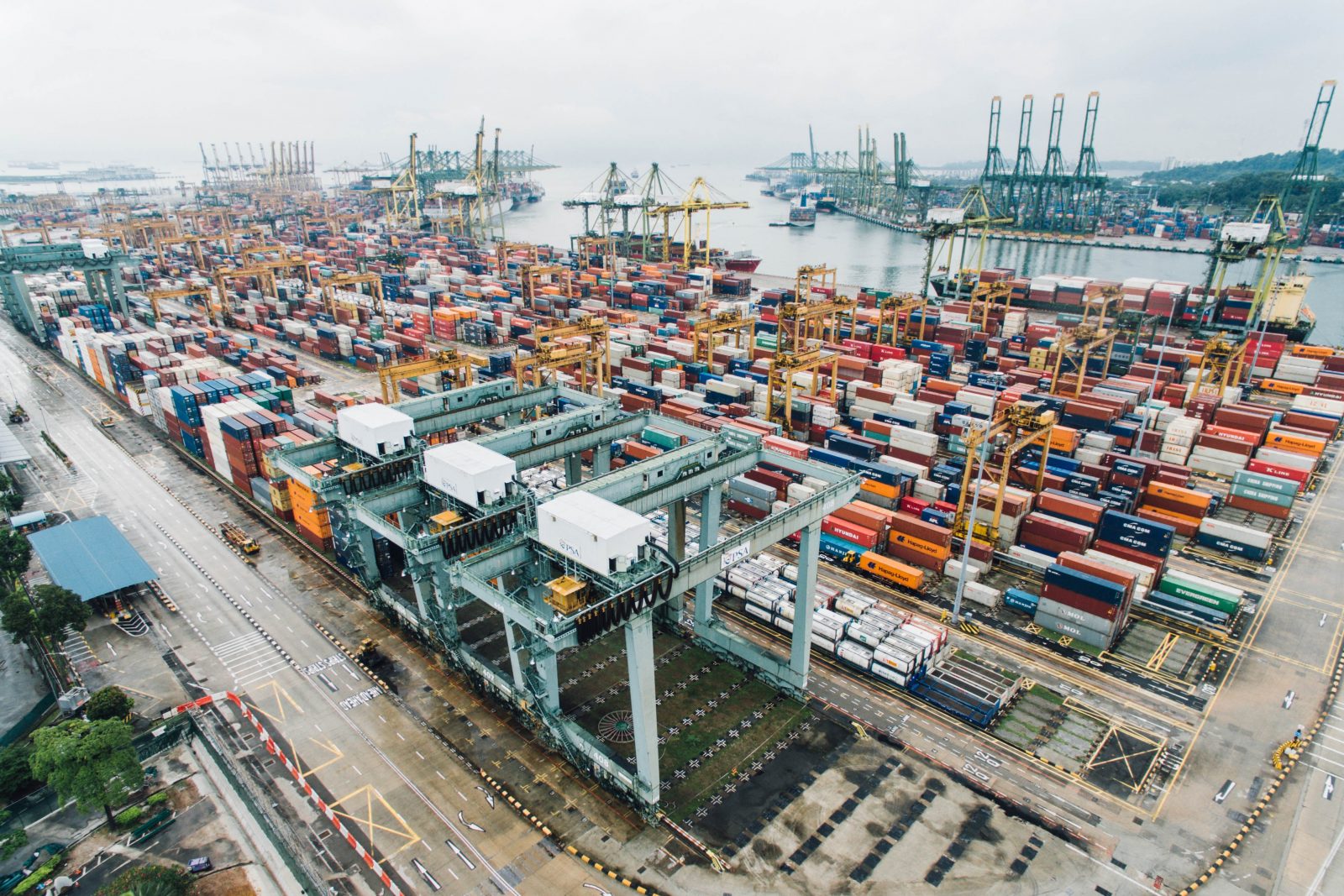
Communities Most Affected by Trade War Remain Behind Trump, Ignoring Economic Policies They Need
Brief #30—Economic Policy
This past week saw automotive giant General Motors (GM) announce it would be closing its Lordstown Ohio plant, as well as four others, in an effort to reduce costs. The effects of this decision will include the loss of 15% of the company’s salaried workforce, totaling over 14,000 manufacturing jobs. The workers who will be left unemployed likely remember the promises that President Trump made to the workers of their industry, specifically that no automobile manufacturing jobs would be lost and rather, more would be created. Like so many of his promises, though, it has been proven hollow.
In spite of all this, it would appear that the workers being outed from the Lordstown plant are remaining steadfast in their support of Trump. According to multiple sources, GM county is seeing numerous workers blaming “corporate greed” for the layoffs and refusing to consider any Trumpian policies. The evidence that his administration’s tariffs have had negative effects on all of America’s leading auto manufacturers is undeniable but many GM workers have refused to consider them as a possible nail in the coffin of their factory jobs. GM has tried to attribute the drastic cost-cutting measures to changing consumer demand and while that has certainly played a part in it, the increased production costs that stemmed from Trump’s tariffs on aluminum and steel cannot be ignored. More than ever, the consumer voters of the rustbelt region of the midwest have demonstrated their commitment to the President they voted for.
During the recent Midterm elections, multiple Democratic Senatorial candidates in red states attempted to leverage the effects of President Trump’s trade war as a method to sway his supporters. This tactic made sense, particularly as in many red states, the economy is likely driven either by agriculture or manufacturing. It is not surprising that Democrats would express concern for the state economies who have felt the effects of the trade war in worse ways that those in urban areas. These candidates included Senators Claire McCaskil of Missouri, Joe Donnelly of Indiana, and Heidi Heitkamp of North Dakota. Both Heitkamp and Donnelly cited the certain tariffs that kept their state’s farmers out of important global trade markets while McCaskil raised the popular example of the Mid Continent Nail Co. in Poplar Bluffs Missouri, a factory about to be forced to close its doors due to Trump’s tariffs on aluminum and steel, the same policies that have wreaked havoc on the automotive industry.
All three candidates, though, were defeated by fairly large margins. These regions included plenty of voters whose jobs have been lost since the start of the trade war but remain unmoved by the evidence against their president’s role in the loss of their jobs.
Analysis
Since the start of the trade war, Trump has pushed the notion that any pain the American people have been feeling in the short-term will ultimately give way to longer-term economic gains. It is more clear than ever that his supporters are willing to suffer through the considerable economic turbulence caused by tariff after tariff despite the evidence that there are no long-term economic gains in sight. Everything from the recent declines in the stock market to the numerous factories closing their doors and cutting low and semi-skilled jobs has indicated that the U.S. economy is far from healthy.
Those with careers in the industry of agriculture should know this better than anyone, particularly those whose chief export is soybeans. Farmers in North Dakota have reported considerable declines in demand for soybeans on the part of the Chinese, one of their primary consumer markets. Even so, 93 percent of the state still supports Trump, who did not hesitate to emphasize the problems caused for farmers by the retaliatory tariffs implemented by China, despite the fact that they were prompted by his own policies.
As problematic as the trade war has proven for red states across the American South and Midwest, it is not the only factor contributing to their economic difficulties. Regional economies across areas such as the rust belt region of the Midwest were struggling for decades before Trump took office. His policies have done plenty accelerate already problematic elements, though, particularly job loss in rural areas. Politico has dubbed this phenomenon the “geography of opportunity,” referring to the trend of people with resources fleeting rural areas and migrating to more urban ones in search of economic opportunity. This migration has caused coveted opportunity and innovation to stay confined to cities and already prosperous suburban areas.
This trend is problematic for a number of reasons, particularly for the overall economic prosperity of our nation. President Trump has done little to help and what he has done, such as doling out $12 billion in government aid to farmers affected by the trade war, has not yielded the necessary results. There are several key policies, though, that might help spur innovation and economic development in rural areas.
Firstly, we should focus on expanding funding for startups and finding new ways to incentivize entrepreneurs and capitalists to build companies in less populated areas. Perhaps a tax break for new companies built in such areas would be more effective than the tax cuts that President Trump granted prominent corporations who are doing more to eliminate American jobs than to create more. A tax break such as the one proposed would likely help draw investment capital to struggling rural and areas and ultimately spur the economic development that such places need.
We should also be rethinking our policies regarding infrastructure. Healthy infrastructure and transportation systems can greatly benefit both public health and regional economies which both contribute to a healthy U.S. economy. The only national focus on infrastructure, though, seems to be in urban areas and densely populated cities. Any solutions that have worked in New York, Los Angeles or Chicago will likely not work throughout the rustbelt region or similarly rural areas. Another problem has been the nature of infrastructure discussion has often swung towards prioritizing special interest groups without giving thought to the real problem of workers who are often unable to relocate to a different area in search of better work. Discussions on infrastructure should cast an eye toward restructuring policy around the needs of America’s workers. In the struggling communities in these areas, though, we often see resources that are not completely developed. All this calls for the need for policies to spur economic development in such places. The right sort of legislature could bring both jobs and positive changes in infrastructure.
The conservative strongholds of the midwest and deep south are seeing even less economic development than their northern counterparts, despite their seemingly undying faith in a leader who has failed to deliver on his promises to them. The economic solutions that their communities need to thrive again are not out of reach by any means but until they refocus their priorities and recognize what is necessary, nothing is likely to change.
Resistance Resources:
- Our Ohio Renewal is a nonprofit organization created to help promoting discussion on matters including economic development in rural Ohio.
- The International Economic Development Council is a nonprofit organization dedicated to helping economic developers and promoting development projects.
- The Appalachian Regional Commission is a United States federal-state partnership that works with people of the Appalachian regions to create opportunities for self-sustaining economic development and improved quality of life
This Brief was submitted by U.S. RESIST NEWS Analyst Samuel O’Brient: Contact: sam@climatescorecard.org
Photo by chuttersnap

State Voter Suppression Tactics Continue Even After The Elections
Brief #72—Civil Rights
Policy Summary
In the aftermath of the 2018 midterm elections which saw the Democratic Party make significant gains with additional seats in the House of Representatives and the number of state governorships, state legislators in four swing states with current Republican majorities have introduced legislation that would impose additional barriers on citizens’ right to vote. And they have also introduced legislation that would curb the powers of the governor and state election boards from making changes to these new laws if implemented.
In Wisconsin, the state legislature introduced bills that would prevent the incoming Democratic governor from modifying the state voter ID law to permit more people to vote. And they introduced a bill to eliminate an early voting period. In Michigan, Republicans introduced a bill that would overturn Election Day registration. In Ohio, Republicans in the state legislature introduced bills that would add additional requirements to amend the state constitution as well as a requirement that signatures on initiatives and petitions are only valid for 180 days. And in North Carolina, the Republicans in that state legislature are trying to pass a bill that would prohibit the Democratic governor from vetoing a new voter ID law that passed on Election Day. LEARN MORE, LEARN MORE, LEARN MORE, LEARN MORE
Analysis: These bills, which came swiftly after Democratic gains on Election Day, clearly show that many Republican politicians are not interested in protecting every eligible voter’s constitutional right to vote. Each proposal has a common theme in that each erects an unnecessary barrier for citizens who want to vote or suggest improvements in providing access to the ballot box.
The proposal in Wisconsin does nothing more but handcuff the new governor from adding additional acceptable forms of ID that people can show when they try to vote. The likely effect is less voters coming to the polls.
The Michigan proposal overturning Election Day registration is in direct contravention of a ballot initiative that was overwhelmingly approved weeks before on Election Day. If voters in Michigan approve of registration of voters on Election Day, why did the state legislature introduce a bill that would overturn that initiative?
Ohio Republicans also tried to defy the will of their voters. A ballot initiative put to the voters approved a constitutional amendment that would make gerrymandering more difficult in Ohio. Yet Republicans in the state legislature responded by changing the rules on constitutional amendments and initiatives – constitutional amendments may now have to meet a higher threshold (60% of voters need to approve now instead of a simple majority) and signatures on initiatives and petitions are only valid for 180 days. This will cause any future initiatives to have a shorter timetable to be approved in Ohio, thus increasing chances of initiatives being defeated before even being placed on ballots for voters to vote on.
And Republicans in North Carolina weren’t to be left out in the rush to try and suppress future voters. Even though federal courts deemed their original voter ID law unconstitutional in 2013, the state put the voter ID law back on the ballot in 2018, which surprisingly got approved by voters. However, North Carolina Republicans are attempting to introduce a bill that would implement the amendment faster than normal so that the Governor cannot veto the amendment. While the result is clearly to suppress voters, the incident in North Carolina is also an issue of the powers of each branch of government and how political parties are manipulating the levers of power to get what they want.
These bills can best be explained with this Twitter post from the MaddowBlog which shows the wide gap in statewide voting and the distribution of state legislative seats. Democrats may have won more than 50% of the popular vote in these states but they are only winning 40% and even less of the total state legislative seats. The bills we have seen seem directed at keeping certain political parties in power at all costs even including ignoring the popular will of the voters. These bills are unnecessary and are blatant power grabs to keep Republican politicians and policies in power despite not even getting a majority of the votes cast statewide. LEARN MORE
Engagement Resources:
- Common Cause – non – profit group focused on ending gerrymandering in the U.S.
- Fair Vote – non – profit group infopage on redistricting and harms of gerrymandering.
- Campaign Legal Center – non – profit group fighting to protect and strengthen the U.S. political process.
This brief was compiled by Rod Maggay. If you have comments or want to add the name of your organization to this brief, please contact Rod@USResistnews.org.
Photo by Arnaud Jaegers