

JOBS POLICIES, ANALYSIS, AND RESOURCES
Latest Jobs Posts
The Week That Was: Global News In Review
Brief #105 – Foreign Policy Brief
by Abran C
Tensions between neighboring states, Venezuela and Guyana have shot up in recent weeks over a long-running territorial dispute.
Situation Update: The War in Ukraine
Brief #104 – Foreign Policy Brief
by Abran C
This winter is likely to see a long and bloody stalemate in Ukraine according to analysts, with neither side backing down from offensives and counter offensives.
Climate Change and World Ski Competition
Brief #103 – Foreign Policy Brief
by Reilly Fitzgerald
Sports are known to be contributors to pollution, and thus to climate change. Sports, such as ski racing are outdoors. As much as it contributes to climate change, and it does contribute, it also is a victim of it too.
Facebook Faces Accusations of Palestinian Censorship Again
Brief #102 – Technology Policy Brief
by Mindy Spatt
Human Rights Watch documented the problem in an October 2021 report, finding that Instagram had removed hundreds of posts about a series of settler attacks on residents…
An Early Look at the 2024 North Carolina Governor’s Race
Brief #113 – Elections & Politics Policy Brief
by Ian Milden
North Carolina has had competitive statewide races in recent years. While Republicans have won more consistently in federal races, Democrats have managed to win some of the statewide offices, such as the Governor’s office, on a consistent basis.
Redistricting and Gerrymandering Effects
Brief #112 – Elections & Politics Policy Brief
by Inijah Quadri
The impact is profound: elections become less competitive, voter disillusionment rises, and elected officials face less accountability.
Republicans Bash Republicans
Brief #111 – Elections & Politics Policy Brief
by William Bourque
The GOP can’t seem to keep members in line or maintain a united front on anything, which makes it hard to imagine they have any chance of keeping the House or flipping the Senate. As always, we expect the presidency to be close…even if Trump runs from behind bars.
A Palestinian Prisoner’s Experience
Brief #102 – Foreign Policy Brief
by Aziza Taslaq
In Jenin, a resilient city in the West Bank, we find Ahmad, a soul molded by the complexities of life and the echoes of a turbulent past.
The History of the Israel-Hamas War Thus Far
Brief #101 – Foreign Policy Brief
by Abran C
Israel’s war on the strip has resulted in the deaths of over 13,000 Palestinian civilians, with thousands more missing and believed to be…


The Teacher Shortage is Bad. Education Culture Wars are Making it Worse
The Teacher Shortage is Bad. Education Culture Wars are Making it Worse
Education Policy Brief #87 | By: Rudolph Lurz | September 21, 2023
Photo taken from: richmond.com
__________________________________
This fall, schools around the country opened their doors. Parents took pictures of their smiling children on the first day of school. When these kids arrived for their first day, many were greeted by a substitute teacher. Dozens of districts began the school year with unfilled teaching positions. DeKalb County in the metropolitan Atlanta area had over 200 unfilled positions as the school year began. Neighboring Cobb County had a similar number of vacancies before a hiring blitz of over 500 new teachers in the last month of summer vacation allowed them to begin the year fully-staffed. Broward County in Florida had over 800 vacancies a week before the school year began, and held a last-minute job fair in a desperate attempt to fill them. Travis County in Texas also held a hastily-planned job fair just before the start of the school year in an attempt to fill over 500 vacancies.
These are not aberrations, but rather the norm. In town after town, district after district, students are starting school with either a substitute or a brand-new teacher hired days beforehand without prep time for the upcoming year. School administrators simply cannot fill the open positions. Special education teachers, along with qualified math and science instructors, are in especially short supply. Given the fact that schools are legally obligated to provide instruction for students with individualized education plans (IEPs), this shortage is especially stressful for district administrators and building principals. Even when districts find qualified candidates, nearly 50% of new teachers leave the profession within five years. That means that for the lucky districts that are able to fill their positions, they will spend thousands of dollars helping new teachers with onboarding, licensing assistance, and professional development, just to do it all again in a very short time span.
In this climate of labor shortage, many GOP-run states are exacerbating the issue by pursuing culture wars against educators. Powerful advocacy coalitions such as Moms for Liberty, a group recently labeled as an extremist organization by the Southern Poverty Law Center, are pushing a radical education agenda that includes pulling nearly 2500 books from school libraries and stifling classroom instruction on painful topics such as slavery and segregation. Policy actors have proposed stiff penalties such as revoking licensure and even felony charges for teachers who do not adhere to these measures. This has resulted in a chilling effect on anything that could be considered even remotely controversial in the classroom. In such a toxic atmosphere, it is no surprise that teachers are leaving the profession and applications have slowed to a trickle on district job boards.
Analysis
When I served as a legislative intern in the Pennsylvania State Senate in 2014, the concern among GOP lawmakers was that there were too many Pennsylvanians graduating with education degrees and not enough positions available for them. There was a big push to guide these students into STEM (Science, Technology, Engineering and Mathematics) majors which conceivably had better job prospects after graduation. At the time, each job posted in most Pennsylvania districts would have dozens of applicants, resulting in a ton of work for district HR departments to try to sort through them all. With an average teacher salary of over $70,000 per year, Pennsylvania ranks just outside the top ten in the nation for teacher pay. Lawmakers were upset, perhaps understandably, that Pennsylvania was putting in the resources to train new teachers that were leaving the state after graduation to go to Maryland, New York, Ohio, or Virginia.
Teaching was difficult in the 2010s. I have been in the profession since I graduated from the University of Florida with my Master’s degree in 2007. The challenges, however, were predictable. Attacks on teachers were normally centered on student performance on standardized assessments. The common charge was that public schools were failing their students and parents should be able to take their kid’s allotted per-pupil funds and use that as a voucher towards the tuition of the private school of their choice, or, at the very least, be given the freedom to choose a different public school in the district.
I can talk with other educators and parents about school choice and vouchers. That’s a different dialect of the same common language of education. I can talk about incentivization of teacher pay and whether or not high-stakes testing accurately represents student learning. These conversations make sense to me because one can argue logically in support of them. I can respect opposing viewpoints, even if I disagree with them. I was annoyed at times in the 2000s and 2010s, but I never considered leaving the profession because of what policy actors and/or parents said about education.
The atmosphere is different now. The question is no longer whether or not teachers are failing students. Now it is whether or not teachers are corrupting students. The rhetoric of organizations such as Moms for Liberty insinuates that educators are somehow brainwashing children into embracing the LGBTQ+/CRT/so-called “woke” agenda.
In my career, I taught students who supported President Bush, President Obama, Senator Kerry, Senator McCain, then-Governor Romney, President Trump, President Biden, and numerous third party candidates. I was able to communicate with parents of wildly different viewpoints because my classroom was not a politically-charged battlefield. I also maintained a position of political neutrality as an instructor, because I felt it was inappropriate for me to preach my own views from my role as an authority figure. I served as an impartial moderator and created a classroom climate that emphasized respect and civility, while also making arguments and defending them with evidence.
Nowadays, declaring neutrality does not necessarily protect teachers. If students even have the perception of bias or feel uncomfortable during a class discussion, and tell their parents about it, then suddenly I can find myself in trouble with the state.
All it takes is the perception of controversy to ignite a firestorm. A teacher in Brooksville, Florida found herself under investigation because she played a Disney movie in her classroom that included an LGBTQ+ character. A student told his mother about it and the controversy eventually found its way to the national news. The school board meeting to discuss the topic lasted several hours. The teacher was reprimanded and advised not to show film clips without explicit administrative approval, but was allowed to keep her job.
That small vignette demonstrates the chilling effect I previously discussed. If a single student or parent can spark a firestorm that threatens my entire career, what is the logical recourse for educators?
Avoid anything with even a hint of controversy. Create a classroom that is so bland and vanilla that no one’s feelings could ever be hurt.
The creation of such a classroom environment results in an education that is not only boring, but also bad.
This does not promote critical thought. This does not promote innovation. Good teaching in fields like social studies and literature will take students to potentially uncomfortable topics. The world is an uncomfortable place. If schools just train students to memorize useless trivia and regurgitate it on state-mandated exams, then graduates will not produce the innovation needed to drive the 21st century economy.
88% of teachers in a recent survey noted that education was becoming too politicized, with 82% stating that educators were becoming targets of political attacks.
How can districts attract and retain quality teachers in such a climate?
How can graduates learn the necessary skills to drive economic growth in a chilled classroom environment that does not teach them how to think critically? Or how to debate opposing viewpoints in a civil manner?
If this culture war continues, the result will be an exacerbated teacher shortage and negative educational outcomes for students.
If educational excellence is the goal, then it’s time for a peace conference to end the culture war. If teacher recruitment and retention is the goal, perhaps policy actors should let teachers teach.
Engagement Resouces:
- U.S. Department of Education-Certification requirements by state: https://www2.ed.gov/teachers/jobs/reqs/edpicks.jhtml
- Teaching positions available on Indeed’s job board: https://www.indeed.com/jobs?q=teaching&l=&vjk=8b5a43a8a1a08859

Do Students and Educators Benefit from Bringing Yoga to Schools?
Do Students and Educators Benefit from Bringing Yoga to Schools?
Education Policy Brief #86 | By: Yelena Korshunov | September 20, 2023
Photo taken from: yogabasics.com
__________________________________
According to recent findings, 45% of students in high school admit to being stressed almost every day in school, and 61% of teenagers between the ages of 13 and 17 feel stress over obtaining satisfactory grades. According to the American Institute of Stress, 80% of college students experience stress in their daily lives. 44% of K-12 teachers reported that they are burned out. What can the education programs do to reduce our children’s stress and educator’s burnout? Maybe yoga breathing and relaxation practices in schools could bring relief?
The nationwide concern over childhood stress, especially during the pandemic, promoted an increase in the number of researches that have come out within the last decade exploring the benefits of yoga and mindfulness for children and youth. Multiple studies continue to bring evidence that yoga, including relaxation skills and breathing practices, help cultivate both students’ and educators’ social, emotional, and physical health, as well as academic success and a positive school climate.
The Feasibility and Preliminary Outcomes of a School-based Mindfulness Intervention for Urban Youth study arranged a trial of 97 fourth- and fifth-graders assigning some students to participate in a mindful yoga program that met four days per week for 45 minutes. Compared to attending school as usual, 12 weeks of mindful yoga led to significant reductions in students’ problematic responses to stress, such as experiencing repetitive negative thoughts and strong, intrusive emotions. The Effectiveness of a School-Based Yoga Program on Adolescent Mental Health, Stress Coping Strategies, and Attitudes Toward Violence: Findings From a High-Risk Sample study tasked 49 urban high school students to participate in a semester-long yoga and mindfulness program several days per week. By the end of the term all students reported significant reductions in their anxiety. The Promoting Stress Management and Wellbeing in Educators: Feasibility and Efficacy of a School-Based Yoga and Mindfulness Intervention research published in 2015 suggests that providing educators with training in yoga- and mindfulness-based skills may have beneficial effects for educators, including increases in calmness, mindfulness, well-being, positive mood, improvements in classroom management, emotional reactivity, physical symptoms including blood pressure and cortisol awakening response, and decreases in mind and body stress. The research confirms that providing teachers with skills and practices to enhance their own self-care is a crucial step toward improving classroom climate, teacher effectiveness, and student outcomes.
In the near future New York City is planning to bring breathing practices to all public schools for students from pre-K to 12th grade. Schools will soon be required to facilitate daily two to five minutes of mindful breathing. The aim of this initiative is to increase students’ physical and mental health, enhance social-emotional learning, and overall improve actively criticized public schools’ culture. In March 2023, the NYC Department of Education began to roll out a professional development program to train educators and other school staff in the implementation of mindfulness breathing practices and tools that can be used in the classroom. Undoubtedly, 2 to 5 minutes of breathing practice is better than nothing, however New York City should’ve taken in consideration the experience of the other schools that found a chance to dedicate longer time for daily breathing exercises.
At a number of schools all over the country, from San Francisco to DC, yoga in the classroom has already been implemented for years reporting significant positive effects on students’ learning and well-being. Edmunds Elementary, an urban school in Des Moines, Iowa, proudly reports that yoga is on their daily schedule. They believe that morning breathing practice, yoga-based movement, and mindful meditation help students bring their attention to the present moment and prepare them for learning activities throughout the day. As a morning routine, every classroom in the school begins the day with a “Be Well” discussion about topics such as gratitude, good citizenship, being a peacemaker, and getting enough sleep. After lunch, the lights are dimmed and soft music plays as students return from recess for 10 minutes of quiet mindfulness and reflection activities, such as journaling, coloring, or listening to a guided relaxation story. According to the school reports, since they implemented this practice, the test scores increased by more than 18% while the number of students being sent to the office decreased by more than 66% over two years. The school’s principal notes that since they adopted this routine everyone is feeling a greater sense of community, connectedness, and engagement in school.
Based on multiple research findings and practical implementation of yoga and mindful breathing in school, the children’s ability to relax has a significant impact on their cognitive development and health. By engaging in relaxation techniques, young people improve their mental state which, in turn, enables them to cope with stress in a healthy manner, strengthening their mental and physical state. It wouldn’t be out of reach to assume that this practice is anticipated to cause a sustained global effect on the nation’s health and well-being as children and youth will bring these relaxation strategies into their adulthood as a life-long healthy habit and stress relief.

Can the 14th Amendment’s Birthright Citizenship Rule be Overturned?
Can the 14th Amendment’s Birthright Citizenship Rule be Overturned?
Civil Rights Policy Brief #212 | By: Rodney A. Maggay | September 18, 2023
Photo taken from: teachingamericanhistory.org
__________________________________
Section One of the Fourteenth Amendment to the United States Constitution provides: “All persons born or naturalized in the United States, and subject to the jurisdiction thereof, are citizens of the United States and of the State wherein they reside.”
In 1898, the United States Supreme Court decided the case United States v. Wong Kim Ark. In a 6 – 2 decision that examined the Citizenship Clause of the Fourteenth Amendment, the Court held that a person born within the geographic boundaries of the United States acquires U.S. citizenship even if the person’s parents are foreign nationals of another country. (There are limited exceptions for children born within the U.S. whose parents are diplomats working in the U.S.). The case concerned the birth of Wong Kim Ark, who was born in San Francisco to Chinese parents who were not U.S. citizens. Wong Kim Ark grew up in San Francisco and then traveled back and forth numerous times between San Francisco and China. On a return trip to San Francisco, Wong Kim Ark was denied re-entry to the United States on the grounds that he was not a U.S. citizen. A lawsuit was brought which eventually was appealed to the United States Supreme Court. The Court’s decision decided that Wong Kim Ark acquired U.S. citizenship when he was born in San Francisco and established the precedent that persons born in the United States automatically acquire U.S. citizenship. This has been the current rule of birthright citizenship in the U.S. for more than a century.
On September 8, 2023, United States GOP presidential candidate Vivek Ramaswamy declared that he would deport children born in the United States of parents who are illegal aliens because of his disagreement with the Fourteenth Amendment’s birthright citizenship rules under the Citizenship Clause. Other GOP presidential candidates have taken a similar position. Former President Trump announced in May 2023 that he would end birthright citizenship by executive order on his first day back in office. Florida Governor Ron DeSantis has pledged, as part of his immigration plan, to end birthright citizenship. And Florida Representative Matt Gaetz in April introduced a bill in the House that would end birthright citizenship if passed. LEARN MORE
Policy Analysis: The issue of birthright citizenship and whether it should still be a current rule of American citizenship has been under debate for a number of years. Historically, some states tried to revive the issue and introduce a bill in the state legislature to curtail or eliminate birthright citizenship but none have been successful. The reason the idea has become popular with GOP candidates is because immigration has become an attractive issue for the GOP’s base and by offering a solution, GOP candidates can expect to attract more voters to their campaign.
However, there is one problem with the way the GOP has approached the issue of birthright citizenship. Former President Trump and others have pledged to eliminate the rule with an executive order if they are elected. But this is quite simply impossible to do. The Wong Kim Ark Supreme Court case in 1898 definitively addressed and ruled on the issue. A President or a candidate to claim that they can end or overturn a Supreme Court ruling with only an executive order must not have an understanding of how legal precedents work and the hierarchy built into legal rulings, especially from the Supreme Court, the highest court in the land. If any President could simply overturn any decision at the stroke of a pen, it would cause legal chaos and allow a President to nullify any Supreme Court ruling at his or her whim, which is not what the Founding Fathers intended with the Constitution. What is likely going on is that these GOP candidates are looking for a way to appeal to and attract more voters and they are doing this by focusing on immigration, even if their proposals to end birthright citizenship with an executive order cannot legally be done.
However, the bill introduced by Representative Matt Gaetz is a little more problematic. If the rule laid down by the Supreme Court in the Wong Kim Ark case can be overturned, a vote by Congress is one way it could happen. An amendment to the Constitution was floated but the requirements to amend the Constitution are extremely high so that course is nearly impossible. (A constitutional amendment requires a two-thirds vote for the amendment in both houses of Congress and then approval by three – fourths of the states). However, Congress has sometimes voted to overturn a Supreme Court ruling, which it has the power to do, by enacting new legislation that is contrary to the Supreme Court decision. It does not happen often but does occasionally, usually if there is bipartisan support to vote to overturn the ruling. (The Religious Freedom Restoration Act of 1993 was passed in response to and to overturn the Court’s 1990 decision Employment Decision v. Smith). The sharp divisions in Congress now make it unlikely that Rep. Gaetz’s bill will be passed but it still should be noted that the issue of birthright citizenship is still a significant issue with the GOP. Whether their proposals are legally silly (elimination through executive order) or pursued through proper channels, birthright citizenship will likely be a talking point in the run up to the 2024 election. LEARN MORE
Engagement Resources:
- History – popular channel’s article on the history of birthright citizenship.
- Smithsonian Magazine – historical article on birthright citizenship with more personal details on the Wong Kim Ark case.
This brief was compiled by Rod Maggay. If you have comments or want to add the name of your organization to this brief, please contact rodwood@email.com.

The Women’s Health Protection Act of 2023: An Effort to Push Back on the Supreme Court Dobbs Decision
The Women’s Health Protection Act of 2023: An Effort to Push Back on the Supreme Court Dobbs Decision
Health and Gender Policy Brief #164 | By: Carlos Avalos | September 18, 2023
Photo taken from: cnn.com
__________________________________
Bill H.R. 12, entitled the Women’s Health Protection Act of 2023 was introduced on 03/30/2023 by California Representative Judy Chu from the 28th District. On 4/7/2023 the bill was referred to the subcommittee on Health. Many times, after a bill is introduced, it is sent to a subcommittee for review and analysis. This is called the mark up period. Bills in the House of Representatives can only be released from committee with a proper committee vote by a discharge petition signed by most of the House sub-committee membership.
The Composition of a subcommittee is members who have expertise in a specific area of public policy, in this case it would be health care. There will most likely be hearings in the subcommittee on H.R. 12 being that the topic of Women’s reproductive rights is such a heavily debated American topic and partisan issue in Congress there is a very good chance the bill won’t leave the subcommittee on health care. For these same reasons and others, it might take months or more than a year for it to leave the House chamber and have the potential to enter the Senate.
This bill prohibits governmental restrictions on the provision of, and access to, abortion services. Specifically, before fetal viability, governments may not restrict providers from using abortion procedures or drugs, offering abortion services via telemedicine, or immediately providing abortion services if delaying risks the patient’s health. Fetal liability is the ability of a human fetus to survive outside the uterus. H.R. 12 makes it so, governments may not require a provider to perform unnecessary medical procedures, provide medically inaccurate information, or comply with credentialing or other conditions that do not apply to providers whose services are medically comparable to abortions. H.R. 12 also makes it so governments MAY NOT (1) require patients to make medically unnecessary in-person visits before receiving abortion services or disclose their reasons for obtaining such services, or (2) After fetal viability, governments may not restrict providers from performing abortions when necessary to protect a patient’s life and health. The Department of Justice, individuals, or providers may sue states or government officials to enforce this bill, regardless of certain immunity that would otherwise apply.
Analysis
The impetus to this bill is debatable but seems to center around a few key moments in recent American History. The first one being in the SCOTUS decision in Dobbs v. Jackson Women’s Health Organization. This decision stripped away the constitutional right to abortion established in Roe v. Wade and reaffirmed in Planned Parenthood v. Casey, and paved the way for states to ban abortion outright.
In 2018, Mississippi passed a law called the “Gestational Age Act,” which prohibits all abortions, with few exceptions, after 15 weeks’ gestational age; about two months earlier than Roe and later decisions allow. Jackson Women’s Health Organization, the only licensed abortion facility in Mississippi, and one of its doctors filed a lawsuit in federal district court challenging the law and requesting an emergency temporary restraining order (TRO). The legal question asked in Dobbs v. Jackson Women’s Health Organization was “Is Mississippi’s law banning nearly all abortions after 15 weeks’ gestational age unconstitutional”? The SCOTUS OPINION authored By Samuel Alito stated, “the Constitution does not mention abortion, the right is neither deeply rooted in the nation’s history nor an essential component of “ordered liberty.”
Further stated in the opinion was the notion that “the Constitution does not confer a right to abortion; Roe v. Wade, 410 U.S. 113, and Planned Parenthood of Southeastern Pa. v. Casey, 505 U.S. 833, are overruled.”
Nearly 51 years ago SCOTUS legalized abortion in the U.S with its decision in Roe v. Wade. In this watershed moment and landmark decision, the Supreme Court established a constitutional right to abortion. This ruling struck down laws in many states that barred abortion, declaring that they could not ban the procedure before the point at which a fetus can survive outside the womb. Many states, since the Dobbs v. Jackson Women’s Health Organization decision, have reverted back to the pre-Roe days and implemented a total or severely excessive ban and curtailment on a women’s right to choose and women’s reproductive rights.
The Bill will have a hard time to pass the House where the Republicans have a majority. This Bill does have an OUTSIDE chance to pass the Senate and bestow hope for abortion rights nationally that has been curtailed after fifty years of reproductive progress. Currently in the U.S Senate there are 48 Democrats in the Senate and 49 Republicans with 1 Independent undeclared caucus affiliation, but the Democrats do have the ever so slight majority. Anything is possible in U.S politics and the bill could die in the Senate for a host of reasons. It could be talked to death by the ever-popular tactic of the Filibuster. Or some right leaning democrats might believe the bill is extreme like they did in H.R. 8296 and vote not according to party lines.
Most Americans do believe that abortion should be legal, at least in certain circumstances, and that it is in fact the women and only the women’s choice to make about her reproductive health. It should be noted, according to Gallup’s May 2023 update on Americans’ abortion views, 34% believe abortion should be legal “under any circumstances,” 51% say it should be legal “only under certain circumstances,” and 13% say it should be illegal in all circumstances.
Engagement Resources:
- National Right To Life is the nation’s oldest and largest pro-life organization protecting all life. The Center for Reproductive Rights has been fighting for a women’s right to decide what happens to their bodies for 30 years.

The Medium is the Manipulation, Part 1: Misusing Campaign Ads to Fight Legal Battles
The Medium is the Manipulation, Part 1: Misusing Campaign Ads to Fight Legal Battles
Elections & Politics Policy Brief #94 | By: Steve Piazza | September 14, 2023
Photo taken from: news.yahoo.com
__________________________________
This series looks to explore the extent to which campaign ads and speeches as well as policy setting of political candidates employ deliberate strategies of disinformation and fallacy to not only discredit their political opponents but also add to the continued abusive miseducation of the U.S. populace and thus further increase the national divide. Campaign ads are not in and of themselves policy, but their message reflects a candidate’s or party’s policy of sorts, namely on how far it is willing to go to get what it wants.
Summary
What do Alvin Bragg, Jack Smith, Letitia James, and Fani Willis all have in common? Looking at their résumés, they all are members of the justice system. More specifically, their current titles are Manhattan District Attorney, Special Counsel for the United States Department of Justice, Attorney General of New York, and Fulton County District Attorney, respectively.
But if one only gets their information from a recent Donald Trump presidential campaign ad, they might be led to think that they are a “radical liberal New York prosecutor,” a prosecutor of “innocent Republican officials,” a “Socialist,” and “President Biden’s newest lackey,” also respectively. In fact, the ad refers to them as “The Fraud Squad.”
It is the platform, or policy, of the Trump campaign, and by association, the Republican Party, that the use of deceptive tactics is an appropriate means to a partisan end and is justified regardless of the harm it may cause to individuals, not to mention the overall justice system.
Analysis
Campaign advertising is hardly something new to this country. Political commentary on candidate platforms and opponents has appeared in speeches, journalistic prose, and cartoons for over two hundred years.
Neither is the use of negative campaigning novel, as even presidential candidates throughout the years have been branded adulterer (e.g. Andrew Jackson), traitor (e.g. Abraham Lincoln), and popish stooge (e.g. Martin Van Buren). Even attacking their families was not off limits.
Jump to today and not much has changed, besides how the increased reach of advanced media and technology has made political messaging ubiquitous. Muckraking is still too often the norm, and the more egregious the better, with any real basis in reality considered counterproductive.
2024 promises much of the same, as the recent Fraud Squad ad epitomizes. This tight, 60-second spot starts out simply enough by momentarily discrediting Trump’s key opponent, but that promptly reveals itself to be nothing more than an obtrusive red herring. After only 11 seconds, the attention abruptly turns to the four other subjects being spotlighted here, people who are not even political opponents he’s competing against but existing public officials taking legal action against him.
In other words, Trump is attempting to use a campaign for the U.S presidency to counter his mounting legal troubles. The legal process is being alarmingly conflated with his ambition for office, when the two cannot be any more disparate.
What may itself seem harmless coming right out of the school of commercial advertising and checking many technique boxes, one cannot avoid questioning the ad’s deceptive intent:
- Emotional response: The subjects, three out of four who happen to be African-American, are displayed while narrative tones designed to instill fear, skepticism, and hatred are audible.
- Body language: None of the public servants’ are pictured standing square to the audience or even looking directly in the eye of the viewer, which can lead to a sense of mistrust.
- Facts and statistics: The majority of the quotes come from highly biased sources (The Federalist, The Daily Mail, Washington Times), are taken out of context, and/or are just plain false.
The first two might be employed for their subtlety, and can be highly inflammatory. The last is clearly a blatant attempt to factually mislead . For example, the quote that’s heard about D.A. Bragg refusing to prosecute violent criminals is not even backed up by any source, and in fact is spoken over an entirely different quote about him releasing violent criminals while investigating Trump. In reality, his office promises to put more resources into fighting violent crime as per a memo on the Manhattan DA website.
This ad does not quite, though almost, employ subliminal advertising, which at one time was illegal. But showing one set of words and narrating another is no accident and is a powerful way to distract or confuse viewers into thinking something factual and substantive has been experienced.
Nonetheless, 90% of the ad is discrediting individuals who are doing their jobs upholding justice. It’s clear that this is about attempting to get people to lose faith in the justice system as the process plays out. Such misguided tactics become necessary when the intent is the indefensible rule of a majority by a desperate minority.
This gives credence to the argument that the former president is running again just so he can game the system to obtain the most votes and leave his legal problems behind. It conveys a concern more for his legal issues than the stability of the country. He’s also been accused of attempting to bring disorder and chaos into government institutions, and some will view this type of messaging as one more example where he is doing both.
Engagement Resources:
- Contact the Election Protection Hotline if you think there’s disinformation in a political ad: https://866ourvote.org/
- Legislation, like the proposed Deceptive Practices and Voter Intimidation Prevention Act of 2018 to protect the public from information and propaganda, are needed.
- The Algorithmic Transparency Institute brings people and groups together to combat misinformation. You can find more information by clicking here.
- Political speech is protected by the First Amendment, but who pays for the ads can be confusing. Media outlets are required to be transparent as to the funding behind them, so for more information on what must be filed with the government, you can visit the Federal Communication Commission’s Public Inspection Files site: https://publicfiles.fcc.gov/

Situation Update: The Ukraine Crisis
Situation Update: The Ukraine Crisis
Foreign Policy Brief #90 | By: Abran C | September 13, 2023
Photo taken from: foreignpolicy.com
__________________________________
Kim Jong Un and Putin meet
North Korean leader Kim Jong Un recently arrived in Vladivostok, Russia, for talks with President Vladimir Putin. The North Korean leader does not travel abroad frequently, making just seven international trips and twice stepping across the inter-Korean border in his 12 years in power. US officials say that the talks between the two heavily sanctioned nations are likely to discuss providing Russia with weapons for the war in Ukraine in exchange for food, fuel, and nuclear weapons secrets to North Korea. Though Pyongyang and Moscow have denied that North Korea would supply arms to Russia, which has expended its once vast stocks of weapons after more than 18 months of war. The North Korean delegation includes prominent members of the party who handle defense industry and military affairs, including Munitions Industry Department Director Jo Chun Ryong, an analyst said, which suggests the visit will focus on defense industry cooperation.On Monday, Washington renewed its warnings to Pyongyang not to sell arms to Russia that could be used in war, and the US State Department said any transfer of arms from North Korea to Russia would violate UN Security Council resolutions, which ban any arms transactions with North Korea.
Drone attacks and air strikes
Last week the Russian defense ministry said that it had shot down three Ukrainian drones on their way to attack Moscow. Drone attacks on Russian territory have become an almost daily occurrence in recent weeks and disrupted flights in and out of Moscow as well as caused damage to residential and commercial properties in the capital city and other parts of the country. The governor of Russia’s southern Belgorod region, which is near Ukraine and now comes under frequent attack, recently said a drone had hit a sanatorium in a village, while another had been shot down. It was the latest in a surge of similar incidents, and once again forced Moscow’s airports to briefly suspend flights as a precaution. While Russian state television has largely played down the strikes, instead reporting on the success of shooting down enemy aircraft and highlighting Russian attacks in Ukraine. Meanwhile late last week several people were killed and scores wounded in Russian air strikes in different locations in Ukraine, including a deadly attack in which a missile struck the village of Odradakamianka in the southern Kherson region
Death of Prigozhin
Two months ago, Wagner mercenary leader Yevgeny Prigozhin mounted a mutiny against Russia’s military, leading his mercenaries away from the war in Ukraine and turned toward Moscow. President Vladimir Putin decried his actions as treason and vowed punishment for those involved. Though the Kremlin instead strangely cut a deal with Prigozhin, saying he would be allowed to walk free without facing any charges if he were to resettle in Belarus. The question remained, however, about whether Prigozhin eventually would face consequences for the brief uprising that posed the biggest challenge to Putin’s authority in his 23 year rule. Late last month Prigozhin and his top lieutenants died in a plane crash. A preliminary US intelligence assessment concluded that an intentional explosion caused the plane to crash. The Kremlin has rejected these claims as a “complete lie”.Now with Prigozhins death and Wagner without its leader, fighters were offered a few options: to retire or enlist in Russia’s regular army and return to Ukraine as Russia looks to supplement its regular military ranks with fighters from the mercenary group.
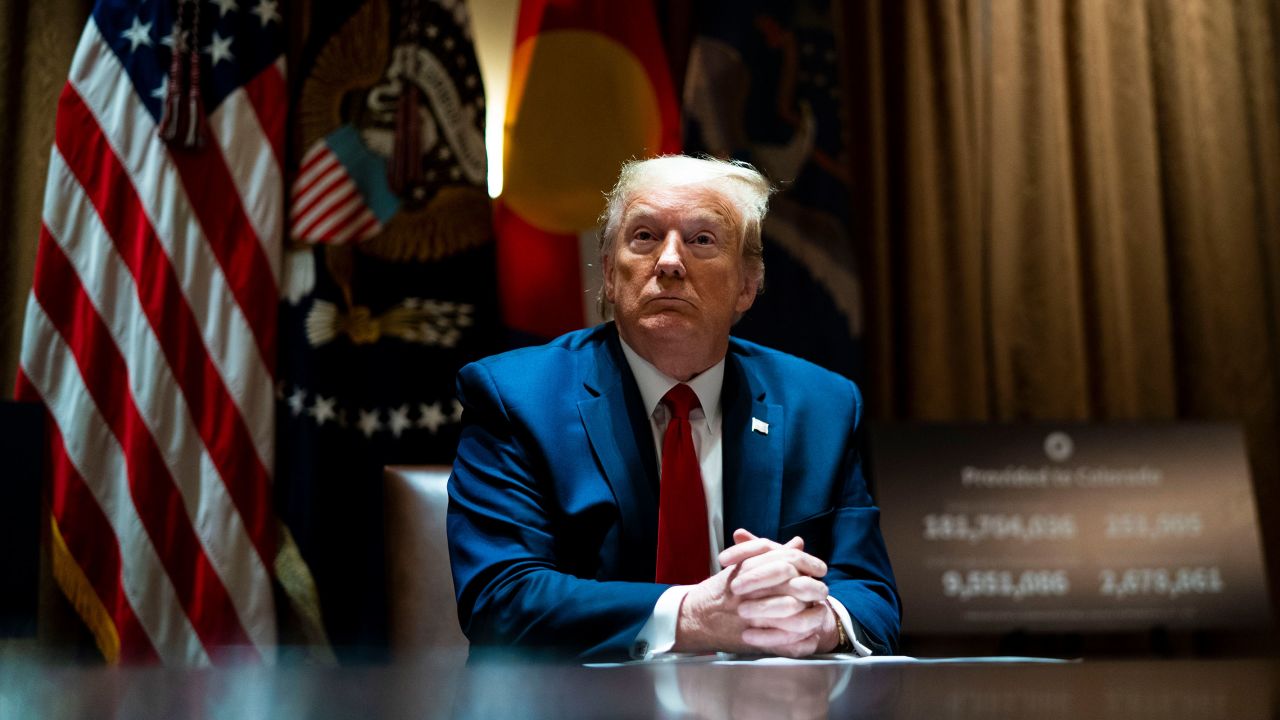
Is Trump Barred From The 2024 Ballot By The Constitution’s Disqualification Clause?
Is Trump Barred From The 2024 Ballot By The Constitution’s Disqualification Clause?
Civil Rights Policy Brief #211 | By: Rodney A. Maggay | September 13, 2023
Photo taken from: cnn.com
__________________________________
Section 3 of the Fourteenth Amendment to the United States Constitution provides:
“No person shall be a Senator or Representative in Congress, or elector of President and Vice-President, or hold any office, civil or military, under the United States, or under any State, who, having previously taken an oath, as a member of Congress, or as an officer of the United States, or as a member of any State legislature, or as an executive or judicial officer of any State, to support the Constitution of the United States, shall have engaged in insurrection or rebellion against the same, or given aid or comfort to the enemies thereof.”
On January 6, 2021, rioters stormed the U.S. Capitol building during the official certification of the electoral votes that was being presided by Vice – President Mike Pence. The certification would have declared Joe Biden the winner of the 2020 election over President Donald J. Trump. President Trump had previously rallied the crowd to march to the Capitol to try to persuade the Vice – President to reject some electoral slates from certain states in order to delay certification of Biden’s win. After the crowd marched to the Capitol and demonstrated outside, they became unruly and violently entered the Capitol building. The crowd smashed windows, broke down doors and forced their way through barriers forcing a temporary suspension of the certification proceedings and forcing Members of Congress and their staff to retreat for their own personal safety. Persons in the mob were heard chanting “Hang Mike Pence!” After a few tense hours, the Capitol building was cleared and Members of Congress were escorted back inside where the certification of electoral votes continued, ultimately ending with Joe Biden being officially declared the winner of the 2020 election.
Subsequently, hundreds of persons who were part of the mob that violently entered the Capitol to disrupt the certification proceedings were criminally prosecuted and handed varying sentences, including one person being sentenced to seventeen years in prison. Since leaving office, Donald Trump has been indicted four times although only one of those concerns the events of January 6, 2001. (The other indictments are about Trump’s business dealings, his handling of classified U.S. documents and Trump’s efforts to overturn the votes in Georgia about the 2020 election.) LEARN MORE
Policy Analysis: While Donald Trump is in serious legal jeopardy on numerous charges across numerous states, a legal scenario is being actively discussed that could bar Donald Trump from appearing on the ballot in a number of states as a 2024 presidential candidate. Could Donald Trump be barred based on the U.S. Constitution’s 14th Amendment “Disqualification Clause?”
The text of Section 3 of the 14th Amendment is clear although legal scholars are split in their opinion as to whether the clause can be applied to the former President.
One legal theory states that the clause does not apply to Mr. Trump because the clause was aimed at former Confederate soldiers and politicians. The clause was added in the aftermath of the Civil War to prevent former Confederates from holding office and possibly trying to subvert the United States again if they were to become officers or politicians of the government again. The legal theory goes that since the clause was intended only for those persons in the mid – nineteenth century, the clause does not apply to anyone else. However, this is a strict reading of the text that would render the clause obsolete in today’s modern world if it only applied to persons alive in the late 1800’s.
Today, many groups in a number of states are looking to clarify the application of the 14th Amendment’s Section 3 with lawsuits, petitions and other legal avenues. In New Hampshire, Secretary of State David Scanlan recently requested legal guidance from the New Hampshire Attorney General’s Office about whether Trump can be allowed on the ballot. In Colorado, six Republicans and other voters, represented by Citizens for Responsibility and Ethics in Washington (CREW), filed a lawsuit looking to bar the Colorado Secretary of State from allowing Trump on the ballot in 2024. And in Florida, another lawsuit was brought to bar Trump from the 2024 ballot although that case was dismissed on procedural grounds. It is becoming clear that Section 3 of the 14th Amendment is going to become a focal point about whether the former President is going to have a shot at winning in 2024.
But application of the clause to Trump is still up in the air and the courts are going to have to decide, even if it goes all the way to the Supreme Court. While it is not clear how the courts will decide, some clues have begun to emerge. In New Mexico, the disqualification clause was used to remove a county commissioner from office based on his presence at the January 6th riot. This has been the only successful removal of a person from office based on the Disqualification Clause since 1869 and illustrates that the clause can be used in modern times to prohibit a person from holding office after participating in an insurrection. Additionally, that court declared that the incident of January 6th was an insurrection. That is key because some right wing news sites have tried to change the narrative by calling January 6th something else, like a peaceful protest, when it clearly was not. With a court already declaring the events of that day an insurrection, the ruling provides legal support that President Trump caused an insurrection and makes it more difficult to evade the specific words contained in the Disqualification Clause.
However, some have pointed out that Trump has also not been charged with causing an insurrection or rebellion. His charges are only for conspiracy. If a court were to follow a strict interpretation of words, they could require a person first be charged or convicted of actual incitement of insurrection or rebellion before being barred under the Disqualification Clause. Being charged with conspiracy or rebellion are separate and distinct crimes and it is possible a court could find being charged for conspiracy, like Trump, does not meet the wording contained in the clause. Right now, this is all speculation and a court will have to weigh in and clarify how the clause applies and whether it applies to Trump or not. And in a number of states the race for legal clarification has already started and will make for an interesting side story, or maybe the main story, of the 2024 election season.
Engagement Resources:
- The Hill – good discussion from news site discussing a candidate’s eligibility under the Fourteenth Amendment.
- Politico – news site’s article on history of the Fourteenth Amendment’s Disqualification Clause.
This brief was compiled by Rod Maggay. If you have comments or want to add the name of your organization to this brief, please contact rodwood@email.com.

Medicare Negotiations on Drugs Save Money and Lives
Medicare Negotiations on Drugs Save Money and Lives
Health and Gender Policy Brief #163 | By: Geoffrey Small | September 11, 2023
Photo taken from: www.startribune.com
__________________________________
On August 29th, the Biden Administration announced a list of ten drugs selected for Medicare price negotiation. The Inflation Reduction Act, which was enacted last year, gives Medicare the authority to negotiate drug prices with pharmaceutical companies. The targeted drugs cost seniors a total of $3.4 billion in out-of-pocket costs during 2022, and this price negotiation will provide much needed relief to Americans who are struggling to afford their medications. The drugs that were selected are the highest in total spending for Medicare Part D recipients. They also address some of the most life-threatening diseases impacting U.S. citizens.
| Drug Name | Commonly Treated Conditions |
| Eliquis | Prevention and treatment of blood clots |
| Jardiance | Diabetes; Heart failure |
| Xarelto | Prevention and treatment of blood clots; Reduction of risk for patients with coronary or peripheral artery disease |
| Januvia | Diabetes |
| Farxiga | Diabetes; Heart failure; Chronic kidney disease |
| Entresto | Heart failure |
| Enbrel | Rheumatoid arthritis; Psoriasis; Psoriatic arthritis |
| Imbruvica | Blood cancers |
| Stelara | Psoriasis; Psoriatic arthritis; Crohn’s disease; Ulcerative colitis |
| Fiasp; Fiasp FlexTouch; [etc…] | Diabetes |
Policy Analysis
The JAMA Health Forum released an investigation, earlier this year, that details a hypothetical impact the Inflation Reduction Act would’ve had on Medicare drug prices, if the policy was enacted in 2018. A cross-sectional study using a policy simulation analysis between 2018 and 2022 revealed that recently mandated statutory ceiling prices would have reduced overall Medicare spending by 5%, or roughly $26.5 billion. The study noted that Medicare’s ability to negotiate drug prices has limitations. There are strict criteria that certain drugs must meet to be selected for negotiation. Also, drugs that have been reduced can become ineligible during the 2-year negotiation process it takes to go in effect. However, the reduced Medicare spending overall is still significant despite these issues.
Though cost reduction is the primary reason these drugs have been selected by Medicare for negotiation, the positive impact on healthcare for seniors is just as significant. The Whitehouse stated the targeted medications were vital treatments for diabetes, heart disease, and cancer. According to the CDC, two leading causes of death in 2022 were heart disease and cancer, and that rate has increased since 2021. Diabetes was also included in the top 10 underlying causes
of death.
A 2022 Health and Human Services report on “Prescription Drug Affordability among Medicare Beneficiaries” states that “more than 5 million [recipients] struggle to afford prescription medications.” Black and Latino adults over the age of 65 reported difficulties with affording their medications 1.5 to 2 times higher than white adults. It’s important to note that adults under 65 with qualifying disabilities or end-stage renal disease had significantly higher rates of affordability issues than adults over 65. The report also indicates that “Medicare beneficiaries with lower incomes and those under age 65 also had above-average rates of not taking needed medications due to cost.”
The Biden Administration has pursued an agenda to reduce medical costs for Medicare recipients since taking office. The Inflation Reduction Act is the cornerstone of the President’s efforts to deliver more affordable healthcare for Medicare recipients. The JAMA Network details the justification of these costs, based on scientific data, to inform U.S. citizens about the benefits of negotiating costs. Subscribing to their health forum can lead to better public awareness about the benefits of a more proactive Medicare system.
Engagement Resources:

Google Cloud’s AI Conference Draws Protestors
Google Cloud’s AI Conference Draws Protestors
Technology Policy Brief #97 | By: Mindy Spatt | September 7, 2023
Photo taken from: sfstandard.com
__________________________________
Although the lengthy agenda for Google Cloud’s AI conference didn’t include any workshops on Project Nimbus, it was at the top of the agenda for a few hundred protestors who converged in San Francisco to accuse Google of complicity with the Israeli occupation of Palestine. Project Nimbus, a 1.2 billion dollar contract won by Amazon and Google, is a project that will move Israel’s entire government computer system to the cloud. But that isn’t all it will do.
Policy Analysis
Workers first raised the alarm about Nimbus in an open letter in the Guardian newspaper in 2021, which was signed by “more than 90 workers at Google and more than 300 at Amazon” anonymously, out of fear of retaliation. They called for an end to the project, which they said would “allow for further surveillance of and unlawful data collection on Palestinians” and facilitate expansion of illegal settlements.
In July 2022 their fears were confirmed by a report in The Intercept that concluded “Google’s data analysis offerings could worsen the increasingly data-driven military occupation.” Documents uncovered by The Intercept showed that the plan for Nimbus “would give Israel capabilities for facial detection, automated image categorization, object tracking, and even sentiment analysis that claims to assess the emotional content of pictures, speech, and writing.”
It is easy to see why activists are alarmed. Israel already bombs the homes of “suspected terrorists” and arrests Palestinians without charging them with anything; the possibilities of the wider net that would be cast by these technologies, extending even to “emotional content,” could be devastating. And Palestinians aren’t the only ones at risk. Last year Haaretz reported that the Pegasus spyware first used for surveillance of Palestinians was being deployed to spy on Israelis including those protesting Prime Minister Benjamin Netanyahu.
The demonstrators were unavoidable on Howard Street outside of the Moscone Center where the conference was held. They locked arms across the wide street and dropped banners from a pedestrian bridge, heard from speakers including San Francisco Poet Laureate Tongo Eisen-Martin and chanted and cheered loudly. Many wore t-shirts proclaiming they were Google employees- and most of those who donned the T-shirts also wore masks. The fear of retaliation is understandable, as Google has been accused of retaliating against employee activists often past, for both union activity and other forms of political activism.
Ariel Koren, an organizer of the protest and former Google employee told U.S. Resist News “In spite of the culture of retaliation that we’ve seen countless workers subjected to, you see Google workers out here today putting their jobs on the line. Workers have been organizing for the past two years to send a clear message that we refuse to allow our labor to be used to fuel apartheid violence against Palestinian people.” Koren said Nimbus is a culmination of Google’s deep seated history of complicity with the Israeli government and that Google was sweeping worker’s concerns under the rug.
I stood with a group of protestors handing leaflets out at the conference exit. Some conference-goers looked bemused, many looked away and only a small number accepted the proffered information.
Judy Graboyes, another protestor, acknowledged that the protest was unlikely to have an impact on Google in the near term, but that it was an important step toward building a movement to stop the use of tech for surveillance of the general population or in the service of an apartheid regime. “Everything starts slowly, one person at a time,” she said. “But you have to do something. If you don’t speak out against it, you are complicit with it.”
Engagement Resources:
- Documents Reveal Advanced Ai Tools Google Is Selling To Israel, Sam Biddle, July 24, 2022, https://theintercept.com/2022/07/24/google-israel-artificial-intelligence-project-nimbus/
- We are Google and Amazon workers. We condemn Project Nimbus Anonymous Google and Amazon workers, Oct. 12, 2021, https://www.theguardian.com/commentisfree/2021/oct/12/google-amazon-workers-condemn-project-nimbus-israeli-military-contract
- Israeli occupation of Palestinian territory illegal: UN rights commission, 20 October 2022, https://news.un.org/en/story/2022/10/1129722
- No Tech For Apartheid, https://www.notechforapartheid.com

Examining Competitive US House Races in California
Examining Competitive US House Races in California
Elections & Politics Policy Brief #93 | By: Ian Milden | September 6, 2023
Photo taken from: latimes.com
__________________________________
Democrats lost their majority in the House of Representatives in the 2022 mid-term elections. However, the small size of the Republican majority leaves Democrats with a path to re-take the House majority. This brief will take an early look at some of the races in California, which has enough competitive races to affect the control of the House majority.
Analysis
Republicans shocked many pundits by only winning a four-seat majority in the House of Representatives during the midterm elections. While Democrats performed well nationally in 2022, there were several pickup opportunities for U.S. House seats that were missed during the 2022 campaign in California. If Democrats can successfully flip a few of these seats, then they have a good chance to re-take the House majority in 2024.
The seat that presents Democrats with the best pickup opportunity is held by John Duarte (R-CA) in the 13th district in the Central Valley. It was an open seat created during the redistricting process. Duarte is a moderate who won his seat in 2022 by less than 1,000 votes. Given that this was one of the closest races in the country last year, Democrats will likely put a lot of resources into flipping this district.
David Valadao in California’s 22nd District is also a vulnerable incumbent. His district is also in the Central Valley and south of Duarte’s. Valadao was initially elected in 2012, but he lost his seat in 2018 to TJ Cox. Valadao defeated Cox in 2020 after Cox became embroiled in a fraud scandal. Cox has since been indicted by federal prosecutors. State Representative Rudy Salas (D-CA) ran against Valadao in 2022, and Salas lost by about 3,000 votes.
Mike Garcia (R-CA) represents California’s 27th district in southern California. Garcia won his seat in a special election, which was held when Katie Hill (D-CA) resigned from Congress. Garcia won re-election in 2022 against the same challenger. Democrats within the district thought that Garcia could be defeated, but they needed more financial resources from outside groups since this is an expensive district to campaign in.
Ken Calvert (R-CA) currently represents the 41st district, which should be a competitive seat on paper, but Calvert has been reelected every year since 1992. Calvert won in 2022 by about 11,000 votes. Calvert has had some close races, so this race could be competitive if Democrats find the right candidate and put in substantial resources.
Young Kim (R-CA) and Michelle Steel (R-CA) represent two districts (the 40th and 45th districts respectively) that are part of the competitive Orange County area. Democrats won slightly different versions of these seats in 2018 but then lost them to Congresswoman Kim and Congresswoman Steel in 2020. The 47th district, which is currently represented by Katie Porter (D-CA), is another Orange County district that will be competitive this year, especially since Porter is vacating the seat to run for the U.S. Senate. Defending the open seat will likely be the greater priority for the Democratic Congressional Campaign Committee given that the 47th district is easier for Democrats to retain than trying to retake the 40th and 45th districts.
While it is unlikely for Democrats to win all of the competitive seats I mentioned in this brief, if they can flip two or three seats in California and hold the open seat in the 47th district, then Democrats stand a very good chance of retaking the House majority if things go well for the party in other states.
Engagement Resources