

JOBS POLICIES, ANALYSIS, AND RESOURCES
Latest Jobs Posts
Abortion: How Abortion Rulings Could Affect Women in America
Brief #149 – Health & Gender
By Inijah Quadri
By basically overturning Roe v. Wade, six unelected Supreme Court judges took away the right of tens of millions of women to make their own decisions about their bodies. After their ruling, several areas in the United States were to be transformed into a dystopian nightmare of online tyranny, where even a Google search for “abortion medication” could be used as evidence against people seeking abortions.
The Move Away from Plastic is Looking Just as Flimsy
Brief #150 – Environment Policy
By Todd J. Broadman
We are a world addicted to plastic, the most perceivable, persistent and pervasive indicator of the Anthropocene. Plastics are produced from natural gas, feedstocks derived from natural gas processing, and each year more is produced. The current production rate is 400 million metric tons and is the source of 5% of CO2 emissions. By 2030 it will be 600 million metric tons, and 800 by 2040.
Examining the Integrity of Voting Systems
Brief #73 – Technology Policy
By Steve Piazza
In 2002, President George W. Bush signed into law the Help America Vote Act (HAVA). HAVA’s passage enhanced existing policy established under the 1971 Federal Election Campaign Act, which created the National Clearinghouse for Information on the Administration of Elections.
Taking a Look at the Georgia Runoff Election
Brief #45 – Elections & Politics
By Ian Milden
Georgia’s Senate Race is going to a runoff. The runoff will be held on December 6th. This brief will explain the concept of runoff elections and take a look at what both parties are doing to prepare for the runoff.
Petersburg and Moscow Deputies Demand Putin’s Resignation
Brief #156 – Foreign Policy
By Yelena Korshunov
In September 2022, the deputies of the St. Petersburg municipal district Smolninskoye turned to the State Duma (Congress) with a proposal to dismiss president Vladimir Putin and additionally accuse him of treason for the violent war in Ukraine. Within a week, the deputies were accused of “discrediting the army” and fined, and the court launched a procedure for the dissolution of the municipal council.
The Implications of November 8th, 2022
Brief #44 – Elections & Politics
By Maureen Darby-Serson
The elections on Tuesday November 8th, 2022, may be one of the most impactful elections we will have seen in our lifetime to date. With the US House of Representative and US Senate up for grabs, Democrats were preparing for the worst but hoped for the best.
Situation Update: # 15 The Ukraine Crisis
Brief #155 – Foreign Policy
By Abran C
After 260 days of war, the fighting in Ukraine is still raging as firece as ever, yet Ukranian forces have made more gains in recent weeks than they had in the first months of the war. Russia on Wednesday ordered its forces to withdraw from the city of Kherson, the only regional capital captured by Russian forces since the invasion began back in February. The withdrawal of Russian forces from the city signals another blow to the Kremlin’s efforts in Ukraine.
Brittney Griner’s Sentencing in Russian Trial
Brief #154 – Foreign Policy
By Reilly Fitzgerald
WNBA star Britney Griner is one of several American citizens wrongfully detained in Russia. Her arrest took place within about one week of the start of Russia’s war in Ukraine. She was arrested on trumped up charges of ‘drug smuggling’ while traveling to Russia to play on a team during the WNBA off-season. She was convicted of drug smuggling, due to her carrying a small amount of cannabis oil into Russia, which she was prescribed by her doctor in the United States.
Amazon is a Hazardous Place to Work, But Don’t Dare Tell the Company to Change
Brief #72– Technology Policy
By Mindy Spatt
Workers, regulators even its own investors want Amazon to improve its abysmal worker safety record. But the company has fought tooth and nail to quash those efforts.


The Latest Developments and Applications in 5G Technologies
The Latest Developments and Applications in 5G Technologies
Technology Policy Brief #62 | By: Christopher Quinn | July 24, 2022
Header photo taken from: gizbot.com
Follow us on our social media platforms above
Browse more technology policy briefs from the top dashboard

Photo taken from: Connectivity Technology Blog
Policy Summary
[SSB theme=”Official” align=”center” counter=”true” ]
Wireless communications systems use radio frequencies (also known as spectrum) to carry information through the air. 5G operates in the same way, but uses higher radio frequencies that are less cluttered. This allows for it to carry more information at a much faster rate. 5G also works closely with the iCloud to store and retrieve data.
5G is up 100 times faster than 4G (which is the fourth generation of broadband cellular network technology. The global 4G population coverage was around 85 percent in 2021.
5G is creating never-before-seen opportunities for businesses and people. Faster connectivity speeds, ultra low latency ( the time lag between a data packet traveling from one data point to another) and greater bandwidth is advancing societies, transforming industries, and dramatically enhancing day to day experiences. Here are some examples:
E-Health Services
5G speeds allow telemedicine services to enhance their doctor-patient relationships by decreasing troublesome lag times in calls. Telemedicine specialists find that they can live anywhere in the world, be licensed in numerous states, and have faster access to cloud data storage and retrieval.
Energy Infrastructure
The speed and reliability of 5G network connectivity can improve the infrastructure of the United State’senergy sector with smart power grids. With smart power grids, the energy sector can more effectively manage power consumption and distribution based on need and integrate off-grid technology energy sources such as windmills and solar panels.
Farming
In rural settings 5G is helping to improve cattle farming efficiency. By placing sensors on cows, farmers capture data that AI and machine learning can predict when cows are ready to give birth. This helps both farmers and veterinarians better predict and prepare for cow pregnancies.
Smart Cities
Increased connectivity is key to the emergence of smart cities. These cities conceive of improving the living standards of residents by increasing the connectivity infrastructure of the city. This affects numerous aspects of city life, from traffic management and safety and security to governance, education and more.
Other Applications
Many other industries and economic sectors will benefit from 5G. Examples include automotive communication, smart retail, and manufacturing.
Policy Analysis
Greater Speed in Transmissions, Lower Latency, and Greater Connectivity
Speed in transmissions will approach 15 or 20 Gbps. By leveraging this higher speed, access to files, programs, and remote applications move more directly without a lag. Higher data processing speeds will improve productivity across the industries.
In 5G the latency will be 10 times less than in 4G. This will greatly result in a more positive UX (User Experience) for everyday users. Latency is the time that elapses between when a command is given on a device and when the action occurs.
With 5G the number of devices that can be connected to the network increases greatly. It is anticipated that a common home will have a hundred connected devices sending and receiving information in real time. In the case of an industrial plant there could be thousands of connected devices.
As a result of the greater number of devices, smart cities will continue to develop.

Photo taken from: Alltech
(click or tap to enlargen)
Two examples of smart cities are smart parking that can help drivers find a parking space and smart traffic management to monitor traffic flows and optimize traffic lights to reduce congestion, while ride-sharing services can also be managed by a smart city infrastructure.

Photo taken from: Energy Atlas
5G and the Access Gap
Great 5G performance like this relies on the mid-band spectrum that drops off rapidly after just a few miles from a cell tower, so in more remote locations many nomads’ travel through performance will often be nowhere near as impressive – even for years to come.
To close the 5G geographical development gap, the Federal Communications Commission ( FCC ) has established a $9 billion fund to support the development of 5G services in rural America.
T-Mobile is in the lead in the 5G race, Verizon has been ramping up a lot in 2022, and AT and T expects to migrate to 5G more fully in 2023.
However, while newer flagship phones support most or all of the currently needed bands for 5G, these can be quite expensive. Even if you opted for the high-end Galaxy S20 plus last year, you wouldn’t get support for C-band. This isn’t a huge deal for most people, but if you want to get the most out of 5G, you still need to buy the most expensive phones. Beyond that, there’s still no telling exactly how long it will take carriers to build out their C-band networks.
Engagement Resources
Click or tap on resource URL to visit links where available

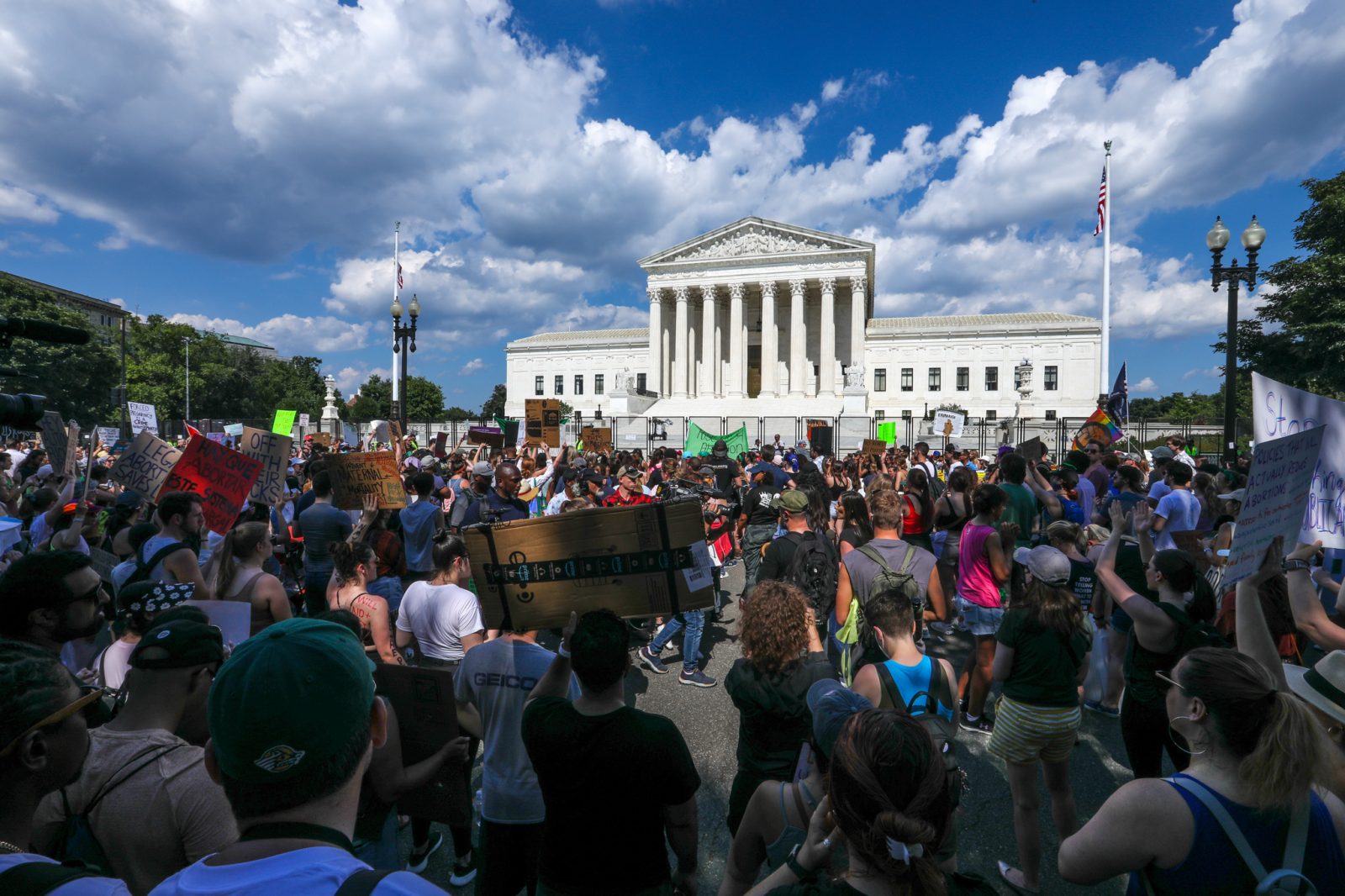
After Dobbs v. Jackson, the End of Roe v. Wade and the Battlefield for Liberty
After Dobbs v. Jackson, the End of Roe v. Wade and the Battlefield for Liberty
Health & Gender Policy Brief #138 | By: Alexandre Ellis | July 22, 2022
Header photo taken from: Getty Images / Yasin Ozturk / Anadolu Agency
Follow us on our social media platforms above
Browse more health and gender policy briefs from the top dashboard
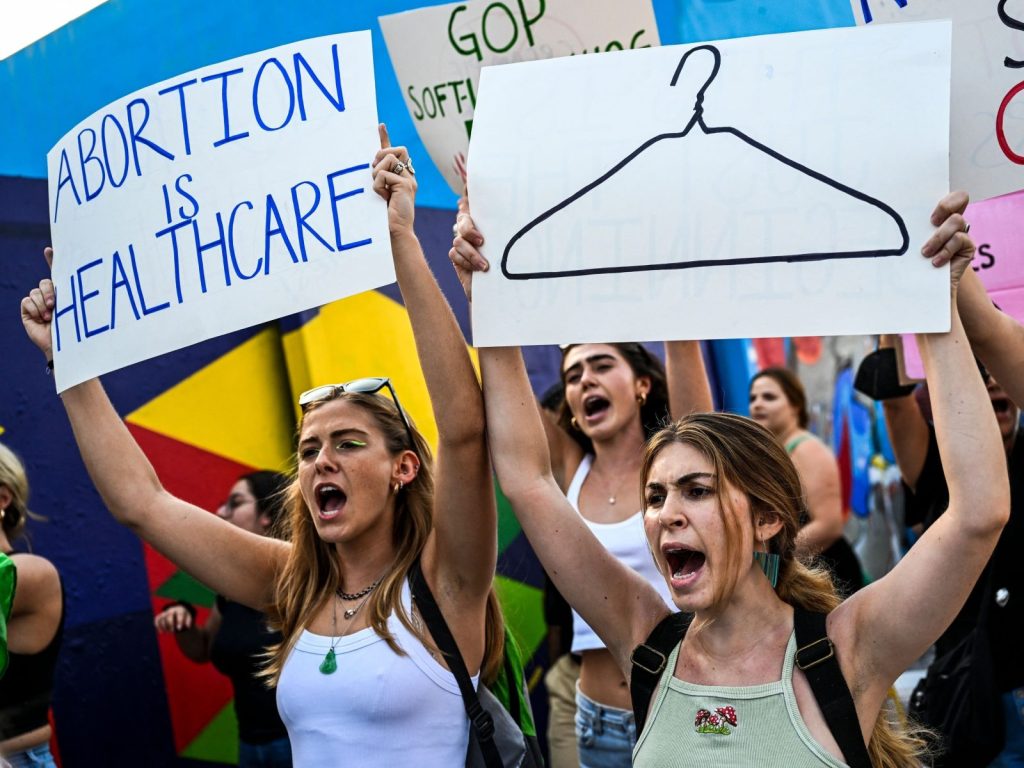
Photo taken from: Chandan Khanna / AFP via Getty Images
Policy Summary
[SSB theme=”Official” align=”center” counter=”true” ]
On June 24, 2022, the United States Supreme Court released the published opinion of Dobbs v. Jackson Women’s Health Organization.19-1392, 597 U.S. ___. In a 6-3 majority opinion, a group of unelected officials stripped people with uteruses bare of the right to choose whether they will carry a pregnancy to term. In the opinion, the conservative justices state, “The Constitution makes no reference to abortion, and no such right is implicitly protected by any constitutional provision,” leaving the question of who can obtain an abortion to the will of the states.
Further in the decision test, the Supreme Court’s majority not only questions the constitutionality of abortion, but almost every decision that relies on the right to privacy.
Policy Analysis
The aftermath of the Supreme Court overturning Roe v. Wade and Planned Parenthood v. Casey is vast and deadly. The 9th Amendment of the Constitution was originally used to protect the right to privacy and bodily autonomy. The 9th amendment provides, “The enumeration in the Constitution, of certain rights, shall not be construed to deny or disparage others retained by the people.” This umbrella of rights is not explicitly mentioned but has been used by the Supreme Court in the past to protect personal rights that are common sense.
The 9th amendment, 14th amendment, and the 5th amendment were used to originally protect the right to abortion in 1973 in Roe v. Wade. The 9th Amendment points to the enumeration of rights not explicitly mentioned in the Constitution. Whereas both the 14th and the 5th Amendment address due process and inhibits the infringement of an individual’s right to due process by states and the federal government.
Within due process, the court in Roe v. Wade and later dissenters in Planned Parenthood v. Casey point to how women, non-binary, and trans individuals have been historically marginalized and are uniquely affected by legislation relating to abortion because they may have the ability to get pregnant.
Further, these combinations of rights have been used to protect other rights such as the right to same-sex marriage (Obergefell), inter-racial marriage (Loving v. Virginia), contraception (Griswold), bodily autonomy (Roe v. Wade and Oklahoma v. Skinner), and consensual sexual intercourse (Lawrence v. Texas).
Nothing in the Constitution directly highlights or textualizes the explicit rights to any of these privacy concerns. Yet, they exist for almost every American because the Supreme Court recognized them as so substantially significant that the state or federal government could not interfere with them. We have enjoyed them with the expectation that they would always exist.
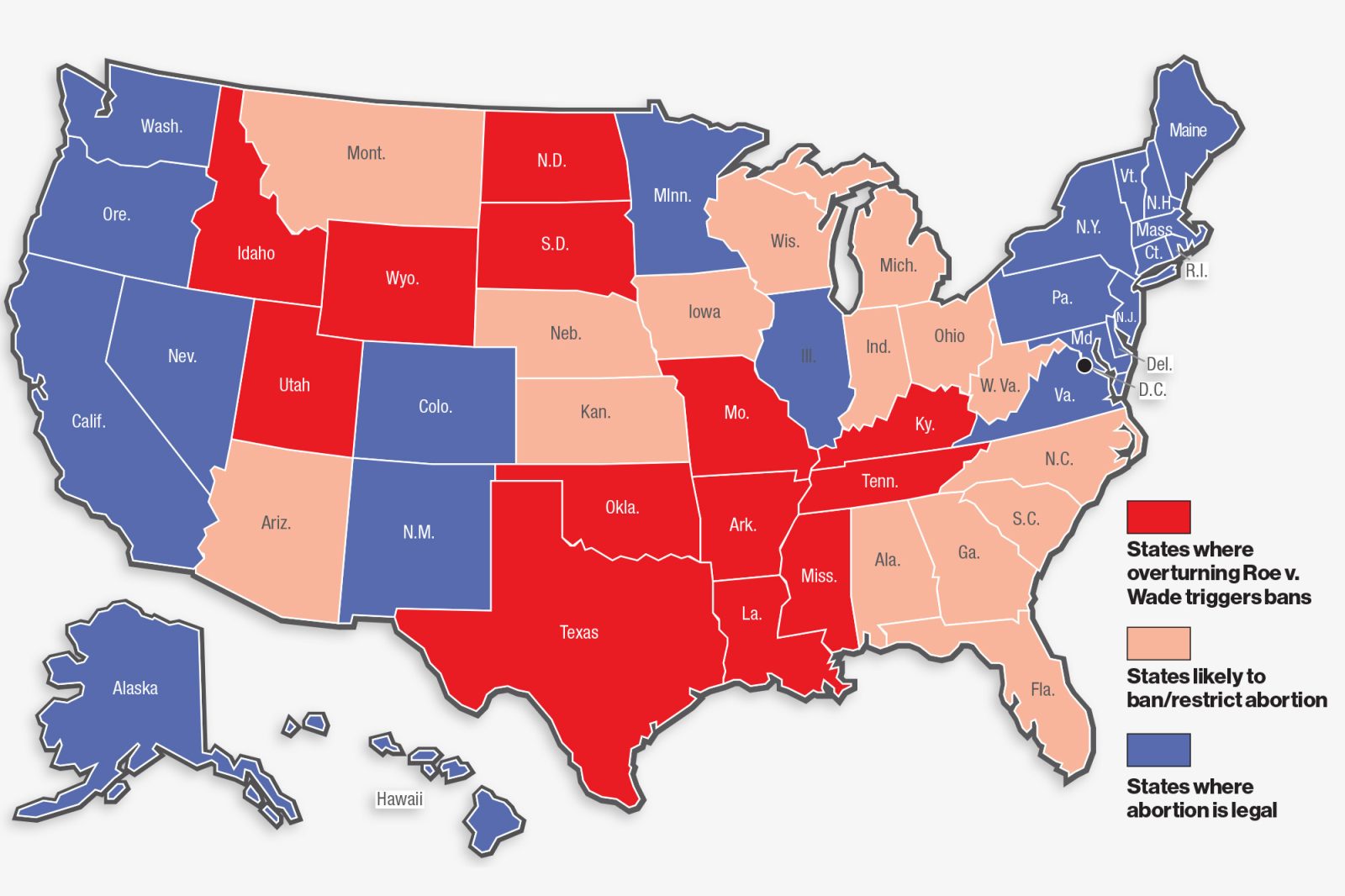
Photo taken from: The New York Post
(click or tap to enlargen)
Now, with the right to abortion overturned, other rights that were recognized by the Supreme Court in the mid-20th century are subject to reinterpretation. Justice Thomas in his concurring opinion writes, “in future cases, we should reconsider all of th[e] Court’s substantive due process precedents, including Griswold, Lawrence, and Obergefell. Because any substantive due process decision is ‘demonstrably erroneous’… we have a duty to ‘correct the error’ established in those precedents.” Dobbs v. Jackson Women’s Health Organization, 19-1392, 597 U.S. ___ (in-text citations not included).
Furthermore, everyone will be affected by the Dobbs decision – not just people who can get pregnant. We are starting to see the impact play out in states with abortion trigger laws. A trigger law is a legislative scheme that is triggered when something happens – like the overturning of Roe v. Wade.
For example, 13 states have had a law designed to be triggered when/if Roe v. Wade was overturned, including: Missouri, Kentucky, Texas, Mississippi, Louisiana, Idaho, Arkansas, Oklahoma, North Dakota, South Dakota, Tennessee, Utah, and Wyoming. These laws either totally outlaw abortion or excessively limit when people can receive abortion care.
Trigger laws have created a confusion of patchwork laws, sometimes overlapping with restrictive bans and pre-existing laws on abortion care. Pre-existing laws include laws that have laid dormant and unrepealed from before Roe v. Wade was decided. For example, in Texas, there is a trigger law, a pre-existing law, and a restrictive ban on abortion. Now, Texas courts are hearing whether the new law, the trigger law, or the pre-existing law is controlling. It is a mess, among it all are people trying to receive potentially lifesaving abortion care.
Engagement Resources
Click or tap on resource URL to visit links where available

To read the full opinion see: https://www.supremecourt.gov/opinions/21pdf/19-1392_6j37.pdf

To read a plain-English explanation of Dobbs and its ramifications see: https://reproductiverights.org/case/scotus-mississippi-abortion-ban/.
To support reproductive rights:
https://reproductiverights.org/get-involved/.

To support Planned Parenthood, go to:
https://www.plannedparenthood.org

In need of an abortion, to support those seeking abortion go to:

Preview of US Senate Races in Ohio and Iowa
Preview of US Senate Races in Ohio and Iowa
Elections & Politics Policy Brief #40 | By: Ian Milden | July 21, 2022
Header photo taken from: Dayton Daily News
Follow us on our social media platforms above
Browse more elections & politics policy briefs from the top dashboard

Photo taken from: PBS News Hour
Policy Summary
[SSB theme=”Official” align=”center” counter=”true” ]
Control of the U.S. Senate will be up for grabs in the 2022 mid-term elections. Competitive races in key states will determine the balance of power. In this brief, I will preview the US Senate races in Ohio and Iowa.
Policy Analysis
In Ohio, there is a vacant seat due to the surprise retirement of Senator Rob Portman (R-OH). Democrats nominated Congressman Tim Ryan (D-OH), who has represented the Youngstown area in Congress since 2003. Congressman Ryan briefly ran for President in 2020 but dropped out before any state had a primary election.
Congressman Ryan hasn’t previously run for statewide office in Ohio though he has publicly signaled interest in the past before running for re-election. He can’t run in his current district because Ohio lost U.S. House seats in the reapportionment of seats, and Republicans in the state legislature chose to dismember Ryan’s district.
Republicans nominated J.D. Vance. Vance is best known for writing a book called Hillbilly Elegy, which is a political manifesto with some offensive stereotypes that he made acceptable to a broader audience by including sections that would fit in a compelling personal memoir. Vance used the book to build a public profile and get interviewed on television news shows.
He criticized Trump early in his administration while trying to sell policy solutions that were similar to those sold by other populist conservatives. He has since changed his style of presentation to resemble Trump’s style, which got him Trump’s endorsement just before the primary election. Vance has not run for public office before though he did briefly work for Republicans in the Ohio State legislature.
Nobody has conducted a poll of the Ohio Senate race for the public since the beginning of June. Those surveys found that the race was within the margin of error. A few weeks ago, Ryan’s campaign released the topline numbers of their internal polling data (which tends to be a campaign’s rosiest assessment of the race), which also showed a margin of error race.
There’s not much that I can pull from the public polling data. The Suffolk University Poll released on June 1st found that J.D. Vance was better known among the Ohio voters surveyed, and his net favorability was negative four. It’s unclear based on the released data whether this is being driven by Democrats or Republicans skeptical of his past criticisms of Trump.
Ohio has become a tougher state for Democrats to win due to changes in voter behavior. While Democrats have increased their margins in the major urban areas, they have increasingly struggled in rural counties and blue-collar towns like the Youngstown area.
The large losses in rural areas and small towns are difficult for Democrats to overcome. If Congressman Ryan is going to win this fall, he will need to turn out traditional members of the Democratic voting coalition, while retaining enough support from his Youngstown area base and other blue-collar towns. The demographics of Ohio’s electorate do not leave him with much margin for error.

Photo taken from: AP / Aaron Doster
In Iowa, Senator Chuck Grassley (R-IA) is running for an 8th term. He is widely respected in the state of Iowa for his visits to every county in Iowa every year and his attendance record for Senate floor votes, which has consistently been among the best in the U.S. Senate. Grassley is the ranking member of the Senate Judiciary Committee, which means that he would be the Chairman if Republicans win a majority in the U.S. Senate.
The Democrats nominated retired navy admiral Mike Franken to challenge Grassley. He previously ran for the Democratic nomination for US Senate in 2020, losing to the DSCC-supported Theresa Greenfield. The DSCC elected to stay out of the primary this year, and Franken defeated former Congresswoman Abby Finkenauer (D-IA).
Despite having a good candidate, the U.S. Senate race in Iowa is going to be a very difficult race for Democrats to win. Nobody has come close to defeating Chuck Grassley when he has run for re-election. Additionally, the same trends in voter behavior that I discussed in Ohio’s Senate race are also occurring in Iowa. Democrats in recent years have struggled with getting support from white rural voters and voters who work in blue-collar jobs. The President’s party tends to struggle in midterm elections and when there are significant economic problems.
A recent poll from Selzer and Company, which has a very good reputation in Iowa, found that Grassley was leading by 8 and within the margin of error of a majority. Franken had a small lead with unaffiliated voters, but Grassley registered some support from self-identified Democrats. Given this data and the dynamics I discussed in the previous paragraph, this doesn’t seem like a race that Democrats are likely to win unless something substantially changes the race between now and late October.

Photo taken from: Chip Somodevilla / Getty Images
Engagement Resources
Click or tap on resource URL to visit links where available

Tim Ryan’s Campaign Website

Mike Franken’s Campaign Website

DSCC – Official Campaign Arm of Senate Democrats

Should Euthanasia and Assisted Suicide be Legal in the United States?
Should Euthanasia and Assisted Suicide be Legal in the United States?
Health & Gender Policy Brief #137 | By: Inijah Quadri | July 18, 2022
Header photo taken from: Medical News Today
Follow us on our social media platforms above
Browse more health and gender policy briefs from the top dashboard

Photo taken from: Modern Healthcare
Policy Summary
[SSB theme=”Official” align=”center” counter=”true” ]
The debate surrounding euthanasia and assisted suicide in the United States is a complicated one. On one side of the argument are those who believe that people have a right to die with dignity, and that euthanasia and assisted suicide should be legal options for individuals who are terminally ill or suffering from a debilitating condition. On the other side of the argument are those who believe that euthanasia and assisted suicide are immoral, and that they should not be legal options for anyone.
This debate over euthanasia and assisted suicide has been going on for many years, and there is no clear consensus on which side is right. Supporters of euthanasia and assisted suicide argue that these procedures provide a way for people to die with dignity, while opponents argue that they are unethical and can be abused. They also argue that legalizing euthanasia and assisted suicide would lead to an increase in suicide rates, as those with mental health issues or who are struggling with unbearable pain may feel pressured to take their own lives.
Policy Analysis
The history of euthanasia and assisted suicide in the United States is a long and complicated one. Euthanasia and assisted suicide used to be illegal in the United States, until the US drafted the Natural Death Act of 1979. First implemented by California, the Act, now adopted by all the US states, allows for a natural death in specific circumstances.
For example, the law allows people with terminal illnesses to forgo life-saving medical treatments, including artificial nutrition and hydration, in order to die peacefully. The law also allows people with chronic illnesses to make decisions about their end-of-life care in advance, in case they become unable to make decisions for themselves.
In 1997, the US Supreme Court ruled in favor of physician-assisted suicide in the case of Washington v. Glucksberg. This landmark decision upheld the right to die as a fundamental liberty interest protected by the Constitution. Since then, assisted suicide has been legal in several US states, including Colorado, the District of Columbia, Hawaii, Maine, New Jersey, New Mexico, Oregon, Vermont, and Washington.
Despite these precedents, euthanasia and assisted suicide remain controversial topics. Many opponents argue that these practices can be abused and that they put vulnerable people at risk. Others maintain that individuals have a right to choose how they die and that assisted suicide should be available to all who want it.

Photo taken from: Pew Research Center
(click or tap to enlargen)
The debate over euthanasia and assisted suicide is likely to continue for some time.
Outside the United States, the legality of euthanasia and assisted suicide vary from country to country. In some places, both practices are legal, while in others, only euthanasia is legal. In the majority of countries, however, euthanasia and assisted suicide are illegal. There are a number of reasons for this variation in legality. One reason is that the definition of euthanasia and assisted suicide can differ from country to country. Another reason is that public opinion on euthanasia and assisted suicide can vary dramatically from country to country.
Conclusion
In conclusion, many people, especially those suffering from terminal conditions, feel that euthanasia and assisted suicide should be legal in the United States. We agree with this sentiment for a few reasons. First, people should be able to make their own decisions about their lives and death. Second, many people who are suffering should be able to choose euthanasia or assisted suicide to avoid a long, painful death. Finally, these procedures are often much less expensive than keeping a person alive in a hospital setting, and as such, should be legalized in all US States.
Engagement Resources
Click or tap on resource URL to visit links where available

Cable News Network, Inc.: (https://edition.cnn.com/2014/11/26/us/physician-assisted-suicide-fast-facts/index.html#:~:text=Physician%2Dassisted%20suicide%20is%20legal,and%20California%20via%20court%20decision.)

Encyclopedia.com: (https://www.encyclopedia.com/social-sciences/encyclopedias-almanacs-transcripts-and-maps/natural-death-acts)

ProCon/Encyclopaedia Britannica, Inc.: (https://euthanasia.procon.org/euthanasia-physician-assisted-suicide-pas-around-the-world/)

The US Supreme Court: (https://supreme.justia.com/cases/federal/us/521/702/)

U.S. Department of Justice Brings Voting Rights Lawsuit in Arizona
U.S. Department of Justice Brings Voting Rights Lawsuit in Arizona
Civil Rights Policy Brief #192 | By: Rodney A. Maggay | July 20, 2022
Header photo taken from: Getty Images
Follow us on our social media platforms above
Browse more civil rights policy briefs from the top dashboard

Photo taken from: CNN
Policy Summary
[SSB theme=”Official” align=”center” counter=”true” ]
In March 2022 Arizona’s Republican Governor Doug Ducey signed into law HB 2492. The law is scheduled to go into effect in January 2023. The law included a number of voting restrictions that the Arizona Legislature wanted to implement. The statute provides new databases that Arizona counties can check to verify the names on their voter rolls, added a box on the Arizona state voter registration form for voters to state where they were born, and a box for the voter to check if they are a U.S. citizen. Instructions were also drawn up directing voting officials to reject the voting application if the citizenship box was not check marked.
Along with those provisions, the most significant effect of the new statute is the requirement that any voter who wants to vote in a presidential election or vote by mail in any Arizona election must now provide documentary proof of citizenship.
However, a conflict between an Arizona state law and a federal statute has arisen. In a 2004 ballot measure that was approved, Arizona currently requires proof of citizenship when voters register to vote after 2005 in order to vote in state elections. However, the National Voter Registration Act of 1993 provides a uniform federal voter application. States must accept the form if a voter chooses to use the federal form instead of the Arizona state form.
The federal form does not require documentary proof of citizenship but only requires voters to attest that they are U.S. citizens under penalty of perjury. Because Arizona’s new voter requirements differ from the information requested on the federal form, the U.S. Department of Justice filed a lawsuit in the United States District Court for the District of Arizona. DOJ is asking the Court to declare HB 2492 in violation of the National Voter Registration Act of 1993 and HB 2492 unenforceable. LEARN MORE, LEARN MORE
Policy Analysis
With former President Donald Trump pushing the “Big Lie” that the 2020 presidential election was stolen from him and Republican officials across a number of states following his lead, there were questions whether anything was going to be done to counter President Trump’s election lies that some in the Republican Party have embraced.
State Republican officials seemed dead set on ignoring the evidence that there was no election fraud and pushed for voting restrictions for a problem that did not exist. What makes this new lawsuit by DOJ significant is that it is going to directly counter the proof of citizenship requirement that Republicans have supported. And, it will counter the false “immigrants voting” problem that Republicans have used as a rationale for more stringent voting restrictions.
Arizona’s HB 2492 is unnecessary as written because it is based on a false premise. The law is written in a way that applies only to voters voting in a presidential election. If the bill truly wanted to strengthen elections across the board then it should have been written to apply its requirements to all federal elections in the state instead of just presidential elections.
The reason why it may have been written to only apply to presidential elections is to probably satisfy President Trump’s lie that illegal immigrants voted overwhelmingly for Hillary Clinton in 2016 thus depriving him of a victory in the popular vote. But President Trump’s claim that 5 million illegal immigrants voted illegally has already been proven false.
Since illegal immigrants did not vote in significant numbers as President Trump has claimed, there is no reason for Arizona to implement a voting restriction that applies only to presidential election years.

Photo taken from: Courtney Pedroza / Getty Images
(click or tap to enlargen)
But more than that, this lawsuit is important to demonstrate that a focus on citizenship to prevent voter fraud is misguided. Arizona’s attempt to impose documentary proof of American citizenship as a requisite to vote in Arizona is contrary to the framework that has been put in place by the federal government.
The creation of the unified federal voter registration form that states must accept if a voter chooses to use that form simply requires that the voter attest that they are a citizen. This simple attestation without more has been sufficient and has not caused any problems for nearly thirty years. Arizona’s likely motivation for the documentary proof of citizenship requirement might be to challenge the citizenship issue at the Supreme Court again.
In 2013, the Supreme Court ruled against Arizona in Arizona v. Inter Tribal Council of Arizona and said that Arizona could not require documentary proof of citizenship if a resident used the federal voter registration form. By directly contradicting the federal government with HB 2492, Arizona is hoping that a newly right leaning Court will reverse course and allow their documentary proof of citizenship requirement to stand. This lawsuit brought by DOJ will help to expose the arguments that Arizona intends to rely on and show that Arizona’s reliance on those arguments and Trump’s false lies are not based in reality.
Additionally, the DOJ lawsuit can also push back on right wing arguments that millions of illegal immigrants are casting ballots. This is simply not true and only became a talking point because President Donald Trump needed to fabricate a lie to explain his loss in the popular vote in 2016. As this case moves forward, Arizona may very well find itself in a similar embarrassing position as those lawyers who claimed that the 2020 election was stolen from Trump – that they made wild claims of electoral fraud but had no evidence to substantiate their claims.
This DOJ lawsuit can help expose those false claims and show that proving citizenship is not the problem that right wingers want it to be. Now that DOJ has initiated their lawsuit, Arizona might find itself in more trouble than it anticipated when it is shown that their focus on citizenship to verify voters is irrelevant and does nothing to help provide voters with more access to the voting booth. LEARN MORE, LEARN MORE, LEARN MORE
Engagement Resources
Click or tap on resource URL to visit links where available

U.S. Department of Justice – fact sheet on efforts Justice is taking to protect access to the ballot box and the right to vote.

American Civil Liberties Union (ACLU) of Arizona – infopage on voter suppression efforts in Arizona.

Brittney Griner’s Trial in Russia
Brittney Griner’s Trial in Russia
Foreign Policy Brief #141 | By: Reilly Fitzgerald | July 18, 2022
Header photo taken from: The New York Times
Follow us on our social media platforms above
Browse more foreign policy briefs from the top dashboard

Photo taken from: Stacy Revere / Getty Images
Policy Summary
[SSB theme=”Official” align=”center” counter=”true” ]
The WNBA is the premier basketball league in the world for professional female basketball players and has been at the center of American media attention due to the trial of Brittney Griner in Russia. Brittney Griner is an American basketball player, who plays for the WNBA’s Phoenix Mercury. Griner was arrested quickly after the Russian invasion into Ukraine; with critics of the Putin regime and war suggesting that she was arrested as a political pawn. Her charges are regarding the use of hashish oil which is illegal in Russia.
This debacle has involved the highest levels of government, including the White House, and much commentary from the sports world, including from the likes of Lebron James. Secretary of State Antony Blinken is personally involved, according to reports over the last few months; and even tweeted July 7th that American “officials again attended Brittney Griner’s trial today and delivered to her a letter from President Biden. We will not relent until Brittney, Paul Whelan, and all other wrongfully detained Americans are reunited with their loved ones.” His commentary and that of many news outlets is calling out the topic of “wrongful detention” as a practice of the Russian government.
Policy Analysis
The charges against Brittney Griner specifically are aimed at her use of vaping hashish oil. She was arrested at Sheremetyevo Airport. According to a Newsweek report, the charges of possessing and transporting hashish oil could lead to up to ten years imprisonment. Her lawyers, in her Russian trial, explained that the drugs she was in possession of were prescribed for her and they presented her doctor’s note to treat some pain she was experiencing.
According to the Associated Press, Griner plead guilty to the charges knowing that she was in possession of the drugs; however, she explained that she was not intending to break the laws of Russia but was just caught up in packing quickly to get to Russia to play for UMMC Ekaterinburg in the Russian basketball league.
Recent criticism of the trial has drawn attention to the pay disparity between the American NBA and WNBA, as the only reason that Griner (and other female players) travel to countries like Russia to play in the US off-season is to continue making money. The disparity in pay between the NBA and WNBA is stark – with the top players in the WNBA making around $500,000 while top NBA players, like Lebron James, make many millions of dollars per season (and do not need to play internationally to make more money).
Griner is one of the top players in the WNBA, with enough accolades to rival many of the male stars of the NBA, it cannot be ignored that pay disparity is a major contributing factor in the circumstances leading to Griner’s incarceration in Russia. It is not an unreasonable to suggest that if WNBA players made more money, then Griner would never have needed to travel to Russia to play in the first place. UMMC Ekaterinburg, according to the Boston Globe, was paying Griner more than $1 million to play for their team, which is owned by a Putin-associated Oligarch. NBC Sports reported in May that Griner was paid just under $230,000 for her last season in the United States; while USA Today reported that the average salary for an NBA player is $7.3 million.

Photo taken from: Apichart Weerawong / AP
(click or tap to enlargen)
The political timing of the arrest and trial of Brittney Griner does lend itself to being looked at with a skeptical lens, and Griner has been referred to as a political pawn of the Russian state government. All of this happened right before the start of the Russian war in Ukraine, Russia would have obviously been looking for any leverage or bargaining chips to use during the war for other political purposes that would help them respond to American policy in Ukraine.
According to the New York Times, there are approximately 50 Americans held by overseas adversaries for political purposes or as hostages. This number includes those held by Russia and other nation-state actors, but also non-state actors such as terrorist or extremist groups.
Many members of the Biden Administration have referred to Griner’s case, and Paul Whelan’s case, another American held by Russia, as being “wrongfully detained”. The New York Times explains that ‘wrongfully detained’ means being “held by a foreign government for the purposes of influencing U.S. policy or extracting political or economic concessions from Washington”.
President Obama set a precedent, in 2015, that does not allow the government to get involved with paying ransoms or exchanging prisoners, as a way to attempt to disincentivize wrongful detentions; however, there are many examples post-2015 of swaps and exchanges occurring to free Americans, including from Russian hands.
Over two weeks ago, The Washington Post, reported that the Russian government was interested in a prisoner exchange involving Griner for Viktour Bout or “The Merchant of Death”; who is serving a 25 year sentence in the United States for selling arms to the Revolutionary Armed Forces of Colombia.
Brittney Griner’s next hearing is set to take place on July 26th and, according to ESPN, her detention has been authorized by the Russian government until December 20th. This leads some to believe that the trial could be a long process for Brittney Griner to secure her freedom from Russia; however, her lawyers believe the trial could be over and resolved as early as August.
Engagement Resources
Click or tap on resource URL to visit links where available

James W. Foley Legacy Foundation (https://jamesfoleyfoundation.org/american-hostage-advocacy )

Travel.State.Gov ( https://travel.state.gov/content/travel/en/international-travel/emergencies/arrest-detention.html )

Readout of President Biden’s Call With Cherelle Griner ( https://www.whitehouse.gov/briefing-room/statements-releases/2022/07/06/readout-of-president-bidens-call-with-cherelle-griner/ )

Biden-Harris Administration Pushing Back on Abortion Rights
Biden-Harris Administration Pushing Back on Abortion Rights
Health & Gender Policy Brief #156 | By: Stephen Thomas | June 12, 2022
Header photo taken from: CNN
Follow us on our social media platforms above
Browse more health and gender policy briefs from the top dashboard

Photo taken from: Yahoo
Policy Summary
[SSB theme=”Official” align=”center” counter=”true” ]
Striving to be proactive in reinstating abortion rights that the U.S. Supreme Court curtailed June 24, the administration of President Joseph R. Biden Jr. and Kamala D. Harris is taking steps to safeguard a right that the high court established in Roe v. Wade in 1973.
The first step is constituent reassurance that the administration is not sitting on the sidelines. For instance, Vice President Harris on July 8 discussed with lawmakers from several Republican-controlled states the administration’s fight to restore women’s reproductive rights is still ongoing. The vice president also met with health care providers, faith-community figures, experts in constitutional and privacy law, and state attorneys general.
In so doing, the vice president “reiterated the Administration’s commitment to partnering with elected leaders at the local, state, and federal level to protect reproductive health care access,” according to a statement issued by the White House on July 8.
That very same day, President Biden signed an Executive Order intended to “promote access to critical reproductive healthcare services, including abortion,” according to the order. The president reiterated in the Executive Order, “It remains the policy of my Administration to support women’s right to choose and to protect and defend reproductive rights. Doing so is essential to justice, equality, and our health, safety, and progress as a Nation.”
Policy Analysis
What does the executive order mean? Contrary to the highest aspirations of abortion-rights activists, an executive order cannot reverse the U.S. Supreme Court’s foolish ruling June 24 in Dobbs v. Jackson Women’s Health Organization.
Executive orders have limitations. In a 2008 article on Executive Orders, attorney and law professor Patrick Parenteau, the president derives the authority to issue Executive Orders from Article II, Section 1, of the U.S. Constitution, which reads, “The executive power shall be vested in a president of the United States of America.” In Section 3, the Constitution reads, “The President shall take care that the laws be faithfully executed.”
Here is the tricky part. Although judicial review of executive and legislative actions has existed in the U.S. since the U.S. Supreme Court’s ruling in 1803 in Marbury v. Madison, there is no executive rollback of Supreme Court rulings.
Nevertheless, rest assured that Biden’s Executive Order is not insignificant.
What President Biden can do—and did do—is instruct federal agencies and departments to comb the law and to recommend to the White House ASAP all mitigating executive avenues available to the president to protect a woman’s right to choose. The president also issued several directives in his Executive Order.
This list below is not exhaustive:

Photo taken from: Miguel Gutierrez Jr. / The Texas Tribune
- The Department of Health and Human Services will identify “potential actions” that might “protect and expand access to abortion care, including medication abortion,” family planning services, emergency contraception, and full protections under the law for women who experience miscarriages and ectopic pregnancies. HHS also must develop a way to promote “awareness of and access to the full range of contraceptive services.”
- White House counsel and the Justice Department must reach out to lawyers and “public interest organizations” to encourage lawyers to “represent and assist patients, providers, and third parties lawfully seeking these services throughout the country.”
- The Justice Department must work with the Department of Homeland Security to ensure the safety of “patients, providers and third parties” as well as clinics and pharmacies that dispense or otherwise provide reproductive health services. Protecting patients’ personal health data is also on their agenda.
- What about protections for states that patients visit for out-of-state abortions? The Justice Department, as the President directed, must provide “technical assistance” to states that want to protect those patients.

Photo taken from: The Hill
All the identified federal departments must find solutions to the Supreme Court’s restriction on reproductive rights—protections that federal law on the books today permits. President Biden says that repeatedly in his Executive Order. The solutions must be legally justifiable.
For instance, HHS on July 11 issued “guidance” permitting abortions in Medicare-participating hospitals when the procedures are provided during “life- or health-saving” treatment.
“Under the law, no matter where you live, women have the right to emergency care—including abortion care,” HHS Secretary Xavier Becerra said in a statement. “Today, in no uncertain terms, we are reinforcing that we expect providers to continue offering these services, and that federal law preempts state abortion bans when needed for emergency care. Protecting both patients and providers is a top priority, particularly in this moment. Health care must be between a patient and their doctor, not a politician. We will continue to leverage all available resources at HHS to make sure women can access the life-saving care they need.”
Keep in mind that any federal agency’s interpretation of a federal statute can be challenged in court—perhaps even all the way to the U.S. Supreme Court. Nevertheless, Article VI of the U.S. Constitution makes federal law the “supreme law of the land,” which is a part of what Becerra meant when he stated that “federal law preempts state abortion bans” in medical emergencies.
The Biden-Harris administration’s task is daunting, but it is not impossible. Just about every U.S. president has used the Executive Order to further a policy agenda, according to the American Bar Association. There’s no reason to believe that the administration cannot find, by executive action, bulletproof solutions— fortresses that are legally impenetrable at least until the U.S. Supreme Court rules against them.
In the meantime, there will be a midterm election in November. Efforts to pass a federal statute to protect a woman’s right to make her own reproductive decisions may very well depend on the outcome.
Engagement Resources
Click or tap on resource URL to visit links where available
President Biden’s executive order
White House statement on Vice President Harris’s actions

See footnote 29 of Professor Parenteau’s article on climate-change
https://www.ecologylawquarterly.org/currents/currents35-18-parenteau-2008-1221/

American Bar Association explanation of executive orders
The U.S. Supreme Court’s ruling in Dobbs
https://www.supremecourt.gov/opinions/21pdf/19-1392_6j37.pdf

With Roe v. Wade Overturned, Some States Fight Back
With Roe v. Wade Overturned, Some States Fight Back
Health and Gender Policy Brief #157 | By: Geoffrey Small | July 12, 2022
Header photo taken from: Olivier Douliery / AFP / Getty Images
Follow us on our social media platforms above
Browse more health and gender policy briefs from the top dashboard

Photo taken from: The Pew Research Center
(click or tap to enlargen)
Policy Summary
[SSB theme=”Official” align=”center” counter=”true” ]
According to the Pew Research Center, the total number of abortion providers in the United States has decreased since 1982. The recent Supreme Court decision to overturn Roe V. Wade may lead to further decreases and declining accessibility. On July 8th, 2022, the Biden administration responded to the Supreme Court’s decision with an executive order. Biden’s executive action will include establishing a task force on reproductive health care access, expanding contraception, promoting public education, improving access to legal aide, protecting healthcare information, and ensuring interstate safety from Republican states’ draconian abortion laws.
Despite these efforts, President Biden stated that the best solution is for Congress to “codify Roe as federal law.” However, the possibility of bipartisan federal legislation is uncertain. Some state Governors have already signed legislation and executive orders to fight back against the 19 Republican states that enacted 108 abortion restrictions in 2021 and 11 Republican states that enacted 42 additional abortion restrictions since 2022.
California, New Jersey, and Massachusetts have already authorized protections for providers and out-of-state patients. Exploring these progressive state strategies can provide some insight into how they are targeting new Republican state restrictions, as well as the overall limitations when compared to a comprehensive federal law.
Policy Analysis
All photos taken from: The Associated Press
California

Gavin Newsome, 40th governor of California since 2019.
On June 24th, Governor Gavin Newson signed California State Legislation AB1666. The new law is designed to protect providers and patients from civil liability issues resulting from state laws, such as Missouri’s, which allow citizens to sue their residents if they receive an out-of-state abortion.
California will effectively block any civil litigation related to these issues to be heard in their courts.
New Jersey
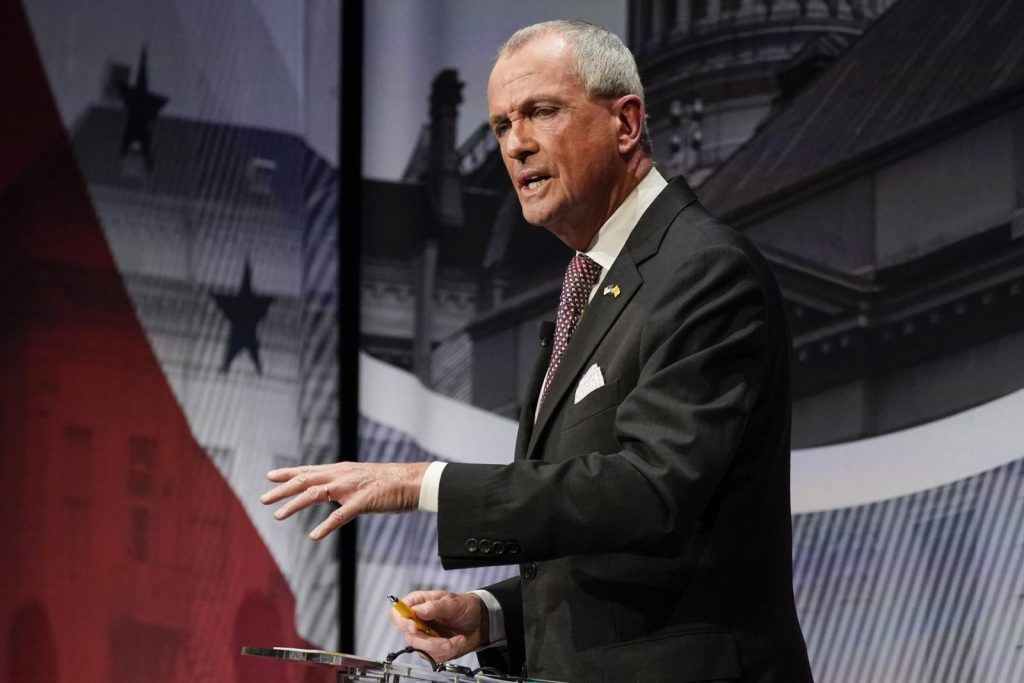
Phil Murphy, 56th governor of New Jersey since 2018.
The State of New Jersey focused more on disrupting out-of-state criminal prosecution. On July 1st, Governor Phil Murphy signed S2642 and S2633. S2642 prevents other states from extraditing individuals who are providing or receiving abortion care and services. S2633 ensures that medical records and physician licenses are protected from states or anti-abortion groups pursuing information for prosecution.
Also, this law prohibits any state employee or agency from cooperating with other states that are pursuing criminal charges related to providing or receiving reproductive healthcare.
Massachusetts

Charlie Baker, 72nd governor of Massachusetts since 2015.
The Massachusetts Republican Governor, Charlie Baker, issued an executive order instead of coordinating with state legislature to pass a law. Baker’s Executive Order, which was made effective on June 24th, prohibits executive agencies from assisting other states seeking criminal or civil charges for providing or receiving reproductive health services. The order also protects physicians from losing their license, and prohibits the Governor’s office from extraditing individuals for abortion procedures that are legal in State of Massachusetts.
This executive order may seem more comprehensive in its language, as it has similar criminal protections to New Jersey’s law and civil protections like California’s. However, one can argue that the scope of an executive order is fundamentally prohibited when compared to state or federal legislation. Like President Biden’s executive action, Baker’s order is restricted to employees in executive departments. It fails to include a comprehensive state employee restriction like the legislation enacted in New Jersey. Also, executive orders can be easily reversed when a new administration takes office, unlike legislation that requires a majority vote.
Despite these efforts to protect individuals from the wave of restrictions that Republican states are implementing, President Biden’s observations on the most effective measure still stands. Congress must pass a national law that prevents Republican state’s from prohibiting access to abortion and reproductive health care. Calling your U.S Congressional representatives and demanding laws protecting reproductive rights is essential. Donating to the ACLU and Planned Parenthood will help coordinate legal action and national advocacy for better universal reproductive rights.
Engagement Resources
Click or tap on resource URL to visit links where available

The Ukraine Crisis #10
Situation Update: The Ukraine Crisis #10
Foreign Policy Brief #141 | By: Abran C | July 12, 2022
Header photo taken from: The Atlantic
Follow us on our social media platforms above
Browse more enivornmental policy briefs from the top dashboard

Photo taken from: Business Today
Policy Summary
[SSB theme=”Official” align=”center” counter=”true” ]
As fighting continues to rage in Ukraine’s East, Russian President Putin on Monday, July 4th, 2022 declared victory in the region of Luhansk, only one day after Ukrainian forces withdrew from their last remaining bastion of resistance in the province, the city of Severodonetsk, which is now in Russian hands.
A Ukrainian military assessment earlier last week noted that Russian forces will “now almost certainly” switch full gear to capturing the second Eastern breakaway region of Donetsk to complete their takeover of the Donbas, which Putin had promised to “liberate” as the pretext for war. The OHCHR now confirms that 4,889 civilians were killed in the five months of fighting, with the true number likely to be far higher.
Two weeks ago, both the G7 and NATO summits were held and the war in Ukraine loomed large over both gatherings. NATO heads of state came together on June 30, 2022, in a rare wartime meeting to present a unified front against Russia and in support of Ukraine. Turkey dropped its opposition to Finland and Sweden joining and both were formally invited into the alliance, increasing NATO’s border with Russia by 830 miles.
President Joe Biden announced that the United States would establish a permanent military base in Poland. This marks the first time the US has created a permanent a base anywhere on NATO’s eastern flank, which until now has only had a rotating troop presence. NATO also invited the leaders of Japan, South Korea, New Zealand, and Australia to the summit for the first time to engage in consultations against what they see as the growing threat of China.
Later that week, G7 leaders met to confront the global economic fallout of the pandemic and the war. Leaders promised up to $29.5 billion for 2022 to help Ukraine ease its financial gap brought on by the war and committed to tighter sanctions on Russia.
Policy Analysis
Five months into the war and there is still not an end in sight. To plan for the future, it is an important question to ask as we continue to analyze the current situation, What are the likely future consequences for Russia and Ukraine?
Russia’s invasion has undoubtedly caused tension in the international community, pitting great powers against each other and forcing countries in the global south to take sides in a war between common trade partners. During the G20 summit late last week, the Russian foreign minister Sergei Lavrov was received coldly by Western leaders who refused to meet with the Russian minister, even refusing to be in a group photo with Lavrov in it.
The Russian minister later left the G20 meeting after being accused of sparking the global food crisis. Russia throughout the war has had to contend with political isolation, everything from private businesses to governments cutting ties, and unanimous global condemnation at the UN.
Ukraine conversely has been welcomed by the international community, and reached the first step of its goal to join the EU since it’s 2014 revolution that overthrew the then president Viktor Yanukovych who shunned the EU. Additionally both Sweden and Finland were formally invited to join NATO. The addition of an 800 mile border between NATO and Russia is likely to leave a thorn in Russia’s side long after the war.

Photo taken from: Sky News
(click or tap to enlargen)

Photo taken from: PBS
(click or tap to enlargen)
The expansion of NATO was a key issue for Putin. He sought assurances from the alliance before the invasion as a pretext to avoid the war. Now his biggest fear has come to pass. This will undoubtedly cause more tension. As NATO expands, so will Russia’s anxieties. It has already announced that it will seek to move ‘powerful’ weapons closer to the US and has moved closer to China to help rival the US and NATO.
Though Ukrainian leaders have stated they would regain all stolen territory it is unlikely that Ukraine will retain its Eastern Donbas region and the Crimean peninsula. Both territories are likely to be used as concessions by Ukraine and the West for an end to the war, and as trophies for Putin to present to a wary Russian public.
The cost of the war is not only measured in the square miles conceded but the number of lives lost, so far nearly 4,900 civilians are known to have been killed. Those who come after, the children of this war who may have lost their parents, their homes, or both, will not soon forget the aggression committed against them.
We can assume a future in which movements are led by Ukrainians who seek to regain their lost territories, and to bring Russian war crimes to justice on the international stage such as at the International Criminal court. Russia’s image has been stained by the war, not only by those who condemn it, also by those who once saw it as a great global military power that now cannot defeat the civilians taking up arms against it.
Similarly the hardship faced by Russians due to sanctions and war if not only projected onto their government will also be directed at the West, leaving behind an increasingly polarized Europe. Regardless of the near-term outcomes of the war, animosities between the two countries and two peoples are likely to continue to remain escalated for years and decades to come.

Photo taken from: Shutterstock
Economic contraction is a certainty for both countries in the near future. Thus far, the West has kept up economic pressure against Russia and is making plans to ween Europe off of Russian energy. Though sanctions have not yet helped bring an end to the war, they have taken a heavy toll on the Russian economy and will do so for some time.
Russia has benefited from the recent spike in price of oil, yet still in late June, it defaulted on its external sovereign debt for the first time since 1918. Though Russia has the money to pay, it lacked the ability to do so due to sanctions. This economic isolation coupled with double-digit inflation and the worst recession in years paints a clear image to us that Russia’s economic future looks turbulent and harsh which may endanger Putin’s rule, something the West has hinted that it hopes comes to pass.
The Ukrainian economy is also understandably fairing poorly, it is predicted to shrink by nearly 50% this year and so far the war has cost Ukraine up to $600 billion. However, on June 23, 2022 Ukraine was awarded with EU candidate status, which comes with the promise of joining the large and powerful EU single market. Additionally, at the G7 summit, German Chancellor Olaf Scholz called for a ‘Marshall Plan for Ukraine’ to aid reconstruction during the post-war period. He stated, “Just like war-scarred Europe then, Ukraine today needs a Marshall plan to rebuild”. So even though Ukraine’s near term future will most certainly be bleak, there are glimmers of hope at a future in a post-war reconstructed and peaceful Ukraine.

SCOTUS Tightens its Noose Around Another Federal Agency: the EPA
SCOTUS Tightens its Noose Around Another Federal Agency: the EPA
Environment Policy Brief #144 | By: Todd J. Broadman | July 9, 2022
Header photo taken from: epa.gov
Follow us on our social media platforms above
Browse more environmental policy briefs from the top dashboard

Photo taken from: CNBC / Spencer Platt | Getty Images
Policy Summary
[SSB theme=”Official” align=”center” counter=”true” ]
The recent SCOTUS decision in the West Virginia vs. EPA case, though not unexpected, is further support for a clear ideological direction underway at the Court. The case was brought by several Attorney Generals along with mining industry plaintiffs from major coal producing states. The 6-to-3 decision in favor of the plaintiffs applies directly to the EPA’s authority to regulate the carbon emissions of power plants under the (Obama) 2015 Clean Power Plan. In the majority opinion, Justice Roberts emphasized that the EPA does not have the explicit authority to force power plant operators to eliminate or otherwise change their fuel source. In this instance, the elimination of coal in favor or less polluting sources.
The significance of the Clean Power rule is that it recognizes the process of generating electricity by utilities is the second major source of greenhouse gases behind transportation. Going back to 2007 and the SCOTUS case Massachusetts v. EPA, the agency’s right to regulate greenhouse gases was established under the Clean Air Act.
In a sense, this ruling is pre-emptive because the EPA had not yet implemented its intention to force the industry to change its fuel sources. The threat of the EPA doing so was enough to trigger the lawsuit. This lawsuit is the unfolding of a deeper form of conservative activism aimed at overturning “legal doctrine by which Congress has delegated authority to federal agencies to regulate the environment, health care, workplace safety, telecommunications, the financial sector and more.”
Senate minority leader Mitch McConnell has been at the center of this strategy to curtail government regulation at the EPA and other federal agencies; a strategy that has used every opportunity to stack the judiciary with like-minded conservatives. The coal industry in his home state of Kentucky is symbolic of the values that are making their way before the bench. Under Trump, McConnell and the considerable resources of the Federalist Society and similar conservative action groups were able to maneuver into place three Supreme Court justices, 54 appeals court judges, and 174 district court judges. To date, President Biden has appointed 68 federal judges.
To be sure, this ruling does not impede the EPA’s authority to regulate pollution under Section 111, but does, according to Andres Restrepo, a senior attorney at the Sierra Club, “remove the most important tool that EPA had in its tool kit.” And while EPA regulations on carbon dioxide emissions from cars and trucks, as well as methane emissions from oil and gas infrastructure remain intact, this Supreme Court ruling invites further legal challenges from industries who feel unfairly regulated.
As Michael Oppenheimer, professor of geosciences at Princeton University, commented: “If the Supreme Court uses this as an opportunity to really squash EPA’s ability to regulate on climate change, it will seriously impede U.S. progress toward solving the problem.”
Policy Analysis
This ruling adds another obstacle to an already chaotic political landscape when it comes to changes necessary to address global climate and planet-wide environmental cataclysm.
Rather than lead the world as a model of practical action that reduces CO2 emissions, the U.S. judiciary is essentially endorsing the idea that corporations know best how to regulate and in the absence of detailed legislation they must be trusted to do so. Similar cases are presently making their way through the federal courts with the aim of blocking the government’s ability to regulate pollution. “Attorney Generals’ strategies are becoming more and more sophisticated,” according to Paul Nolette, professor of political science at Marquette University. They act in fear of the “deep state.”
The Biden administration has good reason to be disappointed in this ruling, yet at the same time may see this as an opportunity to confess their own contradictory and inconsistent climate policies: on the one hand declaring that all utilities be powered by sustainable energy by 2035, and on the other, approving a record number of oil drilling leases. The ambition to halve greenhouse gases by 2030 is now plainly impractical. All of this while the nooses around the necks of regulating agencies will continue to tighten.

Photo taken from: Chip Somodevilla / Getty Images
(click or tap to enlargen)
In Judge Elena Kagan’s dissenting opinion (joined by Justices Stephen Breyer and Sonia Sotomayor), she sounded the alarm bells: “Whatever else this Court may know about, it does not have a clue about how to address climate change.” Authority is being stripped from the field experts is the sobering conclusion. “The Court appoints itself — instead of Congress or the expert agency — the decision maker on climate policy. I cannot think of many things more frightening.”
Existing EPA rules that regulate sulfur dioxides or particulates, regulations which were not contested in this case, are sufficiently expensive for coal burning utilities to convert their operations to natural gas and those conversions are expected to continue. The primary driver though is economics; natural gas is cheaper to use and provides over 35% of U.S. electric generation. But natural gas too is a climate menace and is being replaced with wind, solar, and nuclear.
The conversions though, are not happening fast enough to meet carbon cap goals. If nothing else, this case lays bare that our branches of government refuse to agree and coordinate their actions to achieve long-term environmental wins. Portending the dysfunction to come, Sally Katzen, co-director of the Legislative and Regulatory Process Clinic at New York University School of Law, opined that, “I don’t think this is the culmination of their [conservative action groups] agenda. I think it’s just the beginning.”
Engagement Resources
Click or tap on resource URL to visit links where available

https://eelp.law.harvard.edu/ is an environmental research program within Harvard Law School with a team of expert attorneys, staff, and student research assistants that track and analyze policy developments, legal actions, and court decisions.

https://www.scotusblog.com/ is devoted to covering the U.S. Supreme Court comprehensively, without bias and according to the highest journalistic and legal ethical standards. The blog is provided as a public service.

https://www.utilitydive.com/ provides in-depth journalism and insight into the most impactful news and trends shaping the utility industry.