

JOBS POLICIES, ANALYSIS, AND RESOURCES
Latest Jobs Posts
The Ukraine Crisis: Situation Update #14
Brief #151 – Foreign Policy
By Abran C
Russia’s President Vladamir Putin on September 30, 2022 signed accession treaties formalizing the annexation of four occupied regions that make up 15% (at least 40,000 square miles ) of Ukraine’s territory.
Reducing the Separation of Religious Schools and Public Money
Brief #56 – Education Policy
By Steve Piazza
In line with a recent string of United States Supreme Court (USSC) decisions lauded by many as protecting religious freedoms, the USSC overturned a lower court decision that prevented state money from being used for religious school tuition. The June 21, 2022 6-3 decision in Carson v. Makin was arrived at by an ideologically divided court.
The Radicalization of the Anti-Abortion Movement
Brief #146 – Health & Gender
By Emily Scanlon
For years, the anti-abortion movement has been focused on one main goal: the overturn of Roe v. Wade. Because of this unifying goal, the movement has not had to grapple with fringe beliefs. Now that their main goal has been accomplished, anti-abortion groups are considering next steps and facing more radical ideas within the movement.
The Healthcare Industry is Reeling from COVID-19
Brief #145 – Health & Gender Policy
By Geoffrey Small
President Joe Biden has declared that the COVID-19 pandemic is over. Many experts in the scientific community may agree or disagree with Biden’s assessment, but the prospect of herd immunity, public awareness, and methods of prevention have undoubtedly come a long way since the coronavirus first made its global impact.
Protest Against “Partial Mobilization” in Russia
Brief #150 – Foreign Policy
By Yelena Korshunov
On September 21, Russia’s president Putin announced the start of “partial mobilization” in Russia. He signed a law amending the Criminal Code, according to which the Russian Federation introduces punishment for voluntary surrender and desertion during the period of mobilization and refusal to participate in hostilities.
Violators face punishment of up to 10 years in prison for voluntary surrender and up to 15 years in prison for desertion.
The Troubling Influence of Corporate Money
Brief #38 – Elections & Politics
By Abigail Hunt
Lobbying is as necessary as it is corruptive. The origin of the word lies in the earliest version of lobbyists – men who stood in the lobby of a legislative building to catch government representatives in order to plea their cause.
Mar-a-Lago Search Takes Disappointing Turn After Court Rulings
Brief #195 – Civil Rights
By Rodney A. Maggay
In a September 16, 2022 entry on this news site, we recounted the facts of the classified documents saga that culminated in the Federal Bureau of Investigation’s (FBI) search of former President Donald J. Trump’s office at his home in Mar – a – Lago, Florida. However, since then, a dispute arose as to whether the documents in question could be used by the government in its criminal investigation.
Nice Democracy You’ve Got Here. Shame If Something Happened To It.
Brief #36 – Elections & Politics
By David A. Graham
The line between imagination and delusion is thin, as Donald Trump’s initial reaction to an FBI search at Mar-a-Lago in August demonstrated. In the first days afterward, the former president saw the search as a political gift, not a blow: a chance to rally his base, put would-be challengers like Ron DeSantis in their place, and reconsolidate his eroding position as the leader of the Republican Party.
The Controversial Texas Voting Access Bill: Its Effects on the Coming Mid-Terms
Brief #36 – Elections & Politics
By Inijah Quadri
The Republican-dominated Texas Legislature on August 19th passed an election bill that Democrats and advocates say will restrict voting rights for minorities.
Republicans inflicted a crushing defeat on Democrats, who fought for months against what they saw as a brazen attempt to disenfranchise minorities, including African-Americans, and other voters who are more likely to vote Democrat.


The Ukraine Crisis: Situation Update #9
The Ukraine Crisis: Situation Update #9
Foreign Policy Brief #137 | By: Abran C | June 14, 2022
Header photo taken from: Axios
Follow us on our social media platforms above
Browse more foreign policy briefs from the top dashboard

Photo taken from: Anatolii Stepanov / Politico
Policy Summary
[SSB theme=”Official” align=”center” counter=”true” ]
Over 100 days into Russia’s war on Ukraine, there is still no end in sight. Russia now controls a large swath of Ukrainian territory that extends from around Ukraine’s second city of Kharkiv, through the separatist-held cities of Donetsk and Luhansk, and westward to the city of Kherson, forming a land bridge linking the captured territory to the Crimean peninsula. Russia’s focus has turned toward the Donbas and Luhansk regions in Eastern Ukraine, with heavy fighting now centering around Severodonetsk, an industrial city, and the last sliver of the Luhansk region still under Ukrainian control.
Ukrainian and British officials this past weekend warned that Russian forces were using unconventional weapons that have caused mass casualties as they try to make headway in capturing eastern Ukraine. Serhiy Haidai the head of the Luhansk regional military government accused Russian forces of beginning carpet-bombing campaigns across Eastern cities. Additionally, the UK Defense Ministry claimed that Russian bombers have likely been launching heavy Kh-22 missiles, a 1960s-era anti-ship missile that is highly inaccurate but specializes in causing widespread indiscriminate collateral damage and casualties.
Policy Analysis
In an effort to continue support for a war-torn Ukraine, President Biden announced on June 1, 2022, that the US would be sending a more advanced rocket system, the High Mobility Artillery Rocket System, which launches rockets that can go around 49 miles. This is a far greater range than anything Ukraine has been sent to date. More than $5 billion in security assistance has been sent to Ukraine since Biden took office last year. The Biden administration has been careful to ensure that while supporting Ukraine’s war effort with weapons, it would not send munitions that could be used to strike targets inside Russia and implicate the US in an attack on Russian soil.
Sanctions unfortunately up to now have not halted the military assault, but there is still hope that a promise to lift them could eventually bring Russia to the negotiating table.
Yet as of right now the Russian rouble actually saw an increase in value, it has risen 16% against the greenback and is up 150% since it tanked just days after Russia’s invasion over three months ago.


Photos taken from: Reuters, Getty
(click or tap to enlargen)
This can be explained by the collapse in imports while exports, such as oil and gas, have continued relatively unabated.
Russia has even reopened its now-former Mcdonald’s restaurants after the company cut business ties within the country. The restaurants have been rebranded as Vkusno-i tochka which translates to “Tasty and that’s it” in an obvious effort to present an appearance of normalcy to Russian citizens.
Though Russia’s economy has rebounded somewhat, the knock-on effects of sanctions for years to come should still be of great concern to the Kremlin. This is true not only for Russia but Central Asian states which have economies intertwined with it, along with large numbers of international workers in Russia who send back remittances that help prop up Central Asian economies and secure Russian influence in the region.
Remittances in Tajikistan amounted to 34% of GDP in 2021, 33% for the Kyrgyz Republic, and 12% in Uzbekistan. The war and sanctions may also damage Russia’s connections with Central Asian countries in the long term if economic hardship becomes widespread in the region on account of the Kremlin’s actions.

Should Religious Organizations Continue To Receive Federal Grants For Social Service Programs?
Should Religious Organizations Continue To Receive Federal Grants For Social Service Programs?
Civil Rights Policy Brief #188 | By: | June 13, 2022
Header photo taken from: Forbes
Follow us on our social media platforms above
Browse more civil rights policy briefs from the top dashboard

Photo taken from: Center for Religion and Civic Culture
Policy Summary
[SSB theme=”Official” align=”center” counter=”true” ]
On August 31, 2021 H.R. 5129 was introduced in the House of Representatives. The bill was the Community Services Block Grant (CSBG) Modernization Act of 2022. This bill reauthorized a continued funding of the Community Services Block Grant Program which makes grants to States, territories, Indian tribes and other non – governmental entities for government programs to help reduce poverty, empower residents of low – income communities and encourage businesses and other organizations to expand opportunities for all individuals. Included in organizations that are eligible for these grants are faith – based organizations (FBO).
However, the grant of taxpayer monies to faith – based organizations has been controversial. The Establishment Clause of the First Amendment to the U.S. Constitution provides “Congress shall make no law respecting an establishment of religion[.]” Due to the complications that were likely to develop with FBO’s receiving direct financial assistance from the states and the federal government in spite of a tradition that was supposed to keep church and state separate, a set of rules known as “Charitable Choice” rules were introduced in various statutes and regulations.
Generally, faith – based organizations ran government assistance programs and competed with other non – faith based groups for the award of government monies. The Charitable Choice rules helped to clarify the legal standards for an award of monies to an FBO. The rules required the government to neither favor nor oppose faith – based applicants and not interfere in the internal operations of religious organizations that receive federal funds. As a practical matter, if a beneficiary of a social service program did not want the assistance to be administered by a faith – based group, such as a church, the beneficiary was entitled to be reassigned to a secular organization, hence the “choice” of the Charitable Choice rules. A beneficiary would not be forced to attend a faith based group in order to receive the benefits of a social services program.
With H.R. 5129 just passed by the House, these Charitable Choice rules were suddenly omitted from the reauthorization of funds for the Community Services Block Grant Modernization Act of 2022. LEARN MORE
Policy Analysis
So what happened? Why was the framework of “Charitable Choice” rules omitted from the law that sought to continue the flow of federal monies to states and other institutions for social service programs?
One reason why the rules were likely left out is because of pressure from the ongoing debate in the U.S. concerning whether religious organizations and churches can rely on their faith and religious teachings to discriminate against other persons, such as LGBQT people. When faith – based organizations were awarded these grants to run social service assistance programs, there was an understanding that the monies would only be used to provide assistance in much the same manner that secular groups provide assistance. No monies would be used for worship, preaching or proselytizing activities, and most FBO’s did their best to comply.
President George W. Bush helped to clarify the standards used in granting the monies and helped streamline the process of awarding the monies through the creation of the White House Office of Faith Based & Community Initiatives. The Office conducted audits and helped train officials in the process of federal grant applications. But President Bush also made a key move by permitting only religious groups to use an exemption from Title VII of the Civil Rights Act of 1964. This exemption allowed religious groups to discriminate among persons because of their religious beliefs even though they were allowed to continue receiving federal funds. When President Barack Obama in 2014 classified sexual orientation and gender identity as a protected class for the purpose of anti – discrimination laws, a conflict with religious groups was set in motion.
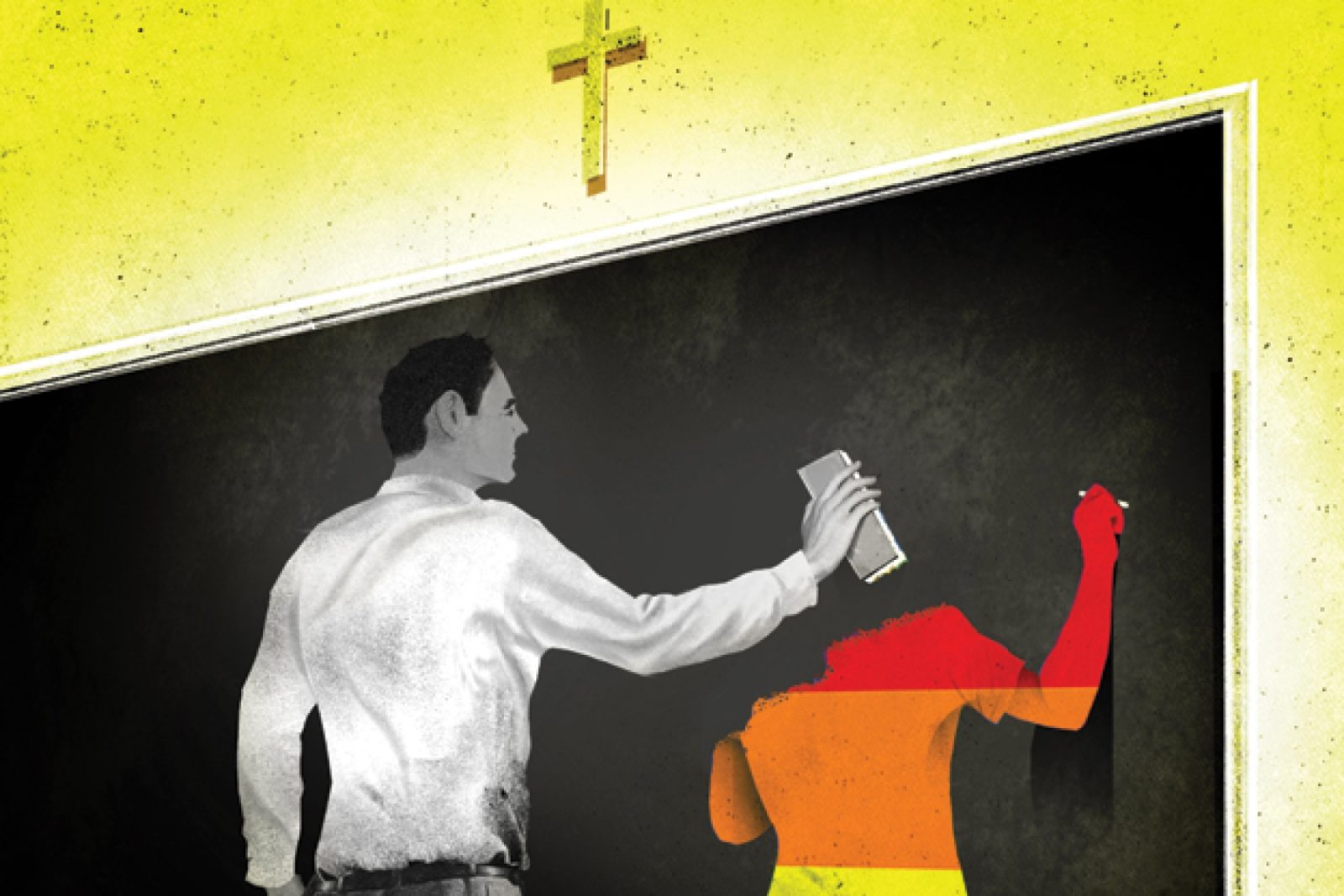
Photo taken from: Rolling Stone
(click or tap to enlargen)
Should religious groups who receive taxpayer funds to help administer social service programs be permitted to discriminate against LGBQT groups while receiving those funds? While the Charitable Choice rules first implemented in 1996 seemingly made an accommodation for religious groups to receive taxpayer funds and administer social service programs, it appears that the Democrats in the House are looking to change that framework with H.R. 5129. Allowing a religious group to take federal dollars and then turn its back and discriminate against LGBQT groups will no longer be tolerated and may be coming to an end. Religious groups shouldn’t be able to have it both ways.
If a religious group wants federal dollars then it should be compelled to abide by the anti – discrimination laws that all other groups – secular, non – religious – have to follow. This is the message H.R. 5129 sent when it was passed – that the government will no longer distribute tax payer dollars to religious organizations that refuse to comply with its anti – discrimination laws.
Religious groups may not like it but it seems pointless to continue sending taxpayer dollars to groups who refuse to discontinue their discrimination of other people. While H.R. 5129’s future is uncertain in the Senate it is clear that support for discrimination based on faith and religious reasons may be waning and H.R. 5129 could be the first step to do away with this religious based exemption for good. LEARN MORE
This brief was compiled by Rod Maggay. If you have comments or want to add the name of your organization to this brief, please contact Rod@USResistnews.org.
Engagement Resources
Click or tap on resource URL to visit links where available
Freedom From Religion Foundation – non – profit’s group on the passage of H.R. 5129.
Institutional Religious Freedom Alliance – history of Charitable Choice rules and how the government deals with federal funds for religious groups.

The Center Lane is Wide Open
The Center Lane is Wide Open
U.S. Resist News Op Ed | By: John Halpin |
June 7, 2022
Header photo taken from: Mike Blake / Reuters
Follow us on our social media platforms above
Browse more U.S. Resist News Op Eds from the top dashboard

Photo taken from: Mod DB
Policy Summary
[SSB theme=”Official” align=”center” counter=”true” ]
After the Democratic primaries in 2020, Joe Biden’s comeback victory over more left-leaning opponents was hailed as a triumph for his traditional brand of pragmatic centrism and bipartisan cooperation that later enabled him to win a decisive popular vote majority over Donald Trump in the general election. Biden swooped into office promising to “end this uncivil war that pits red against blue, rural versus urban, conservative versus liberal.”
A year and half later, this center ground appears all but abandoned and out of reach—for both President Biden and former President Trump.
According to fresh new polling from Global Progress and YouGov, conducted among more than 10,000 respondents in 9 leading democracies, an eye-catching 44 percent of Americans today place President Biden on either the very left-wing (30 percent) or somewhat left-wing (14 percent) side of the ideological scale. Only 12 percent of Americans place Biden directly in the center of the political spectrum, with another 14 percent placing him on the center-left.
Perceptions of former President Trump are even more extreme: nearly 4 in 10 Americans place Trump on the very right-wing side of the political scale and another 17 percent see him as somewhat right-wing. A mere 7 percent of Americans place Trump in the ideological center and another 8 percent on the center right.
Likewise, about one third of Americans overall view the Democratic Party as very left-wing and an equal percentage view the Republican Party as very right-wing. Only around 10 percent of Americans place either Democrats or Republicans in the center of the ideological spectrum, respectively.
In stark contrast to perceptions of their national leaders and the two parties, one quarter of Americans place themselves directly in the center of the ideological spectrum, with another 18 percent placing themselves either on the center-left or center-right in equal percentages. Only 1 in 10 Americans place themselves on either the far left or the far right, respectively. There’s clearly a wide gulf between how Americans conceive of their own politics versus those represented by their national leaders and the two political parties.
Part of the explanation for this divergence lies in partisan interpretations of opposition leaders and parties in the United States.
For example, more than 7 in 10 Trump voters place President Biden on the very left-wing side of the ideological scale compared to less than 10 percent of Biden voters who think similarly. In turn, 6 in 10 Biden voters place former President Trump on the very right-wing extreme of the spectrum—nearly double the percentage of Trump voters who label their own guy as far right.
These patterns are repeated on views of the two parties: 73 percent of Trump voters place the Democratic Party on the very left-wing side of the ideological spectrum while 62 percent of Biden voters place the Republican Party on the very right-wing side. In comparison, only 12 percent of Biden voters place the Democratic Party on the far left and only 15 percent of Trump voters place the Republican Party on the far right.
These data suggest that regardless of what national leaders do or say in politics these days, most voters from the opposition party are likely to view them as ideologically extreme.
Policy Analysis
This does not happen to the same degree in other countries according to the new Global Progress/YouGov data.
In the United Kingdom, for example, most British citizens view Labour Party leader Keir Starmer as slightly left-of-center (26 percent) and another 1 in 10 place him directly in the center. Only 8 percent of British people view Starmer as very left-wing—more than three times lower than the percentage of Americans who label Biden as very left-wing.
Even among Conservative voters from 2019, only 15 percent place Starmer on the far left with most seeing him as fairly left-wing or slightly left-of-center. In turn, most British citizens label Prime Minister Boris Johnson as fairly right-wing (28 percent), above the 16 percent who place him on the far right of the ideological scale. Labour voters from 2019 are more likely to view Johnson’s ideology as fairly right-wing rather than as very right-wing.
The pattern is repeated in Germany, Sweden, and Norway where current Social Democratic and Labour party leaders are all seen as more center-left than far left by citizens of their respective countries. Only 4 percent of Germans place Chancellor Olaf Scholz on the far-left side of the ideological spectrum, with most locating him in the center. Only 7 percent of Swedes place Prime Minister Magdalena Andersson on the far left with nearly one third seeing her as slightly left-of-center. Only 6 percent of Norwegians place Prime Minister Jonas Gahr Støre on the very left-wing side of the scale with a plurality seeing him as center-left.
Interestingly, in France nearly 4 in 10 citizens place President Emmanuel Macron on the slightly right-of-center or fairly right-wing side of the ideological scale.


Charts taken from: The Liberal Patriot
(click or tap to enlargen)
So, what’s going on? Why do Americans seem to view their leaders in such extreme ways compared to those in other democracies?
Perhaps citizens in European countries with multi-party systems have a keener understanding of the gradations of political ideology than do Americans with their two-party system. Perhaps citizens in these countries assess their leaders and parties more fairly than do Americans who appear to think most of their leaders are extremists. Perhaps the leaders in these European countries are more centrist in temperament and in practice than those in American politics.
More likely than not, American citizens are not any worse or better than others at understanding political ideology, and a leader like President Biden is not any more left-wing than his social democratic peers in Europe.
The difference in evaluations probably lies in the sorry state of national political discourse in the United States today. Americans operate under a daily barrage of culture war battles in the media along with constant partisan accusations of national treachery and radicalism hurled at opponents. In a context where all politics is presented as a zero-sum ideological fight for moral supremacy, many Americans are primed by media elites, social media trolls, and the billion dollar campaign industrial complex to view their leaders, particularly those from another party, as extremists. Sane Americans respond by tuning out the nonsense and turning away from politics altogether.

Chart taken from: Gallup / Knight Foundation
(click or tap to enlargen)
Yet, for America to flourish and overcome its biggest economic and security challenges, we all need to ratchet down the actual crazy politics—as well as the nonstop accusations of extremism for otherwise normal behavior and policy positions. Americans need to get out of the doom cycle of anger and mistrust that fuels partisan polarization. Those running our media and political institutions also need to relearn the art of measured political coverage and reasonable debate.
Although our politics seems hopelessly divided between the extremes, the center lane is still open to any political leader, party, or citizen willing to move over and occupy the space. To do this, Donald Trump needs an entirely different mode of politics to earn a legitimate second chance from a majority of American voters. In turn, Joe Biden needs to permanently shift back to the center lane where he started out—and be perceived as doing so by more Americans—if he wants to be reelected in 2024. And Americans themselves need to take a break from political combat and start rewarding those leaders who genuinely occupy the political center and stand up for the well-being of the entire nation.

What to Expect During the First January 6th Committee Open Hearings
What to Expect During the First January 6th Committee Open Hearings
Elections & Politics Policy Brief #37 | By: Maureen Darby-Serson | June 6nd, 2022
Header photo taken from: NBC
Follow us on our social media platforms above
Browse more elections and policy briefs from the top dashboard

Photo taken from: Yahoo
Policy Summary
[SSB theme=”Official” align=”center” counter=”true” ]
On Thursday June 2nd, the January 6th committee announced when it would hold its first round of public hearings. The first open hearing will be Thursday, June 9th at 8pm. Primetime. No other details were released, but more information would be made available next week. For example, no witness list was published.
This announcement was made a day after former Republican Congressman Denver Riggleman called text messages on Mark Meadow’s phone scary. He then went on to described Meadows as the “MVP” for the committee and that the texts showed a “roadmap” to the January 6th riots, starting as early as November 3rd.
In addition to the public hearing announcement, the Department of Justice has filed criminal charges against Former Trump White House Official Peter Navarro for failing to comply with a subpoena the January 6th committee sent to him months ago. He has spent his time since he was served with the subpoena fighting in court representing himself unsuccessfully. Normally, the DOJ allows an individual to self-surrender, but they considered Navarro a flight risk, so they arrested him at an airport in Nashville. He faces up to one year in prison.
Policy Analysis
So, what should you expect on the first days of the hearings? Assuming it is like most committee hearings, each member will get time to make an opening statement. This will set the stage for the future public hearings and will likely give the first look into the overarching findings of the committee.
They have spent months combing through thousands of emails and text messages, looking through intelligence data, and speaking with witnesses present on that day. These smaller details will likely be presented in later public hearings.
Mark Meadow’s text messages and information from him seem to be a big player in the committee’s investigations and will likely be a large part of these public hearings.

Photo taken from: CNN
(click or tap to enlargen)
Engagement Resources
Click or tap on resource URL to visit links where available

January 6th Committee Hearings – https://january6th.house.gov/committee_activity

Anderson Cooper Interview with Denver Riggleman

Is Your Drinking Water Safe?
Is Your Drinking Water Safe?
Environment Policy Brief #143 | By: Roarke Cullenbine | May 31, 2022
Header photo taken from: Environmental Law Monitor
Follow us on our social media platforms above
Browse more environmental policy briefs from the top dashboard

Photo taken from: PBS
Policy Summary
[SSB theme=”Official” align=”center” counter=”true” ]
Water pollution is a serious epidemic in the US, impacting hundreds of thousands. With the US ranking twenty-third in the world for tap water safety, great progress is necessary to keep citizens out of the hospital from consuming either lead, diesel, or pathogens in their water supplies. With few additions to the dated 1972 Clean Water Act, impurity of America’s drinking water is not improving. With 50 percent of US water being so polluted that it is unusable, water pollution threatens the health of many Americans, especially minority populations. 75% of African-Americans are more likely to live near facilities that create hazardous waste and communities with 25% or more of Latinx residents live in communities that have double the water purity violation rates. It is essential that both federal and local governments be kept accountable for regulating the water that its citizens rely on for survival.
Some hope may be on the way with the recent passing of President Biden’s $55 billion allocation to improve water treatment systems through the Infrastructure Investment and Jobs Act. However, this is set to target the replacement of lead water systems and not to resolve other threats.
Policy Analysis
When your faucet is turned on, how confident are you that the clear, dispensed liquid is truly pure drinking water? If you live in, for example, Austria, Finland, Malta, Switzerland, or the United Kingdom, chances are that your faith was placed in the right hands. However, if you live in Israel, Cyprus, Canada, or the United States, the odds aren’t so favorable.
Why is the United States on this list? With the U.S, being the richest country in the world, why is the quality of its drinking water so disappointing? Why do our water emergencies continue, threatening innocent lives, such as the 1 million citizens having to boil their water in Austin, Texas, or the tap water in Oahu being contaminated with over 350 times the safe amount of diesel fuel for human consumption; or the infamous water crisis in Flint, Michigan, that today still is having adverse effects on its citizens. This is all not to mention the serious adverse impacts water pollution is having on US wildlife such as the ongoing threat to Florida’s manatees or, local to my home, Maryland’s famous blue crabs in the Chesapeake Bay.

Photo taken from: The New York Times
With the passing of Biden’s Infrastructure Law, $55 billion was allocated to implement better drinking water and wastewater treatment systems. Despite great historical resistance from the Republican Party, the Infrastructure Law’s passing shows that legitimate access to clean water can be a non-partisan issue.
Those that support clean water accessibility should contact their state representatives, regardless of party, and advocate for this issue to remain on the Congress floor. For those areas currently impacted by polluted waters, direct change can be promoted within the state level through citizen participation in grassroot organizations and speaking when local government is in session. While some organizations to get involved can be found below, a simple Google search for organizations in your area can be all the change necessary to create a better nation for tomorrow.
Engagement Resources
Click or tap on resource URL to visit links where available

The NDRC is a legal advocacy group, dedicated to combat issues of climate change and all negative consequences it brings. Founded in 1970, the NDRC has over 700 staff with over 2 million members.

https://naacp.org/know-issues/environmental-climate-justice
Formed in 1909, the NAACP is a legal advocacy group primarily concerned with the elimination of race-based discrimination. As a mission for climate justice, a part of this discrimination includes advocating for the many minority communities that receive the greater weight of adverse climate change effects.

https://environmentamerica.org/
A political lobbying organization, Environment America advocates for new legislation to address the climate crisis within US communities. Founded in 2007, Environment America lobbies as a national network of 30 state environmental groups to better bolster change across the US.

https://bluewaterbaltimore.org/
An example of a local organization, Blue Water Baltimore is a grassroots organization that advocates for the restoration of clean water within the City of Baltimore’s rivers, streams, and famous harbor. With ongoing challenges to the purity of the Chesapeake Bay, local organizations such as Blue Water Baltimore make it possible to combat big problems at the local level.

Guns Now Leading Cause of Death for Children
Guns Now Leading Cause of Death for Children
Health & Gender Policy Brief #152 | By: Lynn Waldsmith | June 2, 2022
Header photo taken from: The New York Post
Follow us on our social media platforms above
Browse more health and gender policy briefs from the top dashboard

Photo taken from: Brandon Bell / Getty Images
Policy Summary
[SSB theme=”Official” align=”center” counter=”true” ]
It’s a shocking statistic that should make every American pause and reflect: guns are now the leading cause of death for children in the United States.
Let that sink in. According to the CDC, firearms became the leading cause of death for kids one and older in 2020, marking the first time that motor vehicle crashes have not been the number one cause of death.
Nearly two-thirds of the 4,368 U.S. children up to age 19 who were killed by guns in 2020 were homicide victims, according to CDC data. Another 30 percent of firearm-related child fatalities were suicides, 3 percent were accidental and 2 percent were of undetermined intent. Motor vehicle crashes, formerly the leading cause of death for kids one and older, killed nearly 4,000 children.
Last month’s school massacre of 19 children and two adults at an elementary school in Uvalde, Texas was the 27th school shooting in the U.S. this year. The tragedy came just 10 days after a mass shooting at a Tops supermarket in Buffalo, N.Y., that took the lives of 10 people.
About 500 children and teens have lost their lives to gun violence in the U.S. so far in 2022, according to the Gun Violence Archive, an independent data collection organization. The Gun Violence Archive has also counted 212 mass shootings that have occurred so far this year, and 2022 is not even half over. It defines a mass shooting as an incident in which four or more people were shot or killed, excluding the shooter.
Policy Analysis
Among other stark finding in the CDC data are gender and racial realities: Male youths are significantly more likely to be killed by guns, while vehicle crashes claim more females. In addition, the firearm death rate for Black children is more than four times that of white children, and white children are still more likely to be killed by motor vehicles than guns.
Because the National Rifle Association (NRA) continues to maintain a stranglehold on the Republican Party, many Americans, despite voicing increasing outrage, are not optimistic about the likelihood of Congress passing gun control laws any time soon. Members of the medical and educational communities say a more realistic approach may lie in treating the gun catastrophe facing children as a public health crisis, rather than a political battle.
“As the progress made in reducing deaths from motor vehicle crashes shows, we don’t have to accept the high rate of firearm-related deaths among U.S. children and adolescents,” researchers recently wrote in a New England Journal of Medicine article that focuses on the trend.
“Preventable deaths among young people not only are associated with tremendous medical costs, but take a great personal toll on families and communities. To reverse the trend of increasing firearm-related deaths among U.S. children, experts and policymakers should be intentional in their efforts to develop and implement a multipronged scientific strategy centered on continuous improvement.”
Twenty years ago, the CDC proclaimed the reduction in deaths attributable to motor vehicle crashes to be one of the most substantial public health achievements of the 20th century. But while the National Highway Safety Administration (NHTSA) could take the lead addressing road-traffic fatalities, the researchers point out that firearms are one of the few products whose safety isn’t regulated by a designated federal agency.
The auto industry has introduced numerous safety improvements over the past two decades, including: automatic emergency braking, electronic stability controls, lane-departure warnings, blind-spot detection, front and side airbags, and rear-facing cameras. By contrast, guns sold to civilians are becoming more lethal as gun manufacturers are selling weapons designed for military use.

Photo taken from: Daniel Borris / The New York Times
(click or tap to enlargen)
The New England Journal of Medicine article also notes that the firearms industry has made little effort to develop or market personalized “smart” guns. Because such weapons can be only be fired by the authorized user only, so-called smart guns should reduce the risk of children unintentionally shooting themselves or others and of adolescents using guns for homicide or suicide.
Traffic safety has also benefitted from universal state-level requirements for the licensing of drivers and the registration of vehicles. States created graduated-licensing programs for new drivers in the late 1990s, which reduced fatal crashes among teenagers. States also introduced booster-seat laws, and guidance for parents on age-appropriate child car seats, which further reduced deaths from motor vehicle crashes among children.
Meanwhile, many states have made it easier for children and young adults, as well as adults with criminal records, to gain access to firearms. Some states don’t require background checks when firearms are purchased from private sellers, such as at gun shows.
According to the New England Journal of Medicine article, “in recent years, many of the same states have passed legislation allowing people to carry a concealed weapon without a permit. At the federal level, the government has given the firearm industry partial protection against certain tort-liability suits (i.e., against negligence claims contending that they could have foreseen their product being diverted for criminal use), which has reduced the industry’s incentive to help prevent firearm-related deaths.”
The researchers say it’s time for treating gun safety the way motor vehicle safety has successfully been improved: Begin with a system that tracks firearm-related injuries and promotes the type of continuous reduction in injury rates that has been seen for motor vehicle crashes, especially among children. They advocate establishing a federal agency whose mission is to prevent harm caused by firearms.
Among other things, they also recommend federal and state laws, such as strong child-access prevention laws, which hold firearm owners liable if a child gains or could gain access to a firearm. Using evidence-based research to make incremental improvements has proven to be the key to the science of injury prevention.
Engagement Resources
Click or tap on resource URL to visit links where available

Mortality from Motor Vehicle Crashes and Firearms among Children, Adolescents, and Young Adults, United States, 2000–2020:
CDC full report on current Causes of Death in Children and Adolescents in the US:
https://www.nejm.org/doi/full/10.1056/NEJMc2201761
The New England Journal of Medicine: Crossing Lines — A Change in the Leading Cause of Death among U.S. Children:

Gun violence archive 2022:
https://www.gunviolencearchive.org/

Firearm mortality by state:
https://www.cdc.gov/nchs/pressroom/sosmap/firearm_mortality/firearm.htm

FTC initiates Crackdown on Deceptive Earnings Claims
FTC initiates Crackdown on Deceptive Earnings Claims
Economic Policy Brief #137 | By: Stephen Thomas | May 22, 2022
Header photo taken from: TDS Business Blog
Follow us on our social media platforms above
Browse more economic policy briefs from the top dashboard

Photo taken from: Information Technology & Innovation Founation
Policy Summary
[SSB theme=”Official” align=”center” counter=”true” ]
There is an adage which, simply put, means that if a deal appears too good to be true, then it probably is. The U.S. Federal Trade Commission has seen so many consumers misled by so-called deceptive earnings claims that the agency is developing a regulation to crackdown on the practice. The solution is composed of two phases.
First, the FTC from March 11 through May 10 received public comments via the Federal Register on how it should approach its proposed rulemaking; there were compliments and criticisms. Second, with the public comment period closed, the agency is now turning its attention to crafting a rule that ideally will become a sweeping prohibition on unfair and deceptive earnings statements that will be contained in the Code of Federal Regulations.
The FTC cannot pull a regulation out of thin air of its own volition. That is not the way the administrative rulemaking process works. Congress must grant an agency rulemaking authority. In this case, the FTC has the authority to draft a rule under the Federal Trade Commission Act. A regulation is a part of the playbook for how to enforce a congressionally passed and presidentially signed statute.
Policy Analysis
The FTC specified its purpose in its advanced notice of proposed rulemaking published in the Federal Register.
“The Commission anticipates that a rule prohibiting the use of misleading earnings claims would enhance deterrence and help the Commission move quickly to stop illegal conduct,” the agency wrote in the Register.
“Such a rule also may further clarify for businesses what constitutes a deceptive earnings claim and what it means to have substantiation for an earnings claim. In addition, a rule would enable the Commission to seek monetary relief for consumers harmed by deceptive earnings claims, as well as civil penalties against those who make the deceptive claims.”
Under the FTC Act, the agency can seek, as it reads in the Register, ‘‘rescission or reformation of contracts, the refund of money or return of property, [and] the payment of damages.” Further, the notice reads, “section 5 of the [statute] allows the Commission to recover civil penalties against those who violate such a rule.”
A deceptive earnings statement, in a nutshell, can lead a consumer to believe that an investment is likely to be more profitable than it usually is. The FTC’s notice points out from the outset that certain deceptive earnings claims incorporate marketing materials. Indeed, the notice begins, “The Federal Trade Commission is considering proposing a rule to address deceptive or unfair marketing using earnings claims.”
Additionally, in a footnote to the notice that refers to the nature of a deceptive earnings statement, the FTC explains, “For example, the Business Opportunity Rule bars business opportunity sellers from disseminating industry financial information to prospective purchasers unless they have substantiation that the information reflects, or does not exceed, the typical or ordinary experience of purchasers.” The notice goes a step further in its practical definition of a deceptive earnings statement and explains that “earnings claims that reflect gross income and omit material expenses are misleading.”
There was a range of public comments on the FTC’s notice of proposed rulemaking. (The reason this process is called “rulemaking” is that the FTC’s result will not be an “act” passed by Congress. It will be a “regulation” implemented by an agency through the rulemaking process. Acts and regulations are two different aspects of the law.)
Some of the comments applauded the FTC.
Two organizations that defend consumer rights submitted comments in response to the invitation contained in the Federal Register. In support of the FTC’s rulemaking, the National Consumers League and the Consumer Federation of America wrote, “… we urge the Commission to adopt a broad earnings claims rule, including a prohibition on false, misleading, and deceptive lifestyle claims and imagery. The rule should also prohibit false, misleading, and deceptive earnings claims related to wages and salary.”

Photo taken from: Twitter / Justin Brookman
(click or tap to enlargen)
While income disclosures are no substitute for strong prohibitions on unfair or deceptive earning claims, they can be useful tools for consumers, anti-fraud researchers, and law enforcement agencies like the FTC. The Commission should therefore require operators of multi-level marketing and gig economy businesses to provide verifiable, easy-to-understand income disclosures to potential recruits.”
There is, of course, another side of the regulatory coin. For instance, Kevin Thompson, managing partner at the law firm Thompson Burton PLLC, warns against making this rulemaking process political rather than legal.
“The implication that earnings claims that promote the earnings of an individual inherently labels those individuals as bad actors, absent malintent, is what truly hinders the growth of small businesses and what has raised and continues to raise our concerns,” Thompson wrote in his public comment on the proposed rulemaking.
“From our extensive experience with startups and the difficulties that small businesses face, specifically within the network marketing industry, we find that a substantive rule should go beyond the facial issue of misleading and/or deceptive earnings claims and attempt to balance what constitutes consumer harm that would warrant appropriate redress.”
The attorney continued by writing, “It is our belief that the rule should not be a political tool but rather a substantive test to apply for small and large businesses alike to be provided with appropriate goalposts by which to gauge conduct. Bad actors will remain bad actors, regardless of the rules, so instead of providing a framework that punishes the majority due to the actions of the few, provide an accurate assessment that focuses on consumer harm and what that actually means as opposed to the incidental failing to follow technicalities across the board.”
The FTC and the states have pulled no punches on alleged false-earnings claims, even without a new regulation on the books. The FTC announced in February that the agency, working alongside the Utah Department of Commerce Division of Consumer Protection, reached a settlement with Zurixx LLC, its owners and its corporate associates in which the real estate investment-coaching operators would pay roughly $12 million for “consumer redress.”
The operators of the real estate program, according to the FTC’s Feb. 16 statement, “sold live seminars and telephone coaching using false earnings claims that convinced tens of thousands of consumers to pay them thousands or tens of thousands of dollars.”
Engagement Resources
Click or tap on resource URL to visit links where available

FTC’s Federal Register Advance Notice of Proposed Rulemaking

Statement of Consumer Groups

Statement of Kevin Thompson of the law firm Thompson Burton PLLC
https://www.regulations.gov/comment/FTC-2022-0020-1545

FTC’s Settlement in a False Earnings Case
A Draft Leaked Opinion Puts the Supreme Court’s Impartiality into Question
A Draft Leaked Opinion Puts the Supreme Court’s Impartiality into Question
Elections and Politics Policy Brief #36 | By: Maureen Darby-Serson | May 22, 2022
Header photo taken from: AP Photo / Anna Johnson
Follow us on our social media platforms above
Browse more elections and politics policy briefs from the top dashboard
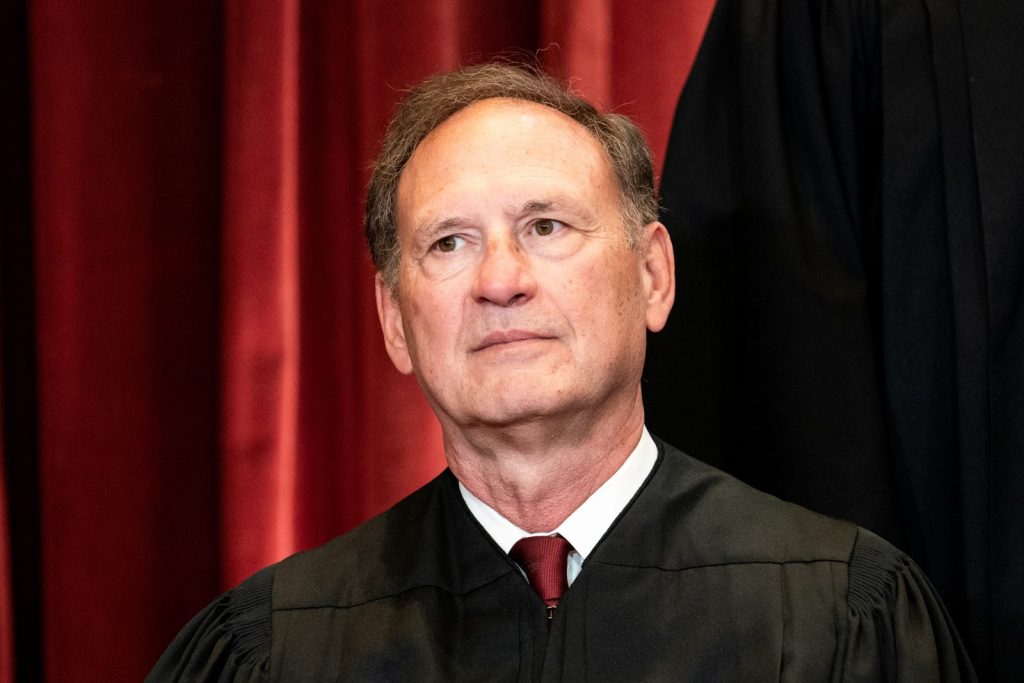
Photo taken from: Reuters
Policy Summary
[SSB theme=”Official” align=”center” counter=”true” ]
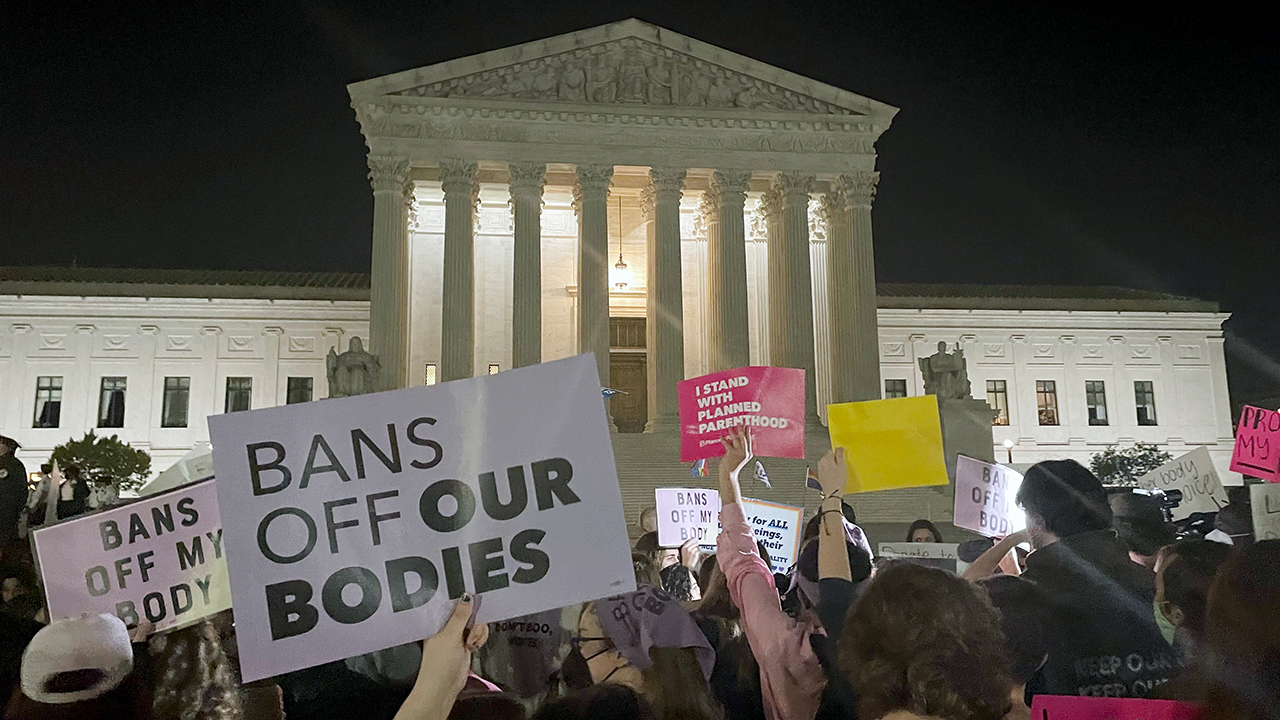
Late on Monday May 2nd, 2022, a draft of an opinion written in February 2022, in the upcoming US Supreme Court case Dobbs v. Jackson Women’s Health Organization was leaked to the press. This is one of a handful of leaks, in general, since the US Supreme Court established itself in 1789. The Dobbs case is having the Court revisit the right to an abortion.
This court opinion, which was written by Justice Alito, would essentially overturn Roe v. Wade and Planned Parenthood of Southeastern Pa v. Casey, which gave Women the right to access to abortions on the federal level. This leaked majority opinion pushes off the decision to make abortion legal or illegal to the states.
Policy Analysis
Why is this such a big deal and what does it mean for the court moving forward?
When the Supreme Court was first established, the court justices used to board together to avoid leaks and encourage bonding. This set up the court to be impartial and work together to come to opinions on cases that were generally agreed upon by all justices. This leak signals a new era of the court where this collegial atmosphere may no longer be the case.
The point of the Supreme Court is to be impartial, not political, and for the justices to follow the letter of law instead of following their own beliefs. While Justice Alito tries to argue that abortion is a moral issue and should not be determined by the government or politics, pushing the legality of such off to the states allows for the possibility of states banning abortion on religious grounds. The separation of church and state will then further be put into question.
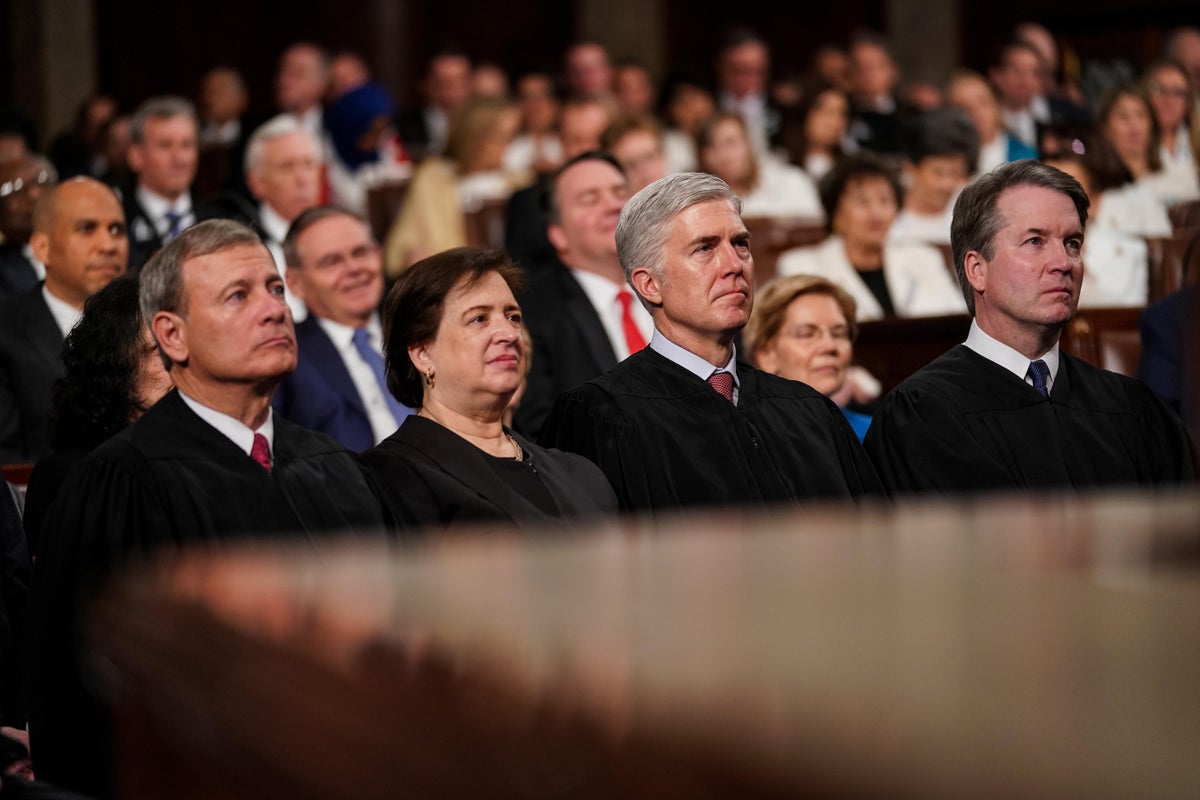
Photo taken from: Slate
(click or tap to enlargen)
Usually, the Supreme Court does not revisit court decisions that it has previously decided, let alone, a decision it has revisited twice, like this one. This is to ensure that a decision is not revisited every time a court political opinion majority changes.
This is a question that people currently ask. Is the court revisiting decisions on abortion because the balance of the Supreme Court is currently leaning towards the right?
It is unclear if this leaked draft opinion is the final opinion of the court, and we won’t know if Roe v. Wade will be overturned until that final opinion is ordered in late June. It is a waiting game until then, but this leak does show that things are changing at the US Supreme Court.
Engagement Resources
Click or tap on resource URL to visit links where available

US Supreme Court website https://www.supremecourt.gov/
US Supreme Court leaked opinion https://s3.documentcloud.org/documents/21835435/scotus-initial-draft.pdf

Who’s in Charge When it Comes to Making COVID 19 Regulations?
Who’s in Charge When it Comes to Making COVID 19 Regulations?
Health and Gender Policy Brief #151 | By: Alexandra Ellis | May 19, 2022
Header photo taken from: United States Department of Labor
Follow us on our social media platforms above
Browse more health and gender policy briefs from the top dashboard

Photo taken from: Evan Vucci / Associated Press
Policy Summary
[SSB theme=”Official” align=”center” counter=”true” ]
On April 19, 2022, U.S. District Judge Kathryn Kimball Mizelle in Tampa, overturned the mask mandate for interstate travel. The CDC’s interstate mask mandate for plane, trains, and buses, was first issued in May 2021, and was extended to May 2022. Before the mask mandate was set to expire this May, a U.S. District Court declared it unconstitutional. The Biden administration has been relatively quiet on COVID concerns since March of 2022, when the Center for Disease and Control and Prevention (CDC) released the community guidance standards.
The question becomes, why then is the Justice Department appealing. In other words, why is the Justice Department trying to defend the interstate travel mask mandate when the rest of the Executive branch seems currently indifferent to COVID and recent surge in cases across the country. The answer to this is rooted in preserving CDC’s rulemaking authority and therefore executive and congressional power.
Policy Analysis
By a U.S. District Court declaring that the CDC exceeded its authority in creating the federal mask-mandate for interstate travel, it challenges the CDC’s authority to promulgate rules for future surges and pandemics. While the rest of the executive branch seems to have moved on from COVID, asking communities and individuals to step up and protect themselves, the Justice Department is defending the CDC’s authority to create rules relating to the health and safety of the nation.
The CDC is a federal agency, granted power through Congress, to monitor and carry out the federal regulations relating to public health of the nation. See Title 42 of the CFR.
Through Congress, the CDC has the power to make and promulgate rules. All federal agencies usually have this power; it is called judicatory rule-making authority. In this authority, the federal agency has delegated authority from Congress to make rules relating to their respective agencies. In turn this frees up time for Congress to work on legislating new laws and dealing with other important matters than day to day implantation of federal regulations
Federal agencies, like the CDC, have rule making authority granted to them through Congress to implement Congress’s original legislation. They can make law that must be followed. In this instance, the CDC promulgated a rule that masks have to be worn during interstate travel: where travel occurs across state boundaries.
It is without a doubt that Congress has the ability to enact laws that relate to regulation of interstate travel, because it affects the whole of the nation. The idea is rooted in federalism, that even though the United States is fifty separate states, with its own unique sets of laws and culture, as a nation we are united, and free movement between states should be protected at all costs.

Photo taken from: Greg Nash / Getty Images
The mask mandate on planes, buses, and trains helped stop the spread of COVID-19 and related directly to the authority of the CDC. The CDC with the interstate mask mandate hoped to protect public health. With a District Court in Florida striking this down, people have started to unmask during interstate travel. As soon it occurred, a popular video showed an airlines stewardess directing individuals on a flight that they no longer had to wear the masks. You can hear on the video people cheering and clapping.
See video, https://youtu.be/dbd0PQyfTMc.
So, if the idea of unmasking for interstate travel is so popular what is the problem with the District Court’s ruling? The issue becomes CDC’s authority to protect and promulgate rules for future COVID surges and other potential pandemics in the future. Under Chevron U.S.A., Inc. v. Natural Resources Defense Council, Inc., 468 U.S. 837 (1984), judicial deference should be given to administrative actions that are reasonably related to their purpose.
A mask mandate to promote the health and safety of the country from a repository illness is reasonably related to the purpose of the CDC. The District Court’s decision ignores judicial deference and states that the CDC’s mandate is over- reaching. Effectively the court found that the mask mandate was unconstitutional because the CDC did not have the power to promulgate such a rule.
However, without a doubt Congress can make legislation relating to interstate travel. Because Congress delegates it powers to agencies, like CDC, to promulgate and carry out legislative goals, the CDC should be able to make rules relating to interstate travel such as a mask mandate on planes, trains, and buses. So, even though the Biden administrative says now that COVID should be a community and individual approach instead of a federal, it is in their interest to protect the travel ban in court. This is because the ruling challenges agency power. The Justice Department will challenge the ban to protect the CDC’s power from future assaults.
Engagement Resources
Click or tap on resource URL to visit links where available

Listen to NPR’s take on why the Justice Department is appealing the Tampa District Court ruling: https://www.npr.org/sections/health-shots/2022/04/22/1094170593/why-the-governments-slow-move-to-appeal-the-mask-decision-may-be-a-legal-strategty.
To read more about why you should still wear a mask during interstate travel: https://www.npr.org/sections/health-shots/2022/04/22/1094183597/travel-mask-mandate-risk#:~:text=The%20Biden%20administration%20is%20appealing,risky%20travel%20is%20for%20themselves.

To keep informed about COVID – 19 guidance check CDC guidelines regularly. COVID- 19 Community guidance and tool can be found at: https://www.cdc.gov/coronavirus/2019-ncov/communication/guidance.html. The map tool on this website will lead you to your local government page to check emergency COVID mandates, and other suggestions from local governments.

Hate-Motivated Behavior: Impacts, Risk Factors, and Interventions
Hate-Motivated Behavior: Impacts, Risk Factors, and Interventions
Social Justice Policy Brief #35 | By: Inijah Quadri | May 20, 2022
Header photo taken from: MTV News
Follow us on our social media platforms above
Browse more social justice policy briefs from the top dashboard

Photo taken from: DC (.gov)
Policy Summary
[SSB theme=”Official” align=”center” counter=”true” ]
Hate-motivated behavior, or hate crimes, refers to any act of violence or intimidation motivated by prejudice or hatred against any individual or group. This type of behavior can have a serious impact on the victim’s well-being, as well as that of their loved ones.
However, there is still much that the average person does not know about the impacts, risk factors, and interventions that are most effective in addressing this problem. This educational brief explores some of the recent cases of hate-motivated behavior and its impact on individuals and communities.
Policy Analysis
Recent Cases of Hate-Motivated Behavior
There has been an increase in hate crimes in the United States in recent years. This can be attributed to a number of factors, such as the political and social climate, the increasing diversity of the population, and the ease with which people can find hateful content online. Hate crimes can take many forms, from verbal abuse and intimidation to violence and murder. They are often directed against marginalized groups, such as people of color, immigrants, LGBTQ people, and religious minorities.
Some cases of such hate-motivated behaviors include the recent mass shooting in Buffalo, New York State, a recent gay attack on the New York subway, and the infamous hate crimes against Asians during the onset of the COVID-19 pandemic.
This xenophobic trend is disturbing, and it must be addressed head-on.
The Connection Between Hate Crimes and Guns
Since the early days of our country, hate crimes and guns have been linked. The first gun laws in the United States were put into place to prevent freed slaves from owning firearms. These racist gun laws prevented newly freed slaves from defending themselves against the Ku Klux Klan and other white supremacist groups.
Decades later, the link between hate crimes and guns is still strong. How?
While the rates of hate crimes remain alarming, in many states, people who have been convicted of misdemeanor hate crimes are still able to buy and own guns. This is due to a loophole in the law that allows those with misdemeanor convictions to still purchase firearms.
Sure, hate crimes are often motivated by fear or hatred of a particular group, which can lead to violence. Well, easy access to firearms, even to some hate crime convicts, makes it easy for someone who wants to commit a hate crime to get their hands on a weapon.
This is concerning not only because hate crimes are on the rise, but also because most criminals are repeat offenders.
The Impact of Hate-Motivated Behavior on Individuals
When an individual is the target of hate-motivated behavior, the experience can be extremely traumatizing. The sense of being devalued and unsafe can be overwhelming and may lead to a wide range of negative psychological outcomes, such as depression, anxiety, post-traumatic stress disorder, and even suicide. These individuals may also struggle with increased feelings of isolation and loneliness.
The Impact of Hate-Motivated Behavior on Communities
Hate-motivated behavior can also have a significant impact on communities. For example, hate crimes can create an atmosphere of fear and intimidation, which leaves everyone in the community scared and worried. Additionally, as hate crimes can result in physical and emotional injuries to victims, these often translate to financial losses for the community. Furthermore, hate-motivated behavior can tarnish the image of a community, making it more difficult for residents to attract new businesses and residents.


Photos taken from: Getty Images, Harvard Politcal Review
(click or tap photos to enlargen)
Interventions for Hate-Motivated Behavior
There is no one answer to addressing hate-motivated behavior as it can take many different forms and may require different interventions depending on the situation. However, some general interventions that might be used in response to hate-motivated behavior include education and awareness programs about the history and impact of hate speech and bigotry, promoting positive social norms against hate-motivated behavior, providing support for victims of hate crimes or harassment, and implementing policies and procedures that discourage hate-motivated behavior.
Government Efforts
Government efforts to stop hate crimes are multifaceted and ongoing. The U.S has created laws and regulations to prohibit hate crimes, established programs to educate the public about hate crimes, and funded research on the topic. Law enforcement officials are also trained to identify and investigate hate crimes.
The Need for Further Prevention and Intervention
Prevention and intervention of hate-motivated behavior is important to maintain a safe and inclusive society. Hate-motivated behavior can lead to discrimination, violence, and even death. As such, it is crucial that we have working systems in place to identify and address hate-motivated behavior before it becomes an even bigger problem.
Future prevention and intervention programs should involve identifying potential hate crimes before they occur, providing support for victims, and educating every individual about the dangers of hate-motivated behavior; possibly starting with the school curriculum.
Engagement Resources
Click or tap on resource URL to visit links where available

Brookings Institution

The United States Department of Justice
(https://www.justice.gov/hatecrimes/learn-about-hate-crimes, https://www.justice.gov/hatecrimes/hate-crimes-case-examples; https://www.justice.gov/opa/pr/justice-department-will-award-more-21-million-prevent-and-respond-hate-crimes)

USA Today

Voice of America
(https://www.voanews.com/a/us-big-city-hate-crimes-spiked-by-39-in-2021-report-finds-/6571116.html)