

JOBS POLICIES, ANALYSIS, AND RESOURCES
Latest Jobs Posts
Congress Passes Electoral Count Reform Act of 2022 To Deter Future Election Manipulation Schemes
Brief #199 – Civil Rights
By Rodney A. Maggay
On January 6, 2021 rioters supporting then – President Donald J. Trump broke through the barricades and stormed the U.S. Capitol building.
During the breach of the Capitol building Congress had been in session opening official electoral ballots submitted by each state for the 2020 presidential election and certifying the totals.
The True Color of Efforts to Strike Down Affirmative Action
Brief #59 – Education
By Steve Piazza
The U.S. Supreme Court recently heard arguments relating to the use of Affirmative Action, or policies designed to reduce discrimination during the college admission process. The focus was on two cases: Students for Fair Admissions v. Harvard, No. 20-1199, and Students for Fair Admissions v. University of North Carolina, No. 21-707.
Netanyahu’s New Coalition Government is Jeopardizing Israeli Democracy
Foreign Policy Brief #163 – Foreign Policy
By Ian Milden
After nearly two months of negotiating with the far-right religious parties, Benjamin Netanyahu reached an agreement with them to become Prime Minister again.
The Latest Spill Finds Politicians Ankle Deep in Tar Sands Oil
Brief #151 – Environment Policy
By Todd J. Broadman
Since the beginning of its operations in 2010, the Keystone pipeline has experienced 22 oil spills totaling 26,000 barrels of tar sands oil leaked into the surrounding land and water. The pipeline traverses approximately 2,700 miles, starting from the tar sands of Alberta, Canada and terminating at refinery locations in the Midwest and Oklahoma. The pipeline’s owner and operator is TC Energy.
Excerpts from Ukrainian President’s Emotional Speech Before US Congress
Brief #162 – Foreign Policy
By Yelena Korshunov
Last week the Ukrainian president, Volodymyr Zelensky, addressed the US Congress in a persuasive, emotional speech highlighting Americans’ support in protecting Ukraine and world democracy. Here are some memorable excerpts from his speech.
January 6th Committee Criminal Referrals
Brief #49 – Elections & Politics
By Maureen Darby-Serson
On Monday, December 19th, 2022, the January 6th Committee announced that it would be sending several criminal referrals, including referrals for former President Donald Trump, to the Department of Justice. Donald Trump was referred for at least four criminal charges: obstructing an official proceeding, defrauding the United States, making false statements, and assisting or aiding an insurrection.
A Primer on US Immigration Policy
Brief #143 – Social Justice
By Inijah Quadri
Immigration policy and border control in the United States have long been contentious and divisive issues in American politics and society. The United States has a long history of immigration, with millions of people from around the world coming to the country seeking a better life, freedom, and opportunity.
Brittney Griner: A Lesson for Activists on Intersectionality
Brief #151 – Health and Gender
By Geoffrey Small
On February 17, 2022, WNBA All Star Brittney Griner was arrested in Russia on smuggling charges for containing less than a gram of hash oil, which was prescribed to her medically in the state of Arizona. The Biden Administration stated that Griner was “wrongfully detained” for political leverage in response to sanctions imposed on Russia for the Ukraine invasion. She was eventually sentenced to nine years in one of Russia’s penal colonies, which are notorious for human rights abuses.
Should Machine-Made Art Be Subject to Copywrite Protection?
Brief #77 – Technology Policy
By Steve Piazza
Last February, the U.S. Copyright Office upheld a rule that artwork created by machines or animals cannot be protected under copyright law. Referring to the Copyright Act of 1976, the U.S. Copyright Review Board reasserted that only works by humans can be protected.


Abortion: The Legal Challenges Continue Post Roe V. Wade
Abortion: The Legal Challenges Continue Post Roe V. Wade
Health & Gender Policy Brief #142 | By: Geoffrey Small | August 30, 2022
Header photo taken from: Voice of America
Follow us on our social media platforms above
Browse more health & gender policy briefs from the top dashboard

Photo taken from: Yahoo
Policy Summary
[SSB theme=”Official” align=”center” counter=”true” ]
The abortion battle in the U.S. justice system continues months after the Supreme Court overturned Roe V. Wade. Major federal, state, and city lawsuits are unfolding across the country, potentially setting legal precedents that will determine the future of reproductive rights. Missouri, Idaho, and Louisiana are some of the states that have significant lawsuits and appeals taking place. Missouri is suing its own city, as the state’s Attorney General is attempting to block access to federal abortion relief funds in St. Louis. The United States DOJ (Department of Justice) is suing Idaho.
The DOJ stated that Idaho’s abortion law of arresting, indicting, and prosecuting a physician for providing an abortion directly conflicts with a federal law that allows patients to receive lifesaving emergency medical treatment. One of the most major setbacks for pro-choice advocates happened in Louisiana. The Louisiana Supreme Court rejected an appeal, made on behalf of it’s three remaining abortion clinics, for an injunction that would allow procedures to continue as plaintiffs argue against the state-wide bans.
Policy Analysis
Missouri
On July 21st 2022, Missouri Attorney General Eric Schmitt filed a lawsuit against St. Louis requesting a preliminary injunction after the city passed a law authorizing the use of federal funds from the U.S. American Rescue Plan Act. St. Louis’ Board Bill 61, which was recently signed into law, utilized this federal funding to create a “Reproductive Equity Fund” and provide “logistical support” for marginalized women who are having trouble accessing abortions.
Schmitt stated that that bill directly conflicts with Missouri’s state law, which strictly prohibits anyone from accessing public funds for this purpose.
In response to this issue, Planned Parenthood created the Brand Against Bans campaign encouraging local St. Louis businesses to join the cause by donating, sponsoring a pro-choice event, or providing information on accessible reproductive services.

Chart taken from: Planned Parenthood, Impact Research
(click or tap to enlargen)
Idaho
The United States DOJ is also filing a suit against Idaho related to the use of federal funding. Idaho recently passed a law that authorizes the prosecution of a physician who performs an abortion that isn’t defined as a life saving procedure for the patient.
However, the DOJ argues that Idaho’s new reproductive ban “provides no defense for an abortion necessary to protect the health of the pregnant patient.” It directly conflicts with the Emergency Medical Treatment and Labor Act, which allows physicians to provide abortions in order to stabilize a patient.
Department of Health and Human Services Secretary Xavier Becerra stated “Women should not have to be near death to get care.” Attorney General Merrick Garland also stated “We will use every tool at our disposal to ensure that pregnant women get the emergency medical treatment to which they are entitled under federal law.”

Photo taken from: Stephen Smith / AP
Louisiana
As lawsuits are ramping up in Missouri and Idaho, the Louisiana Supreme Court recently rejected an appeal requesting an injunction to continue which protected the three remaining abortions clinics operating in the state.
The injunction in question allowed the clinics to continue reproductive procedures as a lawsuit challenging Louisiana’s abortion ban argues that the state’s new laws are void due to the overall vagueness in the language. The plaintiffs, filing on behalf of the clinics, stated that the ban “[fails] to provide constitutionally guaranteed notice of exactly what conduct is prohibited, if any, and when.” There are already reports that indicate the remaining abortion clinics are leaving the state.
Despite this major setback in Louisiana, lawsuits continue to set precedents determining the future of U.S. abortions. Organizations like Planned Parenthood are mobilizing campaigns across the country. Also, the ACLU is legally challenging anti-abortion laws in several states. Donating to these organizations can help continue the fight against states taking away reproductive rights.
Engagement Resources
Click or tap on resource URL to visit links where available


Preview of US Senate Races in Arizona and Wisconsin
Preview of US Senate Races in Arizona and Wisconsin
Elections & Politics Policy Brief #33 | By: Ian Milden | August 27, 2022
Header photo taken from: Cyprusandtaxi
Follow us on our social media platforms above
Browse more elections & politics policy briefs from the top dashboard

Photo taken from: Reuters / Joshua Lot
Policy Summary
[SSB theme=”Official” align=”center” counter=”true” ]
Control of the U.S. Senate will be up for grabs in the 2022 mid-term elections. Competitive races in key states will determine the balance of power. In this brief, I will preview the US Senate races in Arizona and Wisconsin.
Policy Analysis
In Arizona, Senator Mark Kelly (D-AZ) is running for a full term after winning a special election in 2020 to fill the remainder of the late Senator John McCain’s term. Before his election to the Senate, Kelly served in the navy and was an astronaut for NASA. Senator Kelly has been an advocate for reducing gun violence. He founded a political advocacy organization focused on reducing gun violence with his wife, former Congresswoman Gabby Giffords.
The Republicans nominated Blake Masters, who won the primary after receiving Trump’s endorsement and substantial financial support from Peter Thiel, a billionaire who made his fortune in the tech industry and holds conservative and libertarian political views. Thiel also provided substantial financial support to the Republican nominee in Ohio’s Senate race, J.D. Vance. Masters has never run for office before and has spent most of his career working for Peter Thiel.
Thiel has argued that democracy and liberty are incompatible. Blake Masters has expressed support for eliminating several norms, processes, and agencies in our system of government. For example, Masters wants to eliminate the civil service system and have government jobs filled by people who share his ideological beliefs.
Masters also supports privatizing Social Security. During the primary, the rhetoric on his website also leaned heavily into “culture war” themes, particularly on issues such as abortion, education, immigration, and guns. Many beliefs that Masters espouses seem designed to appeal to the most ideological and partisan Republican voters. Masters’ website was edited after the primary to scrub some of his more controversial positions.
There are also important questions regarding the development and evolution of Blake Masters’ political views. His positions on some issues, such as immigration, have shifted dramatically from online postings in the late 2000s and early 2010s. Masters also approvingly quoted Hermann Goering, a prominent Nazi official, in those posts. When asked about it on the campaign trail, Masters did not apologize or walk back the statement he made in the posting. Masters has also voiced support for conspiracy theories about the 2020 election.

Photo taken from: CNN
(click or tap to enlargen)
Fox News recently released a poll showing Mark Kelly ahead by 8 percentage points. The crosstabs of the poll provide clear reasons for Kelly being ahead. Kelly gets about 8% support from self-identified Republicans, while Masters has very negligible support from self-identified Democrats. Additionally, Masters fares relatively poorly among moderate voters and unaffiliated voters.
Kelly also holds a double-digit lead over Masters among seniors, which is important because Arizona has a relatively large population of senior citizens. Masters may have trouble addressing his limited support among seniors due to his policy positions on issues like Social Security.
While the polling data provides some positive signs for Kelly’s reelection campaign, Arizona is still a competitive state and Democrats would be wise to continue to treat it as a competitive state if they want to continue winning elections in Arizona. Even if Senator Kelly wins reelection by a large margin, investing in the race as if it is a competitive race can help Democratic candidates running for other statewide offices.

Photo taken from: J Scott Applewhite / AP
(click or tap to enlargen)
In Wisconsin, Senator Ron Johnson (R-WI) is running for a third term after previously promising to retire. Before his election to the US Senate in 2010, Johnson was in the private sector and had not previously run for public office.
Senator Johnson is currently on the Senate Homeland Security Committee, and he is the top Republican on the Homeland Security subcommittee for investigations. He would likely become the chairman of the Homeland Security investigations subcommittee if Republicans took control of the Senate.
There are reasons to question Johnson’s fitness for his position on the Senate Homeland Security Committee. There are important questions about Ron Johnson’s role on January 6th. Congressional Investigators with the Committee investigating the events on January 6th, 2021 found text messages between members of Johnson’s staff and Mike Pence’s staff trying to get Pence to take a set of electors for Wisconsin that would vote for Donald Trump in the 2020 Electoral College vote. Johnson has also spread conspiracy theories about Covid-19.
Johnson has said that he supports converting funding for programs like Social Security and Medicare, which are funded automatically by law, to discretionary spending, which would require Congress to allocate and approve funding annually. If this proposal is approved, it could lead to cuts to both programs.
Democrats have nominated Lieutenant Governor Mandela Barnes to run against Senator Johnson. Barnes served as a state representative for four years before he was elected to be the Lieutenant Governor. Barnes also chairs the Governor’s task force on climate change, which works with communities across the state to develop strategies to help people in Wisconsin deal with the effects of climate change.
A poll conducted by Marquette University Law School shortly after the primary found Barnes ahead by seven points. The poll also finds that 41% of respondents don’t know enough about Barnes to form an opinion of him, which suggests that his support among voters could change as voters get to know him.
Of the respondents who have an opinion, a majority of them had a positive opinion of Barnes. More respondents had an opinion on Ron Johnson with 38% having a positive opinion of Johnson and 47% of respondents having a negative opinion of Johnson. It would have been helpful to have this data broken down by party ID, but this data was not provided to the public.
While the Marquette University Law School poll has a very good reputation, I would still expect a close race in November. Wisconsin is a very polarized state and many of the major statewide elections in the past six years have been decided by close margins.
If Barnes can maintain the lead that he has in the Marquette University Law School Poll as voters get to know him and if voter turnout for the general election reflects the demographics of the survey respondents, then Democrats should feel good about their chances of taking this seat.
Engagement Resources
Click or tap on resource URL to visit links where available

Senator Mark Kelly’s campaign website

Mandela Barnes’ campaign website

DSCC – Official Campaign Arm of Senate Democrats

Situation Update #12: The Ukraine Crisis
Situation Update #12: The Ukraine Crisis
Foreign Policy Brief #145 | By: Abran C | August 27, 2022
Header photo taken from: Financial Times
Follow us on our social media platforms above
Browse more foreign policy briefs from the top dashboard

Photo taken from: AP
[SSB theme=”Official” align=”center” counter=”true” ]
Here are the most recent events related to Russia’s Invasion of Ukraine
This week marked an important date for Ukraine, August 24, 2022, which marks six months since the Russian invasion and the 31st anniversary of the countrys independence from the Soviet Union. The same day also saw a missile strike on an eastern Ukrainian train station that killed 22 people. People across the country paid tribute to fallen soldiers and civilians.
Ukrainian President Zelensky addressed the nation and declared that Ukraine would achieve victory over the invaders. He also warned that in the wake of independence day Russia might increase its attacks. He later met with UK Prime Minister Boris Johnson, who announced a $66 million aid package for Ukraine. President Biden on the same day reaffirmed the US’ commitment with a new $2.98 billion investment in security assistance for the war-torn country.

Photo taken from: Claire Harbage / NPR
Half a Year of War
Six months on and 13 million Ukrainians have been displaced, with nearly 6.7 million spread across Europe and 6.6 million internally displaced. Most people who have fled are women and children as men aged 18-60 have been barred from leaving the country in order to help in the war effort. Russia now controls about 20% of Ukraine’s territory, a threefold increase since its invasion began in February. Commander-in-chief of the Ukrainian Armed forces, General Zaluzhny said this week that Ukraine has lost nearly 9,000 military personnel.
The UN human rights office has documented 5,600 civilians deaths. Both death tolls are likely to be much higher as fighting continues to prevent accurate counts of the killed and wounded. Russia in March reported that 1,351 of their own soldiers died in the first weeks of the war, but have not released updated numbers since. In a sign of increased struggle in the Russian war effort, President Putin on this week signed a decree to increase the size of Russia’s armed forces from about 1.9 million to 2.04 million.
Likely to replace the high number of losses Russian troops are believed to have lost, as well as provide respite for Russian troops disillusioned with six months of non-stop war.
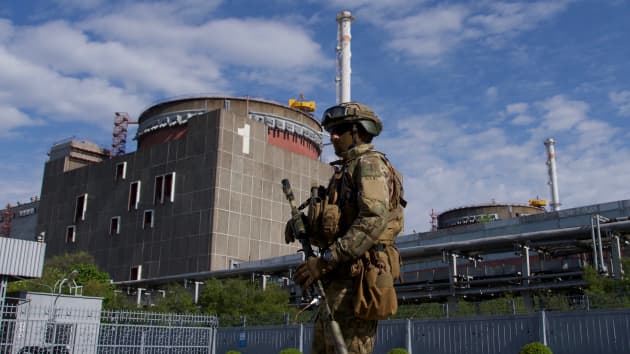
Photo taken from: Andrey Borodulin, AFP, Getty Images
Zaporizhzhia Nuclear Power Plant
Russian forces captured and are currently in control of the Zaporizhzhia nuclear power plant, Europe’s biggest nuclear plant. The plant was disconnected from the Ukranian power grid for the first time in its history on August 25, 2022. US State Department officials warned that Russia’s actions at the nuclear power plant have greatly increased risks of possible nuclear radiation release. Additionally, the director general of the International Atomic Energy Agency said he would soon visit the power plant to check on the situation.

Photo taken from: Tsargrad.tv / Handout / Reuters
Killing of Daria Dugina
On August 21, 2022 a car bombing killed Daria Dugina, a Russian far-right political commentator and daughter of Alexander Dugin. Dugin is a far-right political figure who has and continues to advocate for the invasion of Ukraine. He has previously said that Ukraine doesn’t actually exist as a state, and is actually a creation of the West as a kind of anti-Russian strategy and must be retaken for the Russian empire.
Dugin’s ideology is extreme but not widespread in Russia, though he does have a cult following among Russian ultranationalists. Though he has become a big name in contemporary far-right thinking globally and has resonated with far-right groups in both the US and Europe. It’s suspected that the bombing targeted Dugin instead of his daughter, who was killed in his place. Russia on Monday blamed Ukraine for the attack, claiming it was planned by “special services”. Ukraine has denied any involvement, but it is likely that the death of Dugina will intensify the war even further.

The Colorado River is Teaching a Lesson the Archeologists Know All Too Well
The Colorado River is Teaching a Lesson the Archeologists Know All Too Well
Environment Policy Brief #146 | By: Todd J. Broadman | August 25, 2022
Header photo taken from: Civil Eats
Follow us on our social media platforms above
Browse more environment policy briefs from the top dashboard

Photo taken from: NASA Earth Observatory
Policy Summary
[SSB theme=”Official” align=”center” counter=”true” ]
The Colorado River, a water source that irrigates 5 million acres of farm land and supplies 40 million people with drinking water, has long been severely overallocated. For decades, so much water has been diverted to supply farms and cities that the river’s delta in Mexico has dried up. Those that depend on its bounty are now in crisis as the western U.S. has undergone a 23-year megadrought and the nation’s largest reservoirs have subsequently dropped their water levels by three-quarters.
The 1,450-mile river is fed by high mountain snowpack that has been steadily diminishing. This, along with increasingly dry soils which absorb more runoff and added evaporation from atmospheric heat, have significantly reduced the river’s capacity.
On August 9, the Biden administration stated that water shortages along the Colorado River had passed a threshold for the first time and that unprecedented water cuts will be required. The river’s users: seven western states, Native Tribes, and Mexico, must come to agreement as to what sacrifices will be made with the dwindling water supply. A deadline for a voluntary agreement, August 15, has come and gone without a resolution, and the Bureau of Reclamation has done little in response to the stalemate.
Reclamation is the federal water management agency governing water and dams for 17 western states and falls under the U.S. Department of the Interior. Given the looming crisis, they instructed stakeholders to reduce usage by 2 million to 4 million acre-feet – a “Tier 2” shortage; that equates to a third of the river’s annual average flow.
There is not yet federally mandated action and the river continues to be governed by a complex set of policies — collectively known as the Law of the River dating back over a hundred years — that dictate how much water each state or tribe receives, and which entity will lose water first when the government imposes restrictions. The allocation consists of two geographical groups: the upper basin -Colorado, New Mexico, Utah and Wyoming, and the lower basin: Arizona, California and Nevada.
When Mexico and Native Tribe allocations are included, the total annual amount of water is 17.5 million acre-feet. (Each acre foot equates to about 326,000 gallons). But that paper calculation falls short of the actual amount of water available. The average annual flow between 2011 and 2020 was 9.6 million acre-feet. Lake Mead, the largest U.S. reservoir is down 152 vertical feet. Lake Powell is approaching just 32 feet above an electricity-generating threshold known as the “minimum power pool.”
The bureau does though, have in place a Drought Contingency Plan that specifies water cuts if the river continues to decline. It is unclear when and if these mandatory cuts will be implemented. Under the Plan, the lower basin states will have less water: Arizona a 21% cut, Nevada 8%, and Mexico 7%. California would not experience cuts under the Plan – they hold “senior rights.”
The Plan may be forced upon the states as inaction and finger-pointing intensifies. The upper basin states did offer a five-point conservation plan minus any specific reductions and included compensation to farmers that decide to not grow on a portion of their land. “We have always said, really, success is dependent on what happens in the lower basin,” said Becky Mitchell, director of the Colorado Water Conservation Board. Furthering the impasse, Andy Mueller, general manager of the Colorado River District, stated that “It’s absurd to think we’re going to get our farmers and ranchers and cities to take economic hits if all it means is it continues to fill swimming pools in Phoenix.”
Water scarcity has already made some farmers decide not to plant. This year about 690,000 acres will be left fallow in California, to impact the supply of tomatoes, melons, rice and alfalfa. Up to 100,000 acres in Pinal County, Arizona will go unplanted. Stephen Roe Lewis, who heads the Gila River system in Arizona, places his heels in dry soil and finds others to blame, “we cannot continue to put the interests of all others above our own when no other parties seem committed to the common goal of a cooperative basin-wide agreement.”
The bureau risks lawsuits when and if they do step in and force water cuts. They don’t want to take that risk in the current political atmosphere. There is no assurance the agency would be on “solid legal footing” according to Rhett Larson, a water law professor at Arizona State University. The states are incented to negotiate before Lake Mead ceases to function or before the Contingency Plan expires in 2026. No deal will lead to a “Thunderdome” situation according to Mr. Larson, in which the states “sue each other into oblivion.”
Policy Analysis
As the data shows, even if precipitation picks up in the near future, there needs to be “significantly higher-than-normal precipitation and snowpack” just to achieve average flows due to the dry soils and increased evaporation. And demand keeps increasing. Most states, particularly the lower basin states, used more water than their allotted quotas and have been doing so for decades.
The U.S. primary source of vegetables comes from the Imperial District in California, an area that gets less than 4 inches of rain annually. Its productivity is solely due to the 5 feet of irrigation water per acre that is receives from the Colorado River. Their agreed upon share is the largest of all users at 2.6 million acre feet, an allotment almost equal to all of Arizona. When there are cuts, the Imperial Valley farms will be the last users to be left dry.
There will be some mitigation to lowered vegetable production from California and Arizona, as other regions of the country compensate with increased planting of those crops. Drought though, is impacting the Midwest and other areas that consumers depend upon. Shifting production will not be a sure thing.
When the bureau’s commissioner, Camille Calimlim Touton, recently made the announcement of the first ever Tier 2 water shortage, few understood what “dead pool” status means. When Lake Mead reaches “dead pool” no water can pass through the Hoover Dam. No electricity. No irrigation. No drinking water. At that point, the finger-pointing and academic calculations will amount to a tragedy, as will the lack of cooperation.


Data charts taken from: American Farm Bureau Federation
(click or tap each to enlargen)
In terms of legislation aimed at this crisis, Congress passed the Inflation Reduction Act in which there is $20 billion for farmland conservation and $4 billion for drought relief in the West. The funding’s intent is to compensate farmers who will lose money from not planting crops due to the shortage of irrigation water.
The money will be paid out by the Bureau of Reclamation over 4 years. In addition, a wildfire and drought response bill authorizes $500 million so that states and other entities, can apply for grants “compensating users who volunteer to cut back their water use, drilling wells, lining canals to prevent water from seeping into the ground and increasing efficiency for hydropower production.”
Given the scale of the water shortage, its environmental causes, and an apparent disregard for ever-increasing water consumption, the prospect of serious remedies for the river itself and all life that depends upon it are quickly evaporating.
Political interests, particularly that of farmers who require irrigation water for their livelihoods are not about to change the system or their occupations. Some of the nation’s fastest growing metro areas are located in the desert and depend on the Colorado River water. The wisdom of that kind of “progress” will spell the end of those population centers or so the archeologists tell us.
Engagement Resources
Click or tap on resource URL to visit links where available

https://www.vox.com/ “explains the news.”

https://www.edf.org/ helps to preserve the natural systems on which all life depends.

https://insideclimatenews.org/ provides essential reporting and analysis on climate change, energy and the environment, for the public and for decision makers.

America’s Minimum Wage Debate: Is It Time for an Increase?
America’s Minimum Wage Debate: Is It Time for an Increase?
Economic Policy Brief #134 | By: Inijah Quadri | August 21, 2022
Header photo taken from: The All-Nite Images / Flickr
Follow us on our social media platforms above
Browse more economic policy briefs from the top dashboard

Photo taken from: Hyre
Policy Summary
[SSB theme=”Official” align=”center” counter=”true” ]
The current federal minimum wage in the United States is $7.25 an hour. Despite being below the poverty line for a country like the USA, the minimum wage has not seen any increase since 2009.
There has been some level of advocacy at the federal level, such as we had with President Obama in 2015, but nothing really was done to raise wages, even after his rallying cry. This has led to even more advocacy for an increase in the federal minimum wage, as increases regularly happen at the state level without any issues.
Policy Analysis
Arguments for and Against an Increase
Arguments for a minimum wage increase typically fall into one of two categories: economic and moral. The economic argument is that a minimum wage increase will help to reduce poverty and inequality, while the moral argument is that a minimum wage increase is morally right because it gives workers a fair day’s pay for an honest day’s work.
However, there are also arguments against a minimum wage increase, chief among them being that it will lead to job losses and decreased economic growth. However the strength of this argument diminishes as the length of time without a minimum wage increase lengthens and the cost of living index climbs.
How Much Does the Minimum Wage in the USA Compare to Other Countries?
As we just noted, in the United States, the minimum wage is currently $7.25 an hour. This is far below the necessary cost of living in all American states. While some other developed and developing countries may have a lower or higher minimum wage on paper, the cost of living is very important to consider.
A worker in a European country like Poland, for example, would need to earn Poland’s minimum wage of 18.3 zloty (about $4) to maintain an average standard of living. The same goes for a country like Japan, where despite having a minimum wage of 961 yen (about $7.30) per hour, this minimum wage is enough to live an average life.
The key differences lie in the fact that America’s federal minimum wage isn’t indexed to inflation, which means that it hasn’t kept up with inflationary changes over time.

Photo taken from: Al Schaben, Los Angeles Times, Getty Images
(click or tap to enlargen)
State Minimum Wages in the USA
When it comes to minimum wage, the United States is an absolute mess. There are currently 30 different states that have a minimum wage above the federal minimum wage, which stands at $7.25 an hour. This arrangement creates an incredibly confusing and chaotic landscape for employers and workers alike—not to mention it’s crazy that one country has so many different minimum wages.
It is important to note that not all states have increased their minimum wages at the same rate; some have done so more slowly than others. Some use the federal minimum wage, and other states have a minimum wage lower than the federal minimum.
For example, California has a statewide minimum wage of $15 an hour, Washington has a rate of $13.50 an hour, and Oregon has a rate of $13.50 an hour. Meanwhile, the federal rate is still well below the amount required to support a family without working full-time.

Photo taken from: economics.org
Should the Federal Minimum Wage Be Increased?
As we just mentioned, the federal minimum wage in the United States is not enough to live on. In fact, a full-time worker earning the federal minimum wage would only earn $15,080 per year. This is not enough to support a family. As such, the minimum wage should be raised to help low-income families.
As you have seen, many states have already increased their minimum wages above the federal level, and more are considering doing so. These types of wage-increase policies have been put in place by these states to help improve the lives of low-income Americans and make sure they have enough money to live on.
What Are Some Possible Solutions to the Minimum Wage Debate?
A sudden increase in the minimum wage would increase the paychecks of low-income workers, but it could also lead to job losses. As such, a possible solution would be to increase the federal minimum wage over a period of several years. Since the higher of the two minimum wages (State or Federal) is what is paid to staff all across the USA, this is a plan that would work all across the country. By increasing minimum wages slowly until it keeps pace with inflation, workers will benefit greatly.
Additionally, businesses wouldn’t have to make a large change all at once and they could adjust as needed.
Conclusion
In conclusion, it is clear that the minimum wage debate is one that will rage on for some time to come. States are continuing to pass their own minimum wage laws, each with its own set of mandates and exceptions. The adequacy of the current $7.25 per hour federal minimum wage in the face of today’s inflationary economic pressures may be a proposition endorsed by a few conservative economists. However, there is no question that something needs to be done to help those struggling to make ends meet.
Engagement Resources
Click or tap on resource URL to visit links where available

Investopedia.com: (https://www.investopedia.com/articles/investing/080515/minimum-wages-can-raise-unemployment.asp)

National Conference of State Legislatures: (https://www.ncsl.org/research/labor-and-employment/state-minimum-wage-chart.aspx#:~:text=Landon%20Jacquinot-,Summary,wage%20of%20%247.25%20per%20hour)

Patriot Accounting, LLC.: (https://www.patriotsoftware.com/blog/accounting/average-cost-living-by-state/)

Pew Research Center: (https://www.pewresearch.org/fact-tank/2021/05/20/the-u-s-differs-from-most-other-countries-in-how-it-sets-its-minimum-wage/)

The White House Archives: (https://obamawhitehouse.archives.gov/raise-the-wage)

Protecting Digital Privacy With the Fourth Amendment Is Not For Sale Act
Protecting Digital Privacy With the Fourth Amendment Is Not For Sale Act
Civil Rights Policy Brief #193 | By: Rodney A. Maggay | August 22, 2022
Header photo taken from: Project for Privacy and Surveillance Accountability (PPSA)
Follow us on our social media platforms above
Browse more civil rights policy briefs from the top dashboard

Photo taken from: NBC News
Policy Summary
[SSB theme=”Official” align=”center” counter=”true” ]
In early 2020 the Wall Street Journal first broke a story claiming that federal agencies were acquiring cellphone data information to be used for enforcement of immigration policies.
In response to the story, the American Civil Liberties Union (ACLU) filed a Freedom of Information Act (FOIA) request with the Department of Homeland Security (DHS), Immigration and Customs Enforcement (ICE) and the Customs and Border Protection (CBP) agencies for the release of documents related to how the government acquires cell phone location information. The ACLU subsequently brought a lawsuit to compel production of the information and eventually added the U.S. Secret Service, the U.S. Coast Guard and other DHS departments to the list of agencies from which the ACLU was requesting information.
The ACLU did receive a significant amount of information from the agencies, which resulted in a surprising discovery. Based on its review of information received the ACLU found that DHS was spending millions of dollars to buy cell phone location tracking information from a number of non – government data broker companies.
A data broker, or information broker, is a company that collects data or information from any public source, and sometimes from private transactions, and then sells the information to a third party. The sale of this information to the government occurs without any legal protections such as a search warrant and does not prohibit the government from using the purchased data as part of a criminal investigation.
In response to the investigation by the Wall Street Journal and the FOIA request by the ACLU, Senators Ron Wyden of Oregon and Rand Paul of Kentucky introduced the Fourth Amendment Is Not For Sale Act. This bill proposes to close the gap in the law that permits data brokers to sell personal information of American citizens to the government without any court oversight. LEARN MORE
Policy Analysis
The Fourth Amendment Is Not For Sale Act is an important bill because it will close a legal loophole that has emerged with the rise of private digital information.
The bill was sponsored in both houses of Congress by a significant number of members from both sides of the aisle indicating broad bipartisan support. Fourth Amendment protections against search and seizure issues is one that appeals to both parties because of privacy issues and the desire to keep law enforcement from unneccessarily digging into a person’s intimate information without a proper search warrant.
The Fourth Amendment to the U.S. Constitution provides that people have a right against “unreasonable searches and seizures” and that a search warrant shall only be issued based on probable cause. In 2018, the Supreme Court decided Carpenter v. U.S., which decided that the U.S. Government must have a search warrant in order to acquire cell phone tracking records from a third party.
However, the government has found a way to avoid the warrant requirements required by the Fourth Amendment. What the Wall Street Journal investigation and the ACLU’s FOIA request has shown is that the government was using a work around in order to bypass getting a search warrant to acquire cell phone tracking information.
Instead of having to apply to a court for the cell phone tracking information – which would have taken time to compile evidence for a probable cause determination by a judge – the government decided to just buy the information from two data broker companies, Venntel and Babel Street.
The actions by the government, while not in violation of any specific law, still goes against the abuses that the Fourth Amendment was designed to protect against.

Photo taken from: Electronic Frontier Foundation
(click or tap to enlargen)
That amendment was designed to protect the privacy of all persons from unreasonable searches and seizures and intrusions into their private lives and affairs without a warrant supported by a showing of probable cause.
By buying cell phone tracking information from data brokers the government can seize large troves of information to go through without having to show the requisite probable cause, without having a neutral judge scrutinize the evidence and make a decision whether a warrant should issue and allows the government to look without limitations through so much digital info that might not even be relevant or connected to a specific investigation.
The government might never need to apply for a search warrant ever again if it would be permitted to go down this road of buying cell phone tracking info and other digital info from third parties.

Photo taken from: security.org
Luckily, a bipartisan group of Senators and Representatives have recognized this problem and have introduced a bill to fix this legal loophole that government agencies are exploiting. Under the Fourth Amendment Is Not For Sale Act the bill will require a court order to force data brokers to reveal the data they’ve compiled, prohibits the purchase of data of American citizens by the government from third parties and extends privacy laws to companies that own data cables and cell towers.
This is significant because it brings into line with Fourth Amendment law the curious situation that had developed with the purchase of digital data by the government. There is a specific framework that government and intelligence agencies had to follow whenever they sought personal private information of persons in their investigations. It just so happened that data purchases from third parties were not adequately addressed in the law. With the rise of massive digital information that people put online and carry with them on their cell phone and in cloud based services, it became inevitable that the government would need to access information platforms in the course of their investigative duties.
This bill, if passed, will ensure that the government does not get a free pass in acquiring digital data. Now it will only get the information they want through accepted procedures such as applying to a judge for a search warrant. And it ensures that other privacy safeguards will be in place whenever the government deals with cell phone tracking technology and other digital data available from data and information brokers. Due to the broad support in Congress the bill looks likely to pass with a close vote not expected at all. LEARN MORE, LEARN MORE
This brief was compiled by Rod Maggay. If you have comments or want to add the name of your organization to this brief, please contact rodwood@email.com.
Engagement Resources
Click or tap on resource URL to visit links where available

Office of Senator Ron Wyden – Oregon – press release on the Fourth Amendment Is Not For Sale Act.
American Civil Liberties Union (ACLU) – information on the case ACLU v. Department of Homeland Security.

Powder Keg – How the War in Ukraine Could Disrupt the Global Skiing Industry!
Powder Keg – How the War in Ukraine Could Disrupt the Global Skiing Industry!
Foreign Policy Brief #144 | By: Reilly Fitzgerald | August 16, 2022
Header photo taken from: snowonly (.com)
Follow us on our social media platforms above
Browse more foreign policy briefs from the top dashboard

Photo taken from: TBA
Policy Summary
[SSB theme=”Official” align=”center” counter=”true” ]
The war in Ukraine has had an impact on global markets. Ukraine is a mass producer of wheat and other food items. They also are a manufacturing hub for alpine and cross country skis with a factory in Mukachevo, Ukraine, owned by Austrian-based company, Fischer Sports. Fischer is one of the leading manufacturers of skis and other skiing-related items such as ski boots and ski poles.
According to the Cross Country Ski Areas Association, based in Vermont, Ukraine produces half of the skis sold globally each and every year; globally there are around four million skis manufactured each year. This is not just a problem for Fischer but for most major ski companies who allow Fischer to manufacture at least some of their skis for them, these brands include Rossignol, Alpina, and Scott.
According to Planet Ski, there are many other ski manufacturing factories inside of Ukraine that have been impacted by the war. Rossignol, though they use the Mukachevo facility owned by Fischer, has a factory outside of Lviv; and Technica also has a factory in-country. These factories all ceased operations directly after the war broke out in Ukraine. However, they have slowly started to come back online as the Russian military has been pushed eastward and much of the invasion stalled.
Policy Analysis
The war in Ukraine has had major consequences in terms of disrupting the global supply chains and also impacting consumers by seeing price hikes globally; and most notably, at the gas pump.
According to the New Hampshire Business Review, Fischer has a company presence in New Hampshire with about a dozen or so employees. The war has disrupted their business in Ukraine because trains that, were once used to move goods, are being used to move people or supplies for the war effort.. The NH Business Review also cites that the largest import from Ukraine to New Hampshire is ski-related goods, which usually brings in around $8 million to the state economy.
This is not the first time that the Fischer factory in Mukachevo had to cease operations; back in early October, 2020, there was a fire in the facility which halted operations. However, the timing of that issue was late enough in the year that most of the skis for that year had been manufactured and shipped globally. The fire did not help the manufacturing of skis; but neither did the COVID-19 Pandemic, which saw demand for all sporting goods increase dramatically.
The Cross Country Ski Areas Association discussed the role of the “bullwhip effect”, in one of their reports; which suggests that the increase in demand that retail shops are seeing from consumers (which has increased since the start of the pandemic) is leading those shops to order more hard goods from manufacturers and those manufacturers are having a difficult time meeting those demands.

Photo taken from: fasterskier.com
(click or tap to enlargen)
This difficulty in meeting demands often leads to late shipments or extremely long wait-times for the consumer to receive their goods, which may lead consumers to spend their money elsewhere, and potentially on an entirely different sport; and once the manufacturers produce more goods to meet that extra demand, the need for the demand is gone and retailers are left with goods that no one wants to buy anymore.
Some of the major ski manufacturing companies have factories in other countries in Europe, like Austria for example, and also in China. These companies are able to absorb some of the issues that have arisen out of the closing of the Ukrainian factories; however, some of these factories specialize in specific skis.
For example, Rossignol has a facility in China that they use to make beginner or entry-level ski goods. According to an article by the SF Ski Club, retail goods could be delayed until October for their arrival to ski shops around the world. The article also included the perspective of a Nordic ski store owner in Missoula, Montana, who said that they are not seeing much of these disruptions occurring because they sell the high-end skis that are often produced in the companies’ home country, for Fischer that would be Austria.
It is unclear how these disruptions and increased demand will play out this coming ski season. However, consumers should plan ahead and be patient when buying new skis, as the estimates for when skis could arrive are as early as late August or as late as mid-October.
Engagement Resources
Click or tap on resource URL to visit links where available

Cross Country Ski Areas Association ( https://ccsaa.org/ )

Planet Ski ( https://planetski.eu/ )

Sporting Goods Intelligence Europe ( https://www.sgieurope.com/ )

Who’s Missing from the Roe v. Wade Conversation?
Who’s Missing from the Roe v. Wade Conversation?
Health & Gender Policy Brief #141 | By: Chelsea Dade | August 16, 2022
Header photo taken from: Simone Noronha / NBC
Follow us on our social media platforms above
Browse more health and gender policy briefs from the top dashboard

Photo taken from: Boston University
Policy Summary
[SSB theme=”Official” align=”center” counter=”true” ]
Turn on the news and at least one of the segments will bring up the decision to overturn Roe v. Wade. You might briefly hear about the case that got us to this point, Dobbs vs Jackson. When the Supreme Court issues its decision that the US does not confer a right to abortion, it overruled Roe v. Wade, as well as a related case, Planned Parenthood v. Casey. What happens next is states are left with the decision of whether to ban abortion. But at least 13 states had “trigger laws” in place, which allowed abortion to be immediately banned if Roe v. Wade was no more. And now the impact of this overturning has begun.
But I guarantee you didn’t know that in 2019, the nationwide abortion rate was 23.8 per 1,000 Black women compared with 6.6 per 1,000 white women (Centers for Disease Control and Prevention, 2021). While mainstream media may be showcasing wealthy white women on your TV in reference to abortion rights, the issue will disproportionality hurt Black women and trans and nonbinary people. This is one of the insidious ways that disparities start, in biased coverage that overlooks the full story. So, let’s dig into who’s missing from the Roe v. Wade discussion.
Policy Analysis
Trans and Non-binary people
Abortion doesn’t only impact “women,” but most coverage forgets this. The current reproductive rights conversation fails to cover how the overturning of Roe v. Wade hurts transgender and non-binary people. As people who can become pregnant, they have an equal say in this fight. When the overturning news broke , the ACLU eloquently responded with, “The fight for abortion rights and LGBTQ+ rights go hand in hand because they are both ultimately about protecting our bodily autonomy” (ACLU, 2022).
Black women
I’ve already pointed out that Black women are largely missing from the current Roe v. Wade overturn conversation. Now let’s talk about why. And get this… the answer is complex. There are a handful of Black-led reproductive justice organizations who have been sounding the alarm on the chance that R v. W could be no more for decades. Did anyone listen? Probably not or else we might be in a different situation.

Photo taken from: Graphic House / Hulton Archive / Getty Images
(click or tap to enlargen)
Reproductive justice issues historically impact Black women and racialized women and non-binary people, yet most repro organizations are run by cis-gender white women. So decision-making power remains out of reach for people of color, in essence, maintaining the legacy of “white feminism”.
If you regularly see a white-centric viewpoint when it comes to abortion rights, it’s because the leadership that promote this viewpoint is also white.
Black women and trans and non-binary people are missing from discussions around Roe v. Wade due to a history of overlooking reproductive equity and centering cisgender and wealthy white women. But just because this is the case doesn’t mean that there is nothing you can do to help rewrite this narrative.
Follow and attend events led by reproductive justice organizations (listed below) and reach out to your local and state legislators.
- National Network of Abortion Funds
- National Women’s Law Center
- National Women’s Law Center
- SisterSong Women of Color
- New Voices for Reproductive Justice
- New Voices for Reproductive Justice
- SisterLove, Inc
- SisterReach
- SPARK Reproductive Justice NOW
- The Afiya Center
- Women With a Vision
Engagement Resources
Click or tap on resource URL to visit links where available

The National Network of Abortion Funds can point you to your local organization. Donate to an abortion fund now.

Are the Handcuffs Tightening Around Trump?
Are the Handcuffs Tightening Around Trump?
Elections & Politics Policy Brief #43 | By: Maureen Darby-Serson | August 11, 2022
Header photo taken from: CBS
Follow us on our social media platforms above
Browse more elections & politics policy briefs from the top dashboard

Photo taken from: CNN
Policy Summary
[SSB theme=”Official” align=”center” counter=”true” ]
As many know, former President Donald Trump has several investigations opened against him currently. However, are you aware that the actual amount of the major investigations is seven?
He is currently dealing with 7 major state and federal investigations, some related to the 2020 elections, some related to the January 6th riots, and some related to his handling of White House documents, as we saw with the recent FBI search of his Palm Beach Resort at Mar-a-Lago. What is that status of each of these investigations and how close are these to nailing Trump to the wall?
Policy Analysis
Manhattan District Attorney Investigation – The Manhattan DA is currently investigating Donald Trump and the Trump Organization for white collar crimes.
This investigation stalled briefly when two individuals on the case resigned but the DA assured the public that the case continues and that grand juries are still being held to bring potential charges against the former President and/or his organization.
January 6th Riot DOJ Investigation – The US Department of Justice is investigating the January 6th riots and the former president’s involvement in the attempts to overturn the 2020 presidential election.
They have been using evidence from the January 6th committee investigations and hearings, among investigations of their own, to file subpoenas and get warrants for records. This investigation is currently ongoing, and the DOJ is interviewing and going over documents every day.
Investigation into Trump’s Finances and Tax Returns – There are several investigations into Donald Trump’s finances and tax returns, both on the federal and state level, with the Manhattan District Attorney investigation being one of them.

Photo taken from: The Hill / AP Photo / Mary Altaffer
(click or tap to enlargen)
Congress has also been trying to get their hands on his tax returns since he began his presidency.
Earlier this week, a court ruled that the US House panel had a right to Trump’s tax returns, so these investigations are still in the works and moving forward.
NY Attorney General investigation into Trump’s Finances – Earlier this week, Donald Trump refused to answer any questions from the NY Attorney General regarding his business practices and information regarding his organization.
The NYS AG is investigating the Trump Organization and Trump businesses for various fraud related activities that allowed Trump to obtain favorable loans. He allegedly only answered questions about his name and invoked his 5th amendment right more than 400 times. The NY Attorney General now has to decide whether to move forward with suing him or seeking a monetary penalty settlement.
January 6th Committee investigation – The January 6th Committee is still holding public and private hearings. They are interviewing people daily and working on getting more information into Donald Trump’s culpability into what happened on at the Capital on January 6th.
Georgia 2020 Election Interference Investigation – While Donald Trump has not been a direct target of this investigation yet, last month Georgia officials toyed with the notion of seeking his testimony in their investigation into what happened in their state during the 2020 election. In the meantime, they have taken aim at those around Trump. For example, one of Trump’s closest advisors, Rudy Giuliani, was ordered to testify in the Georgia investigation.

Photo taken from: Adele Morgan / Wall Street Journal
Classified documents DOJ investigation – As most of us saw recently, the FBI raided Mar-a-Lago, looking for classified White House documents that Donald Trump allegedly took with him after his presidency ended. Trump has previously turned over boxed of documents to the National Archives that he took from the White House after his presidency that he should not have taken to Mar-a-Lago, which is what prompted the discussion on whether he had more documents.
According to the Wall Street journal, there may have been an insider who told the FBI that Trump still had documents, some of which could have been classified, at Mar-a-Lago, prompting the raid.
In addition, the DOJ released the search warrant and information related to the raid on Friday. The FBI went in looking for documents related to nuclear weapons and recovered various boxes filled with classified and top-secret documents.
To sum it all up, there is a lot going on. Only time will tell where all of these investigations go. We will have to keep an eye on them all and it is important to do so as the 2024 elections grows closer.
Engagement Resources
Click or tap on resource URL to visit links where available

Investigations: https://www.npr.org/2022/08/11/1116800904/trump-investigations

Wall Street Journal Article: https://www.wsj.com/articles/fbi-quest-for-trump-documents-started-with-breezy-chats-tour-of-a-crowded-closet-11660169349?mod=hp_lead_pos2

Search Warrant:

DOJ, Trump, and Jan 6th: https://www.nbcnews.com/politics/justice-department/justice-department-investigating-trumps-actions-part-jan-6-probe-rcna40167

Supreme Court Abortion Decision Sparks New Privacy Concerns
Supreme Court Abortion Decision Sparks New Privacy Concerns
Health and Gender Policy Brief #140 | By: Alexandra Ellis | August 9, 2022
Header photo taken from: The Houston Chronicle
Follow us on our social media platforms above
Browse more health and gender policy briefs from the top dashboard

Photo taken from: Kaiser Health
Policy Summary
[SSB theme=”Official” align=”center” counter=”true” ]
On June 24, 2022, the United States Supreme Court released the published opinion of Dobbs v. Jackson Women’s Health Organization.19-1392, 597 U.S. ___. In a 6-3 majority opinion, a group of unelected officials stripped people bare of the right to choose whether they will carry a pregnancy to term and left this determination up to the states.
In the wake of this decision, people who have the capacity to carry a baby to term are increasingly worried about how their personal data will be used against them. People are afraid that their personal cellphone, social media, or purchasing data will be tracked to inform the state or federal government whether or not they are pregnant.
Policy Analysis
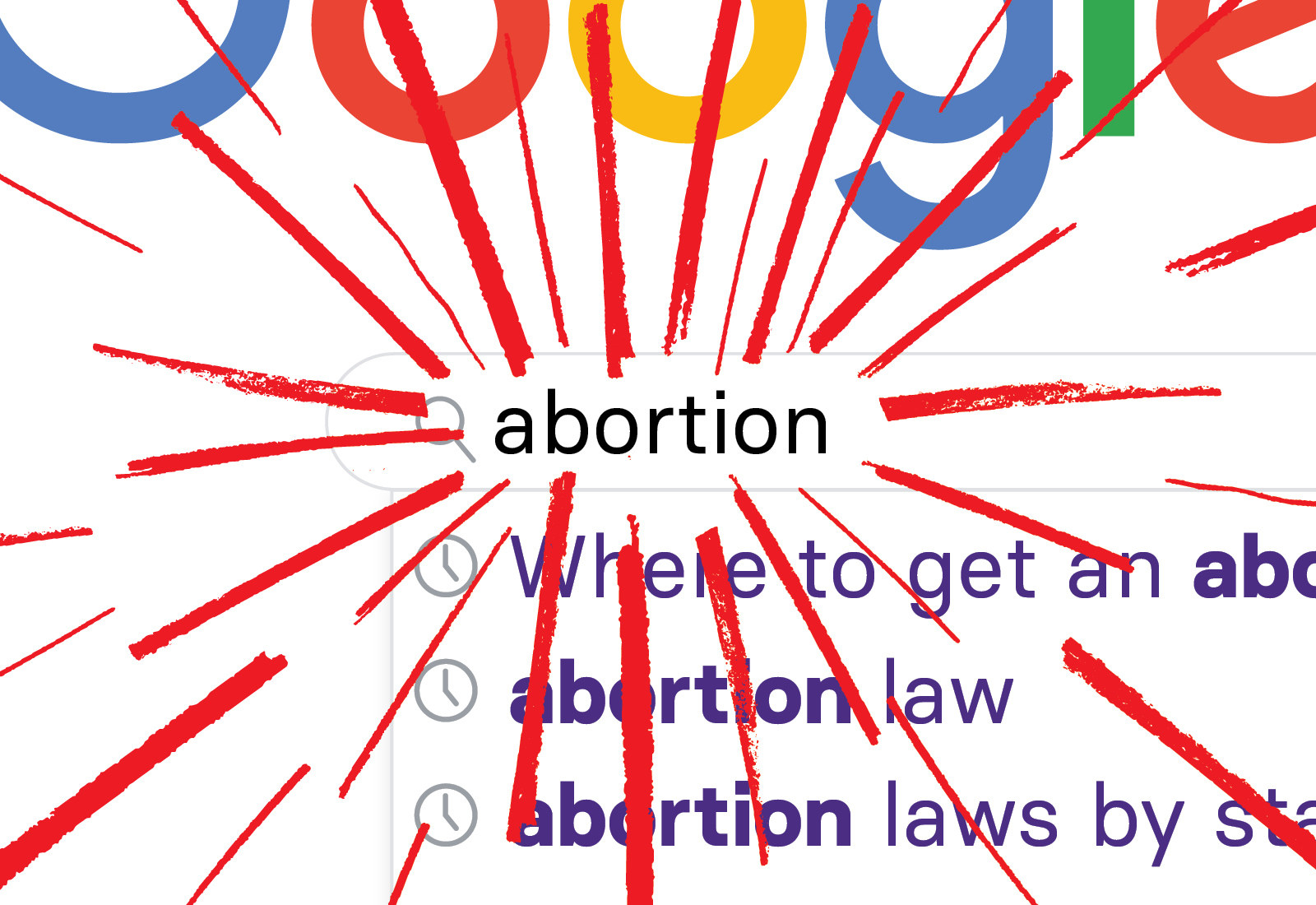
Photo taken from: BuzzFeed
Overturning Roe v. Wade and Planned Parenthood v. Casey, is an assault not just on the right to bodily autonomy, but on privacy itself. The 9th amendment provides, “The enumeration in the Constitution, of certain rights, shall not be construed to deny or disparage others retained by the people.” In overturning Roe v. Wade, people are asking what is actually private anymore?
As the Supreme Court ruling is being questioned, a mass panic has arisen online. People are posting tips on how to contact app companies asking them to delete personal data obtained from the app.
For example, Houston women are deleting period tracking apps, citing privacy concerns: Many are concerned the personal health data could be obtained as part of an investigation or a lawsuit related to a prohibited abortion, Houston Chronicle ( July 1, 2022) https://www.houstonchronicle.com/lifestyle/renew-houston/health/article/Period-tracking-apps-spark-panic-after-Roe-v-17279151.php. Other conversations of panic center on how data from credit cards, stores, or online shopping will be used against women in ways that might indicate someone was pregnant.
Through this, a conversation has developed concerning the right to privacy to one’s own data – a conversation that has long lingered in the public conscience as online ads become more personal and targeted. Specifically, people are concerned that States with abortion bans will use their period tracking data against them in potential litigation.. Is that crazy?
After a century long assault, unelected officials got to decide whether or not someone can bring a pregnancy to term. They did this with little judicial precedent and in truth showed their hands as judicial activists. The now question becomes after Roe v. Wade has been overturned, what does the right to privacy still entail?